Monthly Archives: May 2026

Bustin’ Out for Birdathon

The Wings Across the Big Sky Festival is less than two weeks away and Braden I look forward to seeing some of you there. It’s not too late to sign up. Just click here for what promises to be a terrific weekend of birding Montana’s stunning northwest corner. Braden and I will be leading two field trips, one to Tally Lake and the other to the CSKT Bison Range. Even if you’re not on those trips, please say hello! Meanwhile, we are happy to share another recent big birding event—an exhilarating day of Birdathon to raise money for our local Audubon chapter!

On Friday, May 15th, I woke at 4 a.m., excited to be devoting a full day—and I mean FULL—to birding. Unlike most days of birding, however, I and my team of Braden, Susan Snetsinger, and her son Eli would be dedicating our day to raising money for a good cause under the auspices of Birdathon.

Birdathon is an annual event put on by many different bird-related conservation groups, and it works much like those death marches you probably got suckered into as a youngster in which you would commit to walking twenty miles and sign up sponsors to pay you for each mile walked. Birdathon, though, is MUCH more fun than those blister-packing marathons of yesteryear because birding teams get to raise money by BIRDING!
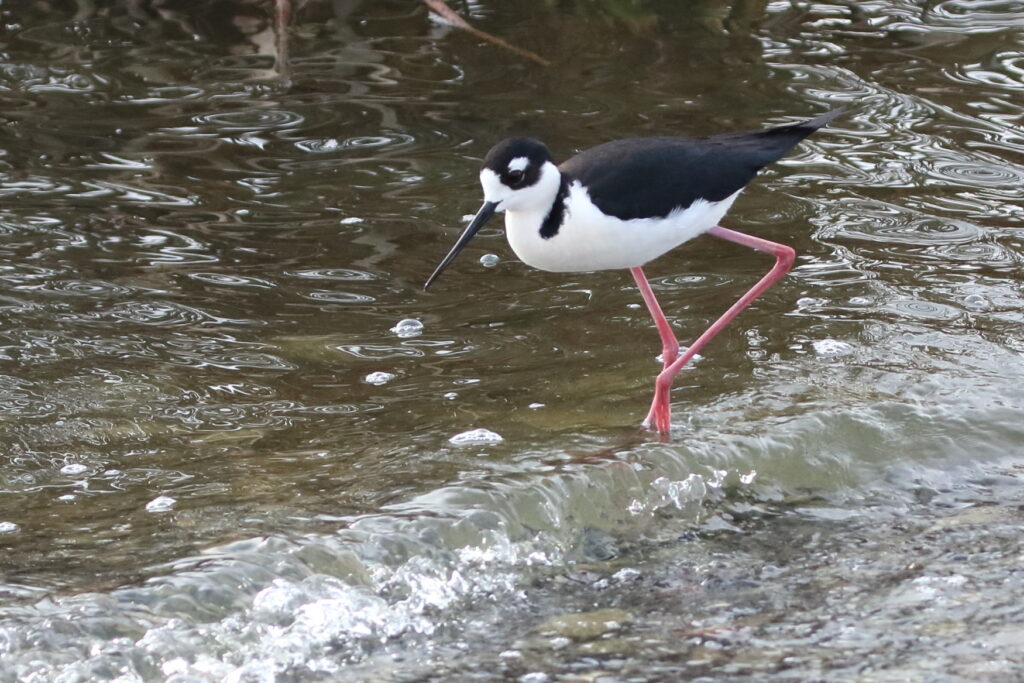
I find it impossible not to photograph Black-necked Stilts when I see them and, indeed, the birds showed up aplenty for Birdathon.

In the spirit of healthy, fund-raising competition, we dubbed our team Bird Domination, but none of us had ever actually participated in a Birdathon. Undaunted, we coerced an assortment of family members and friends to donate money for each bird that we might find, deceitfully telling them that we probably would see about 100 birds during the day—even though we harbored much higher aspirations. Our donations would go to support the wonderful conservation and education work of our local birding chapter, Five Valleys Audubon, and Braden and I diligently crafted a route that would net us the most birds in a single day.
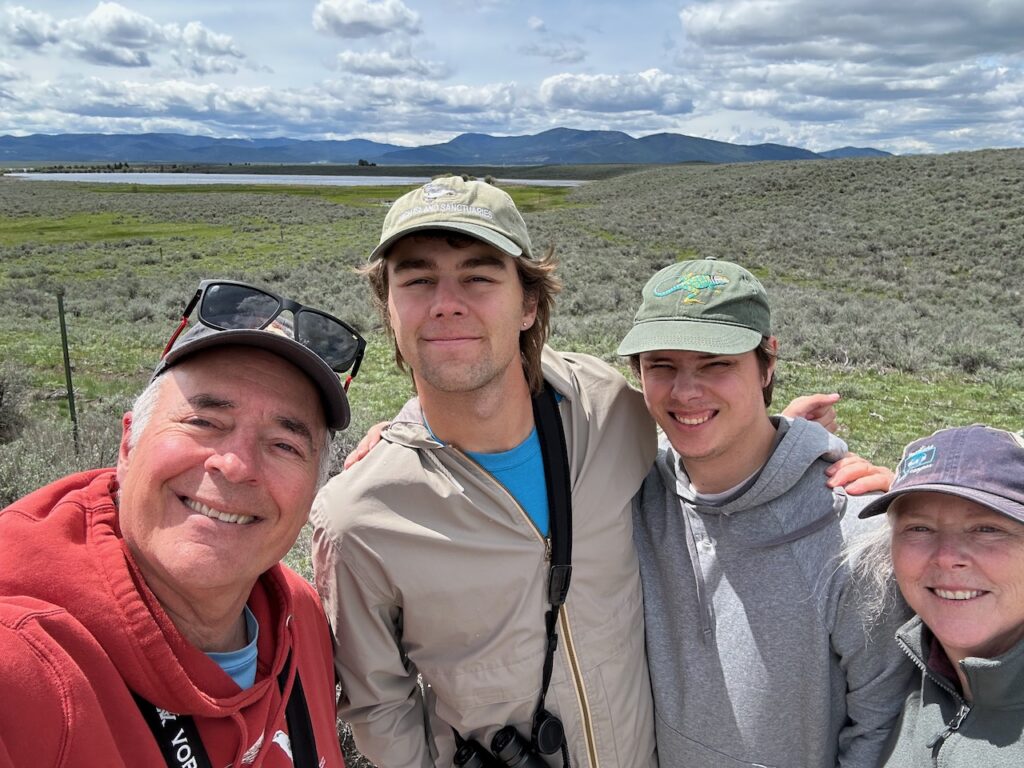
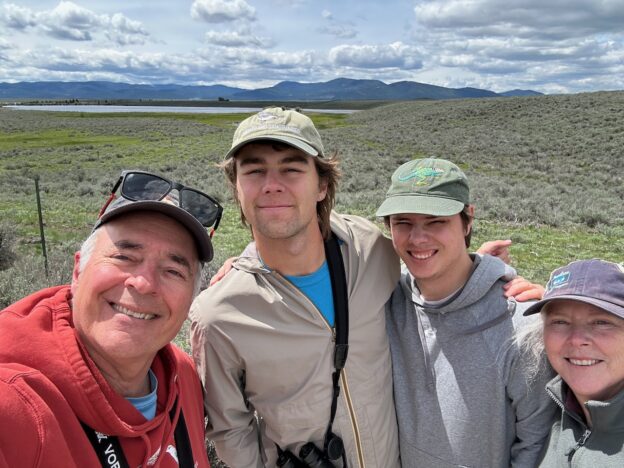
Team Domination: (L to R) Sneed, Braden, Eli, and Susan.

Braden and I decided to start at dawn with a quick trip up Rattlesnake Creek in our own neighborhood to pick up a few birds we might not see anywhere else. Arriving at the trailhead at 5:30 sharp, the birds did not disappoint. In the parking lot, we immediately heard Nashville Warbler and Hammond’s Flycatcher, and walking up the main trail, an American Dipper popped out onto the trail. Turning up a side creek called Spring Gulch, we heard our last two targets for here: Townsend’s Warbler and the boom boom boom of a Ruffed Grouse! Then we hurried back to the car to collect the rest of our teammates so that our proper Birdathon could launch.

It would take way too many words—and probably bore the heck out of you—to give you a blow by blow of the entire day, but to give you the scope of our endeavor, here are the basics and highlights.
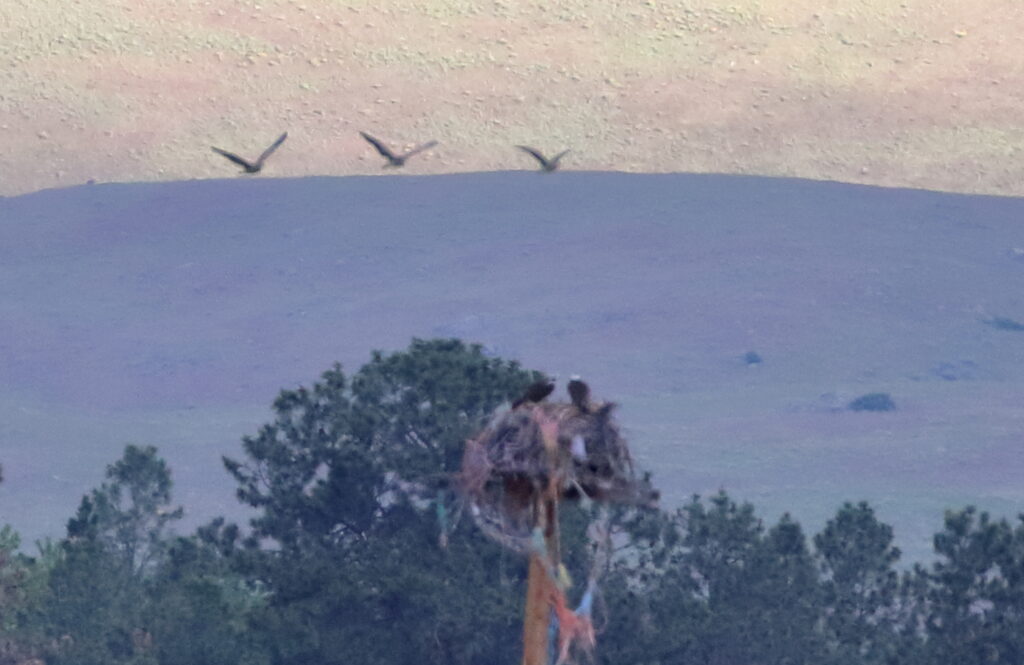
Three distant American Bitterns (!) above Sčilíp (formerly Dixon) Marsh. Unimpressed, two Osprey watch from a nest.

Our route took us from Missoula to Sčilíp (formerly Dixon) Marsh and past the CSKT Bison Range to Ninepipe National Wildlife Refuge. From there, we drove to Bigfork, down the Seeley Swan Valley and then over to Browns Lake. Our last big push carried us across the Continental Divide to Great Falls and our final destination—Benton Lake National Wildlife Refuge—before making the long return trip to Missoula.

Total time elapsed: 17-1/2 hours.

Total miles driven: 552.
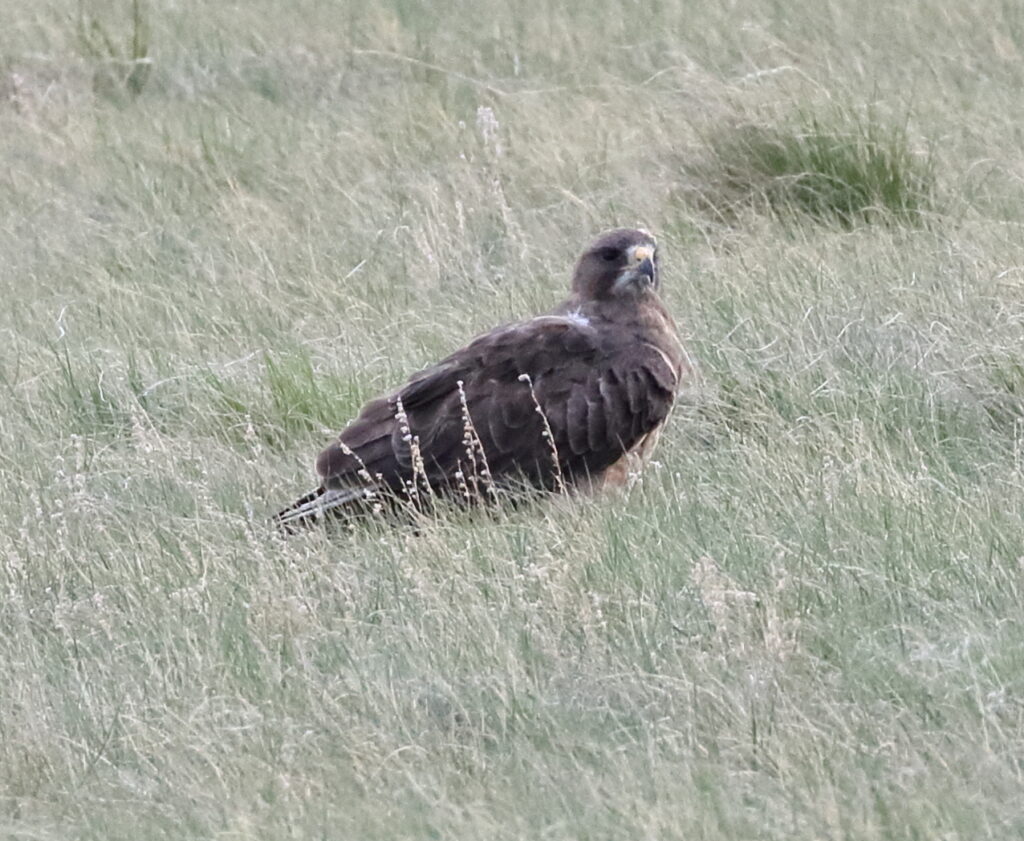
Swainson’s Hawk perched high on our list of desired raptors and we saw four at Benton Lake NWR.

Before getting to our actual bird highlights, I must say a few words about how much gasoline we consumed. As I’ve continued birding, I’ve been more and more reluctant to drive a lot, even to chase birds since burning gas contributes to climate change and directly impacts the creatures we love. Birdathon, however, coincided with birding destinations Braden and I had planned to visit this spring anyway. I especially wanted to make sure I got over the divide at least once to see some of Montana’s eastern species. So in addition to raising money, Birdathon allowed us to “double dip” on a lot of things we were going to do anyway—and it was a bonus to “carpool” with Susan and Eli, making it a relatively energy-efficient trip overall.
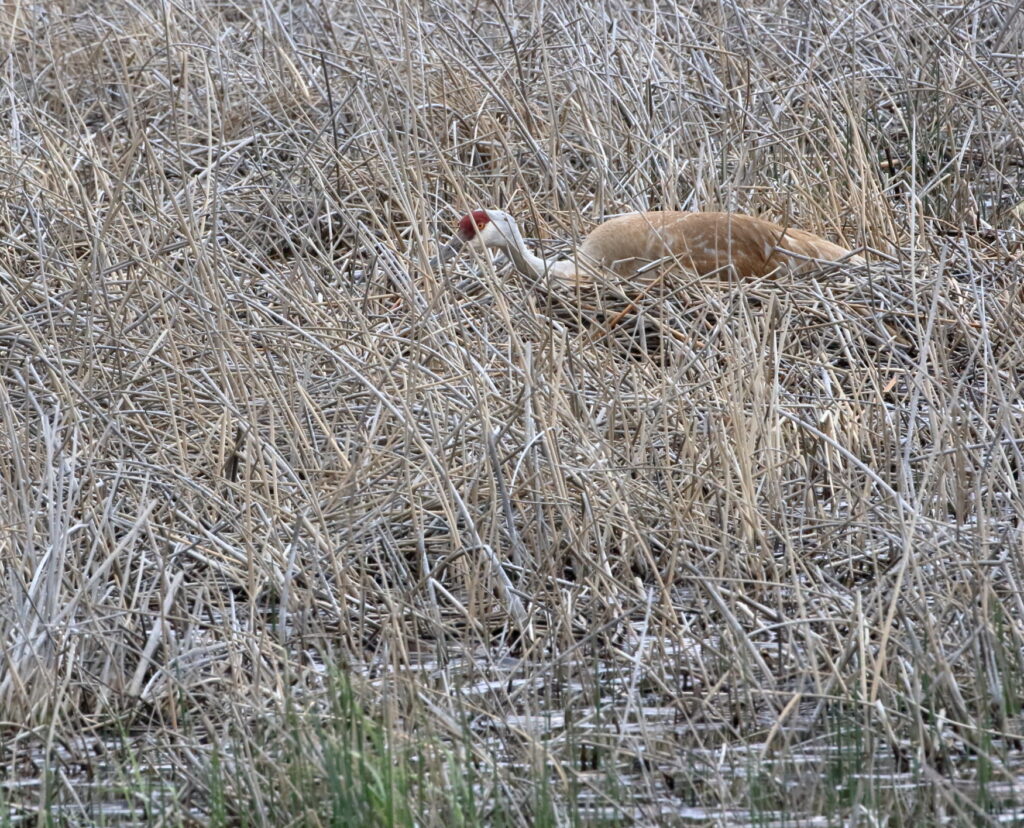
Sandhill Cranes have a habit of nesting right under our noses and, indeed, we discovered one nesting only a few yards away at one of our stops near Browns Lake.

Speaking of energy, I also have to add that while Braden and I drove and planned the event, Susan and Eli kept us energized with homemade egg sandwiches, 18-inch torpedo sandwiches, caffeinated beverages, and an unlimited variety of snacks. In other words, Team Bird Domination set out perfectly prepared to have an epic day. And with that, here are but a few of the day’s incredible highlights:
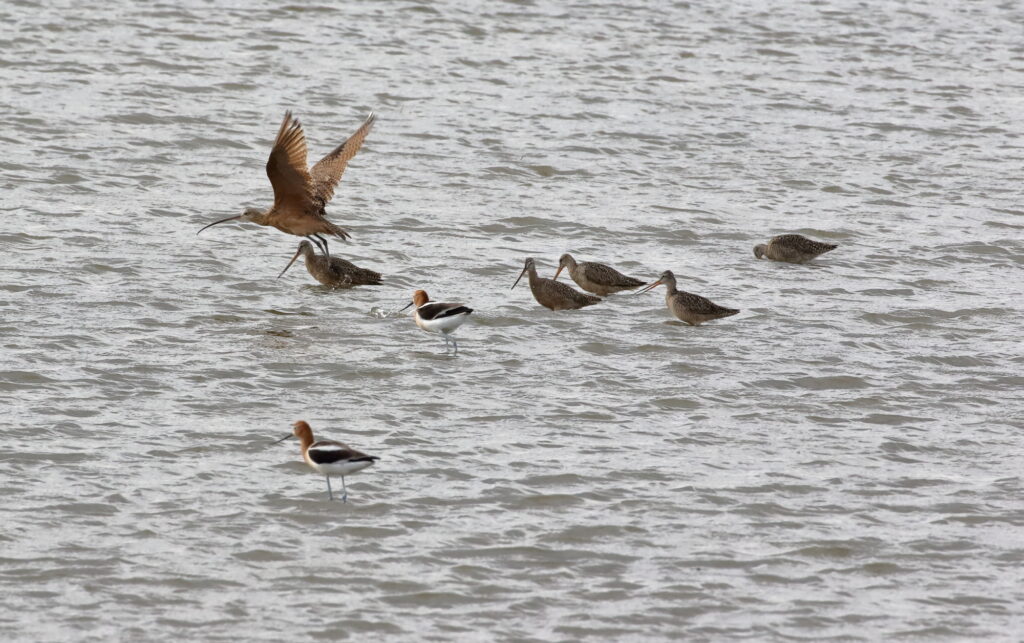
A fun shorebird assortment at Benton Lake NWR. Can you name them all? (Answer at the bottom)
  • Watching three American Bitterns flying over Sčilíp (formerly Dixon) Marsh. For context, we had never even heard an American Bittern here—and seen and heard only three or four in the entire state. At first, in fact, we thought the three birds might be Great Blue Herons, but Braden’s astute eyes picked out the brown color and dark ends of the wings. WOW!
  • A surprise Short-eared Owl at Ninepipe. Usually, these critters “bed down” a couple of hours after sunrise, but overcast skies probably helped this one keep hunting until we arrived. THANK YOU, OWL.
  • A Long-billed Curlew at Ninepipe—a curlew that turned out to be a WHIMBREL, again, thanks to Braden’s keen ID skills. Only a handful of whimbrels end up in Montana each year, and almost never west of the divide. This was the first one recorded at Ninepipe in six years—a truly rare find that helped render the entire day a spectacular hit, even though it wasn’t half over.
  • A clean sweep of large prairie-dwelling shorebirds at Benton Lake NWR, including Upland Sandpiper, Long-billed Curlew (that didn’t turn into a whimbrel), Willets, and Marbled Godwits.
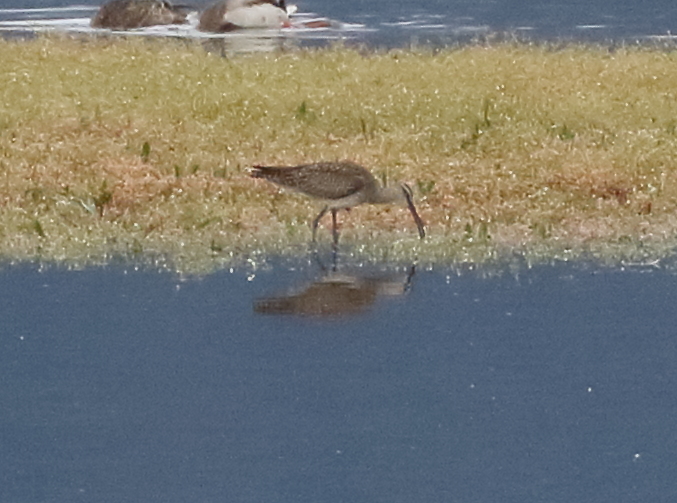
Grabbing Bird of the Day honors, we caught this rare-for-Montana Hudsonian Whimbrel hanging out with some distant Canada Geese!

Speaking of Benton Lake, this was the first time we’d birded there in mid-May and it was interesting to note who was home. Usually, for instance, there are thousands of breeding Franklin’s Gulls, but we saw only a couple of dozen. Ditto for Eared Grebes which can dot the lake in the many hundreds. We counted fewer than one hundred, though couldn’t accurately assess the far sides of the upper lake where they mostly hang out. On the other hand, we saw more White-faced Ibises than we’d ever seen—about seventy. It’s hard to make any generalizations from this since the bar charts show that all of these birds should be there in strong numbers now, but we did feel that some of the birds are arriving a bit late this year.
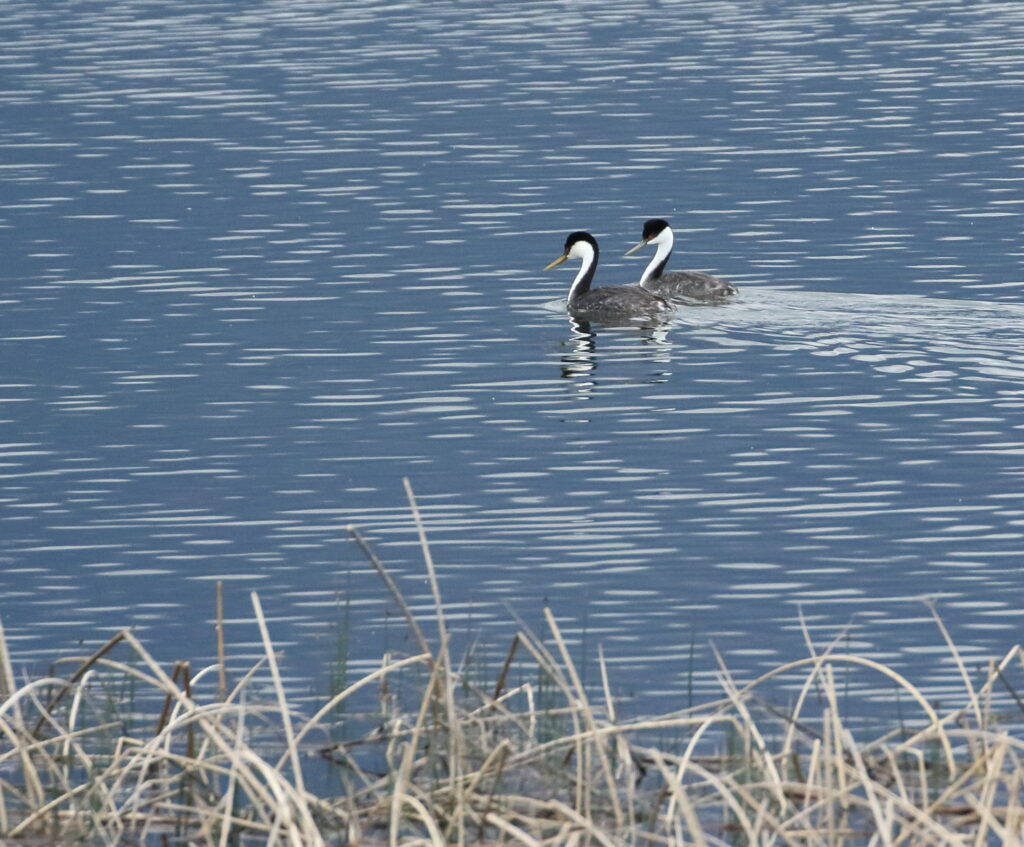
A great bonus to birding this time of the year was witnessing several species courting and mating, including these Western Grebes.

Other great birds we saw or heard included Yellow-breasted Chat, a lagging Snow Goose, a Horned Grebe, Cassin’s Vireo, Chestnut-collared and Thick-billed Longspurs, Wilson’s Phalarope, Swainson’s Hawk, and the marsh trifecta of Sora, Virginia Rail, and Wilson’s Snipe. We definitely had a few misses, such as Common Loon, Golden Eagle, Black Tern, and Black-crowned Night Heron but we all agreed that the birds really came through for us, perhaps having heard that our efforts were going to help birds!

Our final tally came in at a mind-blowing 135 species—enough to bankrupt our sponsors and ensure that we will participate in Birdathons far into the future!
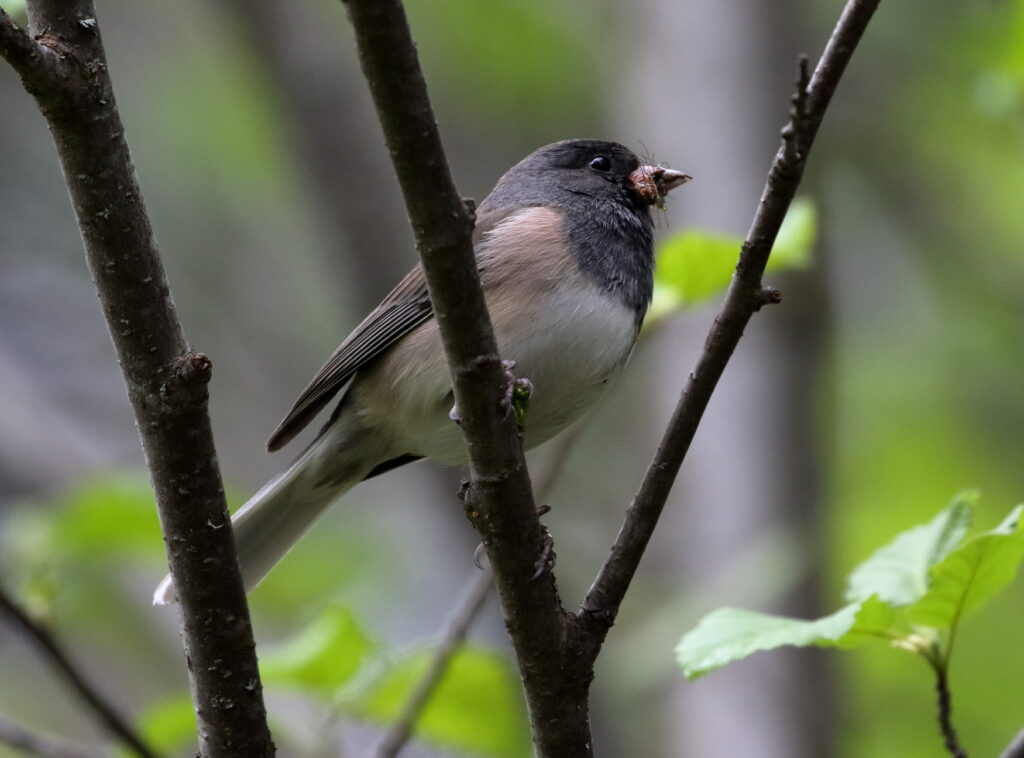
Photography did not rank high on our list of priorities during Birdathon, but this Dark-eye Junco with prey did pose for my best ever DEJU shot.

Bird ID Answers: Long-billed Curlew (1), American Avocets (2), Marbled Godwits (5).
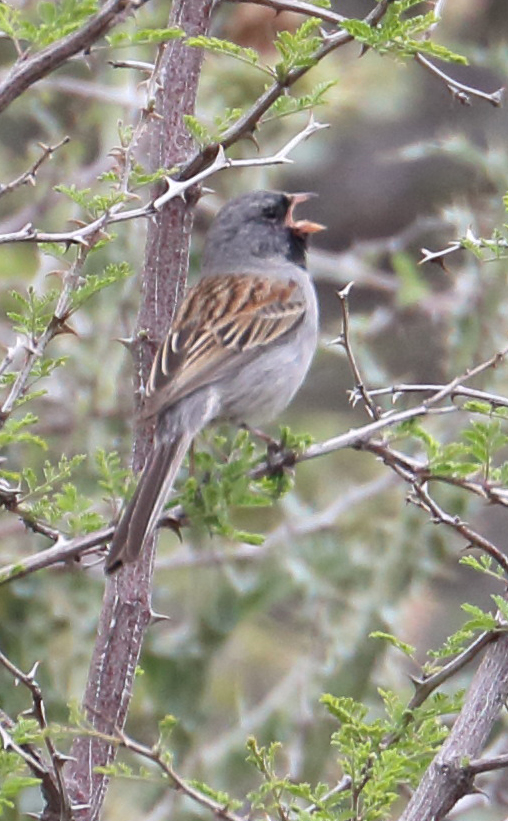
Black-chinned Sparrow: Bird #14 on Braden’s ABA Life List Countdown

Today, we continue Braden’s countdown of the remaining birds he needs to complete his American Birding Association life list. For more information on this journey, check out his post, Lower 48 Life List Countdown: Crissal Thrasher. As always, if you’d like to support FatherSonBirding, consider buying new copies of some of Sneed’s books shown to the right. If you already have them all, why not buy a copy for a friend? As always, thanks for reading!

On April 4th, 2026, I left my job of eight months, with my internal compass pointing home. I’d lived and worked in Running Springs, California since late August of 2025, as an educator and camp counselor at Pali Institute for Outdoor Education. I’d seen so much of the country during this time, and met some really cool people, but on April 3rd I finished my last work shift. The next day, I moved out of staff housing and drove south to Ramona near San Diego to stay with my cousins. That night would be the first of many on a twelve-day road trip I’d planned across the American West on my way back to Montana. Though I looked forward to seeing many birds (see my Crissal Thrasher blog) on the trip, I especially set my sights on the last US sparrow that I’d never laid eyes on: Black-chinned.

Black-chinned Sparrows are classic chaparral birds found in canyons and hillsides across much of California, Arizona and New Mexico. They’re particularly drawn to post-fire habitats—the dense shrubbery that rises from the sooty ground five to ten years after a burn. Outside the core of its range, the species can be quite local, which might explain why I hadn’t bumped into one so far. While I have spent extensive time in both central California and southeast Arizona, a lot of the birding I’ve done in these locations is either too wooded or too deserty for Black-chinned Sparrows. The one concentrated effort I made for the species was both at a bad time of year and a bad time of day for the species, when a friend and I had driven up a random road south of San Francisco where a single singing bird had been reported weeks prior.

The Beeline Highway

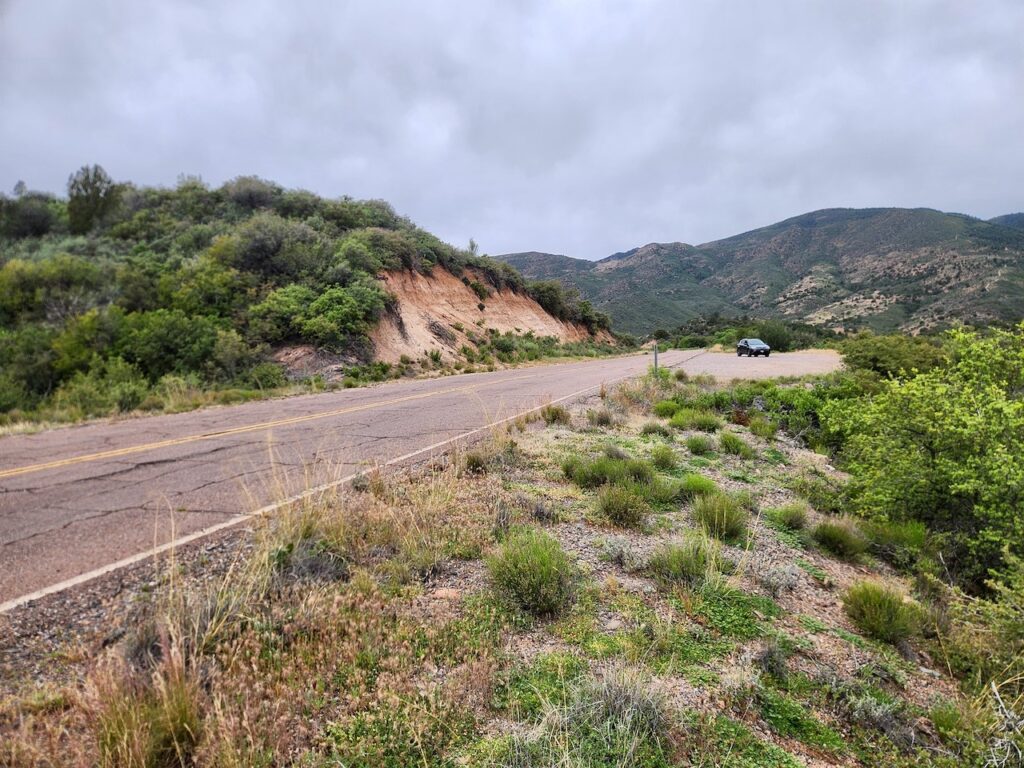
When planning my route home from Running Springs, I had several goals in mind: to explore parts of the West I’d never before visited and to target a few bird species that would either be lifers, or living in new locations I’d never explored. With all of this in mind, I left my cousin’s house in Ramona on April 5th and drove six hours through the Mojave Desert, arriving at a location known as the Beeline Highway an hour or so after sunset. This section of the highway ran through Sycamore Canyon, a middle-elevation canyon that stretched from the saguaro-covered foothills north of Phoenix up towards 7,000-foot Mt. Ord. No longer a through road thanks to a closure on the lower section, it was known to be one of Phoenix’s top birding locations. 

As I began to set up my tent, thinking about all the fun canyon country birds I might see tomorrow, a barking echoed from the creek a couple hundred meters away. I recognized it as a sound I’d only heard a few times: an Elf Owl! Deciding my tent could wait, I grabbed my flashlight and camera, walking towards the sound. When I got to the tree I thought it was coming from, I raised my light and immediately spotted the bird: America’s smallest owl was barking, unperturbed, from a small cavity in the sycamore. Then another Elf Owl landed on a tree on the other side of the road! I’d only heard this species before, never gotten eyes on one, and I hadn’t even realized they lived this far north! Happy, I went to bed as the Elf Owls called into the night.

Sycamore Canyon

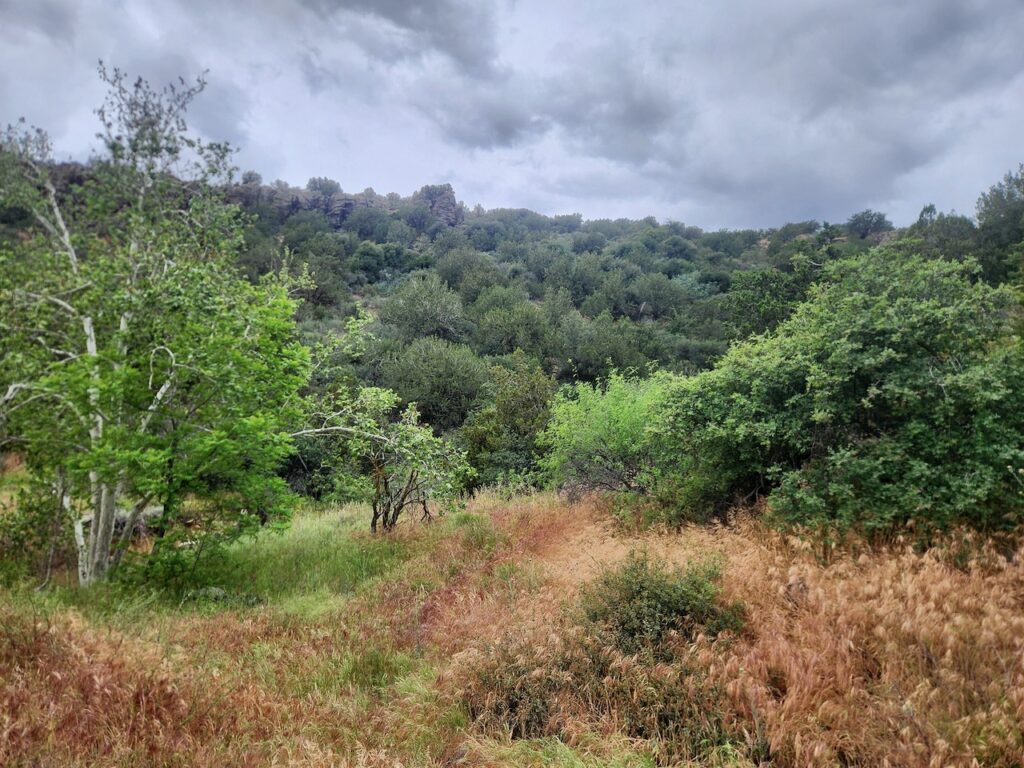
The next morning, unfamiliar bird songs woke me, and I packed my tent before the sun crested the hills. As I headed down the road, I spotted Northern Cardinals and Ash-throated Flycatchers, knowing full well that Black-chinned Sparrow reports were more frequent higher up the canyon but curious as to what else lived below. Arizona sycamores followed the creek down the canyon, which contrasted with the dry, rocky, juniper-covered slopes surrounding me, and created great habitat for birds like Hooded Oriole, Bell’s Vireo and Cassin’s Kingbird. From the hillsides sang Rufous-crowned Sparrows, a southwestern bird with a messy jumble of a song that I’d been learning to love over the last few months. 

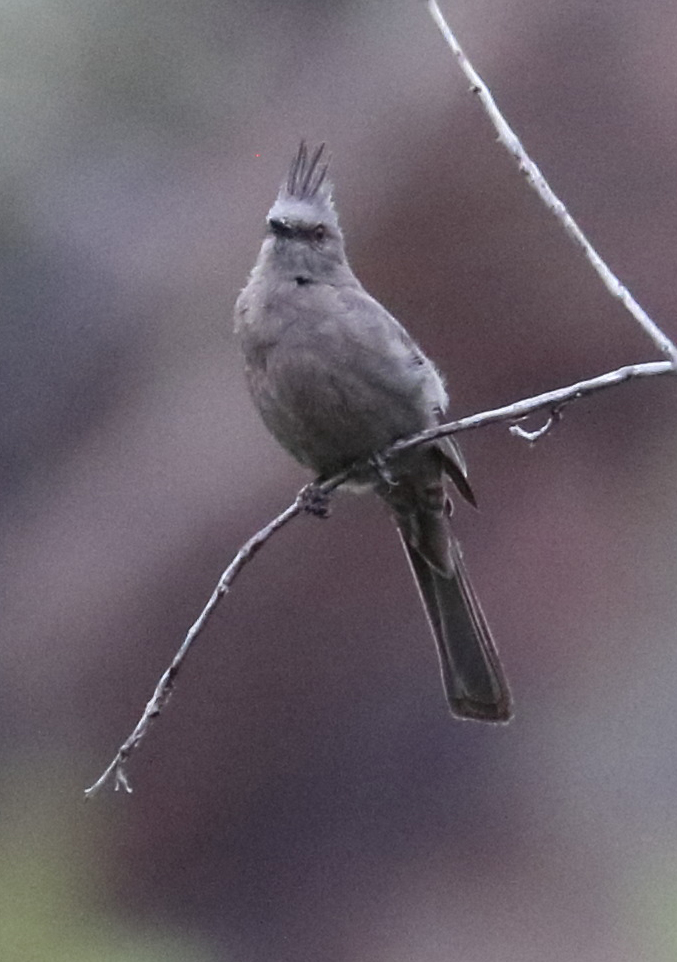
Phainopepla

Forty minutes after I started walking the canyon, another car pulled alongside me. A woman got out, introducing herself as Shannon and stating that she was a local birder. From then on, we mostly birded together, taking turns pointing out cool birds as we encountered them.

“Zone-tailed Hawk above us!”

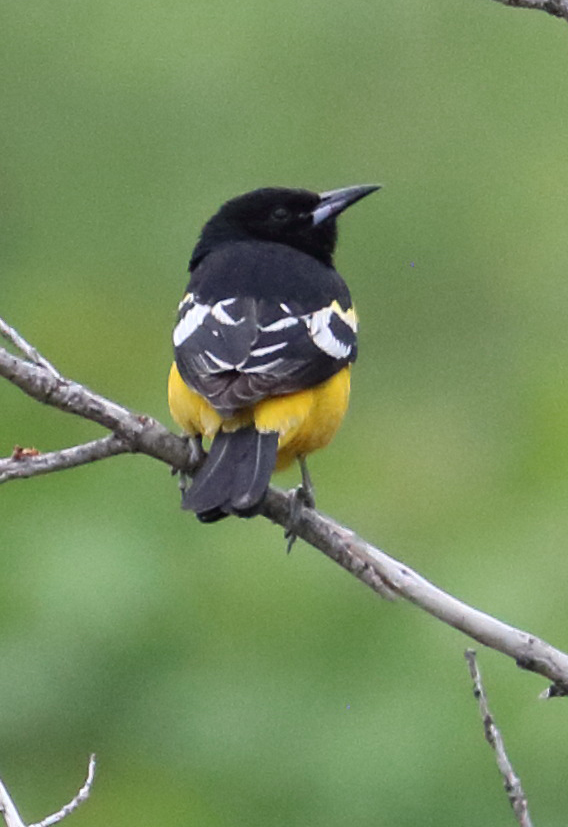
“Check out that male Scott’s Oriole!”

“Oooh, that Costa’s Hummingbird is displaying!”

Scott’s Oriole

Eventually, we arrived at a natural turnaround point—a large, grassy pile of dirt blocking the road. The road continued behind it, but Shannon decided to turn around. I felt that I should keep going a little farther, a birding strategy that I’d adopted in recent years. Often, when I feel like turning around, I decide to push on around ‘just one more corner’, and it’s gotten me some great birds over the years. I did just that, and wasn’t disappointed.

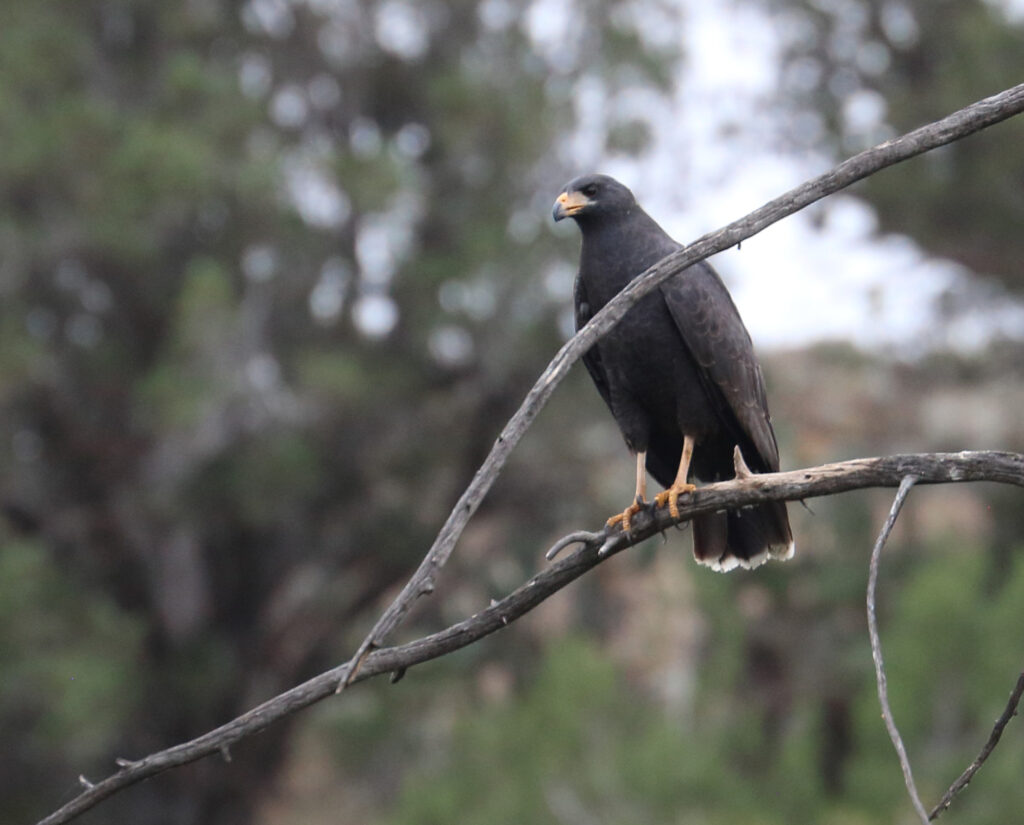
To be honest, Black-chinned Sparrow was not the main reason I’d selected this location. No, the Beeline Highway was known for another species, one I’d seen before in Costa Rica but never in the US—Common Black Hawk. In the tropics these raptors are hard to miss, using mostly coastal habitats, especially mangroves. North of the Mexican border, though, there are fewer than 300 nesting pairs, confined to sycamore-covered canyons. 

Sure enough, after walking around ‘just one more corner’, I spotted it: A Common Black Hawk sitting on a nest in the crook of a sycamore. I snapped a bunch of pictures and watched as it began flying back and forth, its calls bouncing off the walls of the canyon.

Common Black Hawk

I headed back up the canyon and again met Shannon, who gave me a ride to my car. We parted ways and I continued driving slowly with the windows down. I’d seen a ton of cool birds so far, but I couldn’t help feeling a little stressed. Where were the Black-chinned Sparrows?

Apparently, near the top of the canyon! Pulling over for probably the fourth time, I immediately heard one sounding off from the valley below—a musical, descending song like that of a Field Sparrow but more piercing. While I don’t enjoy using playback, I went ahead and played its song. My bird didn’t come any closer, but the sound prompted another sparrow to start singing on the other side of the road. I snuck up on him and suddenly, not ten feet from me sat a male Black-chinned Sparrow. Almost immediately, a second male flew in to join him and the two flitted from bush to bush together, never staying in one place for longer than ten seconds but giving me satisfying views. I knew they were both males because only the male of this species has the diagnostic black chin.

Black-chinned Sparrow

The Beeline Highway offered up one more gift before I left. While watching the sparrows, I heard the telltale varied song of a mimid. I walked to the edge of the road expecting a Northern Mockingbird, and instead was treated to great views of a Crissal Thrasher! This high-altitude shrubby habitat differed in nearly every way from the desert wash where I’d seen one in Vegas, but the bird seemed to be thriving here! As I headed north, away from the sycamores and saguaros, I felt a pang of regret since I likely wouldn’t be seeing these birds again for a long time. However, I knew that today’s experience would give me hours of pleasant reflection as I continued my adventure into new, exciting habitats.

Colorado’s Ute Mountain Mesa Verde Birding Festival (FSB Festival Report)

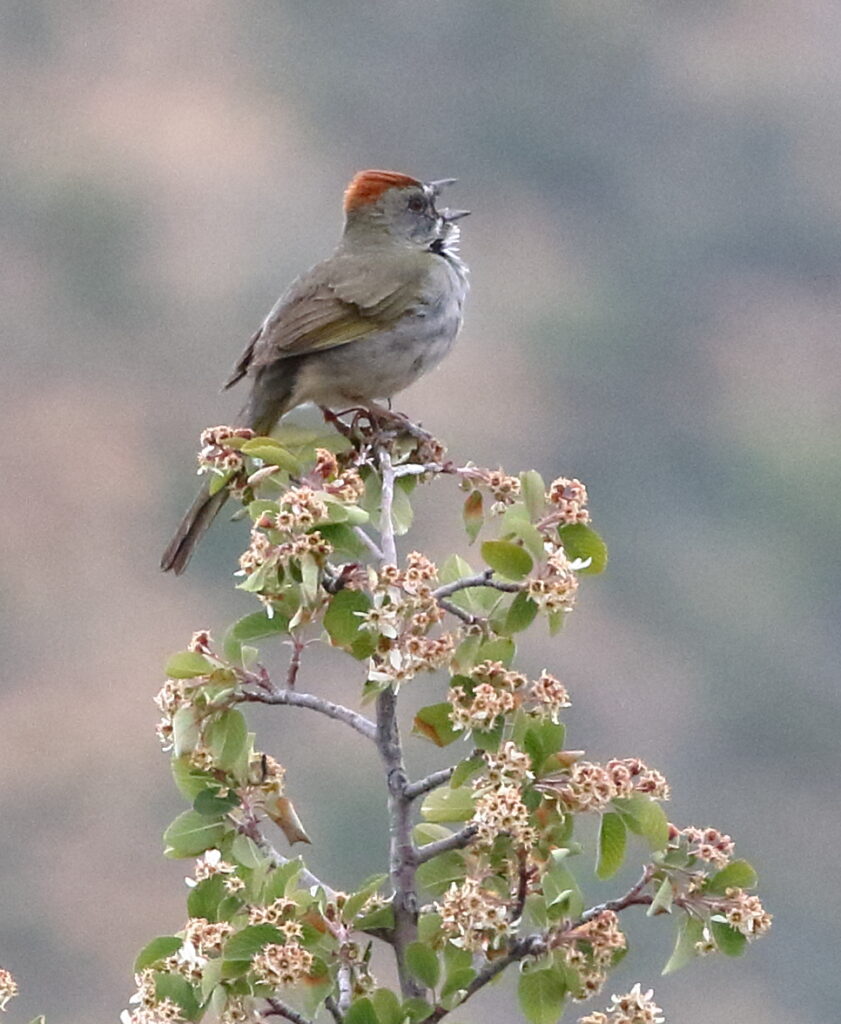
I hadn’t visited the Four Corners region of Colorado in sixty years, so when I got an email inviting me to keynote a birding festival almost literally in the shadow of Mesa Verde National Park, well, it took me about one wingbeat of a Broad-tailed Hummingbird to accept. The festival was the Ute Mountain Mesa Verde Birding Festival and why they chose me harkens back to last year’s blog post In Search of the Green-Tailed Towhee. Each year, the festival selects a different featured or mascot bird to help promote the fest, and the committee just happened to choose the GTTO (the bird, not the car) for 2026. After doing a quick web search, they found my blog—and the rest is history.

My invitation to the Ute Mountain Mesa Verde Birding Festival resulted from last year’s blog post In Search of the Green-tailed Towhee.

Well, not quite. I still, after all, had to attend the festival—and what a delight it turned out to be.

After being invited, the first thing I did was to look up what kinds of birds I might see. It was a good list, consisting of a nice mix of conifer forest, wetland, and sagebrush birds. What got me doing lizard push-ups, however, were the birds of the pinyon-juniper forests—what the locals refer to as the “PJ forest.” These birds included several species that are challenging to find in Montana such as Blue-gray Gnatcatcher, Gray Flycatcher, Pinyon Jay, and Green-tailed Towhee. Even better, it included a couple of potential lifers pour moi, especially Virginia’s Warbler and Gray Vireo.

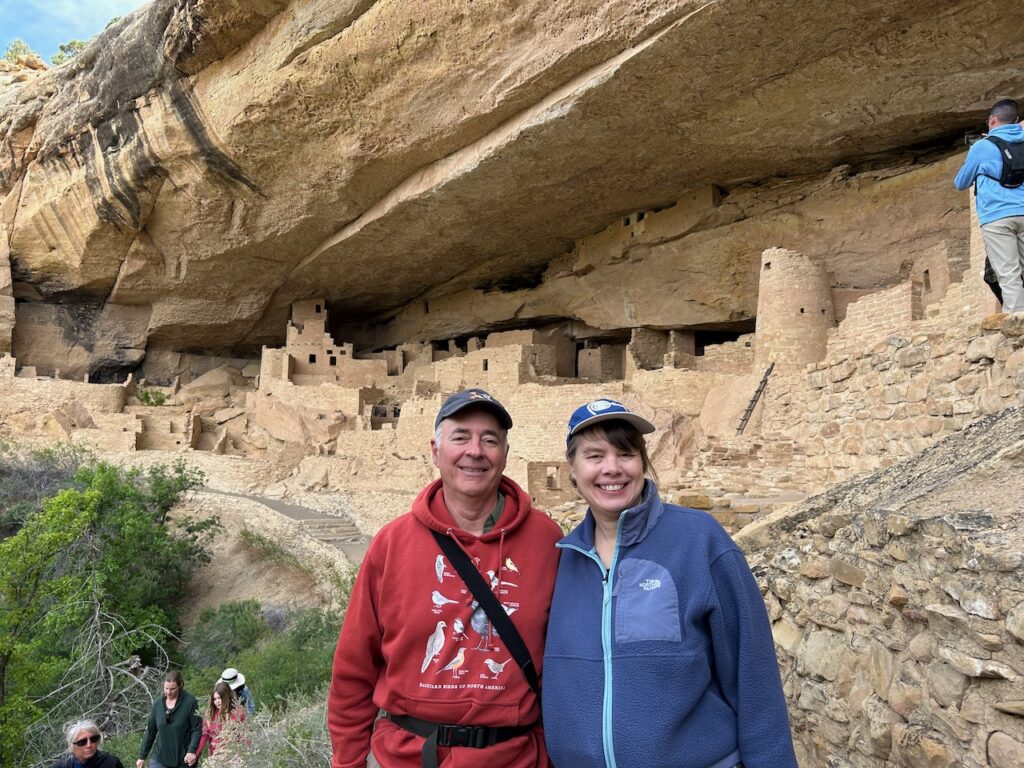
Having Amy along for the first few days helped make this trip extra special!

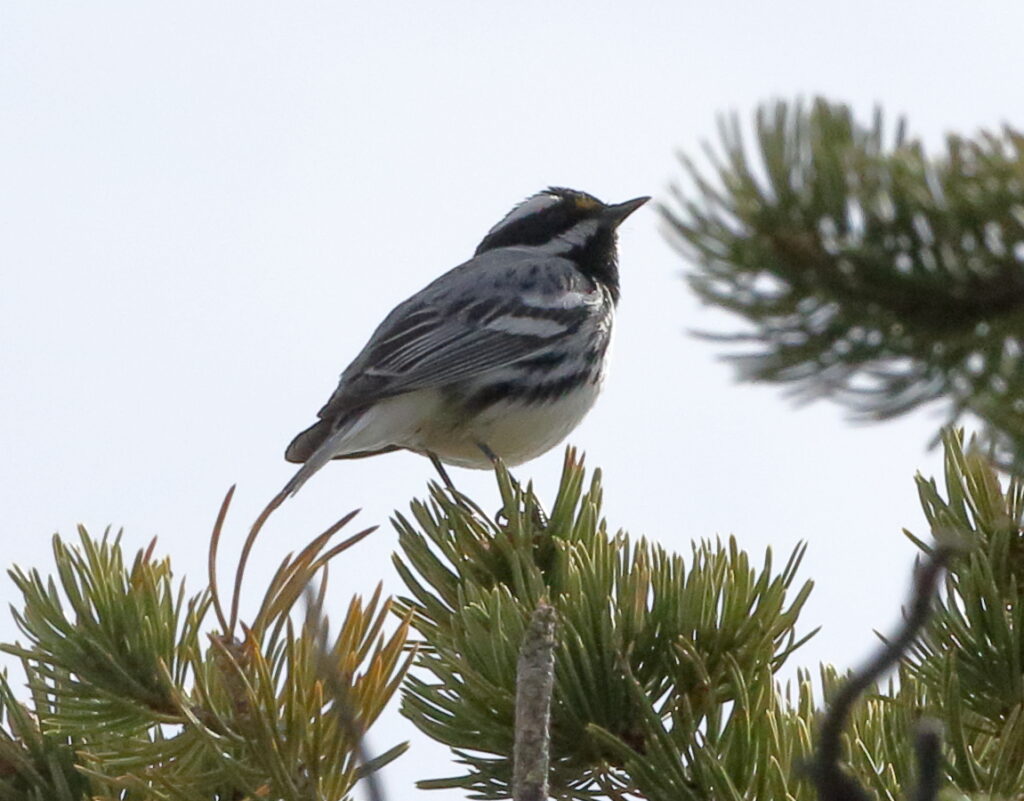
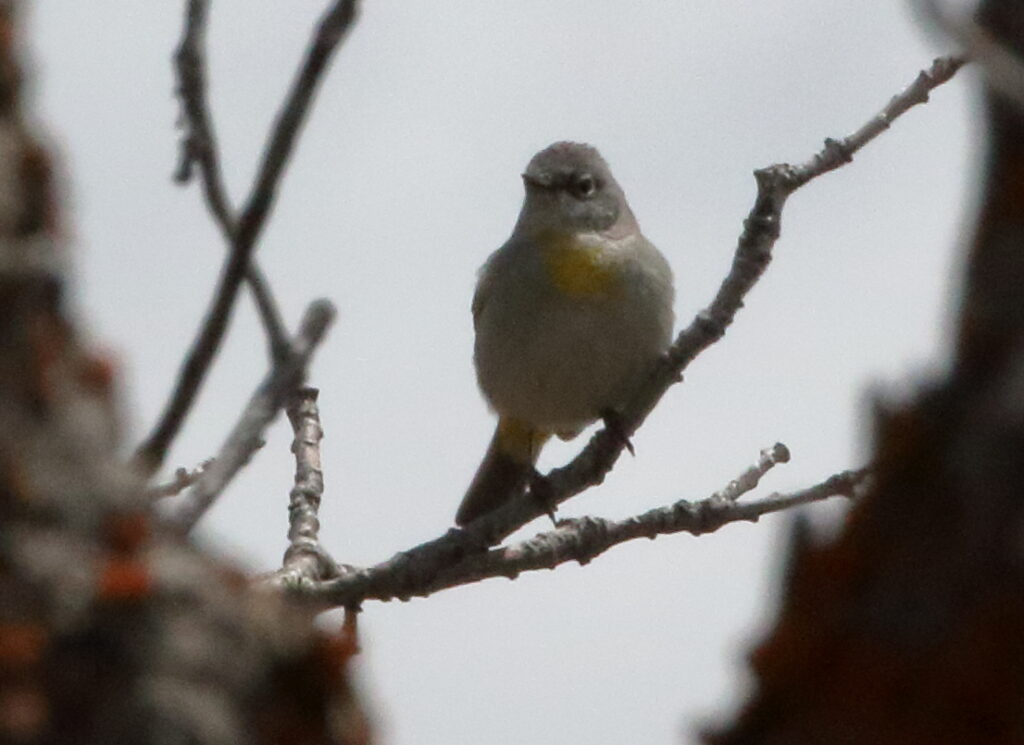
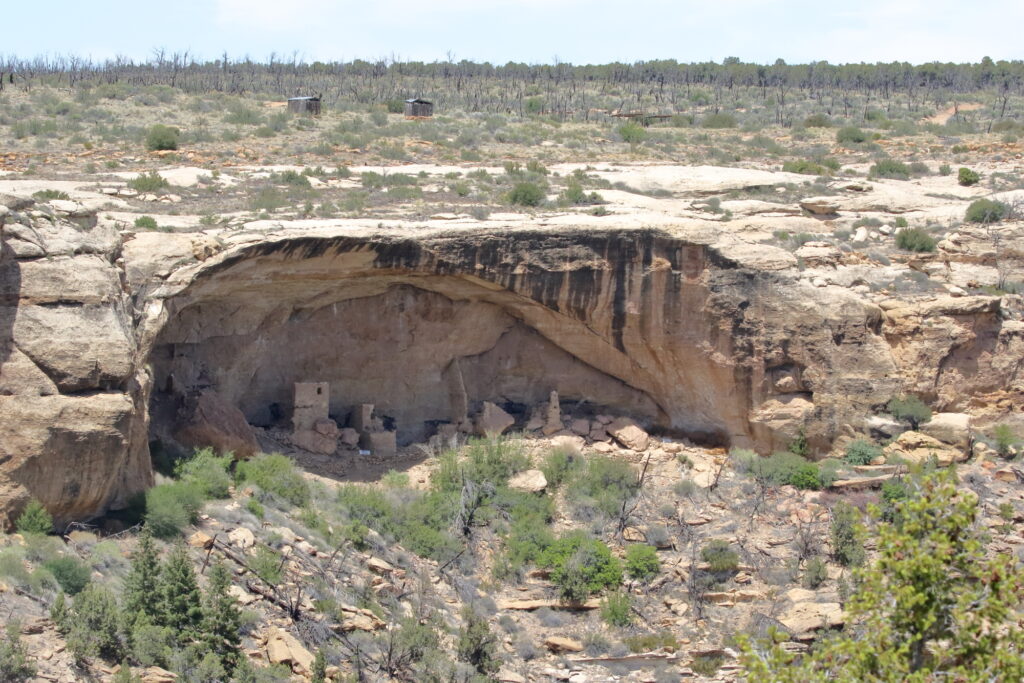
What made the trip even more exciting was that I convinced my wife Amy to fly down with me a couple of days early to explore Durango and visit Mesa Verde National Park—where we saw my first Black-throated Gray Warbler in eight or nine years and heard both Rock and Canyon Wrens right next to the famous Cliff Palace dwellings (see above photo)! Afterward, we took a delightful hike on the park’s Knife Edge Trail, and almost immediately Merlin’s Sound ID picked up one of my top trip targets: Virginia’s Warbler! It took only about five minutes to get a glimpse of this gorgeous little creature and as a bonus, the trip’s first Blue-gray Gnatcatchers joined it. Alas, Amy had to head home Wednesday, but that may have been just as well since three intensive days of birding lay ahead of me.

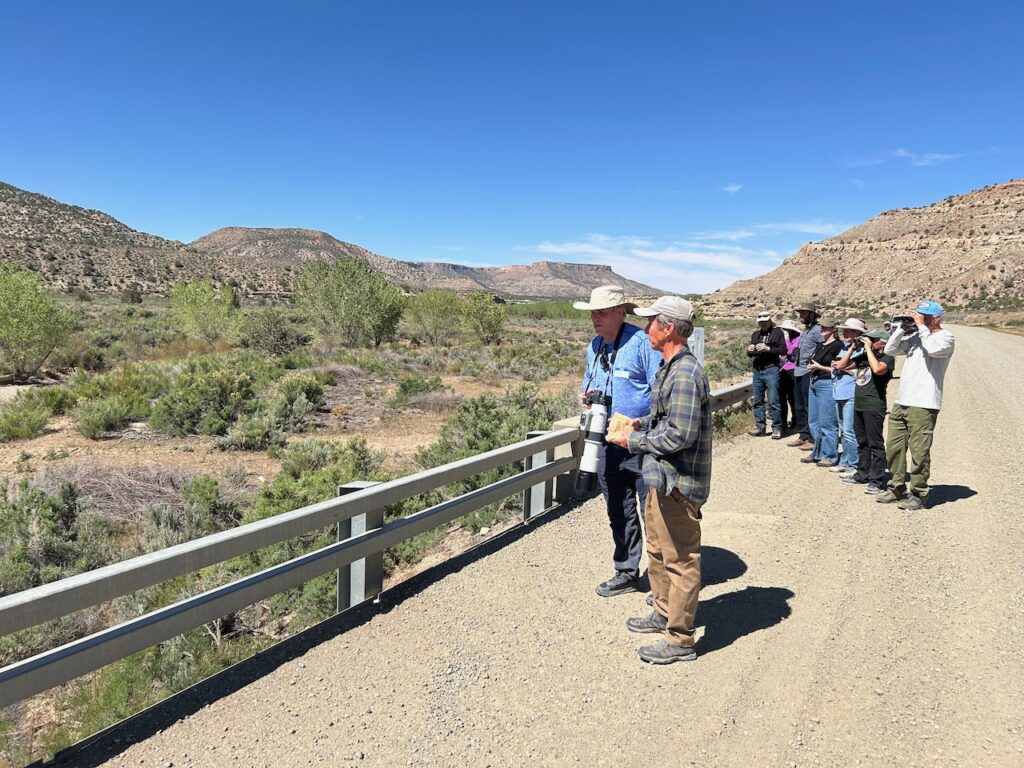
When you get invited to speak at a festival, it is common to be asked to “co-lead” field trips with local birders who are the real experts. Doing this may be the best part of the invitation, and I felt especially excited about the trips I had been assigned. The first, led by Mesa Verde’s Chief of Natural Resources, Paul Morey, took us into the little-known wilderness part of the park—a section along the Mancos River closed to the public. The river—a creek by Montana standards—led through spectacular groves of cottonwoods as well as PJ forest and sagebrush habitat, overlooked by the impressive main ridge of the park.

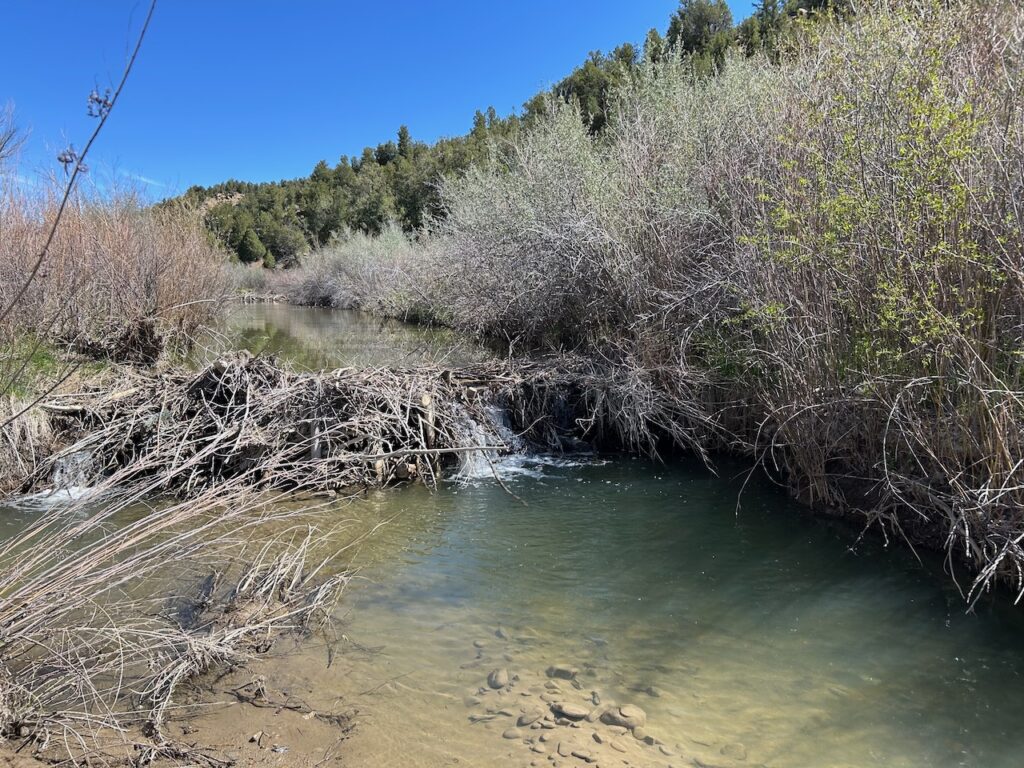
A special bonus of our Mesa Verde wilderness hike was getting to see the restoration work the park has been doing–including facilitating the return of beavers to the Mancos River. This has already improved water levels and sedimentation that the cottonwood gallery forest needs to thrive.

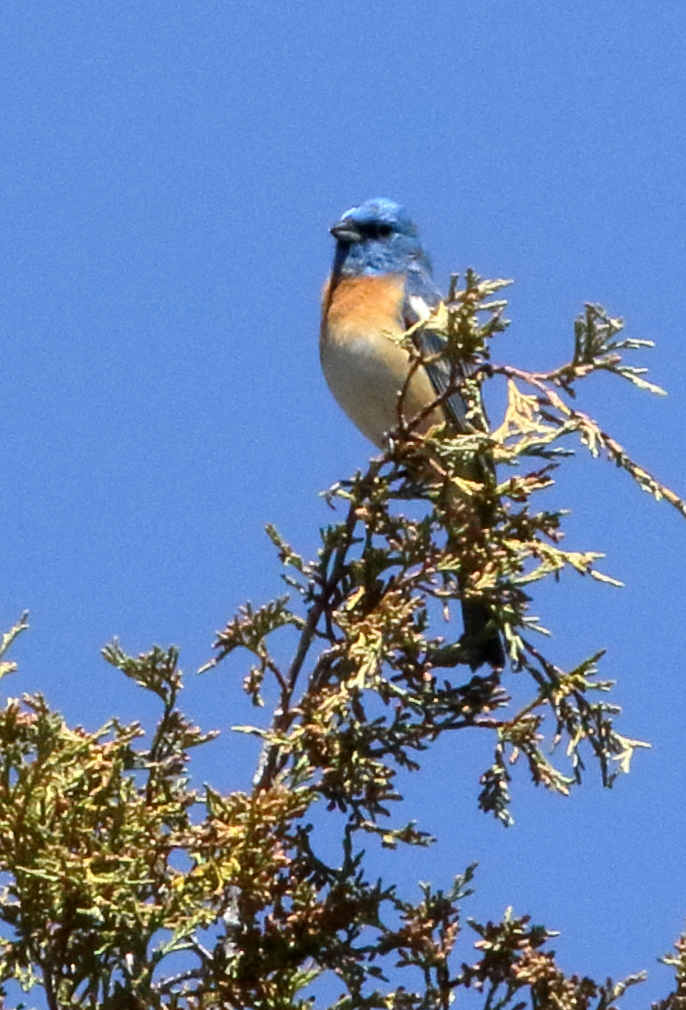
We got some nice surprises on our four-mile hike: Golden Eagles, Plumbeous Vireos, Lark Sparrows, more Virginia’s Warblers, and two Red-naped Sapsuckers. Lazuli Buntings and Yellow-breasted Chats earned crowd favorite honors, though the chats did their best to elude us visually until late in the hike. Another great thing about the trip, however, was getting to meet wonderful, bird-loving folks from all over the country—new friendships that would solidify over the next couple of days of birding.

Not surprisingly, Lazuli Buntings were one of the crowd favorites of our first-day group.

Friday’s trip took me to another place that had limited access—a downstream section of the Mancos River located in the heart of the Ute Mountain Tribal Park. To enter this area, you need to be on an official tour organized by the Tribe (see details here) and all I can say is “Do it!” I got an inkling of what we were in for as we passed the impressive Chimney Rock and entered the canyon itself. On both sides of us, incredible walls like giant Jenga constructions rose for miles upstream, the river threading through them as if nothing had changed for millennia.

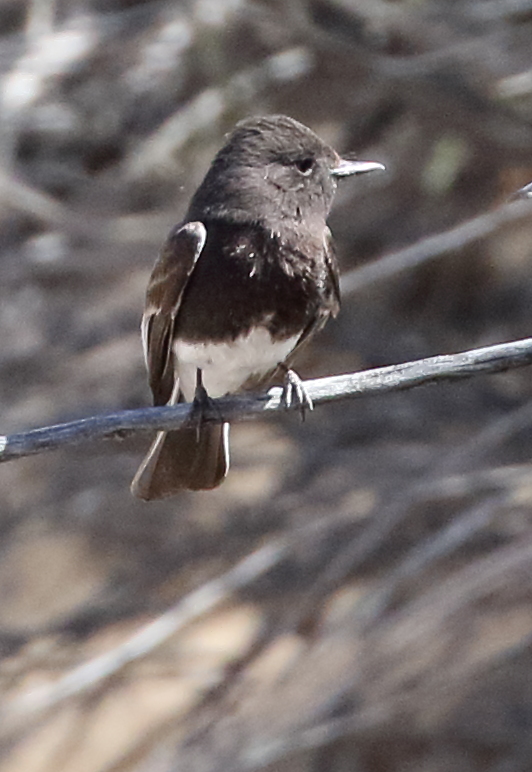
Don Marsh, our fearless leader, had us stop at many locations and the birds repeatedly surprised us. Almost immediately, we saw ten Western Tanagers moving together upstream, surely still in migration. Say’s Phoebes, Ash-throated Flycatchers, Lark Sparrows, and Woodhouse’s Scrub-Jays flitted between trees and bushes while more chats and Gambel’s Quail provided an alluring soundtrack.

Most visitors to Mesa Verde don’t realize the remarkable number of Puebloan sites—thousands of them—that fill the area, including this spectacular cliff site in the Ute Mountain Tribal Park.

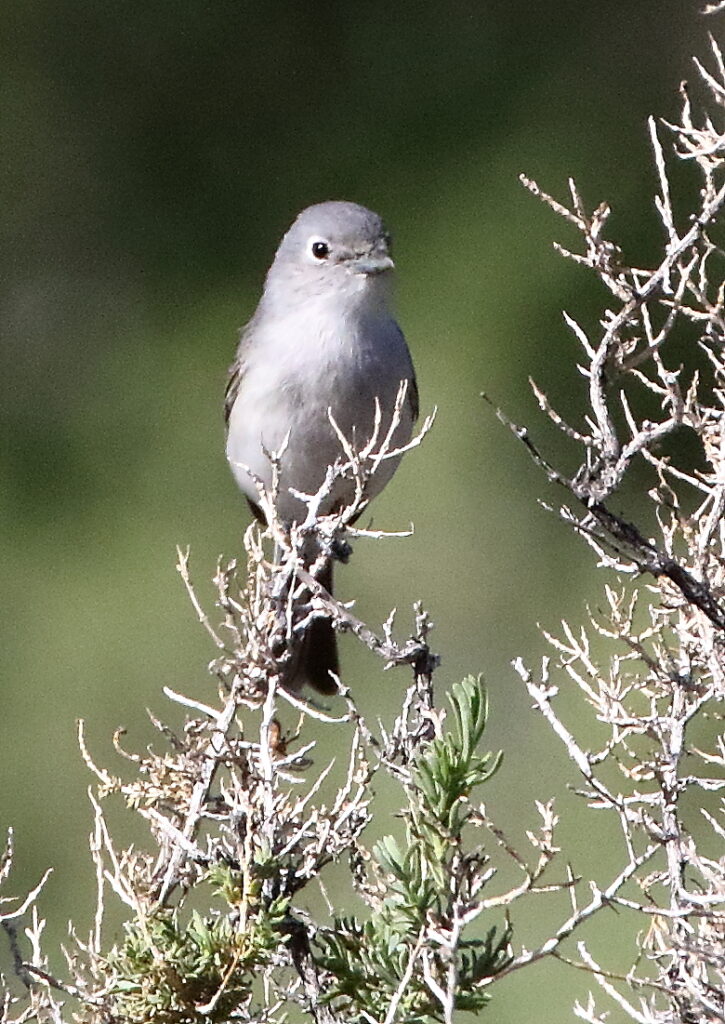
Don had been charged by festival organizer Diane Cherbak to find me my Number One Target Bird, Gray Vireo, and he set about this task with determination. On only our second or third stop, he said, “I hear one,” and for the next fifteen minutes, we doggedly tried to get a glimpse of it. The little bugger didn’t make it easy! We saw movement in bushes and others in our party shouted, “There it is!”—always a split-second late for me to see. FINALLY, the bird quit taunting us and popped up to the top of a bush where I got a lengthy, glorious glimpse of this drab, but thoroughly enchanting little bird! This trip also provided some additional adventures including a flat tire and a break to admire impressive cliff dwellings and petroglyphs few people ever get to see.

My top trip target bird did its best to stay out of sight before finally posing for a photo op. Thank you Gray Vireo—and Don, for finding this bird for me!

Saturday saw us in the good hands of Brenda Wright and Coen Dexter, two of the area’s top birders, as we explored the Canyons of the Ancients National Monument, a sprawling region northwest of Cortez. This was the heart of Pinyon-Juniper country and offered a wonderful mix of PJ forest, agricultural fields, Puebloan ruins, and yet more stunning canyons. On our explorations, we saw yet another Gray Vireo along with Brewer’s Sparrows, Cassin’s Kingbird, Juniper Titmice, both Sora and Virginia Rail, and perhaps the day’s highlight, a pair of mating dark morph Swainson’s Hawks! Fittingly, our last new species of the day here was the festival’s featured bird, a Green-tailed Towhee that I saw dive into a bush and stuck around long enough for everyone to see it.

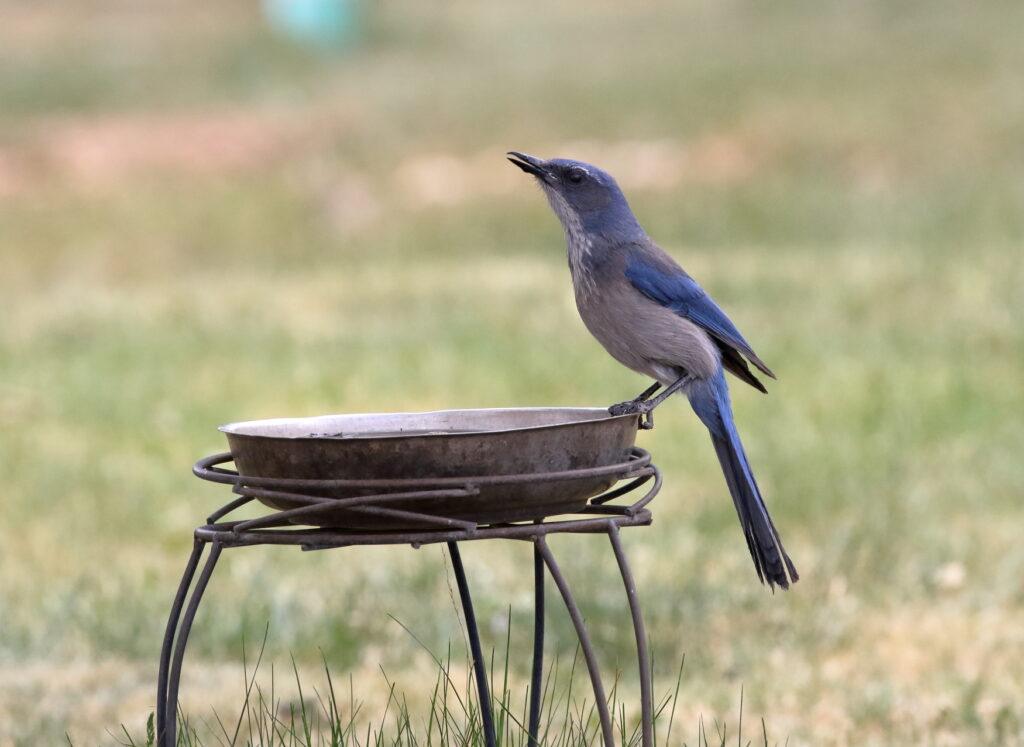
Woodhouse’s Scrub-Jays greeted us every day of the festival—incredibly adaptable birds that I had seen only twice before.

I honestly felt sad to leave this amazing festival in a remarkable part of the world—and I encourage you to give it a try. The festival offers more than twenty tours over its five days and has some of the friendliest people I’ve met anywhere. Both Durango and Cortez are fun towns to explore and hang out in, and both offer great Mexican food, fun shopping, and other cool activities. Speaking of food, a wonderful local caterer creates some of the yummiest “field lunches” I’ve ever had—so yummy that I usually ate them by 9 or 10 o’clock each day. Best of all, the festival is for a good cause, being the main fundraiser for the Cortez Cultural Center.

For more information, check out the festival website: https://utemountainmesaverdebirdingfestival.com/

I certainly hope it’s an event I’ll return to one day.

My Colorado eBird Trip Report: https://ebird.org/tripreport/519560

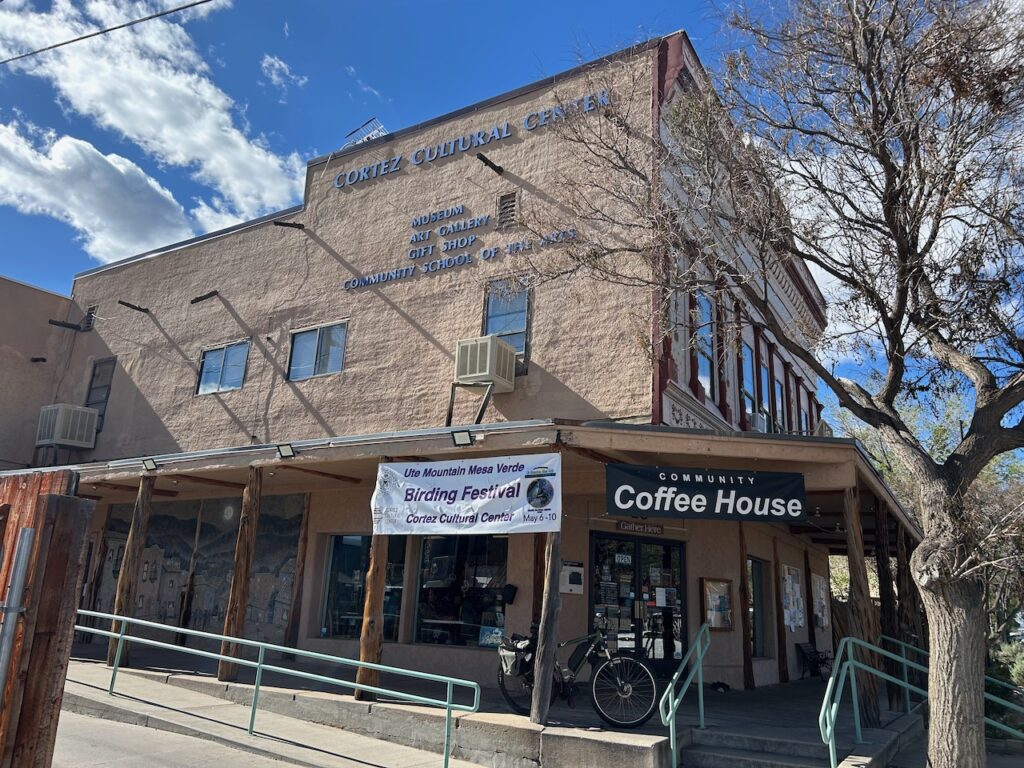
The Ute Mountain Mesa Verde birding festival is the major fundraiser for the Cortez Cultural Center each year. The center’s mission is to “provide programs that enrich the lives of our community and its visitors by increasing cultural awareness, promoting the arts, and educating about the area’s history, diversity and natural environment.”