Category Archives: Deer Lodge

Vortex Viper 11-33X50 and Crossfire HD 12-36X50: Two Travel Scopes, Head to Head (FSB Equipment Review)

We hope you are enjoying our reviews and other posts at FatherSonBirding. A reminder that we do not receive payment for any of our blogging efforts, so if you wish to support our work, please consider purchasing a few *new* copies of Birding for BoomersWarblers & WoodpeckersFirst-Time Japan, or any of Sneed’s other books. If you already have copies, why not pick up some for your friends? 

Sometimes, you just gotta go birding. Such was my feeling recently when my friend and birding buddy Susan Snetsinger collected me for an all-day birding expedition to Butte and back. As a sizzling pink dawn crept over our neighborhood, I felt particularly excited. Why? Because today, we were going to test two spotting scopes ideal for the traveling birder: the Vortex Viper 11-33X50 and the Vortex Crossfire HD 12-36X50.

Vortex classifies both of these scopes as “Compact” in size, but I also refer to them as “travel scopes” because they are small, light, and fit easily into almost any backpack or suitcase. A few months ago I posted a very positive review of Vortex’s top-of-the line compact scope, titled “Vortex Razor HD 13-39X56 spotting scope with Mountain Pass tripod.” I recommend reading that post again before you read this review as it will help provide the entire story about these three scopes—in descending price order. As you’ll recall, the Vortex Razor HD 13-39X56 runs about $1,000 and is well worth the money. It may be out of reach for many birders, though, and that’s one reason I felt so excited about testing the more affordable Viper and Crossfire compact scopes. The Viper lists at $849.99—but can be purchased for about $600. Meanwhile, the Crossfire lists for $299.99—but can be bought for around $200. “But,” Susan and I both wondered, “how will these two more affordable scopes stack up against each other?”
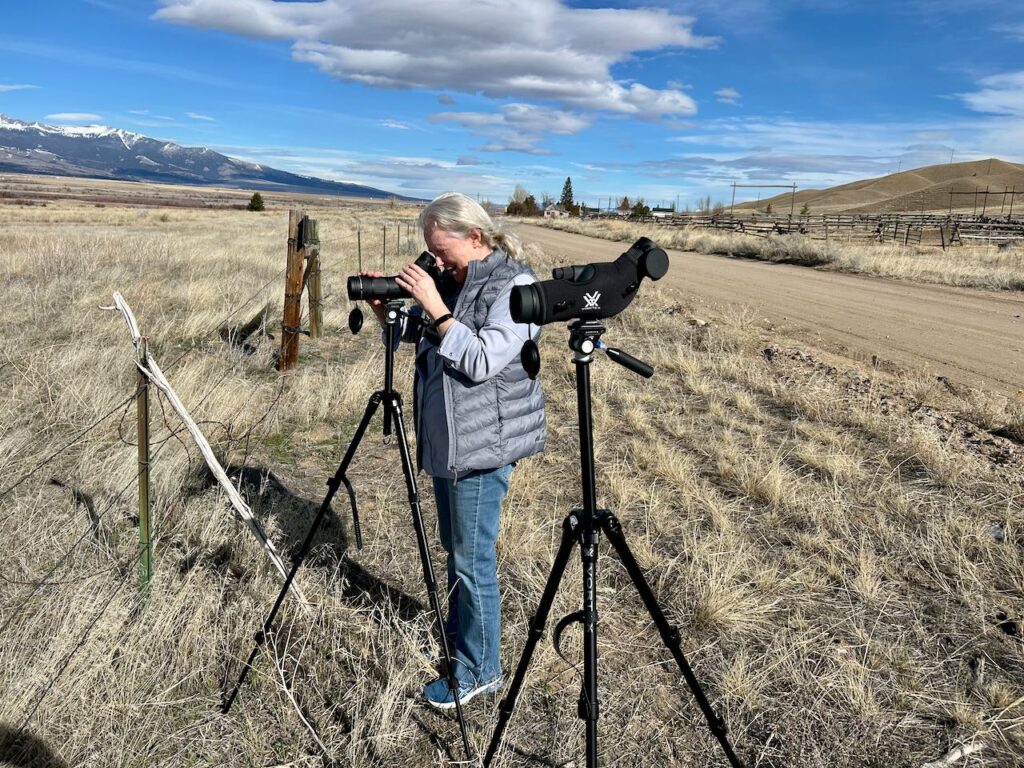
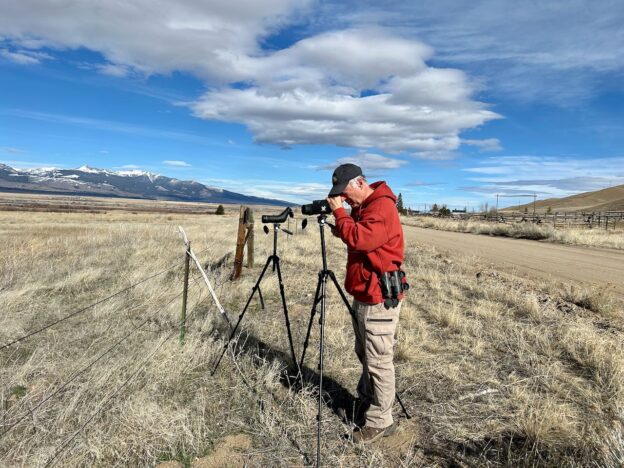
My birding pal Susan testing these scopes side by side at Warm Springs wildlife area.

First, let’s discuss what they have in common:

  • Both come in an angled configuration (see image below), which I much prefer to the straight option because it allows for a lower, more stable position on the tripod and easier viewing.
  • Both are about 10.3 inches long and weigh in at about thirty ounces—just under two pounds, or a bit more than an average pair of binoculars.
  • Both have very similar magnifications, the Viper zooming from 11 to 33X magnification, and the Crossfire 12 to 36X.
  • Both are built to fit the Arca-Swiss standard mount, which allows them to be directly fitted to Vortex and many other tripod heads without a pesky adaptor plate.
  • Both come with Vortex’s no-questions-asked lifetime warranty, making either scope a worry-free purchase from the get-go.
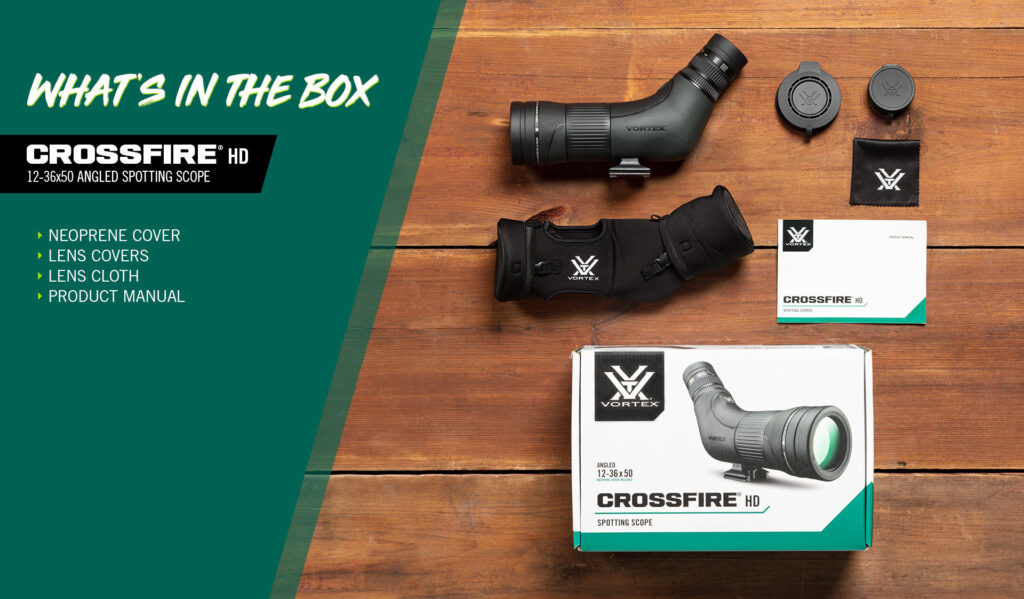
Both scopes come with easy-to-use lens caps and a neoprene sleeve for protection.(Photo provided by Vortex.)

Which leaves the primary question you’re probably asking yourself: Is the Viper worth the extra $400 I would have to spend over the Crossfire? To begin finding out, Susan and I rolled up to our first stop, Racetrack Pond just south of the town of Deer Lodge. We set up the two scopes side by side, each perched on a Vortex Mountain Pass tripod and began scanning the pond. It was still early in the season for most songbird migrants, but ducks, geese, and swans were out in full force and even as we were setting up, we were delighted to see a flock of 22 Snow Geese flying by. However, we began focusing mainly on Common Goldeneyes, American Wigeon, and Ring-billed Gulls puttering around a tiny island a hundred or so yards offshore.

Controls

As with any new equipment, it took us a few minutes to get familiar with the controls on each of the scopes. Both had eye relief tubes that easily pulled out, and both had about the same zooming range. At first we couldn’t figure out how to easily zoom the Crossfire in and out, but it turns out I hadn’t screwed in the eyepiece tightly enough when assembling the scope out of the box. Once I tightened the “knurled ring” at the base of the tripod, the zooming ring functioned just fine.

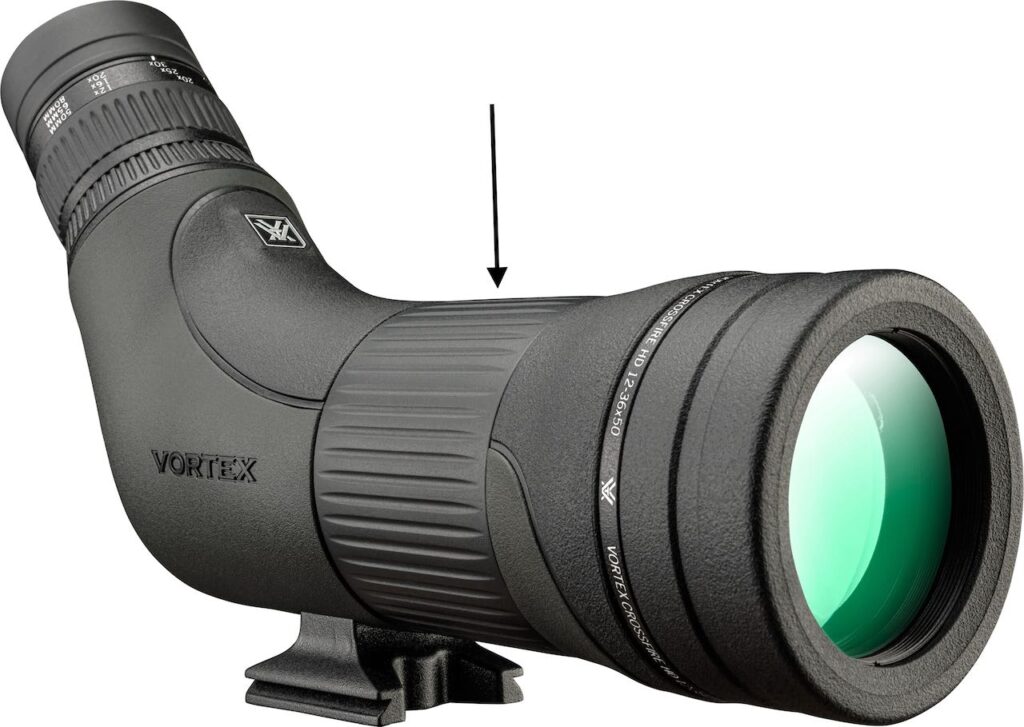
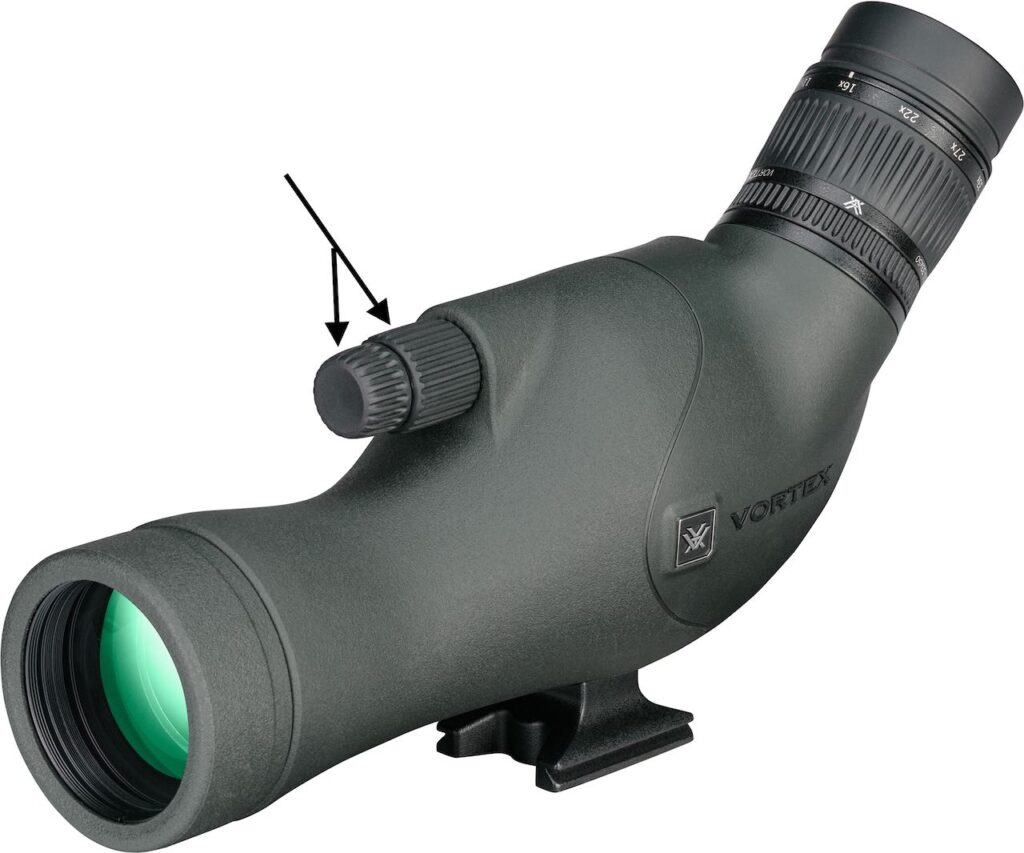
The main difference on the controls between the two scopes is the focusing mechanism (see arrows in images below). The lower-priced Crossfire comes with what’s called a helical focus. This is a ring around the entire scope tube that you twist back and forth to focus. The more expensive Viper comes with what is called a dual fine focus—two small knobs conveniently positioned on top of the scope that allow you to quickly adjust them. Spoiler alert: I’m going to just come out and say that, if you can afford it, the dual fine focus alone justifies the extra expense of buying the Viper over the Crossfire. Not only does this system achieve a sharper focus, it is much faster and more convenient to use. I watched a video about this and the host pointed out that this is especially great for digiscoping, or using your phone to take a photo through a scope. I don’t yet do this myself, but it’s good to know.
Optical Quality

One thing I and many others have discovered is that the brightness and clarity of images through optical devices don’t at first seem that different, even between more and less expensive models. That initially seemed to be the case when Susan and I compared the Viper and the Crossfire. The more we used them during our outing, however, the more it became apparent that the Viper gave us superior images. Not only was light transmission better through the Viper, it achieved sharper, clearer focus. That’s not surprising considering that the Viper comes with better coatings on its glass lenses and prisms, but it was still interesting to notice that difference in the field. Later, I tested the two scopes under very low light conditions, and the brightness of the Viper stood out even more.
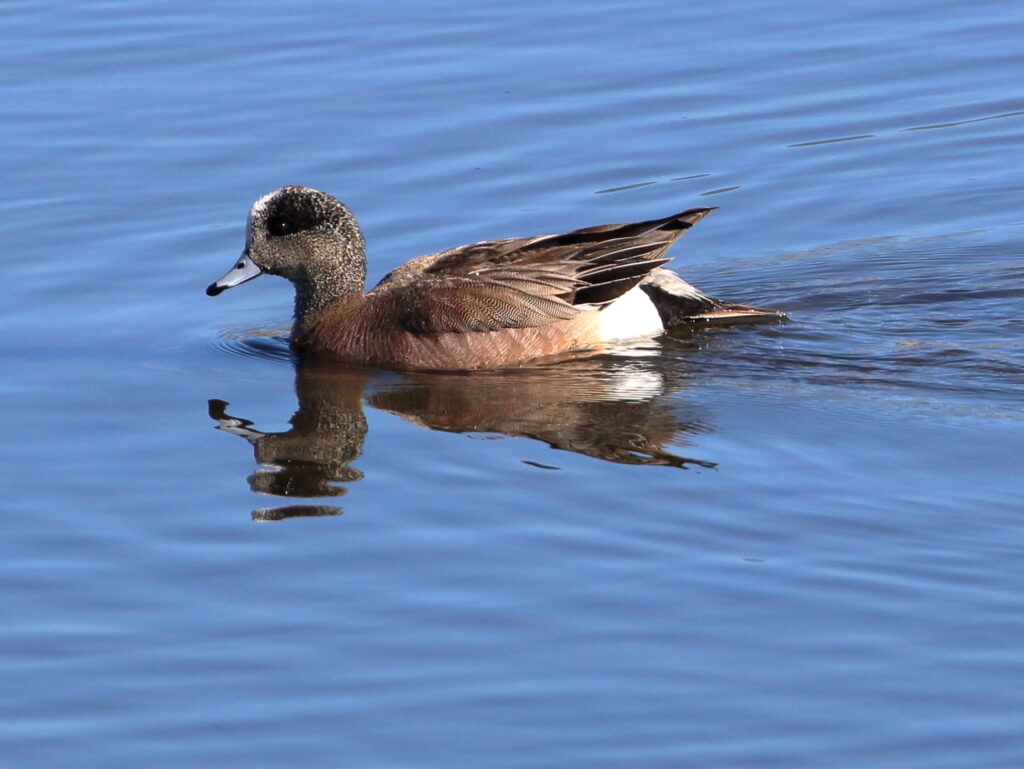
Though still early in the season, American Wigeon and other waterfowl gave us plenty of “targets” to test out the scopes. Though differences in optical quality were subtle at first, after spending a couple of hours looking through each scope, the Viper emerged a clear winner.

Build

Both the Viper and Crossfire appear to be very solid and well built. The Vortex website boasts that the Viper features “ultra rugged construction” while it makes no such claims for the Crossfire, so I assume that better manufacturing and materials go into the Viper. However, my guess is that both of these products will perform very well in the field. Both are fog proof and waterproof, essential features for anyone out watching birds. The Viper is purged with argon gas while the Crossfire is purged with the more standard nitrogen. I asked a rep what the difference meant for consumers, and he answered, “the difference isn’t actually with the optical quality, but instead the longevity of the optic. Argon has a larger atom, and will reduce the rate of leakage over long periods of time when compared to nitrogen. Argon is also less affected by sudden temperature shifts and is much more resistant to extreme temperatures.” He also admitted that most users will probably never notice this until at least 10+ years of use—if ever.
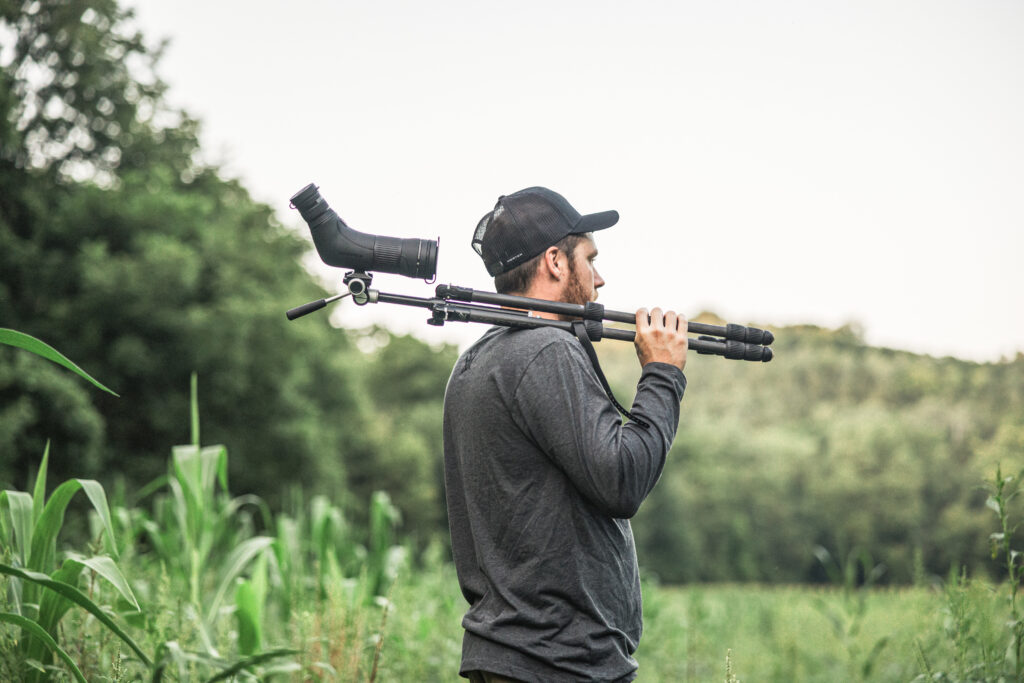
Whichever compact scope you buy, I highly recommend the Mountain Pass tripod to go with it. This combo is both easy to pack and carry over the shoulder on even a long birding hike! (Full confession: I’m not sure this is a Mountain Pass tripod in this photo provided by Vortex, but it looks as small and lightweight.)

Bottom Line

When comparing the Viper and Crossfire head to head, the Viper comes out a clear winner. Both are terrific, lightweight scopes for the traveling birder, but if you can at all afford or save up for the Viper over the Crossfire, I highly recommend it. That doesn’t mean, though, that the Crossfire doesn’t fill an important niche. It’s a great purchase for those on a budget, or those buying a first scope for a beginning birder and, honestly, many people may stay perfectly content with their Crossfires for the foreseeable future. If you need a scope to just carry around in the car or keep in a cabin without having to worry too much about it getting stolen, the Crossfire also could be just what you’re looking for.

Whichever scope you buy, I do highly recommend the Mountain Pass tripod, which is well-suited to both scopes both in weight, dimensions, and cost. I’ll also point out that both scopes work with Vortex’s Pro Car Window Mount. I have not yet used this, but plan to write up a review as soon as Braden and I can head out into Montana’s grasslands this summer.
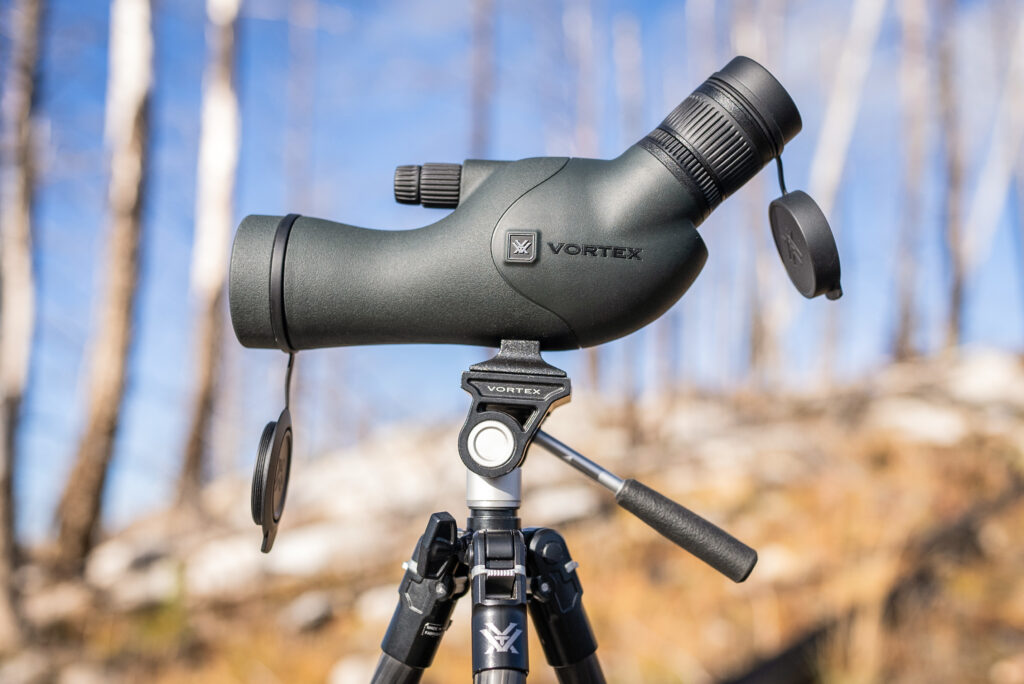
Though both scopes offer great value for the money, after our testing we both felt that birders will be happier if they stretch their budgets for the Viper rather than going for the more inexpensive Crossfire. (Photo provided by Vortex.)

If you enjoyed this review, check out these other recommended optics for birders:

Vortex Viper HD Binoculars

Nikon Monarch HG Binoculars

Nocs Pro Issue 8X42 Waterproof Binoculars

Vortex Bantam HD 6.5X32 Binoculars

Vortex Razor HD 13-39X56 spotting scope with Mountain Pass tripod
Bluebird Day at Browns Lake!

With all of our recent posts about Costa Rica, you’re probably wondering if we ever bird in Montana anymore! Never fear, we do—a lot! Today we report on an adventure that delivered some remarkable early migration surprises. If you’d like to support our work at FSB, please consider purchasing some of Sneed’s books shown to the right—and support a group such as Birdlife International or Audubon that is working hard to protect birds against climate change and many other perils. Remember: all of our posts are written and photographed by REAL PEOPLE!

I don’t know if it’s because of our recent trip to Costa Rica, my subsequent trip to California, or just the usual spring excitement, but I’ve felt especially eager to get out birding in Montana this spring. At least part of it has to with wanting to learn more about the timing of migration, especially in a year in which Montana hardly experienced winter. How would this impact the birds? I wondered. Would we see things showing up especially early? Fortunately, our friend Susan Snetsinger has felt just as eager to explore, so the past couple of weeks Susan and I have taken all-day adventures to some of our favorite western Montana birding locations. Two weeks ago, we visited Warm Springs and the impressively “remodeled” Lexington Street Pond and wetlands in downtown Butte. We were rewarded with a great variety of waterfowl, including Snow Geese at both locations. The highlight of the day was undoubtedly a great look at a Golden Eagle on the dirt road between Racetrack Pond and Warm Springs.

Snow Geese are always something to celebrate in Montana—including this group at Butte’s fabulously restored Lexington Street wetlands area.

A few days ago, though, Susan and I had a different ambition: to post the season’s first eBird checklist for Browns Lake. This is one of Braden’s and my favorite birding locations, and I don’t think it has ever failed to disappoint. Not only is it a go-to place for breeding Red-necked Grebes and Black Terns, we have found a lot of uncommon species there including Long-tailed Ducks, Pacific Loons, and Ross’s Geese. Notably, this is where Braden made the astounding discovery of a Bay-breasted Warbler two years ago—one of just a handful of sightings ever recorded from western Montana.

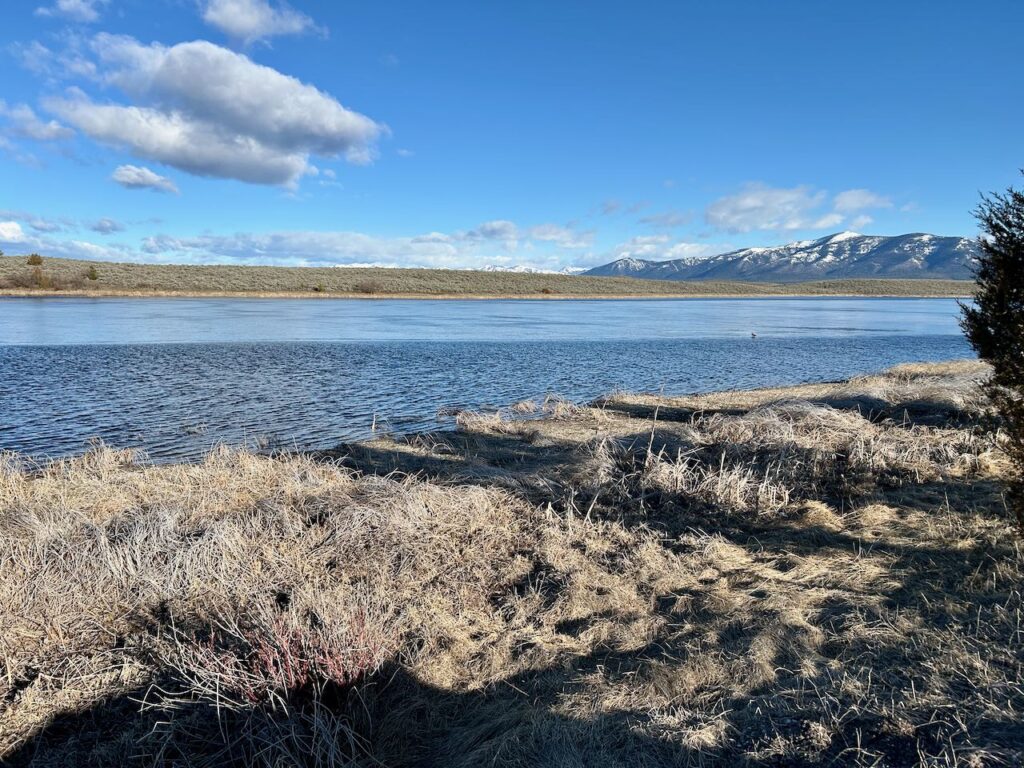
Although Browns (sic) Lake is frozen for a good part of the year, it has never disappointed us as a birding destination and we were eager to see what it held so early in the spring.

One challenge with Browns Lake is that it stays frozen until relatively late in the season and I noticed on eBird that no one had yet birded it this year. I wasn’t sure if it had begun to thaw, but I asked Susan if she was game to check it out. She was—and even brought along yummy fried egg and cheese bagels to fuel our adventures.

On the drive up Highway 200, we were rewarded by two pairs of Sandhill Cranes and a glimpse of a Mountain Bluebird—perhaps a preview of things to come? We hoped so, and upon arriving at Browns Lake, were not disappointed. Right near where Braden had discovered the Bay-breasted Warbler, we got out of the car to find a delightful “finchy” mixed flock containing Red Crossbills, Pine Siskins, Evening Grosbeaks, and Cassin’s Finches.

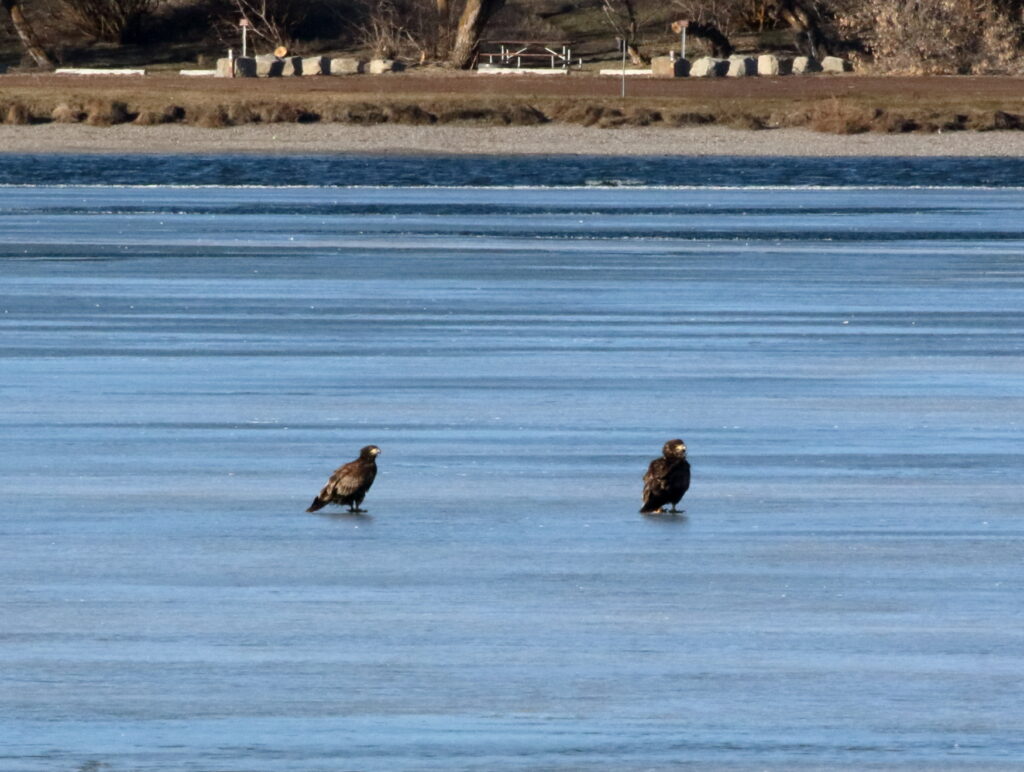
We’re not sure why (though fish and/or animal carcasses probably have something to do with it), but Browns Lake often boasts vigorous Bald Eagle activity—and our early spring visit was no exception. Here, two youngsters contemplate the meaning of ice on this brisk sunny day.

As the lake came into view, we were relieved to see at least a third of it offered open water—and that the waterfowl were not shy about taking advantage! Within twenty minutes, we recorded fifteen species of ducks and geese, including the year’s first Montana Northern Pintails and a lone FOY Cinnamon Teal. A flock of 18-20 Snow Geese erupted out of the fields on the far side of the lake and settled in beneath a huge irrigation line. Even though a brisk wind dropped the wind chill into the teens, we looked hard through our scope for any Ross’s Geese, but came up empty.

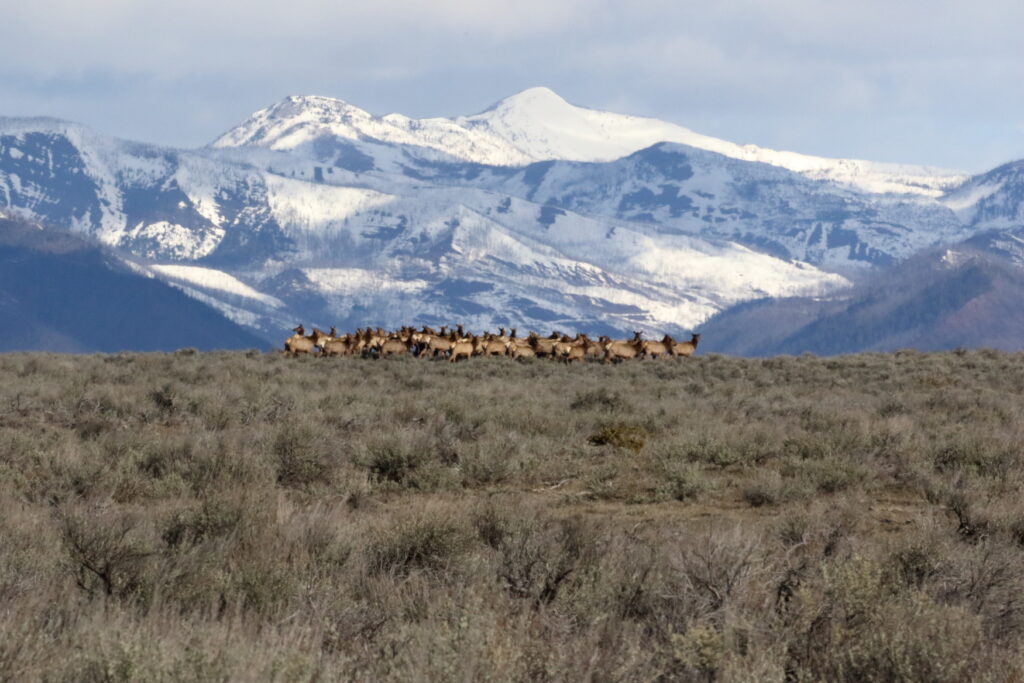
Elk anyone? Even though they are mere mammals, this herd against the dramatic background induced us to pull over for an admiring look.

As has become my new routine, I directed Susan out the far side of the lake toward the Ovando-Helmville dirt road, and we were rewarded by two Northern Shrikes (Susan is certain they were separate birds), and a couple more Mountain Bluebirds. After turning left toward Helmville, we hadn’t gone a mile when we saw a sizeable flock of birds badly backlit by the sun.

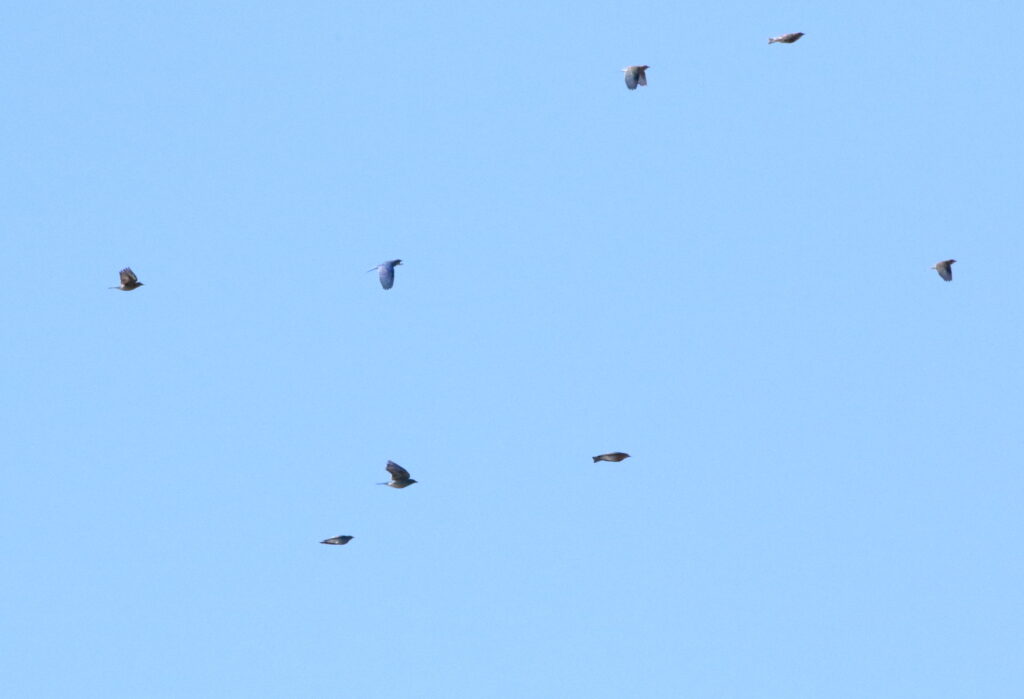
“Are they some kind of blackbirds?” Susan wondered, and they did look black because of the sun, but I didn’t know. Then, she said, “There are more bluebirds over here.” “There’s a couple over here, too,” I added, still thinking they had nothing to do with the flock we’d just seen.

The bottom line? The flock we had just observed consisted entirely of Mountain Bluebirds!

At first, we weren’t sure what these flocking birds might be, backlit against the sun, but this photo reveals the truth.

This blew both Susan and I away. Neither of us had ever seen more than three or four Mountain Bluebirds at a time, and had no inkling that they ever formed large flocks. Yet here was the evidence in front of us, and we spent a good fifteen minutes watching them forage and swirl around us. Once, a group of at least sixty took to the sky together, only to settle back into the grass a few moments later. Meanwhile, others kept crossing the road in front and back of us, occasionally landing on the fence next to our car.

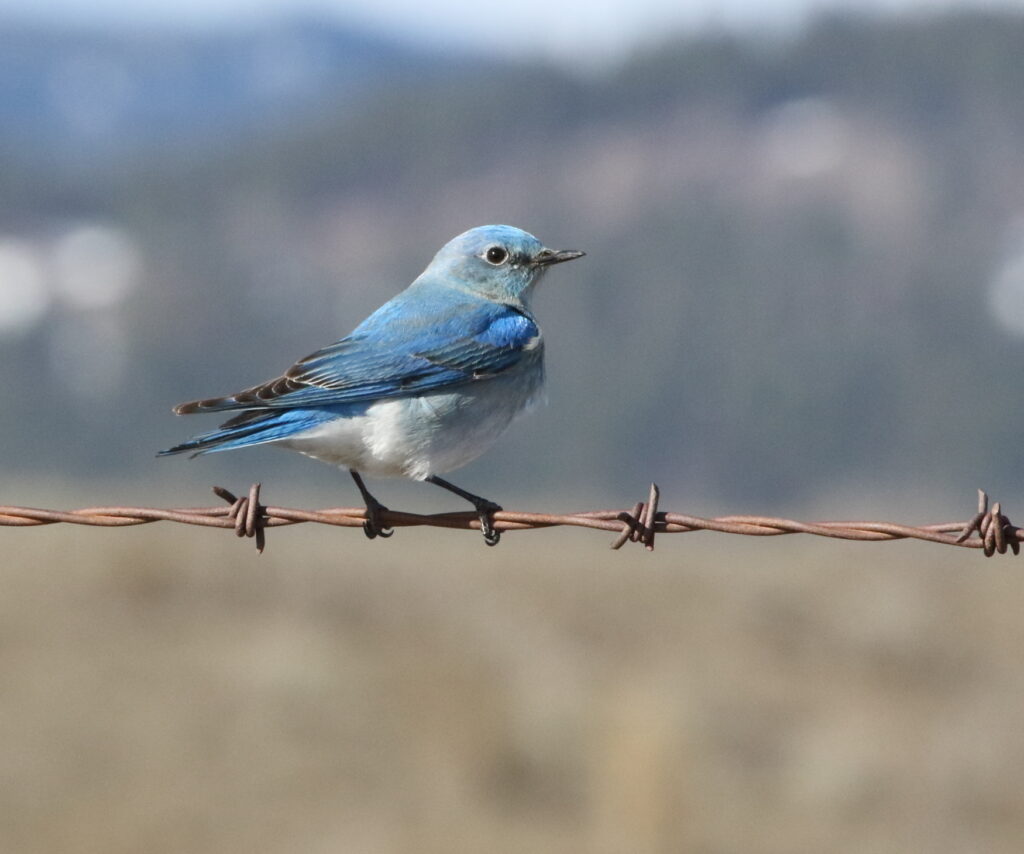
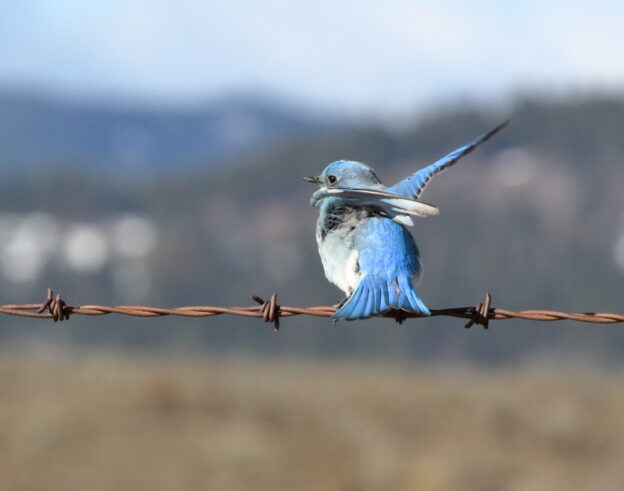
The Mountain Bluebirds were so active around us that I dared not hope to get a photo of one—until this guy perched 15 feet away from the car window!

We finally pulled ourselves away, wondering if local ranchers observed this kind of grouping every year. I later read up on MOBLs and found one or two mentions of them forming flocks in winter, but it didn’t seem like a well-known phenomenon. Susan and I both agreed that these cavity-nesting birds must be migrating. From here would they spread out into the surrounding mountains? Or did they still have a long way to go before trying to find their own breeding territories? As biologist Dick Hutto had taught me, Mountain Bluebirds especially love recent burn areas where woodpeckers carve out plenty of “condos” in the dead trees (see my book Fire Birds: Valuing Natural Wildfires and Burned Forests). I wondered if, as a flock, they might be better at finding recent burn areas—or did flocking impart other benefits such as greater predator or food detection?

After the Browns Lake area, we headed toward Helena, hoping to find a recently reported Lesser Black-backed Gull. Though I’d seen this species in Israel and again in Oregon, this would be a Montana lifer for me and an outright lifer for Susan.

It was not to be.

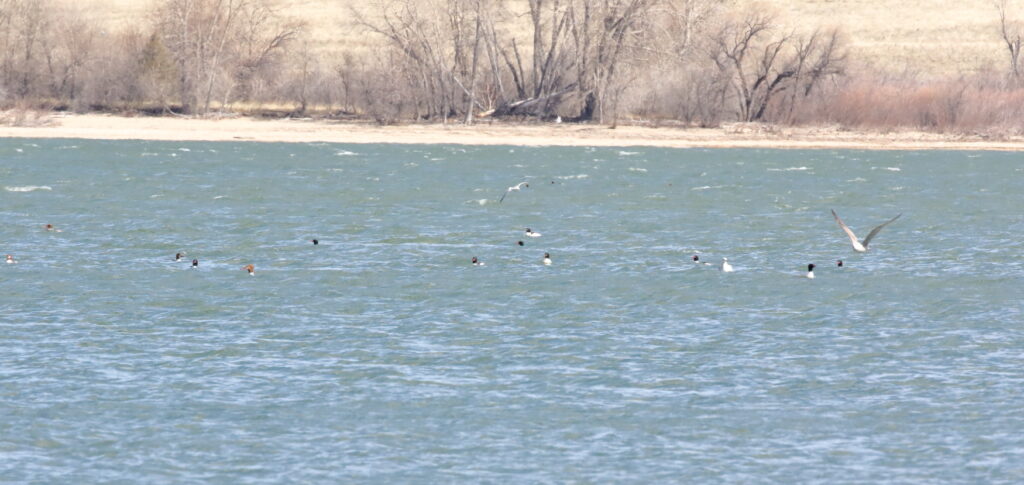
At the Helena Regulating Reservoir, we saw plenty of gulls, but many were too far away for our scope, and the ones we did see did not have the dark wings we were looking for. The trip wasn’t a waste, however, as we observed more than sixty Common Mergansers and at least ten Red-breasted Mergansers, also clearly in migration. In fact, the window to see RBMEs is quite tight in Montana, so it was nice to pick them up for 2026.

Though we missed the Lesser Black-backed Gull, the Helena Regulating Reservoir was hosting a “regulating” merganser-pa-looza!

Speaking of 2026, both Braden and I have excellent chances to accidentally break our world Big Year records. My record, set last year, is 552, and only a quarter of the way into this year, I’m at 422. This is not as much of a gimme as it sounds since many of the birds I’ve seen in Costa Rica and California are birds I would normally check off in Montana, but with a little luck and persistence, I feel I will get there. Braden’s record, meanwhile, is 867 and he is already at 546, with hopes to bird abroad at least one more time this year. We no longer put a lot of stock into numbers like these, but they’re a fun thing to keep an eye on.

After saying goodbye to the Helena Regulating Reservoir, Susan and I did a little more birding and then got lunch in downtown Helena. I only mention it because we ate at an excellent little crepe place called—what else?—The Creperie. It featured outstanding food and reasonable prices. It’s open until 3 p.m. most days and is located right next to the lower entrance of the walking part of Last Chance Gulch. If you’ve got the post-birding munchies, check it out!

Our first-of-the-year Browns Lake checklist: https://ebird.org/checklist/S313329879

My Big Silly January

Setting and surpassing goals plays a big role for many of us birders. Big Years, Big Months, Big Days, State Big Years, Bicycle Big Days, Global Big Days—the list of ways we challenge ourselves are endless. And while I’m no longer a big fan of Big Years that require burning up a ton of fossil fuels, Braden and I still partake in local challenges, or those that unfold seemingly on their own. Such was the situation I found myself in late January.

Thanks mainly to a vigorous day of birding with Braden on January 2nd, in which I found 47 species here in western Montana, and the surprise trip to Victoria that Amy planned for my 65th birthday (38 more species), by January 20th I found that I had seen 88 bird species for the month. They were awesome birds, too, ranging from Short-eared Owls and Golden Eagles here in Montana to Pacific Loons, Harlequin Ducks, and a Marbled Murrelet in Canada (click here). Interestingly, I realized that with ten days to go, I needed to see only four more species to make this my best January of birding ever! Even so, I had a lot of writing to catch up on and I wasn’t sure that I wanted to intentionally make the effort. A couple of things convinced me to go for it.

Lola played an instrumental role in advancing my Big January goals!

The first was that while walking our dog Lola in the neighborhood, I found my first Northern Pygmy-Owl of the year—a delightful little guy soaking up the last rays of sun high in a Ponderosa Pine. The next day—also while walking Lola, through Greenough Park—I espied my first American Dippers of the year. Three days after that, the year’s first White-breasted Nuthatch visited our backyard feeder, the first I’d seen there in a couple of years. Suddenly, just like that, I was one bird away from breaking my record. What, oh what, to do? Too much sittin’ on my butt and a forecast for a beautiful winter day answered the question. I called our friend Susan, who has been getting into birding more and more the past couple of years. I told her, “You know, there’s a Rusty Blackbird over near Deer Lodge, and we may be able to find some Snow Buntings. Do you want to go see if we can find them?” She also needed a birding break, so the next morning, we headed east.

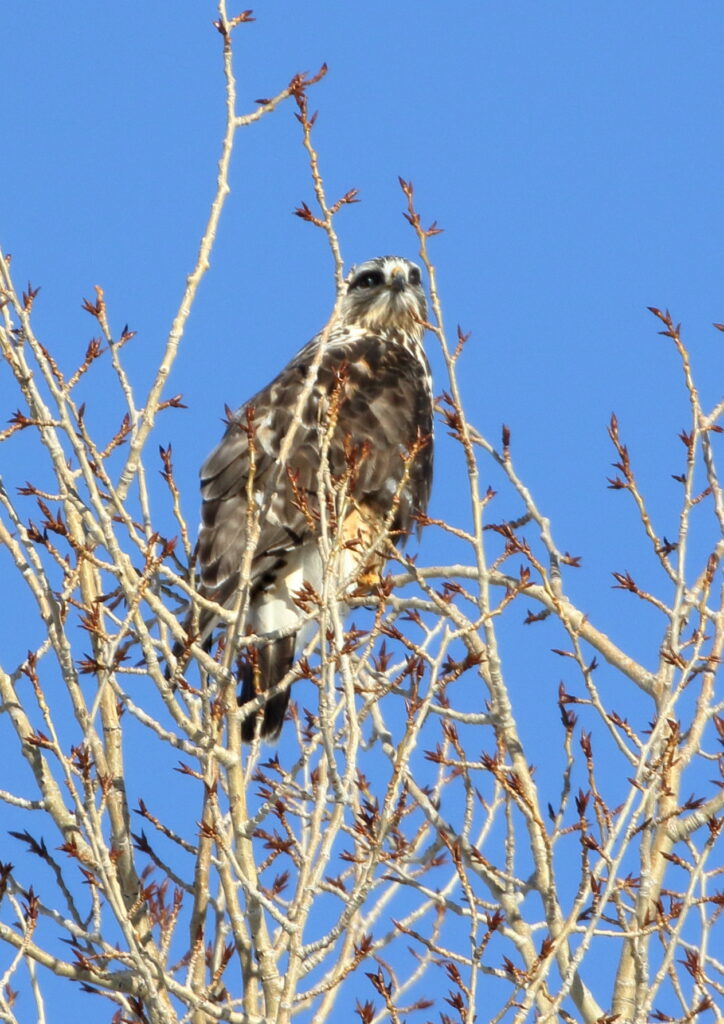
Though we didn’t find Snow Buntings or the Rusty Blackbird, Susan was especially excited to get to know Rough-legged Hawks better.

We spent a delightful morning driving the roads between Deer Lodge and Anaconda. We may have seen a Snow Bunting, but it flew away before we could make a definite ID. We also saw the Rusty Blackbird—right as a couple of other birders scared it away. Since we couldn’t ID it ourselves, we didn’t put it on the list, either. Fortunately, in the parking lot that led to the Rusty Blackbird, we found four Horned Larks! Yay! I had it! A new January record!

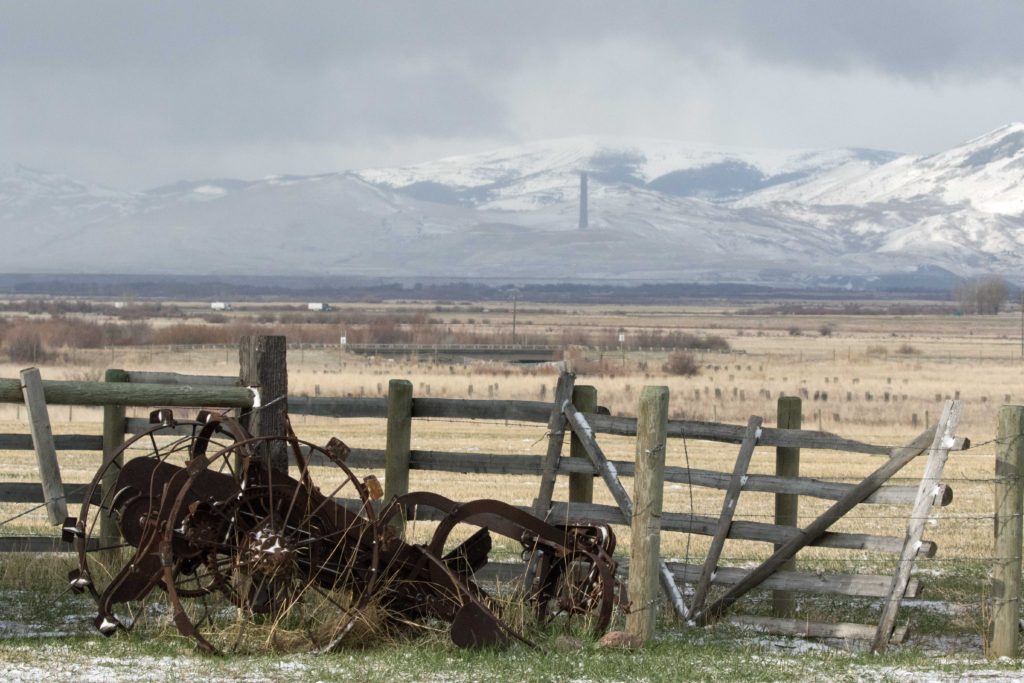
Susan and I failed to get an ID-able look at a rare Rusty Blackbird. But note the famous Anaconda smelter stack in the distance!

But here’s the problem. Once you break one record, and realize that you are perilously close to another landmark—in this case, 100 birds for the month—it’s virtually impossible not to go for it. By now, I had revealed my January ambitions to Susan, and not only did she get as excited as I did about them, she was all in on getting me to 100 species for the month. As we pulled away from the Horned Larks, I said, “Are you up for driving by Discovery Ski Area on the way home?” “Let’s do it.”

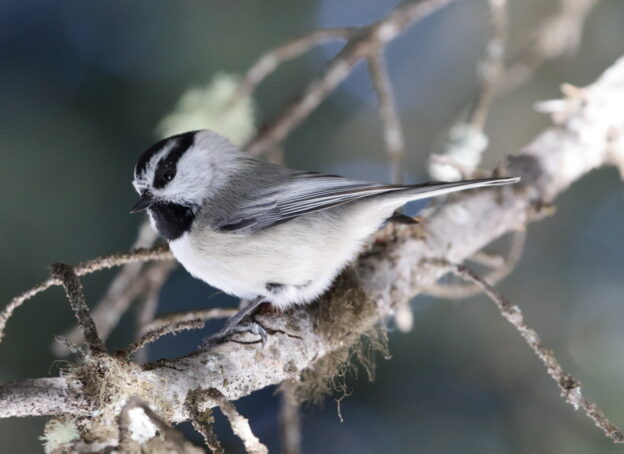
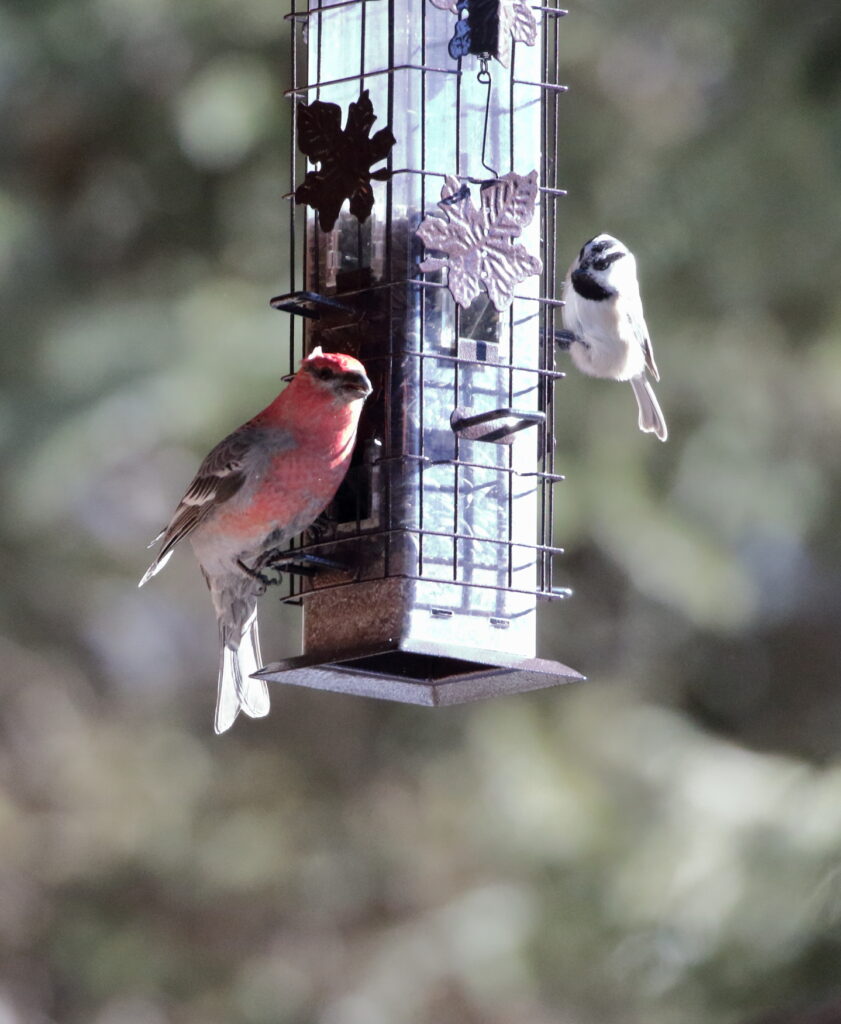
Employees at Discovery kindly put out bird feeders that keep Pine Grosbeaks, Mountain Chickadees, and other higher-altitude birds nurtured during cold winter days.

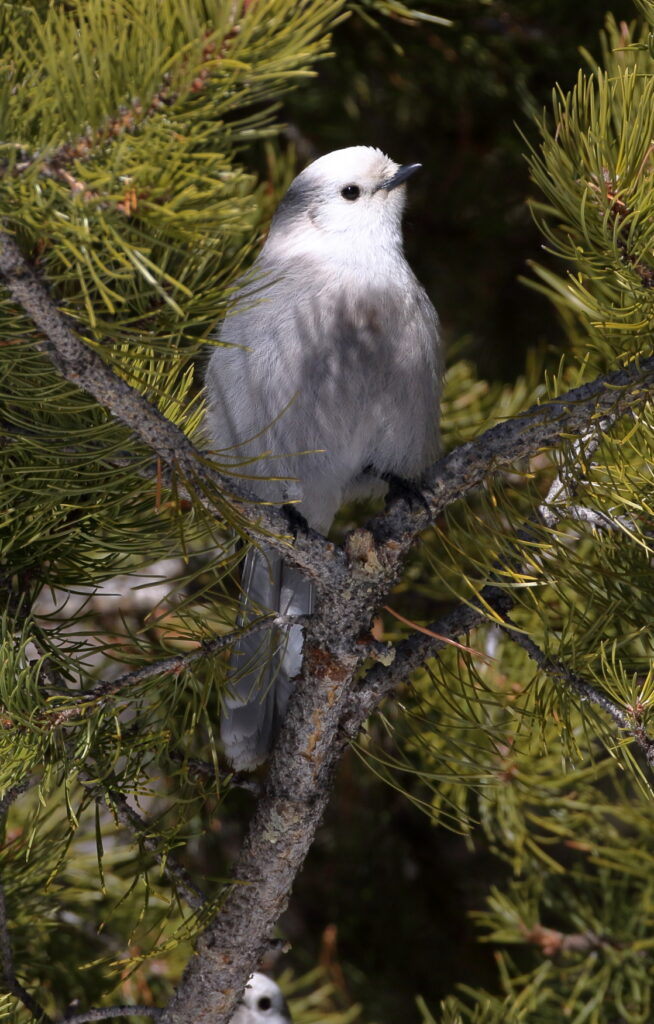
Loyal readers of FatherSonBirding will recognize that in years past, Discovery Ski Area has been a go-to place for Braden and me to pick up several challenging species, and as Susan and I approached the parking area, we saw our first of these: Canada Jay. After parking, we visited the bird feeders and had a fun time picking up two others: Mountain Chickadee and Pine Grosbeak. Clark’s Nutcracker was the only bird that didn’t cooperate with my 100-species plans, but still, I left the ski area with 96 species. Could I really get four more species before the month ran out? Did I want to? No, I decided. I didn’t need to drive around burning up gas just trying to break a silly record. However, the Universe seemed to have other plans.

Portrait of a Canada Jay. See them while you can. Canada has announced that it will no longer allow these birds to be in the US if President Trump does indeed impose tariffs on our northern neighbor.

The afternoon of January 29th, I was again walking Lola in the neighborhood when I saw two more birds I needed for the month and year: Hairy Woodpecker and Cedar Waxwing, both of which I thought I’d already seen! Then, a Greater White-fronted Goose was sighted out beyond the Missoula Airport. I had never seen one of these birds in Montana, and it was a rare opportunity to do so, so on January 31st, I loaded my spotting scope and camera into the car and headed out to the site. My January and Year lists now stood at 98 species.

Long-story short: I did not find the Greater White-fronted Goose among the Canada Geese that were out there. As I was watching other CAGOs fly in, however, I was stunned to see a white goose flying with them! Stupidly, I did not try to gauge the size of this surprising arrival. If it were a bit larger it would be a Snow Goose; a bit smaller, Ross’s Goose. Either one would get me to 99 species—but not if I couldn’t identify it! Sighing and simply putting down “white goose” on my list, I resigned myself to not breaking that magical 100 number.

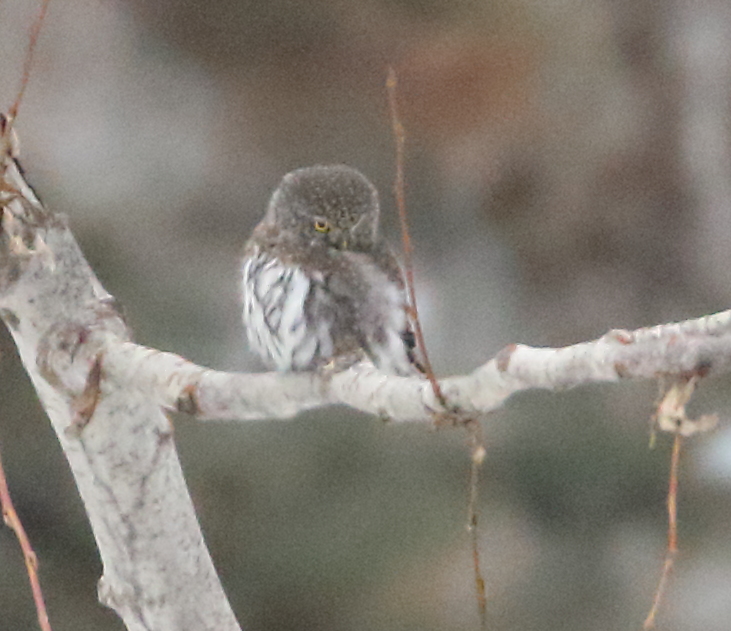
Since I was out there, however, I decided to swing by Council Grove State Park for a look around. The number of birds out there in the dead of winter surprised me. I was delighted to hear a Belted Kingfisher and spot Green-winged Teals and a Great Blue Heron. Then, two Killdeer flew by. As I was following a trail back around to the parking lot, however, I espied a small, soft lump on a branch out of the corner of my eye. “No way,” I muttered, and trained my new binoculars on it. It was another Northern Pygmy-Owl—the first I’d ever found all on my own. Even though it wouldn’t help with my goal of 100 birds, I was totally psyched by this find and spent ten minutes watching it before it winged away at hyper-speed.

Even though it didn’t help me with my 100-bird goal, seeing this Northern Pygmy-Owl was an awesome way to finish out an awesome January of birding.

So, no 100 birds. No century mark.

Or so I thought.

That evening, when I happened to glance at my bird list for the month, I was surprised to see that it stood not at 98 species as I expected, but at 99! The Killdeer I saw at Council Grove, it turned out, were also a new species for me for 2025! And then, several other birders confirmed that the white goose that I saw was indeed a Snow Goose! Ka-ching!

I’ll admit that getting to 100 wasn’t pretty, but like I said, the Universe seemed to want me to get there and, well, I’ll take it. It just shows you that a lot of great things can happen in birding—even setting silly records!

Partial FSB Reveal: We won’t be posting near the end of February and early March, but if all goes as planned, we should have some truly stunning posts for you then. Stay tuned!

FatherSonBirding’s 100th Post Video Spectacular: Counting Down Our Top 5 Most Popular Posts!

If you’d like to see us continue our posts, PLEASE SUBSCRIBE by filling out the box down and to the right. We promise we will not share or give away your information to ANYONE—though you can always feel free to share our posts with others who might enjoy them!

Do you remember listening to American Top 40 as a kid? Sure you do! To celebrate our 100th post, we decided to count down FSB’s All-Time Most Popular Posts—with a video!

Yes, believe it or not, this is FatherSonBirding’s 100th post! Since we seem to be evolving toward a video world, Braden and I agreed that a video post would be a fun way to celebrate our last four years of birding and blogging. Just don’t get used to it! Videos take a lot more effort than regular blogging and, frankly, making videos eats into our birding time!

A few notes about the Top 5. They may not be technically correct since for some of our early posts, we may not have been gathering statistics on views. Also, we had not yet switched to a Payola scheme by which people pay us to make sure that certain posts are more popular. Just kidding! About the Payola, that is. I’ll always be curious just how many views our first post, A Quest for Snowy Owls (published March 13, 2018) has really received!

Also, below are some quick links to the posts mentioned in this blog. They are NOT IN ORDER of popularity so there’s no opportunity for cheating here! You’ll just have to watch the video to find out WHAT IS NUMBER ONE! Also, I have misspelled “Maclay Flat” as “McClay Flats” and other permutations. You’ll just have to forgive me!

Thank you for following our birding adventures. We appreciate you and hope this winter brings you plenty of birding adventures of your own!

Links to Blogs mentioned in the video (not in order of popularity):

Lucky Day at Maclay

Birding San Antonio’s River Walk? Are You Nuts?

Incredible Birthday Birding

For Birders, Every Year is a Big Year

Are You Ready for . . . the QUACH?

To view this video post on YouTube, CLICK HERE!

Dynamic Spring Birding in Deer Lodge

Are you enjoying our posts? If so, we’d love it if you subscribe to FatherSonBirding by filling out the box down in the right-hand column—and urge your friends to sign up too :)!

When life hands you an opportunity—especially a birding opportunity—you’d better take it. We learned that the easy way last weekend when Phil Ramsey, dad of our birding buddy Nick, offered us a two-night stay at the Clark Fork Coalition’s amazing Dry Cottonwood Creek Ranch. Phil couldn’t join us, but on Friday Nick picked Braden and me up in his truck, and off we went.

Thanks to Montana’s abundant spring daylight, we reached Deer Lodge with plenty of time to bird and after a quick dinner at 4Bs, explored the back roads leading south from the prison. Nick’s top target for the weekend was a long-shot, Greater White-fronted Goose, while Braden especially wanted to see his first Golden Eagle of the year. Me? I had my own goal: Long-billed Curlews, a species Braden and I had seen only once before in Montana. Altogether, Braden figured that for the weekend we might pick up eight new year birds while I predicted ten.

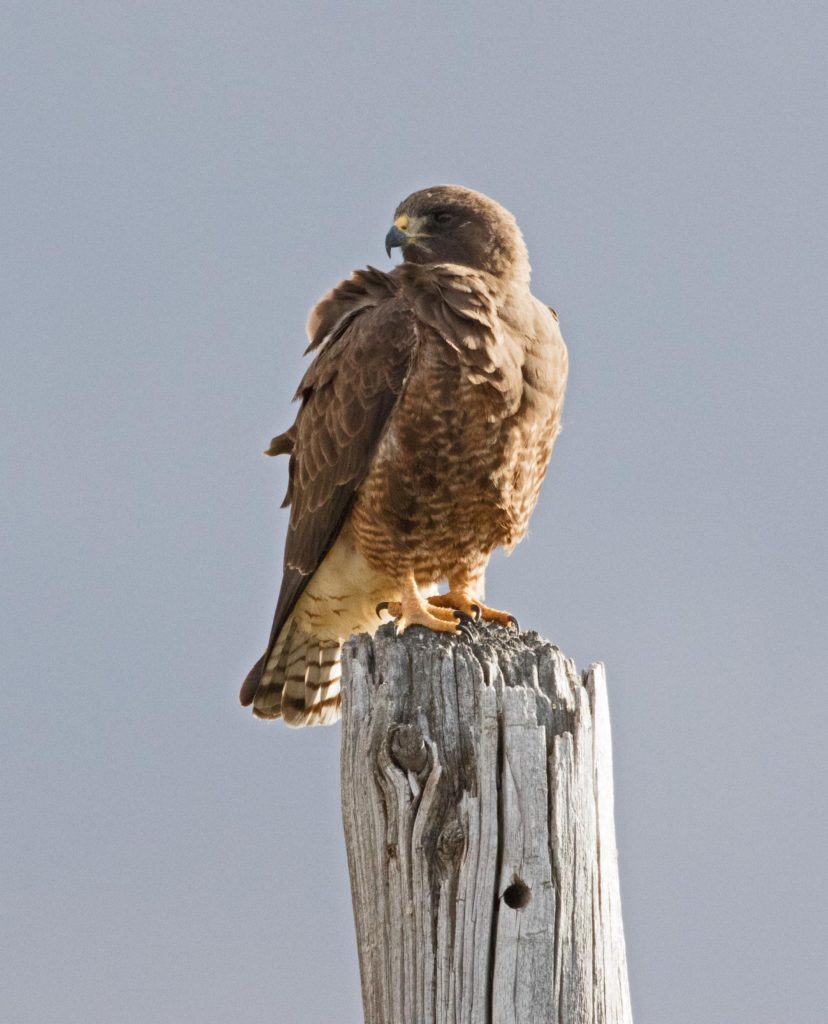
This was Braden’s and my first good look at an (intermediate morph?) Swainson’s Hawk and the bird cooperated beautifully, sitting on this post for a full five minutes.

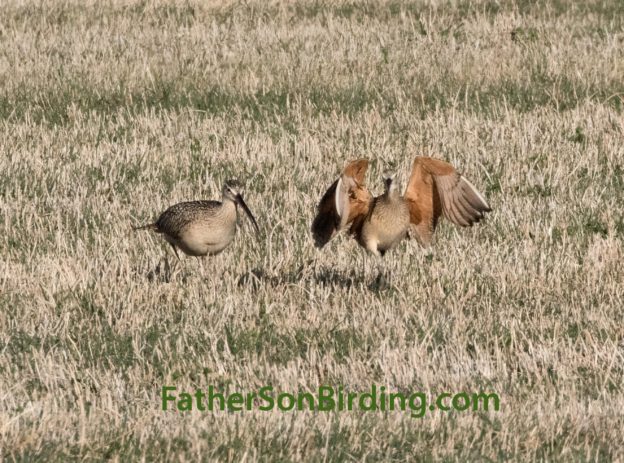
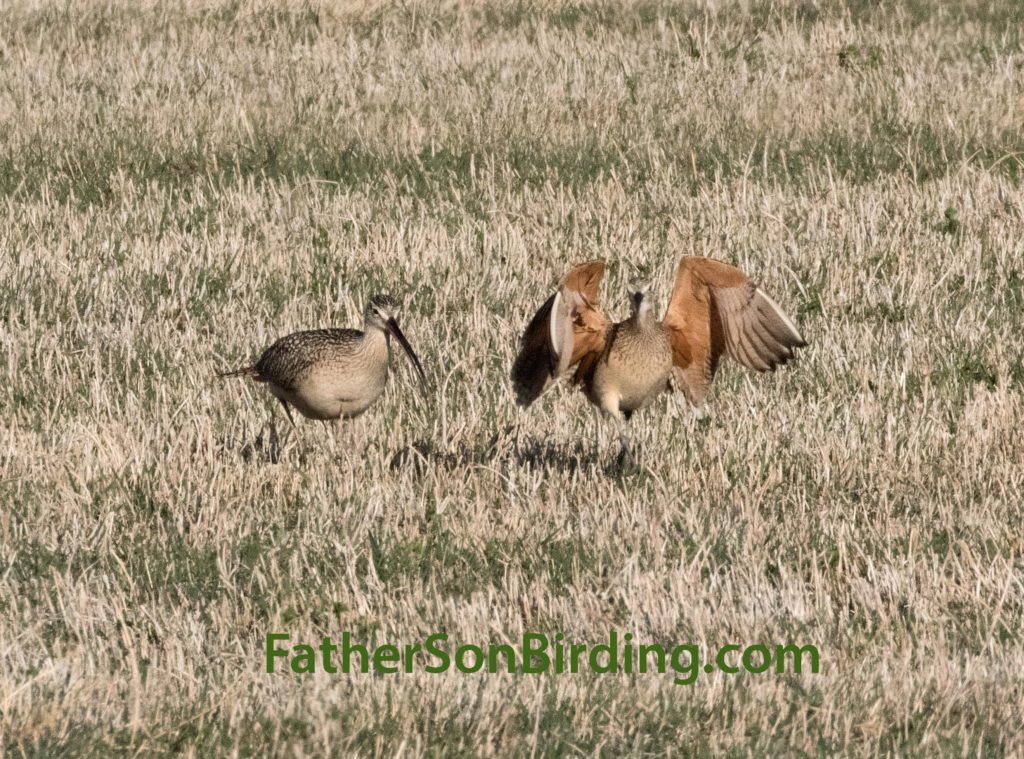
As we drove, we spotted a number of nice, albeit expected, birds: Mountain Bluebirds, American Kestrel, and a scattering of ducks. We also got to observe a beautiful Swainson’s Hawk on a telephone pole—the first real surprise of the weekend. As we turned right, down a dirt road, however, I suddenly shouted “Look out there!” Sure enough, three Long-billed Curlews hunted insects under beautiful evening light. Before the evening was out, we would tally 20 more of these graceful bizarre-looking birds, a number of them dancing out their courtship rituals.

Several pairs of curlews were feeling especially frisky but the females seemed a bit antagonized by the attention. Maybe the males should have opted for dinner and a movie?

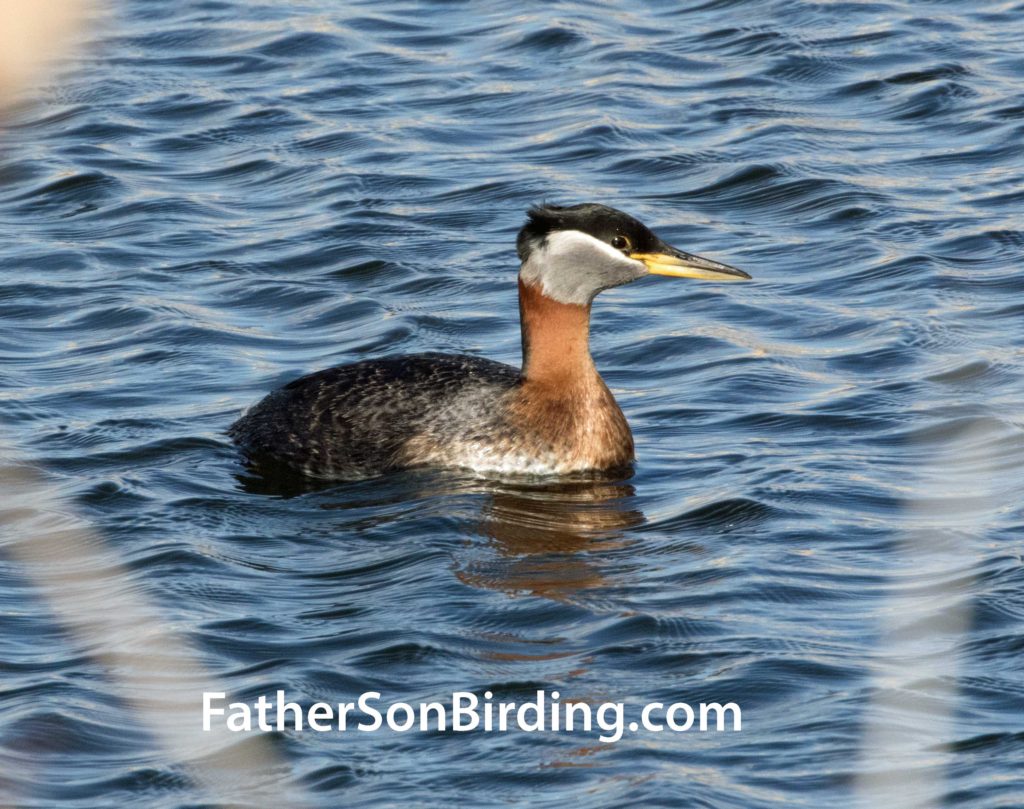
Part of the weekend package was a personalized tour of the ARCO superfund ponds with Gary Swant (see post “For Birders, Every Year is a Big Year”). Nick, Braden, and I had been lucky enough to bird with Gary the last Christmas Bird Count, but we were eager to see how spring species differed from the area’s winter visitors. As expected, waterfowl were out in full force—including Eared, Horned, Western, and Red-necked Grebes. We enjoyed Red-breasted Mergansers and Nick spotted a Sora, but the real surprise was the number of loons—eight, all told. “That’s easily the most we’ve ever seen together,” Braden exulted.

We saw at least twenty Red-necked Grebes during our day with Gary—and enjoyed every single one of them! It’s easy to see why.

Leaving the ponds, Gary took us to a place near Anaconda that we’d never birded: Dutchman’s Slough where, within minutes, Braden nabbed his top weekend target, Golden Eagle. Then we noticed three wading birds in the distance and assumed they must be more Long-billed Curlews. One of them was, but the other two were something we’d never seen: Marbled Godwits in the middle of a grassy field! After bidding a fond farewell to Gary, we rounded out the day with one more great score—Solitary Sandpiper in a large puddle on the south edge of Deer Lodge.

We were sad to be leaving the next morning, but an unseasonal snow storm urged us home. On the drive, however, we decided to stop at Rock Creek, the site of Braden’s Eagle Project (see post “Five Valleys, Many Birds”). Almost as soon as we got out of the car, we spotted three more stunning year birds: Chipping Sparrow, Hermit Thrush, and shockingly, Lark Sparrow. The latter two were most likely just migrating through and we felt lucky to nab them as they often prove difficult to find in Montana.

The Clark Fork Coalition’s Dry Cottonwood Creek Ranch proved the perfect HQ for birding the spectacular Deer Lodge Valley.

So how did we do for the weekend? Well, we shattered our estimates for how many new year birds we might see, adding more than twenty to each of our lists. More important, the trip drove home a lesson for every birder: during spring migration, anything can show up—and does! Well, except for the elusive Greater White-fronted Goose! Sorry, Nick.