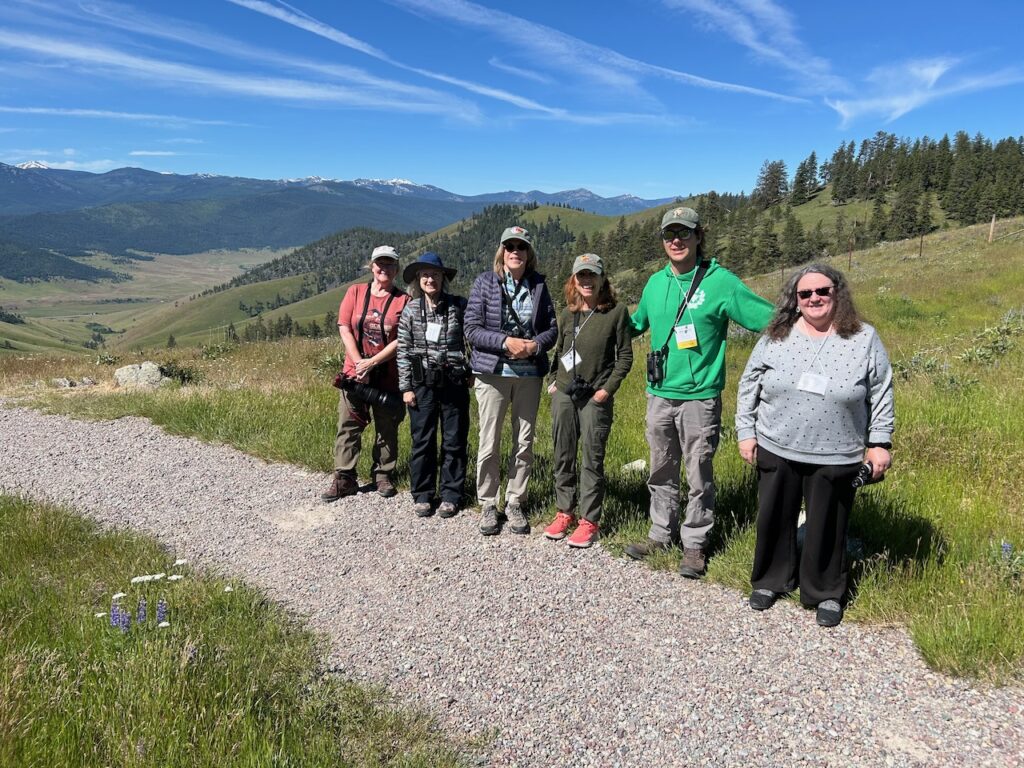
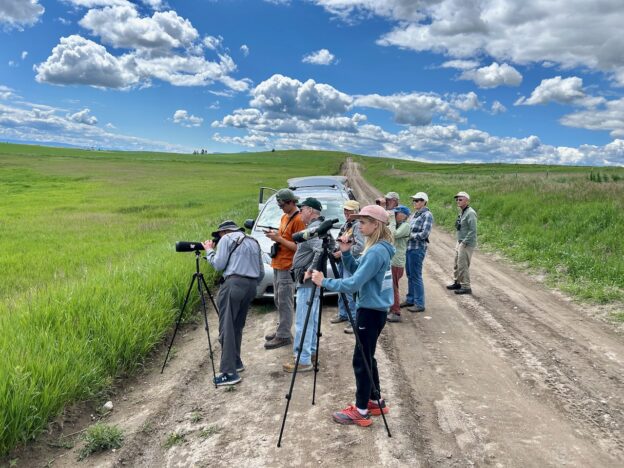
It’s been a furious month for the Collard Clan. Last week, Braden wrapped up two solid weeks of escorting birding friends around western and central Montana. Before that, we did a Birdathon fundraiser with our good friends Susan and Eli to raise money for Five Valleys Audubon. Then, Friday, Braden and I took off to lead trips at Wings Across the Big Sky 2026.
One special thing about WABS is that it moves to different locations in Montana every year, and this year Kalispell played host. Our very first WABS actually was in Kalispell eight years ago, when we got our lifer Harlequin Ducks in Glacier National Park. Since then, I’ve keynoted the festival and, most recently, Braden and I both attended the event in Helena two years ago. This year, one of the festival’s organizers, Darcy Thomas, asked if we would lead field trips to Tally Lake and the CSKT Bison Range. We, of course, said yes and decided to use the drive up on Friday for a bit ‘o exploration.
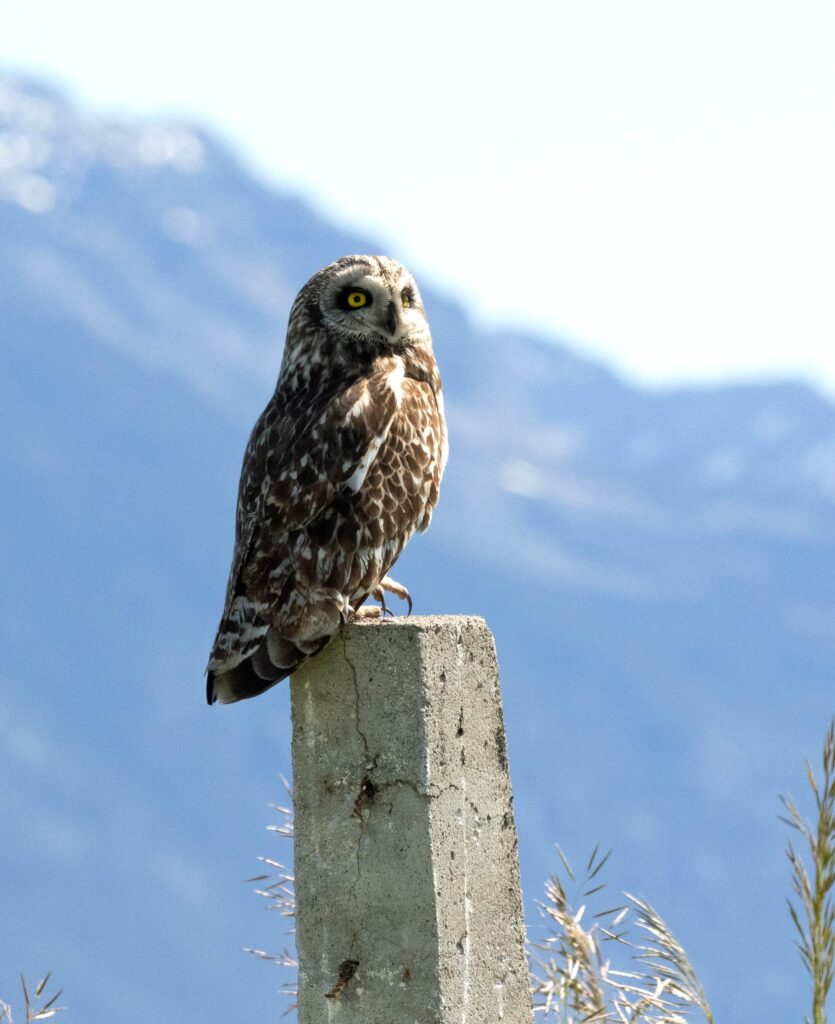
We began Friday by hitting one of our favorite refuges, Ninepipe National Wildlife Refuge. We didn’t see as many birds as we expected, but did find the most photogenic Short-eared Owl in the history of the universe!
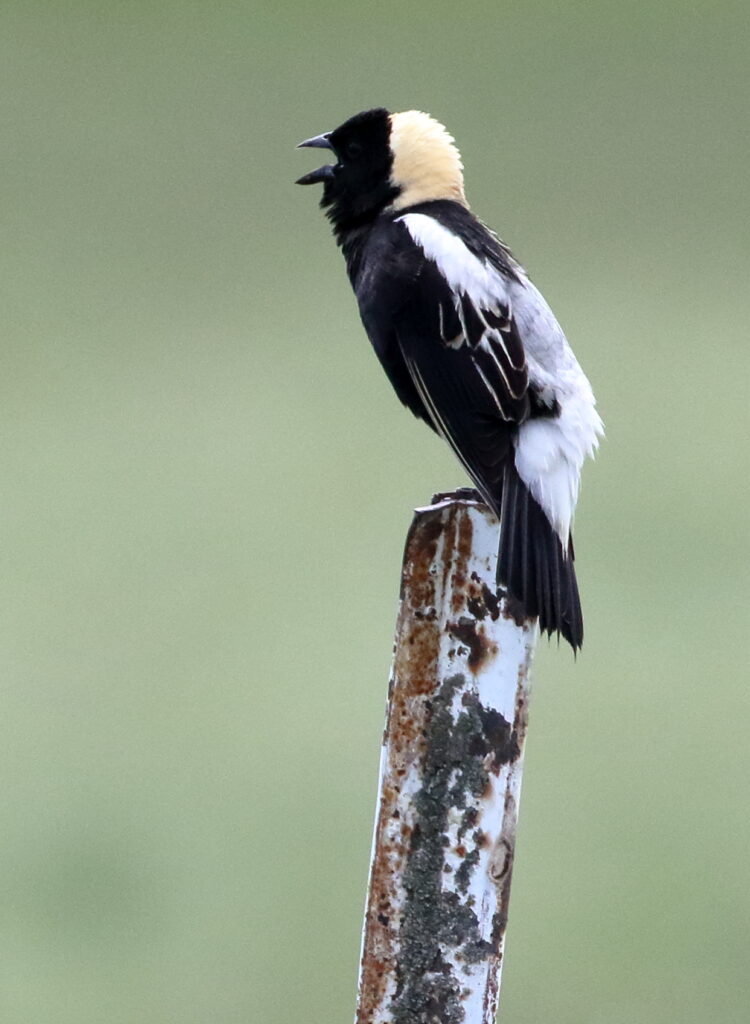
We followed that up by checking out a nearby road that supposedly had Bobolinks. Before finding them, however, we stopped at a delightful little forest spot with both Red-eyed and (Western) Warbling Vireos. It’s rare to get a really good look at the former, so we stood oohing and ahing when one came out onto a branch for a full minute of posing. Just down the road, we were treated to at least five Bobolinks and later found more near the town of Creston—along with the most adorable family of baby skunks ever!
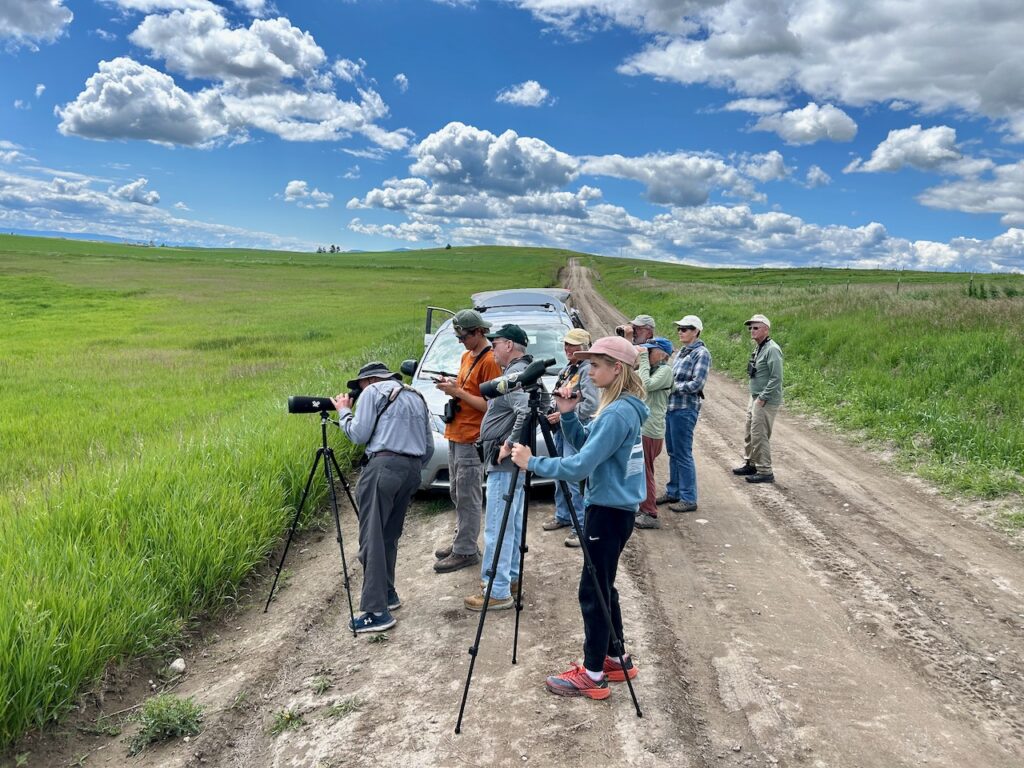
Braden and I felt especially excited to lead the trip to Tally Lake on Saturday because it was a place we had never been. I couldn’t have done the place justice without Braden, because it was a heavy “ear birding” location, full of warblers, vireos, sparrows, and other secretive songbirds. Still, most of the species put in at least one appearance and our friendly birding group ate it up. Braden helped everyone “get on” the various songs and calls, too, so it was a real learning experience.
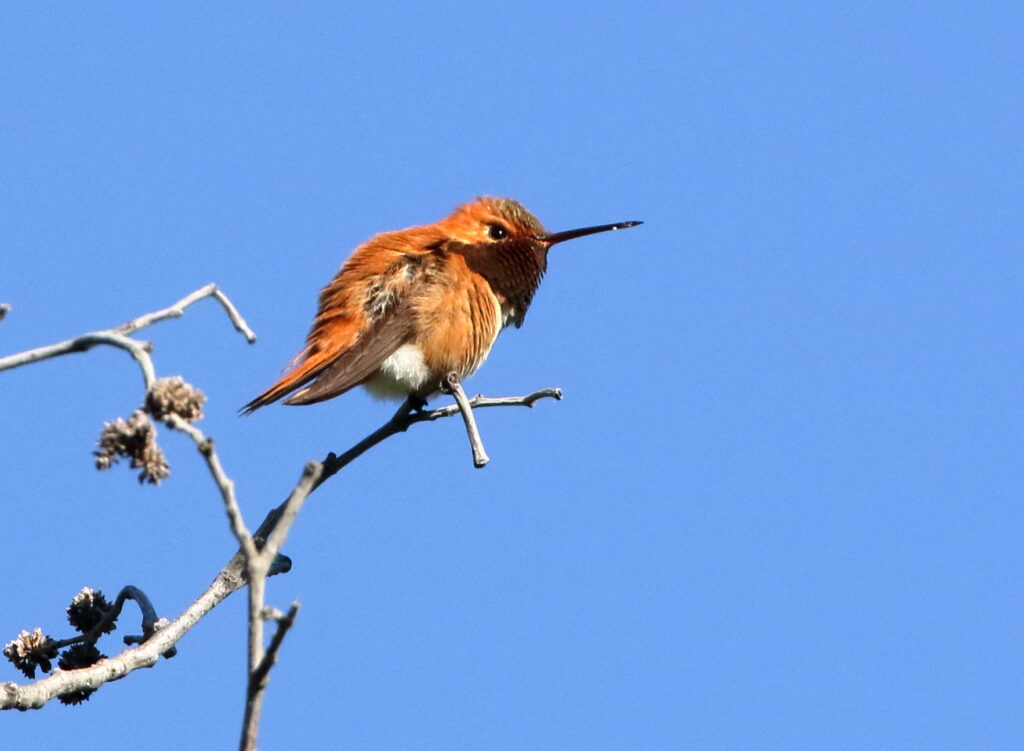
Top Tally Lake honors went to Rufous Hummingbirds, who struck exceptional poses out in the open with the sun glinting off of their stunning orange-brown feathers. I didn’t realize how fierce these guys look until I studied my photos later. Other crowd favorites included a Common Loon, Willow Flycatcher, and for me especially, a Fox Sparrow.
Exhausted from two straight mornings of rising at 3:30 a.m., Braden and I skipped Saturday evening’s workshops to spend with our friends Erica and Larry Wirtala, who hosted us and are also members of Flathead Audubon—the hosts of this year’s festival. We needed the break since Sunday promised another marathon day!
Our trip to the CSKT Bison Range began with a two-hour drive south from Kalispell, during which our caravan enjoyed stunning scenery along Flathead Lake and in the Mission Valley—and I narrowly missed colliding with a deer. Braden and I really didn’t know what to expect bird-wise at the Bison Range because it had been years since we’d birded it, but we’re so glad we got to lead this trip!
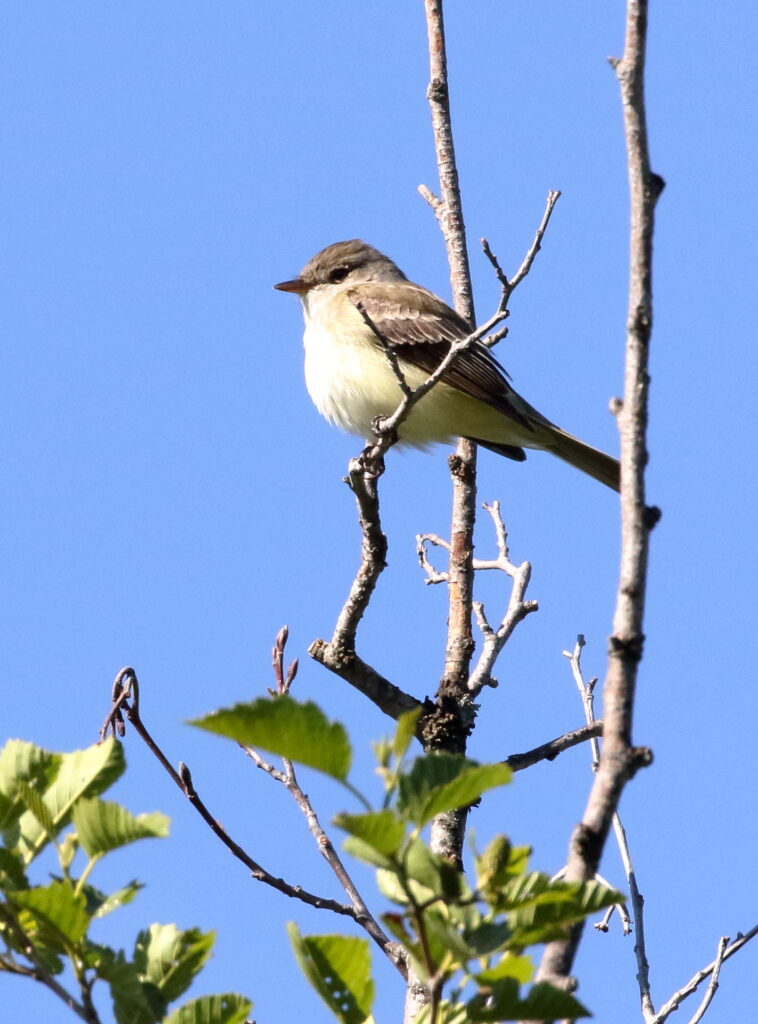
We began our exploration by taking the group to the riparian area just below the visitor’s center. There, we were treated to our best Willow Flycatcher experience ever. These plain-looking “empids” seemed to vocalize from every perch with their quick FITZ-pew songs. The group also got a welcome look at Pileated Woodpeckers and raucous Yellow-headed Blackbirds, too—but it was up on the long, two-hour driving loop that we got our biggest surprises.
I remembered the loop as mostly very dry grasslands topped by conifer forests, so imagine our delight to discover an excellent riparian zone early on in the drive. Here, we got our group onto Bullock’s Orioles, Lazuli Buntings, and even a Lewis’s Woodpecker. At one point a Golden Eagle gave us an outstanding look while flying right over the car.
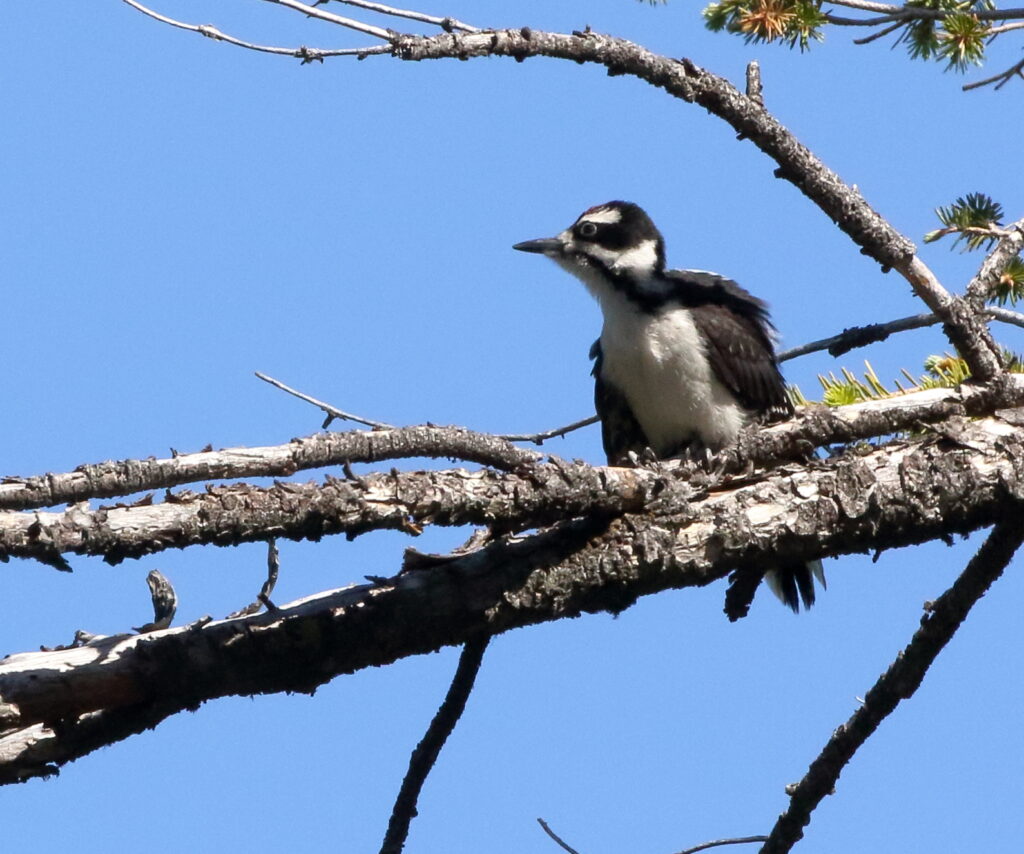
Higher up we caught a glimpse of a mama black bear and cub on a ridge before stopping at the #5 marker. Surprises continued as we scooped up another Pileated, a juvie Hairy Woodpecker, Cassin’s Finches, and a Common Nighthawk that was calling while perched in a tree—something we’d never experienced.
We ate lunch at the summit overlooking the spectacular Mission Valley. Our group got excellent looks at Lewis’s Woodpeckers, Red Crossbills, and Pine Siskins, but traffic had begun to build, so we began making our way down the far side of the mountain. All this time, we asked ourselves, “Where are the bison?” Supposedly hundreds of the animals occupied the reserve, but we’d only seen three or four far down below us.
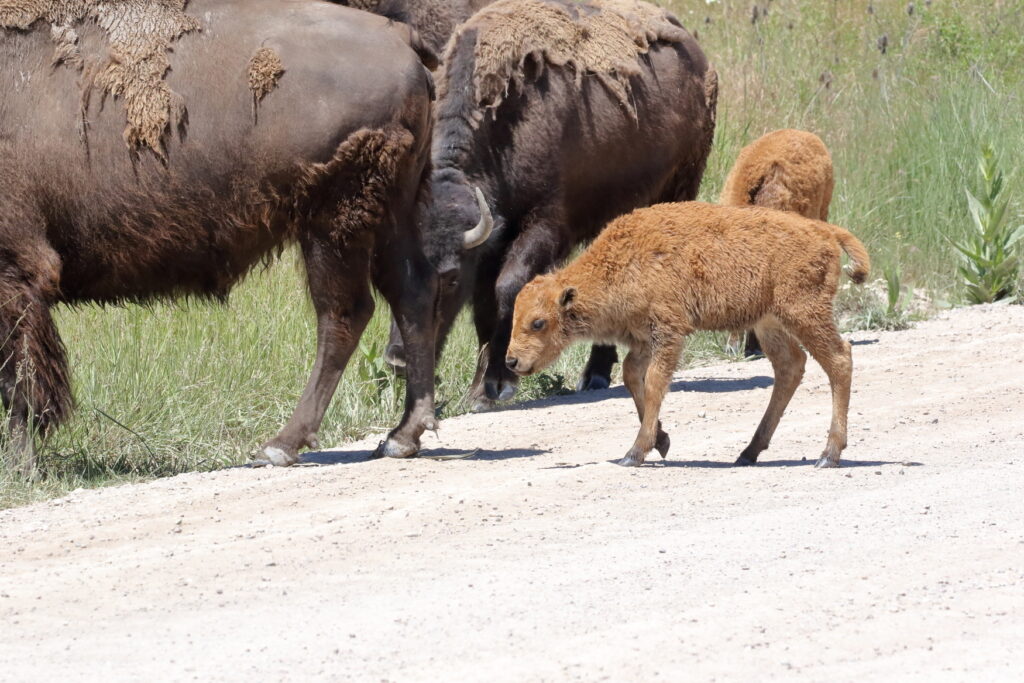
Finally, on the last stretch of road at the end of the road, we encountered a dozen or so adult bison with their bright tan calves. We, of course, pulled over to admire these remarkable critters—even if they were mammals.
As before, Braden and I felt grateful we got to participate in Wings Across the Big Sky, and we highly recommend it to those of you who have always longed to bird in Montana. The trips are always fantastic, and are punctuated by informative workshops and keynotes. This year’s keynote was given Steve Hoffman, founder of HawkWatch International, who opened our eyes to the amazing raptor migrations and counting efforts taking place in the West. (We also felt honored to have Steve on our Tally Lake trip.) Next year’s festival will be in Billings and promises to be a good one. Not only does the Billings area offer outstanding grassland and sagebrush birding, but excellent riparian zones as well. I don’t know about you, but I am already trying to figure out how to attend!
Our Tally Lake eBird list: https://ebird.org/checklist/S356850809
Our Bison Range eBird list: https://ebird.org/checklist/S357543551