Today, we continue Braden’s countdown of the remaining birds he needs to complete his American Birding Association life list. For more information on this journey, check out his post, Lower 48 Life List Countdown: Crissal Thrasher. As always, if you’d like to support FatherSonBirding, consider buying new copies of some of Sneed’s books shown to the right. If you already have them all, why not buy a copy for a friend? As always, thanks for reading!
On April 4th, 2026, I left my job of eight months, with my internal compass pointing home. I’d lived and worked in Running Springs, California since late August of 2025, as an educator and camp counselor at Pali Institute for Outdoor Education. I’d seen so much of the country during this time, and met some really cool people, but on April 3rd I finished my last work shift. The next day, I moved out of staff housing and drove south to Ramona near San Diego to stay with my cousins. That night would be the first of many on a twelve-day road trip I’d planned across the American West on my way back to Montana. Though I looked forward to seeing many birds (see my Crissal Thrasher blog) on the trip, I especially set my sights on the last US sparrow that I’d never laid eyes on: Black-chinned.
Black-chinned Sparrows are classic chaparral birds found in canyons and hillsides across much of California, Arizona and New Mexico. They’re particularly drawn to post-fire habitats—the dense shrubbery that rises from the sooty ground five to ten years after a burn. Outside the core of its range, the species can be quite local, which might explain why I hadn’t bumped into one so far. While I have spent extensive time in both central California and southeast Arizona, a lot of the birding I’ve done in these locations is either too wooded or too deserty for Black-chinned Sparrows. The one concentrated effort I made for the species was both at a bad time of year and a bad time of day for the species, when a friend and I had driven up a random road south of San Francisco where a single singing bird had been reported weeks prior.
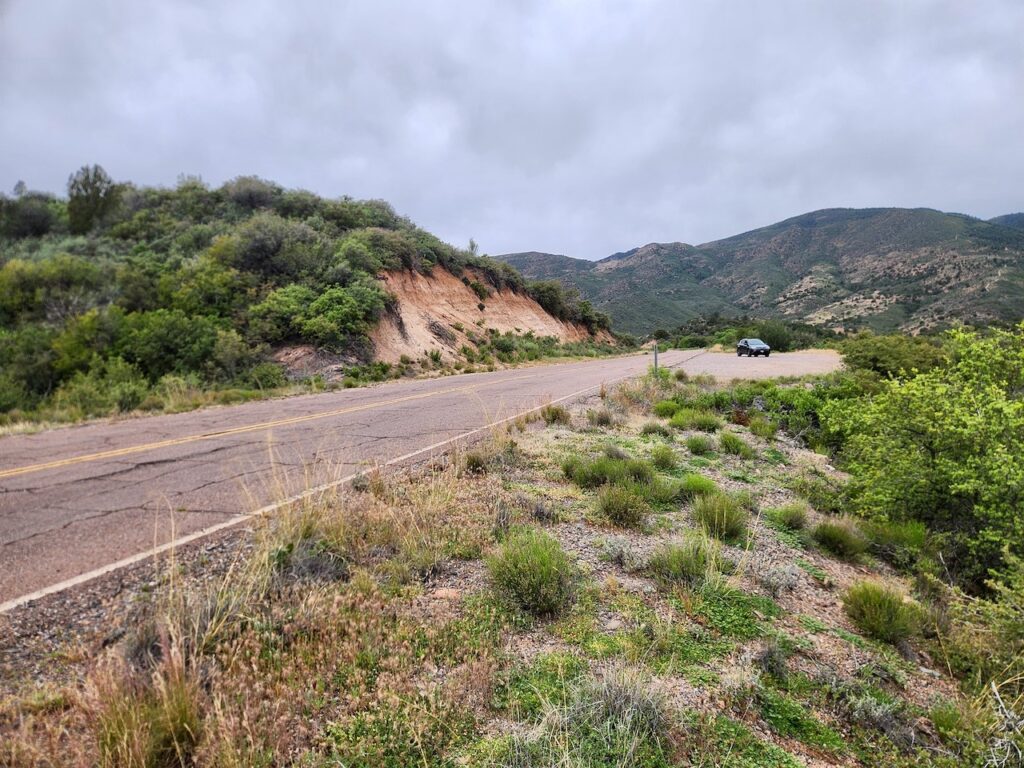
When planning my route home from Running Springs, I had several goals in mind: to explore parts of the West I’d never before visited and to target a few bird species that would either be lifers, or living in new locations I’d never explored. With all of this in mind, I left my cousin’s house in Ramona on April 5th and drove six hours through the Mojave Desert, arriving at a location known as the Beeline Highway an hour or so after sunset. This section of the highway ran through Sycamore Canyon, a middle-elevation canyon that stretched from the saguaro-covered foothills north of Phoenix up towards 7,000-foot Mt. Ord. No longer a through road thanks to a closure on the lower section, it was known to be one of Phoenix’s top birding locations.
As I began to set up my tent, thinking about all the fun canyon country birds I might see tomorrow, a barking echoed from the creek a couple hundred meters away. I recognized it as a sound I’d only heard a few times: an Elf Owl! Deciding my tent could wait, I grabbed my flashlight and camera, walking towards the sound. When I got to the tree I thought it was coming from, I raised my light and immediately spotted the bird: America’s smallest owl was barking, unperturbed, from a small cavity in the sycamore. Then another Elf Owl landed on a tree on the other side of the road! I’d only heard this species before, never gotten eyes on one, and I hadn’t even realized they lived this far north! Happy, I went to bed as the Elf Owls called into the night.
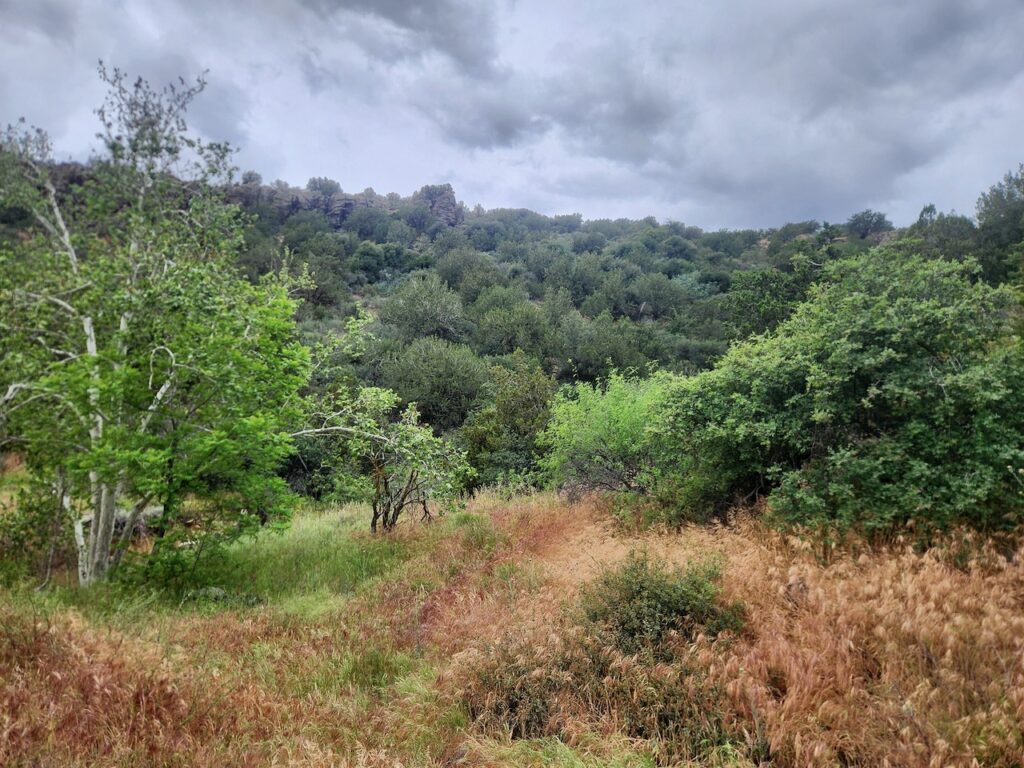
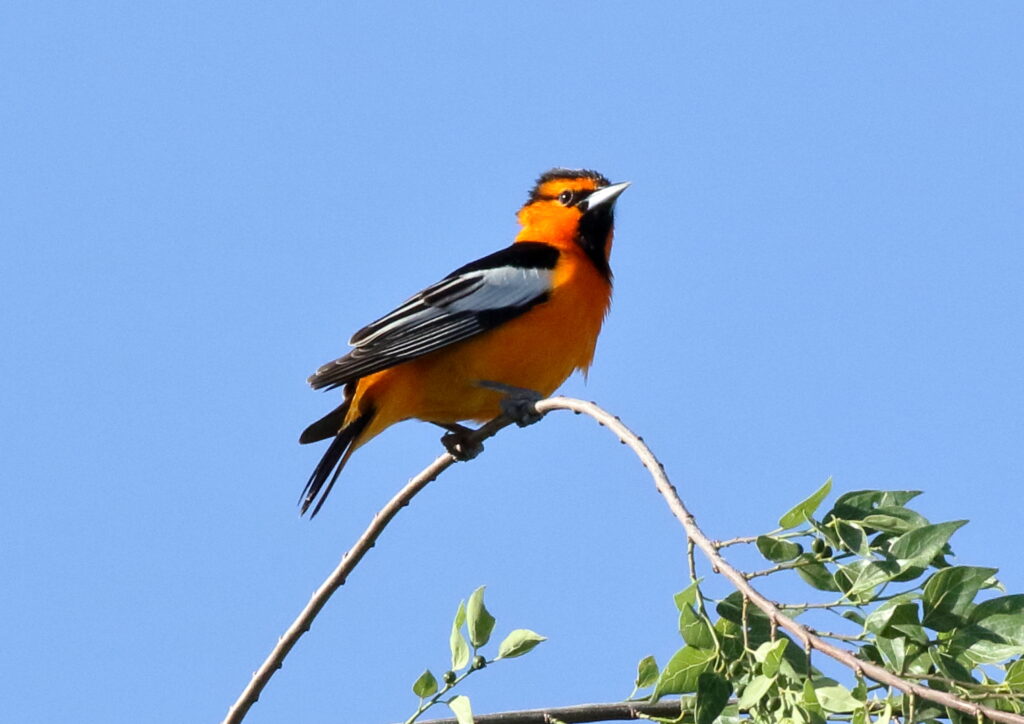
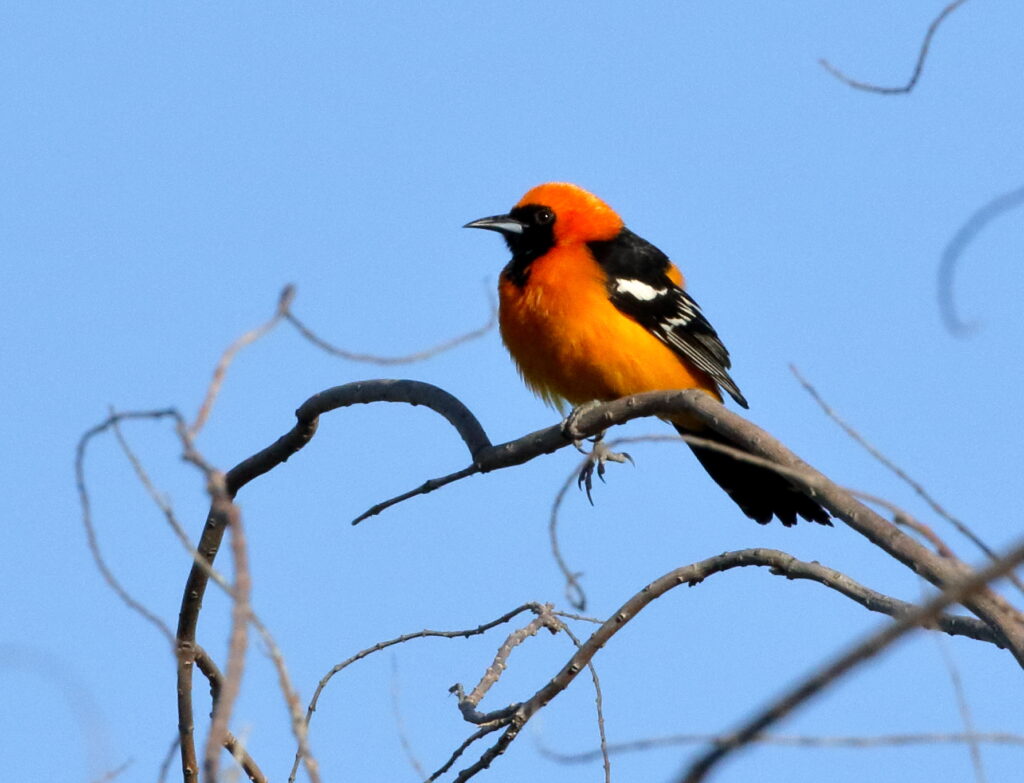
The next morning, unfamiliar bird songs woke me, and I packed my tent before the sun crested the hills. As I headed down the road, I spotted Northern Cardinals and Ash-throated Flycatchers, knowing full well that Black-chinned Sparrow reports were more frequent higher up the canyon but curious as to what else lived below. Arizona sycamores followed the creek down the canyon, which contrasted with the dry, rocky, juniper-covered slopes surrounding me, and created great habitat for birds like Hooded Oriole, Bell’s Vireo and Cassin’s Kingbird. From the hillsides sang Rufous-crowned Sparrows, a southwestern bird with a messy jumble of a song that I’d been learning to love over the last few months.
Forty minutes after I started walking the canyon, another car pulled alongside me. A woman got out, introducing herself as Shannon and stating that she was a local birder. From then on, we mostly birded together, taking turns pointing out cool birds as we encountered them.
“Zone-tailed Hawk above us!”
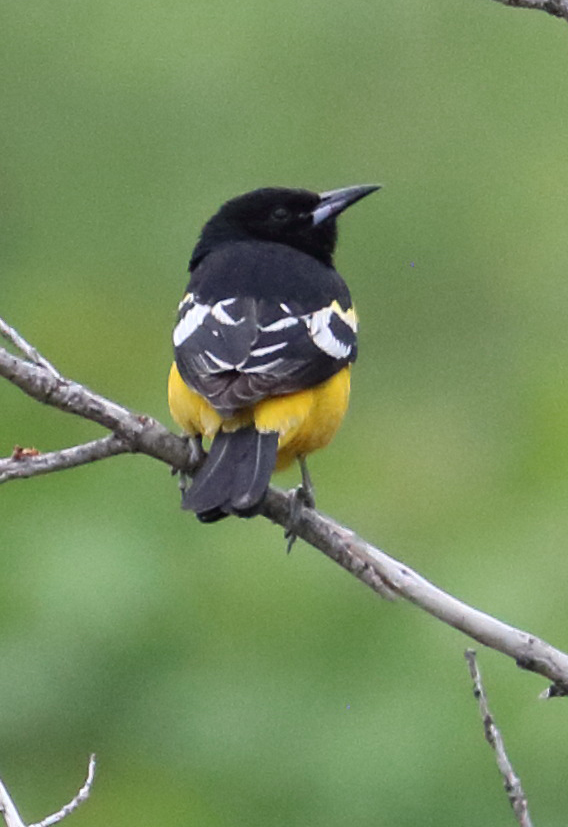
“Check out that male Scott’s Oriole!”
“Oooh, that Costa’s Hummingbird is displaying!”
Eventually, we arrived at a natural turnaround point—a large, grassy pile of dirt blocking the road. The road continued behind it, but Shannon decided to turn around. I felt that I should keep going a little farther, a birding strategy that I’d adopted in recent years. Often, when I feel like turning around, I decide to push on around ‘just one more corner’, and it’s gotten me some great birds over the years. I did just that, and wasn’t disappointed.
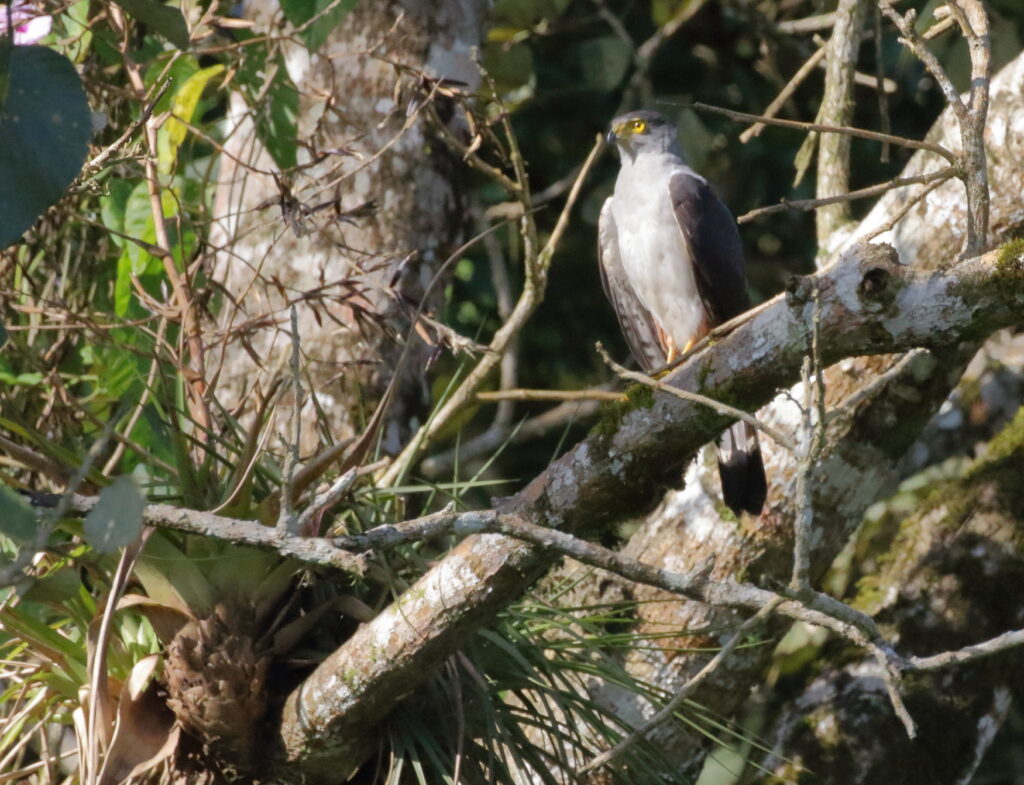
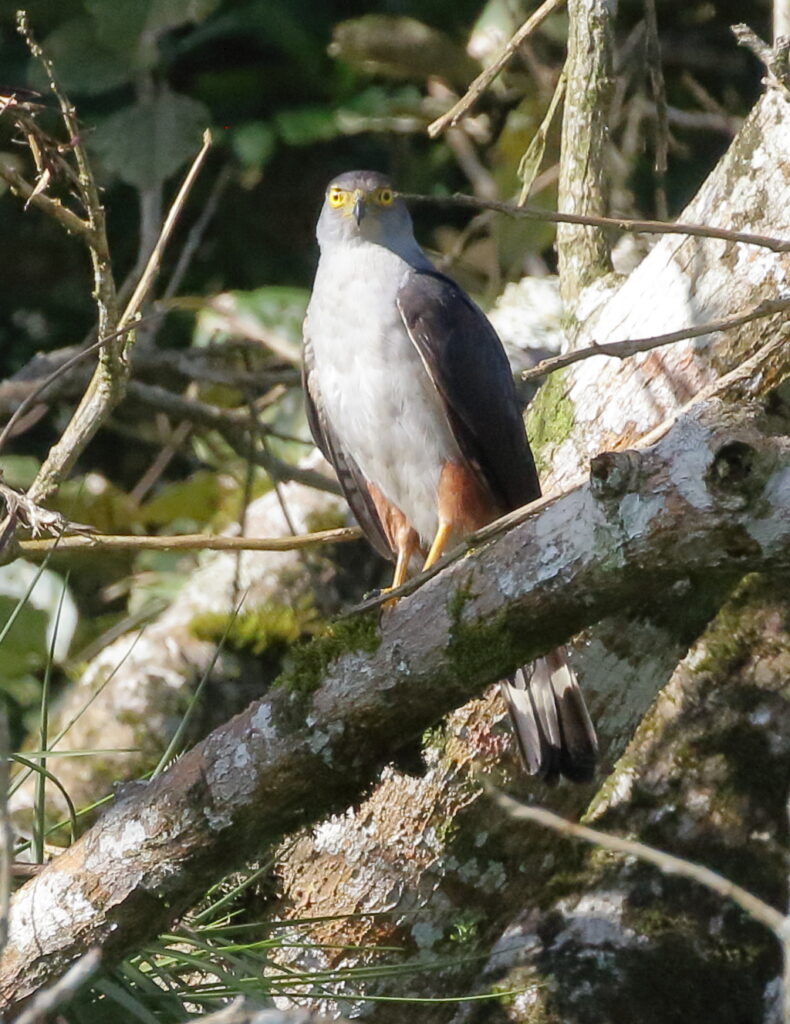
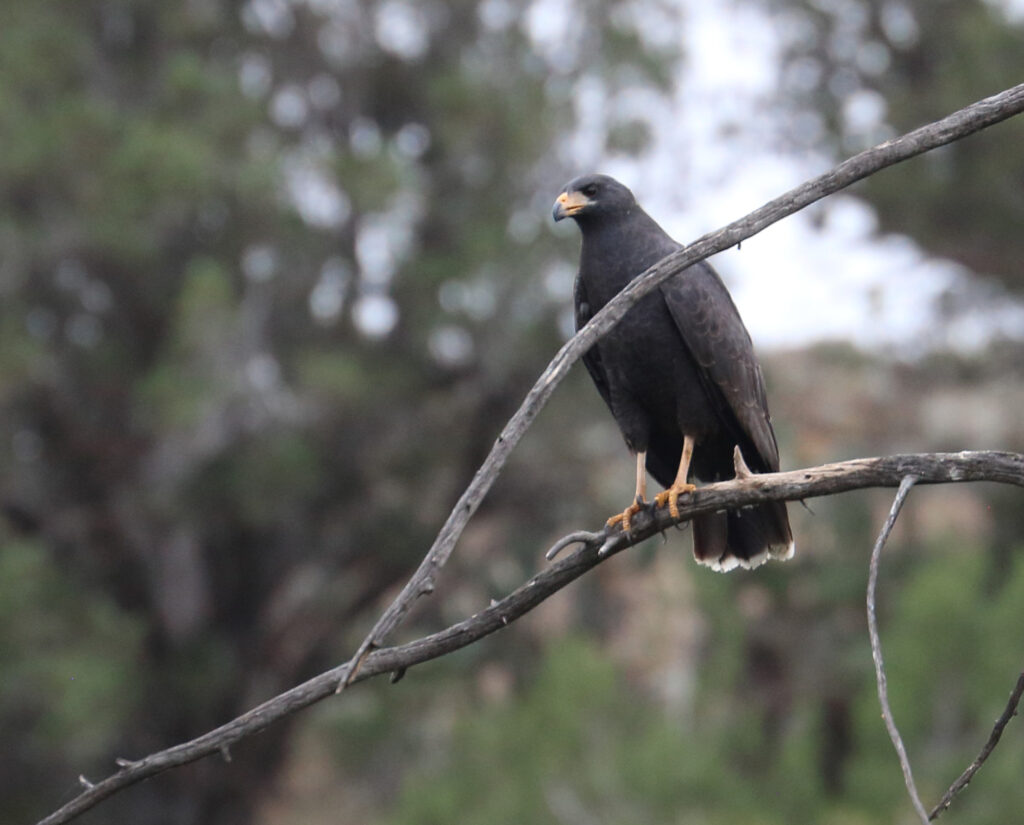
To be honest, Black-chinned Sparrow was not the main reason I’d selected this location. No, the Beeline Highway was known for another species, one I’d seen before in Costa Rica but never in the US—Common Black Hawk. In the tropics these raptors are hard to miss, using mostly coastal habitats, especially mangroves. North of the Mexican border, though, there are fewer than 300 nesting pairs, confined to sycamore-covered canyons.
Sure enough, after walking around ‘just one more corner’, I spotted it: A Common Black Hawk sitting on a nest in the crook of a sycamore. I snapped a bunch of pictures and watched as it began flying back and forth, its calls bouncing off the walls of the canyon.
I headed back up the canyon and again met Shannon, who gave me a ride to my car. We parted ways and I continued driving slowly with the windows down. I’d seen a ton of cool birds so far, but I couldn’t help feeling a little stressed. Where were the Black-chinned Sparrows?
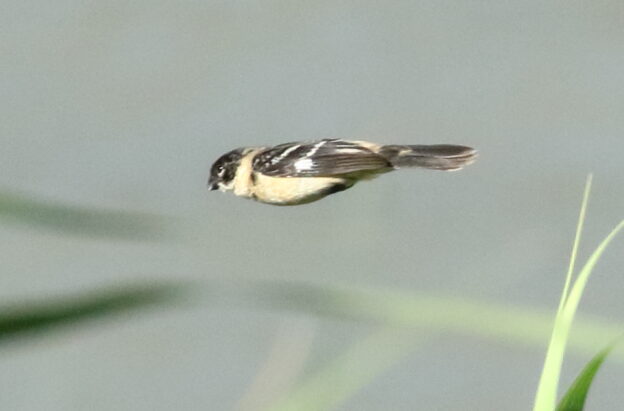
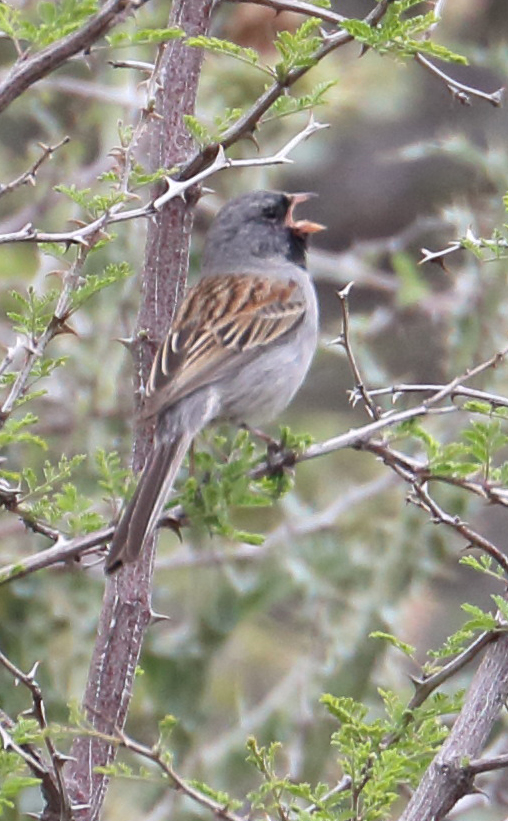
Apparently, near the top of the canyon! Pulling over for probably the fourth time, I immediately heard one sounding off from the valley below—a musical, descending song like that of a Field Sparrow but more piercing. While I don’t enjoy using playback, I went ahead and played its song. My bird didn’t come any closer, but the sound prompted another sparrow to start singing on the other side of the road. I snuck up on him and suddenly, not ten feet from me sat a male Black-chinned Sparrow. Almost immediately, a second male flew in to join him and the two flitted from bush to bush together, never staying in one place for longer than ten seconds but giving me satisfying views. I knew they were both males because only the male of this species has the diagnostic black chin.
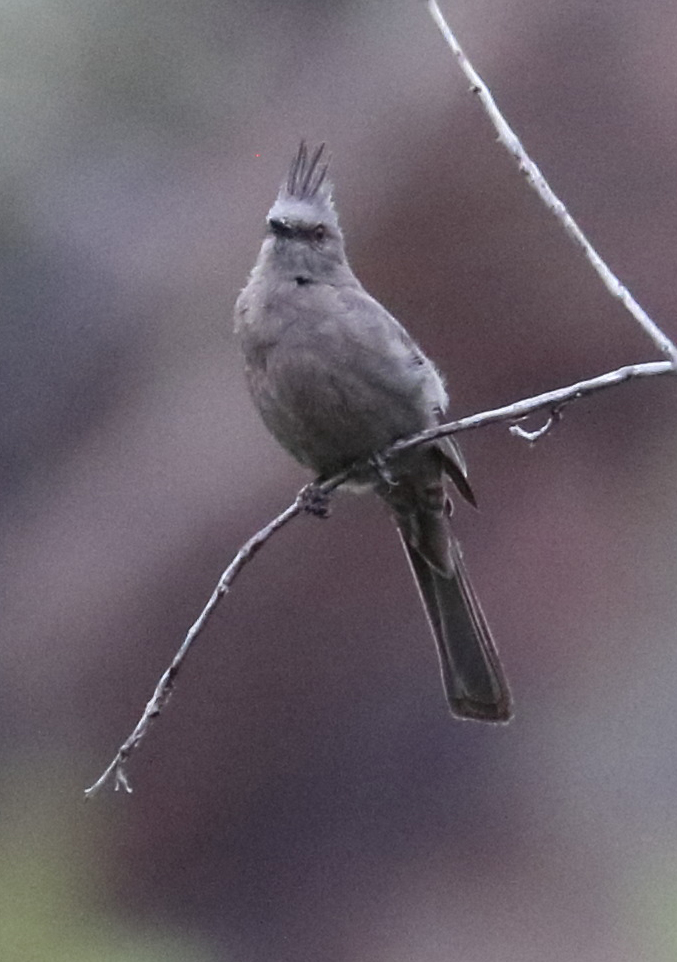
The Beeline Highway offered up one more gift before I left. While watching the sparrows, I heard the telltale varied song of a mimid. I walked to the edge of the road expecting a Northern Mockingbird, and instead was treated to great views of a Crissal Thrasher! This high-altitude shrubby habitat differed in nearly every way from the desert wash where I’d seen one in Vegas, but the bird seemed to be thriving here! As I headed north, away from the sycamores and saguaros, I felt a pang of regret since I likely wouldn’t be seeing these birds again for a long time. However, I knew that today’s experience would give me hours of pleasant reflection as I continued my adventure into new, exciting habitats.