Category Archives: Monoculars

The Vortex Veil 400 Thermal Monocular: When Birding Meets James Bond (FSB Equipment Review)

Braden and I have had an incredibly busy fall so far with Braden birding up a storm and I going back to college! We are pleased to take a break to present a review of what I can only describe as a mind-blowing new technology for outdoor enthusiasts and scientists. Do check it out, along with our many other posts! Remember, FatherSonBirding is written and produced by REAL PEOPLE, and we appreciate your support.

Even since Braden and I leaped into the world’s greatest activity fourteen years ago, technology has revolutionized birding. eBird has brought millions into the hobby by simplifying the process of record keeping and making vast quantities of information available to all. Technologies such as Motus have given scientists and conservationists critical new tools for learning about, tracking, and protecting birds and their habitats. For people such as myself who have hearing deficits, Merlin’s SoundID has made it possible to detect birds even when we can’t hear them. All of this made me especially excited to test out Vortex’s new thermal imaging monocular, the Veil 400 Thermal Monocular.
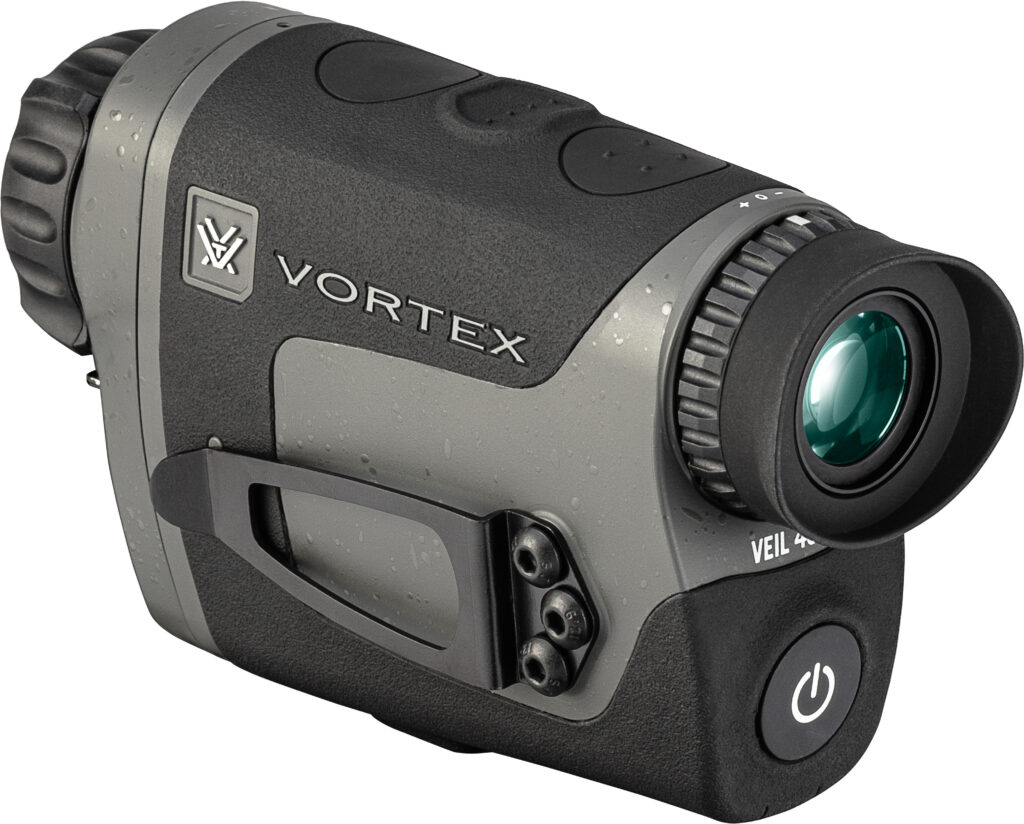
The Veil 400 brings “spy technology” to everyday birders. Despite its sophistication, we found the Veil lightweight, comfortable to hold, and easy to use—great features when you’re on a Top Secret birding mission!

Anyone who has watched a modern thriller or crime drama is familiar with the concept of thermal imaging. Instead of detecting electromagnetic radiation solely in the human visual spectrum (what we see as colors), thermal imaging devices detect infrared radiation that humans normally sense as heat. These devices then translate those infrared wavelengths into colors that we can see on a screen.

The Veil primarily caters to hunters pursuing their quarry at night. The availability of such a device, however, immediately raises the question: can it be useful for birders, too? To find out, Braden and I ran it through several trials.

Not surprisingly, our first thought was to use the Veil to find owls, so we drove to a nearby park at dusk. Almost immediately, the Veil’s screen picked up a bat flying overhead along with the heat signatures of several moths. After an hour, though, we found nary a bird, despite stopping frequently to scan the trees and brush around us. The lesson? If birds aren’t there, or are hidden in a hole or behind tree trunks, even a sophisticated device such as the Veil ain’t going to show ‘em to you!

Our main problem, we realized, was that it was September, when nocturnal bird activity has generally fallen off. That did make us eager to try again next spring when pointing the Veil into the sky would undoubtedly pick up nighthawks, swifts, and other crepuscular insectivores. Who knows? More owls might be around, too.

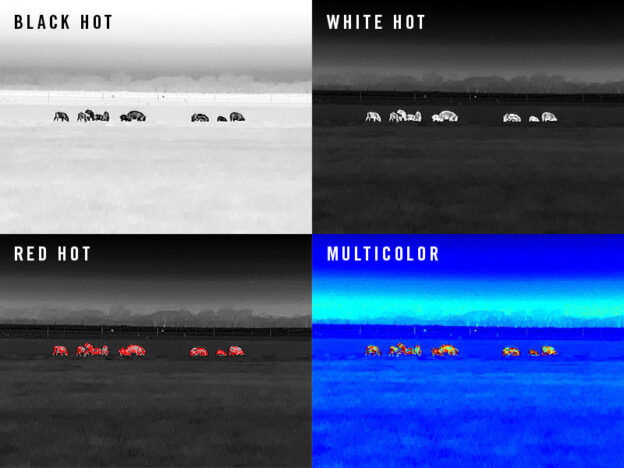
Even on that first outing, however, the Veil proved an eye-opener for understanding the environment around us. Most surprising to me were the different heat signatures given off by both living and nonliving objects. The Veil allows one to select four different thermal detection color palettes: White Hot, Black Hot, Red Hot, and Multicolor. My favorite is Red Hot, which reveals warmer images as scarlet red against black, white, and gray backgrounds.
The Veil allows you to select four different color schemes for distinguishing heat signatures. My favorite, and I think the easiest to distinguish, was the “red” option.

On this setting, Braden and I were astonished to see how tree trunks, leaves, and rocks gave off different heat signatures. That raised all kinds of questions about how other animals see the world, and why detecting heat evolved in, say, certain reptiles, amphibians, and insects, but not in mammals. Or did it? Vampire bats, in fact, can detect heat—but my guess is that the vast majority of mammals have never been tested for this ability.

Undeterred by our nighttime outing, Braden and I again tested the Veil on an overcast morning. Because we were in the heart of fall migration, we visited our local cemetery where we’d often found migrating songbirds. As soon as we stepped out of our trusty minivan, Braden pointed into a tree. “There’s a Swainson’s thrush.”
An overcast day at our nearby cemetery proved an ideal day to compare binoculars with the Veil. (Photo by Sneed B. Collard III)

I couldn’t see it, so I pointed the Veil up into the foliage and, sure enough, a bright red shape glowed back at me! “You gotta see this,” I said, handing the device to my son.

We walked to another group of trees and with his sharp ears, Braden began picking up pine siskins, Swainson’s thrushes, and yellow-rumped and Wilson’s warblers. Most of the birds stayed well-hidden in the branches, so I again raised the Veil to my eye and saw dozens of moving objects! At first I thought all were birds—but then realized that many were insects. Scanning the trees, however, I quickly got onto unmistakable moving red shapes that were birds. “Wow, Braden, there are a lot more warblers than we think up in those trees!” With the help of the Veil, in fact, we counted more migrating Wilson’s warblers than we’d ever seen in Missoula in one place—sixteen in all.

A couple of mornings later, I took the Veil out at dawn for yet another test—and had my best time yet. I heard a chirp in a tree and immediately zeroed in on the heat signature of a House Sparrow. I also had leisurely views of an eight-point buck in a field. Upon returning to my neighborhood, I followed chickadees flitting through trees, and then detected movement in a buffaloberry bush. With my binoculars, I IDed it as a Ruby-crowned Kinglet, but the bird was hardly visible deep within the branches. I raised the Veil to my eye, however, and could follow its movements with ease.
I, unfortunately, was unable to download the bird images I took, but this photo of mammals shows how clearly heat signatures show up on the Veil’s screen.

There’s no doubt that the Veil is an impressive device, but birders will ask themselves, “Is it worth a $1,500 investment?” I have several answers to this. For someone with extra resources who is fascinated with the world and would like to understand bird movements and behavior better, the Veil makes a welcome addition to your birding arsenal. For the average birder on a budget, though, the Veil is a piece of equipment that you might want to borrow or rent occasionally instead of purchasing.
Vortex has wisely kept the controls simple on the Veil, using three buttons to control a variety of features including three well-chosen magnification options.

To me, the real utility of the Veil may lie in conducting scientific studies and bird surveys. Braden and I vividly imagined being at Cape May during fall migration watching thousands of nighttime migrants streaming by—or using the Veil to help detect migrating raptors at a hawkwatch site. One of the powerful things about the Veil, as we discovered, is that it is just as useful during the daytime as at night—maybe even moreso. Only when air temperatures reach eighty degrees or so, do heat differences start to wash out.

Conveniently, the Veil can capture both still and video images. These can be downloaded onto a non-Apple computer at present—but unfortunately not on a Mac, which is why I couldn’t show you any here. However, the built-in camera got me imagining a number of different scenarios for using the device to enhance or inspire new studies of birds and other animals. If any of the above possibilities intrigue you, I encourage you to “test drive” a Veil at your local sporting goods store. Whether or not you decide to buy one, it will definitely broaden your perspective on how we and other animals perceive our incredible world. Oh, and you’ll have a lot of fun, too!

Review equipment and images provided by Vortex. Text copyright Sneed B. Collard III and FatherSonBirding.com.
The Nocs Zero Tube 10X25 Monocular (FSB Equipment Review)

If you’d like to support our work at FSB, please consider purchasing *new copies* of Sneed’s books shown to the right—and support a group such as Birdlife International or Audubon that is working hard to protect birds against climate change and many other perils. Remember: all of our posts are written and photographed by REAL PEOPLE!

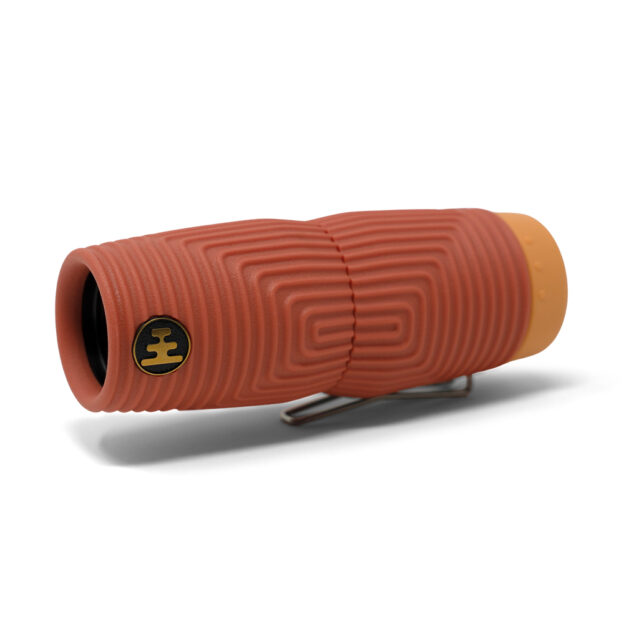
Not long ago, I was fortunate to be able to review my first monocular, the Nocs Field Tube 10X32. Today I’m happy to review Nocs’ next-generation monocular, the Zero Tube 10X25.

In past reviews, I have extolled the virtues of Nocs as a company (see this post and this post), and many of you have read of the excellent performance of the Pro Issue binoculars on Braden’s and my very wet recent trip to Costa Rica. With the Zero Tube, it’s clear Nocs is continuing to turn out great products with an ethical mindset, and in talking about this product, it’s perhaps most useful to compare it to their Field Tube that I reviewed earlier.

The first thing cost-conscious birders will notice is that the Zero lists for $179.95, a $50 premium to the Field Tube. Let’s take the Zero’s features one by one to see if it’s worth that extra fifty bucks.

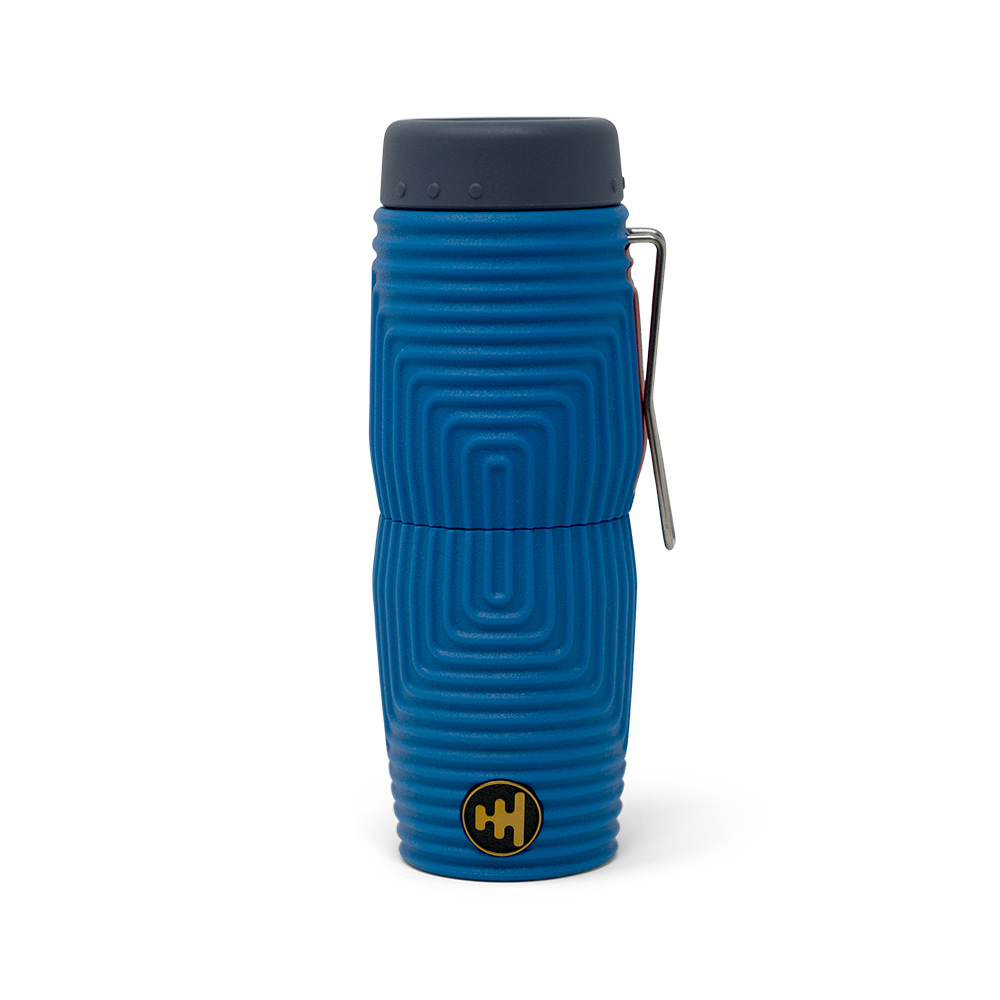
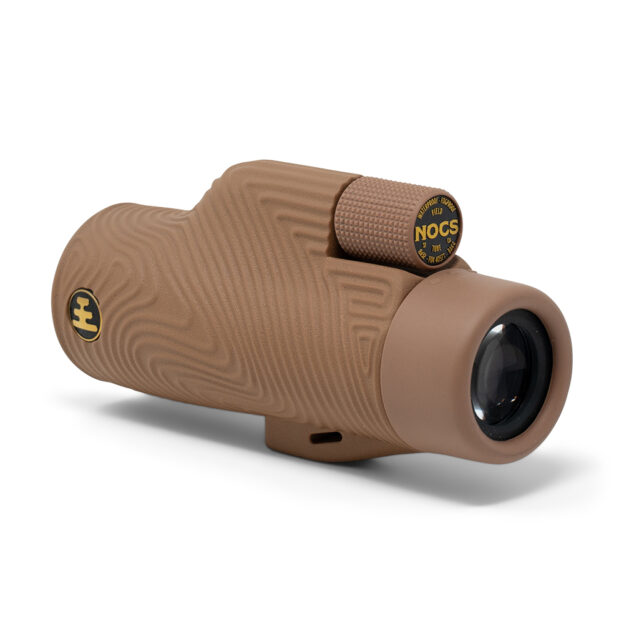
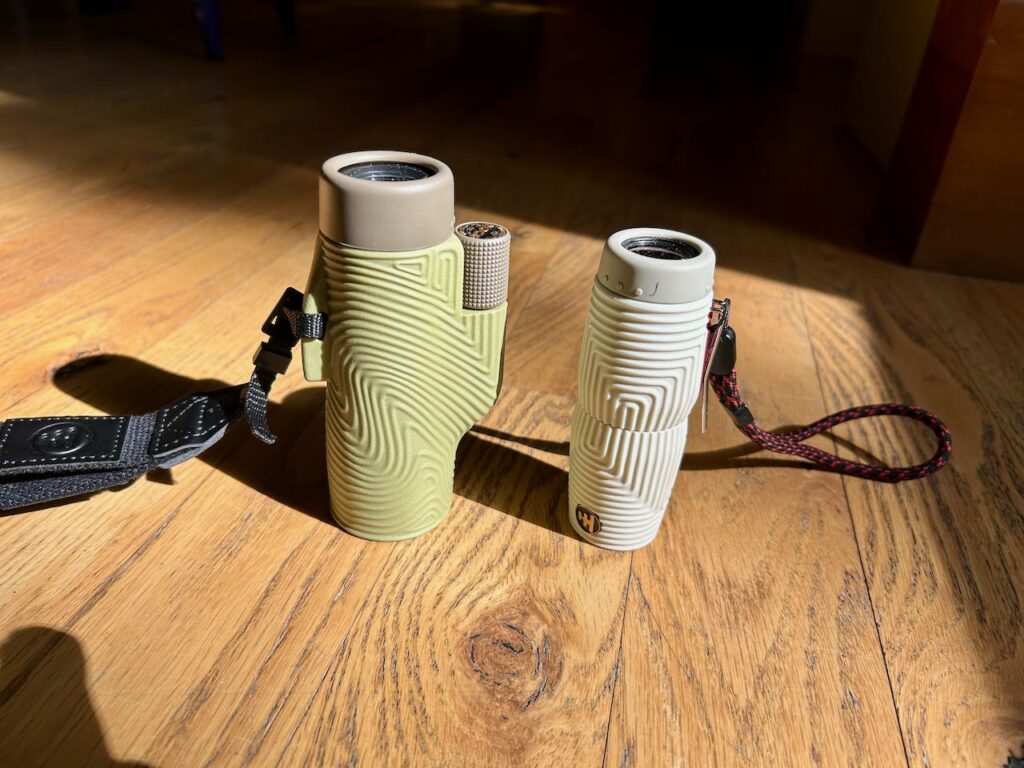
Setting the Zero Tube (right) next to the Field Tube (left) immediately reveals some big—and important—differences between the two. Note especially that the Zero Tube has eliminated the large, bulky focusing knob and comes with a convenient clip for you “pocket protector” types. (Photo by Sneed Collard)

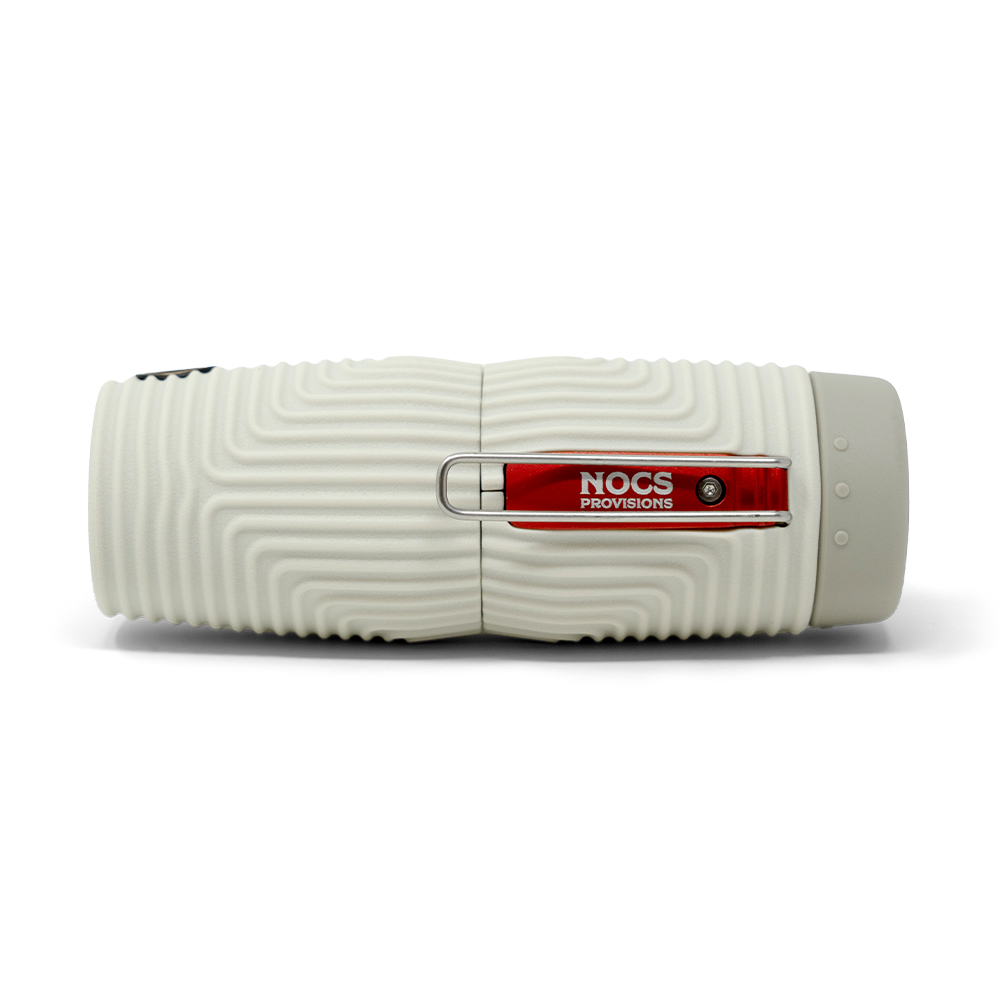
When reviewing the Field Tube, I was impressed by how small and portable it is—which is kind of the whole point of monoculars, verdad? Upon pulling the Zero Tube out of the box, I have to say that I was even more impressed and surprised by how much sleeker it is than the Field Tube! The Zero Tube measures 4.5 inches, a good half-inch shorter than the Field Tube. Better yet, while the Field Tube weighs a very modest 8.6 ounces with the wrist strap, the Zero weighs in at a minuscule 6.8 ounces. To give you an idea of how light that is, my wallet weighs 6.3 ounces—with my Costco card in it!

Like the Field Tube, the Zero Tube is waterproof and features a ridged rubber grip that even the muddiest, wettest hands will have no trouble hanging on to. Like its other products, Nocs provides the Zero Tube with a lifetime warranty—not to mention the fun styling the company is known for.

While creating a sleeker, lighter, and sharper product, Nocs has not neglected the fun styling the company is known for.

Setting the Field Tube and Zero Tube side by side, you’ll immediately note that the Field Tube features a focusing knob on top of the main tube while the Zero Tube has eliminated this. Instead, you focus the Zero by twisting the forward part of the tube. This keeps the Zero Tube from getting hung up on pockets and other compartments, making it truly easy to slip in and out for use. The only downside of eliminating the top focus knob is that the knob allows you to focus while holding the Field Tube in one hand. The Zero Tube pretty much requires you have both hands to hold and focus it. A huge improvement of the Zero Tube, however, is that you do not need to twist it nearly as far to bring it from near to far focus—an essential bonus for a birder.


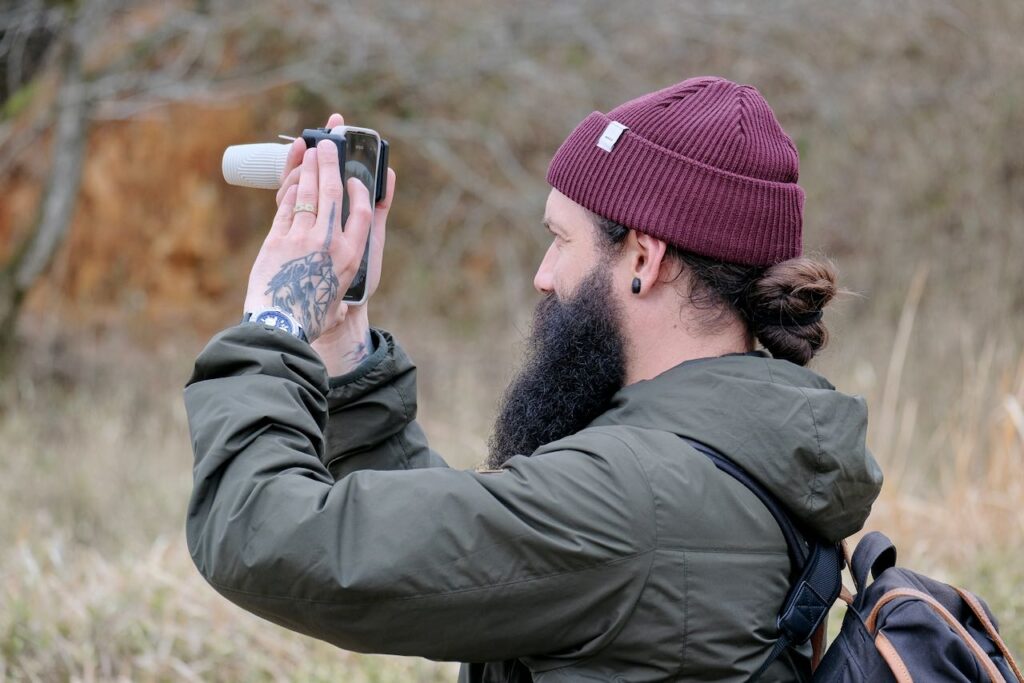
Though I have not done this myself, digiscoping should be a cinch with Nocs monoculars, especially with the improved optics the Zero Tube provides.

Despite all of its other advantages, the best part of the Zero Tube is the sharpness and clarity of the image. Just last week, I let my friend Bruce experiment with the Zero Tube as we hiked some nearby trails and, really, he was having so much fun I was afraid he wouldn’t give it back! He focused the Zero Tube on some Western Bluebirds in a tree and remarked, “Wow, this really gives you a sharp look!” In my try-outs, I agree, and it’s clear that Nocs’ use of better optics in the Zero Tube has paid off big. To my mind, that alone easily justifies paying $50 more for this fine product.

Compact monoculars do come with some compromises. The most notable is their relatively narrow field of view—6.5 degrees for the Zero and 6.3 degrees for the Field Tube 10X32s. Still, and as I’ve stated before, they aren’t meant to replace binoculars, but to offer a convenient, compact alternative for travel and outdoor activities. If this is a niche that needs filling in your birding activities, you’ll be happy you picked up a Zero Tube.

The many improved features makes paying a little more for the Zero Tube a no-brainer for birders.

Photos (except where noted) and review equipment provided by Nocs.

Nocs Pro Issue 8X42 Waterproof Binoculars (FSB Equipment Review)

If you read our last post, you know that Braden and I recently completed an epic birding adventure to Costa Rica. One thing I didn’t mention is that, besides offering the chance to see an astonishing variety of neotropical birds, the trip gave me the opportunity to field test an exciting new piece of equipment: the Nocs Provisions Pro Issue 8X42 binoculars. And boy, did I put them to the test!

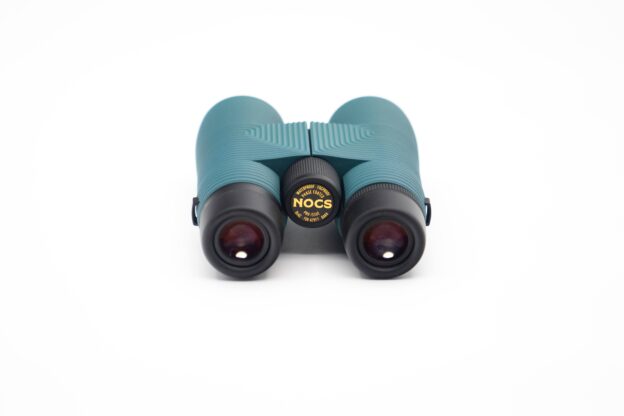
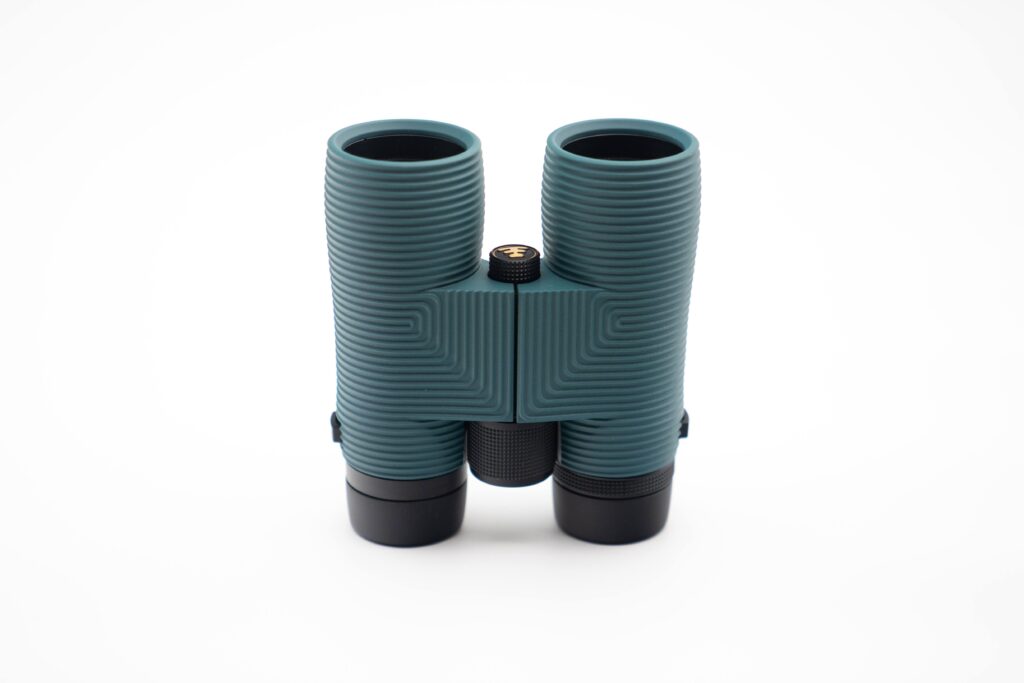
I must confess that I liked the Pro Issues right out of the box. As I explained in my recent review of the company’s Field Tube monocular, Nocs has put real thought into designing equipment that looks and feels different from the vast majority of products out there. The rubberized protective casing of my Pro Issues features a stylish ribbed design that is easy to grip, yet feels very comfortable to hold. Like the Field Tube monocular, these binoculars also have “pop in” caps for the objective lenses that are much more secure than any other design I’ve encountered.

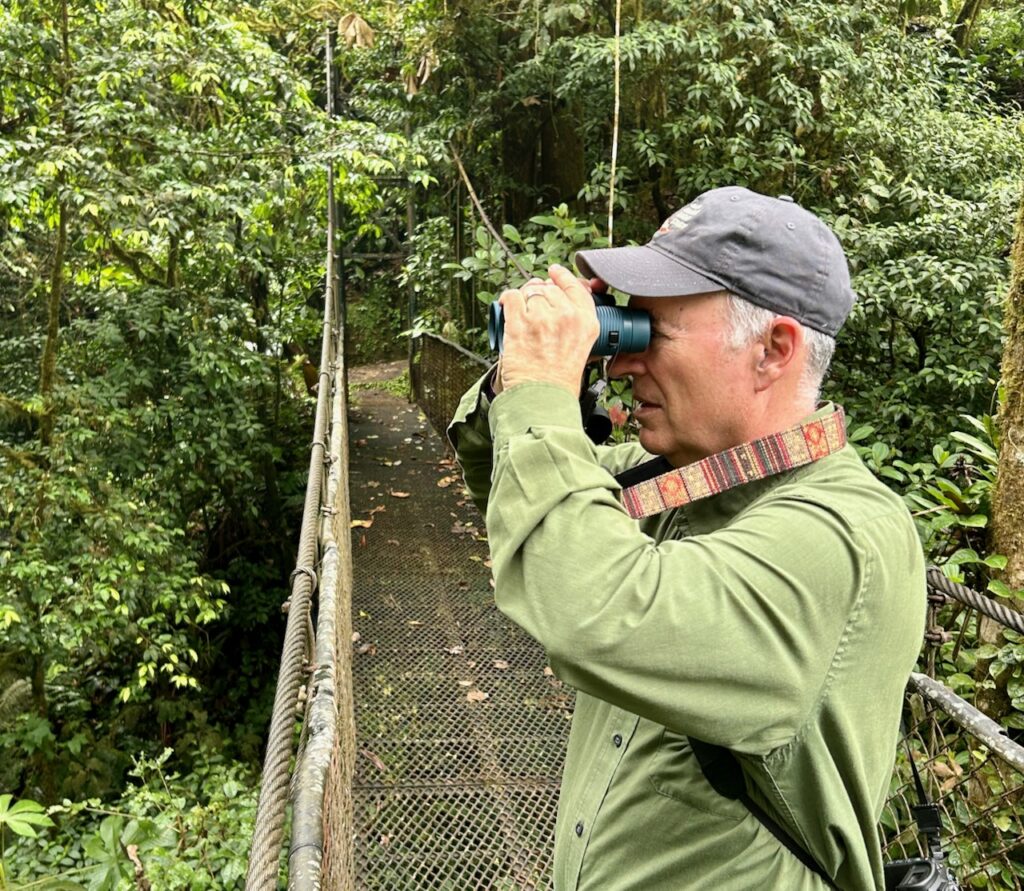
With my review sample of the Pro Issues, Nocs took the trouble to send me one of their woven tapestry neck straps, and if you purchase any Nocs binoculars, I highly recommend picking up one of these, too. Not only does the strap look way cooler than standard bino neck straps, it is more comfortable against the skin—and easier to attach to the binoculars than any other design I’ve seen. As far as the build, these binoculars couldn’t feel more solid. I fortunately didn’t drop them, but felt that if I had—or if I whacked them against a strangler fig tree—they would survive unscathed.

If you purchase Nocs binoculars, I highly recommend buying the woven neck strap, which is both easy to attach and very comfortable around the neck.

When I decided to take the Pro Issues to the tropics, I realized that waterproofing would be important—but I didn’t realize how important! For about half of our trip, Braden and I endured one of the wettest “dry seasons” on record. I mean, we got dumped on—to the point where, several times, we just stood under a tree and tried to will the rain to stop. Not only did the Pro Issues take on this full exposure without allowing water to penetrate the casing, the binoculars didn’t fog up even in the worst conditions.

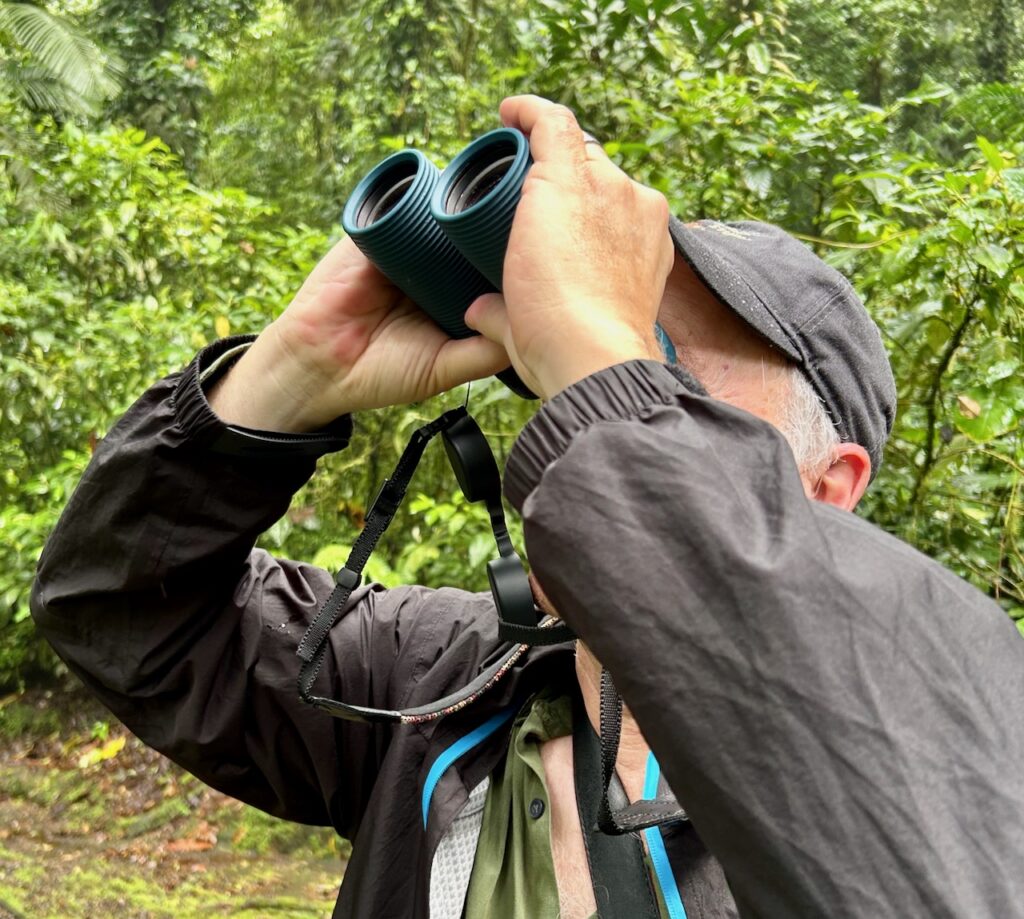
As you can see, the rain on our trip showed no mercy—but the Pro Issues survived these tough conditions better than either Braden or I!

I should mention that one smart thing Nocs has done with their optics is to recess the objective lenses deep inside the tubes. This means that as they hang from your neck, rain won’t land on or “creep around” to the lenses—avoiding a potential constant hassle. One thing I do hope Nocs incorporates into future products is a “faster” focusing knob, requiring fewer revolutions to go from very close to very far focus. This would make it easier to zoom in on fast-moving birds.

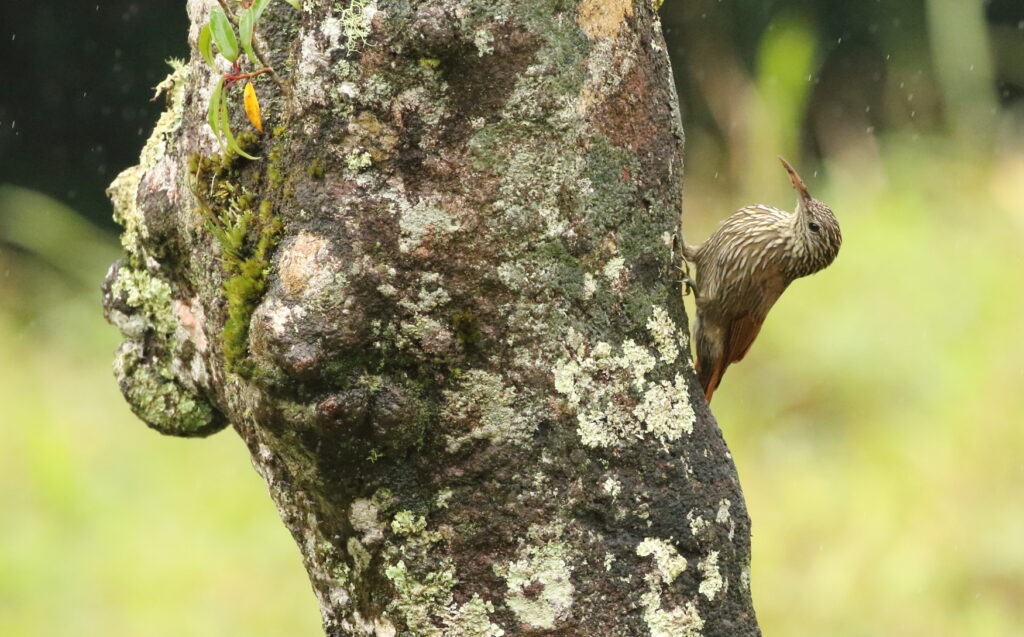
Even in the rainiest conditions, my Pro Issues stayed tightly sealed and did not fog—allowing me to fully enjoy marvelous birds such as this Bicolored Antbird (teaser for our next post!).

Of course none of the above matters without good quality optics, and the Pro Issues definitely hold their own against other equipment in a similar $300 price range. Nocs uses BaK-4 prisms, a higher quality prism that ensures even, full-spectrum light transmission. Like other quality companies, Nocs uses coated, scratch-resistant glass. The result? In bright to medium-low light, I got nice crisp, well-lit, full color looks at birds, even from a good distance. Taking 8X42 instead of 10X42 binoculars proved a good choice for in-close rainforest conditions by giving me a wider field of view and more light, and I rarely missed the extra 2X magnification of 10X42s.

As every birder knows, however, things do get tough in very dark, overcast rainforest understory conditions, challenging the abilities of almost any optics. In my equipment testing, finding binoculars that will “see through” the darkest most abysmal conditions—or the most awful gray backlit situations—requires a price jump up into the $1,000 range, not something most birders can afford. (See, for instance, this review and this one). That said, for $299.95 the Pro Issues offer solid, competitive value while boasting some additional advantages . . .

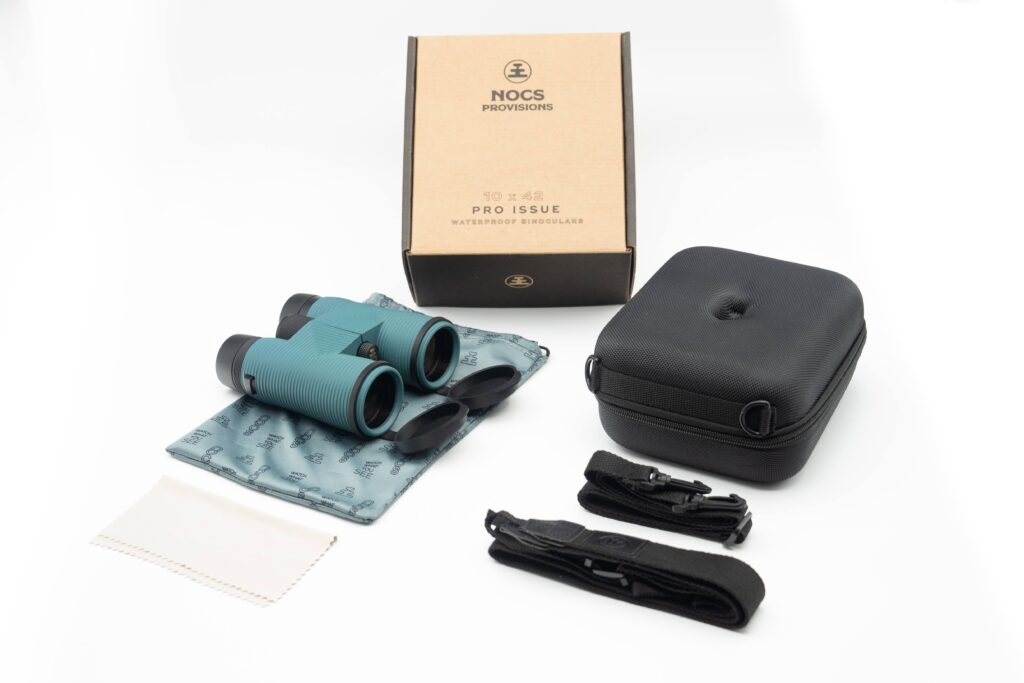
Nocs is committed to operating sustainably and that includes avoiding plastic packaging. Note, I especially like the cloth carrying bags (left, under the binoculars) that come with their equipment. While offering less protection than hardshell cases, the bags are much less bulky, saving precious space when traveling.

In an age when many corporations throw their weight around with little regard to the environment and social justice, Nocs offers a refreshingly positive set of values for the ethically responsible birder. The company is a member of 1% for the Planet, donating 1% of its revenue to supporting environmental organizations. It is also certified as climate neutral and is fully committed to sustainable packaging. In fact, I haven’t found a single piece of plastic packaging on any of the Nocs products I’ve received. The quality of its products also ensures that they will last long into the future, reducing the need for buying—and discarding—cheaply made equipment over and over. If your Nocs product should somehow break or fail, the company offers its “No-Matter-What Lifetime Warranty.”

All of this makes me give the Pro Issues a big thumbs up. If you’re still not convinced, I should mention that the 8X42 Pro Issues come in Ponderosa (green), Oxblood Maroon, and Marianas (blue) colors. That will ensure that in addition to having a great set of binoculars to accompany you on your birding adventures, you will be the most stylish birder anywhere in sight!

The author received no financial compensation for this review.

The NOCS Field Tube 10X32 Monocular (FSB Equipment Review)

I’m excited this week to offer our very first equipment review of a Nocs Provisions product: The Field Tube 10X32 monocular. This is the very first monocular that I’ve ever used, and I was so excited that I tore it out of the packaging and immediately set about field testing it. Before I offer my thoughts, however, I want to say a bit about Nocs.

Everything about this smaller optics company compels me to like them. For one, they take pains to send their products in sustainable packaging—a definite plus for a birder wanting to protect birds and our environment. They are a 1% for the Planet member and a Climate Neutral certified brand. To quote their PR info, “At its core, the company believes that the more we observe and understand how intricate and delicate our planet’s ecosystems are, the more motivated we are to protect them.”

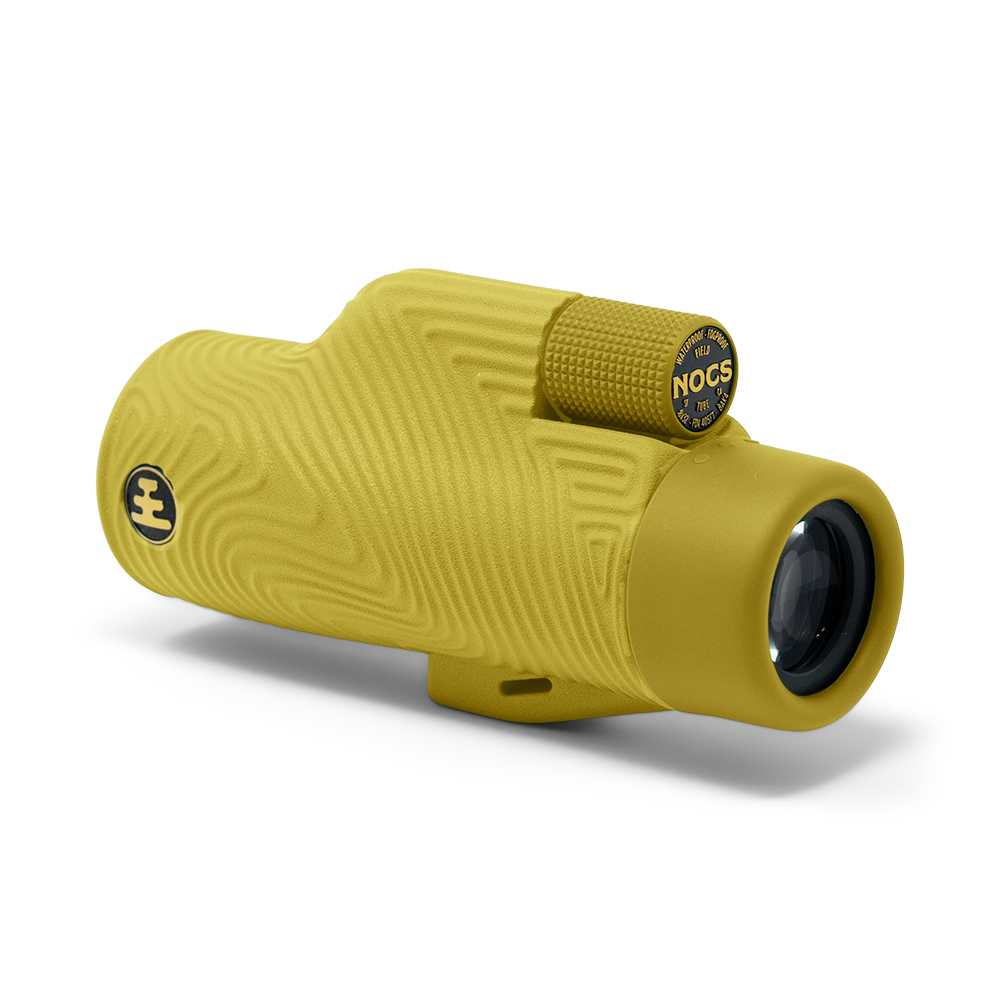
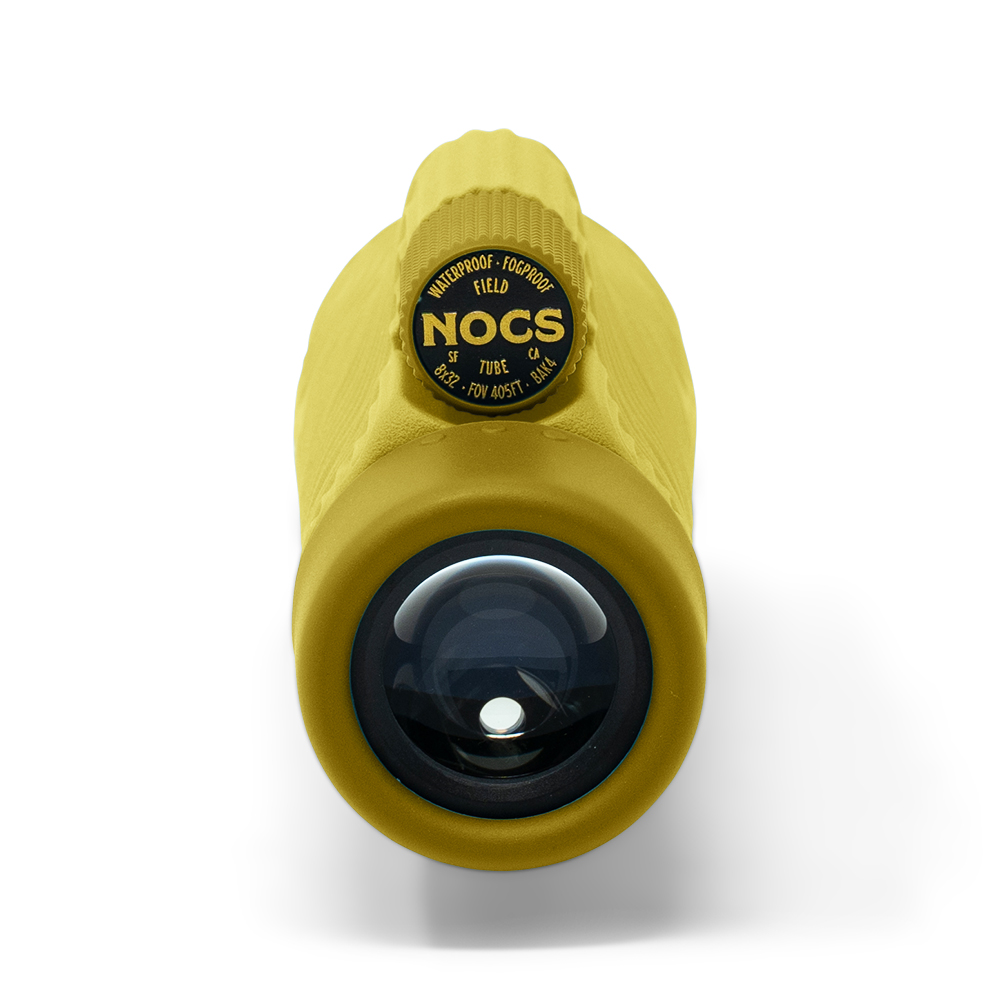
The 8X32 Field Tube shown in Banana Slug (Yellow). This version also comes in Corsican (Blue), Coral (Red), and Desolation (Black). The 10X32s I tested are offered in Ponderosa (Green), Paydirt (Brown), and Oxblood (Maroon). Order by clicking here or on the image above.

Nocs, though, also offers products with super cool designs. The rubber “wave grip” coating of the Field Tube not only offers a great gripping surface, it looks way bitchin’ compared to the standard black exteriors offered by most other manufacturers. Not only that, Nocs products are offered in different colors. Need a pair of binoculars to match your powder blue tux for the Birding Academy Awards? Perhaps something to blend in with your Ferrari while visiting Tuscany? Nocs has got you covered.

But let’s get to the main point, the Field Tube 10X32 monocular itself. First let me say that for birders, this is a “next item” purchase. It’s not intended to replace your binoculars. Rather, it is designed for situations where a slim profile and super light weight are of premium concerns. With a length of only five inches and weight of half a pound—or about a third of traditional binoculars—the Field Tube easily fits into a front pocket and can barely be felt hanging around your neck. This makes it perfect for backpacking, travel, and paddle-boarding. But I can envision other ideal scenarios for this equipment, too. For instance, imagine . . .

The Field Tube is so small and light that you can take it virtually anywhere without noticing it. We call this BIRD PREPARED!

You are in an expensive Tokyo restaurant trying to close a deal with a major Japanese tech company. Suddenly, an Azure-winged Magpie lands in a tree outside the window. You do not want to offend the company president sitting across from you, but . . . as soon as he gets up to use the restroom, you whip out the Field Tube from your front pocket for a delightful look at this long-hoped-for life bird. Or . . .

You’re waiting for your perfect big wave set at Mavericks near Half Moon Bay and an intriguing small black bird lands in the water. Unfortunately, it is too far away to ID with the naked eye. BUT, you just happen to have your Nocs Field Tube stuffed inside the neck of your neoprene wetsuit and, focusing in on the bird, you discover it is a Long-billed Murrelet, just flying in from Siberia! Not only is it a life bird, it allows you to break the ABA Big Year record for surfers, earning you glory, fat promotional contracts, and a sponsorship to bird and surf the world!

You can see where I’m going with this, and I’m sure you can come up with other equally realistic scenarios where you’ll want this item close by.

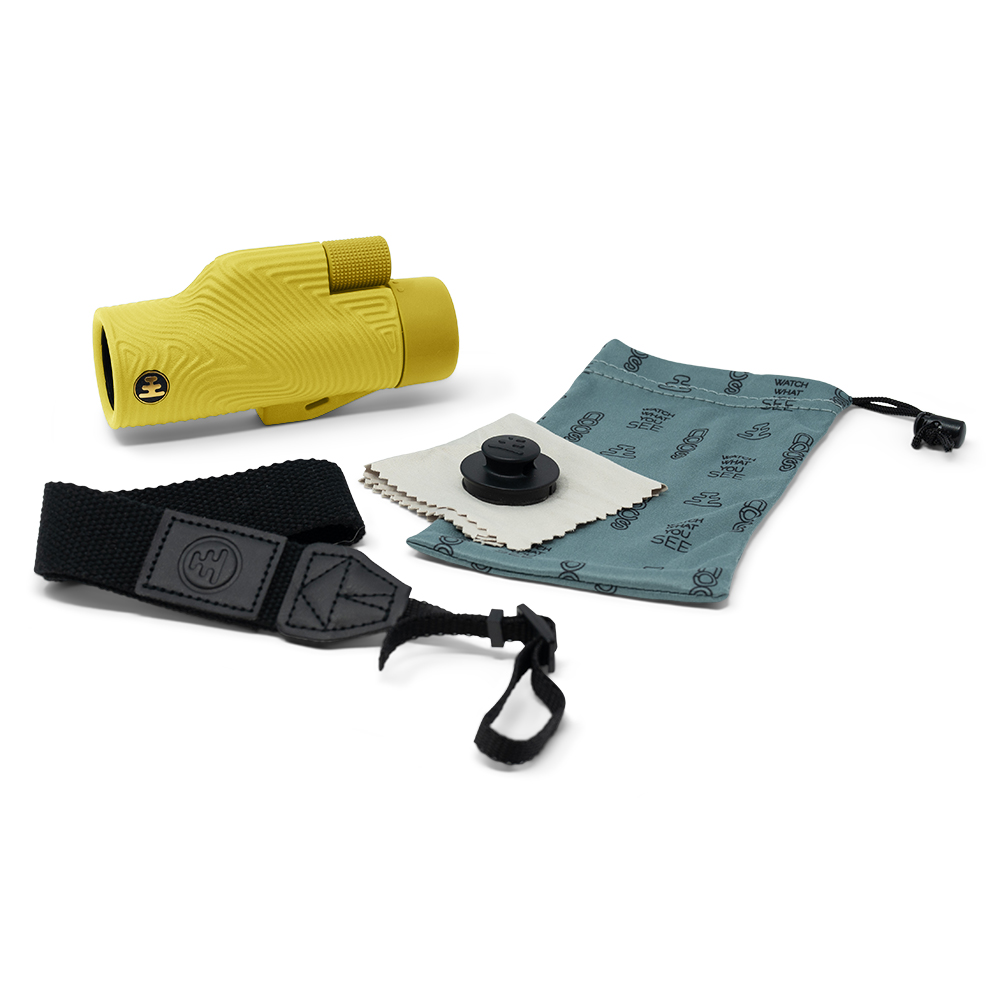
The Field Tube comes with a handy wrist strap, soft protective carrying bag, and lens cloth—all packed in 100% sustainable recyclable packaging.

A couple of things I especially like about Nocs products is that they come with solid rubber stoppers that snugly pop in over the objective lenses. It’s amazing how even high-end manufacturers have not solved the problem of keeping the objective lens covers firmly in place. I also really like the strap systems for Nocs products. In fact, when you order, I recommend purchasing the woven strap versions as they are more comfortable and, again, look cool.

But back to the Field Tube, it features a fairly close (9-10 feet) minimum focal length and is waterproof down to three feet deep for up to thirty minutes, making it perfect for birders, butterfly watchers, and surfers. As you would expect, Nocs uses fully coated lenses and prisms, and has a lifetime warranty. I found light transmission quite good in these despite the relatively small 32 mm objective lens.

Just for fun, I decided to see if I could get a digiscope photo through my Field Tube. Not bad for my first effort, if I do say so myself. I mean, you can easily see both the Harpy Eagle and Imperial Woodpecker in the photo, right?

At a price of $129.95, you wouldn’t expect perfection from the Field Tube, and I did notice a couple of things that could use improvement. While the focus is quite sharp at close and medium ranges, it gets a bit softer at distance. I’d also like to see fewer turns of the knob required to bring the focus from close to far distance. However, most people will find these minor issues acceptable trade-offs for the incredibly small profile and convenience the Field Tube offers.

Nocs has recently unveiled a monocular upgrade called the Zero Tube which is even smaller and lighter than the Field Tube, and uses a different focusing mechanism. Hopefully, I’ll get to test that one in the future. Next up, though, will be my review of the Nocs Pro Issue 10X42 binoculars, which I am taking to Costa Rica on my trip with Braden next week. My initial impressions of the Pro Issues are extremely positive and I look forward to giving them a full tropical workout. Stay tuned!