Tag Archives: life list

Chihuahuan Raven: Bird #12 on Braden’s ABA Life List Countdown, April 10th, 2026

In the past few months, Braden has been on a roll finding his last couple of dozen Lower 48 ABA life birds. Today, he takes a deep dive into a bird few of us know much about and even fewer of us encounter. Remember, FatherSonBirding is written and photographed by REAL PEOPLE. If you want to support our work, please consider buying some of Sneed’s books by clicking on images to the right. Better yet, invite one or both of us to headline your next birding festival! While you’re at it, be sure to check out Sneed’s new-and-improved website at www.sneedbcollardiii.com. Thanks!

It had been years since I’d watched a pair of ravens for so long. I’d just finished birding Hanover Road, a dusty track through a habitat I’d never seen before; dry grasslands covered in large cholla cacti. Hanover Road hosted a few strange migrants, including Rock Wrens and Sage Thrashers, but I hadn’t seen either of my main targets for the area, Cassin’s Sparrow or Chihuahuan Raven. Then, just before I was about to pull onto the main highway heading back west towards Colorado Springs, I spotted them: two large, black corvids investigating a smushed prairie dog on the road. I parked my car, got my camera out, and started snapping pictures.
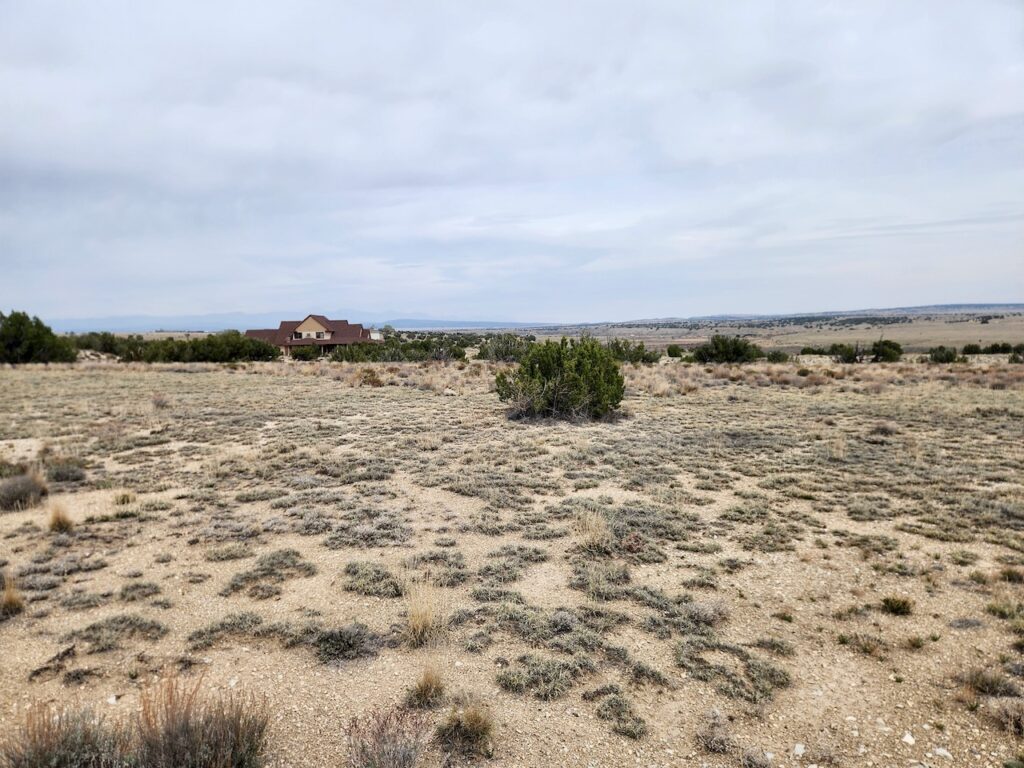
The “raven neighborhood” on my recent trip through Colorado.

This certainly wasn’t the first time I’d attempted to see Chihuahuan Ravens. On every birding trip I’d taken to Arizona I had spent increasingly more and more time looking for the large, dark birds out in the desert. Most recently, in August of 2025, I’d pulled over to look at every raven in the vicinity of the Chiricahua Mountains, coming up short over and over as I realized each and every one was a Common. Finding Chihuahuan Ravens in Texas is far easier, for no Commons occur there, but on my dad’s and my one trip to South Texas we hadn’t seen a single corvid.
On recent trips through the Southwest, I had been frustrated several times in my search for Chihuahuan Ravens.

The bird hadn’t even been particularly on my radar for this road trip home. After bidding the Gunnison Sage-grouse goodbye (click here) earlier that morning, I’d routed east, over the continental divide and out into the open prairie. I knew that southeastern Colorado had desert habitat, or at least desert-adjacent habitat, and had several species that I wanted to find. So, upon my arrival in the Colorado Springs area, I started driving roads through neighborhoods where my target birds had been reported. Curve-billed Thrasher and Canyon Towhee I found with ease. Finding Scaled Quail took significantly more effort, but eventually I lucked into one perched in someone’s driveway, calling loudly and attempting to jump onto a nearby truck. None of these birds were lifers but I’d never seen them in this context before, and the towhee and thrasher were new subspecies and did look notably different from the ones I’d seen in Arizona. 
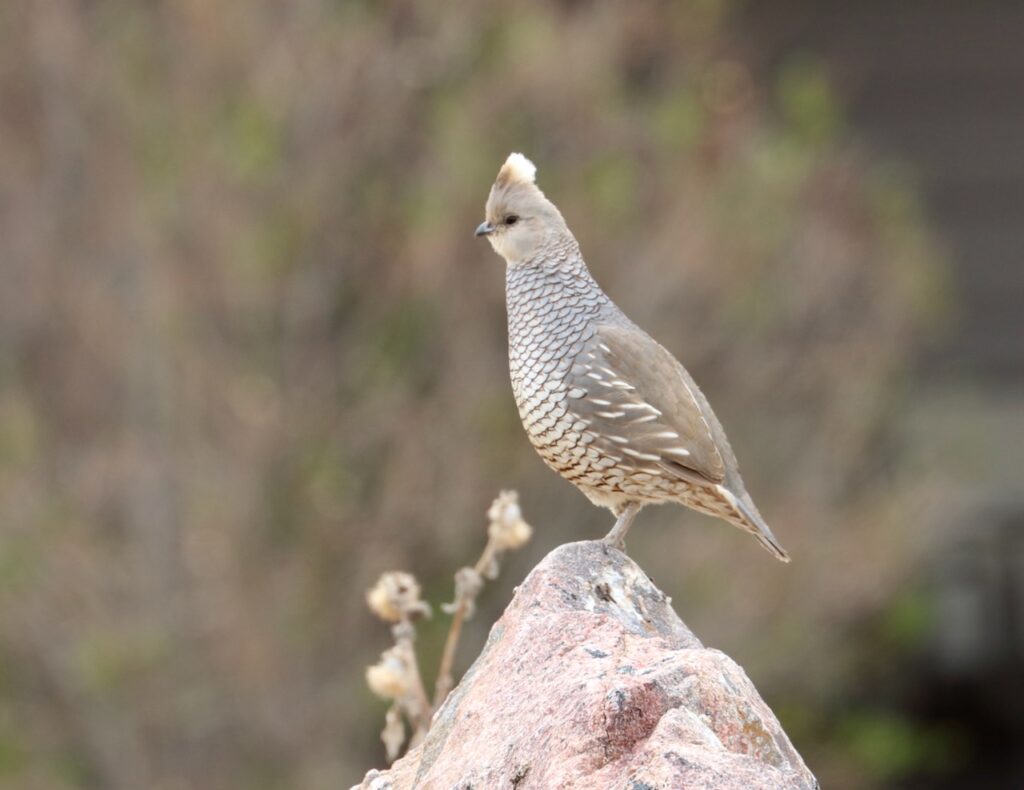
While I searched for CHRAs with few expectations, I was fortunate to stumble upon a Scaled Quail.

After texting a few friends about my finds, it dawned on me: here were species native to the Chihuahuan Desert, species I’d seen in southeast Arizona. So, if Scaled Quail, Curve-billed Thrasher and Canyon Towhee lived here, what about Chihuahuan Raven? I jumped on eBird and quickly learned the answer—this marked the northern edge of the ravens’ range, and a few individuals had been reported in the area recently. So, I kept my eyes peeled as I drove further out into the cholla-covered grassland. Sure enough, an hour later, here I was, staring down two ravens.
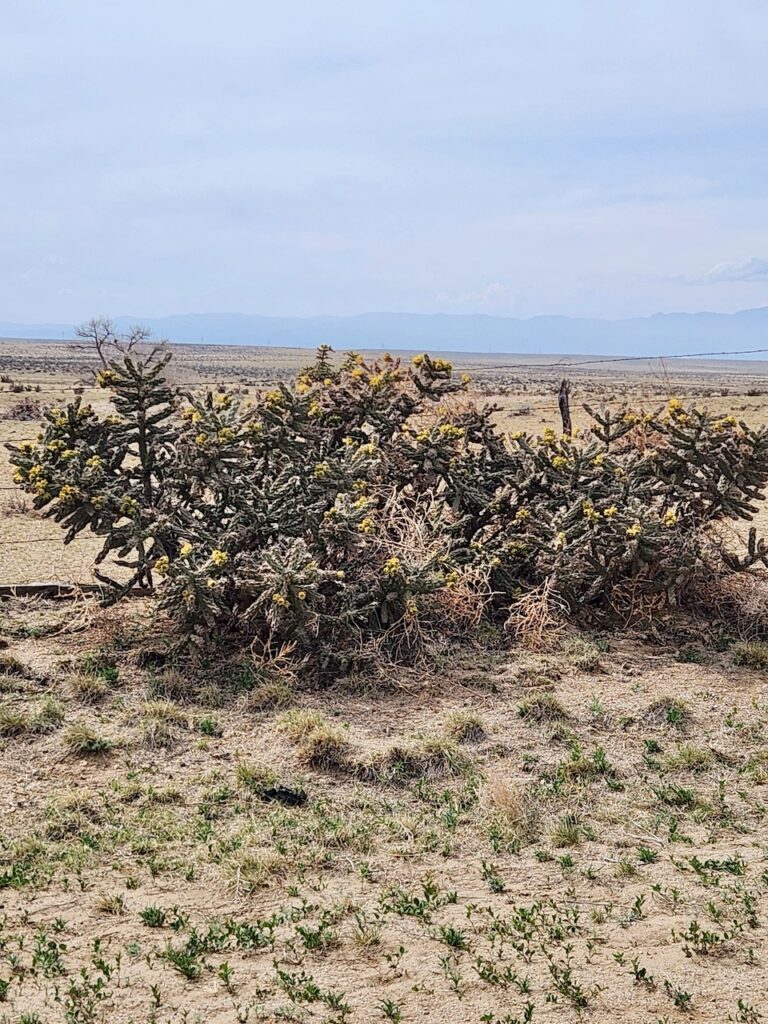
Cholla cactuses were part of the interesting ecology of this unusual southern Colorado landscape—but would ravens be here?

In all my time hunting down this species, I’d learned a lot about the identification of ravens. For one, Chihuahuan Ravens generally had longer nasal bristles, meaning that feathers covered more than half of the upper bill. The birds poking the dead prairie dog definitely had long nasal bristles compared to a Common Raven. Unfortunately, this field mark can be quite variable, so I had to look harder. Another feature of Chihuahuans is the flat head with its peak near the crown, unlike that of a Common which has a peak near the front. Again, these birds were looking more like Chihuahuans in this regard, but this field mark also could be quite variable, especially in the wind. And the wind was definitely blowing!

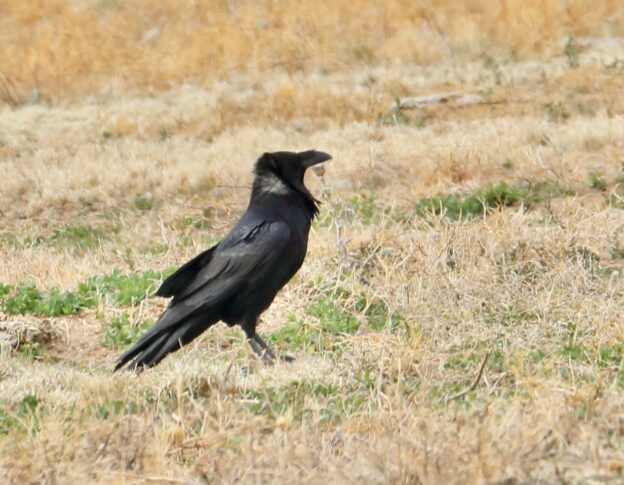
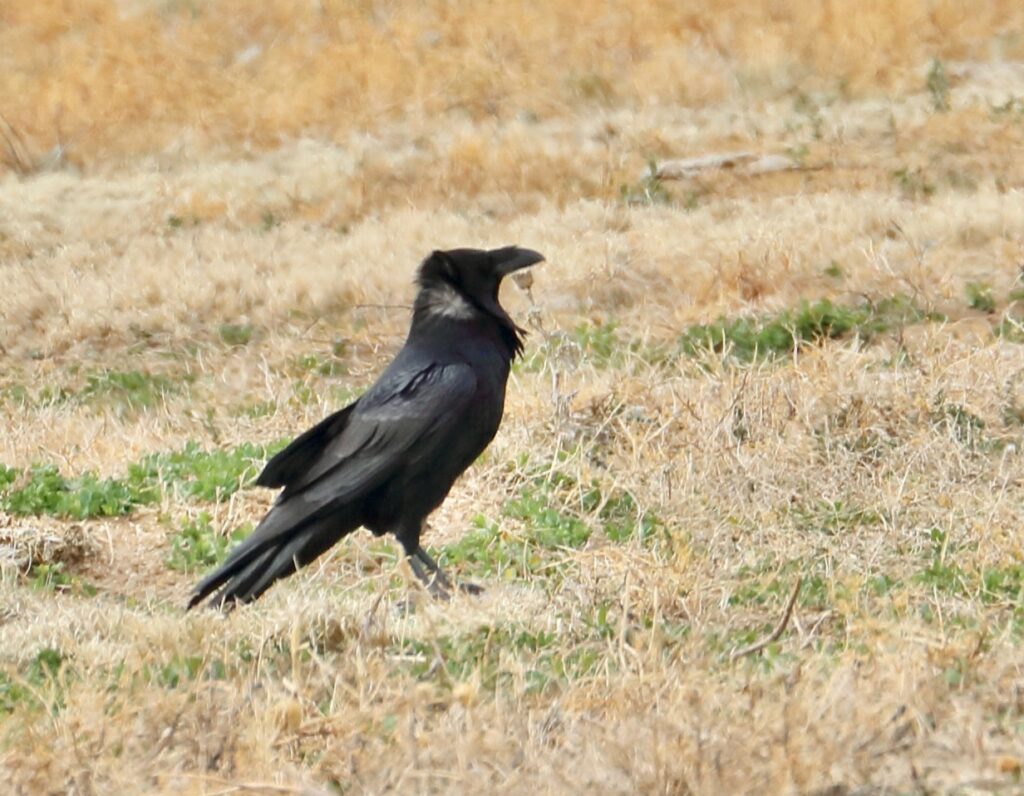
However, that was great news for me, because the wind gave me access to the largest, most reliable field mark—the raven’s neck feathers. Common Ravens have a gray color at the base of their neck feathers. Chihuahuans, meanwhile, have white. Thanks to the gusts rocketing over the desert landscape, the neck feathers on each bird were exposed every thirty seconds or so. After snapping some pictures and zooming in, I could clearly see that the birds in front of me had white neck feathers!
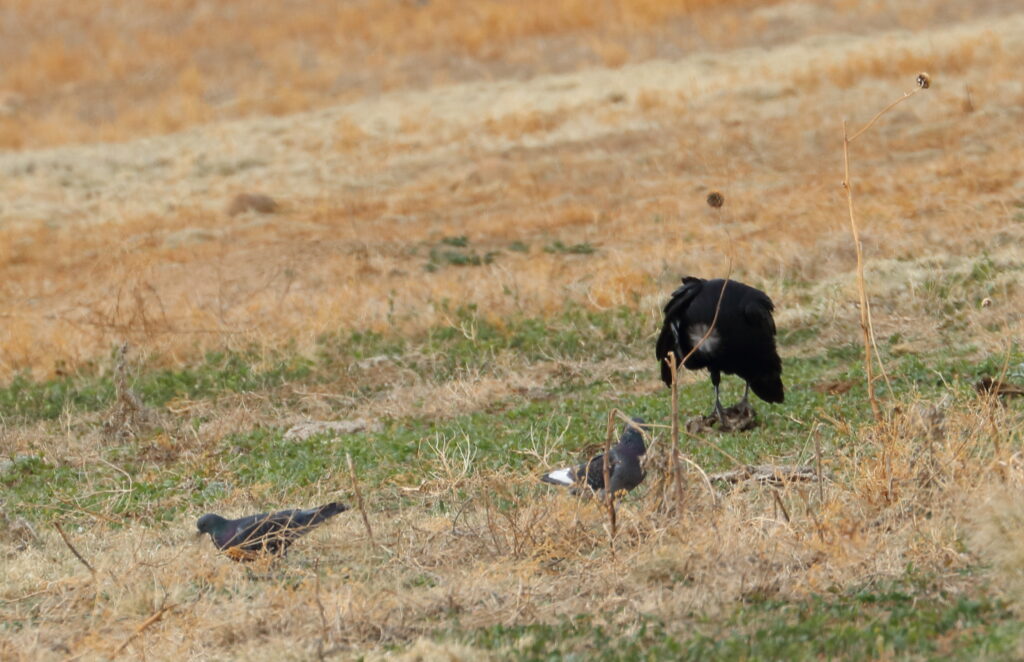
Thanks to the gusty wind, I was able to see the most reliable ID features of the Chihuahuan Ravens—the white base of the neck feathers (the “star” shape on the bird in the above photo).

Besides being a life bird, my experience with the pair of Chihuahuan Ravens in Colorado taught me something. These days, sometimes it feels like birding is focused on maximizing species and numbers. Birders across the US submit thousands of eBird checklists per day, and the competitiveness can be overwhelming—everyone is always trying to see just one species to add to their list. So seldom, it seems, are birders focused on just watching the birds. My quest to identify those two ravens turned into just that: I got to watch these two animals for half an hour. They flew from telephone pole to telephone pole; they hopped around on the ground; they called, foraged, shifted their weight and interacted with the world around them. Slowing down to be with these two creatures was an important reminder that birds are not numbers on lists, but real, wild animals with personalities and habits. We should all slow down and watch ravens more often.
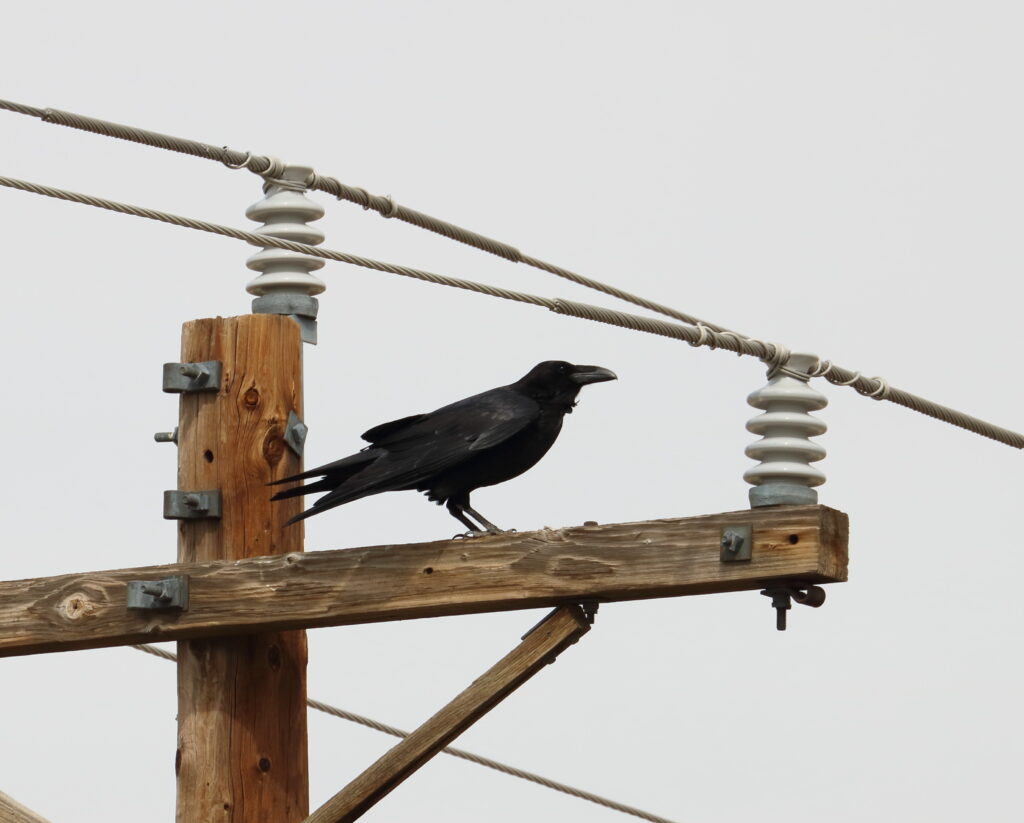
My time with the Chihuahuan Ravens offered an important reminder to slow down and really pay attention to the wonderful world and creatures around us.

For more information on corvids, or the crow family of birds, check out Sneed’s recent Montana Outdoors cover story, “Corvids to Crow Over.”
Gunnison Sage-grouse: Bird #13 on Braden’s ABA Life List Countdown, April 10th, 2026

Today, Braden shares the latest installment of his series counting down the remaining ABA Life Birds he has been attempting to see. It’s just like listening to Casey Kasem’s American Top 40 Countdown—but better, because it’s about BIRDS! To catch up on his other recent life bird adventures, click on these previous posts:

Black-chinned Sparrow: Bird #14 on Braden’s ABA Life List Countdown

Fulvous Whistling-Duck: Bird #15 on Braden’s ABA Life List Countdown

Lower 48 Life List Countdown: Crissal Thrasher (Bird #16)

The sun still hadn’t woken up when I pulled over behind the half dozen or so other cars parked along the side of the road. I rolled down my window as a local game biologist approached.

“Are you here for the grouse?”

“Yes,” I answered quietly as a Horned Lark began singing somewhere in the darkness.

“And where are you from?”

“Montana, though I’m en route from California.”

She marked a few things off on her clipboard, then returned to her car. Through the gray pre-dawn darkness, I could make out a huge field of sagebrush, the foreground for Ponderosa-covered hills rising in the distance. In other words, my car was parked on a dirt road surrounded by a typical landscape of the American West. Even the birds were similar to those found in Montana: a winnowing Wilson’s Snipe, calling Red-winged Blackbirds, the husky chirps of a singing Mountain Bluebird. And yet, in Gunnison County, Colorado, there lives a bird that has never lived in Montana. Me and the other birders, silhouetted through their car windows, had driven from various corners of the country to see it: The Gunnison Sage-grouse.

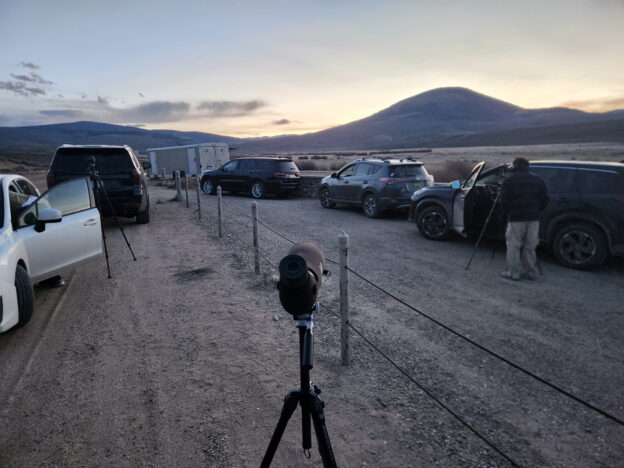
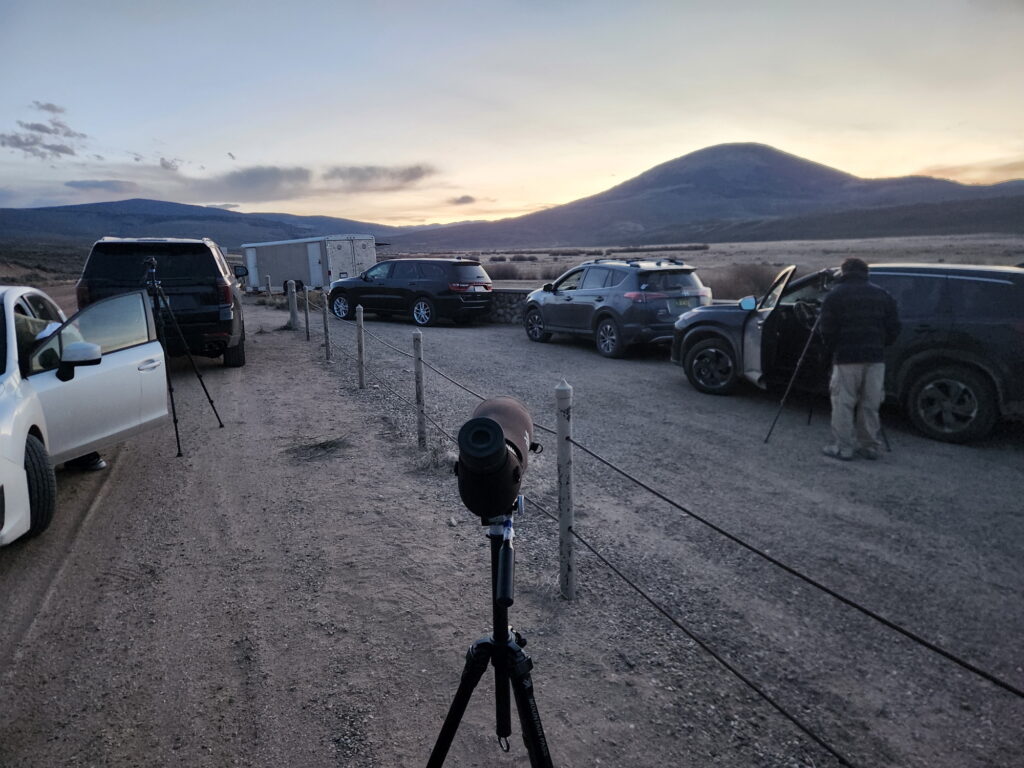
The Gunnison Sage-grouse birder “lek” watching the actual Gunnison Sage-grouse lek in the distance at sunrise.

Superficially, Gunnison Sage-grouse and Greater Sage-grouse aren’t all that different. Both species require expansive sagebrush habitats like the plain that stretched out before me in the rising light. The Greater is larger (hence the name), and, during the breeding season, Gunnisons have much longer filoplumes adorning the males’ heads. While Greater Sage-grouse are found across much of the West, Gunnisons occupy only a small area in Colorado and western Utah. The ranges of the two birds do not overlap.

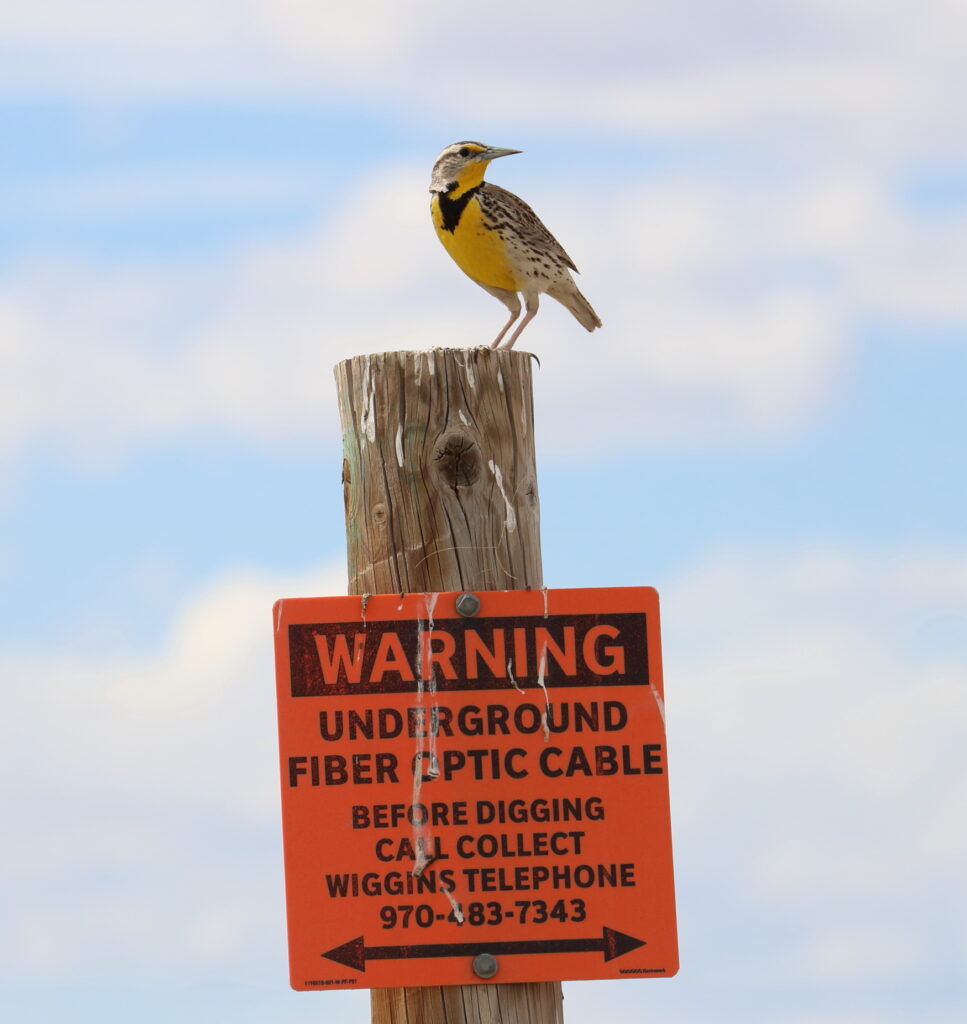
Many of the birds I saw while driving through Colorado reminded me of my home in Montana—complete with meadowlarks on signs!

Sage-grouse breeding displays are some of North America’s most famous avian experiences. Males and females gather in breeding groups in early spring. Both the breeding groups and their display grounds are commonly referred to as leks. While lekking, the males, decked out in the most ridiculous plumage of any North American bird, pump their chests to the viewing amusement of nearby females. Although I’d seen Greater Sage-grouse a few times in my life, I’d never been able to experience one of these leks. And while there are several sites across the country where one might watch a Greater Sage-grouse lek, there is only a single public Gunnison Sage-grouse lek, a spot about fifteen miles east of Waunita Watchable Wildlife Area. Because of their small population and increasing threats to the habitats they’re found in, the grouse are endangered, and so the public lek is open for viewing only during certain weeks of the year. I had arrived on April 10th, the last day the lek would be open for another two weeks.

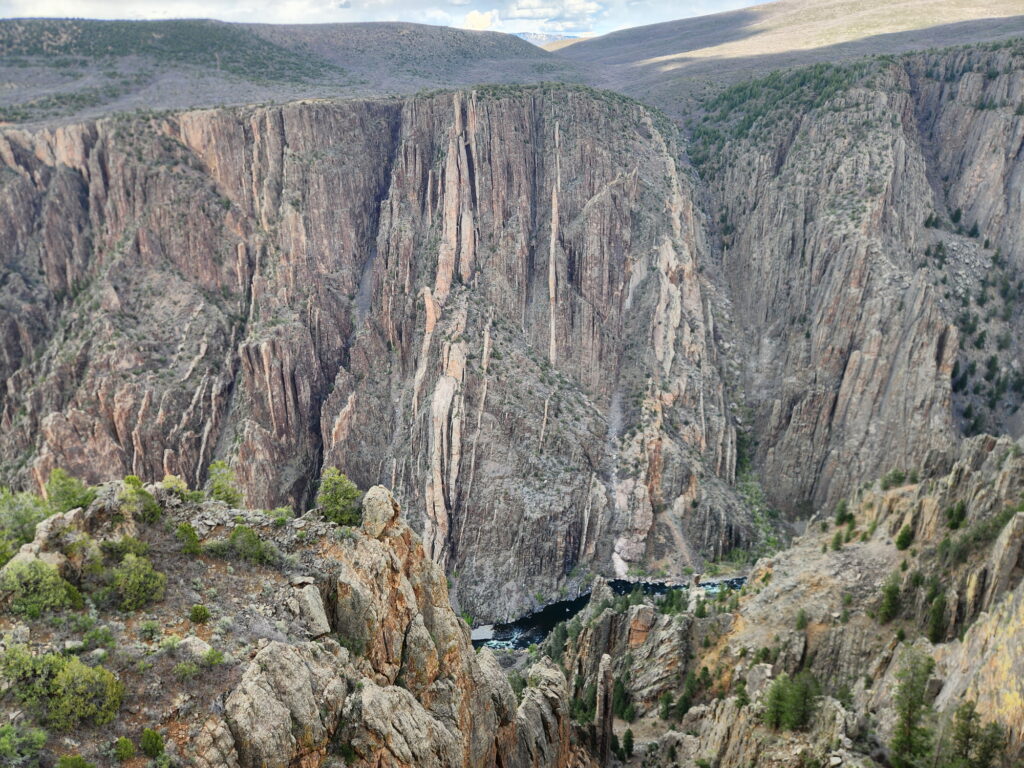
The Black Canyon of the Gunnison.

About half an hour before dawn, another birder’s car alarm went off. I could see everyone in their cars wince—Gunnison Sage-grouse are quite sensitive to disturbance, and this could have been enough to send them scampering away. Thankfully, the birds (which were about ¾ of a mile away from the road), didn’t seem bothered, and about ten minutes later, I began to hear the popping sounds of their displays. I eventually located them, distant black dots, even through my binoculars. Fifteen minutes later, with the permission of the biologist, we started getting out of our cars to set up spotting scopes.

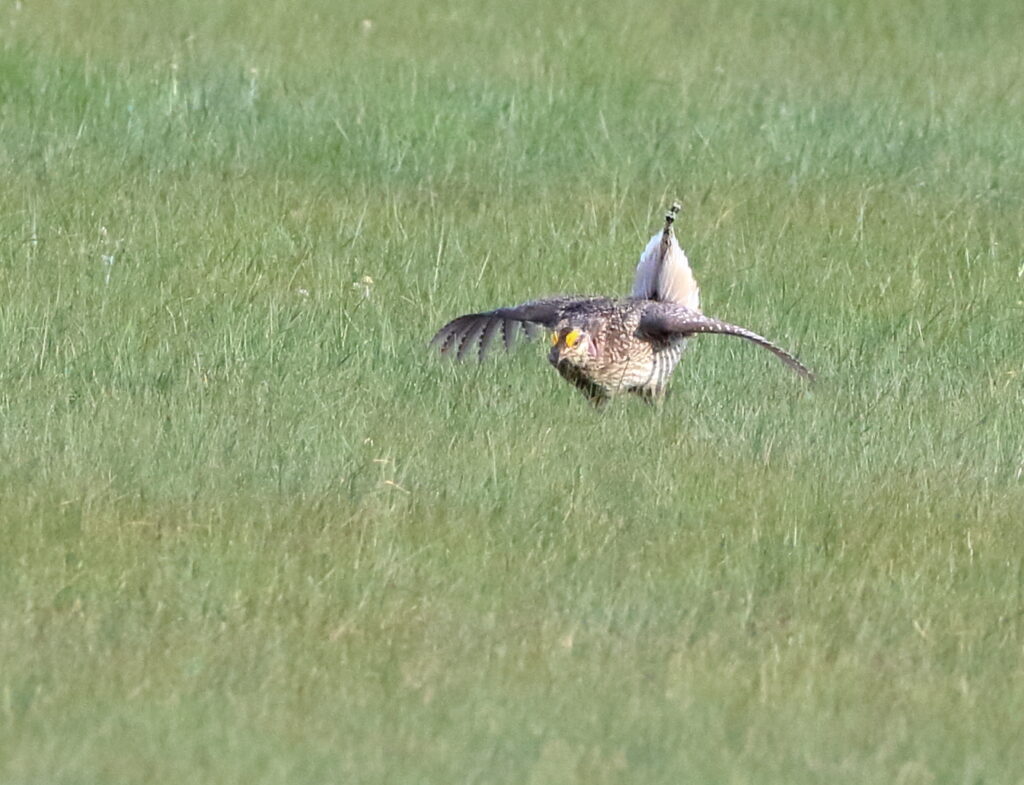
Though our “birder lek” stood too far away from the Gunnison Sage-grouse to get photos, their behavior is very similar to lekking Sharp-tailed Grouse, captured here by my dad at Benton Lake NWR a couple of years ago (see post “The Best Prairie Day Ever: Benton Lake NWR.”)

Through the scope my viewing experience was marginally better. I could make out the males, with their furry white chests and black heads, pumping their shoulders at each other. Occasionally, a female would scamper through my view. Though far away, lekking sage-grouse had been on my bucket list for years and taking them in as the sun peeked above the horizon could only be described as a magical experience. Fog escaped my lips every time I took a breath, and a few nearby Sage Thrashers began singing across the road from us. Soon my fellow birders were beginning to whisper to each other, and I learned just how far people had come to see these birds. The man in the car whose alarm had gone off had driven through the night from Oregon en route to a bird point-count job in Oklahoma, stopping here just for this species. Another man had come here from a few hours away. 

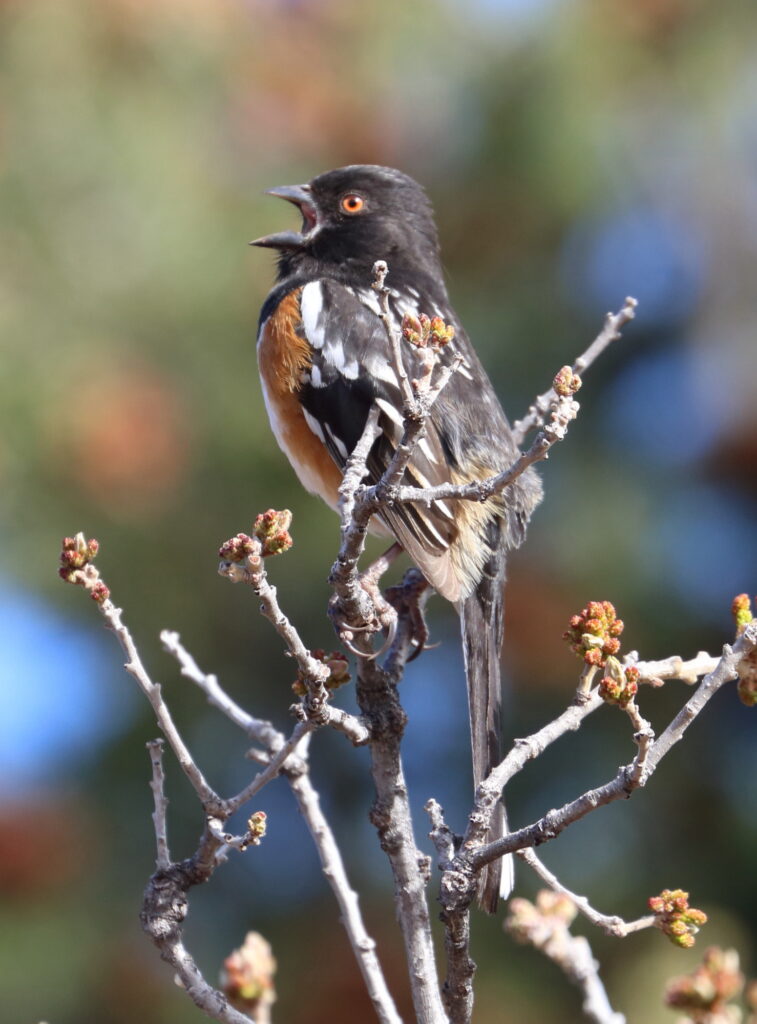
As my dad pointed out in his recent post “Colorado’s Ute Mountain Mesa Verde Birding Festival,” numbers of Spotted Towhees in Colorado are CRAZY!

“My kid loves it, birding,” he said to me. “The last year especially, he’s really gotten into it. He wanted to see these grouse, so here we are.” I couldn’t help but see the similarities between that father and son and my birding experiences with my own dad.

After about four minutes of the grouse lekking, a group of birders stormed out of the blind that was set up beside the cars. I’d run into this group last night and learned they were doing a “chicken run.” Colorado is known for having almost every grouse species in the US and tour groups often target all of them during weeks in March and April. One of the birders asked if I knew any nearby spots for White-tailed Ptarmigan before the four of them noisily piled into their car and drove away. So much for staying quiet while the grouse were displaying! Either way, the birds didn’t seem to mind.

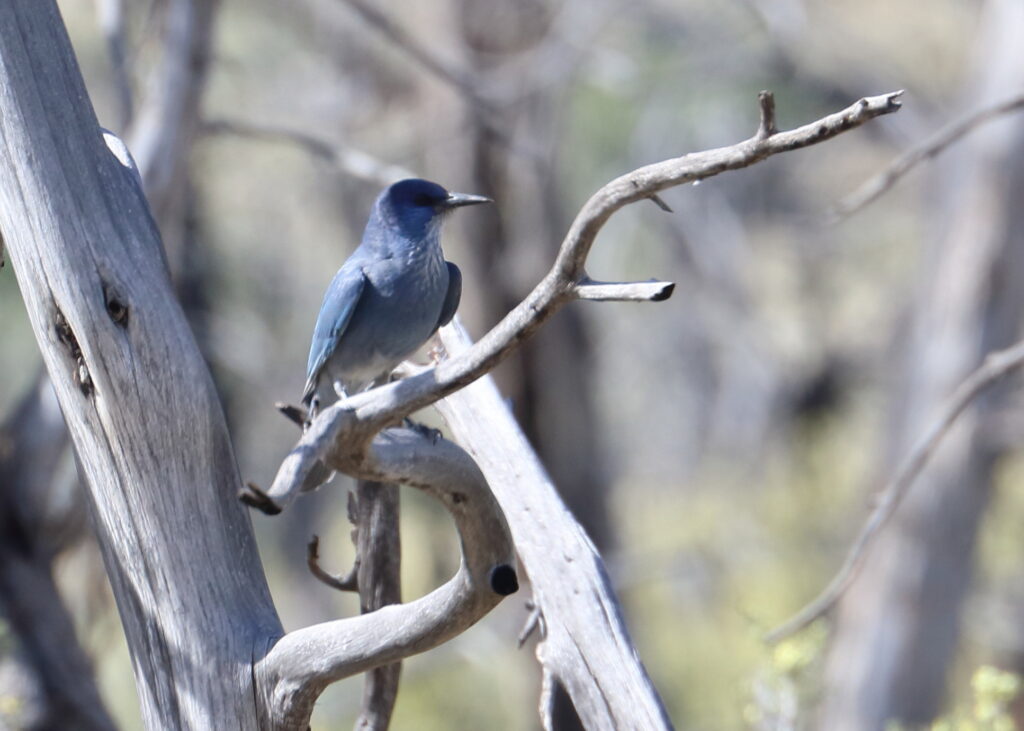
I was especially excited to see Pinyon Jays in Colorado, since they can be a challenge to find back home.

Beyond seeing these endangered birds, I had been enjoying seeing more and more landscapes that reminded me of home as I neared the middle of my road trip back to Montana. On my drives through Arizona and Colorado I watched the desert transition into mountainous valleys, complete with juniper and sagebrush-covered canyons, rushing streams with permanent water, and the snowcapped peaks of the San Juans and other mountain ranges. Of course, my trip was nowhere near over. I’d be visiting several more new habitats before that happened. In fact, one of those habitats would be later in the day, where I might just manage to see another life bird! Stay tuned to see what comes next . . .

Colorado’s Ute Mountain Mesa Verde Birding Festival (FSB Festival Report)

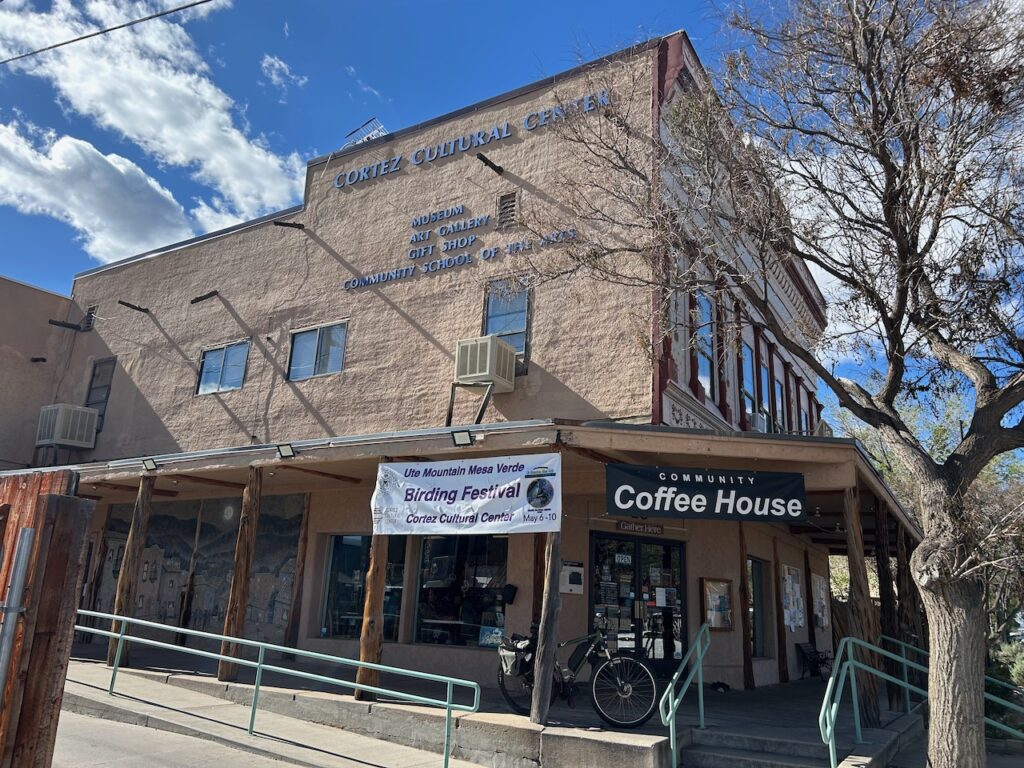
I hadn’t visited the Four Corners region of Colorado in sixty years, so when I got an email inviting me to keynote a birding festival almost literally in the shadow of Mesa Verde National Park, well, it took me about one wingbeat of a Broad-tailed Hummingbird to accept. The festival was the Ute Mountain Mesa Verde Birding Festival and why they chose me harkens back to last year’s blog post In Search of the Green-Tailed Towhee. Each year, the festival selects a different featured or mascot bird to help promote the fest, and the committee just happened to choose the GTTO (the bird, not the car) for 2026. After doing a quick web search, they found my blog—and the rest is history.

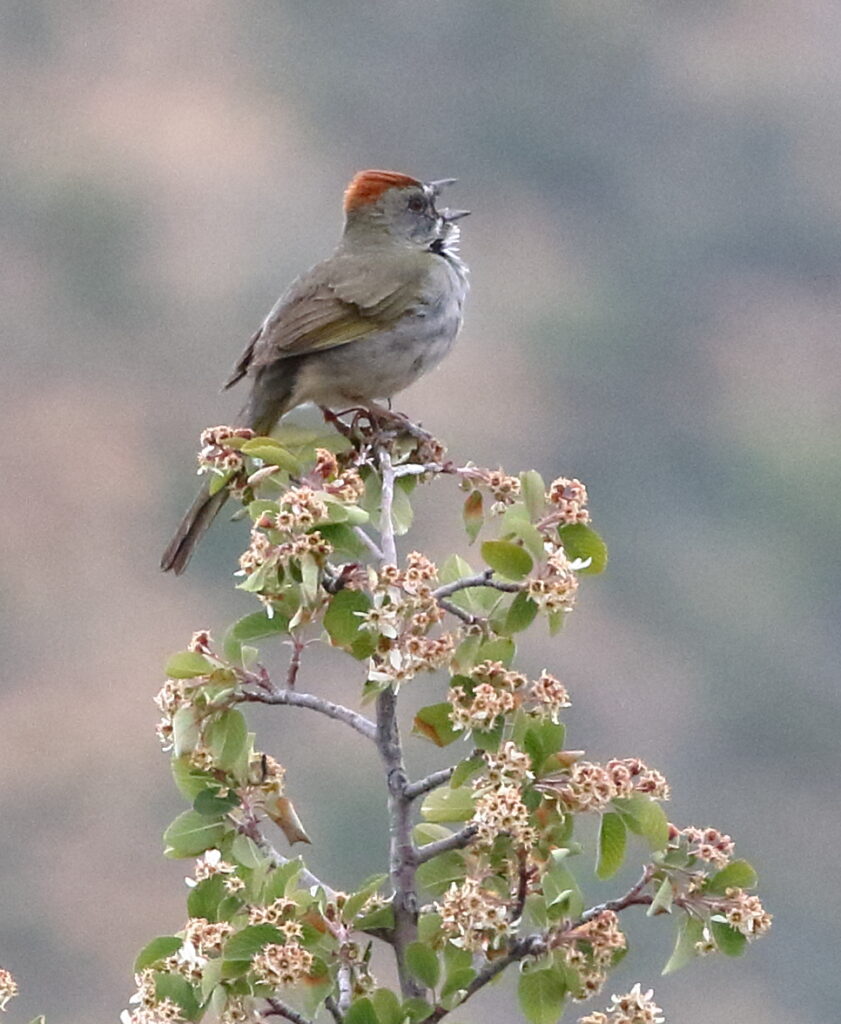
My invitation to the Ute Mountain Mesa Verde Birding Festival resulted from last year’s blog post In Search of the Green-tailed Towhee.

Well, not quite. I still, after all, had to attend the festival—and what a delight it turned out to be.

After being invited, the first thing I did was to look up what kinds of birds I might see. It was a good list, consisting of a nice mix of conifer forest, wetland, and sagebrush birds. What got me doing lizard push-ups, however, were the birds of the pinyon-juniper forests—what the locals refer to as the “PJ forest.” These birds included several species that are challenging to find in Montana such as Blue-gray Gnatcatcher, Gray Flycatcher, Pinyon Jay, and Green-tailed Towhee. Even better, it included a couple of potential lifers pour moi, especially Virginia’s Warbler and Gray Vireo.

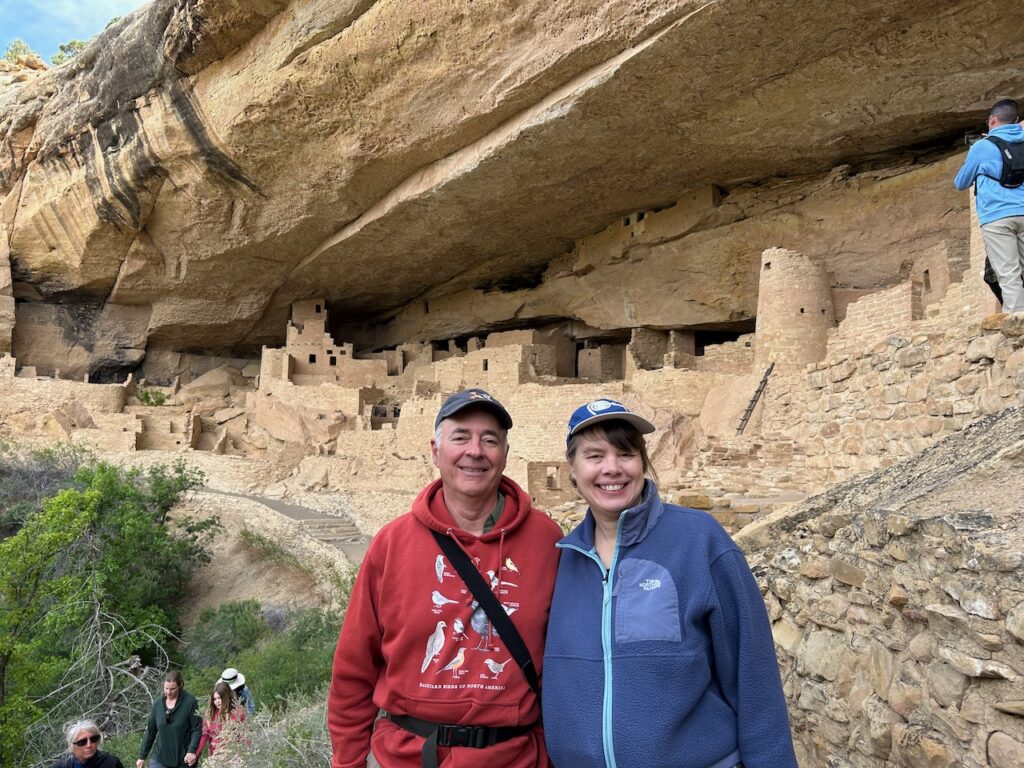
Having Amy along for the first few days helped make this trip extra special!

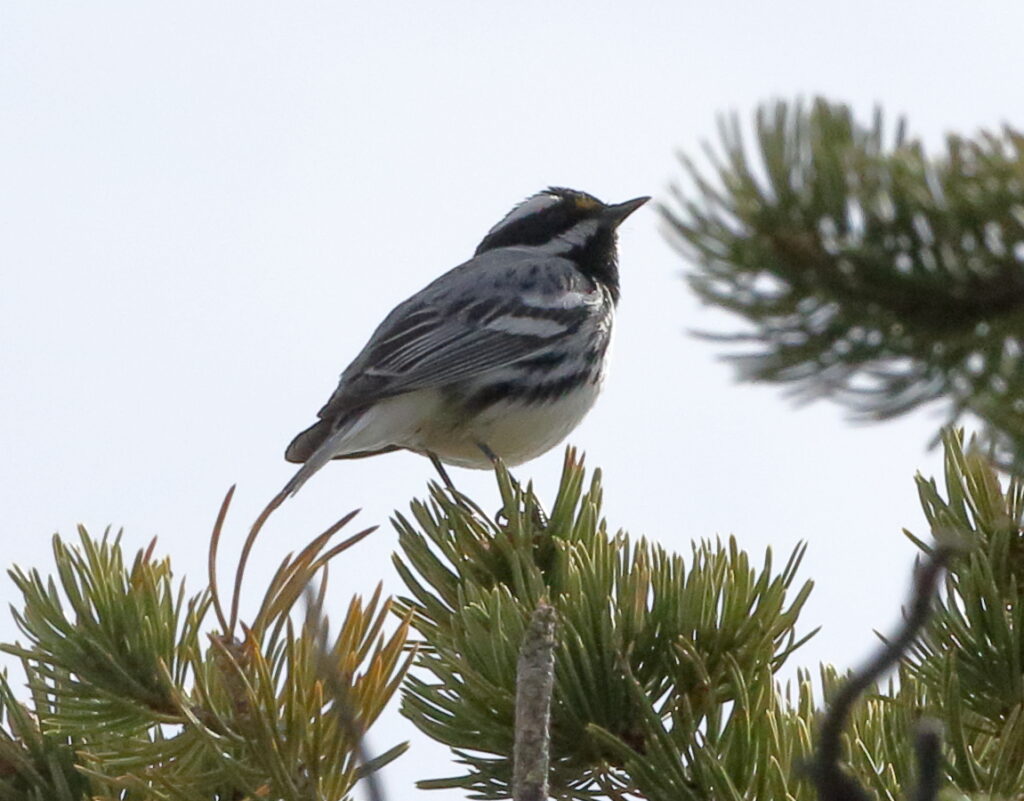
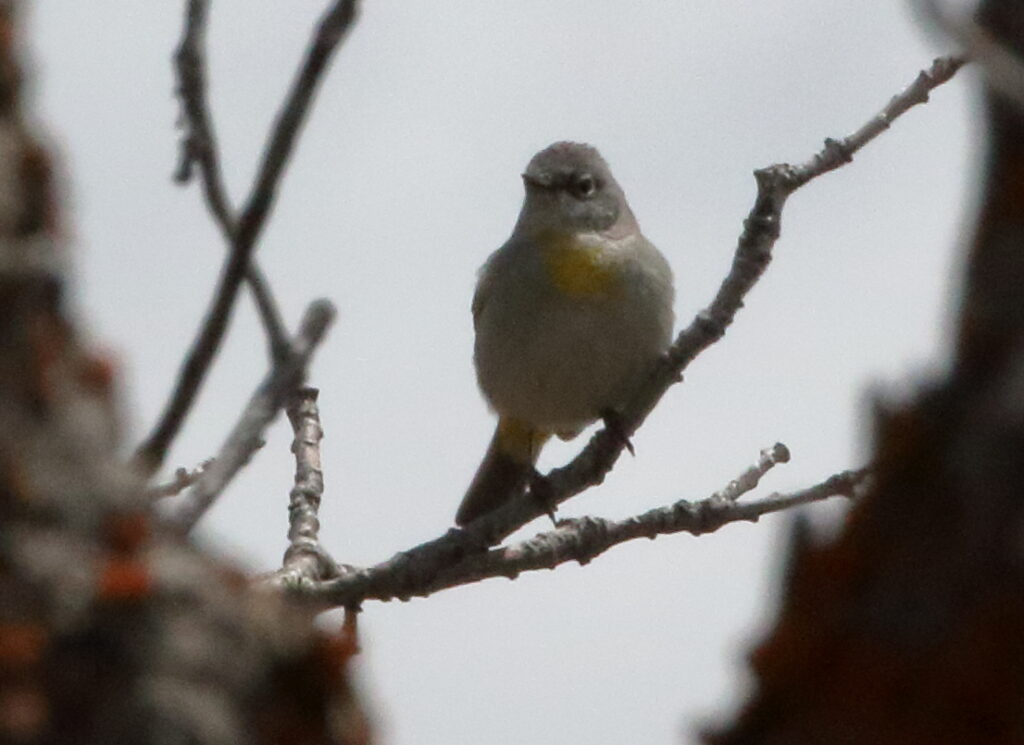
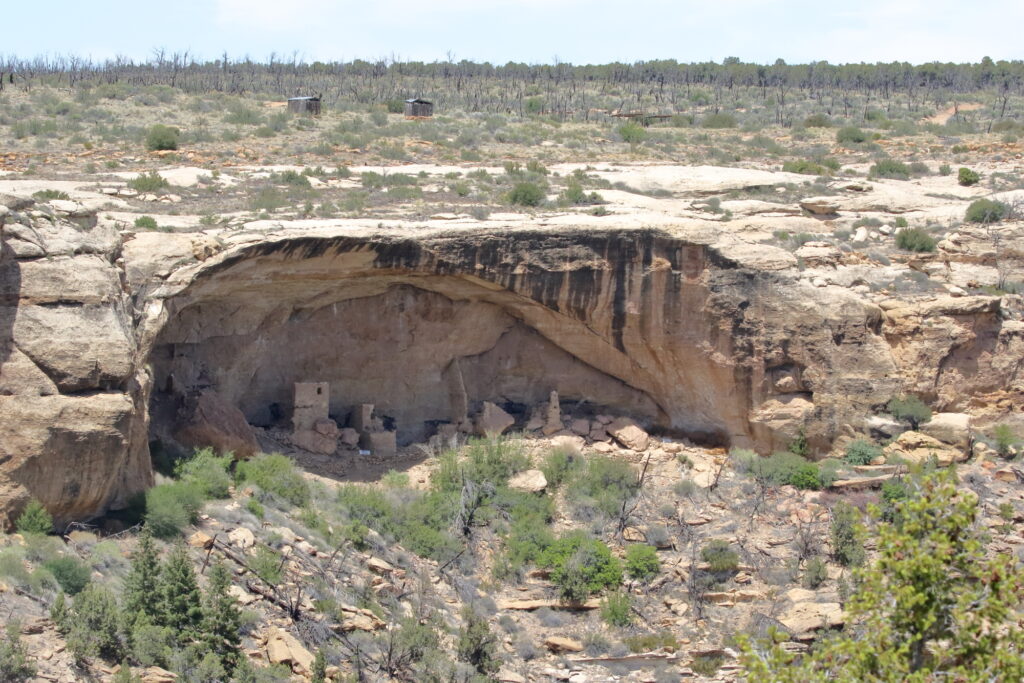
What made the trip even more exciting was that I convinced my wife Amy to fly down with me a couple of days early to explore Durango and visit Mesa Verde National Park—where we saw my first Black-throated Gray Warbler in eight or nine years and heard both Rock and Canyon Wrens right next to the famous Cliff Palace dwellings (see above photo)! Afterward, we took a delightful hike on the park’s Knife Edge Trail, and almost immediately Merlin’s Sound ID picked up one of my top trip targets: Virginia’s Warbler! It took only about five minutes to get a glimpse of this gorgeous little creature and as a bonus, the trip’s first Blue-gray Gnatcatchers joined it. Alas, Amy had to head home Wednesday, but that may have been just as well since three intensive days of birding lay ahead of me.

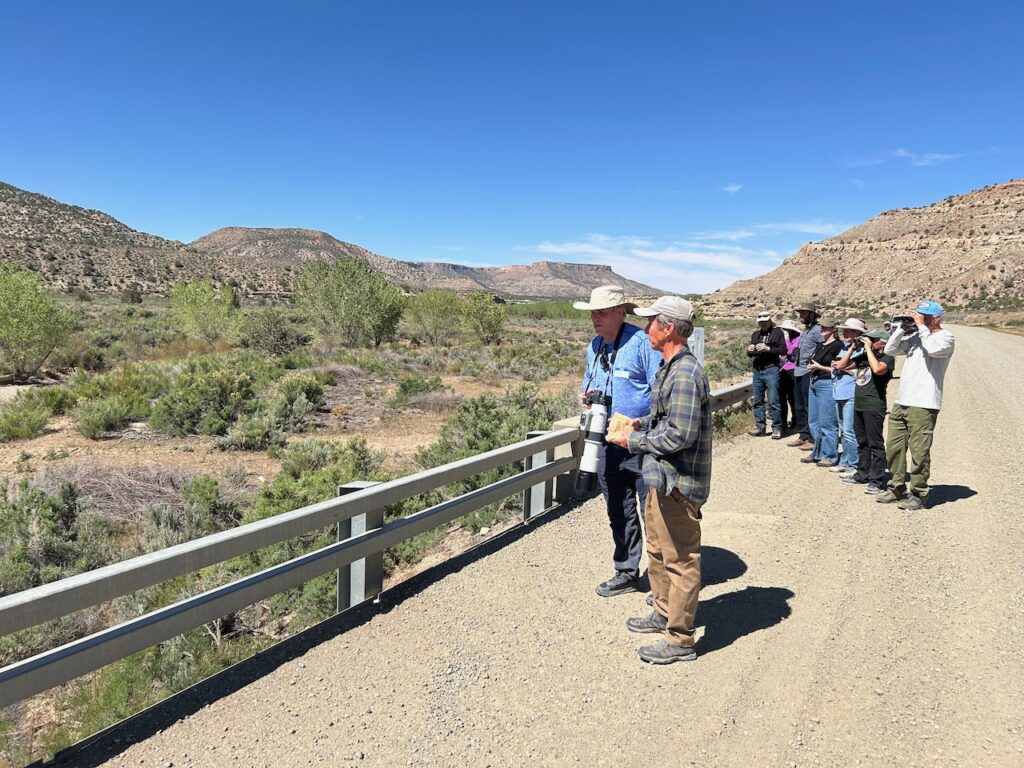
When you get invited to speak at a festival, it is common to be asked to “co-lead” field trips with local birders who are the real experts. Doing this may be the best part of the invitation, and I felt especially excited about the trips I had been assigned. The first, led by Mesa Verde’s Chief of Natural Resources, Paul Morey, took us into the little-known wilderness part of the park—a section along the Mancos River closed to the public. The river—a creek by Montana standards—led through spectacular groves of cottonwoods as well as PJ forest and sagebrush habitat, overlooked by the impressive main ridge of the park.

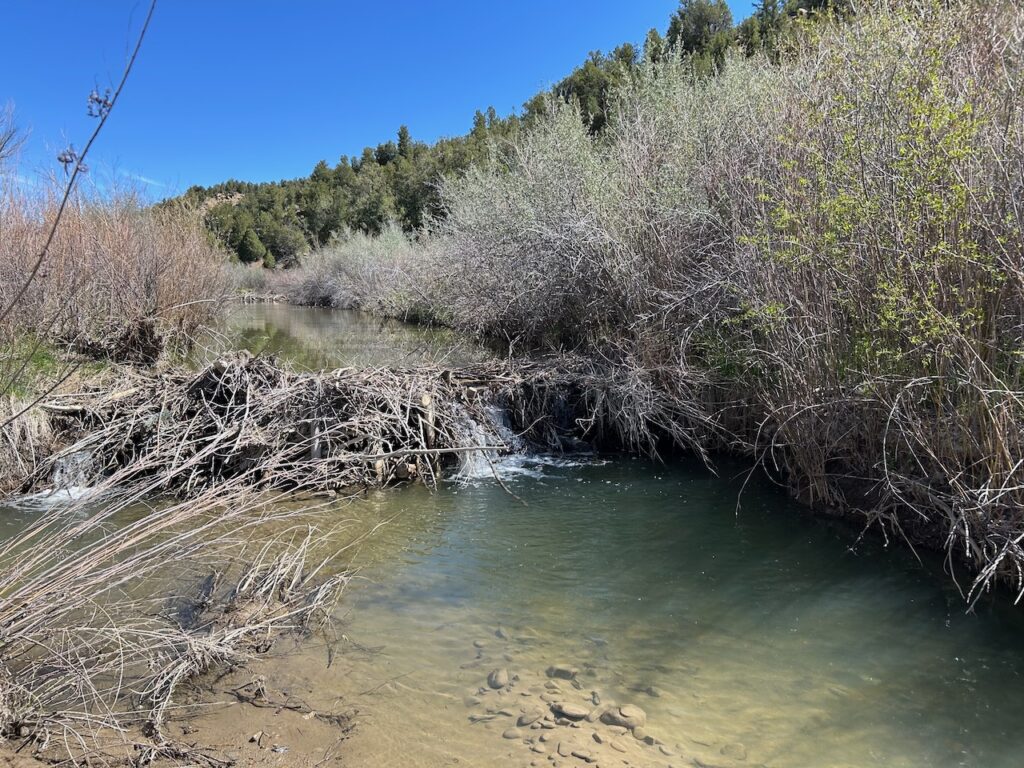
A special bonus of our Mesa Verde wilderness hike was getting to see the restoration work the park has been doing–including facilitating the return of beavers to the Mancos River. This has already improved water levels and sedimentation that the cottonwood gallery forest needs to thrive.

We got some nice surprises on our four-mile hike: Golden Eagles, Plumbeous Vireos, Lark Sparrows, more Virginia’s Warblers, and two Red-naped Sapsuckers. Lazuli Buntings and Yellow-breasted Chats earned crowd favorite honors, though the chats did their best to elude us visually until late in the hike. Another great thing about the trip, however, was getting to meet wonderful, bird-loving folks from all over the country—new friendships that would solidify over the next couple of days of birding.

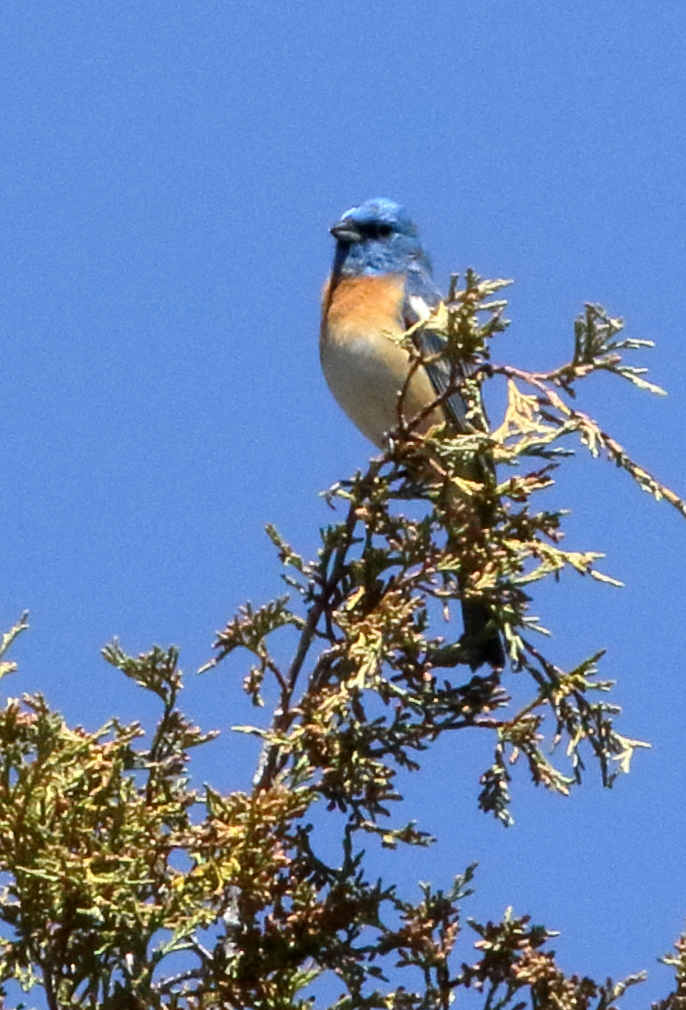
Not surprisingly, Lazuli Buntings were one of the crowd favorites of our first-day group.

Friday’s trip took me to another place that had limited access—a downstream section of the Mancos River located in the heart of the Ute Mountain Tribal Park. To enter this area, you need to be on an official tour organized by the Tribe (see details here) and all I can say is “Do it!” I got an inkling of what we were in for as we passed the impressive Chimney Rock and entered the canyon itself. On both sides of us, incredible walls like giant Jenga constructions rose for miles upstream, the river threading through them as if nothing had changed for millennia.

Don Marsh, our fearless leader, had us stop at many locations and the birds repeatedly surprised us. Almost immediately, we saw ten Western Tanagers moving together upstream, surely still in migration. Say’s Phoebes, Ash-throated Flycatchers, Lark Sparrows, and Woodhouse’s Scrub-Jays flitted between trees and bushes while more chats and Gambel’s Quail provided an alluring soundtrack.

Most visitors to Mesa Verde don’t realize the remarkable number of Puebloan sites—thousands of them—that fill the area, including this spectacular cliff site in the Ute Mountain Tribal Park.

Don had been charged by festival organizer Diane Cherbak to find me my Number One Target Bird, Gray Vireo, and he set about this task with determination. On only our second or third stop, he said, “I hear one,” and for the next fifteen minutes, we doggedly tried to get a glimpse of it. The little bugger didn’t make it easy! We saw movement in bushes and others in our party shouted, “There it is!”—always a split-second late for me to see. FINALLY, the bird quit taunting us and popped up to the top of a bush where I got a lengthy, glorious glimpse of this drab, but thoroughly enchanting little bird! This trip also provided some additional adventures including a flat tire and a break to admire impressive cliff dwellings and petroglyphs few people ever get to see.

My top trip target bird did its best to stay out of sight before finally posing for a photo op. Thank you Gray Vireo—and Don, for finding this bird for me!

Saturday saw us in the good hands of Brenda Wright and Coen Dexter, two of the area’s top birders, as we explored the Canyons of the Ancients National Monument, a sprawling region northwest of Cortez. This was the heart of Pinyon-Juniper country and offered a wonderful mix of PJ forest, agricultural fields, Puebloan ruins, and yet more stunning canyons. On our explorations, we saw yet another Gray Vireo along with Brewer’s Sparrows, Cassin’s Kingbird, Juniper Titmice, both Sora and Virginia Rail, and perhaps the day’s highlight, a pair of mating dark morph Swainson’s Hawks! Fittingly, our last new species of the day here was the festival’s featured bird, a Green-tailed Towhee that I saw dive into a bush and stuck around long enough for everyone to see it.

Woodhouse’s Scrub-Jays greeted us every day of the festival—incredibly adaptable birds that I had seen only twice before.

I honestly felt sad to leave this amazing festival in a remarkable part of the world—and I encourage you to give it a try. The festival offers more than twenty tours over its five days and has some of the friendliest people I’ve met anywhere. Both Durango and Cortez are fun towns to explore and hang out in, and both offer great Mexican food, fun shopping, and other cool activities. Speaking of food, a wonderful local caterer creates some of the yummiest “field lunches” I’ve ever had—so yummy that I usually ate them by 9 or 10 o’clock each day. Best of all, the festival is for a good cause, being the main fundraiser for the Cortez Cultural Center.

For more information, check out the festival website: https://utemountainmesaverdebirdingfestival.com/

I certainly hope it’s an event I’ll return to one day.

My Colorado eBird Trip Report: https://ebird.org/tripreport/519560

The Ute Mountain Mesa Verde birding festival is the major fundraiser for the Cortez Cultural Center each year. The center’s mission is to “provide programs that enrich the lives of our community and its visitors by increasing cultural awareness, promoting the arts, and educating about the area’s history, diversity and natural environment.”

Fulvous Whistling-Duck: Bird #15 on Braden’s ABA Life List Countdown

As you read this Sneed is eagerly preparing for the Ute Mountain Mesa Verde Birding Festival (see our recent post Birding Festivals of the West 2026) in Cortez, Colorado. Meanwhile, Braden is birding through east Texas, helping his college friend Ryan achieve his Big Year ambitions. Fittingly, today’s blog post reports on a bird frequently found in Texas—but that Braden first recently found in Southern California. With its discovery, Braden has only 14 regularly occurring species to see on his countdown of ABA Lower 48 birds (see our recent post Lower 48 Life List Countdown: Crissal Thrasher). Enjoy his report!

I haven’t exactly been on top of rare bird reports during the last few years. When I was younger, I subscribed to all the eBird alerts I could: the ABA Rare Bird Alert, the Montana Rare Bird Alert, and even the Missoula County Rare Bird Alert. I also regularly visited birding pages on Facebook, meaning that if a bird in my region showed up where it wasn’t supposed to, I knew about it pretty quickly. Recently, though, I’ve unsubscribed from many of those alerts, and don’t use Facebook as much. So I consider it lucky that I found out about the California Fulvous Whistling-Ducks by accidentally scrolling past an Instagram post.

My dad saw his first Fulvous Whistling-Ducks in Texas only in 2025, so it felt like a strange coincidence for me to have a crack at them now, a thousand miles away in California.

According to eBird, the pair of whistling-ducks showed up at the 20,000-acre San Jacinto Wildlife Area in late January, 2026, about a month before I learned about them. Fulvous Whistling-Ducks have a cosmopolitan distribution, being found in both North and South America as well as Africa and the Indian subcontinent. Historically, the species never lived in the United States, but arrived in Florida, the Gulf Coast states and California from the tropics during the nineteenth century. At one point in the early 1900s, Fulvous Whistling-Ducks bred as far north as San Francisco! Following this aggressive colonization period, however, their populations fluctuated wildly, and especially declined on the West Coast. In California, they now only occasionally breed at the Salton Sea (which I did visit last fall to see a Yellow-footed Gull), with no recent breeding records on eBird. The last time the species bred at San Jacinto, according to a local birder, was pre-1950.

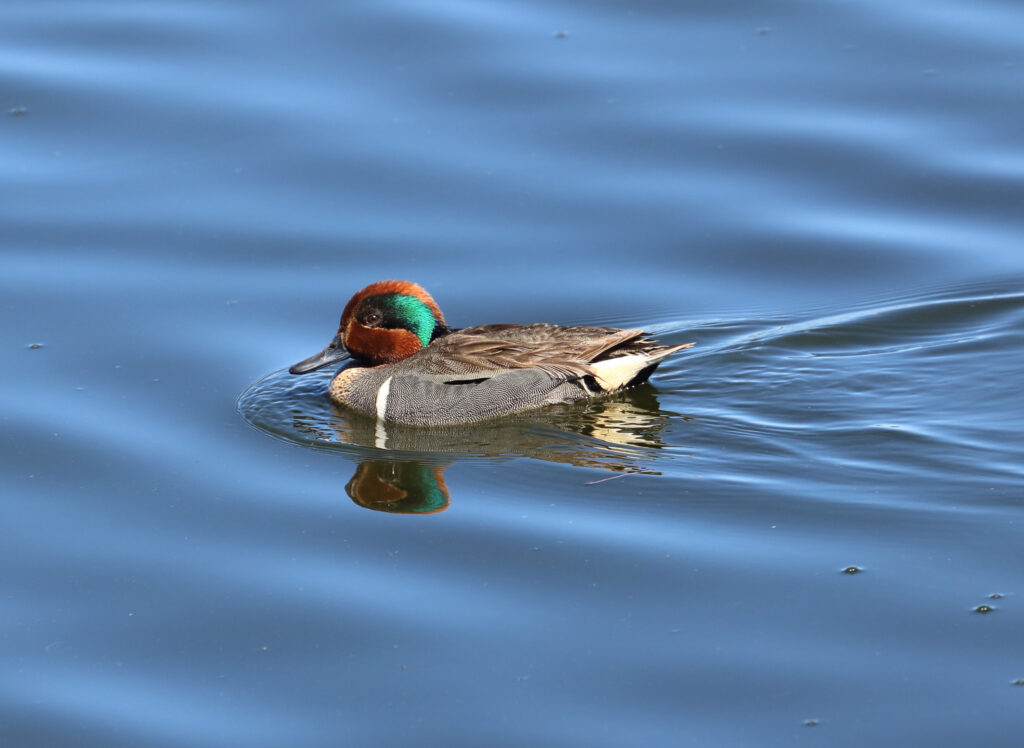
The San Jacinto Wildlife Refuge quickly showed me its importance as a haven for waterfowl. Here, a stunning Green-winged Teal dazzles under full sunlight!

I’d never actually looked for Fulvous Whistling-Ducks before. The closest I’d been to the species was probably during my trip to Florida with my friend Nick Ramsey in 2022, when we passed one of the state’s most reliable spots for the species: Lake Apopka. Unfortunately, we couldn’t visit Lake Apopka due to the wildlife drive only being open on specific days of the week. I suppose my dad and I also could have seen the species on our visit to Anahuac (now Jocelyn Nugaray) National Wildlife Refuge way back in 2016, but I doubt that the species was even on my radar at the time. The bottom line is that I was shocked to see a pair show up so close to where I was currently working, in Running Springs, California—and I had no choice but to try to find them!

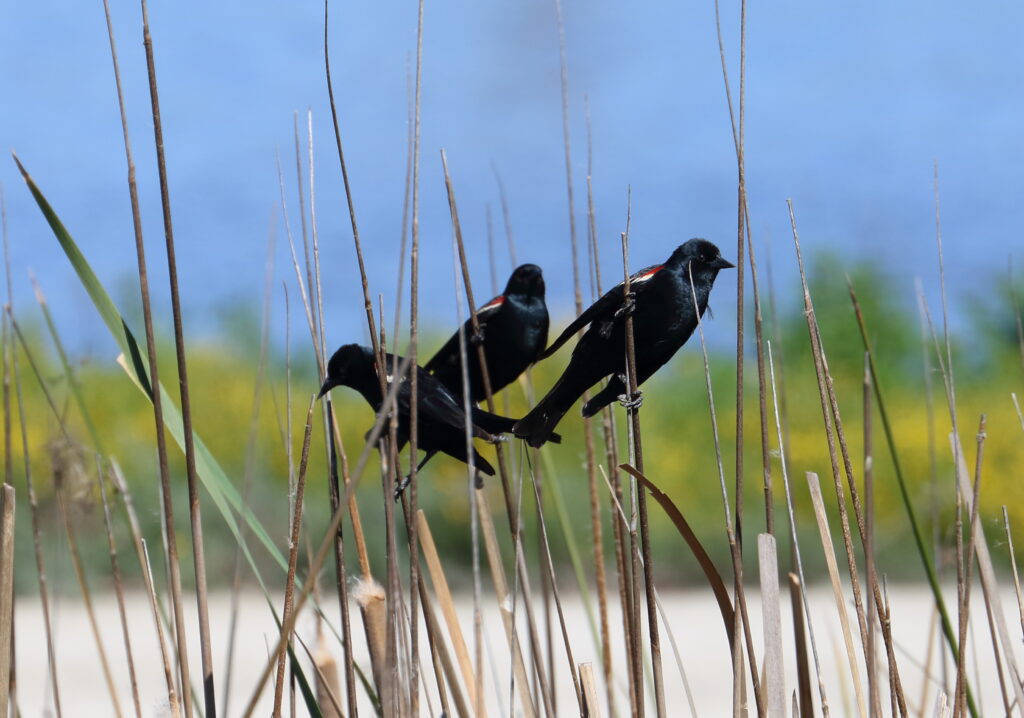
Tricolored Blackbirds, an endangered species that has suffered catastrophic declines during the past century, were a delightful surprise during my San Jacinto visit.

February 14th was an unusually foggy day in the San Bernardino Valley, and it seemed to only get foggier as I entered the grassy hills south of Redlands. I’d never been to this area before, and was pleasantly surprised to find dairy farms complete with muddy pastures and flocks of foraging blackbirds. As I entered the wildlife area, the fog gave way to sun and the pastures transitioned to open grasslands, some of the only ones I’d ever seen in California. A Loggerhead Shrike darted across the road in front of my car and I stopped periodically to peer at Mountain Bluebirds, Western Meadowlarks, American Pipits and a variety of sparrows perched on the fencing. The pavement turned to dirt, and I soon spotted wetlands and flooded fields on the horizon. This winter had brought heavy rains to much of southern California, and golden flowers decorated the hills.

In no time, I recognized the value of San Jacinto Wildlife Area to wintering birds. Flocks of waterfowl, especially Northern Shoveler, Ruddy Duck and Northern Pintail, as well as shorebirds and waders like Least Sandpiper and White-faced Ibis, covered the fields and ponds. A Peregrine Falcon alighted on a telephone pole, and I pulled over next to a wire absolutely covered in Tree and Barn Swallows, the first I’d seen this year. Apparently, some of the Barn Swallows that breed in Argentina and Chile spend the winter in the southern United States, and I found a few contenders for austral birds among the flock.

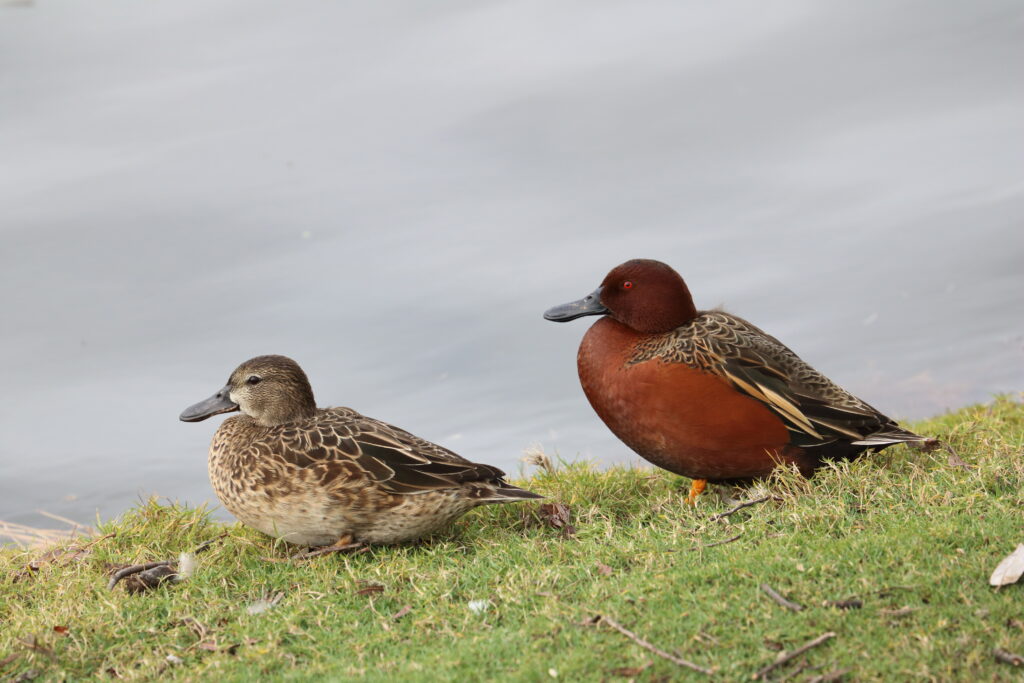
It’s impossible not to stop for a photo op when a pair of Cinnamon Teal willingly presents itself!

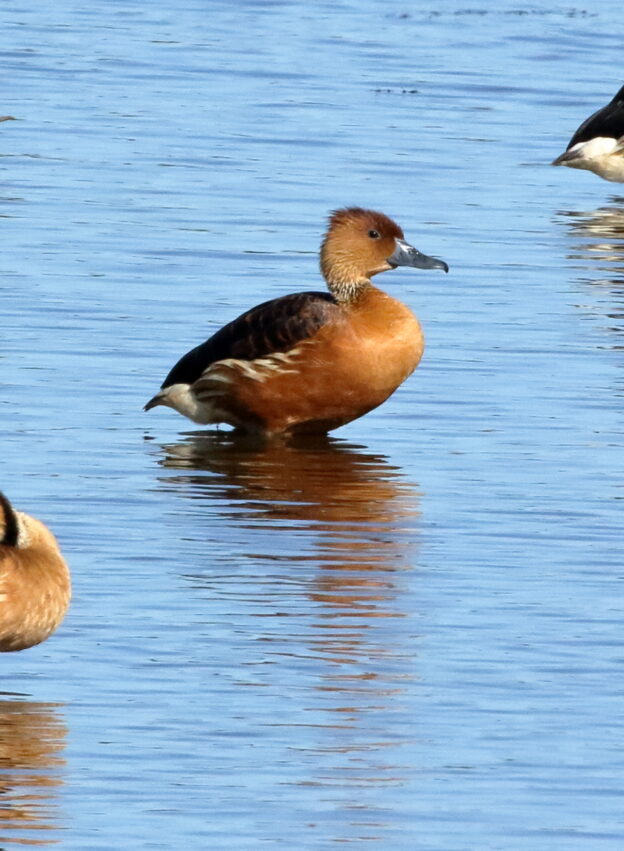
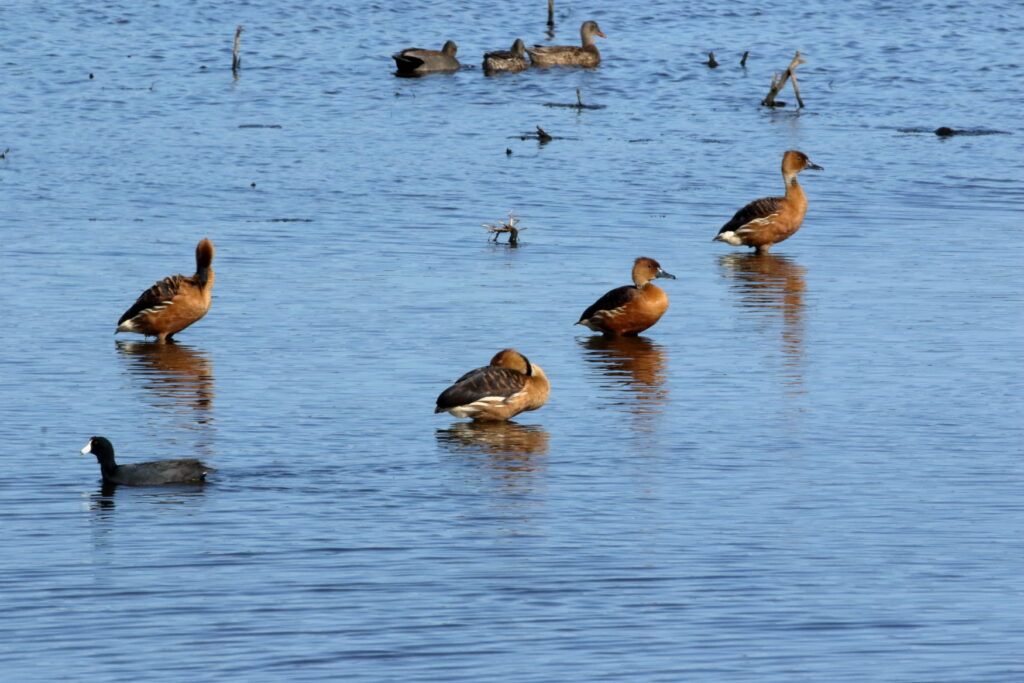
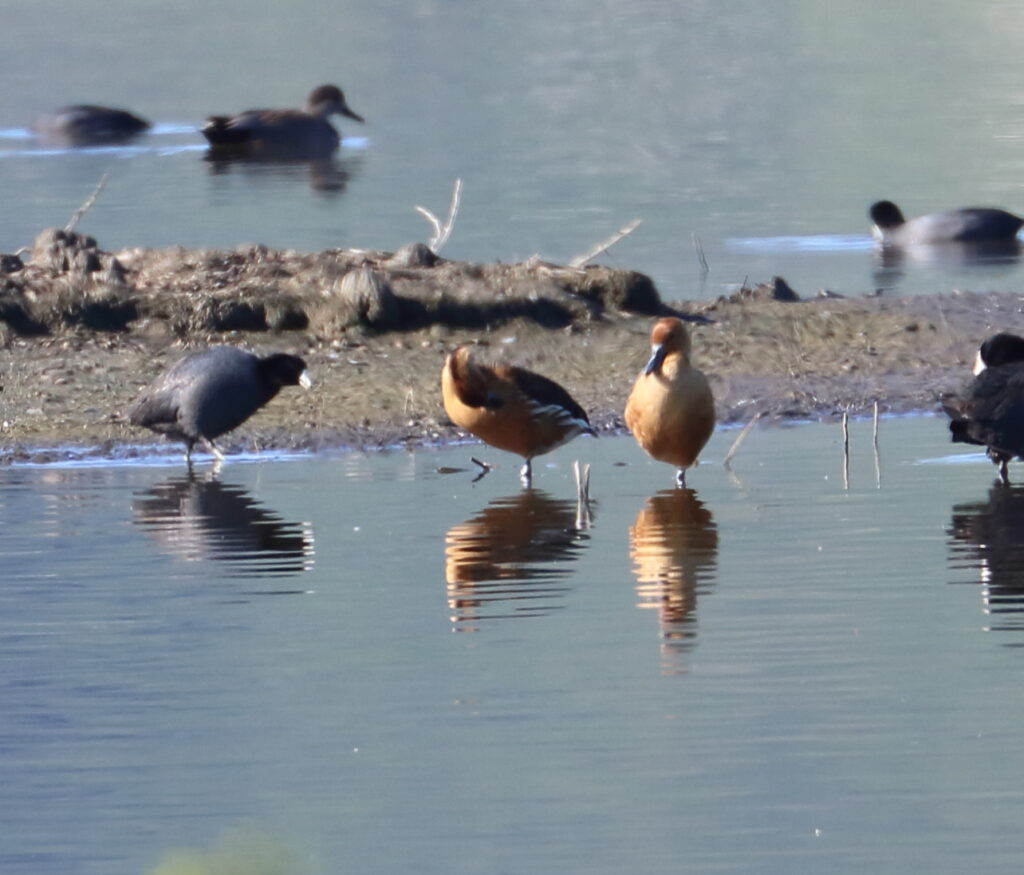
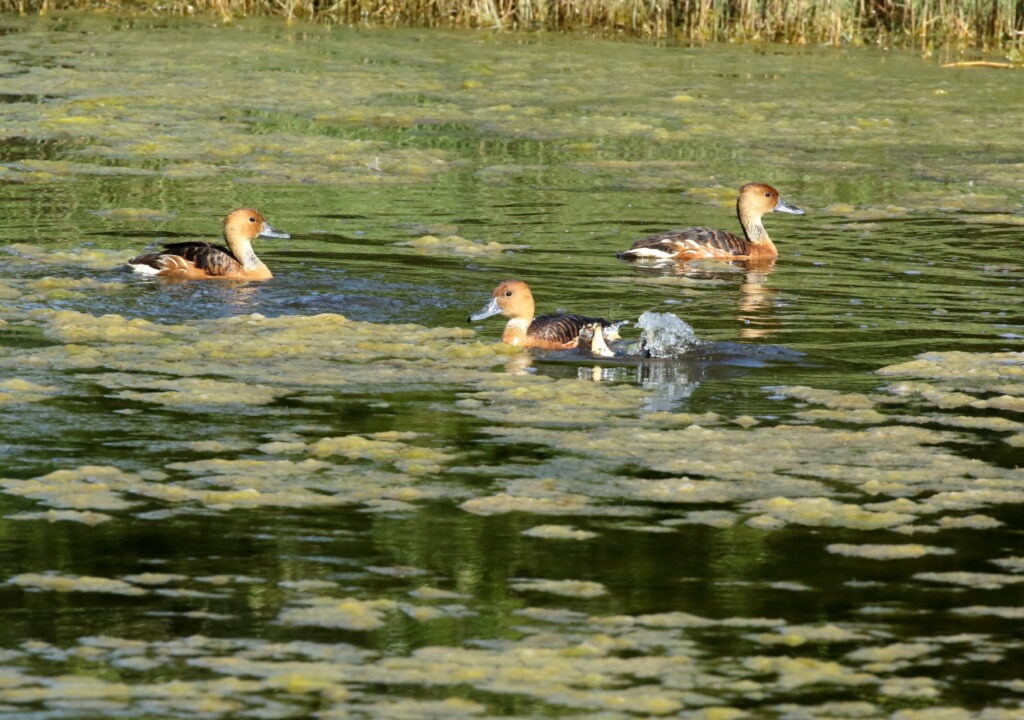
I followed coordinates to find the whistling-ducks and they proved easy to locate on a small island as soon as I pulled alongside a large pond. They’re pretty ducks, clad in earthy orange with what appear to be claw marks along their sides. They also stand taller than other ducks, as all whistling-ducks do, and nearby Gadwall, Cinnamon Teal and American Coot provided careful comparison. As I watched them preen through my scope, a pair of local birders walked up to me.

Hopefully, this pair of Fulvous Whistling-Ducks will pioneer a new, invigorated population of the ducks in Southern California.

“You see these next boxes?” one of them said, “The refuge has been putting them up in the hopes that this pair will nest here this year.”

“Are whistling-ducks cavity nesters?” I asked.

The birder replied. “I believe they can do both—nest in holes and on the ground.”

While I didn’t have particularly high expectations, I do have to admit that it would be pretty cool to see the first breeding whistling-ducks at San Jacinto in the 21st century!

(Note: according to Cornell’s Birds of the World, there have been reports of cavity nesting, but the vast majority of nests are built of vegetation in “dense floating or flooded emergent (herbaceous) vegetation.” This includes weedy rice fields. Unlike most waterfowl, FUWD pairs form strong long-term bonds and males participate greatly in incubation and the rearing of young.)

Fulvous Whistling-Duck is the last regularly-occurring waterfowl species that I checked off of my Lower 48 life list, and it felt a little surreal to see them standing there on that sparkling day in southern California. The first bird on my life list is a waterfowl, the Bufflehead, and I can still remember it clearly, my dad and I standing in the frigid January cold at Lee Metcalf National Wildlife Refuge, our Sibley guide open as we tried to identify that small, black and white duck. Ducks are gateway birds, easy to see and identify, and the focal species for the protection of so many wetlands around the U.S., especially in the West. To be seeking, once more, a species from the same group of birds that welcomed me to the birding world, is something that made my trip to San Jacinto all the more special.

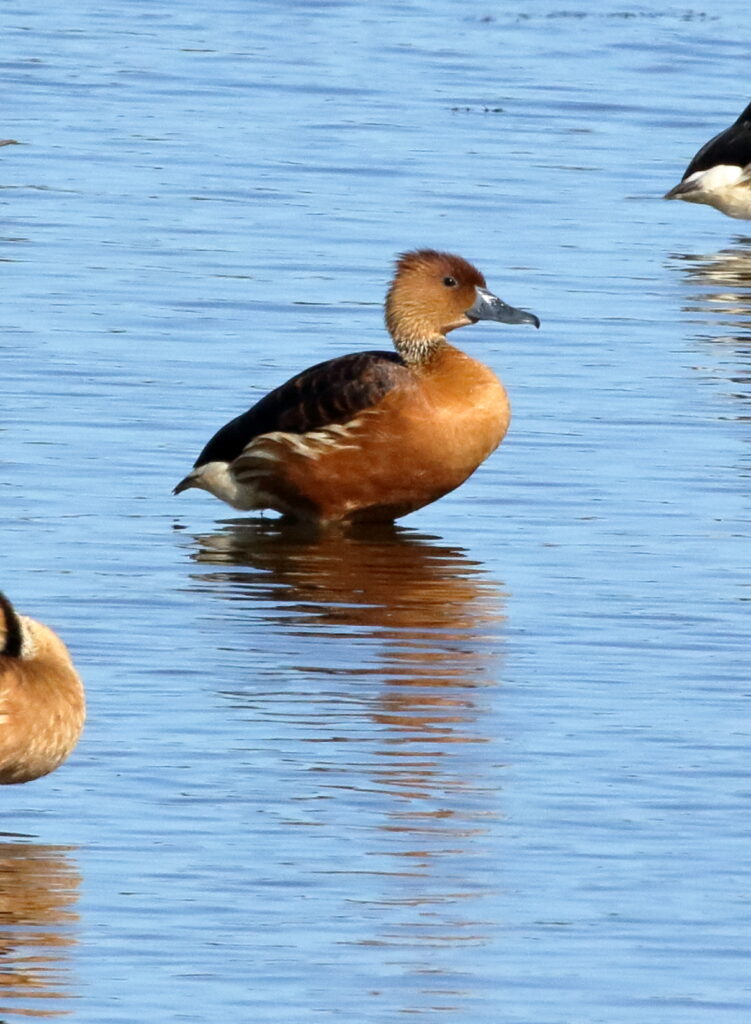
FUWDs from Sneed’s April 2025 Texas trip (see post Anahuac Lifer Attack).

Anahuac Lifer Attack (Texas 2025 Part 2)

After my morning exploring Peveto Woods (see last post), I had intended to visit another favorite coastal Texas location, Sabine Woods (see “Going Cuckoo for Fall Warblers in Texas”). Alas, my long previous travel day caught up with me so I decided to grab a siesta back at my hotel in Winnie. Besides, it didn’t look like the warblers and other migrants were showing up in large numbers, and I reasoned that I wasn’t likely to see much more at Sabine Woods than I’d seen at Peveto that morning. Instead, that afternoon I decided to visit another Texas favorite of Braden’s and mine: Anahuac National Wildlife Refuge.

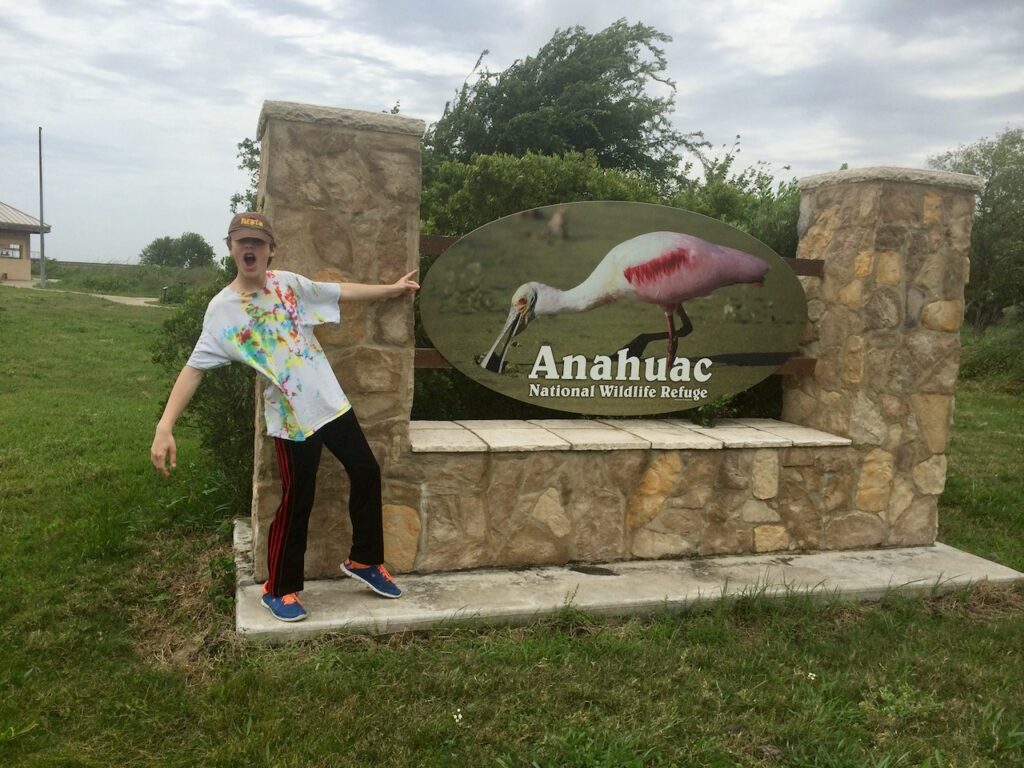
Braden during our first visit to Anahuac NWR in 2016.

The refuge lies about halfway between Winnie and High Island, and Braden and I had many fond memories of it. During our Big Year in 2016, we’d seen our first Scissor-tailed Flycatcher here, along with our first Common Yellowthroat. I especially liked driving a route called the Shoveler Pond Loop. This afternoon, I didn’t expect any major surprises, but it was a pleasant way to watch Roseate Spoonbills, Common Gallinules, and a variety of other water birds. As I approached the refuge entrance, however, I got my first major surprise: the refuge had a new name! Only in the past few weeks, Anahuac had been renamed the Jocelyn Nungaray NWR. I later looked up how the name change had come about. I like to keep this blog politics-free, but I will just say that the new name resulted from both a tragic story and crass political shenanigans that apparently caught everyone off-guard. Feel free to look it up yourself and draw your own conclusions.

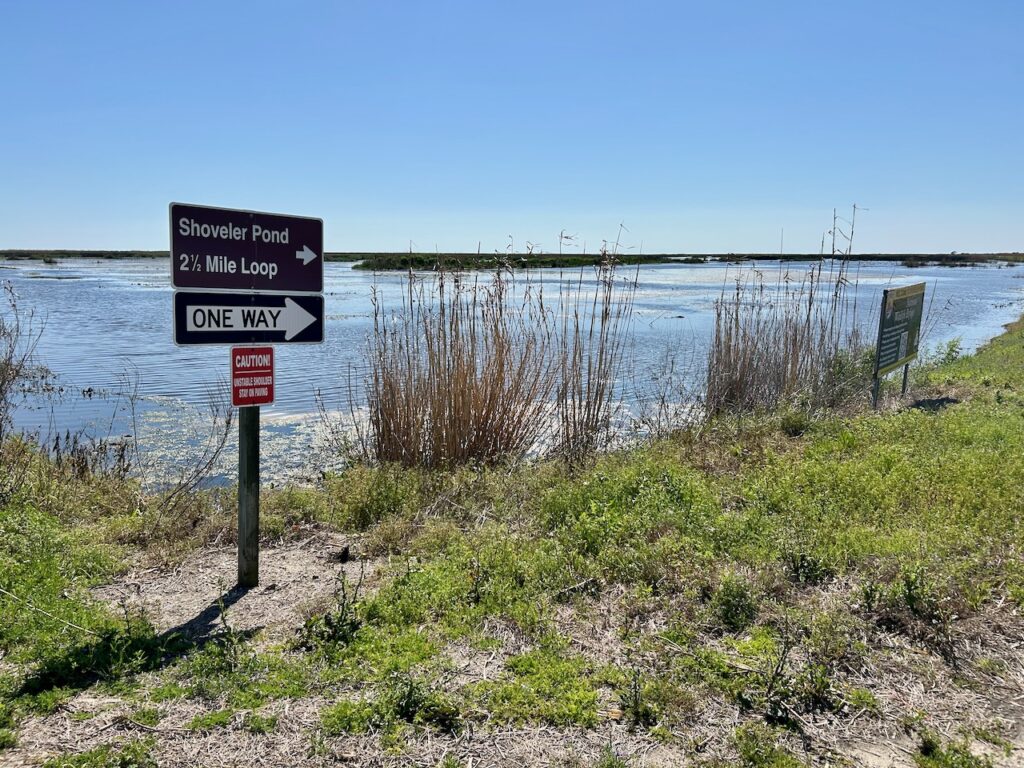
The good news? Shoveler Pond Loop looked better than I’d ever seen it! The loop consists of a 2.5-mile road that circumnavigates a 300-acre wetlands, and the last time I’d visited, in 2021, the latter seemed clogged with vegetation. Not so today. A large area at the loop’s beginning had been cleared out to create wonderful habitat for wading and dabbling birds and as I proceeded, I noticed many other revived sections as well. In preparation to write this post, I called the refuge to make sure that I wasn’t imagining things, and Park Ranger Chris Campbell confirmed that a couple of years ago, they had drained the wetlands and taken steps to remove large areas of cane grass.

Shoveler Pond Loop is definitely one of my Top 5 “car birding” routes in the United States.

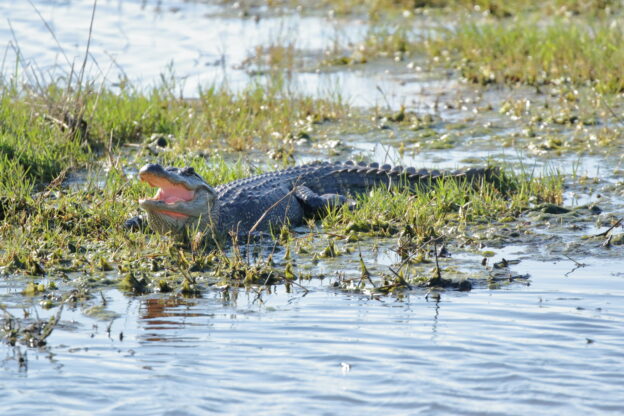
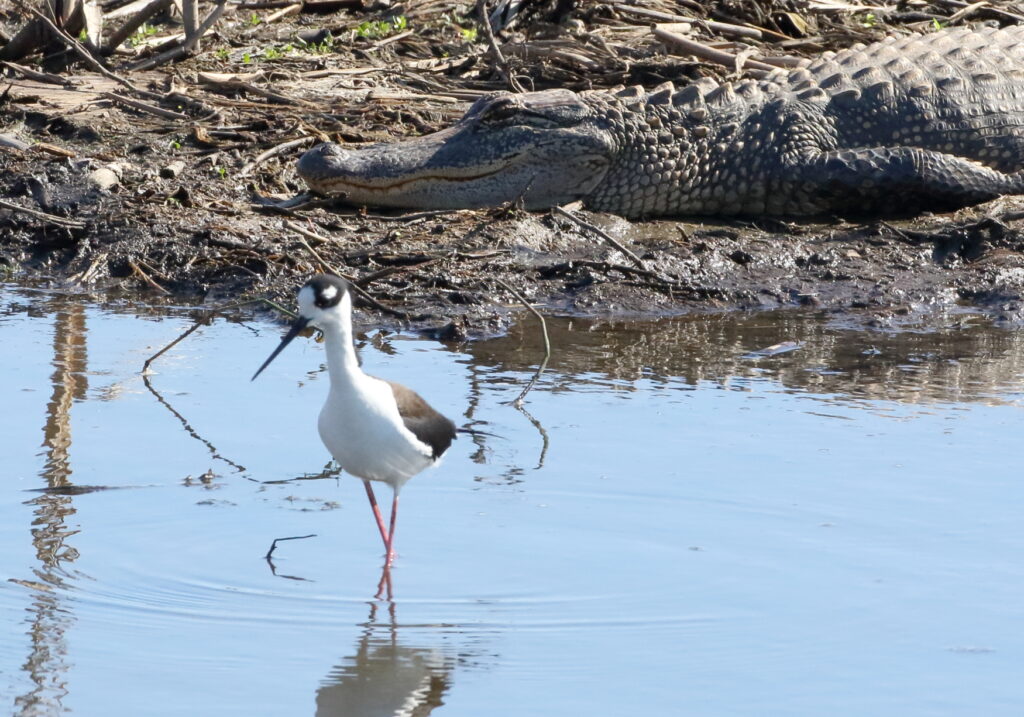
The results looked terrific. As I began making my way around the loop, I immediately noticed large numbers of Black-necked Stilts and dowitchers—probably Long-billed, according to Campbell. Both Greater and Lesser Yellowlegs made a good show of it, too, and it wasn’t long before I began obsessing over some smaller shorbs. I eventually IDed two of these as Dunlins, and was especially pleased to find a Least Sandpiper as well. Alligators also seemed to relish the new-and-improved loop, and I watched with amusement as Black-necked Stilts nonchalantly probed the shallows only a few feet from the six- or eight-foot crocodilians.

Uh, Mr. Black-necked Stilt, have you looked over your shoulder lately?

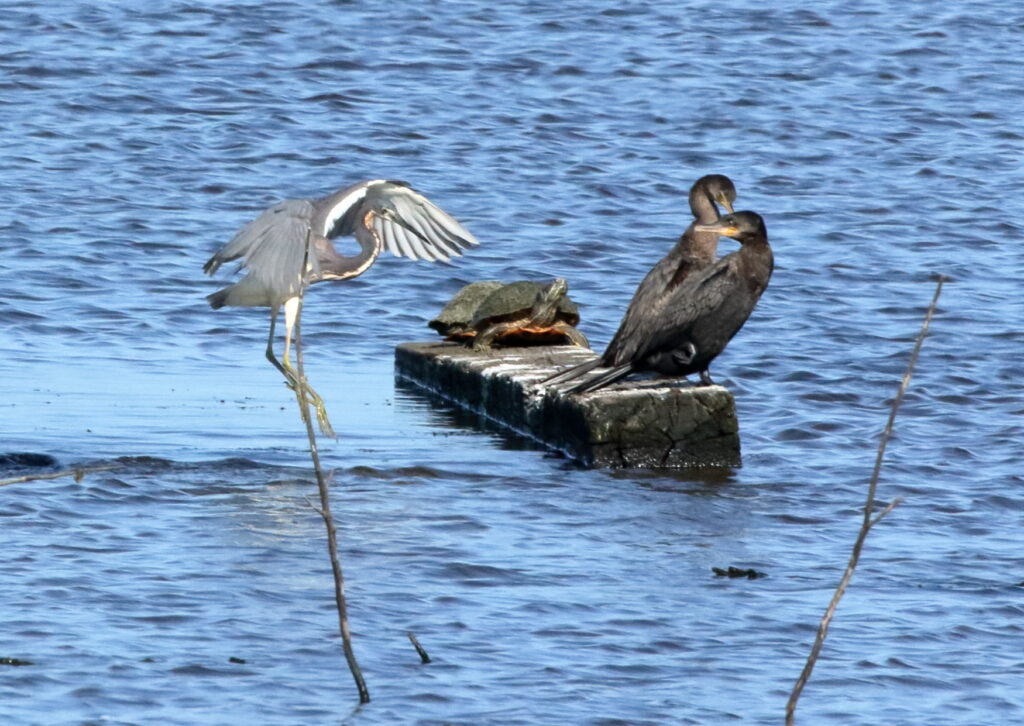
I soon found a great collection of waders including Roseate Spoonbills, Tricolored Herons, Snowy Egrets, and both White and White-faced Ibises. It was when I turned the first corner, however, that the real excitement began.

“Uh, just where do you think you’re landing, Mr. Tricolored Heron? Us Neotropic Cormorants and the herps over there were here first.”

First up? A kind of duck neither Braden nor I had ever seen before: Fulvous Whistling Ducks! “Wow! Lifer!” I exclaimed out loud. For some reason, it never occurred to me that I would see these ducks, but there they were—sitting only fifty feet from their compadres, Black-bellied Whistling Ducks! And the hits were just getting started.

As I rounded the second corner, a narrow canal paralleled the road to my left, and suddenly, a medium-sized, reddish-brown bird flew out from beneath the road to some reeds across the canal. Astonishingly, it was another lifer, one that I recognized immediately: a Least Bittern! One of the smallest members of the heron family, Least Bitterns apparently are not all that rare. Ranger Campbell told me that they are very common year-round at the refuge, but the thing is, they are incredibly shy. I will just tell you that I never really expected to see one, and yet here one was! Not only that, it struck a pleasing pose while I kept my camera shutter clicking.

Seeing my lifer Least Bittern not only justified the entire trip, it captured Bird of the Trip honors!

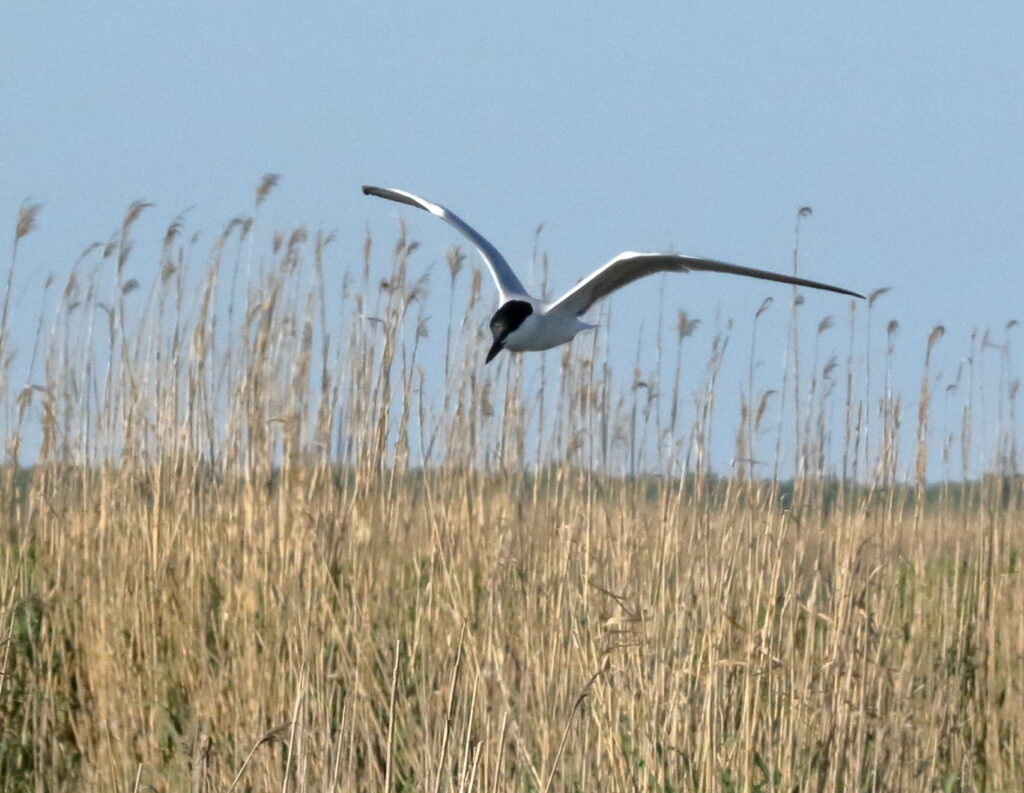
I had barely started again when I noticed a couple of terns flying around. Generally while I am birding, I ignore terns and gulls until I’ve identified everything else. As one of the terns zoomed by my car, however, I noticed that it had an oddly blunt thick black bill. “No way,” I said, rushing to take some ID photos. My hunch was correct. These were Gull-billed Terns—lifer Gull-billed Terns!

Terns favor the prepared mind. If I hadn’t been birding for more than a decade, the black bill on this guy may never have caught my attention.

Really, I could hardly believe it. I arrived at Anahuac expecting to see birds that I had seen many times before. Now, within the space of ten minutes, I added three new species to my life list! It seemed so preposterous that I laughed out loud. What’s more, this was still only my first day of birding on my Texas trip. One thing was for sure: I never would have had such success if it weren’t for the hard-working government employees we all depend on. It just shows the wisdom of investing in protecting our natural resources for the common good.