Category Archives: Finches

Bluebird Day at Browns Lake!

With all of our recent posts about Costa Rica, you’re probably wondering if we ever bird in Montana anymore! Never fear, we do—a lot! Today we report on an adventure that delivered some remarkable early migration surprises. If you’d like to support our work at FSB, please consider purchasing some of Sneed’s books shown to the right—and support a group such as Birdlife International or Audubon that is working hard to protect birds against climate change and many other perils. Remember: all of our posts are written and photographed by REAL PEOPLE!

I don’t know if it’s because of our recent trip to Costa Rica, my subsequent trip to California, or just the usual spring excitement, but I’ve felt especially eager to get out birding in Montana this spring. At least part of it has to with wanting to learn more about the timing of migration, especially in a year in which Montana hardly experienced winter. How would this impact the birds? I wondered. Would we see things showing up especially early? Fortunately, our friend Susan Snetsinger has felt just as eager to explore, so the past couple of weeks Susan and I have taken all-day adventures to some of our favorite western Montana birding locations. Two weeks ago, we visited Warm Springs and the impressively “remodeled” Lexington Street Pond and wetlands in downtown Butte. We were rewarded with a great variety of waterfowl, including Snow Geese at both locations. The highlight of the day was undoubtedly a great look at a Golden Eagle on the dirt road between Racetrack Pond and Warm Springs.
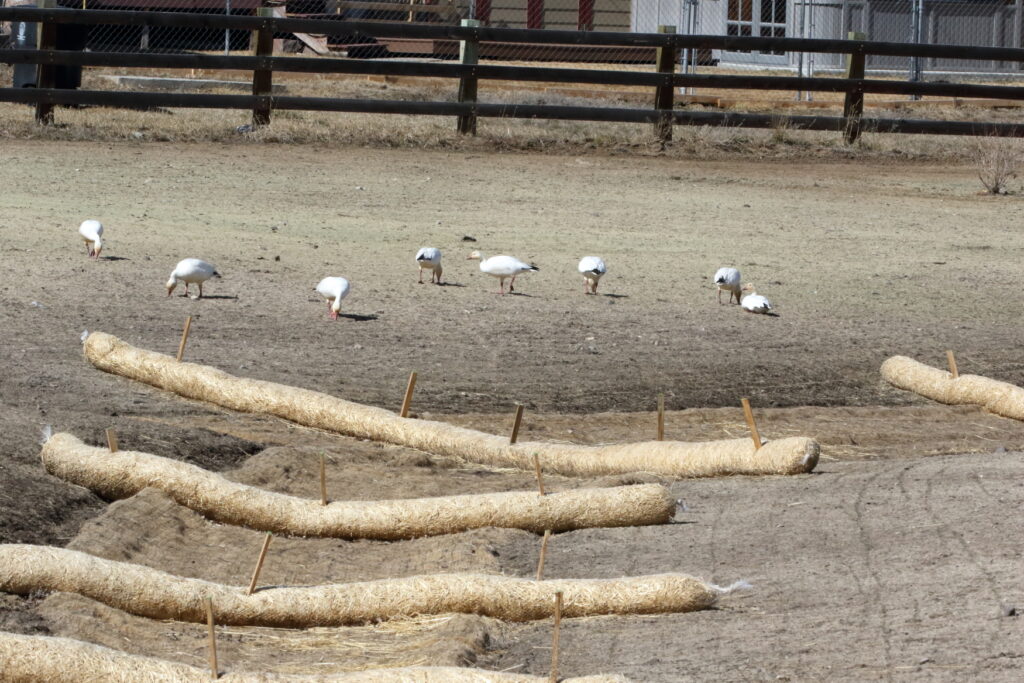
Snow Geese are always something to celebrate in Montana—including this group at Butte’s fabulously restored Lexington Street wetlands area.

A few days ago, though, Susan and I had a different ambition: to post the season’s first eBird checklist for Browns Lake. This is one of Braden’s and my favorite birding locations, and I don’t think it has ever failed to disappoint. Not only is it a go-to place for breeding Red-necked Grebes and Black Terns, we have found a lot of uncommon species there including Long-tailed Ducks, Pacific Loons, and Ross’s Geese. Notably, this is where Braden made the astounding discovery of a Bay-breasted Warbler two years ago—one of just a handful of sightings ever recorded from western Montana.
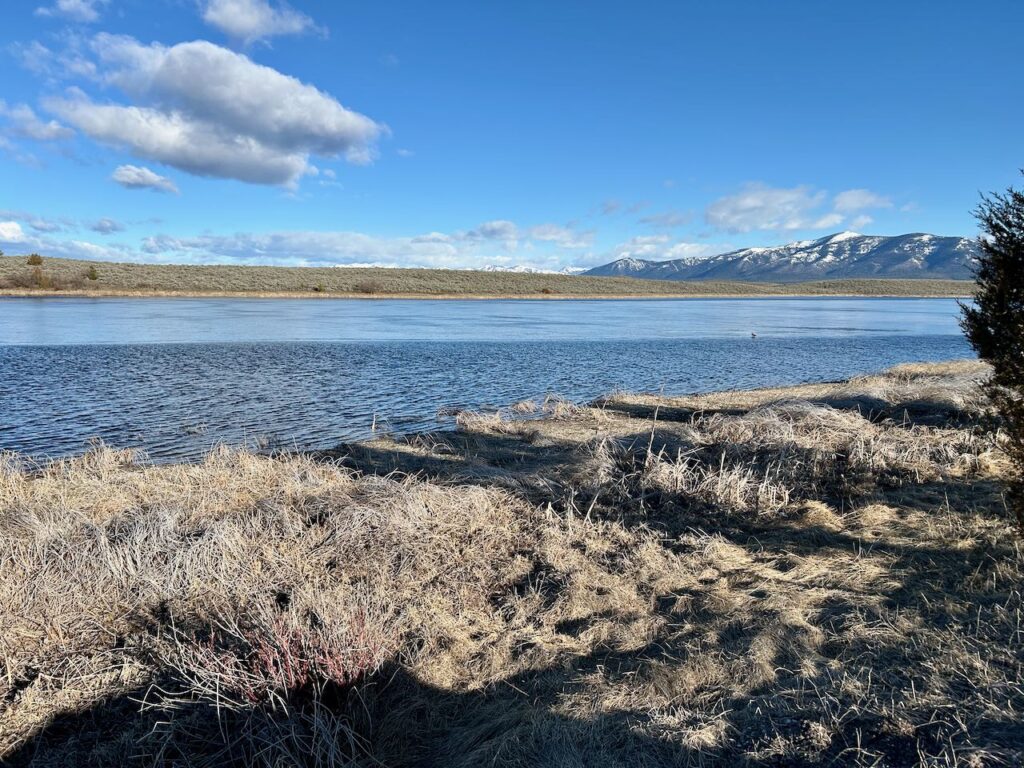
Although Browns (sic) Lake is frozen for a good part of the year, it has never disappointed us as a birding destination and we were eager to see what it held so early in the spring.

One challenge with Browns Lake is that it stays frozen until relatively late in the season and I noticed on eBird that no one had yet birded it this year. I wasn’t sure if it had begun to thaw, but I asked Susan if she was game to check it out. She was—and even brought along yummy fried egg and cheese bagels to fuel our adventures.

On the drive up Highway 200, we were rewarded by two pairs of Sandhill Cranes and a glimpse of a Mountain Bluebird—perhaps a preview of things to come? We hoped so, and upon arriving at Browns Lake, were not disappointed. Right near where Braden had discovered the Bay-breasted Warbler, we got out of the car to find a delightful “finchy” mixed flock containing Red Crossbills, Pine Siskins, Evening Grosbeaks, and Cassin’s Finches.
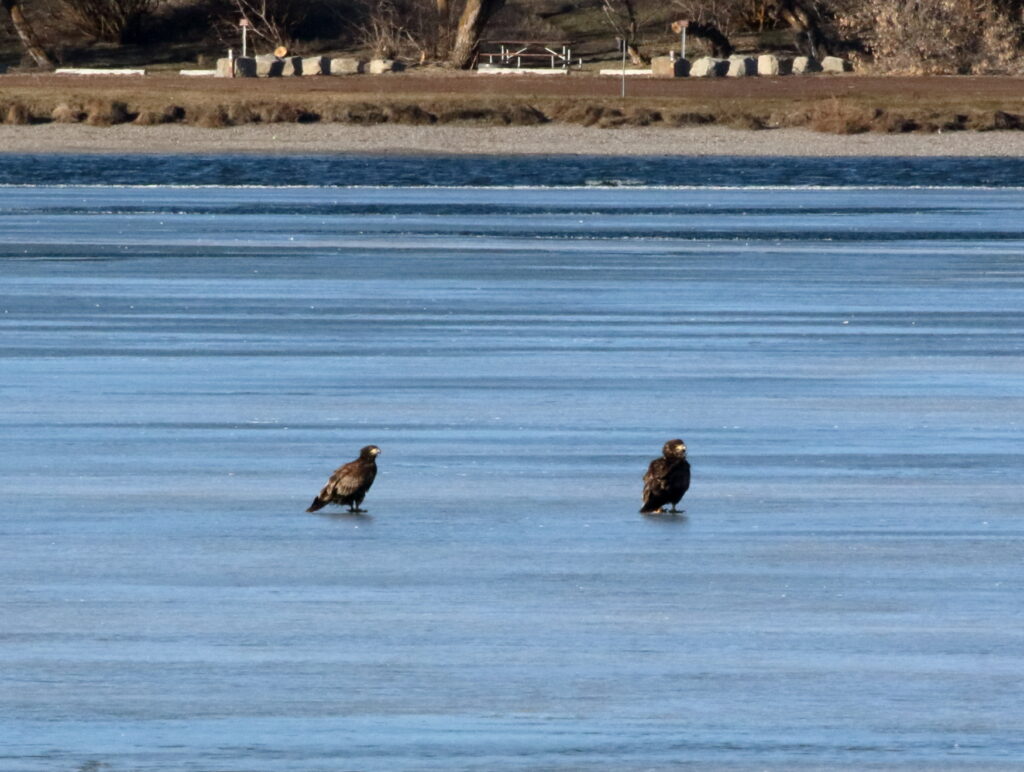
We’re not sure why (though fish and/or animal carcasses probably have something to do with it), but Browns Lake often boasts vigorous Bald Eagle activity—and our early spring visit was no exception. Here, two youngsters contemplate the meaning of ice on this brisk sunny day.

As the lake came into view, we were relieved to see at least a third of it offered open water—and that the waterfowl were not shy about taking advantage! Within twenty minutes, we recorded fifteen species of ducks and geese, including the year’s first Montana Northern Pintails and a lone FOY Cinnamon Teal. A flock of 18-20 Snow Geese erupted out of the fields on the far side of the lake and settled in beneath a huge irrigation line. Even though a brisk wind dropped the wind chill into the teens, we looked hard through our scope for any Ross’s Geese, but came up empty.
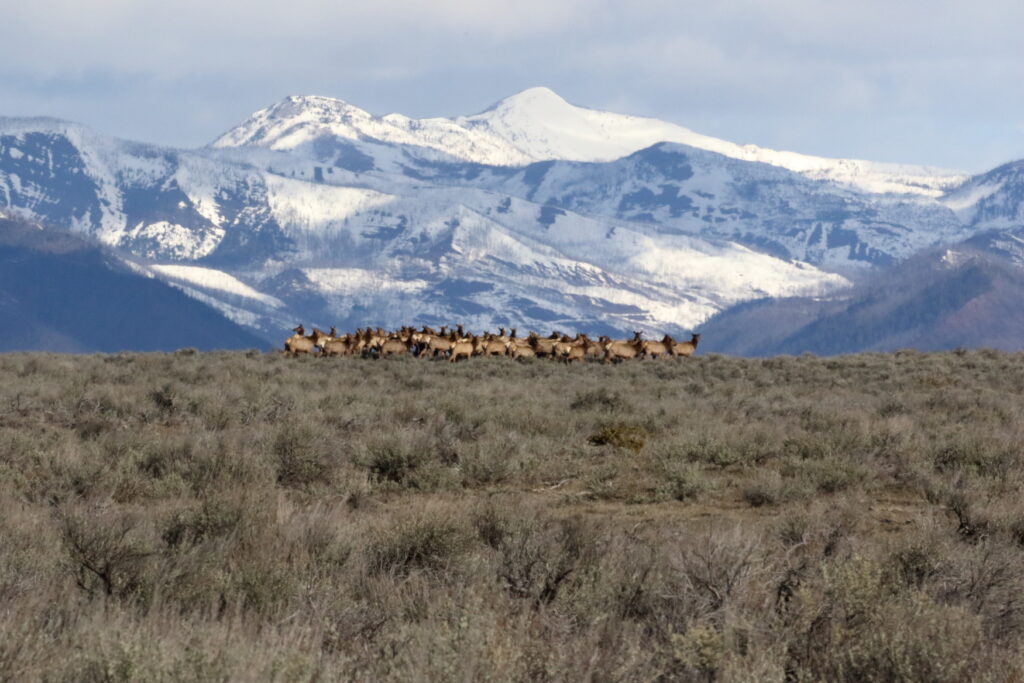
Elk anyone? Even though they are mere mammals, this herd against the dramatic background induced us to pull over for an admiring look.

As has become my new routine, I directed Susan out the far side of the lake toward the Ovando-Helmville dirt road, and we were rewarded by two Northern Shrikes (Susan is certain they were separate birds), and a couple more Mountain Bluebirds. After turning left toward Helmville, we hadn’t gone a mile when we saw a sizeable flock of birds badly backlit by the sun.

“Are they some kind of blackbirds?” Susan wondered, and they did look black because of the sun, but I didn’t know. Then, she said, “There are more bluebirds over here.” “There’s a couple over here, too,” I added, still thinking they had nothing to do with the flock we’d just seen.

The bottom line? The flock we had just observed consisted entirely of Mountain Bluebirds!
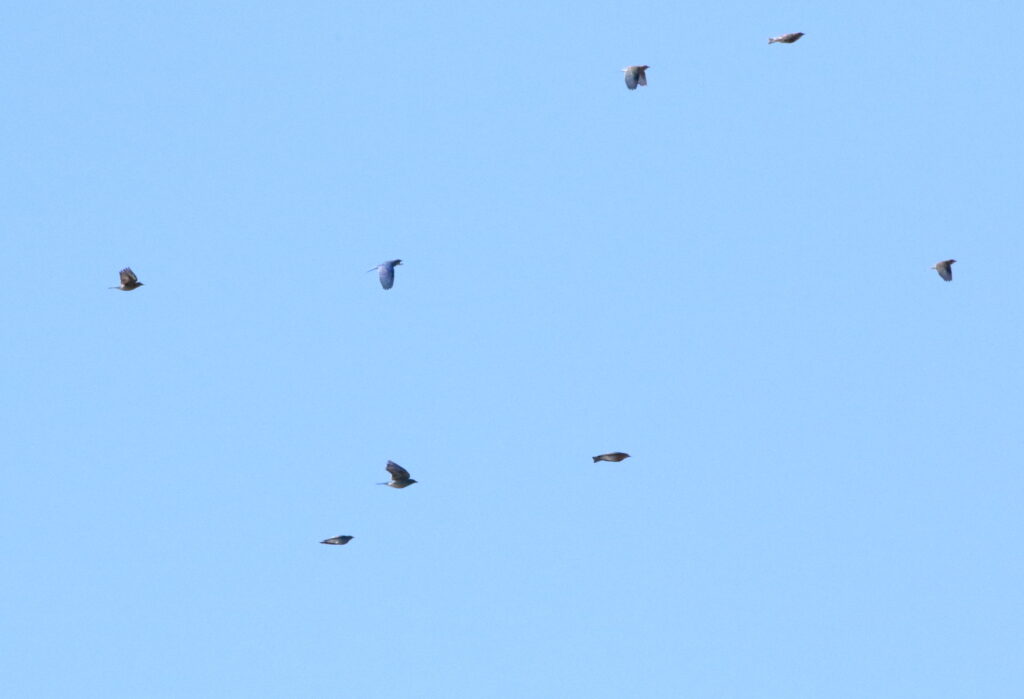
At first, we weren’t sure what these flocking birds might be, backlit against the sun, but this photo reveals the truth.

This blew both Susan and I away. Neither of us had ever seen more than three or four Mountain Bluebirds at a time, and had no inkling that they ever formed large flocks. Yet here was the evidence in front of us, and we spent a good fifteen minutes watching them forage and swirl around us. Once, a group of at least sixty took to the sky together, only to settle back into the grass a few moments later. Meanwhile, others kept crossing the road in front and back of us, occasionally landing on the fence next to our car.
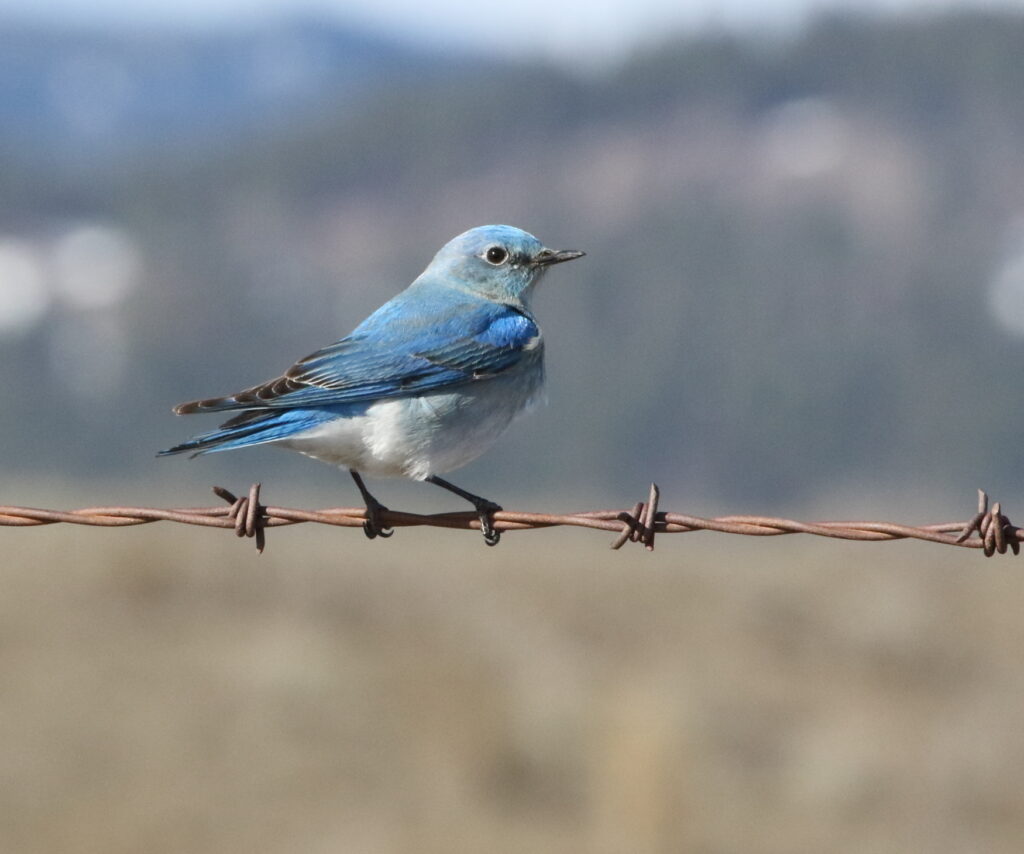
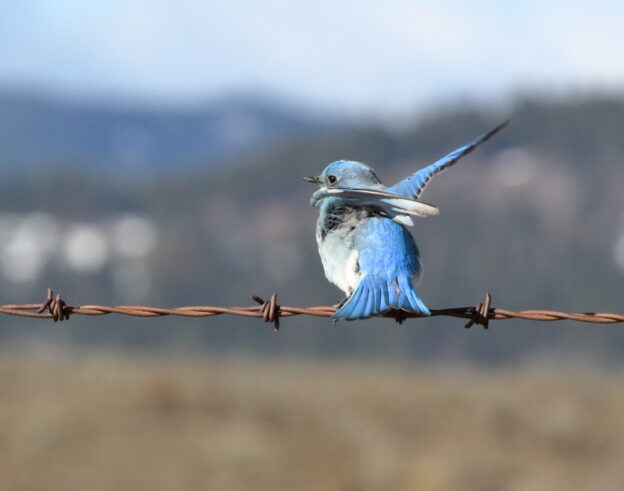
The Mountain Bluebirds were so active around us that I dared not hope to get a photo of one—until this guy perched 15 feet away from the car window!

We finally pulled ourselves away, wondering if local ranchers observed this kind of grouping every year. I later read up on MOBLs and found one or two mentions of them forming flocks in winter, but it didn’t seem like a well-known phenomenon. Susan and I both agreed that these cavity-nesting birds must be migrating. From here would they spread out into the surrounding mountains? Or did they still have a long way to go before trying to find their own breeding territories? As biologist Dick Hutto had taught me, Mountain Bluebirds especially love recent burn areas where woodpeckers carve out plenty of “condos” in the dead trees (see my book Fire Birds: Valuing Natural Wildfires and Burned Forests). I wondered if, as a flock, they might be better at finding recent burn areas—or did flocking impart other benefits such as greater predator or food detection?

After the Browns Lake area, we headed toward Helena, hoping to find a recently reported Lesser Black-backed Gull. Though I’d seen this species in Israel and again in Oregon, this would be a Montana lifer for me and an outright lifer for Susan.

It was not to be.

At the Helena Regulating Reservoir, we saw plenty of gulls, but many were too far away for our scope, and the ones we did see did not have the dark wings we were looking for. The trip wasn’t a waste, however, as we observed more than sixty Common Mergansers and at least ten Red-breasted Mergansers, also clearly in migration. In fact, the window to see RBMEs is quite tight in Montana, so it was nice to pick them up for 2026.
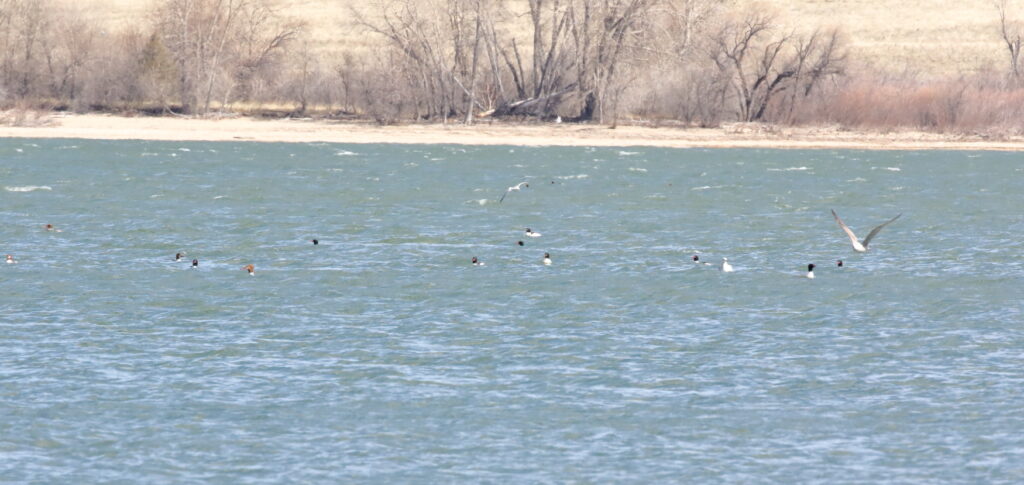
Though we missed the Lesser Black-backed Gull, the Helena Regulating Reservoir was hosting a “regulating” merganser-pa-looza!

Speaking of 2026, both Braden and I have excellent chances to accidentally break our world Big Year records. My record, set last year, is 552, and only a quarter of the way into this year, I’m at 422. This is not as much of a gimme as it sounds since many of the birds I’ve seen in Costa Rica and California are birds I would normally check off in Montana, but with a little luck and persistence, I feel I will get there. Braden’s record, meanwhile, is 867 and he is already at 546, with hopes to bird abroad at least one more time this year. We no longer put a lot of stock into numbers like these, but they’re a fun thing to keep an eye on.

After saying goodbye to the Helena Regulating Reservoir, Susan and I did a little more birding and then got lunch in downtown Helena. I only mention it because we ate at an excellent little crepe place called—what else?—The Creperie. It featured outstanding food and reasonable prices. It’s open until 3 p.m. most days and is located right next to the lower entrance of the walking part of Last Chance Gulch. If you’ve got the post-birding munchies, check it out!

Our first-of-the-year Browns Lake checklist: https://ebird.org/checklist/S313329879
Caño Negro: Costa Rica’s Epic Wetland (Birding Costa Rica, Part 3)

If you’re enjoying FatherSonBirding, please consider subscribing by filling out the box down and to the right. We won’t ever sell or give away your information and you can unsubscribe at any time. And do feel free to share this blog with others or link to it—but please contact us for any other uses!

When blogging about a birding trip to Costa Rica, it’s almost impossible to choose which things to cover. As anyone who’s been there knows, every day offers avian delights, whether you’re walking through rainforest or hanging out in a town or city. One place we simply cannot overlook, however, is Caño Negro Wildlife Refuge.

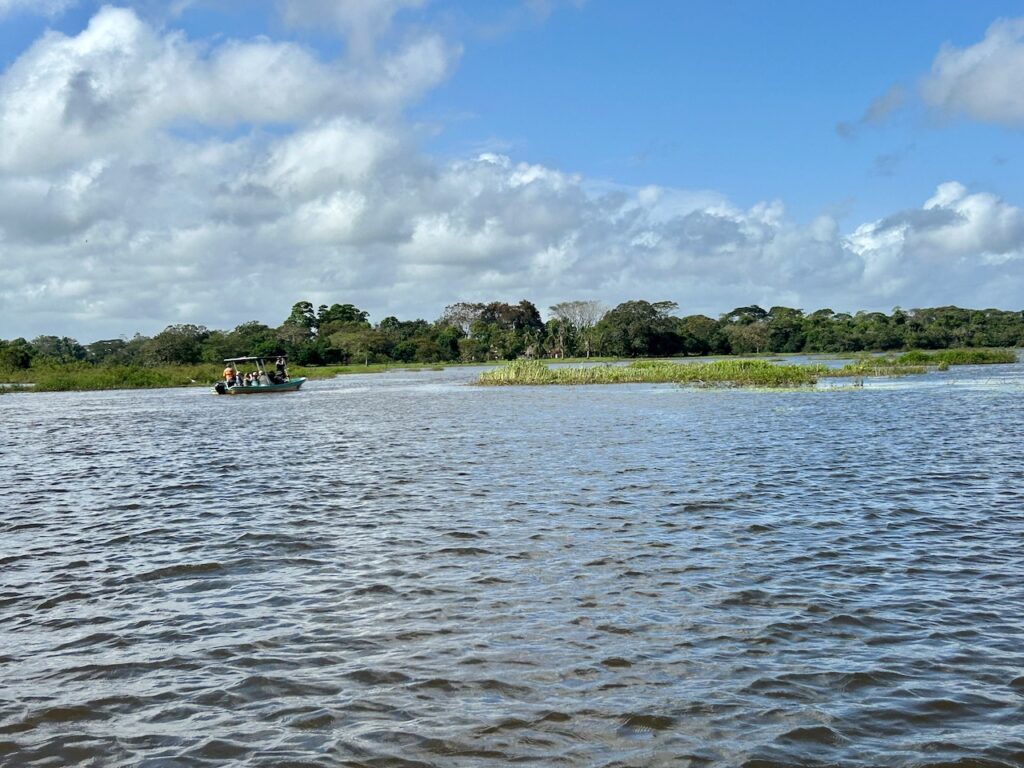
The lagoon area of Cano Negro, at high water because of recent rains.

Caño Negro is one of Costa Rica’s rare, large interior freshwater wetland areas and lies almost within sight of the Nicaraguan border. I had never heard of it until Braden sang its praises when he studied abroad down there two years ago. As he planned our itinerary for this year’s trip, he left no doubt it was a must-see destination. To reach it, we left the La Fortuna area (see our post Arenal for Antbirds) and drove an hour and a half up highway 35 through flat agricultural country, before turning west on the access road to the refuge.

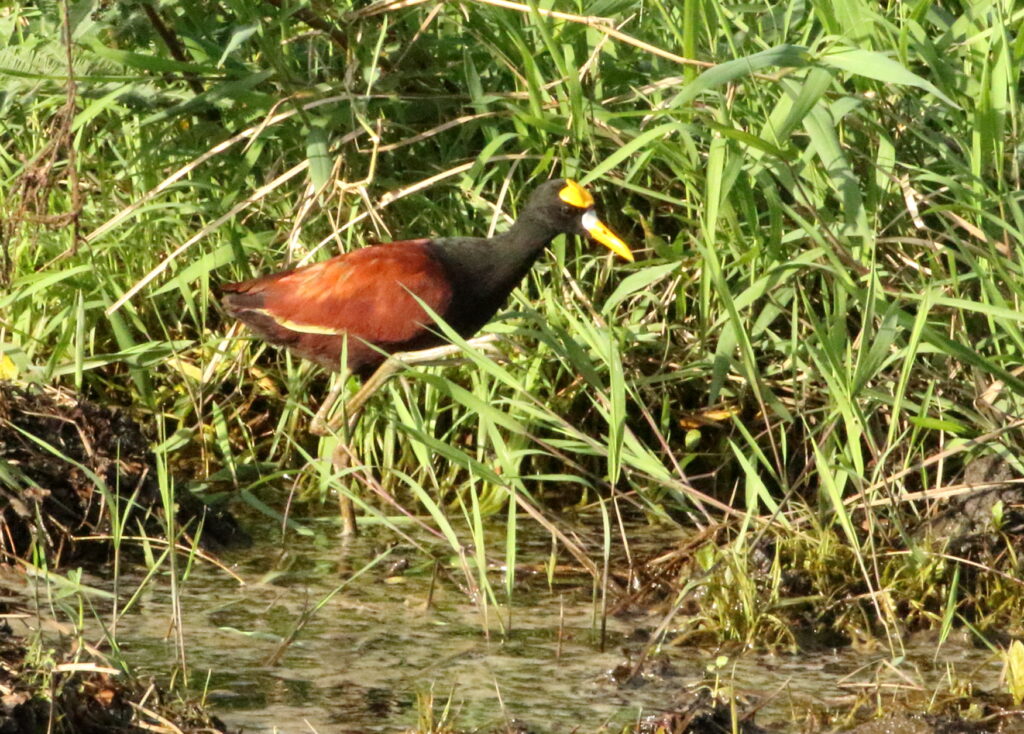
Seeing such large numbers of Northern Jacanas was a first for me!

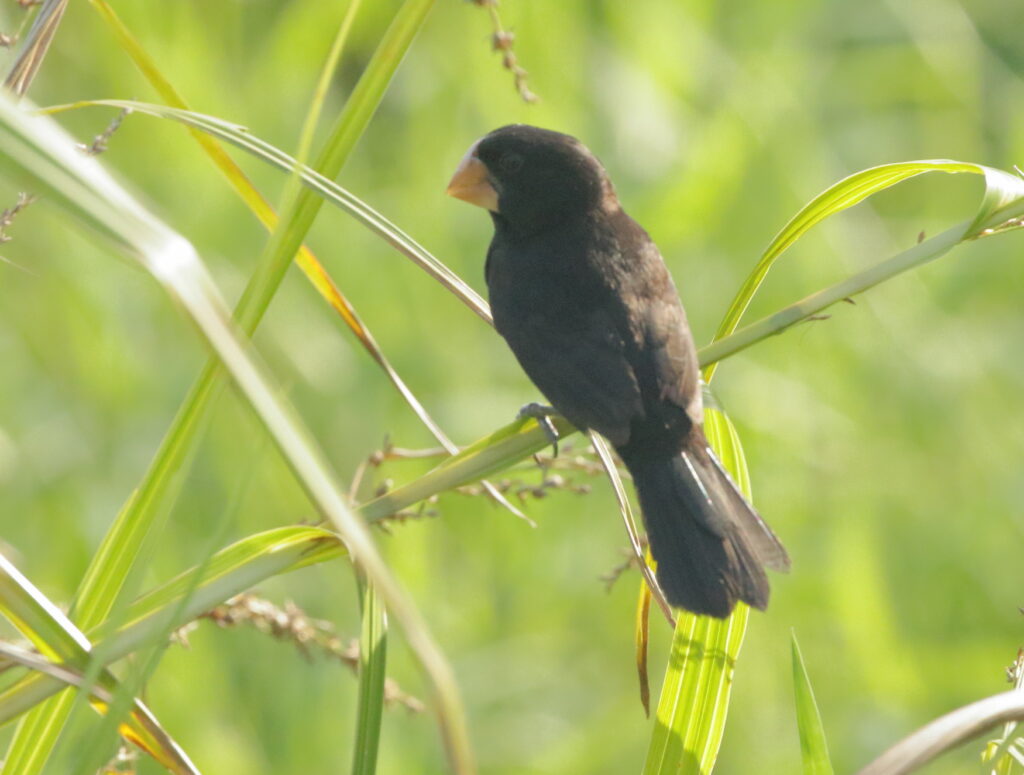
The access road is one of those tricks perpetuated with great amusement on tourists. Paved for its first few miles, it suddenly degenerates into a cratered track that reduces the speed of rational drivers to about 10 km/hour. Nonetheless, this road is not to be endured, but to be birded. Along its stretch are a rich variety of grasslands, mini-wetlands, and patches of trees that are loaded with birds. I was thrilled to see my first Northern Jacanas and Purple Gallinules of the trip, but these were quickly overshadowed by the Variable and Morelet’s Seedeaters (see our post Chasing Morelet’s Seedeaters), and Thick-billed and Nicaraguan Seed-Finches. The highlight of the drive was a brief, but spectacular view of yet another lifer for Braden—a Black-collared Hawk!

These overcompensating “giant-billed” Nicaraguan Seed-Finches are a specialty of the northeast part of Costa Rica.

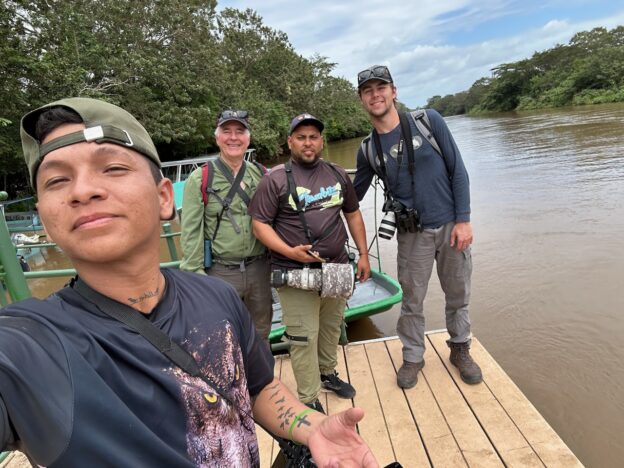
The next morning, we eagerly met our guide, Chambita, and his boat driver/assistant, Yalvin, at one of the town boat docks. Because of the heavy unseasonable rains, the Rio Frio was running higher than usual, but still flowed along at a placid pace perfect for birding. Most birding boat tours have two components—the river itself and a lagoon that feeds into it. From Braden’s past comments, I was most excited about the lagoon, but the river relentlessly amazed us.

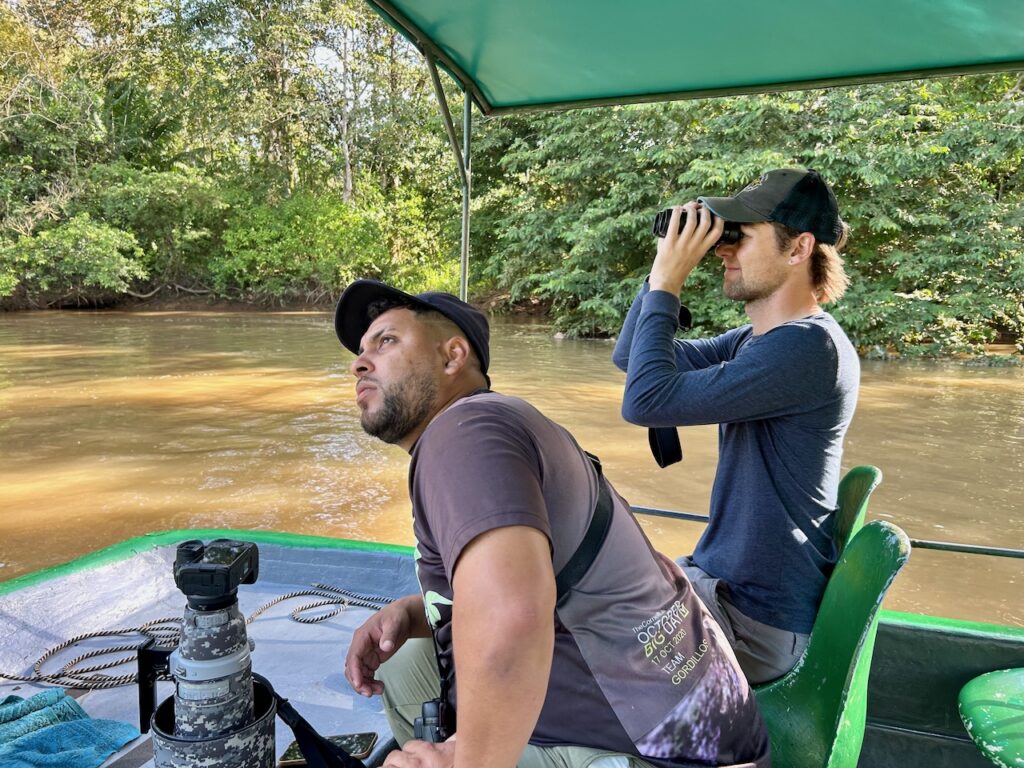
Chambita and Braden proved a dynamic duo in detecting Caño Negro’s astonishing bird life.

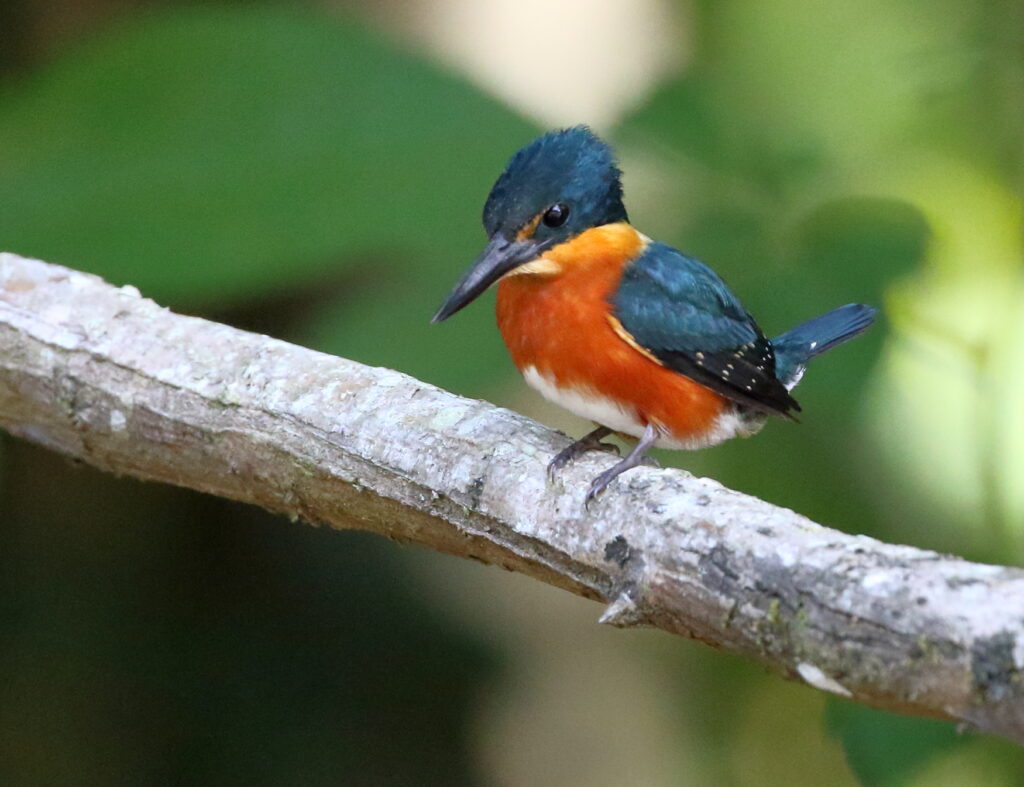
As we began slowly making our way downstream, I was thrilled to see both new and familiar species. Over the first hour, the kingfishers stole the show, as we saw five of Costa Rica’s six kingfisher species, missing only the most common one—our own Belted Kingfisher that we enjoy back home. The ones we saw included both the big bruiser Ringed Kingfishers and the two that are hardest to find: Green-and-Rufous Kingfisher and American Pygmy Kingfisher.

I’m a sucker for kingfishers and was ecstatic at seeing FIVE species, including this American Pygmy Kingfisher.

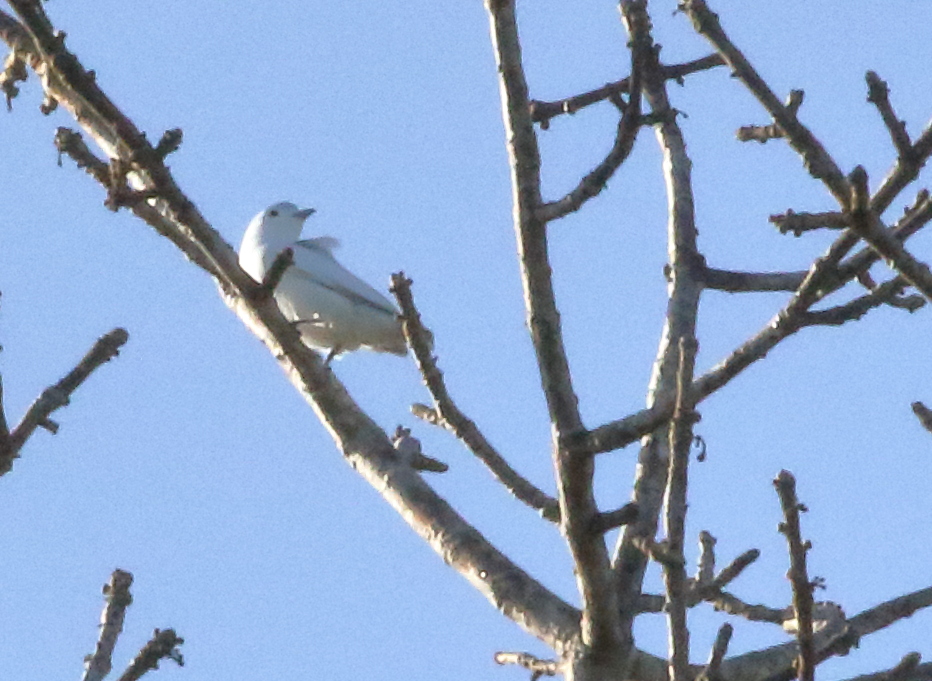
Chambita, though, quickly demonstrated why he is a local legend among expert birders by calling out dozens of other bird songs and calls, many of them flycatchers that I had no hope of recognizing, but that Braden raptly absorbed. Then, we spotted a species Braden most hoped to see—Snowy Cotingas.

I’ll just say it: Cotingas are bizarre. And I’m not alone in thinking so. Birds of the World remarks, “No family of birds exhibits more diversity of auditory, behavioral, and plumage elaborations, all the result of rampant sexual selection, than do the cotingas.”

We saw five Snowy Cotingas on our outing—an unusually high number that pretty much made Braden’s entire day.

I actually didn’t think I’d ever seen a cotinga until Braden informed me that two of Latin America’s most spectacular birds, the Andean Cock-of-the-Rock and Three-wattled Bellbird, are cotingas. Even then, I only started getting interested in them as a group when mi amigo Roger and I saw Black-tipped Cotingas last year in Colombia, inspiring a spate of jealousy from Braden.

Today, when we saw the Snowy Cotingas, I had to restrain Braden from jumping out of the boat. “I wanted to see them,” he gushed, “but I didn’t think we would!” That, of course, got me super excited about them, too—delicate white birds perched atop trees high above the river.

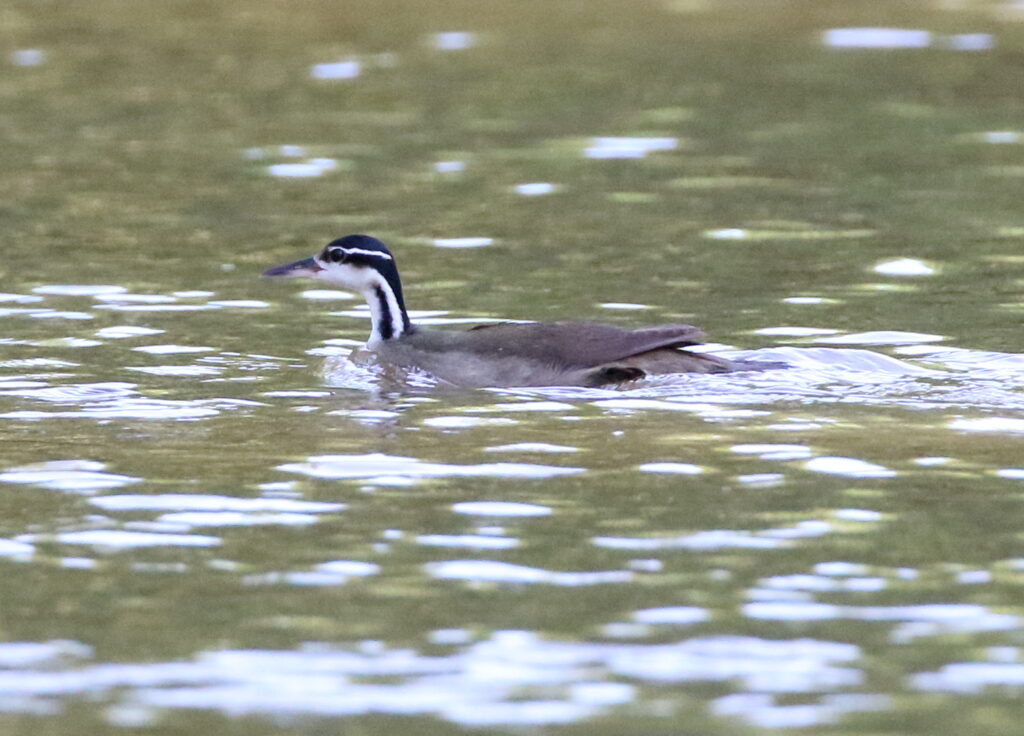
Though not rare, Sungrebes can be shy and difficult to find, so we felt lucky to see one. The birds are actually more closely related to rails than grebes.

The river offered many other treasures including a rare Sungrebe, eight species of warblers, three kinds of orioles, and four kinds each of woodpeckers and parrots. Oh, and caimans and monkeys, too. And that’s before we turned around and went to the lagoon.

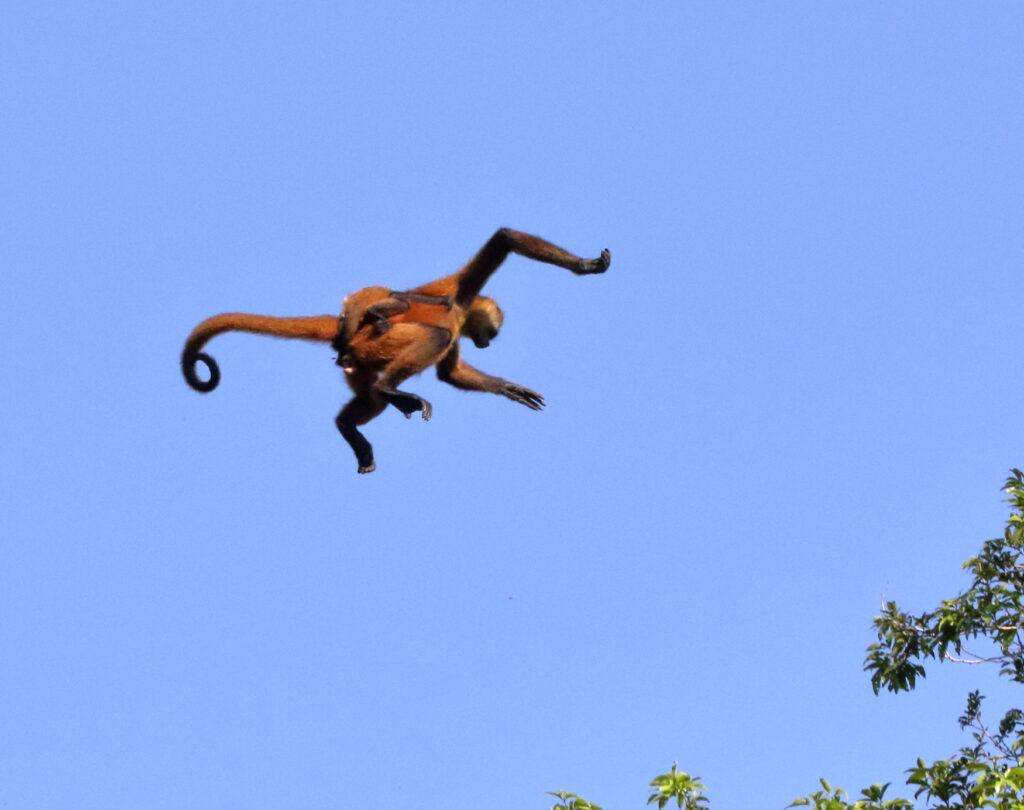
A troop of Squirrel Monkeys provided us with a welcome bonus as they fearlessly leaped a twenty-foot gap between trees. Look closely and you can see a baby on this one’s back! Talk about Livin’ on a Prayer!

When we reached it, the lagoon presented a totally different view than Braden had previously experienced. On his past visits, the water had been relatively low, i.e. perfect for wading birds. Recent rains, however, had raised the water dramatically. We still found a great diversity of birds, but numbers were lower than usual.

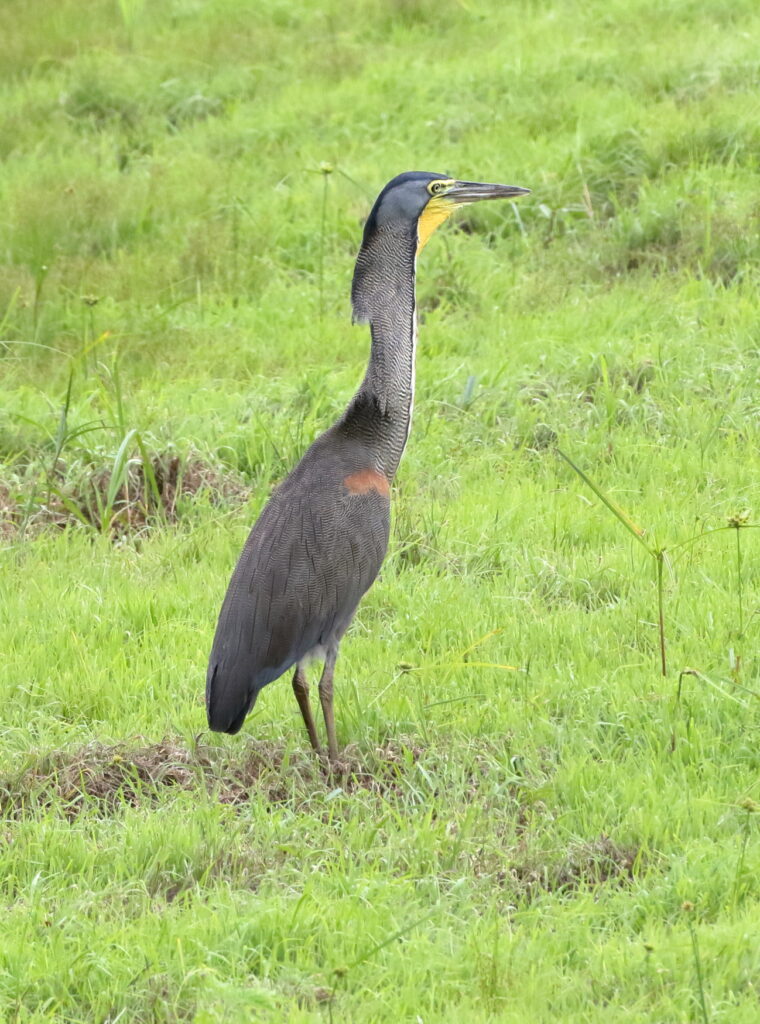
Ever since seeing a Fasciated Tiger-Heron with Roger in Colombia last year, I have been in love with tiger-herons, and this was my first chance to get good looks at Bare-throated Tiger-Herons!

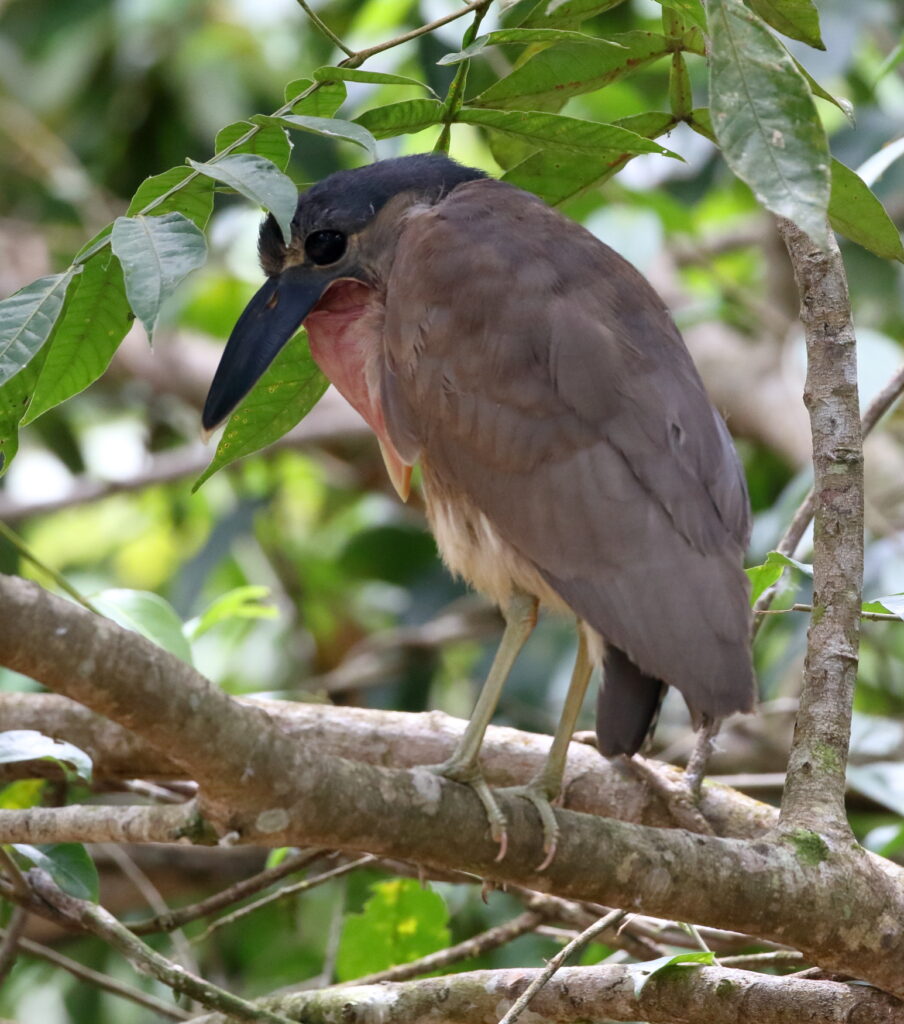
Still, all manner of wading birds presented themselves. My favorites were Bare-throated Tiger-Herons and the uber-strange Boat-billed Herons. It was a tough call, though, with Tricolored Herons, a Roseate Spoonbill, Little Blue Herons, Green Herons, and three kinds of ibises—Glossy, White-faced, and Green—all competing for our attention.

A yawning Boat-Billed Heron is a bird after my own heart. Not only is it one of the coolest birds in Costa Rica, it needs its afternoon nap, just like moi!

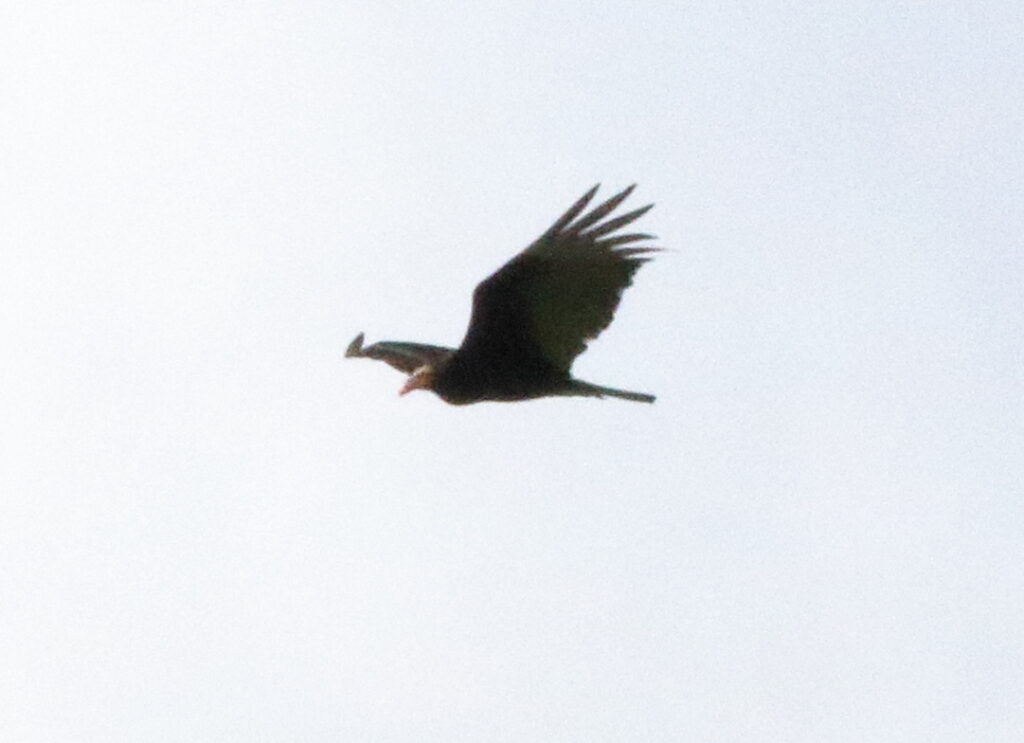
A special treat for both Braden and me was getting to see our first Lesser Yellow-headed Vulture, which Chambita identified from a distance as it swooped down low over the lagoon and passed within a couple hundred yards of our boat. Resembling a Turkey Vulture—and sharing many of its characteristics—the Lesser Yellow-headed’s yellow head became visible only as it approached more closely. I love vultures.

This intriguing Lesser Yellow-headed Vulture was a special first for both Braden and me.

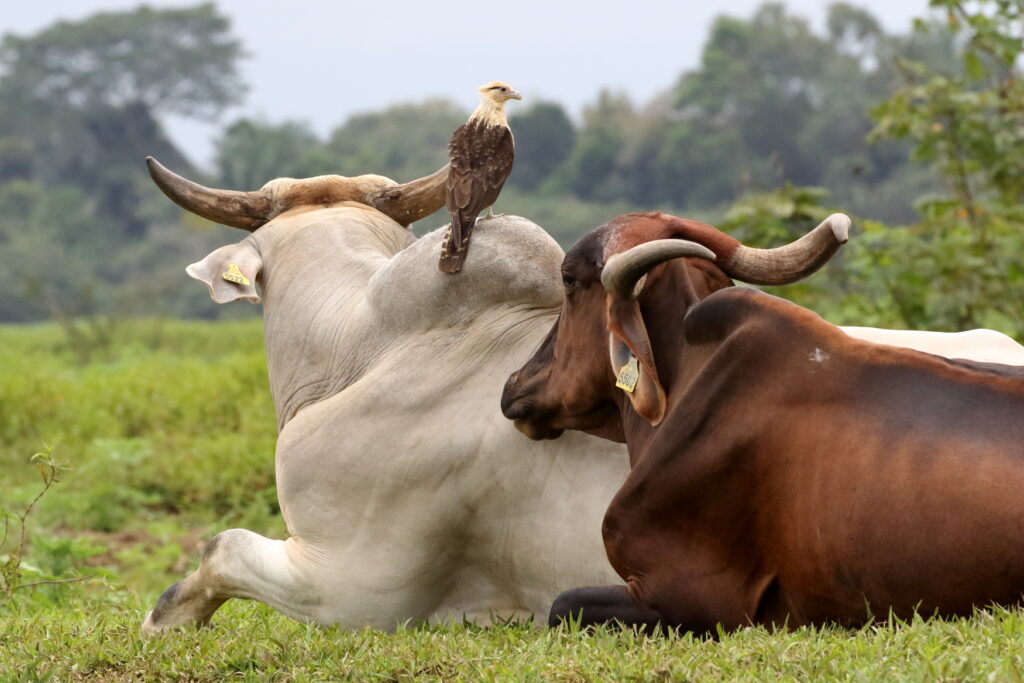
As we continued to explore, many more species kept showing up including a couple of Wood Storks, a Greater Yellowlegs, and both Crested and Yellow-headed Caracaras.

Roger and I had seen a Yellow-headed Caracara leap up onto a cow last year in Colombia, but this guy gave Braden and me an even better show.

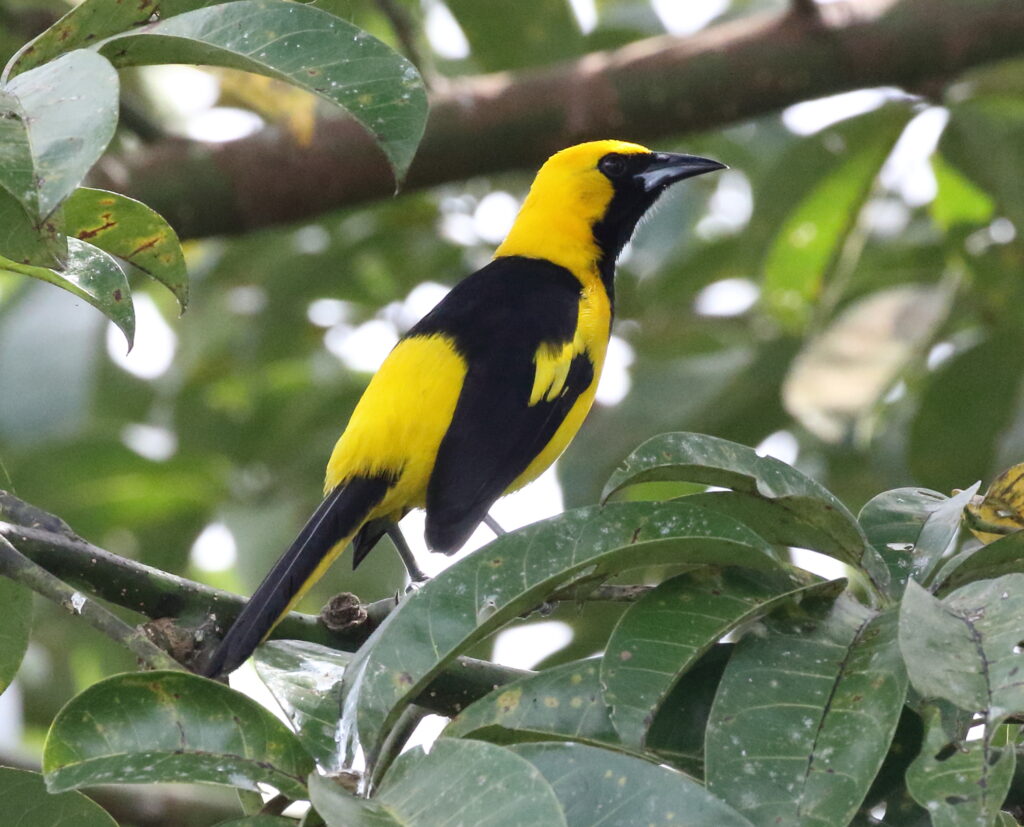
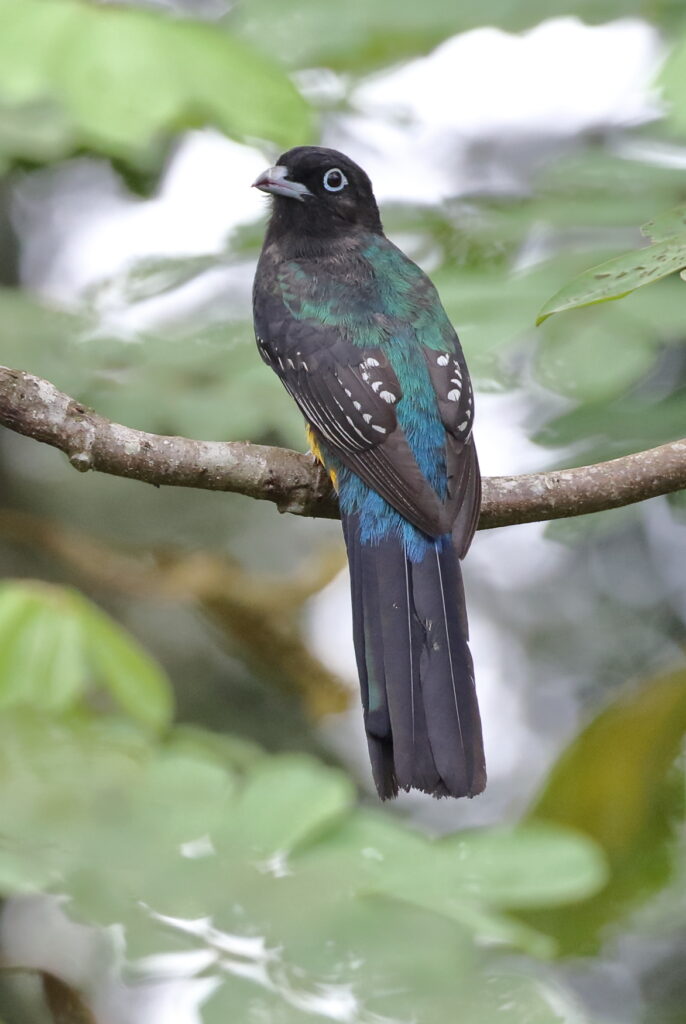
A couple more of our favorite finds were a pair of Yellow-tailed Orioles and a Black-headed Trogon, all of which offered close up incredible looks.

We were happy that Chambita and Yalvin seemed as excited by the day as we were. They spent far more time with us than was strictly necessary and you can bet we appreciated it.

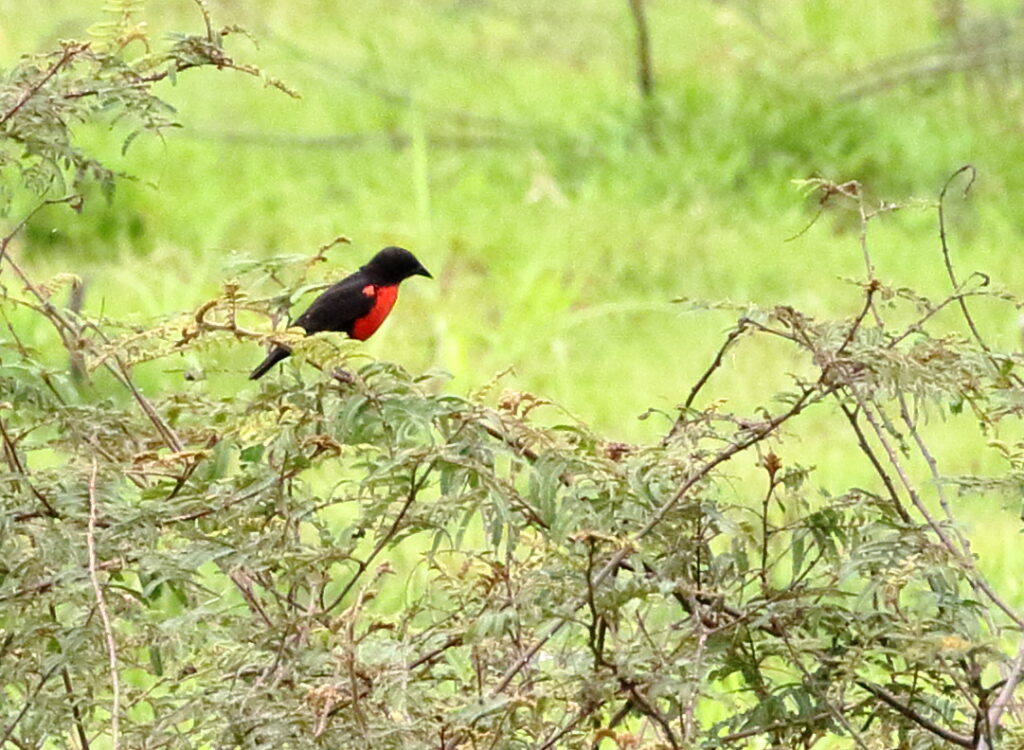
After bidding them farewell, we headed back out the same cratered road we came in on and were rewarded as richly as on the day before. On the drive, we paused to enjoy Green Kingfishers, Common Tody-Flycatchers, a Fork-tailed Flycatcher, and the perfect capstone to the day—our lifer Red-breasted Meadowlarks! We ended the day with more than 130 species, one of our best days of birding ever. Pura Vida!

Our Caño Negro checklist: https://ebird.org/checklist/S303336007

I was especially thrilled to see a Red-breasted Meadowlark after recently reading that the similar-looking South American Pampas Meadowlark is critically endangered. Loss of grassland habitat and rampant use of pesticides has drastically reduced populations of many meadowlark species, including those found in the US.

To arrange a trip with Chambita, check out his Facebook page: https://www.facebook.com/profile.php?id=100047210666376.

Chasing Morelet’s Seedeaters—or Why You Shouldn’t Depend on Map Apps Near the Mexican Border (Texas 2025, Final Installment)

My success finding Black-capped Vireos and Golden-cheeked Warblers (see our last post) left me a welcome gift: an extra day to pursue another bird that keenly interested me. It was a bird Braden and I had unsuccessfully tried for on our 2018 trip to the Lower Rio Grande Valley: Morelet’s Seedeater. Though not rare in its core year-round range of Central America and eastern Mexico, this adorable “finchy” songbird just barely creeps over into the US along the Rio Grande Valley.

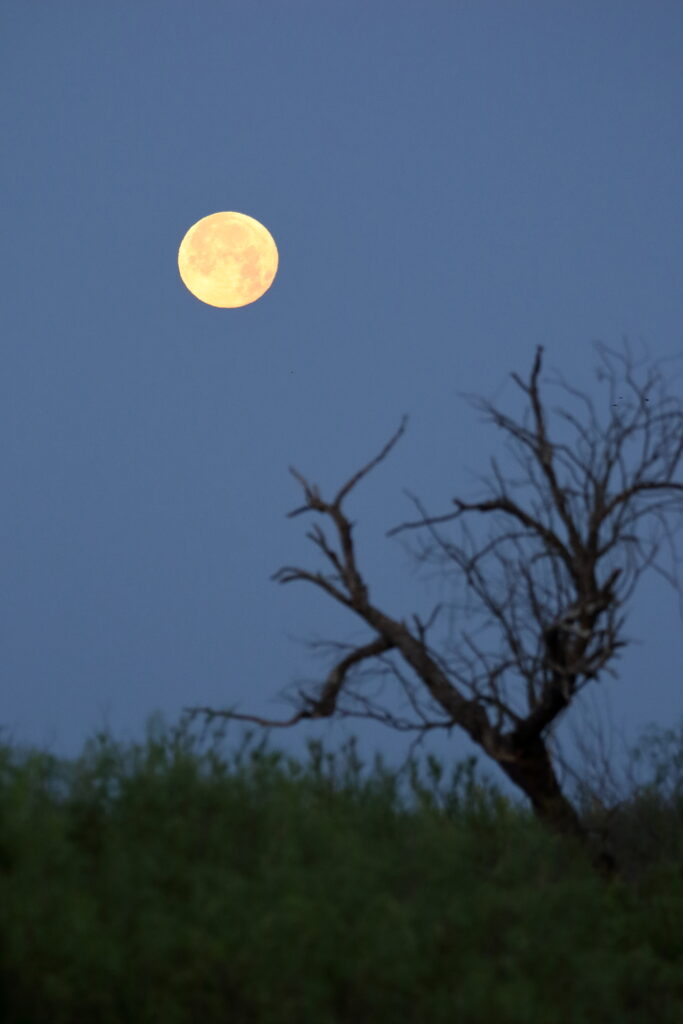
Catching sights such as this setting moon is one of the benefits of being an “early birder.”

Sunday morning, I rose at four a.m. and headed south from Uvalde. As they had on the previous morning, both a spectacular sunrise and unforgettable setting full moon rewarded me. As light crept over this flat country, caracaras flew along the road and Scissor-tailed Flycatchers perched on telephone wires. I even got a glimpse of a flock of quail leaping over a fence. Scaled Quail? I could only guess! After ninety minutes, my little highway joined Interstate 35.

And that’s where the trouble began.

I-35 is a main artery for trade between Mexico, the US, and Canada. As I sped south, I kept seeing signs for Mexico, but my map app directions assured me that I should keep going and turn off at an exit called Riverbank Drive. As I kept driving, however, I saw no signs for that—or any other—exit, and I realized that the only other traffic around me consisted of huge 18-wheelers. Finally, a thought occurred to me: Uh-oh.

Soon I found myself at a dead stop, surrounded by big rigs, with no way to turn around. There are moments in life where you know you are in a fix, and there’s not a thing you can do about it. This was one of those. Still, hope springs eternal and I climbed out of the car and walked to a big rig next to me. The kind Mexican driver, undoubtedly flummoxed by what I was doing there, rolled down his window, and we had the following conversation:

Me: Uh, I think I made a mistake. I’m trying to go to Laredo.

Driver: Laredo, Mexico?

Me: Uh, no. Laredo, Texas.

Driver (looking worried for me): You’ll have to turn around.

Me: Where?
Driver (after conferring with his partner): I don’t know.

These Big Rigs kept me company as I contemplated life as a Mexican citizen.

It was then that I began pondering the frightening ramifications of entering Mexico without a passport. I mean, could I have picked a worse time in history for this to happen??? The only good thing was that a Scissor-tailed Flycatcher perched nearby, blissfully unconcerned by my human drama. A few minutes later, the border opened and I eased in front of my new trucker friend. For ten minutes I and the big rigs inched forward until we reached a wide No Man’s Land of pavement and there I spotted an actual border worker. I pulled up next to him and explained my mistake. Looking vaguely amused and overly patient, he said, “See my buddy back there? Turn around and he’ll keep the trucks stopped while you exit at that road on the side.” I proceeded as instructed, gratefully waving to the “buddy.” I could have burst into tears at this point, but instead, I laughed all the way to the next exit—the real exit—which led to my original destination, Father McNaboe Park.

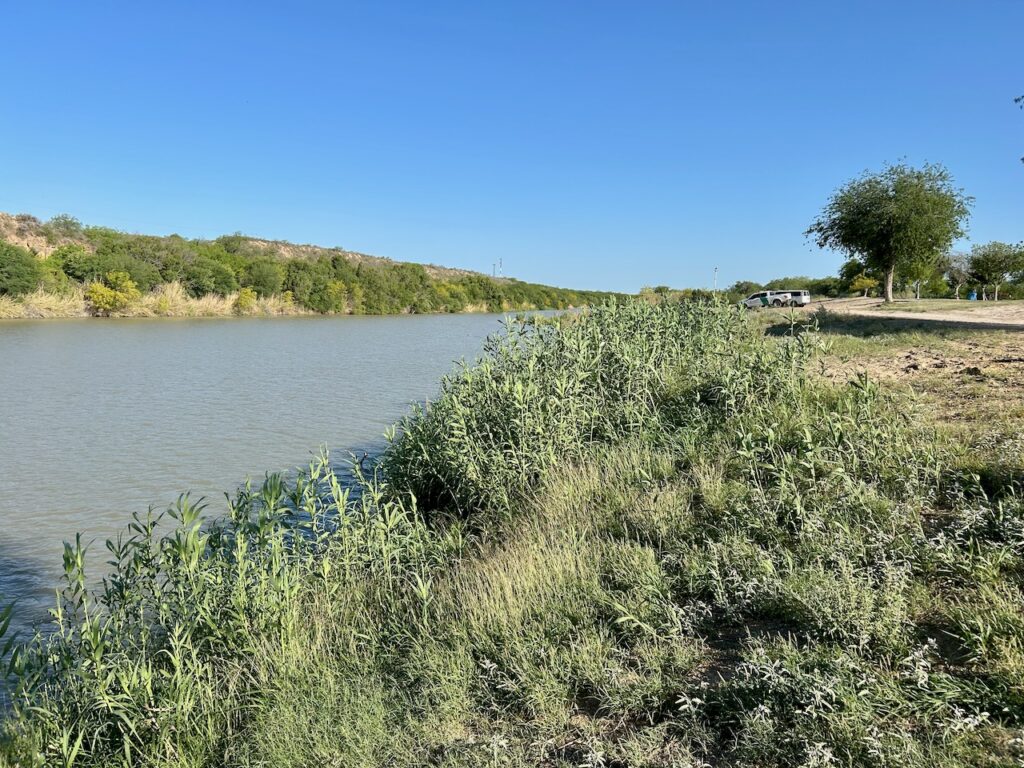
The Rio Grande River, aka the Mexican Border, complete with Border Patrol agents and lots of Carrizo cane, where Morelet’s Seedeaters like to hang out.

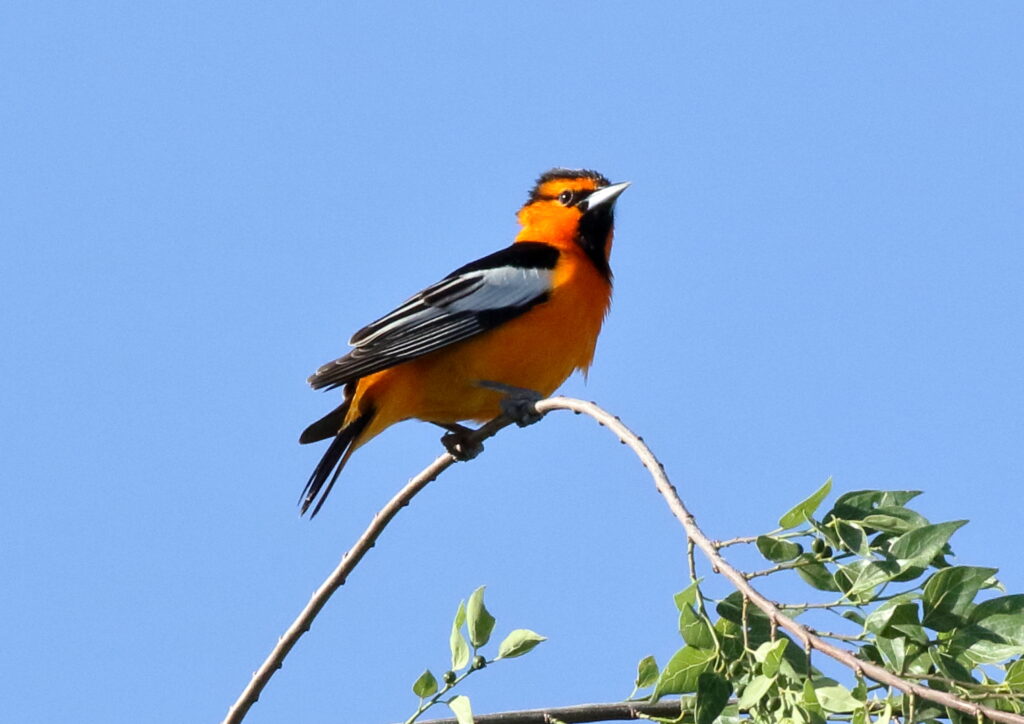
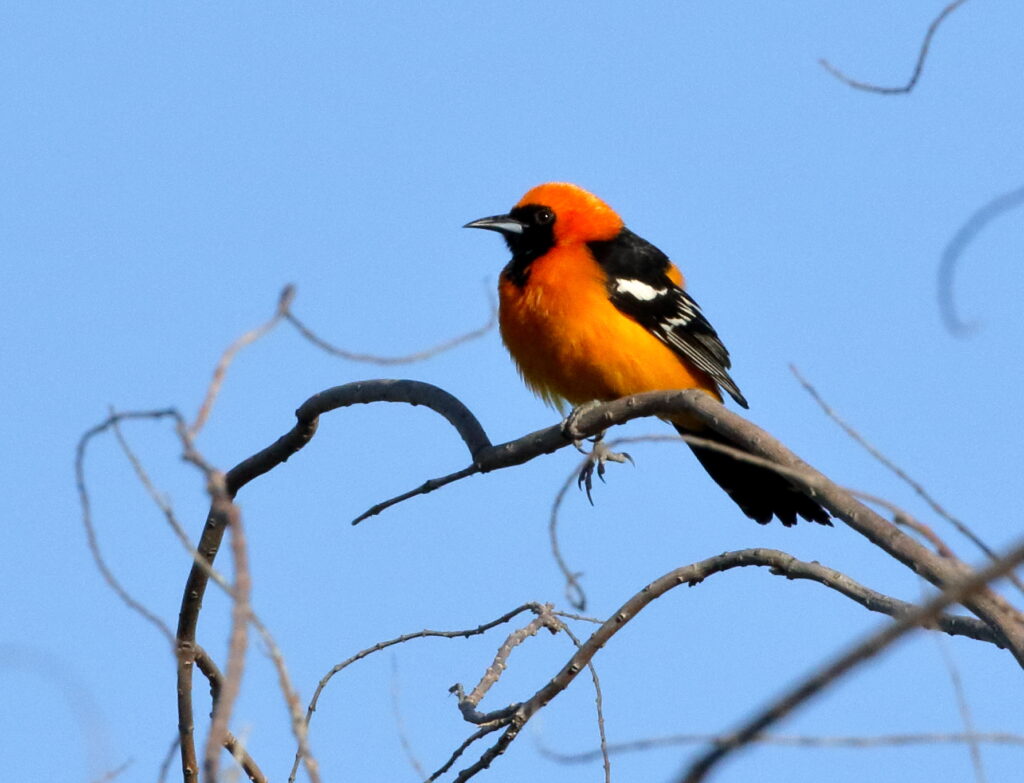
By the time I reached the park, I had experienced a week’s worth of drama, but remember, I still had some serious birding on the agenda. In 2018, Braden and I had visited the Lower Rio Grande Valley (LRGV) and even spent a night in Laredo, but had somehow failed to find McNaboe Park. I don’t know how, as the park consisted of a wide, long swath of trails, playing fields, and other amenities right on the Rio Grande River. Today, the park was jammed with people and I felt at ease as I walked toward the river. Before I even got there, I spotted my first great birds of the day—a pair of Hooded Orioles, a species I hadn’t seen since visiting Southern California seven years before. Not long afterward, I saw another oriole, a Bullock’s Oriole—perhaps on its way to Montana?

Over the phone the night before, Braden had told me to look for the Morelet’s Seedeaters in the “cane grass,” a tall invasive species known in Texas as Carrizo cane. Apparently, this plant can be found all along the 1,255-mile reach of the Rio Grande, and it didn’t take me long to find thick stands of it. I began walking along them looking for little black and brown birds. I covered a couple of hundred yards without seeing any and then walked down to a little sandbar right at river level. No seedeaters.

Then, I happened to glance up a side channel at another thick stand of cane. There, perched on one of the stalks was an erect little bird with a finchy bill. I didn’t get my binoculars up in time to get a good look, but I immediately knew: I had found my bird!

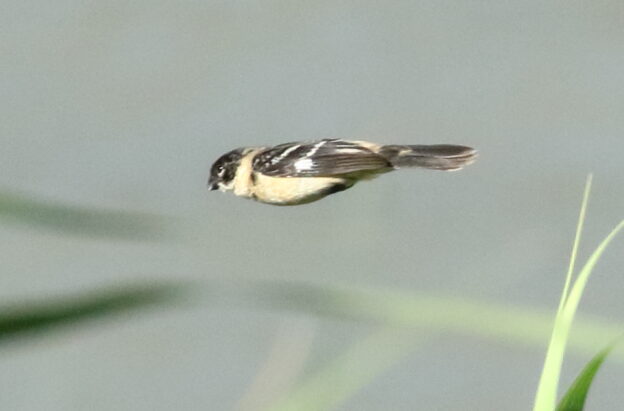
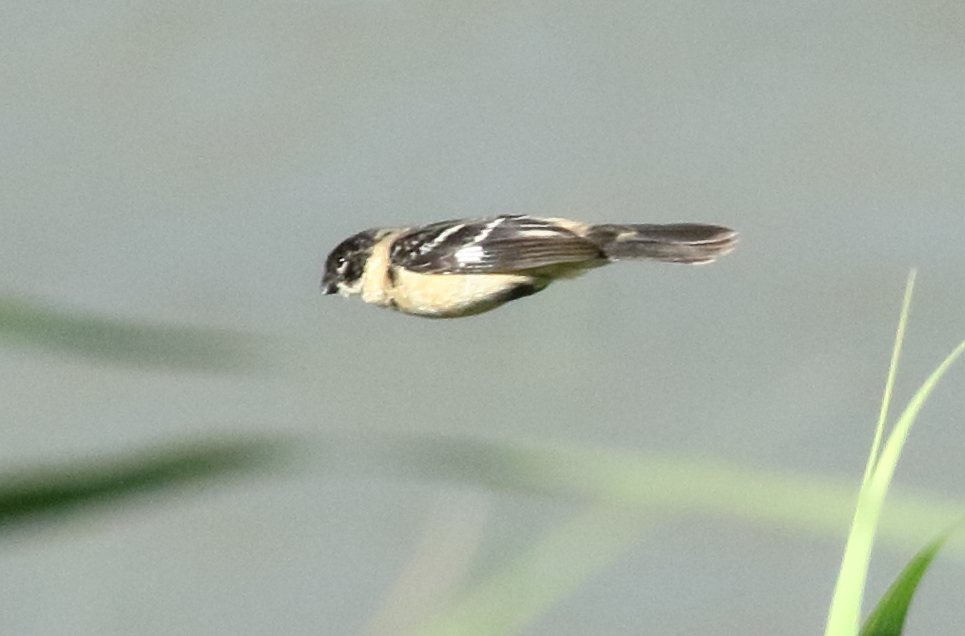
I was just about to get a great photo of this Morelet’s Seedeater when a loud car rumbled up next to me. I accidentally managed this flight shot, though, which is kind of fun.

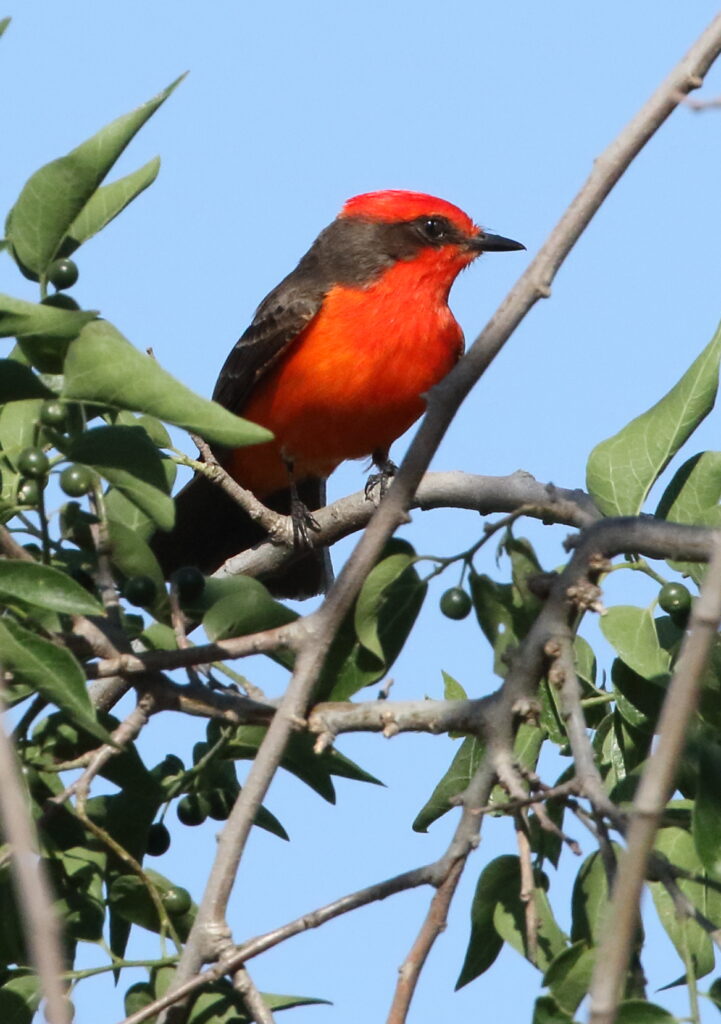
Of course, that didn’t keep me from wanting better looks, and for the next hour or so, I walked various paths and channels. I got to know the bird’s song and it wasn’t long before I was hearing and seeing more of these cute little guys. They were pretty shy, but I managed good looks—and saw some other great birds as well. These included a pair of Black-necked Stilts, a Spotted Sandpiper, a Green Heron, and even a lone Mexican Duck in the middle of the river. Not including the seedeaters, the show stoppers, as usual, were a pair of Vermillion Flycatchers.

Do Vermillion Flycatchers get way more attention than they deserve? Probably. Does anyone ever get tired of looking at them? I doubt it!

After a late breakfast at the French restaurant McDaniels, I decided to hit one more park in Laredo—North Central Park. Remarkably, I had failed to find a Golden-fronted Woodpecker so far on the trip, and though the heat was comin’ on fast, the park had abundant sightings of them. It took only five minutes to hear and then see one of these handsome birds and, walking a couple of miles or so, I also added Great Kiskadees and Bell’s Vireo to my trip list. Then, before I inadvertently wandered toward Mexico again, I turned tail and headed back up I-35 for San Antonio.

Link to my Texas Trip Report: https://ebird.org/tripreport/351263

Total Number of Species for the Trip: 144

My Top 6 Trip Birds:

Least Bittern (see post “Anahuac Lifer Attack”)

Yellow-throated Warbler (see Texas Hill Country post)

Black-capped Vireo (see Texas Hill Country post)

Golden-cheeked Warbler (see Texas Hill Country post)

Morelet’s Seedeater (this post)

Yellow-throated Vireo (see Peveto Woods post)

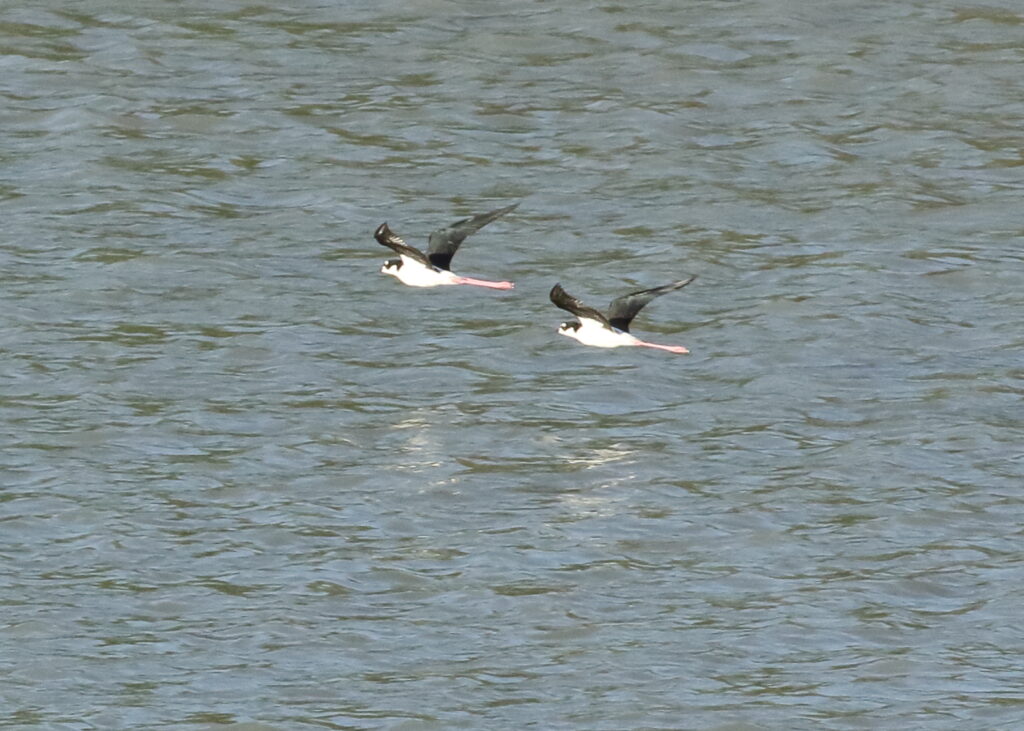
A pair of Black-necked Stilts flying downstream over the Rio Grande.

Birding Ohau: A Hawai’i Report from Roger Kohn

Following Memorial Day, it is fitting that FSB presents a wonderful guest birding post about Hawai’i by Roger Kohn. For many Americans, World War II began in Hawai’i and left few families untouched by the experience. Roger’s dad served in the Navy during the war, and both of my grandfathers (Braden’s great-grandfathers) served in the Pacific. Meanwhile at home, my grandmother and great aunt worked in the huge Pratt & Whitney aircraft engine plant in Kansas City. As we honor all who served, I can’t help wonder how astonished our veterans would be to see peacetime Hawai’i today—a peace won by their commitment, intelligence, and sacrifice.

“I’m just going out there to hang out with my brothers, sip a few local beers, and eat good seafood”, I told Sneed in a February phone call. “Of course I’ll bird some, but it’s not really a birding trip.” I had made plans for what I called The Brother Summit. My California brother and I would go to Honolulu in April and visit our other brother, a Hawai’i resident. “Every trip is a birding trip,” Sneed quipped. I immediately knew he was right.

Our Special Hawai’i Correspondent, Roger Kohn, celebrates a big birding score at a viewpoint on the descent from the Koʻolau mountains.

Although I wanted to see as many birds as possible, I faced some built-in barriers. My brothers are not birders and I would not have a car, so I would have to find creative ways to get to some good birding hotspots. One way was to book a tour with a bird guide. I knew this was my only chance to see two Oahu endemic species (found nowhere else in the world, including other Hawaiian Islands): the Oahu Amakihi and the Oahu Elepaio.

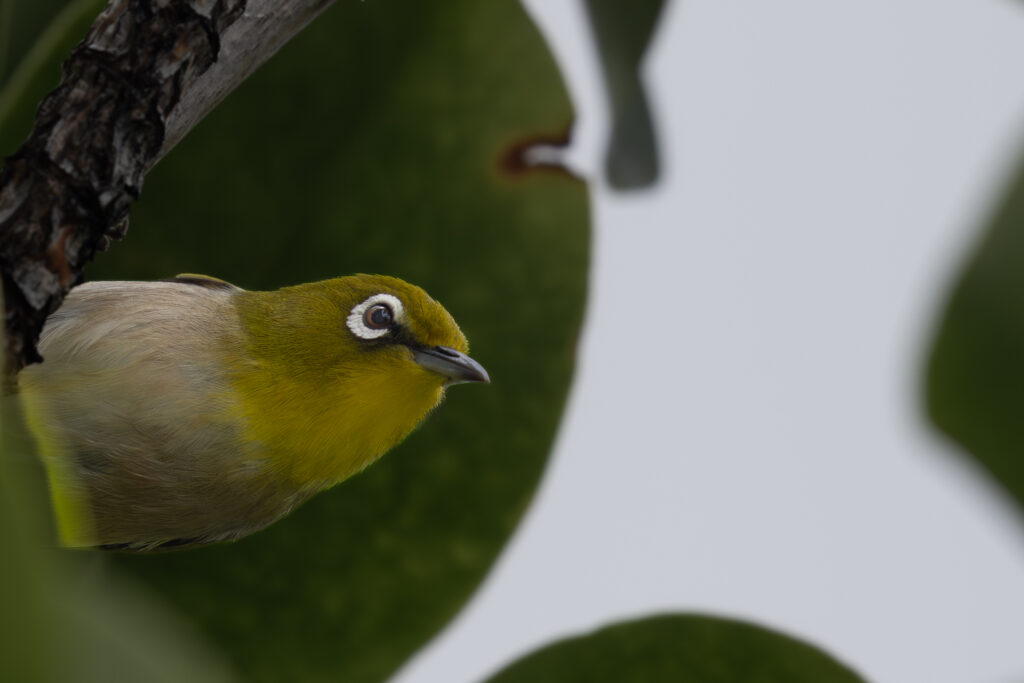
On the first morning of the trip, my guide and I ascended the Koʻolau mountains that tower above Honolulu. Our first stop? A roadside spot for seeing the Oahu Amakihi, a bright yellow honeycreeper and our first Oahu endemic target. As we searched for the Amakihi, we picked up two dove species (Spotted and Zebra, both very common), Red-vented Bulbuls, the omnipresent Red-crested Cardinals and Rose-ringed Parakeets (an invasive species considered a pest in Hawaii due to its impacts on agriculture, but I must confess, fun to see). I also saw my first Warbling White-eye of the trip, a Lifer for me. (For some fun perspective on this and other widely-introduced species, also Sneed’s Japan posts such as “Birding Japan: Tokyo, Part I” and Braden’s and Sneed’s post, “Layover Birding in Amsterdam.”)

I saw this Warbling White-eye near the pool at my brother’s condo tower.

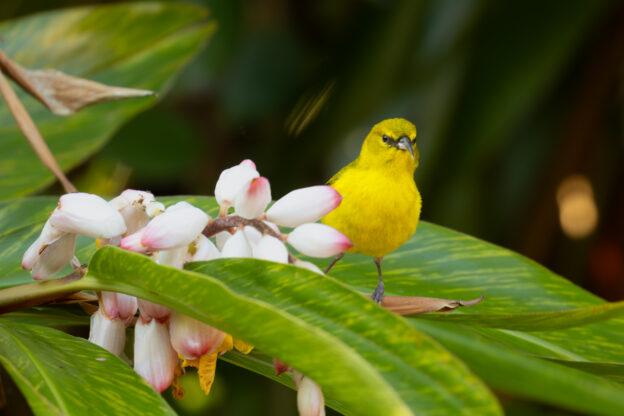
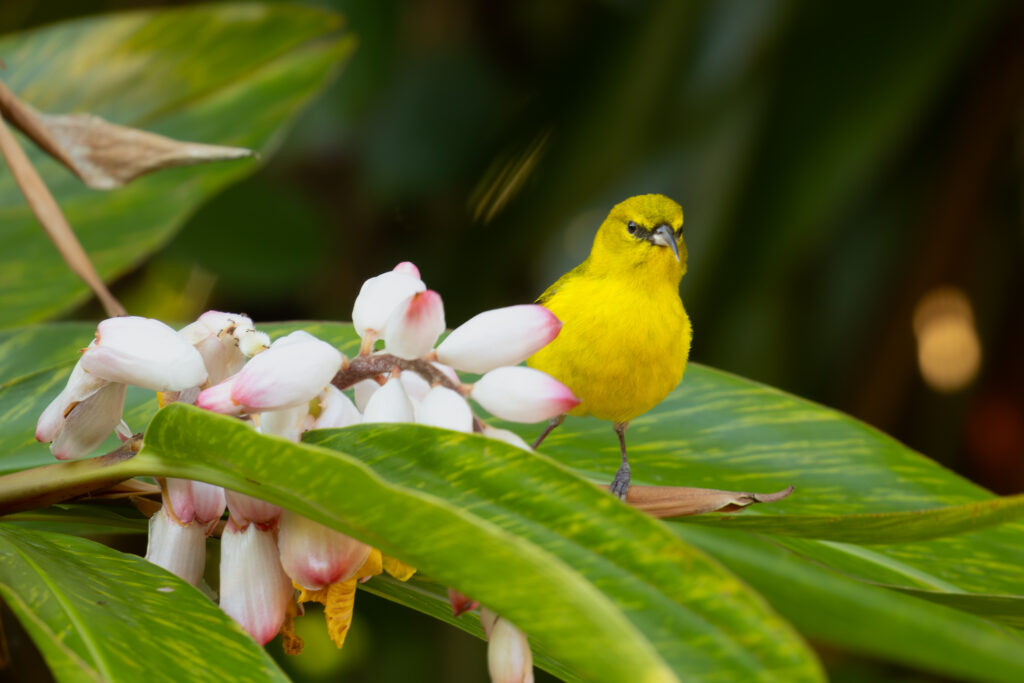
After a while, the guide spotted our target bird feeding in a ginger plant at the edge of the road, and we enjoyed good looks. The Oahu Amikihi is a beautiful bird, and the first honeycreeper species I’ve ever seen. The species is designated “near threatened” in eBird, so I felt very fortunate to see it. With this success under our belts, we headed down from the mountains, pausing at a viewpoint to take in epic views of Honolulu, with its skyscrapers and Diamond Head (the volcanic feature that looms over the city), backed by the deep blue waters of the Pacific.

I loved seeing an Oahu Amakihi, a honeycreeper found on Oahu and nowhere else.

Our second stop was a forest trail with the goal of locating the Oahu Elepaio. This proved difficult, and at one point we had been trying for at least an hour and half without success. Finally, as we made our way back to the trailhead, the guide spotted two or three individuals in bushes near the trail! We did not have good looks at the birds, which moved rapidly and offered us only brief, very filtered views as they flitted among the bushes. This flycatcher species is not much to look at, brown on top and white-ish underneath. But this Oahu endemic is listed as “vulnerable” in eBird, and once again I was grateful for the chance to see a rare Hawai’ian species.

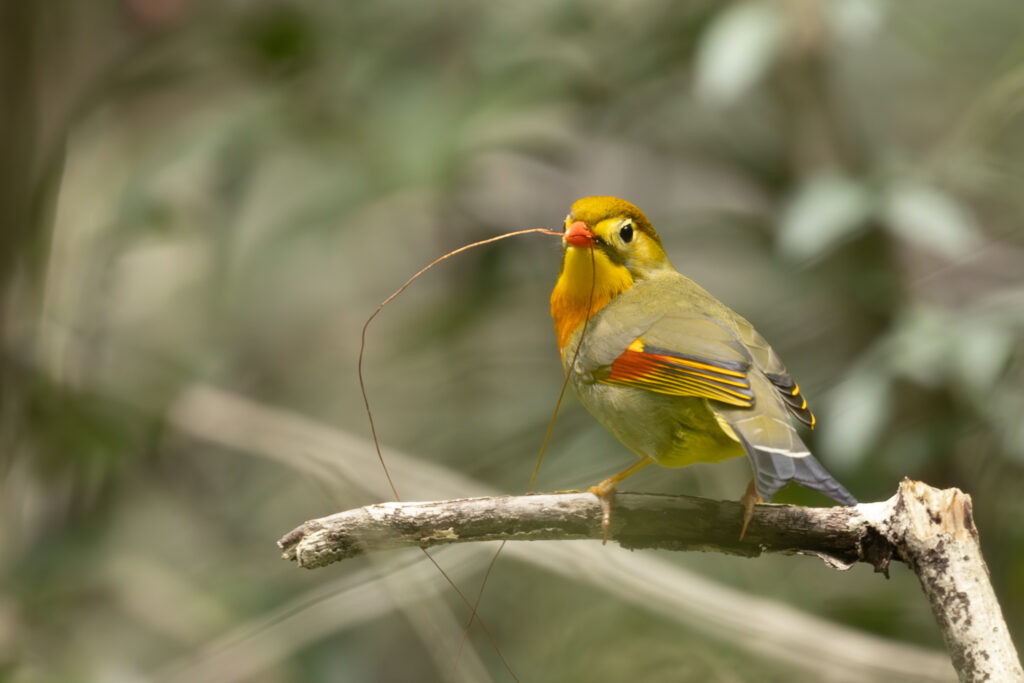
A gorgeous Red-billed Leiothrix allowed me a few good looks in the Makiki Forest Recreation Area. Even though introduced species such as this have had direct and indirect impacts on native Hawai’ian animals and ecosystems, they do offer an unusual opportunity to observe and learn birds from other parts of the world.

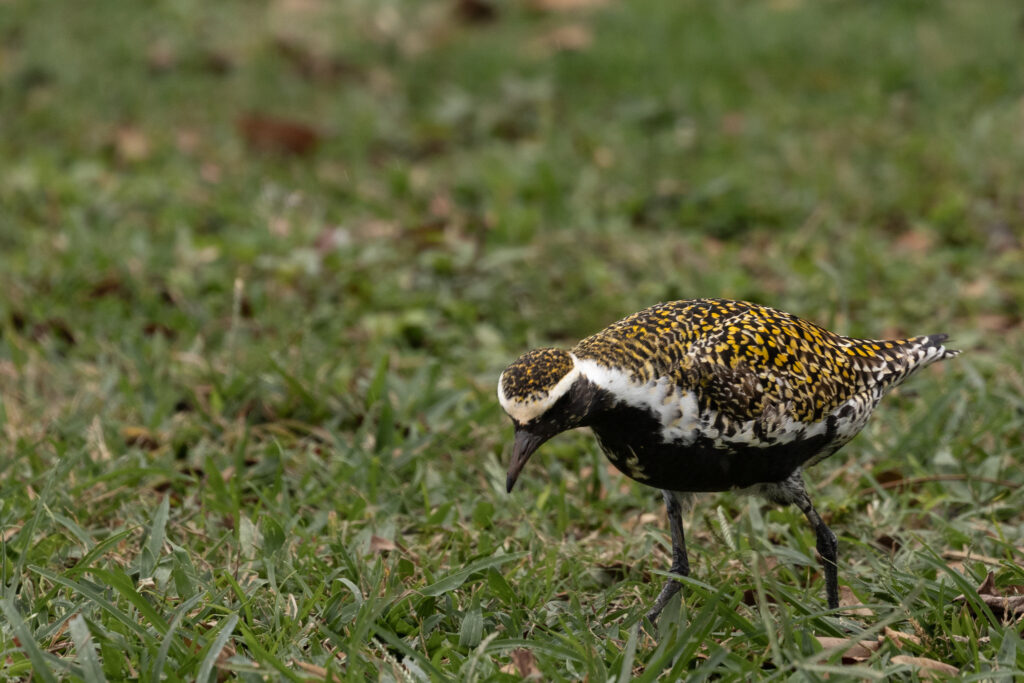
The next day, I got my first good looks at a Pacific Golden Plover on somebody’s front lawn. In breeding plumage, this plover species is quite striking, with a black belly and face, a thick, clean white stripe down the side of the neck, and brown, white, and shiny gold patches on the back. I would subsequently see this species all over town in any available stretch of green space, from small lawns to big city parks. Their migration to Alaska loomed, so my April visit proved ideal.

Resplendent Pacific Golden Plovers were a common sight in any available green space in Honolulu as they prepared to migrate to Alaska.

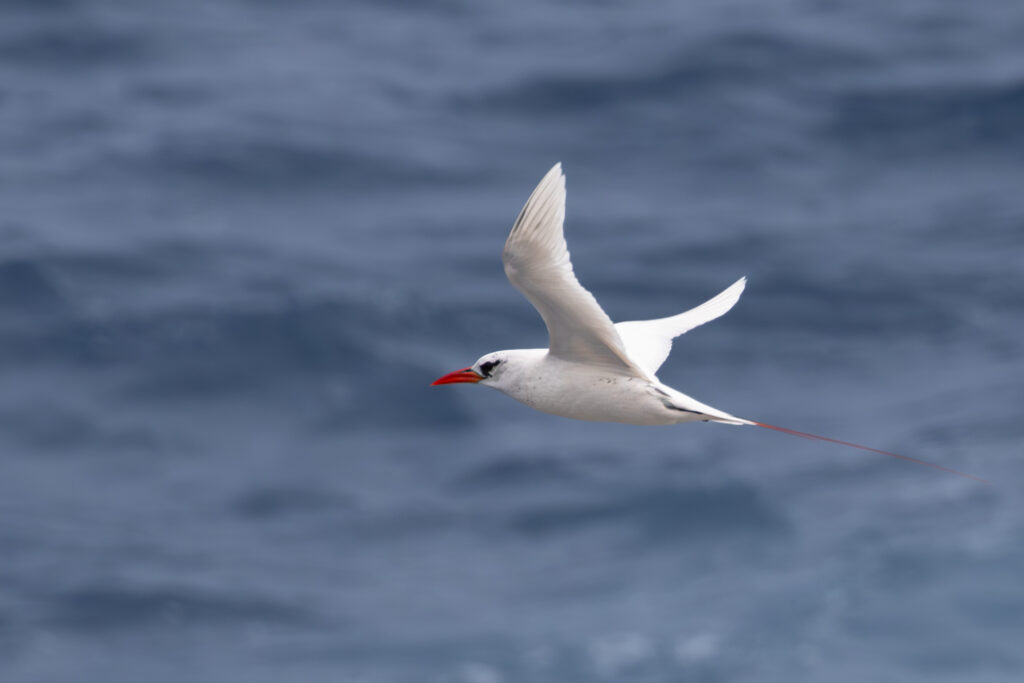
Fast-forward a couple of days, and I was thrilled to get a chance to score some seabird Lifers. I had a big gap in my life list, with no shearwater, tropicbird, noddy, or booby species. However, during my pre-trip study, I came across a hotspot where many of these species could potentially be seen: the Japanese Fishing Shrine, on the southeastern coast of Oahu. This hotspot is literally just a shrine on a hunk of lava rock that juts out into the sea. There is nowhere to walk, so whatever birds I would see would have to come to me. One species that I particularly wanted to find was the Red-tailed Tropicbird, an elegant white seabird with a red bill and long red tail streamers. Not long after I arrived, I got my target, as four or five Red-tailed Tropicbirds traced large circles in the sky. At first, they were pretty far away, but as time went on their flight paths kept coming closer and closer to me and I was able to see them up close and capture great photos. A Lifer, and a spectacular one at that! In between tropicbird sightings, I scanned for other species and managed to pick up a pair of Sooty Terns, another Lifer, flying low over the ocean in the distance. Rendezvousing with my brothers, we headed to Kona Brewing, where they helped me celebrate my seabird treasure with a couple of rounds of delicious seasonal beers at the bar, with sea breezes whooshing around us in a pretty marina setting.

An elegant Red-tailed Tropicbird patrols the southeastern coast of Oahu.

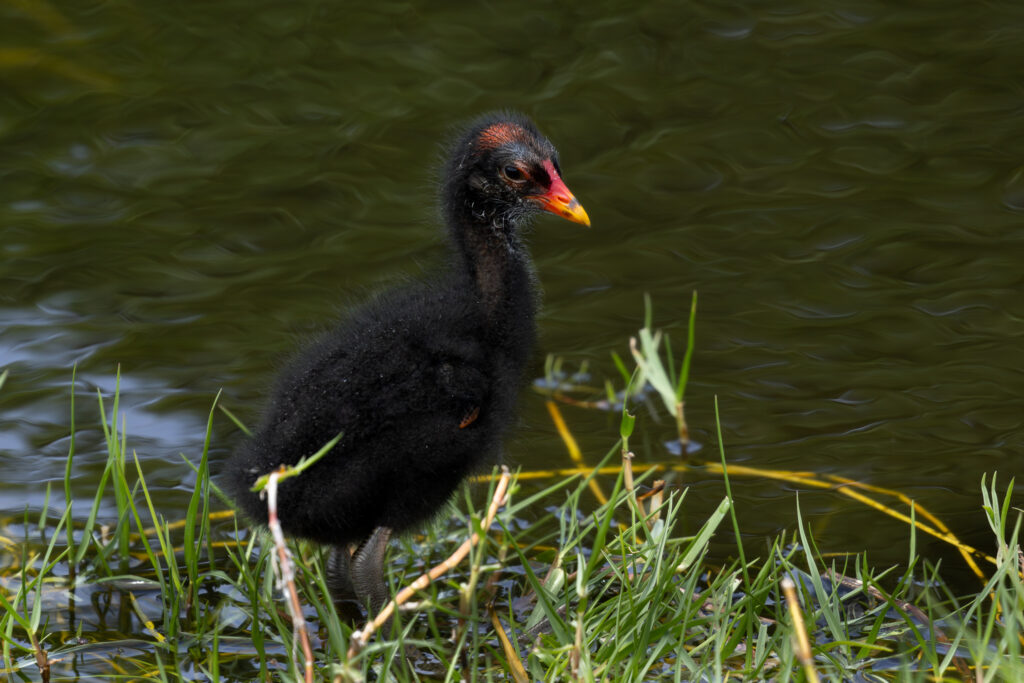
One area that piqued my interest was the wetlands near Kailua, on the southeastern coast. After a pretty, 25-minute drive on the Pali highway and a superb lunch of a grilled mahi mahi sandwich and guilt-free fries (highly recommended!), my brothers dropped me off at Kaha Park. This is the starting point for exploring the Kawainui Marsh Wildlife Sanctuary, a delightful spot graced with abundant water and velvety green mountain views. Right away, I was rewarded with up-close views of Common Gallinules, including a super cute youngster that would melt the heart of even the most jaded observer.

A Common Gallinule chick at the Kawainui Marsh Wildlife Sanctuary. Whoose da cutest bird in the marsh?!

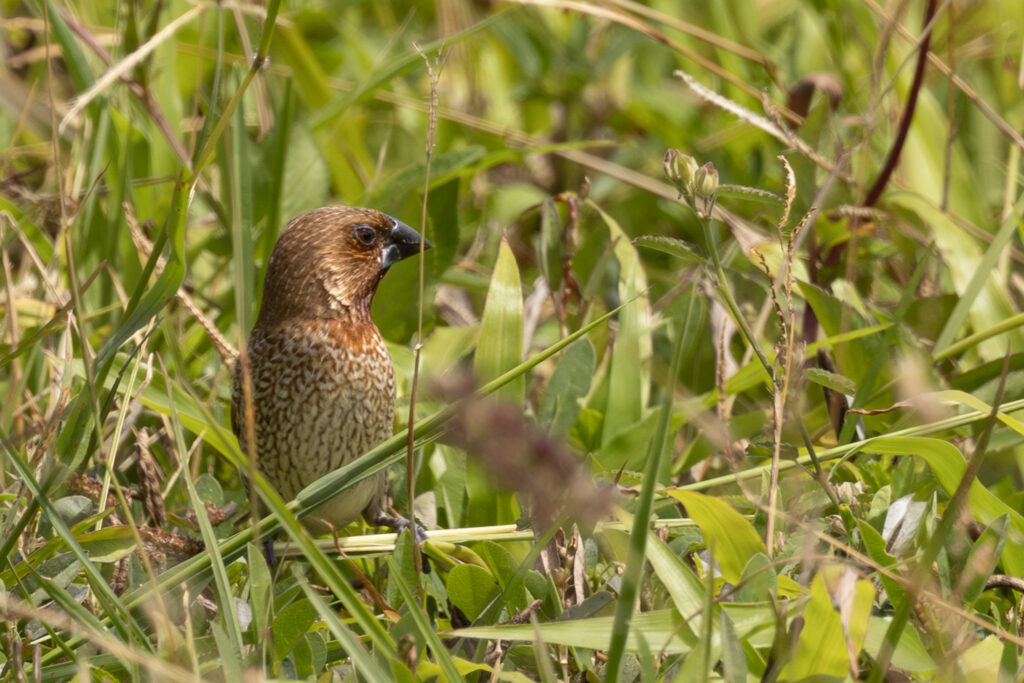
As I continued walking, I got good looks at both bulbul species (Red-whiskered and Red-vented), Common Waxbills, and Northern Cardinals. In the grasses, I saw another Lifer: a Scaly-breasted Munia, a songbird with rich chestnut hues above and an attractive and well-defined scaly pattern on the belly. Another introduced species (native to India and southeast Asia), this was another Lifer for me.

A handsome Scaly-breasted Munia in the grasses on my wetlands exploration.

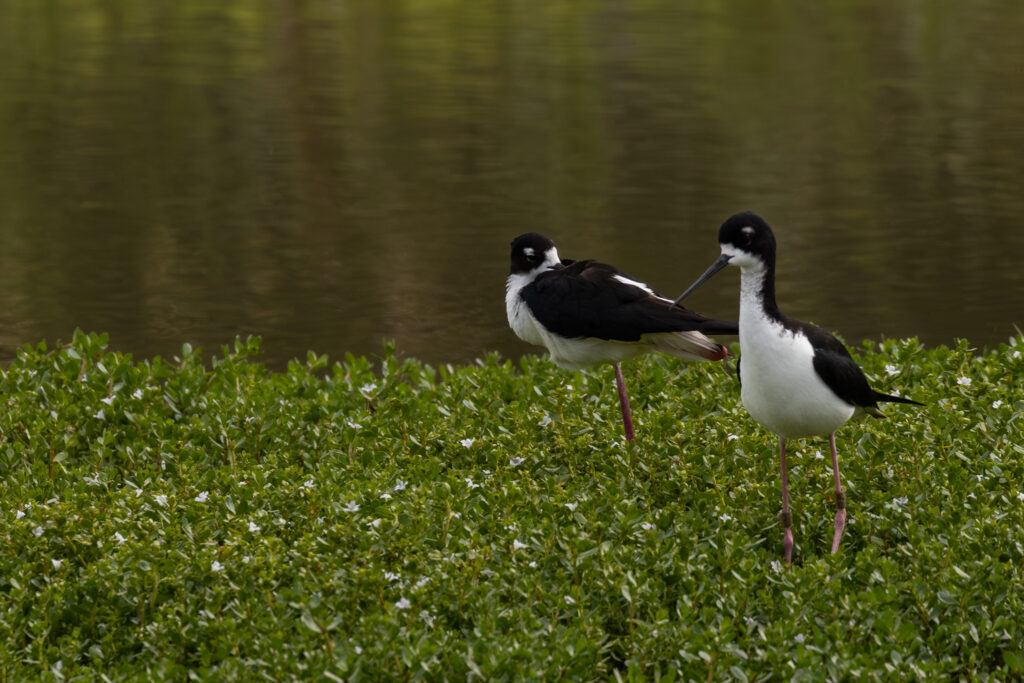
As I returned to the trailhead, someone pointed out a Black-crowned Night Heron, which I had missed as it stood as still as a statue in the water a mere 50 feet away from me. While I waited to be picked up, I scored yet another Lifer, Java Sparrows (which are actually finches, so I wonder what genius named them Sparrows?), which were foraging in a grassy field nearby. In an hour and a half, I had picked up three Lifers, which I celebrated with my brothers at Lanikai Brewing. The parking lot for the brewery faces a pretty stretch of Hamakua Marsh, where I was delighted to pick up another Lifer, Hawaiian Coot, and see Black-necked Stilts for the only time on the trip. Bonus brewery birding, woohoo!

Finding Black-necked Stilts in Hamakua Marsh right behind Lanikai Brewing was a serendipitous event.

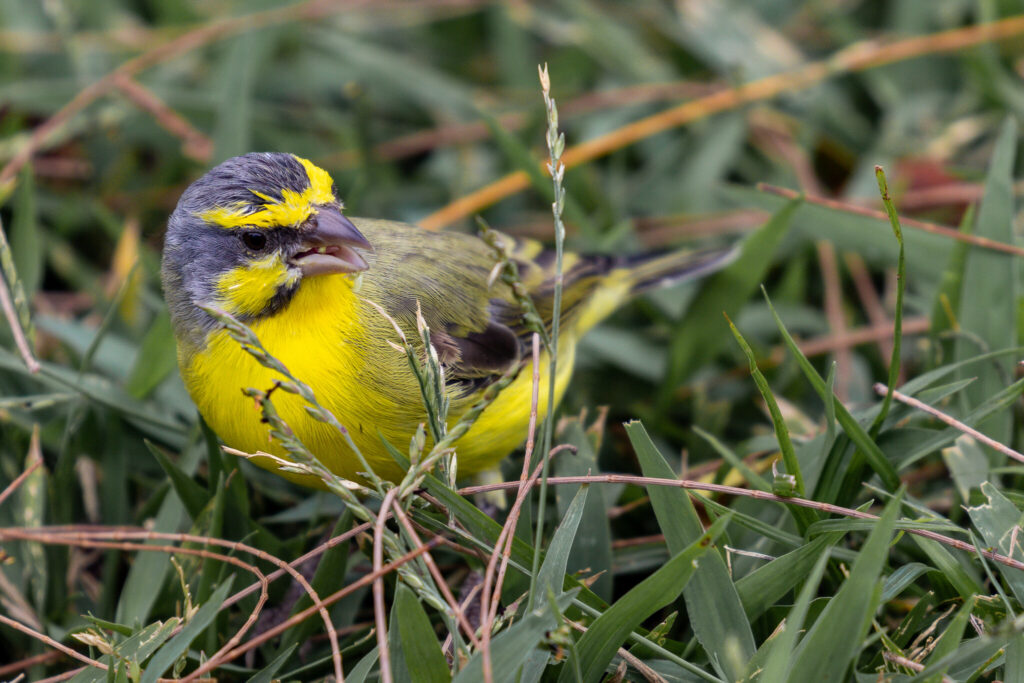
Another trip highlight was finding a small flock of Yellow-fronted Canaries, a boldly patterned bright yellow finch native to Africa, in a waterfront park. I had assumed I’d have to head up into the mountains or to some specific hotspot to find this species. Yet here they were, busily calling and feeding in a park amidst the hubbub of Waikiki. I also got brief but spectacular views of a Red-billed Leiothrix in all its multicolored glory, which I had barely seen on the guided tour, in the Makiki Forest Recreation Area. Bird of the Trip honors is a tough call, but I’d say it’s a toss-up between this species and the Red-tailed Tropicbird.

A Yellow-fronted Canary poses for me at Fort Derussy park in Waikiki.

As of mid-May, according to eBird, 108 species have been reported in Honolulu County (encompassing the entire island of Oahu) so far this year. In a nine-day trip in which birding was only one of several priorities, I managed to see 31 species. Seventeen of those were Lifers, which far exceeded my expectations. With determination and a little help from my brothers, I had an excellent birding trip to Honolulu. Indeed, in the words of a wise blogger I know, every trip is a birding trip.

Our Bend, Oregon-based correspondent, Roger Kohn traces his birding obsession to a November 2016 Sneed visit to the Bay Area and considers Sneed his birding mentor. Though grateful for that, he sure wishes Sneed would increase his consumption and appreciation of craft beer. (Editor’s Note: I’m not sure what Roger is complaining about. I have been known to drink up to two beers a month!)

For more on birding Hawai’i, see Braden’s post “Hawai’i: The International Jungle.”

All photos copyright Roger Kohn.