This summer’s been a busy one for the FatherSonBirding team. I (Sneed) have been buried under a book revision for my next book, Birding the Great Wide Open, due out from Mountaineers Books in Fall, 2027. Meanwhile, Braden has been working hard at an internship with Montana Outdoors magazine while also embarking on his very first jobs as a professional bird guide! (If you’re interested in engaging his services, you can contact him directly at bgcoll2121@gmail.com.) All of this made us especially anxious to just get out and see what the birds are doing, especially down in sagebrush country, and especially before some of the early migrants start to depart. Here is Braden’s excellent account of our intense, two-day adventure!
July marks a time when Montana birding calms down a bit. March brings with it the first waves of waterfowl migration, and after that, each week brings new birds arriving on territory. Birdsong ramps up exponentially in April and May, and after migration ends in the first week of June, there are plenty of birds to catch up with on their traditional breeding haunts. By July, though, the birds begin to get quieter, with many of them settling down onto nests and trying to attract little attention to themselves. Sure, early shorebird migrants start to trickle in, but the latter half of the month, especially, feels like a break. This is compounded by the ever-hotter summers we’ve been experiencing: in recent years, July has brought uncomfortably high temperatures that make being out past 11 a.m. not fun.
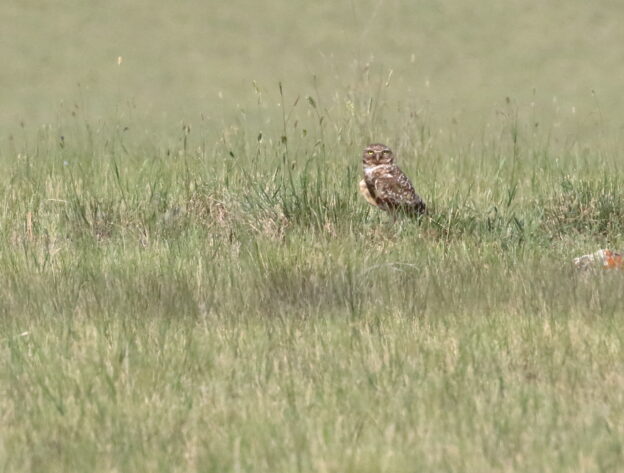
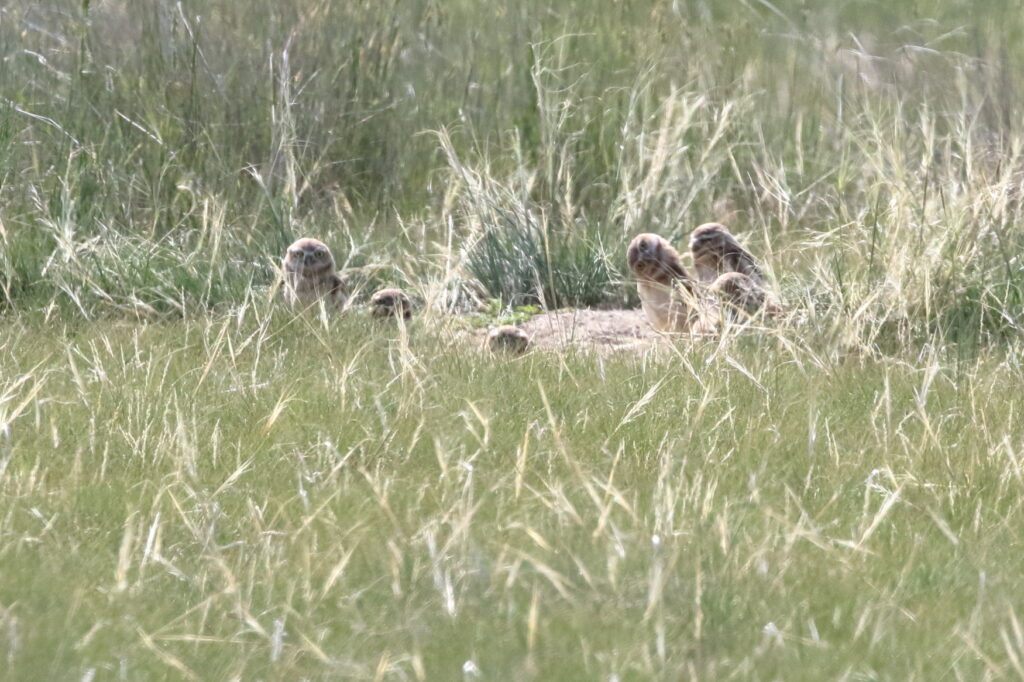
And yet, the last few years have proven to me and my dad that July should still be taken seriously as far as birding goes. There may be no better example of that than the ten (!) Burrowing Owls we found on Bench Road last week.
One reason my dad wanted to take a mid-July trip is because, well, June had been crazy and autumn was ramping up to be crazier still, meaning that July, the last full month before the bulk of our breeding birds depart, would have to be our chance to head out east. While I had visited many parts of the state earlier in summer, showing my east coast friends around, my dad hadn’t gotten a chance to visit the prairie or the sagebrush, so his target list covered many birds found in those habitats: Sagebrush Sparrow, Lark Bunting, Ferruginous Hawk, Sage Thrasher. And of course, Burrowing Owl—often a tricky target in Montana, but reliably seen on a road through a dry swath of agricultural land south of the town of Three Forks. So, our first stop on our eventual loop through the southwestern corner of the state took us there.
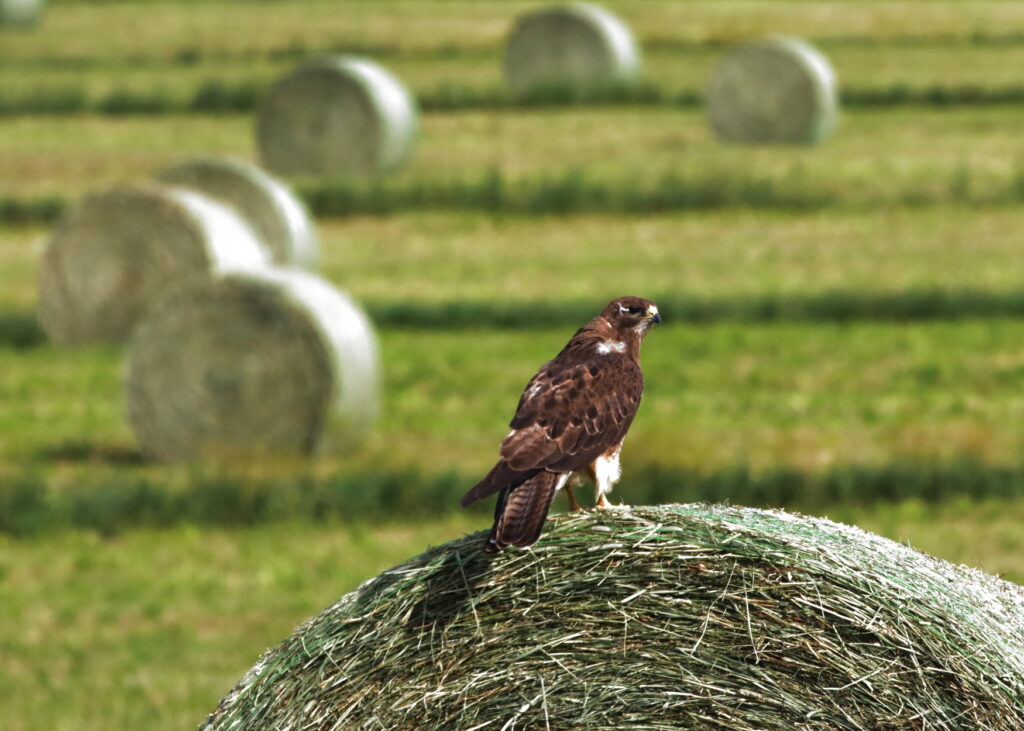
Before even arriving at the Burrowing Owl spot, we checked out the freshwater marsh at the entrance to Bench Road and glimpsed a Short-eared Owl relocating from one patch of cattails to another. What a great way to start the trip! As we continued, my dad pointed out a pair of hawks perched on nearby hay bales—Swainson’s. “There’s more up ahead!” I pointed through the windshield at four more riding thermals above us. Either this was a family group, or these raptors were beginning to think about heading south.
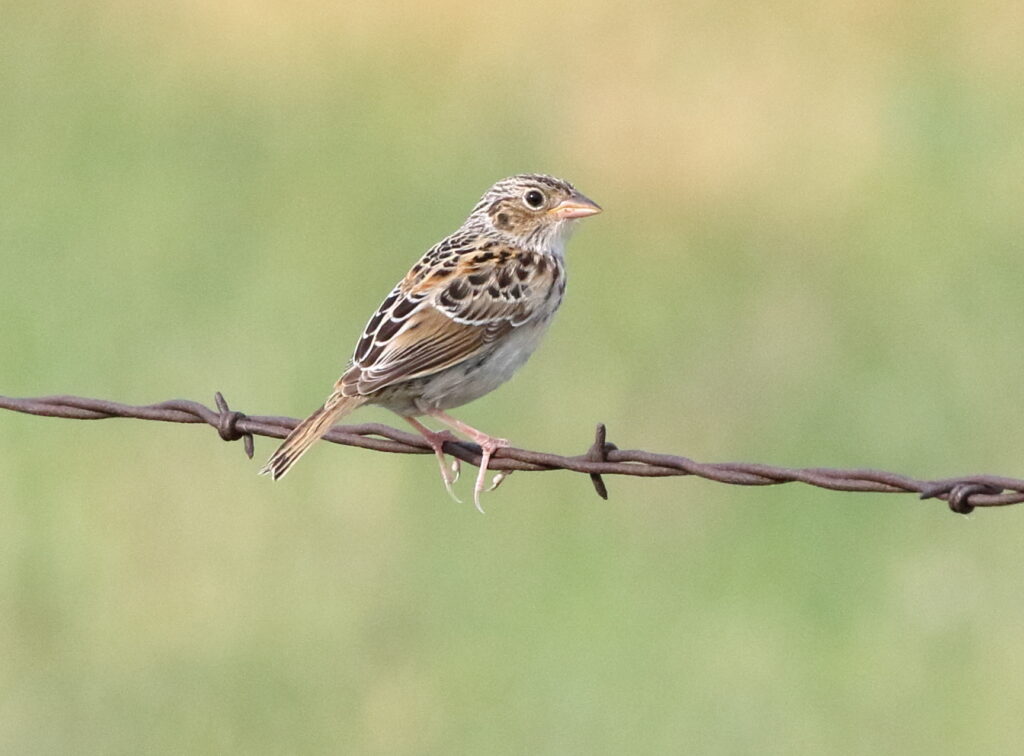
Our car flushed a variety of sparrows from the roadside as we drove, and we stopped periodically to get looks and photos of them. We were delighted to find that the majority of them were Grasshopper Sparrows! Many were adults, but a big chunk of them were babies, too, in a beautiful plumage we’d never seen before. Who knew that these tiny sparrows go through a life stage where their feathers resemble the spotted fur of a leopard! We also got great views at Lark Buntings, never a guarantee this far west, in a small group hopping from fence post to fence post.
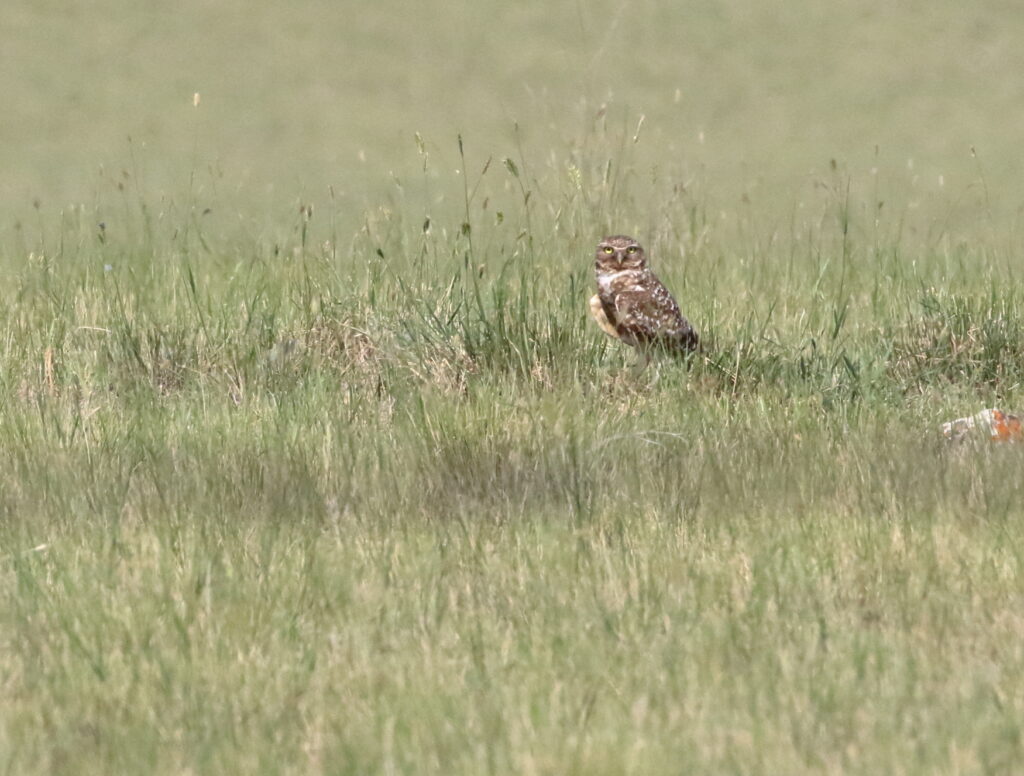
We drove all the way out to a distant homestead and got out to scope a mound of dirt that my dad was sure would hold a Burrowing Owl. No luck. On our way back to Three Forks, though, I yelled “Stop!” and my dad screeched the Toyota to a halt. Out in a random field stood not one, not two, but SIX Burrowing Owls, all glaring directly at us from their mound (as these owls tend to do). We got out to scope them, noting that at least five were young, including one that fearlessly chased grasshoppers around in the grass right in front of us. Happy with our haul, we continued backtracking, running into a woman who pointed out another Burrowing Owl and told us the location of two more. By the time we got back to the highway, we’d seen ten in total—by far the most either of us had ever witnessed in a day let alone one spot!
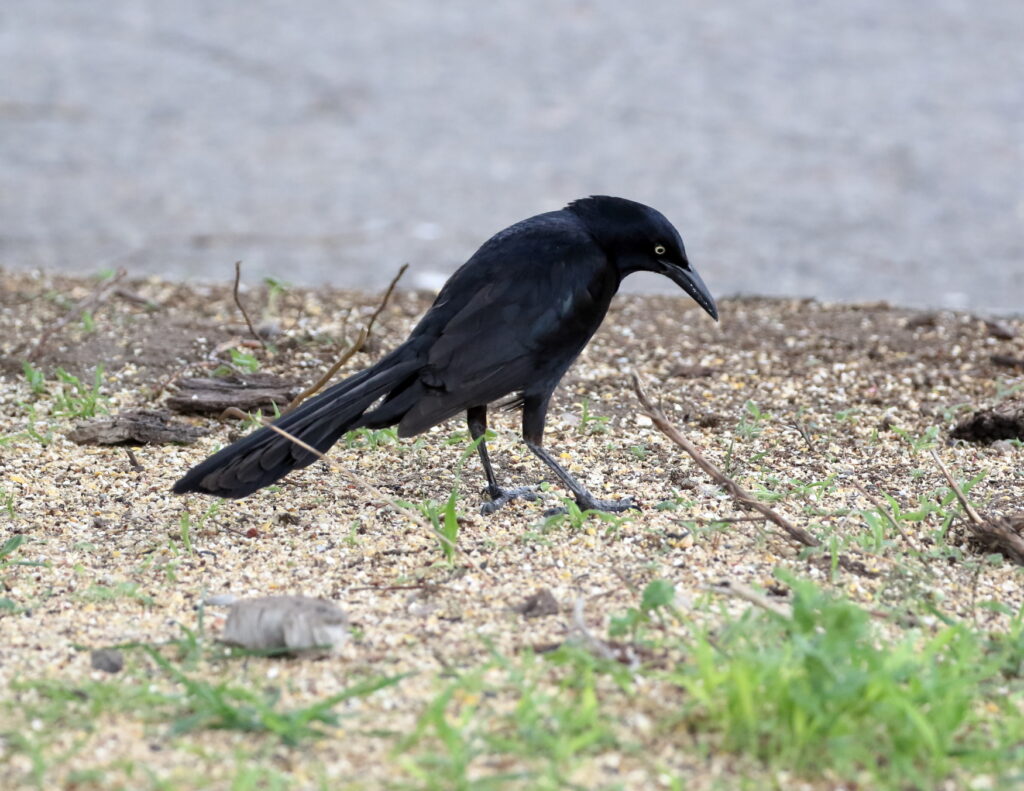
From Three Forks, we headed south for the sagebrush country of Beaverhead County. Along the way we pulled over a few times to check out wetlands, raptors on telephone poles, and even picked up a Great-tailed Grackle in the Safeway parking lot in Dillon. This species used to be quite rare in our state but has been expanding in recent years, and a population has established itself in town.
We met up with Jeff Marks at a local bar to watch part of a World Cup game, then continued on to Clark Canyon Reservoir to search for shorebirds before heading back to the sagebrush for the evening. After scouring the entire northern side of the reservoir we finally located one migratory shorebird—a Long-billed Dowitcher—as well as a few breeding shorbs like Willets, Killdeer and Spotted Sandpipers.
We saw our first Prairie Falcon of the year on a pole along Bannack Bench Road, a bird I’d been pessimistic about finding on the trip, then continued along a dirt two-track through the sagebrush. Though there were plenty of Brewer’s Sparrows and Sage Thrashers about, we couldn’t spot any Sagebrush Sparrows, and Nate Kohler, Jeff’s field assistant, hypothesized that they may already had left. These are one of the first passerines to arrive every year, so an early departure date would make sense.
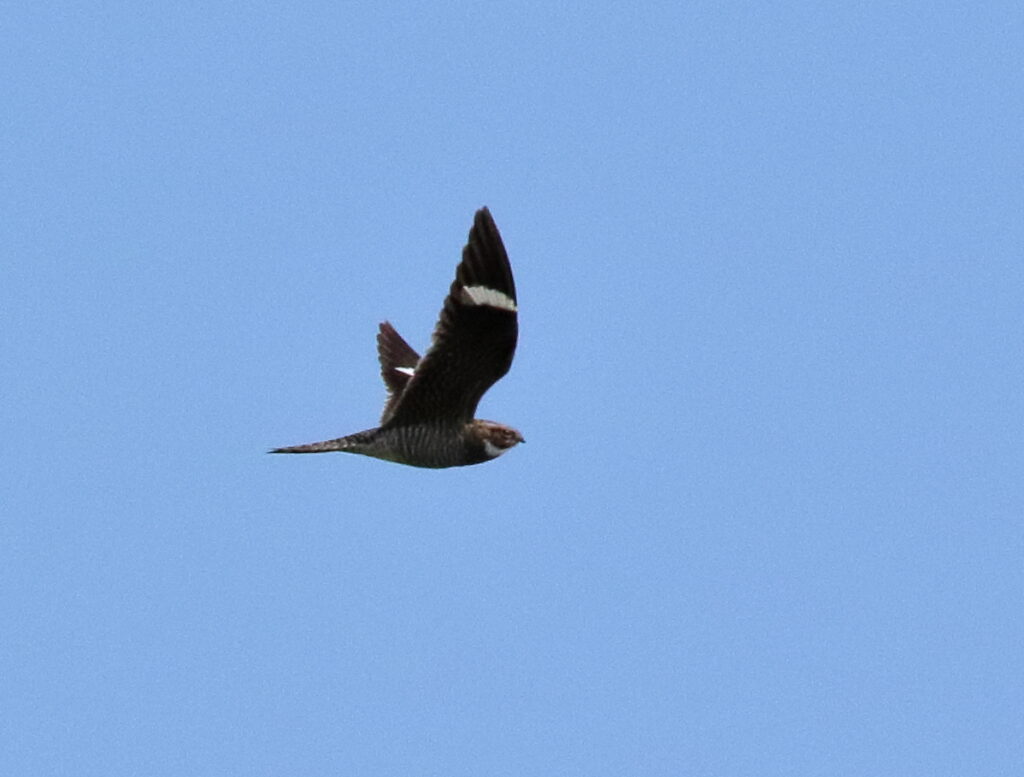
We met up with Jeff Marks and Nate Kohler at the comfortable cabin they rent every year and they showed us where we would be sleeping—a rustic room with bunk beds, a kitchen and a couch. I’d never met Jeff before today and hadn’t seen Nate since December, so it was really good to talk to them, discussing all manner of things from birds and habitats to life adventures and politics. It was also my first time at “Flycatcher Camp”, though my dad had been a couple of times, and I was excited to see the work Jeff and Nate were doing with Gray Flycatchers—one of Montana’s only GRFL populations. After dinner and card games we all started getting ready for bed, and my dad and I watched the sunset from the porch. Montana’s sunsets never cease to amaze me, and this one was particularly special—we got to watch the resident nighthawks take off from their not-so-secret day roosts (open fence posts) as Wilson’s Snipes displayed all around us. A couple Soras sounded off from the creek nearby, and we even heard distant Sandhill Cranes.
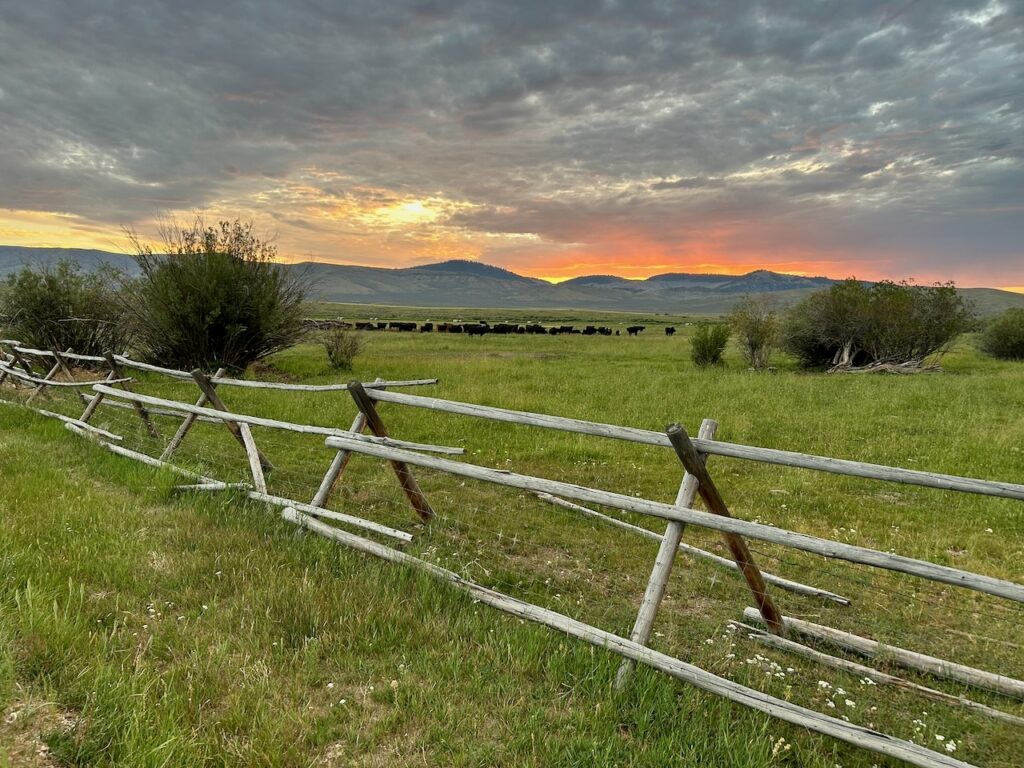
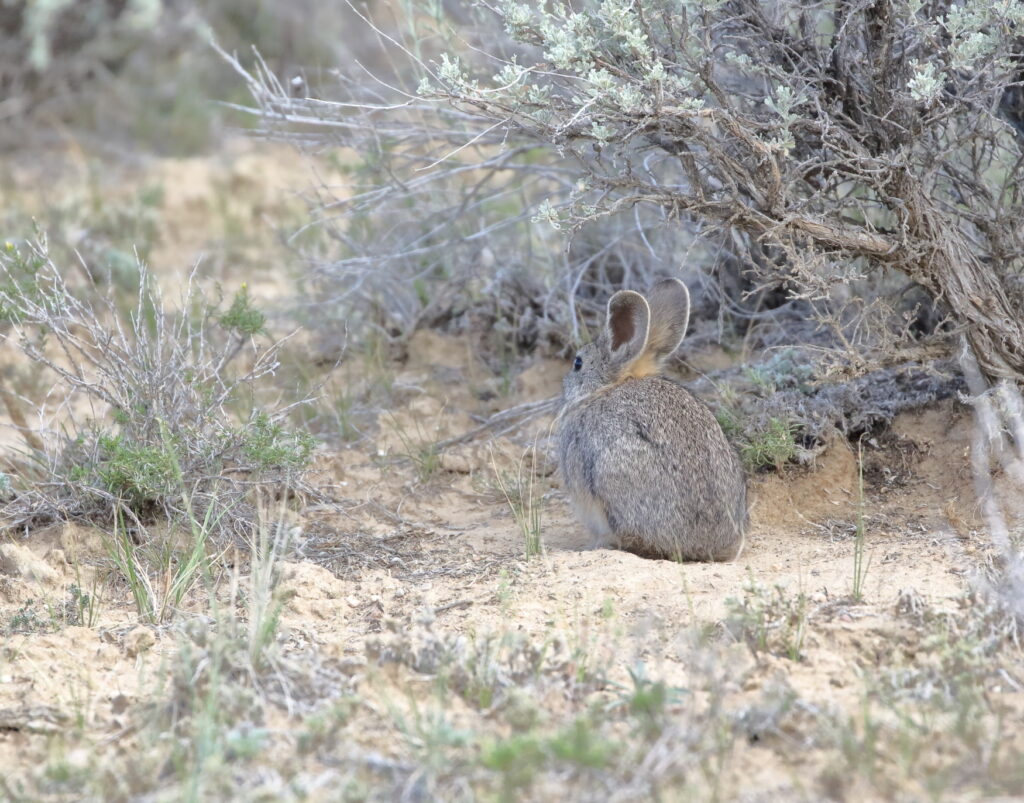
The next morning we rose early and packed up the car. Jeff rode with us while Nate followed with Jeff’s girlfriend in their truck. The road had some fairly deep ruts, but my dad expertly handled them, and soon we were all out in the sagebrush, looking for Gray Flycatchers. Our first surprise of the morning came not from a bird, but from a mammal—a Pygmy Rabbit! My dad and I had never seen one before, and we all enjoyed watching it race through the sage ahead of us. This species is fairly widespread throughout the Interior West, but has a small population in Montana and is of special conservation concern. Thankfully, it gave us great looks!
The flycatchers weren’t hard to find. Soon, we had two males singing on either side of us, returning over and over to the same perches which allowed us great views. Jeff and Nate really wanted to find the nest of the female that lived here, so we all split up, bushwhacking around. A summer storm had killed all of the flycatcher nestlings in June, but many birds had re-nested, and they believed that this female was one of those. Jeff showed me her old nest, not far off the trail in a large sagebrush near the bottom of a wash—a prime nesting habitat for the species, which avoids building nests out in the driest, flattest parts of the sagebrush country. Nate also showed me a Brewer’s Sparrow nest and a double-decker Sage Thrasher nest, one built right on top of the other. (For more on Jeff’s and Nate’s work, check out last year’s post “Gray Flycatcher Science”.)
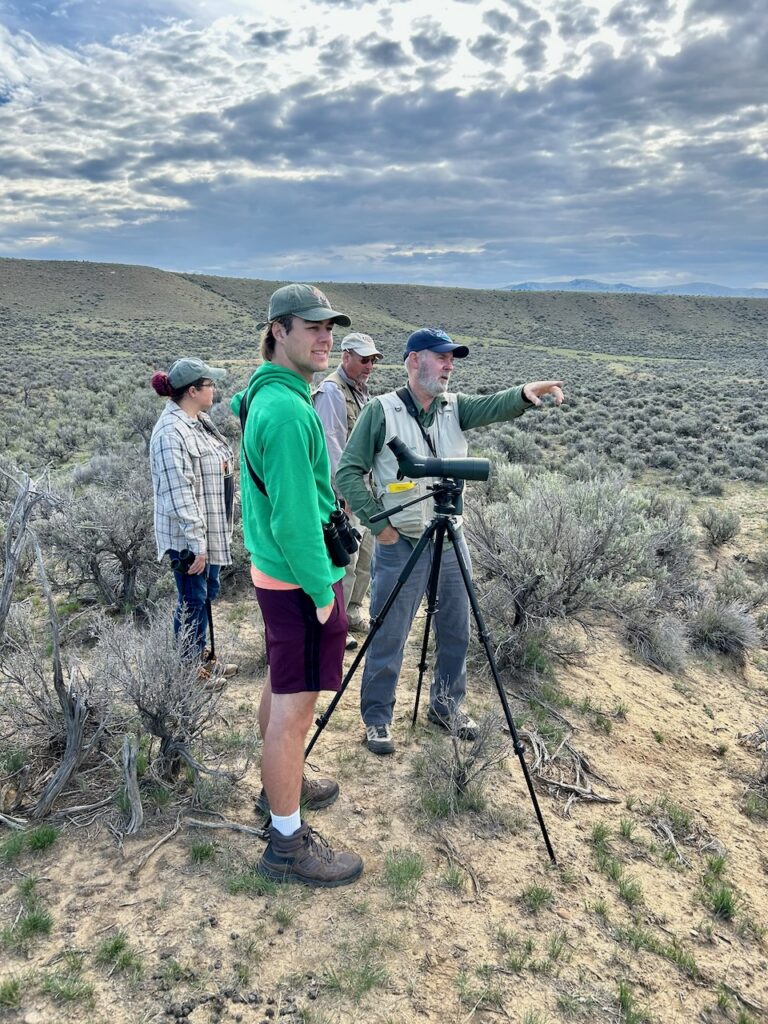
“There were a ton of thrashers here last week, so we know these ones fledged. It’s been a great year for thrashers,” he said.
It was always good to hear that a species was having a successful year, with so many birds declining year by year.
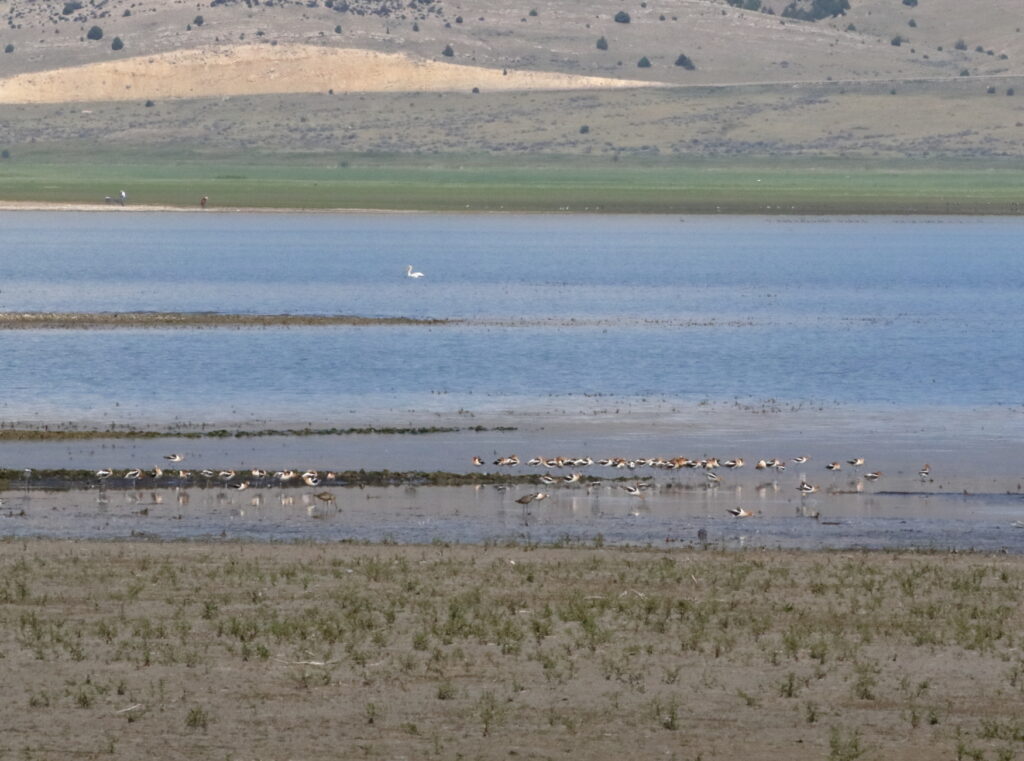
We couldn’t locate the flycatcher nest within an hour or so of searching, and my dad and I had a few more places we wanted to bird on the way home, so we said goodbye to Jeff, Nate and Amy and headed back to Clark Canyon Reservoir, visions of shorebirds dancing in our heads. Again, no luck with any Arctic shorebirds, but we did find nearly 200 American Avocets mixed in with some other fun breeding species!
After lunch at a taco truck in Dillon, we stopped along Birch Creek Road on our way back north, the furthest west location for Thick-billed Longspurs in the state. Nate Kohler actually passed us on his way home, and spotted a single longspur on a telephone wire above the road. As we got out to look at it, a snowy-white raptor cruised overhead: a Ferruginous Hawk, one of my dad’s final remaining targets for the trip! We high-fived, ecstatic at our good luck, then continued on our way. After one more quick stop in Madison County, where we picked up a calling Veery, we drove the rest of the way home. What a great midsummer trip!
To learn more about Jeff’s and Nate’s scientific work with Gray Flycatchers, or make a donation, check out the website of Montana Bird Advocacy at https://www.montanabirdadvocacy.org/.