
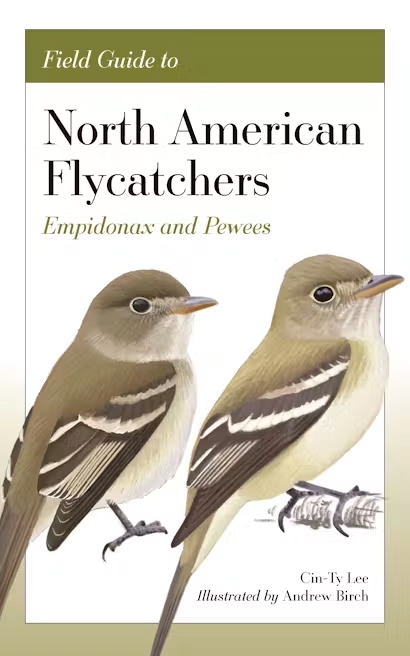
Field guides are an essential part of improving our bird identification skills, and today Braden reviews an outstanding guide to what may be North America’s toughest group of birds. Enjoy, and remember that FSB is written by REAL PEOPLE. Please continue to support the many people who create meaningful—and real—content in our world.
I’ve been birding a lot this fall, and consider myself pretty adept at identifying any bird that lands in front of me. Or at least that would be the case if not for one particularly notorious group of songbirds: the Empidonax flycatchers (or “empids” for short). During spring and summer, these extremely lookalike birds will often sing or call, aiding in their identification. In fall, though, the birds are mostly silent, and I’ll often shrug at the sky when I see one. “Who knows what that could be?”
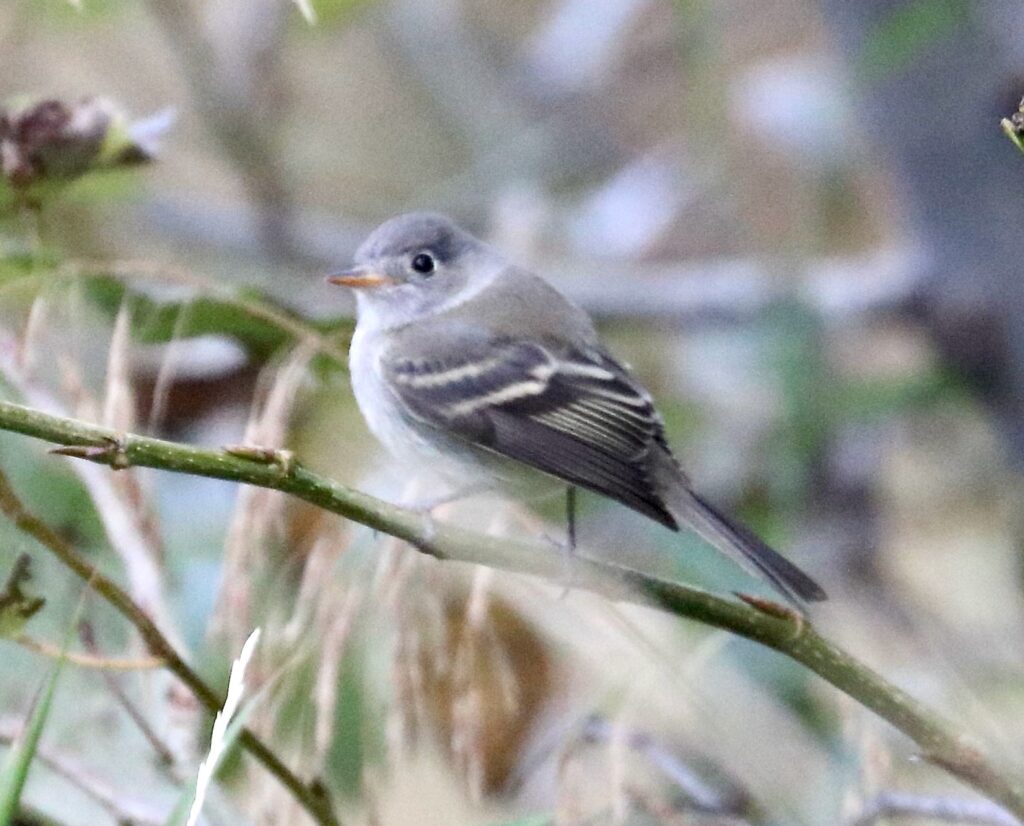
In 2026, though, something changed: my dad received a review copy of Cin-Ty Lee’s Field Guide to North American Flycatchers—Empidonax and Pewees (Princeton University Press). So on September 14th, when an empid landed in front of me at a local favorite birding spot, instead of shrugging, I snapped as many photos as I could. When I returned home later that morning, I uploaded the photos to my computer, then whipped out the flycatcher guide. I knew already that my bird wasn’t a Willow or Western Flycatcher, and that it fell firmly into a particularly tough group of similar birds that included Dusky, Hammond’s and Least Flycatchers. The first half of the guide gave a page to each major field mark, including lower mandible color, primary projection and wing panel contrast, and I noted what my bird showed, then cross-referenced that with the guide. Most of the field marks I was noticing on the empid I’d photographed were consistent with what the guide showed for Dusky Flycatcher, so I settled on that identification for the bird. Thanks to the flycatcher guide, I’d successfully identified a silent Empidonax!
Field Guide to North American Flycatchers almost makes the identification of this incredibly tough group of birds seem easy, with its intuitive layout, detailed illustrations (kudos to Andrew Birch!) and the wealth of information packed into its slim volume. It focuses on a “holistic approach” to flycatcher identification, emphasizing that observers should take into account as many visual field marks as possible on each flycatcher they see, as well as behavior, molt, vocalizations, habitat (including microhabitat selected during migration), distribution, and time of year. Each of these factors gets its own page or two of detailed analysis, following an in-depth review of every single visual field mark that birders can use to identify these birds, and which species show them.
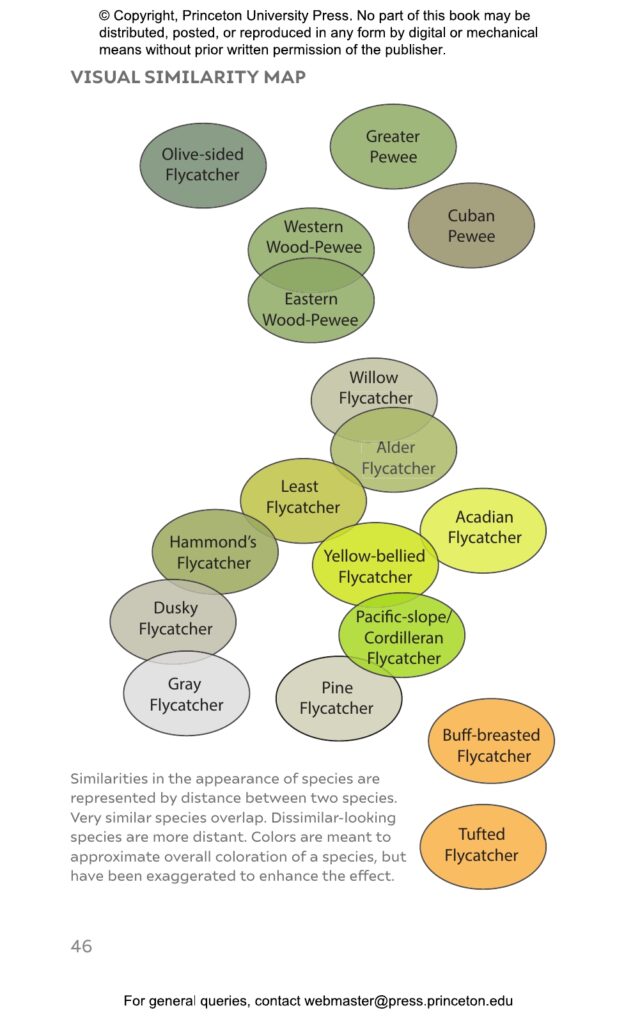
For example, the first field mark Lee and Birch tackle is “crown shape”, which they divide into four categories: round, flattish, peaked and crested. Illustrations are paired with a list of species that can show each specific crown shape, and this is repeated for every major field mark. At the end of this section, for convenience, the book provides a “field mark matrix” that birders can quickly reference while they’re out in the field. “Oh, my bird has a round crown, medium forehead angle, short bill, medium tail, short primary projection and strong wing panel contrast? It’s probably a Least Flycatcher!” An easily-understandable visual similarity map is also provided showing which species are the most and least similar to each other.

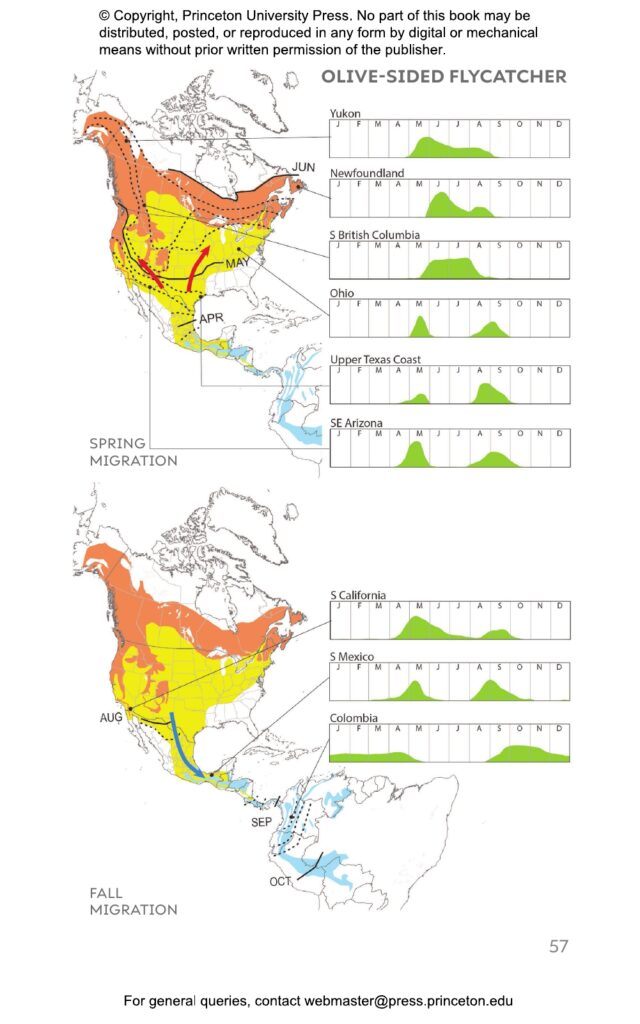
The latter half of the book is devoted to species accounts. Every Empidonax and Contopus (the pewees), plus Tufted Flycatcher, is covered. Each account gives readers general identification tips, and information on voice, range and habitat, and similar species that can be confused with it. Multiple illustrations are provided of each bird from different angles, with key field marks labelled, and often illustrations of similar species are placed right next to them for direct comparison. Spectrograms, or visual representations of what the birds sound like, are also included, as well as beautiful maps that show the route the birds take during spring and fall migration and what time they arrive and depart in each part of their range.
Especially similar species are lumped together, which includes the pewees and the Traill’s Flycatcher complex (which is composed of Willow and Alder Flycatcher), and the last section of the book is completely devoted to comparing and identifying that group I mentioned at the beginning of this post: Dusky, Hammond’s, Least and Gray Flycatchers.
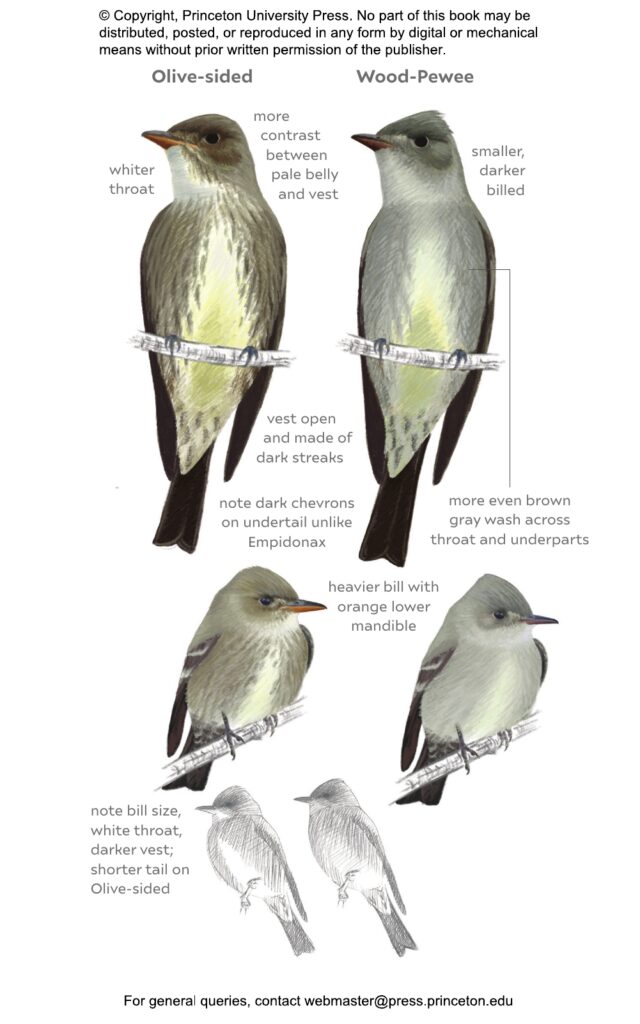
The way that the author and illustrator present such a large amount of complex information in such a simple, easy-to-understand way is impressive, and it brings hope to many birders like me who used to look at empids and throw their hands up in despair. Don’t just take it from me! I recently visited a bird banding station at MPG Ranch, a conservation-oriented property south of Missoula, where the biologists and field techs had a well-used copy of the book on the table for all to see. Even the pros are using it! The only gripe I have with the book is a small one—it could have used one final proofread before going to press, as there are a fair number of typos and small errors. It isn’t enough to inhibit using it, though, and I would recommend anyone interested in flycatchers to buy this book (and its companion focused on Myiarchus flycatchers and kingbirds!). I’ll leave you with a quote from the intro of the book:
“Of course, not all flycatchers will be identifiable, but we hope this guide will help you see and hear all birds in a new way and make you a better birder.”
To order Field Guide to North American Flycatchers—Empidonax and Pewees CLICK HERE. Also consider the author’s other outstanding flycatcher guide, Field Guide to North American Flycatchers—Kingbirds and Myiarchus.
Review copy and images courtesy of Princeton University Press. Except for noted images, content copyright FatherSonBirding.com.