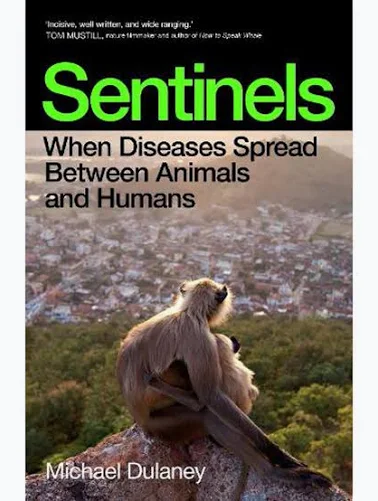
As we enter the holiday season, we find ourselves with a bit less time to blog. Braden is staying busy teaching birding classes, writing for Montana Outdoors and BWD magazines, and birding like crazy. I have also stayed busy pursuing a new college degree, finishing up editing my 2027 book Birding the Great Wide Open, and squeezing in birding whenever I can. Today, though, we present a review of what may be one of the most important books I’ve read in recent years. It’s one I hope you will pick up for yourself or other birders in your life as it has huge implications for the future of birds—and humans. Enjoy!
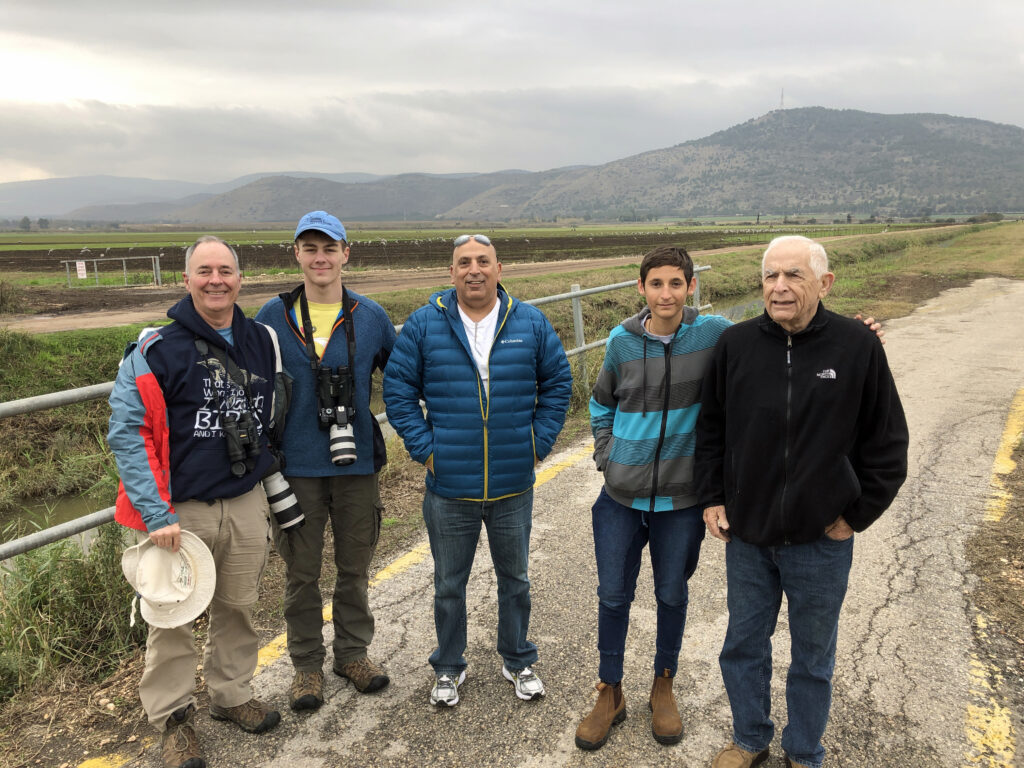
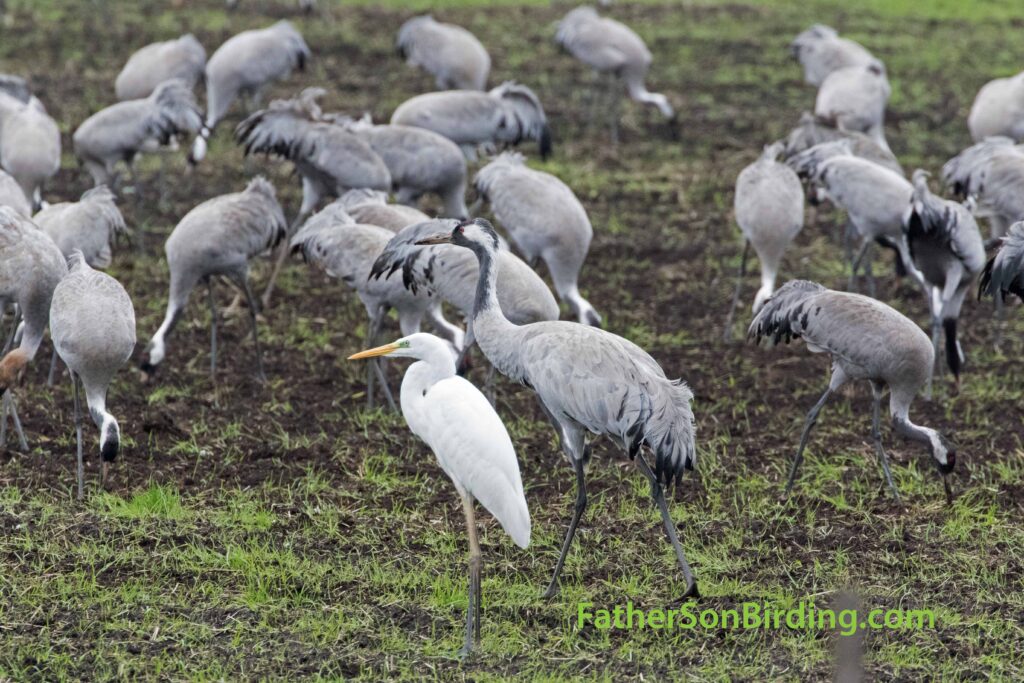
On New Year’s Eve, 2019, Braden and I visited a refuge called the Hula Valley Nature Reserve in northern Israel (see Braden’s post Winter Birding in Israel, Part II: Valley of the Cranes). Though small by some standards, the reserve holds a remarkable diversity of bird life. Riding around in golf carts under cool, damp skies, we observed 44 species including Pied Avocets, Ruffs, and both Booted and Greater Spotted Eagles. The marquee birds, the ones that attract thousands of visitors each year, were thousands of Common Cranes. In fields surrounding the reserve, we counted more than 2,000 of them—but no doubt missed many more.
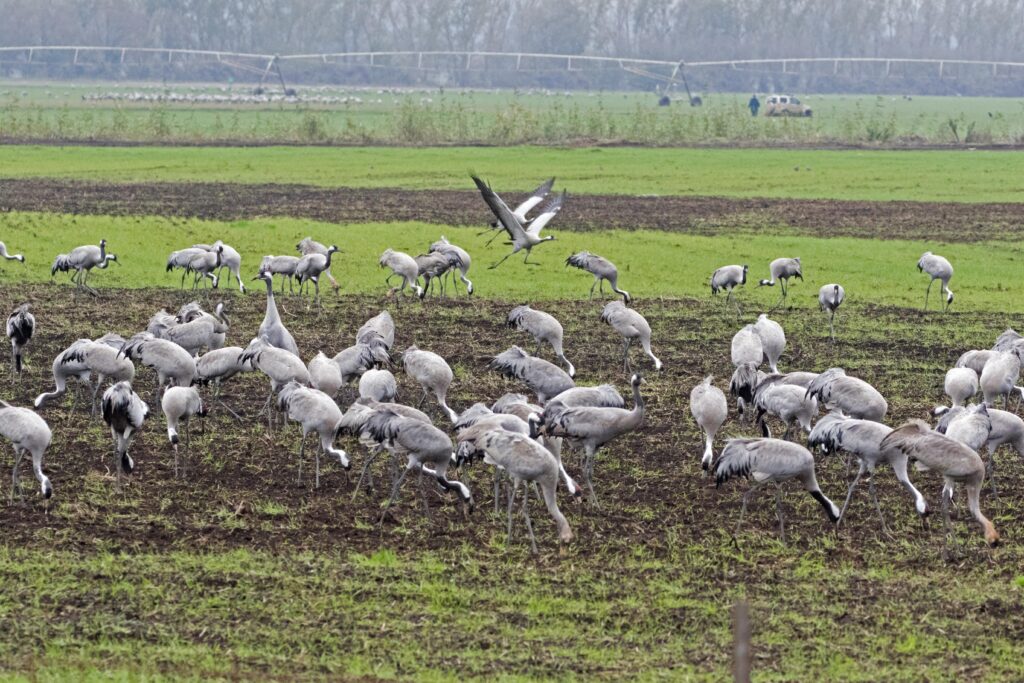
Strikingly, our visit intersected with two important global events. Even as we stood watching the cranes, the COVID-19 virus was silently making its way out of China, poised to ravage the rest of the world. Braden and I, in fact, barely made it home before commercial air traffic ground to a halt.
The second event happened the following year, in 2021, when a virus known as H5N1 exploded across the planet. This virus killed untold millions of wild birds and other animals, including many threatened and endangered species. In northern Israel alone, H5N1 killed 8,000 Common Cranes in the Hula Valley, along with 1.6 million chickens and turkeys in commercial poultry facilities. In his new book Sentinels: When Diseases Spread Between Animals and Humans (Scribe Publications, 2026), author Michael Dulaney writes, “Of all the pathogens I’ve learned about this (H5N1) is the big one . . . It scares me more than anything else.” After reading his book, you may feel the same.
But let us back up a step.
In Sentinels, Delaney focuses on several kinds of diseases, including fungal diseases spread by the wildlife trade and, especially in the case of Valley Fever, our increased contact with and destruction of the environment. He also explores Trench Fever, a louse-borne disease made famous during World War I that is now re-emerging among destitute, unhoused populations around the world. However, Sentinels especially focuses on zoonotic diseases, those that spread between animals and people.
Lest you think this is a niche topic, according to the CDC, three out of four new diseases in humans originate in animals. They include some of the world’s deadliest: Ebola, coronaviruses such as COVID-19, and H5N1. And if you haven’t already been convinced, the author presents overwhelming evidence that these kinds of diseases represent a significant, global threat to humanity.
As we all have witnessed in recent years, many zoonotic viruses cause human illness and death. However, while popular coverage of zoonotic diseases almost exclusively focuses on wild animals as a threat and source of illness, Sentinels makes clear that the underlying threat isn’t the animals—it is humanity’s rapid destruction of the environment and quest for economic expediency.
Let’s take a look at bird flu.
H5N1 is but one of several types of “bird flu” viruses that health authorities lump together under the name Highly Pathogenic Avian Influenza, or HPAI. In his chapter titled “Henfluenza: Bird Flu”, Dulaney explains that H5N1 first emerged in the poultry industry of Southeast Asia in 1996. Since then, many outbreaks have been reported, often killing 100% of affected chickens and other poultry. In some cases, the disease has jumped to humans with deadly results. But in 2021 a new strain leaped from the poultry industry to wild birds, and those birds quickly carried it around the globe. One of the big surprises of this new strain is how, in addition to birds, it infected a wide array of mammal species including cats, foxes, polar bears, and other marine mammals. In Argentina, it killed tens of thousands of elephant seals, a blow from which the species may never recover. Nothing like that had happened in previous outbreaks.
HPAI’s toll on wild birds, though, has been particularly devastating. No one really has any idea of how many wild birds have died as a result of H5N1 and other bird flu viruses, but they have infected at least 500 different bird species and killed millions of birds. More than half of species affected had never before been hit by this group of viruses, and some bird species experienced die-offs that may have long-term consequences for their survival. In just one recent five month span, from September 2025 to January 2026, the US Geological Survey recorded 241 “bird mortality events” in 28 states, killing 126,000 wild birds. In 123 of these events, HPAI was confirmed or suspected as the cause. At the Great Salt Lake, more than 50,000 Eared Grebes died, twice the number of deaths from a similar outbreak the previous year. The USGS reported that this was the fourth year in a row avian influenza had been rampaging through wild bird populations.
As bird flu continues to circulate around the globe, it continues to devastate both wild and domestic bird populations. It also keeps jumping to humans. According to the CDC website, 72 cases and two deaths in the US have been reported since 2024. But while news outlets and official government websites continue to portray the risks to human health and domestic animals posed by wild birds, they utterly fail to address the underlying causes of bird flu and other zoonotic diseases.
Which is why Sentinels is such an important book. After reading it, you will have no doubt that it is our own actions that facilitate the mutation and spread of zoonotic diseases. Some are facilitated by the destruction of natural habitats, forcing animals into closer proximity to humans. The root cause of bird flu is the manner in which we raise animals for human consumption. While H5N1 once originated in wild bird populations, its ability to jump to other species was most likely severely limited. Factory farming, on the other hand, has been a virus’s dream come true.
In the US alone, 9.4 billion broiler chickens were “produced” in 2025. Egg-laying chickens cranked out 105 billion eggs. The vast majority of these chickens are grown in enormous, cramped facilities, where tens or even hundreds of thousands of birds are packed together in a single building. Chicken production in China dwarfs even these figures, with one facility supposedly containing three million chickens at any given time.
Although farmers and corporations strive to eliminate HPAI viruses, they are now so prevalant that they find their way into industrial, small scale, and backyard farms with shocking frequency. One recent update from the USDA recorded that in just the most recent 30 days, there had been 23 outbreaks affecting 1.25 million birds. Since February 8, 2022, the virus had infected 210 million birds in 2,285 flocks in all fifty states and one territory.
What happens to all of those birds? As you might guess, as soon as a virus is detected, the entire flock is destroyed, and the facility placed under quarantine. In other words, hundreds of millions of chickens, turkeys, and other domestic animals are killed and disposed of each year because of HPAI viruses. Amazingly, the poultry industry can easily absorb this waste while still making vast profits. According to the USDA, in 2025 the combined value of poultry sales, including eggs, was 70.3 billion dollars.
The main point of this is that within these high-density facilities, viruses can and do mutate at lightning speed. With increasing frequency and impact, they also spill over into wild populations of birds and other animals. That means that even if a wild bird species or population adapts to one strain, it is likely—perhaps inevitable—that another, even more virulent strain will come along. This, in fact, is what has been happening, and we may just be seeing the beginning of global pandemics that threaten entire species of birds and mammals, including humans.
Sentinels is a pretty terrifying read because there are no simple fixes to the problems that it highlights, many of which also are exacerbated by climate change. “This puts any writer on this subject in a tough position,” the author laments. “Most people, we are told, want to read good news.” His message, though, is clear: If we want to reduce the risk of zoonotic diseases, we have to do a much better job protecting the environment. We especially need to change the way we produce food. Is this likely? It’s hard to see how, and the author offers few suggestions. I do know that the book has compelled me to redouble my efforts to source food from farms and farmers that place quality, animal welfare, and human health at a greater premium. If enough people read Sentinels and act on its message, it may help turn the wheel toward a healthier future for both birds and humans.
To order Sentinels, CLICK HERE.