Category Archives: Warm Springs WMA

Vortex Viper 11-33X50 and Crossfire HD 12-36X50: Two Travel Scopes, Head to Head (FSB Equipment Review)

We hope you are enjoying our reviews and other posts at FatherSonBirding. A reminder that we do not receive payment for any of our blogging efforts, so if you wish to support our work, please consider purchasing a few *new* copies of Birding for BoomersWarblers & WoodpeckersFirst-Time Japan, or any of Sneed’s other books. If you already have copies, why not pick up some for your friends? 

Sometimes, you just gotta go birding. Such was my feeling recently when my friend and birding buddy Susan Snetsinger collected me for an all-day birding expedition to Butte and back. As a sizzling pink dawn crept over our neighborhood, I felt particularly excited. Why? Because today, we were going to test two spotting scopes ideal for the traveling birder: the Vortex Viper 11-33X50 and the Vortex Crossfire HD 12-36X50.

Vortex classifies both of these scopes as “Compact” in size, but I also refer to them as “travel scopes” because they are small, light, and fit easily into almost any backpack or suitcase. A few months ago I posted a very positive review of Vortex’s top-of-the line compact scope, titled “Vortex Razor HD 13-39X56 spotting scope with Mountain Pass tripod.” I recommend reading that post again before you read this review as it will help provide the entire story about these three scopes—in descending price order. As you’ll recall, the Vortex Razor HD 13-39X56 runs about $1,000 and is well worth the money. It may be out of reach for many birders, though, and that’s one reason I felt so excited about testing the more affordable Viper and Crossfire compact scopes. The Viper lists at $849.99—but can be purchased for about $600. Meanwhile, the Crossfire lists for $299.99—but can be bought for around $200. “But,” Susan and I both wondered, “how will these two more affordable scopes stack up against each other?”
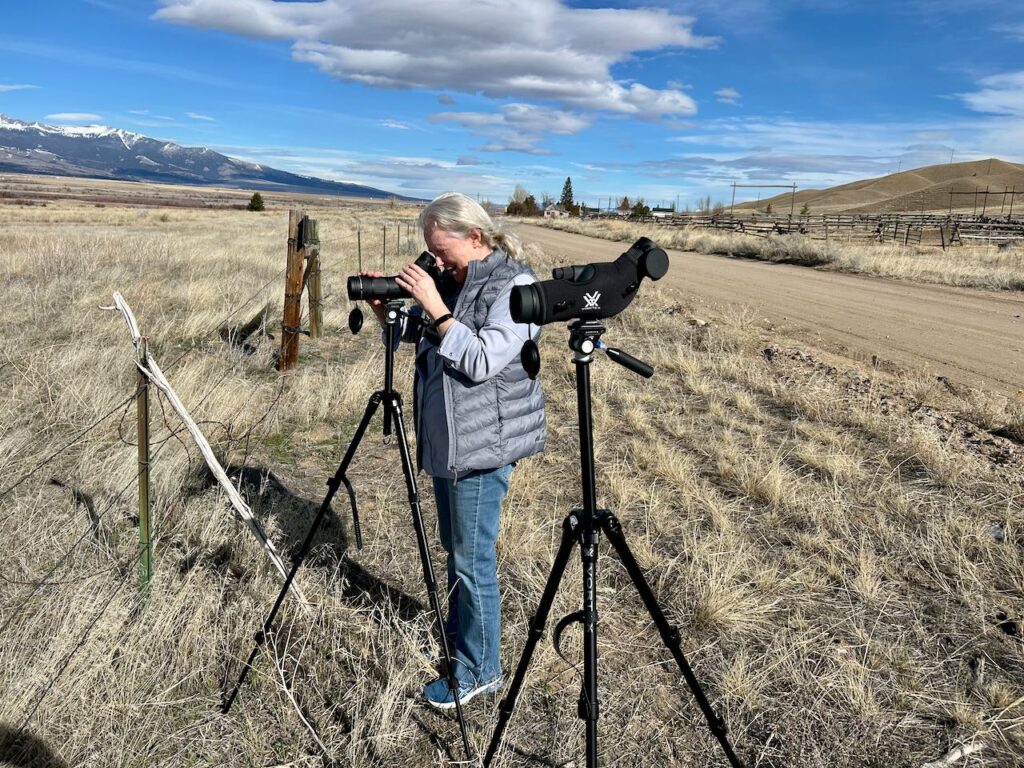
My birding pal Susan testing these scopes side by side at Warm Springs wildlife area.

First, let’s discuss what they have in common:

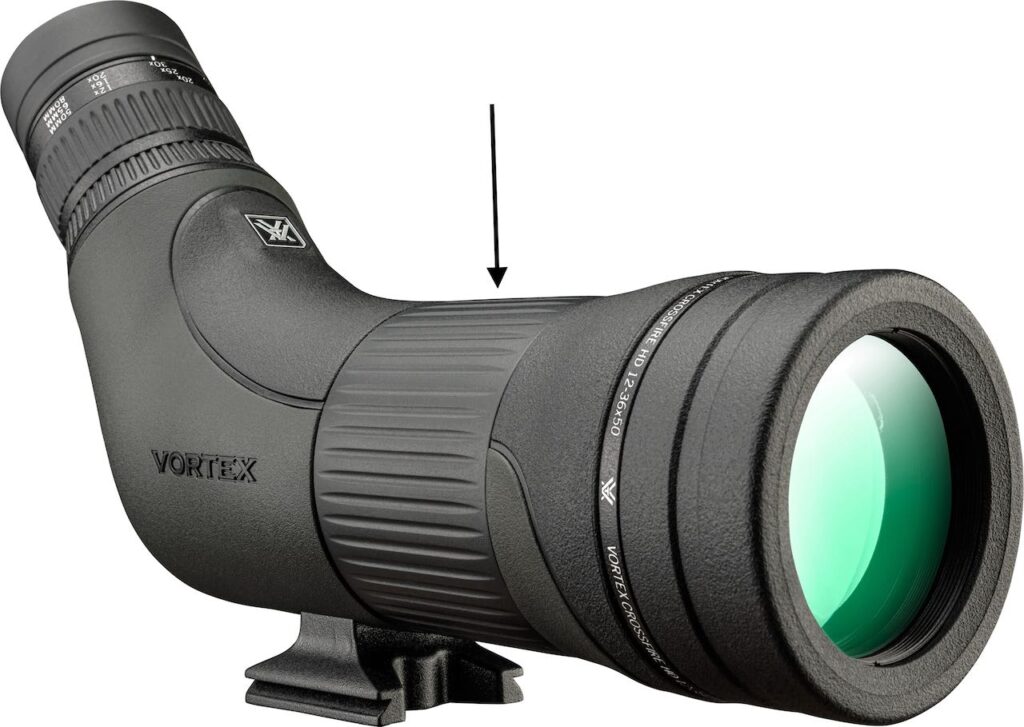
  • Both come in an angled configuration (see image below), which I much prefer to the straight option because it allows for a lower, more stable position on the tripod and easier viewing.
  • Both are about 10.3 inches long and weigh in at about thirty ounces—just under two pounds, or a bit more than an average pair of binoculars.
  • Both have very similar magnifications, the Viper zooming from 11 to 33X magnification, and the Crossfire 12 to 36X.
  • Both are built to fit the Arca-Swiss standard mount, which allows them to be directly fitted to Vortex and many other tripod heads without a pesky adaptor plate.
  • Both come with Vortex’s no-questions-asked lifetime warranty, making either scope a worry-free purchase from the get-go.
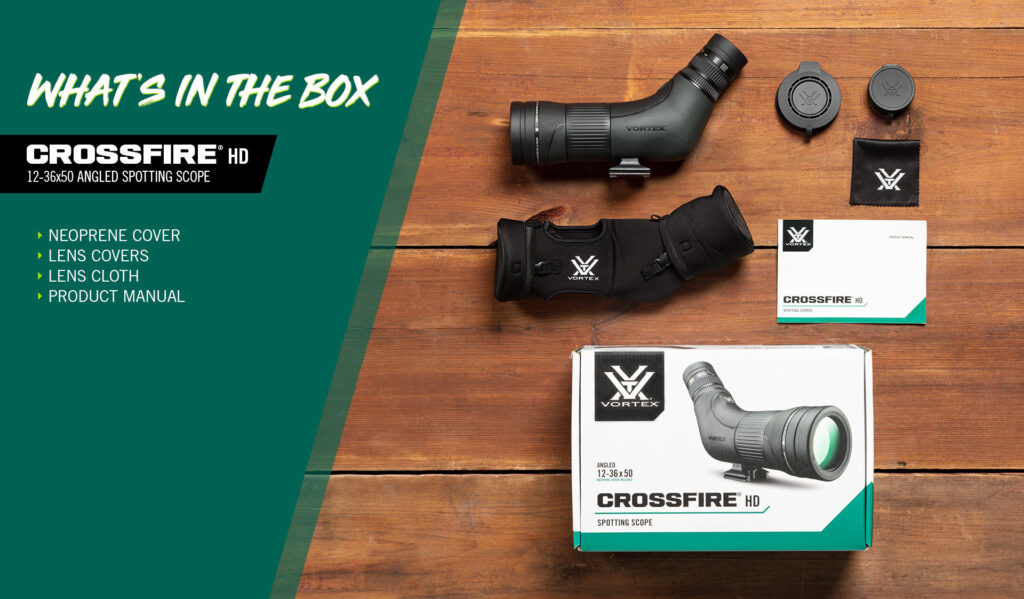
Both scopes come with easy-to-use lens caps and a neoprene sleeve for protection.(Photo provided by Vortex.)

Which leaves the primary question you’re probably asking yourself: Is the Viper worth the extra $400 I would have to spend over the Crossfire? To begin finding out, Susan and I rolled up to our first stop, Racetrack Pond just south of the town of Deer Lodge. We set up the two scopes side by side, each perched on a Vortex Mountain Pass tripod and began scanning the pond. It was still early in the season for most songbird migrants, but ducks, geese, and swans were out in full force and even as we were setting up, we were delighted to see a flock of 22 Snow Geese flying by. However, we began focusing mainly on Common Goldeneyes, American Wigeon, and Ring-billed Gulls puttering around a tiny island a hundred or so yards offshore.

Controls

As with any new equipment, it took us a few minutes to get familiar with the controls on each of the scopes. Both had eye relief tubes that easily pulled out, and both had about the same zooming range. At first we couldn’t figure out how to easily zoom the Crossfire in and out, but it turns out I hadn’t screwed in the eyepiece tightly enough when assembling the scope out of the box. Once I tightened the “knurled ring” at the base of the tripod, the zooming ring functioned just fine.

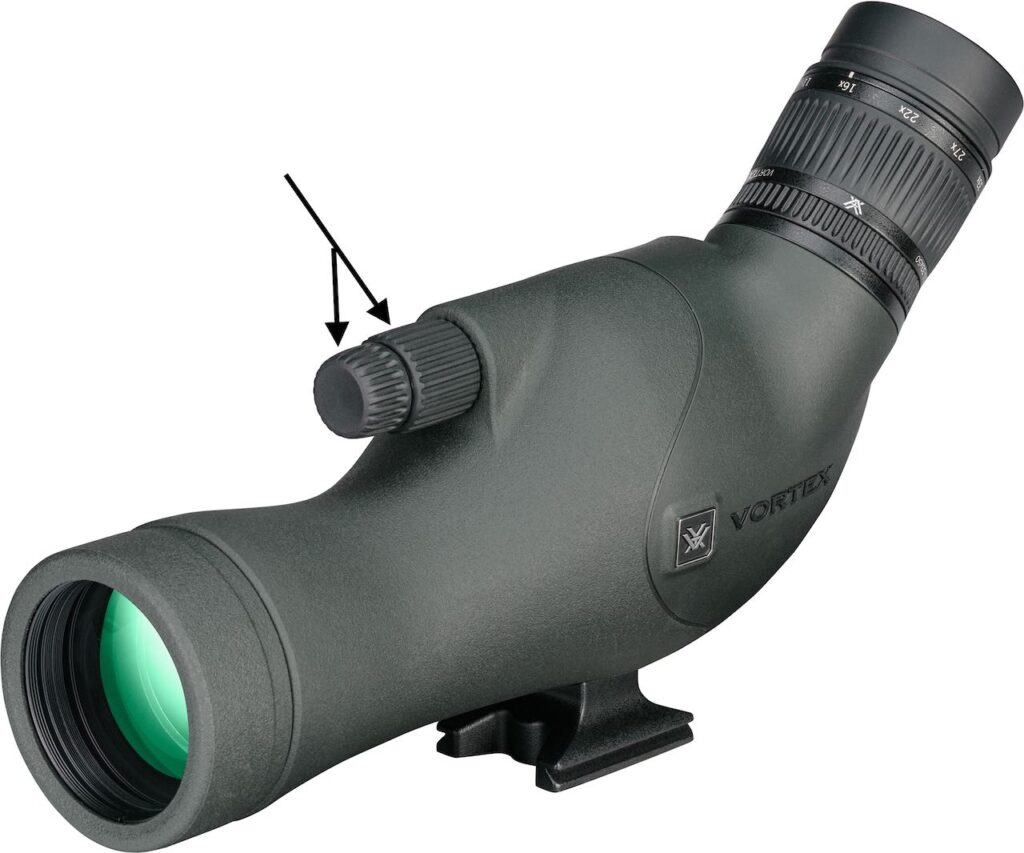
The main difference on the controls between the two scopes is the focusing mechanism (see arrows in images below). The lower-priced Crossfire comes with what’s called a helical focus. This is a ring around the entire scope tube that you twist back and forth to focus. The more expensive Viper comes with what is called a dual fine focus—two small knobs conveniently positioned on top of the scope that allow you to quickly adjust them. Spoiler alert: I’m going to just come out and say that, if you can afford it, the dual fine focus alone justifies the extra expense of buying the Viper over the Crossfire. Not only does this system achieve a sharper focus, it is much faster and more convenient to use. I watched a video about this and the host pointed out that this is especially great for digiscoping, or using your phone to take a photo through a scope. I don’t yet do this myself, but it’s good to know.
Optical Quality

One thing I and many others have discovered is that the brightness and clarity of images through optical devices don’t at first seem that different, even between more and less expensive models. That initially seemed to be the case when Susan and I compared the Viper and the Crossfire. The more we used them during our outing, however, the more it became apparent that the Viper gave us superior images. Not only was light transmission better through the Viper, it achieved sharper, clearer focus. That’s not surprising considering that the Viper comes with better coatings on its glass lenses and prisms, but it was still interesting to notice that difference in the field. Later, I tested the two scopes under very low light conditions, and the brightness of the Viper stood out even more.
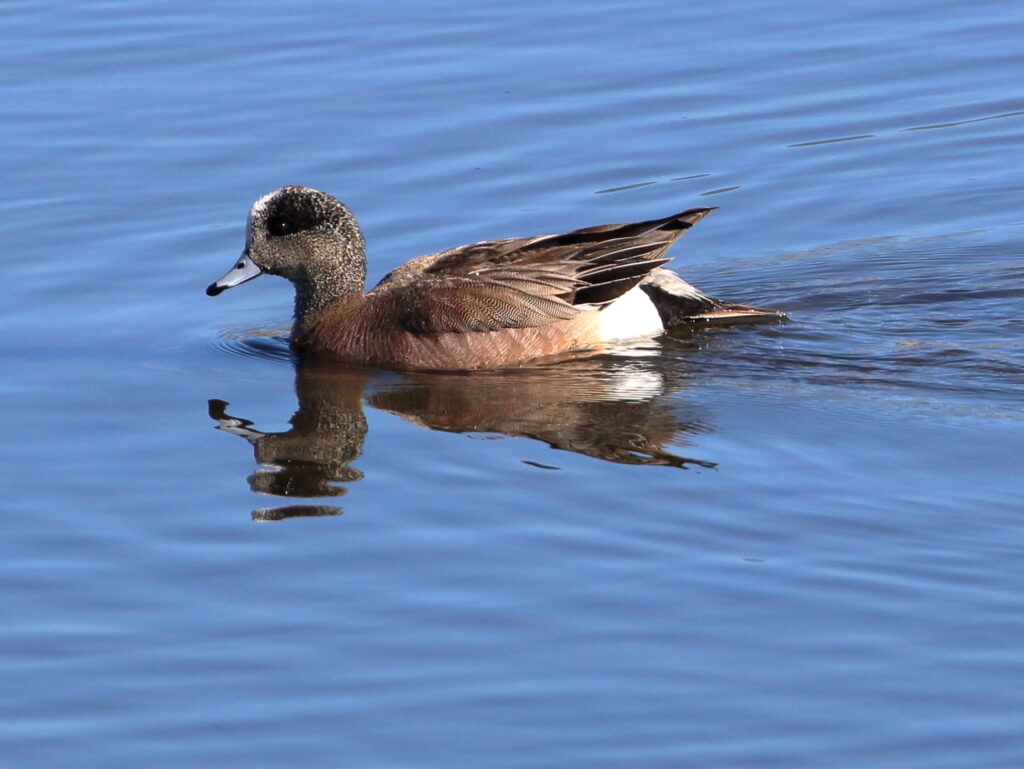
Though still early in the season, American Wigeon and other waterfowl gave us plenty of “targets” to test out the scopes. Though differences in optical quality were subtle at first, after spending a couple of hours looking through each scope, the Viper emerged a clear winner.

Build

Both the Viper and Crossfire appear to be very solid and well built. The Vortex website boasts that the Viper features “ultra rugged construction” while it makes no such claims for the Crossfire, so I assume that better manufacturing and materials go into the Viper. However, my guess is that both of these products will perform very well in the field. Both are fog proof and waterproof, essential features for anyone out watching birds. The Viper is purged with argon gas while the Crossfire is purged with the more standard nitrogen. I asked a rep what the difference meant for consumers, and he answered, “the difference isn’t actually with the optical quality, but instead the longevity of the optic. Argon has a larger atom, and will reduce the rate of leakage over long periods of time when compared to nitrogen. Argon is also less affected by sudden temperature shifts and is much more resistant to extreme temperatures.” He also admitted that most users will probably never notice this until at least 10+ years of use—if ever.
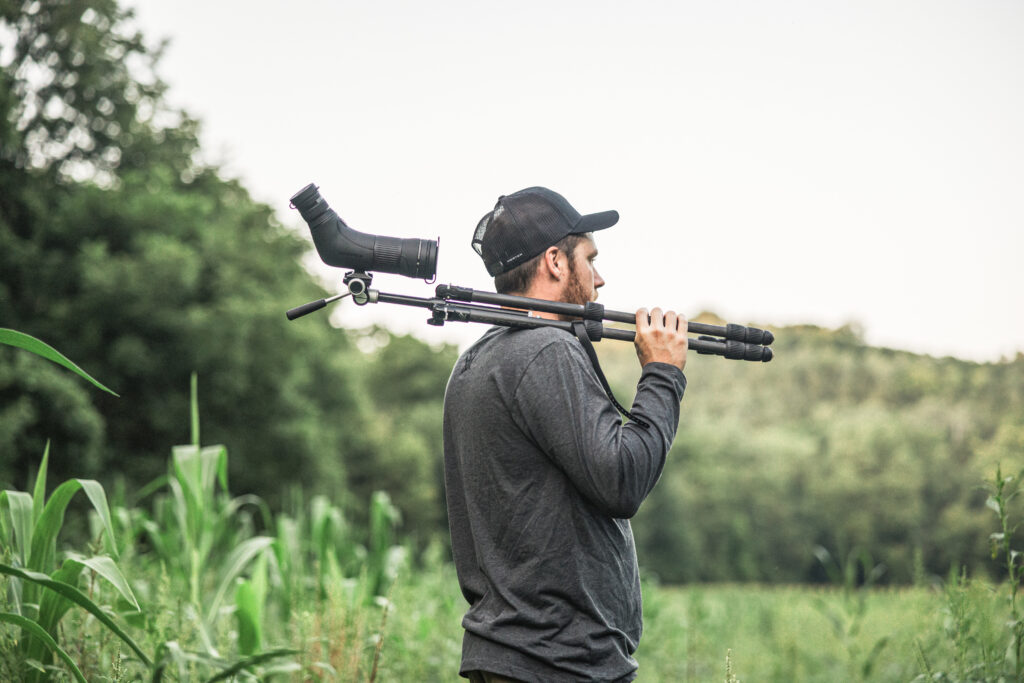
Whichever compact scope you buy, I highly recommend the Mountain Pass tripod to go with it. This combo is both easy to pack and carry over the shoulder on even a long birding hike! (Full confession: I’m not sure this is a Mountain Pass tripod in this photo provided by Vortex, but it looks as small and lightweight.)

Bottom Line

When comparing the Viper and Crossfire head to head, the Viper comes out a clear winner. Both are terrific, lightweight scopes for the traveling birder, but if you can at all afford or save up for the Viper over the Crossfire, I highly recommend it. That doesn’t mean, though, that the Crossfire doesn’t fill an important niche. It’s a great purchase for those on a budget, or those buying a first scope for a beginning birder and, honestly, many people may stay perfectly content with their Crossfires for the foreseeable future. If you need a scope to just carry around in the car or keep in a cabin without having to worry too much about it getting stolen, the Crossfire also could be just what you’re looking for.

Whichever scope you buy, I do highly recommend the Mountain Pass tripod, which is well-suited to both scopes both in weight, dimensions, and cost. I’ll also point out that both scopes work with Vortex’s Pro Car Window Mount. I have not yet used this, but plan to write up a review as soon as Braden and I can head out into Montana’s grasslands this summer.
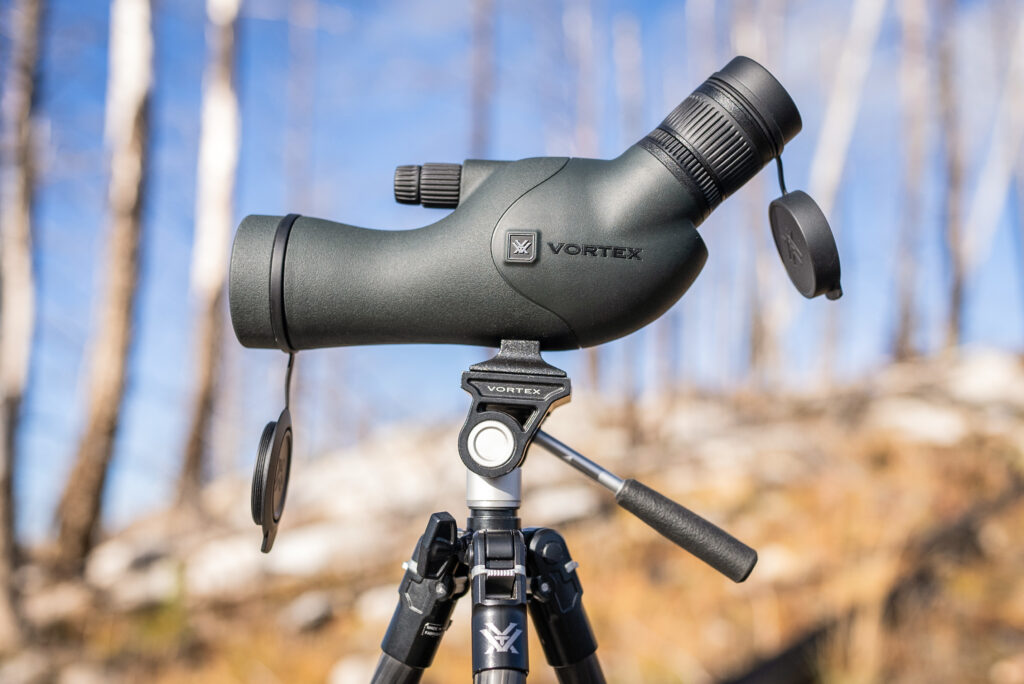
Though both scopes offer great value for the money, after our testing we both felt that birders will be happier if they stretch their budgets for the Viper rather than going for the more inexpensive Crossfire. (Photo provided by Vortex.)

If you enjoyed this review, check out these other recommended optics for birders:

Vortex Viper HD Binoculars

Nikon Monarch HG Binoculars

Nocs Pro Issue 8X42 Waterproof Binoculars

Vortex Bantam HD 6.5X32 Binoculars

Vortex Razor HD 13-39X56 spotting scope with Mountain Pass tripod
Meditating with Loons: Spontaneous Birding Spectacular, Part II

Braden and I write FatherSonBirding in the hopes of sharing the wonders of birds and birding, and the urgency to protect them. We do not accept advertising or donations, but if you’d like to support our work, please consider buying *NEW* copies of some of Sneed’s books—First-Time Japan: A Step-by-Step Guide for the Independent Traveler, for instance, or the best kids’ woodpecker book ever, Woodpeckers: Drilling Holes & Bagging Bugs. Here, we are pleased to continue last week’s “spontaneous” narrative. For Part I, see our last post. Enjoy!

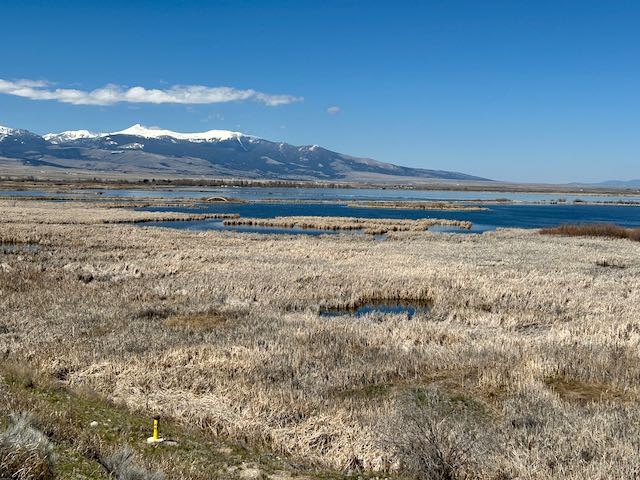
After giving my keynote talk to the Montana Library Association (and yes, it went well, thank you!), I changed out of my good clothes, checked out of my room and hit the road—but not too far. It was early afternoon by now, but before heading home I thought I’d better take advantage of the opportunity to visit Warm Springs Wildlife Management Area, one of Montana’s top birding destinations. It being migration season, the possibilities were almost endless of what I might find, but I kept my expectations low. Why? Primarily because much of Warm Springs is not easily accessible. The refuge consists mainly of several very large reservoirs designed to help clean toxic chemicals from the waters pouring out of the world famous Berkeley Pit copper mine in Butte. The road, however, only gets close to these bodies of water in certain places, so it’s easy to miss rarities that might show up. Nonetheless, I took the “back entrance” into the refuge and soon found myself at the bottom of the large, southernmost reservoir. The scene before me immediately put me in a happy place.

This photo doesn’t capture the size and scope of the Warm Springs ponds—or how amazing they look filled with waterfowl!

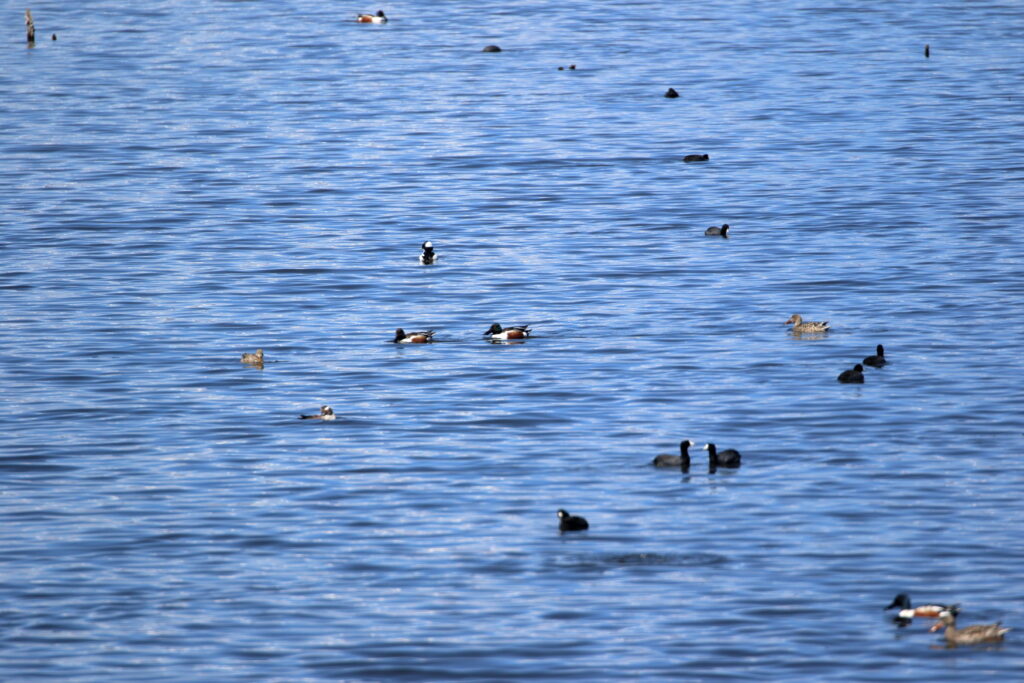
Stretching across the water were hundreds, no, thousands of ducks and other water birds, and I quickly set up my scope for a proper look. I usually try to estimate bird numbers wherever I am, but as I searched across the reservoir with the scope, I quickly abandoned that effort. I recorded 5000 coots, but that could easily be low. I also saw hundreds of Northern Shovelers and Ruddy Ducks, and noted plenty of Buffleheads, Ring-necked Ducks, Lesser Scaups, Gadwalls, American Wigeons, and more. A duck party!

Just a few of the birds stretching out before me at Warm Springs. Pop quiz: can you identify three species?

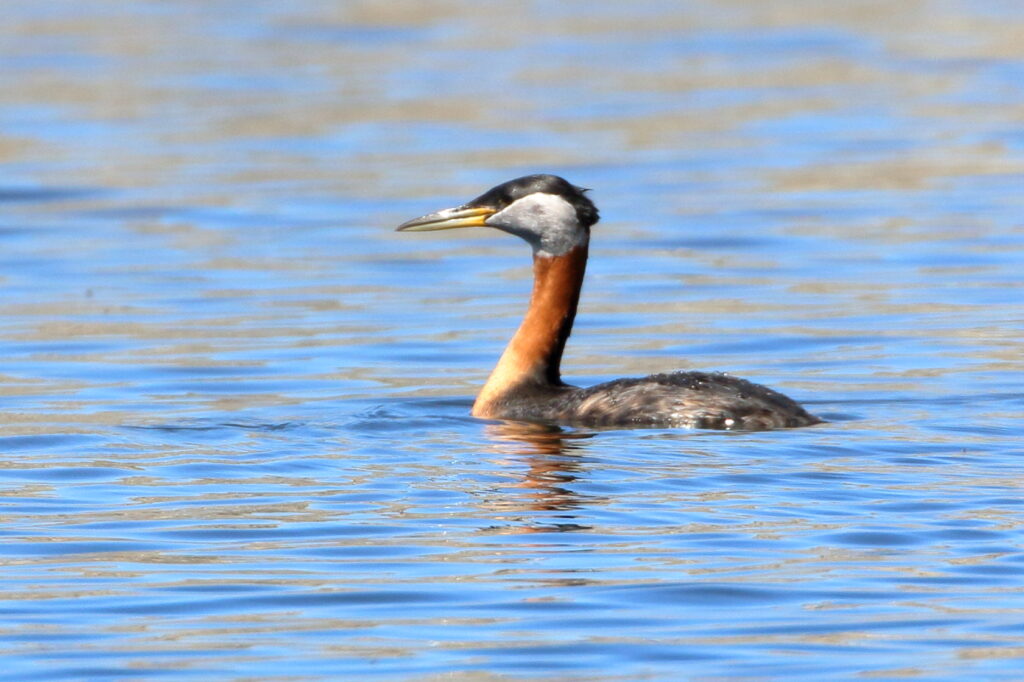
When scoping such a vast array of birds, it’s a natural instinct to look for the unusual or rare species, and after a few minutes, I landed on a pair of Red-necked Grebes—my first of the year. My biggest find, however, was the year’s first Yellow-rumped Warbler (Audubon’s) in the trees next to me! After making an inadequate attempt to eBird what I saw before me, I jumped back in the minivan and continued up the road. I passed a resident pair of Bald Eagles, and then pulled over at a small fishing access next to a long dike that separated this reservoir from the next. I grabbed my binoculars and ventured out onto the dike, and right away saw another Red-necked Grebe. Then, I recognized a bird that made me rush back to the minivan for my camera. I hurried back out onto the dike and trained my lens on it—a Common Loon!

During breeding season, Red-necked Grebes have a circumpolar distribution, but in the US they breed only in a few areas along our northern border. Fortunately, Montana is one of those places—though this guy/gal may well have been heading to Canada or Alaska.

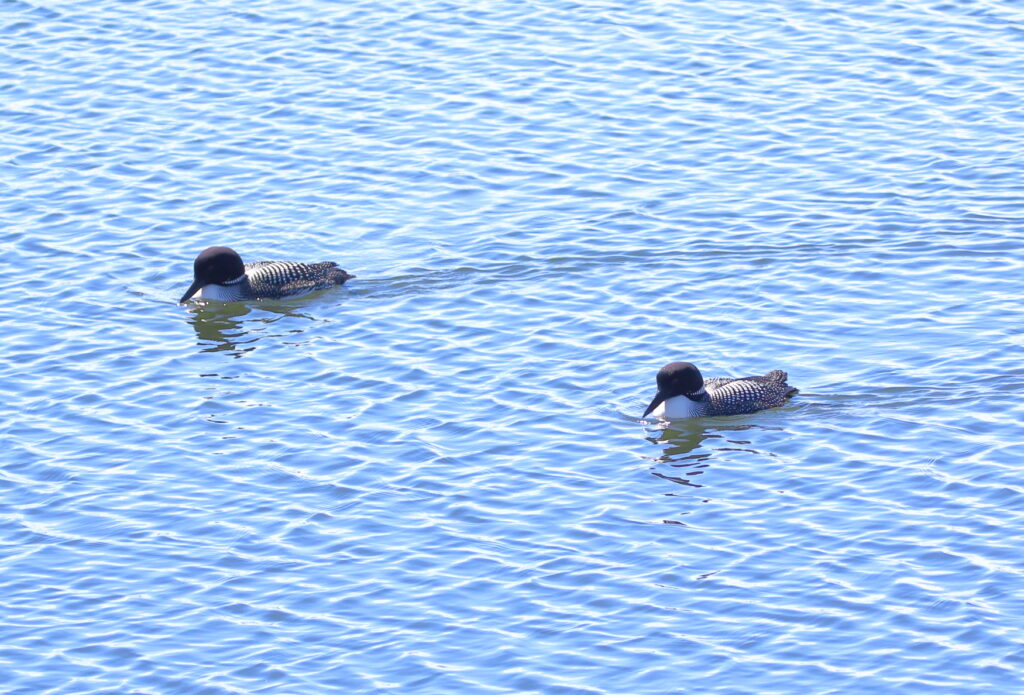
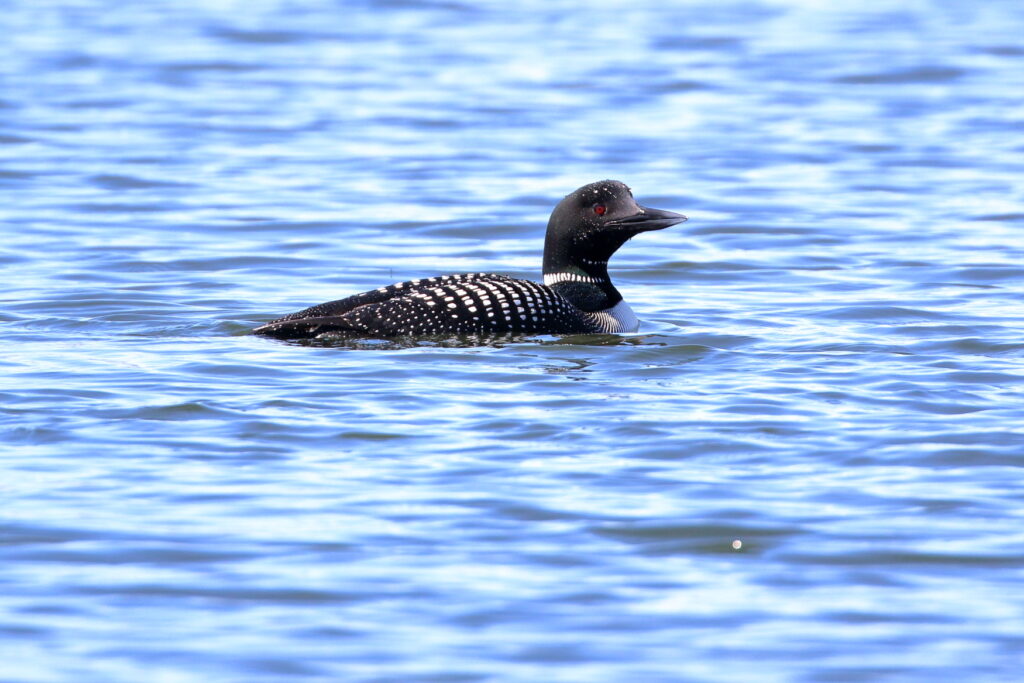
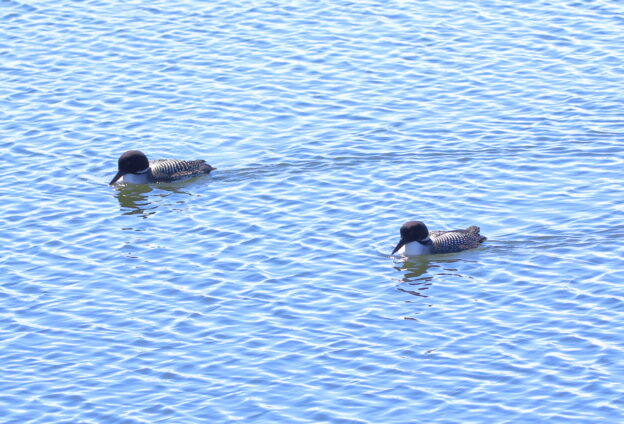
Now, loons are not exactly rare in Montana, but they aren’t gimmes, either (for instance, see post “Rare Bird Hat Trick”). Last year, I saw only one—a quick fly-over at Glacier National Park. If you don’t visit one of the lakes where they breed in summer, you have to catch them during migration. Braden and I have seen a number of COLOs during fall migration, but this was the first I could remember in spring. But wait. As I was trying to get a decent photo of this loon, another one popped up nearby. “No way!” I muttered out loud. But wait, then I spotted a third, and eventually, a fourth! (I think I saw a fifth, but these ‘torpedoes’ can travel so far under water that I can’t be sure.)

This pair of Common Loons defines the word serenity.

Needless to say, I felt “loonstatic.” My only problem? Every bird was backlit, making a good photo impossible. To try to rectify this, I walked around to the parking area where I could get “up-light” of the birds, hoping they wouldn’t depart before I reached a good spot. They didn’t. I took enough photos that I finally got a really nice one (see below). My other problem, though, is that . . . I needed to relax.

After capturing my best COLO shot ever, it was time to Zen out with some quiet loon time.

More and more, recently, Braden and I have discussed the obsession to rack up species and get good photos without pausing to really appreciate them. Both of us, in fact, have been making an effort just to be still in the moment, and with four stunningly gorgeous loons diving for food in front of me, this seemed like a perfect time. I sat down on a rock and set my camera and binoculars on the ground next to me. I watched the loons for a few moments and then just closed my eyes. I thanked the universe for this special moment and tried to breathe deeply, focusing on the now for a few minutes.

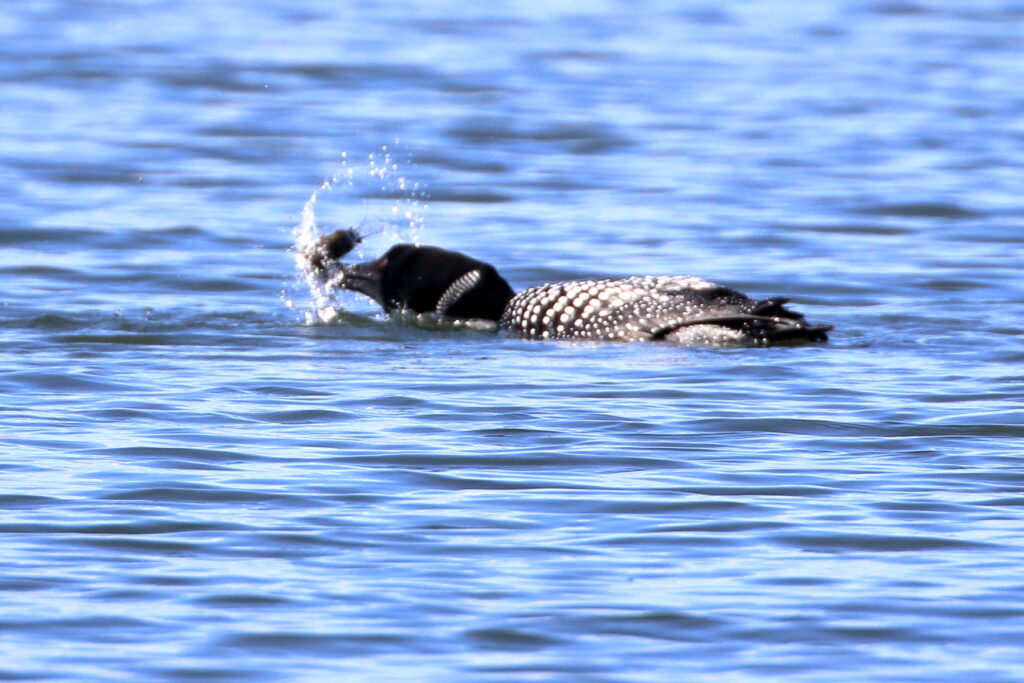
Alas, I did not attain “loon-lightenment,” but when I opened my eyes, the loons were still floating, preening, and diving in front of me. Several times, I watched them surface with crayfish in their bills. I’m not sure if the loons did anything special to them, such as knocking loose their exoskeletons, but down the hatch they went. It was beautiful.

A little “crawfish loon-touffée” for lunch!

My birding had not finished, either. After Warm Springs, I tooled up the road a few miles to another spot that many birders don’t take time to check out—Racetrack Pond. Often, there’s not much to see at Racetrack, but I had occasionally stumbled into some treats. Again, it was migration season, so you just never knew. As I pulled off the interstate and turned right, I immediately saw a couple of hundred gulls out on small islands in the pond. “Hm,” I thought. “Maybe I can pick up some California Gulls there.” As I drove closer, however, I realized that they weren’t gulls. They were Snow Geese!

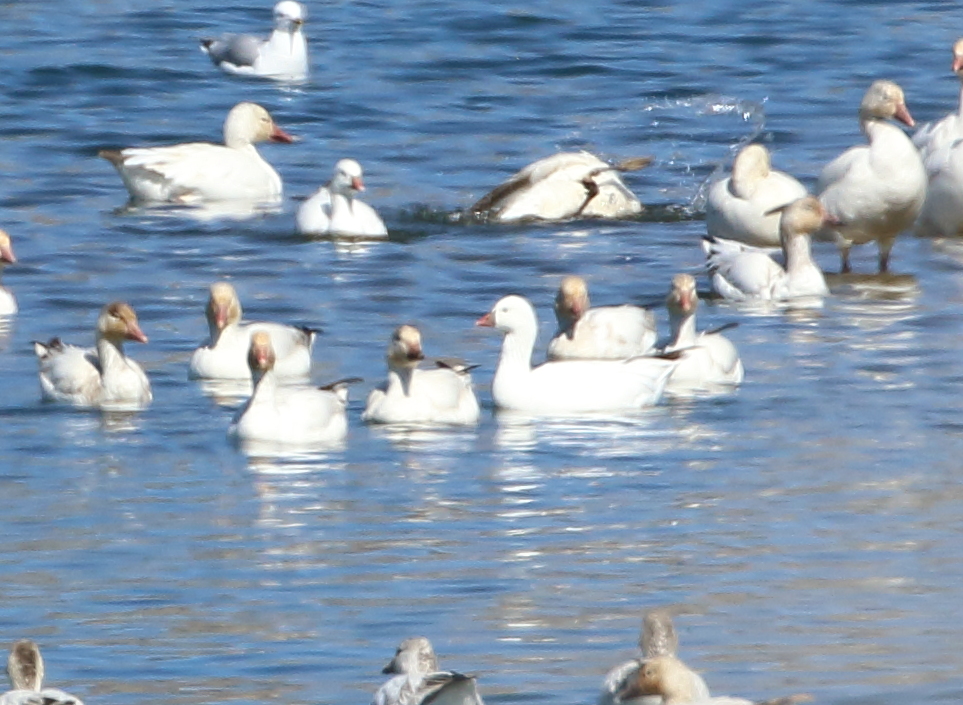
I pulled over and again set up the spotting scope—and not just to see the Snow Geese. I had an ulterior motive. Almost exactly a year earlier, at Browns Lake, I had stumbled into some migrating Ross’s Geese mixed in with a large Snow Geese flock. “Maybe there are some Ross’s hiding in this one,” I thought with an evil grin. I diligently scanned the flock for several minutes, mainly looking for any geese with stubby pink bills. Ross’s, though, also are a bit smaller than SNGO and tend to have a cleaner, whiter appearance. I thought I was going to strike out when I glimpsed two geese that fit the, ahem, bill. I watched them for at least ten minutes before discarding any doubts. Yay! This was only my third time ever seeing Ross’s Geese, and to get them two years in a row felt like an accomplishment. By the way, ROGOs are also a wonderful conservation success story. Their numbers had dropped to just a few thousand by the 1950s. Today, it is estimated that there are more than two million! Let’s hear it for conservation!

Can you pick out the two Ross’s Geese in this photo? Once you know what you’re looking for, they stand out like, well, um, Ross’s Geese. The prominent, clean white goose just right of center is one of them. The other is swimming toward it from about 10 o’clock.

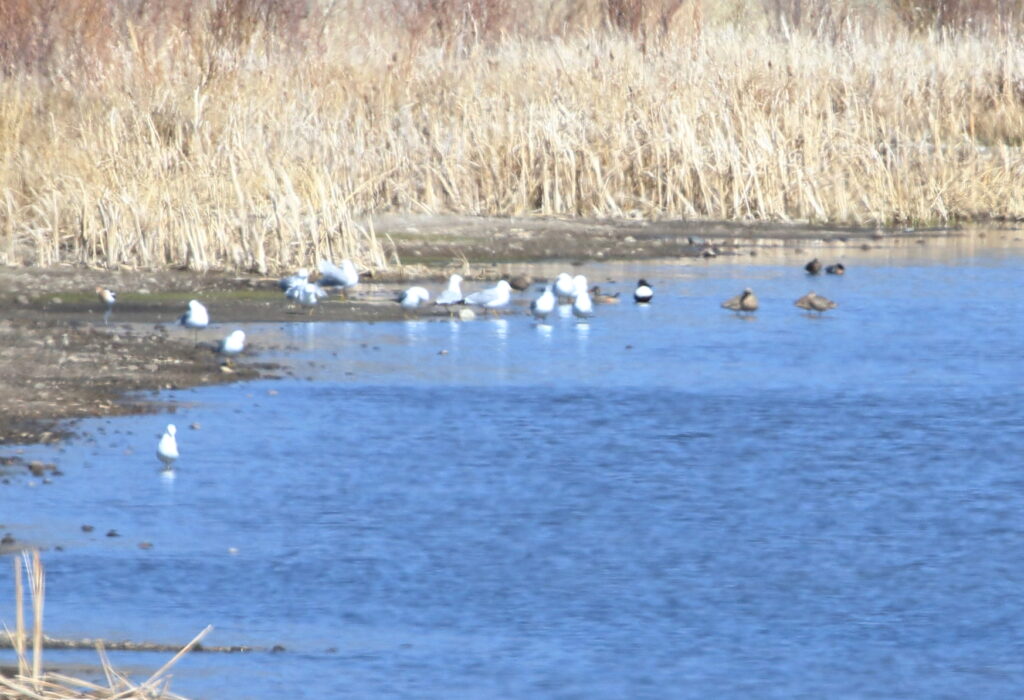
My discoveries weren’t over. At the north end of the pond, I again pulled out the scope to discover a Greater Yellowlegs, a Killdeer, and two real surprises—an American Avocet and five, count ‘em, FIVE Marbled Godwits. “Perhaps they’re heading to the same place as yesterday’s Willets,” I wondered (see our last post). I later learned that large flocks of avocets had been rampaging through the state, so this one was right on schedule.

With the help of my spotting scope, I was able to pick out the American Avocet (far left) and Marbled Godwits (far right) along the far shore of Racetrack Pond.

With another wonderful day of birding under my belt, it was time to head home, but really, these days just primed my birding pump. Many adventures lie ahead—especially when Braden returns home from Costa Rica in a couple of weeks. Be prepared for plenty of posts this summer!