Tag Archives: woodpeckers

Adventures in Ekalaka: Our 2024 Eastern Montana Odyssey Continues

We are pleased to present our sixth installment of our 2024 Eastern Montana Odyssey. Here, we leave the “interstate less traveled” and push into the brand new birding territory of southeastern Montana. We experience delightful new towns and vistas, and a wealth of surprising birds. We also keep knocking off new counties, drawing closer to completing our Montana eBird map. If you are enjoying these episodes, please share them with your birding friends and consider supporting our efforts by buying a *NEW* copy or two of one of Sneed’s books on the right.

Leaving Glendive, Braden and I had our work cut out for us. Not only would we be birding the southeast corner of the state for the very first time, this might be our only chance to nail down the last six Montana counties we needed to complete our eBird birding map! We had started the trip needing seven counties, and picked up one a few days before (see our post “Big Surprise on the Way to Plentywood”). Today, we planned to conquer Prairie, Wibaux, Fallon, and Carter Counties—and it would take some effort.
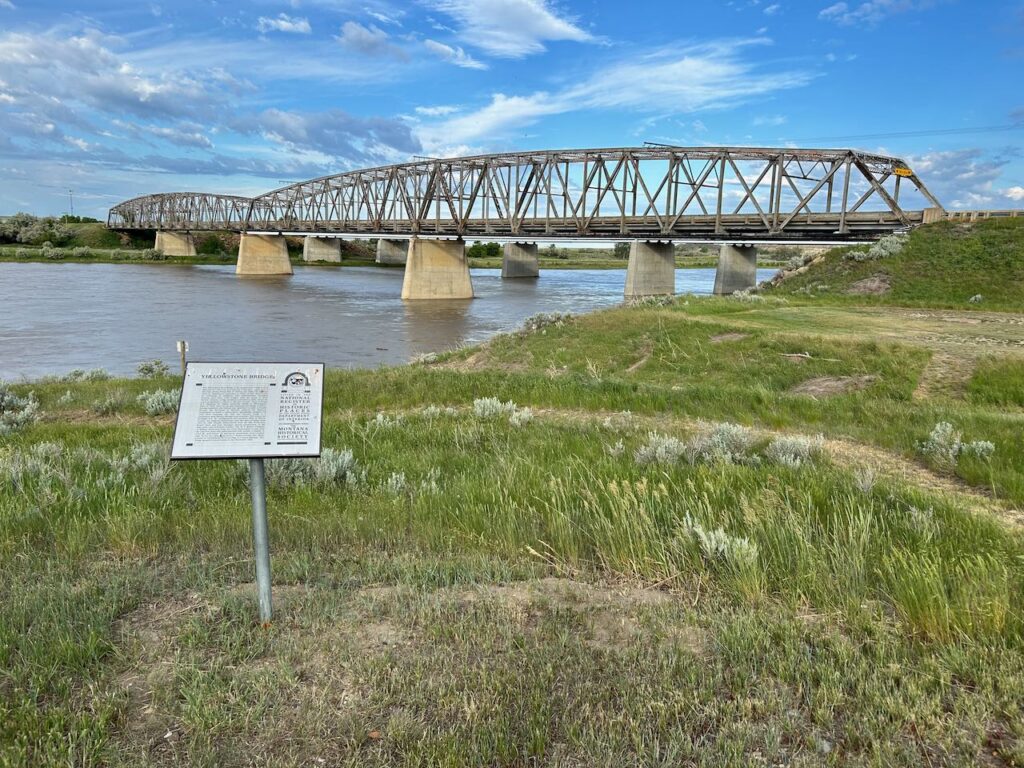
Fallon Bridge allowed us to bird the first of six Montana counties we planned to pick up in the next 48 hours.

First up? Prairie County which, unfortunately, didn’t sit anywhere on our way to or from someplace else we wanted to go. Before heading down to the southeast corner of Montana, therefore, we zoomed about twenty miles west down Interstate 94. Entering Prairie County, we spotted Western Meadowlark, Mourning Dove, and Cliff Swallow along the highway and we could have technically just turned around at that point. Braden and I decided, however, that to make our county map more meaningful we had to find at least ten, count ‘em, TEN species in each of our last seven counties. In Prairie County, we accomplished this with a stop at Fallon Bridge. Apparently, this also is a place to see Least Terns (see our last post), but we didn’t know that. Instead, we just got out and spent a few minutes enjoying what was there, including American White Pelican, more than fifty Cliff Swallows, a Lark Sparrow, and our County Bird of Prairie County, Brown Thrasher.

We raced back east on the interstate, past Glendive, to our main Wibaux County destination, the Wibaux Fish Pond. Here, we saw a satisfying 17 species including our County Bird of Wibaux County, Orchard Oriole. By this time our stomachs were complaining loudly about how we prioritized birding over eating. Fortunately, Wibaux is home to a wonderful little diner, the Palace Café. We stuffed ourselves on a scrumptious fat-and-protein-filled breakfast and emerged prepared to continue our vigorous Montana counties campaign.

A good small-town diner is one of a birder’s greatest pleasures. Don’t miss the Palace Hotel & Cafe in Wibaux!

Next stop: Lake Baker in the town of Baker, Fallon County. We were both somewhat surprised to find a giant lake in the middle of the town. True, it was pretty developed, but we spotted nice surprises here including Eared Grebes, Western Grebes, and the star of our Fallon County lists, a Common Loon!
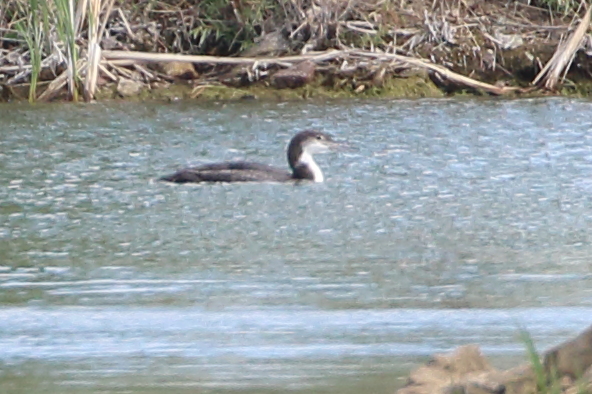
This Common Loon was a major surprise at Lake Baker.

From Baker, it was on to Carter County, and here we settled into some more serious birding with a hike through the spectacular Medicine Rocks State Park. The fantastic, hoodoo-style rocks at Medicine Rocks were sculpted by wind and rain from soft inland sea sandstone. Not surprisingly, when humans came along the rocks assumed important sacred and cultural significance for native peoples and a fair share of interest from early white settlers.
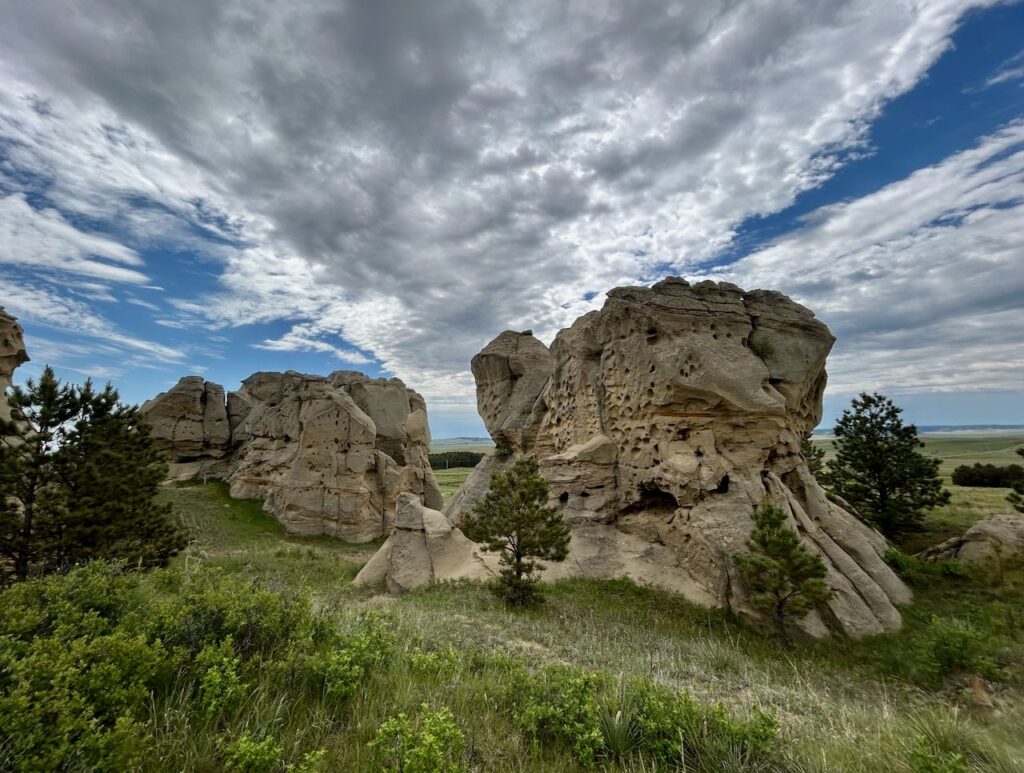
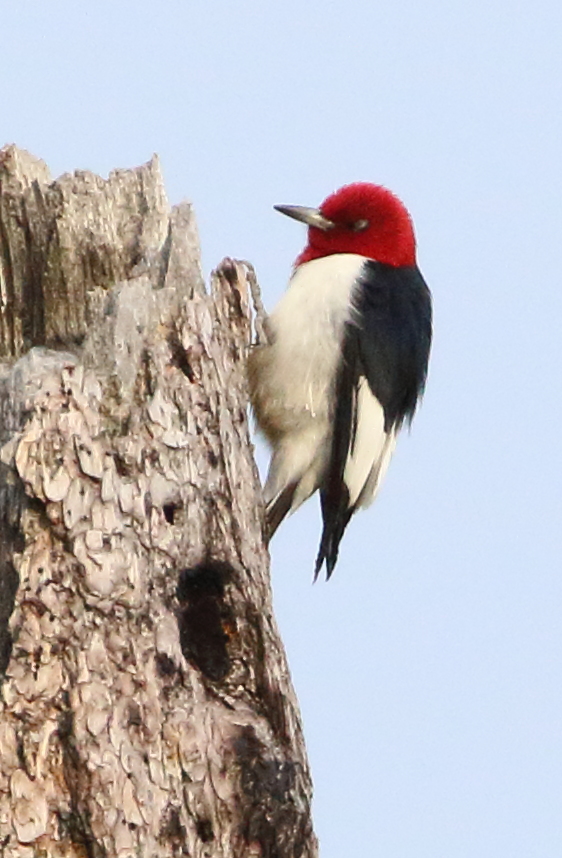
Medicine Rocks State Park is plenty dramatic—especially with Red-headed Woodpeckers lurking nearby.

It was at Medicine Rocks that we spotted one of the birds we had most wanted to see on the entire trip. After walking a mile or so through the rocks, we connected with the pine tree-lined dirt road back to our car. As we walked, we caught a glimpse of a medium-sized bird that flashed white as it was flying away. “Red-headed Woodpecker!” Braden shouted. We didn’t get great looks, but never fear. This would not be the last RHWO we would see.
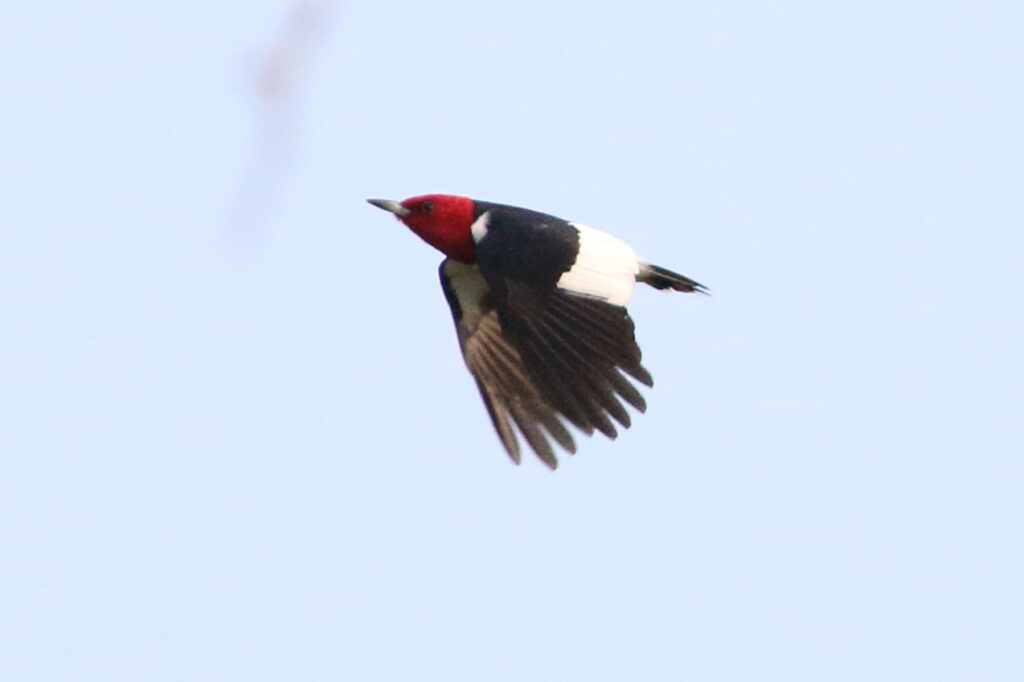
This fuzzy flight photo shows the dramatic color contrasts Red-headed Woodpeckers present, making them easy to identify from a distance.

From Medicine Rocks, we made our way to our camping destination for the night, Ekalaka Park Campground. It was barely noon as we turned off on the dirt road into the higher hills south of Ekalaka, and we took our time, stopping to look at whatever cool birds we happened to encounter. Sure enough, we glimpsed two more RHWOs as they fled up and over a little hill. “Let’s follow them,” I said, steering up a little two-track up along a fence line. As we crested the rise, one of the woodpeckers was sitting on a fence post. It fled as I got out to try to photograph it, but meanwhile, Braden had sighted a surprise Montana life bird for us—Eastern Bluebird! Though almost identical to their Western counterparts, Easterns are easily distinguished by their red throats compared to the blue throats of WEBLs.
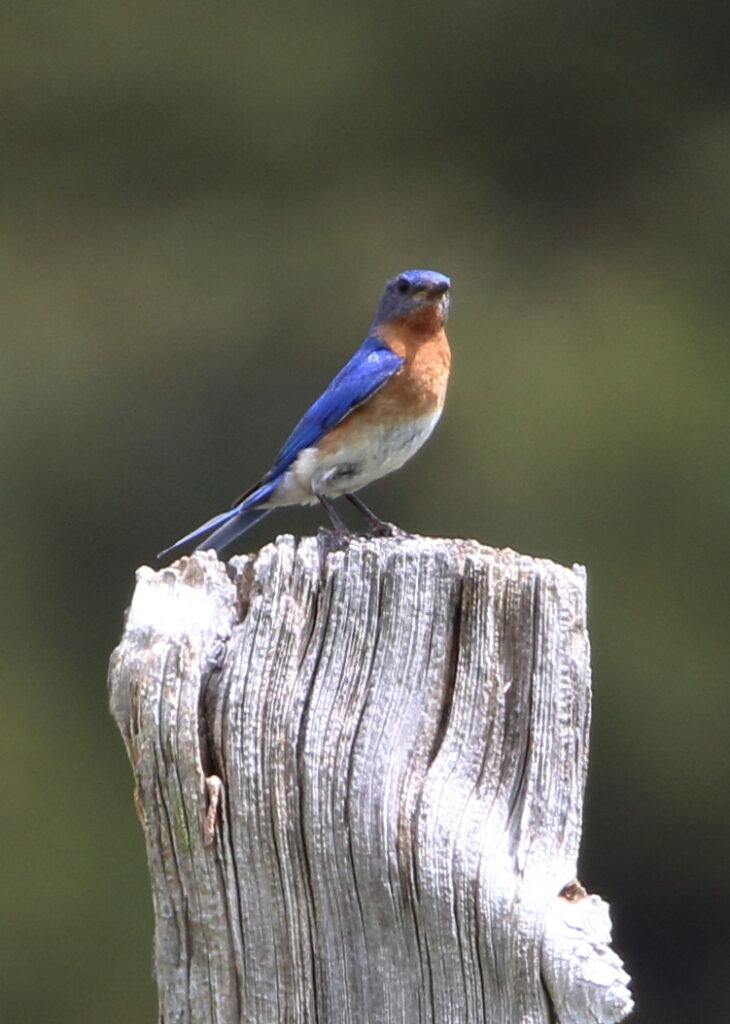
The red throat of this Eastern Bluebird easily distinguishes it from its Western Bluebird counterpart. Montana Lifer!

We continued to pick up great birds along the road: Yellow-breasted Chat, Lark Sparrow, Field Sparrows, and more Red-headed Woodpeckers. My favorite was our first ever really good look at a Plumbeous Vireo. We spent several minutes watching this handsome, “spectacled” bird. Alas, my camera was back in the car so we failed to get a photo of it. Some photos you just have to store in your brain!
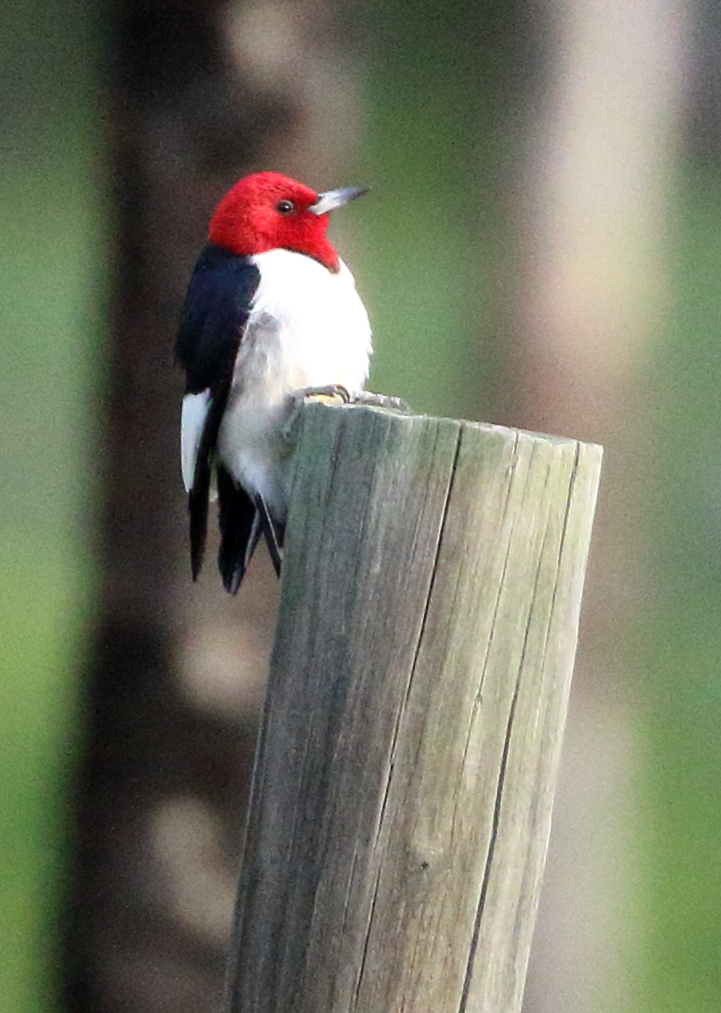
Although abundant, the Red-headed Woodpeckers in Ekalaka were on the shy side. I never managed to get closer than fifty yards or so to one.

We spent a delightful evening in Ekalaka Park Campground—the only campers there. The campground sits in a little bowl surrounded by dramatic cliffs and an older burned forest, making it the perfect habitat for Red-headed Woodpeckers. Sitting at our picnic table, we could hear and see woodpeckers all around us. Every once in a while, one would fly right through our camp. I made bean and cheese tacos and we settled in for our best camping experience of the trip.
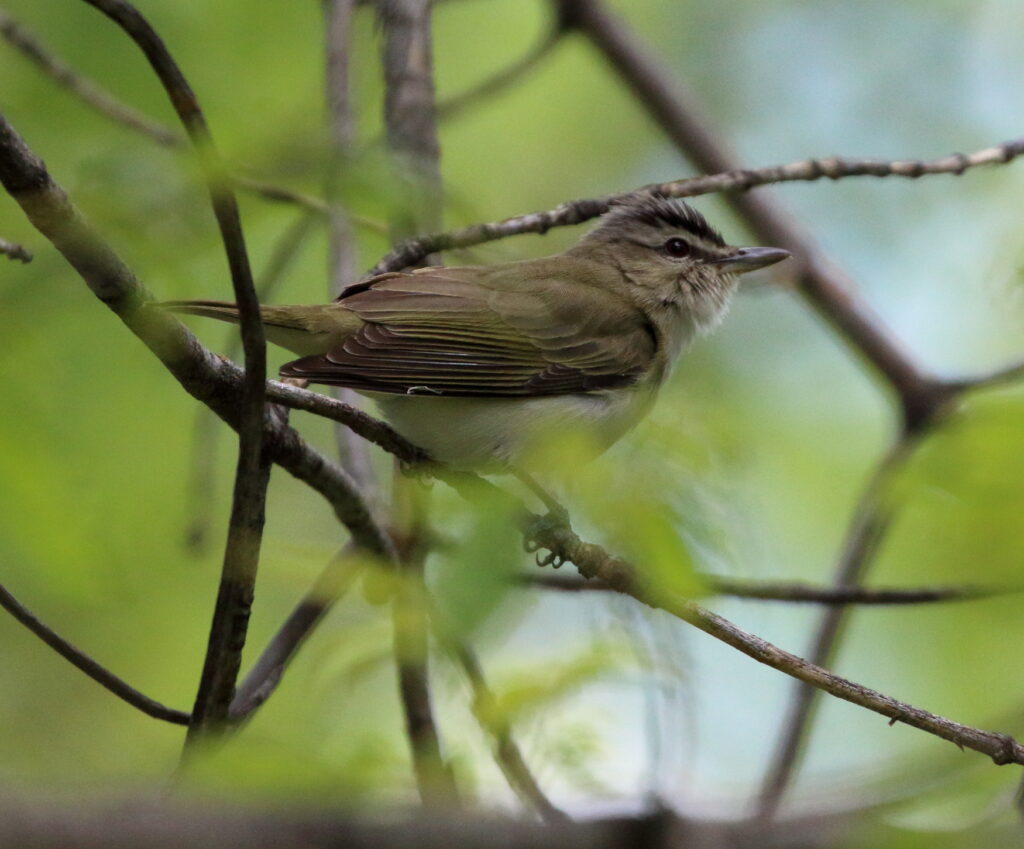
Ekalaka Park Campground offered perhaps our best-ever experience with Red-eyed Vireos, which serenaded us the whole time we were there.

The woodpeckers weren’t the only show offs in camp. That evening, Common Poorwills lulled us to sleep. We also had some of our best experiences ever with Red-eyed Vireos. In fact, when I woke the next morning, it was to a REVI’s delightful song. After working my way out of my sleeping bag, I climbed a nearby hill into the burned forest and picked a log to perch on. The air was cool and fresh, and woodpeckers flew from one snag to another. Sitting there, I felt very grateful for life, and that Braden and I could share the wonders of Montana birdlife together.
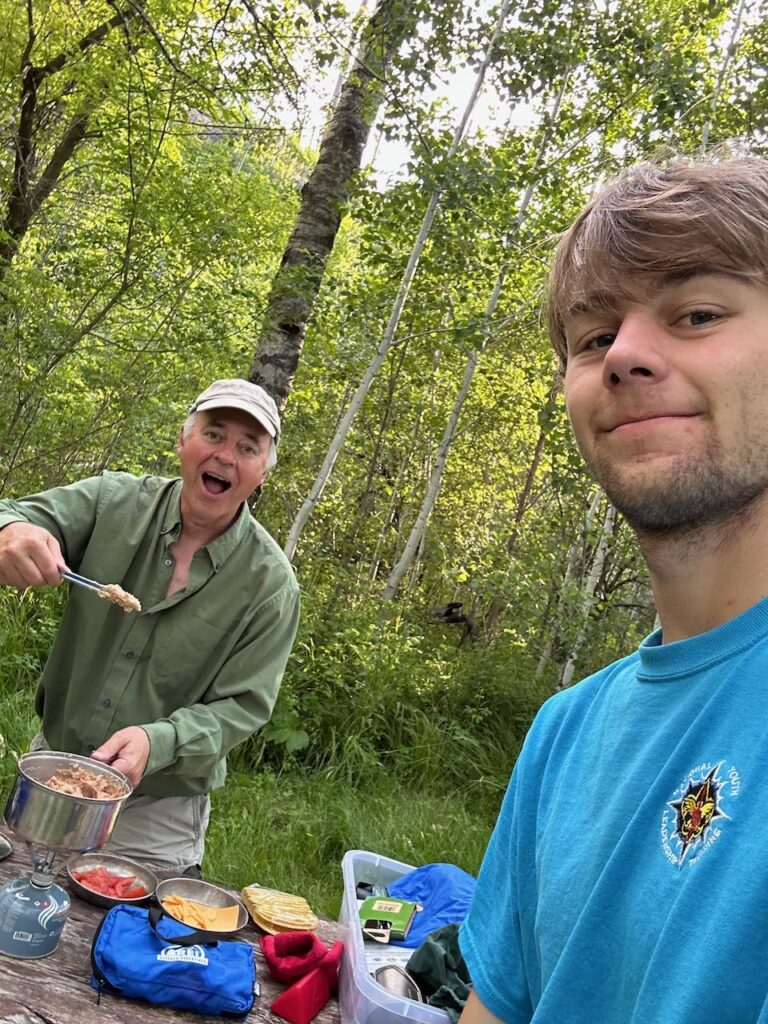
Taco Time in Ekalaka Park Campground.

Wedding Birding in Washington State, Part II

Braden and I write FatherSonBirding in the hopes of sharing the wonders of birds and birding, and the urgency to protect them. We do not accept advertising or donations, but if you’d like to support our work, please consider buying *NEW* copies of some of Sneed’s books—First-Time Japan, for instance, or my forthcoming picture book for younger readers, Like No Other: Earth’s Coolest One-of-a-Kind Creatures, available for pre-order now. We appreciate your interest and hope you will keep reading!

In case you missed Wedding Birding Part I, click here!

Saturday was the long-anticipated wedding day of our friends, Jazz and Brad, but the Big Event wasn’t kicking off until 3:30 p.m. True to my recent trend, I awoke at 3:30 a.m. with ample time to hit the birding spot that I most looked forward to on the trip: March Point. Why? Because I thought it might offer my best opportunity to find both seabirds and shorebirds. Looking at a map, in fact, March Point looked like a wonderful, natural area and I was already envisioning pristine beaches and offshore waters loaded with birds. Imagine my surprise when I arrived at 6:00 a.m. to find that March Point is actually the site of a gigantic Marathon Petroleum refinery!

March Point was not quite the undisturbed natural area I was expecting!

It was a cold, blustery morning, but undeterred, I pulled over and scanned the offshore waters. I spotted several groups of presumed Pelagic Cormorants, but precious little else on the waters or the shore. With some persistence, I did locate another Pigeon Guillemot out near the ginormous pier jutting out into Puget Sound, but it was slim pickins.

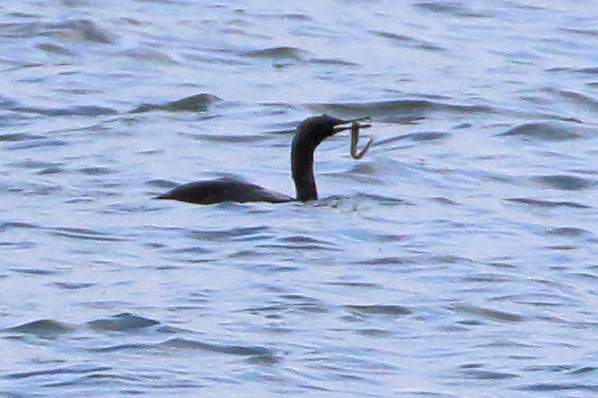
What do you suppose this Pelagic Cormorant is about to eat? I’m guessing an eel-like fish called a wrasse!

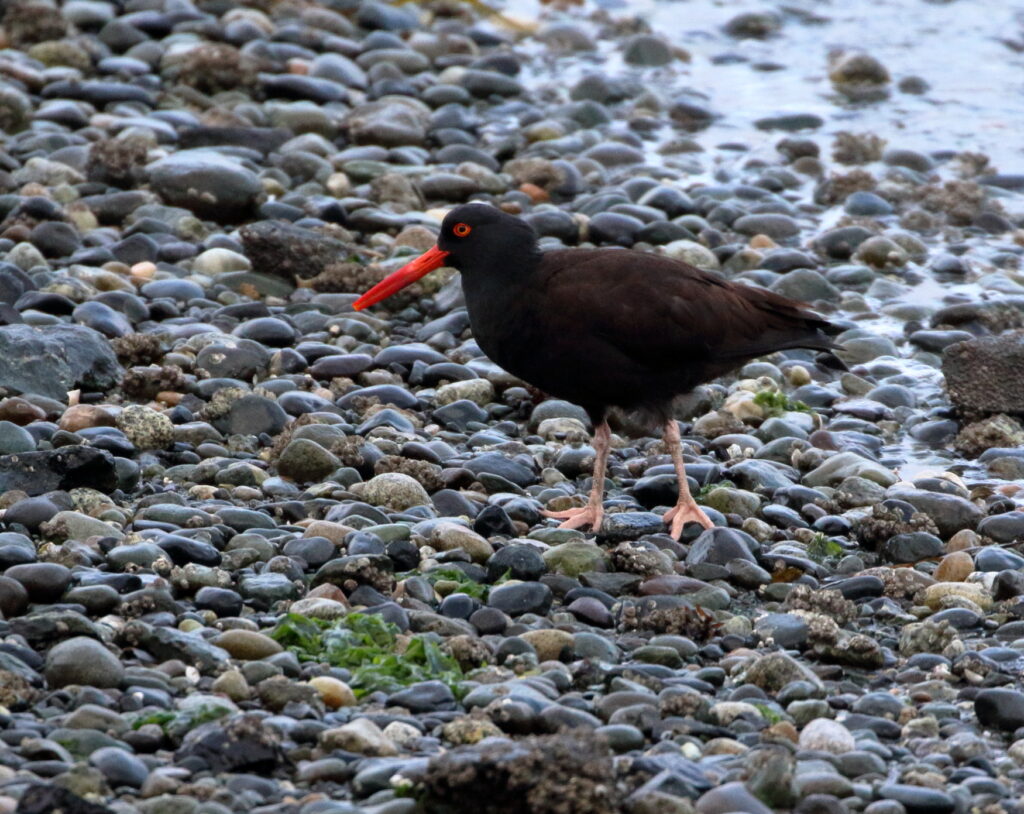
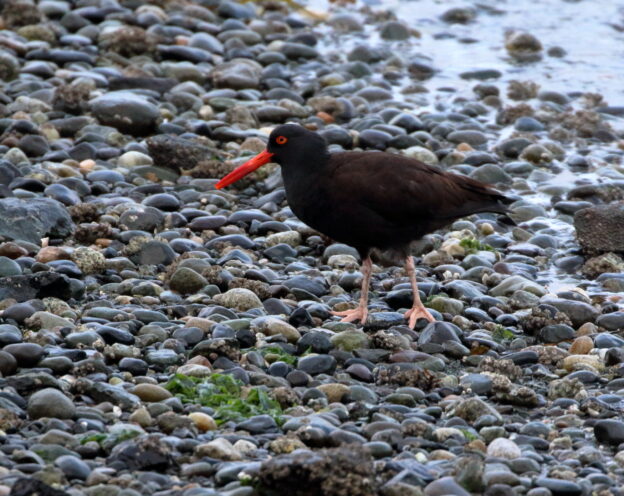
I kept driving, pulling over now and then to scan the shore—no doubt closely monitored by the refinery’s security team. Finally, at one pull-out, I spotted a bird near the top of my trip wish list: a Black Oystercatcher. I watched this magnificent bird from my car for several minutes before it flew off, leaving a smile on my face.

This Black Oystercatcher at March Point definitely strolled into contention for “Trip Bird” honors for our Wedding Day weekend.

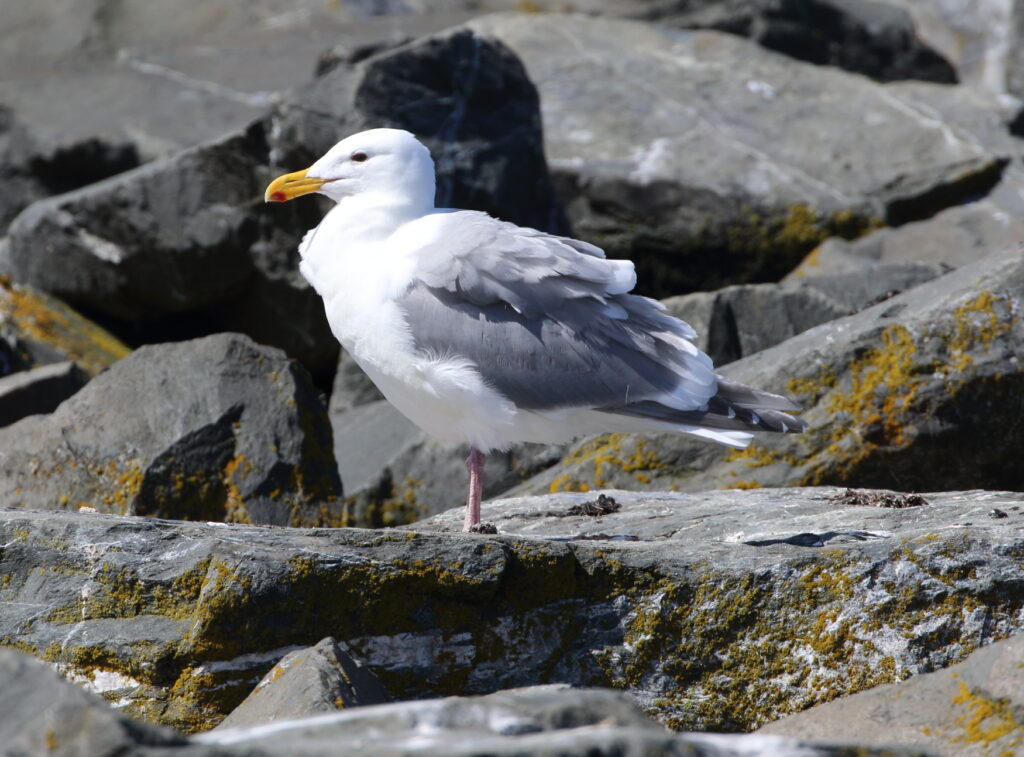
Turning around, I made my way back around immense oil storage tanks and stopped to study some Glaucous-winged X Western hybrid gulls. It took some research and a discussion with Braden to figure out exactly what these gulls were. Glaucous-winged Gulls are known for beautiful soft gray wings and wing tips, but all of the gulls I was seeing looked too dark—yet not dark enough to be Western Gulls. According to Braden, though, this part of Washington State was dead center in the transition zone between the two species, and accordingly, most of the birds were hybrids.

This Glaucous-winged X Western hybrid gull is typical of the gulls I saw during our entire trip to Washington: too dark for Glaucous-winged, too light for Western. Very educational!

On my way back to the hotel, I stopped at Padilla Bay at the base of March Point for a nice visit with some warblers and swallows. There, I heard my year’s first Black-headed Grosbeak giving off its frenetic robin-like song. Then, it was back to Burlington to prepare for the wedding.

The wedding was a smash hit, full of love and music and joy. And never fear, dear readers, I did amass an eBird list of six species at the wedding venue, including the year’s first look at a Black-headed Grosbeak, singing in celebration of Jazz and Brad’s big day. Oh, and they (Jazz and Brad, not the grosbeaks) served Thai food at the wedding. How good is that???

Alas, the next day, we were due to return to Seattle for our flight home. Fortunately, we didn’t need to be at the airport until noon or one o’clock, leaving time for one last morning birding adventure. I really wasn’t sure where I should go. I wasn’t having much luck along the coast, and felt I’d seen most of the forest birds that interested me. But there were two more species I wanted to take a shot at: Black-throated Gray Warbler and Red-breasted Sapsucker.

Ted Reep Park offered the trip’s last birding opportunity—and my best shot at seeing both Red-breasted Sapsuckers and Black-throated Gray Warblers. A bit of bush-whacking required!

It had been years since I’d seen either one of these birds and, well, I was missing them. Lucky me, eBird showed a spot only a mile from our hotel which had recorded both birds in the past month. I wasn’t sure what my chances of finding them might be, but after a quick bowl of oatmeal, I made my way over to Ted Reep Park. I parked in the deserted YMCA lot, despite warning signs threatening that I would be towed. After all, I was a member of the Missoula YMCA!

From the time I pulled up, the spot looked—or rather, sounded—promising. Merlin’s Sound ID immediately picked up White-crowned Sparrow, Black-headed Grosbeak, Warbling Vireo, Song Sparrow, Yellow Warbler, and more, and I soon started seeing some of these birds.

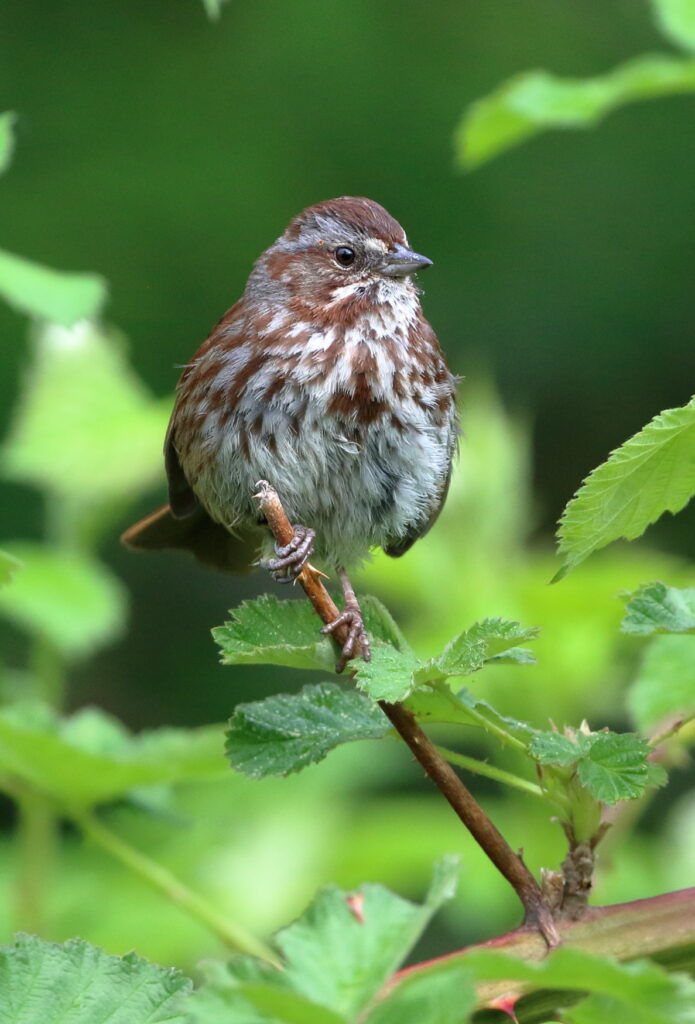
You just gotta love Song Sparrows. Not only are they incredibly handsome critters, they often pose for close-up photographs!

This was thick riparian habitat, however, where visuals were hard to come by and most birding was by ear—not ideal for someone like myself with hearing disabilities and a brain that had trouble remembering bird vocalizations. My new hearing aids were a vast improvement over my old ones, though, and with the help of Sound ID I began teasing out most of the species around me. Then, I heard something that got me really excited: a stuttering drumming sound, like a car having trouble starting up! A sapsucker! But which one?

A quick look at my Sibley app told me that Red-breasted was the only sapsucker remotely likely to be in this area, so I plunged into the woods, following the trail toward the stutter-step drumming. Predictably, the trail grew more and more sketchy, and I soon found myself crawling under and over logs that had fallen across the path. Nevertheless, after five minutes, I found myself standing directly beneath the sapsucker drumming.

There were at least two sapsuckers—but probably three or four—and it became evident that they were dueling, perhaps over territories or mates. But darn it, try as I might, I could not spot any of them against the backlit tree trunks and branches! Just as frustrating, the birds kept moving around, so like a Keystone Cop I chased the birds up and down the trail. Finally, I despaired of getting a look at any of them, but by now I at least was confident that these were indeed Red-breasted Sapsuckers. And wouldn’t you know, as soon as I decided that, two of the birds chased each other right by me, their red heads clearly visible even in the dark forest!

Happy, I bushwhacked through raspberry vines and a swath of chest-high grass until I ran into another trail that led me back toward my car. I still hadn’t seen a Black-throated Gray Warbler, and didn’t find one on the hike back, but I was delighted to have discovered such a wonderful birding spot. It again reaffirmed how important it is to protect natural habitats for animals and people. Bravo Washington for protecting places like Ted Reep Park!

Washington Wedding Trip Report!

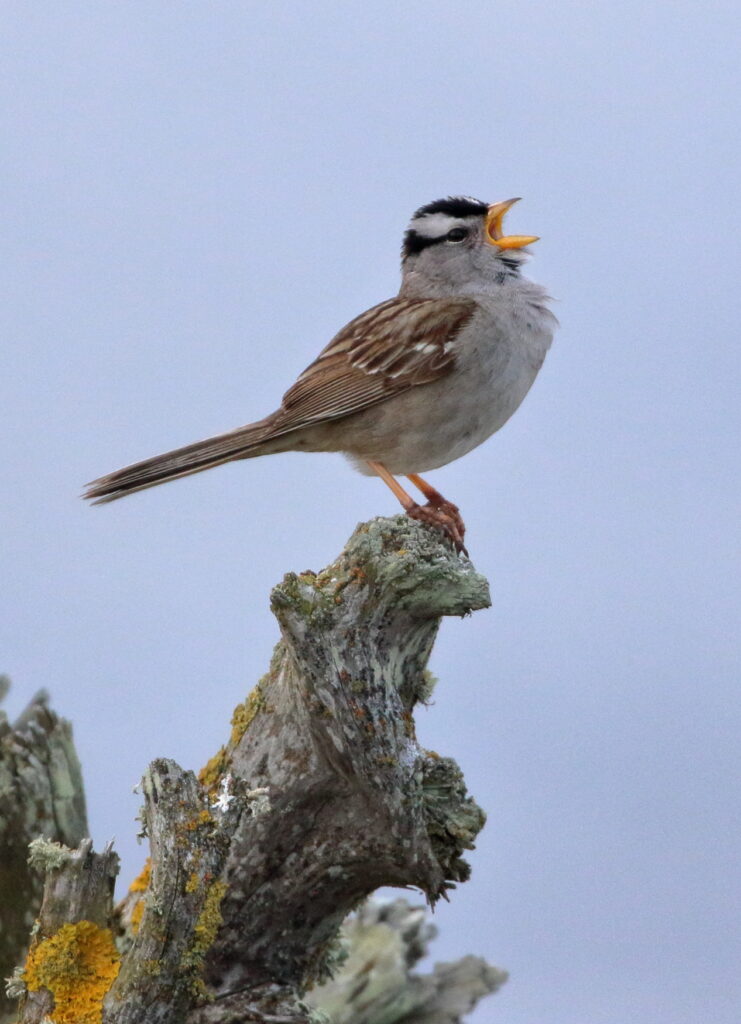
I failed to capture any photos of the Red-breasted Sapsuckers, but just love this White-crowned Sparrow’s pose out at March Point. I think he’s singing “Once we all wean ourselves off of fossil fuels, we can turn this place back into the natural habitat it is meant to be!” At least that’s what Google Translate came up with.

College Search Birding in California

If you’ve been following FatherSonBirding for any length of time, you know two things about us: we love to travel and we love to bird. Sometimes we plan dedicated birding trips, but whenever possible, we like to go easy on our carbon footprints and fold birding into travel that we were going to do anyway. In the past year, for instance, I’ve been able to bird in Japan and Spain while taking family vacation trips I’d been planning for years. Often, I get to bird while taking business trips to, say, Texas or Missouri. Right now, Braden is birding his butt off while doing a semester of study abroad in Costa Rica. As the parent of two young people, another potential “double-dipping” birding opportunity arose when my children began thinking about college. After all, it’s a good idea to visit a college you might want to attend, right? Unfortunately, covid kai-boshed that possibility with Braden—though we did get to bird in New England when I took him back east to start his college career at the University of Maine. With my second child, Tessa, I’ve been more fortunate. Last week she and I took a lightning trip out to California to visit a couple of potential schools she is considering. Even better, we went to places I’d never gotten to bird.

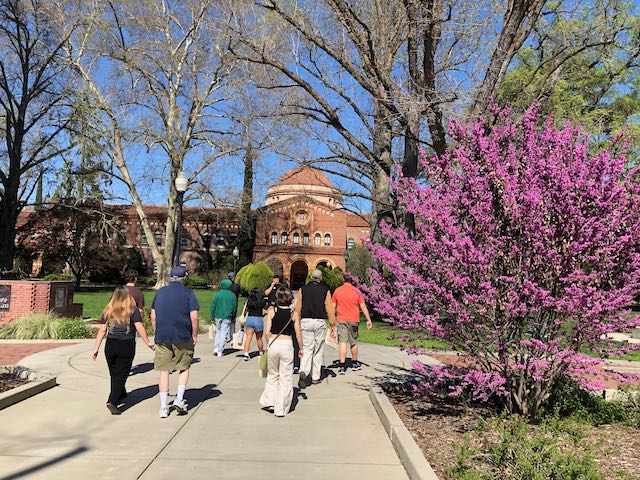
Cal State Chico put on a show for us in its best spring colors. Not surprisingly, I saw some great birds there, too, including Red-shouldered Hawks, California Scrub-Jays, and Acorn Woodpeckers—right on campus!

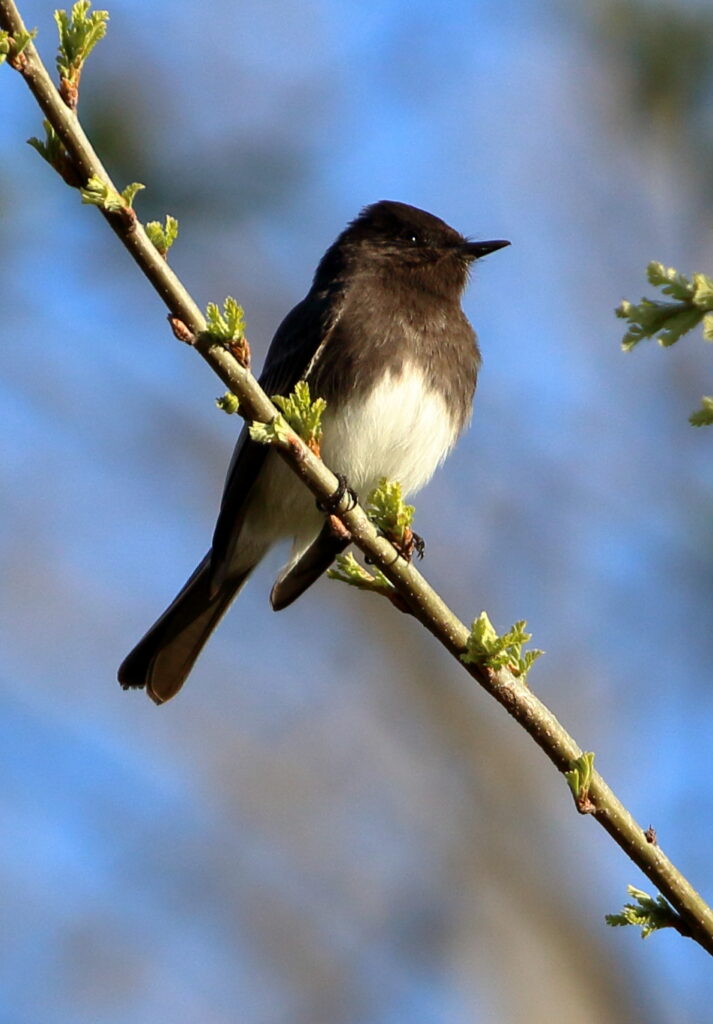
After rising at 3:30 a.m., Tessa and I landed in Sacramento at the outrageously convenient hour of 9:00 a.m. It was a glorious, sunny California morning and we made a beeline to U.C. Davis, where I’d spent my own freshman year before transferring to U.C. Berkeley to finish out my college years. Davis had changed a lot, but I still managed to find my way around—though I did drive our rental car down a dedicated bike path, much to the consternation of dozens of student bicyclists trying to get to class! After a quick tour around campus, we found a parking spot downtown and decided to have lunch at Crepeville and while waiting in line, I finally had a chance to start looking around for birds. One of the huge regrets of my life is that I’d left California before I’d become a birder because, with the possible exceptions of Texas and Alaska, there is no better state in the union to bird. To wit, within yards of Crepeville, I spotted Yellow-rumped Warblers, a Black Phoebe, and a Western Bluebird—right in downtown Davis! But my college search birding had just begun!

Just the name phoebe can’t help but melt a birder’s heart, but these Black Phoebes truly are handsome birds.

After a quick tour of Davis we headed north to our primary college destination, Cal State Chico, which boasts a musical theatre program of particular interest to Tessa. We arrived in Chico pretty pooped from our already extensive exertions and checked into our hotel for a rest. The prospect of some deeper California birding, however, did not let me tarry long, and after twenty minutes I left Tessa to recharge while I headed to the dubiously named Hooker Oak Park.

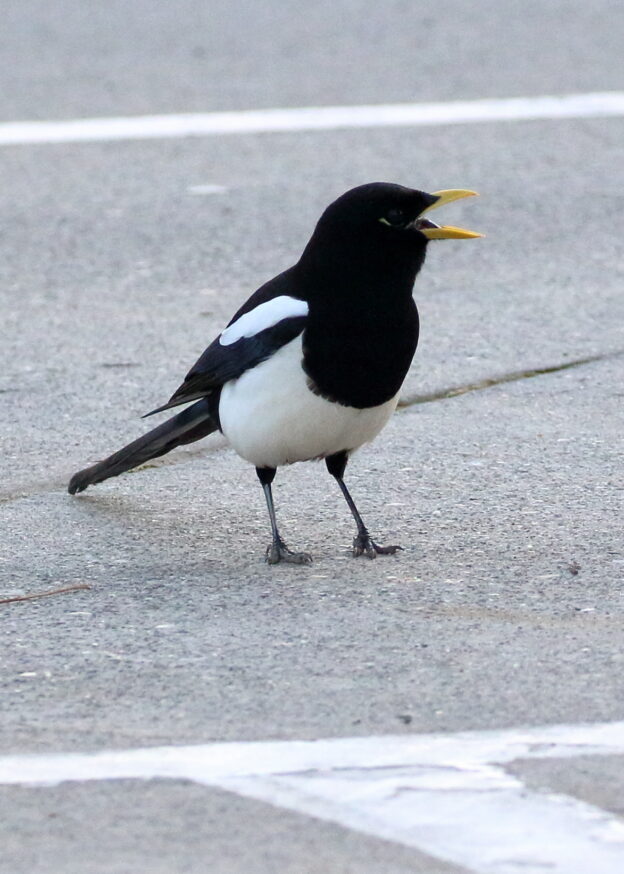
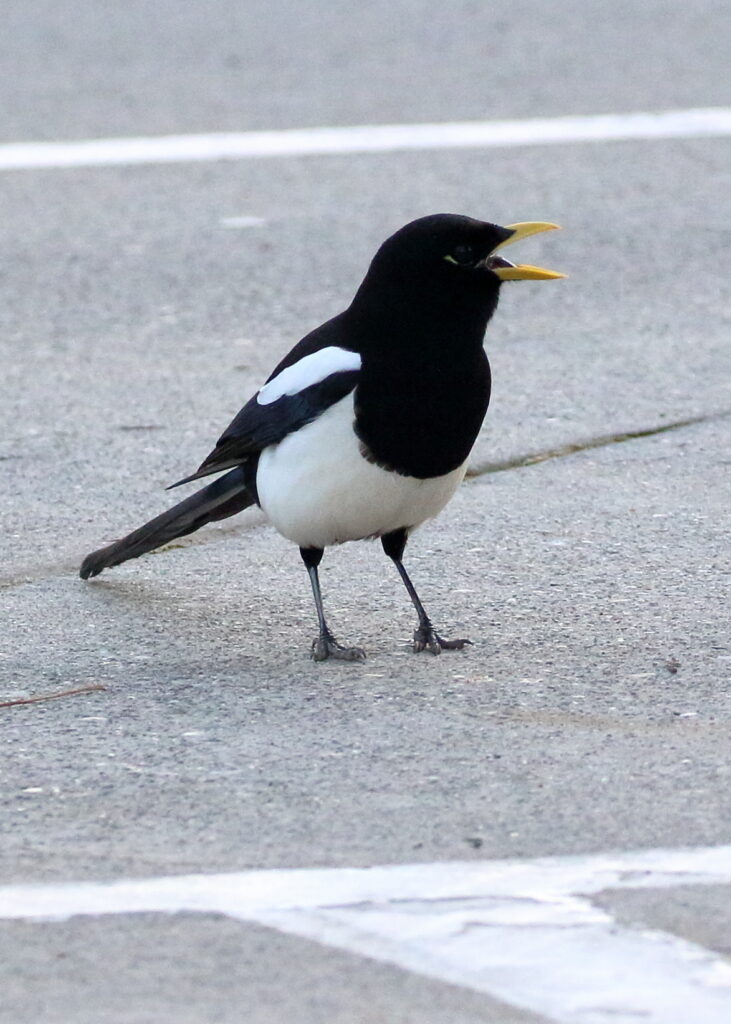
Any trip to California is a chance to see some of California’s specialty birds—including Yellow-billed Magpies, which only live in selected areas of central California. On Braden’s instruction, one morning I got up early to drive to Durham High School, and sure enough, found me a pair!

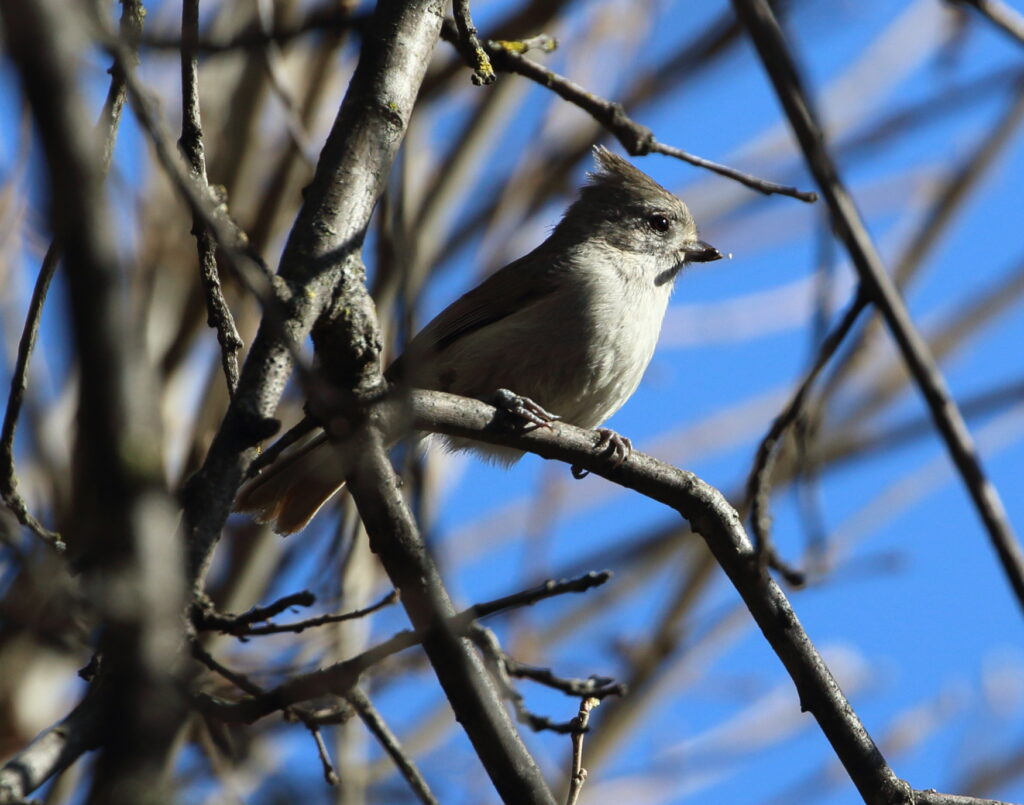
To be honest, the park looked a little over-developed and ragged, and I wondered whether I should move to some healthier-looking oak groves just down the road. Then I reminded myself that this was California and birds were likely to be anywhere. Almost immediately, this was confirmed when I sighted one of the targets of my trip, an Oak Titmouse singing in a sycamore tree.

What can I say? Oak Titmice are just plain adorable.

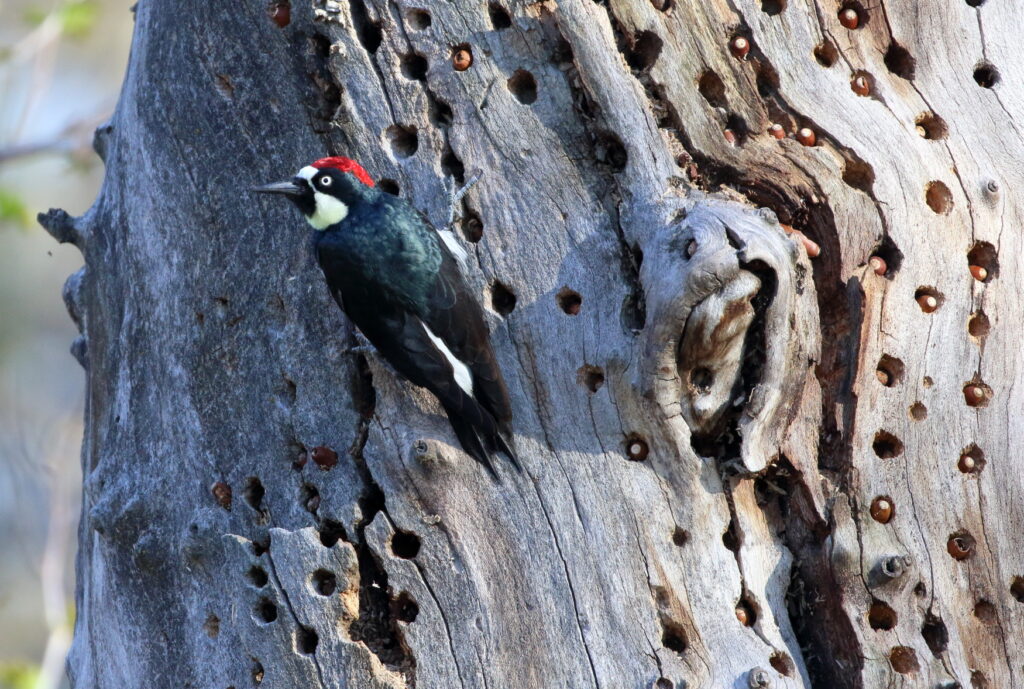
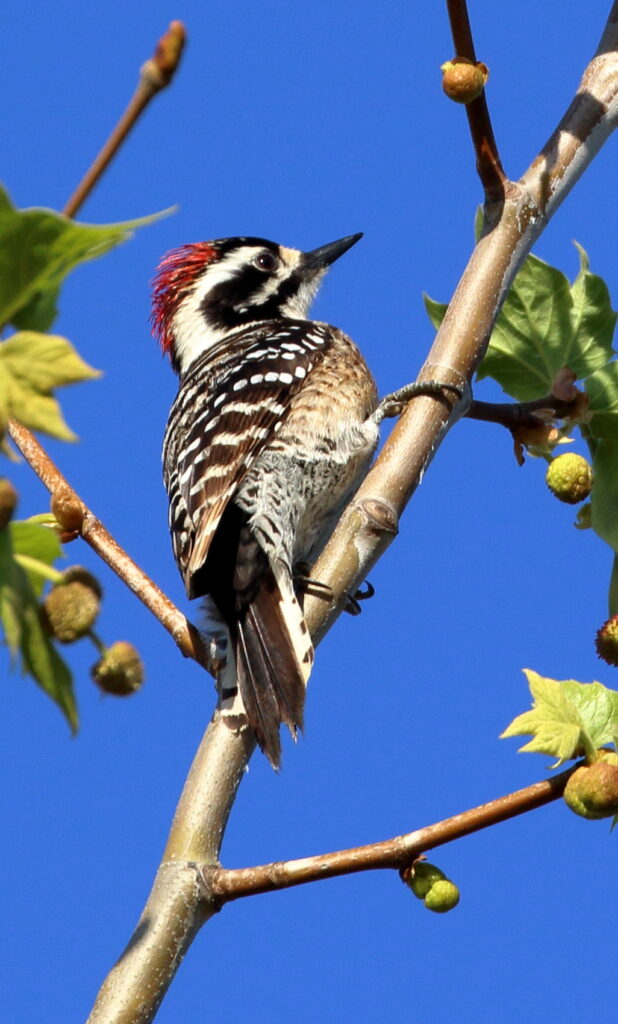
I set out to explore further and birds popped out from left and right—including most of the birds I had hoped to see. I got super excited to see an Acorn Woodpecker—only to discover that they were everywhere in this park. Not long after, I encountered a Nuttall’s Woodpecker, the other woodpecker at the top of my list.

You can’t beat an Acorn Woodpecker on one of its acorn storage trees! With their black masks, these cooperative birds look like banditos, and the way they aggressively mob other species, they apparently can act that way, too.

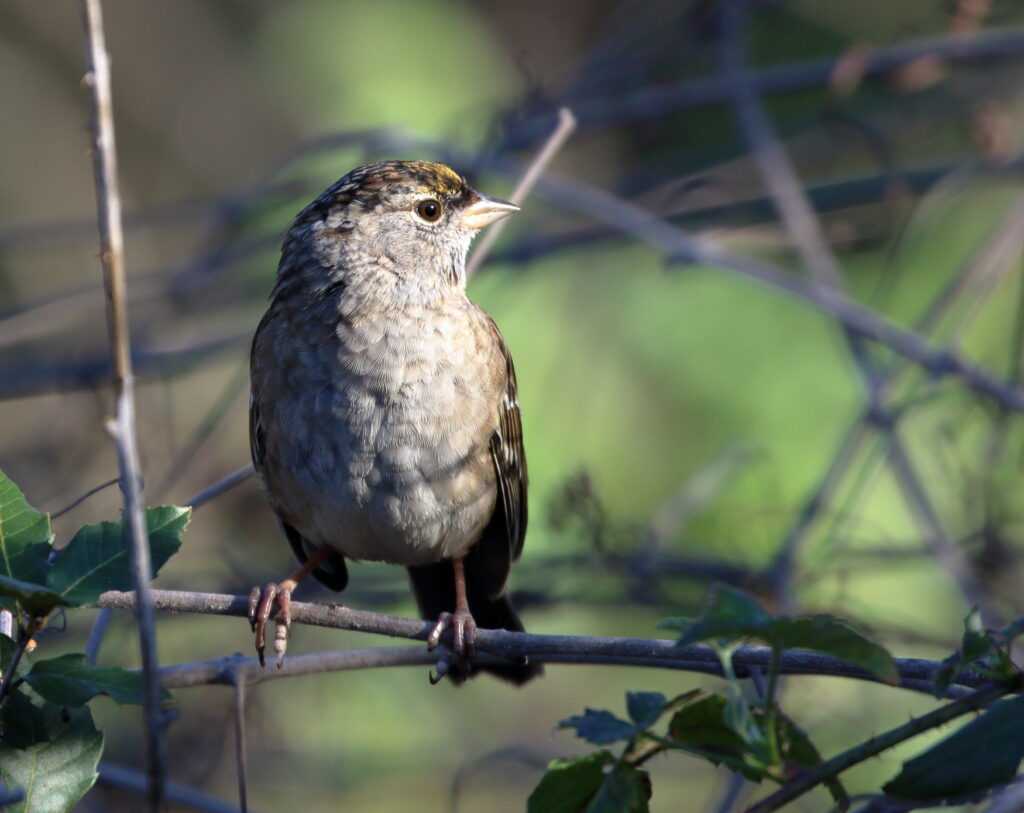
Exploring further, I encountered California and Spotted Towhees, Golden and White-crowned Sparrows, and White-breasted Nuthatches.

With my lousy hearing and dearth of knowledge about California bird calls, Merlin’s Sound ID feature proved especially useful and helped me find several species, including California Quail. My biggest surprise of the outing were two Hermit Thrushes, which hadn’t been on my radar at all but do winter in the Central Valley.

Love Golden-crowned Sparrows!

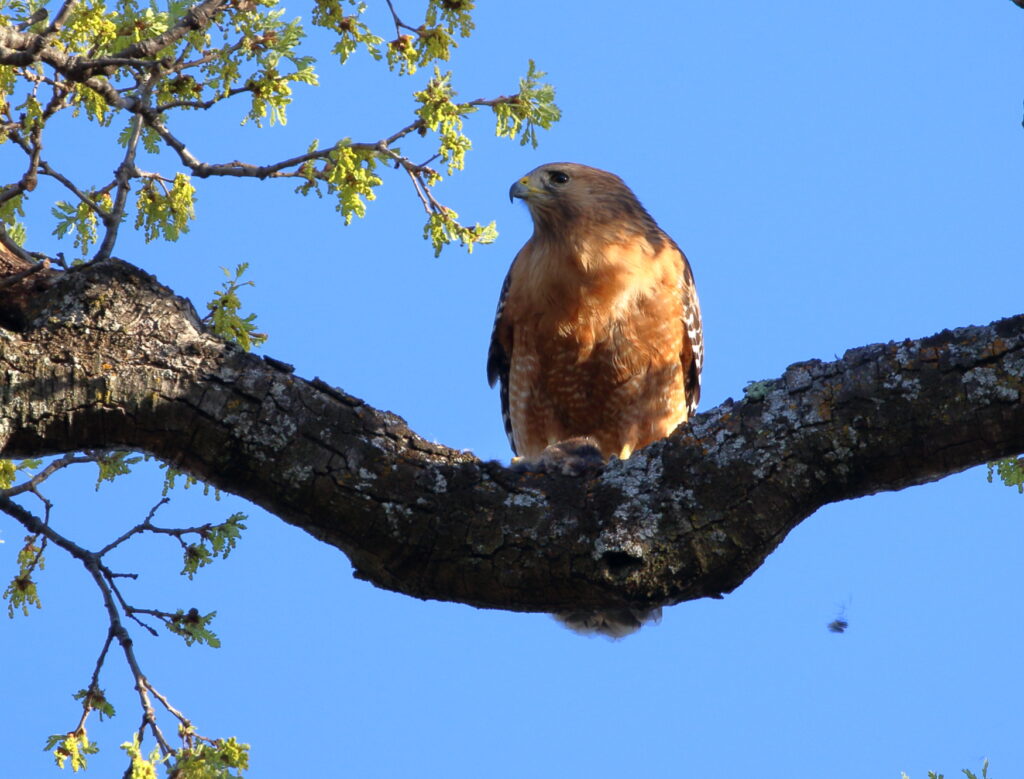
One disappointment was that I didn’t hear or see any Red-shouldered Hawks, a particularly abundant species in California. As I was about to climb back into my rental car, however, I heard a familiar “Kee-a, kee-a, kee-a, kee-a!” and spotted a large reddish bird flying straight toward me. As it passed overhead and landed on a branch, I saw that it held a tasty mammalian morsel in its talons. Almost immediately, another Red-shouldered Hawk plowed in and displaced the first one, stealing its meal. I grinned. Not only did I get to see a RSHA, I got to see hawk behavior, too!

This Red-shouldered Hawk drove another RSHA off its prey, which it now holds firmly in its grasp.

The next two days, Tessa and I visited with some of my most cherished friends, who had happened to move to Chico decades before, and, oh yeah, we took a great tour of the Chico campus. The campus, I gotta say, mightily impressed both Tessa and me. Chico is part of the WUE college exchange program, meaning that if any of you Montana parents are also contemplating schools, you can get big discounts on out-of-state tuition. But back to the birds, I continued to see awesome birds everywhere we went. I did want to get in a visit to another bona fide natural area, though, so the day of our campus tours, I woke early and drove out to Bidwell-Sacramento River State Park, about fifteen minutes out of town.

In the parking lot of Bidwell-Sacramento River State Park, I got my best looks ever at another California specialty, Nuttall’s Woodpecker.

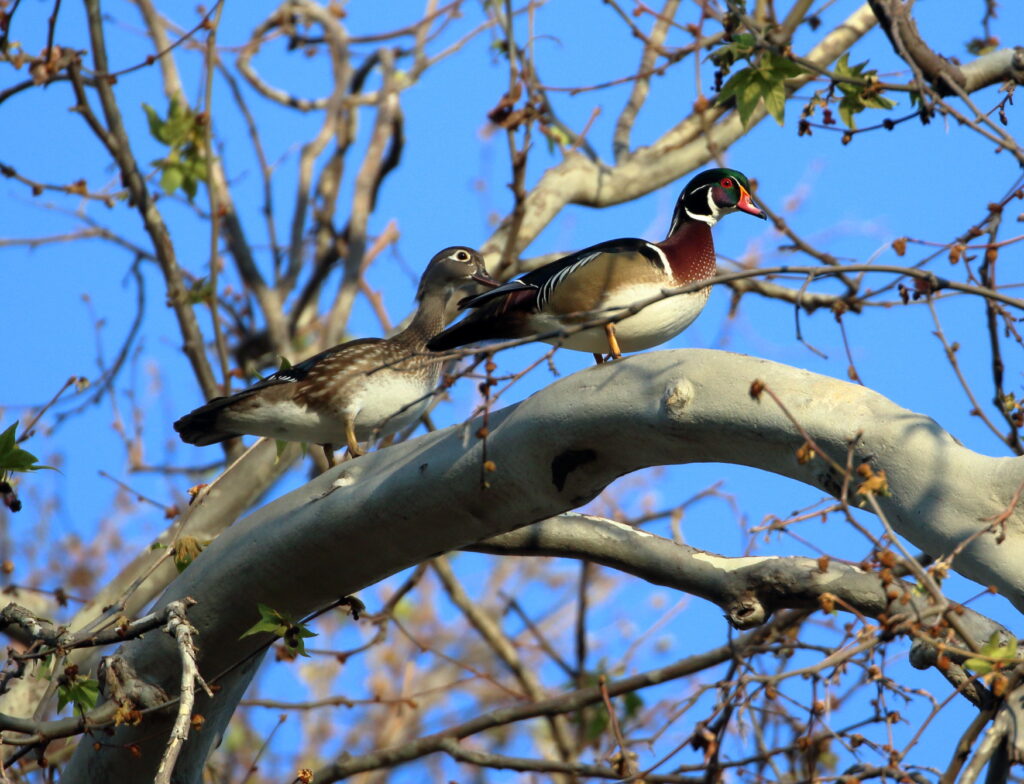
I arrived before dawn—actually a bit early for the birds—but a group of 55 Wild Turkeys greeted me, so I went ahead and set off on dew-soaked trails paralleling the river. I had set a goal of 50 bird species for this California trip and began the day at about 45—but quickly blew past that. Almost immediately, I saw Wood Ducks hanging out in the trees and spotted two pairs of kingfishers bickering over the river. As the day warmed, more species kept appearing: a Great Egret and Great Blue Herons, tons of flickers and Tree Swallows, Ruby-crowned Kinglets and White-breasted Nuthatches, a pair of Turkey Vultures trying to get their engines started.

It’s easy to forget that Wood Ducks nest in trees—something I was quickly reminded of at Bidwell-Sacramento River State Park!

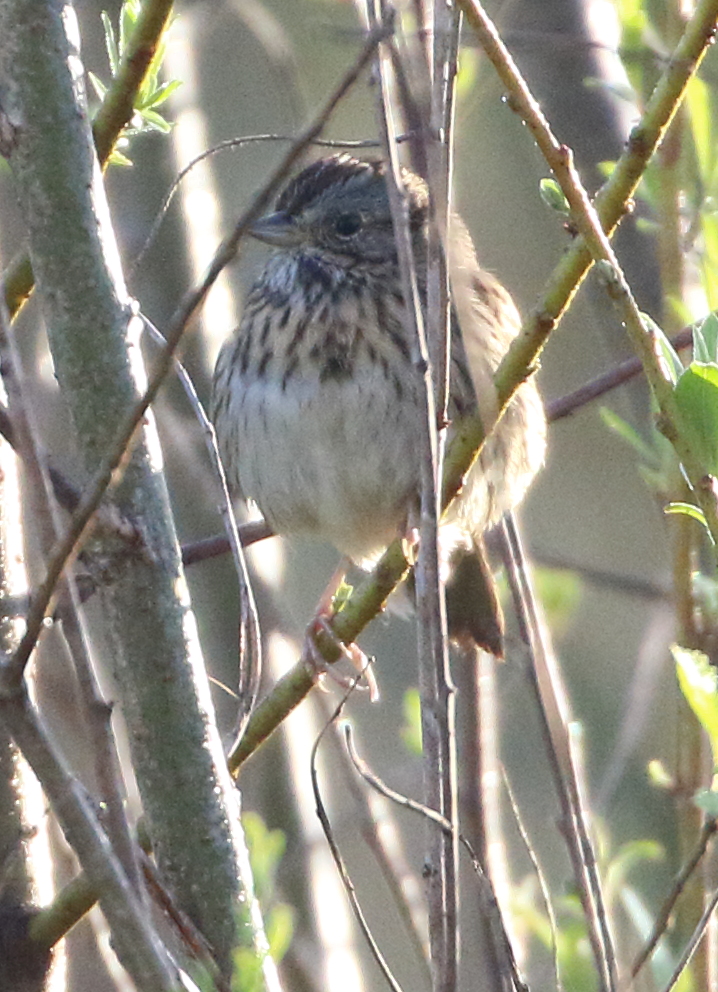
After an hour, I began making my way back to the parking lot and spotted a group of Dark-eyed Juncos and White-crowned Sparrows ahead. Then, I saw something that really got me going: a small, brownish bird with short, vertical lines at the top of its breast and a yellowish wash. Lincoln’s Sparrow! And not one, but two of them! I managed only lousy photos, but was thrilled to see one of Braden’s and my favorite Montana birds hanging out in its winter habitat—and just before migration. Is it possible I will see these exact same birds in Montana in a few short weeks???

Yay! Lincoln’s Sparrow—in its winter habitat. This, btw, was one of only two species I added to my California life list, which now stands at 226 species. The other was Common Merganser.

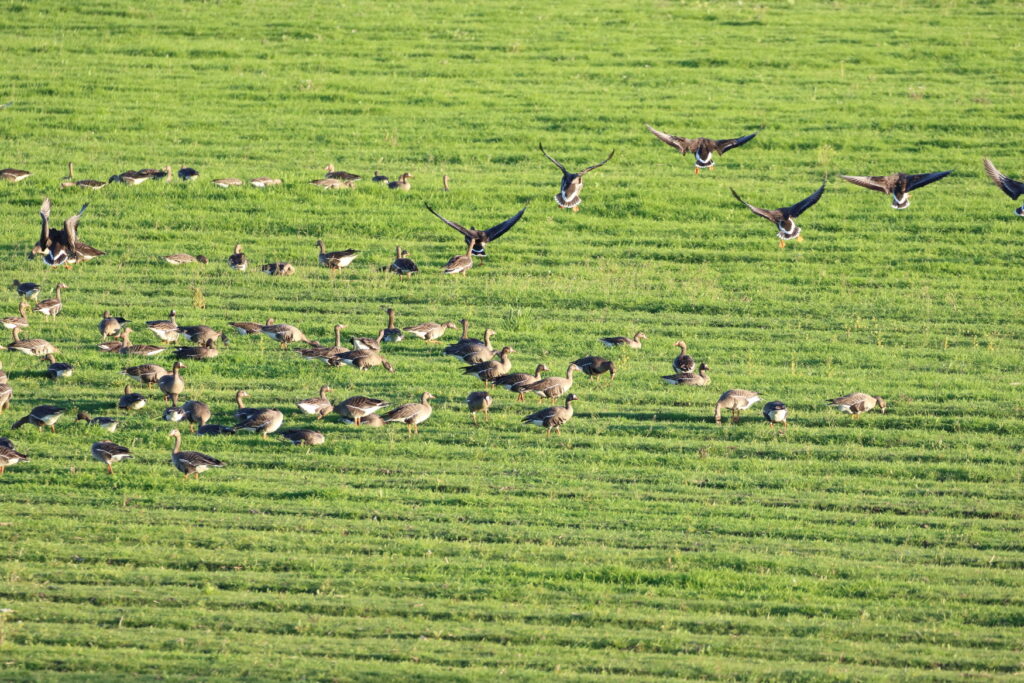
That evening, after our tour and our drive back to Sacramento, I rallied myself for one more birding mission. After checking into our hotel in Woodland, I drove about five miles to where I-5 crosses the Sacramento River. I got off on some small side roads and began scouring fields and places with standing water. I found a few Northern Shovelers and a trio of Black-necked Stilts, but not what I was looking for. Then, I parked and began walking on a path that led back toward the interstate. Almost immediately, I saw a group of about 200 geese in a verdant field. I raised my binoculars and grinned. Yes! Greater White-fronted Geese! The last species I had really hoped to see on the trip. I stood and watched them for about ten minutes, as other geese flew over, circled around, and joined the throng. It was a perfect ending for what turned out to be a perfect college—and birding—trip.

California Trip Report: https://ebird.org/tripreport/214105

My last target bird of the trip, Greater White-fronted Geese, captured just as the sun was setting on Sacramento.

Avian Reveal: Our Five Picks for New Bird Names

We had planned to publish this post on Thanksgiving, but were in Minnesota and the “auto publish” tool failed—and not for the first time. Still, we hope you enjoy this post-Thanksgiving post, and even more, we hope you all had a lovely long weekend with friends and family. Braden and I have much to be grateful for—including you, our faithful readers—and thank you for your interest and enthusiasm over the years. Now get out there and bird!

Lest you think the birding community is immune from internecine disputes, I present to you two issues that have been roiling birders for the past decade: the woeful situation of horrible state bird choices, and the more recent—and contentious—decision by the American Ornithological Society to begin changing English language common names of all birds named after people. Braden recently addressed the disgraceful situation surrounding our state birds in his post “Getting Serious About State Birds”. Today, I’d like to tackle the AOS’s earth-shaking naming decision.

If you’re a birder, you pretty much have to be living under a rock not to know about this recent shocker. A complete, explanatory news release can be found here, but basically, the American Ornithological Society has long assumed responsibility for the English language common names of all American birds. After years of debate, it has decided to axe all eponymous bird names—those honoring specific individuals. This decision has triggered several immediate results. One is to improve the vocabulary of millions of Americans (myself included) who have had to look up the word “eponymous” in the dictionary. The second is to unleash a foaming volcano of vitriol as birders across America—nay, the world—have vigorously defended and attacked the new policy.

I’ll just come out and say that both Braden and I generally support the AOS decision, but as with most things, the matter is more nuanced than passionate social media posts lead you to believe. There’s no question that certain eponymous names can be deemed offensive, but there are plenty of others that you have to try really hard to be offended by—and it’s a shame we have to chuck the baby out with the (bird) bath water. Unfortunately, failing to do so would ignite endless, often pointless debate about each and every eponymous bird name that exists. All of that time, energy, and money is better spent protecting birds rather than debating their names, and so the AOS wisely decided to wipe the slate clean.

Rather than add to the already burdensome body of opinion flooding the media, Braden and I decided it would be fun simply to pick five of our favorite Rocky Mountains birds that will be impacted by this decision—and try to come up with the perfect new names for each. We hope you will weigh in with your own (non-offensive) thoughts about our choices, as well as your own (non-offensive) alternatives. We will start with perhaps our favorite North American warbler—and perhaps the most difficult to rename.

MACGILLIVRAY’S WARBLER

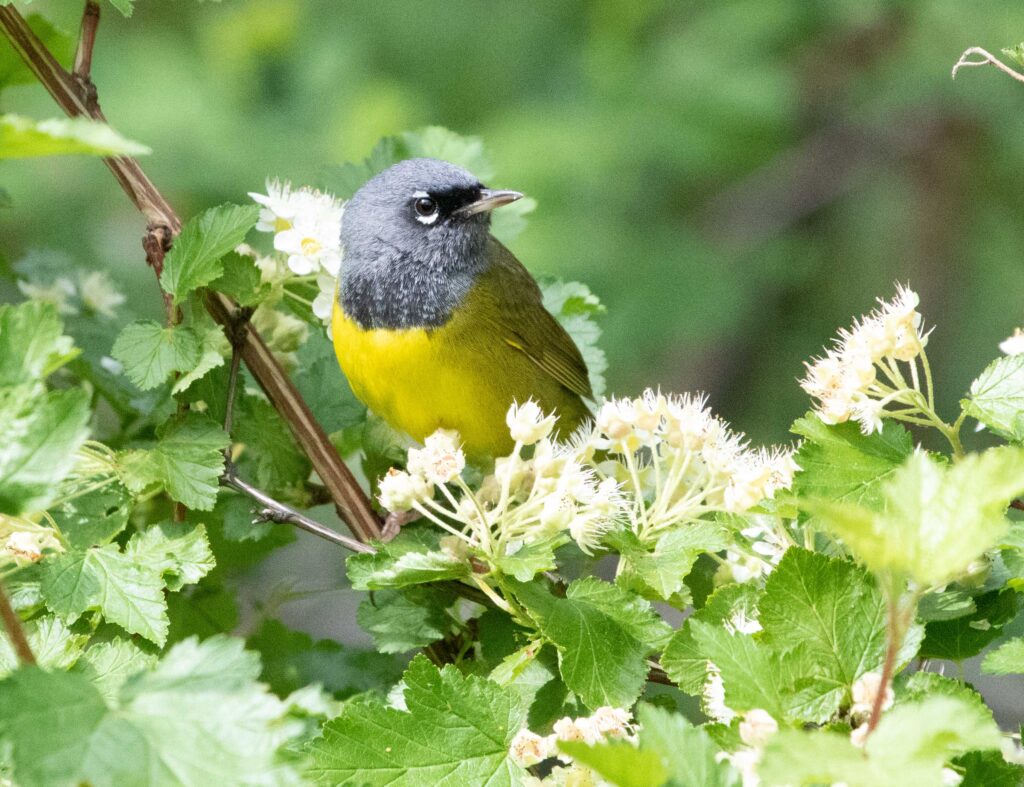
One of the ironies of MacGillivray’s Warbler is that it was named after an 18th-century Scottish ornithologist who devoted much of his life to, you guessed it, coming up with better names for British birds! Names such as Red-throated Thistlefinch, Quaketail, and Provence Furzeling—none of which survived the test of time. MacGillivray was a controversial figure and apparently offended almost everyone during his lifetime, but that didn’t stop John James Audubon from naming one of our most spectacular American warblers after him. I mean, just look at this bird. He’s not as showy as some others, but his colors are refined, sophisticated. Any lady of quality will recognize it—and if his looks don’t do it, his sweet sophisticated song will clinch the deal. Braden and I always stop when a MGWA pops out of a bush, and we’re not the only ones. But what should the AOS call it?

The bird breeds in shrubby places, often near streams or in recent burn areas, but somehow Shrubby Warbler or Second-growth Warbler don’t seem deserving of this special bird. As far as its looks, Hooded Warbler and Mourning Warbler are already taken—and honestly, aren’t all that great anyway. The partial white eye rings stand out, and are an identification key, so perhaps Crescent-Eyed Warbler? Its hood also gives off a velvet or satiny sheen, so Velvet-hooded Warbler? Quicksilver Warbler? Silver-headed Warbler? After much agonizing, we have landed on Satin Crescent-Eye. Of the five birds included here, this one poses the toughest challenge, so we’d love to hear your suggestions!

CLARK’S NUTCRACKER

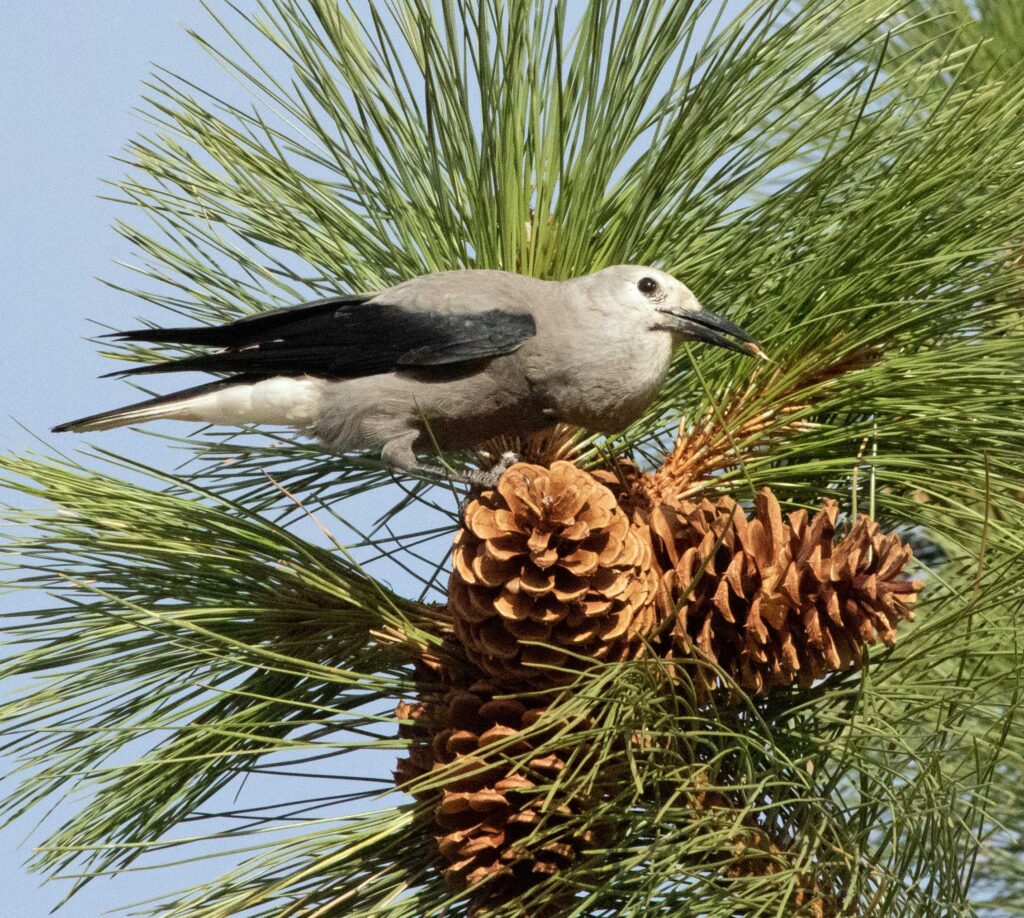
When William Clark, of the famous Lewis and Clark Expedition, first saw a Clark’s Nutcracker, he thought it was a woodpecker. However, that didn’t prevent the bird from becoming one of the most iconic species of the West. Clark’s Nutcrackers are especially known for planting high-altitude pine forests—especially those of the White-barked Pine. Each bird caches thousands of pine seeds, far more than it can use, and the overlooked seeds sprout into new forests. The birds and trees are so interconnected that the pines have actually evolved changes in the shapes of their seeds and cones that facilitate dispersal by the nutcracker. Because of this important and fascinating relationship, Braden and I hereby vote to bestow the bird with the name Whitebark Nutcracker. Long live the nutcracker!

LEWIS’S WOODPECKER

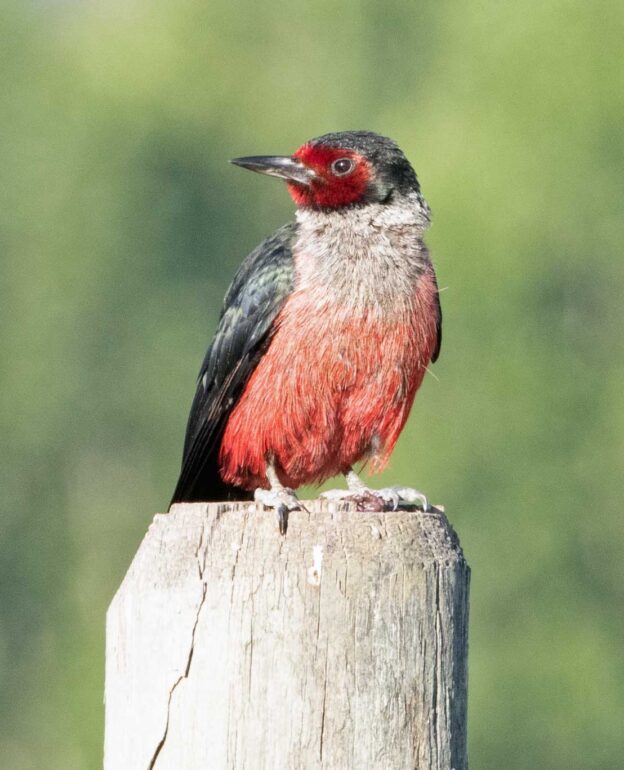
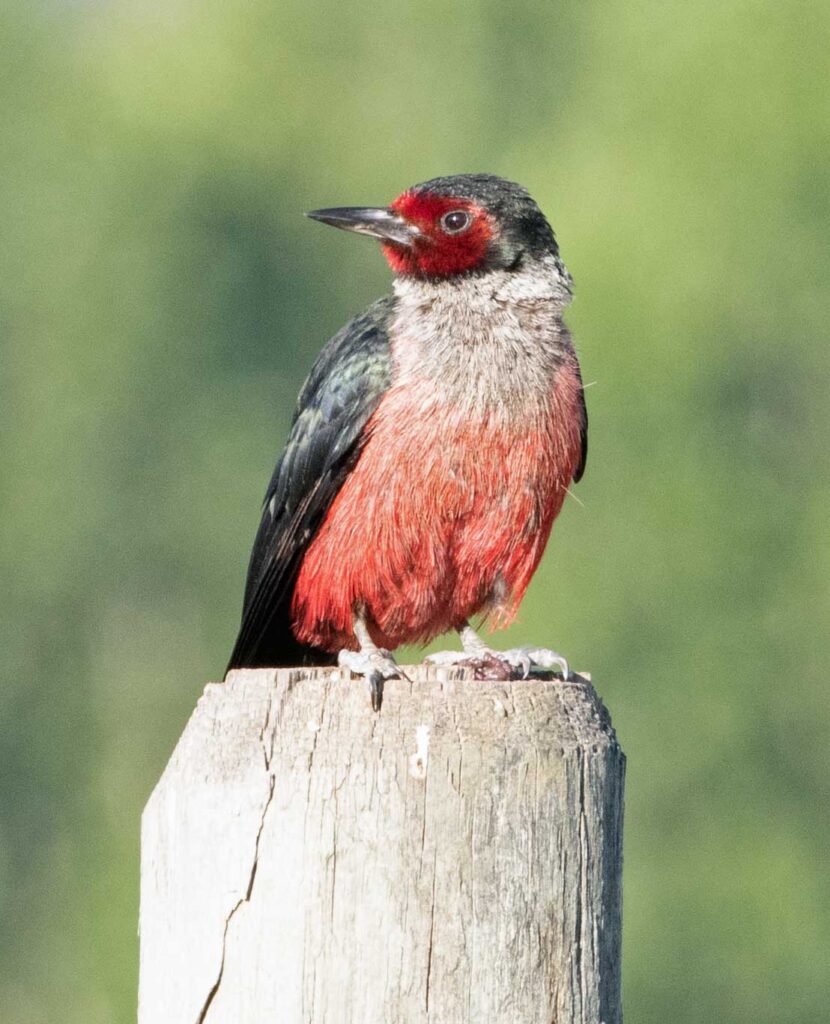
Despite the rather embarrassing ID mistake with the Clark’s Nutcracker, the Lewis & Clark Expedition did end up being honored with a woodpecker after all—the Lewis’s Woodpecker. Renaming this bird has engendered spirited debate on Facebook and elsewhere, perhaps because Lewis’s may be America’s most stunning woodpecker. With a green back that often looks black, a subtle gray collar, and an absolutely spectacular watermelon-colored breast and face, the bird has inspired a host of potential names such as Glamorous Woodpecker, Pink-and-Green Woodpecker, and Silver-scarfed Glossy Woodpecker. To us, these kinds of names seem a bit plebian and uninspired. Not only that, the decline of the species is most closely related to the loss of a particular type of tree, so why not bestow a name that involves some education as well? Because of this, we officially propose—nay, insist—that this bird henceforth be called the Cottonwood Woodpecker.

TOWNSEND’S SOLITAIRE

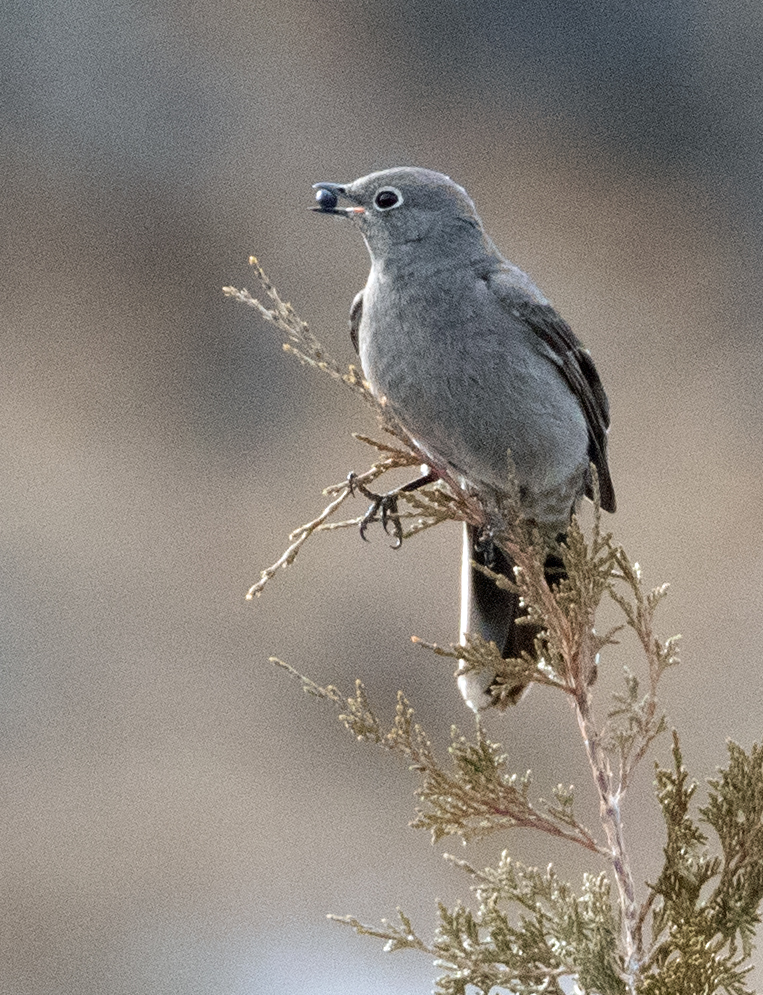
Both Townsend’s Solitaire and Townsend’s Warbler—not to mention at least half a dozen mammals—are named after noted 19th-century naturalist John Kirk Townsend. Townsend came from an ardently anti-slavery Quaker family and accompanied renowned botanist Thomas Nuttall (Nuttall’s Woodpecker) on an 1834 expedition across the Rocky Mountains to the Pacific. During this time, Townsend collected numerous specimens new to Western science—including, coincidentally—MacGillivray’s Warbler! As if all that wasn’t enough to make us love Townsend’s Solitaires, this is a bird that symbolizes the onset of winter, as it descends to our neighborhood after its mountain breeding season. Add to that its lively, musical song and subtle good looks, and the bird has had no trouble flying into our hearts. The AOS decision also gives us a chance to bestow the perfect, slam-dunk name on the bird: Silver Solitaire.

LINCOLN’S SPARROW

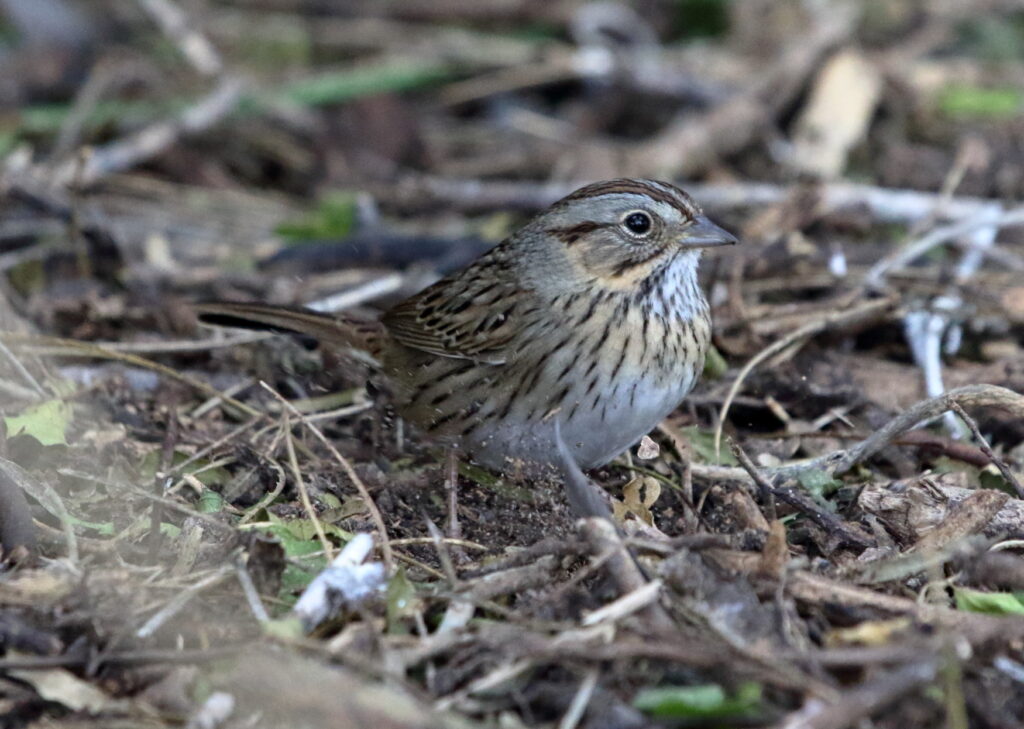
You might think that if ever a bird deserves to keep its eponymous name, it’s got to be Lincoln’s Sparrow, right? I mean who can argue with the president that consistently sits atop the list of greatest presidents in our nation’s history? Alas, the bird isn’t named for that Lincoln. Instead, Audubon named it after the 21-year-old son of a friend, Thomas Lincoln, who accompanied him on an expedition to Labrador, Canada. Audubon had not seen a Lincoln’s Sparrow before, but when one popped up, Thomas Lincoln immediately shot it with a slingshot. Even with that fairly bittersweet story, Lincoln’s Sparrow rules our favorite sparrows list.

This bird exudes charm. It breeds in boggy habitats, usually among willows and often near taller perching trees. It sings a complex, multi-part composition that brightens any landscape, and will often pop out on a branch to give birders excellent viewing experiences. Though subtle, its colors are striking. A yellow wash on its breast and “moustache” contrast most beautifully with its gray and rufous head and white eye ring. The subtlety of its colors, however, and superficial resemblance to other sparrows, makes the bird particularly challenging to rename. Swamp Sparrow, after all, is already taken. Our friend, ornithologist Dick Hutto, suggests Willow Sparrow and that’s not half-bad, but we feel the bird deserves something more inspiring. We therefore dub it . . . Autumn Sparrow! This name not only matches its colors, but coincides with one of the two seasons when many U.S. birders have their best shot at seeing the bird since it can only be found in most states during migration.

So that’s a wrap. We’ve done the heavy listing for the AOS on some of America’s favorite birds. Now, the committee will just have to roll up its sleeves and figure out the other 75 or so species on their immediate list! Braden and I wish them good luck—and if they run into trouble, they know who to call. Our rates are very reasonable.

Fall Birding in Glacier National Park

Last week, after speaking at the monthly meeting of Flathead Audubon (see post “Birding with the President”), I spent the night with my gracious hosts, Darcy and Rob Thomas, and rose at 5 a.m. for a birding excursion to Glacier National Park. Powered by an egg and sausage burrito from City Brew, I made it to the park by 7:00 and rumbled and bumped my way up Inner North Fork Road. Braden, Nick Ramsey, and I had been here only five weeks before on a quest to find me a Lifer Spruce Grouse, and guess what? I was still on that quest! Today, though, I decided to try a different route, the Camas Creek Trail that leads east toward the heart of the park. I arrived to find the little parking area totally empty and, after strapping on my fanny pack, and slinging my camera and binoculars over my shoulders, set out under a dawn sky.

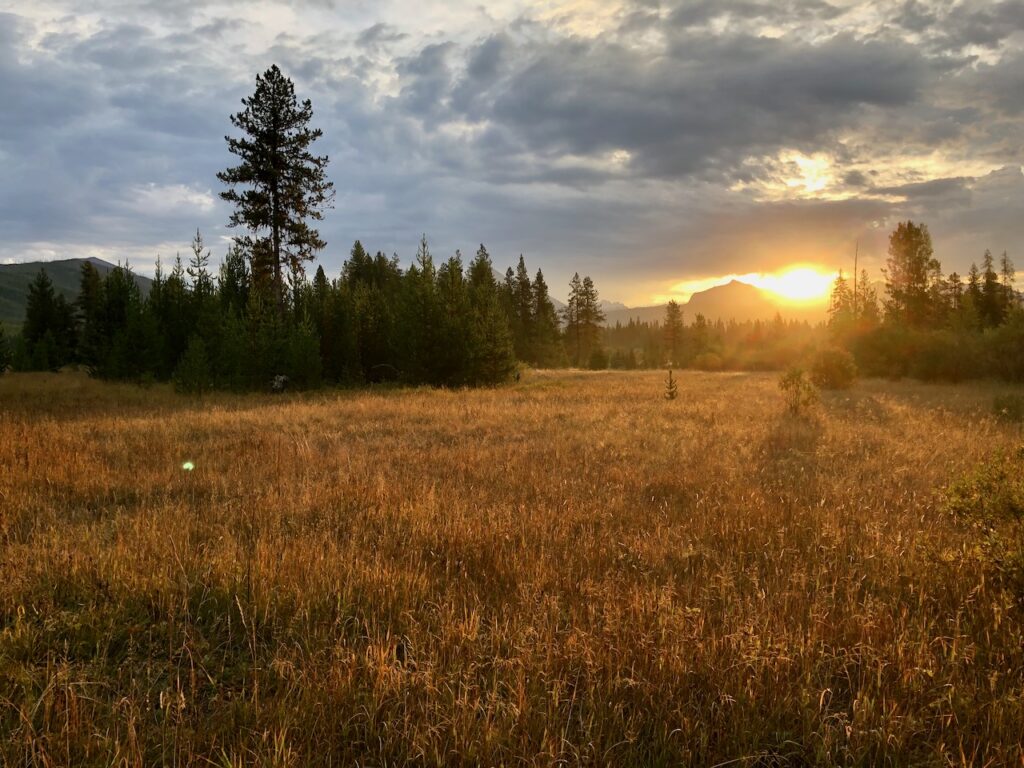
Sunrise at Camas Meadow. Need I say more?

Entering a patch of woods, I walked quietly and raised my senses to full alert. I didn’t want to scare away a Spruce Grouse along the trail, but I also wanted to spot a grizzly bear before it spotted me! Of course, park officials recommend hiking noisily to alert bears to your presence, but for birders this obviously is a counterproductive strategy. Bear spray would probably have been a good idea, but as usual I forgot to bring any. Within a quarter mile of the trailhead, however, I got a good scare.

I was rounding a bend with some trees on the right when suddenly a large shape launched from a branch and spread enormous gray wings. Owl! my brain shouted as my heart hammered, but which kind? The park contained only two large-owl possibilities: Great Gray and Great Horned. I hurried forward, trying to see where it was headed, but failed miserably. Without ever facing toward me, it disappeared through some trees, never to be seen again. My gut and the length of the owl’s wings tells me it was a Great Gray Owl but I will never know. Sigh.

After that startling start, my hike settled down. I reached Camas Meadow just as the sun began peeking over the Continental Divide and savored being absolutely alone in one of the world’s most beautiful places. I got here so early that the birds were off to a slow start. I saw a few flitting around, and Merlin’s Sound ID feature informed me that they were Pine Siskins and Yellow-rumped Warblers. It also told me that the chickadees I was hearing were Mountain Chickadees. Other than that, the action languished.

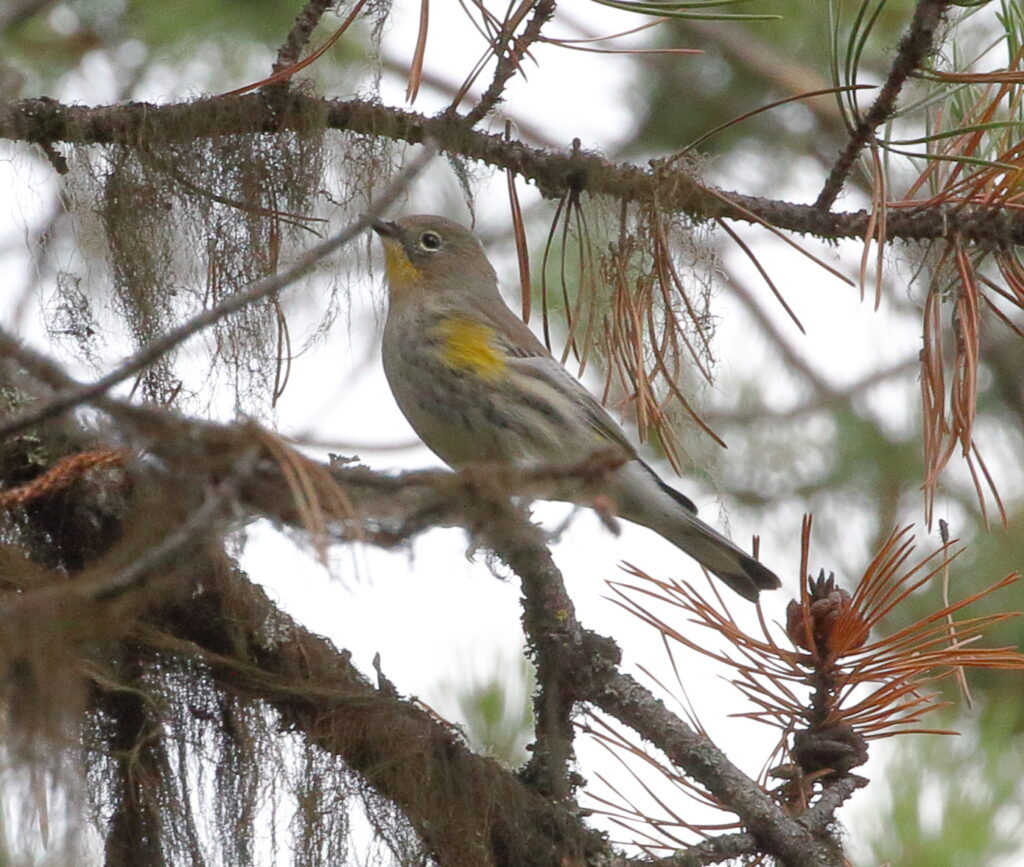
Despite this rather poor image, one of the highlights of my Camas Meadow trail hike was the abundance of Yellow-rumped Warblers fattening up for migration.

Fortunately, that held true on the grizzly bear front, too. I passed some scat, but it looked like black bear poop (smaller, full of berries, less messy), and was old to boot. In fact, I passed few fruiting plants relative to other places I’d recently visited in western Montana—a fact that might bode poorly for possible grouse sightings.

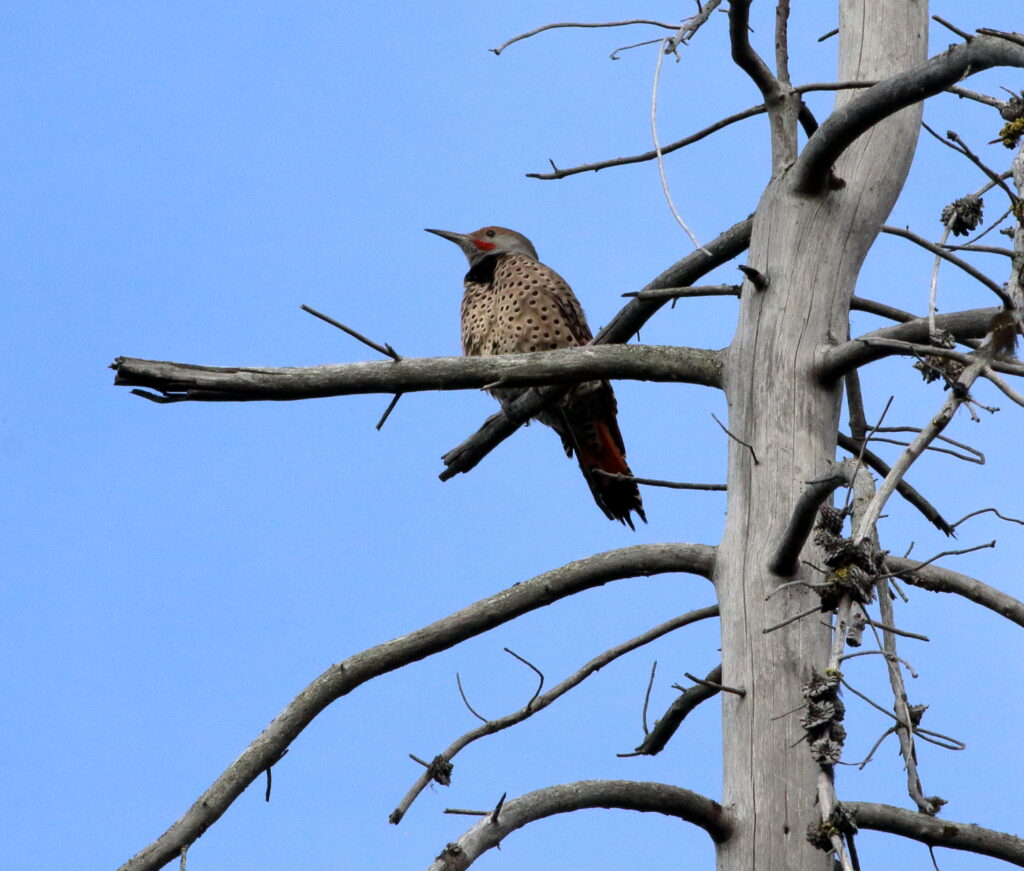
I hiked for about two, two-and-a-half miles, before pausing for a drink of water and, reluctantly, turning around. Fortunately, as I began retracing my route, rising temperatures seemed to lead to greater bird activity. Most impressive were the number of Yellow Warblers. I tallied at least 30, but am sure I undercounted. Their chips sprung from many locations, and I also spotted a couple of Ruby-crowned Kinglets (one boldly displaying its red crown), Dark-eyed Juncos, and Pine Siskins. An occasional Northern Flicker called sharply overhead.

About halfway back to the car, I saw a small brown bird flitting about in a bush. Its furtive skulking behavior distinguished it from the other birds I’d been seeing, so I stopped and raised my binoculars, waiting for a clear look. It took a few moments, but it finally showed itself—a Lincoln’s Sparrow! One day, Braden and I will have to list our Top 10 Favorite Sparrows, but for me, Lincoln’s is Number One. Not only does it display a gorgeous, subtle color palette, it seems to have a more curious, delightful nature than other sparrows. When Braden and I began birding almost a decade ago, a Lincoln’s Sparrow was the first sparrow that really made a big impression on me. We devoted several outings to the chase before finally seeing one, so maybe its uncommonness also has something to do with my ranking.

This delightful Lincoln’s Sparrow captured “Bird of the Hike” honors for my visit to Camas Meadow.

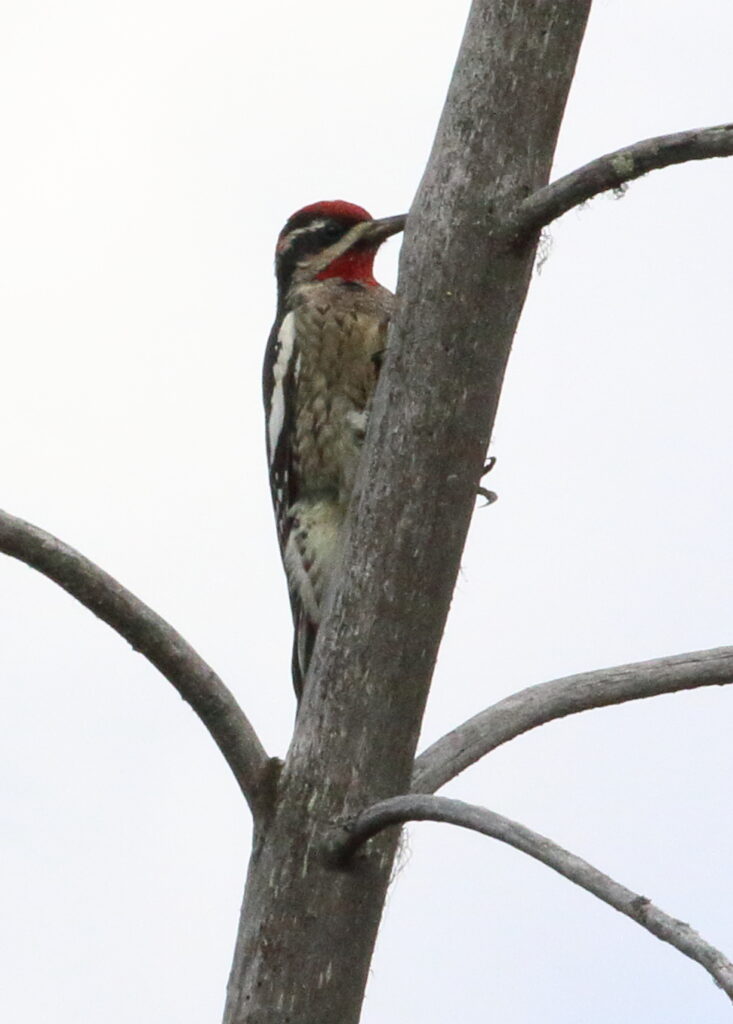
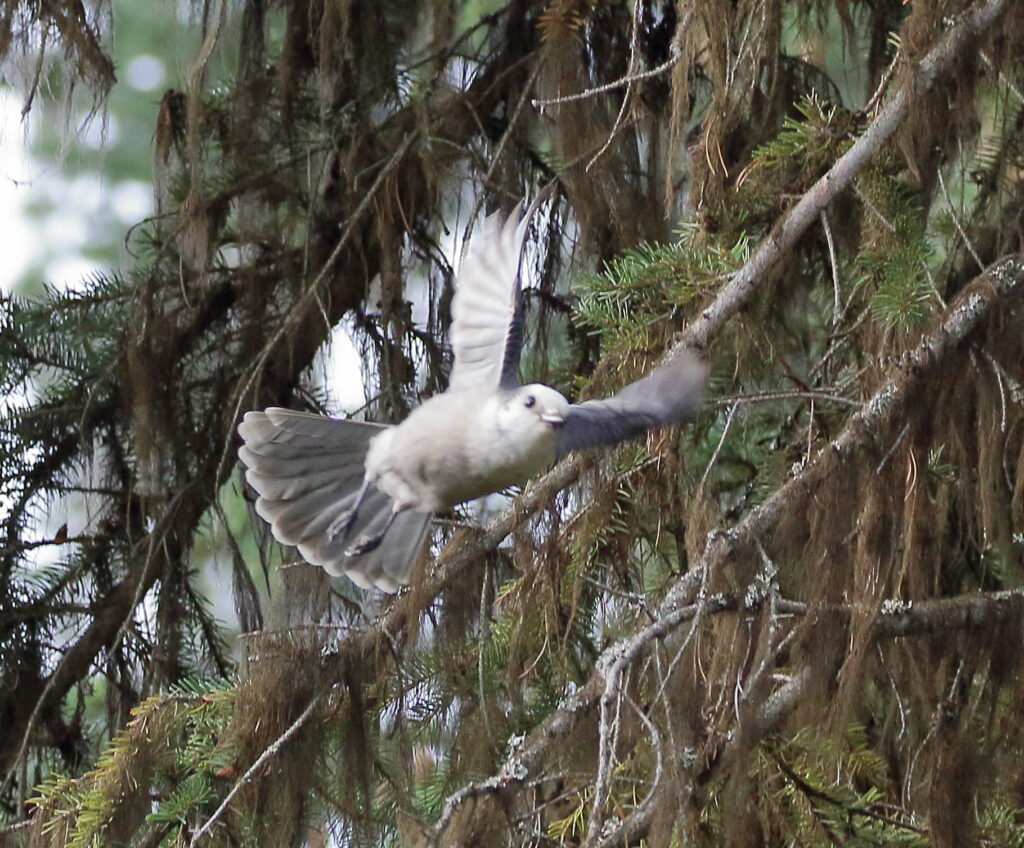
After spending a few minutes with Mr. Lincoln’s, I continued hiking. A Red-naped Sapsucker surprised me. Then, I heard a series of eerie whooping noises that reminded me a bit of an Osprey. “What the heck?” I muttered. Then I saw it: a Canada Jay swooping in for a landing high in a nearby tree. A couple of other CAJAs also appeared. The jays, one of my favorite corvids, always delight with their antics and these provided a great way to wrap up my hike. Yes, I had once again missed a Spruce Grouse, but I’d gotten a good sense for what’s going on with the birds in Glacier this time of year. That was invaluable knowledge in my continuing education as a birder. It also happened to make a real contribution to science in the park.

I had no idea what was making that eerie looping call—until I saw this Canada Jay fly to a nearby treetop.

Returning home, I looked up how many eBird checklists have been posted for Camas Creek Trail in the fall. To my astonishment, mine was only the second ever checklist for September! (The other list, from later in the month, noted only three species.) A couple of lists have been posted later, but my own provides the only eBird data for this interesting time of year. Now I know this sounds like boasting, but I mention it to emphasize two important facts:

  1. Even though birding has been around a long time, HUGE gaps remain in what we know about almost every bird species, its movements, and habits.
  2. Your citizen science contributions matter. Sometimes it’s a pain or inconvenient to post what you see on eBird, but you just never know when you will be providing crucial information to a scientist or policy expert wanting to learn something new or make an important decision.

And really, could it get any better? Contributing to knowledge while being out having a great time? I don’t think so. Just keep an eye out for those grizzly bears.