Tag Archives: fall migration

Montana Mid-Summer Birding Break

This summer’s been a busy one for the FatherSonBirding team. I (Sneed) have been buried under a book revision for my next book, Birding the Great Wide Open, due out from Mountaineers Books in Fall, 2027. Meanwhile, Braden has been working hard at an internship with Montana Outdoors magazine while also embarking on his very first jobs as a professional bird guide! (If you’re interested in engaging his services, you can contact him directly at bgcoll2121@gmail.com.) All of this made us especially anxious to just get out and see what the birds are doing, especially down in sagebrush country, and especially before some of the early migrants start to depart. Here is Braden’s excellent account of our intense, two-day adventure!
July marks a time when Montana birding calms down a bit. March brings with it the first waves of waterfowl migration, and after that, each week brings new birds arriving on territory. Birdsong ramps up exponentially in April and May, and after migration ends in the first week of June, there are plenty of birds to catch up with on their traditional breeding haunts. By July, though, the birds begin to get quieter, with many of them settling down onto nests and trying to attract little attention to themselves. Sure, early shorebird migrants start to trickle in, but the latter half of the month, especially, feels like a break. This is compounded by the ever-hotter summers we’ve been experiencing: in recent years, July has brought uncomfortably high temperatures that make being out past 11 a.m. not fun.

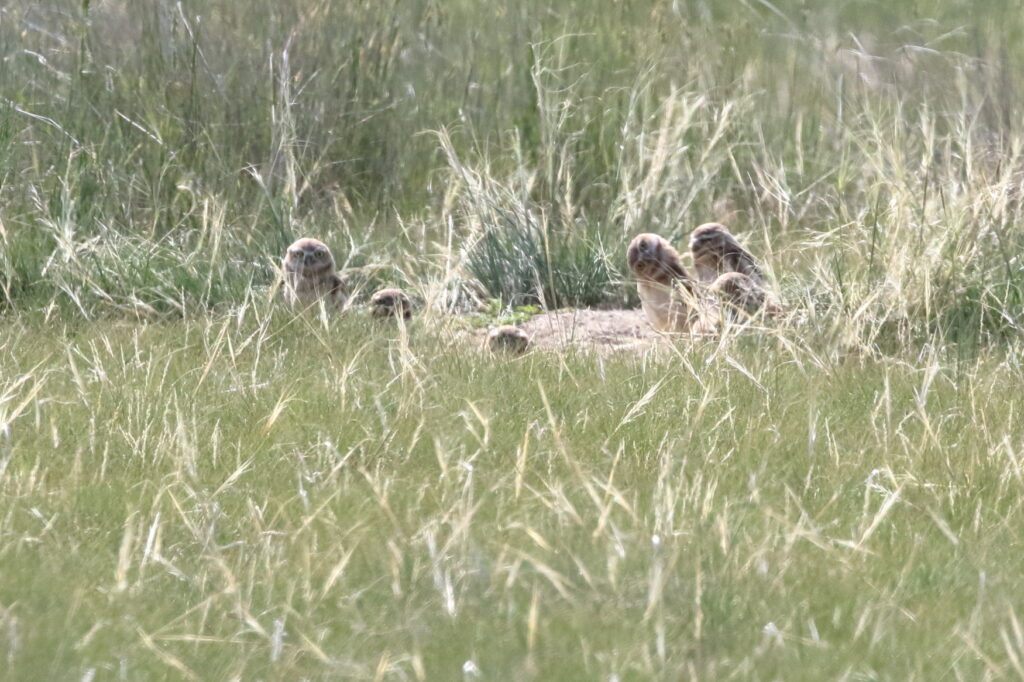
And yet, the last few years have proven to me and my dad that July should still be taken seriously as far as birding goes. There may be no better example of that than the ten (!) Burrowing Owls we found on Bench Road last week.

Burrowing Owls were one of the top enticements of heading to Montana sagebrush country in July—and the owls did not disappoint!

One reason my dad wanted to take a mid-July trip is because, well, June had been crazy and autumn was ramping up to be crazier still, meaning that July, the last full month before the bulk of our breeding birds depart, would have to be our chance to head out east. While I had visited many parts of the state earlier in summer, showing my east coast friends around, my dad hadn’t gotten a chance to visit the prairie or the sagebrush, so his target list covered many birds found in those habitats: Sagebrush Sparrow, Lark Bunting, Ferruginous Hawk, Sage Thrasher. And of course, Burrowing Owl—often a tricky target in Montana, but reliably seen on a road through a dry swath of agricultural land south of the town of Three Forks. So, our first stop on our eventual loop through the southwestern corner of the state took us there.

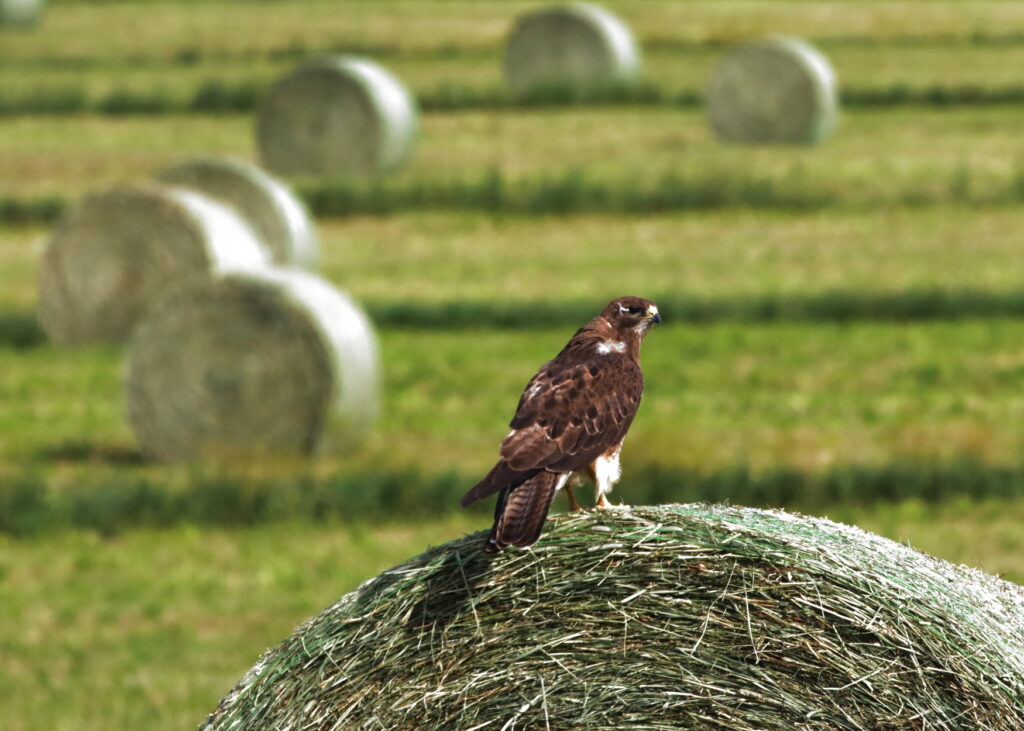
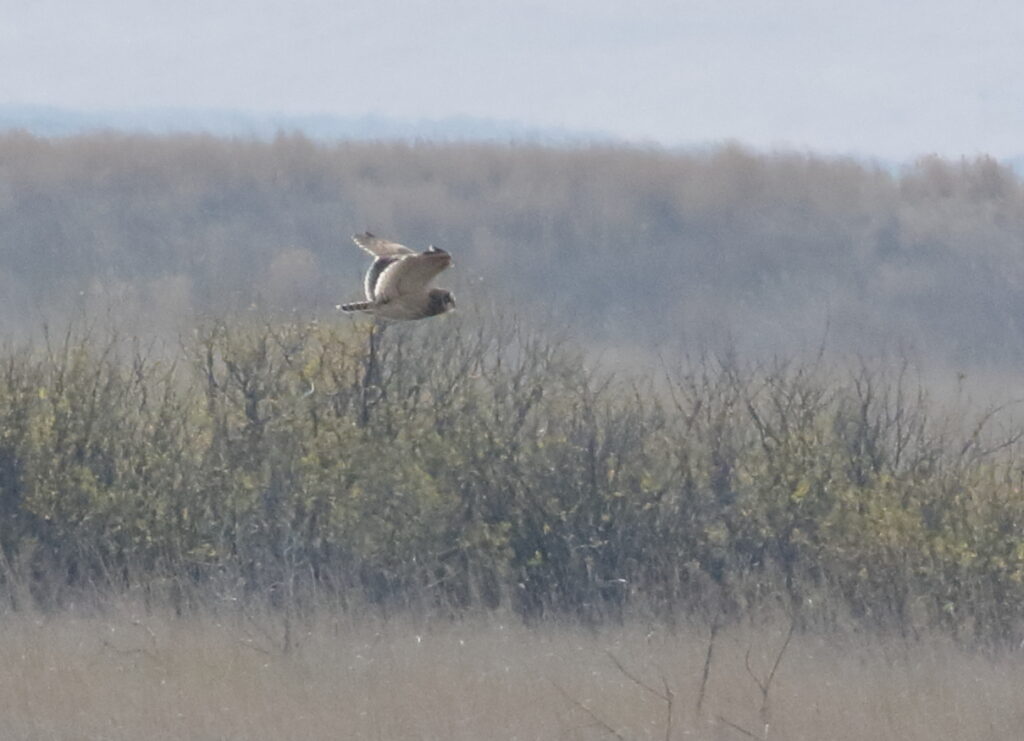
Before even arriving at the Burrowing Owl spot, we checked out the freshwater marsh at the entrance to Bench Road and glimpsed a Short-eared Owl relocating from one patch of cattails to another. What a great way to start the trip! As we continued, my dad pointed out a pair of hawks perched on nearby hay bales—Swainson’s. “There’s more up ahead!” I pointed through the windshield at four more riding thermals above us. Either this was a family group, or these raptors were beginning to think about heading south.

Swainson’s Hawks were out in force on the trip, including this one posing artistically amongst haybales south of Three Forks.

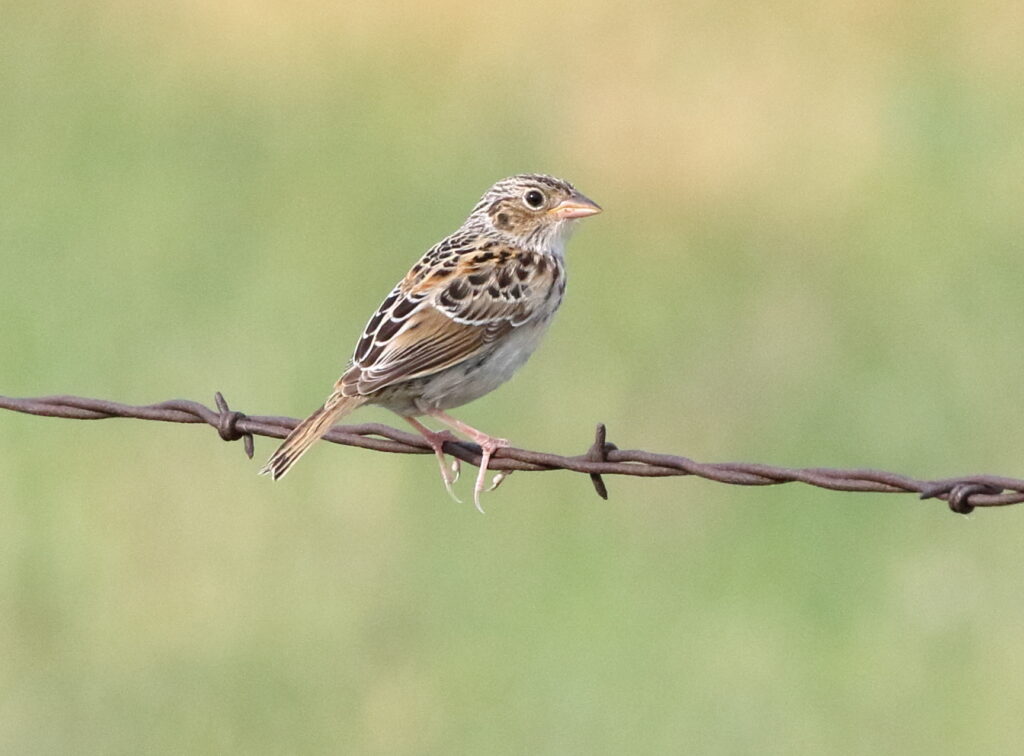
Our car flushed a variety of sparrows from the roadside as we drove, and we stopped periodically to get looks and photos of them. We were delighted to find that the majority of them were Grasshopper Sparrows! Many were adults, but a big chunk of them were babies, too, in a beautiful plumage we’d never seen before. Who knew that these tiny sparrows go through a life stage where their feathers resemble the spotted fur of a leopard! We also got great views at Lark Buntings, never a guarantee this far west, in a small group hopping from fence post to fence post.

A big bonus to birding in July is that we got to see the young of many species, including a wonderful bunch of Grasshopper Sparrows, one of our favorite grassland species.

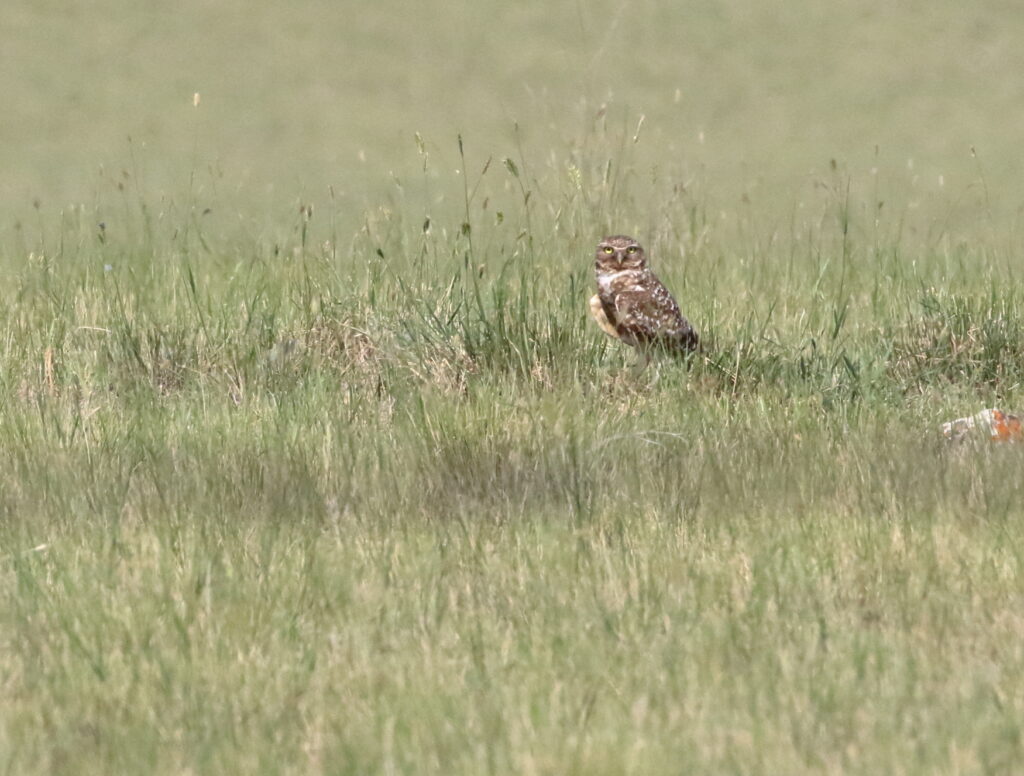
We drove all the way out to a distant homestead and got out to scope a mound of dirt that my dad was sure would hold a Burrowing Owl. No luck. On our way back to Three Forks, though, I yelled “Stop!” and my dad screeched the Toyota to a halt. Out in a random field stood not one, not two, but SIX Burrowing Owls, all glaring directly at us from their mound (as these owls tend to do). We got out to scope them, noting that at least five were young, including one that fearlessly chased grasshoppers around in the grass right in front of us. Happy with our haul, we continued backtracking, running into a woman who pointed out another Burrowing Owl and told us the location of two more. By the time we got back to the highway, we’d seen ten in total—by far the most either of us had ever witnessed in a day let alone one spot!

It was great to see Burrowing Owls again here on Bench Road—in almost the exact spot we had seen our lifer BUOWs with Nick Ramsey years before.

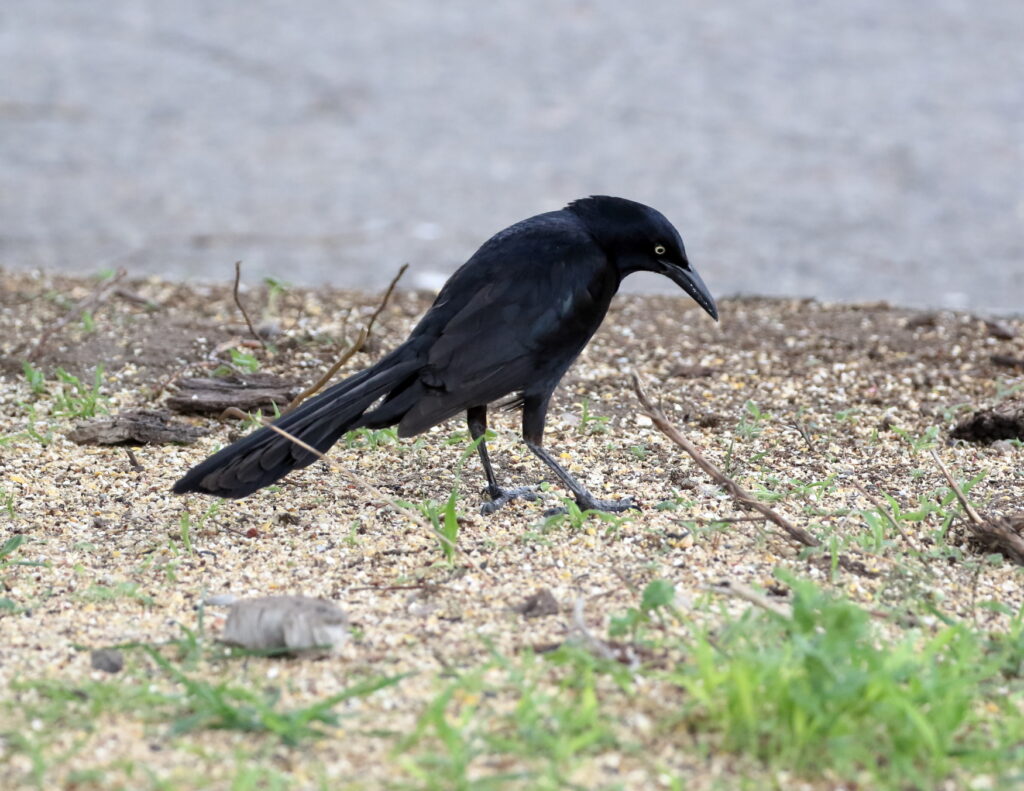
From Three Forks, we headed south for the sagebrush country of Beaverhead County. Along the way we pulled over a few times to check out wetlands, raptors on telephone poles, and even picked up a Great-tailed Grackle in the Safeway parking lot in Dillon. This species used to be quite rare in our state but has been expanding in recent years, and a population has established itself in town.

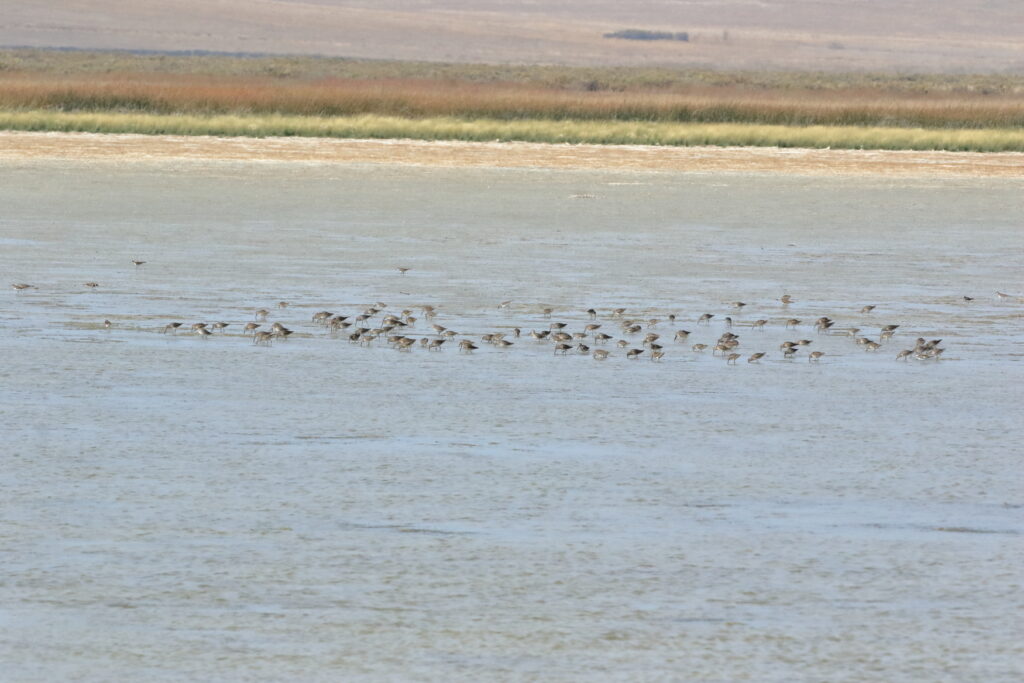
We met up with Jeff Marks at a local bar to watch part of a World Cup game, then continued on to Clark Canyon Reservoir to search for shorebirds before heading back to the sagebrush for the evening. After scouring the entire northern side of the reservoir we finally located one migratory shorebird—a Long-billed Dowitcher—as well as a few breeding shorbs like Willets, Killdeer and Spotted Sandpipers.

After seeing the Safeway parking lot birds in Dillon, we saw another Great-tailed Grackle at Clark Canyon Reservoir—more evidence of how this species is moving into southwestern Montana.

We saw our first Prairie Falcon of the year on a pole along Bannack Bench Road, a bird I’d been pessimistic about finding on the trip, then continued along a dirt two-track through the sagebrush. Though there were plenty of Brewer’s Sparrows and Sage Thrashers about, we couldn’t spot any Sagebrush Sparrows, and Nate Kohler, Jeff’s field assistant, hypothesized that they may already had left. These are one of the first passerines to arrive every year, so an early departure date would make sense.

We met up with Jeff Marks and Nate Kohler at the comfortable cabin they rent every year and they showed us where we would be sleeping—a rustic room with bunk beds, a kitchen and a couch. I’d never met Jeff before today and hadn’t seen Nate since December, so it was really good to talk to them, discussing all manner of things from birds and habitats to life adventures and politics. It was also my first time at “Flycatcher Camp”, though my dad had been a couple of times, and I was excited to see the work Jeff and Nate were doing with Gray Flycatchers—one of Montana’s only GRFL populations. After dinner and card games we all started getting ready for bed, and my dad and I watched the sunset from the porch. Montana’s sunsets never cease to amaze me, and this one was particularly special—we got to watch the resident nighthawks take off from their not-so-secret day roosts (open fence posts) as Wilson’s Snipes displayed all around us. A couple Soras sounded off from the creek nearby, and we even heard distant Sandhill Cranes.

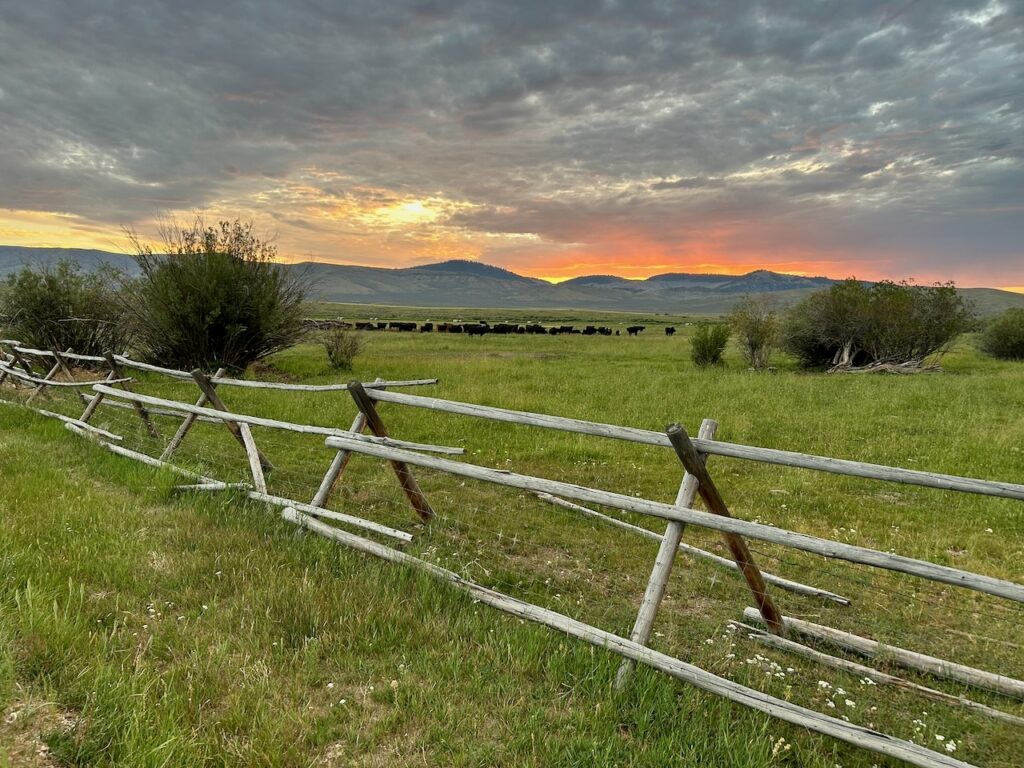
My dad calls this “Sunrise Over Cows”, a photo that perfectly captures the incredible beauty of southwest Montana.

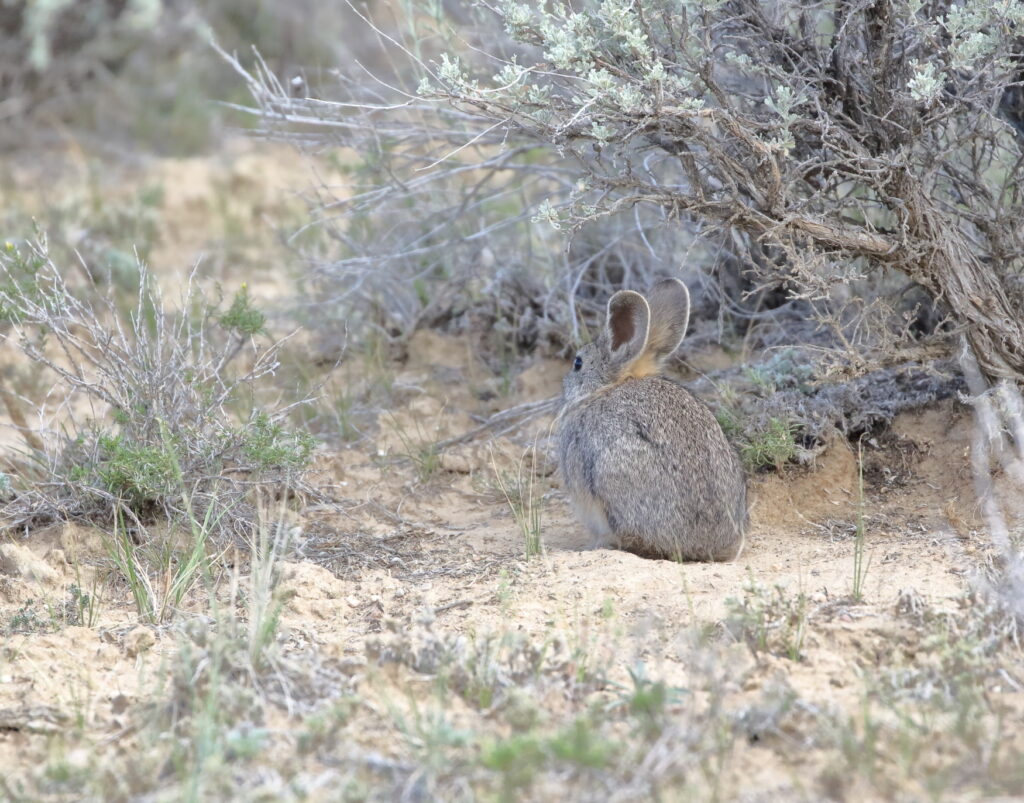
The next morning we rose early and packed up the car. Jeff rode with us while Nate followed with Jeff’s girlfriend in their truck. The road had some fairly deep ruts, but my dad expertly handled them, and soon we were all out in the sagebrush, looking for Gray Flycatchers. Our first surprise of the morning came not from a bird, but from a mammal—a Pygmy Rabbit! My dad and I had never seen one before, and we all enjoyed watching it race through the sage ahead of us. This species is fairly widespread throughout the Interior West, but has a small population in Montana and is of special conservation concern. Thankfully, it gave us great looks!

Not the best shot, but our lifer Pygmy Rabbit gave us surprisingly good looks as we searched the sagebrush for Gray Flycatcher nests. Note that Pygmy Rabbits have brown tails that distinguish them from the run-of-the-rabbit cottontails.

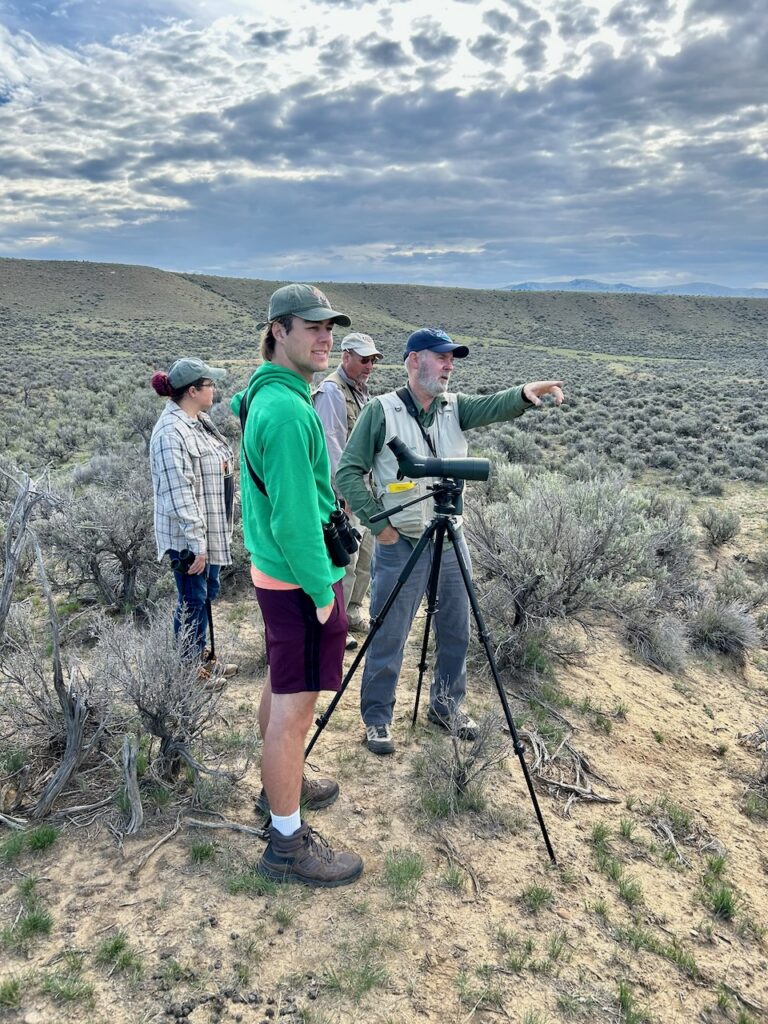
The flycatchers weren’t hard to find. Soon, we had two males singing on either side of us, returning over and over to the same perches which allowed us great views. Jeff and Nate really wanted to find the nest of the female that lived here, so we all split up, bushwhacking around. A summer storm had killed all of the flycatcher nestlings in June, but many birds had re-nested, and they believed that this female was one of those. Jeff showed me her old nest, not far off the trail in a large sagebrush near the bottom of a wash—a prime nesting habitat for the species, which avoids building nests out in the driest, flattest parts of the sagebrush country. Nate also showed me a Brewer’s Sparrow nest and a double-decker Sage Thrasher nest, one built right on top of the other. (For more on Jeff’s and Nate’s work, check out last year’s post “Gray Flycatcher Science”.)

Jeff Marks fills me in on his studies as our Gray Flycatcher crew begins its search for nests—Amy and Nate in the background. (See last year’s post “Gray Flycatcher Science” to learn more!)

“There were a ton of thrashers here last week, so we know these ones fledged. It’s been a great year for thrashers,” he said.

It was always good to hear that a species was having a successful year, with so many birds declining year by year.

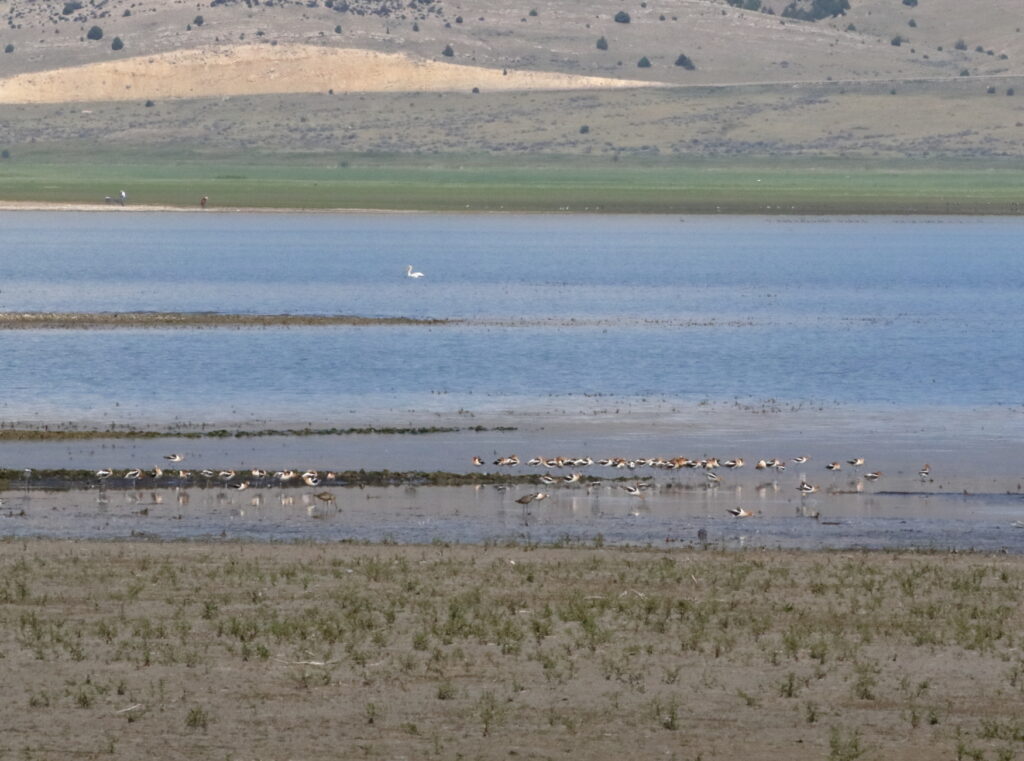
We couldn’t locate the flycatcher nest within an hour or so of searching, and my dad and I had a few more places we wanted to bird on the way home, so we said goodbye to Jeff, Nate and Amy and headed back to Clark Canyon Reservoir, visions of shorebirds dancing in our heads. Again, no luck with any Arctic shorebirds, but we did find nearly 200 American Avocets mixed in with some other fun breeding species! 

Avocets taking a break at Clark Canyon Reservoir on their way south.

After lunch at a taco truck in Dillon, we stopped along Birch Creek Road on our way back north, the furthest west location for Thick-billed Longspurs in the state. Nate Kohler actually passed us on his way home, and spotted a single longspur on a telephone wire above the road. As we got out to look at it, a snowy-white raptor cruised overhead: a Ferruginous Hawk, one of my dad’s final remaining targets for the trip! We high-fived, ecstatic at our good luck, then continued on our way. After one more quick stop in Madison County, where we picked up a calling Veery, we drove the rest of the way home. What a great midsummer trip!

To learn more about Jeff’s and Nate’s scientific work with Gray Flycatchers, or make a donation, check out the website of Montana Bird Advocacy at https://www.montanabirdadvocacy.org/.

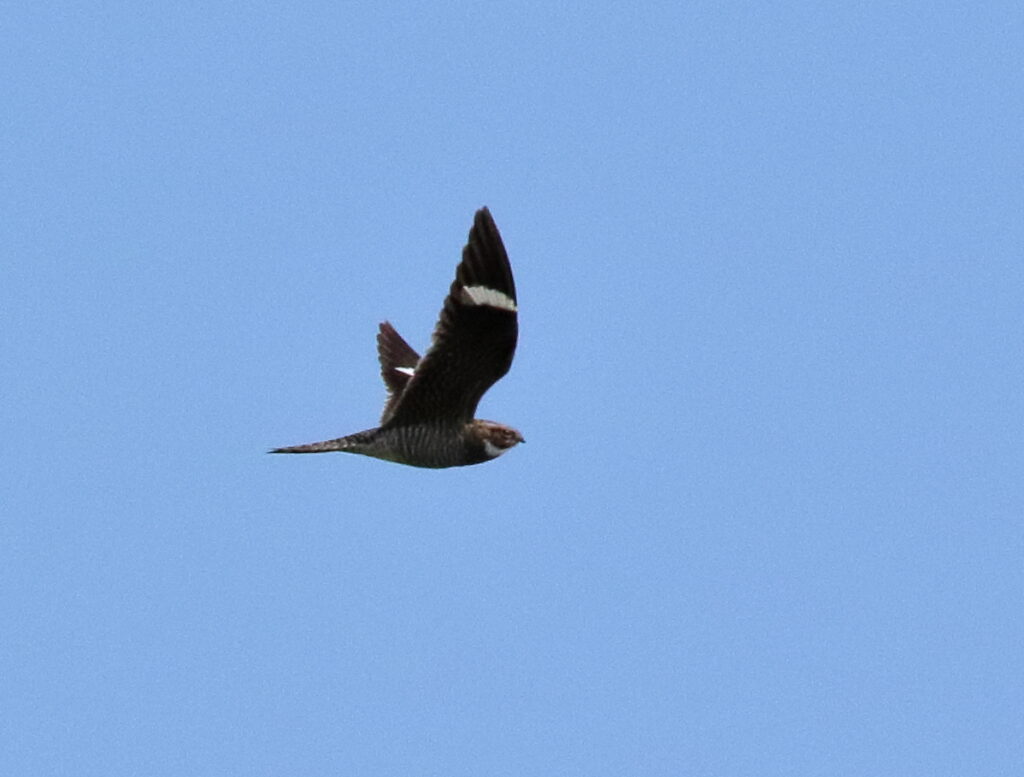
We couldn’t finish up this post without an in-flight shot of a Common Nighthawk. As they have before, they put on a great show during our trip and were birds we could have watched for hours on end.

World Series Birds in the Golden State

A happy by-product of our second child going to school in California is that Amy and I have the perfect excuse to go visit the Golden State. Not that I would ever do any birding during a family trip, but you know, it’s hard not to see some great birds when you just happen to stop at a wildlife refuge or stumble into a local park that happens to be a bright red eBird hotspot!

I was especially excited to head to California a couple of weeks ago because, as previously reported, I was perilously close to breaking my all-time single year species record of 527 birds. In fact, when Amy and I landed in Sacramento and headed up to Chico, I needed only one bird to hit 528 species for the year. What would my “go ahead bird” be? (And yes, that is an homage to the upcoming World Series, which happens to feature a team named after birds!)

Visiting our youngest in California has given me a great opportunity to see friends and get in some bonus birding!

When we arrived, I quickly finagled a couple of birding opportunities, but saw only species I had seen on our last trip to California in August: California Scrub-Jays, Acorn Woodpeckers, Yellow-rumped Warblers and the like. My biggest discovery was a White-winged Dove at the Panera’s near the hotel! It was a rare bird so far north in California’s Central Valley, but not unheard of. Still, I felt proud to have spotted the distinct white stripe across each wing as it flew—undoubtedly hoping to score one of Panera’s kitchen sink cookies!

The next morning, I headed out to the home of a close childhood friend who just happens to live outside of Chico in an agricultural area. I had almost reached her place, when I noticed birds feeding on a coyote carcass on the side of the road. I saw Turkey Vultures and ravens. Then, I saw something that got my heart racing: magpies!

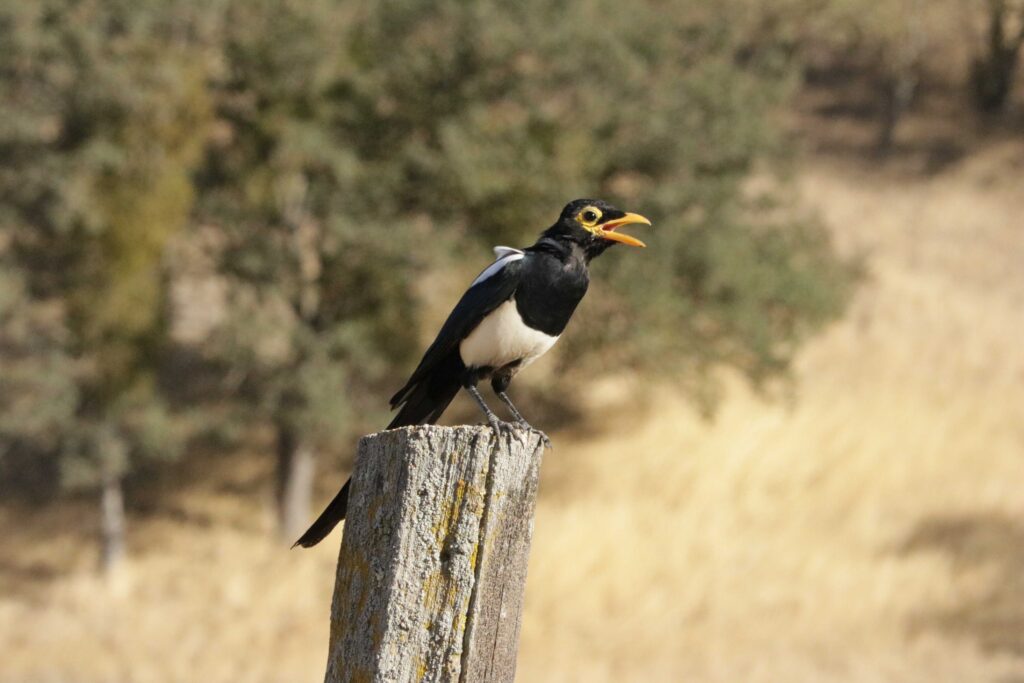
My All-Time Best Year Record Breaker: Yellow-Billed Magpie! Whoo-Hoo! (Photo from earlier trip.)

Not just any magpies. I knew that the Black-billed Magpies we had back home in Montana were unlikely in this part of California. No, these were Yellow-billed Magpies—a bird I had failed to see on our last trip in August! Ka-ching! My record shattered like falling glass! And with a California endemic species no less! Personally, I couldn’t have been happier. YBMAs are some of my favorite birds, and hold an interesting history, too:

“This species was named by John James Audubon in 1837 (as Corvus nutallii, corrected the following year to nuttalli) in honor of the ornithologist Thomas Nuttall, who collected the first specimen near Santa Barbara, California. Nuttall was a prodigious botanical collector and ornithologist who authored a Manual of the Ornithology of the United States and of Canada.”Birds of the World database by Cornell Lab of Ornithology (accessed Oct. 19, 2025)

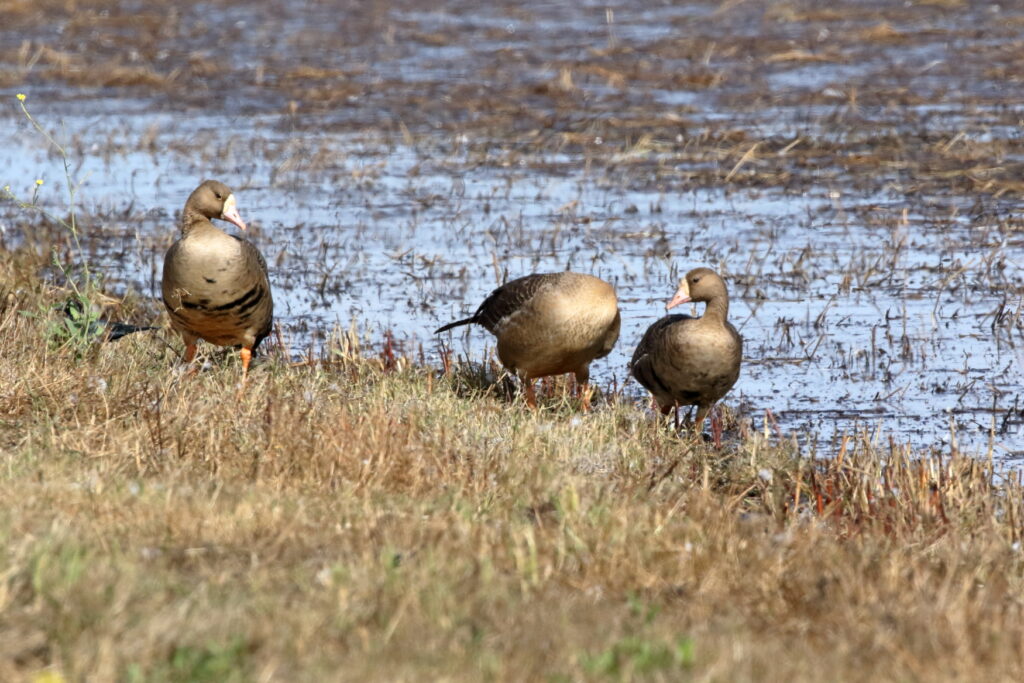
Later that day, I picked up an “insurance bird” at the Llano Seco refuge just southwest of Chico, where Amy and I delighted in Sandhill Cranes, Black-necked Stilts, and my 529th bird of the year, Greater White-fronted Goose.

Greater White-fronted Goose was a great “insurance bird” for my record-breaking year—just in case the Birding Powers That Be decided to lump a couple of species together or I found a mistake in my earlier checklists!

But my fall California birding adventures had just begun!

After a few wonderful days with our child, Amy flew home from Sacramento, and my high school buddy Scott (see Scott’s Guest Post about the Morro Bay Bird Festival), picked me up for an additional four days of exploration. As I’ve mentioned, my emphasis lately has not been so much chasing target species, but exploring places I’ve never before birded, and Scott indulged me to the hilt. After he collected me in Sacramento we explored the Sacramento River delta, hitting Cosumnes River Preserve, where we got a little shorebird action—and a LOT more Sandhill Cranes and Greater White-fronted Geese. On the following days, we hit a huge variety of habitats as we hiked through oak woodlands, explored the large abandoned—and very birdy—grounds of the Sonoma Developmental Center, and scoured rocky shores and intertidal areas in American Canyon, Golden Gate National Recreational Area, Bolinas, and Bodega Bay. I loved every location and, not surprisingly, my “insurance bird” list grew.

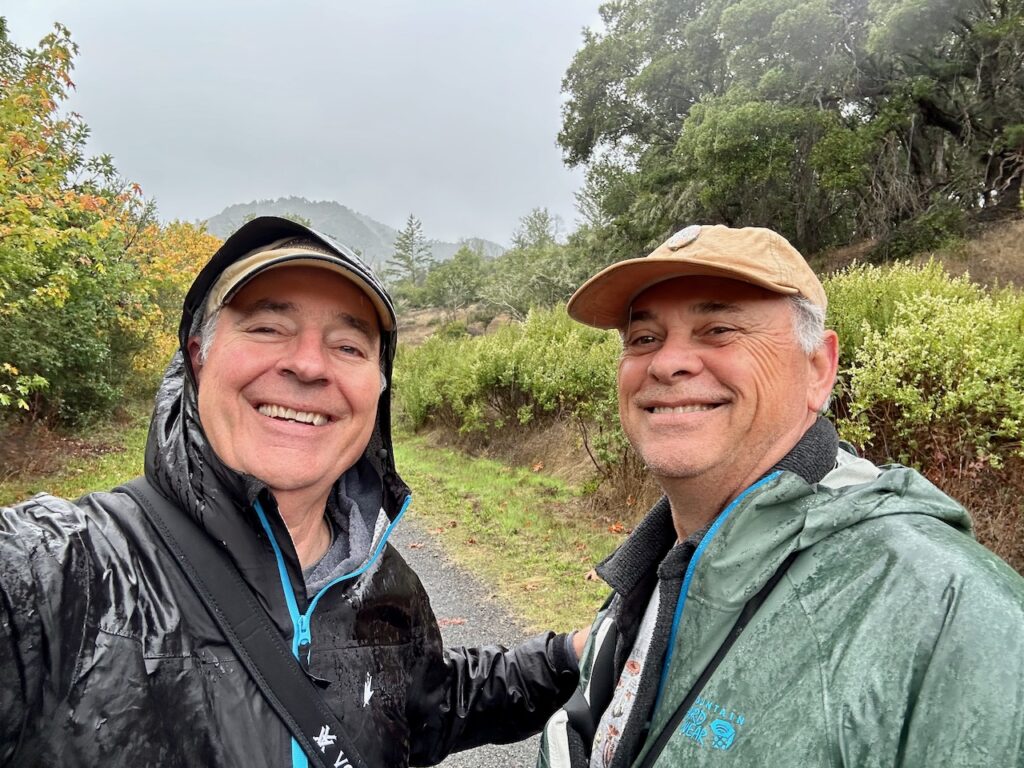
Scott and I enjoyed a wet hike through Sugarloaf Ridge State Park in Sonoma County and fortunately, the rain did not dissuade the birds as we sighted a host of classic oak woodland species including Oak Titmouse, Golden-crowned Sparrow, and Nuttall’s Woodpecker.

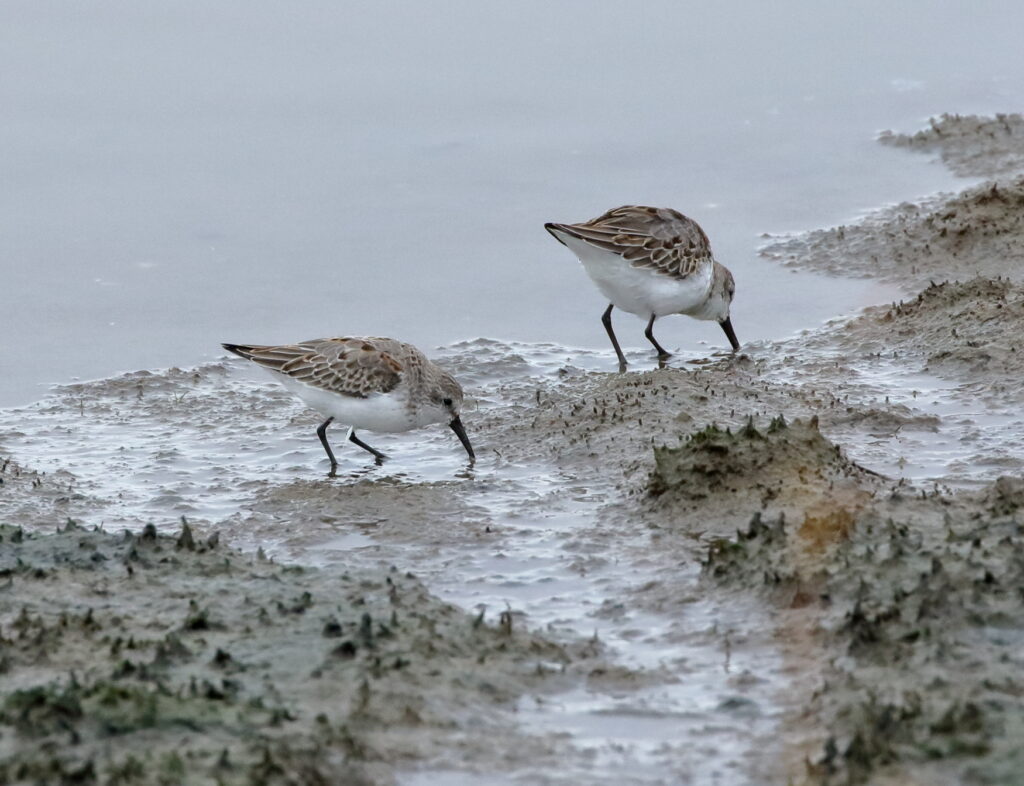
I picked up Mute Swan in American Canyon as Scott and I gleefully observed thousands of shorebirds including Western and Least Sandpipers, Long-billed Dowitchers, Marbled Godwits, and Black-bellied Plovers. That afternoon, we saw my FOY (First Of Year) White-tailed Kites at a place called Buchli Station Road.

Our adventures gave us plenty of time to learn more about peeps as we picked out the subtle details of Least and these Western Sandpipers. Note the rufous shoulder patch (not always present), black legs, and longer, curving bill that distinguishes these Westerns from Least’s.

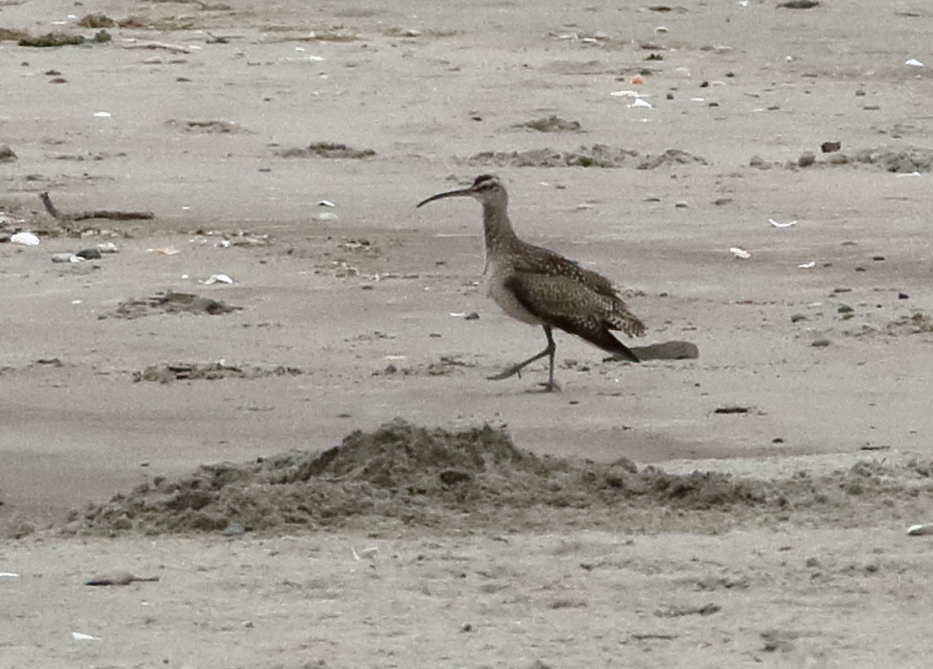
Our favorite—and most productive—day happened October 15th. With a visit to Rodeo Lagoon, we found one of my favorite California birds, Wrentits, along with Western Gulls, which I had somehow managed not to see the entire year! At the nearby Bolinas Lagoon, we also observed hundreds of Elegant Terns and my trip MVB (Most Valuable Bird), a Whimbrel.

This Whimbrel at Bolinas Lagoon nabbed Bird of the Trip honors as it was the first WHIM I’d seen in more than six years.

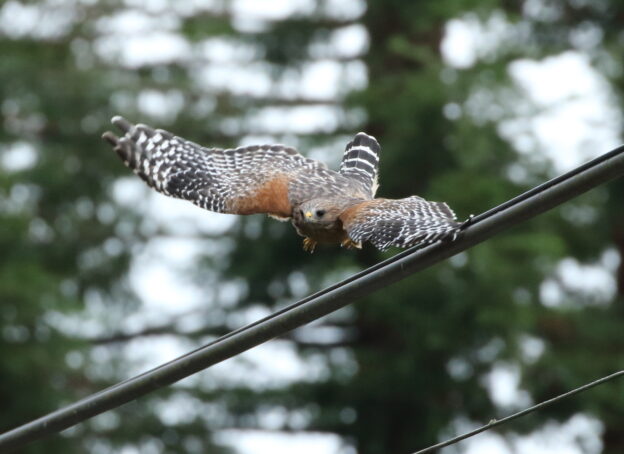
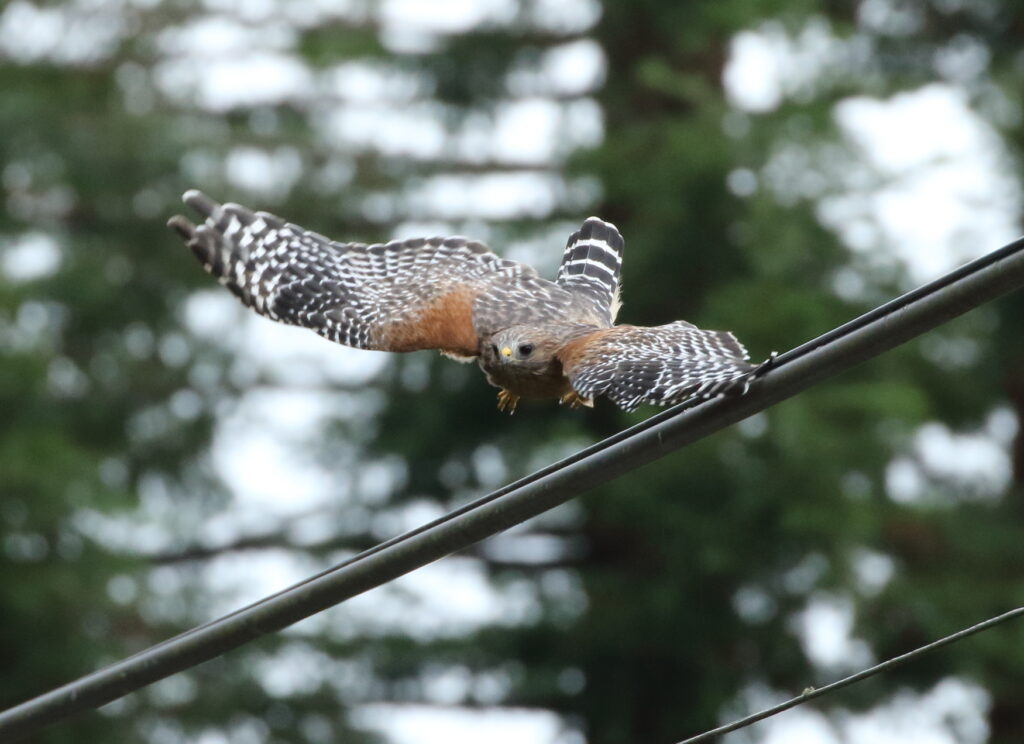
Another bird I had somehow failed to see all year was Red-shouldered Hawk, but as we made our way north toward Point Reyes, Scott suddenly shouted, “Red-shouldered!” We pulled over to look at this handsome creature perched on a power line and even got to see it nab some kind of morsel from roadside weeds. The funny part? We saw four more Red-shouldered Hawks on our drive back to Scott’s house in Glen Ellen! I call that a Grand Slam!

I don’t know that I’ve ever appreciated Red-shouldered Hawks more than I did this one—especially when it launched after some prey!

One thing that made the trip so fun was eating lots of great food and kicking back to watch the MLB playoffs with Scott each evening. I hadn’t seriously watched baseball since Amy and I were still childless more than twenty years before, and it was wonderful to lean back, relax, and watch grown adults try to hit balls with sticks. Goooo Ohtani!

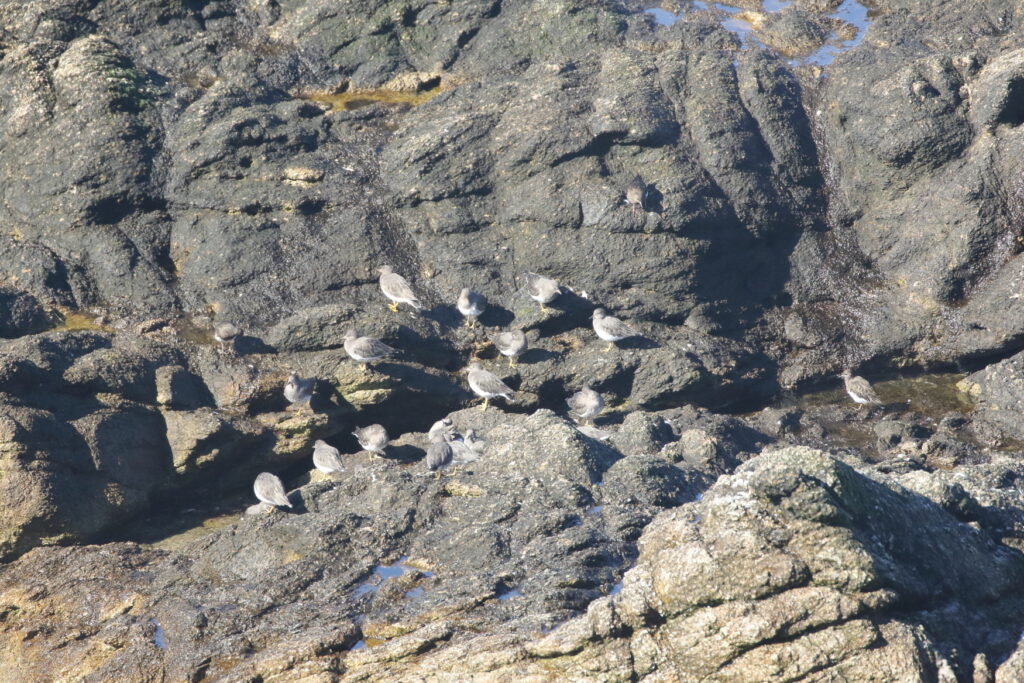
For our final day of birding, Scott drove me to Bodega Bay, one of my favorite places in California. While studying at Cal I had taken an ichthyology course here one summer, and now that I was a birder, the place held even more charm. On the rocks below Bodega Head, Scott and I were astonished to see a group of sixteen Surfbirds—far more than I had ever seen in one place! We also got great looks at both Brandt’s and Pelagic Cormorants, and spotted a Pigeon Guillemot in the far distance.

Since Braden and I saw our first Surfbird from a distance during our first pelagic cruise in Monterey in 2016, these birds have held a special place in our hearts. Never, though, have I seen so many in one place! (Can you also find the lone Black Turnstone in this photo?)

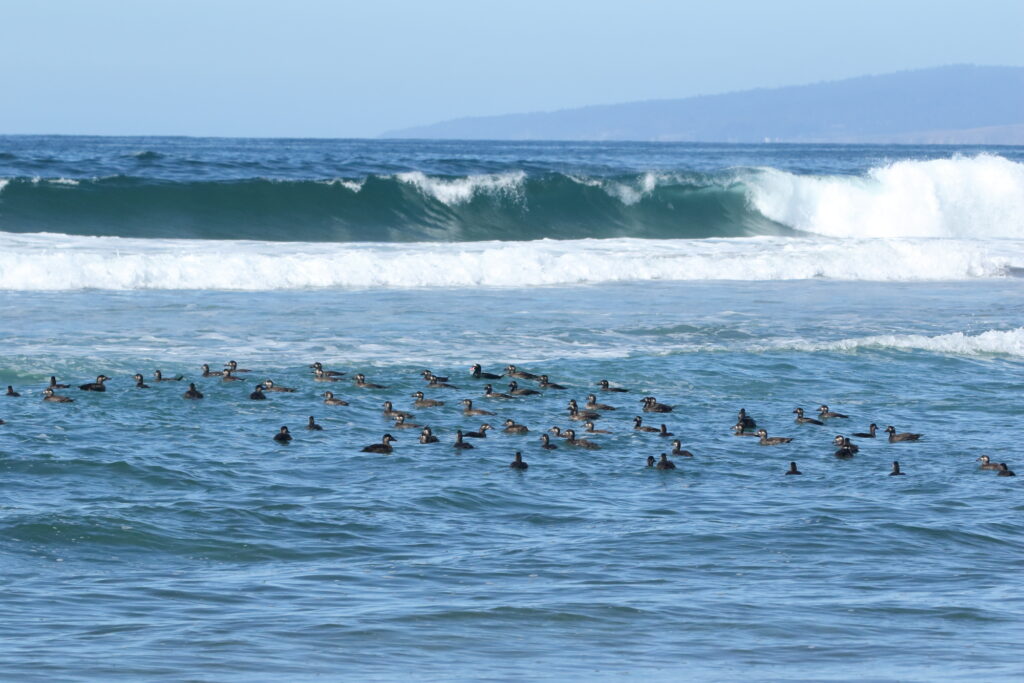
After a lunch of fish tacos, we headed up to the beaches north of Bodega Bay and were treated to a second Whimbrel sighting and more than 120 Surf Scoters casually ducking the breakers offshore. It was a wonderful way to wrap up the trip, and I am grateful to Scott both for being such a great host and for his patience when I was experiencing a blood sugar meltdown at Bodega Head. Of course, you may be wondering where my year list stands now, and I’m happy to report that I am now at 537 species. Will there be any more? I don’t know, but 550 seems awfully tempting, so stay tuned!

Update: Just before posting this, I picked up bird #538 for the year, Lapland Longspur, in some fields northwest of Billings!

Can one ever get tired of Surf Scoters? I don’t THINK so!

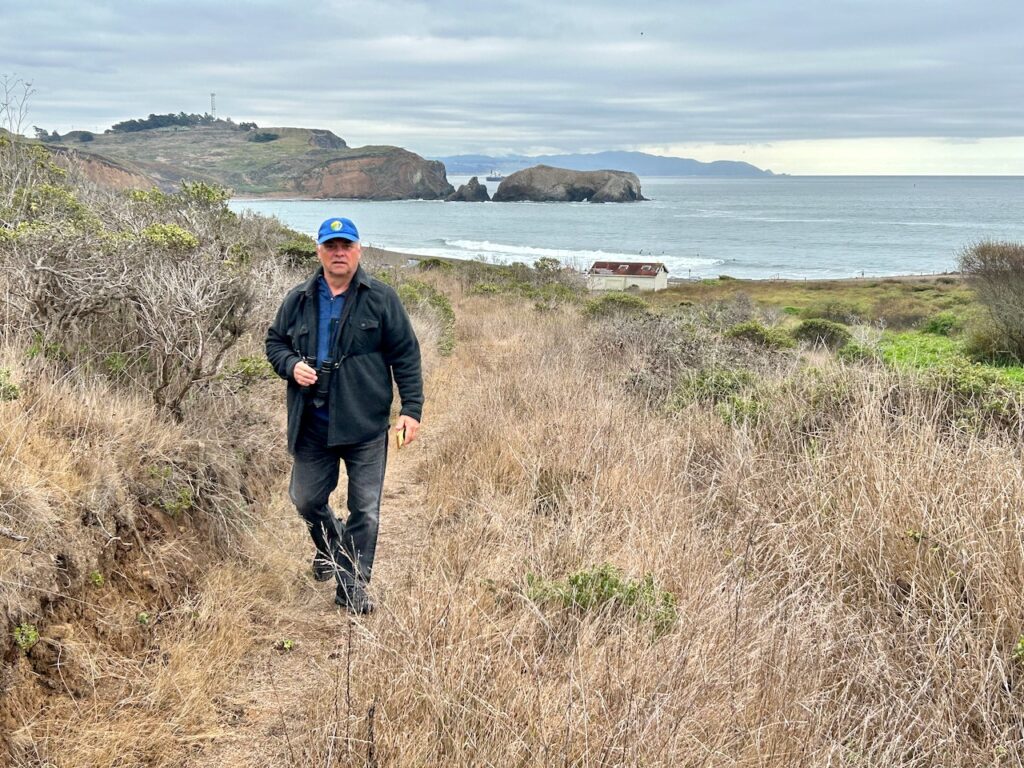
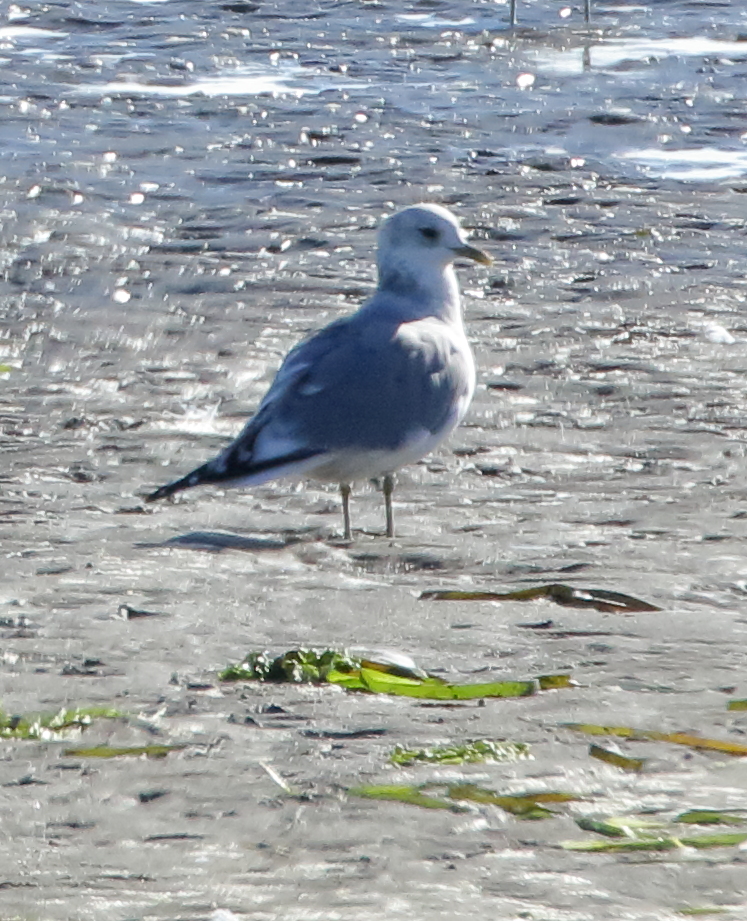
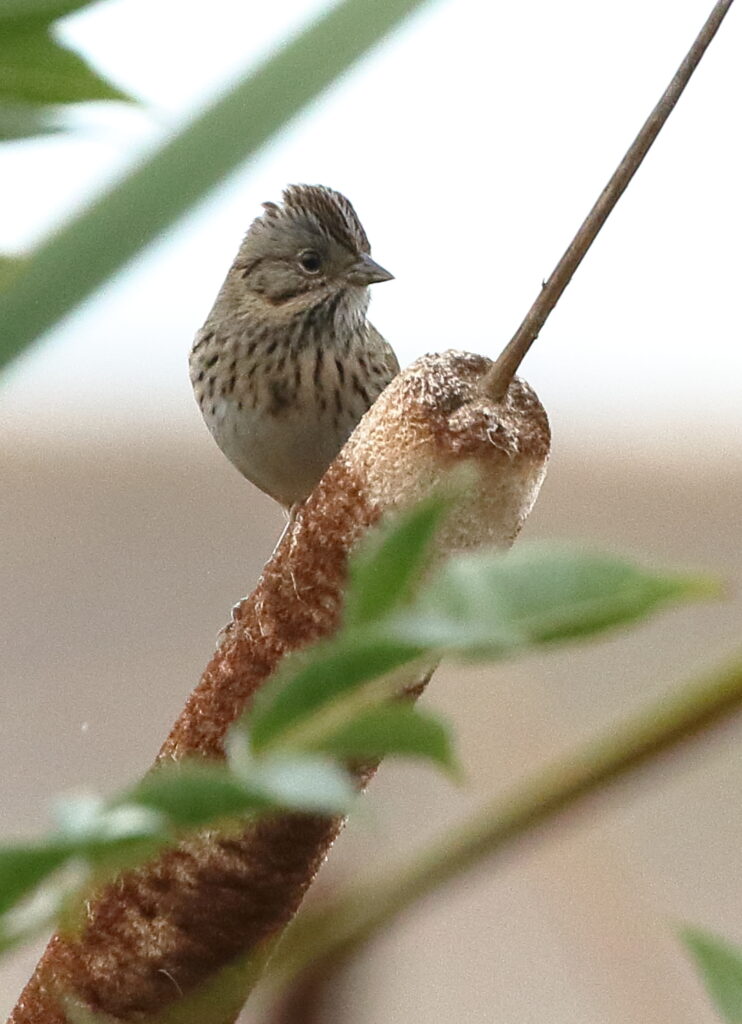
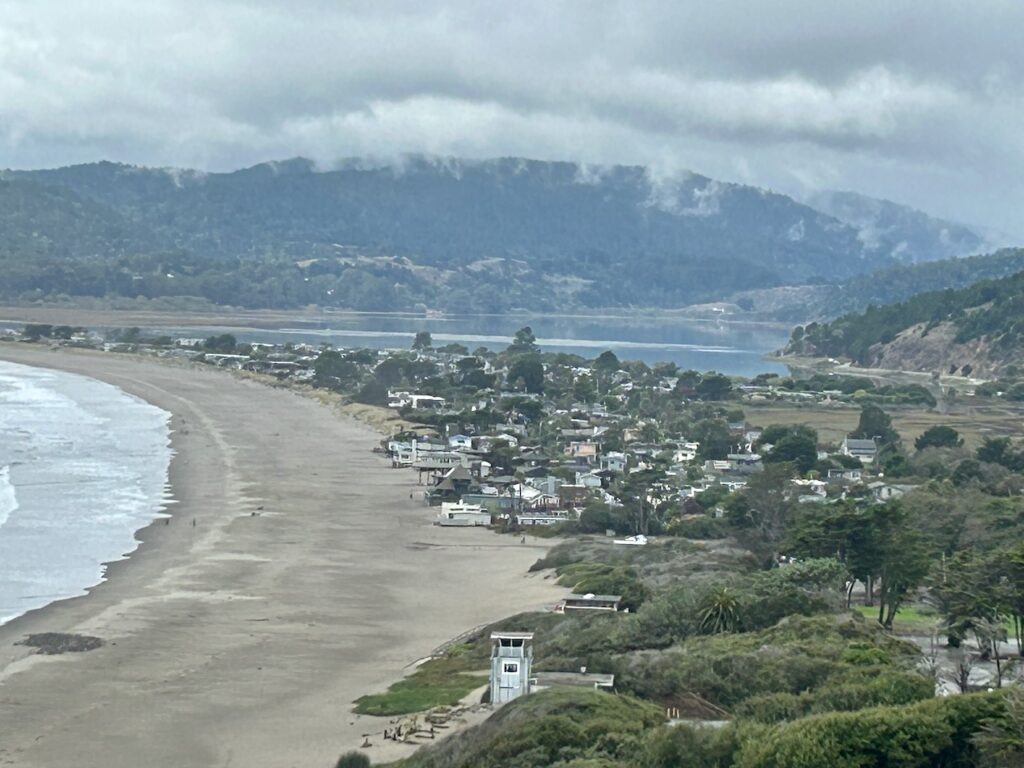
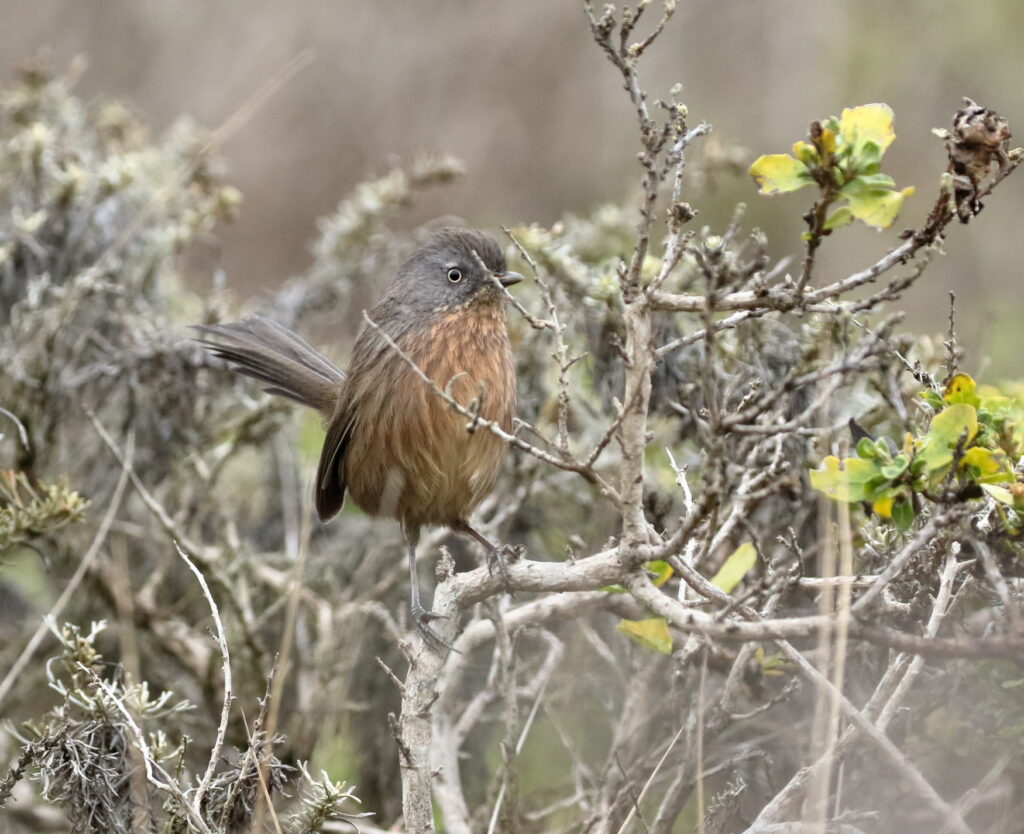
Just for fun, can you name the birds and places above? Answers in the nest—I mean next—post!

Birding Glacier National Park in the Hot Dry Fall of 2025

FatherSonBirding is a labor of love and Braden and I keep it advertising-free. If you’d like to support our efforts at independent journalism, please consider sharing our posts with others and purchasing one or more new copies of Sneed’s books by clicking on the book jackets to the right. Thanks for reading and keep working for birds. We will!

Not quite two years ago, I posted “Birding Glacier National Park in the Long Hot Winter of 2024.” The blog resulted from an invitation I received to speak to school kids in Browning, Montana, and I took the opportunity for some rare winter birding at my favorite park. The post has received a lot of views, either because people love Glacier or they are interested in the impacts of climate change or both. A couple of weeks ago, I was fortunate enough to be invited back to Browning. This time, I came a day early and my hosts were gracious enough to provide me with a place to stay for the extra night. My last post narrated my drive up, especially the devastating state of the drought along the Rocky Mountain Front. With my extra day to bird, though, I planned to return to Glacier and I wondered, “Would the park be as hot and dry as before?”

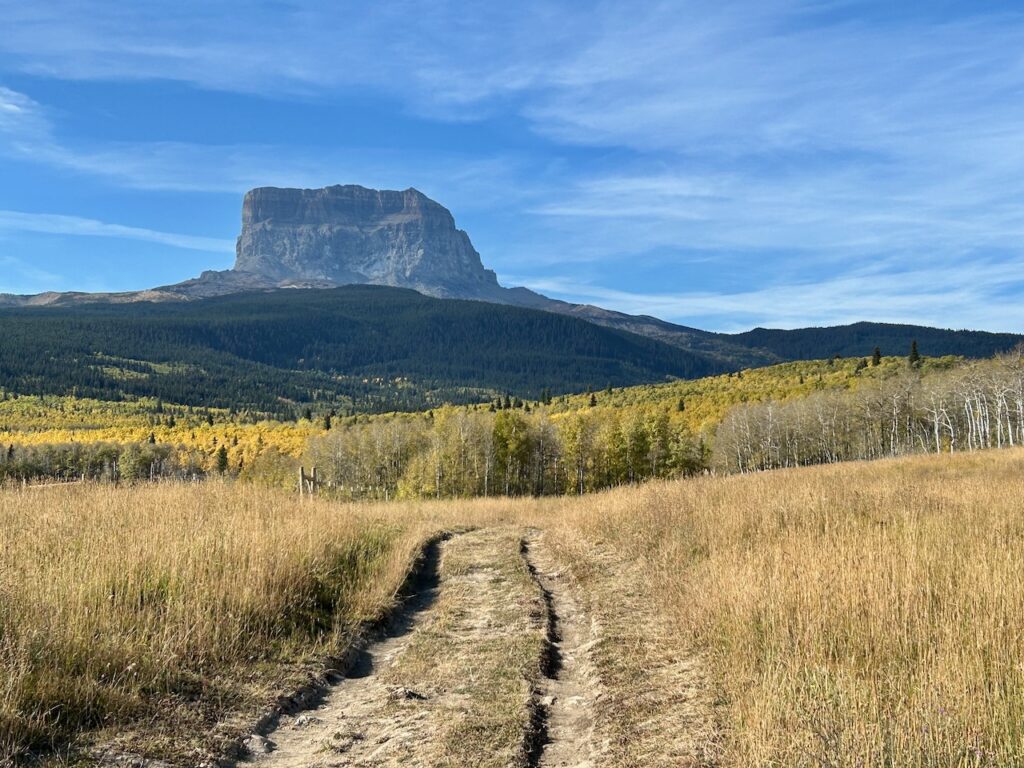
My destination for the day was the road (not THIS one, fortunately) leading past iconic Chief Mountain to the US-Canada border.

I woke in my East Glacier lodging well before dawn and about seven a.m. set off for my first destination, the Chief Mountain road that leads up to Waterton Lakes in Canada. As I drove toward Browning before turning north, a spectacular orange fireball rose on the eastern horizon. I’ve seen lots of sunrises in my life, but nothing matches a sunrise over the northern Great Plains. As a bonus, a red fox and young bull moose greeted me from the side of the road!

My route took me to Saint Mary and up past the one-bar town of Babb before I turned left toward Canada at about 8:30. I sadly didn’t plan to visit our northern neighbor. Today, much as I had on my last visit here, I had a particular quarry in mind: Boreal Chickadees.

As their name implies, Boreal Chickadees live mainly in northern spruce & fir forests and as such, their range barely dips into the US in a few places along our northern border. Lucky for Braden and me, Montana happens to be one of those places. We had found our first BOCHs almost by accident during covid, when Glacier had been closed and we decided to try our luck along the Chief Mountain road. To our delight, we found the little birds. Stunningly cute, their brown heads and other features closely ally them with both the Chestnut-backed and Gray-headed Chickadees, the latter now thought to be extinct in Alaska, their only known home in the US. In any case, on my visit to Browning two years ago, I had relocated BOCHs on the Chief Mountain Road, and it was my aim to do so again today.

For my first try, I stopped at the pull-out right next to the Glacier National Park sign. I walked the road for a few minutes and managed to grab the attention of three Red-breasted Nuthatches while Sound ID picked up the calls of Golden-crowned Kinglets (which due to my ears, I have never been able to hear), but no chickadees.

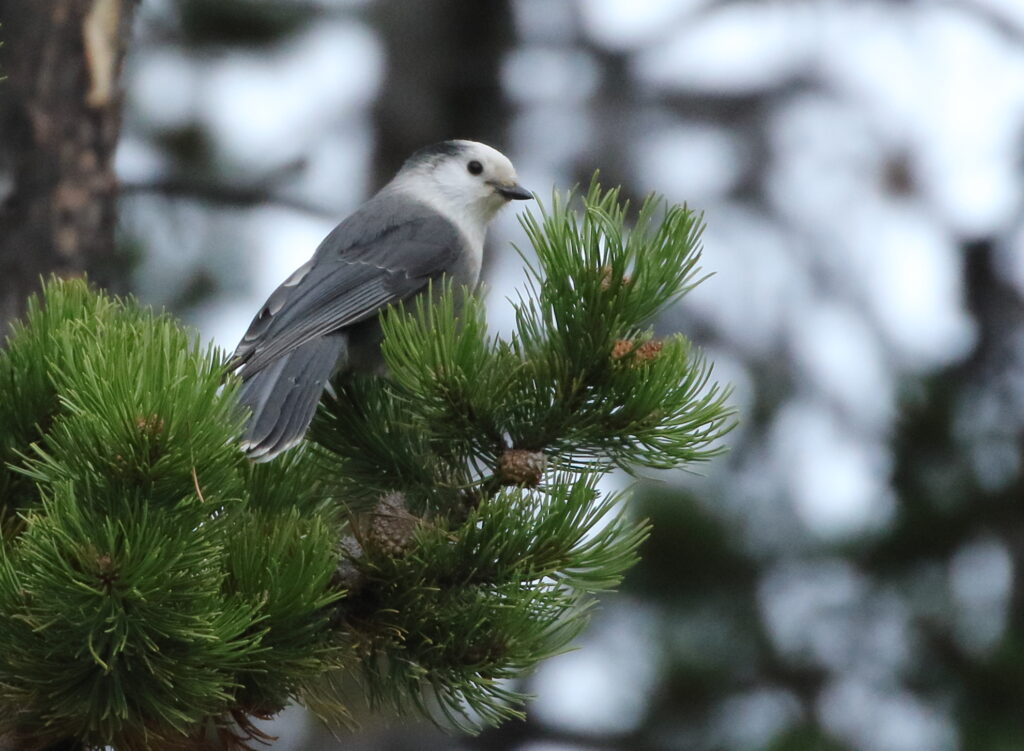
I repeated this routine five more times along the road between the Glacier NP sign and the Canadian border. I got really excited at one point when I saw a flurry of bird activity from my car. I leaped out, binoculars and camera in hand, and saw robins, more nuthatches, and a Hairy Woodpecker. A foursome of Canada Jays, perhaps the most refined members of the corvid family, swung by to check me out. No chickadees.

As my prospects for finding Boreal Chickadees dimmed, I focused on enjoying another of my favorite birds, Canada Jays—though why Canada gets to claim these gorgeous critters remains a mystery!

As I searched, I especially looked for densely-packed spruce trees along the road, but I realized that lodgepole pine actually dominated many areas. “Hm. Maybe this isn’t a preferred location after all,” I thought. “Maybe we just got lucky the past couple of visits.”

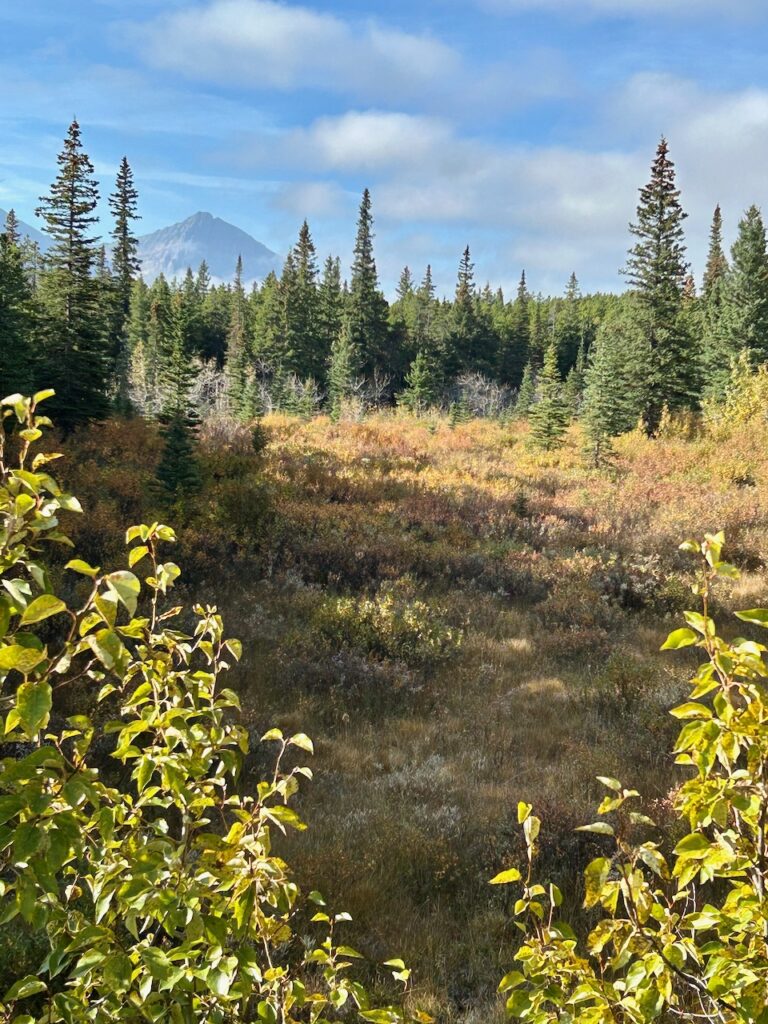
I had started to get that “I guess I’m not going to find them” feeling when I noticed a little area that seemed to have more spruce. There was no pull-out here so I just parked as far off the road as I could and walked back to where a brushy meadow pushed westward into the forest. The meadow was lined with more spruce than anything else, and as if to lure me in, two more Canada Jays landed to be admired. “Might as well give this a try,” I thought.

This meadow intrusion into the woods seemed like my last best chance to find Boreal Chickadees on this unseasonably warm fall day.

I followed what appeared to be an overgrown path through waist-high shrubs. It occured to me that if berries grew nearby this would be an ideal place to get ambushed by a grizzly bear, but I cautiously pressed forward. My hopes shot up when two small birds rose out of the brush and landed in a tree. I got only a brief glimpse and still have no idea what they were, though I’m guessing some kind of sparrow.

I was approaching the end of the meadow when I saw more birds flitting around up ahead. I spotted another Red-breasted Nuthatch and Sound ID picked up White-crowned Sparrows, Golden-crowned Kinglets, and Dark-eyed Juncos. Then, suddenly, I heard chickadees—and they definitely were not Black-cappeds!

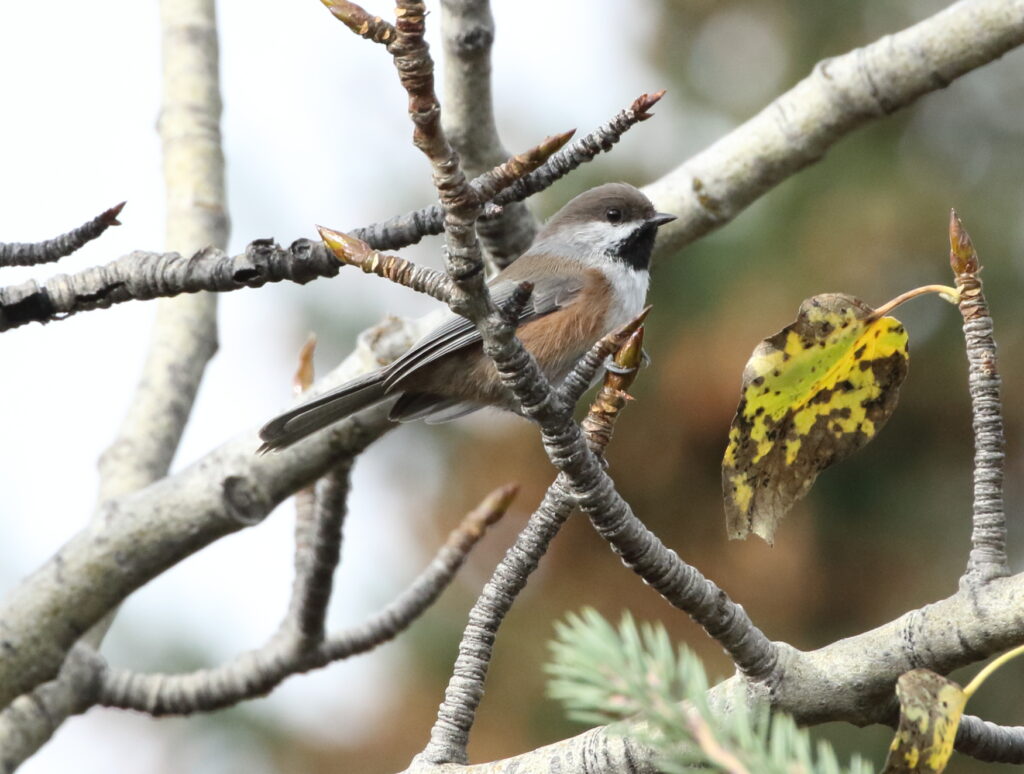
Within moments several tiny birds landed in the trees before me. It took a few tries to get eyes on one and to my joy, it was a Boreal! There were four of them altogether and wow, did they have a lot of energy! Not only were they checking me out, they were checking out every other bird, too—including a Ruby-crowned Kinglet keeping company. I managed a couple of good photos. Then, within minutes, all the birds departed—even the White-crowned Sparrows with their loud contact calls. Smiling, I traipsed back to the car. The sun had a special warmth to it and Chief Mountain rising above the forest added magic to the moment. Little did I know, however, that this wouldn’t be my last “moment” of the day.

While most visitors to Glacier focus on seeing grizzlies and mountain goats, nothing says wilderness to me more than Boreal Chickadees.

The glow of seeing Boreal Chickadees still with me, I made my way back to Babb and turned right, up the road to the Many Glacier Valley. A large flashing sign warned that there was no general admission parking there, but I love this drive and decided to go as far as I could. I passed through groves of aspen glowing gold with fall foliage and relished the views of Mt. Wilbur and other familiar peaks ahead.

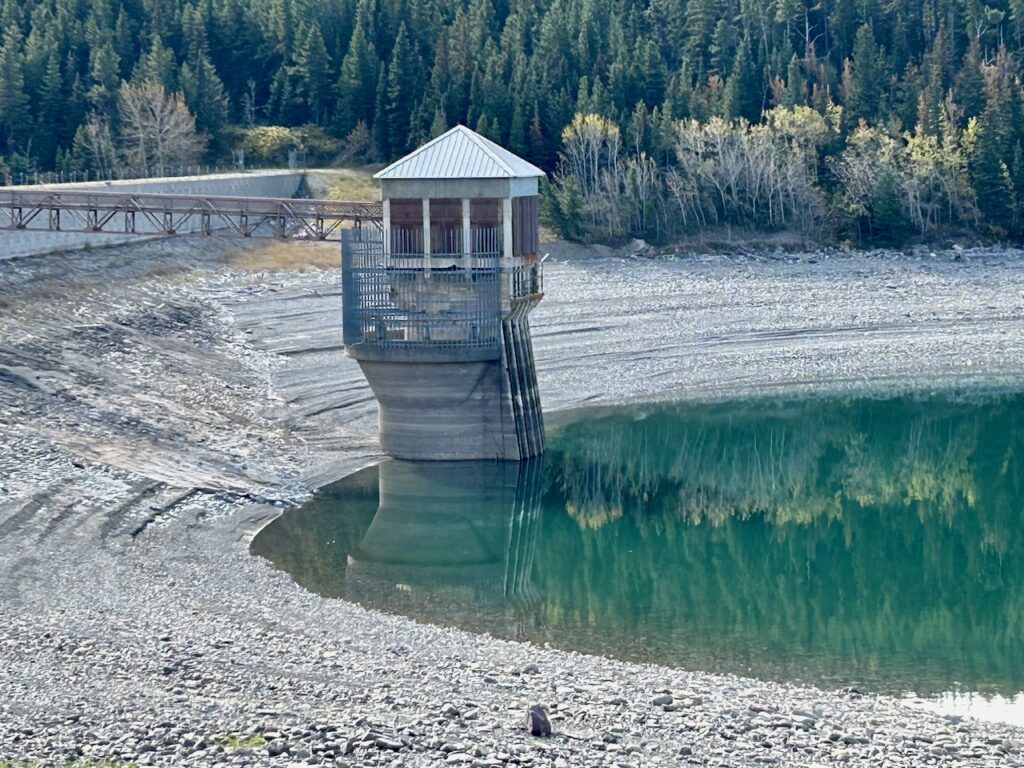
At the Lake Sherburne dam, I stopped and got out for a look at the reservoir. In keeping with my observations from my last post, it was as low as I’d ever seen it, a giant “bathtub ring” leading from the forest edge down to what water remained. I’d also noticed that Swiftcurrent Creek was incredibly low—mere rivulets flowing between a pavement of exposed rocks.

Lake Sherburne—a reservoir, actually—stood as low as I’d ever seen it, additional evidence of the long-term drought impacting this part of the world.

I still had plenty of time and wanted to do some kind of hike in the park, so I returned to St. Mary and found myself on a little trail for the Beaver Pond Loop. In all my visits to Glacier, I’d never before done any hiking or walking near St. Mary so I set out on this path with some excitement. It wasn’t the most dramatic hike, hugging the south side of St. Mary Lake, but it offered terrific views up the valley and the blue sky and warm (too warm) conditions made for pleasant hiking.

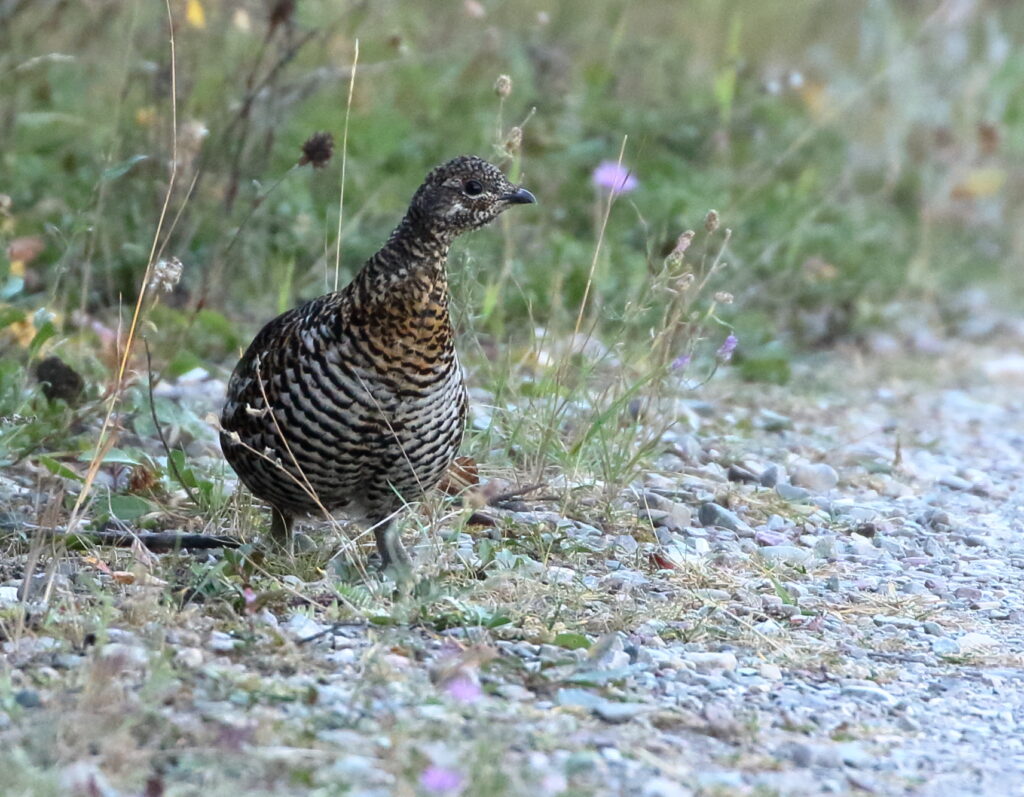
I’d walked maybe a quarter mile when I rounded a bend to see a dark object ahead next to the trail. At first I thought it might be a hare or other mammal. When I raised my binoculars, I realized with astonishment that it was a grouse. Not only that, I felt pretty sure it was a Spruce Grouse!

My accidental Spruce Grouse sighting was evidence that I had put in enough time searching for these guys to break my “grouse curse.” Notably, the grouse brought my year species total to 527 birds—exactly tied with my previous record. Which bird will put me over the top? Stay tuned to FSB to find out!

If you’ve followed FatherSonBirding, you’ll know that I’ve seen SPGR only twice (see posts “Gambling on a Grouse-fecta” and “August: It’s Just Weird”), and had gone to great effort to do so. To have one just show up unexpectedly, well, that pretty much blew my mind. Still, I didn’t feel 100% sure on the ID, so I snapped some quick photos to send to Braden. Then, the grouse started walking toward me. “Whaaaaat?” I wondered.

That’s when I realized that another hiker stood on the other side of the bird and had herded it my way. Finally, the grouse wandered off into the forest, leaving me both astonished and gratified. I guess I had put in enough grouse effort to finally be rewarded by such encounters!

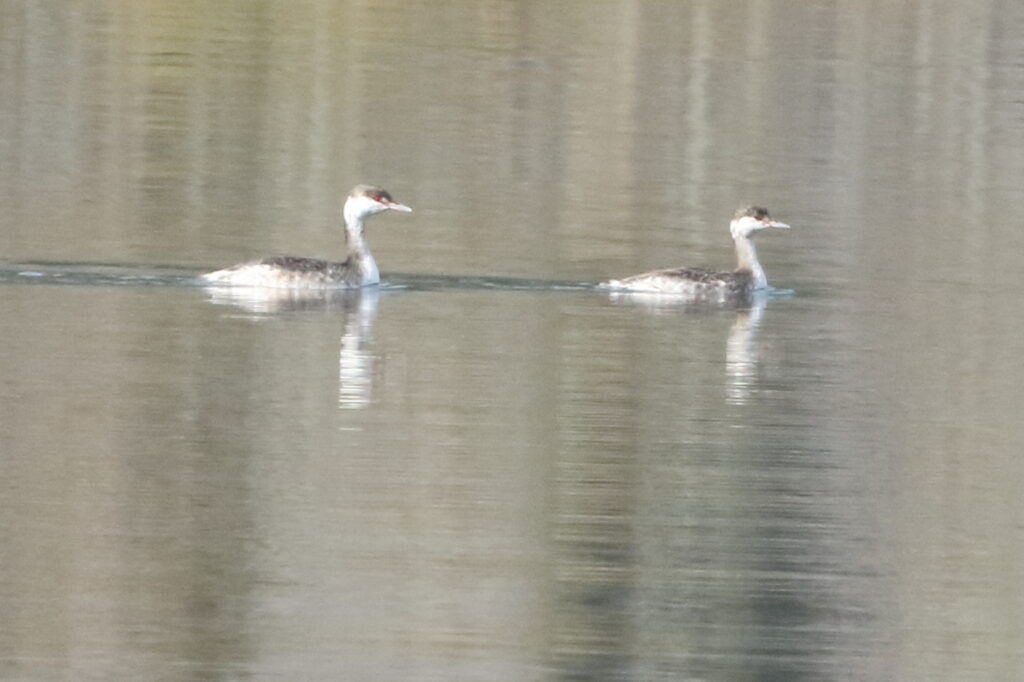
I continued onto a nice rocky beach on St. Mary Lake and found a perfect rock for sitting. Two pairs of Horned Grebes played and fished out on the water—my best look at this species all year—and I relished a few moments in one of earth’s most spectacular places.

Two pairs of Horned Grebes kept me company as I took a few moments to soak up the beauty of Glacier National Park before heading to my week of work in Browning.

Glacier, though, doesn’t exist by accident. It’s here because forward-thinking people planned for the future long ago. As the epically dry conditions of this part of the world attest, we need to keep thinking forward if we want our children and their descendants to have such places to cherish. As I said in my last post, all of us need to fight the disinformation and greed of climate deniers however we can. Whether that’s by making a donation to an environmental or legal group battling the horrible policies of the current administration or making changes to lower your own carbon footprints, every effort matters. Now, more than ever, is the time.

The “Hoax” of Climate Change and Birding the Rocky Mountain Front

It’s remarkable that as the impacts of climate change rapidly accelerate across the planet many of our leaders have doubled-down on the myth that climate change is a hoax being perpetuated by “stupid people.” Here’s the thing: To realize how quickly and dramatically warming temperatures are changing our planet, you don’t have to be a climate scientist. You simply have to look around. 100- or even 1000-year weather events are happening every few years in many places, generating catastrophic winds, storms, flooding, and drought. Even since I moved to Montana thirty years ago, summers are hotter, winters are milder, and snowpack is disappearing more quickly. Especially in eastern Montana, drought conditions seem to be setting in for the long haul. Braden and I have seen dramatic evidence of this all over the state (see, for example, my post “Birding Glacier National Park in the Hot Dry Winter of 2024”). Two weeks ago, I had a chance to again witness severe drought when I birded the Rocky Mountain front from Freezeout Lake up to the east side of Glacier National Park.

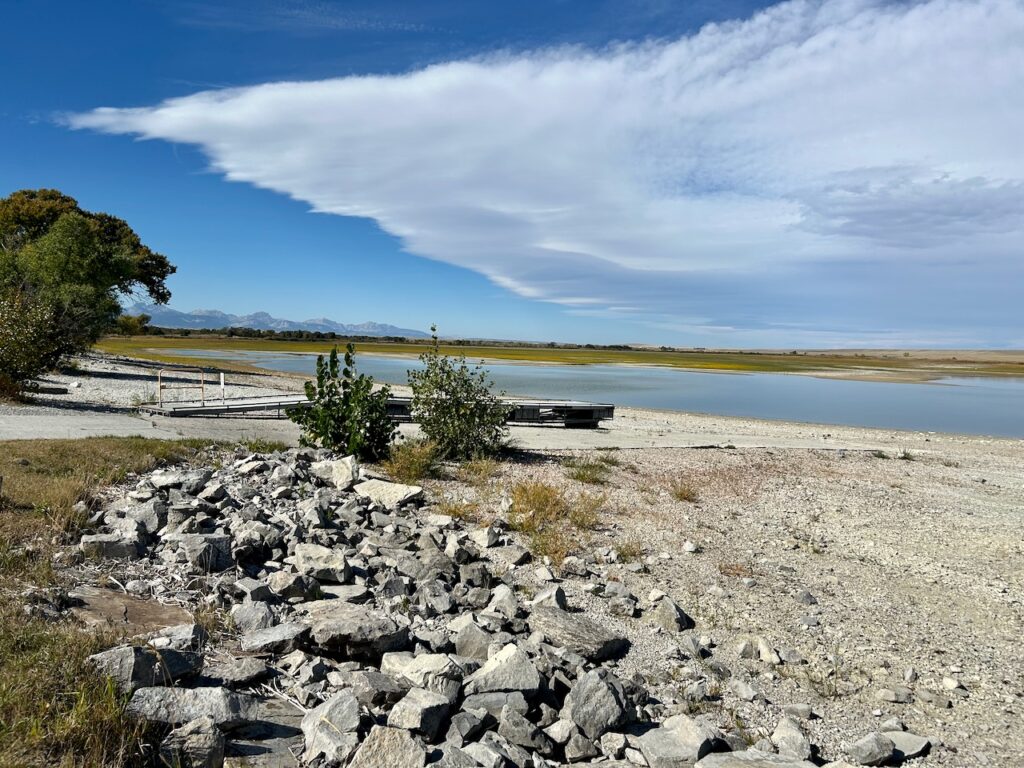
The DRY Dock of the Bay: A rapidly receding shore left this dock high and dry at Eureka Reservoir.

I left Missoula Saturday at the modest hour of 7 a.m. Days are shorter by the end of September so there was less urgency to hit the road early. Just as crucially, Highway 200, which would lead me up and over the Continental Divide, can be a notorious kill zone for deer, elk, and moose at dawn and I thought that waiting an extra hour might keep me and my minivan from ending up in a crumpled heap by the side of the road. My later departure paid off. I managed to spot the two potential deer collisions with plenty of time to brake and after a quick stop near Browns Lake, I arrived at my first destination by 9:30.

I had debated whether to visit Benton NWR near Great Falls or head straight to Freezeout, but eBird reports from the latter proved more enticing so I cast my lot there. As they always do, my excitement levels rose as I passed the refuge headquarters and then turned left to scan the southern bodies of water. It had been a while since I’d visited Freezeout this time of year, and I wasn’t sure what to expect since many birds had undoubtedly departed for their southerly wintering grounds. Rumbling along the gravel road, I did scare up a few Horned Larks and a couple of Western Meadowlarks looking faded and shabby. I also saw that the entire area was as dry and crispy as I’d ever seen it. In good years, water can be found in ditches, shallow pans next to the roads, and elsewhere, but now it was confined to the main lakes on my right. Still, I could see birds on the water.

At the very southern end of the refuge, I spotted about thirty-five American White Pelicans along with some coots, barely identifiable American Avocets, and unidentified, distant ducks. I soon backtracked, though, to where I had noted greater potential.

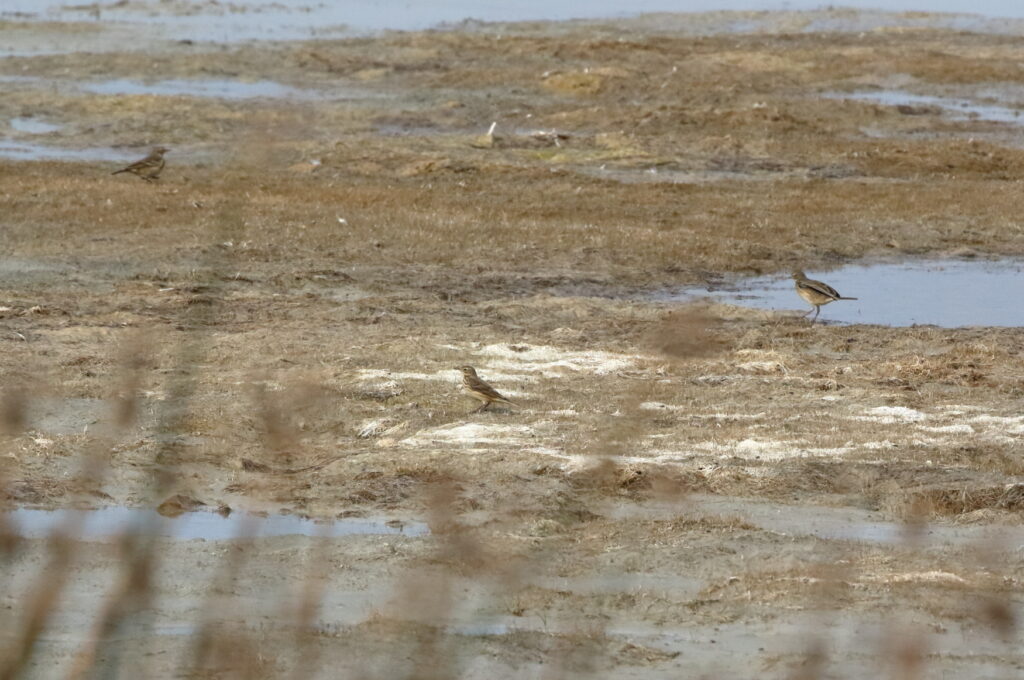
I parked at a pull-out camping area next to a dike/road that led out between two of the large lakes. I couldn’t drive out there, so I shouldered my camera, binoculars, and spotting scope and did what every dedicated birder does: schleps! Am I glad that I did. Almost immediately, I noticed several small birds working some mud off to my right. I ID’ed a couple as Horned Larks, but had a hunch about others so I quickly set up my scope and indeed saw that they were American Pipits! I absolutely love these guys. In Montana, they breed at high altitude, but in spring and fall you can find them migrating through the lowlands. Unfortunately, I had missed them this spring, so that made it doubly sweet to see them now. Even better, it moved me one bird closer to breaking my all-time one-year species count record!

American Pipits working the recently receded shoreline of one of Freezeout’s main lakes.

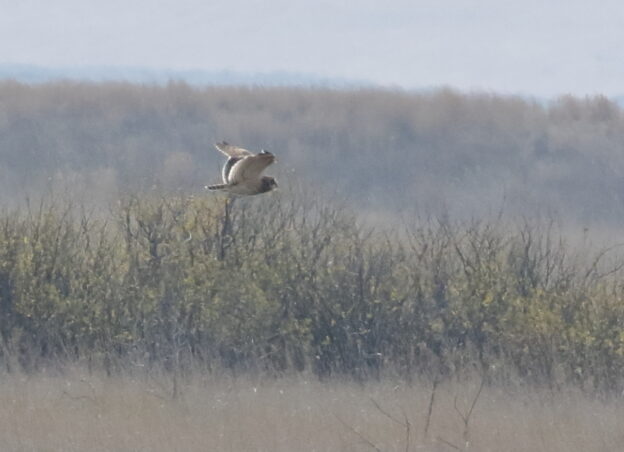
As I resumed walking, I suddenly spotted a large raptor flying low and erratically over fields to my left. My first guess normally would be Northern Harrier, but this was my lucky day. The bird wasn’t a harrier, but a Short-eared Owl! It had been years since I’d seen one here and I couldn’t have been more delighted. These are some of my and Braden’s favorite birds, but we never know when we’ll encounter them. To emphasize the point, the bird was listed as unreported on the eBird filter (presumably just for this time of year), showing how unpredictable the birds can be.

Another in my now-famous series of lousy Short-eared Owl photos! After all, I have a reputation to uphold!

Another couple of hundred yards brought me close enough to set up the scope on the birds I was seeing far out on the water. There were groups of ducks, but those didn’t interest me. What did was a group of about forty or fifty shorebirds. Even with the scope, I wasn’t as close as I would have liked, but their very long bills, pale superciliums (the bands above their eyes) and “oil drilling” probing of the shallows said “Long-billed Dowitchers.” Then, I began to doubt myself. Their bills were so long and from a distance, I could imagine that some of them seemed slightly upturned. “Could they be godwits?” I asked myself, suddenly thrown into confusion. I kept studying them, eventually coming back to dowitchers. What cinched it is that when they took flight I could clearly see the single white stripes running down their backs. Godwits don’t have that. When they again landed, I realized that their numbers had also doubled to about ninety.

Dowitchers always make me happy. I just hope that humans can get our act together in time to make sure they have enough water in the future.

I spent almost an hour studying the water from the dike, and in addition to the Long-billed Dowitchers, I found four sandpipers that I thought were Baird’s Sandpipers but could have been Pectoral Sandpipers—they were just a bit too far away to be sure. I did ID several distant Black-bellied Plovers, too. The rest of Freezeout didn’t offer up much. I saw three Eared Grebes and a Canvasback hidden among scads of Canada Geese and intermolt ducks that were probably mostly Mallards. A stop at Priest’s Lake, however, yielded 2,500—you read that correctly—twenty-five hundred Ruddy Ducks! Ruddies, of course, are one of the BEST ducks, but I’d never seen even close to these numbers before. During fall migration, I guess they like each other’s company!

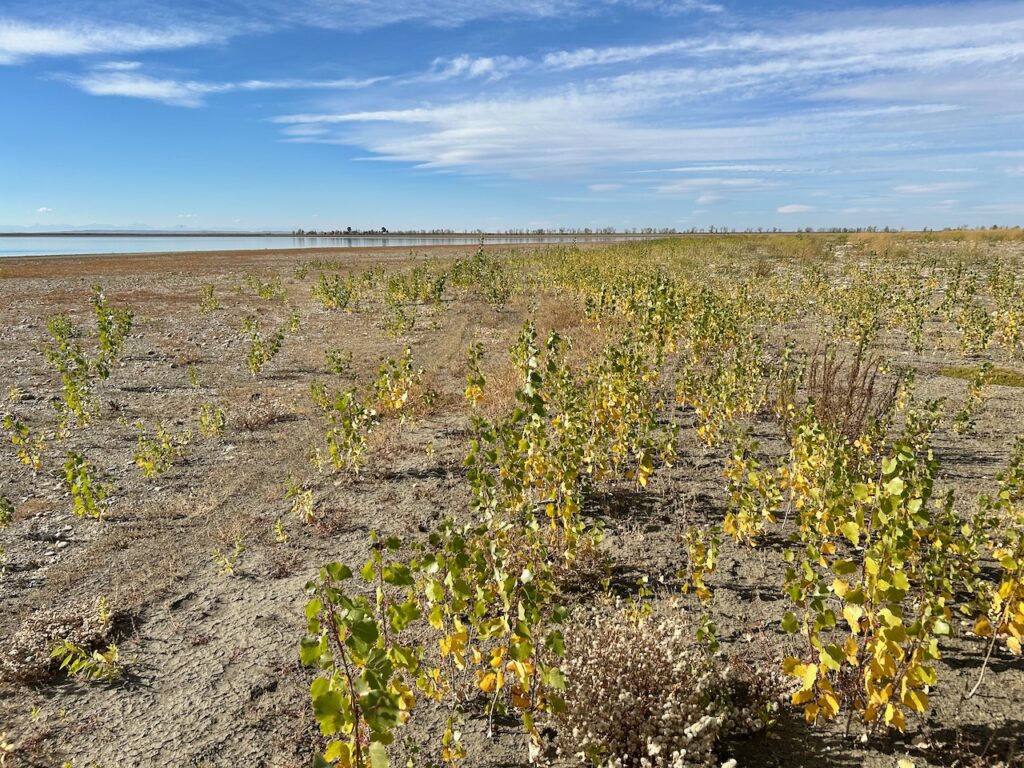
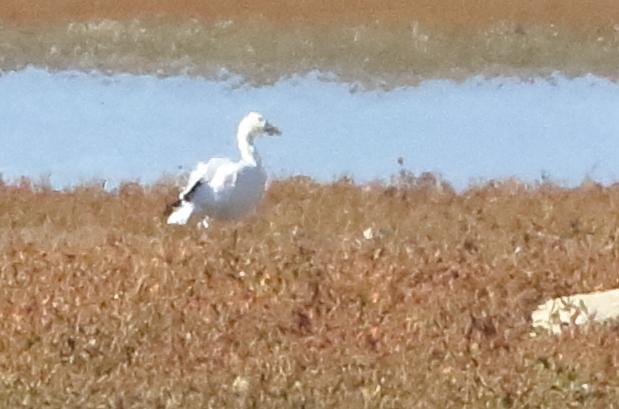
One of my birding goals lately is to try to bird new areas and on my way up to East Glacier, where I would be spending the night, I made two more stops: Eureka Reservoir north of Choteau and Lake Frances near Valier. Neither yielded anything exceptional, but I did pick up my First-of-the-Year Snow Goose, a single specimen at Lake Frances. What both places strongly reinforced was the critical water situation in this part of the world. Both bodies of water had retreated huge distances from their historic lake shores. It’s difficult to tell what percentage of water they’ve lost, but I’d guess that both were at least three-quarters empty.

Lake Frances offered up the most visible impacts of what drought is doing to the Great Plains. I had to walk across a couple of hundred yards of former lake bottom to reach today’s shore.

As I passed through Browning and turned toward East Glacier, I saw more bad news. Braden and I had driven this route at least a dozen times and every time we saw prairie potholes full of water. On this day, every one of those potholes stood bone dry until I’d almost reached East Glacier. This has dire portents for the future of our wild birds. Sure, rainfall goes up and down year to year, but the trend for the West is to get drier and drier. What happens when migrating birds head south and find no water at all?

This lone Snow Goose at Lake Frances brought me to within three birds of breaking my all-time one-year species count record—but it was small consolation for the dire water conditions I saw everywhere.

Honestly, I don’t want to find out, but it adds an urgency to act—and makes current attacks on clean energy both unconscionable and downright reckless. Why are such attacks happening? Just follow the money to the oil and car companies that continue to make trillions in profits while our planet suffers. These corporations have invested heavily in the current administration and are grinning ear to ear as POTUS rails against solar energy and windmills while he tries to sell our fossil fuels to a world that doesn’t want them. I generally try to keep FatherSonBirding apolitical, but if we want the next generation to have half of the beauty and diversity you and I have enjoyed, we have some urgent decisions to make. None of us has to change the world all by ourselves, but we each have to do something, whether it’s donating to causes working for a better planet or taking the plunge on solar panels, an electric vehicle, or eco-friendly hot water heater. The next generation may not ever thank us “stupid people” for what we’re doing, but we’ll know that the world will be better off for our efforts.

Seeing Red—Phalarope, That Is

Conservation Update: Not long ago, I wrote about an amazing opportunity to protect a key piece of habitat on the famed Bolivar Peninsula in Texas. This property is a critical resting point and staging area for birds migrating across the Gulf of Mexico, and Houston Audubon is leading the effort to raise $3 million to purchase the property. To learn more, please read our recent blog post, and if you have not already done so, consider contributing to this once-in-a-lifetime opportunity to protect birds by clicking here. So far, more than four hundred donors have chipped in, but many more are needed! Thank you and please spread the word!

For birders, fall migration is a season like no other. That’s because birds fail to look at the range maps of where they are supposed to be and show up in all kinds of unusual and surprising places! You may recall that recently, I have been moving perilously close to breaking my all-time one-year global species record of 527, but instead of frantically trying chase down species (and burning up a lot of gas in the process), I have decided to see how many species just come to me during the fall. Last week, I picked up a Clark’s Grebe in the local Missoula Gravel Quarry, moving me to within seven species of a new record. That really wasn’t too surprising since a few pairs of Clark’s do breed in Western Montana, and it made sense that one might end up passing through my home town. A couple of days ago, however, when I saw a report of a Red Phalarope, my mind shouted “Whoa!”

A Clark’s Grebe at the Fort Missoula Gravel Quarry helped push my 2025 world species count to 521. (A different CLGR shown here.)

Braden and I have mentioned phalaropes in several past blogs (see, for instance, THIS POST), and they are fascinating birds. Phalaropes are shorebirds in the family Scolopacidae and in the entire world, there are only three species: the Wilson’s, Red-necked, and Red (called the Gray Phalarope in Europe). Montana is fortunate to host Wilson’s Phalaropes each spring and summer, as they are the only phalarope to breed in the interior of the continent. The first time we encountered these beauties was in 2015 at Lee Metcalf National Wildlife Refuge. I had barely heard of phalaropes when we drove past the main pond at Metcalf and Braden—who was and still is better prepared than I—shouted Wilson’s Phalaropes! Since then, I have become increasingly enchanted by these birds and, according to eBird, have seen them 123 times.

Wilson’s Phalaropes gather in large numbers at some Montana breeding locations—including this flock Braden and I observed near Westby.

Several things make phalaropes stand out from other birds. For one thing, they flip the rule on “males are brighter than females.” With phalaropes, it is the female that is the stunning, brightly-colored sex during breeding, not the male. Females compete for males to mate with and may even “service” several different males, leaving the guys totally in charge of parental care once the eggs are laid. Can I hear legions of human females shouting “Amen”?

Female phalaropes such as this Wilson’s Phalarope are undoubtedly some of our most beautiful shorebirds. Note the longer, thinner bill compared to the Red Phalarope shown later.

Another thing everyone loves about phalaropes is their method of hunting by spinning rapidly on the surface of the water. This spinning creates a little aqueous “tornado” that sucks up crustaceans and other invertebrate prey from below. The birds also hunt in more traditional shorebird manners by probing shallows and even picking off prey from nearby vegetation.

Spinning is not just a yuppie exercise class, but a method for phalaropes to draw up prey from below the surface. (Red Phalarope shown here.)

Whenever Braden and I are lucky enough to visit eastern Montana in spring and summer, we usually see large numbers of Wilson’s Phalaropes feeding and setting up nesting sites (see THIS POST). If our timing is right and we stay persistent, we also usually spot a few Red-necked Phalaropes. With their dramatically contrasting red, white, and dark gray heads, these phalaropes are even more stunning than the Wilson’s. The window to see them is short, however, as they breed high in the Arctic and can only be “caught” while they are resting or staging for their final journeys north. A couple of times we have also spotted them heading back south in August, when they are invariably in their duller gray-and-white plumages.

However, one phalarope that we have never seen in Montana in more than a decade of birding is the Red Phalarope. The reason is that, in general, these birds migrate over the ocean—not over the interior of the continent. Red Phalaropes are the most pelagic of the three phalaropes and, except during breeding, spend their lives out at sea. In fact, the only Red Phalaropes that Braden and I ever saw was a single pair off the coast of San Diego during the San Diego Birding Festival several years ago. Only about twenty sightings have ever been reported in Montana.

Naturally, when I read the recent report of a Red Phalarope in Missoula, my excitement went into overdrive. The next morning, after Amy and I went to a pickleball class, I convinced her to drive down to a little spot called Cattail Corner where the Red Phalarope had been reported. Mind you, this is not where one would expect to see a rare bird. It’s just a tiny wetland wedged between a shopping center, a gas station, and two busy roads. I used to bird there a lot just to see what I could find, and recently the dense cattails had been cleared out, creating more open water and even a bit of shoreline. Early this spring, Braden and I were surprised to find several Spotted Sandpipers hopefully setting up breeding territories there, but still . . . a Red Phalarope???????

Finding a rare bird such as a Red Phalarope at the tiny, worked-over Cattail Corner seemed unlikely at best. (Bonus: Can you spot a phalarope in this photo?)

As soon as we parked, I grabbed my camera and binoculars and Amy and I began circumnavigating the little wetland. My natural pessimism kept repeating, Oh, I’m sure it’s gone now. After all who would want to hang out in this crummy little wetland? Sure enough, Amy and I spent thirty minutes walking around the ponds without a single sighting of anything resembling a phalarope. Oh, well.

As we were leaving, our friend and fellow birder Susan Snetsinger arrived. We told her we hadn’t seen the phalarope, but if she happened to spot it to please call right away. Then, we got back in the car and began heading home, a bit disappointed but not surprised at failing to find the bird. Besides, Amy had a lot to do and I needed to tackle a number of chores myself.

We were just passing Tremper’s shopping center when the phone rang. I hit the “answer” button on the steering wheel and it was Susan. “Did you see a phalarope at all?” she asked. “No.” “Well, I’m looking at one now, but I’m not sure it’s a Red Phalarope.” “We’ll be right there!” I told her.

I made a quick U-turn and in five minutes was again parking the minivan. We quickly spotted Susan on the far side of the shore, and even before reaching her, I could see a phalarope on the water. “How on earth did I miss that?” I asked Amy. What’s more, the phalarope seemed blissfully unconcerned as we drew close enough for good viewing and photographs. The problem? This bird was in basic (nonbreeding) plumage and it looked remarkably similar to a Red-necked Phalarope in the same plumage. In the fall, both birds are basically gray and white, with prominent black patches behind the eyes. Red Phalaropes are a bit larger than Red-neckeds, but if they aren’t side-by-side that’s not a useful feature. According to Sibley, Red-neckeds also are streakier on their backs—but this bird before us also looked pretty darned streaky to me.

The slightly thicker bill of this Red Phalarope was a key to its identification.

From what I can glean, the key ID feature that distinguishes the two birds is the thickness of their bills. While Red-neckeds have thinner, needle-like bills, those of Reds are thicker, almost pencil-like. The bird in front of us did indeed seem to have a thicker bill, but there is so much variation in these kinds of features that I still felt less than confident—even though this bird had already been confirmed as a Red Phalarope by the eBird Powers That Be. Later Dan Casey, prominent Montana birder and co-author of Birds of Montana, sent me a phalarope comparison guide that helped convince me further. This can be found at:

Phalarope Photo ID Guide

We watched the phalarope for about ten minutes and then, to my surprise, it climbed ashore and disappeared into the weeds. “Ah, that’s why we didn’t see it earlier,” I told Amy, grateful that the bird had decided to put in an appearance out on the water where we could see it.

Phalaropes are mainly visual predators, picking off invertebrates wherever they see them.

But the Bottom Line? Red and Red-necked phalaropes are very difficult to tell apart in their basic, nonbreeding plumage, so never assume you’re looking at one or the other. Personally, I hope to get more chances to observe and get to know them in the field in the future.

The other Bottom Line? It was WAY COOL to see a Red Phalarope here in my hometown and it became my Montana Lifer #312. As a bonus, I now need only six more species to break my all-time one-year record. Hm . . . I wonder what will show up next?

To learn more about phalaropes, we recommend the book The Shorebirds of North America, reviewed here.

Sneed’s Bird #522 for 2025. Will I get to 528? It may be up to rare migrants such as this Red Phalarope!