Tag Archives: bluebirds

Bluebird Day at Browns Lake!

With all of our recent posts about Costa Rica, you’re probably wondering if we ever bird in Montana anymore! Never fear, we do—a lot! Today we report on an adventure that delivered some remarkable early migration surprises. If you’d like to support our work at FSB, please consider purchasing some of Sneed’s books shown to the right—and support a group such as Birdlife International or Audubon that is working hard to protect birds against climate change and many other perils. Remember: all of our posts are written and photographed by REAL PEOPLE!

I don’t know if it’s because of our recent trip to Costa Rica, my subsequent trip to California, or just the usual spring excitement, but I’ve felt especially eager to get out birding in Montana this spring. At least part of it has to with wanting to learn more about the timing of migration, especially in a year in which Montana hardly experienced winter. How would this impact the birds? I wondered. Would we see things showing up especially early? Fortunately, our friend Susan Snetsinger has felt just as eager to explore, so the past couple of weeks Susan and I have taken all-day adventures to some of our favorite western Montana birding locations. Two weeks ago, we visited Warm Springs and the impressively “remodeled” Lexington Street Pond and wetlands in downtown Butte. We were rewarded with a great variety of waterfowl, including Snow Geese at both locations. The highlight of the day was undoubtedly a great look at a Golden Eagle on the dirt road between Racetrack Pond and Warm Springs.
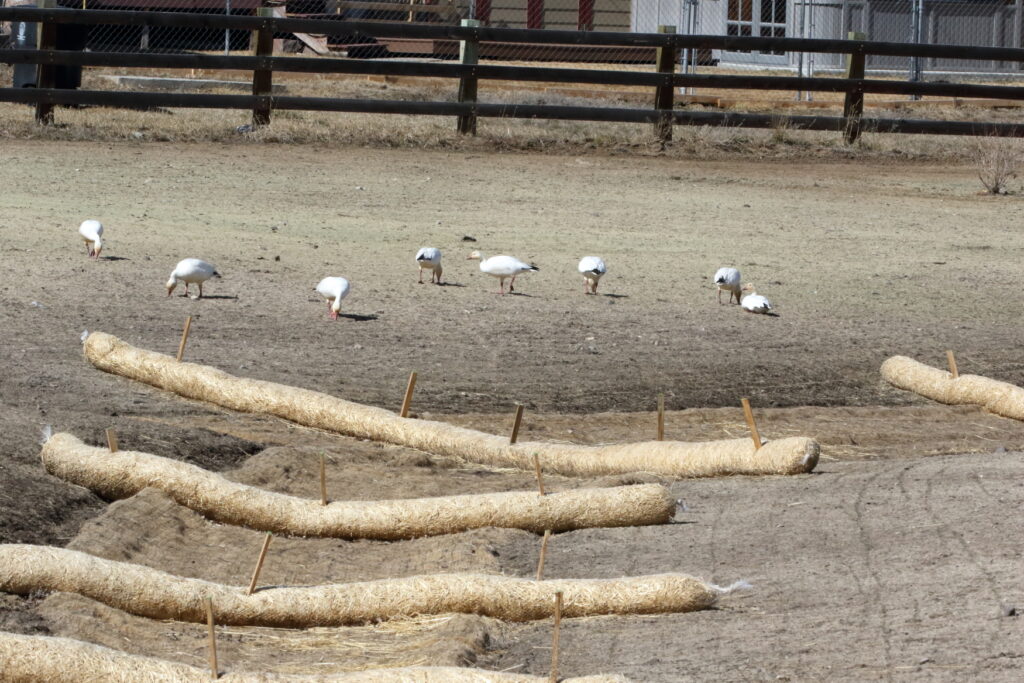
Snow Geese are always something to celebrate in Montana—including this group at Butte’s fabulously restored Lexington Street wetlands area.

A few days ago, though, Susan and I had a different ambition: to post the season’s first eBird checklist for Browns Lake. This is one of Braden’s and my favorite birding locations, and I don’t think it has ever failed to disappoint. Not only is it a go-to place for breeding Red-necked Grebes and Black Terns, we have found a lot of uncommon species there including Long-tailed Ducks, Pacific Loons, and Ross’s Geese. Notably, this is where Braden made the astounding discovery of a Bay-breasted Warbler two years ago—one of just a handful of sightings ever recorded from western Montana.
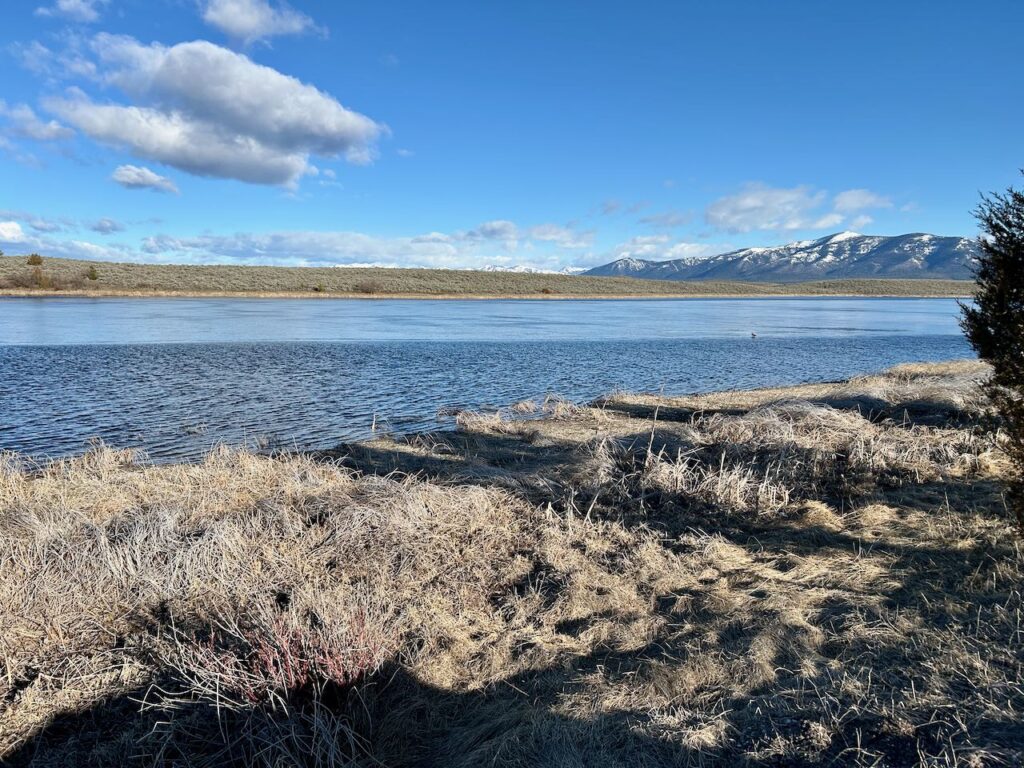
Although Browns (sic) Lake is frozen for a good part of the year, it has never disappointed us as a birding destination and we were eager to see what it held so early in the spring.

One challenge with Browns Lake is that it stays frozen until relatively late in the season and I noticed on eBird that no one had yet birded it this year. I wasn’t sure if it had begun to thaw, but I asked Susan if she was game to check it out. She was—and even brought along yummy fried egg and cheese bagels to fuel our adventures.

On the drive up Highway 200, we were rewarded by two pairs of Sandhill Cranes and a glimpse of a Mountain Bluebird—perhaps a preview of things to come? We hoped so, and upon arriving at Browns Lake, were not disappointed. Right near where Braden had discovered the Bay-breasted Warbler, we got out of the car to find a delightful “finchy” mixed flock containing Red Crossbills, Pine Siskins, Evening Grosbeaks, and Cassin’s Finches.
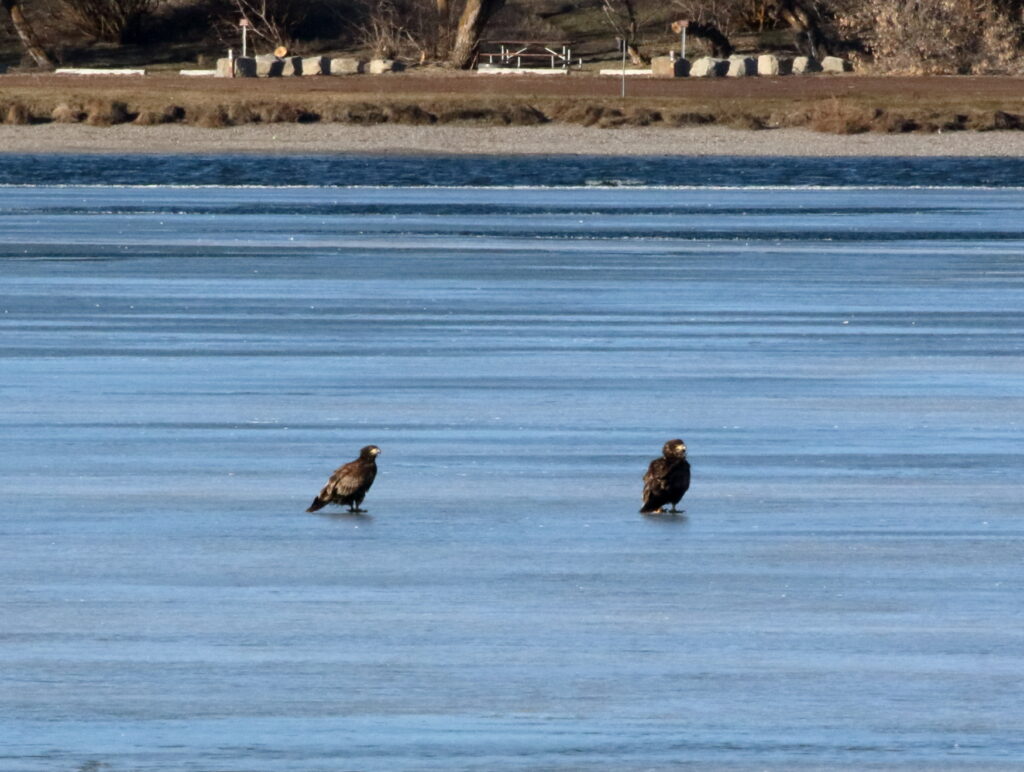
We’re not sure why (though fish and/or animal carcasses probably have something to do with it), but Browns Lake often boasts vigorous Bald Eagle activity—and our early spring visit was no exception. Here, two youngsters contemplate the meaning of ice on this brisk sunny day.

As the lake came into view, we were relieved to see at least a third of it offered open water—and that the waterfowl were not shy about taking advantage! Within twenty minutes, we recorded fifteen species of ducks and geese, including the year’s first Montana Northern Pintails and a lone FOY Cinnamon Teal. A flock of 18-20 Snow Geese erupted out of the fields on the far side of the lake and settled in beneath a huge irrigation line. Even though a brisk wind dropped the wind chill into the teens, we looked hard through our scope for any Ross’s Geese, but came up empty.
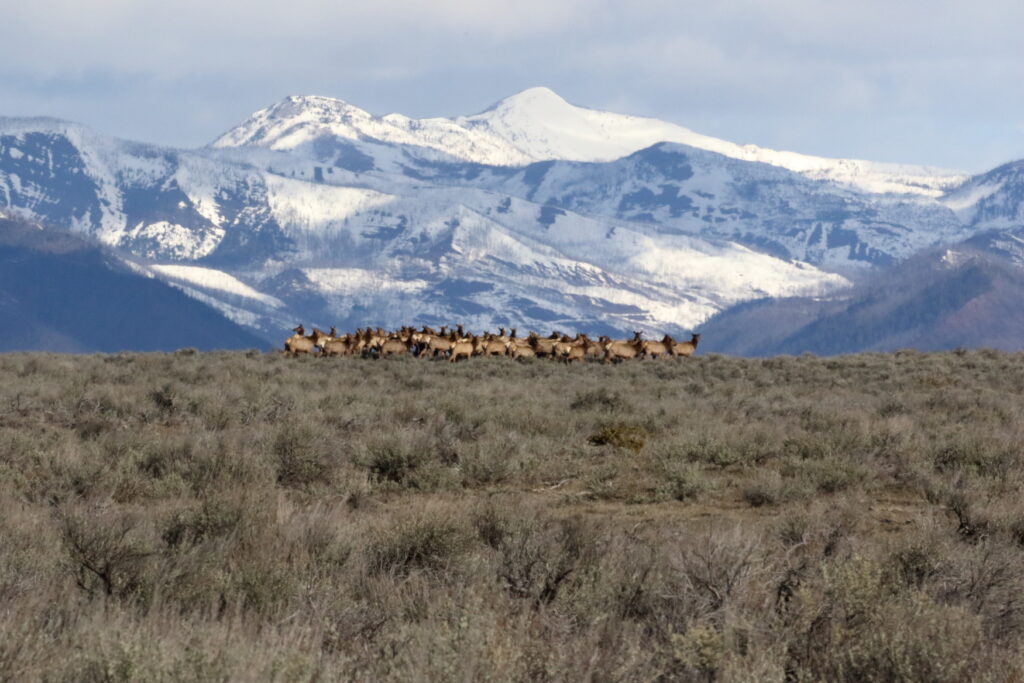
Elk anyone? Even though they are mere mammals, this herd against the dramatic background induced us to pull over for an admiring look.

As has become my new routine, I directed Susan out the far side of the lake toward the Ovando-Helmville dirt road, and we were rewarded by two Northern Shrikes (Susan is certain they were separate birds), and a couple more Mountain Bluebirds. After turning left toward Helmville, we hadn’t gone a mile when we saw a sizeable flock of birds badly backlit by the sun.

“Are they some kind of blackbirds?” Susan wondered, and they did look black because of the sun, but I didn’t know. Then, she said, “There are more bluebirds over here.” “There’s a couple over here, too,” I added, still thinking they had nothing to do with the flock we’d just seen.

The bottom line? The flock we had just observed consisted entirely of Mountain Bluebirds!
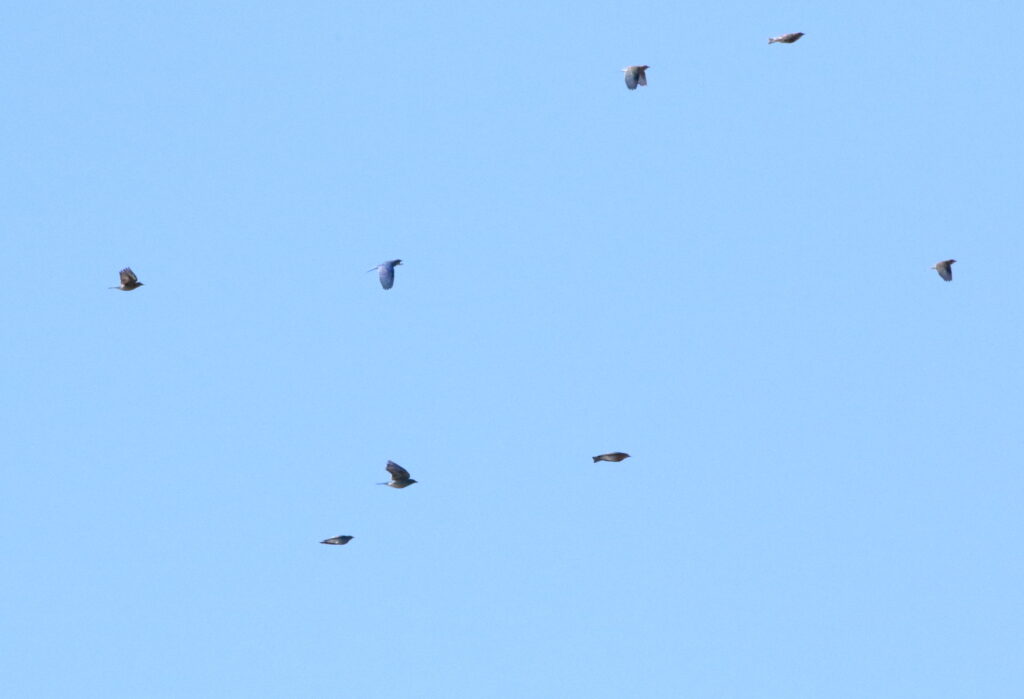
At first, we weren’t sure what these flocking birds might be, backlit against the sun, but this photo reveals the truth.

This blew both Susan and I away. Neither of us had ever seen more than three or four Mountain Bluebirds at a time, and had no inkling that they ever formed large flocks. Yet here was the evidence in front of us, and we spent a good fifteen minutes watching them forage and swirl around us. Once, a group of at least sixty took to the sky together, only to settle back into the grass a few moments later. Meanwhile, others kept crossing the road in front and back of us, occasionally landing on the fence next to our car.
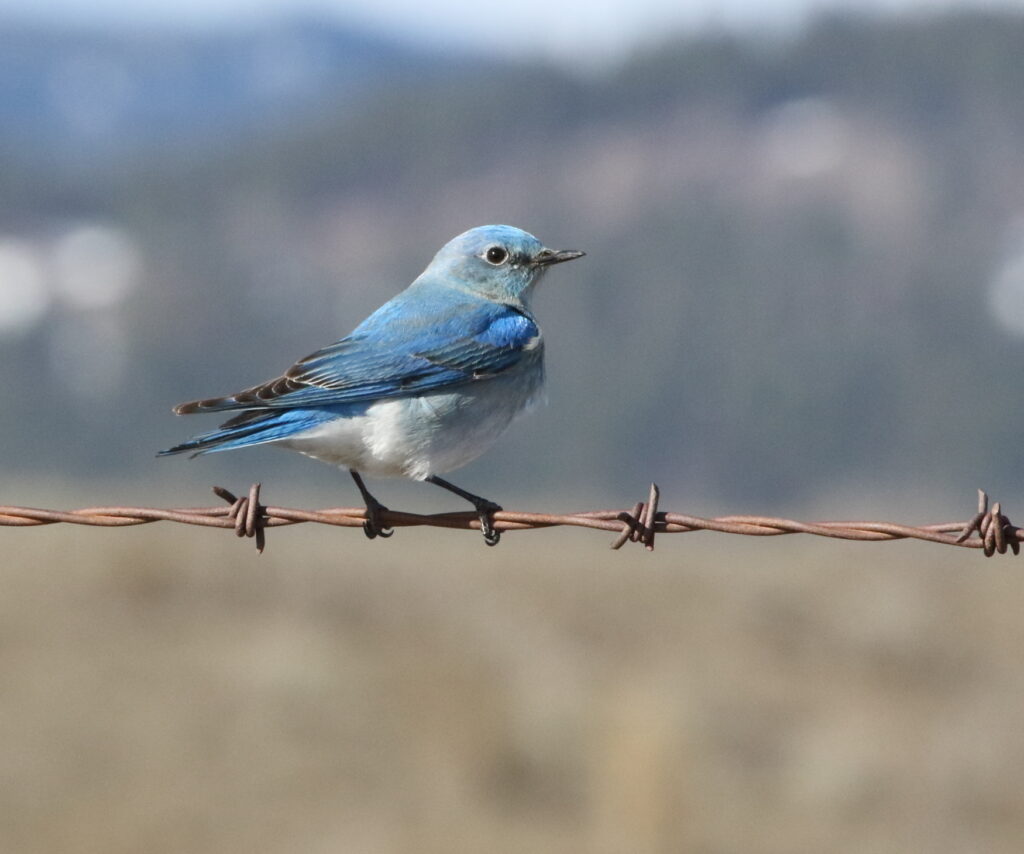
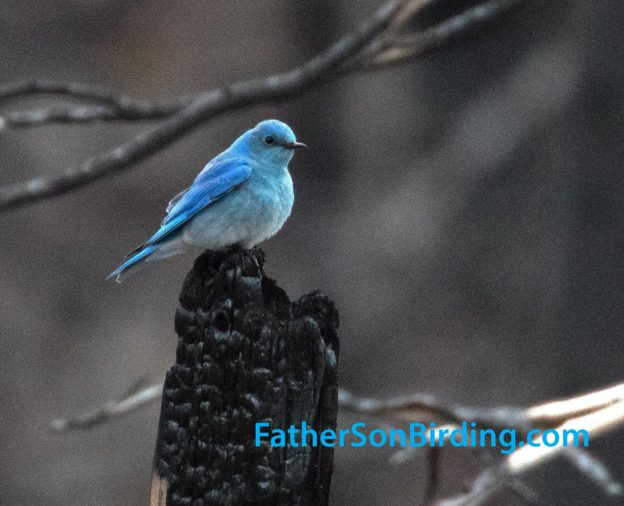
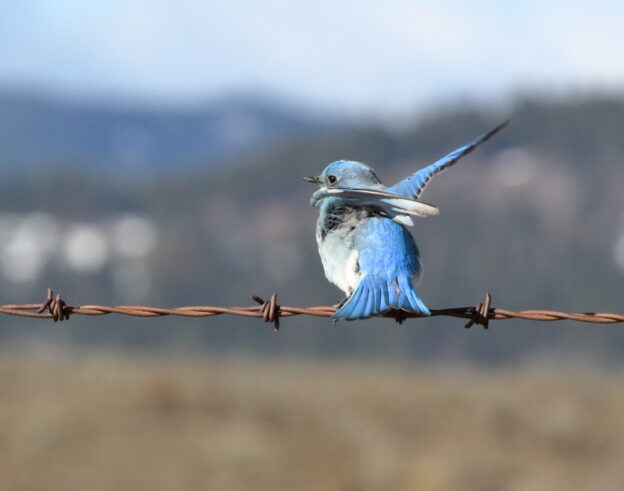
The Mountain Bluebirds were so active around us that I dared not hope to get a photo of one—until this guy perched 15 feet away from the car window!

We finally pulled ourselves away, wondering if local ranchers observed this kind of grouping every year. I later read up on MOBLs and found one or two mentions of them forming flocks in winter, but it didn’t seem like a well-known phenomenon. Susan and I both agreed that these cavity-nesting birds must be migrating. From here would they spread out into the surrounding mountains? Or did they still have a long way to go before trying to find their own breeding territories? As biologist Dick Hutto had taught me, Mountain Bluebirds especially love recent burn areas where woodpeckers carve out plenty of “condos” in the dead trees (see my book Fire Birds: Valuing Natural Wildfires and Burned Forests). I wondered if, as a flock, they might be better at finding recent burn areas—or did flocking impart other benefits such as greater predator or food detection?

After the Browns Lake area, we headed toward Helena, hoping to find a recently reported Lesser Black-backed Gull. Though I’d seen this species in Israel and again in Oregon, this would be a Montana lifer for me and an outright lifer for Susan.

It was not to be.

At the Helena Regulating Reservoir, we saw plenty of gulls, but many were too far away for our scope, and the ones we did see did not have the dark wings we were looking for. The trip wasn’t a waste, however, as we observed more than sixty Common Mergansers and at least ten Red-breasted Mergansers, also clearly in migration. In fact, the window to see RBMEs is quite tight in Montana, so it was nice to pick them up for 2026.
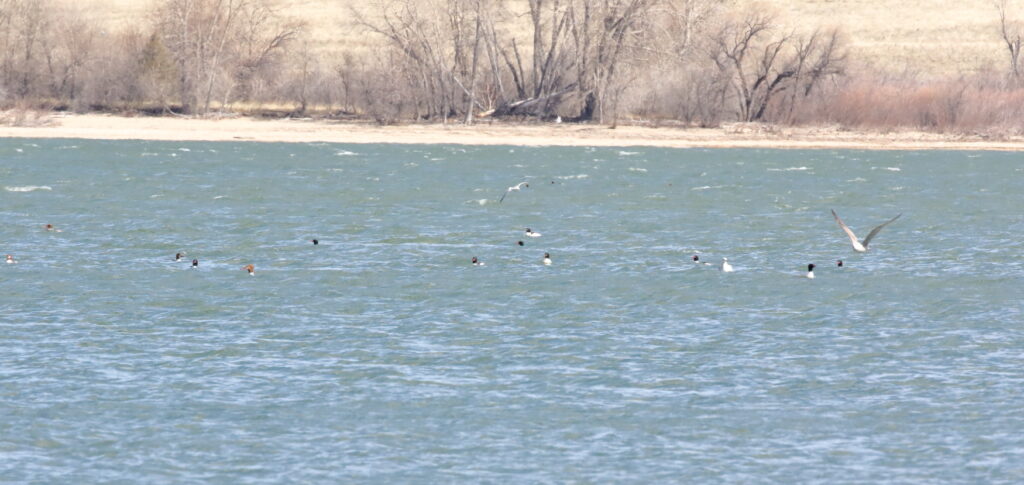
Though we missed the Lesser Black-backed Gull, the Helena Regulating Reservoir was hosting a “regulating” merganser-pa-looza!

Speaking of 2026, both Braden and I have excellent chances to accidentally break our world Big Year records. My record, set last year, is 552, and only a quarter of the way into this year, I’m at 422. This is not as much of a gimme as it sounds since many of the birds I’ve seen in Costa Rica and California are birds I would normally check off in Montana, but with a little luck and persistence, I feel I will get there. Braden’s record, meanwhile, is 867 and he is already at 546, with hopes to bird abroad at least one more time this year. We no longer put a lot of stock into numbers like these, but they’re a fun thing to keep an eye on.

After saying goodbye to the Helena Regulating Reservoir, Susan and I did a little more birding and then got lunch in downtown Helena. I only mention it because we ate at an excellent little crepe place called—what else?—The Creperie. It featured outstanding food and reasonable prices. It’s open until 3 p.m. most days and is located right next to the lower entrance of the walking part of Last Chance Gulch. If you’ve got the post-birding munchies, check it out!

Our first-of-the-year Browns Lake checklist: https://ebird.org/checklist/S313329879
Adventures in Ekalaka: Our 2024 Eastern Montana Odyssey Continues

We are pleased to present our sixth installment of our 2024 Eastern Montana Odyssey. Here, we leave the “interstate less traveled” and push into the brand new birding territory of southeastern Montana. We experience delightful new towns and vistas, and a wealth of surprising birds. We also keep knocking off new counties, drawing closer to completing our Montana eBird map. If you are enjoying these episodes, please share them with your birding friends and consider supporting our efforts by buying a *NEW* copy or two of one of Sneed’s books on the right.

Leaving Glendive, Braden and I had our work cut out for us. Not only would we be birding the southeast corner of the state for the very first time, this might be our only chance to nail down the last six Montana counties we needed to complete our eBird birding map! We had started the trip needing seven counties, and picked up one a few days before (see our post “Big Surprise on the Way to Plentywood”). Today, we planned to conquer Prairie, Wibaux, Fallon, and Carter Counties—and it would take some effort.

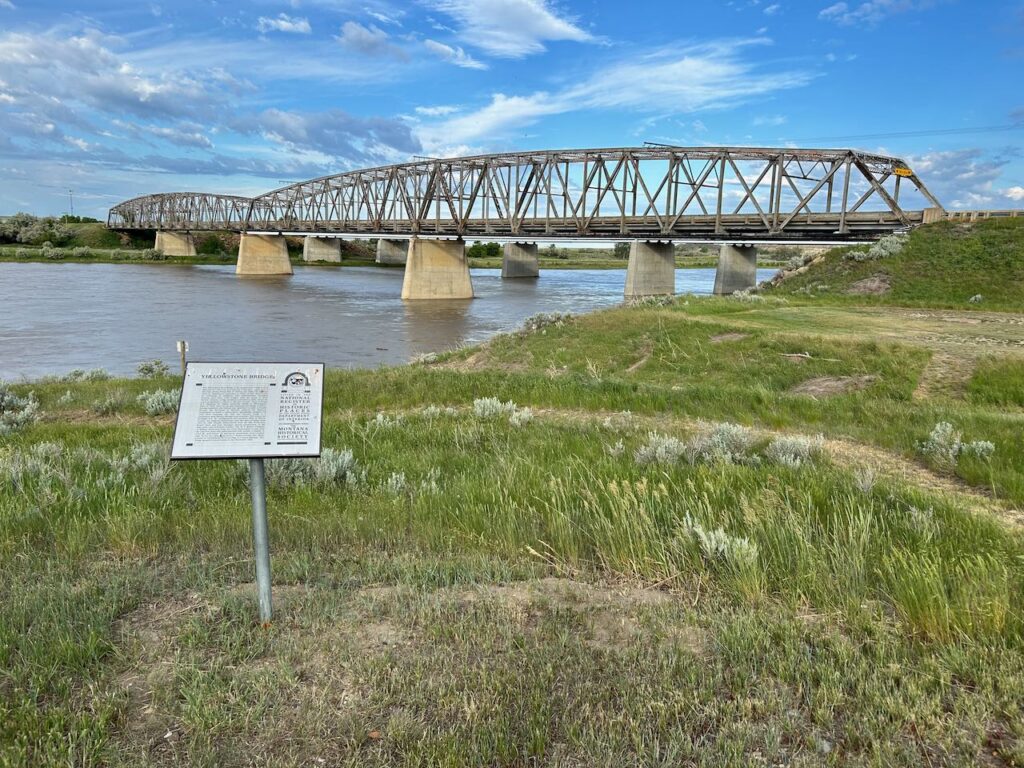
Fallon Bridge allowed us to bird the first of six Montana counties we planned to pick up in the next 48 hours.

First up? Prairie County which, unfortunately, didn’t sit anywhere on our way to or from someplace else we wanted to go. Before heading down to the southeast corner of Montana, therefore, we zoomed about twenty miles west down Interstate 94. Entering Prairie County, we spotted Western Meadowlark, Mourning Dove, and Cliff Swallow along the highway and we could have technically just turned around at that point. Braden and I decided, however, that to make our county map more meaningful we had to find at least ten, count ‘em, TEN species in each of our last seven counties. In Prairie County, we accomplished this with a stop at Fallon Bridge. Apparently, this also is a place to see Least Terns (see our last post), but we didn’t know that. Instead, we just got out and spent a few minutes enjoying what was there, including American White Pelican, more than fifty Cliff Swallows, a Lark Sparrow, and our County Bird of Prairie County, Brown Thrasher.

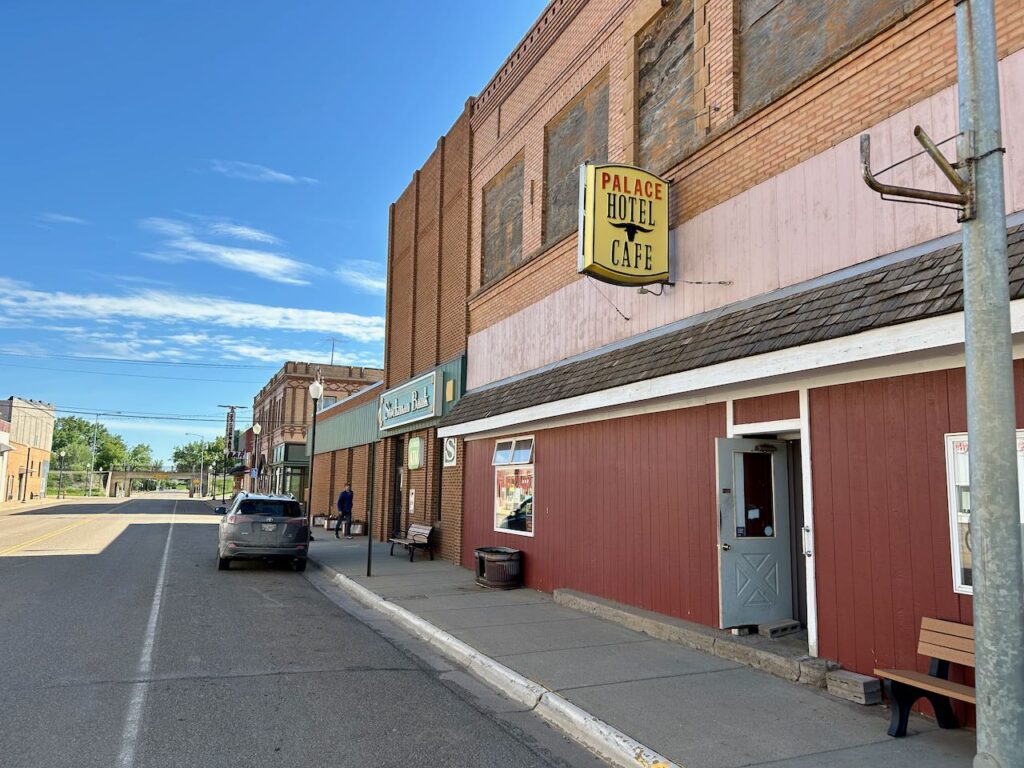
We raced back east on the interstate, past Glendive, to our main Wibaux County destination, the Wibaux Fish Pond. Here, we saw a satisfying 17 species including our County Bird of Wibaux County, Orchard Oriole. By this time our stomachs were complaining loudly about how we prioritized birding over eating. Fortunately, Wibaux is home to a wonderful little diner, the Palace Café. We stuffed ourselves on a scrumptious fat-and-protein-filled breakfast and emerged prepared to continue our vigorous Montana counties campaign.

A good small-town diner is one of a birder’s greatest pleasures. Don’t miss the Palace Hotel & Cafe in Wibaux!

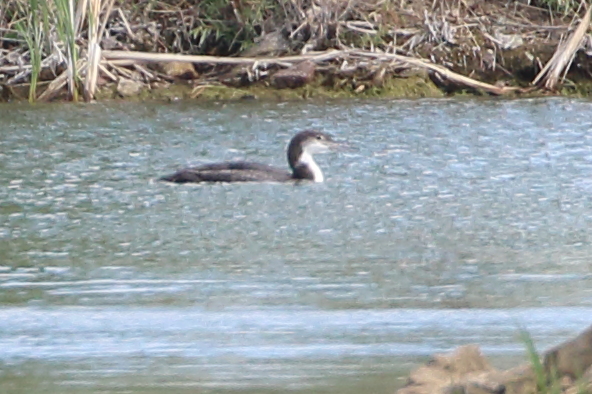
Next stop: Lake Baker in the town of Baker, Fallon County. We were both somewhat surprised to find a giant lake in the middle of the town. True, it was pretty developed, but we spotted nice surprises here including Eared Grebes, Western Grebes, and the star of our Fallon County lists, a Common Loon!

This Common Loon was a major surprise at Lake Baker.

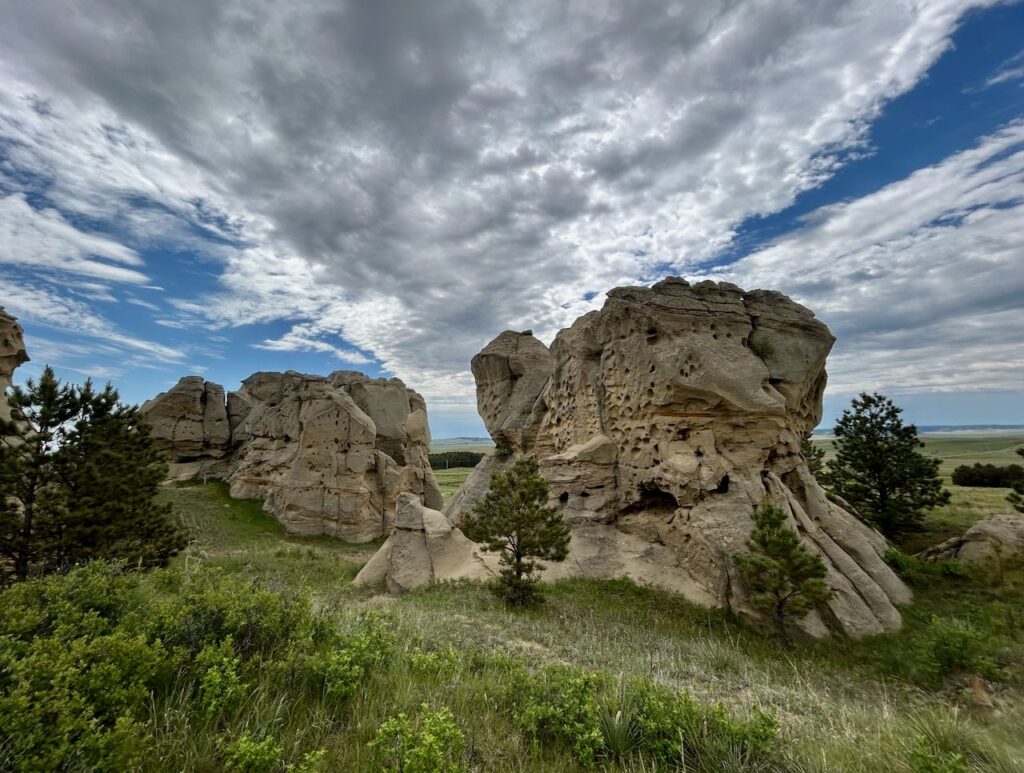
From Baker, it was on to Carter County, and here we settled into some more serious birding with a hike through the spectacular Medicine Rocks State Park. The fantastic, hoodoo-style rocks at Medicine Rocks were sculpted by wind and rain from soft inland sea sandstone. Not surprisingly, when humans came along the rocks assumed important sacred and cultural significance for native peoples and a fair share of interest from early white settlers.

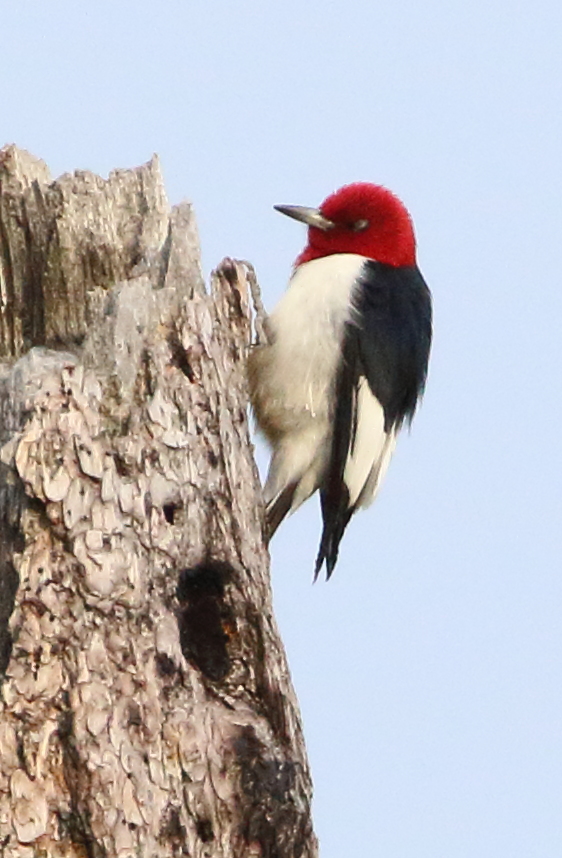
Medicine Rocks State Park is plenty dramatic—especially with Red-headed Woodpeckers lurking nearby.

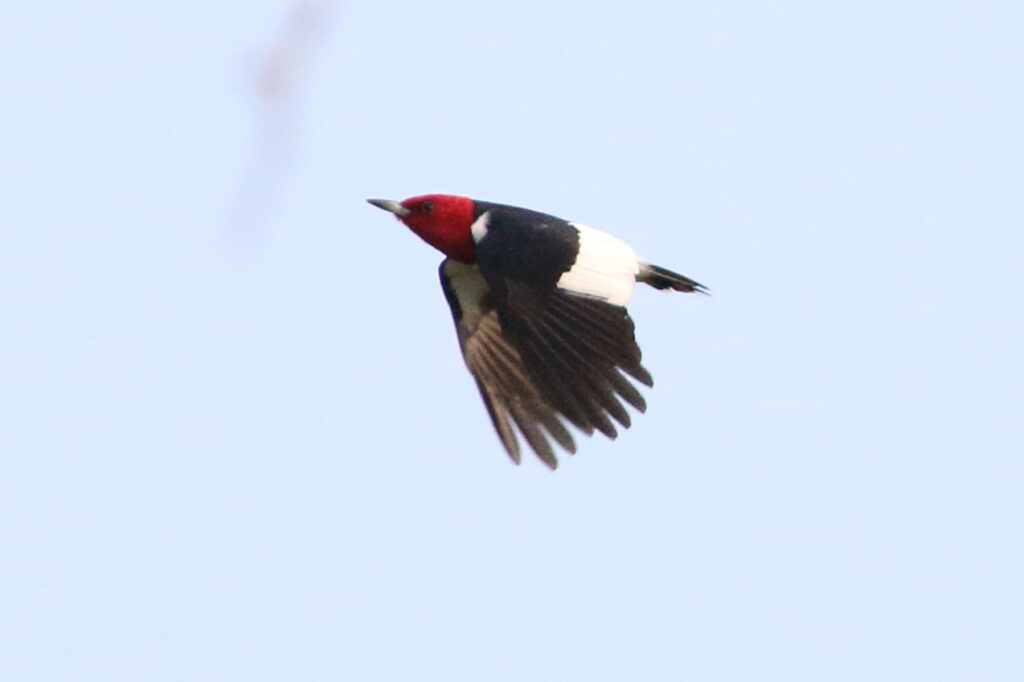
It was at Medicine Rocks that we spotted one of the birds we had most wanted to see on the entire trip. After walking a mile or so through the rocks, we connected with the pine tree-lined dirt road back to our car. As we walked, we caught a glimpse of a medium-sized bird that flashed white as it was flying away. “Red-headed Woodpecker!” Braden shouted. We didn’t get great looks, but never fear. This would not be the last RHWO we would see.

This fuzzy flight photo shows the dramatic color contrasts Red-headed Woodpeckers present, making them easy to identify from a distance.

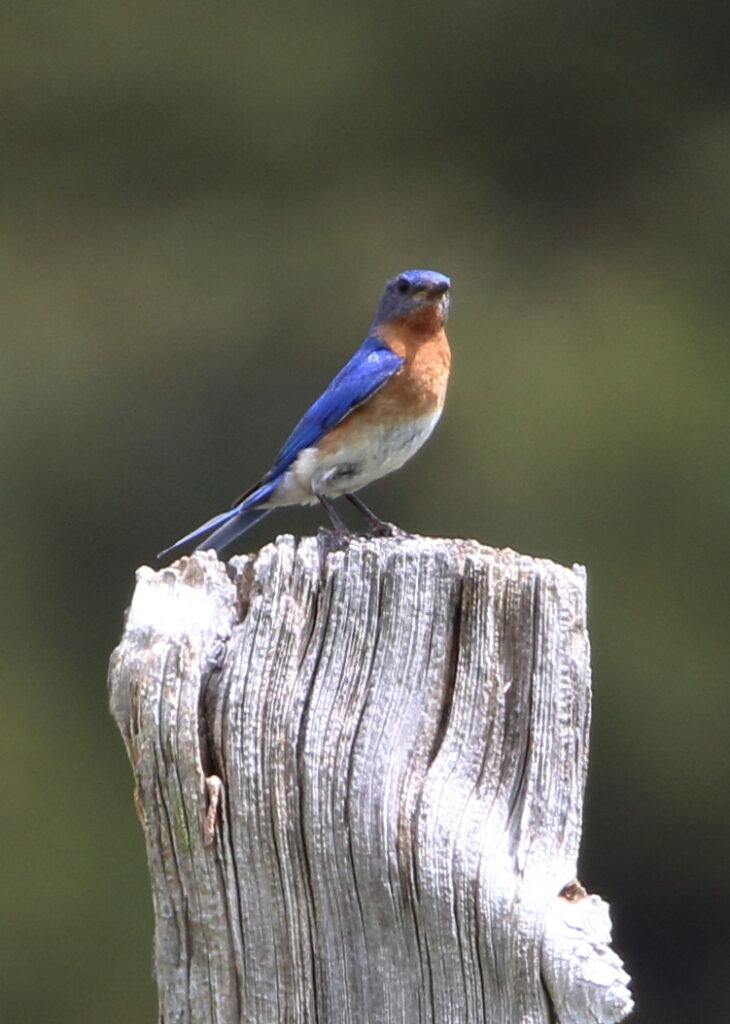
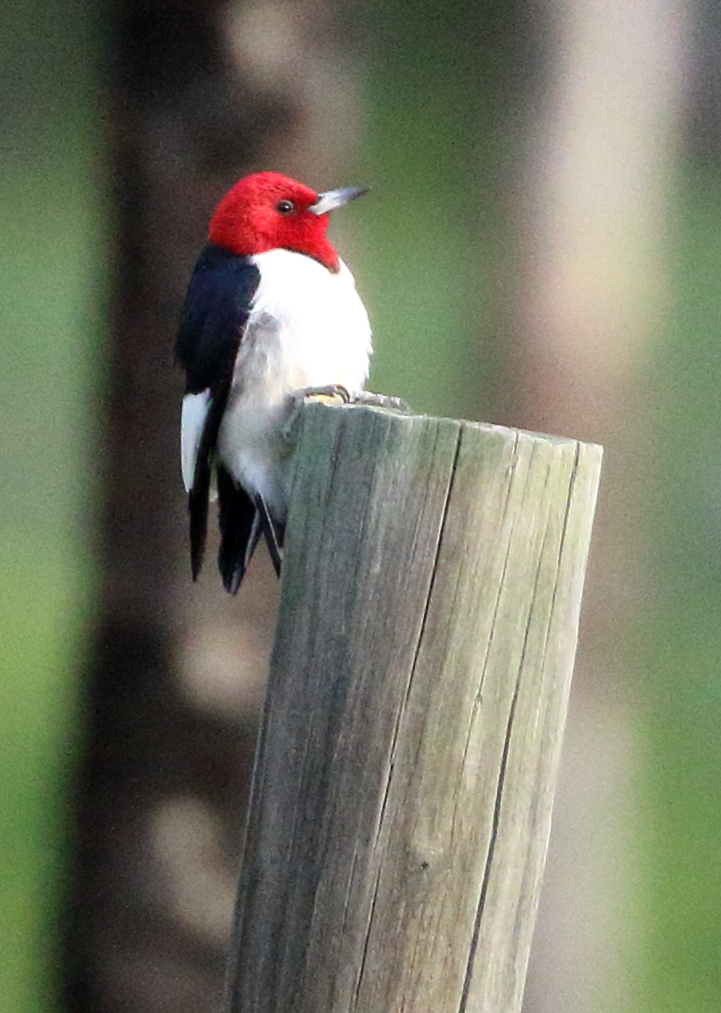
From Medicine Rocks, we made our way to our camping destination for the night, Ekalaka Park Campground. It was barely noon as we turned off on the dirt road into the higher hills south of Ekalaka, and we took our time, stopping to look at whatever cool birds we happened to encounter. Sure enough, we glimpsed two more RHWOs as they fled up and over a little hill. “Let’s follow them,” I said, steering up a little two-track up along a fence line. As we crested the rise, one of the woodpeckers was sitting on a fence post. It fled as I got out to try to photograph it, but meanwhile, Braden had sighted a surprise Montana life bird for us—Eastern Bluebird! Though almost identical to their Western counterparts, Easterns are easily distinguished by their red throats compared to the blue throats of WEBLs.

The red throat of this Eastern Bluebird easily distinguishes it from its Western Bluebird counterpart. Montana Lifer!

We continued to pick up great birds along the road: Yellow-breasted Chat, Lark Sparrow, Field Sparrows, and more Red-headed Woodpeckers. My favorite was our first ever really good look at a Plumbeous Vireo. We spent several minutes watching this handsome, “spectacled” bird. Alas, my camera was back in the car so we failed to get a photo of it. Some photos you just have to store in your brain!

Although abundant, the Red-headed Woodpeckers in Ekalaka were on the shy side. I never managed to get closer than fifty yards or so to one.

We spent a delightful evening in Ekalaka Park Campground—the only campers there. The campground sits in a little bowl surrounded by dramatic cliffs and an older burned forest, making it the perfect habitat for Red-headed Woodpeckers. Sitting at our picnic table, we could hear and see woodpeckers all around us. Every once in a while, one would fly right through our camp. I made bean and cheese tacos and we settled in for our best camping experience of the trip.

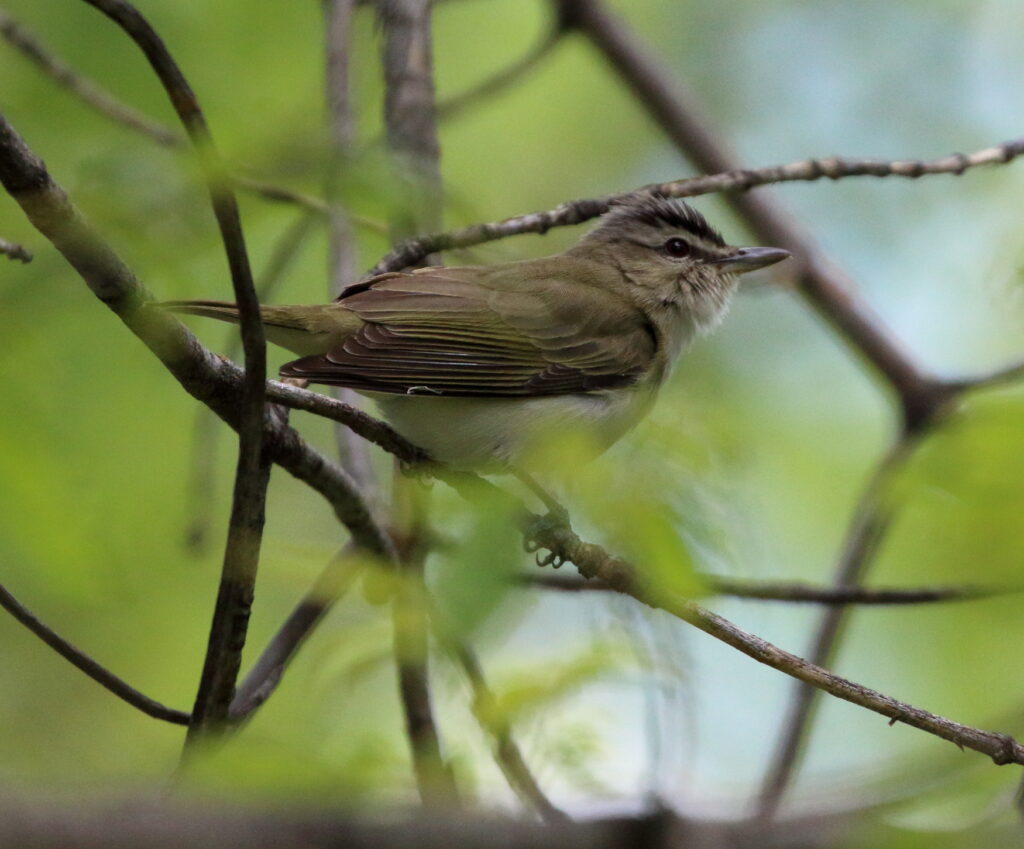
Ekalaka Park Campground offered perhaps our best-ever experience with Red-eyed Vireos, which serenaded us the whole time we were there.

The woodpeckers weren’t the only show offs in camp. That evening, Common Poorwills lulled us to sleep. We also had some of our best experiences ever with Red-eyed Vireos. In fact, when I woke the next morning, it was to a REVI’s delightful song. After working my way out of my sleeping bag, I climbed a nearby hill into the burned forest and picked a log to perch on. The air was cool and fresh, and woodpeckers flew from one snag to another. Sitting there, I felt very grateful for life, and that Braden and I could share the wonders of Montana birdlife together.

Taco Time in Ekalaka Park Campground.

Birding the Burn—Again!

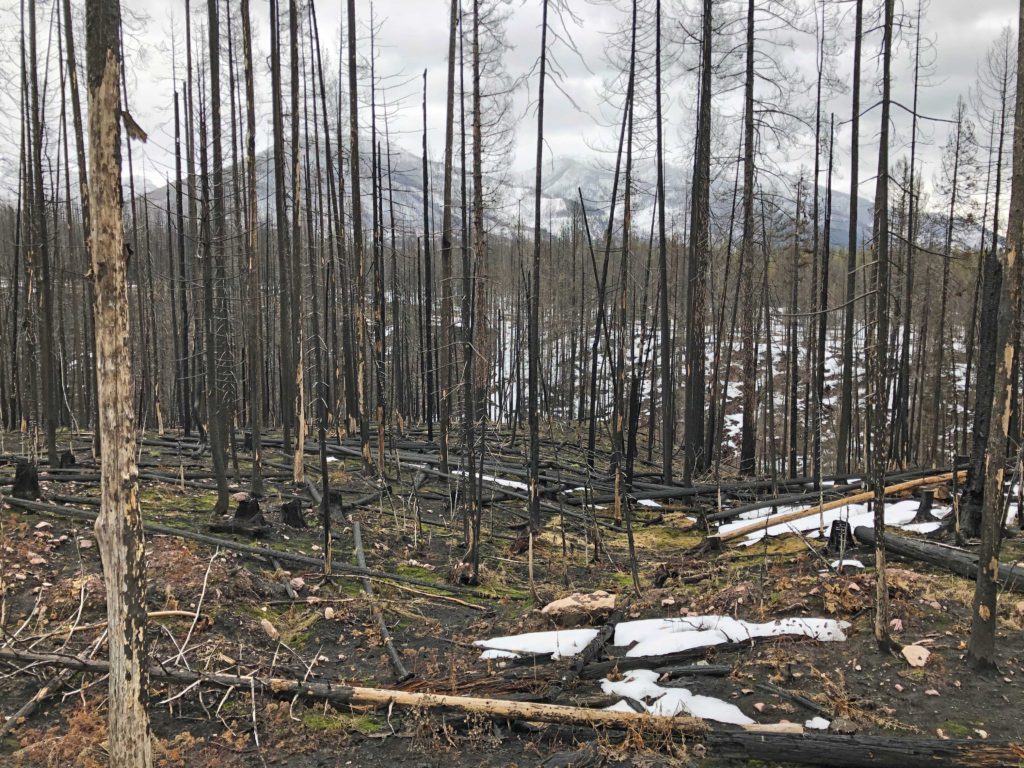
If you’ve followed our blog, you’ve probably realized that some of our favorite places to bird are recent burn areas—that is, burn areas that have not been destroyed by so-called “salvage logging.” I first fell in love with burn areas while researching my book Fire Birds—Valuing Natural Wildfires and Burned Forests. The book highlighted the fascinating work of biologist Dick Hutto, who showed what vital habitat burned forests are for more than one hundred bird species. Yesterday, after dropping Braden off for a Boy Scout leadership weekend near Seeley Lake, I decided to hit a burn area we’d visited with Dick last spring—the Morrell Creek watershed.

Burn areas provide outstanding habitat to more than one hundred species of birds. Unfortunately, so-called “salvage logging” destroys the burned forest by removing the larger-diameter trees that woodpeckers and other birds most need for food and shelter.

I had two ulterior motives for going there. One was to scout out a good place to bird with some kids next month. The other was to see one of Braden’s and my favorite birds, the Black-backed Woodpecker. As I was driving in, I was dismayed to find that the “salvage loggers” had already ruined a lot of the habitat along the road, but I eventually pulled over at a likely place to explore, one with larger-diameter dead trees still left standing.

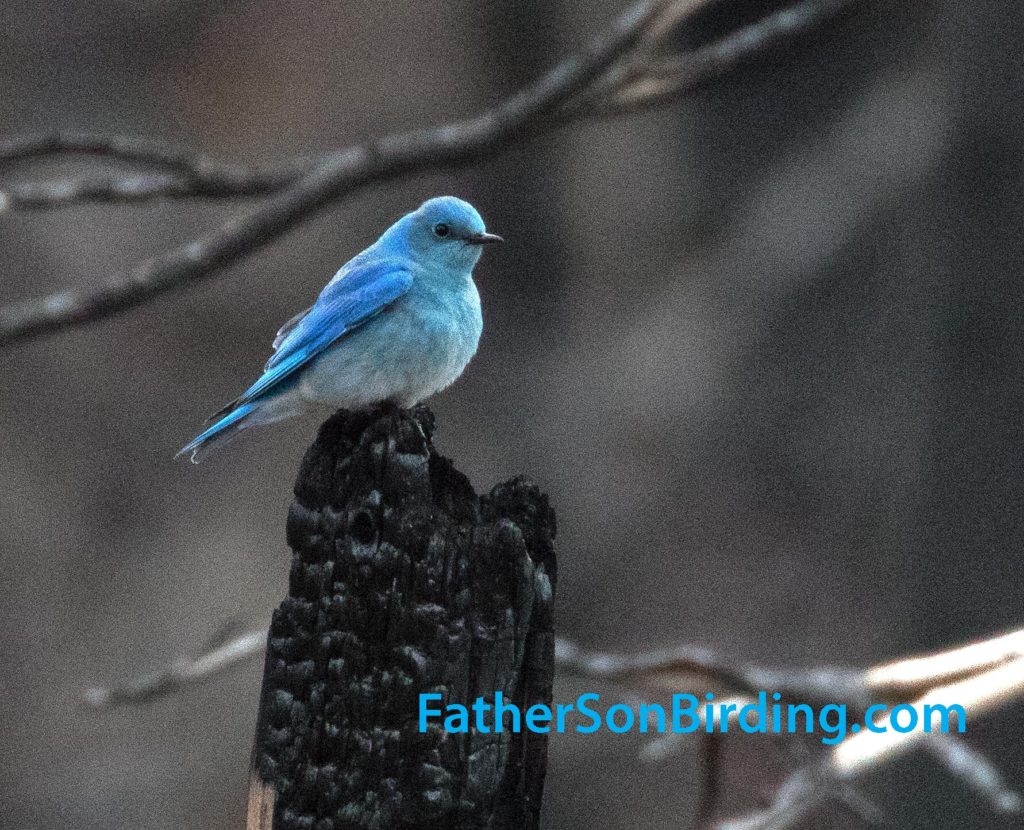
Forget bluebird boxes! If you really want bluebirds to thrive, leave burned forests alone. Untouched burned forests may be the favorite habitat of these birds, providing food, shelter, and safety from squirrels and other small predators.

Right off the bat, I encountered large numbers of two favorite burn species: Mountain Bluebirds and Dark-eyed juncos, who seem to prefer burn areas to almost any other habitat. The bluebirds especially were going crazy. Twice, I saw groups of three (two males and a female, I think) chasing and mobbing each other, sometimes driving themselves to the ground. A territorial dispute? The birding equivalent of a bar fight over a girl? I wondered.

It didn’t take too long for me to hear woodpecker drumming and my heart raced as I hurried through the trees hoping to see a Black-backed. Unfortunately, I didn’t see the woodpecker until it was too late and spooked it before I got a good ID. Curses!

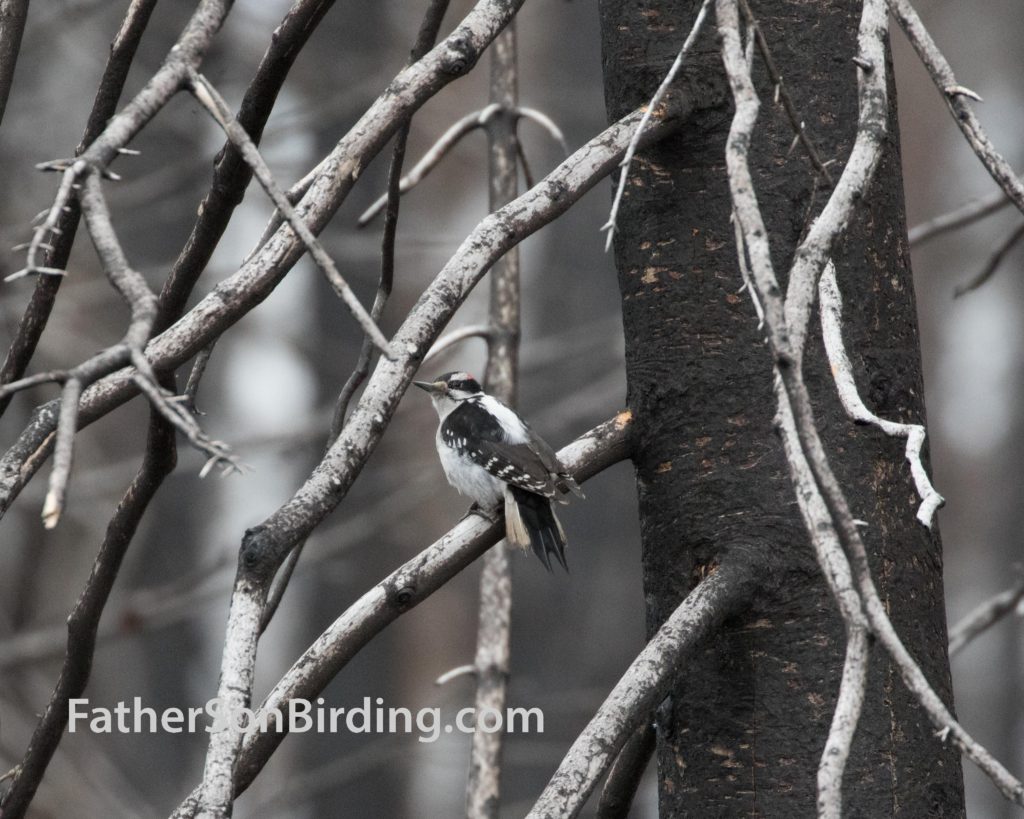
While Black-backed and Three-toed Woodpeckers get more attention, Hairy Woodpeckers are also burned forest specialists. If you have any doubt, just look at how well this Hairy blends in with its burned background. Like the Black-backed and Three-toed, the Hairy Woodpecker is “hard-headed” enough to drill into the rock-hard wood of newly-killed trees for wood-boring beetle grubs and to drill out nesting and roosting holes.

I kept walking through the forest, finding a great sense of peace from the sounds of Morrell Creek splashing below and from the dark, silent sentries surrounding me. Eventually I located another woodpecker drumming, but only snatched two blurry photos of it before it, too, flew away. My photos, though, did show a yellow crown, narrowing the bird to a Black-backed or Three-toed Woodpecker. Unfortunately, it was a crummy day for light and photography and the next woodpecker I saw was too backlit for me to identify. I did see a Golden Eagle circling above and an American Dipper in the creek below. A Hairy Woodpecker also posed for a picture. Finally, as I was about to leave, I heard more drumming. I grabbed my camera from the car seat and chased it down.

Success!

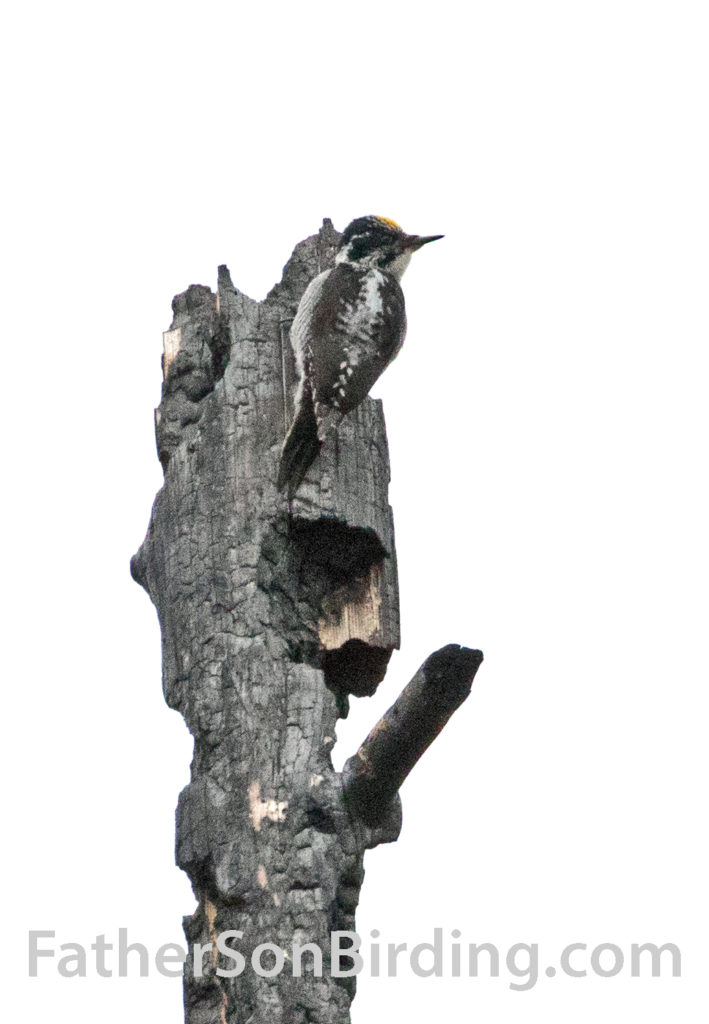
On a high narrow snag sat a beautiful male Three-toed Woodpecker drumming his heart out. It wasn’t a Black-backed, but I didn’t care. Three-toed Woodpeckers, like Black-backeds, are specialists of burned forests and I was delighted to meet up with this fellow—and even more delighted that he’d found a beautiful, blackened home.

Though lighting conditions stunk, I was delighted to finally get a good look at this Three-toed Woodpecker drumming on one of many awesome “drumming posts” to be had in the burned forest.