Tag Archives: Meadowlarks

Caño Negro: Costa Rica’s Epic Wetland (Birding Costa Rica, Part 3)

If you’re enjoying FatherSonBirding, please consider subscribing by filling out the box down and to the right. We won’t ever sell or give away your information and you can unsubscribe at any time. And do feel free to share this blog with others or link to it—but please contact us for any other uses!

When blogging about a birding trip to Costa Rica, it’s almost impossible to choose which things to cover. As anyone who’s been there knows, every day offers avian delights, whether you’re walking through rainforest or hanging out in a town or city. One place we simply cannot overlook, however, is Caño Negro Wildlife Refuge.
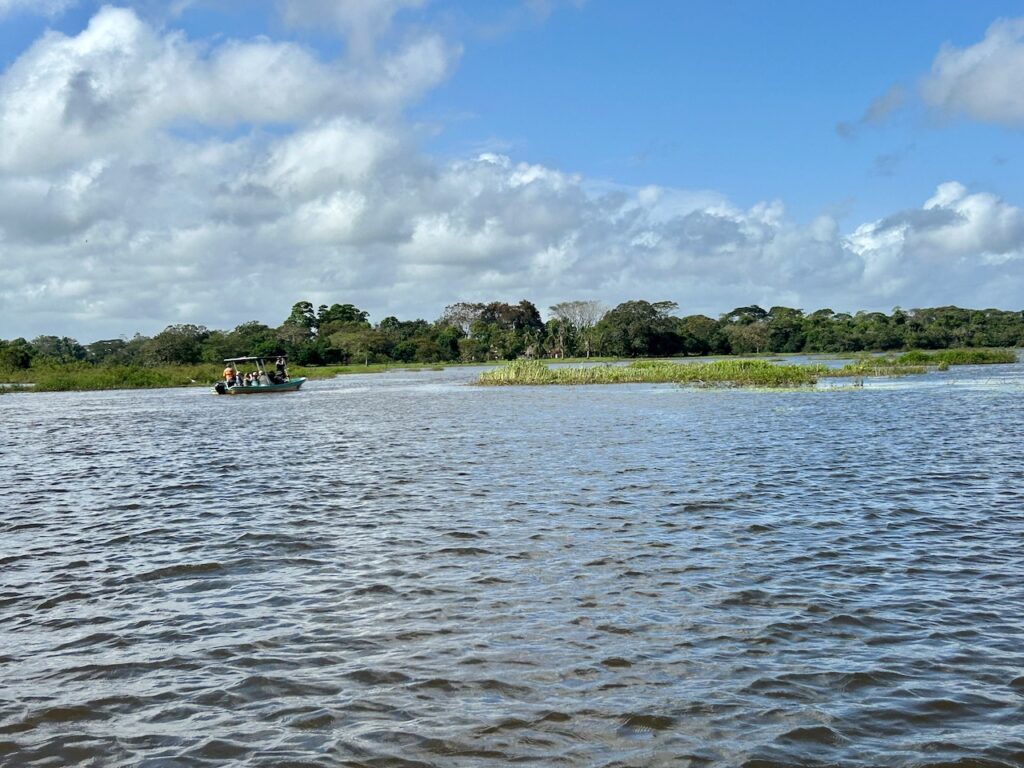
The lagoon area of Cano Negro, at high water because of recent rains.

Caño Negro is one of Costa Rica’s rare, large interior freshwater wetland areas and lies almost within sight of the Nicaraguan border. I had never heard of it until Braden sang its praises when he studied abroad down there two years ago. As he planned our itinerary for this year’s trip, he left no doubt it was a must-see destination. To reach it, we left the La Fortuna area (see our post Arenal for Antbirds) and drove an hour and a half up highway 35 through flat agricultural country, before turning west on the access road to the refuge.
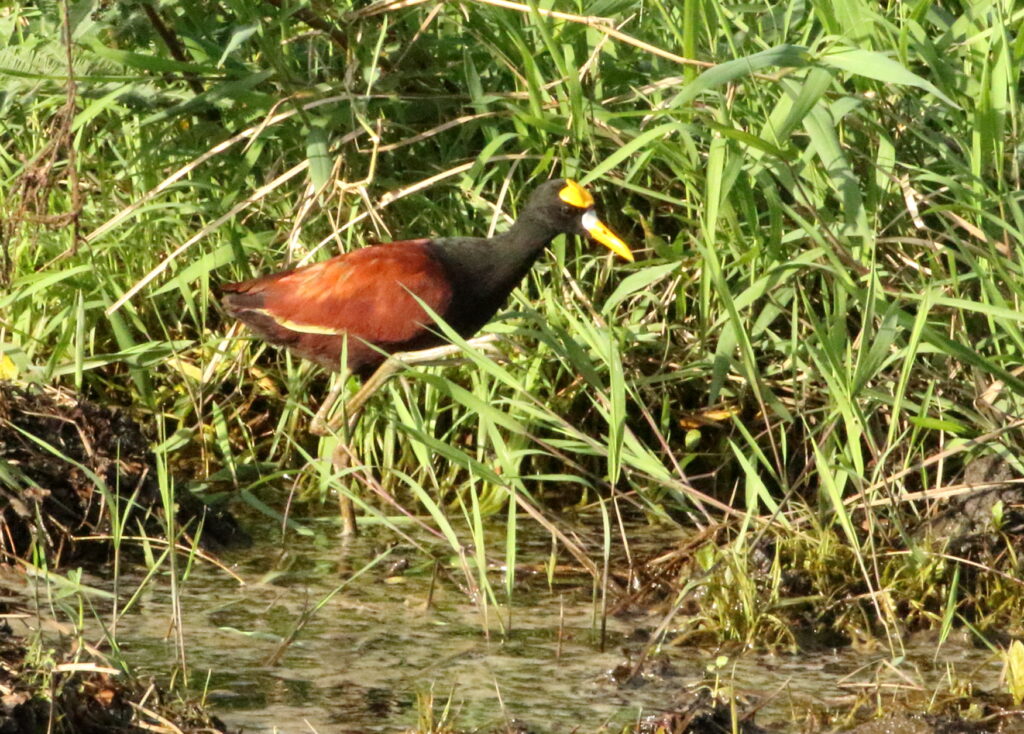
Seeing such large numbers of Northern Jacanas was a first for me!

The access road is one of those tricks perpetuated with great amusement on tourists. Paved for its first few miles, it suddenly degenerates into a cratered track that reduces the speed of rational drivers to about 10 km/hour. Nonetheless, this road is not to be endured, but to be birded. Along its stretch are a rich variety of grasslands, mini-wetlands, and patches of trees that are loaded with birds. I was thrilled to see my first Northern Jacanas and Purple Gallinules of the trip, but these were quickly overshadowed by the Variable and Morelet’s Seedeaters (see our post Chasing Morelet’s Seedeaters), and Thick-billed and Nicaraguan Seed-Finches. The highlight of the drive was a brief, but spectacular view of yet another lifer for Braden—a Black-collared Hawk!
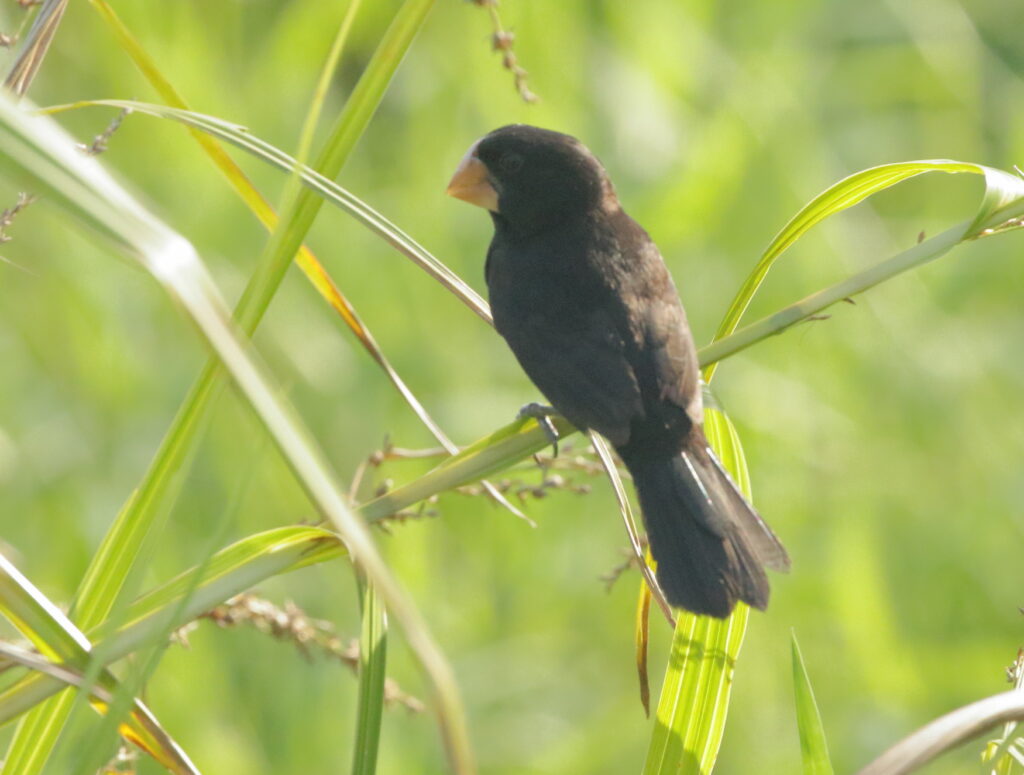
These overcompensating “giant-billed” Nicaraguan Seed-Finches are a specialty of the northeast part of Costa Rica.

The next morning, we eagerly met our guide, Chambita, and his boat driver/assistant, Yalvin, at one of the town boat docks. Because of the heavy unseasonable rains, the Rio Frio was running higher than usual, but still flowed along at a placid pace perfect for birding. Most birding boat tours have two components—the river itself and a lagoon that feeds into it. From Braden’s past comments, I was most excited about the lagoon, but the river relentlessly amazed us.
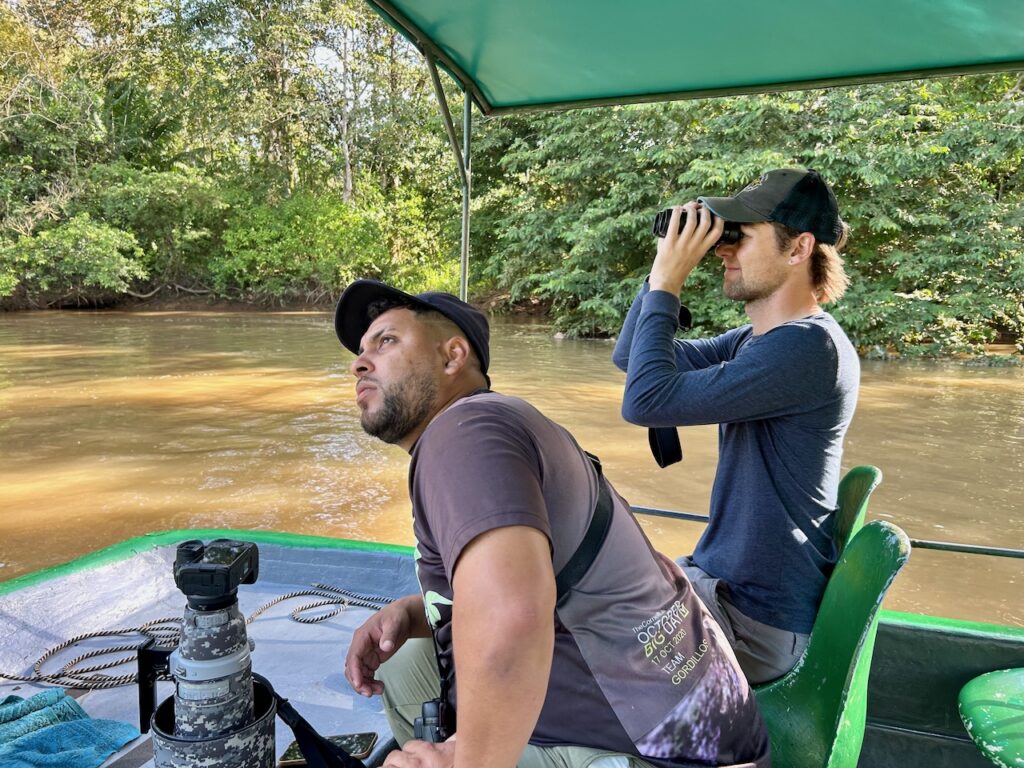
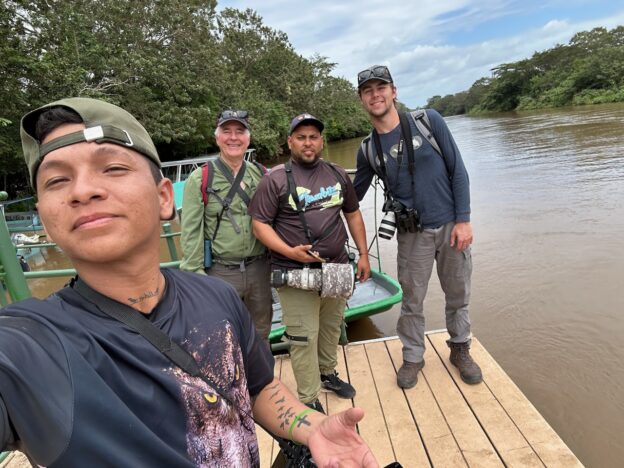
Chambita and Braden proved a dynamic duo in detecting Caño Negro’s astonishing bird life.

As we began slowly making our way downstream, I was thrilled to see both new and familiar species. Over the first hour, the kingfishers stole the show, as we saw five of Costa Rica’s six kingfisher species, missing only the most common one—our own Belted Kingfisher that we enjoy back home. The ones we saw included both the big bruiser Ringed Kingfishers and the two that are hardest to find: Green-and-Rufous Kingfisher and American Pygmy Kingfisher.
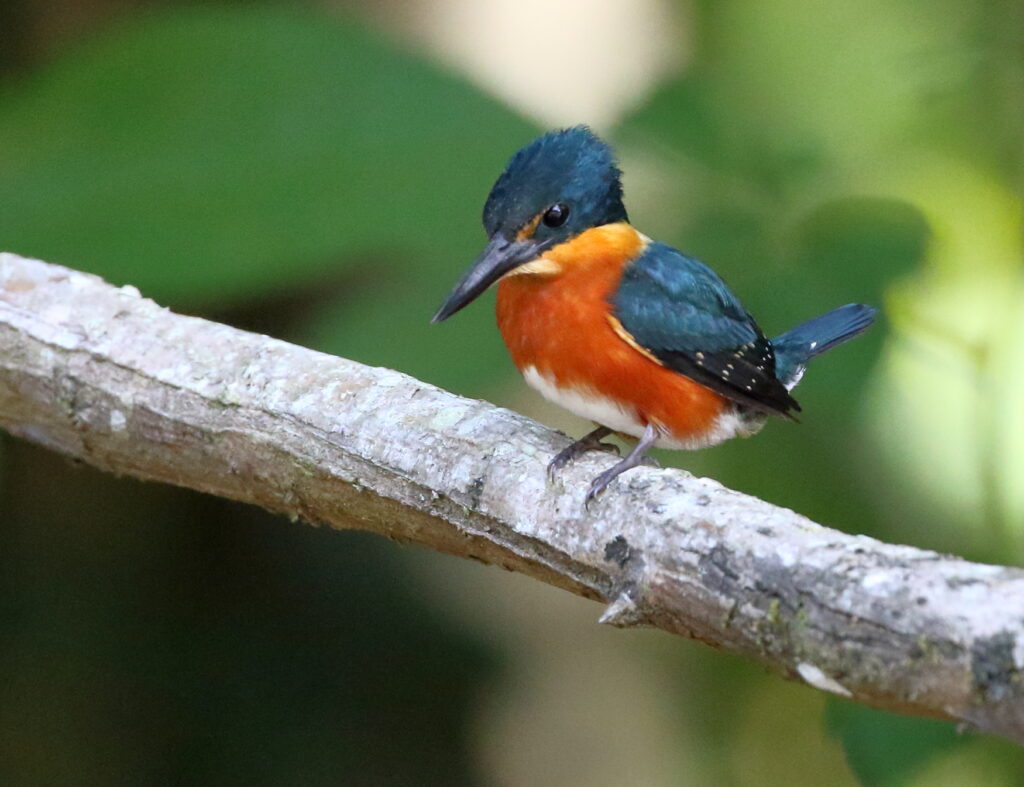
I’m a sucker for kingfishers and was ecstatic at seeing FIVE species, including this American Pygmy Kingfisher.

Chambita, though, quickly demonstrated why he is a local legend among expert birders by calling out dozens of other bird songs and calls, many of them flycatchers that I had no hope of recognizing, but that Braden raptly absorbed. Then, we spotted a species Braden most hoped to see—Snowy Cotingas.

I’ll just say it: Cotingas are bizarre. And I’m not alone in thinking so. Birds of the World remarks, “No family of birds exhibits more diversity of auditory, behavioral, and plumage elaborations, all the result of rampant sexual selection, than do the cotingas.”
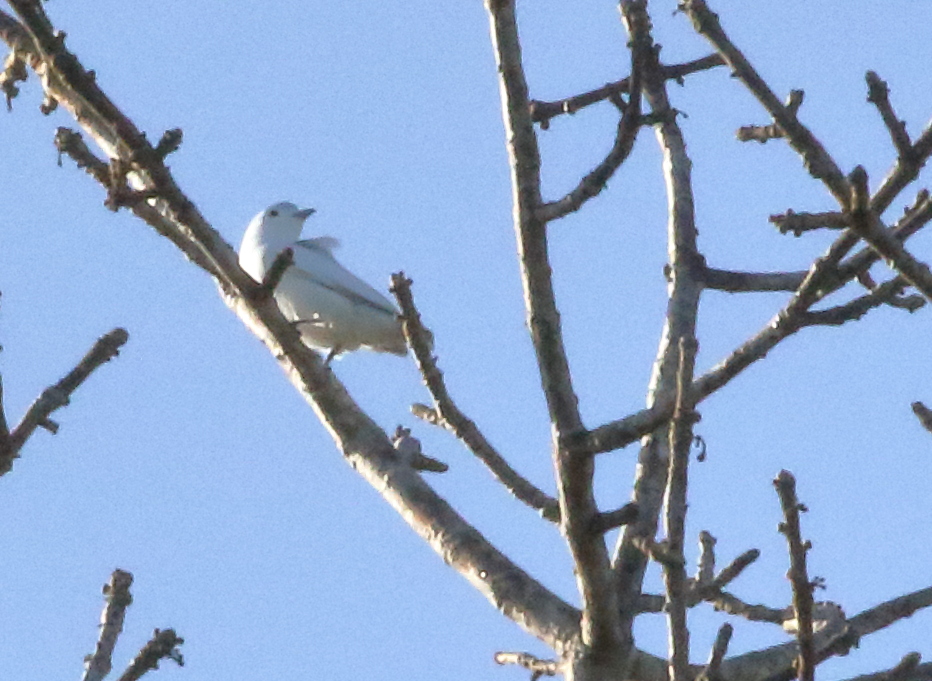
We saw five Snowy Cotingas on our outing—an unusually high number that pretty much made Braden’s entire day.

I actually didn’t think I’d ever seen a cotinga until Braden informed me that two of Latin America’s most spectacular birds, the Andean Cock-of-the-Rock and Three-wattled Bellbird, are cotingas. Even then, I only started getting interested in them as a group when mi amigo Roger and I saw Black-tipped Cotingas last year in Colombia, inspiring a spate of jealousy from Braden.

Today, when we saw the Snowy Cotingas, I had to restrain Braden from jumping out of the boat. “I wanted to see them,” he gushed, “but I didn’t think we would!” That, of course, got me super excited about them, too—delicate white birds perched atop trees high above the river.
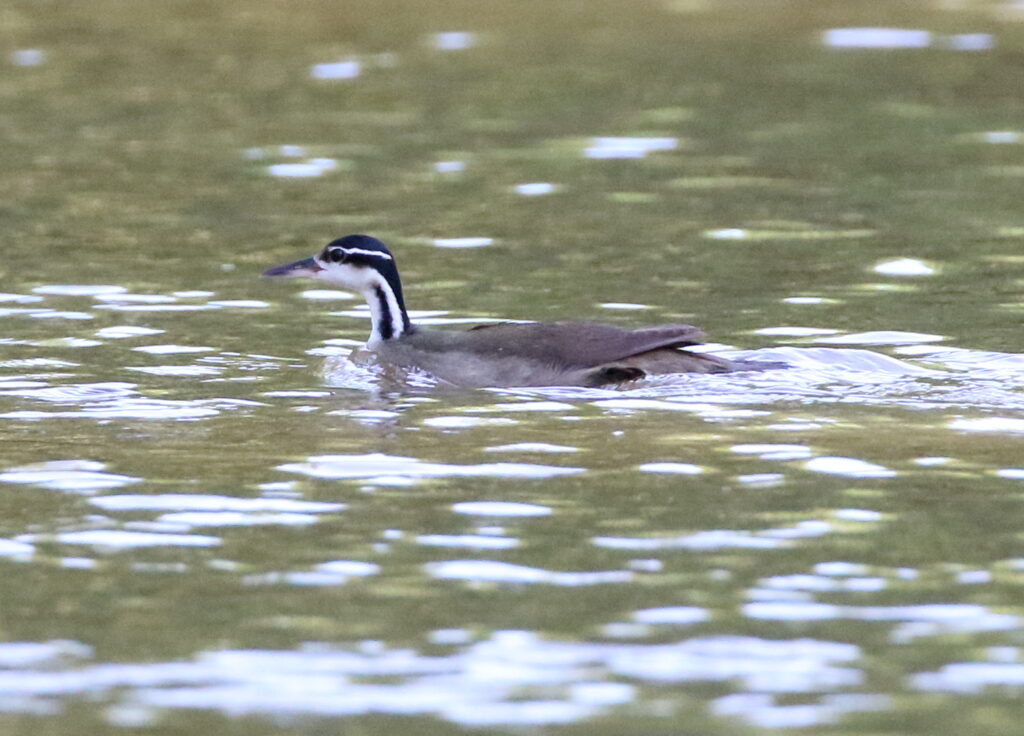
Though not rare, Sungrebes can be shy and difficult to find, so we felt lucky to see one. The birds are actually more closely related to rails than grebes.

The river offered many other treasures including a rare Sungrebe, eight species of warblers, three kinds of orioles, and four kinds each of woodpeckers and parrots. Oh, and caimans and monkeys, too. And that’s before we turned around and went to the lagoon.
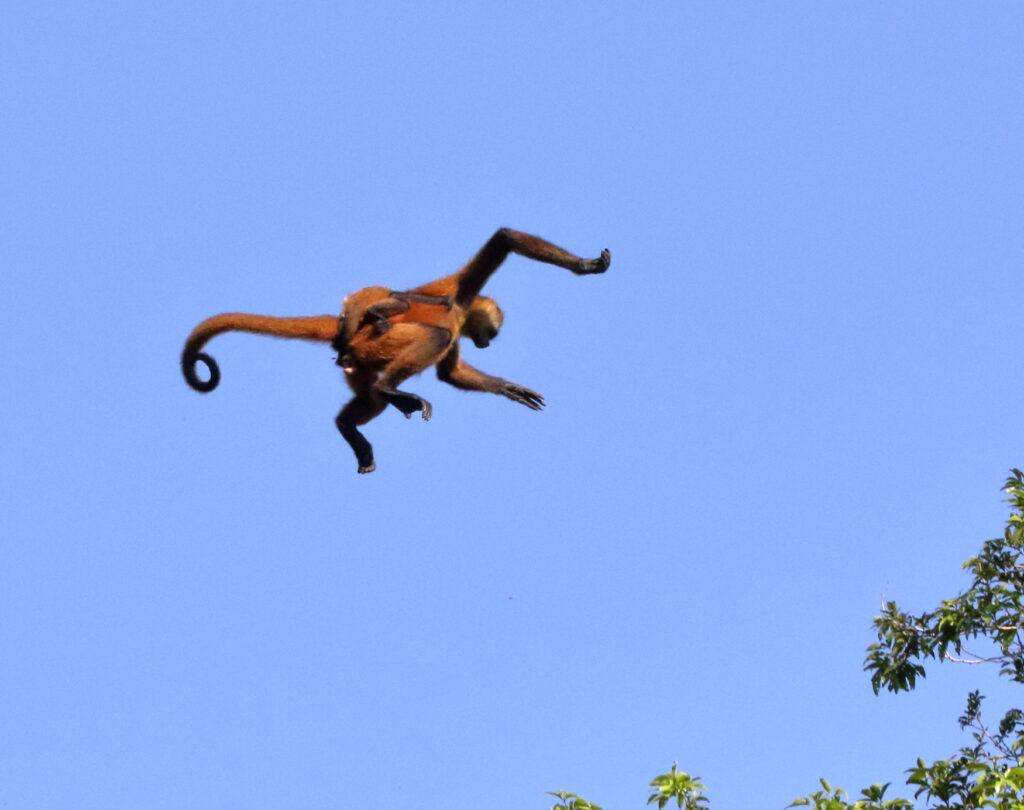
A troop of Squirrel Monkeys provided us with a welcome bonus as they fearlessly leaped a twenty-foot gap between trees. Look closely and you can see a baby on this one’s back! Talk about Livin’ on a Prayer!

When we reached it, the lagoon presented a totally different view than Braden had previously experienced. On his past visits, the water had been relatively low, i.e. perfect for wading birds. Recent rains, however, had raised the water dramatically. We still found a great diversity of birds, but numbers were lower than usual.
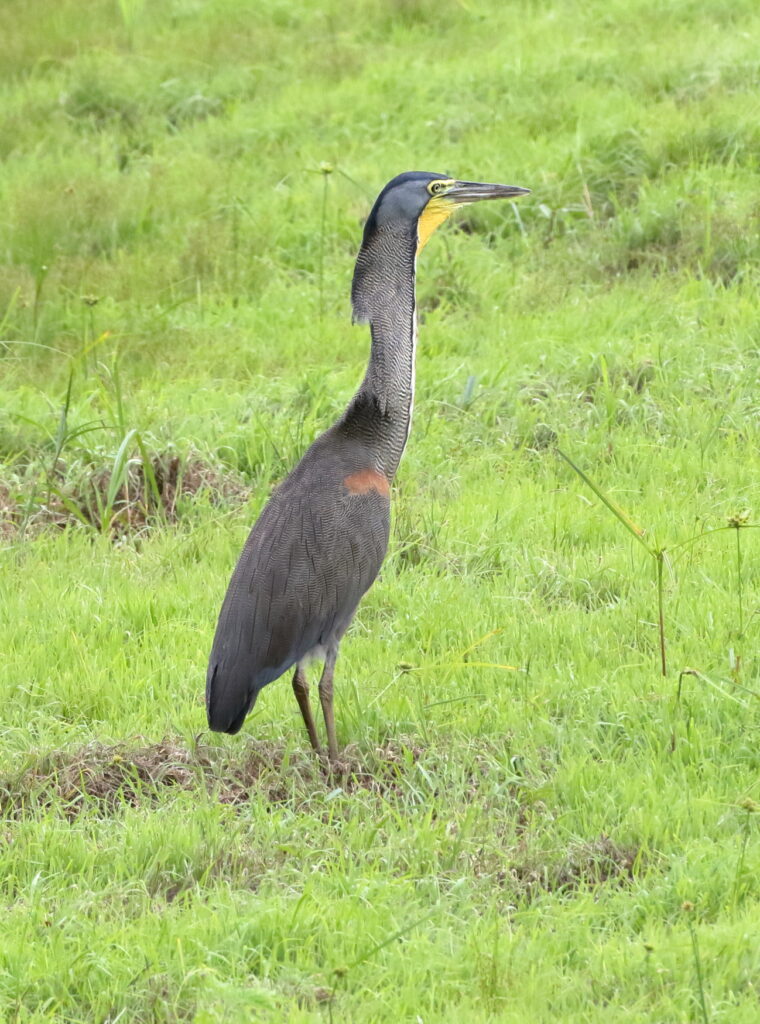
Ever since seeing a Fasciated Tiger-Heron with Roger in Colombia last year, I have been in love with tiger-herons, and this was my first chance to get good looks at Bare-throated Tiger-Herons!

Still, all manner of wading birds presented themselves. My favorites were Bare-throated Tiger-Herons and the uber-strange Boat-billed Herons. It was a tough call, though, with Tricolored Herons, a Roseate Spoonbill, Little Blue Herons, Green Herons, and three kinds of ibises—Glossy, White-faced, and Green—all competing for our attention.
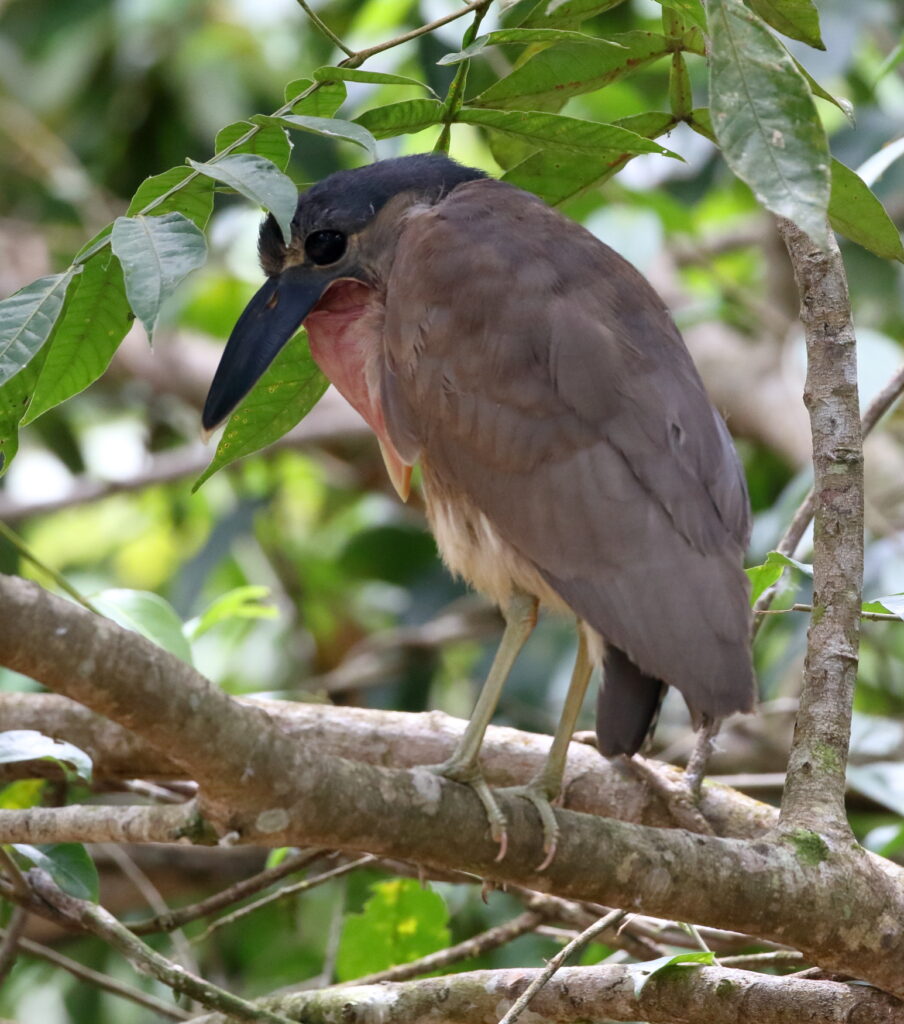
A yawning Boat-Billed Heron is a bird after my own heart. Not only is it one of the coolest birds in Costa Rica, it needs its afternoon nap, just like moi!

A special treat for both Braden and me was getting to see our first Lesser Yellow-headed Vulture, which Chambita identified from a distance as it swooped down low over the lagoon and passed within a couple hundred yards of our boat. Resembling a Turkey Vulture—and sharing many of its characteristics—the Lesser Yellow-headed’s yellow head became visible only as it approached more closely. I love vultures.
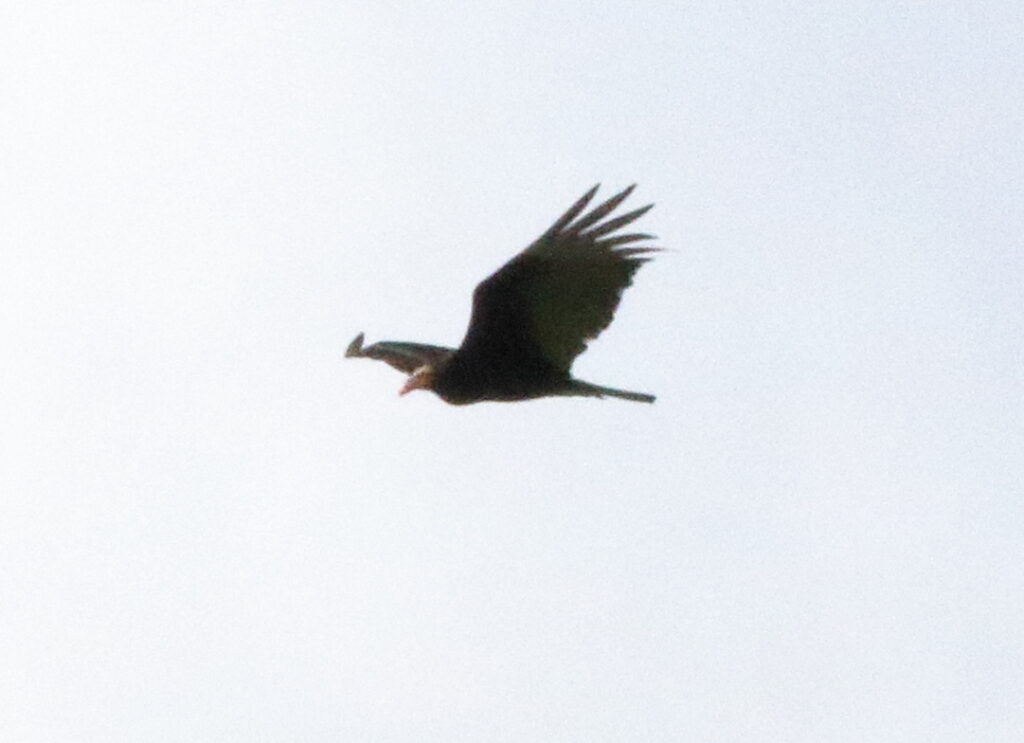
This intriguing Lesser Yellow-headed Vulture was a special first for both Braden and me.

As we continued to explore, many more species kept showing up including a couple of Wood Storks, a Greater Yellowlegs, and both Crested and Yellow-headed Caracaras.
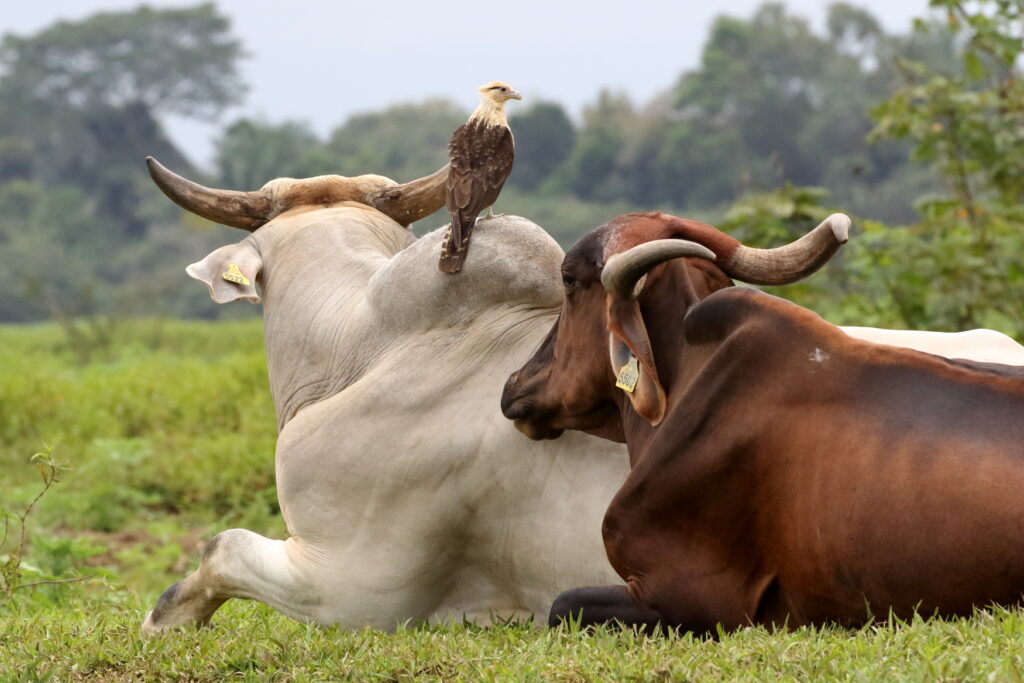
Roger and I had seen a Yellow-headed Caracara leap up onto a cow last year in Colombia, but this guy gave Braden and me an even better show.

A couple more of our favorite finds were a pair of Yellow-tailed Orioles and a Black-headed Trogon, all of which offered close up incredible looks.
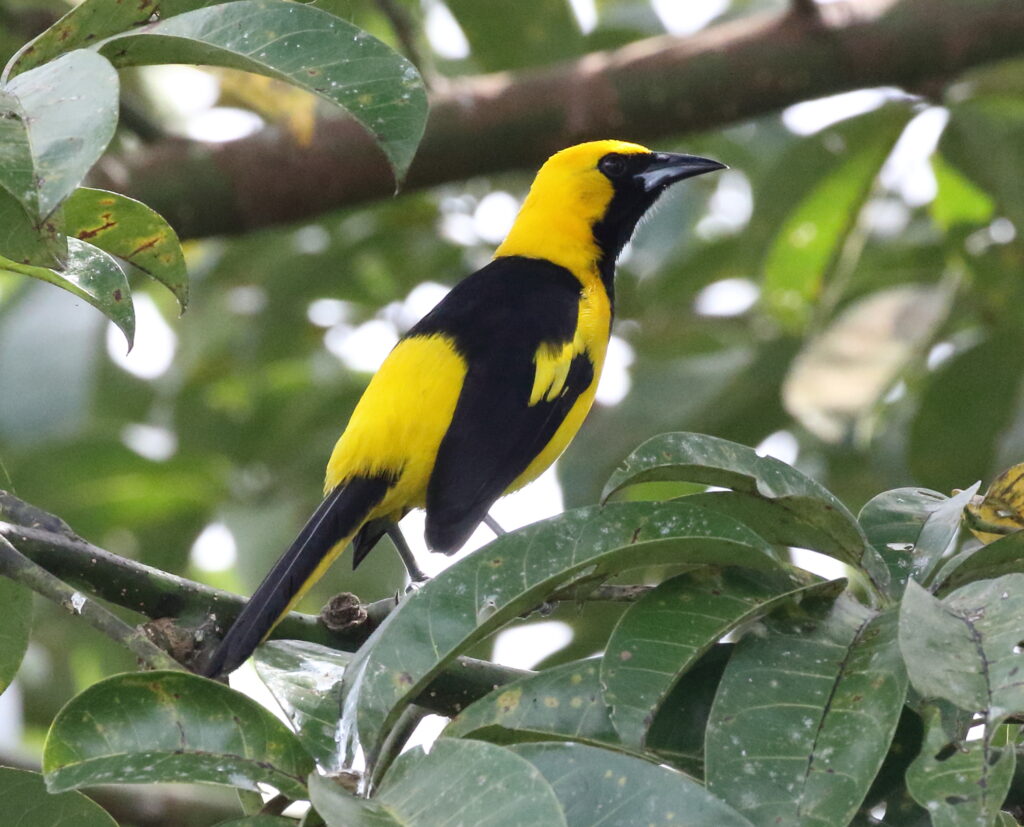
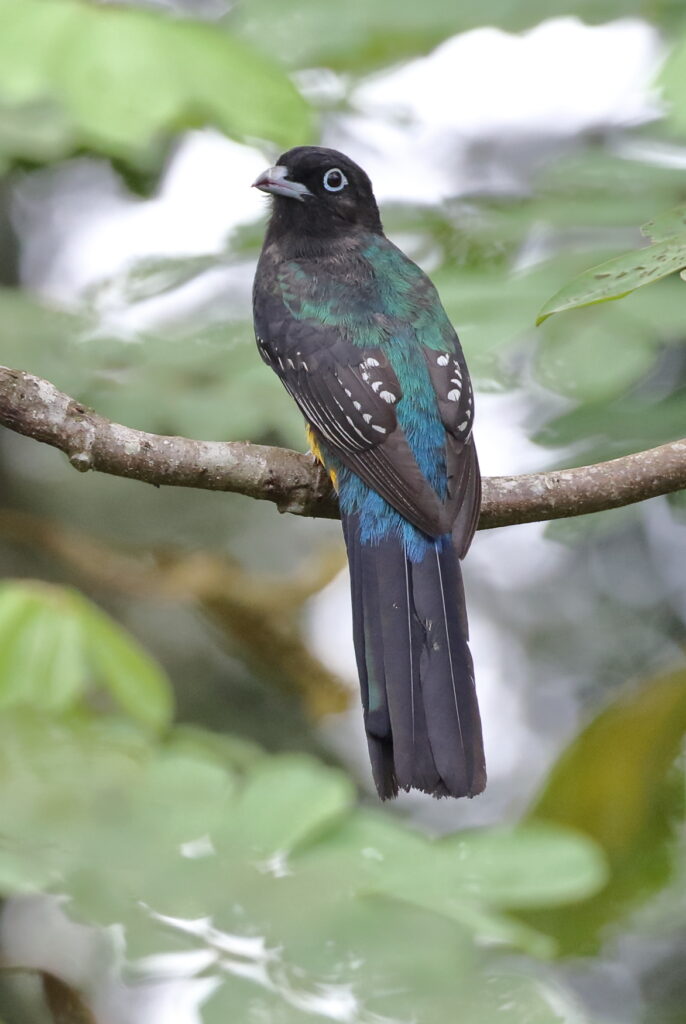
We were happy that Chambita and Yalvin seemed as excited by the day as we were. They spent far more time with us than was strictly necessary and you can bet we appreciated it.

After bidding them farewell, we headed back out the same cratered road we came in on and were rewarded as richly as on the day before. On the drive, we paused to enjoy Green Kingfishers, Common Tody-Flycatchers, a Fork-tailed Flycatcher, and the perfect capstone to the day—our lifer Red-breasted Meadowlarks! We ended the day with more than 130 species, one of our best days of birding ever. Pura Vida!

Our Caño Negro checklist: https://ebird.org/checklist/S303336007
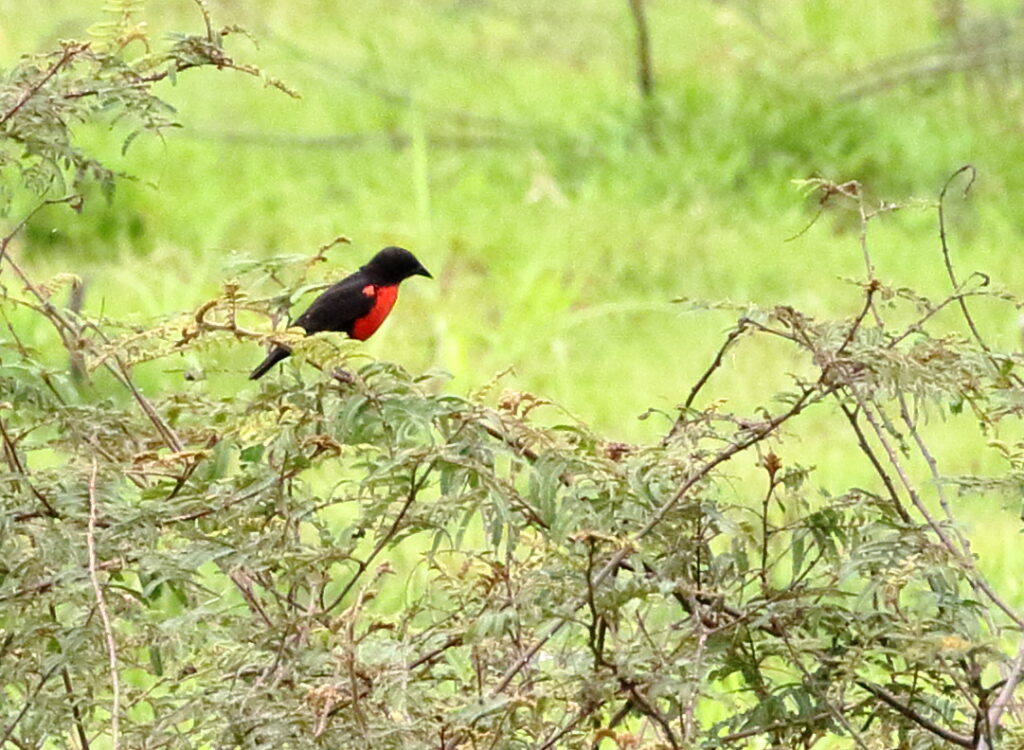
I was especially thrilled to see a Red-breasted Meadowlark after recently reading that the similar-looking South American Pampas Meadowlark is critically endangered. Loss of grassland habitat and rampant use of pesticides has drastically reduced populations of many meadowlark species, including those found in the US.

To arrange a trip with Chambita, check out his Facebook page: https://www.facebook.com/profile.php?id=100047210666376.
The “Hoax” of Climate Change and Birding the Rocky Mountain Front

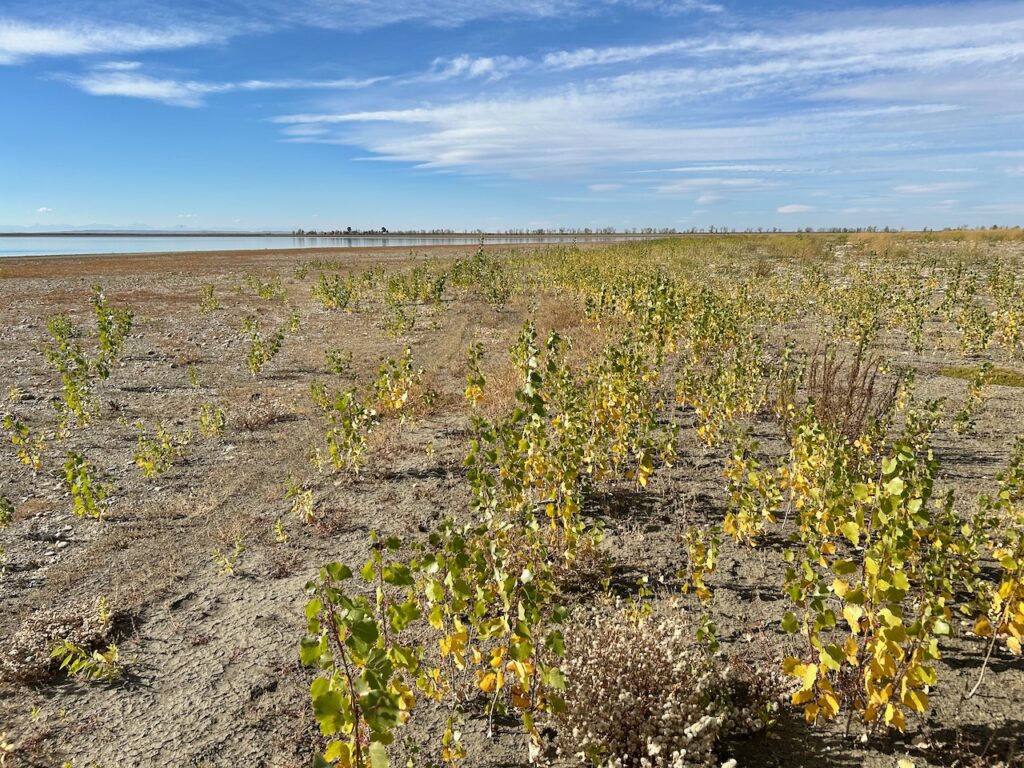
It’s remarkable that as the impacts of climate change rapidly accelerate across the planet many of our leaders have doubled-down on the myth that climate change is a hoax being perpetuated by “stupid people.” Here’s the thing: To realize how quickly and dramatically warming temperatures are changing our planet, you don’t have to be a climate scientist. You simply have to look around. 100- or even 1000-year weather events are happening every few years in many places, generating catastrophic winds, storms, flooding, and drought. Even since I moved to Montana thirty years ago, summers are hotter, winters are milder, and snowpack is disappearing more quickly. Especially in eastern Montana, drought conditions seem to be setting in for the long haul. Braden and I have seen dramatic evidence of this all over the state (see, for example, my post “Birding Glacier National Park in the Hot Dry Winter of 2024”). Two weeks ago, I had a chance to again witness severe drought when I birded the Rocky Mountain front from Freezeout Lake up to the east side of Glacier National Park.

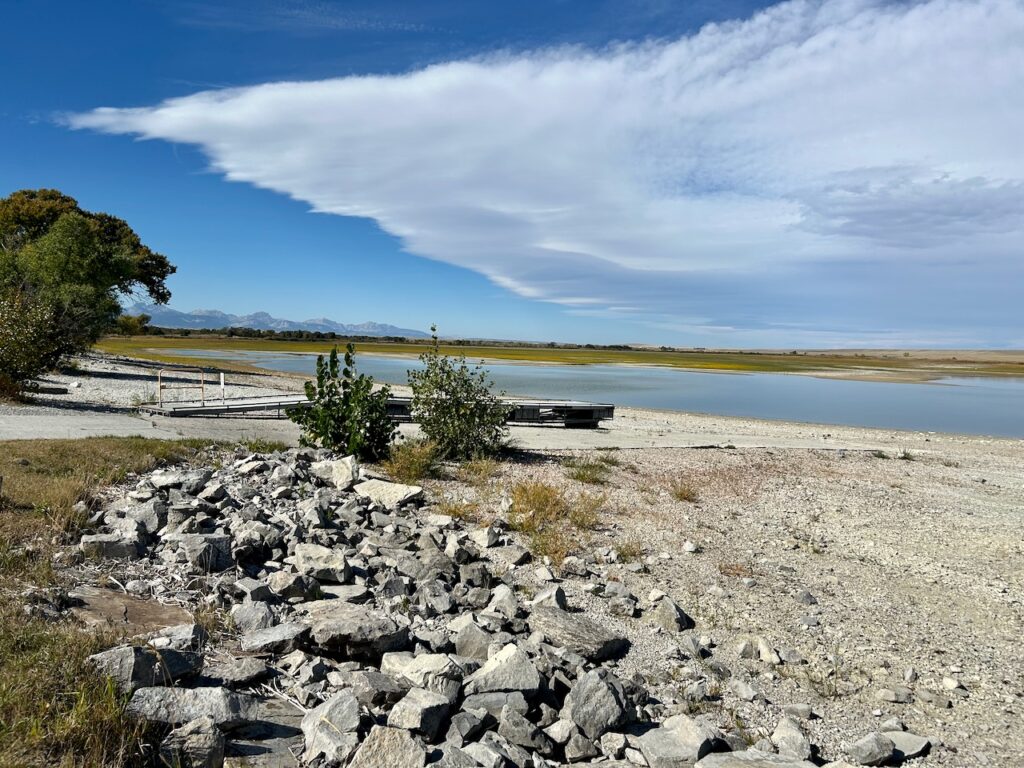
The DRY Dock of the Bay: A rapidly receding shore left this dock high and dry at Eureka Reservoir.

I left Missoula Saturday at the modest hour of 7 a.m. Days are shorter by the end of September so there was less urgency to hit the road early. Just as crucially, Highway 200, which would lead me up and over the Continental Divide, can be a notorious kill zone for deer, elk, and moose at dawn and I thought that waiting an extra hour might keep me and my minivan from ending up in a crumpled heap by the side of the road. My later departure paid off. I managed to spot the two potential deer collisions with plenty of time to brake and after a quick stop near Browns Lake, I arrived at my first destination by 9:30.

I had debated whether to visit Benton NWR near Great Falls or head straight to Freezeout, but eBird reports from the latter proved more enticing so I cast my lot there. As they always do, my excitement levels rose as I passed the refuge headquarters and then turned left to scan the southern bodies of water. It had been a while since I’d visited Freezeout this time of year, and I wasn’t sure what to expect since many birds had undoubtedly departed for their southerly wintering grounds. Rumbling along the gravel road, I did scare up a few Horned Larks and a couple of Western Meadowlarks looking faded and shabby. I also saw that the entire area was as dry and crispy as I’d ever seen it. In good years, water can be found in ditches, shallow pans next to the roads, and elsewhere, but now it was confined to the main lakes on my right. Still, I could see birds on the water.

At the very southern end of the refuge, I spotted about thirty-five American White Pelicans along with some coots, barely identifiable American Avocets, and unidentified, distant ducks. I soon backtracked, though, to where I had noted greater potential.

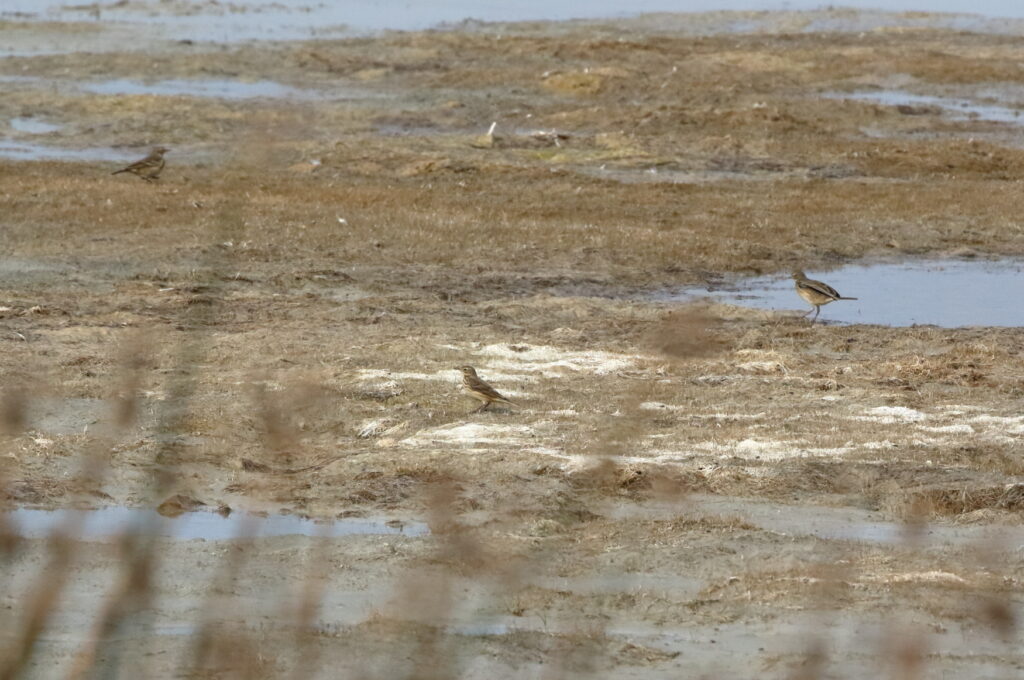
I parked at a pull-out camping area next to a dike/road that led out between two of the large lakes. I couldn’t drive out there, so I shouldered my camera, binoculars, and spotting scope and did what every dedicated birder does: schleps! Am I glad that I did. Almost immediately, I noticed several small birds working some mud off to my right. I ID’ed a couple as Horned Larks, but had a hunch about others so I quickly set up my scope and indeed saw that they were American Pipits! I absolutely love these guys. In Montana, they breed at high altitude, but in spring and fall you can find them migrating through the lowlands. Unfortunately, I had missed them this spring, so that made it doubly sweet to see them now. Even better, it moved me one bird closer to breaking my all-time one-year species count record!

American Pipits working the recently receded shoreline of one of Freezeout’s main lakes.

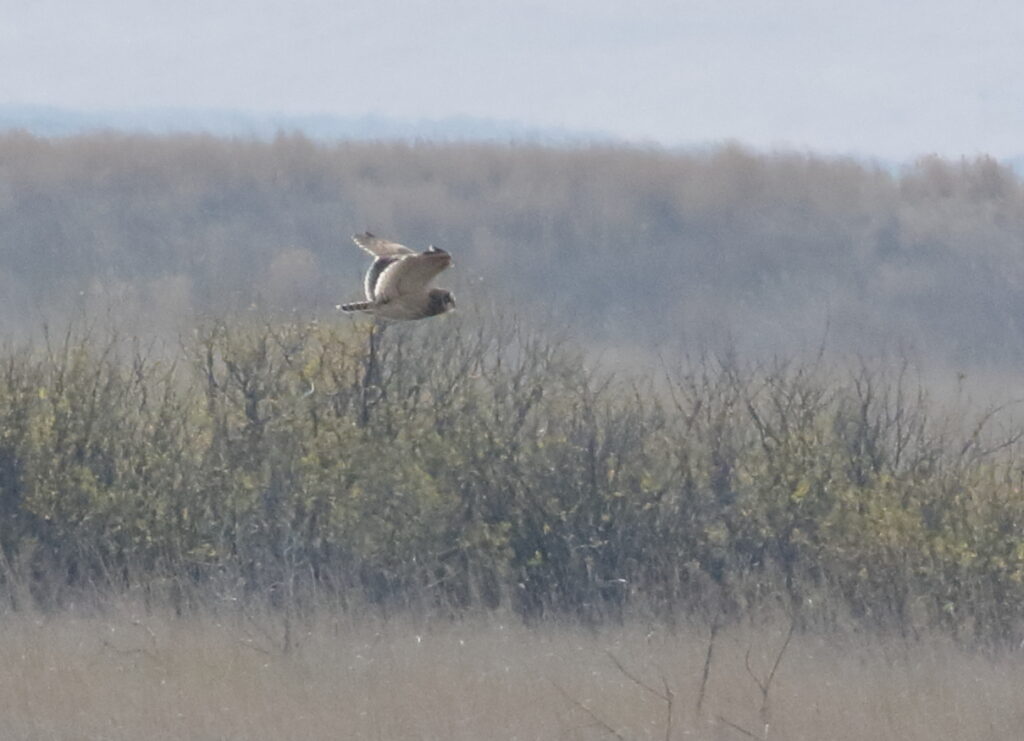
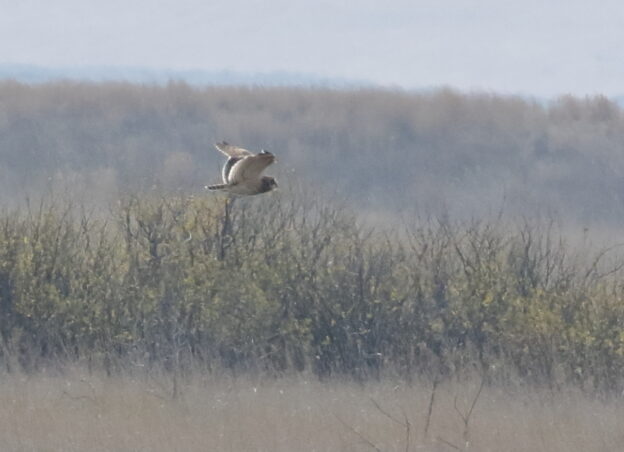
As I resumed walking, I suddenly spotted a large raptor flying low and erratically over fields to my left. My first guess normally would be Northern Harrier, but this was my lucky day. The bird wasn’t a harrier, but a Short-eared Owl! It had been years since I’d seen one here and I couldn’t have been more delighted. These are some of my and Braden’s favorite birds, but we never know when we’ll encounter them. To emphasize the point, the bird was listed as unreported on the eBird filter (presumably just for this time of year), showing how unpredictable the birds can be.

Another in my now-famous series of lousy Short-eared Owl photos! After all, I have a reputation to uphold!

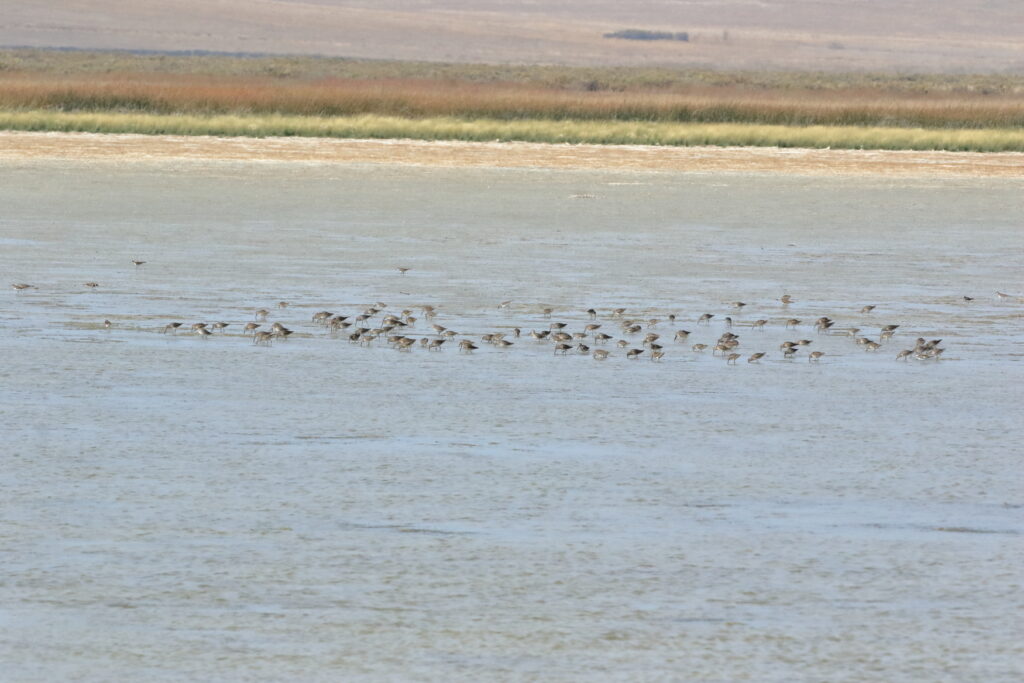
Another couple of hundred yards brought me close enough to set up the scope on the birds I was seeing far out on the water. There were groups of ducks, but those didn’t interest me. What did was a group of about forty or fifty shorebirds. Even with the scope, I wasn’t as close as I would have liked, but their very long bills, pale superciliums (the bands above their eyes) and “oil drilling” probing of the shallows said “Long-billed Dowitchers.” Then, I began to doubt myself. Their bills were so long and from a distance, I could imagine that some of them seemed slightly upturned. “Could they be godwits?” I asked myself, suddenly thrown into confusion. I kept studying them, eventually coming back to dowitchers. What cinched it is that when they took flight I could clearly see the single white stripes running down their backs. Godwits don’t have that. When they again landed, I realized that their numbers had also doubled to about ninety.

Dowitchers always make me happy. I just hope that humans can get our act together in time to make sure they have enough water in the future.

I spent almost an hour studying the water from the dike, and in addition to the Long-billed Dowitchers, I found four sandpipers that I thought were Baird’s Sandpipers but could have been Pectoral Sandpipers—they were just a bit too far away to be sure. I did ID several distant Black-bellied Plovers, too. The rest of Freezeout didn’t offer up much. I saw three Eared Grebes and a Canvasback hidden among scads of Canada Geese and intermolt ducks that were probably mostly Mallards. A stop at Priest’s Lake, however, yielded 2,500—you read that correctly—twenty-five hundred Ruddy Ducks! Ruddies, of course, are one of the BEST ducks, but I’d never seen even close to these numbers before. During fall migration, I guess they like each other’s company!

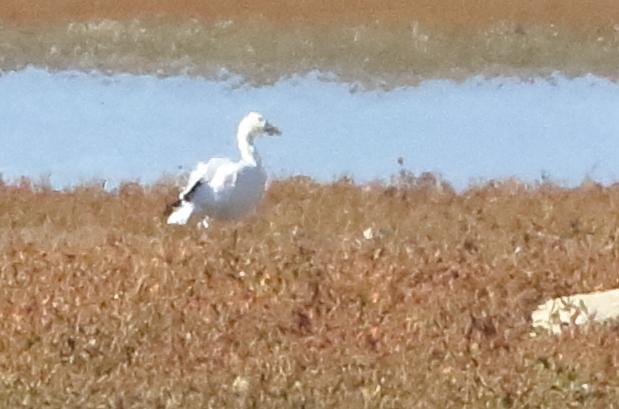
One of my birding goals lately is to try to bird new areas and on my way up to East Glacier, where I would be spending the night, I made two more stops: Eureka Reservoir north of Choteau and Lake Frances near Valier. Neither yielded anything exceptional, but I did pick up my First-of-the-Year Snow Goose, a single specimen at Lake Frances. What both places strongly reinforced was the critical water situation in this part of the world. Both bodies of water had retreated huge distances from their historic lake shores. It’s difficult to tell what percentage of water they’ve lost, but I’d guess that both were at least three-quarters empty.

Lake Frances offered up the most visible impacts of what drought is doing to the Great Plains. I had to walk across a couple of hundred yards of former lake bottom to reach today’s shore.

As I passed through Browning and turned toward East Glacier, I saw more bad news. Braden and I had driven this route at least a dozen times and every time we saw prairie potholes full of water. On this day, every one of those potholes stood bone dry until I’d almost reached East Glacier. This has dire portents for the future of our wild birds. Sure, rainfall goes up and down year to year, but the trend for the West is to get drier and drier. What happens when migrating birds head south and find no water at all?

This lone Snow Goose at Lake Frances brought me to within three birds of breaking my all-time one-year species count record—but it was small consolation for the dire water conditions I saw everywhere.

Honestly, I don’t want to find out, but it adds an urgency to act—and makes current attacks on clean energy both unconscionable and downright reckless. Why are such attacks happening? Just follow the money to the oil and car companies that continue to make trillions in profits while our planet suffers. These corporations have invested heavily in the current administration and are grinning ear to ear as POTUS rails against solar energy and windmills while he tries to sell our fossil fuels to a world that doesn’t want them. I generally try to keep FatherSonBirding apolitical, but if we want the next generation to have half of the beauty and diversity you and I have enjoyed, we have some urgent decisions to make. None of us has to change the world all by ourselves, but we each have to do something, whether it’s donating to causes working for a better planet or taking the plunge on solar panels, an electric vehicle, or eco-friendly hot water heater. The next generation may not ever thank us “stupid people” for what we’re doing, but we’ll know that the world will be better off for our efforts.

Quarrying Species: Birding Therapy Day Six

Enjoy these posts? Please share and subscribe using the box down below and on the right.

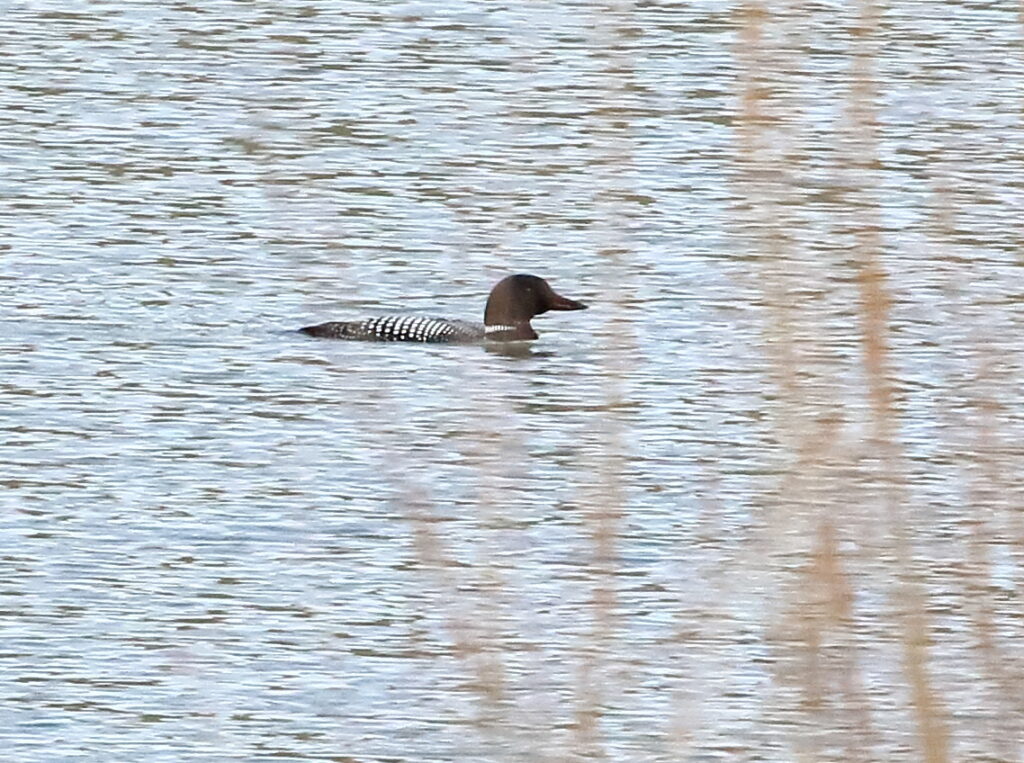
Saturday, Day 6 of my Birding Therapy Week, I arrived at Fort Missoula at 7:45 a.m. with my daughter for the first of her two soccer games that day. While she warmed up with her team, I took Lola back over to the gravel quarry hoping to catch some magical morning birding. I didn’t have to wait long to kick off a great session. Even before leaving the soccer fields parking lot, my first Barn Swallow of the year flew past me, and once I reached my first stop at the northward quarry pond, I found myself struggling to keep up with all of the species I saw and heard. On the ponds themselves, I ID’ed eight species of ducks, Canada Geese, a Horned Grebe, and a Common Loon—perhaps the same one I’d seen two days before.

I had to play hide-and-seek with this loon even to get this poor shot, but I didn’t mind. Was just thrilled it stopped by the quarry on its way to its breeding grounds.

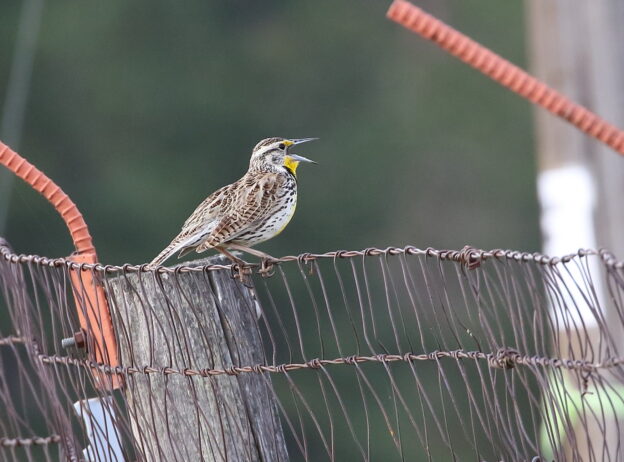
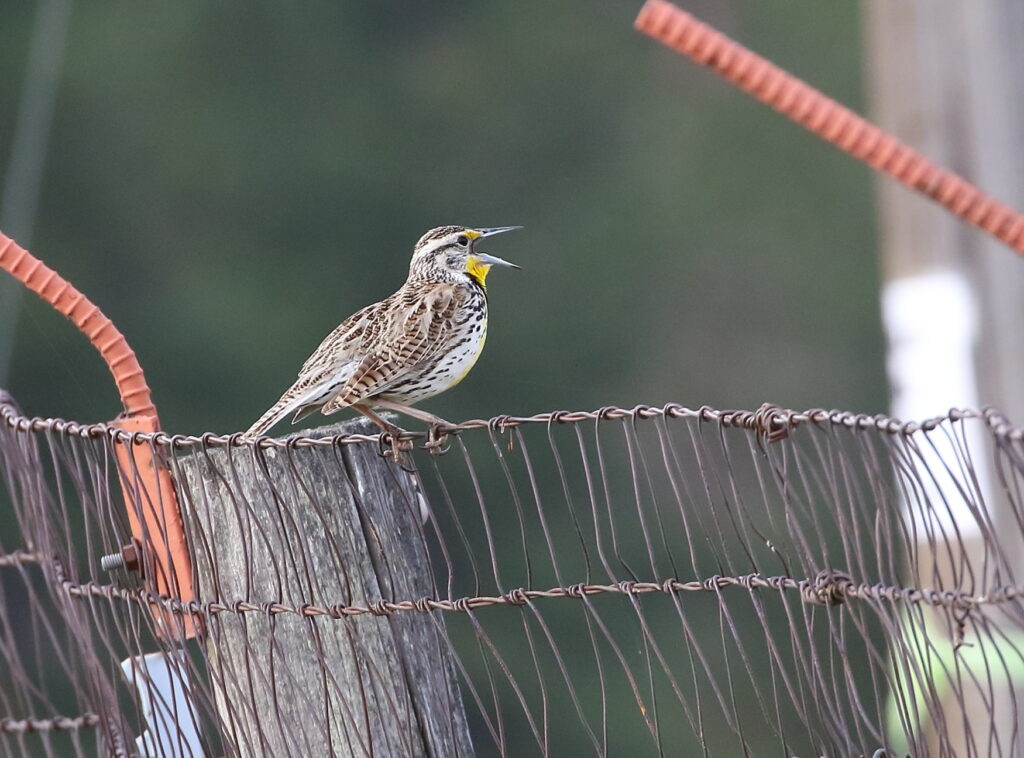
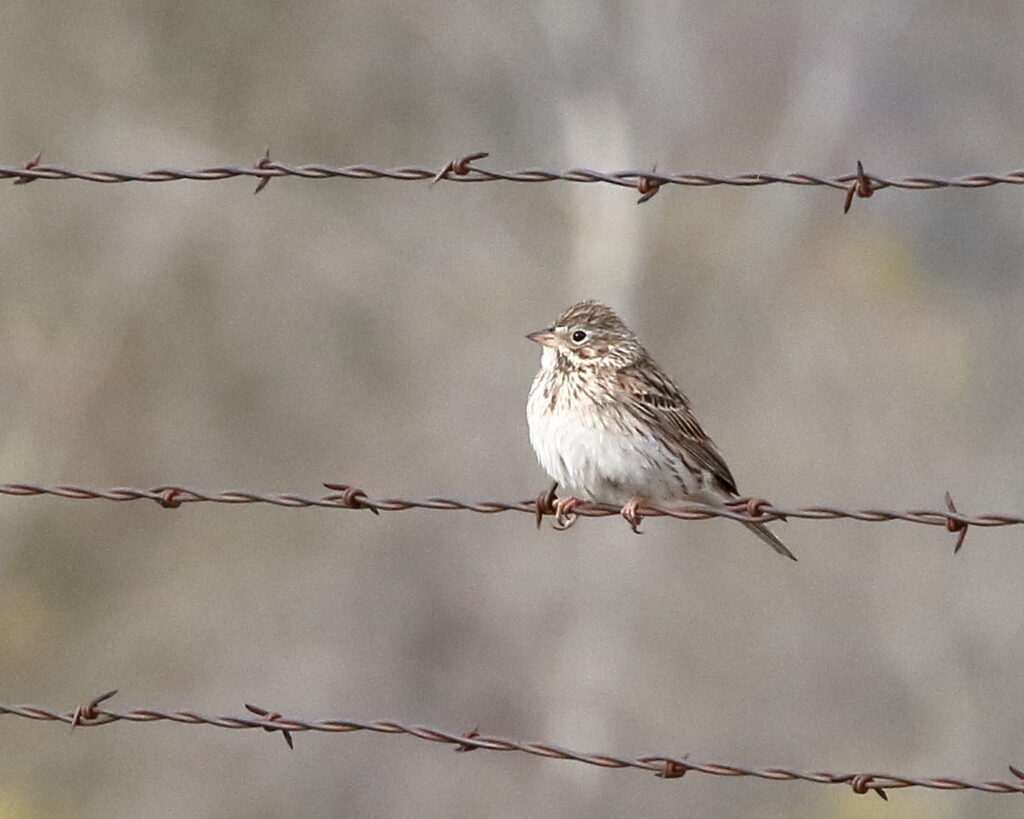
As I walked along the fence line, a sparrow popped up with a bold face pattern and pale “moustache”—the year’s first Vesper’s Sparrow! Nearby landed a Savannah Sparrow while a Western Meadowlark serenaded us. At the cliff edge above the river, Northern Roughed-Winged and Tree Swallows swarmed while a Red-tailed Hawk, Osprey, and Great Blue Heron sauntered by.

Meadowlarks always make me pause to ooh and ah, especially when they perch and sing in full view!

The hits kept on coming: two Red-naped Sapsuckers, a pair of Wood Ducks flushing from beside the river, a Yellow-rumped Warbler. As before, I made a special effort to find unusual sparrows. In one of our favorite spots, I located a couple of White-crowneds and then I saw something that really got my heart thumping: a bold bird with a peaked crown and distinct gray and brown facial lines. Even more exciting, I thought I detected a bit of yellow on the sides of the breasts—sure signs of a Lincoln’s Sparrow. Unfortunately, the bird was facing away from me and I was just moving in for a better look when two good-natured women walked up behind me and loudly shouted “Good morning!” I turned around and smiled, putting my finger to my lips, but it was too late. The sparrow fled.

Sigh.

Still, it was an amazing morning, with 36 species and delightful experiences. Even better, my daughter’s team won her soccer game. I’ll get you next time, Mr. Lincoln.

Here is my complete checklist: https://ebird.org/checklist/S86803129

I missed the Lincoln’s Sparrow, but was delighted to find my first Vesper’s Sparrow of the year. Braden got his first in a different location the very same day! Note that Vesper’s Sparrows are identified by their bold facial pattern including white eye ring and white “handlebar moustache” curving down and back from its bill. When they fly, look for the white outer tail feathers. Many also show an upside down “heart” on their breasts—though this one is “heartless.” Poor thing.