Tag Archives: Book Reviews

Seabirds as Sentinels (FSB Book Review)

All posts on FatherSonBirding are written and photographed by REAL PEOPLE.

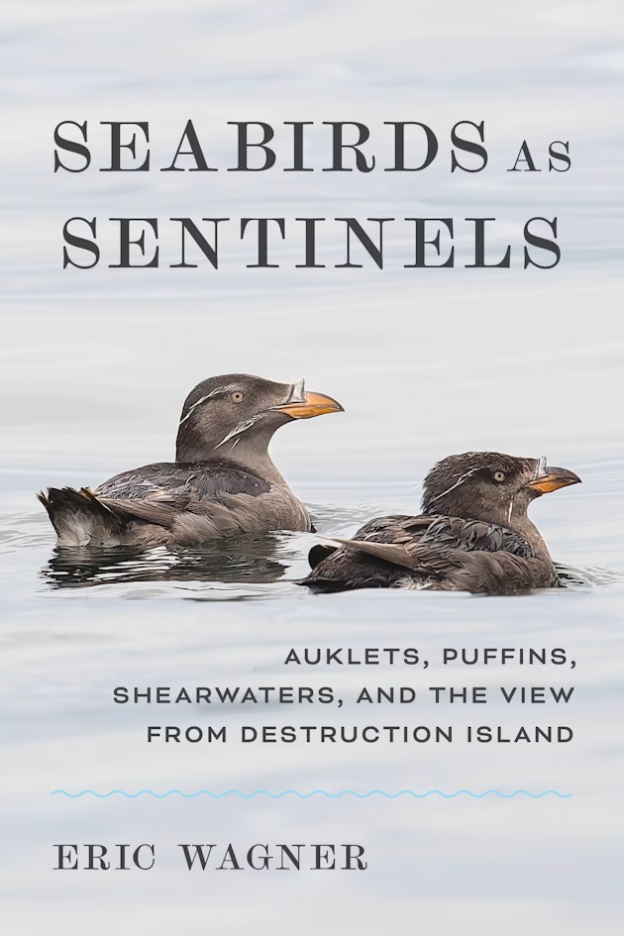
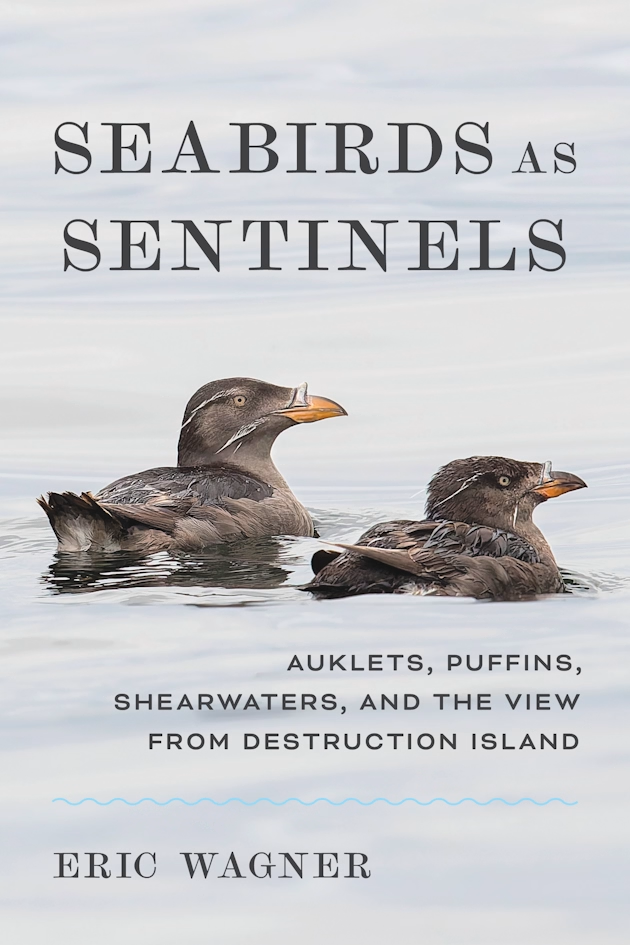
I love living in Montana, but it has one huge drawback: no ocean. This has a particular impact on me and Braden because while we do get a fair number of shorebirds breeding in and passing through the Treasure State, we almost never have the opportunity to observe, study, and enjoy seabirds. You can therefore understand my particular interest in reading Eric Wagner’s new book, Seabirds As Sentinels: Auklets, Puffins, Shearwaters, and the View from Destruction Island (University of Washington Press, 2026).

Seabirds as Sentinels by Eric Wagner, University of Washington Press. Click on image or here to order.

For me and many other birders, seabirds—also referred to as pelagic birds—are almost magical. Not only do they have incredible adaptations to live in what is arguably the world’s harshest environment, they are difficult, if not impossible, for most of us to watch. Loyal FSB readers will recall Braden’s and my account of our pelagic bird cruise during the San Diego Birding Festival (see post San Diego Seabirds). These and a precious few other puke-filled outings gave us rare opportunities to view shearwaters, murres, guillemots, and even albatrosses. Unfortunately, our time with these birds has been altogether too brief—a situation not likely to change anytime soon.

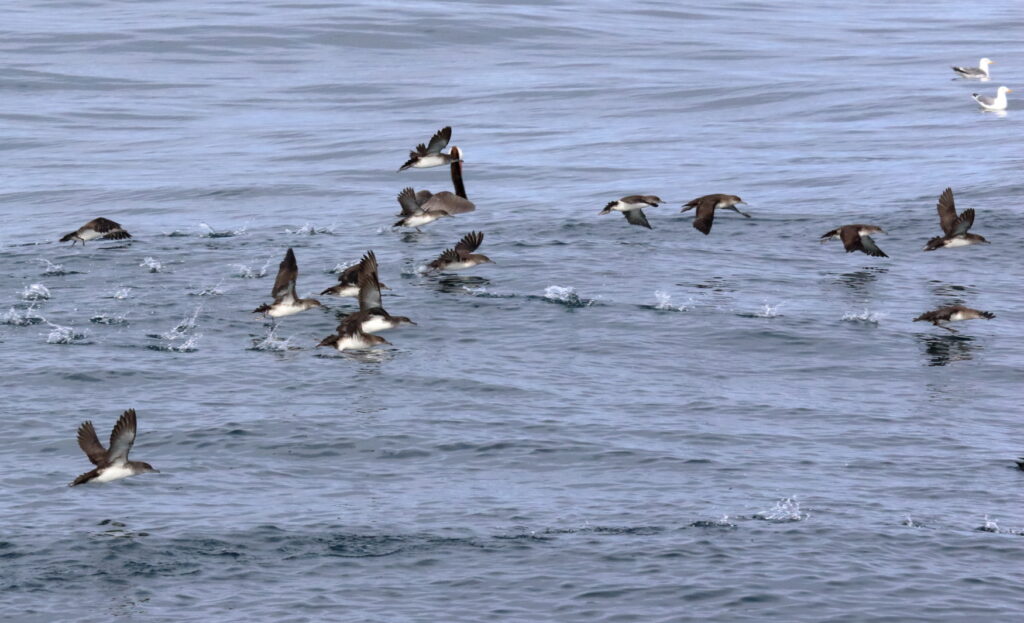
Part of a group of approximately 8,000 Black-vented Shearwaters off the coast of San Diego in 2019.

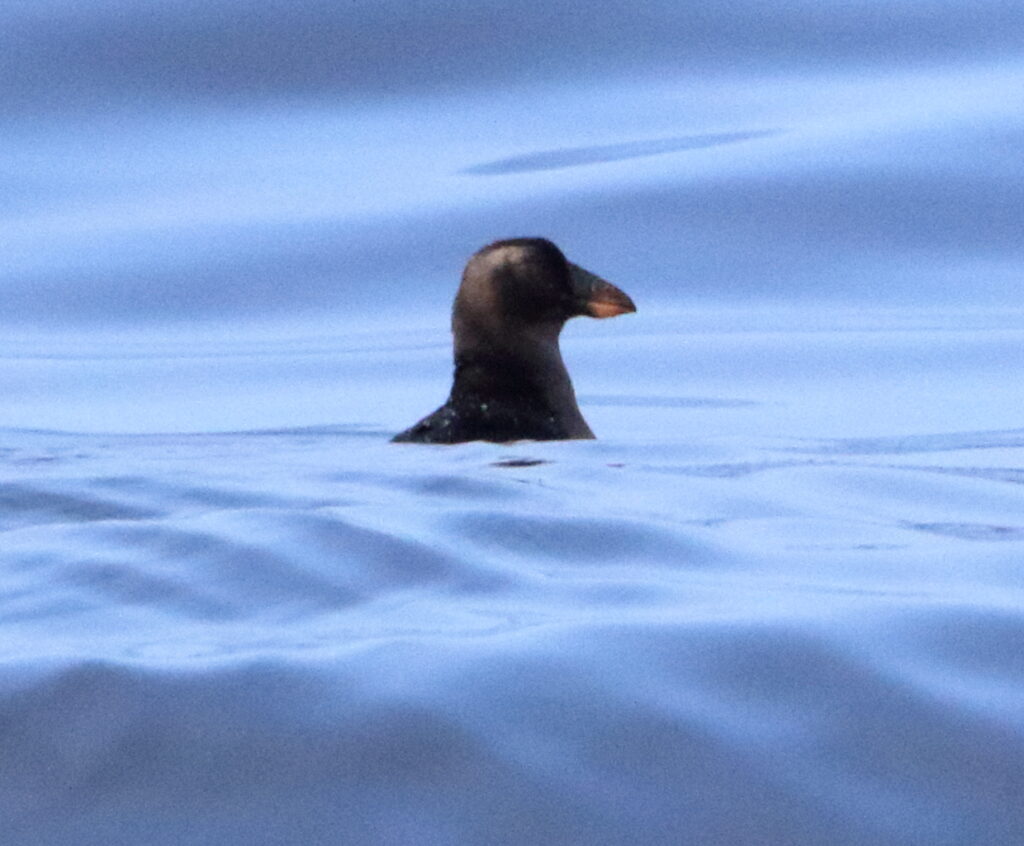
One of the real delights of Eric Wagner’s book is that he gives readers the chance to hang out with nesting Pacific Northwest seabirds, especially the Rhinoceros Auklet. Before reading Seabirds As Sentinels, I had seen Rhinoceros Auklets a couple of times, but had no idea where they bred. One answer, it turns out, is on certain islands off the coast of Washington and British Columbia. Wagner devotes a good portion of the book documenting scientists’ efforts to tag and learn about these birds as they nest on Destruction Island, only about three miles off the coast of the Olympic Peninsula.

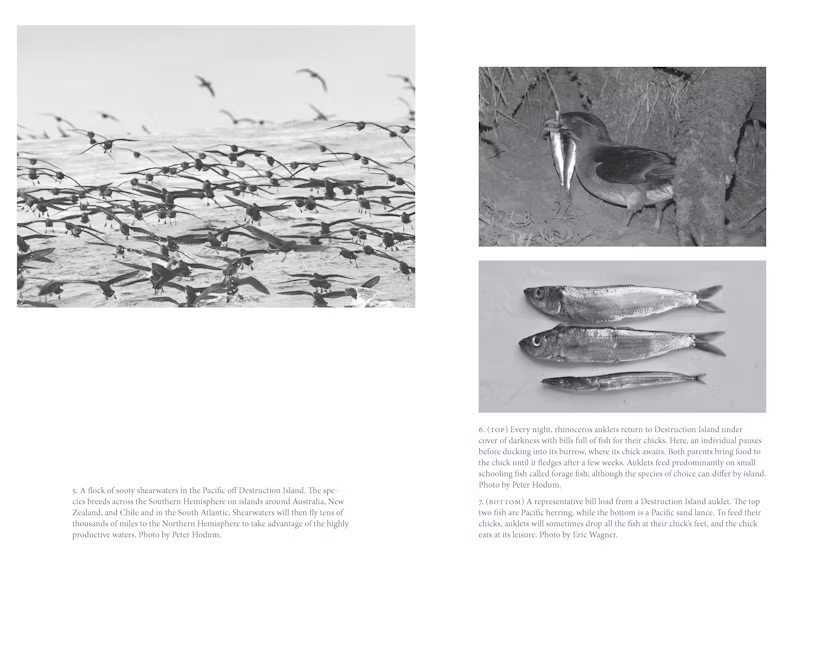
Photos from Seabirds as Sentinels including a Rhinoceros Auklet, bill filled with fish, in the upper right.

His accounts of the birds range from their comical “crash landings” as they return to the island each night to feed their chicks to the birds’ remarkable ability to locate shoals of fish and dive deep underwater to catch them. Similar discussions revolve around Sooty Shearwaters and Tufted Puffins. What makes these accounts so captivating is seeing the birds’ activities “in person” through the author’s eyes, an experience most of us will never have.

A Tufted Puffin from Braden’s and my first pelagic birding cruise off Monterey, California.

Wagner, though, also wants to educate us, and provides discussions of how the world’s primary ocean currents are generated and how these currents impact marine life. He traces the human history of the region from around the time of first European contact to modern day, including recent tribal efforts to protect an environment increasingly at risk from climate change’s many ramifications.

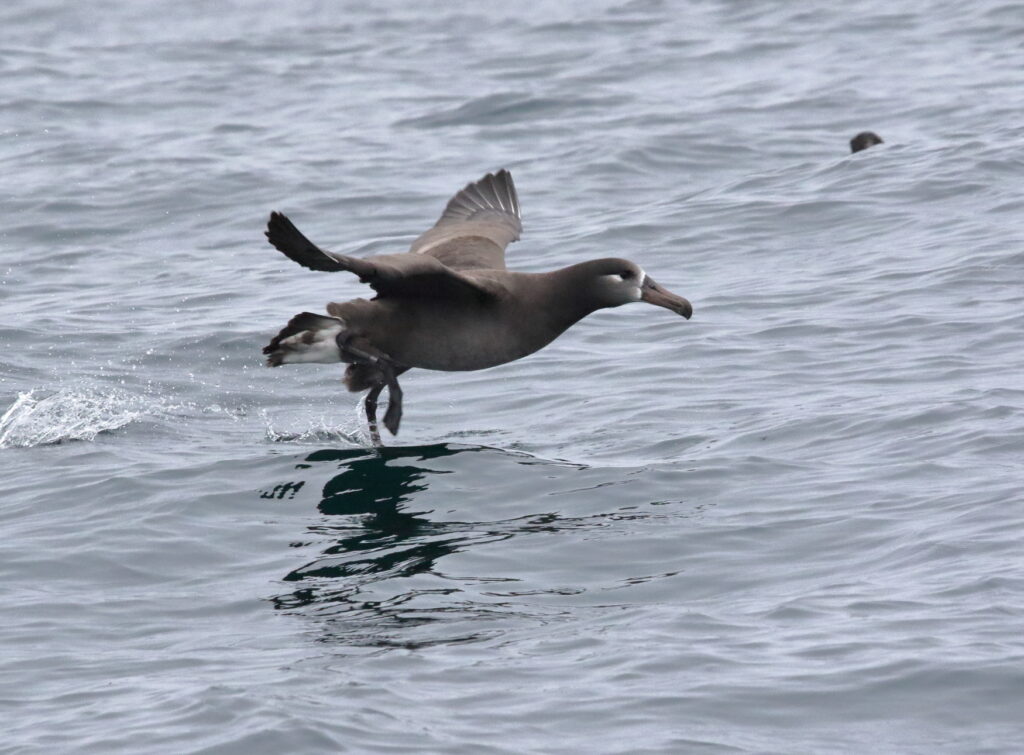
Black-footed Albatrosses are one of the birds most impacted by human activities. According to Wagner, tens of thousands have died in Hawai’i’s longline tuna fishery alone. (Photo taken off the coast of Monterey, California in 2016.)

Unfortunately, it’s impossible to talk about seabirds without pointing out the cataclysmic declines in many species, and the author doesn’t shy away from the topic. As the title suggests, the decline of seabirds mirrors the dramatic impacts human activities are having on our planet. Perhaps most alarming has been the appearance of “blobs,” persistent and unprecedented areas of warm water that either kill or drive away the prey seabirds and a host of other species depend on. Estimates of how many seabirds have died during recent blobs are mind-boggling. As many as four million Common Murres alone may have starved to death as a result of the blob of 2015 and 2016—about half of Alaska’s Common Murre population.

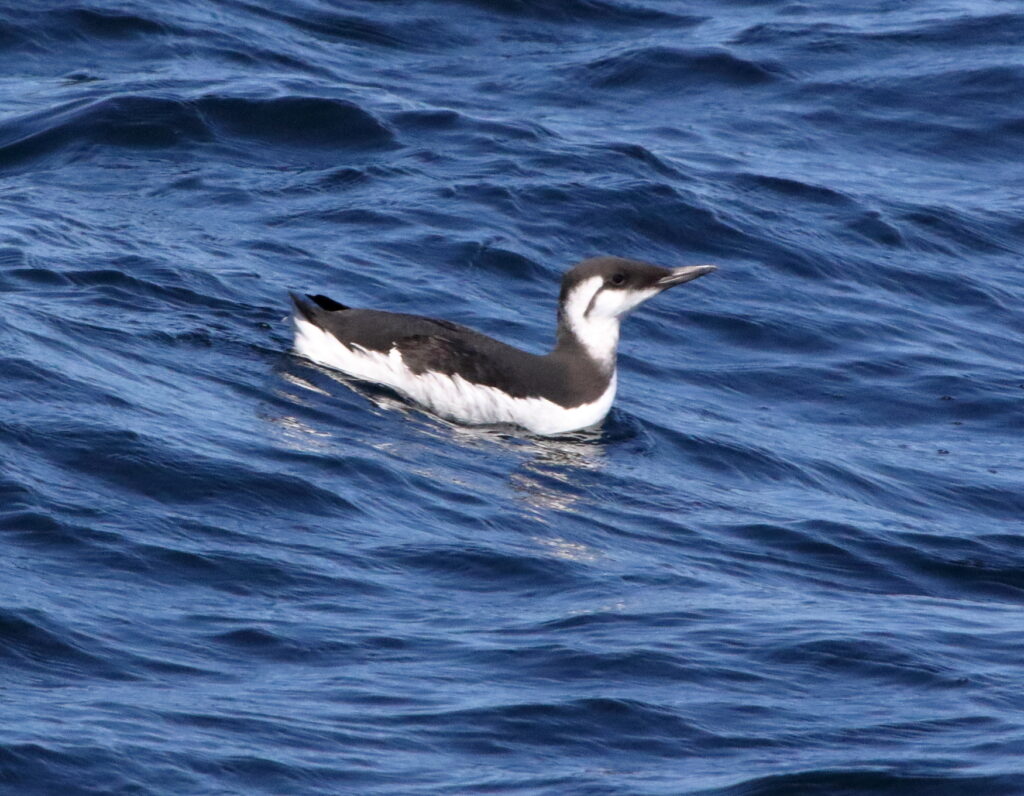
Common Murres have already been severely impacted by warmer ocean temperatures (Monterey, California, 2016).

The author doesn’t provide us with any false solutions about this and other environmental problems. After all, we all know what we have to do. We have to stop burning fossil fuels. We have to stop using our ocean as a dumping ground for plastics and other waste. We have to quit overfishing the prey species thousands of other species also depend on. What the book does do, though, is raise our awareness of why these things matter—and perhaps provide each of us with the resolve to keep working toward a solution in whatever ways we can.

If you enjoyed this post, check out our other bird-related book reviews such as The Great Auk and The Shorebirds of North America.

Review copy provided by the publisher.

The Birds in the Oaks (Book Review by Scott Callow)

Braden and I head to Costa Rica next week, but before we go I am delighted—yes, delighted—to share the following guest book review by my buddy, Scott Callow. I predict you’ll enjoy his passionate, humorous review as much as the book itself! We challenge you to read it before our next post. And now, heeeeeeeeere’s SCOTT!

Sneed asked me to write a review of The Birds in the Oaks: Secret Voices of the Western Woods by Jack Gedney (HeyDey Press, 2024) before I completed reading it. Consequently, It was impossible for me to finish the last chapter without constant rereading because I became anxious and distracted, wondering how to share all the great things about it. For those of you who only read headlines or first paragraphs of news stories, let me present a few crafted comments that summarize my experiences, being careful not to exaggerate.

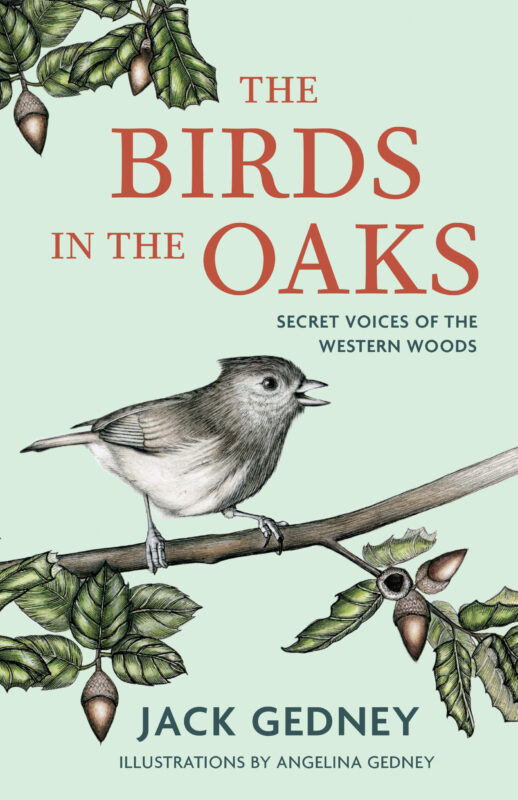
Order Jack Gedney’s The Birds in the Oaks by clicking here or on the above image.

* If you live near oak woodlands, you have no claim to being “interested in birds” if you do not read this book.  

* The Birds in the Oaks is overflowing with interesting ecological details that will keep me rereading chapters, and I expect I will mark the pages with notes like a seeker underlining sections of the Bible on the journey to become a better person.  

* The Birds in the Oaks is a superb example of well-crafted nature writing that mixes extensive and accurate observations with poetic prose, and mixes personal experiences with quotes from historical bird authors.  

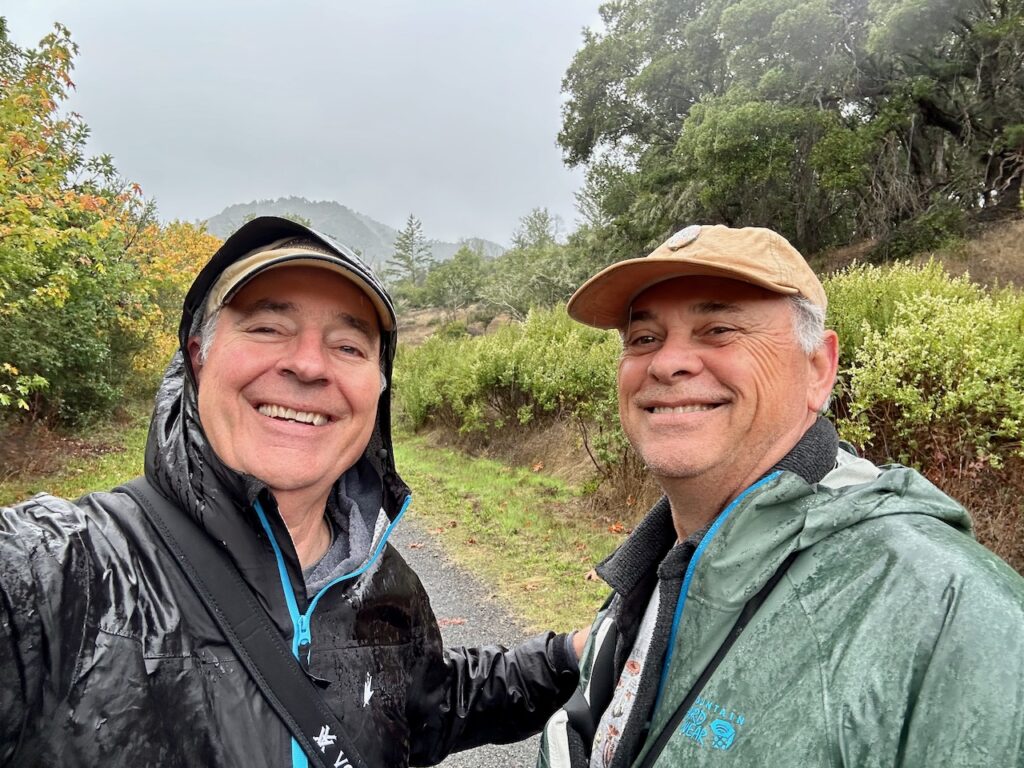
Last fall, I was fortunate enough to accompany Scott to one of his favorite “oaky birdy” locations, Sugarloaf Ridge State Park in Sonoma County, where we saw a great variety of classic oak woodland species including Oak Titmouse, Golden-crowned Sparrow, and Nuttall’s Woodpecker. (See post World Series Birds in the Golden State.)

This book, admittedly, is personal for me. I live within walking distance of California oak woodlands. I volunteer at Sugarloaf Ridge State Park which is dominated by oak woodlands and mentioned in the book. The author’s former Wild Birds Unlimited store lies only 24 miles from me. Most importantly, I know these birds. I have learned so much about each of them from Gedney’s book that they have become even more familiar (emphasis in “family”). I will admit only here, amongst birders, that I sometimes say “Hey, buddy!” when I see my first Oak Titmouse of the day, and “Hey-hey-hey” when I see a White-breasted Nuthatch.  

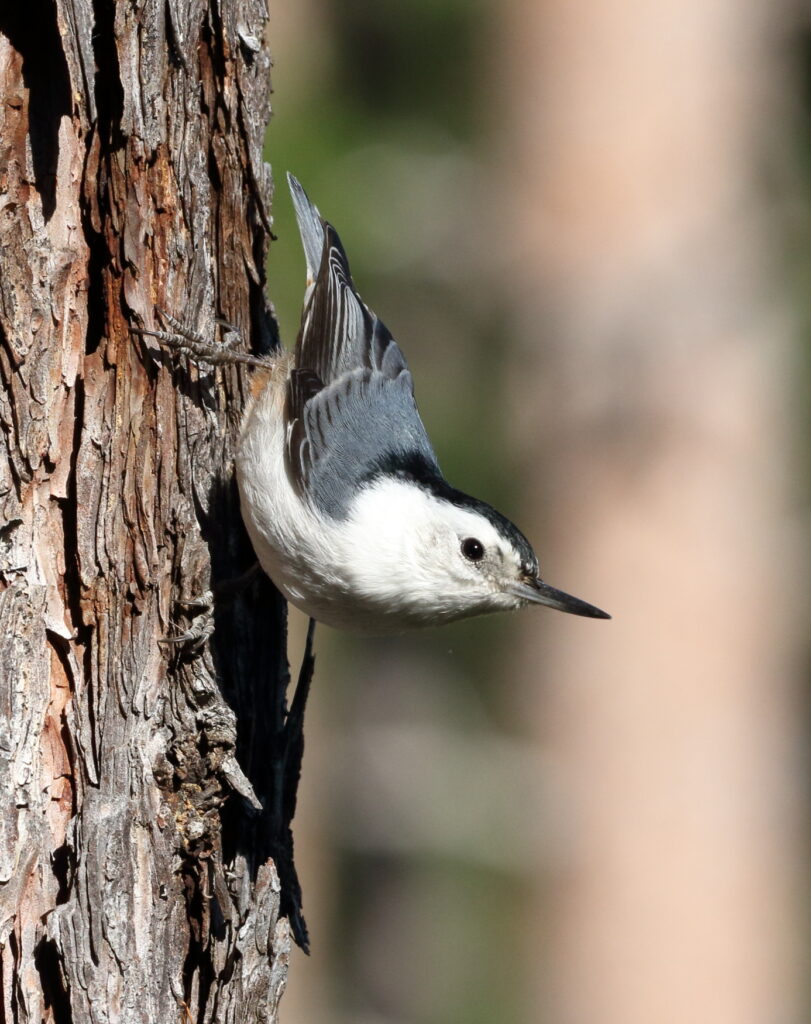
Scott apparently has been known to converse with White-breasted Nuthatches. I can’t blame him as I talk to these guys myself!

Each curiously titled chapter is organized around a species. Each begins with key characteristics. Many chapters start with song and call, which I appreciate since I’m late in life to learning bird sounds. (Thank you Merlin.)  Example:

“I still hear the bird, steadily whit-whiting away as if mocking my inability to follow.” (A Bird at Our Level – Bewick’s Wren) (“whit-whit bew-wick” – record to memory)

As someone who seeks to be entertained by bird behavior and science, I enjoyed how Gedney explains bird ecology.  

“… to learn all the secrets of the woods, one must know … the birds beneath the oaks.” (Discontented Shadows – Spotted Towhee) (Cool we’re on a treasure hunt, I tell myself.)

The ecological details too elaborate to be found in a guide have already enriched my birding.  Even if you don’t regularly see Acorn Woodpeckers, every birder should learn about their unique extended family groups and their cooperative food hoarding strategies. I also believe every birder should wonder how the Bushtit, weighing as light as a nickel, can engineer such an elaborate sock-shaped nest, insulate it, camouflage it, and then use it for such a short nesting cycle, all on a diet of insects too tiny to see, even with the help of binoculars.

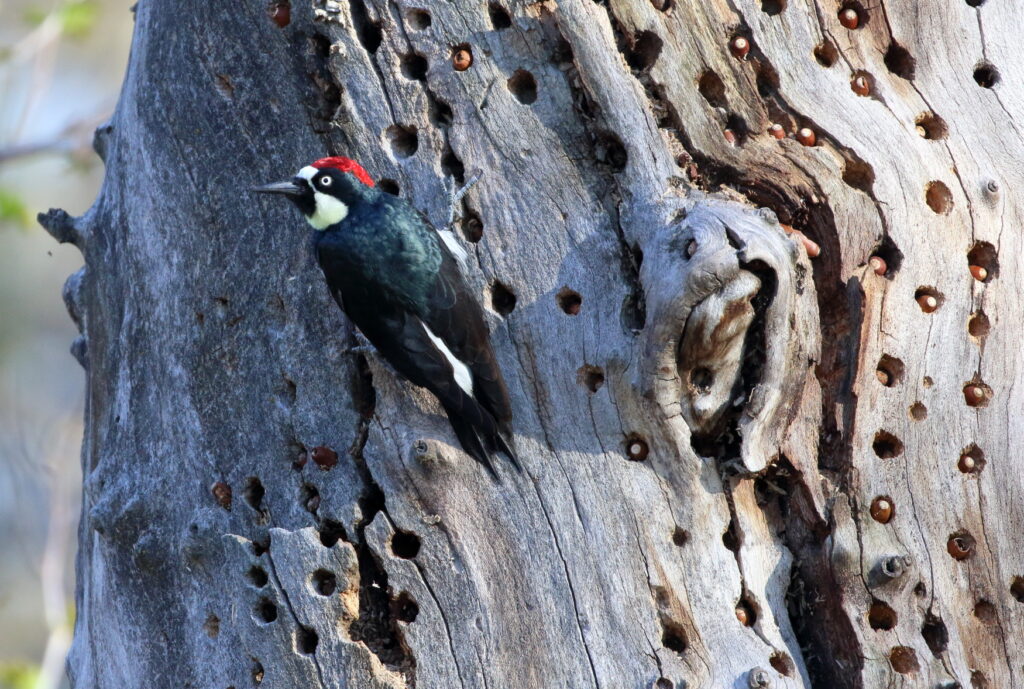
The ultimate oak woodland bird, the Acorn Woodpecker, deservedly attracts abundant attention from birders, both for its stunning good looks and fascinating behavior that features cooperative breeding and storage of thousands of acorns. Isn’t that, ahem, nuts?

But this book is not written by or for the scientist. Gedney is not afraid to add his own appreciation of a bird or personal experiences or poetic descriptions. This at first raised my anthropomorphic alarms since I was trained to reject human sentimentality by my vertebrate bio prof, surprisingly an ornithologist who once said “birds are stupid; their behaviors are mostly determined by genetics; they have small brains.” (These prejudices were spoken decades before contradictory scientific information was shared in The Genius of Birds and several other books on bird intelligence.)  

The Birds in the Oaks is very accessible, humanly so. It is so well written that you just might re-imagine your own feelings about birds and get all warm-like inside. You just might be heard saying “Wow” when learning something new about one of the birds. You might just slow down and spend “an inordinate amount of time” observing a bird in one location. Maybe, maybe not. But I will risk one bold prediction: If you get this book, several times you will imagine walking through the woods with the author himself.  

No oak trees were harmed in the writing and publishing of this review.

The Social Lives of Birds (Book Review)

If you’re enjoying FatherSonBirding, why not take the leap and subscribe by filling out the box below and to the right? We will never share your information. Also, a reminder that all content on FSB is fully protected under copyright law. Please share this post—but don’t use it for other purposes without permission.

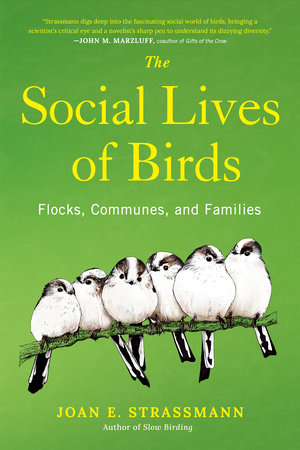
With single-digit temperatures in Montana this week, it is still very much book reading season, a time when all birders can—and should—beef up our birding resumés by tapping into the vast wealth of research and experience of the global birding and scientific communities. This past week, I delved into a topic that intrigues most birders by picking up Joan E. Strassmann’s The Social Lives of Birds: Flocks, Communes, and Families (Tarcher, 2025).

Joan Strassmann’s The Social Lives of Birds is packed with delightful revelations for beginning and experienced birders alike. (Click on the cover for ordering info.)

A well-regarded professor and scientist, Strassmann has created a comprehensive resource that introduces readers to almost every aspect of bird society. She begins by answering the simple question “Are Birds Social?” (You can probably guess the answer to that!) Then, chapter by chapter, she explores topics that fascinate beginning birders as much as they do veteran scientists. These include flocking behavior, mixed-species flocks, the predilection of many birds to roost and/or nest in colonies, the pros and cons of nesting and/or roosting together, lekking behavior, and more.

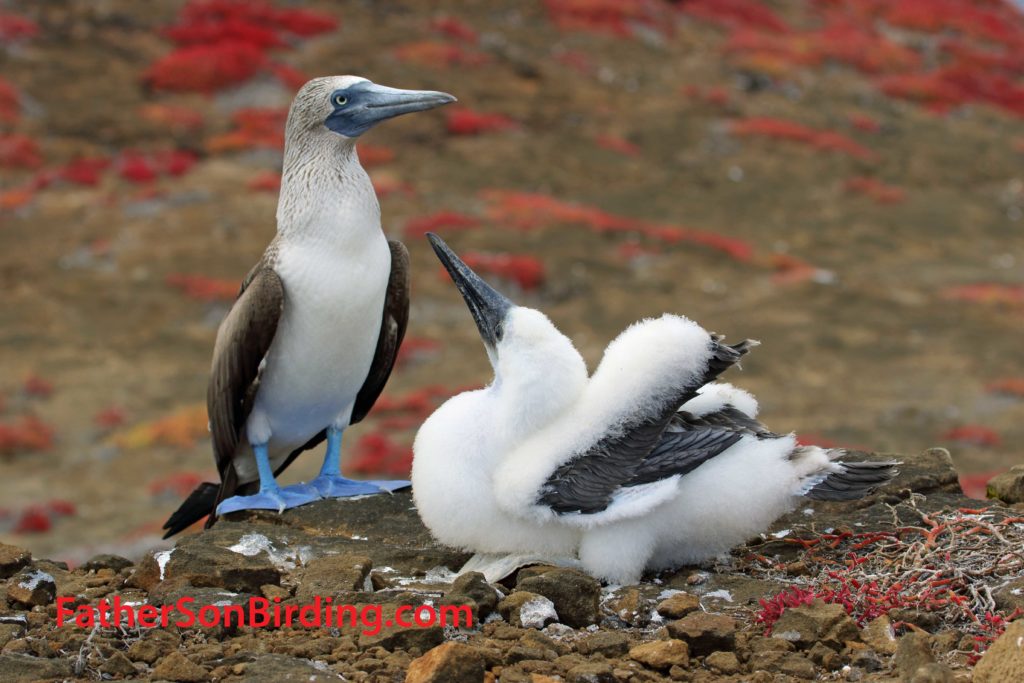
The author devotes an entire chapter to the fascinating and intriguing world of seabird colonies, such as those of one of the world’s most popular birds, the Blue-footed Booby.

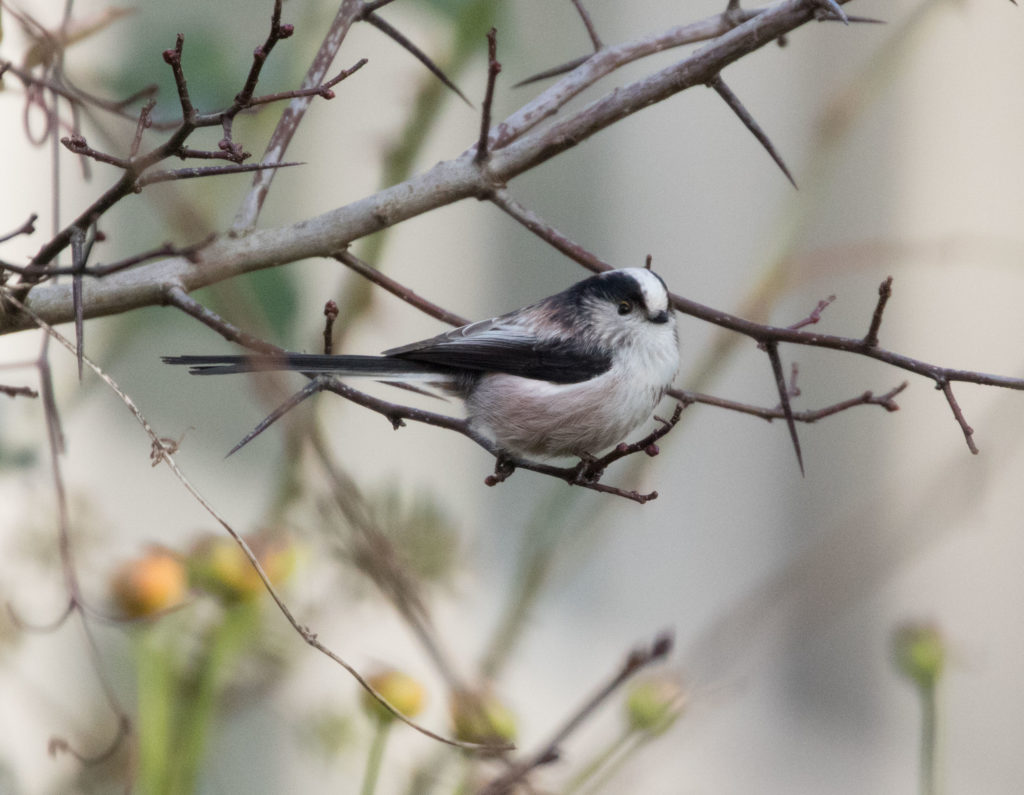
I learned something fascinating with each chapter. For instance, I was first drawn to the book because the cover showed a line of six Long-tailed Tits packed tightly together on a branch. I had had the pleasure of observing these birds in the Netherlands (see our post Layover Birding in Amsterdam), Japan (see our post Birding Japan: Kyoto), and Spain (see our post Birding Barcelona, Part 1: The Urban Core), but had no idea that they lived and foraged in stable flocks that are often built around a main breeding pair and its offspring. In her book, Strassmann recounts a study that showed that on chilly nights, the tits nestle tightly together to stay warm, and that often it is the lowest birds on the “tit totem pole” that have to endure the chillier end positions. This is no trivial matter since the birds lose about 9 percent of their total body mass in a single, chilly night.

After observing Long-tailed Tits in Europe and Asia, I was fascinated to learn more details of their highly social behavior in The Social Lives of Birds.

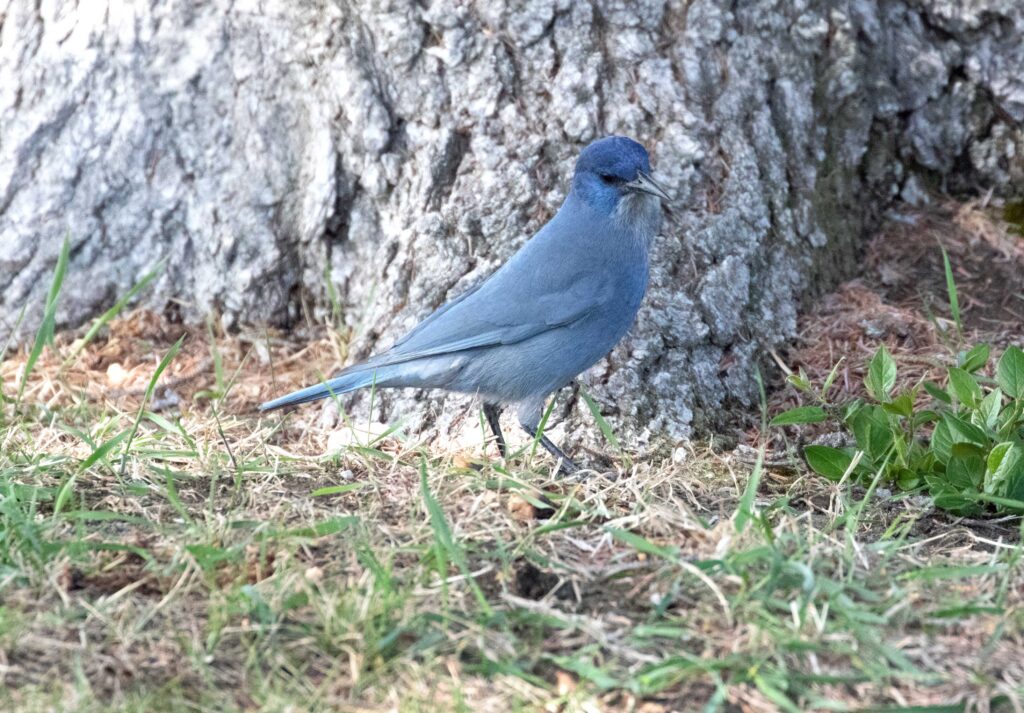
Similar revelations emerge with every chapter, examining birds from a wide variety of terrestrial and aquatic habitats. My favorite chapter was the last, “Supersocial Groups: Birds That Are Always Together.” That’s probably because it featured one of my favorite birds, the Acorn Woodpecker (see our post College Search Birding in California), and three other species I was fascinated to learn more about: White-winged Choughs, Sociable Weavers, and a bird Braden and I are always delighted to see, Pinyon Jays. Regarding the latter, Braden and I have seen Pinyon Jays only a handful of times here in Montana, and I had wondered why they aren’t more common. Strassmann explains that the birds need extremely large territories to guarantee a dependable food supply. Unfortunately, their main food source, the pinyon pine, has suffered extreme losses from clearing for agriculture and other reasons. Warmer temperatures driven by climate change have also impacted the production of pinyon pine seeds, leading to large-scale die-offs of these beautiful, dynamic, gregarious birds.

Strassmann devotes much of the final chapter on one of Braden’s and my favorite birds, Pinyon Jays, shown here in a cemetery in Helena, Montana.

The Social Lives of Birds struggles a bit over whether it wants to be a comprehensive resource or an engaging narrative in the vein of the recently reviewed The Great Auk or A World on the Wing. The author mentions her personal connections to many of the topics, but I found these more distracting than engaging. Still, that will not prevent readers from enjoying the book and harvesting a wealth of information—knowledge that will help you look at birds with greater understanding and appreciation each time you head out to bird.

Review copy provided by the publisher.

A World on the Wing (Book Review)

With fewer birds around, winter is an excellent chance to catch up on bird-related reading, both for enjoyment and education. I find this a perfect time to check out both new bird-related titles, and older books that I have somehow overlooked. Speaking of the latter, during the December holiday my father-in-law handed me Scott Weidensaul’s remarkable 2021 release, A World on the Wing: The Global Odyssey of Migratory Birds (W. W. Norton). I’m so glad that he did!

An easy reading style, engaging storytelling, and fascinating information render A WORLD ON THE WING one of a handful of required reading books for birders. (Click on the image for ordering information.)

In A World on the Wing, Weidensaul manages to take an overwhelming body of global information about bird migration and distill it into a series of stories that give the reader a captivating picture of what’s going on out there. The book’s first chapter hooked me immediately with the author’s visit to one of the world’s most vital shorebird stopover sites—and one I knew almost nothing about—the mudflats surrounding the Yellow Sea. These mudflats are nothing less than the linchpin to the East Asian-Australasian Flyway (EAAF), a vast, complicated series of routes used by millions of birds migrating from the Southern Hemisphere to breeding grounds in the far north. According to an online UNESCO article, about ten percent of all migrating birds on the EAAF depend on the Yellow Sea stopover area. They include two of the planet’s rarest shorebirds, the “Spoonie”, or Spoon-billed Sandpiper, with a population estimate of about 500 or fewer, and Nordman’s Greenshank with fewer than 2,000 individuals. Beyond that, the area provides critical support to 400 other bird species, including 45 considered threatened.

This first chapter sets the tone for a global, diverse journey through myriad aspects of bird migration. One chapter focuses on the incredible physiological adaptations of migrating birds, including their abilities to sleep on the wing, reduce or increase the size of internal organs to optimize weight and function, and navigate by taking advantage of quantum physics. Other chapters focus on species or groups of migrating birds across the globe. Some of these birds, such as the Kirtland’s Warbler and Snowy Owl, will be familiar to many readers while others, such as Bar-tailed Godwits and Amur Falcons, are less so. Every chapter, though, is filled not only with revelations, but personal anecdotes and experiences that make the stories come alive.

While many key stopover sites have been protected in North America, our own migrating bird numbers continue to plummet. Shorebird species have been especially hard-hit. (Shown here: Dunlins at Fort Stevens State Park, Oregon.)

Taken as a whole, the book serves as an impassioned plea to protect migratory birds and, well, just do things better on this planet. The crucial mudflats of the Yellow Sea, for instance, are critically imperiled by industrial development, pollution, and interruption of sediment flow caused by thousands of dams across China’s rivers. It’s not that the loss of these mudflats would put a dent in bird populations. It could wipe them out. The author quotes one scientist as saying, “There is no more buffer. There is no more ‘somewhere else’ for these migrants.” The threats to migrating birds are multiple and widespread, varying only in their particulars. In some places, pesticides take terrible tolls. In other places, it’s illegal hunting for local culinary specialties. Almost everywhere, habitat loss and climate change loom large.

In Cyprus, Italy, France, and other countries, millions of migrating songbirds are needlessly and illegally slaughtered to satisfy traditional and/or eccentric culinary tastes. According to an Audubon article, at least 157 species are caught, including 90 species of conservation concern. (Shown here: European Robin.)

Somehow, the author manages to balance these threats with the overarching wonder of bird migration and leaves the reader feeling hopeful—or at least determined—along with being much better informed. This balance, along with the engaging writing style and storytelling make this one of a handful of bird-related books that I consider required reading for anyone interested in birds and conservation.

Order this book at your local independent bookstore!

Birding 2025: It’s a Wrap

As always, we encourage you to share and link to this post. We absolutely do not give permission to use it to train AI models or for other purposes without permission. Happy New Year, Everyone!

As 2025 rapidly winds up, Braden and I want to thank you for your continuing interest in FatherSonBirding and all that you do for birds. We can’t believe that it’s been almost EIGHT YEARS since we published our very first post, A Quest for Snowy Owls! We certainly wouldn’t have kept at it without your interest and support.

We’re thrilled to report that 2025 has been FSB’s biggest year yet. We published a record 49 posts this year, including our 250th post, “Binoculars and Scopes for the Happy Holiday Birder”. Speaking of that, we also launched FSB equipment reviews—articles we do NOT get paid for, but which have attracted a ton of viewer interest.

FSB received a record 20,000 views in 2025, greatly helped by our equipment and travel reviews!

And speaking of viewers, our site attracted 20,000 views this year, shattering last year’s record of 14,000—with the caveat that about a thousand of those views were likely from AI bots stealing our content without permission (Grrrr…). Still, the vast majority of those extra visitors were legitimate—and from an astounding variety of places. More than 15,000 viewers from 104 countries visited our site this year! Huge gracias, arigatos, mercis, and many more thank yous to our international visitors!

By now, we can hear you pleading, “But please, Sneed and Braden, tell us your Top 5 most popular posts!” Astoundingly, four of our five top posts were equipment review posts:

1) Vortex Triumph 10X42 Binoculars: Entry Level Excellence with 1,425 views. (View post here!)

2) Nikon Monarch HG Binoculars: FSB’s First Equipment Review with 950 views (View post here!)

3) Vortex Razor HD 13-39X56 spotting scope with Mountain Pass tripod: A Perfect Travel Combo? With 580 views (View post here!)

4) Birding Barcelona, Part 1: The Urban Core with 510 views (View post here!)

5) Vortex Viper HD Binoculars (Equipment Review, and/or Texas 2025 Part 2-½) with 480 views (View post here!)

Our 2024 blog about birding downtown Barcelona snuck into the Top 5 for 2025—with several of our Japan and Costa Rica posts close behind!

The numbers reveal some clear trends: with rare exceptions, our most popular posts have been our equipment reviews and reports from travel destinations. Our posts from Japan, Spain, Colombia, Mexico, and Costa Rica have been especially popular—as have posts about very birdy domestic locales such as Texas and San Diego. Our book reviews also have done well, but a decline in America’s literacy rate is clearly evident, as our statistics reveal that many more viewers are interested in buying gear than in reading books.

On a personal level, Braden and I are grateful for the many wonderful birding experiences we got to share, both together and separately. Braden was fortunate to visit both Mexico and Costa Rica in 2025 as well as take an epic cross-continent trip from Maine to Montana following his graduation from the University of Maine. He also birded the heck out of Arizona while on his way to his current job in California, where he’s racking up all kinds of new birding experiences.

As for Sneed, I kicked off the year with a trip to Victoria, Canada, thanks to my wife, Amy—and, honestly, the year never seemed to slow down. As soon as we returned, my buddy Roger Kohn invited me on an epic last-minute trip to Colombia. There followed journeys to Texas, Maine, eastern Montana, California (twice!), and most recently, Georgia and Oregon. Most of the latter were not planned as birding trips, but you won’t be surprised to learn that we saw a ton ‘o birds along the way.

You also won’t be surprised to learn that, quite unintentionally, Braden and I shattered most of our own birding records. Braden finished out his birding year with a remarkable 867 species while I smashed my own previous record with 551 species!

One of the low points for the year was having to say goodbye to our wonderful “birding dog” Lola. She left us far too soon and we still miss her terribly. (See this post.)

Besides finding birds, Lola proved adept at finding marine mammals such as this whale. We miss you Lola!

Moving forward, we hope to continue to publish a wide variety of posts for your reading pleasure, including those about everyday birding experiences that are at the heart of a birder’s joy and wonder. Just a few adventures that we have lined up for 2026 include trips to Costa Rica and Germany, along with visits to birding festivals in Colorado, Arizona, and Montana. Meanwhile, it is our sincerest wish that the next year brings you all good things, including many incredible birding experiences and a brighter outlook for birders, birds, and the planet we all share.

For some ideas about how to help birds this coming year, please visit our last post, Giving Back to Birds—with Great Breaking News! As always, if you would like to help support FatherSonBirding, consider buying new copies of some of Sneed’s books by clicking on the book jackets to the right.