Category Archives: Ducks and Geese

250 Montana Birds or Bust!

As always, we encourage you to share this post in the hopes that it might keep education rolling during these difficult, unprecedented times. Thank you!

In our last post, I explained how close Braden and I had come to reaching our goal of 250 Montana species for the year. Braden, in fact, had reached 245 birds while I pulled up the rear with 239. Now, as some of your comments pointed out, 250 species would seem like a slam dunk with six months to go in 2020, but not so. Not only had we exhausted our supply of “easy birds”, but another large birding safari seemed unlikely—until, that is, Braden and his birding buddy Nick Ramsey came up with the idea for a Big Day. The plan? To get up before dawn and drive 500 miles, birding Ninepipe National Wildlife Refuge, the Swan River Valley, Glacier National Park, all the way to Malta, home of Bowdoin NWR. Insane? Yes. Would we do it? Definitely!

None of us knew how many species we might see in a day. Our record for a day in Montana was only in the 80 or so species range, but we’d never attempted anything like this and hoped we might get as many as 150. Alas, the weather gods frowned on us the morning of June 30, with steady drizzling rain. Undaunted, we set off, missing a number of target species here in Missoula and near the National Bison Range. At Ninepipe NWR, however, we hit Short-eared Owl City! Braden and Nick both still needed SEOWs for their Year Lists, but neither of us had ever seen one at Ninepipe until I spotted one about a month ago. This morning, driving Duck Road in the rain, we hadn’t gone a mile before Braden shouted, “There’s an owl!” In the next three miles, we saw NINE MORE! Maybe they should call the refuge Nineowls?

Our first Big Success of our first Big Day was to hit the Short-eared Owl Jackpot at Ninepipe NWR.

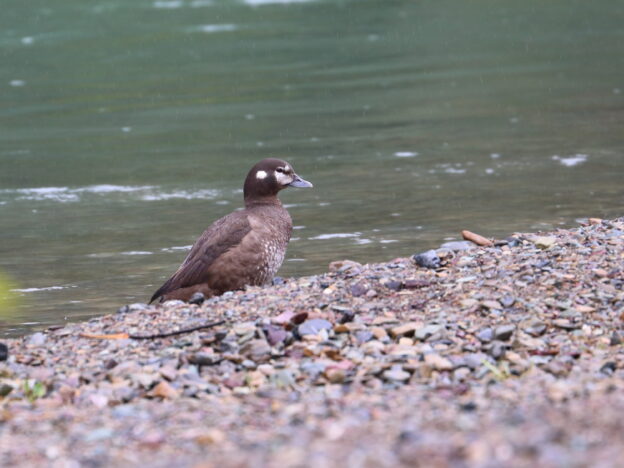
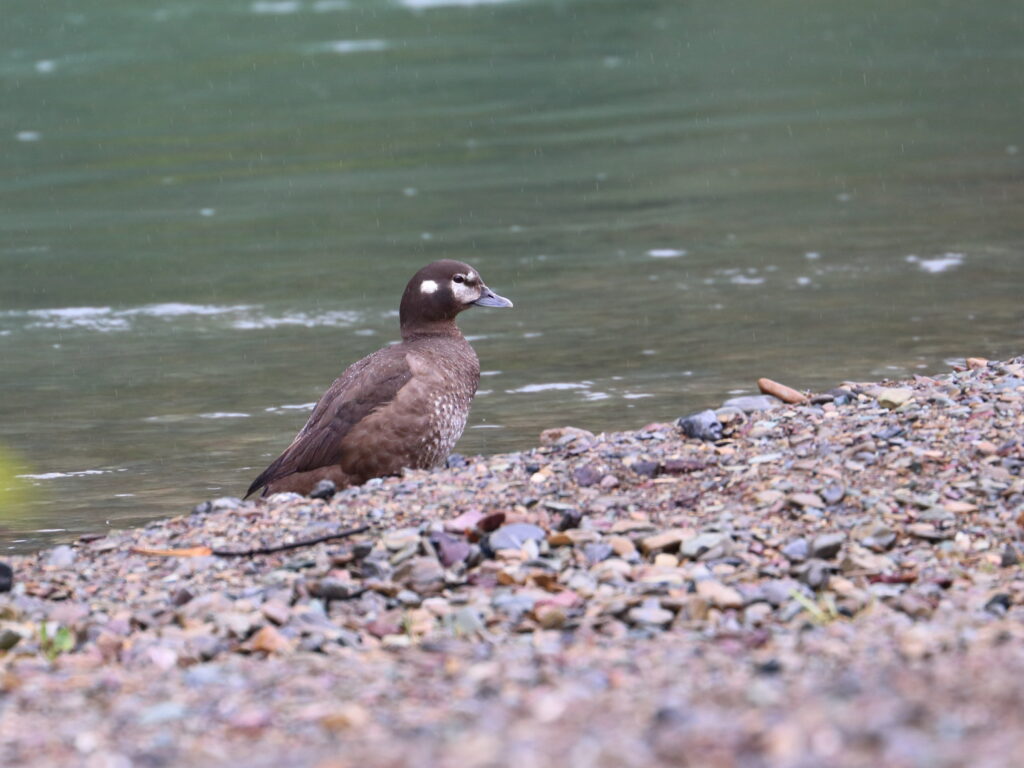
After missing LeConte’s Sparrow at Swan Valley (but seeing lots of Lincoln’s Sparrows), we headed to Glacier, where my top priority of the trip just might be located: Harlequin Duck. With the coronavirus raging, we didn’t know what kind of traffic we might expect, but the poor weather ended up a blessing as we cruised right into the park and made record time to Avalanche Creek. Still, none of us really expected to see a Harlequin Duck as the males had fled and breeding was probably winding down. We walked out onto the beach on the river, though, and sixty seconds later, we all saw a duck flying downstream. It was a female Harlequin! Even better, it landed fifty feet from us! None of us could believe it. After admiring the beautiful creature, we walked around a bit, picking up the eerie calls of Varied Thrushes, but failing to get our pie-in-the-sky target, Black Swifts. Still, our stop a success, we headed back out to West Glacier and began the six-hour drive to Bowdoin, picking up new birds all along the way and ending up with a day’s total of 119 species—a personal Montana record and not bad given the weather.

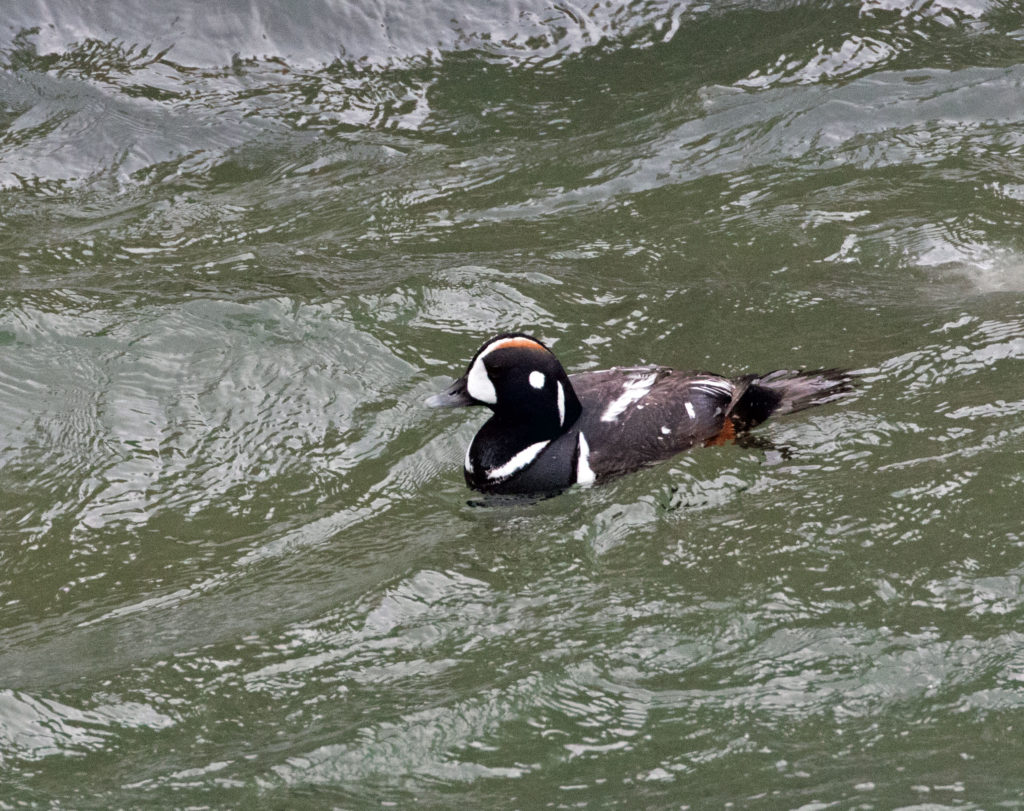
One of my favorite all-time birds, this Harlequin Duck was just waiting for us as we zoomed into Glacier National Park during our (first) Big Day!

Of course, the problem with doing a Big Day that finishes up in a place like Malta, Montana, is that you have to get back home again! Not surprisingly, we spent two days finding our way home—and not without some adventures that included Braden almost stepping on a rattlesnake, almost getting our minivan permanently mired in mud far from civilization, and getting a rear tire blowout—fortunately, just at an exit in Butte.

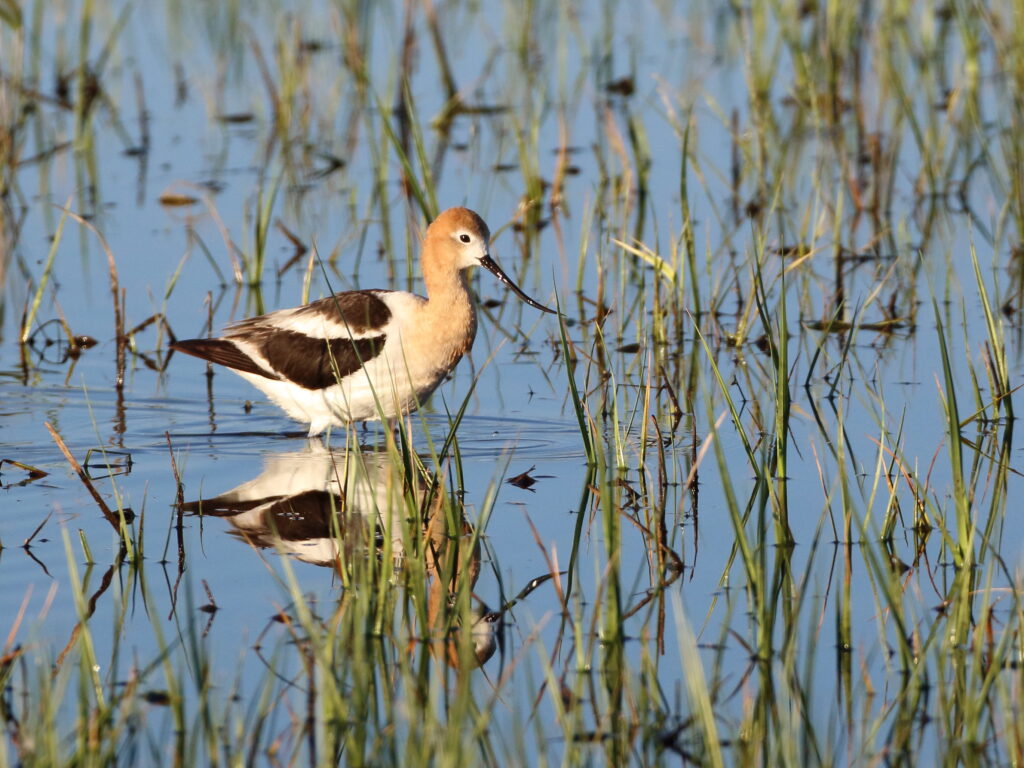
On Day 2 of our, ahem, Big Day, we had some of our best experiences with nesting shorebirds—including the spectacular American Avocet at Bowdoin National Wildlife Refuge!

“So did you make your 250 birds?” you may be asking yourselves. Well . . . YES! Braden finished the trip with 255 species for the year while I slipped in there with 251. Which begs another question, “What now?” Well, fortunately birding is fun, interesting, and educational even without keeping track of lists. Every day, in fact, we see cool birds and learn more about them. Will we object if our species counts climb higher in the next six months? No way, but do we need them to? Naw. Birds are great any time and in any season—even if we’ve seen them before.

Winter Birding in Israel, Part II: Valley of the Cranes

This week, enjoy Braden’s Part II of an Undetermined Series of Posts about our recent birding adventures in Israel and Jordan!

Over the next few days, our host family showed us around Northern Israel. We explored Akko, a seaside town with a great market full of delicious Arab and Jewish food and tall, Crusader-era walls. In Haifa, we took a drive around Mount Carmel and dined on amazing pizza and fantastic pistachio ice cream. My dad and I even spotted a Eurasian Griffon soaring over a residential area, a rare species of vulture that nested in the Carmel range. 

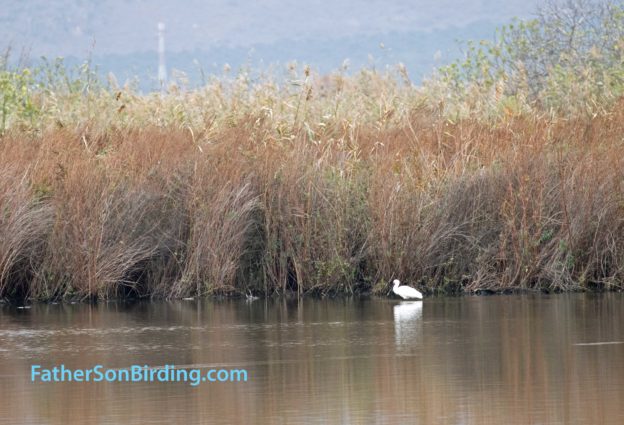
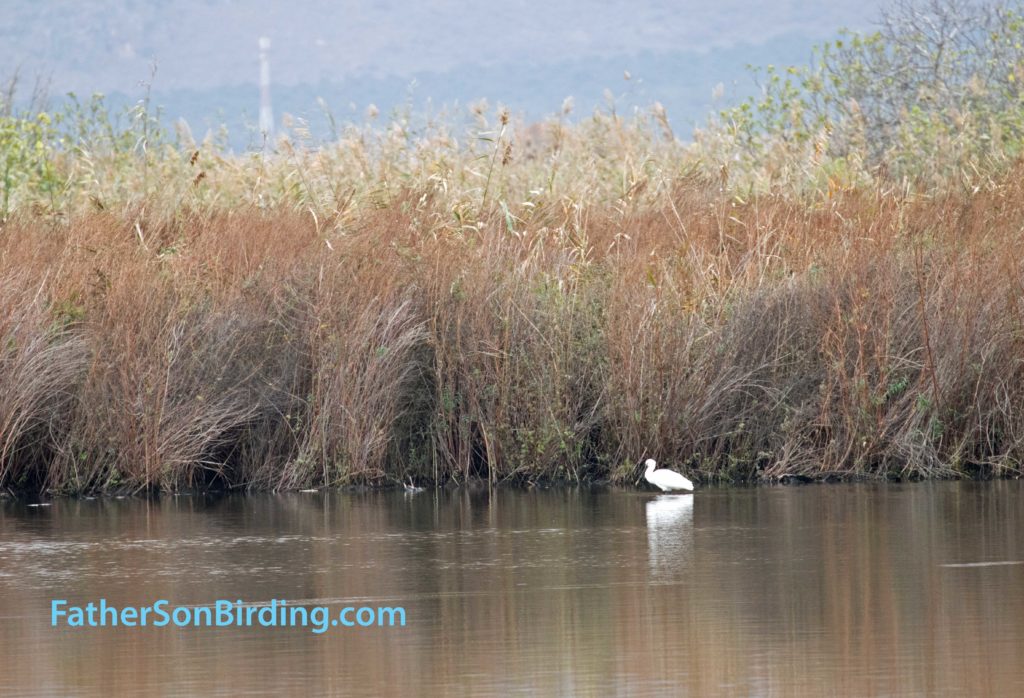
A lone Eurasian Spoonbill enjoys refuge in the Hula Valley Nature Reserve, once part of a vast wetlands that covered much of north-central Israel.

After sightseeing, though, we were ready to do some serious birding. One day, my dad, one of our friends named Noam and I hopped on the train to Haifa (spotting flamingos feeding in salt ponds on the way), where we were picked up by our host’s brother Barak and father Avi. We headed north, stopping only to grab a snack at a roadside falafel & humus stand overlooking the vast Sea of Galilee and its nearby canyons and mosques. Soon, though, we left the mountains, driving past agricultural fields filled with Common Cranes. Eventually we arrived at the Hula Valley Nature Reserve, and were greeted by a large, modern visitor center. The best way to sightsee the refuge was to rent a golf cart, and that we did, setting off around a lake at Formula 1 speeds—about 10 miles per hour. We were soon greeted by hundreds of cranes, as well as various tactics that farmers used to prevent the birds from eating their crops. Every few minutes a gunshot, firework or horn would echo across the landscape (the birds were protected, don’t worry), and we even glimpsed a few people chasing the huge flocks.

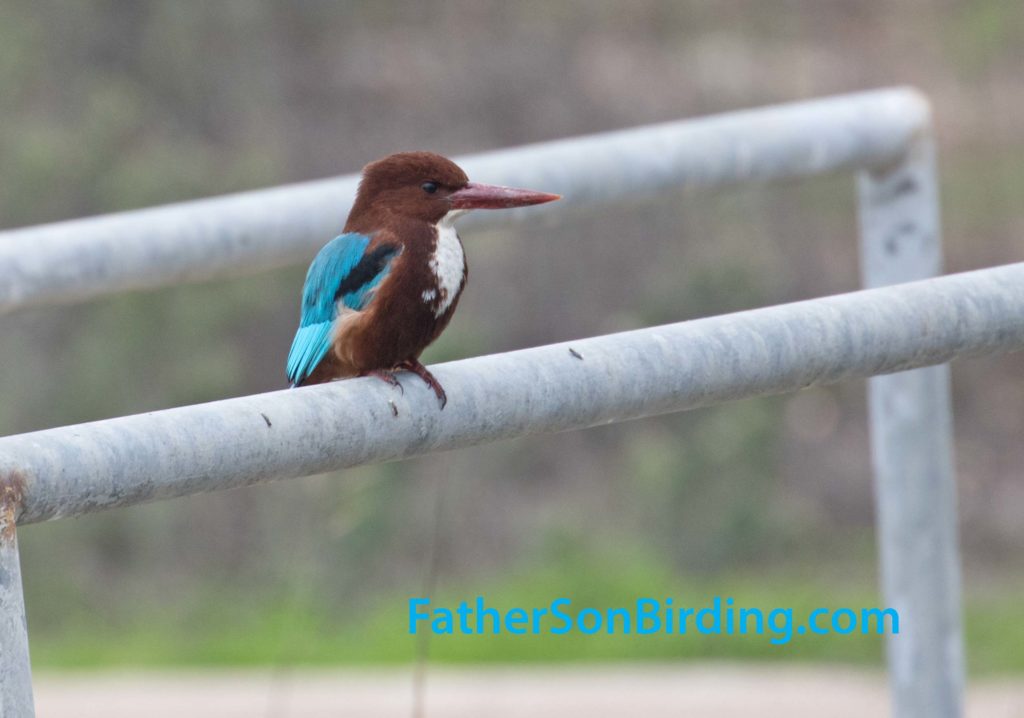
In the Hula, we got our first great look of the trip at what would prove to be one of our Top Five favorite Israeli birds—the White-throated Kingfisher.

Before reaching the main lake, we stopped at a forested spot and were immediately astonished to see not one, but two birds that we’d been hoping to see: a White-throated Kingfisher and a Eurasian Hoopoe! The large kingfisher showed off its azure wings as it scanned the ground for rodents, while the hoopoe foraged quietly like a flicker, probably looking for ants. Spur-winged Lapwings, birds with sharp patterns of black and white on their wings, stood right by the path, unafraid, and almost every bird in the area allowed us to snap sharp, close-up photos. Before leaving we spotted a pair of European Goldfinches, chirping cheerfully despite their “sunburnt” faces.

At the lake itself bird activity increased substantially. Raptors were abundant, including Black and Black-winged Kites, Eurasian Marsh-Harriers, Common Buzzards and Eurasian Kestrels, all flying over the marshes. One kestrel even posed for us on a sign, devouring a mouse right in front of us! The species diversity of ducks was low, but those that were here, primarily shovelers, mallards and teal, foraged in the fields in huge numbers, and Eurasian Coots, Eurasian Moorhens and Little Grebes floated on the water. Shorebirds and waders also were present, and we spotted a few Glossy Ibises, Black-winged Stilts, Ruff and a single Eurasian Spoonbill by the shoreline. Gray Herons, Great, Cattle and Little Egrets and Great and Pygmy Cormorants topped every bare branch and island in the area.

As this Eurasian Kestrel can attest to, there’s nothing like a good stretch after tearing the head off a mouse!

At a lookout a helpful naturalist pointed out several harder-to-see species to us, including Black-tailed Godwits and Northern Lapwings hiding in the distance among the huge numbers of cranes. I snapped photos of several raptors that flew by, later identifying them as eagles! The two we spotted were Booted and Greater Spotted, just a small percentage of the eagle species the Old World supported. Pied Avocets floated on the waves of the pond like ducks.

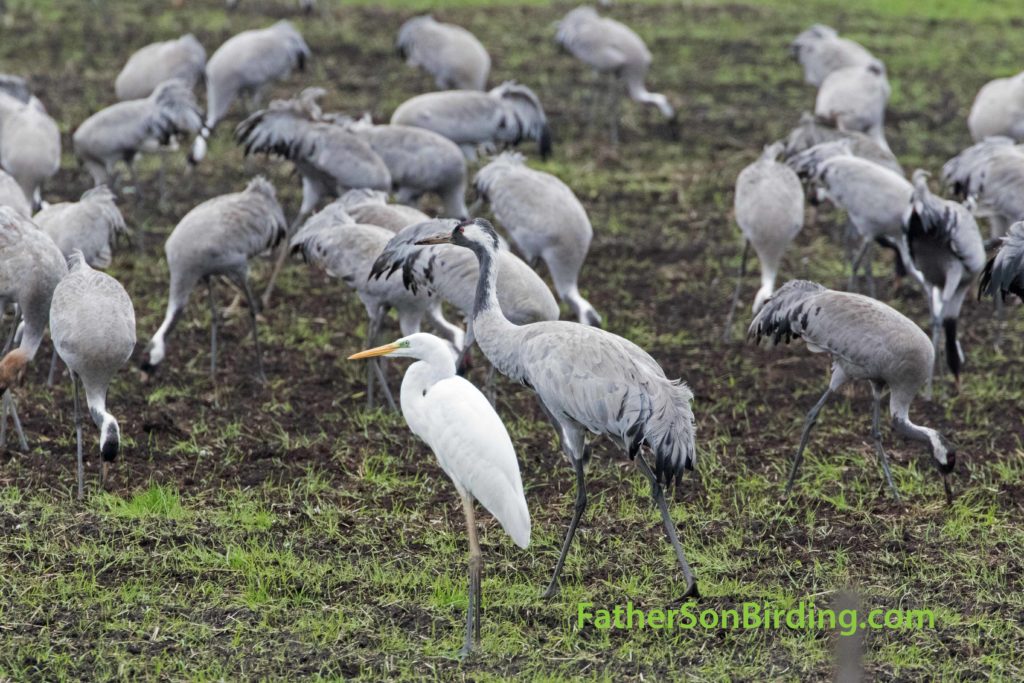
Sing along with us: “One of these things is not like the other. One of these things is not the same. One of these things—” Oh, you get the idea. It’s hard to blend in with 30,000 Common Cranes!

We completed our loop, tracking down cranes for better photos and spotting a Common Kingfisher skulking in the brush back at the visitor center, the only one we’d see for the rest of the trip! This little refuge, surrounded by farmland, was all that remained of the huge wetlands that had once covered much of this area and supported hippos, ostriches and cheetahs. While much of the diversity of the past had disappeared, Hula still provides habitat for thousands of birds during all seasons and efficiently allows the public to experience them. The day had not disappointed. 

All photos and text on FatherSonBirding.com are strictly protected under U.S. copyright law. To request permission to use, contact Sneed at sbcollardiii+2@gmail.com.

Make 2020 a Year of Saving Birds!

Welcome to all of our new subscribers—and thank you for your interest! Please note that Braden and I are about to embark on a once-in-a-lifetime trip to the Middle East, so won’t be posting for a few weeks. When we do, we should have some amazing stories to share!

Season’s Greetings Fellow Birders! Between school exams, swim meets, book deadlines, and the general craziness of life, Braden and I haven’t been out birding a lot in the last few months, but we wanted to wish all of you Happy Holidays and a dawning new year of birding. With your patience, we’d also like to reflect a bit on the past year, the future, and what we can all do to help the animals that we love.

Getting to know Montana birds better—including this fabulous Harlequin Duck on McDonald Creek in Glacier National Park—has been one of the major 2019 achievements for Braden and me.

It was another amazing year of birding for Team Collard. Without intending to, we smashed our Montana Big Year records by at least a dozen birds each, with Sneed logging 222 species in the state (15 more species than in 2017) and Braden recording 225 species—12 more than in 2017. We also broke our combined Big Year record, though we’re too lazy to figure out the total (about 340 species together). This year, Braden tallied 44 new Life Birds while I added 21.

But while statistics are fun and motivating, for us they really aren’t what birding is about. Birding brings so many benefits to our lives, it’s hard to list them all, but top of the list are a chance to get outside, explore new places, see new species, learn about our remarkable planet, educate others about birding, and most of all, spend time together. This year, our favorite experiences included:

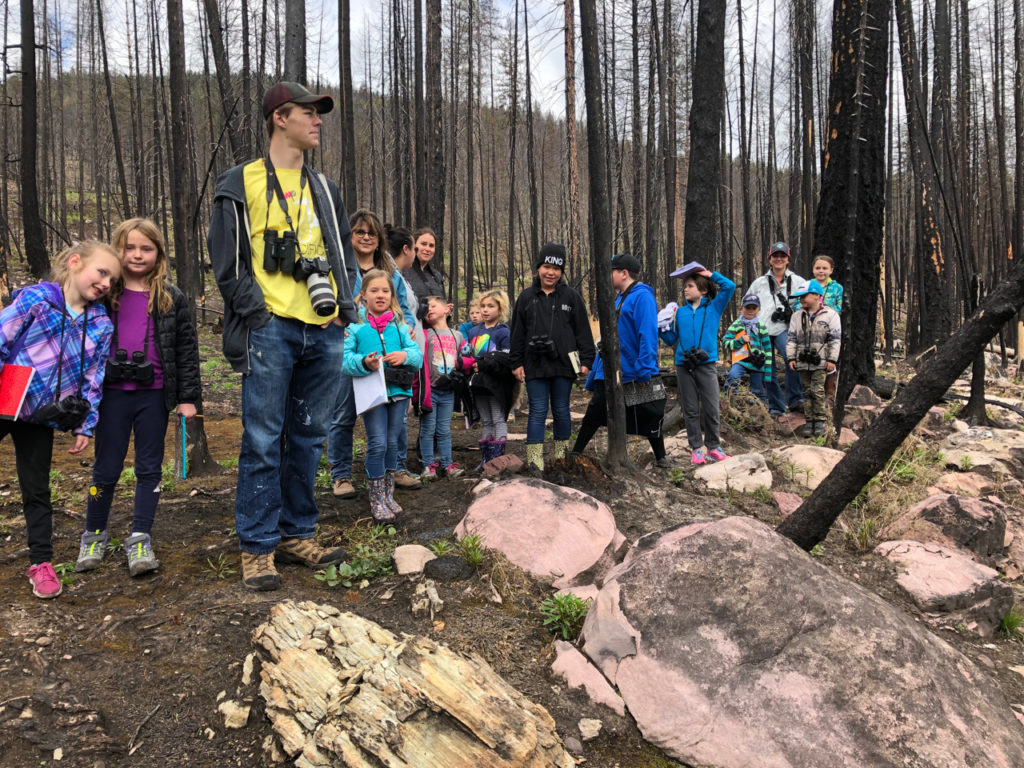
Perhaps our most rewarding 2020 activity? Leading birding trips for a new generation of young—and “almost young”—birders!

1) Participating in the San Diego Bird Festival

2) Getting to know Montana birds better

3) Leading birding trips for school groups and others

That last one brings up an important point. Those of us who love birds owe it to the planet to do as much as we can to protect them. That includes educating other people about the importance of birds and what’s happening to them worldwide. Don’t short-sell yourself. If you’ve ever been birding at all, you have important knowledge to share. Most people know almost nothing about birds, so even teaching a friend how to identify a House Sparrow or an American Goldfinch could be the beginning of a long and rewarding journey.

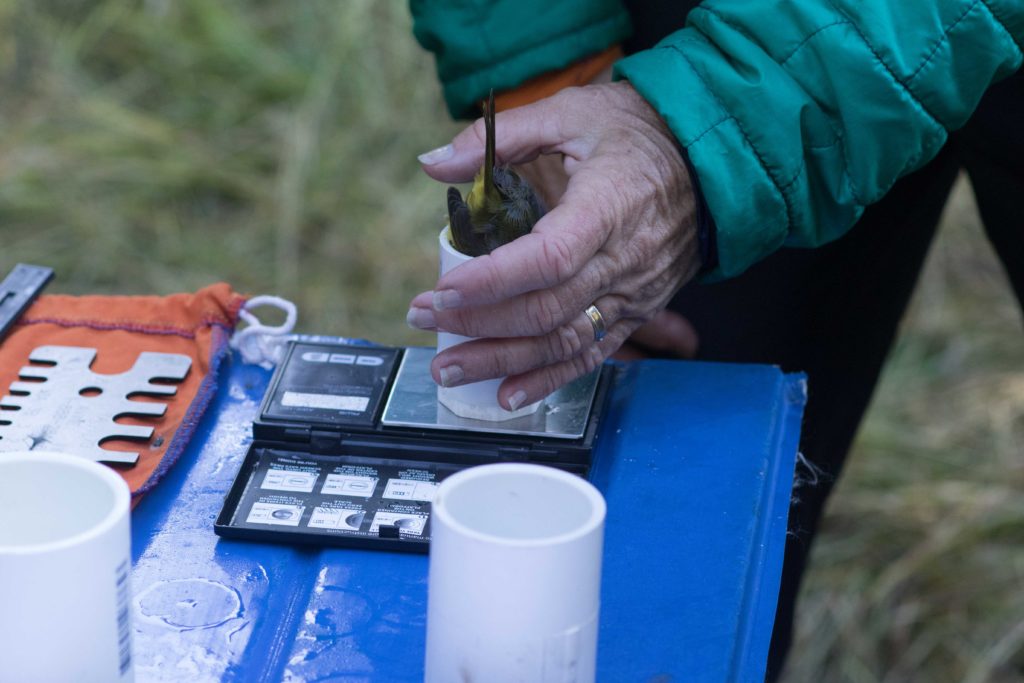
We were thrilled this fall to observe and help participate in long-term studies of bird migrations through western Montana using banding and flight call studies. Here, a Townsend’s Warbler (I think) gets unceremoniously dunked head-first into a weighing canister. This does nothing to harm the bird, but gives scientists at MPG Ranch and the University of Montana’s Bird Ecology Lab important data for monitoring and protecting songbirds.

We especially want to encourage everyone to give as much money—yes, cold hard CASH—as you can to organizations that are helping birds. Because of this year’s higher standard tax deduction, charitable donations have plummeted, and that has hurt a lot of nonprofit groups—especially in an era when they need support more than ever. Keep in mind, too, that if you donate to National Audubon, that doesn’t necessarily do much to support your state and local Audubon chapters. You have to give to all three. Here are some of Braden’s and my favorite groups that we give to:

National Audubon Society, and State and local Audubon chapters

The Cornell Lab of Ornithology

Owl Research Institute

BirdLife International

American Bird Conservancy

Please check out these groups and GIVE UNTIL IT HURTS. We thank you, and appreciate all you do to share your love of birds and, even more, to make sure that the next generation enjoys a bird-rich planet.

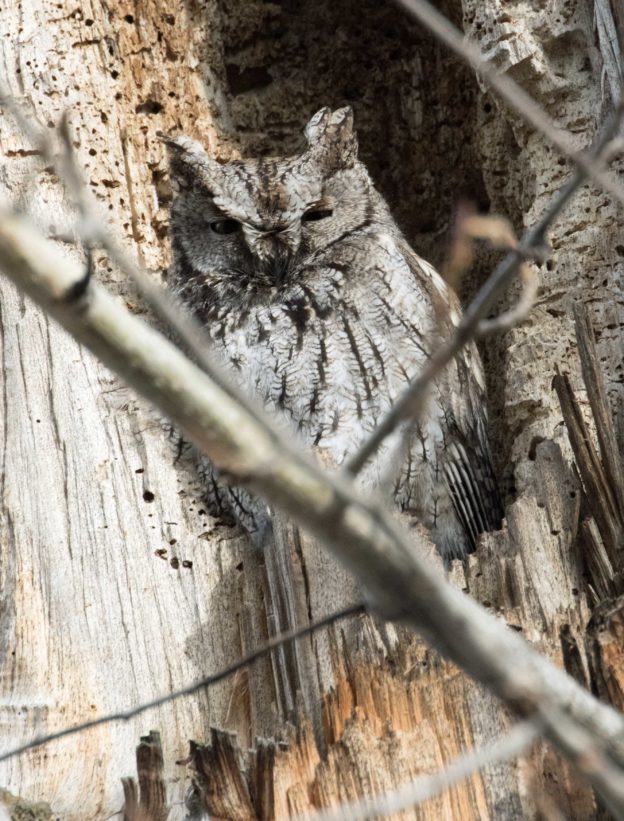
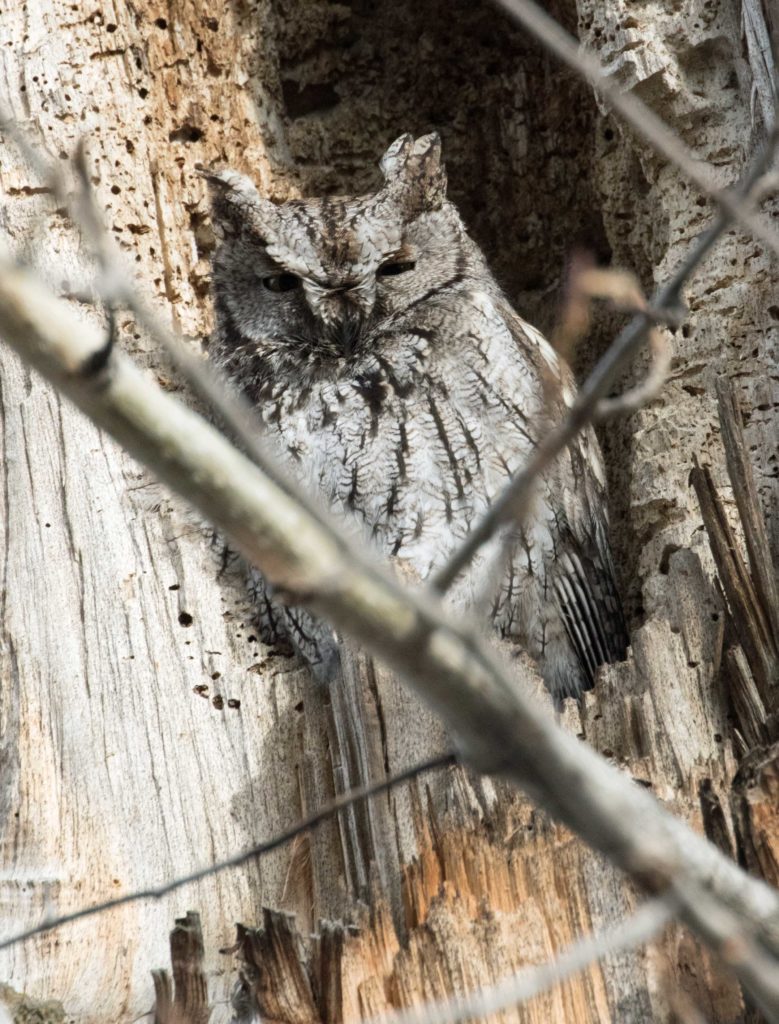
This Western Screech Owl says: “Instead of buying friends and family more junk this holiday season, why not give them a LASTING gift with a donation to the Owl Research Institute and other bird conservation organizations?”

Talkin’ About Teals

If you are enjoying these posts, please share them with friends, family, and other birders. Also, be sure to subscribe by filling out the form down in the right-hand column. Tweet-Tweet!

Braden is off this week so I’m filling in. Just kidding. Birders are never off. Don’t you know that by now? I did want to use this week, however, to talk about an especially cool group of ducks that we observed during our recent Big Weekend. You got it: teals.

Always a favorite of hunters, Blue-winged Teal have a more subtle beauty than other species.

We left Missoula about noon on the Friday of Memorial Day weekend and I have to admit, the only ducks on our minds were the fabled Harlequin Ducks, which we hoped to glimpse in Glacier National Park—and add to our Year Lists. We did get two spectacular experiences with Harlequins—a breeding pair at Josephine Lake in the Many Glacier area and a lone male on MacDonald Creek the next day. I have to say, though, that the teals matched the Harlequins for beauty, and overpowered them with raw abundance.

Cinnamon Teals are not only one of the most beautiful ducks, they are one of the most rare. According to Ducks Unlimited, estimates of breeding population are between 100,000 and 300,000.

We saw all four species of common teals on our trip: Green-winged, Blue-winged, Cinnamon, and Northern Shoveler—which I didn’t realize was a teal until Braden informed me of the fact. To make matters even more confusing, the last three species are in the genus Spatula while the Green-winged Teal is in the genus Anas with a bunch of other dabbling ducks. Go figure. But full disclosure: I am not a taxonomist, so let’s not get too hung up on that now.

Several things impressed us about these four species—especially the three birds in Spatula—a name that undoubtedly has something to do with the Northern Shovelers impressively wide honker. The first thing, of course, is that these species of ducks are exceptionally beautiful. Stunning, in fact. Just look at the photos of the males. I mean, “Whoa Dude, where’d you get those threads?”

I first fell in love with Northern Shovelers during our 2016 Big Year and grow more impressed with them at every encounter.

Another thing about these ducks is that they all seem to adopt similar lifestyles. We kept finding them together in many of the same places: Browns Lake, Benton National Wildlife Refuge, and even the prairie potholes along the highway. Not surprising since they are all dabbling ducks and prefer to nest in or near shallow bodies of water.

The real kicker for us, though, happened at our very first stop, Browns Lake. Braden was looking at a group of ducks on a small pond and he said, “Doesn’t something look a little odd about that duck?” I studied it and agreed. “I think it’s a Cinnamon—Shoveler Hybrid,” he offered. “What? Really?” I’d heard of hybrids but figured they were exceptionally rare. Then again, this duck didn’t look like anything else we’d seen. I suggested that it looked more like a Blue-winged—Shoveler hybrid because of the white crescent behind the bill. “Other teals also can show that in their juvenile phases,” Braden pointed out. Smart-alec kid.

Shoveler—Blue-winged hybrid? Shoveler—Cinnamon? Send us your thoughts with a comment!

One thing was for certain. This bird had not followed the rule books for sticking to one particular species. Interestingly, another teal hybrid was IDed in a different Montana location by another birder the same week. The lesson? If you keep going out there to look, the birds will keep surprising you.

In Glacier National Park, When It Rains, It Pours—Animals

If you are enjoying these posts, please share them with friends, family, and other birders. Also, be sure to subscribe by filling out the form down in the right-hand column. Tweet-Tweet!

When my dad and I stepped out of our car at Swiftcurrent Lake in Glacier National Park we were welcomed with a barrage of raindrops. Water fell from every imaginable place, and small puddles had formed in the miniature valleys of the parking lot. Thankfully, both of us had our raincoats, but for some reason during the packing stage of the trip we had looked at our rain pants and said, “Nah. We won’t need them.”

As it turns out, we did.

We did not have any other places we planned to bird today, however, so we decided to brave the monsoon and see if any birds were dumb enough to be out in the rain like we were. Swiftcurrent Lake was known for having great birds, including Dusky and Spruce Grouse, Boreal Chickadee, Tennessee Warbler, Varied Thrush and Olive-sided Flycatcher.

A wet day in Glacier National Park is better than a dry day almost anywhere else!

After being greeted by a wet Gray (or Canada) Jay in the parking lot, the first quarter-mile along the lake shore did not yield any living creatures. We listened for the grouse that the park rangers had said were here, but either the rain masked the sounds, or, more likely, the grouse were taking shelter from the storm. At one point we did have an encounter with two thrushes, but they uncooperatively disappeared into the brush, leaving us to wonder at their identities.

We came to an intersection and turned right to hike over the small glacial moraine to Lake Josephine. There, we walked out onto the dock and scanned the water, looking for any avian action. By the shore off to the left, I thought I saw a splash, so I focused my binoculars on it. After a minute, a slate-gray, blue and cinnamon-colored waterfowl with distinctive white markings popped up—a male Harlequin Duck!

Even with the limits of my dad’s iPhone camera, you can see how magnificent Harlequin Ducks are. Fortunately, we got another view of a Harlequin Duck the next day on MacDonald Creek—with our cameras this time.

We stalked closer to the duck and its mate, marvelling at our luck while at the same cursing ourselves for not bringing our cameras. The two ducks continued to dive, oblivious to the rain and completely fearless of us. Soon, they floated closer, and passed three meters from where we stood, gracing us with their incredible but subtle beauty.

We spent thirty minutes watching the ducks, wet but happy, then decided to book it back to the car. We started the long drive back to East Glacier, but stopped beside Swiftcurrent Lake when we saw people staring up at the mountain beside the road. We raised our binoculars, and sure enough, spotted a herd of at least twenty Bighorn Sheep staring back at us from their rocky vantage points.

“Wait a minute,” said my dad, “There are three more much higher up. Wait, no! Those are Mountain Goats!”

Mountain Goats high on the mountain slopes of the Many Glacier area, Glacier National Park.

We watched them for a second, then continued driving. We had just seen two of the Glacier Park Big Four—the rare, large mammals most commonly seen in the park. The other two were Grizzly Bear and Moose, but I doubted we’d see those.

I was wrong. Just a little ways past the goats and sheep, we spotted a pair of stopped pickup trucks, their drivers gazing at the meadow right off the road. Two wet but content-looking Grizzly adolescents dug for roots in the brambles, unafraid of us! Well, you know what they say: When it rains, wildlife pours!

Between the Harlequin Ducks and Grizzly Bears, we had a most memorable day in one of our favorite places.