Did you catch Sneed’s recent Book Roundup in the November/December issue of BWD magazine? If not, never fear. We are happy to include the highlights below, both for your own reading pleasure and to provide you with some outstanding holiday shopping ideas! We, of course, also hope that you consider picking up copies of BIRDING FOR BOOMERS and Sneed’s other books (see links to the right) as presents for your friends and relatives. We think you will love them, and it’s a great way to support our writing efforts here at FatherSonBirding. Thank you for your interest and may the coming holiday season bring you joy—and, of course, a whole lotta birds!
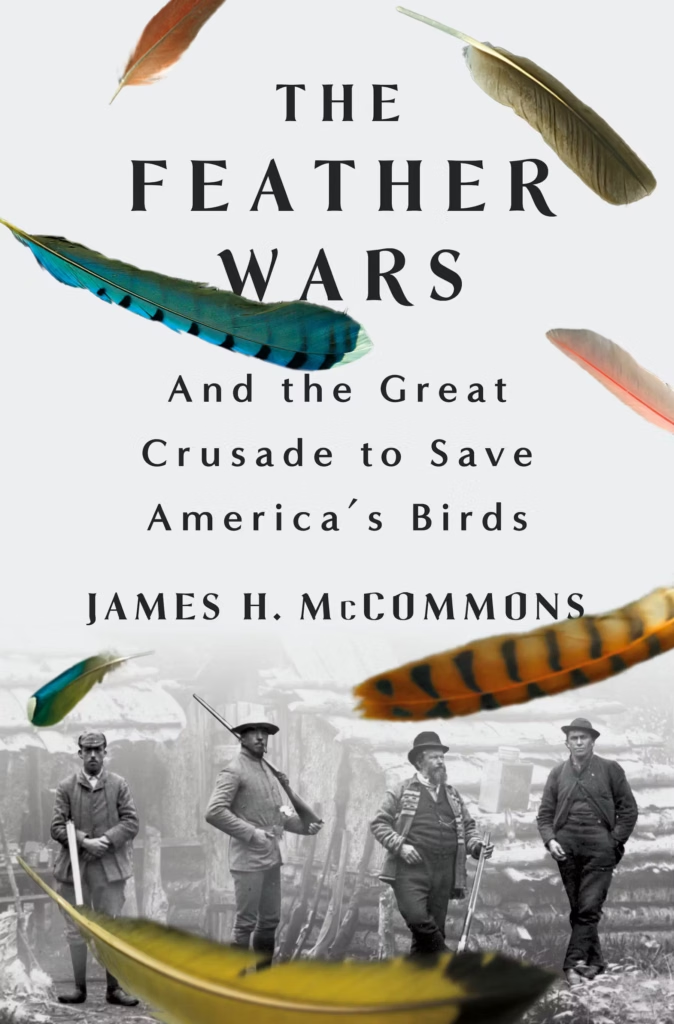
The Feather Wars and the Great Crusade to Save America’s Birds by James H. McCommons (St. Martin’s Press)
In an age when birds seem faced with an insurmountable host of threats to their survival, The Feather Wars offers a perfect opportunity for birders to take a breath, step back, and review the remarkable bird-saving achievements of the last 150 years. In his book, McCommons deftly covers almost the entire history of bird conservation in the US and North America. Early chapters document a veritable bird apocalypse driven by market and sport hunting, the fashion industry, and habitat destruction that easily rivals our modern-day crises. Afterward, he chronicles the slow, often tortuous progress made in protecting game birds and then other species, resulting in the strong, albeit imperfect policies and regulations we have in place today.
I especially enjoyed the author’s profiles of key players I knew little about. These include Ludlow Griscom who pioneered the practice of identifying live birds in the field; Roger Tory Peterson, inventor of the modern field guide; “Ding” Darling, who out-FDRed FDR in getting wildlife refuges established and funded; and Rosalie Edge, who helped root out corruption and cronyism in the 1930s Audubon Society and played a pivotal role in protecting America’s raptors.
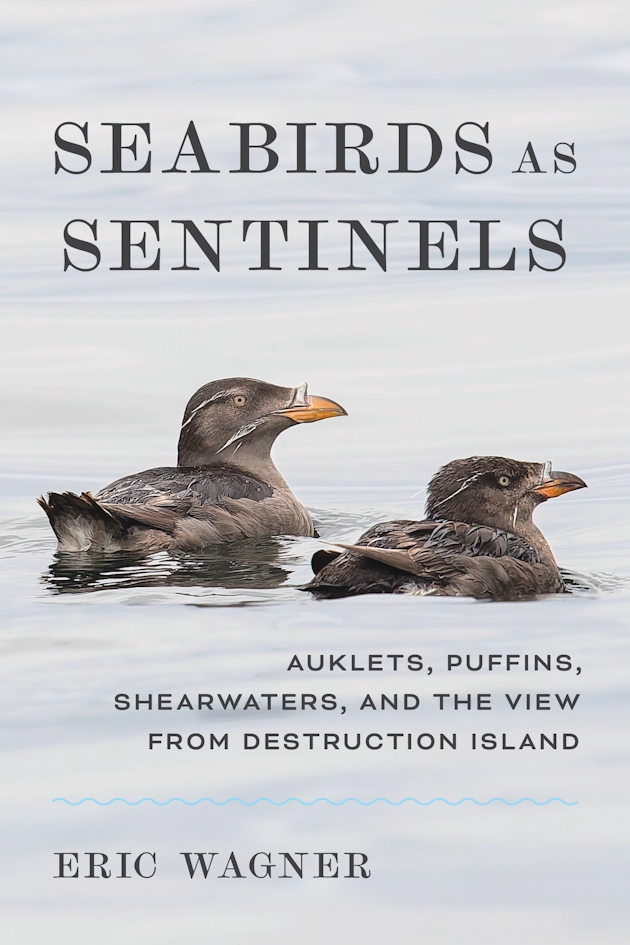
Seabirds as Sentinels: Auklets, Puffins, Shearwaters, and the View from Destruction Island by Eric Wagner (University of Washington Press)
For Montanans like ourselves, seabirds exude an almost mythical quality. One reason is that their marine environment seems impossibly inhospitable to human beings. Related to that are the remarkable adaptations seabirds have evolved, whether that’s the ability to dive hundreds of feet deep to catch prey or find their way across thousands of miles of open ocean year after year. Of course, seabirds also are incredibly beautiful—dare I say cute?—with elegant body shapes, sharply contrasting dark and light trims, and fascinating, sometimes garish, bills.
One final factor in seabirds’ mystique, however, is that the vast majority of us almost never get to spend more than a few hours with these birds—and that, for me, was the most compelling thing about Eric Wagner’s Seabirds As Sentinels. In a narrative that is part science, part memoir, the author accompanies other scientists to the places where seabirds live and reproduce.
Rhinocerous auklets feature as stars of the book, with tufted puffins, Cassin’s auklets, and sooty shearwaters playing supporting roles. Wagner showcases their biology and behavior while documenting the enormous threats they face. Along the way, he weaves in tales of human exploitation, conflict, and discovery from early European contact with Northwest tribes to the present.
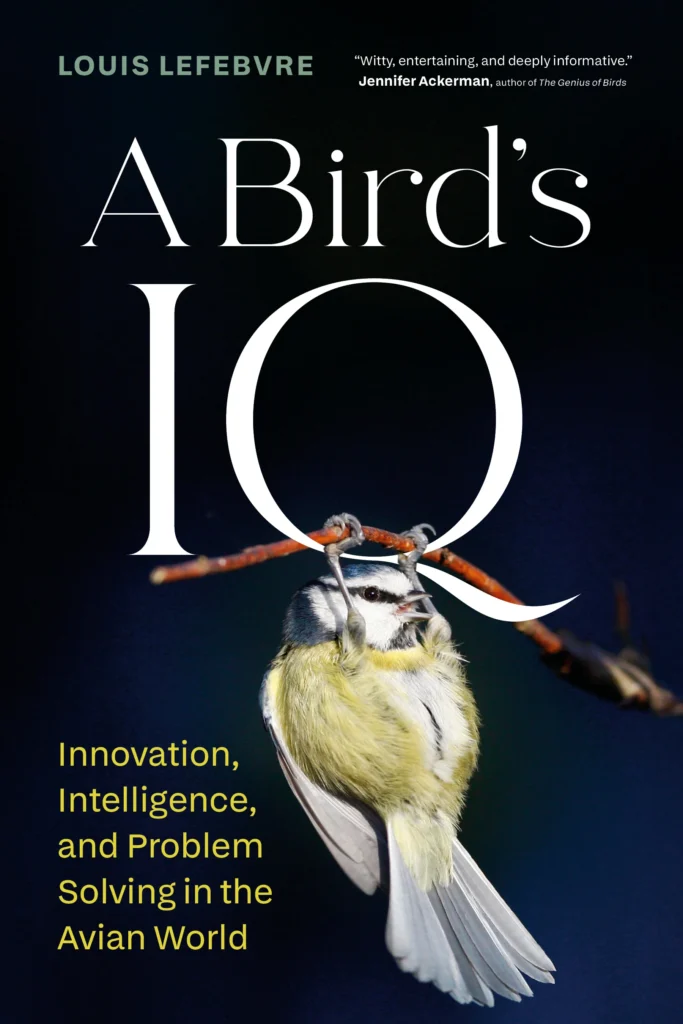
A Bird’s IQ: Innovation, Intelligence, and Problem Solving in the Avian World by Louis LeFebvre (Greystone Books)
If you’ve spent time observing and thinking about birds, it’s inevitable that you’ll ask yourself two questions. One is “How smart are birds really?” The second is “Which birds are the smartest?” A Bird’s IQ seeks to answer both of these—though not as directly as you might predict. That’s because the definition of intelligence is far from straightforward. Modular intelligence manifests as the ability to perform certain specialized tasks very well. Generalized intelligence, on the other hand, helps birds solve a wider variety of problems.
As a scientist who has spent his life studying bird intelligence, the author deftly takes us through both kinds of intelligence, and how they manifest in different bird groups. The word “innovation” pops up repeatedly and that, indeed, seems to be a main approach for how scientists evaluate species. It’s not surprising that corvids, parrots, and raptors generally rate highly when it comes to innovation and overall “smarts.” After reading the book, though, I have to admit feeling a little sorry for game birds, hummingbirds, and even our beloved loons that may be good at particular tasks—but probably aren’t ever going to earn their avian GEDs.
As you would hope, A Bird’s IQ is loaded with fascinating examples of avian intelligence and just how scientists study it. It also delves into some of the neurobiology and biochemistry that makes intelligence possible.
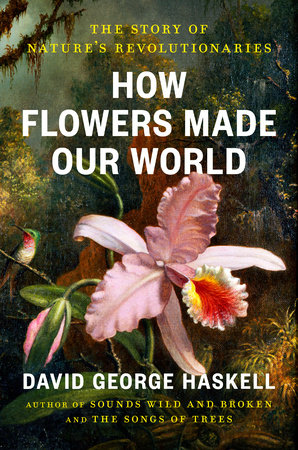
How Flowers Made Our World by David George Haskell (Viking)
Plants remain unsung heroes in our fast-paced, technologically-oriented society. In How Flowers Made Our World, David George Haskell takes a serious stab at trying to change that. In chapters cleverly designed around individual species, Haskell eloquently explores the incredible evolution and adaptability of flowering plants, their attraction for both pollinators and humans, and their essential roles in the planet’s function and future.
Two of my favorite chapters are titled “Grass” and “Seagrass”—not because I find either plant group particularly attractive but because their subjects are just so darned interesting. Neither group leaps to mind when someone mentions the words flowering plants, but they are both titans among the group. Human civilization, of course, never would have flourished without the cultivation of corn, wheat, rice and other flowering grasses. As for seagrasses, these hardy souls acquired mind-blowing adaptations that allowed them to invade the ocean from land. They may be the closest things we have to superheroes when it comes to protecting coastlines, preserving marine biodiversity, and sequestering the carbon that is driving climate change.
Haskell’s final chapters sound the alarm on industrial agriculture and the unprecedented use of pesticides that are devastating insect populations and native plants alike. This is not simply a matter of saving biodiversity, but of preserving the ecological pieces that will allow us to survive our rapidly changing world. Although birds are given relatively minor mention in the book, by the time you finish reading it you won’t have any doubts that the fate of birds, insects, and flowering plants are inextricably linked.
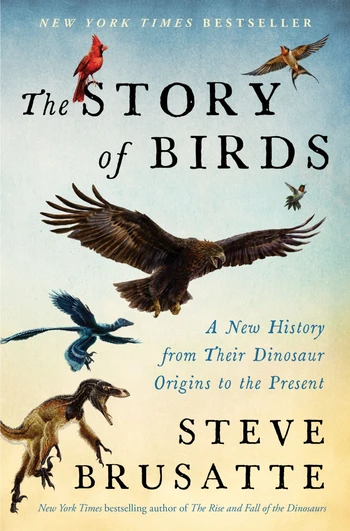
The Story of Birds: A New History from Their Dinosaur Origins to the Present by Steve Brusatte (Mariner Books)
Given how long it took modern birds to evolve, scientific understanding of their origins has advanced at breakneck speed in recent decades. In The Story of Birds Steve Brusatte takes us on a fascinating journey from the early Triassic 252 million years ago to our modern age. One of his first acts? To unequivocally assert that birds didn’t just evolve from dinosaurs, they are dinosaurs. In other words, dinosaurs never went extinct—only non-avian dinosaurs literally bit the dust when the giant asteroid hit 66 million years ago.
Brusatte shows us that the details of how bird-dinosaurs evolved was anything but a straight line. The origin and evolution of feathers is particularly fascinating because feathers had perfectly good uses for dinosaurs before they helped some dinos fly. How birds got smarter even as their skulls and brains began to shink also makes riveting reading.
One of the most interesting chapters discusses how birds were able to undergo such rapid diversification after the asteroid wiped out three-quarters of the planet’s species. Brusatte follows that up with chapters on some of the most interesting outcomes including large flightless birds, super swimmers, and highly adaptable modern birds that continue to evolve today.
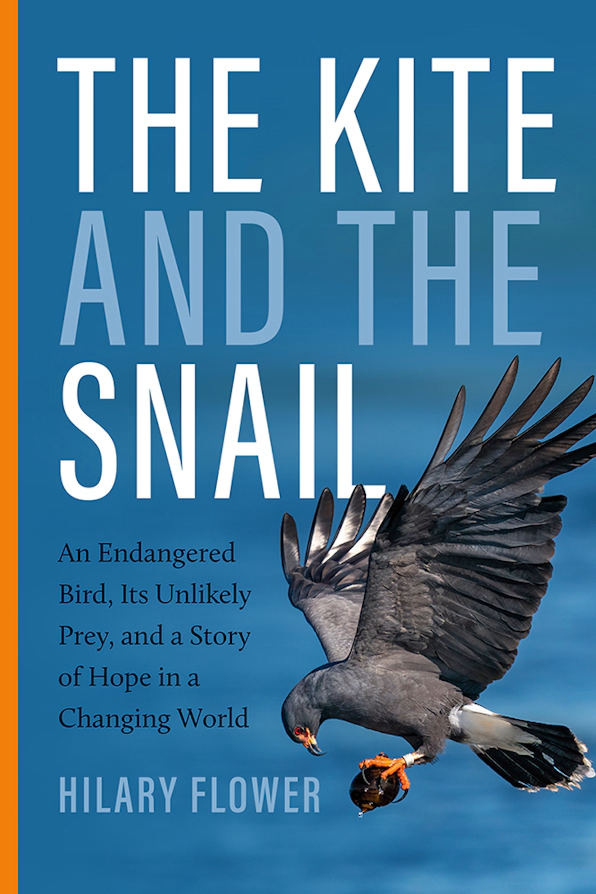
The Kite and the Snail: An Endangered Bird, Its Unlikely Prey, and a Story of Hope in a Changing World by Hilary Flower (University Press of Florida)
The Kite and the Snail presents a fascinating tale of how several human-caused calamities have, at least for now, produced a positive outcome for one, highly-specialized animal: the snail kite. Once abundant in South Florida, ill-conceived water projects fueled by rampant urban development sent this unique raptor on a tailspin. The reason was simple. As wetlands were drained and the abundant waters feeding the Everglades got rerouted, the kite’s major prey item, the native apple snail, began to disappear. Kite numbers plummeted from the many thousands to forty or fewer individuals between 1950 and 1965.
The Endangered Species Act threw the birds a lifeline, carving out aquatic sanctuaries for them to feed, roost, and nest in. Numbers rose to about 3,000 individuals by the end of the 1990s—but again plummeted because of continuing degradation of water quality and habitats. Then something astonishing happened: an invasive apple snail from South America began spreading through Florida. Even more astonishing, the kites adapted to using this new snail as their primary food source.
I won’t give away the most recent chapters in the kite’s ongoing story, but for anyone interested in how earth’s other species are faring in our anthropocentric world, The Kite and the Snail is a book you’ll want to pick up. It also provides a perfect pairing with the final book in our roundup.
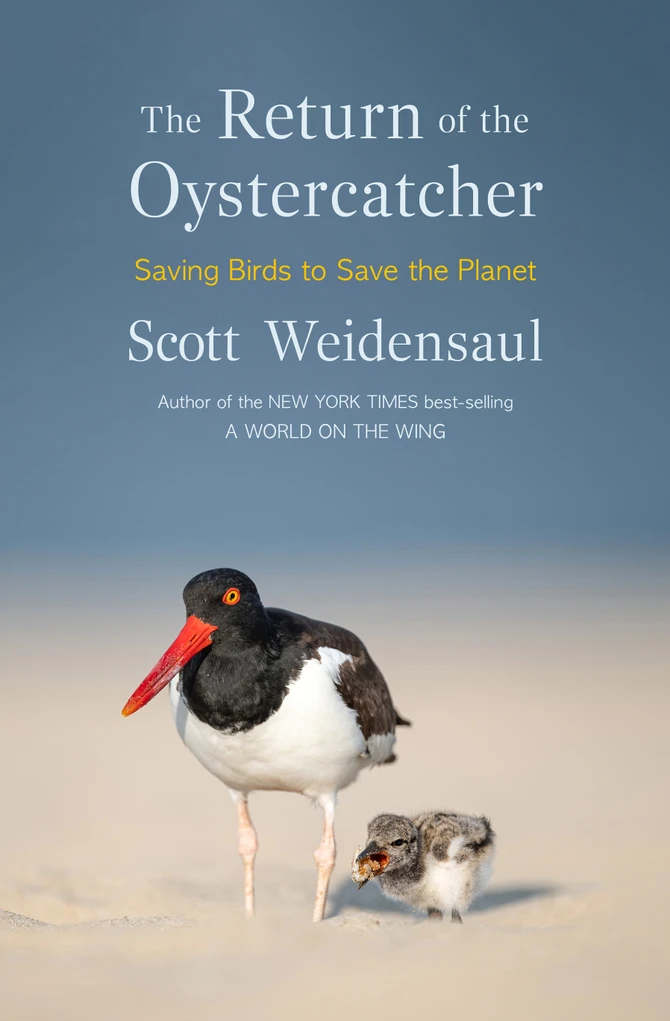
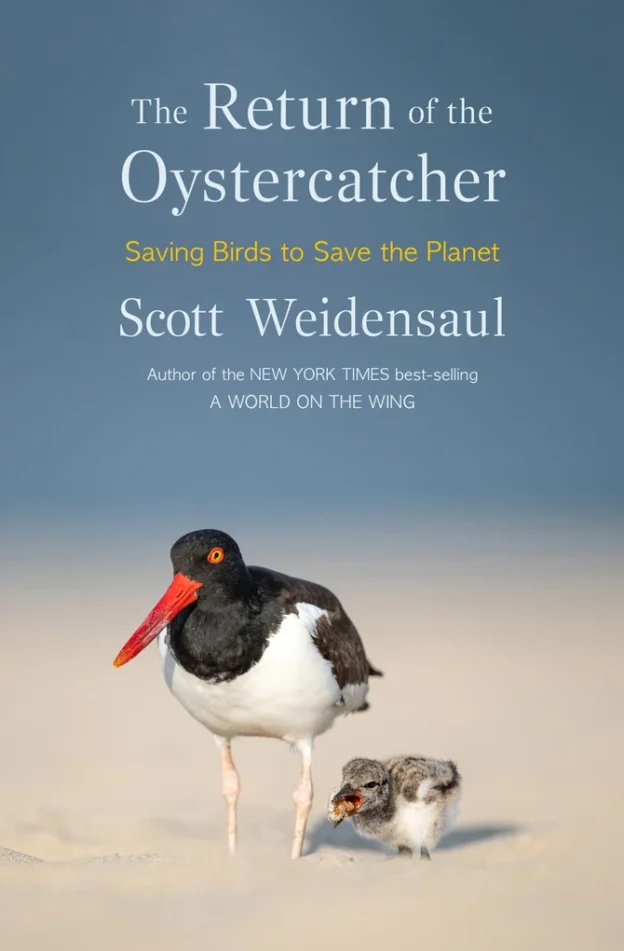
The Return of the Oystercatcher: Saving Birds to Save the Planet by Scott Weidensaul (W.W. Norton & Co.)
It’s fitting that I finish this roundup with Scott Weidensaul’s new release, The Return of the Oystercatcher, a book that wonderfully bookends the selection of other titles above and provides the kind of pragmatic hope birders need. In his book, Weidensaul takes us on a tour of remarkable conservation efforts taking place globally, from actions in the UK to restore and protect songbird and raptor populations to repopulating islands with seabirds in Maine and Hawai’i to rewilding a huge section of eastern Europe in the very shadow of war-torn Ukraine. In the process, the author touches upon, at least briefly, many topics covered in our roundup’s other books, but not in ways that are at all redundant. Instead, he helps integrate the state of birds and bird conservation into a global perspective.
One fascinating chapter follows the author to Bulgaria, where conservationists are conducting hard-fought campaigns to reestablish vultures in places where they had formerly been abundant. In this and other chapters, Weidensaul does not shy away from the massive problems birds and conservationists face, but like The Feather Wars, provides hopeful evidence about just how much we can accomplish when we put our minds to it.
He finishes his book by looking at the return of the management of hundreds of millions of acres of Canadian boreal forest to the indigenous peoples who live there. This astonishing development promises to be a game-changer not only for indigenous peoples, but for the many bird species that breed there. It also may well tip the scales in humanity’s fight against climate change as these lands keep vast quantities of carbon from entering the atmosphere. The Return of the Oystercatcher is a book you should read. What’s more, I wager you’ll feel better about the world when you finish it.