Category Archives: Ducks and Geese

Saving Birds. It’s Time.

In just the past year, protecting birds has reached a new level of urgency. Please read and share this post with as many people as possible. Thank you!

First off, I want to announce that thanks to all of you, Braden’s last post about the QUACH shattered records for number of views and is already SECOND all-time for our posts, trailing only Birding San Antonio’s River Walk? Are You Nuts? which we posted two-and-a-half years ago! Taylor Swift, can you feel us breathing down your popularity neck?

Probably not. The truth is, FatherSonBirding will never be as popular as Taylor Swift and other celebrities, but birds SHOULD be! As we all know, they provide millions of us a steady source of fun, interest, inspiration, and connection. Unfortunately, we also know that birds are in big trouble, not only from traditional threats such as poaching, invasive species, pesticides, and habitat loss, but from the GIANT SHADOW looming over all of us: climate change. I just read an article about the recent heat wave in the American Southwest and how it might devastate food supplies for millions of migrating birds. This is the very definition of depressing news!

How, as bird-loving, sensitive beings, do we handle what’s happening to birds and other species? It’s not easy—but it is easy to feel overwhelmed and hopeless about the world situation. If we want to save our planet’s incredible biodiversity for our children and grandchildren, however, we have to turn our worry into action. Braden and I have four strategies for doing this that we’d like to share with you.

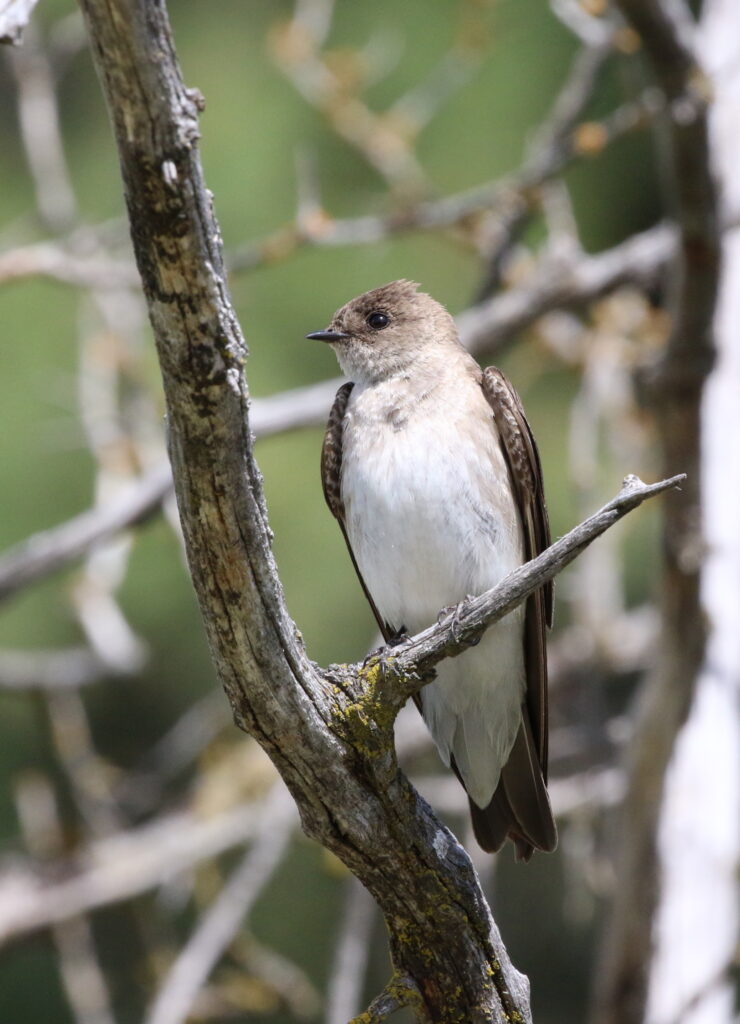
Swallows and other migrating songbirds have been particularly hard-hit in the last year due to climatic chaos that has most likely impacted their food supplies. (Shown: Northern Rough-winged Swallow)

Strategy #1: Education. We don’t know about you, but we feel that education is the key to every problem that needs to be fixed, and birds offer almost unlimited ways to further education. Just taking a friend out birding and showing her what you know helps raise awareness and concern about what’s happening to birds and the importance of protecting and creating habitat. Taking a school class or group of seniors out magnifies that effect—and gives you a chance to correct harmful misinformation out there such as “Climate change is a plot by radicals to harm oil companies” or “Climate change is happening, but is not caused by humans”. If you want to show people just how dramatically our planet is heating up, you can go a step further and share this rock-solid website: NOAA Global Temperature Increase by Year. Our blog, we hope, helps further bird education, too. That doesn’t mean that people will always do the right thing once they have accurate information, but if we leave education up to Fox News or Breitbart, let’s face it, we’re sunk!

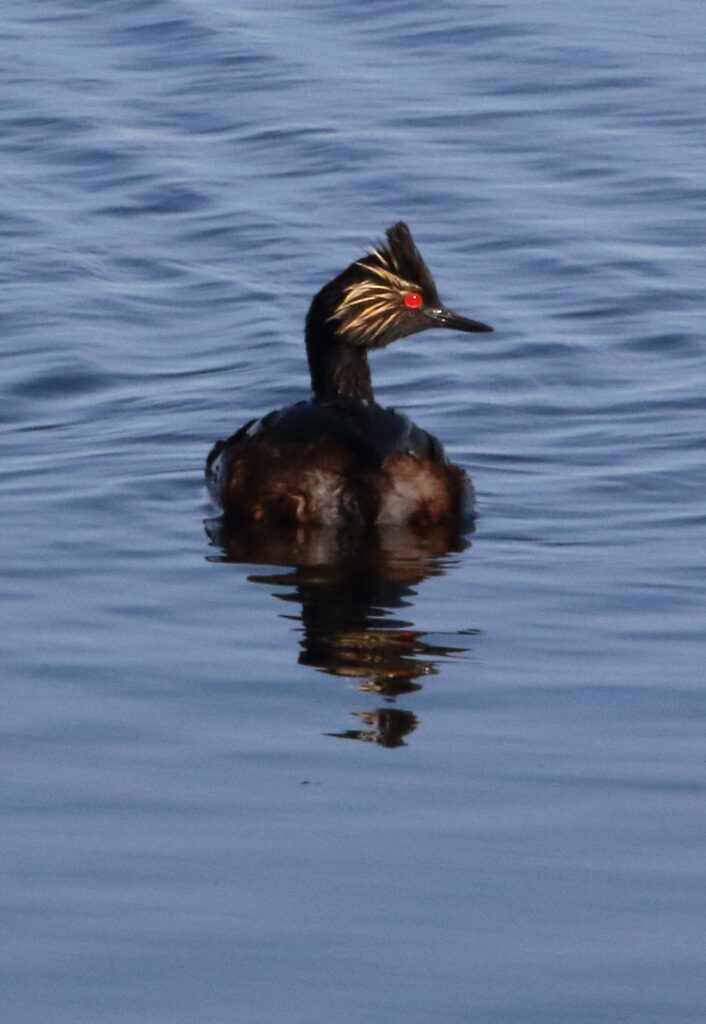
Grebes, ducks, and many other birds depend on “watery” refuges to survive—refuges that are coming under increasing pressure as the American West and other parts of the globe become more arid from climate change. (Shown: Eared Grebe)

Strategy #2: Money. We’re always surprised how reluctant many people are to donate money to groups working for causes they believe in. Sure, some people don’t have funds to spare, but let’s be honest, most birders do. If you find it hard to open your bank account, just ask yourself, “What kind of world will I or my children live in if I don’t help solve climate change, habitat loss, and other problems? What will my money be worth then?” The answer isn’t pretty, and yet for the price of a dinner out, we can all make a significant contribution to a group working for birds. Following is a short list of Braden’s and my favorite groups that are helping birds. Check ’em out, then crack open that wallet!

Cornell Lab of Ornithology—the maker of eBird and Merlin makes huge investments in science and education to raise awareness of birds and promote conservation.

Bird Life International—Braden’s favorite group works on the entire international spectrum of bird threats, and also works with local communities to help protect birds and habitats.

Audubon—still the biggest name in birding, Audubon promotes bird conservation and education, and works on legislation to protect birds. (Note: the national, state, and local chapters are all independent entities. Donations to national don’t trickle down, so consider donating to all three.)

American Bird Conservancy—also works on a wide range of bird-related issues including the urgent problem of outdoor cats.

Houston Audubon Society —a regional bird powerhouse, promoting bird education and conservation, and protection of vital habitats, especially for migrating birds. Think High Island from the movie The Big Year!

Union of Concerned Scientists—one of Sneed’s favorite groups, we make monthly contributions to this group working to fight rampant disinformation and promote rational, scientific solutions to a host of problems facing us.

Strategy #3: Reducing Consumption. As birders, we need to acknowledge that we use the planet’s resources by driving around looking for birds. This makes it especially important that we reduce our consumption of fuel and other resources in other ways. There are myriad ways to do this, from turning out lights to making sure we eat our leftovers to letting our grass grow a bit longer before cutting it. Braden’s and my biggest reason for avoiding fast food restaurants these days isn’t the food quality, it’s the amount of waste they generate. We know many families that have cut down on Christmas gift-buying in favor of donating to worthy causes, and that’s a trend we wholeheartedly endorse. After all, is your uncle really going to miss that singing trout on the wall? The possibilities to reduce our footprint by reducing consumption are almost endless. Please note: the idea of plastic recycling sounds good but is basically wishful thinking. According to the EPA, less than 10% of plastic is recycled. The vast majority of it ends up in landfills, where it will persist for hundreds or thousands of years—hopefully, but not necessarily, before it strangles or gets ingested by a bird. One solution: encourage your stores to carry products packaged in truly recyclable or reusable paper-based, metal, or glass containers and whenever possible, choose appropriately. Of course, always bring your own reusable bags when shopping!

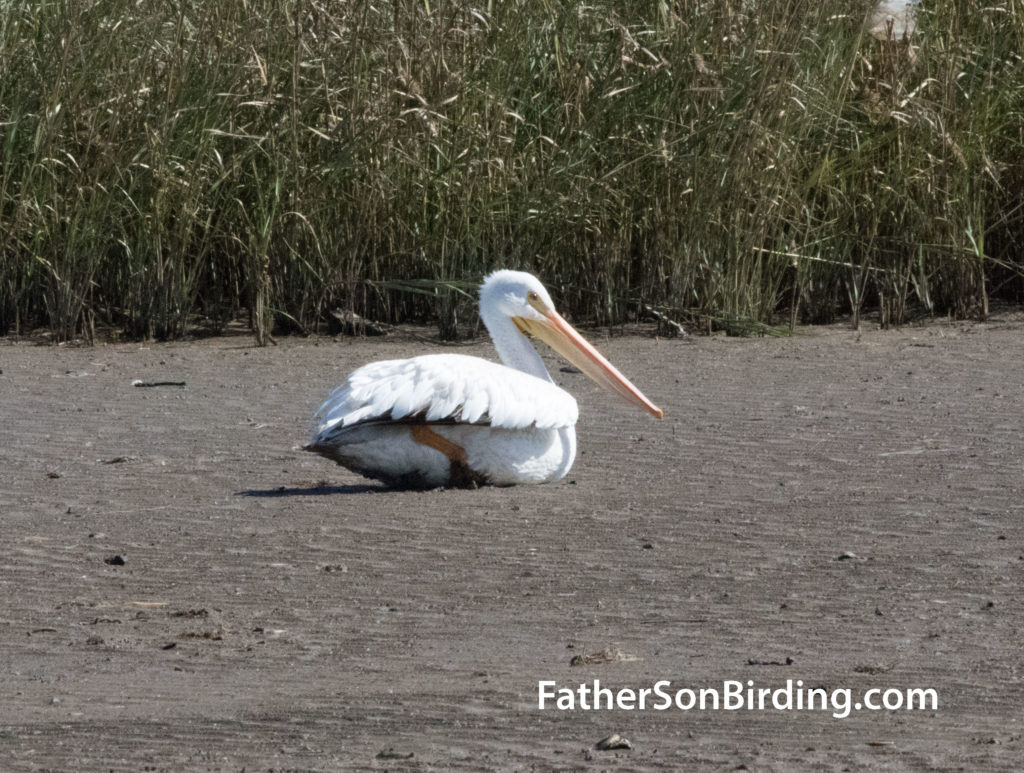
Plastic waste may be killing millions of birds that ingest it. It’s also a major source of mortality for birds who, like this pelican I encountered in Texas, get tangled up in it.

Strategy #4: Let Your Politicians Know! Okay, voting for politicians who support environmental causes is a no-brainer, and let’s face it, that means voting for Democrats these days (check out this scorecard from the League of Conservation Voters). We find this partisanship mystifying since we know that millions of Republicans love birds and two presidents who enacted some of the most important environmental legislation—Teddy Roosevelt and Richard Nixon—were Republicans. (Note there are a very few current Republican officeholders with strong environmental records such as PA’s Brian Fitzpatrick. Again, see the scorecard.) Nevertheless, it’s important to let ALL of your representatives know that you support taking steps to replace carbon-emitting fuels with renewable energy, support mass transit, protect habitats, and do other things that safeguard birds and other wildlife. We write, email, and call our state and US representatives on a regular basis, and also write letters to the editor of our local paper about key issues. Don’t know who your representatives are? No need for embarrassment. Here’s a handy website for looking up your federal reps: Congress.gov Similar sites exist for each state. Just do a search on “find my representative”. Audubon, the Union of Concerned Scientists, and other groups on our list above also do an excellent job keeping us informed about important legislation and issues.

You undoubtedly can think of other strategies for helping birds, from picking up plastic litter to running for office yourself. But here’s a closing thought: by saving birds, we are saving ourselves. Some may disagree, but we feel that if the majority of bird species don’t survive, humans probably won’t either, and really, it’s time to get serious about it. If we can cultivate an attitude among birders that each time we go out birding, we will also do something to help birds, there’s going to be no stopping us. Thanks for taking action.

In saving birds, little actions lead to big results. Thank you for taking the first steps!

Quarrying Species: Birding Therapy Day Six

Enjoy these posts? Please share and subscribe using the box down below and on the right.

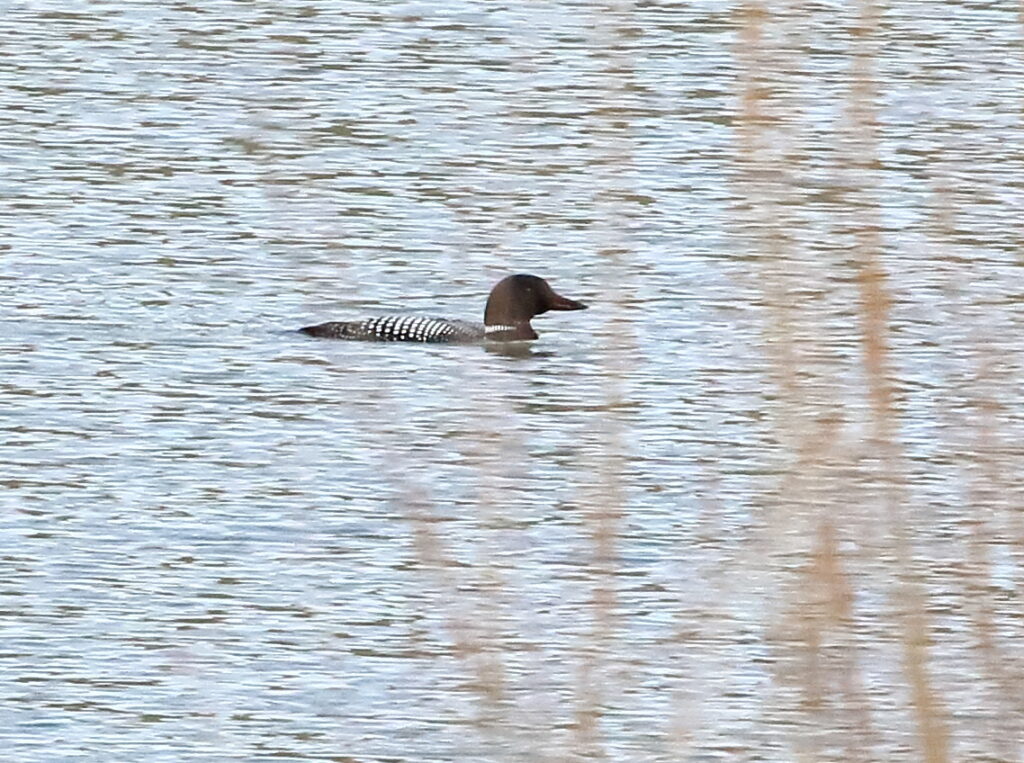
Saturday, Day 6 of my Birding Therapy Week, I arrived at Fort Missoula at 7:45 a.m. with my daughter for the first of her two soccer games that day. While she warmed up with her team, I took Lola back over to the gravel quarry hoping to catch some magical morning birding. I didn’t have to wait long to kick off a great session. Even before leaving the soccer fields parking lot, my first Barn Swallow of the year flew past me, and once I reached my first stop at the northward quarry pond, I found myself struggling to keep up with all of the species I saw and heard. On the ponds themselves, I ID’ed eight species of ducks, Canada Geese, a Horned Grebe, and a Common Loon—perhaps the same one I’d seen two days before.

I had to play hide-and-seek with this loon even to get this poor shot, but I didn’t mind. Was just thrilled it stopped by the quarry on its way to its breeding grounds.

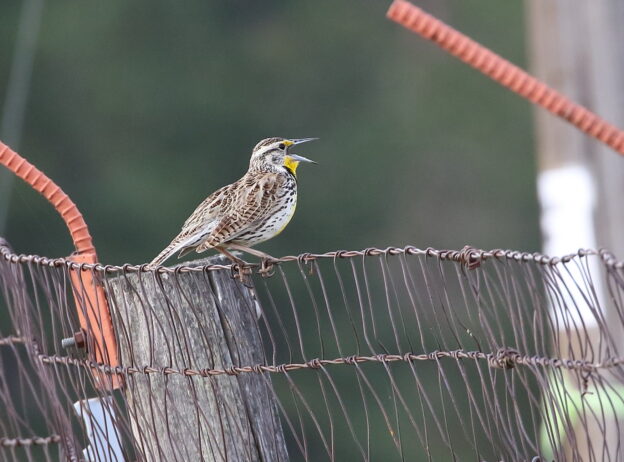
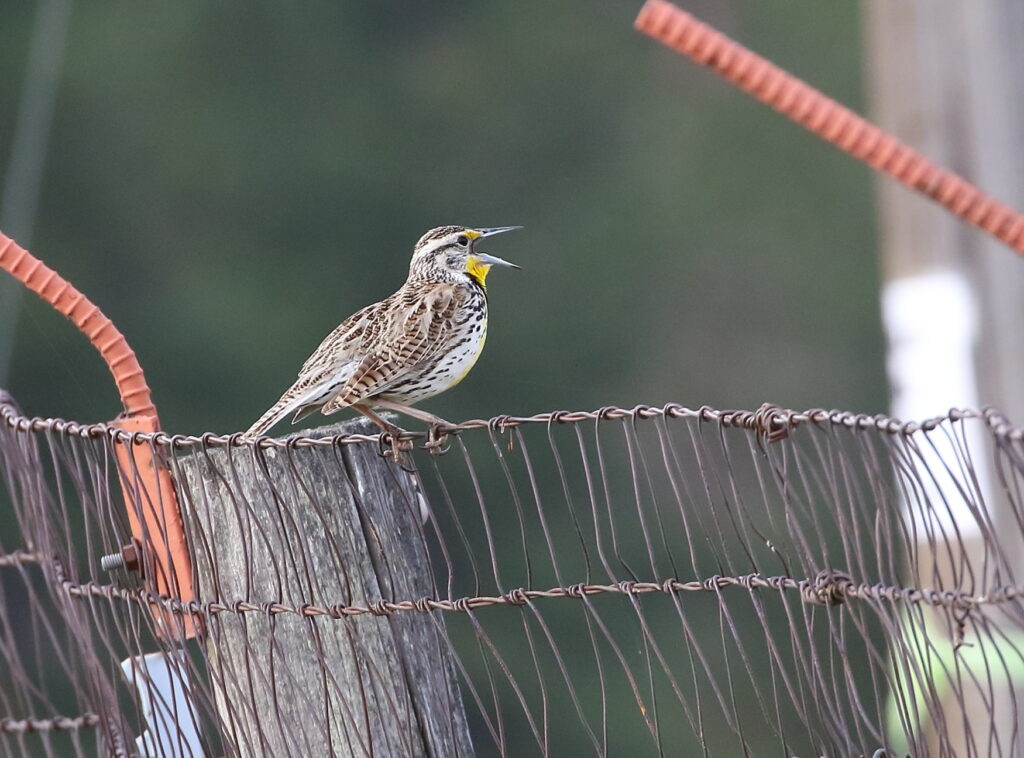
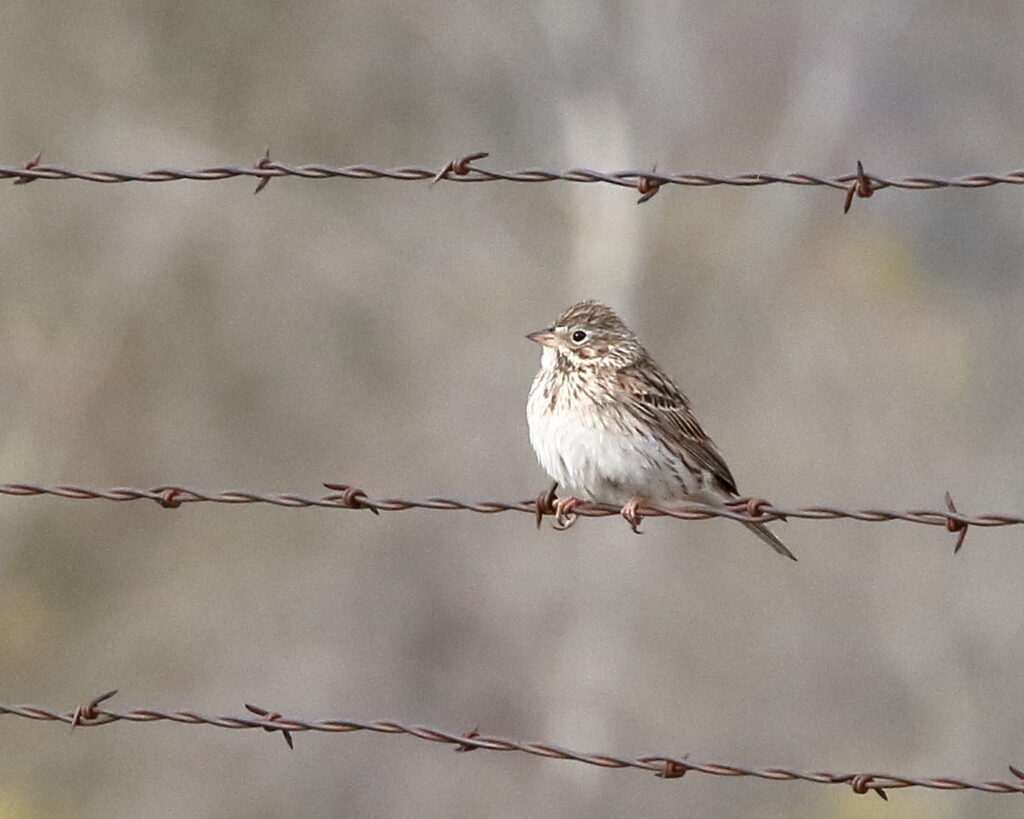
As I walked along the fence line, a sparrow popped up with a bold face pattern and pale “moustache”—the year’s first Vesper’s Sparrow! Nearby landed a Savannah Sparrow while a Western Meadowlark serenaded us. At the cliff edge above the river, Northern Roughed-Winged and Tree Swallows swarmed while a Red-tailed Hawk, Osprey, and Great Blue Heron sauntered by.

Meadowlarks always make me pause to ooh and ah, especially when they perch and sing in full view!

The hits kept on coming: two Red-naped Sapsuckers, a pair of Wood Ducks flushing from beside the river, a Yellow-rumped Warbler. As before, I made a special effort to find unusual sparrows. In one of our favorite spots, I located a couple of White-crowneds and then I saw something that really got my heart thumping: a bold bird with a peaked crown and distinct gray and brown facial lines. Even more exciting, I thought I detected a bit of yellow on the sides of the breasts—sure signs of a Lincoln’s Sparrow. Unfortunately, the bird was facing away from me and I was just moving in for a better look when two good-natured women walked up behind me and loudly shouted “Good morning!” I turned around and smiled, putting my finger to my lips, but it was too late. The sparrow fled.

Sigh.

Still, it was an amazing morning, with 36 species and delightful experiences. Even better, my daughter’s team won her soccer game. I’ll get you next time, Mr. Lincoln.

Here is my complete checklist: https://ebird.org/checklist/S86803129

I missed the Lincoln’s Sparrow, but was delighted to find my first Vesper’s Sparrow of the year. Braden got his first in a different location the very same day! Note that Vesper’s Sparrows are identified by their bold facial pattern including white eye ring and white “handlebar moustache” curving down and back from its bill. When they fly, look for the white outer tail feathers. Many also show an upside down “heart” on their breasts—though this one is “heartless.” Poor thing.

Camas National Wildlife Refuge Update

Enjoy these posts? Please share with others and subscribe by filling out the boxes down in the right-hand sidebar.

After last week’s post on our visit to Camas National Wildlife Refuge (see Pocatello or Bust), I received a welcome call from Refuge Manager Brian Wehausen. I had left a message with him, wanting to learn more about the seemingly bleak situation at the refuge, and he generously shared half an hour with me explaining the water shortage and prospects for the future.

When the refuge was purchased in 1937, Brian began, local farmers were taking water from the nearby Henry’s Fork stream and surface irrigating their crops in such a way that loads of excess water “skipped down” to the refuge, creating ample ponds for birds and other wildlife. When farmers switched to sprinkler irrigation in the 1980s, that load of water ceased and the refuge began drying up. “Before agriculture,” Brian shared, “the refuge probably had good and bad years, but we don’t really have any way of knowing what it was like.” Even so, the current situation has been impacted by the drop in the aquifer due to overpumping by agricultural and other interests so that in bad years such as this, migrating birds meet mud instead of water on their way north.

While offering little for migrating birds now, infrastructure improvements at Camas NWR will soon allow the refuge to fill at least some of their ponds even in bad years.

The good news is that the refuge recently received money from the Great American Outdoors Act to drill new wells that will put water into areas that they know retain it better. Brian doesn’t think they can return the refuge to what it was in its heyday in the 60s and 70s, but hopes to definitely improve the situation for waterfowl. “My whole goal,” he said, “is to be efficient with the surface water and also be efficient with the well water, and most of the water we pump will go right back into the aquifer.”

Unlike in some other places, the local community supports the refuge and agrees it’s worth keeping wet. “Generally, people love to see the birds,” Brian says. “We were a mecca for hunting in the 1970s, and that’s gone away, but people still come. Photography is our Number One use today.”

Before we hung up, I was curious what happens to the snow geese and other birds who arrive to find the refuge dry. Brian told me that when Camas is dry, Dillon (just over the border in southern Montana) also tends to be dry so most of the birds head straight up to Freezeout Lake (see our post A Real Wild Goose Chase)—which is where many birders are enjoying them as I write this. It sounds, though, that we’ll all be able to add Camas to our great birding hotspot lists in the very near future!

Pocatello or Bust

Enjoy these posts? Please share with others and subscribe by filling out the boxes down in the right-hand sidebar.

In our last post, I gave the background story of my newest book, Waiting for a Warbler. The irony is that even as I posted it, Braden and I, like many of you, were impatiently waiting for warblers and other spring migrants to show up—so much so that we jumped the gun and leaped into our intrepid minivan for a 1,000-mile road trip. The trip’s main impetus was to hear Boreal Owls after dusk at Lost Trail Pass on the Montana/Idaho border, and things started well as we picked up an uncommon Eurasian Wigeon near Lee Metcalf NWR on the way down. Alas, despite spending two hours hitting the ski area parking lot and various locations along highway 43, we heard not a single bird—this, despite our friend Nick hearing FIVE Boreal Owls several years ago. Disappointed, but not shocked, we proceeded to Wisdom to spend the night at the comfortable Pioneer Mountain Lodge.

Totally unexpected, this was perhaps our closest look ever at one of our favorite winter birds, American Tree Sparrows, right alongside the road in Wisdom, MT.

Before heading south the next morning, we decided to do a quick tour of Wisdom and were fortunate to spot American Tree Sparrows and a Northern Shrike. Along the highway, our luck continued with great raptor looks, including a ginormous Great Horned Owl sitting on a mile marker next to the road! At the ghost town of Bannack, however, we struck out on Sagebrush Sparrows and Sage Thrashers (still too early) and, after “dipping” on Chukars in Dillon as well, decided to head to Idaho for our first interstate birding in months.

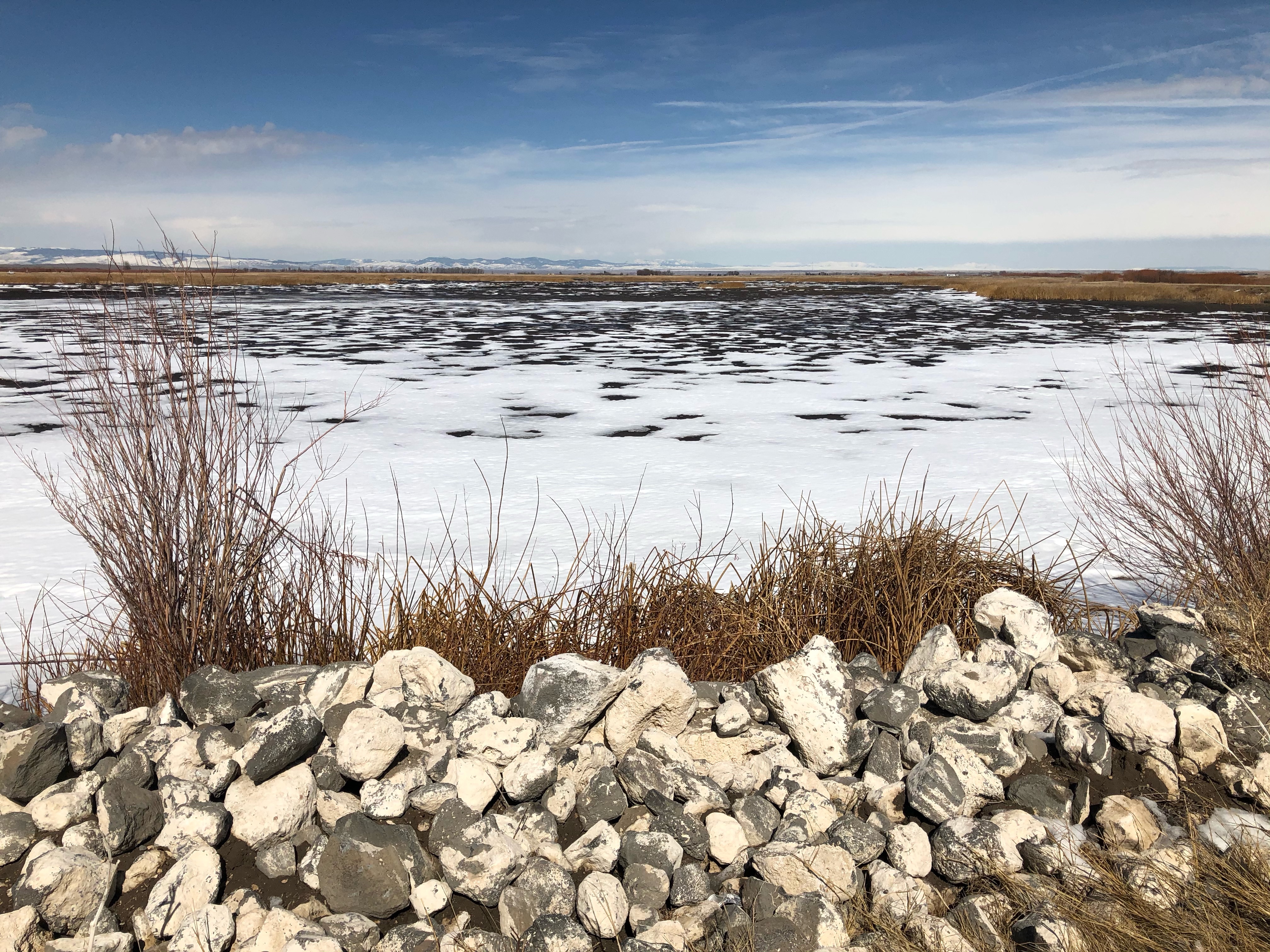
We were especially excited to visit Camas National Wildlife Refuge, but when we arrived, instead of ponds overflowing with waterfowl, we found depressing drying mud with a few determined Canada Geese and Mallards wondering what the heck was going on. We wondered, too, and a little research pointed both to a dry year and, more crucially, a lowered water table caused by over-pumping of groundwater by agricultural interests. This is a situation faced by more and more places in the West and national wildlife refuges seem to be particularly at risk as their budgets for new wells, staff, and infrastructure haven’t nearly kept up with their needs (see the Audubon article “Overwhelmed and Understaffed, Our National Wildlife Refuges Need Help”).

The kind of depressing scenes we found at Camas National Wildlife Refuge are playing out all over the West as human demand for water robs wildlife of essential habitat and resources.

Determined to redeem our day, we pushed on to Pocatello, where we had a delightful hike through juniper forest and saw our Lifer Juniper Titmice. In fact, these wonderful little birds may have ended up being the highlight of our trip as we got to watch them sing, bicker at each other, feed on berries, and generally make the most of life.

Both Braden and I fell in love with Juniper Titmice, described by eBird as “Possibly the plainest bird in North America.”

The next morning we decided to heed Supertramp’s advice and take the long way home through Craters of the Moon National Monument (closed) and Sun Valley. We had a special interest in Sun Valley because another Lifer, Black Rosy-Finch, had been reported there, and as we drove up a long canyon road we wondered if we would again be disappointed as this was the year’s fourth attempt to find this elusive bird. We arrived and . . . no birds. We hung out for several minutes, though, and suddenly heard finchy chirps above us. The rosy-finches! And not just Black, but Gray-crowned, too. It was particularly gratifying to find these gorgeous little passerines both because we’d looked for them many times and because this might well be Braden’s last chance to see them before he heads east for college this summer. The rosy-finches and titmice made the scenic drive home through the Sawtooths especially enjoyable—and a surprise find of a Ruffed Grouse along the highway extra sweet.

Hard to find at best, Black Rosy-Finches are some of North America’s most beautiful passerines. They nest at high altitudes and, not surprisingly, are some of America’s least-studied birds.

Payin’ Raptor Dues, Reapin’ Raptor Rewards

Gamblers and fishermen are famous for being superstitious. Birders aren’t much better. Sure, we feed ourselves platitudes such as, “The more you get out, the more you’ll see,” but deep down, we know that the birding gods control our fates, and that our success depends on whether we’re deemed worthy. In our last post, I recounted how Braden and I spent six hours and two days looking for a Gyrfalcon near White Sulpher Springs, only to endure the gods’ wrath. Yesterday morning, when we set out on a quest for a Snowy Owl, we wondered if the gods would continue to scorn us, or whether we had proven ourselves humble and dedicated enough to curry their birdly favor.

Northern Harriers and other raptors were abundant wherever we looked. They, unfortunately, were not the birds we set out to see!

We left the house at 6:30 a.m. and by 7:30 were at Ninepipe National Widlife Refuge, where we hoped to score an elusive Year Bird, Short-eared Owl. We drove the dirt roads for more than an hour and saw more than a dozen Red-tailed Hawks, Rough-leggeds, Bald Eagles, Harriers—even a Merlin. No Short-eared Owl. “Ah, well,” I told Braden. “We’ll get ‘em next time.” Inside, though, I was thinking, “Oh, man. Is it going to be that kind of day? Again?

Well, apparently, it was. Reaching the Snowy Owl neighborhood near Kalispell, we again drove for more than an hour without so much of a glimpse of a white owl. By now, I realized that the BGs must be really pissed at us. We decided to chase some other birds and come back later, however, and did score our first Gray-crowned Rosy-finches in three years at the Kalispell dump—while getting bawled out by the “dump lady” for our efforts. We also found a White-winged Crossbill among a flock of Red Crossbills feeding on some nearby spruce trees. Nice, but not a Snowy Owl.

Mallards are no doubt the most underrated duck, but this flock of five thousand birds made a big impression on Braden and me!

After a lunch at Panera Bread (hey, more chicken in my Napa Almond Chicken Salad Sandwich, please!), including our favorite kitchen sink cookies, we hit an amazing field full of about 5,000 Mallards. Stunning! Then, we returned to the Snowy Owl site, where we encountered several other birders. None of them had had any success, either, but while we were commiserating, a photographer named Dick Walker introduced himself and asked, “Are you the father-son birding team?” We’d never been called that, but I answered “Yes,” and he started talking about the Mallard spot we’d just left. He showed us photos of Lapland Longspurs and, most exciting, a Gyrfalcon he had seen only thirty minutes before!

We tore back to the place, forever hopeful. No longspurs. No falcon. After fifteen minutes, though, a massive group of a thousand Mallards lifted off and seconds later, a sleek, jet-fighter shape zoomed across our field of vision. “It’s the Gyr!” Braden shouted.

Our first Gyr was a darker bird and left no doubt it was master of the skies. We’ll never forget it!

Indeed it was. We quickly lost it in the distance and decided to race over to another road closer to where it disappeared. We got there and jumped out of the car just as the amazing raptor reappeared, obviously enjoying terrifying the thousands of ducks and geese swirling around it. While Braden set up our scope, I tracked the bird with my binoculars. It seemed to toy with a large group of ducks, but its madness had some method as more and more Mallards peeled off until only two remained. As I watched, breathless, the Gyr hit one of them and took it to the ground. “It got a duck!” I shouted.

I was astounded how quickly this Baldie swooped in to steal the Gyr’s kill. It made me wonder how many ducks the falcon has to kill before it actually gets to eat one!

Its victory was temporary. Within thirty seconds, a much larger brown shape swooped in—an immature Bald Eagle. It effortlessly drove the Gyr from its kill, eliciting shouts of outrage from yours truly. We continued watching the amazing creature for another fifteen minutes before it vanished again. Then, after another unsuccessful Snowy Owl circuit, we began the long drive home. As we headed south along Flathead Lake, I thought about BB King, who often talked about paying his dues, and asked myself why we’d seen a Gyrfalcon here, in the last place we’d ever expected. “Maybe our efforts in White Sulphur Springs satisfied the birding gods after all,” I speculated. “Or maybe we just had to pay our birding dues to see the Gyr.” Either way, it had been one of the best birding days Braden and I had ever experienced—even without the Snowy Owl.