Our fourth post about our epic 2024 eastern Montana expedition takes us to the birding mecca of Westby. Over the years, Westby has grown an outsized reputation in the imaginations of Montana birders. To find out why, read on—and don’t forget to check out Sneed’s newest picture book, Like No Other—Earth’s Coolest One-of-a-Kind Creatures by clicking on the image to the right!
After, to be honest, a pretty disappointing time in Plentywood (see last our last post), Braden and I continued our Eastern Montana Odyssey 2024 by driving twenty-six miles to a place that has obtained almost mythical status among Montana birders: Westby. Westby sits in the very northeastern corner of the state and has long been known as a place where eastern songbirds clip Montana on their way to northern breeding grounds. Some fool cut down some of the best bird habitat there a few years ago, before Braden and I ever visited, but birders still discover rarities such as Mourning Warblers, Black-throated Green Warblers, and Rose-breasted Grosbeaks every year. The bad news? Braden and I were about two weeks late to have a serious shot at anything like that. The good news? We still had a great chance to see migrating shorebirds.
Westby literally straddles the North Dakota border, making it a go-to destination for birders hoping to snag rare migrants for their Montana life lists.
We arrived early and decided not even to waste time looking for songbirds right away. Instead, we immediately drove north out of town toward a series of pothole lakes well known for shorebirds. Changes in water levels can be shocking out here year to year, and I quickly saw with dismay that one pond that had brimmed with water during my visit with my pal Scott Callow last year had gone bone dry. Fortunately, another pond with just a brief window of visibility did have water. “Shorebirds!” I shouted. We broke out the spotting scope and did our best to ID what was out there. Sanderlings could be made out by their distinct dark red heads and boldly black legs and bills. More exciting, we were able to ID Semipalmated Sandpipers and a species we hadn’t seen in Montana for four years, White-rumped Sandpipers.
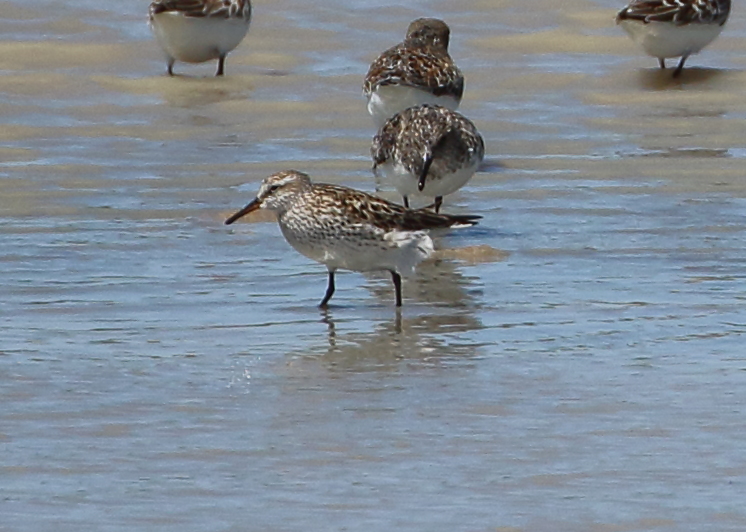
This is about as close as we got to a White-rumped Sandpiper, but you can see a distinctive ID feature—the dark spots stretching down its side under the wings. Sanderlings are feeding behind it.
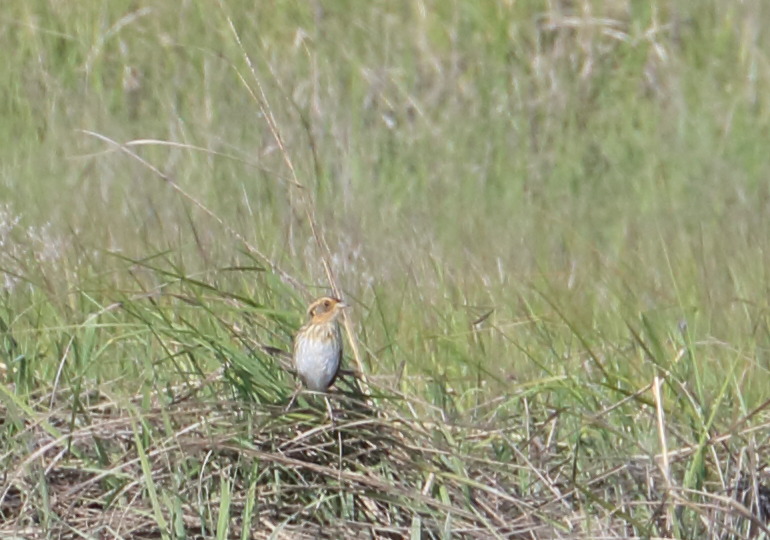
As we continued to explore, we got better looks at all of these birds in various places, along with Wilson’s Phalaropes, Willets, and Marbled Godwits. One bird high on our list was Nelson’s Sparrow, and at a little marshy area right next to the road, Braden was able to hear one, though my crummy hearing once again thwarted me.
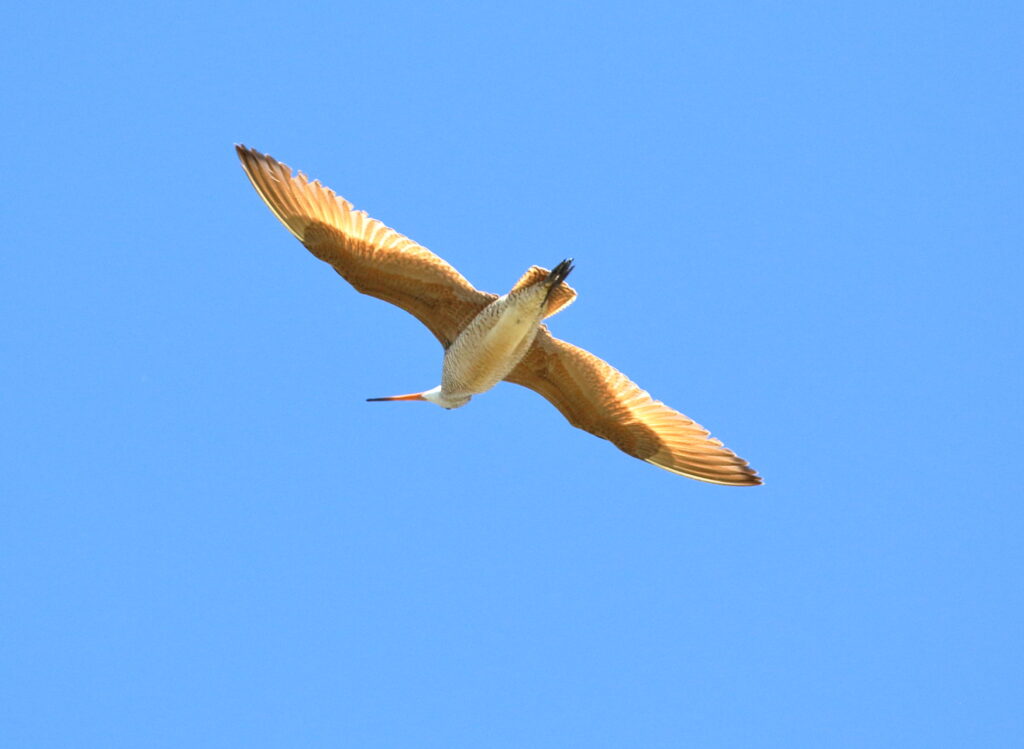
A Marbled Godwit checked us out as we were scoping other shorebirds.
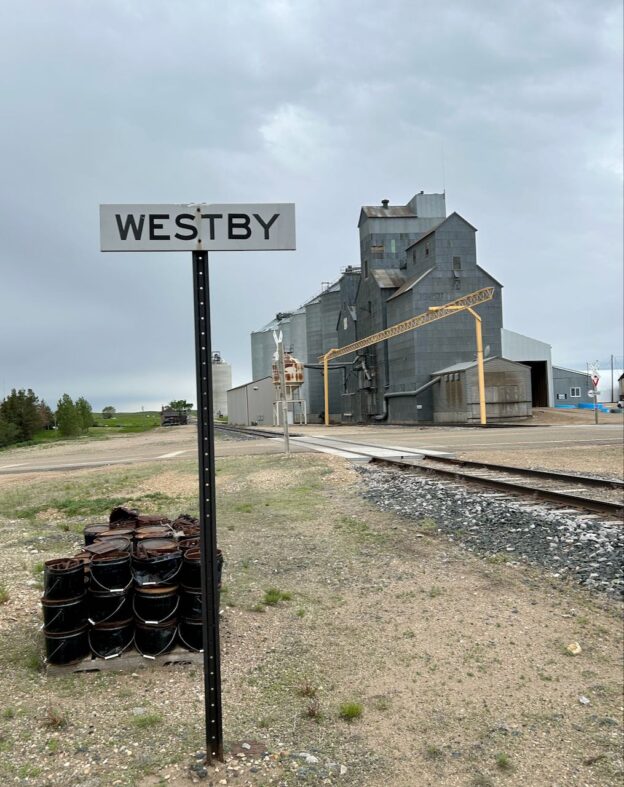
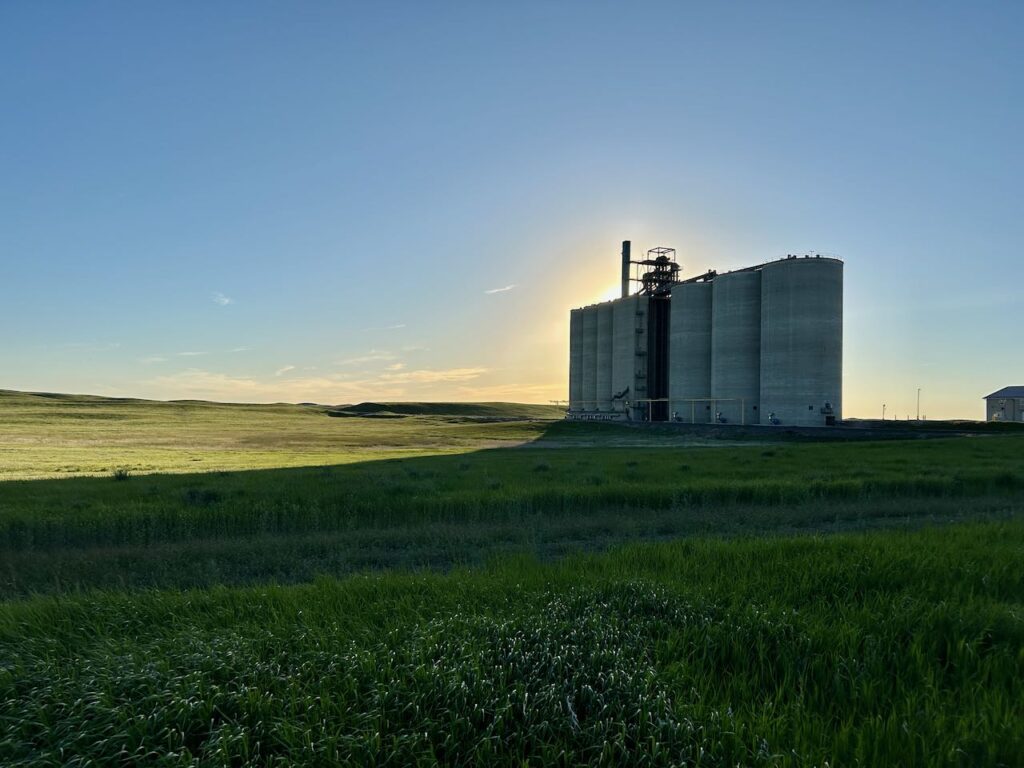
We continued to explore the rest of the day, both driving north and south of town and even making a foray across the border into North Dakota, where we picked up a respectable 23 species in a couple of miles. A wonderful development in Westby is a new AirBnB about fifty yards from the border and I had reserved it for two nights. That evening, I took a stroll through town to see what could be seen. No rare warblers, but I did have a lovely visit with a Brown Thrasher and gobs of American Goldfinches feeding on spilled grain next to the grain elevators looming over the north end of town. When I returned, a Say’s Phoebe was sitting on our house!
Thanks to our rented house, we hit the streets of Westby early the next morning. Again, no rare songbirds, but we did see a couple of Swainson’s Thrushes, along with Orchard Orioles and Purple Martins as part of our 22-bird list. Once again, our best surprises popped up as we explored surrounding areas. Venturing north we got great, close looks at the shorebirds we’d seen before, with a soundtrack of Wilson’s Snipe and Soras—one right next to the car—filling the air. Braden identified a Ferruginous Hawk flying overhead and we heard two Baird’s Sparrows and even a Sprague’s Pipit! Braden picked up at least four Nelson’s Sparrows and one popped up right next to our car, giving us our best look ever. Range maps don’t even show that Nelson’s reach into Montana, so this is a great place for birders to pick them up for their Montana life lists!
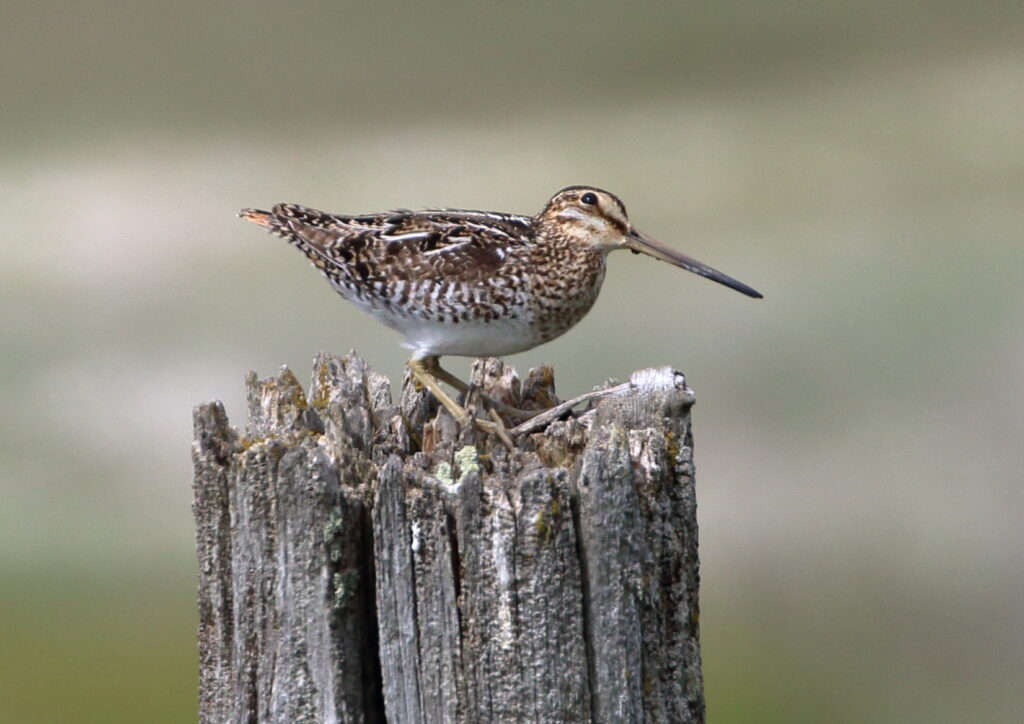
With few people on the roads, this Wilson’s Snipe took time to check out what we were up to.
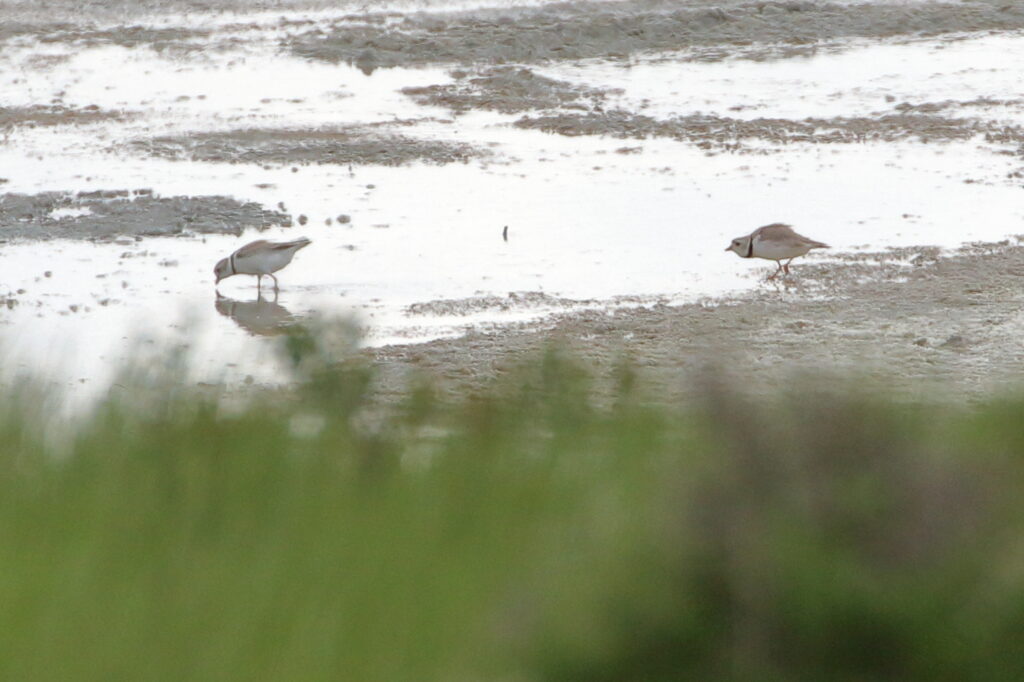
Still, the “catch” of the morning happened as we were skirting Round Lake. Ever since arriving, we had kept our eyes sharp for one particular shorebird. This morning as I drove, Braden suddenly yelled, “Stop!” We quickly got our eyes on it and then set up our spotting scope. It was none other than a Piping Plover! I had seen my Montana lifer PIPL last year with my buddy Scott, but this was Braden’s Montana lifer. Even better, there were two—one stalking another with obviously amorous intentions.
I think that Piping Plover on the left should be looking over its shoulder, don’t you?
North America has three distinct breeding populations of Piping Plovers: one in the Northeast, one in and around the Great Lakes, and one on the northern Great Plains. The world total population may have dropped to as low as 3,000 pairs, but the Great Lakes and Northeast populations have apparently been making a comeback. Montana, is home to a breeding population of perhaps 1-200 pairs of these delightful birds, but the outlook for the northern plains population may not be as rosy as it is for the Northeastern population. Frequent drought (exacerbated by climate change), poor water management practices, pesticides, and an increase of predators make its future dicey. Still, this near-threatened bird is hanging on and our fingers are crossed that some better management practices will also help it increase.
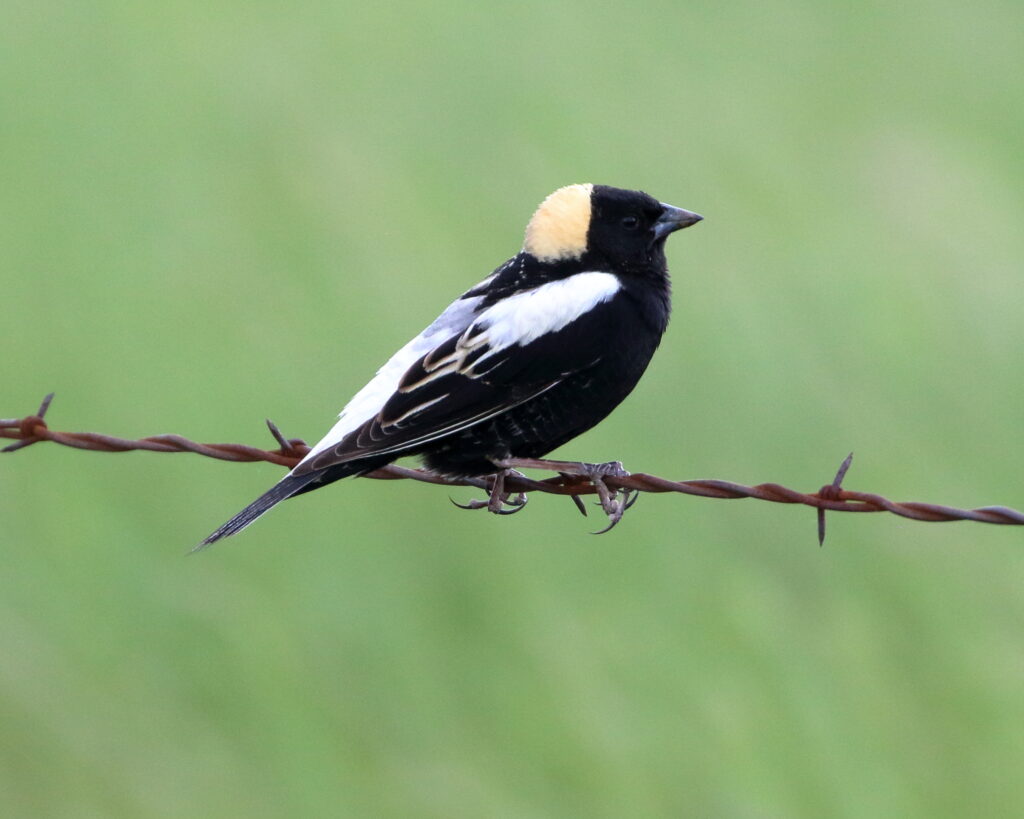
We got an amazing number of great Bobolink photo opportunities on the trip, including this one south of Westby.
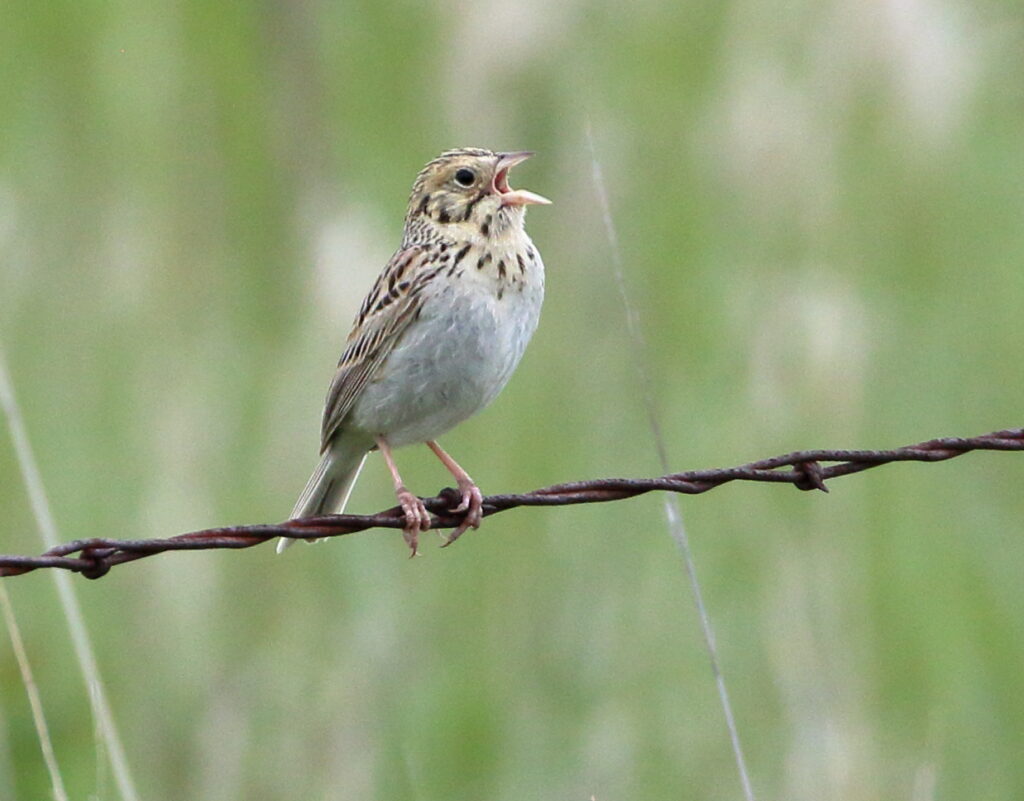
This Baird’s Sparrow popped up on the fence while we were scoping a brand new lake south of town.
In the trip’s spirit of birding new places, we decided to head down a new road south of town. We had low expectations, but soon encountered a lake with lush green grasses surrounding it. We got out to scope the lake and discovered at least 250 Sanderlings out on a sand bar. It is while we were scoping that we got our biggest surprises, however. Grassland birds just kept popping up on the barbed wire fence to check us out or perch on plants very close to us. During the next forty or fifty minutes, we got incredible looks at Bobolinks, Baird’s Sparrows, Chestnut-collared Longspurs, Grasshopper Sparrows, Clay-colored Sparrows, Horned Larks, and of course, Savannah and Vesper Sparrows. Every time we looked up, there was another great bird not fifty feet away. It truly was one of the coolest things we’ve ever experienced—and was a great reminder to keep taking the road not birded!
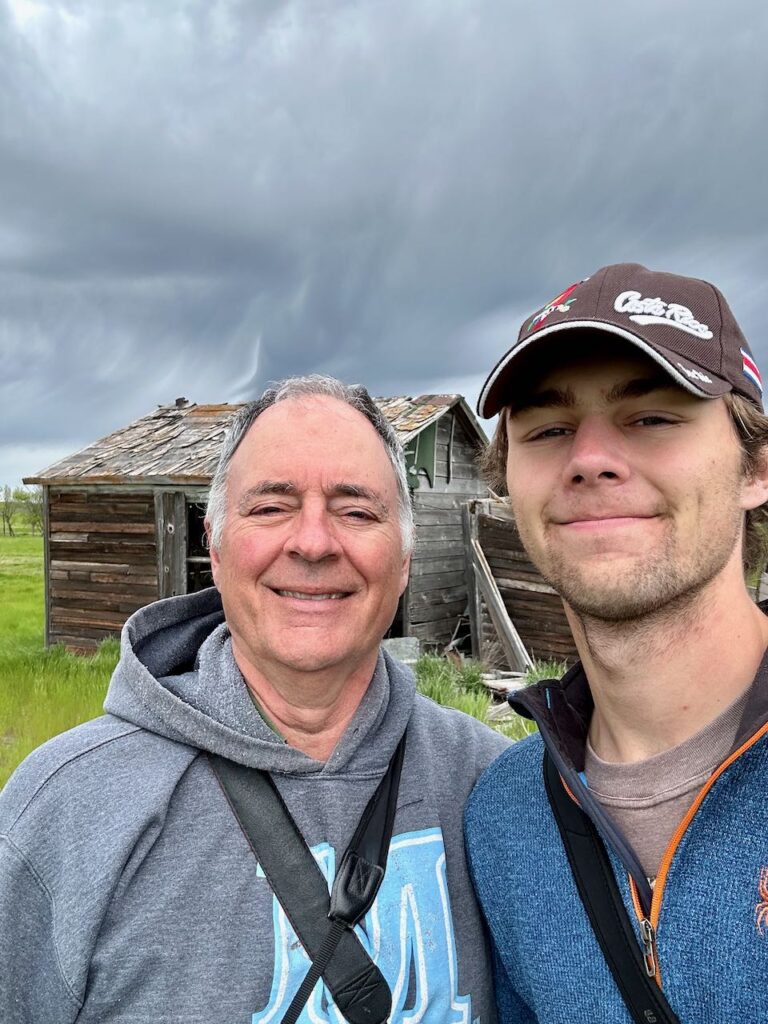
It’s become a tradition to visit this old homestead every time we trek to Westby. Each visit, the old place loses a bit of ground. Soon it will be part of the prairie earth.
In case you missed our last post, Sneed’s new book, Like No Other: Earth’s Coolest One-of-a-Kind Creatures, is now out just in time to enhance summer science education. To order, click on the book jacket in the right column!
Have you ever contemplated attending a birding festival? Braden and I have attended festivals in Monterey Bay, San Diego, and Rockport-Fulton near Corpus Cristi. All were terrific. I have to say, though, that our favorite is right here in Montana. After last year’s Wings Across the Big Sky birding festival in Great Falls, I was skeptical that this year’s fest in Helena could match it. How wrong I was! This year’s festival would not only prove wonderful in itself, but provide the perfect launch pad for Braden’s and my 13-day birding safari to eastern Montana. In fact, even before we reached Helena, Braden made what may be his greatest Montana bird discovery yet.
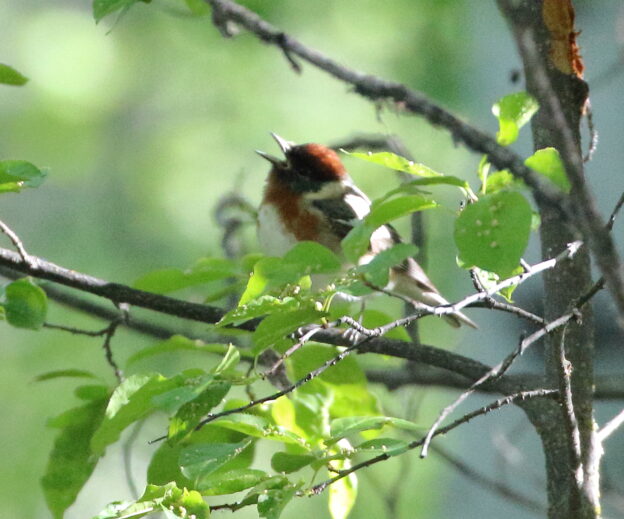
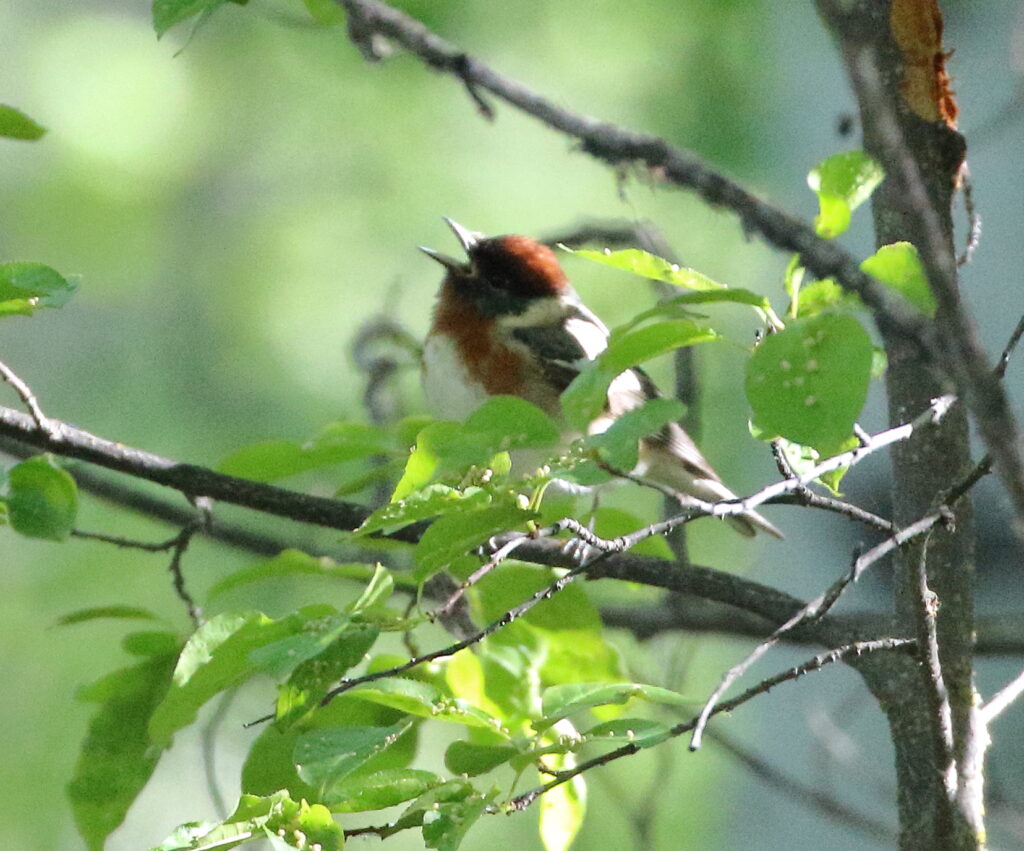
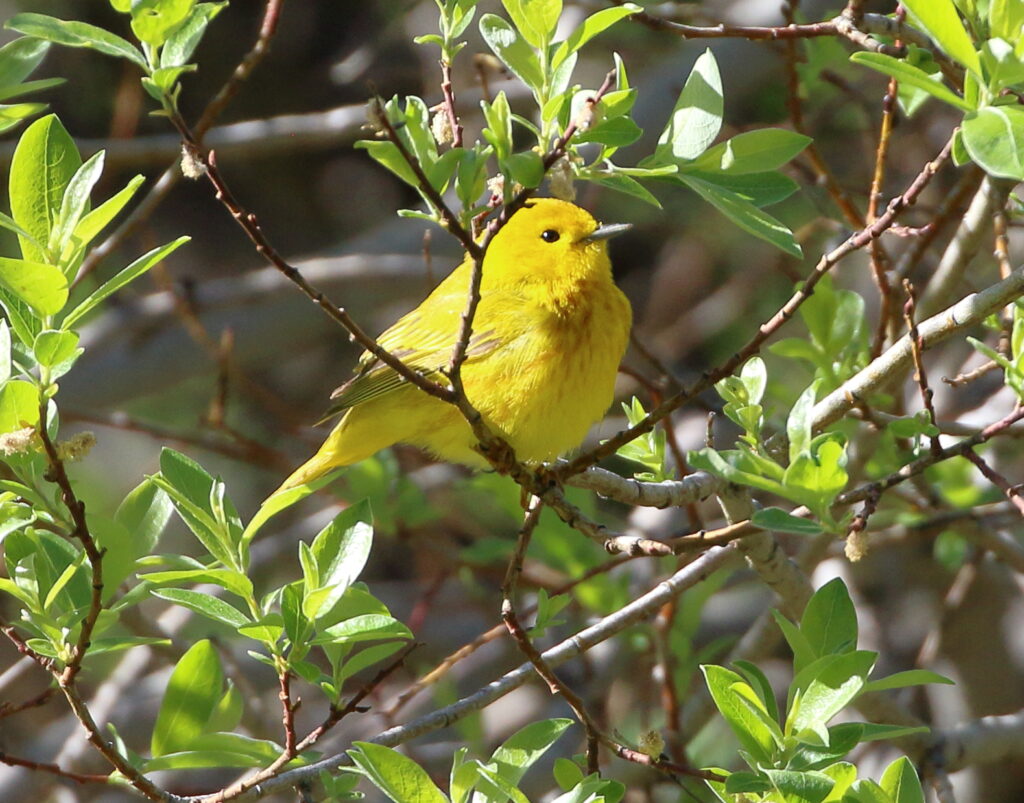
We left Missoula early on Friday, May 31st. Our first destination? Browns Lake, site of many past wonderful birding experiences—but nothing like we would have today. After the turnoff to Browns Lake, we always stop at a little riparian area and, as usual, got out to listen and look. Right away, we heard Dusky Flycatchers, Warbling Vireos, and Yellow and Yellow-rumped Warblers. Then, Braden heard an American Redstart and began “pishing” it in so that we could catch a look. I had my camera focused on a Yellow Warbler when Braden urgently hissed, “Daddy! Get over here now!” I rushed over to find him training his binoculars on a mind-blowing find: a Bay-breasted Warbler!
Perhaps Braden’s best Montana bird find ever, this glorious male Bay-breasted Warbler gave us great looks despite my horrible photos. This bird made the Montana Rare Bird Alert.
For those of you who don’t know it, Bay-breasted Warblers breed mainly in spruce forests of northern Canada across to the far northeast of the U.S. During migration, they almost never pass through eastern Montana, not to mention western Montana. True, I had seen a female in Missoula several years ago, but the gorgeous male in front of us shouldn’t have been anywhere within 500 miles of where we were standing—and, accordingly, made Montana’s Rare Bird Alert.
With that auspicious beginning, we happily proceeded to Carroll College in Helena for the Wings Across the Big Sky opening banquet. That featured an excellent talk by Tiffany Kersten, who set the Lower 48 Big Year record in 2021, and spoke eloquently about the challenges of birding as a solo female. Tiffany now is the proud owner of NatureNinja Birding Tours, and I can only guess that her guiding and tour experiences are not to be missed.
Usually uncooperative, Yellow Warblers gave us great looks at Vigilante Camprground near Helena.
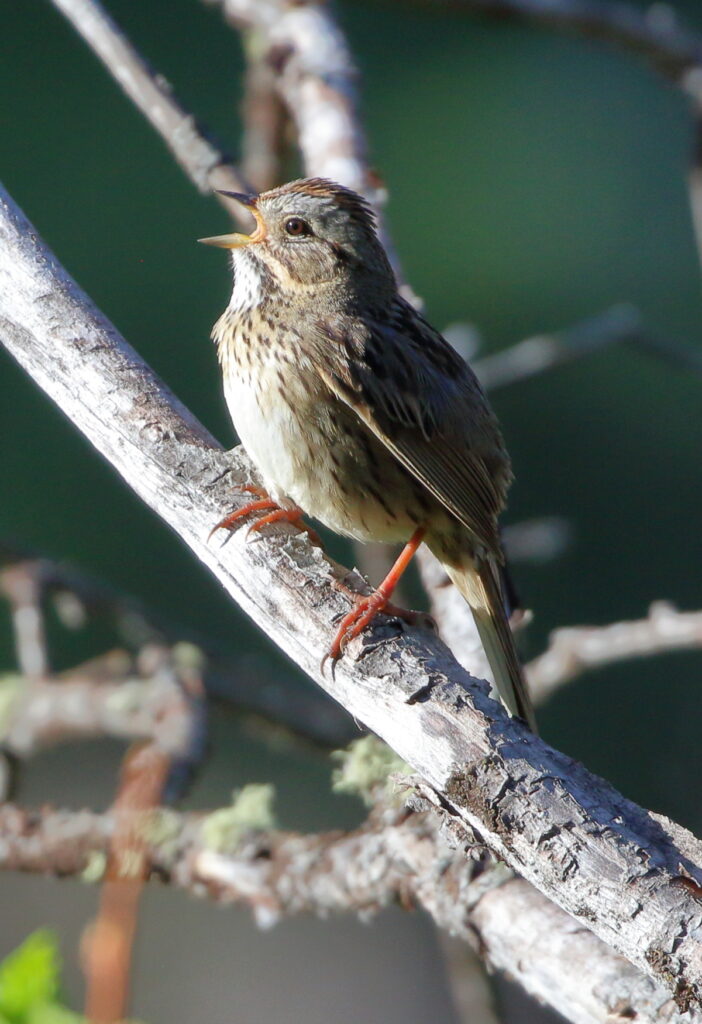
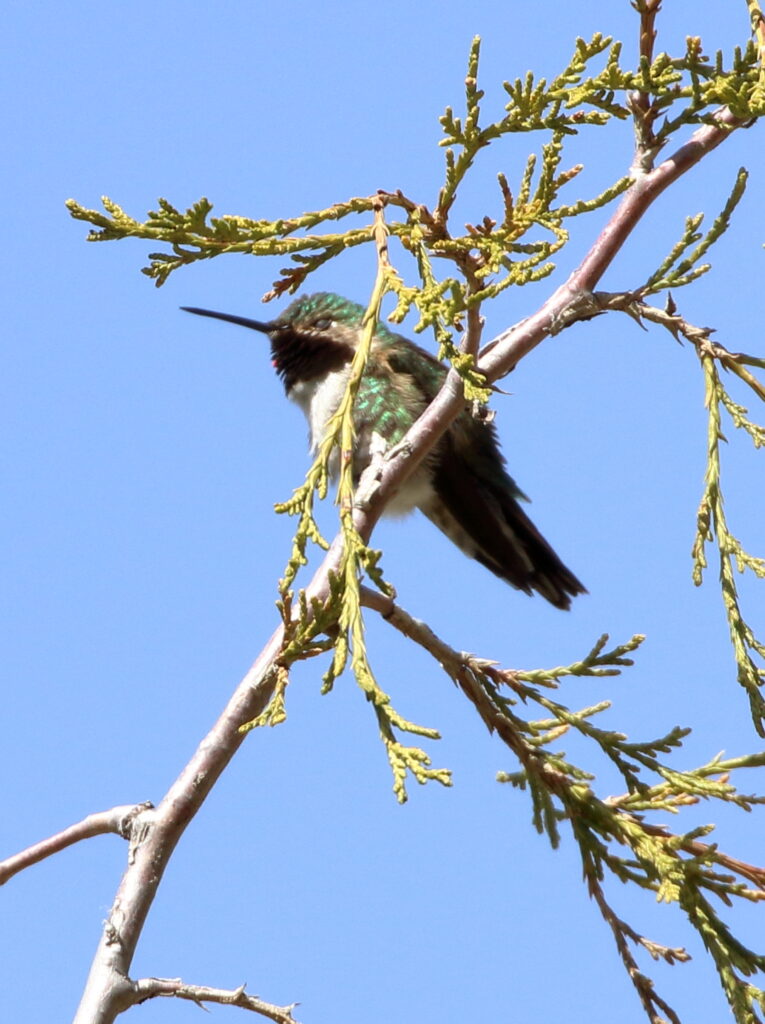
Saturday morning, Braden and I convened at the festival breakfast for our first field trip, led by the highly-skilled veteran Montana birder, Sharon Dewart-Hansen. We were excited about the field trips we had signed up for because they would take us to places we had never before birded, and Sharon led us to Vigilante Campground northeast of Helena. After driving up a spectacular canyon, about 15 of us piled out to bird. Immediately, a Broad-tailed Hummingbird loudly buzzed us—a Montana Lifer for both Braden and me. Walking the campground, we were regaled with the songs of Ovenbirds, MacGillivray’s Warblers, Hammond’s Flycatchers, Veerys, and always my personal favorites, Lincoln’s Sparrows. A Ruffed Grouse drummed cooperatively several times.
Have I posted more Lincoln’s Sparrows than any other bird on FatherSonBirding? Perhaps, but who can blame me? I just love these guys!
After scouring the campground, we headed up canyon on foot and were treated to Violet-green Swallows and White-throated Swifts. On the way to the Vesta Cerra Ranch, whose owners generously allowed us to stop to eat lunch and admire their hummingbird feeders, we stopped for better looks at Broad-tailed Hummingbirds!
This Broad-tailed Hummingbird was a Montana Lifer for both Braden and me. These birds are quite rare and localized in the state, with the heart of their breeding range south of Montana.
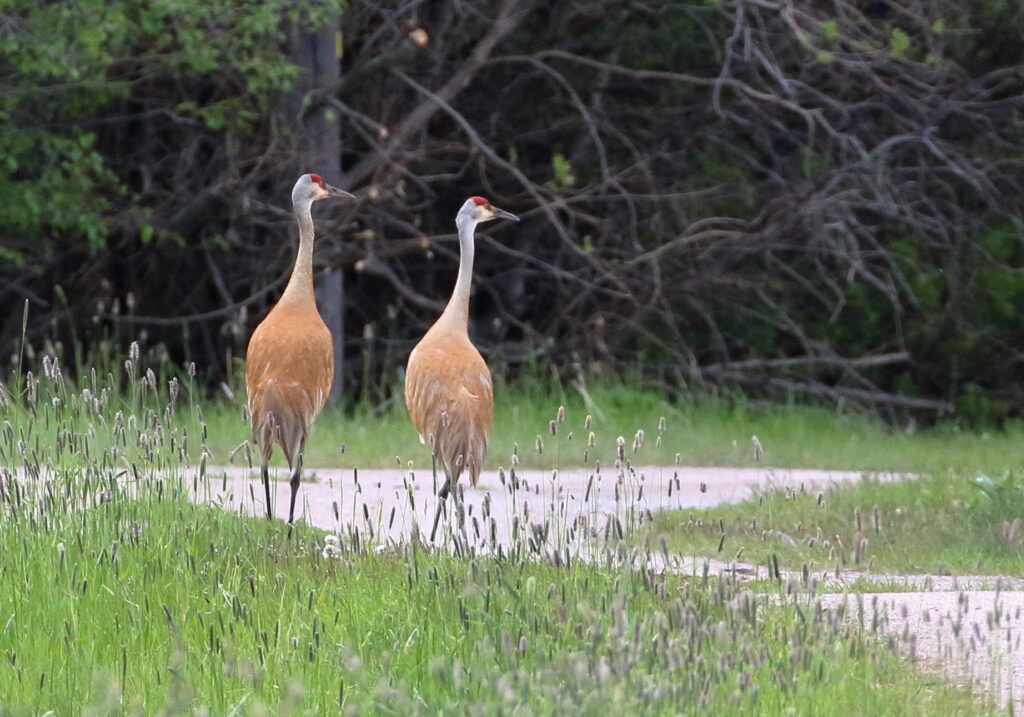
After packing up our car early Sunday morning, we headed out for our second field trip, guided by expert Montana birders Hilary Turner and Andrew Guttenberg. Once again, we were treated to fabulous birding through brand new territory that featured awesome grassland, riparian, and canyon birding. The highlight was a visit to the private Phantom Springs Ranch, where we recorded 45 species, including wonderful looks at displaying Bobolinks. Here, two Sandhill Cranes tried to join our group, but we had to politely inform them that our field trip was full.
These two Sandhill Cranes tried to join our group at Phantom Springs Ranch, but we had to politely turn them away.
After birding several other wonderful spots northwest of Helena, Braden and I sadly said goodbye to our intrepid birding companions. That sadness quickly turned to excitement, however, as we steered north on the next stage of what would become a 2,500-mile birding extravaganza . . .
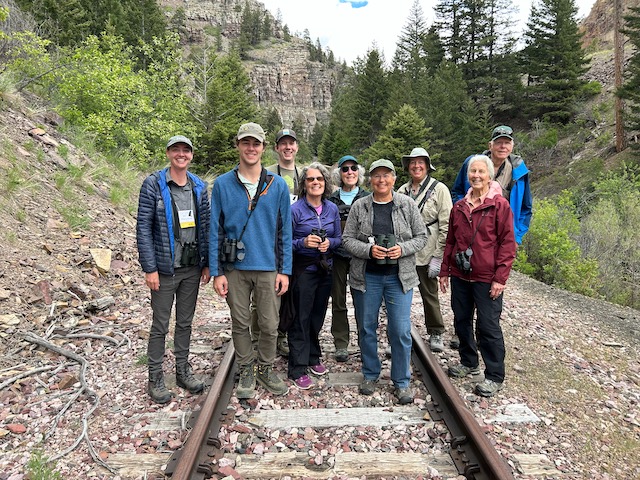
Led by trip leaders, field biologist Hilary Turner (far left) and Andrew Guttenberg (third from left), our group enjoyed superlative birding in places Braden (second from left) and I had never before explored.
Our thoughts go to all of the Californians getting hammered by unprecedented rains right now, and we hope that you are all staying safe—and preferably indoors. While the Southwest is getting one historic climate event, Montana has been getting another: record heat and dryness. Both of these add a heightened sense of urgency to tackling climate change by reducing greenhouse emissions and promoting renewable energy. And, of course, these events are certainly impacting birds. Last week, I had a chance to explore one of our nation’s most pristine areas to see what the birds are doing.
Even before I moved to Montana in 1996, I had visions of visiting the Many Glacier Valley in the depths of winter. In college, I had spent the best summer of my life working as a cook at Swiftcurrent Motor Lodge, and had returned to the valley many times since then—but never in our darkest, coldest season. What would this wonderland be like covered in snow and ice? Last week, almost fifty years after working there, I got a chance to find out. The only thing missing? Winter itself.
I had been invited to spend four days visiting with pre-K through grade 1 students in Browning, Montana, a trip I looked forward to for many reasons, including the chance to learn more about Blackfeet culture and explore the area. As a bonus, I would be working mainly in the afternoons, freeing up the mornings for birding and other activities. As the librarian and I put together the trip, however, I never imagined that I would be visiting during an unprecedentedly warm winter in which temperatures were breaking records daily and the landscape stood almost devoid of snow.
On the drive to Browning, I stopped at the Freezeout Lake wetlands complex near Great Falls and counted several thousand Canada Geese and Mallards. To my surprise, the geese were flagged as rare on eBird for this time of year. Why? Because the lakes are almost always frozen in January and February, but this year large areas of open water shimmered, inviting both geese and ducks.
The disturbing presence of open water at Freezeout Lake is attracting its share of Canada Geese and Mallards this “non-winter.”
Reaching the outskirts of Browning, I turned right for a side trip to Cut Bank. In a normal winter, this entire area would be covered in snow, providing a chance to find Snowy Owls, Snow Buntings, and other typical winter birds. Not today. Driving mud and gravel back roads, I was lucky to find a solitary Rough-legged Hawk on a telephone pole. I did flush one group of 15 smaller birds that I assume were Horned Larks, but nothing else of note. In fact, the main birds I was seeing were the stalwart ravens, magpies, House Sparrows, starlings, and pigeons.
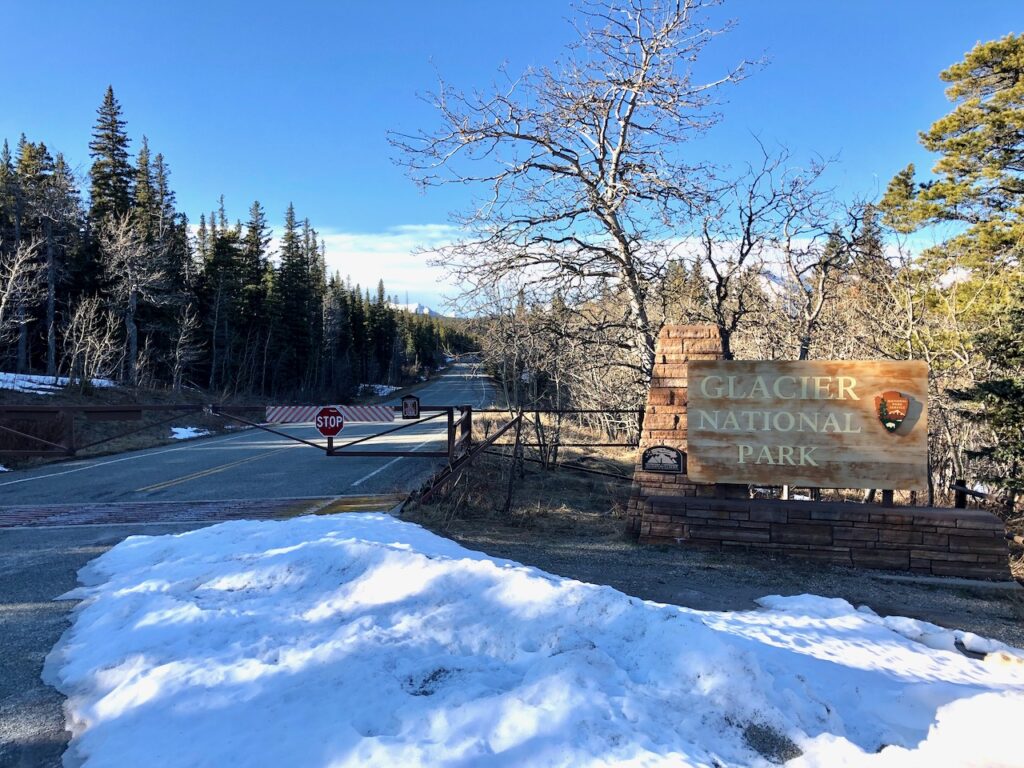
When Thursday rolled around, my birding hopes rose as I got up early and drove toward Babb, the entrance to the Many Glacier Valley on the east side of Glacier National Park. I had no idea how much of the road was open, but made it to the park boundary at Lake (reservoir) Sherburne dam. There, I parked and donned my camera and binoculars.
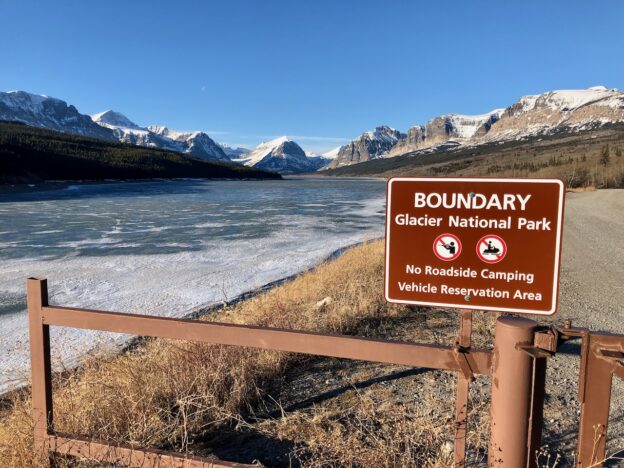
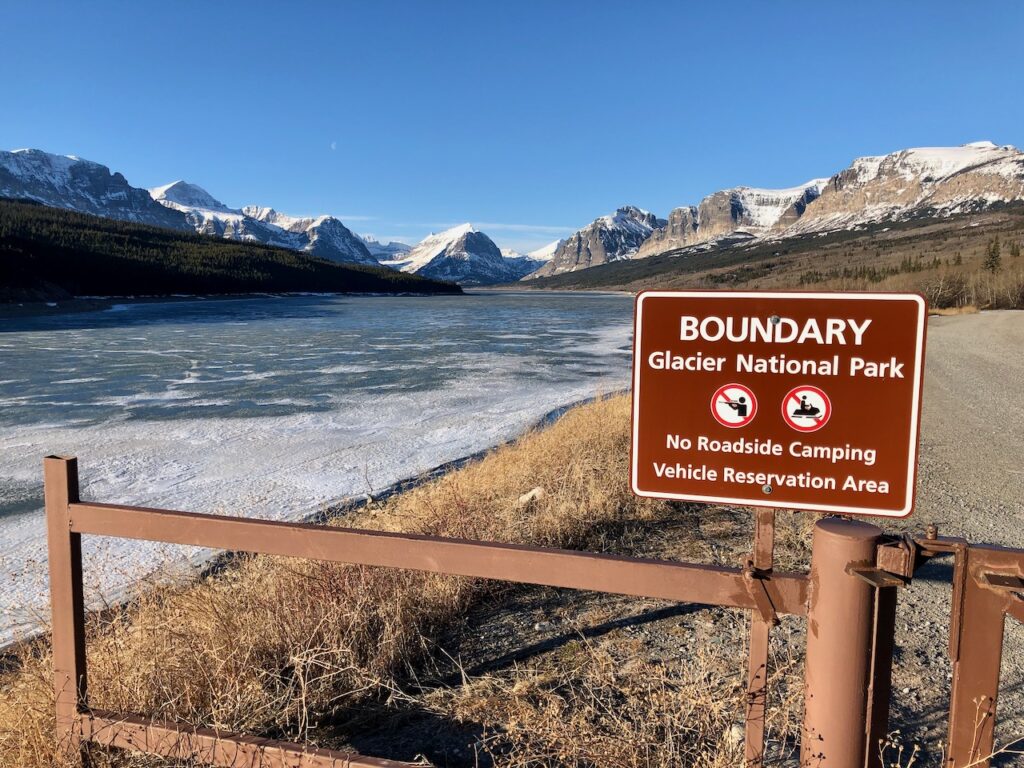
The Lake Sherburne Reservoir at the Glacier National Park boundary, where I began my jaunt into the Many Glacier Valley.
I couldn’t have asked for a more astonishing day. By 9:00 a.m., temps had reached into the mid-30s and were rising rapidly. Despite an extremely dry winter, a thin layer of snow covered the spectacular peaks of the continental divide and full sunlight created an unparalleled, dazzling landscape. As an extra “cherry,” a waning gibbous moon slowly sank toward 9,300-foot Mount Allen. I paused to take a deep breath and appreciate that I was probably the only person on earth observing this incredible scene. Then, I set out.
A raven greeted me as I stepped into the park, but I wondered if I would see any other animals. Would a grizzly bear be taking a mid-winter stroll on a day this warm? I didn’t know, but spotted no other critter as I walked half a mile along the reservoir. I didn’t have a great deal of time, so I turned around after 20 minutes, and as the day continued to warm, a few birds made an appearance. I heard Black-capped Chickadees and a woodpecker drumming in the distance. Then, a grouse burst out of some stunted aspen trees to my left. I desperately watched it flying away, looking for any ID clues, but alas, I just don’t know grouse well enough to be sure. The bird was gray, however, and the habitat was wrong for Ruffed and Spruce Grouse, rendering a 95% probability of Dusky Grouse, but since I wasn’t sure, I didn’t record it on eBird.
Despite the incredible scenery, I was feeling a bit thwarted bird-wise, and calculated that I had time for another hour of exploration, so I drove back out to Babb, turned left, and then left again on the road leading to the Canadian border and Waterton Lakes National Park. My mission? To find Boreal Chickadees! In fact, I was driving the very road where Braden and I had discovered our lifer BOCHs three years before (see post “Are you ready for . . . the QUACH?”). That had been during early covid days when hardly a soul traveled the road. Would I be able to find any birds today?
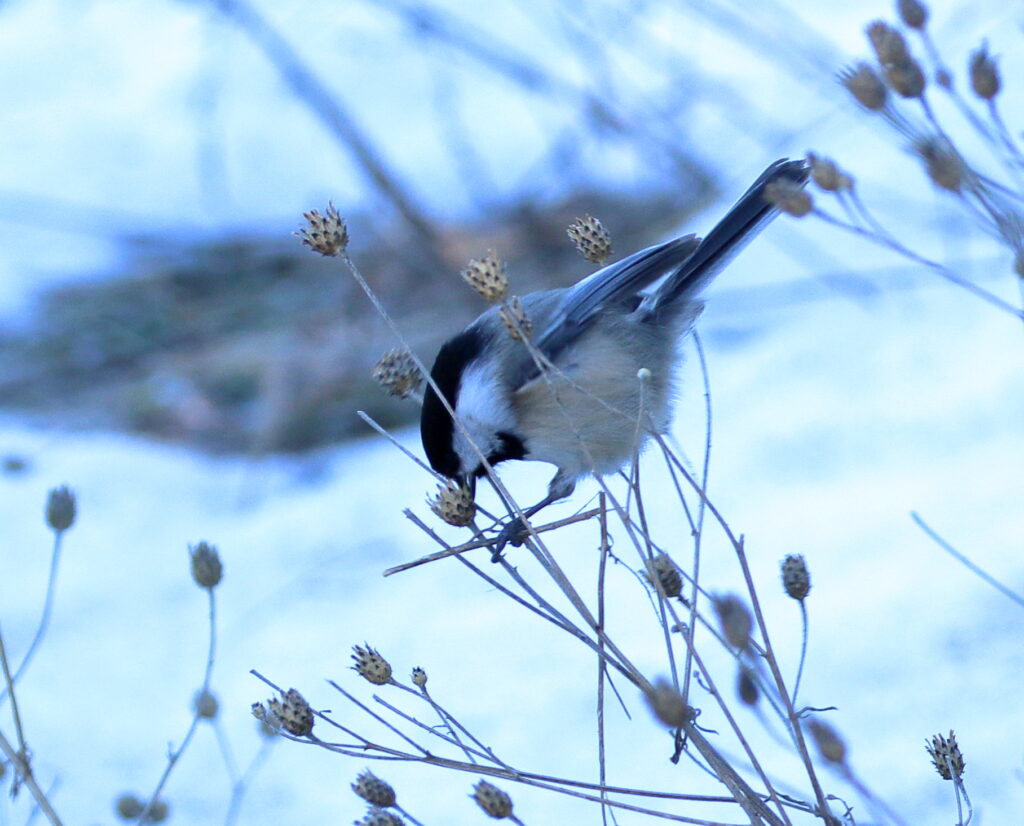
My first chickadee sighting along the road proved to be a mixed flock of Black-capped and Mountain Chickadees feeding on knapweed seed pods—perhaps for insect larvae. Cool, but not the object of my quest.
The road wound its way up through scenic pastures and aspen groves, climbing steadily until it reached conifers—all under the magnificent gaze of Chief Mountain. As before, I passed not a car along the way. I pulled over twice and played the calls of Boreal Chickadees, but no bird responded. Then, I actually saw a flock of chickadees up ahead and eagerly braked to a halt.
Not BOCHs. Instead, a mixed flock of Mountain and Black-capped Chickadees, with a Red-breasted Nuthatch joining them.
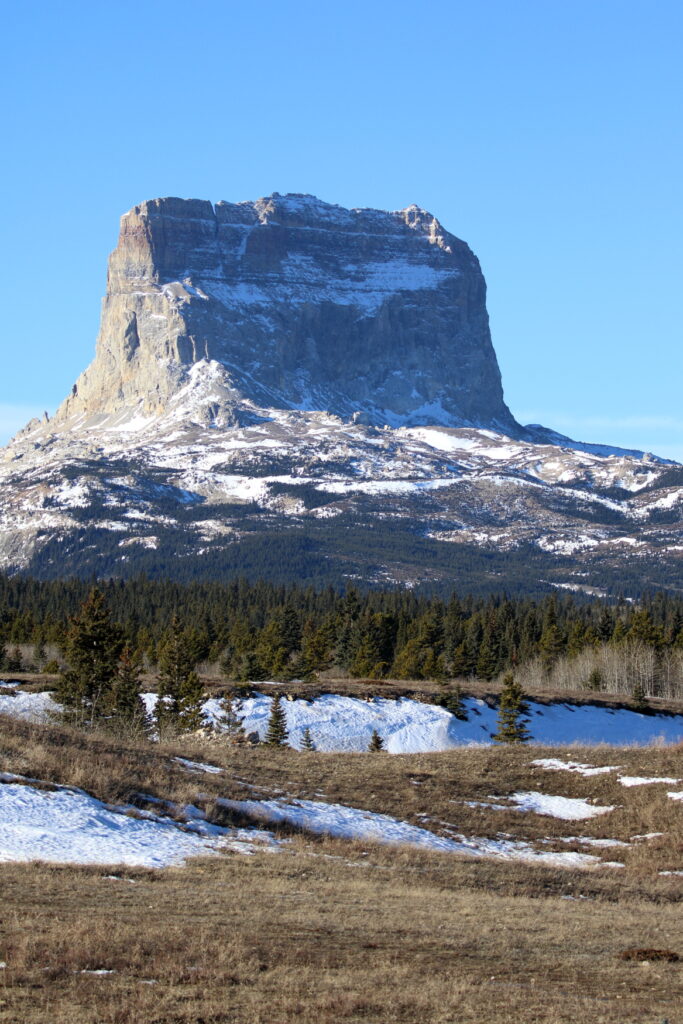
One of Glacier’s most iconic mountains, Chief Mountain stands watch over the northeastern part of the park, including the road up to Waterton Lakes National Park.
Undeterred, I continued, and soon stopped for another flock of Black-cappeds. I wondered how much exploring I had time for, but passed a Border Patrol truck and soon was forced to stop at the closed boundary of Glacier National Park. Turning around, I again parked to play a BOCH call with no luck. The Border Patrol truck approached and the agent rolled down his window for a chat. I told him what I was looking for and asked him if he saw many birds along this stretch. “Some Stellar’s Jays,” he answered, “but not a lot else.”
I thought the road to Canada’s Waterton Lakes National Park might be open, but alas, no. Fortunately, the chickadees were on my side of the boundary!
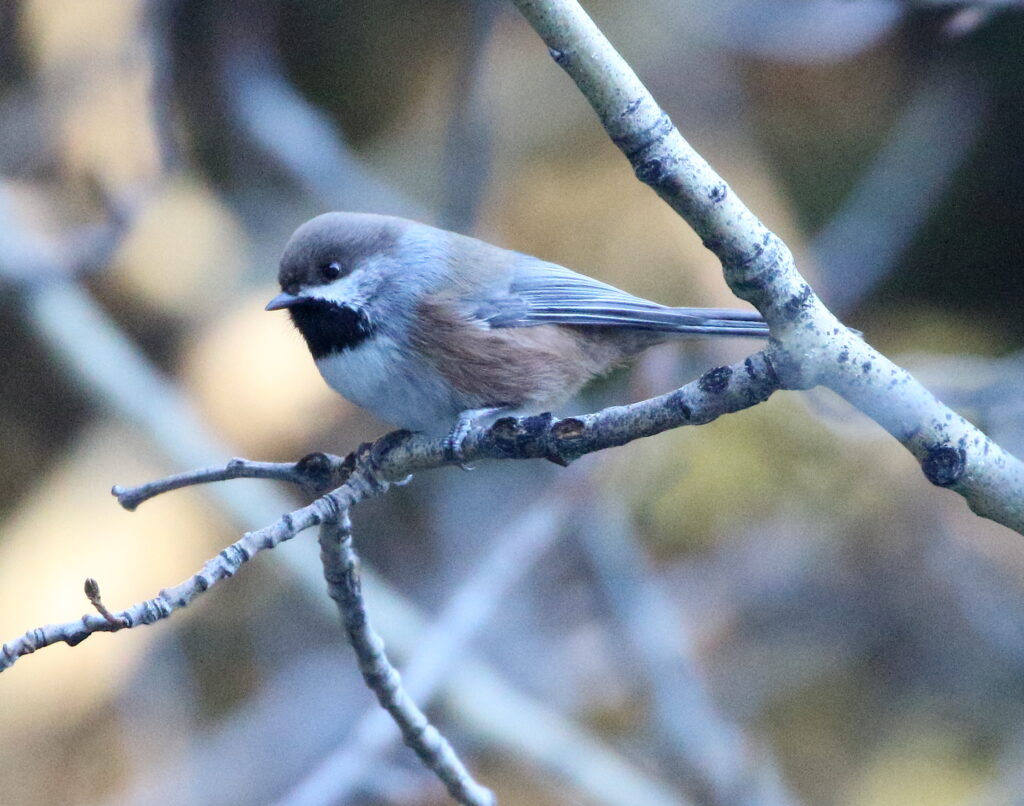
I wished him a good day and continued driving back toward Babb. Before the road began descending again, a large pull-out opened up on the left and I stopped one last time. Not expecting much, I played a BOCH song and made some pishing noises. Within moments, six chickadees surrounded me! Boreal Chickadees!
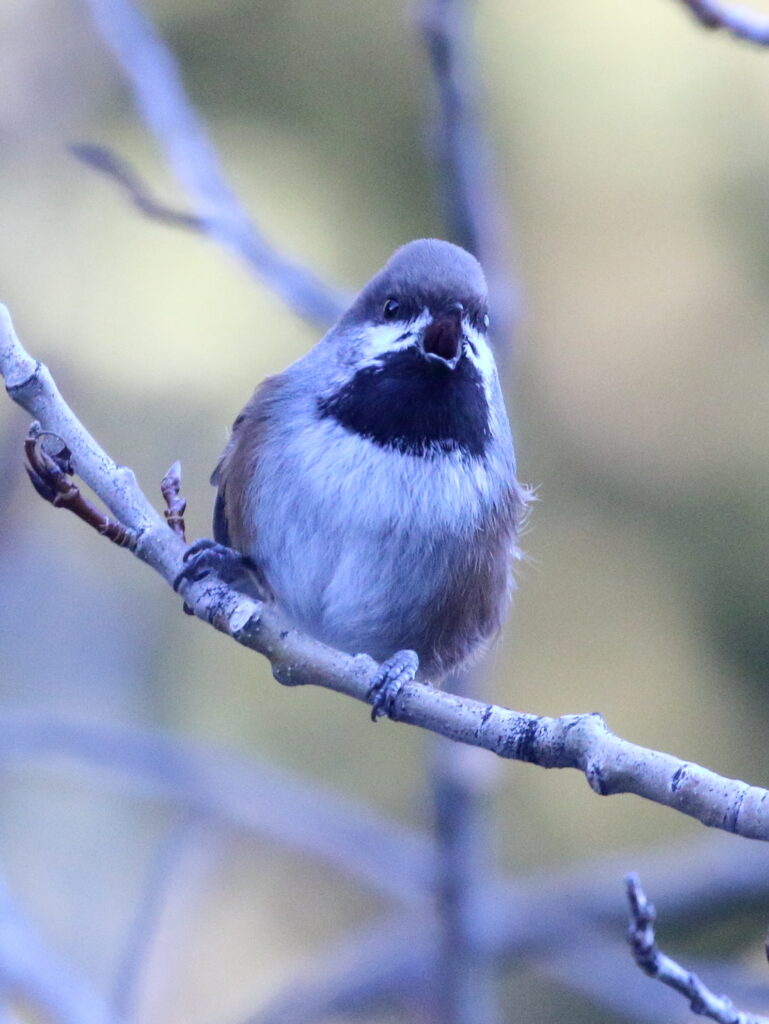
With their curiosity and handsome features, Boreal Chickadees may just seize the title for Most Delightful Chickadees.
The chickadees were much more curious about me than their congeners (animals in the same scientific genus, i.e. the Black-capped and Mountain Chickadees). The Boreal Chickadees flew back and forth above me and called from nearby branches. I even nabbed some decent photos. I spent ten or fifteen minutes with them, barely believing I was having such a great experience with these elusive, high-altitude and high-latitude songbirds. It once again renewed my appreciation for living and birding in Montana, since this region is one of the few places this species dips into the United States from its main distribution in Canada.
This Boreal Chickadee might have been auditioning for the Chickadee Choir with how much it called to me.
Feeling satisfied and grateful for such a marvellous morning, I headed back to Browning, spotting only a few ravens and Rough-legged Hawks along the way. No matter. The BOCHs and breathtaking views of the Many Glacier Valley had made this a day I would never forget. Now if we can only get some snow.
I had thought about everything I needed for the two-day trip to Cape May, New Jersey. Tent and sleeping supplies, check. Food and water, check. Cash for toll roads, check. Nothing could go wrong, right? And then, I turned on the field vehicle and promptly backed it into a fence post.
Thankfully, as my crew leader Tyler Hodges assured me later, the damage was limited to some paint marks and a small crack on the plastic on the end of the Jeep, and I was soon on my way, navigating Pennsylvania and New Jersey highways as I headed east, then south. My days off this summer would be limited to one per week, which meant any and all birding trips would have to be quick, even more so than last summer. This one, my first of the summer, was just about as quick as possible, as I planned to spend the night in southern New Jersey and drive back to the Pocono Mountains of northeastern Pennsylvania the following afternoon. I had rarely driven this far on my own, so I made sure to take as many breaks as necessary as I drove south. One of these included a fifteen-minute rest at a place called Cheesequake State Park in northern New Jersey, which produced a very cooperative Great Crested Flycatcher, calling on top of an exposed branch as I walked into the park bathroom. Good birds already!
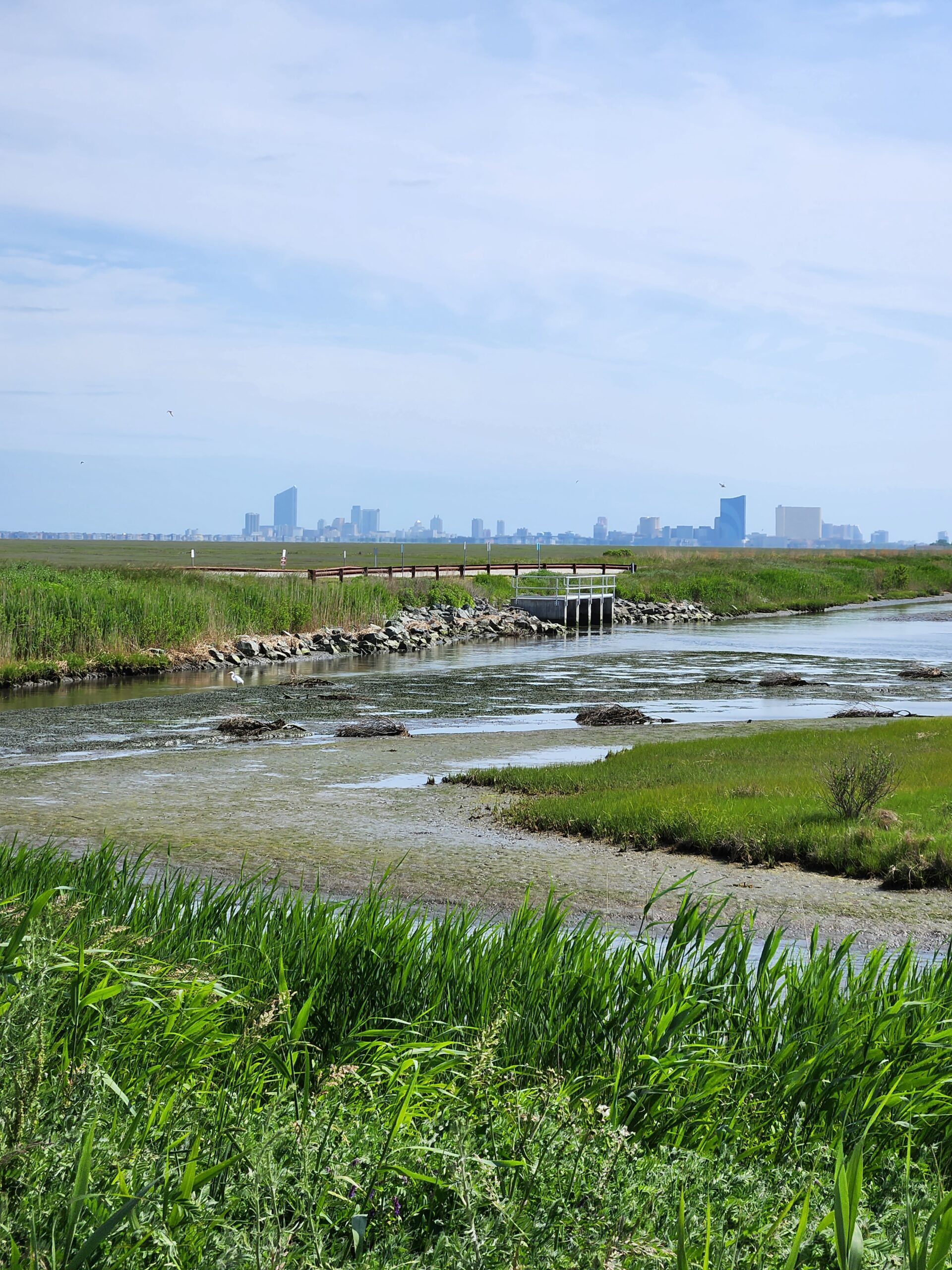
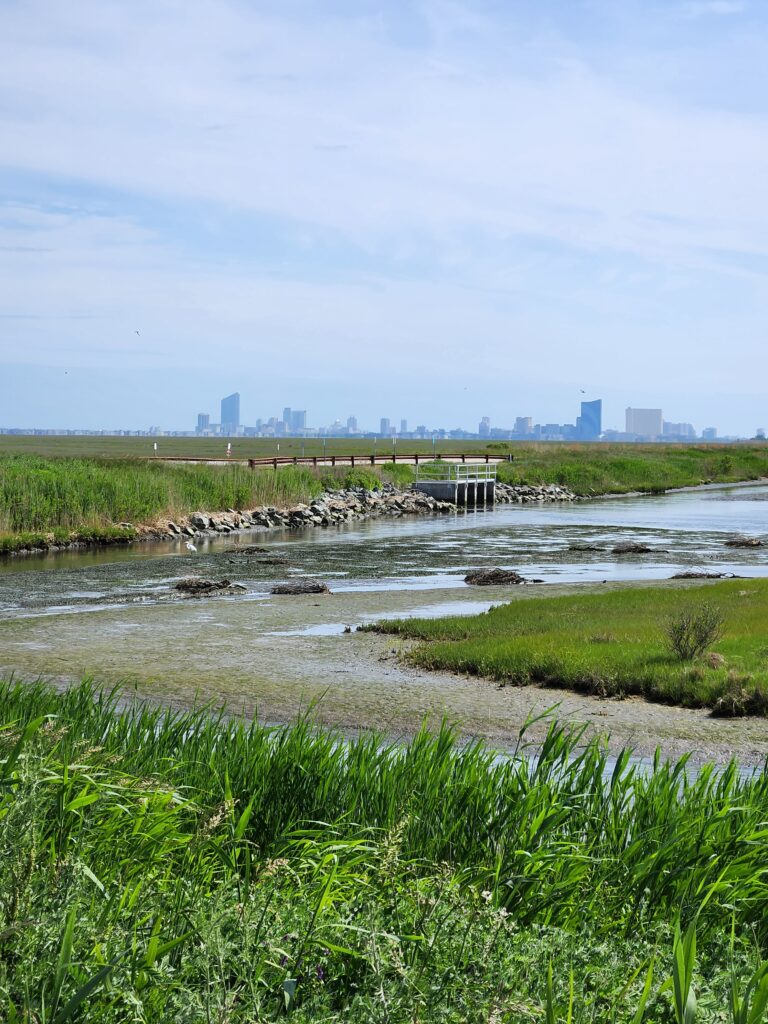
Edwin B. Forsythe National Wildlife Refuge with “America’s Playground”, Atlantic City, on the horizon.
At around 2 p.m., I pulled into Edwin B. Forsythe National Wildlife Refuge, the birding hotspot that had originally caught my eye and led me to take this trip. The primary target birds I had here were Gull-billed Terns, one of the last common North American terns I had yet to see. These odd-looking terns lived on coasts all over the world, and this wildlife refuge was their most northern colony in North America. As I paid my entry fee and started the loop drive around the refuge, I could quickly see why the terns loved it here. An expansive saltmarsh sprawled before me, interspersed with patches of open water and exposed mudflats. I could see both the skyscrapers of Atlantic City and the blue horizon of the Atlantic Ocean in the distance. I had timed my visit so that I would arrive during the low tide, targeting a group of birds that my dad and I always seem to be chasing: shorebirds. Sure enough, the mudflats in front of me were covered in them. Hundreds of tiny Semipalmated Sandpipers probed the mud, extracting invertebrates with their bills. A buzzy song came from the grasses on the opposite bank from me, and I lifted my binoculars to reveal a male Seaside Sparrow, belting his little heart out. I’d gotten my lifer Seaside Sparrow last year in Florida, but these were far better views, which would continue to improve throughout the day.
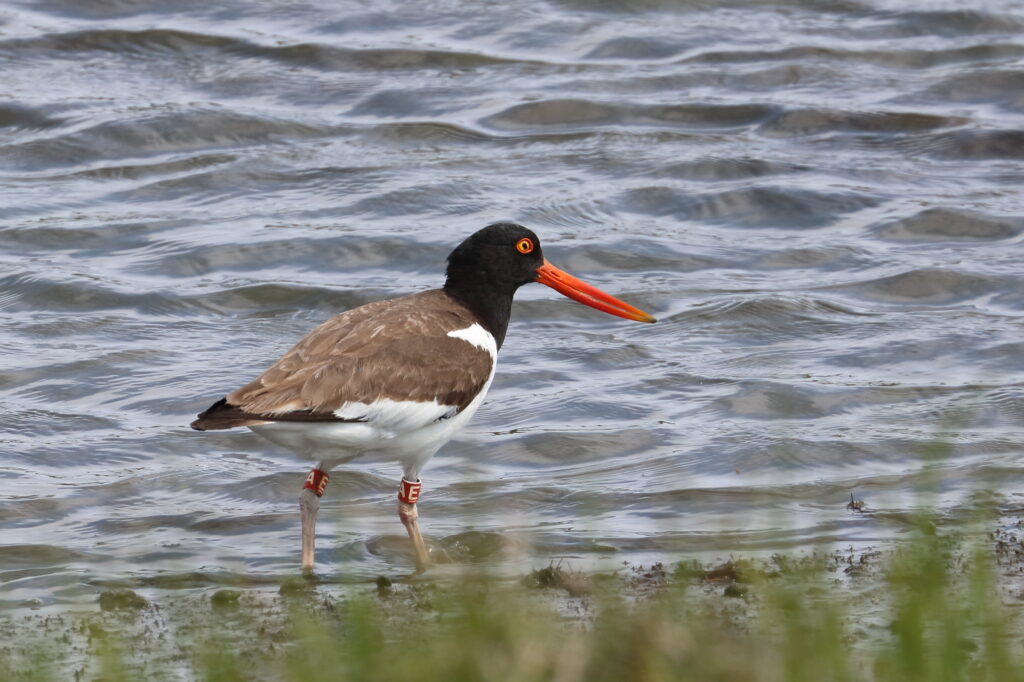
A banded American Oystercatcher.
As I continued driving, the birds just kept coming. Semipalmated Sandpipers were not the only shorebirds taking advantage of the exposed mud, although they were by far the most numerous. I was granted close views of Short-billed Dowitchers, Dunlin, Ruddy Turnstones and Black-bellied and Semipalmated Plovers, all in their sharp breeding plumages. I spotted a Black-necked Stilt in one pond, an apparently rare bird here, and was treated to a few looks at a Whimbrel flock as it lifted from a field and flew over me. Later on during the drive, I added Least Sandpiper and both yellowlegs to my list. Almost all of these birds were on the move, having stopped here to refuel on their way to their arctic breeding grounds. There were a few resident shorebirds around, too, including the “Saltmarsh” Willet (a subspecies I had never seen before) and a single, banded American Oystercatcher in a ditch on the side of the road.
Apparently I had hit Edwin B. Forsythe at the perfect time, because all of the saltmarsh birds were out to play. Along with the Seaside Sparrows, I also glimpsed a few Saltmarsh Sparrows, a bird that I’d last seen with my dad in Massachusetts two summers prior. I had also spent my spring semester at the University of Maine working for Dr. Kate Ruskin, a Saltmarsh Sparrow researcher, so it was really cool to see the species that much of my work had revolved around! Unfortunately, this species is expected to go extinct by 2060 due to climate change-induced sea level rise, which would wipe out its entire nesting habitat. Lots of work is being done on the species, however, and hopefully some solutions arise to combat their disappearance. Along with the sparrows, I also was treated to fabulous looks at a Clapper Rail out in the open, and nearly double-digit numbers of Ospreys.
Saltmarsh Sparrows are some of the birds most threatened by rising sea levels due to climate change.
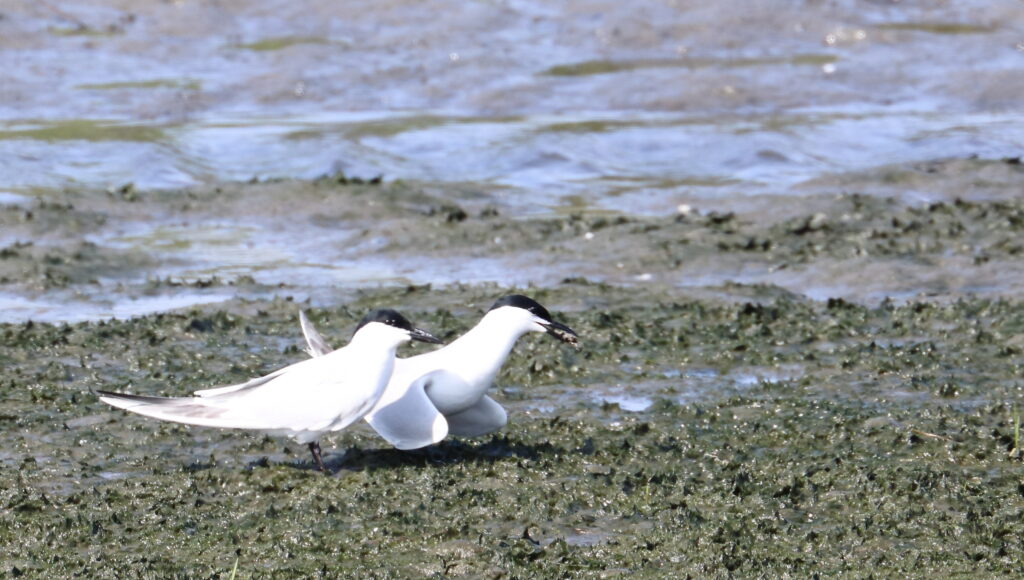
But the real treat at Edwin B. Forsythe was the terns. Forster’s Terns seemed to be in charge around here, and I saw dozens of them, plunge-diving into the shallow water for fish and resting on mudflats. There were also Least Terns, the smallest terns in the world, and one Caspian Tern, the world’s largest tern, providing great looks. One crowd of birders revealed a large flock of roosting Black Skimmers, also in the tern family, and always a joy to see. And, as I rounded a bend about halfway through the drive, I got my first lifer of the trip: three Gull-billed Terns, lounging on the mudflats! I stared at them for a while, admiring their blunt, black beaks. Unlike the other terns mentioned, Gull-billeds apparently never plunge-dive, instead preferring to eat crabs and other invertebrates. That likely explains the unique bill shape!
A quick glance at these birds reveals how they got their name, Gull-billed Terns.
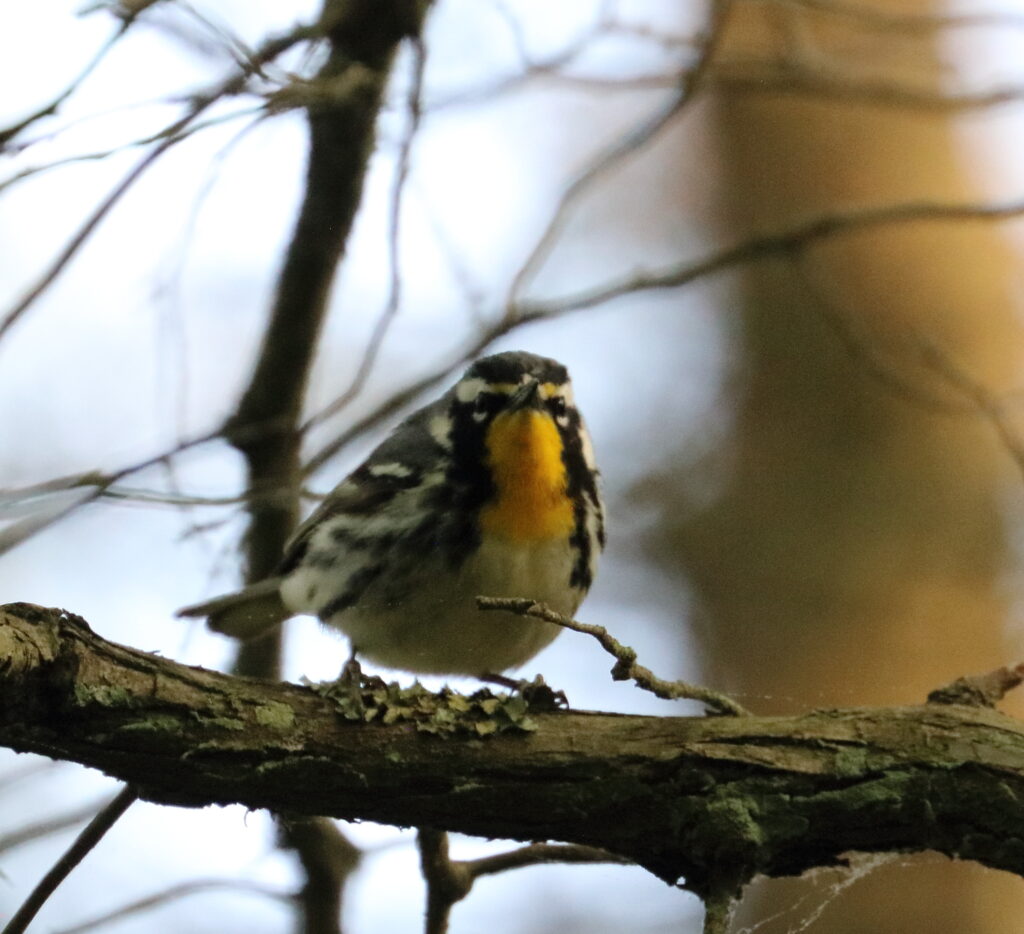
The sun began to hang low as I pulled out of Edwin B. Forsythe, and I headed for my next birding location, where I’d be staying for the night. Belleplain State Forest was located pretty far south in New Jersey, smack dab in the middle of the largest tract of Atlantic coastal pine barrens left in the world. This unique ecosystem was full of pine trees as well as a diverse assemblage of plants and animals, partially thanks to the area’s sandy soil. As I drove up to my campsite, I was reminded of the southeastern Longleaf Pine forests, the same ones that host Red-cockaded Woodpeckers and Brown-headed Nuthatches. While neither of those birds make it this far north, several southerners do, and I quickly set up my tent so I could get out and look for them. The campground bordered Nummy Lake, and I chose this as my focus, noting the tall pine trees and swampy terrain surrounding it. Within seconds, I heard my first target bird: a Yellow-throated Warbler. A little bit of pishing soon brought the bird into view: a beautiful gray, black and white warbler with a splash of yellow on the throat. My lifer Yellow-throated had been in a very similar habitat down at St. Marks National Wildlife Refuge in northern Florida the previous spring, though not quite as confiding as this individual. After checking me out, the bird returned to the tops of the trees, where it continued to belt out its song.
My second Yellow-throated Warbler proved much more cooperative than my first with my friend Nick at St. Marks NWR in 2022.
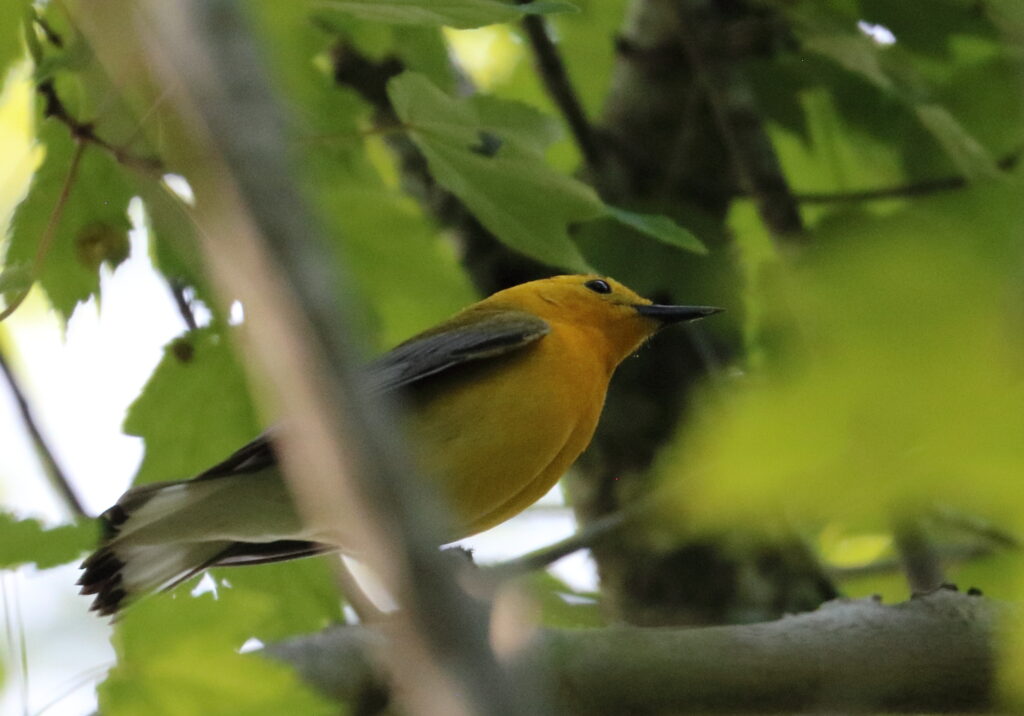
I picked up White-eyed Vireo, another more-southerly bird, as I kept walking, searching the trees for my second target at Belleplain. Then, in the distance, I heard a song that matched the recording on Merlin almost exactly, and made a beeline straight for that location. Once there, I played for the bird twice. No dice. I sighed. “I was really hoping to get this one. Oh well.” Suddenly, I heard a flutter of wings right above me. I looked up, to see a Prothonotary Warbler staring down at me from a branch no higher than two feet above my head. Even in the dying sunlight, it’s brilliant golden feathers stuck out against everything else. My jaw dropped. The Prothonotary flew over to a bush beside me, staring at me with curiosity and searching for the rival bird it had just heard. While I’d seen a lot of birds in the last few weeks, including a fair number of life birds, no bird had made my heart thump this hard inside my chest. A few incredibly special moments passed, and then the bird fluttered away, probably headed for bed, as I would be soon. The last time I had seen this bird was seven years ago, at High Island Texas, during my dad’s and my first big year. It had been the first bird on that trip to blow our minds, and represented the first year that I’d really begun to take birding seriously. Prothonotary Warbler had helped kick off my passion, and here I was seven years later, sharing a moment with another one, more than a thousand miles from that first encounter. I had no idea I would feel this way when I’d set my sights on one during this trip.
This was my first Prothonotary Warbler in seven years since my Dad and I had one of our first big birding adventures, in Houston, Texas.
The sun was setting, but the day wasn’t done. I plugged a Google Maps pin into my phone for another bird that loved southeastern pine forests. As I headed towards the spot, I took a brief stop at the Belleplain State Forest visitor center to go to the bathroom and brush my teeth. As I stepped out of the car, the songs of three flycatchers greeted me—two Eastern Phoebes and an Acadian Flycatcher, the latter a lifer! After missing that one at Nummy Lake, I certainly had not expected to get one singing at dusk along the side of the road, but then again, there is something special about parking lots! I listened to its “pizza” calls for a bit, then hopped back into the Jeep. Five minutes later, I pulled over on the side of the road and was immediately rewarded with my next target bird: Chuck-will’s-widow. Four of them called from the trees surrounding this random, rural dirt road, and I was reminded of my lifer last March in the Everglades.
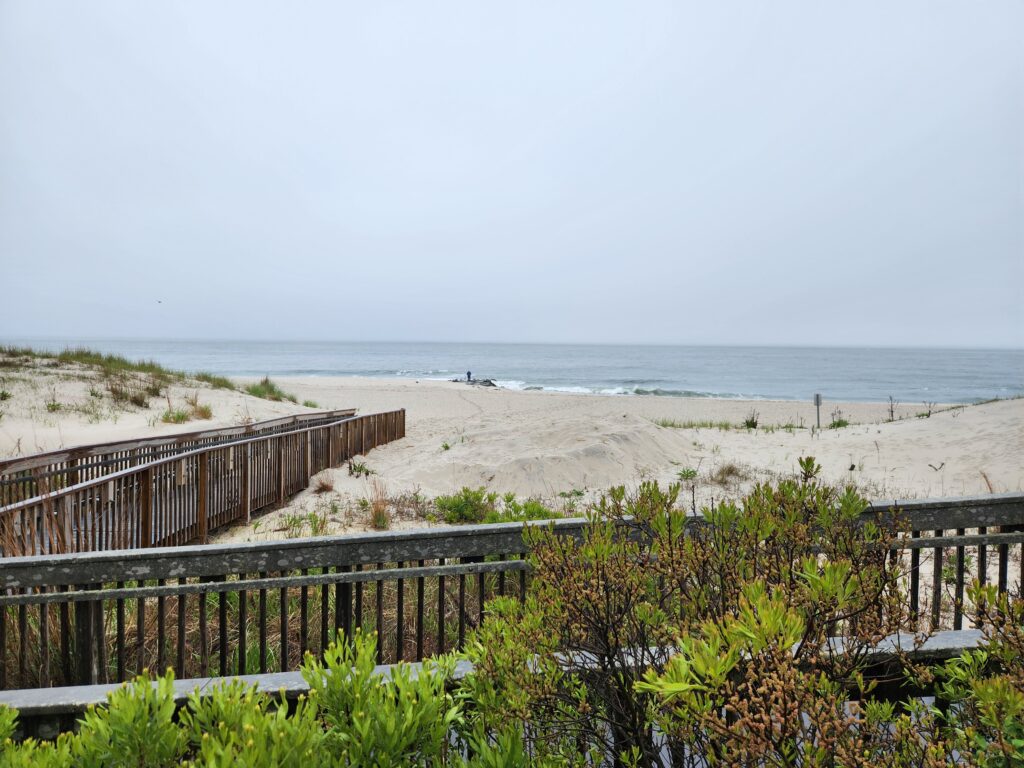
The next morning, pounding rain on my tent woke me. While I’d been hoping for a better forecast, I had prepared for it and didn’t expect to see many birds today. However, what I would see was almost as cool. Forty minutes after leaving Belleplain State Forest, I got off at the last exit on the Garden State Parkway and entered the town of Cape May, New Jersey, one of the best birding spots on the continent. I joined several birders who already had their scopes trained on the waters of Delaware Bay at a hotspot called the Coral Avenue Dune Crossing, which consisted of a large wooden standing area overlooking a sandy beach and the ocean. While there weren’t many birds flying around (although the Forster’s Terns were again putting on a show), a tour group showed up after about half an hour, and I eavesdropped to learn a little bit about the famous birding location. The tour, it turns out, was being led by Tom Reed, the top eBirder for the hotspot location and one of the people who started many of the projects happening at Cape May. While Cape May, a peninsula at the bottom of New Jersey, certainly held plenty of potential during spring migration, it really outshined anywhere else on the eastern seaboard in fall. Because of its shape, thousands of migrating birds following the Atlantic coast would be funneled into it every autumn, halted by the daunting flight across the mouth of Delaware Bay. The migrants all stopped here, in mind-boggling numbers—Tom spoke of kettles of thousands of raptors circling above the platform on which I stood, trying to gain enough height to make it across the water crossing.
Coral Avenue Dune Crossing, one of Cape May’s most famous hotspots.
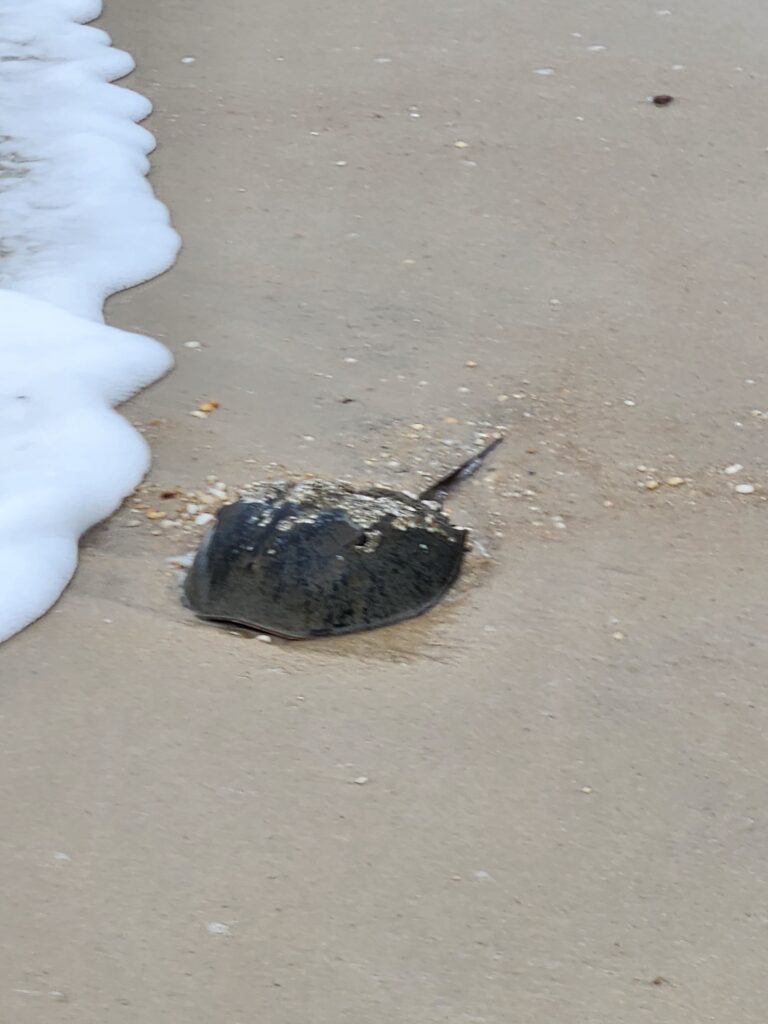
At the recommendation of some of the birders at the Coral Avenue Dune Crossing, I headed to Higbee Beach WMA. In the pouring rain, I did not see many birds, and I definitely didn’t see the migrating warblers I’d been hoping for. I did spot some Horseshoe Crabs on the beach, however, as well as a few Prairie Warblers and Indigo Buntings on territory in the subtropical dune scrub. Following that, I hopped in the car to dry off, and turned back north, heading for the Poconos. While I hadn’t seen many birds today, I hadn’t really had many targets any way, and I had seen Cape May. On top of that, the day before I had gotten two lifers and knocked all of my targets out of the park. Coastal New Jersey, you can bet I’ll be back.
Among my last “birds” of the trip, horseshoe crabs are a vital resource for migrating Red Knots, who feast on the crabs’ eggs.
We’re sharing our most recent birding adventure in reverse order. The day before chasing the wily White-Tailed Ptarmigan, Braden and I had an incredible outing at Benton Lake National Wildlife Refuge (see also The Best Prairie Day Ever). Normally a go-to place for grassland birds and waterfowl, Benton didn’t seem likely for the birds we most wanted to see—shorebirds. Were we in for a surprise!Here’s Braden’s report.
Visiting the Pacific Ocean this summer and having several great days of birding there did nothing but increase my drive to find shorebirds. Between Monterey, the Bay Area and Point Reyes, I had seen species like Red Knot (my lifer), Black and Ruddy Turnstones, Red and Red-necked Phalaropes, Short-billed Dowitchers and more. Now, I was ready to see these and other species during my short stay in Montana before heading back to college in Maine. However, seeing shorebirds along the ocean, where there were miles and miles of great habitat for thousands of birds to choose from, was one thing. In Montana, shorebirds were often hard to find, even during their peak migration in August and September. Two autumns ago, my dad and I had birded hard, visiting the Ninepipe Valley half a dozen times as well as Helena and Three Forks in a quest to find shorebirds. While we had found most of our target species eventually (including finding Baird’s and Pectoral Sandpipers a handful of times and Western Sandpiper once), we found very low numbers across the whole season and missed our main target species, American Golden-Plover. This was fairly normal for Western Montana.
This year, on our way to Glacier National Park for an entirely different bird (see In Search of the Wily White-tailed Ptarmigan), my dad and I decided to seek shorebirds at refuges along the Rocky Mountain Front. I’d seen several reports of large numbers of Stilt Sandpipers at Freezeout Lake in past Augusts, and so we thought maybe we could find some of them there. And so, two days after I arrived home from California, we woke up at four in the morning and headed for Great Falls.
Unfortunately, we didn’t find that much at Freezeout. A few yellowlegs and Solitary Sandpipers picked the mud along the shoreline of the ponds, and we ran into a small flock of Baird’s Sandpipers right at the end of the driving loop. Overall, the refuge—famous for its spring Snow Geese—had been disappointing. However, that didn’t really matter given that we had gone to Benton Lake National Wildlife Refuge first.
As soon as we arrived at Benton Lake, flocks of Baird’s and (probably Greater) yellowlegs greeted us.
Benton Lake normally did not seem to have good shorebird habitat. Every May, when we would come here to get our Upland Sandpipers and Chestnut-collared Longspurs for the year, we would drive by cattail marshes and open grasslands—not mudflats. The drought in the West this year had been changing everything, though. Bowdoin, one of the best refuges in Montana, had such low water levels that ducks were hard to come by. At Ninepipe National Wildlife Refuge, the ponds on Duck Road had disappeared by May. The upside? Some lakes that previously had been terrible for shorebirds suddenly had extensive mudflats filled with millions of tasty invertebrates for these arctic migrants to feed on. Which is what happened at Benton Lake.
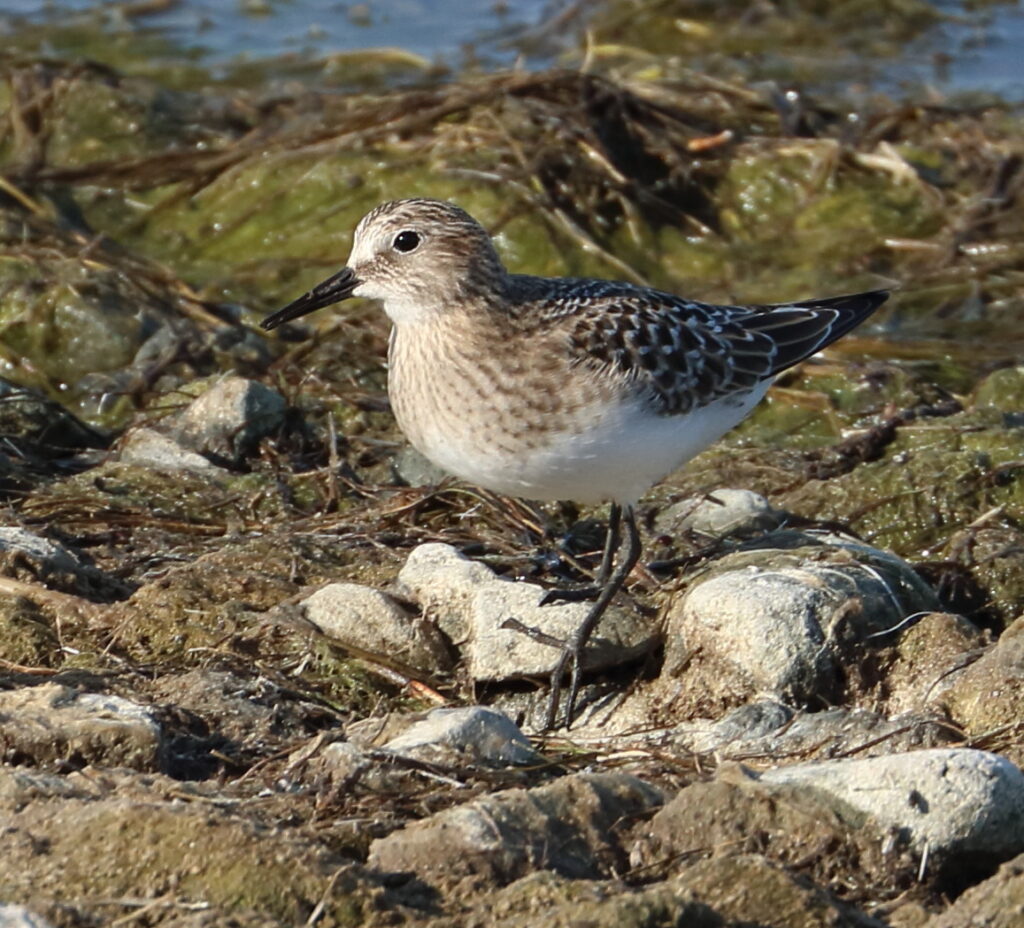
With high numbers and some close approaches, Baird’s Sandpipers proved to be the highlight of our Benton Lake shorebird extravaganza. Baird’s are larger than peeps (though some people group them together), and are identified by their black legs, robust breast markings, medium bill, and wings that extend out over the tail.
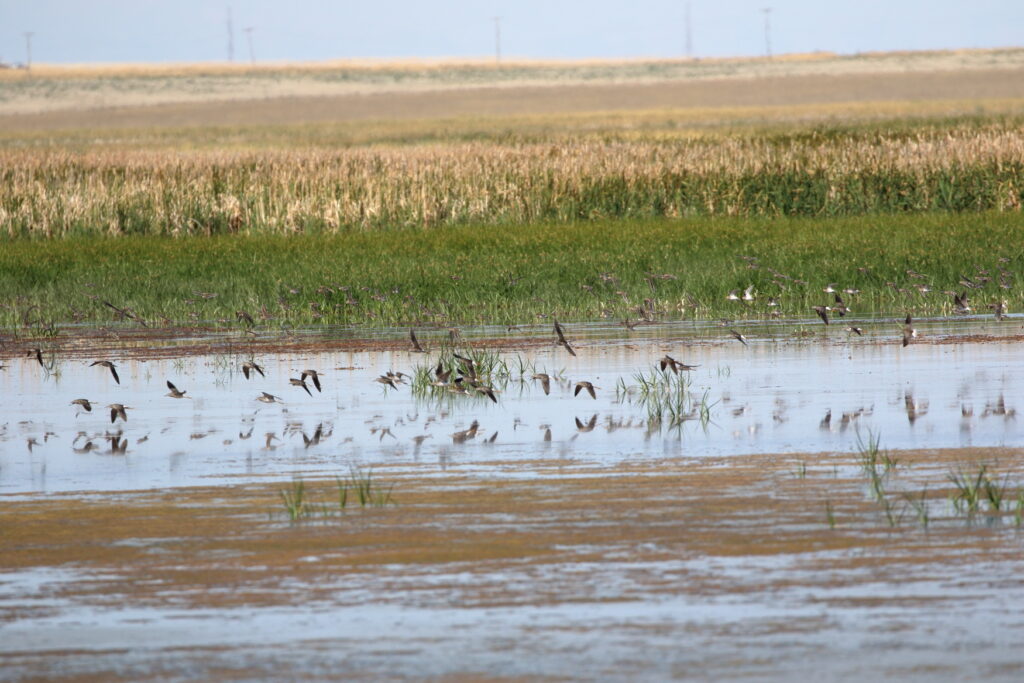
In fact, as soon as we arrived at the first pond, a large flock of small shorebirds lifted off from some distant mud, speeding over another flock feeding in the shrinking lake. My dad set up the spotting scope and we quickly determined that both of these flocks were primarily composed of one of Montana’s most common fall shorebirds, Baird’s Sandpipers. As we scanned these favorite sandpipers, we marveled at how much individual variation there was within each group. Though every bird was of the same species, each differed slightly in color, size, shape or bill length, allowing us to learn about what features confirmed a bird as a Baird’s. Soon, I noticed several more Baird’s on the shoreline next to us less than ten feet away, allowing us to get even better views and great photos. However, Baird’s were not the only species out on the mudflats. During my scan of one of the more distant flocks, I spotted a taller sandpiper, with a longer, more curved bill and thick supercilium.
“Stilt Sandpiper!” I yelled, and my dad was able to glimpse the species before the whole flock took off again. That same flock held a few peeps that I struggled to identify, debating whether the bills were long enough for Westerns or if the colors were right for Least or Semipalmated. Despite having some practice with peeps, they always manage to confuse me.
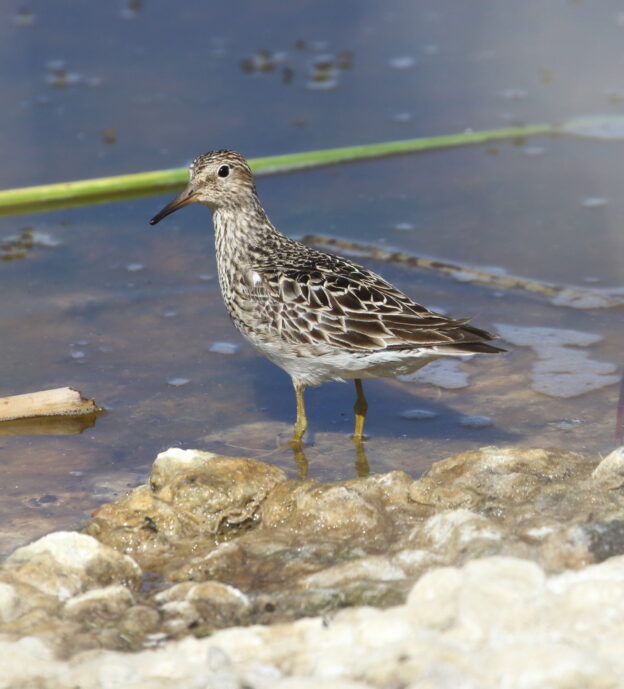
We moved on to the next pond, where more shorebirds waited. More Baird’s flew circles around us, and we spotted a huge group of dowitchers lifting off in the distance, complete with both species of yellowlegs. Solitary Sandpipers foraged on the shore, alongside Killdeer and a few Leasts. Near the end of the final lake, I spotted two Pectoral Sandpipers, another one of our targets, picking invertebrates off the rocks right next to the car alongside our only Wilson’s Snipe of the day! We’d never had better looks or photos of any of these species, and never in these high numbers! At least the drought was creating some good.
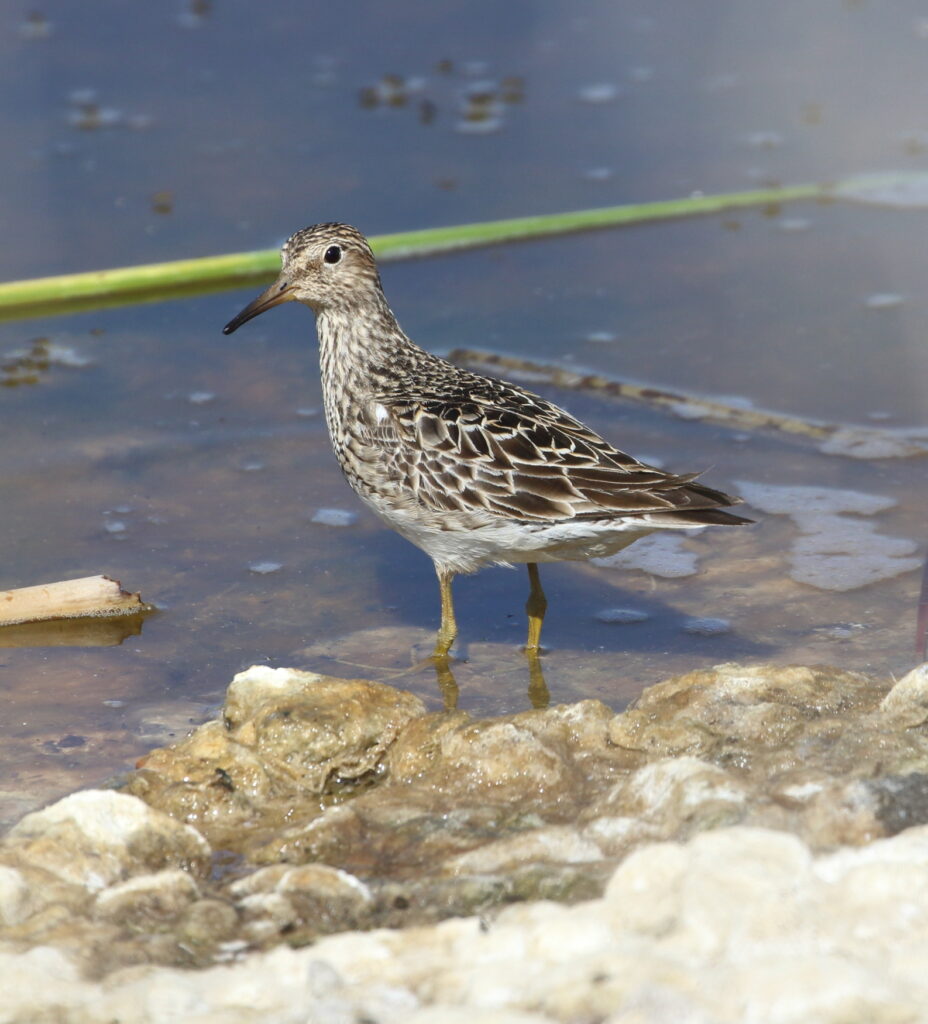
Right along the road, we got our best looks ever at several species including this cooperative Pectoral Sandpiper, distinguished from Baird’s by its yellow legs, larger size, and more extensive and abrupt cutoff of markings on its breast.
Our most astounding discovery happened as we were picking through another flock of Baird’s Sandpipers, searching for something unusual. As I looked up, I spotted three striking black and white birds flying towards us, and my heart rate jumped. They landed a short distance away, and I stared at them through my binoculars: three Black-bellied Plovers, still completely in breeding plumage! While we’d seen these birds in Montana in previous years, we’d never had such an experience with their breeding colors! They hadn’t been on my radar at all, either, though perhaps they should have been.
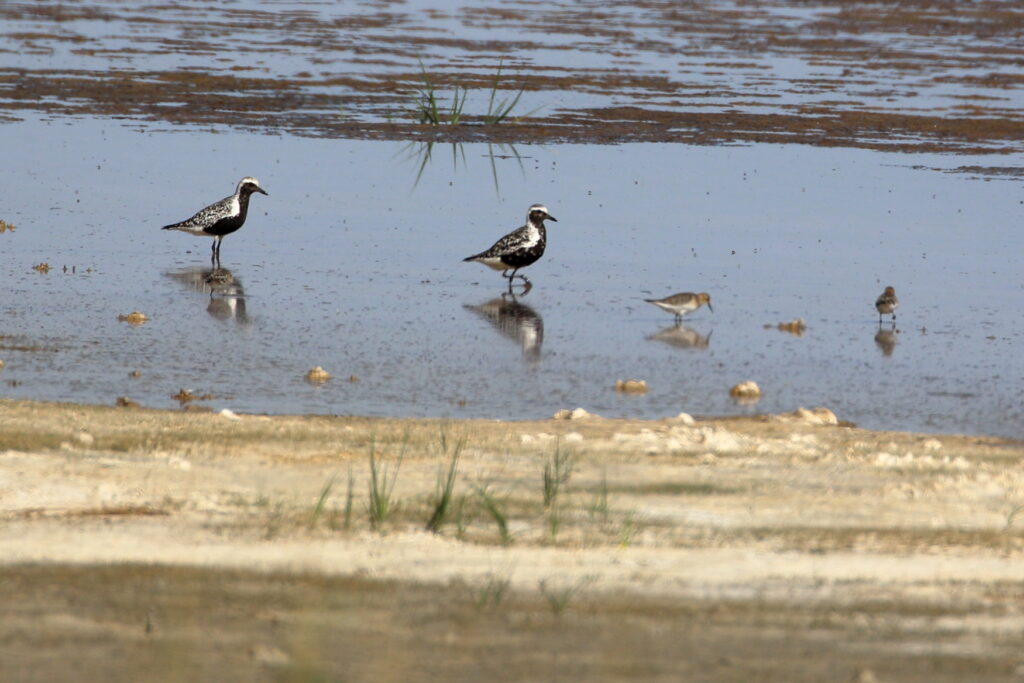
Black-bellied Plovers weren’t even on our radar, so imagine our delight seeing three fly in—and in full breeding plumage!(Note the Baird’s Sandpipers next to them.)
My dad and I had finally done it. This was the shorebird experience we’d been hoping to have in Montana for years, and Benton Lake, not any other famous shorebird hotspot, had been the place to provide it for us. The next day we’d leave the prairie behind and head for the mountains of Glacier, though hopefully our year of shorebirds wasn’t quite through!
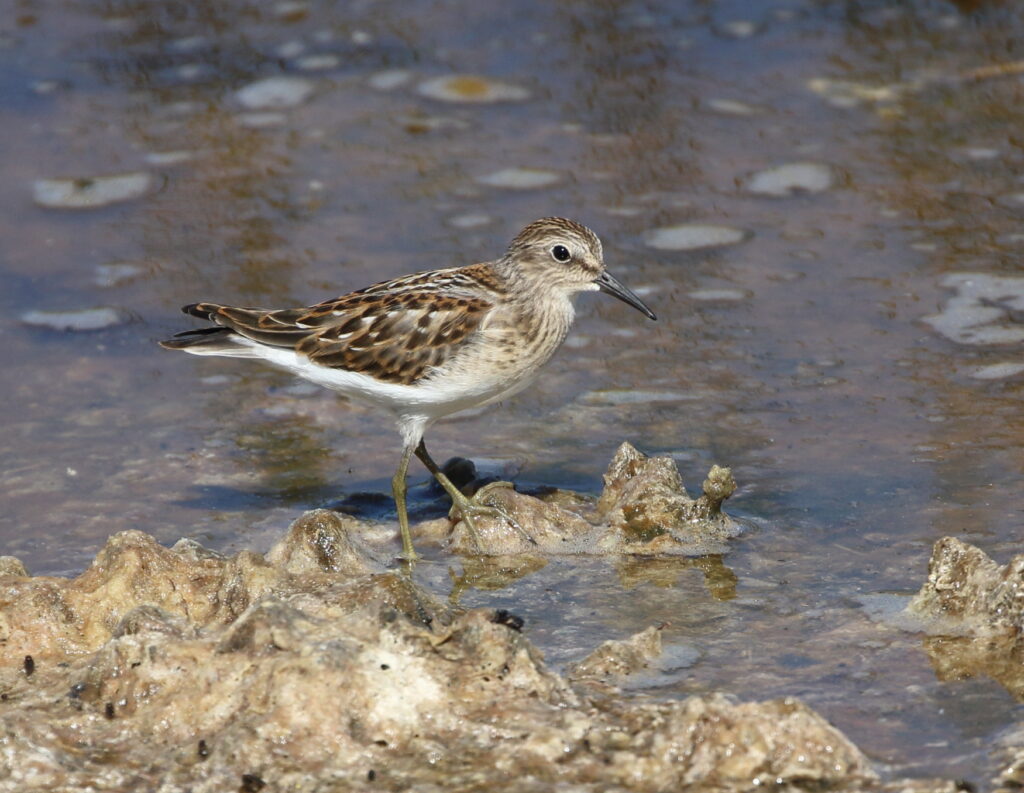
As usual, peeps were hard to pick out, but we did get a great experience with a Least Sandpiper near the end of the driving loop.