Category Archives: Bird Conservation

The “Hoax” of Climate Change and Birding the Rocky Mountain Front

It’s remarkable that as the impacts of climate change rapidly accelerate across the planet many of our leaders have doubled-down on the myth that climate change is a hoax being perpetuated by “stupid people.” Here’s the thing: To realize how quickly and dramatically warming temperatures are changing our planet, you don’t have to be a climate scientist. You simply have to look around. 100- or even 1000-year weather events are happening every few years in many places, generating catastrophic winds, storms, flooding, and drought. Even since I moved to Montana thirty years ago, summers are hotter, winters are milder, and snowpack is disappearing more quickly. Especially in eastern Montana, drought conditions seem to be setting in for the long haul. Braden and I have seen dramatic evidence of this all over the state (see, for example, my post “Birding Glacier National Park in the Hot Dry Winter of 2024”). Two weeks ago, I had a chance to again witness severe drought when I birded the Rocky Mountain front from Freezeout Lake up to the east side of Glacier National Park.

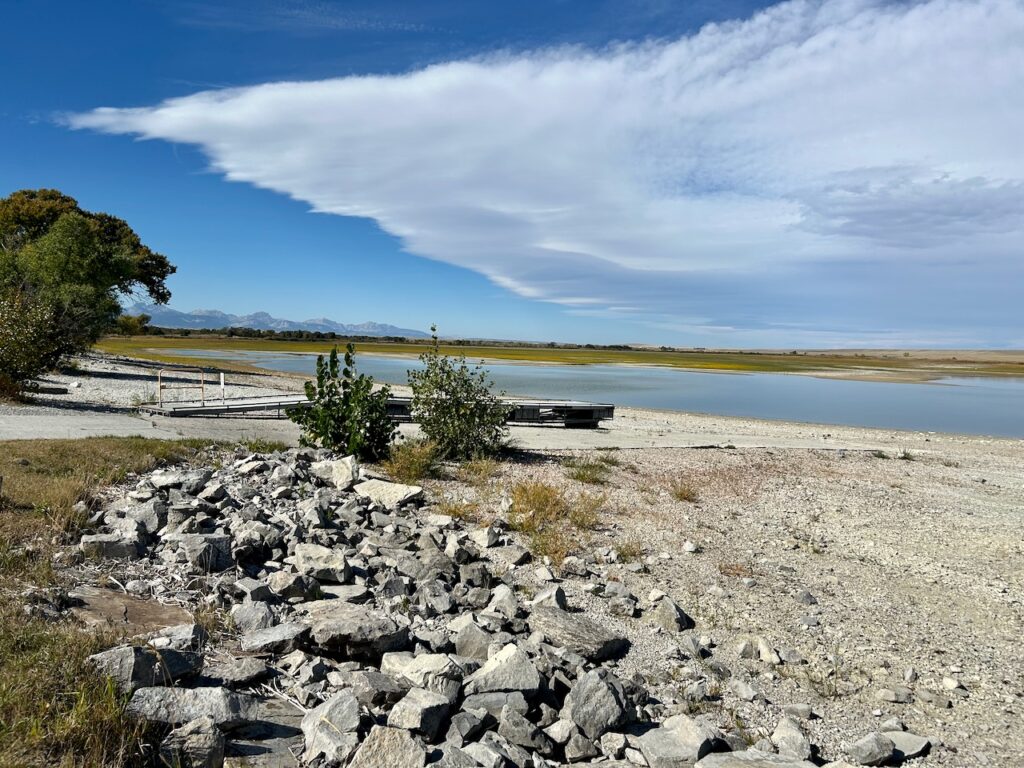
The DRY Dock of the Bay: A rapidly receding shore left this dock high and dry at Eureka Reservoir.

I left Missoula Saturday at the modest hour of 7 a.m. Days are shorter by the end of September so there was less urgency to hit the road early. Just as crucially, Highway 200, which would lead me up and over the Continental Divide, can be a notorious kill zone for deer, elk, and moose at dawn and I thought that waiting an extra hour might keep me and my minivan from ending up in a crumpled heap by the side of the road. My later departure paid off. I managed to spot the two potential deer collisions with plenty of time to brake and after a quick stop near Browns Lake, I arrived at my first destination by 9:30.

I had debated whether to visit Benton NWR near Great Falls or head straight to Freezeout, but eBird reports from the latter proved more enticing so I cast my lot there. As they always do, my excitement levels rose as I passed the refuge headquarters and then turned left to scan the southern bodies of water. It had been a while since I’d visited Freezeout this time of year, and I wasn’t sure what to expect since many birds had undoubtedly departed for their southerly wintering grounds. Rumbling along the gravel road, I did scare up a few Horned Larks and a couple of Western Meadowlarks looking faded and shabby. I also saw that the entire area was as dry and crispy as I’d ever seen it. In good years, water can be found in ditches, shallow pans next to the roads, and elsewhere, but now it was confined to the main lakes on my right. Still, I could see birds on the water.

At the very southern end of the refuge, I spotted about thirty-five American White Pelicans along with some coots, barely identifiable American Avocets, and unidentified, distant ducks. I soon backtracked, though, to where I had noted greater potential.

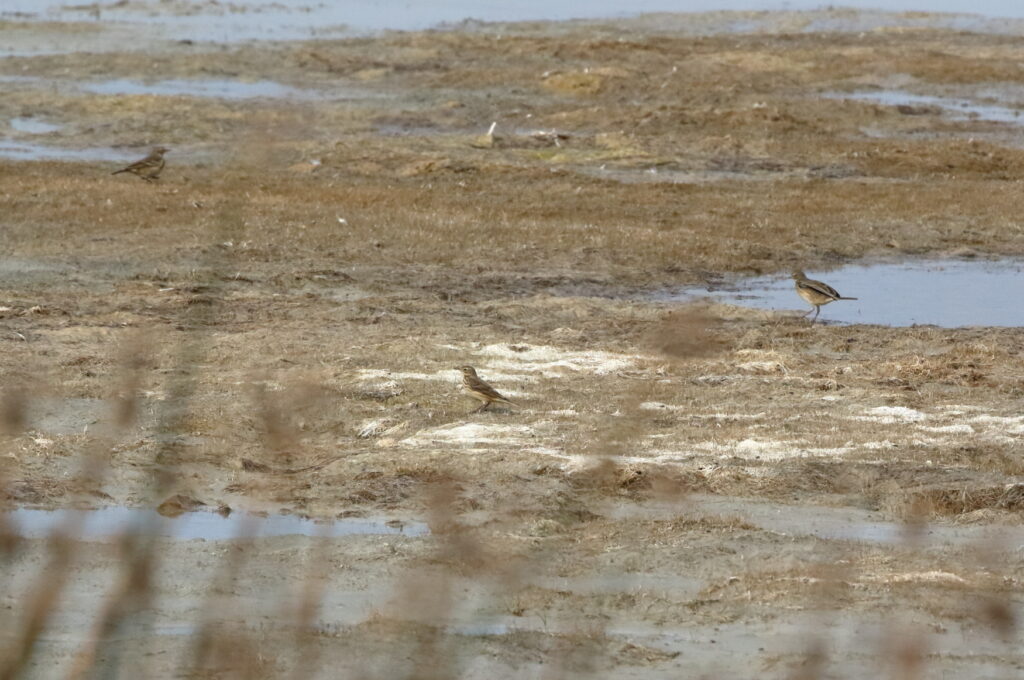
I parked at a pull-out camping area next to a dike/road that led out between two of the large lakes. I couldn’t drive out there, so I shouldered my camera, binoculars, and spotting scope and did what every dedicated birder does: schleps! Am I glad that I did. Almost immediately, I noticed several small birds working some mud off to my right. I ID’ed a couple as Horned Larks, but had a hunch about others so I quickly set up my scope and indeed saw that they were American Pipits! I absolutely love these guys. In Montana, they breed at high altitude, but in spring and fall you can find them migrating through the lowlands. Unfortunately, I had missed them this spring, so that made it doubly sweet to see them now. Even better, it moved me one bird closer to breaking my all-time one-year species count record!

American Pipits working the recently receded shoreline of one of Freezeout’s main lakes.

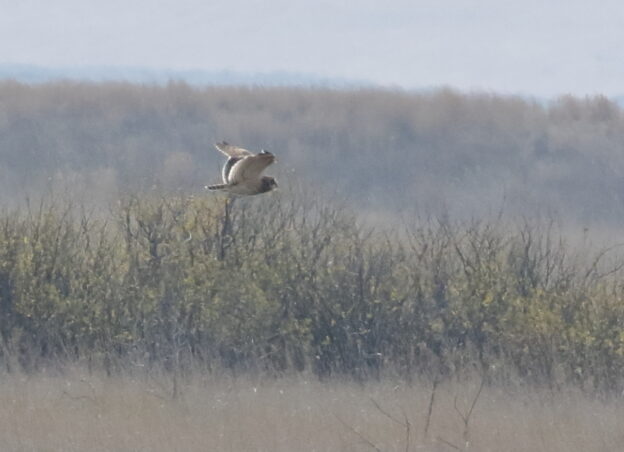
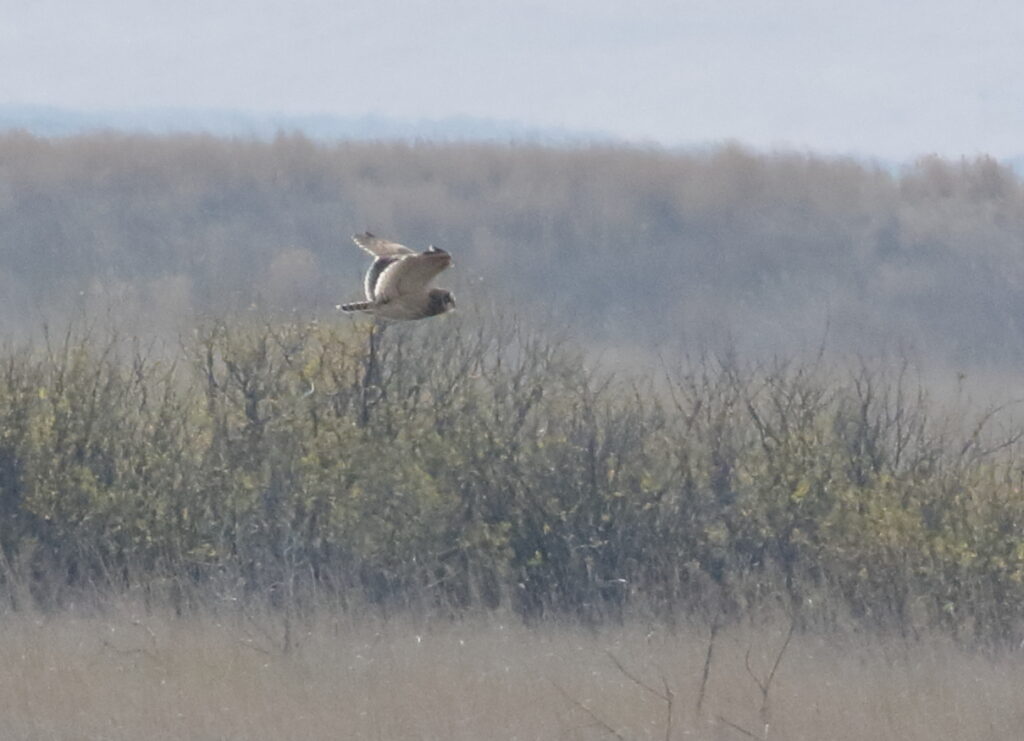
As I resumed walking, I suddenly spotted a large raptor flying low and erratically over fields to my left. My first guess normally would be Northern Harrier, but this was my lucky day. The bird wasn’t a harrier, but a Short-eared Owl! It had been years since I’d seen one here and I couldn’t have been more delighted. These are some of my and Braden’s favorite birds, but we never know when we’ll encounter them. To emphasize the point, the bird was listed as unreported on the eBird filter (presumably just for this time of year), showing how unpredictable the birds can be.

Another in my now-famous series of lousy Short-eared Owl photos! After all, I have a reputation to uphold!

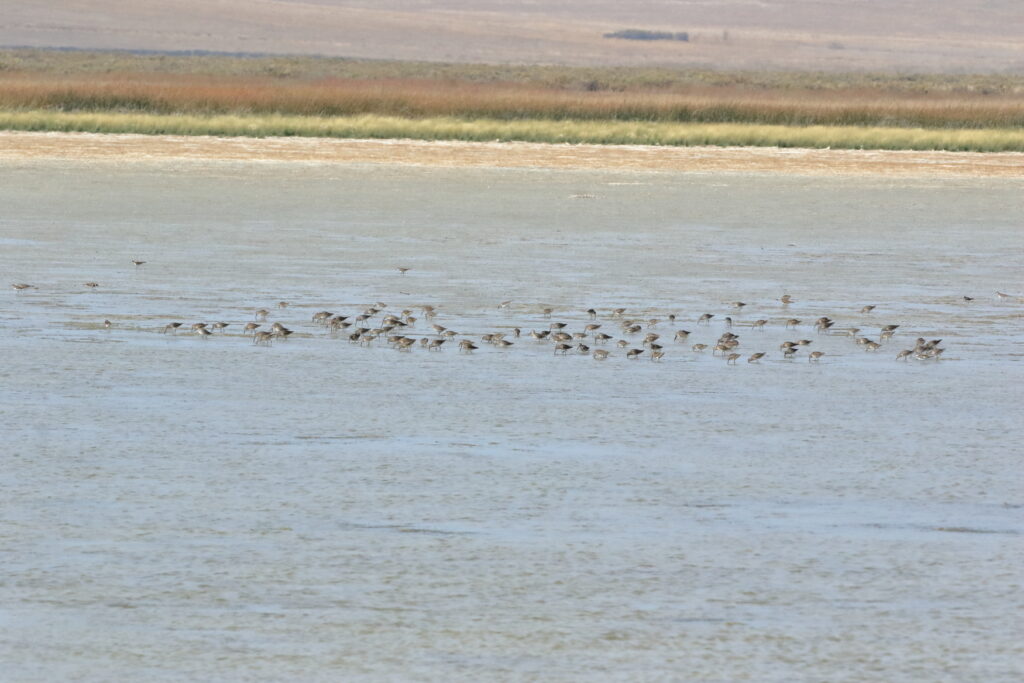
Another couple of hundred yards brought me close enough to set up the scope on the birds I was seeing far out on the water. There were groups of ducks, but those didn’t interest me. What did was a group of about forty or fifty shorebirds. Even with the scope, I wasn’t as close as I would have liked, but their very long bills, pale superciliums (the bands above their eyes) and “oil drilling” probing of the shallows said “Long-billed Dowitchers.” Then, I began to doubt myself. Their bills were so long and from a distance, I could imagine that some of them seemed slightly upturned. “Could they be godwits?” I asked myself, suddenly thrown into confusion. I kept studying them, eventually coming back to dowitchers. What cinched it is that when they took flight I could clearly see the single white stripes running down their backs. Godwits don’t have that. When they again landed, I realized that their numbers had also doubled to about ninety.

Dowitchers always make me happy. I just hope that humans can get our act together in time to make sure they have enough water in the future.

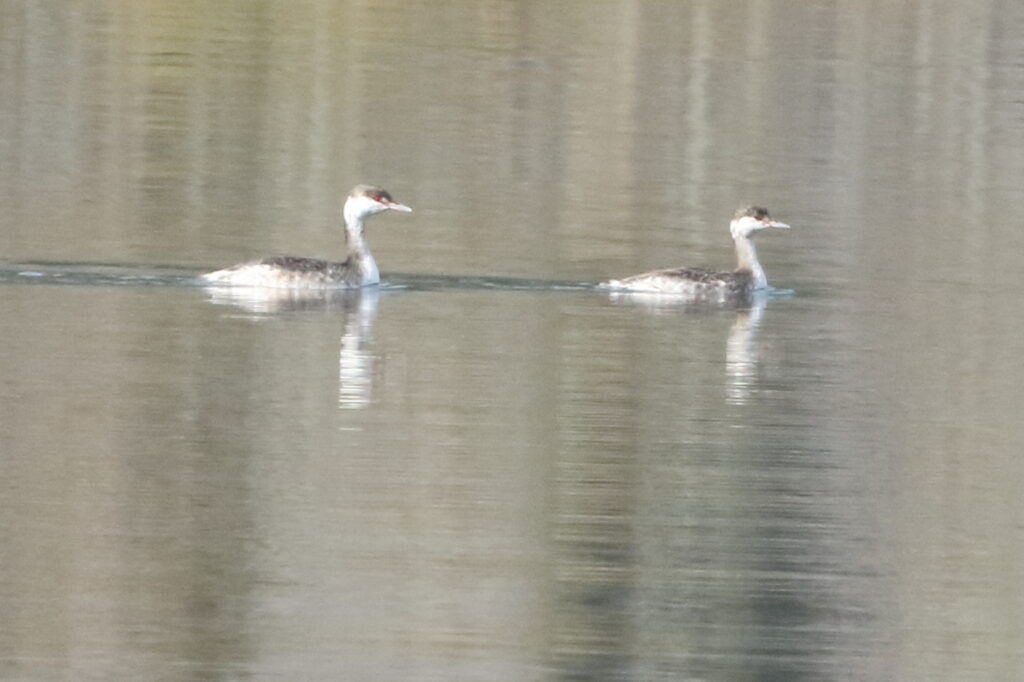
I spent almost an hour studying the water from the dike, and in addition to the Long-billed Dowitchers, I found four sandpipers that I thought were Baird’s Sandpipers but could have been Pectoral Sandpipers—they were just a bit too far away to be sure. I did ID several distant Black-bellied Plovers, too. The rest of Freezeout didn’t offer up much. I saw three Eared Grebes and a Canvasback hidden among scads of Canada Geese and intermolt ducks that were probably mostly Mallards. A stop at Priest’s Lake, however, yielded 2,500—you read that correctly—twenty-five hundred Ruddy Ducks! Ruddies, of course, are one of the BEST ducks, but I’d never seen even close to these numbers before. During fall migration, I guess they like each other’s company!

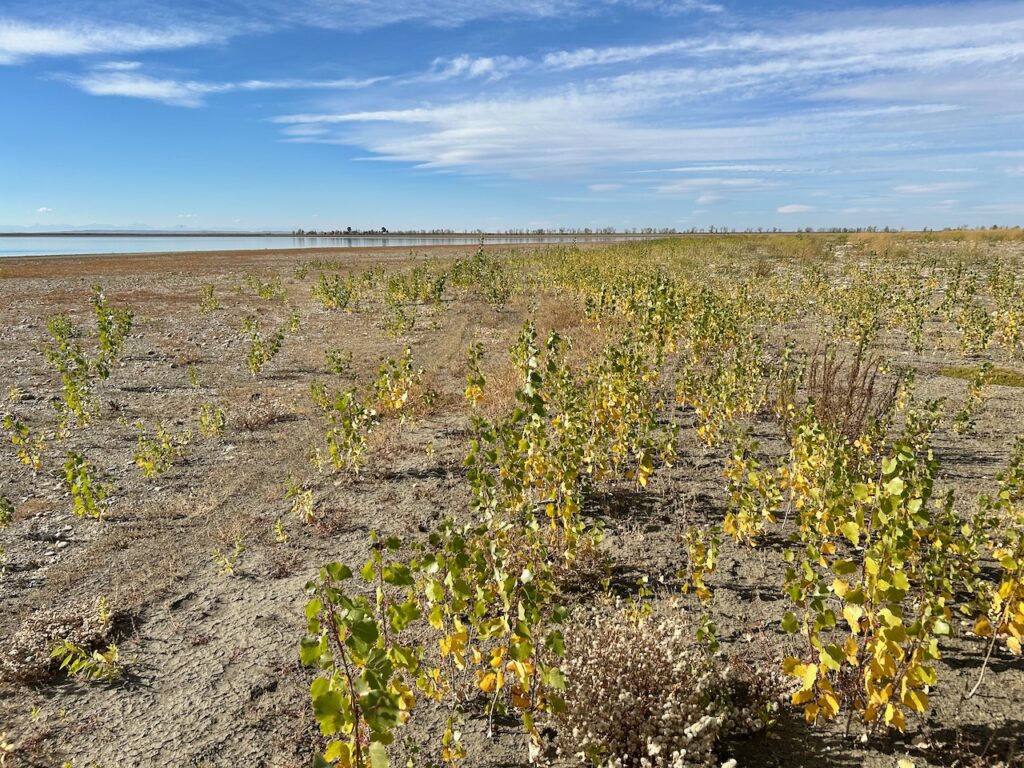
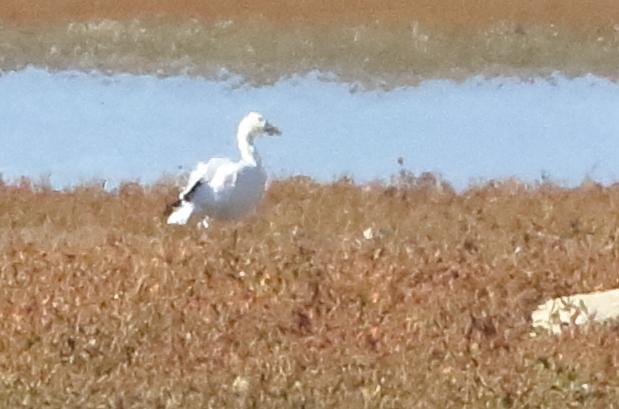
One of my birding goals lately is to try to bird new areas and on my way up to East Glacier, where I would be spending the night, I made two more stops: Eureka Reservoir north of Choteau and Lake Frances near Valier. Neither yielded anything exceptional, but I did pick up my First-of-the-Year Snow Goose, a single specimen at Lake Frances. What both places strongly reinforced was the critical water situation in this part of the world. Both bodies of water had retreated huge distances from their historic lake shores. It’s difficult to tell what percentage of water they’ve lost, but I’d guess that both were at least three-quarters empty.

Lake Frances offered up the most visible impacts of what drought is doing to the Great Plains. I had to walk across a couple of hundred yards of former lake bottom to reach today’s shore.

As I passed through Browning and turned toward East Glacier, I saw more bad news. Braden and I had driven this route at least a dozen times and every time we saw prairie potholes full of water. On this day, every one of those potholes stood bone dry until I’d almost reached East Glacier. This has dire portents for the future of our wild birds. Sure, rainfall goes up and down year to year, but the trend for the West is to get drier and drier. What happens when migrating birds head south and find no water at all?

This lone Snow Goose at Lake Frances brought me to within three birds of breaking my all-time one-year species count record—but it was small consolation for the dire water conditions I saw everywhere.

Honestly, I don’t want to find out, but it adds an urgency to act—and makes current attacks on clean energy both unconscionable and downright reckless. Why are such attacks happening? Just follow the money to the oil and car companies that continue to make trillions in profits while our planet suffers. These corporations have invested heavily in the current administration and are grinning ear to ear as POTUS rails against solar energy and windmills while he tries to sell our fossil fuels to a world that doesn’t want them. I generally try to keep FatherSonBirding apolitical, but if we want the next generation to have half of the beauty and diversity you and I have enjoyed, we have some urgent decisions to make. None of us has to change the world all by ourselves, but we each have to do something, whether it’s donating to causes working for a better planet or taking the plunge on solar panels, an electric vehicle, or eco-friendly hot water heater. The next generation may not ever thank us “stupid people” for what we’re doing, but we’ll know that the world will be better off for our efforts.

Flight of the Godwit (Book Review)

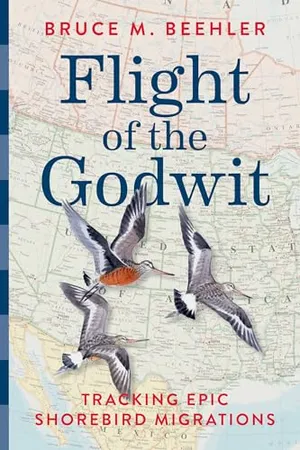
Bruce M. Beehler’s Flight of the Godwit: Tracking Epic Shorebird Migrations (Smithsonian Books, 2025)

Any birder who has aspired to learn about shorebirds will find a welcome companion in Bruce M. Beehler’s new book, Flight of the Godwit: Tracking Epic Shorebird Migrations. Shorebirds, after all, can be considered somewhat mythical, mysterious beings. Not only do many of them make remarkable annual migrations covering tens of thousands of kilometers, quite a few are notoriously difficult to identify. Certainly, Braden and I realized we had entered a more advanced stage of learning when we started to search out and try to identify shorebirds and, in fact, we both often still struggle with figuring out some of the more difficult shorebird species. Yet the more we encounter and learn about these birds, the more we love them—and that same kind of passion radiates from Beehler’s words as he sets out on his own journeys to observe and learn more about these birds.

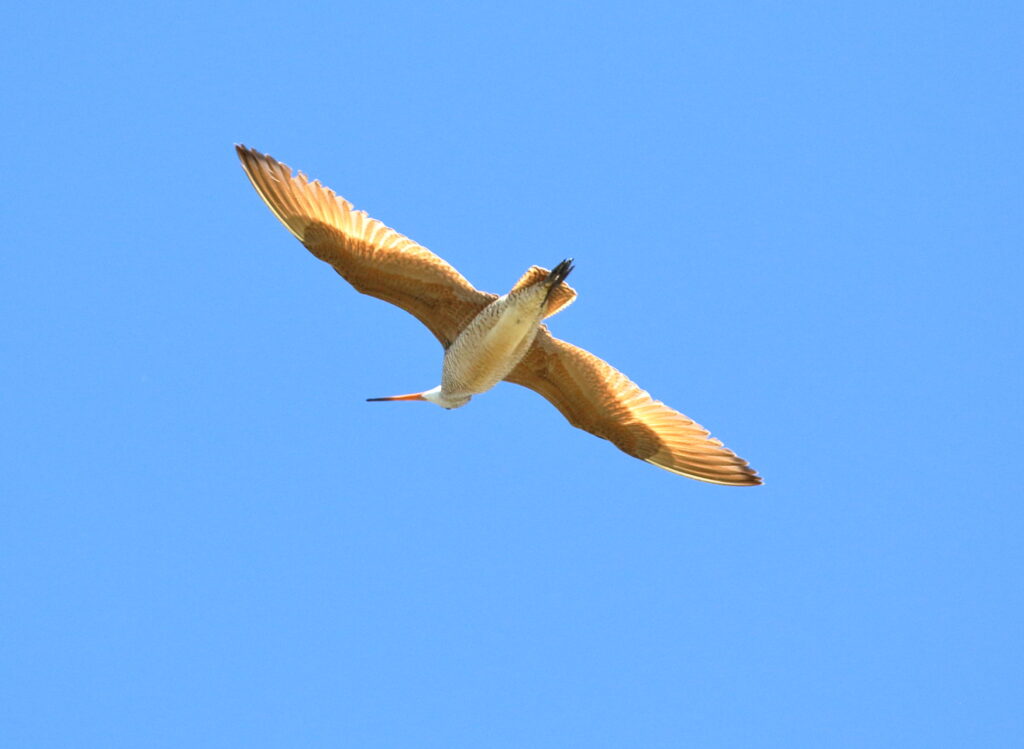
In Montana, we are lucky to host three of the “Magnificent Seven” shorebirds as breeders—including Marbled Godwits, one of the focal birds of Beehler’s new book.

In Flight of the Godwit, Beehler recounts a series of recent adventures across the US and Canada to follow and observe shorebirds as they migrate north, stop over at resting and staging sites, settle on breeding grounds, and then head south again for their long non-breeding seasons. Although Beehler discusses all of our North American shorebirds at some point, he clearly targets what he calls the Magnificent Seven: Hudsonian Godwit, Marbled Godwit, Bar-tailed Godwit, Long-billed Curlew, Whimbrel, Bristle-thighed Curlew, and Upland Sandpiper. As he shares his encounters, he sprinkles in liberal amounts of natural history and personal experiences about these birds to make the book much more than a birder’s travelogue.

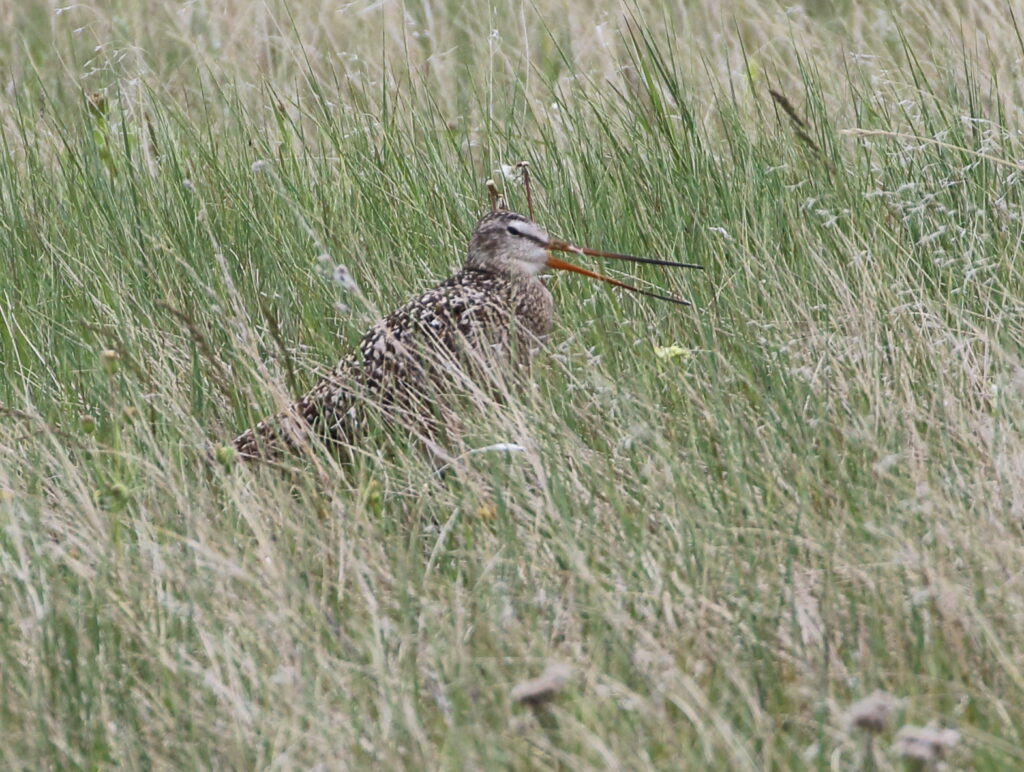
This Marbled Godwit checked us out as we were scoping shorebirds in Westby last summer.

That said, the travelogue aspects of the book are a big part of what fascinated me about this tale. Even after eleven years of birding, my shorebird experiences have been much more limited than I would like. Although my home in Montana is fortunate to host a number of breeding shorebirds—including three of the Magnificent Seven—for most shorebirds, we get only brief glimpses of them as they pass through in spring and fall. Partly because of this, Braden and I have especially sought out shorebirds on our out-of-state travels to Texas, New England, and the West Coast. Sigh. It is never enough.

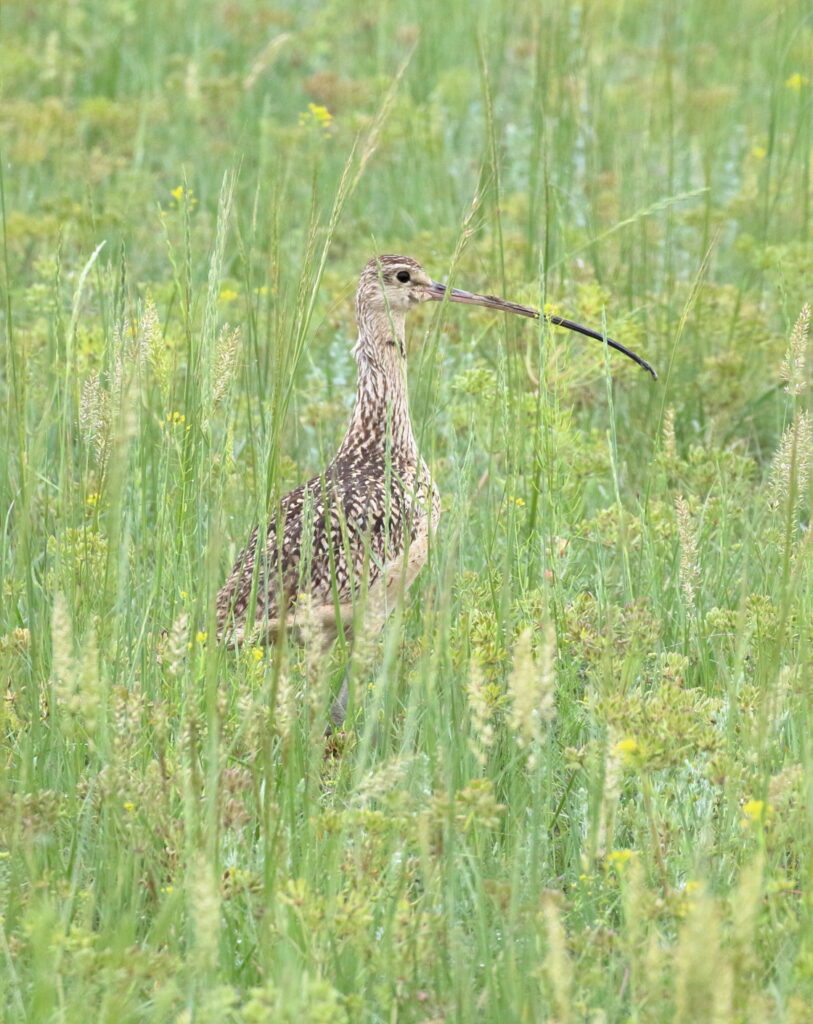
It always surprises new birders that some of our largest shorebirds actually breed in grasslands—including Long-billed Curlews.

As I followed Beehler up through the Midwest during spring migration and around Alaska during breeding season, his experiences filled in giant gaps in my own experience with these remarkable birds. I got a better sense of where the birds stop to refuel and rest, and my vague impressions of their nesting territories and habits were sharpened by Beehler’s actual observations and descriptions. Many times, I found myself nodding my head thinking, Yeah, I know what he’s talking about or Oh, so that’s what they’re doing. All of this felt especially satisfying since there’s a good chance I will never experience many of Beehler’s destinations for myself.

As much time as I try to spend with shorebirds, it is never enough. Flight of the Godwit helped fill in many of the experiences I probably will never have for myself.

Those who will appreciate Flight of the Godwit the most probably are birders who have already spent time observing shorebirds and struggling over their identifications. Those with limited shorebird experience may find themselves getting a bit lost as Beehler throws out bird names that may seem a bit abstract without solid brain images to connect them to. Still, there’s a good chance that even beginning “shorbers” will find that Beehler’s tales of adventure excite them to plunge more deeply into this remarkable set of birds. As for intermediate and advanced birders—especially those who may never get to Alaska or follow spring migration through the Midwest—I highly recommend this intriguing book that is not only a valuable educational document, but a labor of love with which many of us can relate.

You can order Flight of the Godwit from almost any outlet that sells books—but why not visit your local independent bookstore and order it there? Another easy way to do this is through the online website Bookshop.org.

The Great Auk (Book Review)

If you are a fan of entertaining tales that blend bird biology, history, and human eccentricity, Tim Birkhead’s new work The Great Auk (Bloomsbury, 2025) will find a welcome place on your night stand. I have to confess that this is the first Birkhead book I have read, but the title suggested a fascinating story about a topic I knew very little about, so right away I requested a review copy from the publisher. My efforts did not disappoint.

The Great Auk by Tim Birkhead (Bloomsbury, 2025)

For me, the first question that needed answering was, “What the heck was a Great Auk?” I had, of course, heard of Great Auks during my twelve years observing, researching, and writing about birds but I hazily lumped them in with the totally unrelated Dodo and elephant birds. Why?  Probably because all of these birds had been large and flightless—and all had gone extinct. Other than that, I knew almost nothing about Great Auks.

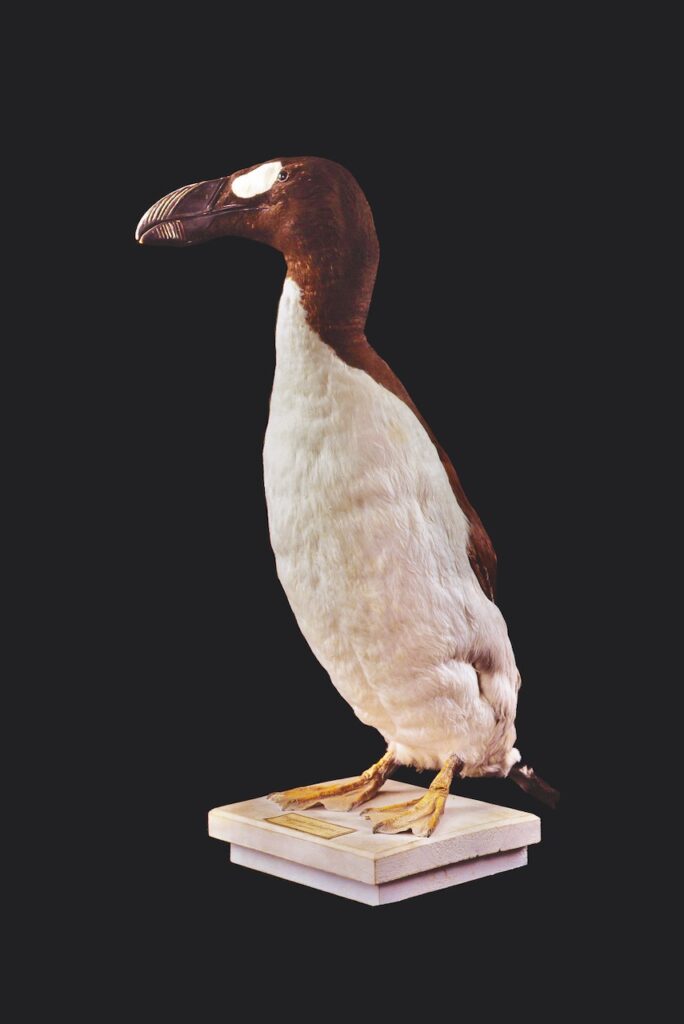
Great Auks were the original penguins, conferred the genus name Pinguinus. The origin of the name penguin is uncertain but may refer to the bird’s white head or white eye patch. In any case, the name was later applied to flightless birds of the Southern Hemisphere, even though they bear no close relationship to the Great Auk. (Photo copyright Errol Fuller)

Upon opening Birkhead’s book it was therefore a great relief to learn, “Oh, yeah. Great Auks are actually auks—seabirds!” I mean, duh, right? Members of the Alcid family, their closest living relatives appear to be Razorbills, something I found delightful since Braden showed me my first Razorbills only last Thanksgiving when our family had the chance to visit Cape Cod (see post Birding Race Point). Birkhead is quick to point out, however, that surprisingly little is known about Great Auk biology, much of it speculation from the relatively scant specimen material that has survived.

Seeing one of the Great Auk’s closest relatives, Razorbills, provided a living link to the tragedy of the Great Auk’s extinction.

Which, of course, brings us to the tragic fact that Great Auks were quickly and efficiently wiped out almost as soon as seafaring Europeans on their way to North America figured out where the birds nested. That happened to be remote islands in the North Atlantic, and in historical times, there probably never were more than a handful of breeding sites for the birds. In early chapters, Birkhead especially focuses on what was clearly the most important site, Funk Island. Here, tens—perhaps hundreds—of thousands of Great Auks gathered every year. Couples would each lay their single, exceedingly large egg and work together to feed the resultant, rapidly-growing chicks from the abundant fish schools nearby.

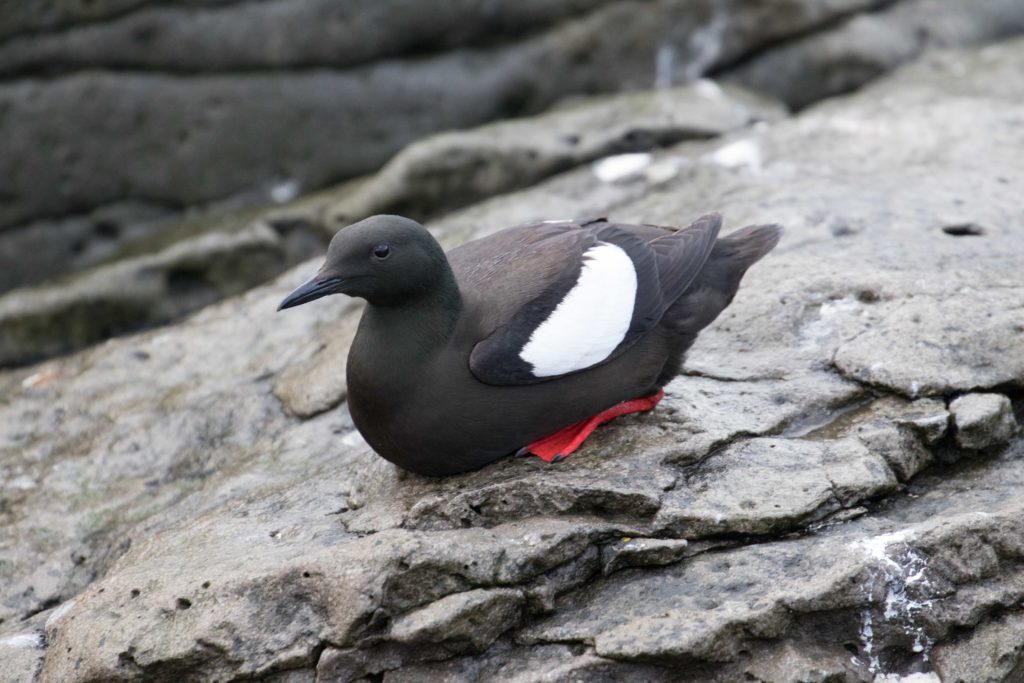
Like Razorbills, puffins, murres, and murrelets, guillemots such as this Black Guillemot are members of the Alcid family, and close relatives of the Great Auk.

When Europeans did discover the auk bounty to be had, the slaughter began. Ships heading to what is now northeast Canada stopped over to feast on the auks and preserve them for food. Later, egg, skin, and feather collectors helped finish them off. Birkhead especially documents the brutal habits of egg collectors. Not wanting to obtain eggs with well-developed embryos inside, the collectors would intentionally crush every egg that they found. Returning a few days later, they could be assured that the embryo inside of any new egg had not yet developed, and its contents could be easily removed through a tiny hole made in the shell. Officially, the last two auks were killed in 1844, though it is likely that a few isolated individuals survived into the following couple of decades.

Birkhead neatly divides The Great Auk into two parts. The first focuses mainly on the history of the bird, its demise, and what can be constructed of its biology from historical accounts, surviving specimens, and extant relatives. Part 2 focuses mainly on some of the more rabid egg and skin collectors, especially Vivian Hewitt, who somehow managed to acquire thirteen Great Auk eggs for his vast collection of approximately half a million bird eggs.

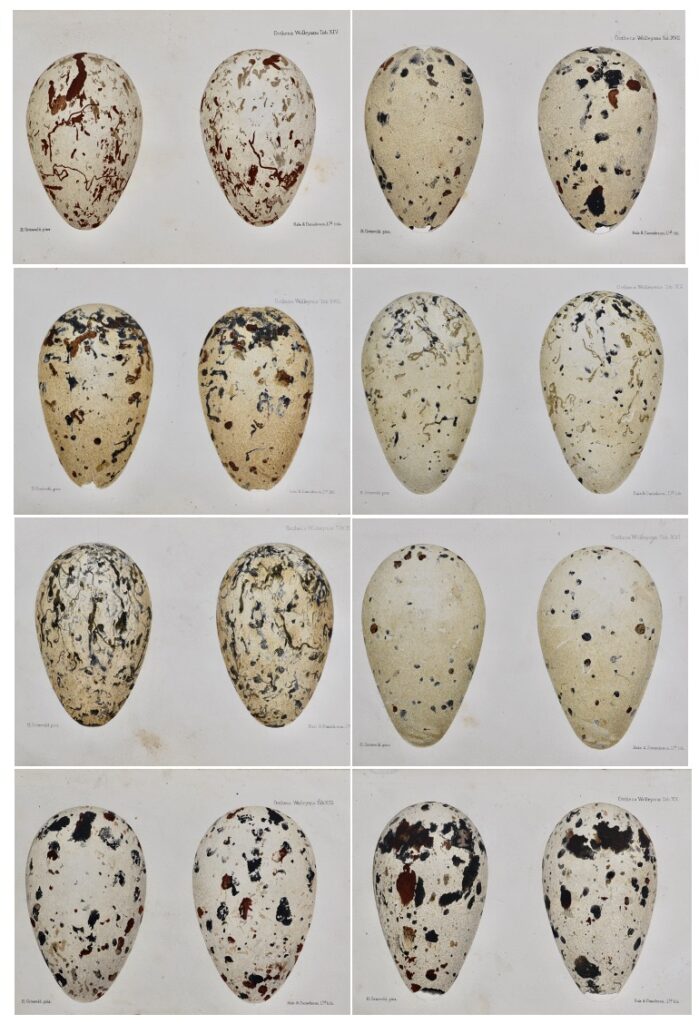
A selection of known surviving Great Auk eggs shows their great variety, which may have helped parents identify them in the crowded breeding colony. This variety also partly explains why they were so attractive to collectors. (Illustration by Henrik Grønvold, 1907)

I have to say that I enjoyed Part 2 just as much as Part 1. Few of us realize this today, but oologist—a term coined for egg collectors that attempted to confer scientific legitimacy upon a practice that we now consider despicable—was all the rage in the early 1900s. It was practiced much as stamp and coin collecting were when I was a kid—and with little thought about the consequences for birds. Collectors routinely not only gathered an egg of a species, but entire clutches of eggs and even hundreds from the same species, searching for variety, fame, and fortune.

As perhaps the wealthiest participant in the field, Hewitt spent a small fortune both obtaining individual eggs and opportunistically snapping up entire collections of other egg collectors when their fortunes turned for the worst. Most prized of Hewitts acquisitions were the eggs and mounted specimens of the Great Auk that he managed to obtain, each of which has a story—and many of which Birkhead traces to fascinating effect. I won’t say more about this fine book, but if you enjoyed Christopher Skaife’s The Ravenmaster and Joshua Hammer’s The Falcon Thief, you are almost guaranteed to love The Great Auk, too. And if you do, why not help prevent the extinction of other bird species by donating to the American Bird Conservancy, the National Audubon Society, or another group working to protect our precious surviving species? Thousands of bird species are in trouble and the need is great.

Author Tim Birkhead. (Photo by K. Nigge)

Protecting Texas’ Globally Important Bolivar Peninsula—We Can Do This Now!

Instead of your regularly-scheduled blog, we today invite FSB readers to join in on an urgent appeal to help protect one of North America’s coolest and most vital bird habitats—the globally important Bolivar Peninsula. Learn more and donate by clicking here—or on the Piping Plover below.

If you’ve followed FatherSonBirding—or read my books Birding for Boomers or Warblers & Woodpeckers: A Father-Son Big Year of Birding—you know that High Island and the Bolivar Peninsula outside of Houston have played pivotal roles in Braden’s and my birding experiences. In these locations, the Houston Audubon Society (HAS) has worked tirelessly to obtain, restore, and protect vital habitat for both migrating and resident birds. On our first visit to High Island and the Bolivar Peninsula in 2016, Braden and I saw an astounding forty-five Life Birds in one day! These included everything from Scarlet Tanagers and Least Terns to Piping, Black-bellied, and Semipalmated Plovers.

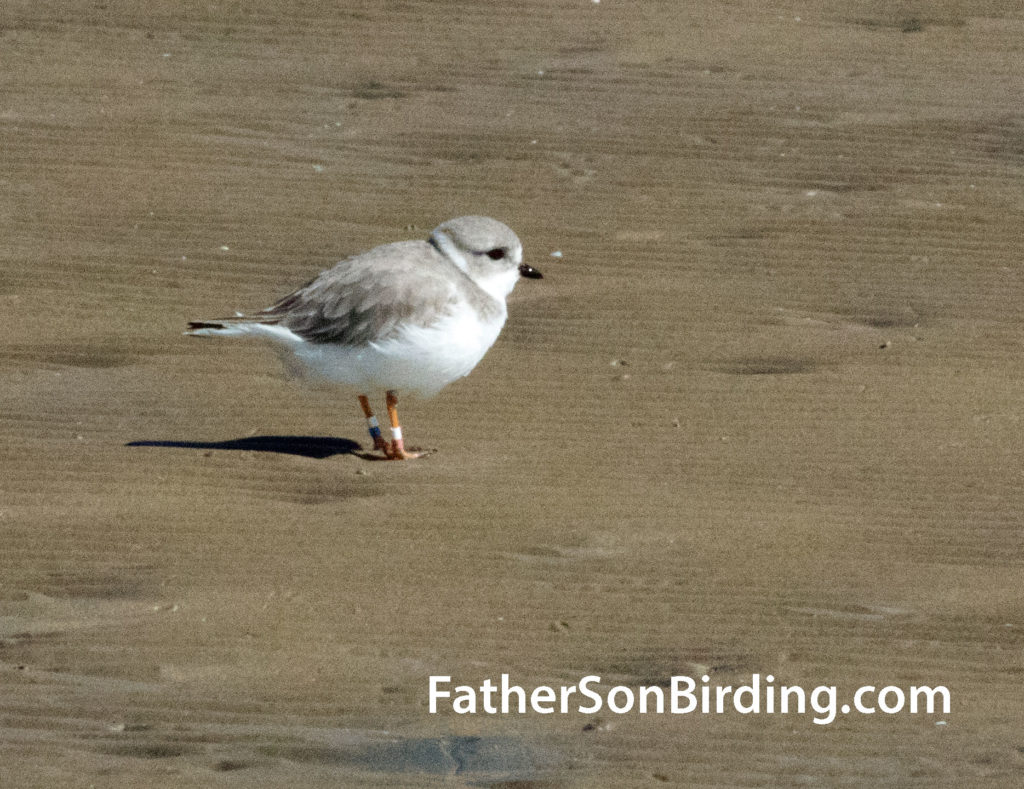
Braden and I saw our first-ever Piping Plovers on the Bolivar Peninsula, and I was lucky to see this endangered species again on a subsequent visit.

Even though I live in Montana, I became an annual supporter of HAS shortly after that visit. Even better, I have been fortunate to visit the area three more times. Every trip has been a highlight of my birding career. Each time, I have seen gobs of amazing songbirds, shorebirds, and waders, and learned a ton about birds. Just check out some of my past posts about visiting the region:

Turkey Day Texas Adventures Part 1: Pursuing Plovers

Tangled!

Going Cuckoo for Fall Warblers in Texas

Anahuac Lifer Attack

Unfortunately, during my visits, I also have noticed an inescapable fact: the Bolivar Peninsula is being developed at an astounding rate and the reason is clear: beachfront property. During our first visit there, Braden and I noticed quite a few houses along the 25-mile or so stretch of the peninsula. On each subsequent visit, I was blown away by how many new houses had sprung up since my previous visit! On my most recent trip, this past April, I realized with dismay that the entire peninsula would soon be wall-to-wall housing developments.

One of dozens of major housing developments that have sprung up on the Bolivar Peninsula since Braden and I first visited in 2016.

I can’t even begin to explain how poorly-conceived this kind of rampant development is. Never mind that it has gobbled up some of the best remaining Gulf Coast wildlife habitat, it is virtually guaranteed that hurricanes will totally destroy these developments as they have in the past—and with increasing frequency thanks to climate change (see this Hurricane Ike story and this astonishing storm list). In fact, the ability of the peninsula in its natural state to block tidal surges, prevent erosion, and soak up storm water economically outweighs by far the short-term profits from this get-rich-quick development.

Rampant development in coastal areas not only destroys critical habitat, it greatly diminishes the ability of the coast to withstand hurricanes and other major storms. Though I’d love to enjoy a beachfront house like this myself, economically it is a lose-lose situation, both for homeowners and taxpayers, who often get stuck with paying the bills for disaster cleanup and rebuilding.

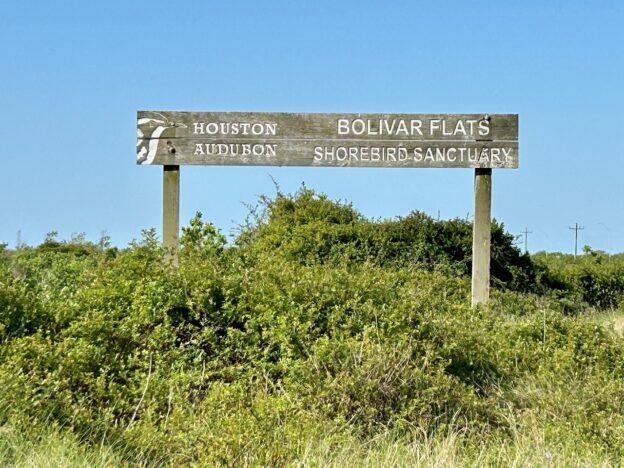
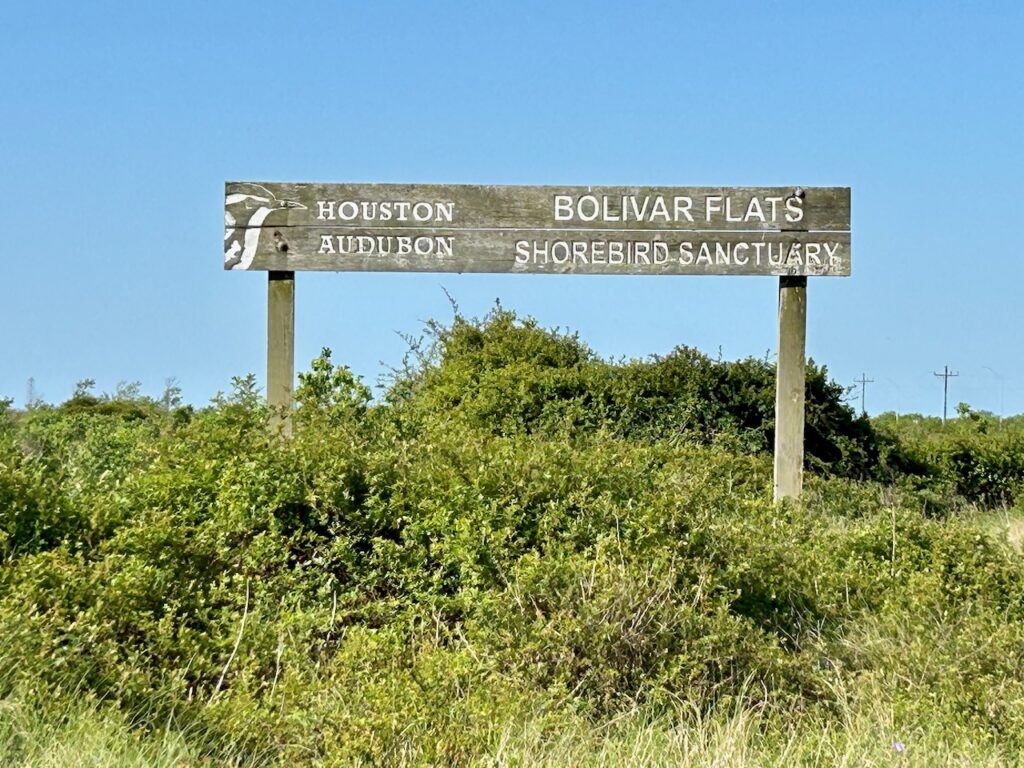
Still, the lure of fast profits is just too much here as it is in many other places. And that’s why I’m writing this post. Right now is one of our last best chances to protect what remains of this globally vital birding habitat. How? Currently, HAS owns and manages more than 3,000 acres of Bolivar Peninsula habitat—natural islands in an expanding sea of development. And yet, right at the entrance to their Bolivar Flats Shorebird Sanctuary, a new development recently cropped up. Ironically dubbed the Sanderling Development, it threatened to wipe out critical habitat and destroy a buffer to the core of the Bolivar refuge. The good news? Through heroic efforts, HAS managed to raise $3 million to buy 25 acres of the land this past July. Now, however, they need another $3 million to complete purchase of the remaining 27 acres of the property. This land is so vital that for the first time in decades, HAS has issued a public appeal for funds—And that’s where we come in!

Just one of many Bolivar housing developments, the proposed Sanderling Development directly threatened the ecological integrity of the Bolivar Flats refuge right across the road. However, HAS still needs to raise $3 million to complete the property’s acquisition. Click on this photo to donate!

No matter where we live, securing this last bit of property should be a major priority for birders. Not only does it help provide essential stop-over areas for millions of migrating birds that spread out across the continent, it helps protect critical breeding and wintering habitat. Endangered Piping Plovers, Black Rails, and Red Knots are just three endangered species among hundreds of other species that use this important area.

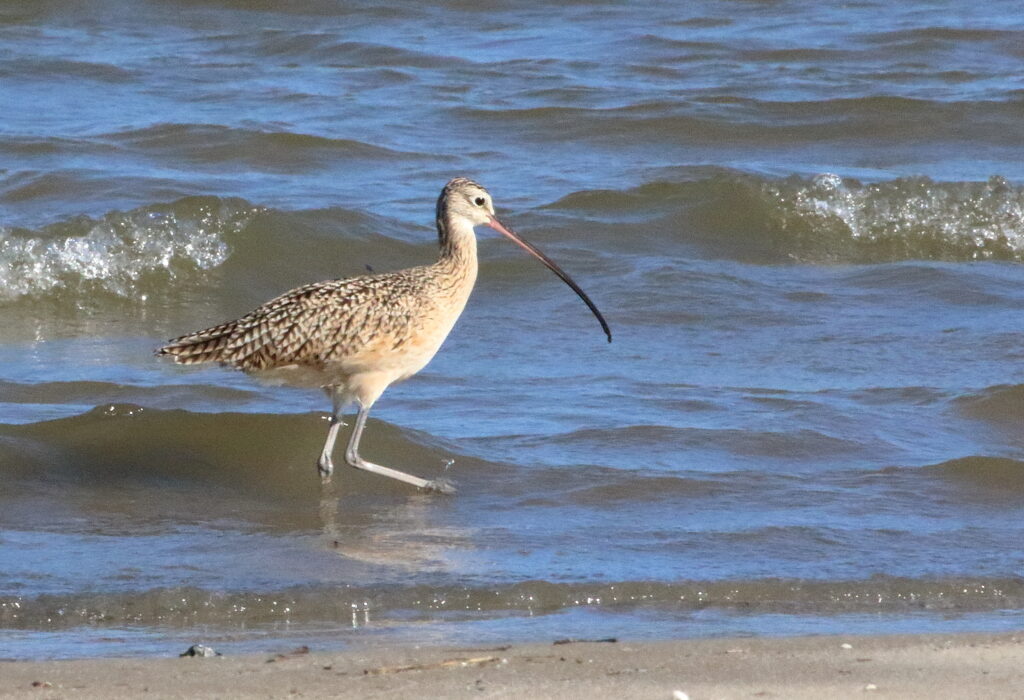
A fall Long-billed Curlew at Bolivar Flats—perhaps just returned from breeding in Montana?

So how about it? Do you have $25 to chip in? $100? $1000? If you do, I can say with confidence that your money will rarely be better spent. Along with donating, why not plan a spring or fall trip down to the area? If you are fortunate enough to be able to do this, I can almost guarantee it will be one of the highlights of your birding experiences. You also will not have the slightest doubt that your investment in this area is one of the best you will ever make. To donate, CLICK HERE NOW!

And with that, I will sign off so I can make a contribution myself!

Houston Audubon’s Bolivar Peninsula’s sanctuaries are not only vital for Texas birds, but for breeding birds throughout North America.

Gray Flycatcher Science

One of our goals at FatherSonBirding is to encourage support of scientists and nonprofits working to protect our planet’s many imperiled bird species. We hope that you will consider sending a donation to Montana Bird Advocacy, whose work is featured in today’s blog. You can do this by clicking here. It will be money well spent!

Late July often ushers in the birding doldrums. Having finished courtship and breeding, most birds get super quiet. They often disperse from their breeding territories, too, making them more difficult—or at least unpredictable—to find. But this year I was in luck: I had a writing assignment that would guarantee I see at least a few very cool birds.

My best look yet at a stunning Ferruginous Hawk proved a delightful bonus to my day near Bannack.

You may recall my unsuccessful June trip down to Beaverhead County (see post In Search of the Green-tailed Towhee) to visit with biologist Jeff Marks, founder of the nonprofit scientific research group Montana Bird Advocacy.  There, Jeff and colleague Paul Hendricks are performing a long-term study on one of Montana’s little-known birds, the Gray Flycatcher. When I visited, Paul wasn’t there, but I also got to meet biologist and research assistant Nate Kohler, who has been playing a pivotal role in the study.

The word “gulch” conjured up a much more verdant image to my mind, but as you can see it takes some pretty special adaptations to survive in this rugged country.

Although my June trip allowed me to see many wonderful birds and interview Jeff and Nate, my intention to see the Gray Flycatchers got squashed by a freak winter storm. Worse, the storm wiped out a whole crop of nestling Gray Flycatchers. The good news? The adults had laid second clutches of eggs, and the babies were getting ready to fledge as I again headed down there the last week of July. This time, the weather would be ideal for seeing them.

Jeff and I headed out at 8:00 a.m. and made our way up Bannack Bench Road, which borders the study area. This was the third season of the study, and its purpose is to figure out some of the basic biology of a bird that scientists know very little about. To do that, Jeff, Paul, and Nate have been banding adult flycatchers with color bands that allow field identification and observation of individual birds.  The birds have been a challenge to catch, but the biologists have managed to band about a dozen each year—and with fascinating results. I won’t reveal too much about those results here since I’m also writing an article for Montana Outdoors magazine that will be out next year. However, I will tell you that seeing where these birds nest and what they are doing was a thrill.

Biologist Jeff Marks takes notes on a Gray Flycatcher nest in his Beaverhead County study area.

When Jeff first told me they were working in a place called Sheep Corral Gulch, I imagined sagebrush plants bordering some kind of verdant riparian zone, perhaps lined with aspens or junipers. Imagine my surprise to see nothing but sagebrush in every direction! Gray Flycatchers breed throughout the Great Basin, but one of the fascinating things about them is that they choose different habitats in different places. In other states, they nest in juniper, pinyon pine, and even ponderosa pine, but in this part of Montana the birds breed almost exclusively in sagebrush plants along dry washes. One thing that these places share in common is that they have open ground for foraging.

Color-banded adults allow Jeff and the Montana Bird Advocacy team to make detailed observations about mating and behavior of these little-known birds.

In Beaverhead County, though, not just any sagebrush will do. The birds nest only in taller plants four to eight feet high—plants that can mainly be found growing in the (usually) dry main stream channels of gulches. This year, Jeff and his colleagues located about a dozen nests, one to two hundred meters apart, and as Jeff and I began hiking, it wasn’t long before we spotted an adult bird up ahead. Using GPS coordinates, it took only minutes for Jeff to locate the bird’s nest—a nest with babies!

“They will fledge any day now,” Jeff told me, “and it looks like both parents are feeding them.” Having two involved parents gives the nestlings a huge survival advantage, and as we watched, we saw a parent deliver a juicy grasshopper to its ravenous chicks.

Most of the Gray Flycatcher nests were bursting with babies itching to head out on their own—after a few more meals from Mom and Dad!

For the next three hours, I followed Jeff as we visited one nest after another, and most were jam-packed with two or three babies champing at the bit to head out on their own. We, of course, made sure to stay well back so as not to spook them out of the nests before they were ready.

An unbanded adult Gray Flycatcher keeps watch on us as we move through its territory: “Move on. Nothing to see here, folks.”

I thought we would see a lot of other birds as we hiked, but especially this time of year, the birds stayed out of sight. We saw a couple of Brewer’s and Vesper sparrows, and a single Sage Thrasher and Northern Harrier. What a contrast from a month earlier when I spotted Sage Thrashers and Brewer’s Sparrows almost everywhere I looked! Nonetheless, I couldn’t have been more thrilled to get these up-close-and-personal looks at one of Montana’s most uncommon species.

Sage Thrashers were noticeably more elusive than only a month earlier, but this one did pose nicely on a fencepost along Bannack Bench Road.

You may be wondering just where Gray Flycatchers can be found in Montana. That itself is a fascinating story, because they apparently arrived in our state only recently. The first official record occurred in 1999, and Jeff believes that the birds may only have reached the Treasure State as part of an expansion northward from the Great Basin that occurred in the 1970s. Their Montana strongholds are in Beaverhead and Carbon counties (see post Bear Canyon—Montana’s “Tropical Birding” Paradise), but it takes careful observation and listening to distinguish the birds from almost identical-looking Dusky Flycatchers. The fact that the birds are so restricted here in Montana, though, points out how important it is that we protect our fragile sagebrush communities. It also underscores the great value of the work that Montana Bird Advocacy is conducting, because only by understanding the biology of the Gray Flycatcher and other sagebrush species can we know how to protect them.

Please consider supporting the ongoing work of MBA by clicking here and making a donation. The flycatchers will thank you—as will generations of future birders!

While getting ready for the next day at the study site, MBA’s rental cabin offered an idyllic view of pastureland, complete with deer, coyotes, and gobs of Common Nighthawks. Donate to Montana Bird Advocacy by clicking on this picture.