Category Archives: Humor

In Search of the Marbled Murrelet (Birding Victoria, Part II)

After three nights in Victoria (see last week’s post “Birding Victoria, BC”), Amy and I headed up the Vancouver Island coast toward a spot where we had spent our first nights together as married folk—a lovely establishment called the Point No Point Resort. On the way up, I bamboozled Amy into stopping at one of the most well-known birding hotspots in the area: Whiffin Spit Park. As its rather humorous name implies, the park is a narrow spit of land stretching about a kilometer across the mouth of the bay where the town of Sooke is located, and it has recorded an impressive list of birds.
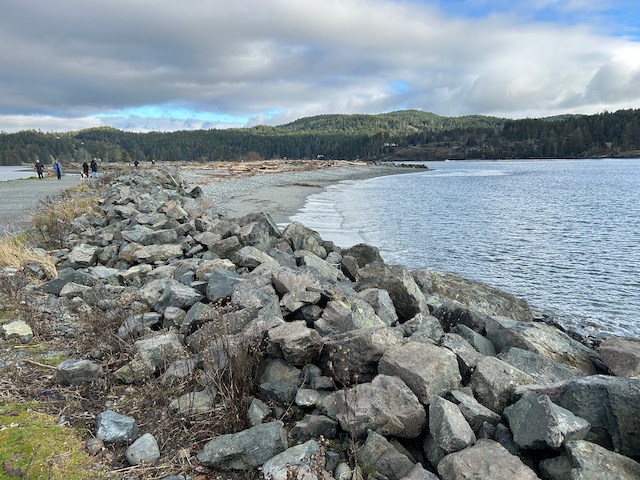
Whiffin Spit is perhaps the most well-known place to observe ocean and shore birds between Victoria and Port Renfrew. Alas, the many free-roaming pet dogs makes it less than ideal for shorbs.

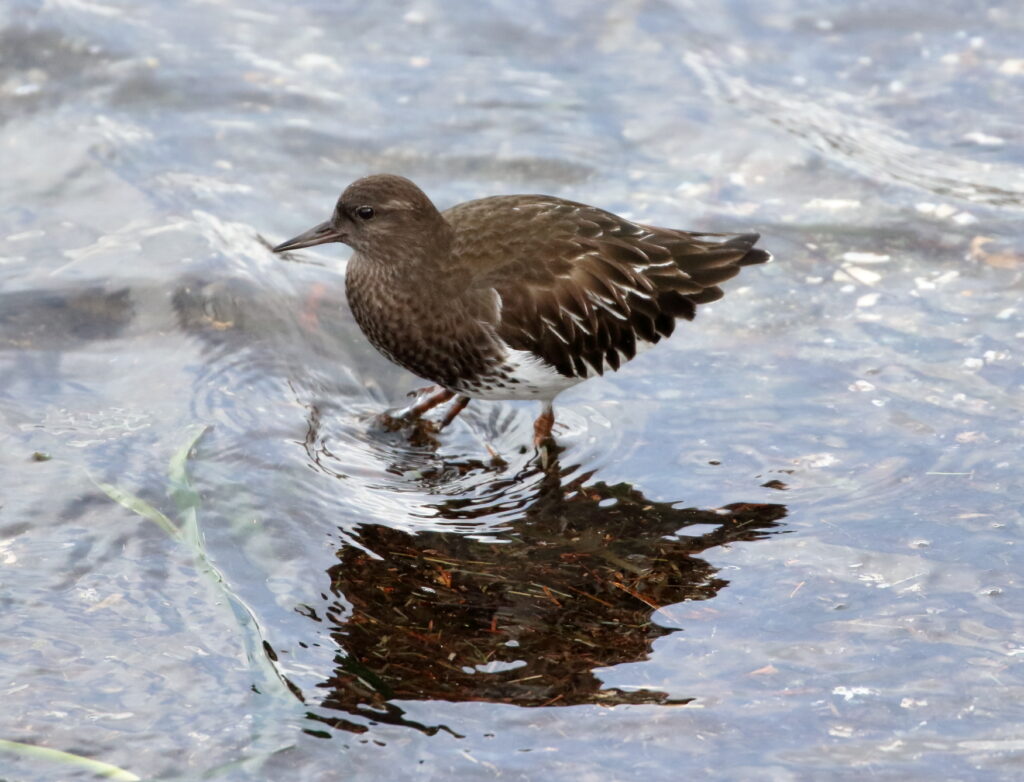
As Amy walked ahead, I schlepped my scope, zooming in on anything promising. Over the next hour, I found Red-breasted Mergansers, more Harlequin Ducks (Yay!), Surf Scoters, Common Loons, and most exciting, a pair of Pacific Loons. Along the path, I also got excellent looks at Black Oystercatchers and Black Turnstones. Alas, the numerous unleashed dogs did not create a bird-friendly environment, and chased off the birds several times. (Our dog, Lola, by the way, informed me that she would never engage in such unruly behavior—cough, cough.)
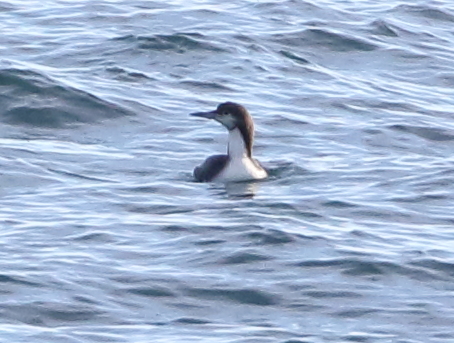
The longer we stayed on Vancouver Island, the more Pacific Loons I got to see. I have learned to identify these handsome birds by their silvery heads and neck postures, which remind me of cobras ready to strike. Up close, the dark “chin strap” is also diagnostic.

Despite these good birds, I had by now firmly set my mind on seeing alcids, a group of sea birds affectionately dubbed the penguins of the northern hemisphere. These birds include murres, guillemots, Razorbills, Dovekies, and puffins, but the ones I most wanted to see were murrelets. Two kinds frequented the area: Ancient and Marbled. My new birder friend John (see this recent post) had told me that Ancient Murrelets tended to fly around in groups while Marbled Murrelets were most often observed as loners floating on the surface. Either species would be a lifer for me, and I would have been ecstatic to find one. Alas, the task was proving much more difficult than I had hoped. I totally struck out in Victoria, and now I “whiffed” at Whiffin Spit, too.
The Point No Point Resort helped ease my disappointment. The cabins and rooms are all cleverly designed for privacy and each looks out over the spectacular Strait of Juan de Fuca (part of the Salish Sea). The sun was setting by the time we checked in—just time for me to set up my spotting scope and find a raft of about forty Surf Scoters floating below us. They would become regular companions of our stay. I also noted a few cormorants and other birds, but alas, no alcids.

Our room at the Point No Point not only offered a mesmerizing view of the Olympic Peninsula across the water, but a chance to scope for more seabirds.

Undaunted, I rose the next morning to hit two nearby spots that had been recommended as great seabird locations: Otter Point and Muir Creek. The birding gods seemed stubbornly pitted against me. I saw a few more loons, including my first Red-throated Loon, along with my first Pacific Wren and a dozen or so species I’d been seeing for the past few days, but nothing that really got my heart racing.
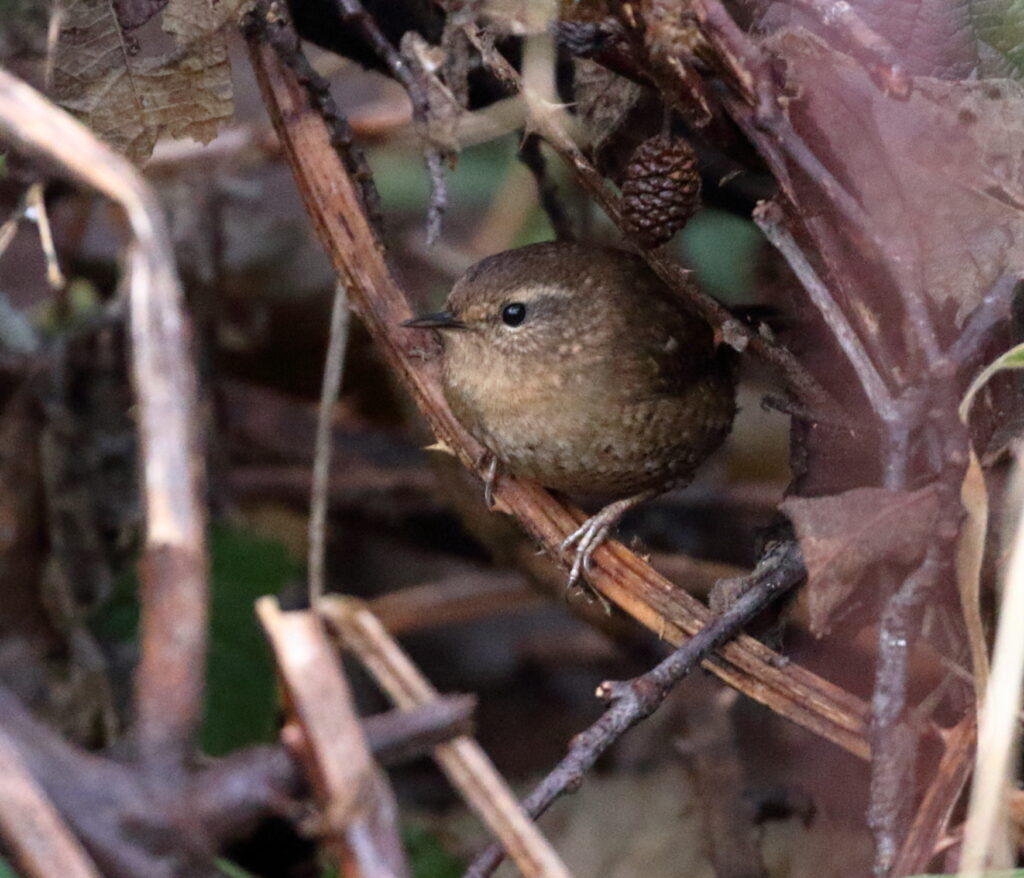
At Muir Creek, I was pleased to get an actual look at a Pacific Wren. Amy and I heard them several other times, but the birds like their privacy!

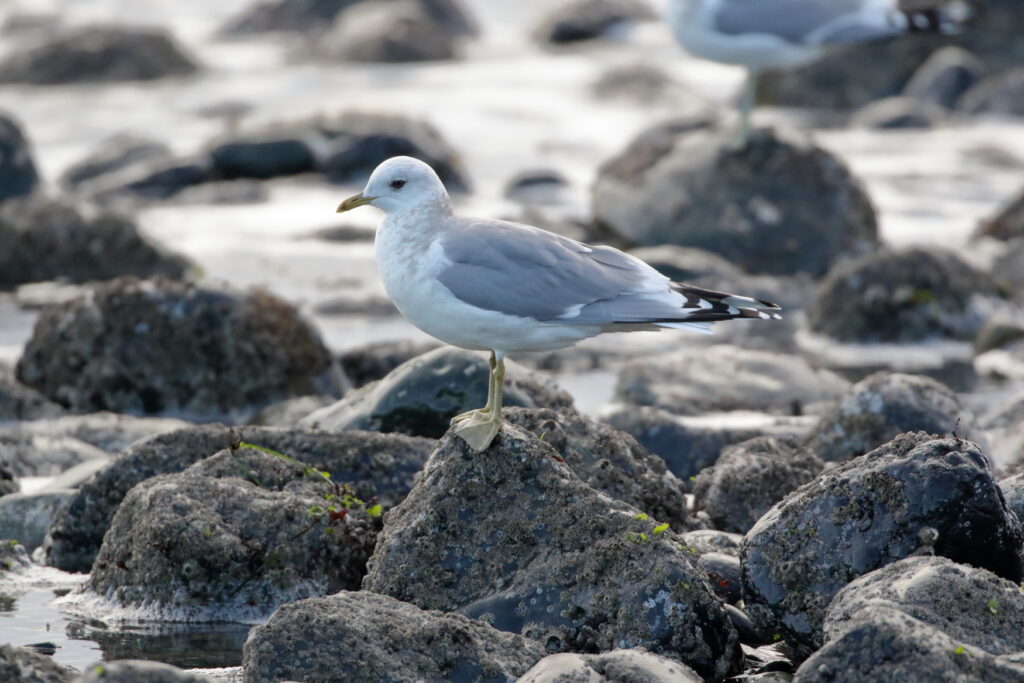
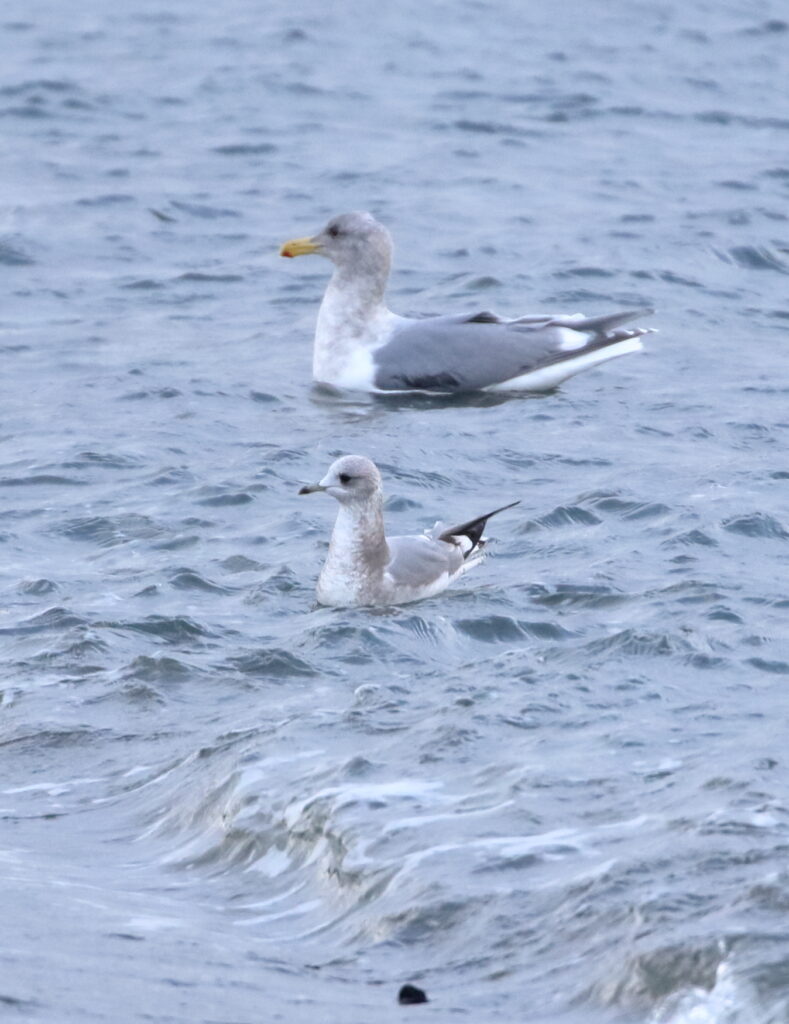
This pattern repeated itself for the next couple of days as Amy and I explored several more places between Sooke and Port Renfrew. Honestly, the birds that most excited me were Short-billed Gulls (formerly Mew Gulls)—birds that I had never seen in such numbers, and had only recently become skilled at identifying myself.
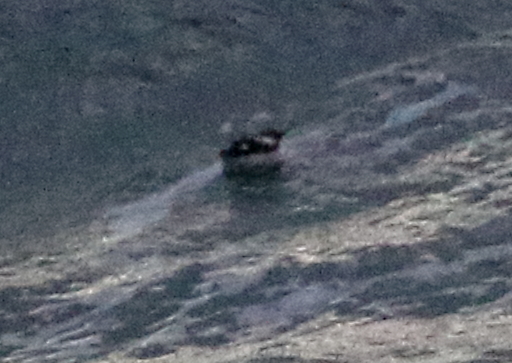
Before we knew it, we arrived back at the Point No Point for our last luxurious evening of watching the sea and enjoying the view of the Olympic Peninsula across the water. As we prepared to soak in our private hot tub, though, I picked up my cool new binoculars (see our last post) for one final look at the ocean below us. In the rapidly fading light, I spotted our loyal raft of Surf Scoters, along with gulls and cormorants. Then, I noted a tiny speck in the breaking waves close to shore, and quickly focused in on it. I guessed it was a piece of kelp or driftwood, but then, through the lenses, the unlikely shape of a bird emerged!

My heart accelerating, I frantically set up the scope which lay at my feet and zoomed in on the shape. “No friggin’ way!” I exclaimed. Honestly, I didn’t know exactly what I was looking it, but I felt sure I hadn’t seen it before. I was also sure I needed some photos, no matter how crummy, so I switched out my scope for my camera on the tripod, and captured a few quick images through our windows before, to my disappointment, the bird drifted out of view behind some trees.

By this time, after a quick consult with my Sibley app, I felt positive that the tiny bird had indeed been a murrelet, but which kind? Studying my horrible photos and comparing them to Sibley, I noted the white patches on the shoulders and near the tail. That ruled out Ancient Murrelet. I also checked the illustrations for all the other alcids that might be in the area. Only one matched my photos: Marbled Murrelet! Even better, ten minutes later the bird reappeared below our window. By now, the light had grown truly dim, but I took my tripod and camera out onto the deck and managed some slightly better shots.
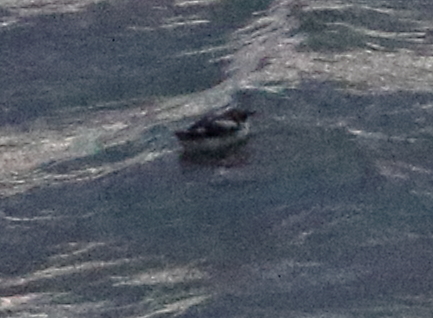
Marbled Murrelet!

My fellow birders can imagine how that one bird pretty much made the entire trip for me. Everything else was just lovely, too, but a Marbled Murrelet? That put the icing on the cake, or for me, the chocolate chips in the cookie. It also sent my imagination racing, seeing that tiny bird deftly negotiate the waves crashing into shore. It was just so comfortable in an environment that would have snuffed me out in a matter of minutes.

Marbled Murrelets defy the imagination for another reason. Unlike other alcids, they nest not in burrows or on cliffs, but in trees! In fact, the nesting location of this bird remained a great ornithological mystery for more than a century as biologists looked everywhere (but not in the tops of trees, evidently) for a Marbled Murrelet nest. “Finally,” recounts Cornell Lab’s Birds of the World, “in 1961 and 1974, the first verified and published nests were reported in Asia and North America, respectively.”

Amazing.

Unfortunately, the birds prefer old-growth coastal forest, forests that have experienced extreme logging pressures over the past century. The birds have also been impacted by fishing gear, forest fires, and other hazards. As a result, the bird is listed as endangered or threatened throughout its North American range. That made it all the more remarkable that one had deigned to show up right below our picture window—almost as if following some kind of cosmic movie script. I felt very fortunate.
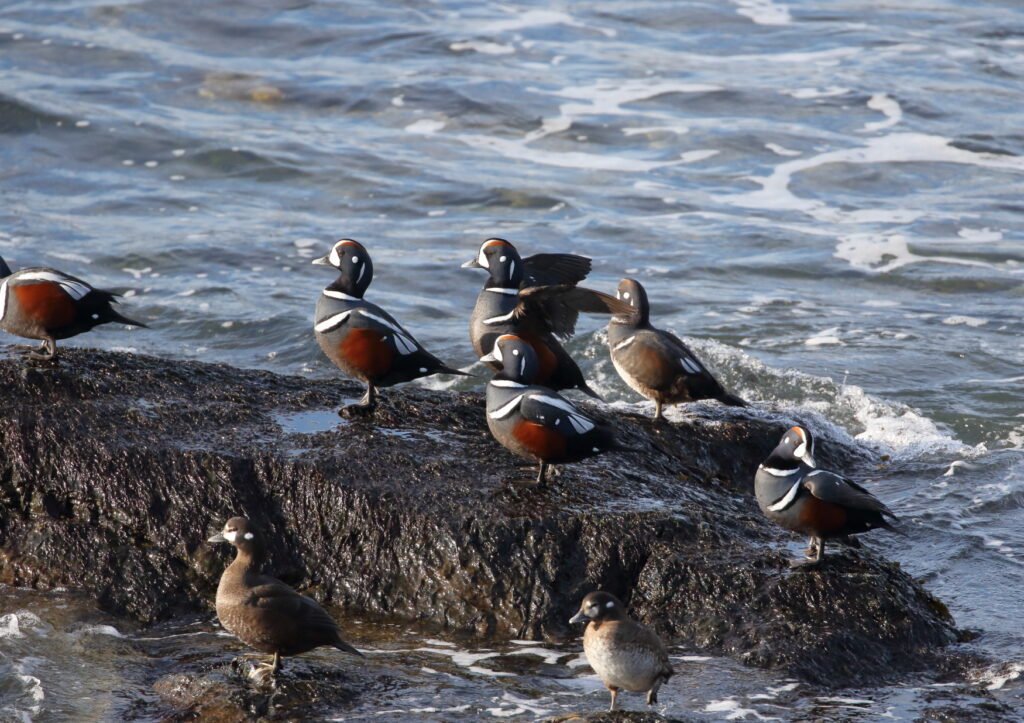
Yay! More Harlequin Ducks! During our last session at Clover Point, these stunning birds really put on a show, chasing each other around and posing for one visiting birder.

The next day, Amy and I returned to Victoria and another round of birding at Clover Point—my best session there yet. Pacific Loons, Buffleheads, Harlequin Ducks, and Surf Scoters seemed to be everywhere, and I was thrilled to find a pair of immaculately-feathered Long-tailed Ducks far out on the water. Though we would not head home until the following day, it was a great way to wrap up a trip that proved delightfully unexpected in so many ways. Huge gratitude goes to my wife and partner, Amy, for giving me such a wonderful surprise. And now, it was time for us to go celebrate with stiff umbrella drinks and a plate full of chicken enchiladas.
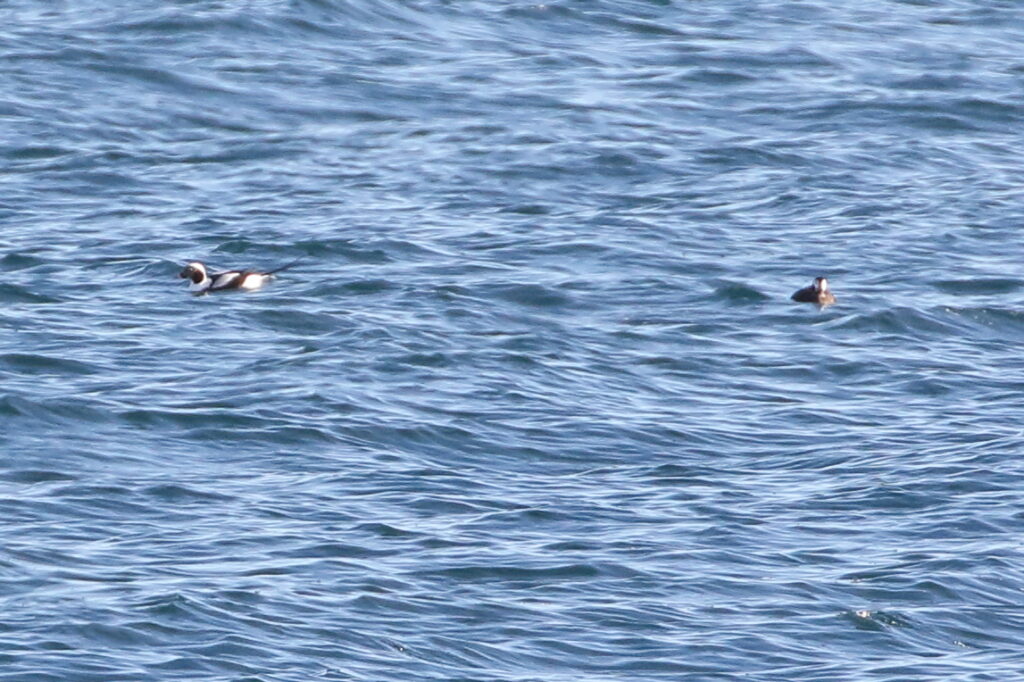
Bird of the Day honors for our last day in Victoria went to these Long-tailed Ducks. Adult male LTDUs (left) are especially striking in full plumage, and I at first assumed that the one on the right was a female. The rich brown back and bold, well-defined white face patch, however, suggests a first-year male.

Plenty of Partridges: Braden & I Kick Off Another Year of Birding!

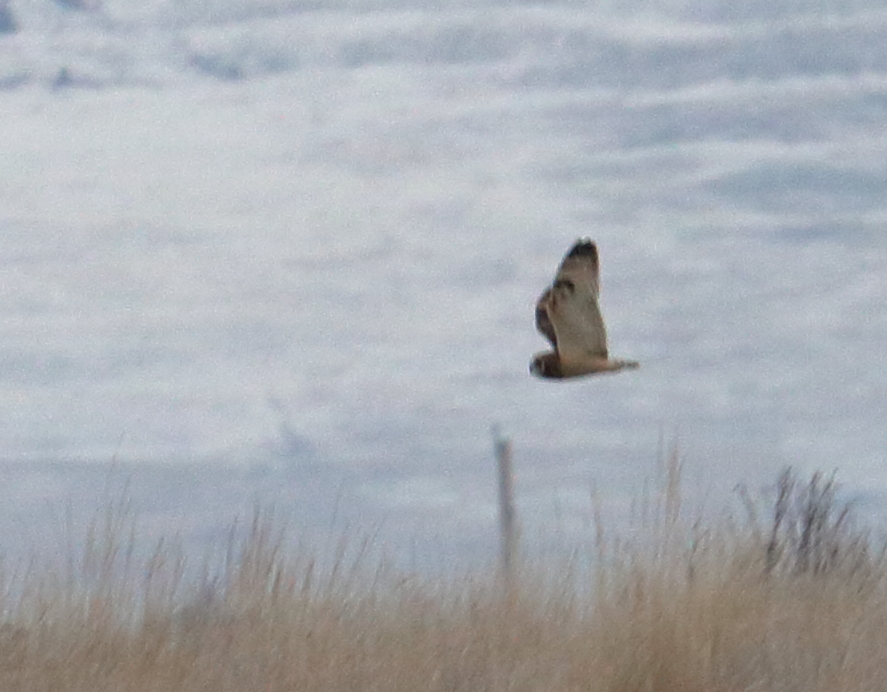
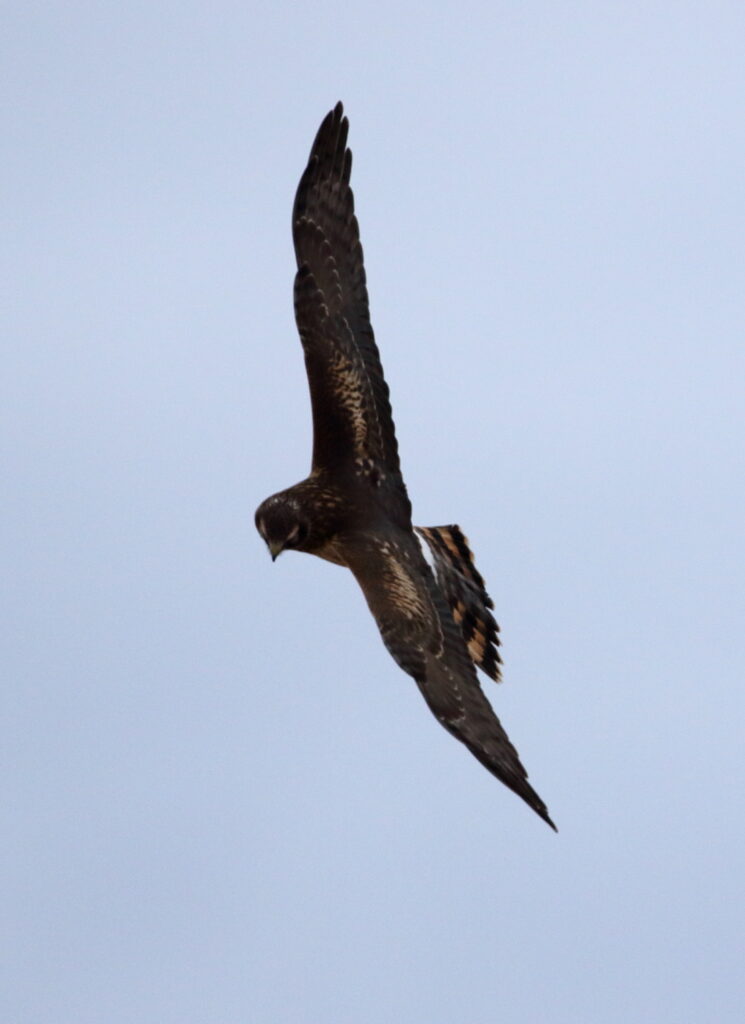
Braden and I kicked off our 2025 at one of our favorite western Montana birding spots: Ninepipe National Wildlife Refuge. While mainly envisioned as a duck factory, the surrounding farms and grasslands provide plenty of grassland bird habitat and raptor hunting grounds, so in winter that’s what we mainly search for. We began the day by looking for Short-eared Owls at a “vole-opolis” our neighbor Tim, a game bird hunter, told us about last year (see our post “Lost in Owls”). Sure enough, we got distant looks at three of these mesmerizing, long-winged raptors as they cruised low over a tapestry of grass and cattails. They were joined by a trio of Northern Harriers, birds that are so similar to Short-eared Owls in appearance and habits that they offer an almost perfect lesson in convergent evolution—the incidence of two unrelated species being shaped in similar ways by natural selection.

After our time with the owls and harriers, we set out on a leisurely cruise northward on dirt roads with the spectacular snow-capped Mission Mountains majestically gazing down on us. The raptors continued to please, with great close-up looks at our first Golden Eagle of the year, three or four Rough-legged Hawks, a couple of American Kestrels, two Merlins, plenty of Red-tailed Hawks, and no fewer than a dozen Bald Eagles.

This Northern Harrier is seriously eye-balling a group of Gray Partridges below, but decided not to go for it.

I’ve been worried about a dearth of small song birds all year, and that continued today. Usually, we at least see some waxwings or American Tree Sparrows at Ninepipe, but not today. I’m hoping the warmer winter somehow explains it, but I am especially concerned about the pervasive use of neonicotinoid pesticides and their deadly effects on birds. A future blog post, perhaps.

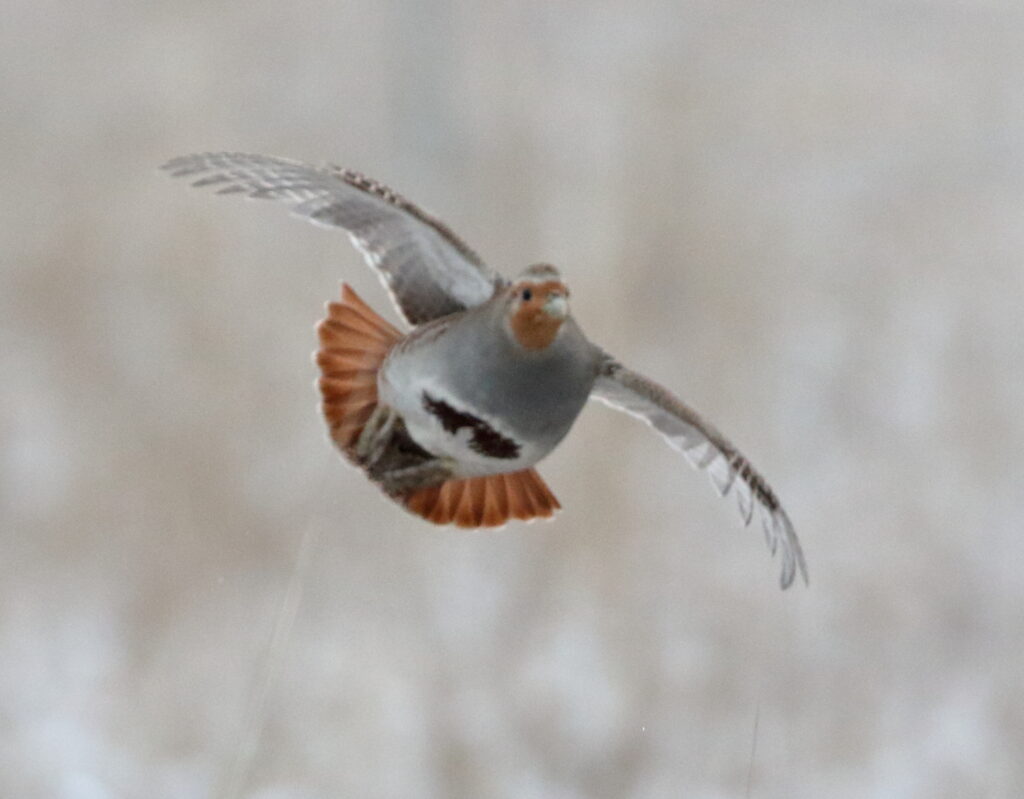
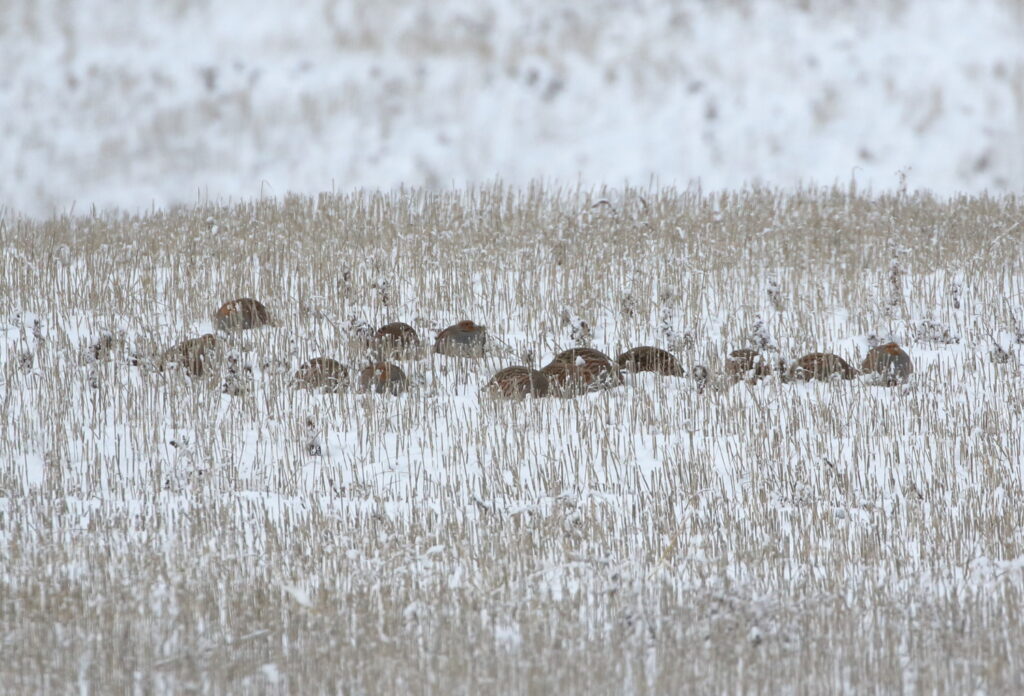
While songbirds were few and far between, we encountered a veritable population explosion of a bird we usually see only once or thrice a year: Gray Partridges! In the space of an hour or two, we saw these birds at least half a dozen times in groups ranging from four to more than a dozen. “I think I’ve seen more Gray Partridges today than in the rest of my life,” I told Braden, and it might have been true, as we totaled almost seventy of these birds. As with the rest of the day, I managed only lousy photos, but we delighted in watching these introduced, but charming, orange-faced critters.

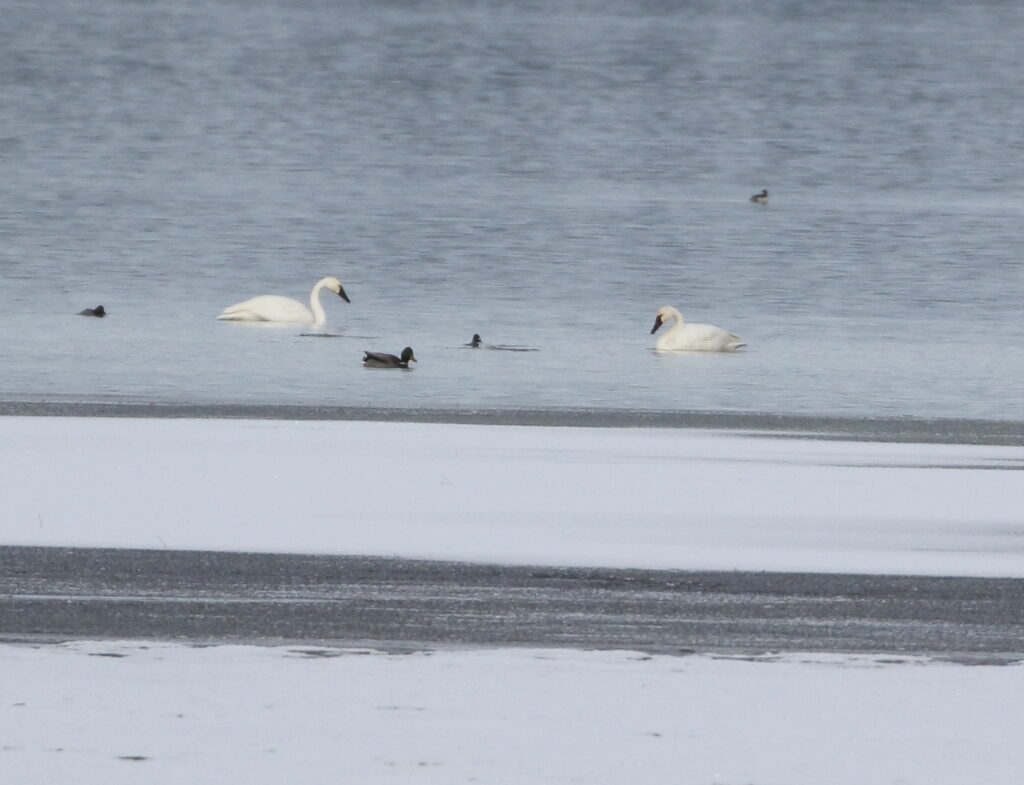
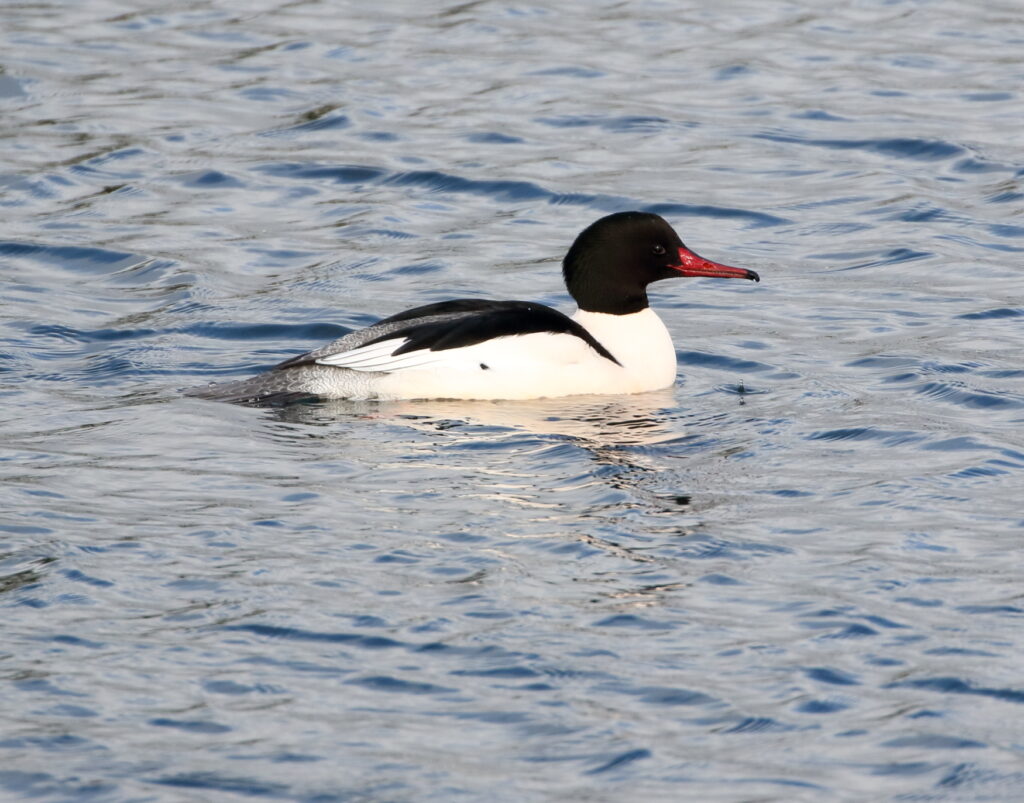
We finished the day scouring the southern shore of Flathead Lake near Polson. We had to look pretty hard, but finally found good numbers of waterfowl and gulls at Ducharme fishing access. Here we were rewarded by more than five hundred Common Mergansers, and much smaller numbers of wigeons, Mallards, Buffleheads, Green-winged Teal, Northern Pintails—and a lone Redhead. Braden also picked out several Tundra Swans from the more numerous Trumpeters.

Tundra Swans on Flathead Lake. These birds can be hard to distinguish from Trumpeter Swans, but they have small yellow patches forward of their eyes, and often have overall whiter heads and necks than Trumpeters.

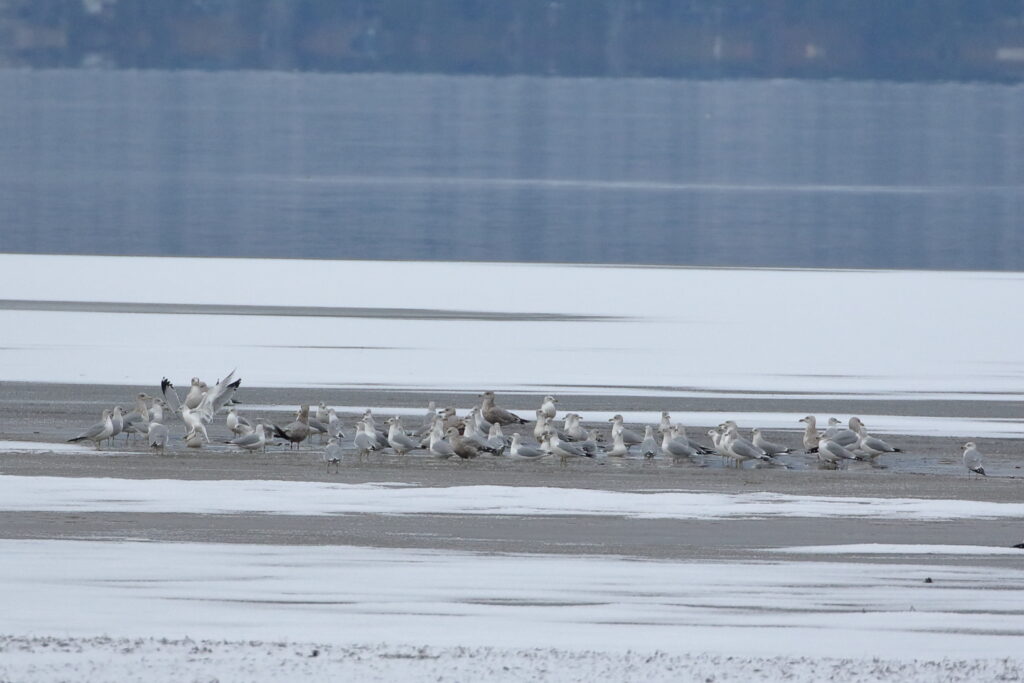
Perhaps my favorite part of this last big session was focusing in on a group of seventy or eighty gulls out on a frozen edge of the lake. Part of my enthusiasm was having just received a review copy of Amar Ayyash’s epic new book, The Gull Guide: North America. I plan to write a full review of this remarkable book soon, but my first perusals have gotten me super excited to learn more about gulls. Even better, as Braden and I studied the group in front of us through our scope, we picked out both Ring-billed and Herring Gulls. Then, I paused on a gull that looked unlike any others. It had pink legs, medium gray wings, dark eyes, light head streaking, and a single red spot on the bill. It also was noticeably smaller than the Herring Gull next to it. Braden suggested a Thayer’s Iceland Gull and I have to say that I agree with him. Unfortunately, I couldn’t get decent photos and gulls are notoriously hard to ID, so we didn’t record it. Still, I’m thinking Thayer’s is what we saw.

Ring-billed and Herring Gulls on Flathead Lake. It’s easy to pick out the Herring Gulls by their large sizes. Maybe I’ll even find some other species after studying The Gull Guide in depth!

And so it begins . . . a great new year of birding! I hope you’ve all been able to get out and enjoy the remarkable avian wildlife our planet is blessed with. In fact, if you haven’t already done so, I urge you to support one or more of the terrific conservation groups working to make sure birds are always with us. For more info, see our post “Saving Birds. It’s Time.” Thanks for reading and I hope to see some of you out there birding soon!

Birding Race Point: Cape Cod’s Pelagic Playground

The week before Thanksgiving, my family had the opportunity to visit a place that featured prominently in my childhood—Cape Cod, Massachusetts. We headed to Boston so that I could accept a big award for my picture book, Border Crossings, but the trip provided many piggybacking opportunities. These included a chance to look at colleges for Braden’s sister, Tessa, and to meet up with Braden for Thanksgiving. After Amy, Tessa, and I spent a few days in Boston, in fact, Braden drove down from the University of Maine and whisked us off to the Cape.

I spent parts of many summers in Woods Hole on the Cape. My father did his post-doc at WHOI—the Woods Hole Oceanographic Institution. My step-father spent dozens of summers in Woods Hole doing research and teaching classes at the MBL—the Marine Biological Laboratories. I have many fond (and some not-so-fond) memories of those summers, but had not been back for (gasp) 45 years! I looked forward to revisiting old haunts and showing my family some of the places that had shaped my childhood. Naturally, Braden and I also considered the birding possibilities.

Race Point Lighthouse.

When Braden first mentioned going to Race Point near Provincetown, I hesitated. I recalled driving up there as a ten-year-old and didn’t relish spending an extra four hours of our vacation in a car. When Braden started telling me what we might find there, however, I quickly changed my mind.

Race Point, it turns out, is one of the nation’s premiere places for spotting seabirds from land. A map reveals an obvious reason: Cape Cod juts miles out into the Atlantic Ocean, and the tip—Race Point itself—is surrounded on three sides by the sea. This means that birders have an opportunity to see both regular beach-type birds and many species that only rarely show up near land. Braden and I especially hoped to see jaegers, “tube noses” such as shearwaters, and any interesting gulls or ducks that happened to be around.

After a delicious breakfast at Liz’s Café in Provincetown, Braden and I left Amy and Tessa to explore while we headed off to the parking lot near Race Point lighthouse. As soon as we approached the beach, we spotted Northern Gannets soaring above wild, wind-raked seas. I’d only ever gotten a brief look at a NOGA before, when Braden and I had visited Acadia National Park three years before, so right away the drive up to Provincetown redeemed itself!

However, the excitement was just beginning.

One of perhaps 150 Northern Gannets we saw at Race Point. Like Blue-footed Boobies, these birds torpedo straight down into schools of fish.

As wind and sand pelted us, groups of White-winged and Black Scoters, Common Eiders, and Long-tailed Ducks skimmed the waves just offshore. Some occasionally landed, but most seemed hell-bent for destinations only they knew about. All were birds I had scant experience with, so I soaked up every sighting.

This was only my second time seeing Common Eiders, and I was uber impressed by the coloration of both females and males.

“There’s a Red-throated Loon!” Braden said, pointing to a bird with an exceedingly pale, long neck reaching up from the surface. It wouldn’t be long before we saw several Common Loons, differentiated by blockier heads, chunkier bills, and more black on their faces.

Only my second Red-throated Loon ever. Note the smooth, rounded head and white “winter” face.

At the top of our To Find list were Great Shearwaters, a potential Lifer for both of us. These birds belong to the “tube noses,” the same group of birds that includes albatrosses, fulmars, and storm-petrels. These birds are truly seafarers, rarely approaching shore. Only a few weeks ago, I had caught a glimpse of Sooty Shearwaters while visiting California’s Point Reyes National Park with my friend Scott. Great Shearwaters had been sighted regularly at Race Point for the past couple of weeks, but alas, we arrived too late to see them today.

Braden fruitlessly searching the seas for Great Shearwaters and jaegers.

We still had plenty of thrilling birds to look at, however. As we trudged the mile and a half through the soft sand toward the very tip of the Cape, flocks of Dunlin and Sanderlings in their winter plumages worked the drifts of foam left on the beach by each encroaching wave. We even saw a group of six Horned Larks, birds we were used to seeing on the backroads of Montana—not here at the end of the world.

It had been years since I’d gotten to hang with Dunlins, and it was a real treat.

Not to be outdone, gulls also put on a show. This was the first time I’d ever gotten to see Great Black-backed Gulls in a natural setting. They are the world’s largest gulls, and I gotta say they looked like they belonged in this rugged, challenging environment.

“Look!” Braden suddenly shouted. “Iceland Gull!” Two of them, in fact. These gulls had until recently been split into Iceland and Thayer’s Gull, and Braden and I had seen the latter at the Helena landfill in Montana. This look was much more memorable as both a juvenile and adult landed near us. Both were gorgeous birds with subtle markings, and they quickly jumped into contention for Bird of the Day honors. Not long after seeing the Iceland Gulls, Braden also spotted a Black-legged Kittiwake. I was grateful he’d gained experience with all of these birds while on the East Coast, because I certainly would have missed a lot of them.

I don’t even want to know what this Great Black-backed Gull is eating, as our two Iceland Gulls look on.

I picked up two Lifers for the day. One was Razorbill, a kind of black-and-white alcid I had dreamed about seeing for years (see our post “All About Alcids”). During our hike to the lighthouse and back, we saw about eighty of these birds in groups, flying low or bobbing up and down in the jagged waves. My second Lifer was a pair of Purple Sandpipers that landed in front of us and shouldn’t have been anywhere near a wide sandy beach. Like its closely-related West Coast cousin the Rock Sandpiper, these are rocky shore birds.

I was especially thrilled to see my Lifer Razorbills, but it’s a tossup whether these or the Iceland Gulls grabbed Bird of the Day honors.

“They must be migrating,” I said, and Braden agreed, though we were well within their wintering latitudes.

As we trudged back toward the car, Braden spotted a fin jutting out of the water. At first we thought it might be the dorsal fin of a shark or orca, but after watching it for a few minutes, we concluded that we were looking at the tail flukes of a larger whale. I’d seen quite a few humpback whales before, and these didn’t look anything like it. “I think it’s a Right Whale,” I said. Later, we learned that Right Whales had been regularly spotted in the area. It was one more unforgettable discovery for a memorable day.

Race Point eBird Checklist: https://ebird.org/checklist/S203601766

Race Point selfie!

Robin Smackdown: Old World versus New

At any time of year, but during the holidays especially, new birders are likely to become confused by some of the birds they see on cards, calendars—even in animations. Don’t beat yourself up. The reason for your confusion is simple: many creative types (including those who aren’t birders) often pay scant attention to what a bird is or where it actually comes from. Artists especially, when they decide to make a bird painting or land a contract for bird art, cruise the internet for photos of birds. “Hey, I like that one!” they may say, not realizing that the bird has no relation to their intended audiences.

Just recently, in fact, Amy and I were wandering around a wonderful art walk night in Billings and stopped in at one place to admire the work of a new artist. Amy noticed some bird cards, and we bought a few. What was on them? A European species! I asked the artist if she knew she had painted a European bird, and she said, “No. I just liked how it looked.”

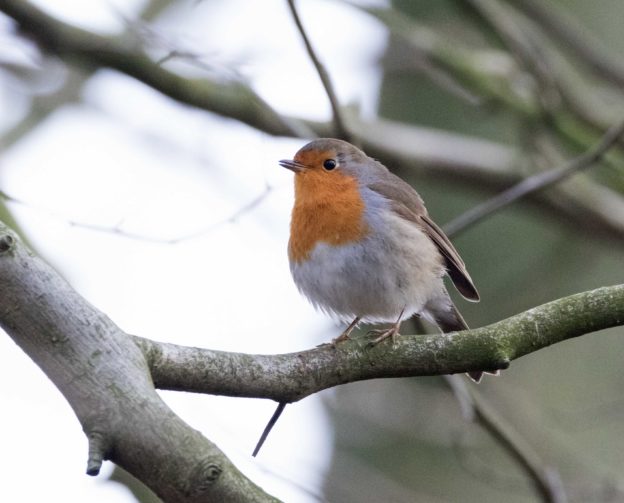
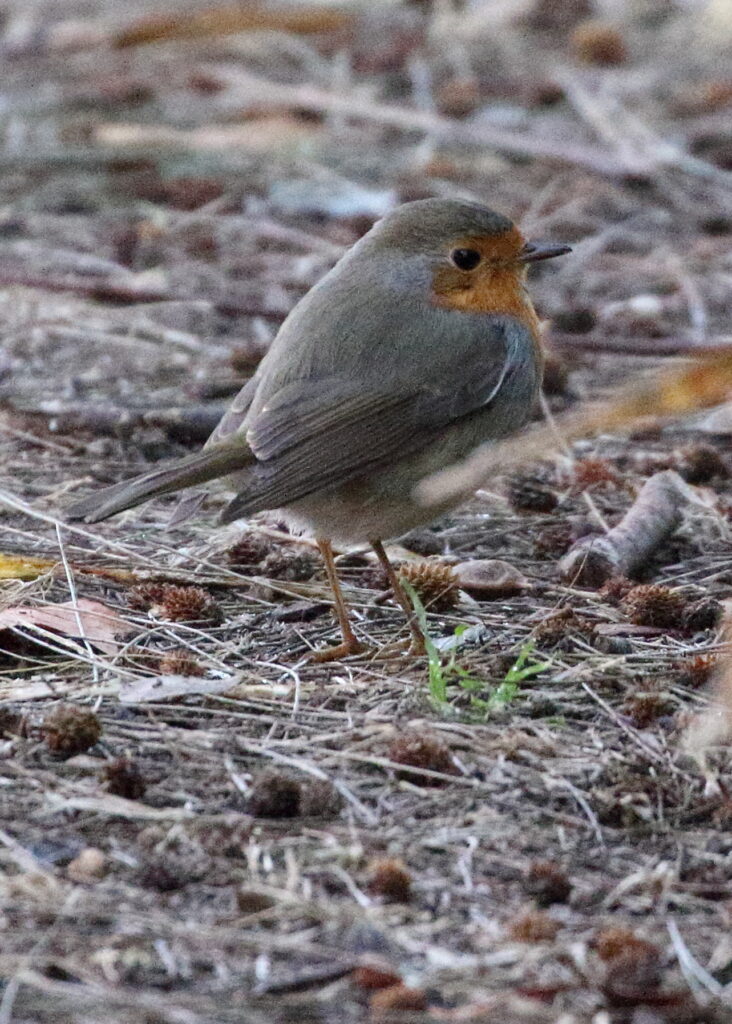
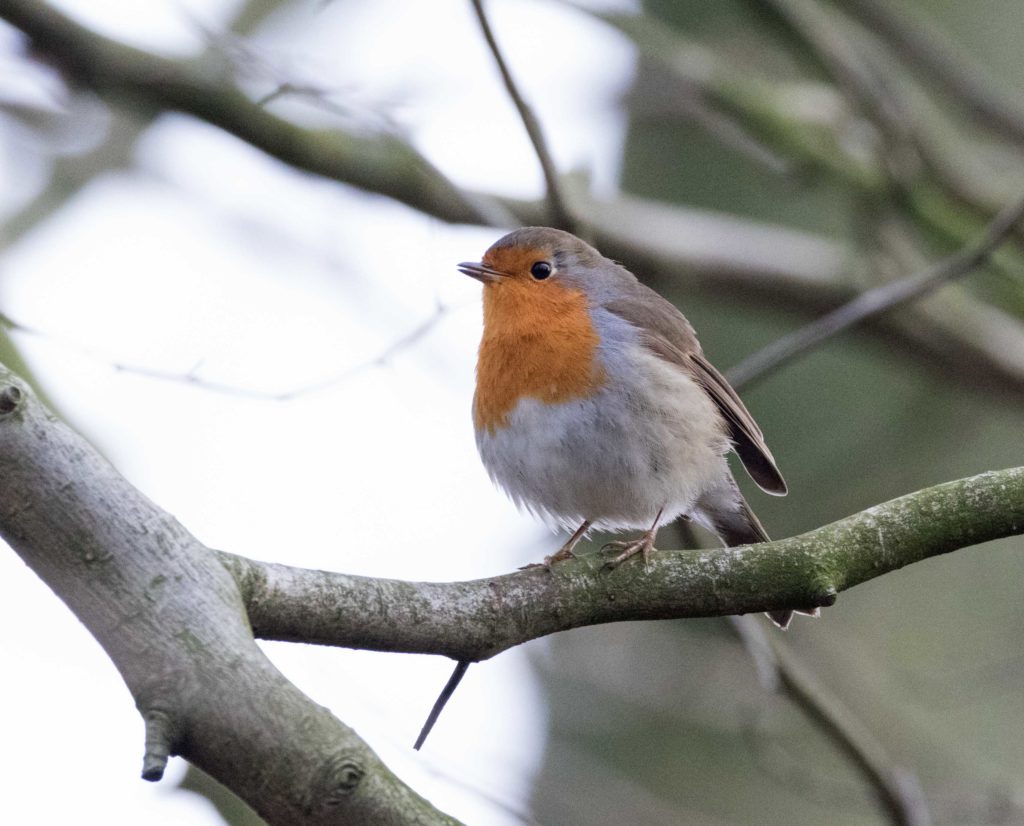
Can you name this bird? It’s not a North American species—but you will find it on plenty of cards, calendars—even in some popular movies.

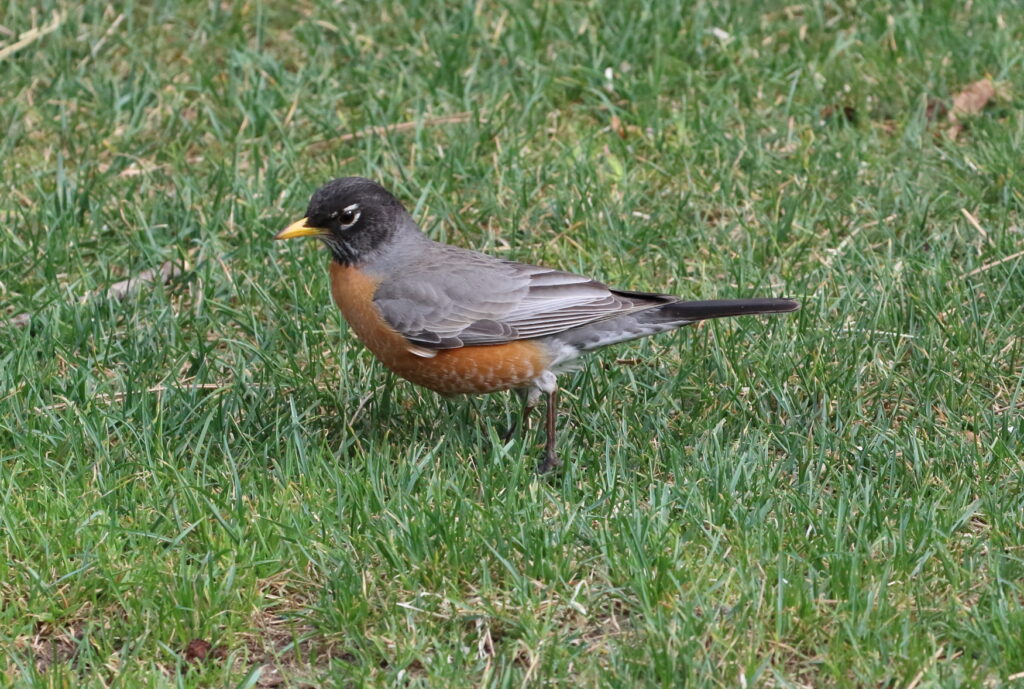
In my experience, the most common occurrence of this kind of thing happens with Old World and New World robins. Look at the bird above. What do you see? If you answer “robin”, you are correct—but it’s not the robin we see here in North America. The bird above is a European Robin—in other words, the original robin. The robin we have here is the American Robin. What’s more, the two are only distantly related. European Robins belong to the family Muscicapidae, a group consisting primarily of Old World Flycatchers. American Robins belong to the family—don’t laugh—Turdidae, or thrushes. So how did these birds come to share the name “robin”?

How else? Colonial imperialism.

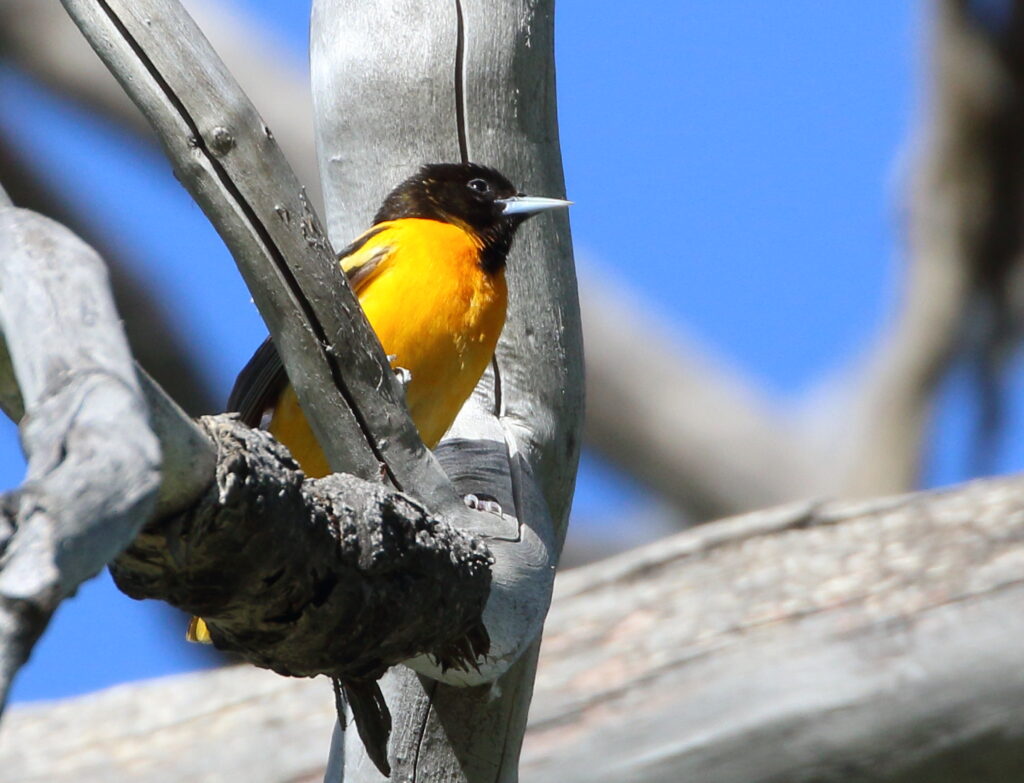
According to a 2011 segment of BirdNote, early English birders once dubbed the Baltimore Oriole the Golden Robin, though it has little relation to either the European or American Robin.

I won’t try to prove this, but it seems that the English were the original birdwatchers, and they carried their passion with them to the vast territories that they subjugated, usually without their owners’ permissions. In fact, the English pretty much disregarded the original occupants of a place along with any native knowledge of animals these occupants might possess. As a result, Brits gleefully conferred new names on most of the strange and interesting animals they encountered. Often these new names were actually old names that the English were already familiar with—including the name Robin, aka Robin Redbreast.

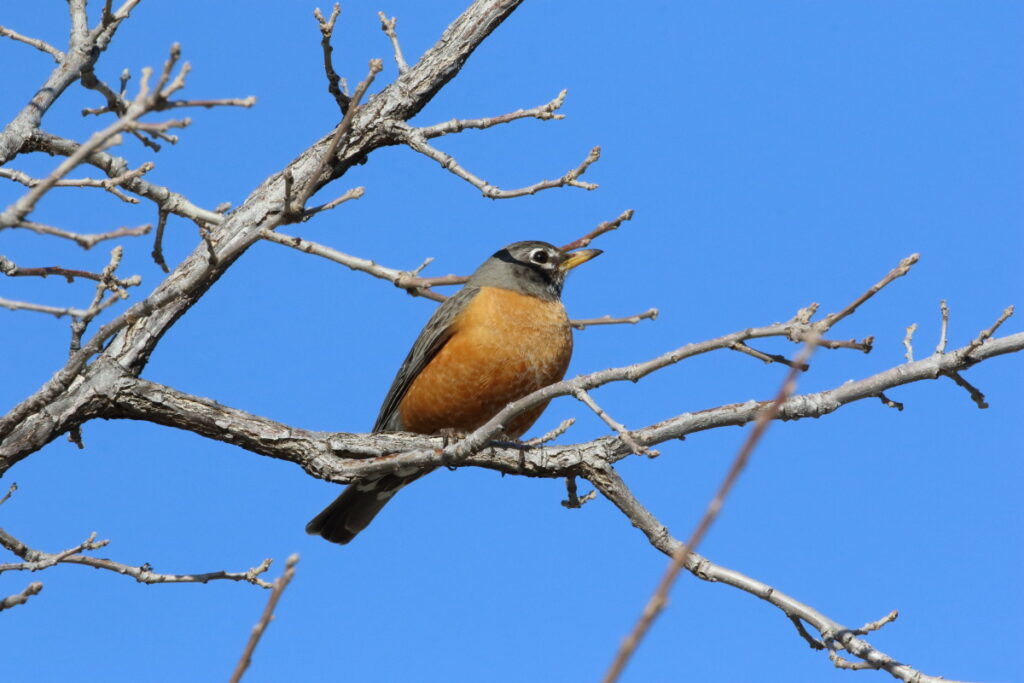
According to the delightful BirdNote episode titled, “How the Robin Got Its Name,” the English went a little buck wild with the name Robin. They called towhees Ground Robins. They dubbed the Baltimore Oriole the Golden Robin. If you compare the photo of the European Robin at the top with the photo below, it’s not hard to figure out how the American Robin got its name, either. But while chances are good that most American birders have come to appreciate American Robins, I’m guessing many of us haven’t encountered its etymological ancestor.

We can thank early British twitchers for bestowing the name “robin” on perhaps our most colorful THRUSH, the American Robin.

Both Braden and I have had the good fortune to see European Robins several times in the past few years, and I must tell you, they are delightful—if somewhat shy—birds. The first time was in Amsterdam’s Vondelpark, which we birded during a long layover on our way to Israel. Sure enough, in Israel we also saw “EUROs” several times. Most recently, Amy and I enjoyed seeing European Robins in Barcelona (see our post “Birding Barcelona, Part 1: The Urban Core.”).

A European Robin scraping for invertebrates in Barcelona’s most central urban park, Parc Ciutadella.

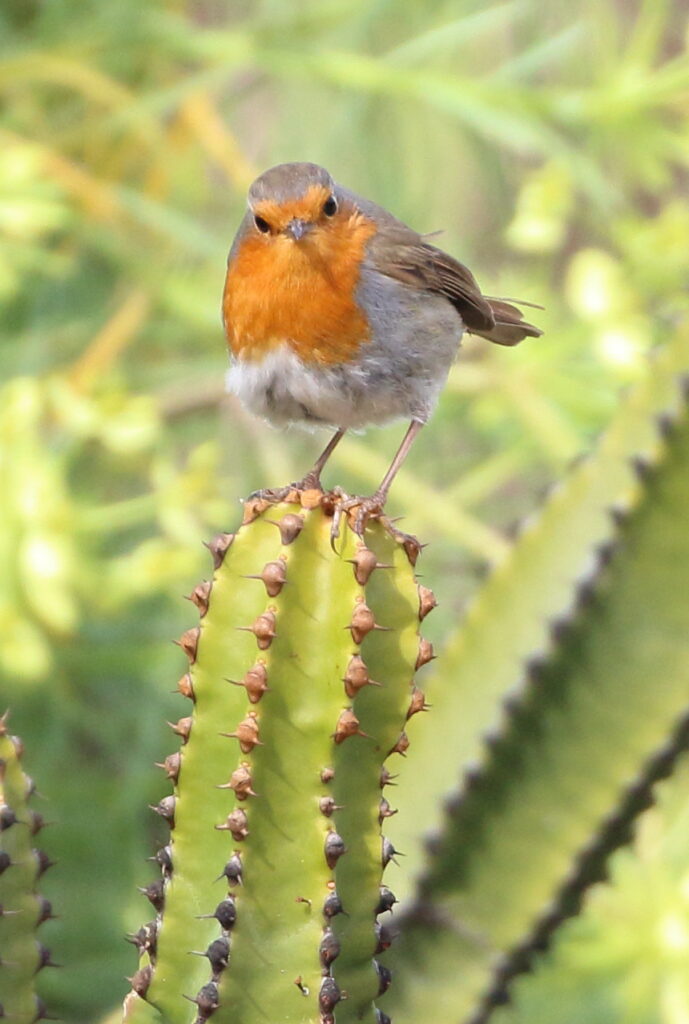
I always take special delight in seeing this bird, perhaps because of its name, but also because it is every bit as beautiful as our American Robin. As mentioned above, the European Robin belongs to the Old World Flycatcher family, and I have seen them perched—presumably waiting to snag an insect out of the air. Like many other birds in its family, however, the European Robin seems more of a ground forager. Most recently, in Barcelona’s Ciutadella Park, I watched them scraping through dead leaves for invertebrates. Only a few days later, we watched one boldly perched above a pond in the botanical gardens.

Even though they aren’t closely related, AMROs and EUROs share a lot in common. Both live exclusively in the northern hemisphere, and are one of the most common land birds on their respective continents. And while they are year-round residents in large parts of their ranges, they also have distinctly migratory populations. They also both love to gorge themselves on insects, worms, and other hapless, creatures without backbones—but neither turns down fruit and seeds when the right opportunities arise.

Our defiantly anti-imperial bent may lead some American birders to proclaim that our robin is the superior bird. After all, it’s bigger and has a bolder red breast, but making such a claim is downright silly. Both birds are worthy of admiration and provide a terrific opportunity to further our birding educations. Best of all, as we travel North America, Europe, the Middle East, or north Africa, it is likely that we will always have one of these lovely creatures to greet us!

Our Favorite Bird Books for the Holidays

In our last post, we detailed where to buy bird-related books. For our 200th post (gasp), we’d like to share some of our favorite bird books. We are by no means attempting to be comprehensive and we apologize to the many fine authors and books we didn’t have space to include. When it comes to holiday shopping especially, however, we realize that “less is more” so we’ve limited ourselves to the books that first soar to mind. Note that we haven’t gone crazy on the hyper-links here, but recommend just calling your local indie bookstore and placing an order (see our last post). Any of these books can also be ordered from Buteo Books or from a certain not-to-be-named e-commerce giant. Please feel free to share this post with friends and others in desperate need of holiday gift ideas!

Field Guides

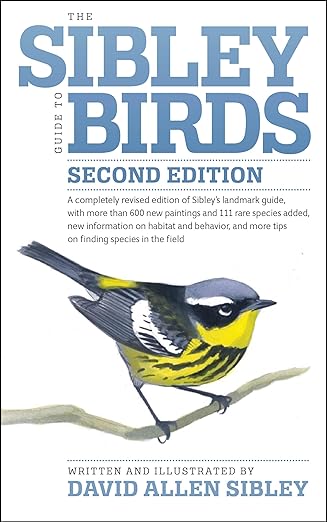
There are so many field guides available that your head will spin considering them. Braden and I have enjoyed field guides by Peterson, National Geographic, Kenn Kaufman, and many other sources. The one we return to again and again, however, is The Sibley Guide to Birds, Second Edition. While many other guides seem cramped or present information in a difficult-to-use format, Sibley strikes the right balance with generous, uncluttered illustrations and to-the-point identification information and range maps. If you’re going to buy one guide for the US and Canada, this is the one. Note that if you need field guides for specific countries or regions, you often won’t have a great deal to choose from. Our first stop is usually Princeton University Press, which seems to have field guides for many of the world’s regions (see our last post).

“How To” Guides for Beginners

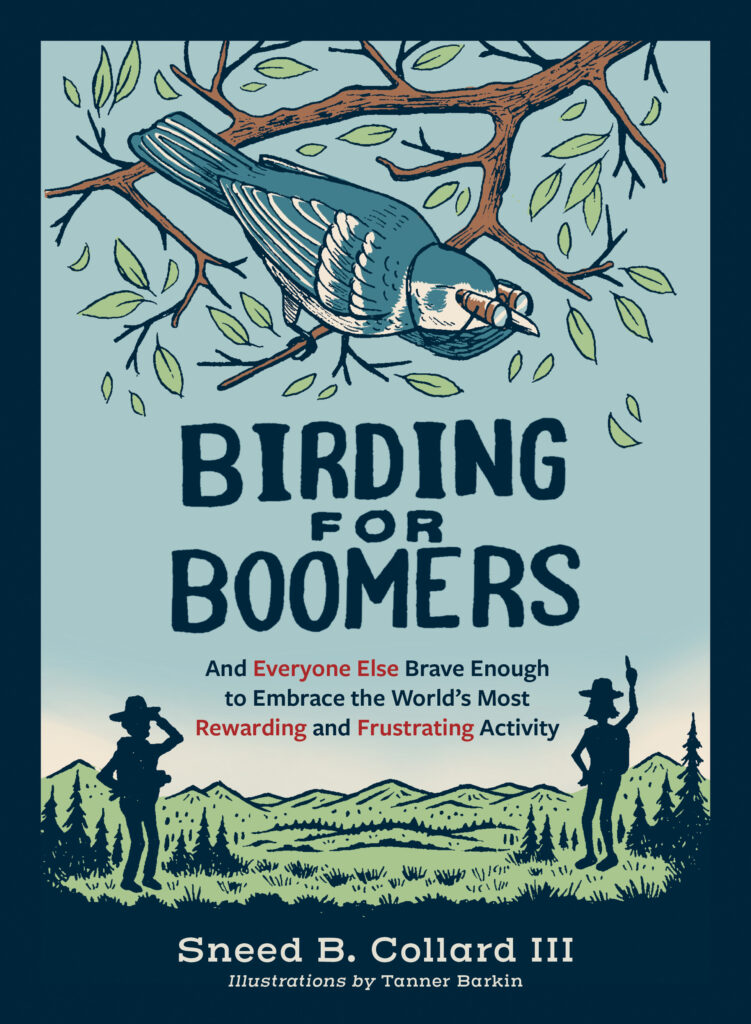
I swear, I wasn’t going to include my own book near the front here, but it logically follows field guides. Especially when it comes to buying a gift for the beginning birder, you can’t beat Birding for Boomers—And Everyone Else Brave Enough to Embrace the World’s Most Rewarding and Frustrating Activity. Here’s a recent review from Foreward Reviews: “Because the book is aimed at new birders, it includes advice about what kinds of binoculars to consider, what clothing and equipment to use, the value of a good field guidebook, and useful online resources. Its guidance is casual, often relayed with light humor and embellished by personal anecdotes. Challenges specific to boomers factor into its advice on birding with hearing, eyesight, and mobility challenges, and into its considerations for those on fixed incomes. It also makes important points about safety for nonwhite and LGBTQ+ birders. With its ranging approach and easy-to-follow advice, Birding for Boomers is a handy guide for all those—boomer or otherwise—who are looking to pick up an ornithological hobby.” Click here to order!

Birding Road Trip Books

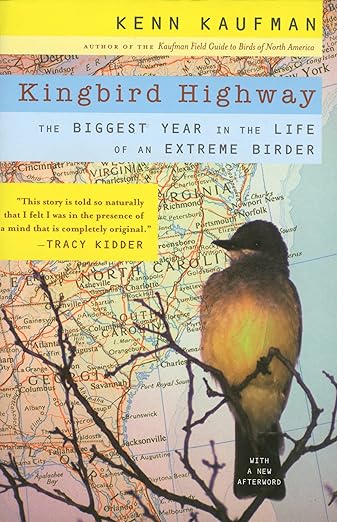
We’re going to stick with two classics here. The first is Wild America: The Legendary Story of Two Great Naturalists on the Road by Roger Tory Peterson and James Fisher. This really is required—and enjoyable—reading for those working on a life list or doing a Big Year, or anyone wanting to educate herself on the history of birding in the United States. Our second choice is Kenn Kaufman’s irresistible Kingbird Highway: The Biggest Year in the Life of an Extreme Birder. This was one of the first birding books Braden and I read and it is still one of our favorites, recounting the passions and pursuits of someone who just couldn’t help but chase and learn about birds. If you need to add a third title to this list, we wouldn’t complain if you picked up Warblers & Woodpeckers: A Father-Son Big Year of Birding!

Natural History and Science

This category could fill several blogs, but we’ll keep it brief except to say that you must read all of the books below—and they all make great gifts for anyone remotely interested in nature.

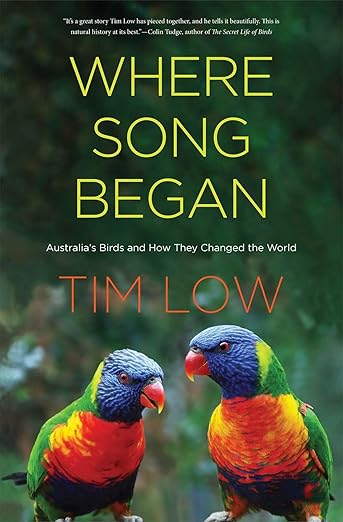
Where Song Began: Australia’s Birds and How They Changed the World by Tim Low: highly entertaining, it will change the way you think about birds.

A Most Remarkable Creature: The Hidden life and Epic Journey of the World’s Smartest Birds of Prey by Jonathan Meiburg: a fascinating account of one of our favorite groups of birds, caracaras.

Far From Land: The Mysterious Lives of Seabirds by Michael Brooke: a wonderful account of birds most of us want to spend more time with—but, sadly, never will.

Hard to Categorize—But Read Anyway

The Ravenmaster: My Life with the Ravens at the Tower of London by Christopher Skaife. The title says it all, but doesn’t come close to reflecting just how entertaining and fascinating this book is!

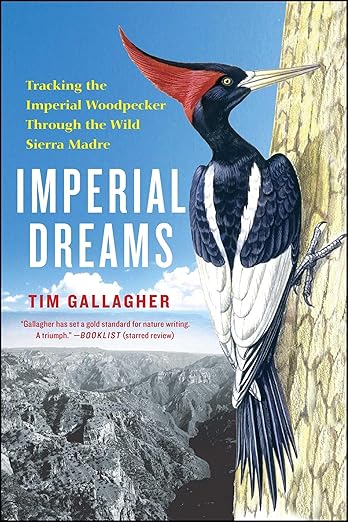
Imperial Dreams: Tracking the Imperial Woodpecker Through the Wild by Tim Gallagher. This book provides a captivating blend of adventure and natural history, following a small group’s dedicated efforts to find a species that now is almost certainly extinct—but just might not be!

The Falcon Thief: A True Tale of Adventure, Treachery and the Hunt for the Perfect Bird by Joshua Hammer. A fascinating look at the world of falcon and egg poaching.

And One More for Montanans

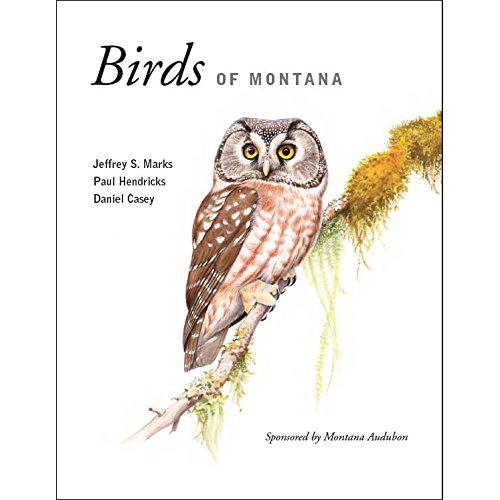
If you really want to buy something special for your Montana birder or birding family, take the plunge on Birds of Montana by Jeffrey S. Marks, Paul Hendricks, and Daniel Casey. This remarkable volume summarizes just about everything that is known about more than 400 Montana resident, migrant, and vagrant bird species. Rarely a week goes by when we don’t dive into this book to learn about a bird we’ve seen or have been thinking about. The book occupies a prominent place on our shelves and is a prized acquisition in our bird book library. Click the image below to order.

A wonderful compendium of information about birds living in, frequenting, or just visiting Montana. As an author, I reference it constantly.