
Category Archives: Birding

250 Montana Birds or Bust!

As always, we encourage you to share this post in the hopes that it might keep education rolling during these difficult, unprecedented times. Thank you!

In our last post, I explained how close Braden and I had come to reaching our goal of 250 Montana species for the year. Braden, in fact, had reached 245 birds while I pulled up the rear with 239. Now, as some of your comments pointed out, 250 species would seem like a slam dunk with six months to go in 2020, but not so. Not only had we exhausted our supply of “easy birds”, but another large birding safari seemed unlikely—until, that is, Braden and his birding buddy Nick Ramsey came up with the idea for a Big Day. The plan? To get up before dawn and drive 500 miles, birding Ninepipe National Wildlife Refuge, the Swan River Valley, Glacier National Park, all the way to Malta, home of Bowdoin NWR. Insane? Yes. Would we do it? Definitely!

None of us knew how many species we might see in a day. Our record for a day in Montana was only in the 80 or so species range, but we’d never attempted anything like this and hoped we might get as many as 150. Alas, the weather gods frowned on us the morning of June 30, with steady drizzling rain. Undaunted, we set off, missing a number of target species here in Missoula and near the National Bison Range. At Ninepipe NWR, however, we hit Short-eared Owl City! Braden and Nick both still needed SEOWs for their Year Lists, but neither of us had ever seen one at Ninepipe until I spotted one about a month ago. This morning, driving Duck Road in the rain, we hadn’t gone a mile before Braden shouted, “There’s an owl!” In the next three miles, we saw NINE MORE! Maybe they should call the refuge Nineowls?

Our first Big Success of our first Big Day was to hit the Short-eared Owl Jackpot at Ninepipe NWR.

After missing LeConte’s Sparrow at Swan Valley (but seeing lots of Lincoln’s Sparrows), we headed to Glacier, where my top priority of the trip just might be located: Harlequin Duck. With the coronavirus raging, we didn’t know what kind of traffic we might expect, but the poor weather ended up a blessing as we cruised right into the park and made record time to Avalanche Creek. Still, none of us really expected to see a Harlequin Duck as the males had fled and breeding was probably winding down. We walked out onto the beach on the river, though, and sixty seconds later, we all saw a duck flying downstream. It was a female Harlequin! Even better, it landed fifty feet from us! None of us could believe it. After admiring the beautiful creature, we walked around a bit, picking up the eerie calls of Varied Thrushes, but failing to get our pie-in-the-sky target, Black Swifts. Still, our stop a success, we headed back out to West Glacier and began the six-hour drive to Bowdoin, picking up new birds all along the way and ending up with a day’s total of 119 species—a personal Montana record and not bad given the weather.

One of my favorite all-time birds, this Harlequin Duck was just waiting for us as we zoomed into Glacier National Park during our (first) Big Day!

Of course, the problem with doing a Big Day that finishes up in a place like Malta, Montana, is that you have to get back home again! Not surprisingly, we spent two days finding our way home—and not without some adventures that included Braden almost stepping on a rattlesnake, almost getting our minivan permanently mired in mud far from civilization, and getting a rear tire blowout—fortunately, just at an exit in Butte.

On Day 2 of our, ahem, Big Day, we had some of our best experiences with nesting shorebirds—including the spectacular American Avocet at Bowdoin National Wildlife Refuge!

“So did you make your 250 birds?” you may be asking yourselves. Well . . . YES! Braden finished the trip with 255 species for the year while I slipped in there with 251. Which begs another question, “What now?” Well, fortunately birding is fun, interesting, and educational even without keeping track of lists. Every day, in fact, we see cool birds and learn more about them. Will we object if our species counts climb higher in the next six months? No way, but do we need them to? Naw. Birds are great any time and in any season—even if we’ve seen them before.

Six Months and 245 Birds

It continues to be a crazy year for everyone, and we feel deeply for all of those who are being directly or indirectly affected by the coronavirus, either through their physical or mental health, loss of employment, or simply missing their friends and family. It stinks. One bright spot is that many people are rediscovering the simple pleasures of spending time outdoors, and for many, birding is a big part of that. A reminder that Braden and I have posted several bird-related educational videos on my YouTube channel, including a Birding Basics that introduces people how to bird and some common birds to look for. Our friend, ornithologist Dick Hutto, and his wife Sue Reel, have also been posting some great short tip videos for you to look at.

Cassin’s Kingbirds were one of seventy Year Birds we found on our epic Eastern Montana birding safari.

As you can see from our last post, we haven’t been blogging as much—but we have been birding. In fact, once we returned from Israel, we decided to shoot for 250 Montana birds as our goal for the year. We spent an exhilarating week taking an eastern Montana birding safari, during which we saw more than 180 species of birds—including about 70 Year Birds. Braden also has been conducting an independent bird-related science project for his upcoming senior year of high school. So how are we doing?

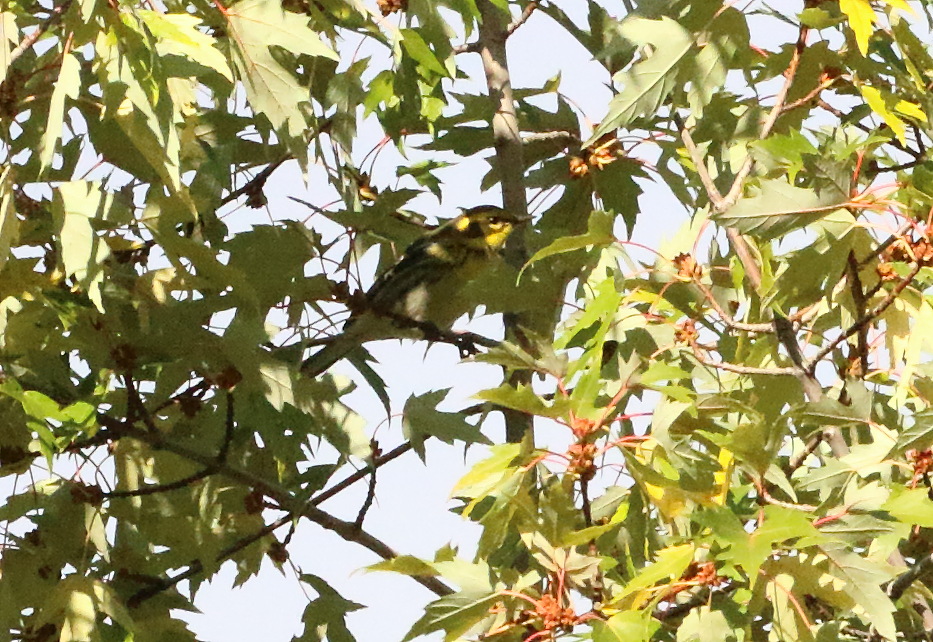
A great thing about climbing a mountain is that it can put you at birds-eye level with spectacular species you usually just see from below. Meet a Townsend’s Warbler!

By the beginning of this week, Braden had seen 243 species of birds while I was pegged at 234. Now for non-birders it might seem like a shoe-in for us to hit 250, but believe it or not, we were (and remain) more than a little anxious about our prospects. For one thing, we have seen virtually every one of the “easy” species there is to see in Montana. For another, birds are “quieting down” now that they are in the process of, or have already finished, nesting, making them more difficult to find. In other words, every new Montana Year Bird we get from now on will take significant effort, luck, or both. Undaunted, we woke early Wednesday morning to investigate a new birding location for us just west of the town of Lolo. A logging road led up into the high country from there, and even more intriguing, it passed through a two-year-old burn area where we hoped to see one of our most coveted species, the Black-backed Woodpecker.

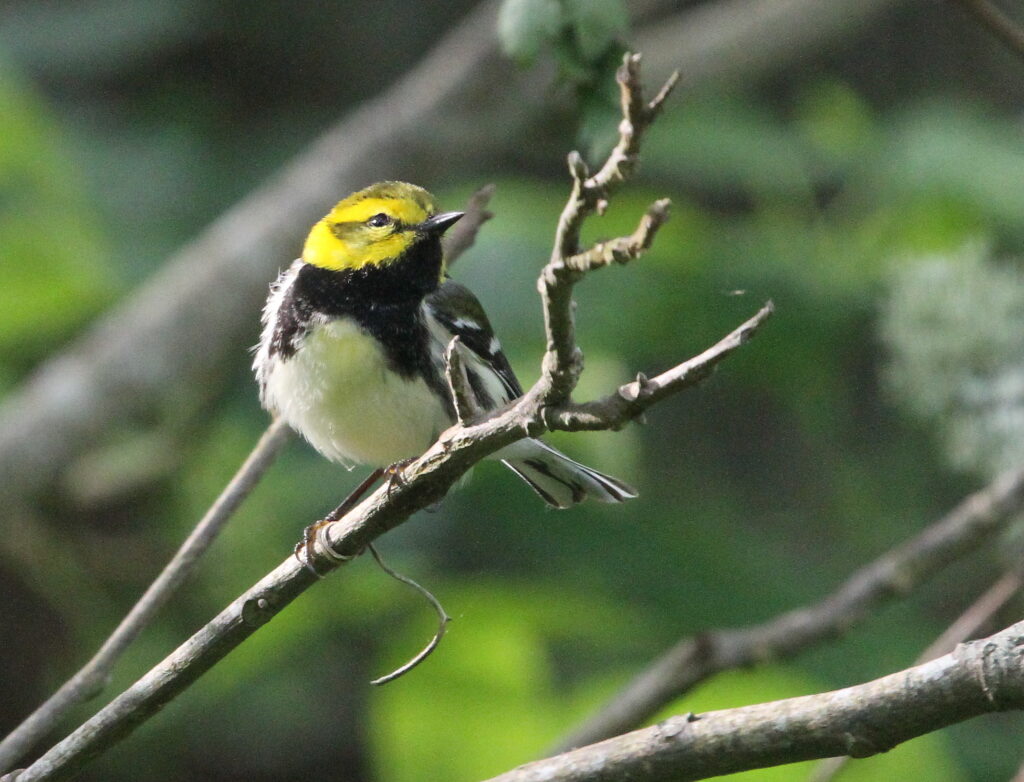
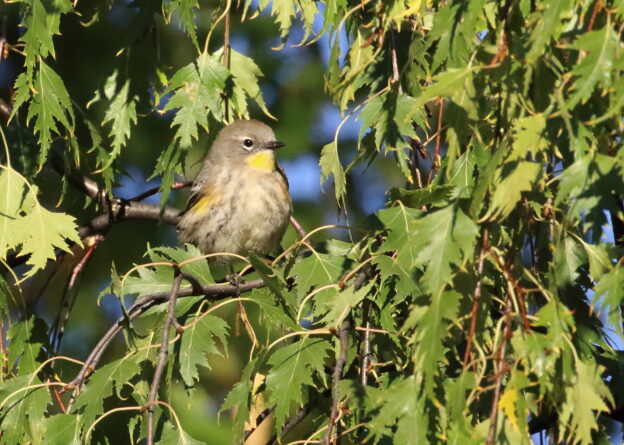
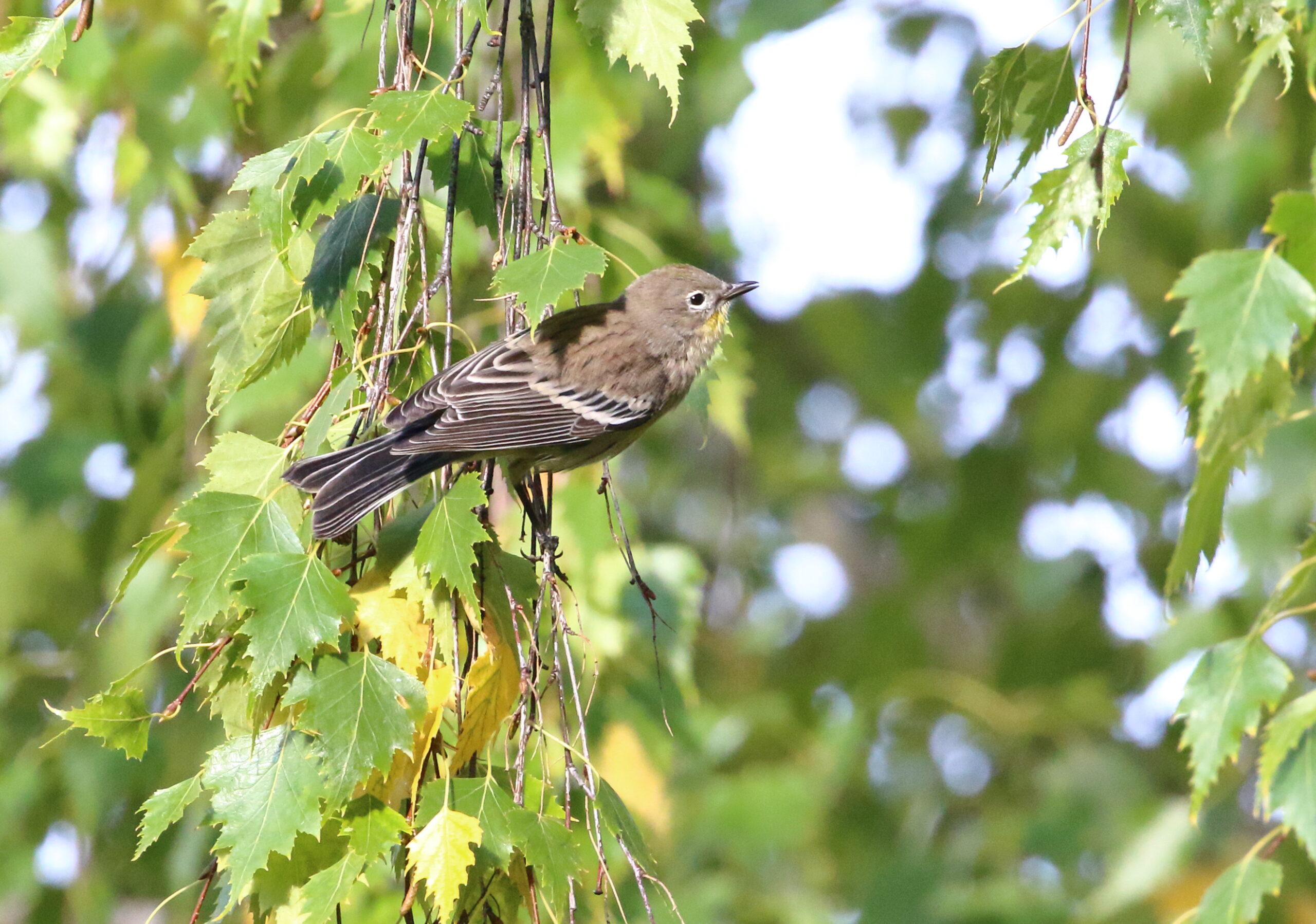
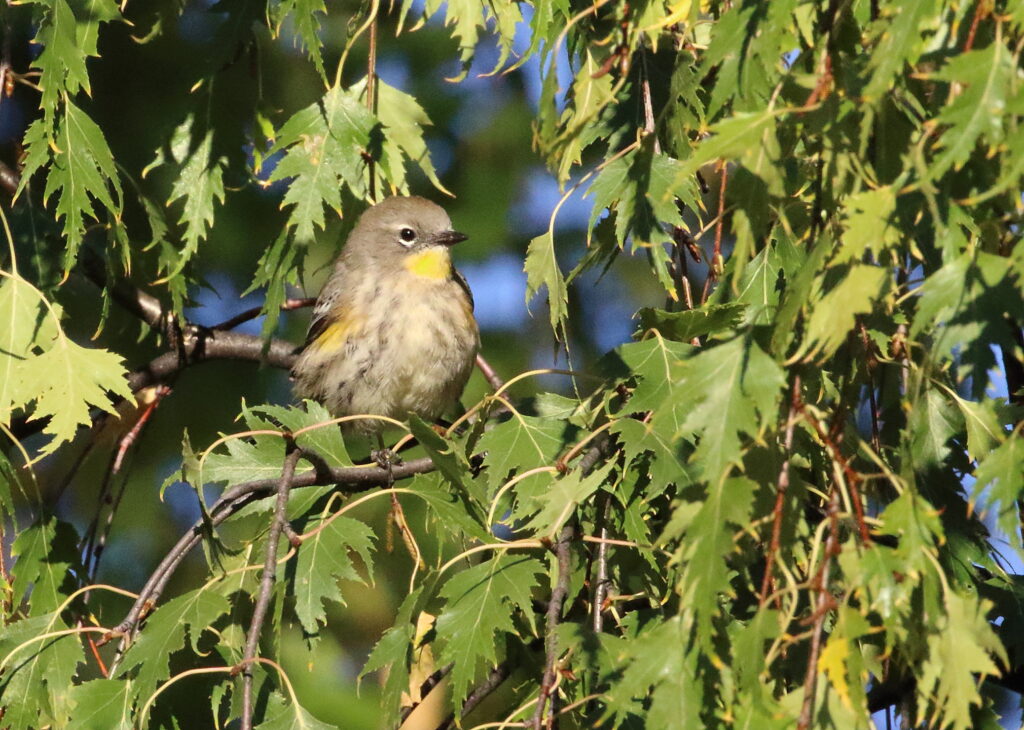
On the day, we located five of the dozen or so common warbler species that breed in Montana, including this stunning Yellow-rumped.

It was a flawless day, and we pulled over a couple of times to listen for birds in green, lusher forest. Thanks to Braden’s sharp ears and ear-birding skills, we immediately picked up a host of species including several kinds of warblers, Swainson’s Thrushes, Warbling Vireos, and a surprise flock of Gray Jays (I refuse to cede this species to Canada!). Driving further, we finally reached a burn area where Braden had seen a Three-toed Woodpecker several days before. The burn had mostly smaller trees and I wasn’t optimistic, but Braden played a Three-toed drumming call and a Hairy Woodpecker immediately responded. Then, a blacker bird swooped in. “Three-toed!” Braden shouted. Ka-ching. A Year Bird for me.

Black-backed Woodpeckers aren’t endangered, but can usually only be found in burned forests 1-5 years old that have NOT been salvage-logged. This one immediately leaped into our Bird of the Year competition!

A mile or so further, we reached an even better burn area with larger-diameter trees. I pulled over and we played a Black-backed drumming call. Within fifteen seconds, a gorgeous female Black-backed arrived to investigate, but that wasn’t all. Another half-mile up the road, we found a yellow-crowned male! “A Black-backed! We found Black-backed Woodpeckers!” Braden exulted several times. They were our first since doing our Big Year in 2016. The day was far from finished, either. Over the next couple of hours, we added Sharp-shinned Hawk to our Year lists, and I added two more that Braden already had: Fox Sparrow and Golden-crowned Kinglet, both of which Braden found me by ear. We also found Wilson’s Warblers on their nesting grounds—our first time doing so near Missoula.

The day brought our totals to 245 and 239 respectively. Will we make it to 250? We’re finally starting to feel better about our prospects, but stay tuned. We still have a lot of birding to go!

Remote Educational Resources for Birds and Birding

Instead of our usual post this week, we’d like to share some home educational resources we’ve created to help teachers, parents, and kids keep teaching and learning. These can be found on Sneed’s Youtube Channel. Please share this post with as many people as you can think of. We thank you and hope you are staying safe!

Hello everyone! We hope that you are surviving the lockdown through these crazy, unprecedented times. Braden and I send our sympathies to everyone struggling right now, which we know includes a huge portion of humanity. We do recognize some silver linings to the situation, though, including more time with family, rethinking how we’ve chosen to live in the world, and the opportunity to help those around us.

Ultimately, of course, our success as a society depends on education more than anything and we asked ourselves, “What can we do to help?” We decided to put together some videos about birds and birding. Instead of posting a regular blog this week, we’d like to share these resources with you. They include three videos which can be found on Sneed’s Youtube Channel.

The first is an entertaining virtual version of one of the author visit talks I give when I visit schools in person. This one focuses on our trip to the Galápagos Islands and especially goes along with my book One Iguana, Two Iguanas: A Story of Accident, Natural Selection and Evolution.

The second is a short video of me just reading aloud my book Birds of Every Color. It’s perfect for young kids to watch—and as a great follow-up birding and adaptations study activity. And yes, I will forgive you if you think my voice sounds like Mr. Rogers!

The third video, which Braden and I are perhaps most proud of, is “Birding Basics with Sneed and Braden Collard.” This video helps get young people excited about birding, shows them what they need to begin, and introduces many common birds that can be seen almost anywhere in North America. Even better, I have put together a study guide and lesson plan that can be downloaded from my website.

We hope that you find these resources useful, and ask you to please share the links with everyone you know: teachers, parents, librarians, anyone. Even better, ask them to share. We do not have 50,000 YouTube and Twitter Followers to help get the word out, so depend on the word-of-mouth from people like you.

Since this is a very different post for us, we’re going to leave you with a very different picture: a short-tailed weasel I encountered while hiking recently—a hike I wouldn’t have taken without the lockdown. It helps show you that while many things change, other things stay the same—including the simple message: keep getting out into nature!

Winter Birding in Israel, Part III: Eilat and the Red Sea

Our condolences to all those affected by the coronavirus—including those forced to cancel their well-earned vacations. We offer some small consolation by traveling to southern Israel to explore amazing birds of the desert and Red Sea. Enjoy, and don’t forget to share this with your birding buddies. Next week: Wadi Rum and Petra.

After our fabulous day in the Hula Valley, I rewarded myself by—you guessed it—catching the flu. Really. Not my first choice, but after a day in bed, Braden and I continued as planned and headed to Jerusalem for three days. The highlights were seeing a Eurasian Hoopoe on the walls of the Old City and grabbing a new Life Bird, Tristram’s Starling, literally on the Western Wall. Then, mostly recovered from my illness, we headed to more fertile birding territory: Eilat and the Red Sea.

The International Birding and Research Center (to the left of the closer salt ponds) and nearby Holland Park offer welcome relief to the hustle and bustle of Eilat.

For those who don’t know it, Eilat is on a major flyway between Africa and Asia and Europe. Some estimates place the number of birds flying through at half a billion per year, and it is especially known for raptor migration. Alas, Braden and I were not visiting during migration, but we still hoped to see some new and cool species. Our first full day there, we caught a cab to the International Birding and Research Center just north of town. The center is on the site of the former city dump and located next to expansive ponds used for salt manufacture. Since 1993, however, the sanctuary has been aggressively rehabilitating the site—something that was still very much in progress when we arrived.

Without a doubt one of our trip’s most spectacular birds, the Green Bee-eater had perched firmly atop our Must See bird list.

In short order we were rewarded with a double-handful of Life Birds, including Common Ringed Plover, a pair of Common Greenshanks, Blackstarts, Bluethroats, a Green Bee-eater, Marsh Sandpiper, Rock Martin, House Crow, Long-legged Buzzard, and Braden’s Bird of the Day, a Great Gray Shrike! As a bonus, four Greater Flamingos lounged in a salt pond in the distance.

While there, one of the center’s guides confidentially told us that even better birding might be had at a place called Holland Park, a short mile or so walk away. Braden and I set off through the desert—only to end up at a kibbutz nowhere near the park! Some nice kibbutzniks straightened us out, so we resumed our hot march south along the highway. And that turned out to be a great thing because right next to the road, we spotted our only Hooded Wheatears of the trip.

This Hooded Wheatear introduced us to a totally new group of delightful birds that we’d only been vaguely aware of before the trip.

Holland Park. What can I say? I think this may be my favorite birding location of the entire trip. Hiking up a dry wadi filled with interesting native plants, Braden and I quickly left the bustle of Eilat behind and felt like we were in authentic habitat. We found only two additional Lifers—Sand Partridge and Mourning Wheatear—but the Blackstarts, Palestinian Sunbirds, Sardinian Warblers and other birds kept us plenty entertained. And our day’s birding hadn’t quite finished.

Israel’s extensive development of its tiny Red Sea shoreline doesn’t leave much room for wildlife, but these shorebirds found refuge behind a fence in a shipping yard. Center are two Common Ringed Plovers. Lower and Upper Left are Kentish Plovers, with Little Stints in between.

That afternoon, Braden cajoled me into taking a walk from our hotel along the Red Sea so that we could look for White-eyed Gulls. We found them, but also happened upon a huge group of Kentish and Common Ringed Plovers, Little Stints, and Dunlins huddled down against a stiff afternoon wind blowing up from Egypt and Saudi Arabia. All in all, it was an amazing day of birding—and far from the last of our trip.

All photos and text on FatherSonBirding.com are strictly protected under U.S. copyright law. To request permission to use, contact Sneed at sbcollardiii+2@gmail.com.

Winter Birding in Israel, Part II: Valley of the Cranes

This week, enjoy Braden’s Part II of an Undetermined Series of Posts about our recent birding adventures in Israel and Jordan!

Over the next few days, our host family showed us around Northern Israel. We explored Akko, a seaside town with a great market full of delicious Arab and Jewish food and tall, Crusader-era walls. In Haifa, we took a drive around Mount Carmel and dined on amazing pizza and fantastic pistachio ice cream. My dad and I even spotted a Eurasian Griffon soaring over a residential area, a rare species of vulture that nested in the Carmel range. 

A lone Eurasian Spoonbill enjoys refuge in the Hula Valley Nature Reserve, once part of a vast wetlands that covered much of north-central Israel.

After sightseeing, though, we were ready to do some serious birding. One day, my dad, one of our friends named Noam and I hopped on the train to Haifa (spotting flamingos feeding in salt ponds on the way), where we were picked up by our host’s brother Barak and father Avi. We headed north, stopping only to grab a snack at a roadside falafel & humus stand overlooking the vast Sea of Galilee and its nearby canyons and mosques. Soon, though, we left the mountains, driving past agricultural fields filled with Common Cranes. Eventually we arrived at the Hula Valley Nature Reserve, and were greeted by a large, modern visitor center. The best way to sightsee the refuge was to rent a golf cart, and that we did, setting off around a lake at Formula 1 speeds—about 10 miles per hour. We were soon greeted by hundreds of cranes, as well as various tactics that farmers used to prevent the birds from eating their crops. Every few minutes a gunshot, firework or horn would echo across the landscape (the birds were protected, don’t worry), and we even glimpsed a few people chasing the huge flocks.

In the Hula, we got our first great look of the trip at what would prove to be one of our Top Five favorite Israeli birds—the White-throated Kingfisher.

Before reaching the main lake, we stopped at a forested spot and were immediately astonished to see not one, but two birds that we’d been hoping to see: a White-throated Kingfisher and a Eurasian Hoopoe! The large kingfisher showed off its azure wings as it scanned the ground for rodents, while the hoopoe foraged quietly like a flicker, probably looking for ants. Spur-winged Lapwings, birds with sharp patterns of black and white on their wings, stood right by the path, unafraid, and almost every bird in the area allowed us to snap sharp, close-up photos. Before leaving we spotted a pair of European Goldfinches, chirping cheerfully despite their “sunburnt” faces.

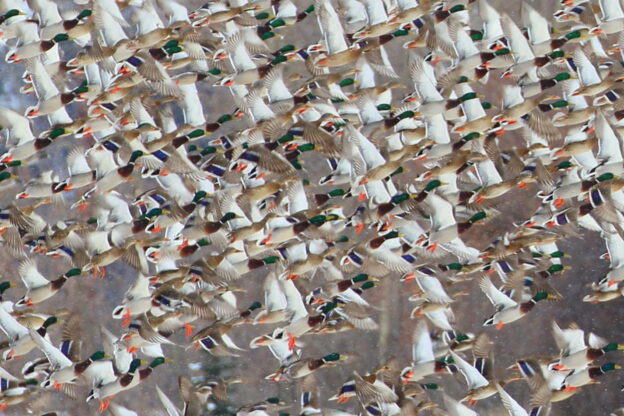
At the lake itself bird activity increased substantially. Raptors were abundant, including Black and Black-winged Kites, Eurasian Marsh-Harriers, Common Buzzards and Eurasian Kestrels, all flying over the marshes. One kestrel even posed for us on a sign, devouring a mouse right in front of us! The species diversity of ducks was low, but those that were here, primarily shovelers, mallards and teal, foraged in the fields in huge numbers, and Eurasian Coots, Eurasian Moorhens and Little Grebes floated on the water. Shorebirds and waders also were present, and we spotted a few Glossy Ibises, Black-winged Stilts, Ruff and a single Eurasian Spoonbill by the shoreline. Gray Herons, Great, Cattle and Little Egrets and Great and Pygmy Cormorants topped every bare branch and island in the area.

As this Eurasian Kestrel can attest to, there’s nothing like a good stretch after tearing the head off a mouse!

At a lookout a helpful naturalist pointed out several harder-to-see species to us, including Black-tailed Godwits and Northern Lapwings hiding in the distance among the huge numbers of cranes. I snapped photos of several raptors that flew by, later identifying them as eagles! The two we spotted were Booted and Greater Spotted, just a small percentage of the eagle species the Old World supported. Pied Avocets floated on the waves of the pond like ducks.

Sing along with us: “One of these things is not like the other. One of these things is not the same. One of these things—” Oh, you get the idea. It’s hard to blend in with 30,000 Common Cranes!

We completed our loop, tracking down cranes for better photos and spotting a Common Kingfisher skulking in the brush back at the visitor center, the only one we’d see for the rest of the trip! This little refuge, surrounded by farmland, was all that remained of the huge wetlands that had once covered much of this area and supported hippos, ostriches and cheetahs. While much of the diversity of the past had disappeared, Hula still provides habitat for thousands of birds during all seasons and efficiently allows the public to experience them. The day had not disappointed. 

All photos and text on FatherSonBirding.com are strictly protected under U.S. copyright law. To request permission to use, contact Sneed at sbcollardiii+2@gmail.com.