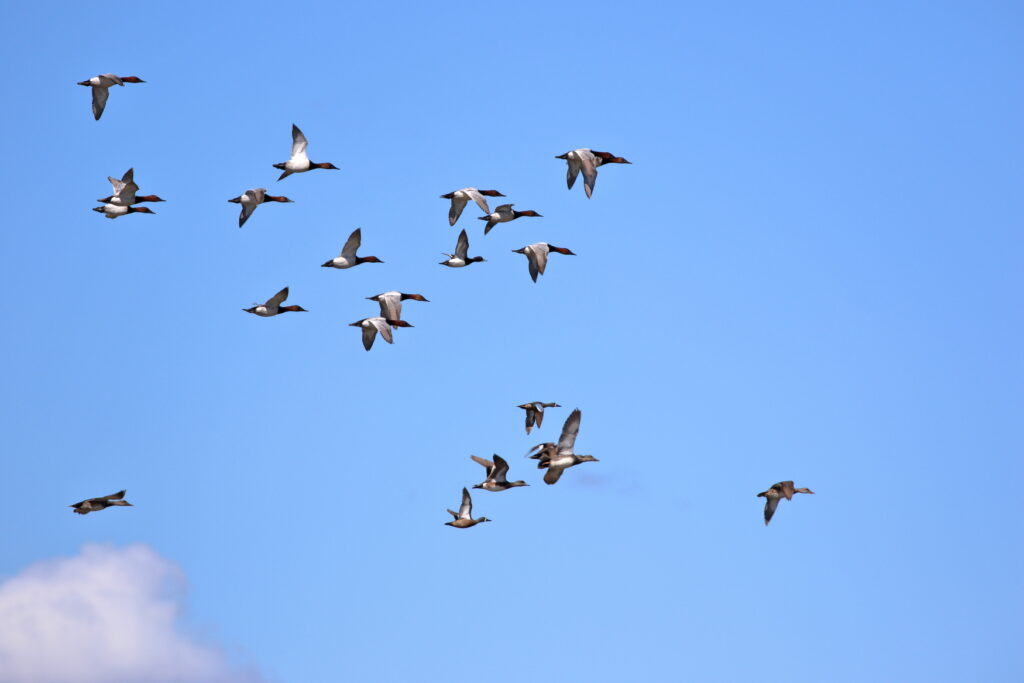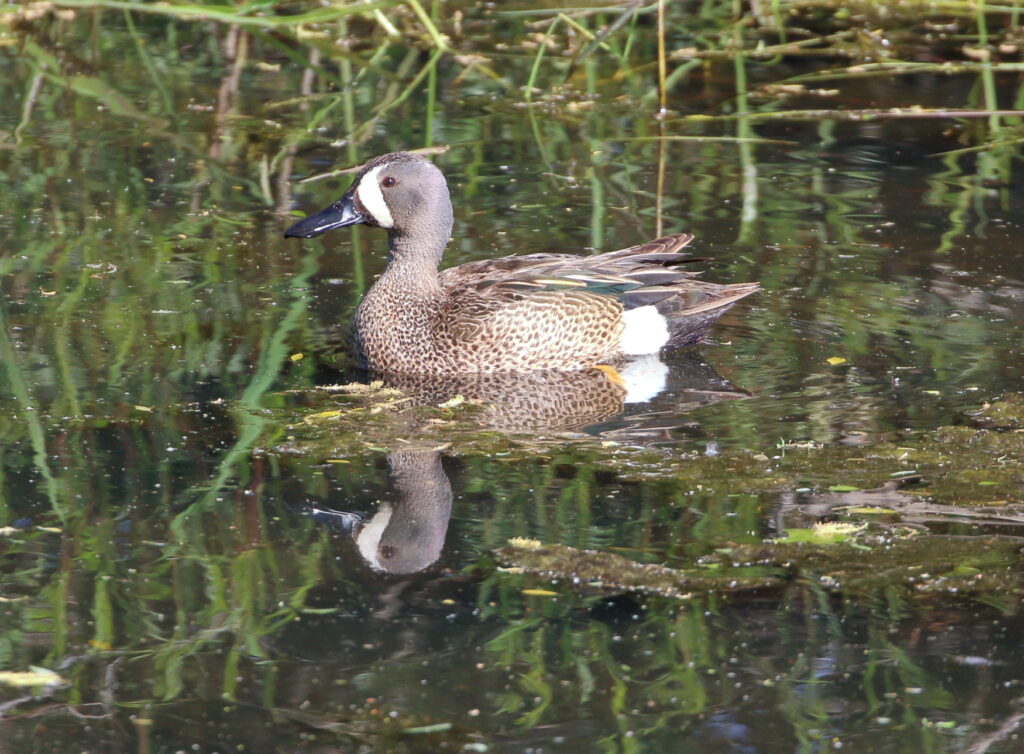
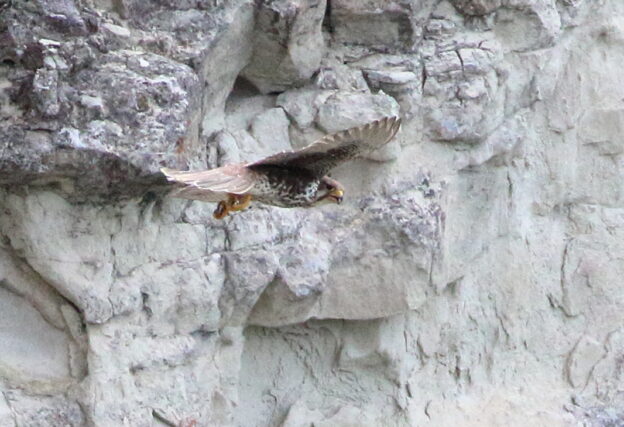
Tag Archives: Father-Son Birding

Meditating with Loons: Spontaneous Birding Spectacular, Part II

Braden and I write FatherSonBirding in the hopes of sharing the wonders of birds and birding, and the urgency to protect them. We do not accept advertising or donations, but if you’d like to support our work, please consider buying *NEW* copies of some of Sneed’s books—First-Time Japan: A Step-by-Step Guide for the Independent Traveler, for instance, or the best kids’ woodpecker book ever, Woodpeckers: Drilling Holes & Bagging Bugs. Here, we are pleased to continue last week’s “spontaneous” narrative. For Part I, see our last post. Enjoy!

After giving my keynote talk to the Montana Library Association (and yes, it went well, thank you!), I changed out of my good clothes, checked out of my room and hit the road—but not too far. It was early afternoon by now, but before heading home I thought I’d better take advantage of the opportunity to visit Warm Springs Wildlife Management Area, one of Montana’s top birding destinations. It being migration season, the possibilities were almost endless of what I might find, but I kept my expectations low. Why? Primarily because much of Warm Springs is not easily accessible. The refuge consists mainly of several very large reservoirs designed to help clean toxic chemicals from the waters pouring out of the world famous Berkeley Pit copper mine in Butte. The road, however, only gets close to these bodies of water in certain places, so it’s easy to miss rarities that might show up. Nonetheless, I took the “back entrance” into the refuge and soon found myself at the bottom of the large, southernmost reservoir. The scene before me immediately put me in a happy place.

This photo doesn’t capture the size and scope of the Warm Springs ponds—or how amazing they look filled with waterfowl!

Stretching across the water were hundreds, no, thousands of ducks and other water birds, and I quickly set up my scope for a proper look. I usually try to estimate bird numbers wherever I am, but as I searched across the reservoir with the scope, I quickly abandoned that effort. I recorded 5000 coots, but that could easily be low. I also saw hundreds of Northern Shovelers and Ruddy Ducks, and noted plenty of Buffleheads, Ring-necked Ducks, Lesser Scaups, Gadwalls, American Wigeons, and more. A duck party!

Just a few of the birds stretching out before me at Warm Springs. Pop quiz: can you identify three species?

When scoping such a vast array of birds, it’s a natural instinct to look for the unusual or rare species, and after a few minutes, I landed on a pair of Red-necked Grebes—my first of the year. My biggest find, however, was the year’s first Yellow-rumped Warbler (Audubon’s) in the trees next to me! After making an inadequate attempt to eBird what I saw before me, I jumped back in the minivan and continued up the road. I passed a resident pair of Bald Eagles, and then pulled over at a small fishing access next to a long dike that separated this reservoir from the next. I grabbed my binoculars and ventured out onto the dike, and right away saw another Red-necked Grebe. Then, I recognized a bird that made me rush back to the minivan for my camera. I hurried back out onto the dike and trained my lens on it—a Common Loon!

During breeding season, Red-necked Grebes have a circumpolar distribution, but in the US they breed only in a few areas along our northern border. Fortunately, Montana is one of those places—though this guy/gal may well have been heading to Canada or Alaska.

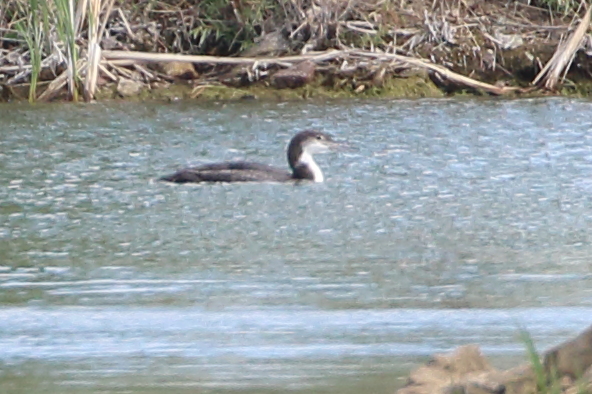
Now, loons are not exactly rare in Montana, but they aren’t gimmes, either (for instance, see post “Rare Bird Hat Trick”). Last year, I saw only one—a quick fly-over at Glacier National Park. If you don’t visit one of the lakes where they breed in summer, you have to catch them during migration. Braden and I have seen a number of COLOs during fall migration, but this was the first I could remember in spring. But wait. As I was trying to get a decent photo of this loon, another one popped up nearby. “No way!” I muttered out loud. But wait, then I spotted a third, and eventually, a fourth! (I think I saw a fifth, but these ‘torpedoes’ can travel so far under water that I can’t be sure.)

This pair of Common Loons defines the word serenity.

Needless to say, I felt “loonstatic.” My only problem? Every bird was backlit, making a good photo impossible. To try to rectify this, I walked around to the parking area where I could get “up-light” of the birds, hoping they wouldn’t depart before I reached a good spot. They didn’t. I took enough photos that I finally got a really nice one (see below). My other problem, though, is that . . . I needed to relax.

After capturing my best COLO shot ever, it was time to Zen out with some quiet loon time.

More and more, recently, Braden and I have discussed the obsession to rack up species and get good photos without pausing to really appreciate them. Both of us, in fact, have been making an effort just to be still in the moment, and with four stunningly gorgeous loons diving for food in front of me, this seemed like a perfect time. I sat down on a rock and set my camera and binoculars on the ground next to me. I watched the loons for a few moments and then just closed my eyes. I thanked the universe for this special moment and tried to breathe deeply, focusing on the now for a few minutes.

Alas, I did not attain “loon-lightenment,” but when I opened my eyes, the loons were still floating, preening, and diving in front of me. Several times, I watched them surface with crayfish in their bills. I’m not sure if the loons did anything special to them, such as knocking loose their exoskeletons, but down the hatch they went. It was beautiful.

A little “crawfish loon-touffée” for lunch!

My birding had not finished, either. After Warm Springs, I tooled up the road a few miles to another spot that many birders don’t take time to check out—Racetrack Pond. Often, there’s not much to see at Racetrack, but I had occasionally stumbled into some treats. Again, it was migration season, so you just never knew. As I pulled off the interstate and turned right, I immediately saw a couple of hundred gulls out on small islands in the pond. “Hm,” I thought. “Maybe I can pick up some California Gulls there.” As I drove closer, however, I realized that they weren’t gulls. They were Snow Geese!

I pulled over and again set up the spotting scope—and not just to see the Snow Geese. I had an ulterior motive. Almost exactly a year earlier, at Browns Lake, I had stumbled into some migrating Ross’s Geese mixed in with a large Snow Geese flock. “Maybe there are some Ross’s hiding in this one,” I thought with an evil grin. I diligently scanned the flock for several minutes, mainly looking for any geese with stubby pink bills. Ross’s, though, also are a bit smaller than SNGO and tend to have a cleaner, whiter appearance. I thought I was going to strike out when I glimpsed two geese that fit the, ahem, bill. I watched them for at least ten minutes before discarding any doubts. Yay! This was only my third time ever seeing Ross’s Geese, and to get them two years in a row felt like an accomplishment. By the way, ROGOs are also a wonderful conservation success story. Their numbers had dropped to just a few thousand by the 1950s. Today, it is estimated that there are more than two million! Let’s hear it for conservation!

Can you pick out the two Ross’s Geese in this photo? Once you know what you’re looking for, they stand out like, well, um, Ross’s Geese. The prominent, clean white goose just right of center is one of them. The other is swimming toward it from about 10 o’clock.

My discoveries weren’t over. At the north end of the pond, I again pulled out the scope to discover a Greater Yellowlegs, a Killdeer, and two real surprises—an American Avocet and five, count ‘em, FIVE Marbled Godwits. “Perhaps they’re heading to the same place as yesterday’s Willets,” I wondered (see our last post). I later learned that large flocks of avocets had been rampaging through the state, so this one was right on schedule.

With the help of my spotting scope, I was able to pick out the American Avocet (far left) and Marbled Godwits (far right) along the far shore of Racetrack Pond.

With another wonderful day of birding under my belt, it was time to head home, but really, these days just primed my birding pump. Many adventures lie ahead—especially when Braden returns home from Costa Rica in a couple of weeks. Be prepared for plenty of posts this summer!

Owls, Curlews, Mergansers, and Willets: Spontaneous Birding Spectacular, Part I

Today, Braden and I would like to especially welcome our increasing number of international readers. Our posts are now regularly viewed by birders from more than a dozen different countries, and new countries seem to pop up every week. Thank you for your interest and we invite you to comment and share your own birding interests and experiences! Oh, and check out the quiz in the last photo caption!

I hadn’t intended my visit to central Montana last week to be a birding trip. Rather, I had been invited to Butte to speak at the annual conference of the Montana Library Association, and so had planned a simple, quick overnight. A few days before the conference, however, things got more complicated. Braden has heroically gone without a car during his first three years in college, but as he looked forward to his senior year, we all agreed it was time for his own wheels, and I had been doing a little “car scouting” while he finishes up his semester abroad in Costa Rica. Wouldn’t you know it, I found what looked like the perfect used vehicle in Billings. “Hm,” I thought, “if I got up early, I could drive to Billings on Thursday, look at the car, and make it back to Bozeman (most of the way to Butte) ahead of the conference.”

Long story short: I bought the car, and Friday morning, found myself with an entire morning to bird between Bozeman and Butte.

Brown Pelicans are my favorite birds, but American White Pelicans definitely make the top 100. Unlike their brown cousins, AWPEs prefer inland freshwater habitats for breeding. I’m guessing these might be heading to Bowdoin NWR near Malta, but they could be on their way farther north.

Three Forks ponds can be very hit and miss. I had actually stopped there on my way to Billings, but hadn’t found anything too notable except some American White Pelicans. This morning, though, I decided to try them again before heading up Bench Road. Was I in for a surprise! The first bird I spotted in Three Forks ponds was a bird I had never before discovered on my own: a Red-breasted Merganser! Not only that, I found seven more in the next pond over. These northern breeders pass through Montana only during migration—and not in large numbers—so I felt particularly fortunate to see them. The ponds, though, held other surprises.

Red-breasted Mergansers can be distinguished from Common Mergansers by their spiky “punk” hair-do, gray sides (here, under water), and of course, that reddish band on their breasts.

Beyond a much larger group of pelicans, I saw a good assortment of ducks and then spotted birds with bold black-and-white wings fly to an island in the second pond. Shorebirds, I thought excitedly, running back to the minivan for my spotting scope. Other than Killdeer and Spotted Sandpipers, I had never before seen shorebirds at Three Forks, and my pulse picked up as I focused in on a group of eight gray birds at the edge of the island. I quickly ran through all the possibilities in my head, examining their size, color, and bills. My conclusion: Willets! They were obviously migrating, and this was the first time I’d ever seen them moving through this part of Montana. Apparently, I was not alone as the birds’ timing landed them on the Montana Rare Bird alert for the day!

This group of eight migrating Willets surprised me by making the Montana Rare Bird Alert! They also tested my powers of ID elimination.

From the ponds, I headed up Bench Road. This was the first place Braden and I ever saw Burrowing Owls, and I hoped to see them again today—but didn’t hold out a lot of hope as I’d missed them my last couple of times here. The road, though, holds a wealth of other birds. In the lower stretch, I pulled over at the marsh to enjoy my first Yellow-headed Blackbirds, Marsh Wrens, and Cinnamon Teals of the year. It was the road’s upper stretch that most excited me, however.

Cinnamon Teal. Most stunning duck ever? Maybe not, but definitely part of the conversation!

As I climbed up over the first “bench,” I smiled at the many Horned Larks and Western Meadowlarks singing along the road. After a couple of miles, though, I thought I saw a larger bird landing along a side road. Could it be a Burrowing Owl? I turned the minivan down this sketchy, rutted path and after a couple of hundred meters saw a large shape in a field. It wasn’t a Burrowing Owl, but almost as exciting—my first Long-billed Curlew of the year! This greatly interested me because Braden and I had never birded this road so early in spring and I didn’t realize LBCUs would already be here. Turning the van around, though, I spotted four more calling in flight, obviously ready to get busy breeding!

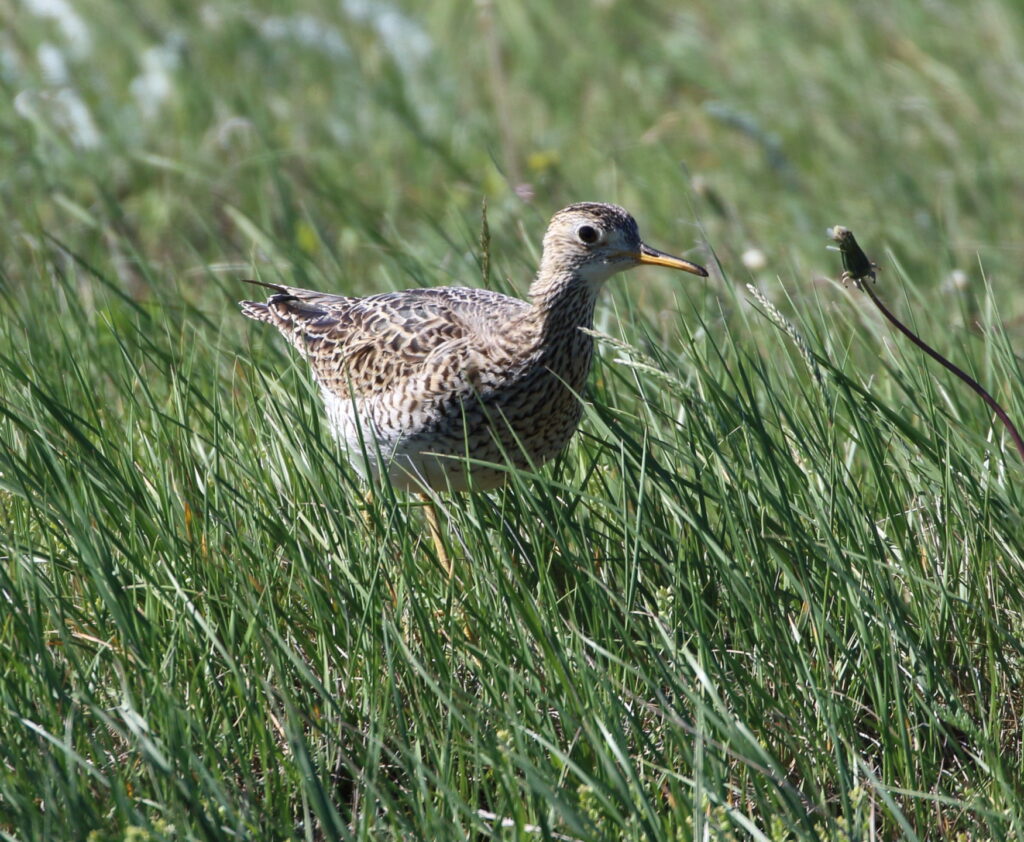
There is something magical about seeing a large, majestic shorebird setting up a breeding territory in our nation’s grassy heartland!

I also encountered the first of three women who were birding as a team in their own cars. She said she had spotted a couple of Burrowing Owls earlier and that one of her friends was up on Baseline Road (which tees off of Bench Road) at a BUOW burrow. I decided to head there, but before I reached it, saw a medium-sized brown shape flying low to the ground across a field. I hit the brakes and raised my binoculars. “Yes!” A Burrowing Owl! Not only that, a second one hunched down next to it. I snapped a poor photo from my car, but didn’t want to disturb them by getting out. BUOWs, though, are incredibly adorable animals and these two had obviously excavated a burrow here at the edge of a field. I hoped the farmer would notice them and not unknowingly evict them!

Come plowing time, I am hoping the owner of this field spots the burrow of this delightful Burrowing Owl couple.

I continued up the road and sure enough found the other burrow that was staked out by the friend of the first woman I had met. The owls didn’t show right away, but soon popped up for a distant view. These appeared to be in much safer habitat than the field of the first pair. After fifteen minutes, I started the minivan back up, wishing the owls luck and hoping Bench Road would be a home for them for years to come. On my way back down the road, I stopped at the marshy area for one last treat—a great, brief glimpse at a Virginia Rail!

Montana birding at its finest, cruising (almost) deserted prairie roads for amazing grassland birds.

That evening in Butte, after my first talk at the conference, I paid my first visit to Butte’s Lexington Street ponds and wetlands, which were undergoing a major birder-friendly construction project. I set up my scope outside of a chain-link construction fence and saw a great variety of ducks, along with a Western Grebe—a bird that had never before been reported there! As I was packing up, I heard a familiar rattling call and turned to see two gorgeous Sandhill Cranes touching down a couple of hundred meters away. As wonderful as this all was, however, my spontaneous birding weekend had only just begun. Stay tuned for Part 2.

A teaser for our next post: Can you tell which white geese are of special interest and why? If so, send us your answers!

Braden’s Costa Rica Report #4: Osa Peninsula Adventure

Braden and I write FatherSonBirding in the hopes of sharing the wonders of birds and birding, and the urgency to protect them. We do not accept advertising or donations, but if you’d like to support our work, please consider buying *NEW* copies of some of Sneed’s books—First-Time Japan, for instance, or my recent Orbis Pictus Award winner, Border Crossings. We appreciate your interest and hope you will keep reading!

A low growl emanated from the dense jungle up the hillside from the highway, stopping me in my tracks. The sun hadn’t even thought about rising yet, since I’d woken up before 5 a.m., but some animals were awake, including the Crested Owl I’d just heard call from the rainforest. I laughed in disbelief as I stood on the side of the highway, looking up the hill. While I could not see the animal, Crested Owl was one of the country’s largest owl species and one I’d been hoping for but not expecting to get during my time here. And yet here one was, singing for me as I began my trek from El Chontal (my hostel) to the Río Rincon Bridge in extreme southwestern Costa Rica.

The walk from the hostel to the bridge was about an hour, and as I plodded along the highway, I could hear and feel the forest waking up. Little Tinamous and Great Curassows called in the dark, and about half an hour before dawn many other species of birds started up. Immense roars echoed from high in trees as male Mantled Howler Monkeys welcomed the sun into the sky, and I eventually arrived at my destination, the bridge spanning the Río Rincón. Nearly every birder visiting the Osa Peninsula stopped here, albeit usually with a vehicle and not on foot. The bridge offered great views of mangroves to the east and rainforest to the west, as well as a wide open vista from which to watch parrots of many species leave their roosts in search of food. The primary reason birders stopped here, however, was for a specific, critically-endangered bird species: the Yellow-billed Cotinga. 

My early morning walk rewarded me with multiple looks at Yellow-billed Cotingas, rare and beautiful birds endemic to southwest Costa Rica.

Cotingas are a strange, remarkable and hilarious group of birds. These plump birds feed primarily on fruit and come in a wide variety of shapes and colors, including tangerine orange, like the Andean Cock-of-the-rock, shadow black, like the Bare-necked Umbrellabird, or electric blue, like the Turquoise Cotinga. The family features some of the world’s weirdest species, like the monk-like Capuchinbird, and the loudest birds in the world, the bellbirds, one of which resides in Costa Rica (and will be my target for my final weekend trip in this country, so stay tuned!). 

Yellow-billed Cotingas are angelic white, and are endemic to southwestern Costa Rica and extreme western Panama. They live in extensive lowland rainforest and mangroves, and thanks to habitat decimation, are largely restricted to the Osa Peninsula, one of the country’s wildest remaining areas. This species was one of the primary reasons that I had requested to skip classes this week and visit this far-away peninsula, and the Río Rincón Bridge was the most reliable place to see them.

By the time I arrived, barely before dawn, the birds were already active. Hordes of parrots, from the pint-sized Orange-chinned Parakeets to the chunky Red-lored Parrots to the spectacular Scarlet Macaws, flew over me towards distant locations. A Bare-throated Tiger-Heron hunted for fish in the river, and another one, a juvenile covered in its namesake black and orange stripes, watched from a nearby tree. The sandy river island hosted several Spotted Sandpipers, a Willet and a Northern Jacana—the first I’d ever seen. Jacanas have massive feet which they use to walk atop lily pads, although there weren’t any lily pads in sight here. Flocks of swallows and swifts wheeled overhead, and I spotted a few Fiery-billed Aracaris swooping across the river, their flame-colored bills shining in the sun.

Even though I’d already seen them on the trip, I had yet to grow bored seeing a Bare-throated Tiger-Heron.

As I stood on the bridge, unsure of where to look for the cotingas, I heard a distinctive song from a nearby tree. The “bouncing-ball” call sounded exactly like a Wrentit, a bird native to the chaparral of California, which had never been recorded in Costa Rica and probably never will be. I knew exactly what it was, though, since I’d studied the song the night before and noticed the resemblance it had to a Wrentit. I walked over to the tree and whipped out my speaker, playing the call right back at the bird. Then, a large, blue and red bird flew in and landed several dozen feet above my head in clear view: Baird’s Trogon. This had also been one of my chief targets on the Osa, given that it was difficult to find nearly anywhere else in the country, and I snapped some poor photos of it before returning to my cotinga watch. After about fifteen minutes, that watch paid off, as a mottled gray female cotinga flew over, landing briefly in a tree in front of me before disappearing in the foliage. “Well, that wasn’t the view I’d hoped for,” I said to myself, a bit disappointed but still relieved that I’d seen my target species. The cotingas weren’t done yet, though. Over the next hour and a half, I spotted seven more of the birds flying over, many of them strikingly-white males. I got a decent picture of one in flight, too.

Despite the poor photo, Baird’s Trogon was one of the chief targets of my Osa Peninsula trip—and at least the sixth species of trogon I’d seen in Costa Rica!

After two hours of great birding, I walked back along the highway to my hostel. From there, I packed up and caught the bus down to Puerto Jiménez, the largest city on the Osa (which is still quite small). I found a small soda (the name for any number of small, family-owned restaurants in Costa Rica) and waited there for about an hour before a tiny, run-down van pulled up in front of it at 11. “Dos Brazos?” asked the lady driving it, and I nodded, throwing my bag in the van and climbing up after it. The interior of the van was in rough shape, although the seats were comfortable, and I taught the lady’s young son how to use my binoculars as we rattled up dirt roads towards the “town” of Dos Brazos, hidden deep in the rainforest.

Riverside Wren—Costa Rica’s Most Stylish Wren???

The woman let me off in front of the reception house for the Bolita Rainforest Hostel, where an American greeted me. “Welcome to Bolita! The hostel is a 30-minute hike that way,” she pointed up into the jungle. So, I set off, my heavy pack on my back. I spotted a pair of Buff-rumped Warblers next to a creek I had to cross, and eventually arrived at the open-air hostel, caked in sweat. Another American and several volunteers from all over the world greeted me cheerfully, showing me to my “room”, an outdoor bed with a mosquito net over it. There was no “inside” at Bolita, except maybe the supply closet, which hosted half a dozen roosting bats on its walls. After I settled down, Pascal, an older French volunteer, noticed my binoculars.

I wonder how many Hilton Honors points I’ll get for my stay at the Bolita Rainforest Hostel—a place with superb “air-conditioning!”

“Are you a birdwatcher?”

I nodded, and she proceeded to pull out a faded “Birds of Costa Rica” book, flipping it open to a page with small, colorful birds on it. She pointed to the bird that just so happened to be my number one remaining target for the entire trip: Orange-collared Manakin.

“I saw these guys here! The males all dance for the females at places called leks, and I found a lek on one of the hostel trails. I can show you if you’d like!”I nodded profusely—fate had somehow delivered to me the perfect opportunity to see the bird I wanted to see most here. Soon, Pascal led me and a few other interested guests up the “Big Banana Trail.” After twenty minutes of hiking, we rounded a corner and heard claps from the nearby trees. Pascal waded a few feet into the foliage off the trail, and pointed. There they were, tiny, football-shaped birds with sunset-colored collars and tiny black caps, like the White-collared Manakins I’d seen in Sarapiqui but with fiery rather than white throats. We enjoyed them for fifteen or minutes or so before everyone else wandered back down towards the hostel. I decided to poke around the trails a bit longer—and I’m glad I did.

Once I arrived at the hostel, and thanks to a new friend, it took me only minutes to find my last remaining Osa Peninsula target bird, Orange-collared Manakin.

Almost immediately, I heard the loud, repeating call of a wren coming from a tangle near me, and with a little verbal coercion, I was able to spot the culprit: a Black-bellied Wren, another southwestern Costa Rica specialty bird. This wren happened to be the beginning of a large mixed flock and I spotted several more wrens as well as antshrikes, antwrens, a foliage-gleaner, and a Little Tinamou, a hard-to-see forest bird, feeding right on the trail in front of me. I stopped at one lookout and watched as the birds came to me: parrots, flycatchers, hummingbirds and more. Highlights included a female Thick-billed Seed-finch, a tiny bird with a massive bill; an Olive-sided Flycatcher, a bird that winters in South America and summers in the boreal forest of Montana and Maine; and a Purple-crowned Fairy, a flashy, usually-arboreal hummingbird that steals nectar from flowers rather than pollinating them. Extremely satisfied with this mid-day birding, I headed back to the hostel to watch the sunset.

Scarlet Macaws are one of the birds most people want to see in Costa Rica, and in the Osa Peninsula, I found no shortage of these spectacular creatures.

I found a nice little bench overlooking much of the rainforest and quickly realized that even the hostel had great bird activity. Piratic Flycatchers, Scarlet-rumped Tanagers and Bananaquits flew around me, and about an hour before dusk, I spotted another bird that blew me away: another cotinga, this one the color of the sky. I’d looked for Turquoise Cotingas three days earlier and completely missed them, and yet here they were, delivered right to my doorstep in all their blue and violet glory. I had gotten, quite simply, every bird I’d wanted to see on the Osa Peninsula. And I still had one morning left!

One of the trails I explored near the Bolita Rainforest Hostel.

That morning was spent exploring more of the trails behind the Bolita Rainforest Hostel. With no real targets, I just set off into the jungle, hoping to discover something unexpected, and I did! I spotted three more lifers, including Black-crowned Tityra, Black-cheeked Ant-tanager (the only species completely endemic to the Osa Peninsula) and a Northern Black-throated Trogon, which was one of four trogon species I reported on my hike. I heard dozens of antbirds, antwrens, antshrikes and antthrushes, spotted groups of Scarlet Macaws flying high above me, and watched the sunrise over the misty hills stretching all the way out to the Pacific Ocean. I’d seen some beautiful places in Costa Rica so far, but none had been so wild as here. From one vantage point, I could see no signs of human habitation—just forest and sea. Even for a country that has done so well protecting its environment, places like this are rare, and I’m so happy I got to experience it.

A lone Scarlet Macaw flies across the dawn sky—my last morning in the Osa Peninsula, and one I’ll never forget.

You can experience it too! Whether you want to see the jungles of Central America, like me, or the snow-capped peaks of the Alps or the Andes, the castles of Europe, the hubbub of Tokyo or the grasslands of the Serengeti, you can, with the help of the Gilman Scholarship! I’m sure I sound like a broken record, but it’s because it’s true—the Gilman can help low-income college students reach far away destinations to study abroad with just a simple application! I urge you to apply today, so you can have a life-changing, international experience during your college years, like me!

College Search Birding in California

If you’ve been following FatherSonBirding for any length of time, you know two things about us: we love to travel and we love to bird. Sometimes we plan dedicated birding trips, but whenever possible, we like to go easy on our carbon footprints and fold birding into travel that we were going to do anyway. In the past year, for instance, I’ve been able to bird in Japan and Spain while taking family vacation trips I’d been planning for years. Often, I get to bird while taking business trips to, say, Texas or Missouri. Right now, Braden is birding his butt off while doing a semester of study abroad in Costa Rica. As the parent of two young people, another potential “double-dipping” birding opportunity arose when my children began thinking about college. After all, it’s a good idea to visit a college you might want to attend, right? Unfortunately, covid kai-boshed that possibility with Braden—though we did get to bird in New England when I took him back east to start his college career at the University of Maine. With my second child, Tessa, I’ve been more fortunate. Last week she and I took a lightning trip out to California to visit a couple of potential schools she is considering. Even better, we went to places I’d never gotten to bird.

Cal State Chico put on a show for us in its best spring colors. Not surprisingly, I saw some great birds there, too, including Red-shouldered Hawks, California Scrub-Jays, and Acorn Woodpeckers—right on campus!

After rising at 3:30 a.m., Tessa and I landed in Sacramento at the outrageously convenient hour of 9:00 a.m. It was a glorious, sunny California morning and we made a beeline to U.C. Davis, where I’d spent my own freshman year before transferring to U.C. Berkeley to finish out my college years. Davis had changed a lot, but I still managed to find my way around—though I did drive our rental car down a dedicated bike path, much to the consternation of dozens of student bicyclists trying to get to class! After a quick tour around campus, we found a parking spot downtown and decided to have lunch at Crepeville and while waiting in line, I finally had a chance to start looking around for birds. One of the huge regrets of my life is that I’d left California before I’d become a birder because, with the possible exceptions of Texas and Alaska, there is no better state in the union to bird. To wit, within yards of Crepeville, I spotted Yellow-rumped Warblers, a Black Phoebe, and a Western Bluebird—right in downtown Davis! But my college search birding had just begun!

Just the name phoebe can’t help but melt a birder’s heart, but these Black Phoebes truly are handsome birds.

After a quick tour of Davis we headed north to our primary college destination, Cal State Chico, which boasts a musical theatre program of particular interest to Tessa. We arrived in Chico pretty pooped from our already extensive exertions and checked into our hotel for a rest. The prospect of some deeper California birding, however, did not let me tarry long, and after twenty minutes I left Tessa to recharge while I headed to the dubiously named Hooker Oak Park.

Any trip to California is a chance to see some of California’s specialty birds—including Yellow-billed Magpies, which only live in selected areas of central California. On Braden’s instruction, one morning I got up early to drive to Durham High School, and sure enough, found me a pair!

To be honest, the park looked a little over-developed and ragged, and I wondered whether I should move to some healthier-looking oak groves just down the road. Then I reminded myself that this was California and birds were likely to be anywhere. Almost immediately, this was confirmed when I sighted one of the targets of my trip, an Oak Titmouse singing in a sycamore tree.

What can I say? Oak Titmice are just plain adorable.

I set out to explore further and birds popped out from left and right—including most of the birds I had hoped to see. I got super excited to see an Acorn Woodpecker—only to discover that they were everywhere in this park. Not long after, I encountered a Nuttall’s Woodpecker, the other woodpecker at the top of my list.

You can’t beat an Acorn Woodpecker on one of its acorn storage trees! With their black masks, these cooperative birds look like banditos, and the way they aggressively mob other species, they apparently can act that way, too.

Exploring further, I encountered California and Spotted Towhees, Golden and White-crowned Sparrows, and White-breasted Nuthatches.

With my lousy hearing and dearth of knowledge about California bird calls, Merlin’s Sound ID feature proved especially useful and helped me find several species, including California Quail. My biggest surprise of the outing were two Hermit Thrushes, which hadn’t been on my radar at all but do winter in the Central Valley.

Love Golden-crowned Sparrows!

One disappointment was that I didn’t hear or see any Red-shouldered Hawks, a particularly abundant species in California. As I was about to climb back into my rental car, however, I heard a familiar “Kee-a, kee-a, kee-a, kee-a!” and spotted a large reddish bird flying straight toward me. As it passed overhead and landed on a branch, I saw that it held a tasty mammalian morsel in its talons. Almost immediately, another Red-shouldered Hawk plowed in and displaced the first one, stealing its meal. I grinned. Not only did I get to see a RSHA, I got to see hawk behavior, too!

This Red-shouldered Hawk drove another RSHA off its prey, which it now holds firmly in its grasp.

The next two days, Tessa and I visited with some of my most cherished friends, who had happened to move to Chico decades before, and, oh yeah, we took a great tour of the Chico campus. The campus, I gotta say, mightily impressed both Tessa and me. Chico is part of the WUE college exchange program, meaning that if any of you Montana parents are also contemplating schools, you can get big discounts on out-of-state tuition. But back to the birds, I continued to see awesome birds everywhere we went. I did want to get in a visit to another bona fide natural area, though, so the day of our campus tours, I woke early and drove out to Bidwell-Sacramento River State Park, about fifteen minutes out of town.

In the parking lot of Bidwell-Sacramento River State Park, I got my best looks ever at another California specialty, Nuttall’s Woodpecker.

I arrived before dawn—actually a bit early for the birds—but a group of 55 Wild Turkeys greeted me, so I went ahead and set off on dew-soaked trails paralleling the river. I had set a goal of 50 bird species for this California trip and began the day at about 45—but quickly blew past that. Almost immediately, I saw Wood Ducks hanging out in the trees and spotted two pairs of kingfishers bickering over the river. As the day warmed, more species kept appearing: a Great Egret and Great Blue Herons, tons of flickers and Tree Swallows, Ruby-crowned Kinglets and White-breasted Nuthatches, a pair of Turkey Vultures trying to get their engines started.

It’s easy to forget that Wood Ducks nest in trees—something I was quickly reminded of at Bidwell-Sacramento River State Park!

After an hour, I began making my way back to the parking lot and spotted a group of Dark-eyed Juncos and White-crowned Sparrows ahead. Then, I saw something that really got me going: a small, brownish bird with short, vertical lines at the top of its breast and a yellowish wash. Lincoln’s Sparrow! And not one, but two of them! I managed only lousy photos, but was thrilled to see one of Braden’s and my favorite Montana birds hanging out in its winter habitat—and just before migration. Is it possible I will see these exact same birds in Montana in a few short weeks???

Yay! Lincoln’s Sparrow—in its winter habitat. This, btw, was one of only two species I added to my California life list, which now stands at 226 species. The other was Common Merganser.

That evening, after our tour and our drive back to Sacramento, I rallied myself for one more birding mission. After checking into our hotel in Woodland, I drove about five miles to where I-5 crosses the Sacramento River. I got off on some small side roads and began scouring fields and places with standing water. I found a few Northern Shovelers and a trio of Black-necked Stilts, but not what I was looking for. Then, I parked and began walking on a path that led back toward the interstate. Almost immediately, I saw a group of about 200 geese in a verdant field. I raised my binoculars and grinned. Yes! Greater White-fronted Geese! The last species I had really hoped to see on the trip. I stood and watched them for about ten minutes, as other geese flew over, circled around, and joined the throng. It was a perfect ending for what turned out to be a perfect college—and birding—trip.

California Trip Report: https://ebird.org/tripreport/214105

My last target bird of the trip, Greater White-fronted Geese, captured just as the sun was setting on Sacramento.

Birding Barcelona, Part 2: In Search of the Greater Flamingo

Braden and I write FatherSonBirding in the hopes of sharing the wonders of birds and birding, and the urgency to protect them. We do not accept advertising or donations, but if you’d like to support our work, please consider buying *NEW* copies of some of Sneed’s books—First-Time Japan, for instance, or my recent Orbis Pictus Award winner, Border Crossings. We appreciate your interest and hope you will keep reading!

When birding big cities I’ve discovered that it often requires a bit of extra effort to reach even a highly modified natural area. That proved true last year when my daughter and I visited Japan (see “Birding Japan: Kanazawa”), and it once again proved to be the case when my wife and I recently visited Barcelona. After birding city parks and tourist sites all week, I had barely breached 30 bird species total—far short of my goal of 50 or 60 species (see “Birding Barcelona, Part 1: The Urban Core”). I had a plan to help rectify the situation—but it was going to take that extra bit of effort to realize it.

On the last full day of our trip, I rose early, wolfed down some yoghurt, and hailed a cab in front of our hotel. In my mediocre Spanish, I explained to Isabella, my driver, where I wanted to go and even showed her the place on Google Maps. She knew about the area and had even been there, so we set out toward the airport in a light drizzle.

When visiting Barcelona, the best chance for a birder to enjoy some natural habitat—and an abundance of birds—is to take a taxi out to the Espais Naturals del Delta del Llobregat near the Barcelona Airport.

My destination was the “Espais Naturals del Delta del Llobregat,” which I’ll just call “Llobregat” for simplicity. Llobregat was a wetland divided into two parts, one on either side of the Barcelona airport, and the reason it existed at all was no doubt due to the fact that you can’t build huge buildings where giant aircraft can run into them. I thank the travel gods for that because these wetlands were the only orange-colored (high species count) hotspots anywhere near the city of Barcelona.

I asked Isabella to drop me off at the area on the far (western) side of the airport, and twenty minutes later found myself standing utterly alone on a road that appeared to lead into the natural area. Turns out, Isabella could have driven me another mile closer to the main action, but that error turned out to be a good thing. As I walked down the road, I began hearing all kinds of bird vocalizations and soon Merlin’s Sound ID picked up a new lifer for me, Cetti’s Warbler, calling from the thick reeds on both sides of the road. Sound ID also picked up Green Sandpiper, which got me really excited because shorebirds were at the top of my list to see on this, my sole real birding outing, of the trip. As I walked, I also saw what would be my only raptors of the trip—three Western Marsh-Harriers—and some high-flying swallow-type birds that turned out to be Eurasian Crag-Martins. I got occasional glimpses at a canal to my left, but saw only Mallards, a pair of Gadwalls, and a Gray Heron in it.

Half an hour later, I arrived at Llobregat’s official entrance and was relieved to see a series of established trails that led to various bird blinds around the reserve. As I followed the first trail, Common Chiffchaffs, Black Redstarts, European Robins, European Serins, and White Wagtails hopped and fluttered around me, but my excitement didn’t spike until I entered the first birding blind.

I had worried that I might miss Greater Flamingos in Spain, but a couple of dozen greeted me at Llobregat. Note how pale they are. Evidently, they are not getting enough crustaceans in their diets!

It took me about five seconds to locate the birds I most wanted to see—Greater Flamingos. But they just formed the tasty appetizer to the huge variety of waterfowl before me. This included many familiar ducks familiar from back home: Northern Shovelers, Gadwalls, Mallards, and the Eurasian variety of Green-winged Teal (which may eventually get split into a new species).

I just love the unique looks of Eurasia’s Green-winged Teals, which have a distinctively different appearance than our North American versions. I hope the taxonomic splitters pounce on them and declare them a distinct species.

The ducks that really got me going, though, were new for my life list: Common Shelducks and a pair of Red-crested Pochards that was doing its best to avoid eye contact on a distant island! I had hoped to see both of these, but had tempered my expectations. No worries—there they were, and in company of a lone Eurasian Wigeon.

Ka-ching! Life Bird #1007! Common Shelduck in the company of a pretty fetching Mallard!

As I sat enjoying the duck show, I also noted Eurasian Coots and Moorhens, along with a delightful pair of Little Grebes, all of which I had seen in Japan almost a year earlier. As I scanned the pond, I also saw something quickly dive into the reeds at the edge of the pond. I strongly suspect that this was a Water Rail, but reacted just a moment too slow to get my binoculars on it.

If you look at this photo carefully, you will see a number of charismatic Spanish species: Graylag Goose, Eurasian Wigeon, and my lifer Red-crested Pochards. The latter two are reported infrequently this time of year.

After about thirty minutes, I continued onto another viewing area. On the way, I passed a plywood wall with a few viewing windows cut into it and happened to take a quick peek. A largish purplish bird stuck out and my first thought was “Eurasian Moorhen.” Then, I did a double-take. “Hold on. Moorhens aren’t that blue—nor do they have bright red bills and legs!” The bird before me was one I had been studying on eBird quizzes, but darned if I could remember the name of it. Scrolling through eBird, I quickly found it: Western Swamphen! Even better, it had two adorable fuzzy black chicks with it!

I had not expected to see such a bird in my wildest dreams and it didn’t stay visible for long—just long enough for me to take a couple of modest photos—before disappearing into the reeds. And that, apparently, is typical for this bird, a species that rarely makes an appearance even where it might be fairly common. It immediately leaped to the top of my Trip Bird list, where it would remain for the rest of our vacation and beyond.

Earning Bird of the Trip honors, this rare sighting of a Western Swamphen put a lasting grin on my face. That black “shadow” to its left is actually one of two chicks accompanying it.

After more bird blind fun, I walked out to the beach in the hopes of seeing shorebirds. No dice. In fact, I didn’t see a single shorebird my entire morning, one of the trip’s big disappointments. I asked the interpreter about it and he confirmed that there hadn’t been many shorebirds around the entire year. Alas, I later discovered that the other section of the wetlands, on the east side of the airport, had been getting some. Nonetheless, I sat down on a jetty, breathed in the salt air of the Mediterranean, and enjoyed some bread and cheese while watching the giant jets taking off to almost every continent in the world. Then, I began making my way back down the long access road, happy with the day despite the shorebird miss.

My morning at Llobregat nabbed me 33 species—as many as I’d seen in the previous five days in Barcelona. It pushed my world life list to 1011 species. It also pushed my trip list to 49 species—one short of my goal of 50 species. “Shoot,” I thought, riding a taxi back downtown. “Where can I go near our hotel to pick up one more species?” I hadn’t a clue, and quietly resigned myself to this epic failure that would mar my reputation and confidence the rest of my life and cast shame upon my friends and family.

More Flamingo fun. These birds sat atop my list of birds I wanted to see in Barcelona and at Llobregat, they did not disappoint.

That evening, Amy—who had spent the day shopping and visiting the Picasso Museum—and I decided to take a walk before our last Barcelona supper. She hadn’t yet visited Parc de la Ciutadella (see my previous post “Birding Barcelona, Part 1: The Urban Core”), so we strolled over there. We reached the pond where they rented rowboats and decided to go for it. I handed over six Euros and we climbed in, joining a huge assortment of merry locals and tourists. Black-headed and Yellow-legged Gulls, Graylag Geese, Gray Herons, and Mallards surrounded us. Monk and Rose-ringed Parakeets squawked overhead. I smiled. This was a perfect way to wrap up the trip.

Then, I spotted a small bird sally out from the edge of the pond and return to land on a rock. From similar sightings in Taiwan, Israel, and Japan, I knew immediately what it was. “Gray Wagtail!” I exclaimed! Just as in Japan, it was the only GRWA I had seen, and it pushed my trip list to 50 species.

I swear, you can’t make this guano up.

Ciutadella’s popular rowing pond—and site of the trip’s sole Gray Wagtail.