Category Archives: Thrashers

In Search of the Green-tailed Towhee

Please support our efforts at FatherSonBirding by buying a *New* copy of Birding for Boomers or one of Sneed’s other books shown to the right—and by donating to Montana Bird Advocacy, a wonderful grassroots scientific organization doing novel and unique research on Montana birds.

Confession: Despite the title of this blog, the the main purpose of last weekend was not to find Green-tailed Towhees; it was to learn about a wonderful study of Gray Flycatchers with biologists Jeff Marks and Nate Kohler. However, as I set out Saturday morning, defiant of the grim weather forecast for the next day, I did have a secondary mission in mind—to find and visit with some of the birds in the arid southwest corner of the state. Over the years, these sagebrush areas, from Bear Canyon (see Bear Canyon—Montana’s “Tropical Birding” Paradise) all the way west to Beaverhead County, had become some of my favorite parts of Montana. I credit that partly to my own childhood living in the dry chaparral country of southern California, but I also just love the ecosystems and birds in this part of Montana. I’d have trouble calling myself a real birder if I didn’t get down there at least once each year.

Since you’re pressing me on the issue, I also had a third objective for this trip—to move closer to breaking my all-time one-year species record. The record belonged to 2017, when our family traveled to Ecuador and Peru and I recorded a total of 527 species for the year. This year, thanks to last-minute invitations to Colombia (see THIS POST) and Texas (see THAT POST) I unexpectedly found myself at 498 species—perilously close to setting a new record. That task loomed more difficult than it might appear since once spring migration has passed and breeding season gets underway, it becomes much more difficult to find new species. Still, a trip to the southwest part of Montana promised to nudge me closer to this new goal, and my first target was one of the state’s coolest birds: Green-tailed Towhee.

On Braden’s advice, my first real birding stops of the trip were along the Jefferson River before Lewis & Clark Caverns.

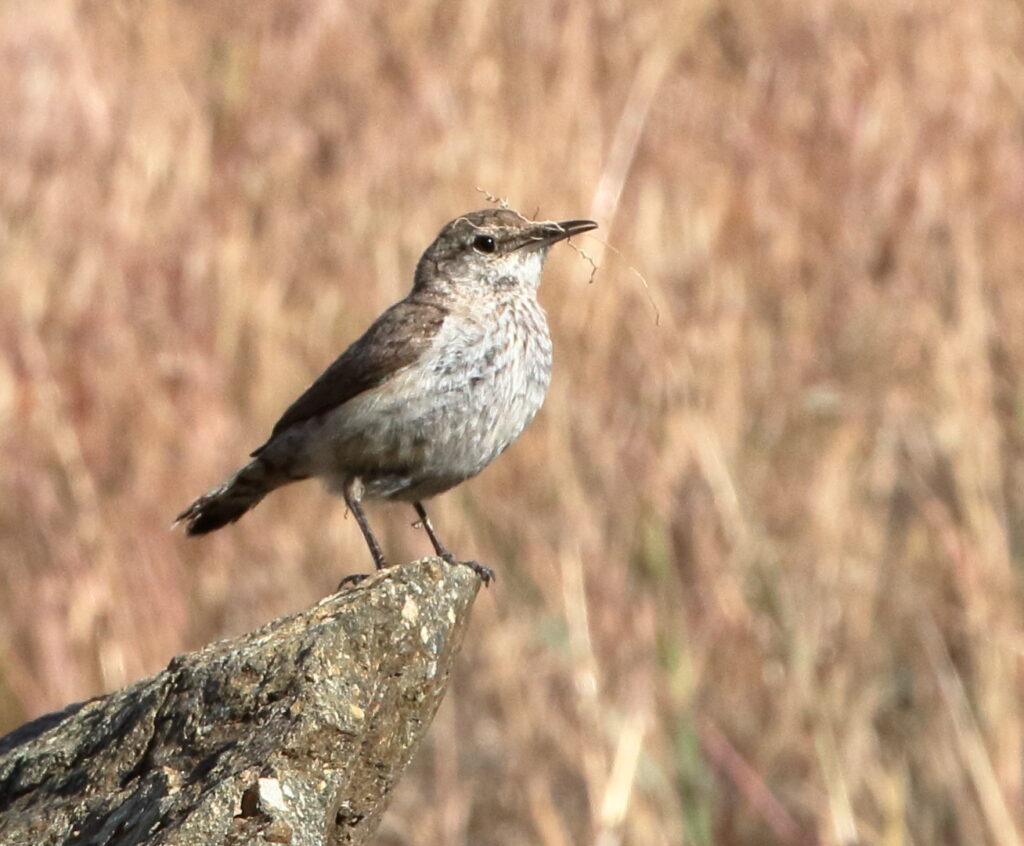
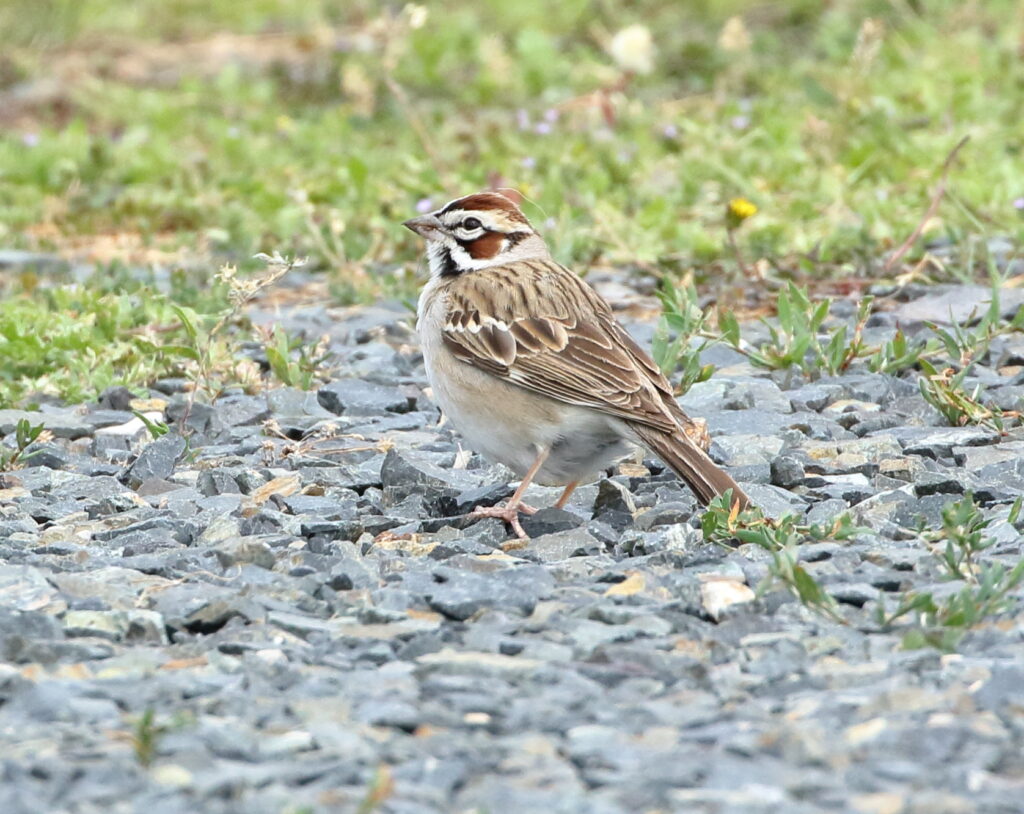
Green-tailed Towhees winter in the American Southwest and Mexico, but generally breed in the the Great Basin region of the West, including southern Montana. Though the birds are not strictly rare, I could count the number of times I had ever seen one, and I felt eager for another GTTO encounter. To find this bizarre, poorly understood beauty, I hit I-90 at dawn and steered toward Lewis and Clark Caverns, two-and-a-half hours to the east. To entertain me along the way, I had checked out an audio version of Eat, Pray, Love, a book that invites all kinds of snarky comments but, I found, actually proved moderately amusing. On Braden’s advice, I pulled over alongside the road leading to the caverns and was rewarded with a wonderful assortment of river and cliff birds including Rock Wren, Lazuli Buntings, and White-throated Swifts. Once inside Lewis and Clark Caverns State Park itself, I focused on finding Green-tailed Towhees.
I struck out. I spent a good hour and a half checking along the road, up around the main parking area, and in the campground. Merlin’s Sound ID picked up a putative GTTO song at one point, but I neither heard nor saw a trace of the bird.

I have to admit that this made me feel like a total failure. I mean, here was my first target bird of the trip, and one that shouldn’t be that hard to find, and I totally “whiffed” on it, as Braden might say. I didn’t plunge into despair exactly, but it definitely put a damper on my mood as I began questioning just what I thought I was doing out here pretending to be a birder! Well, I thought, maybe I’ll have better luck at my next destination.

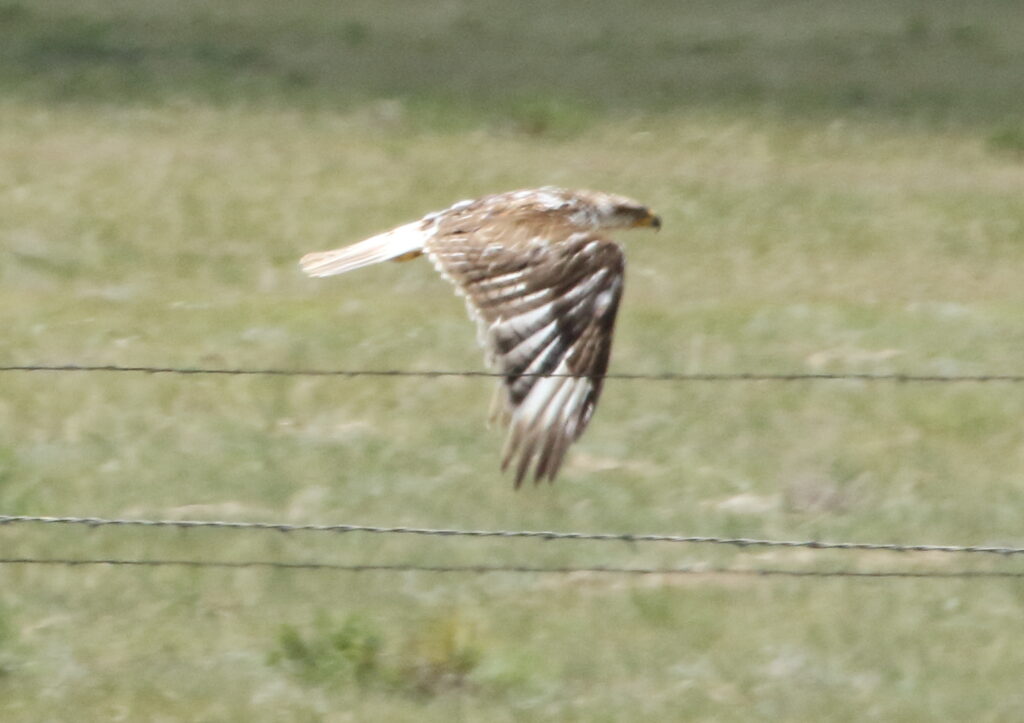
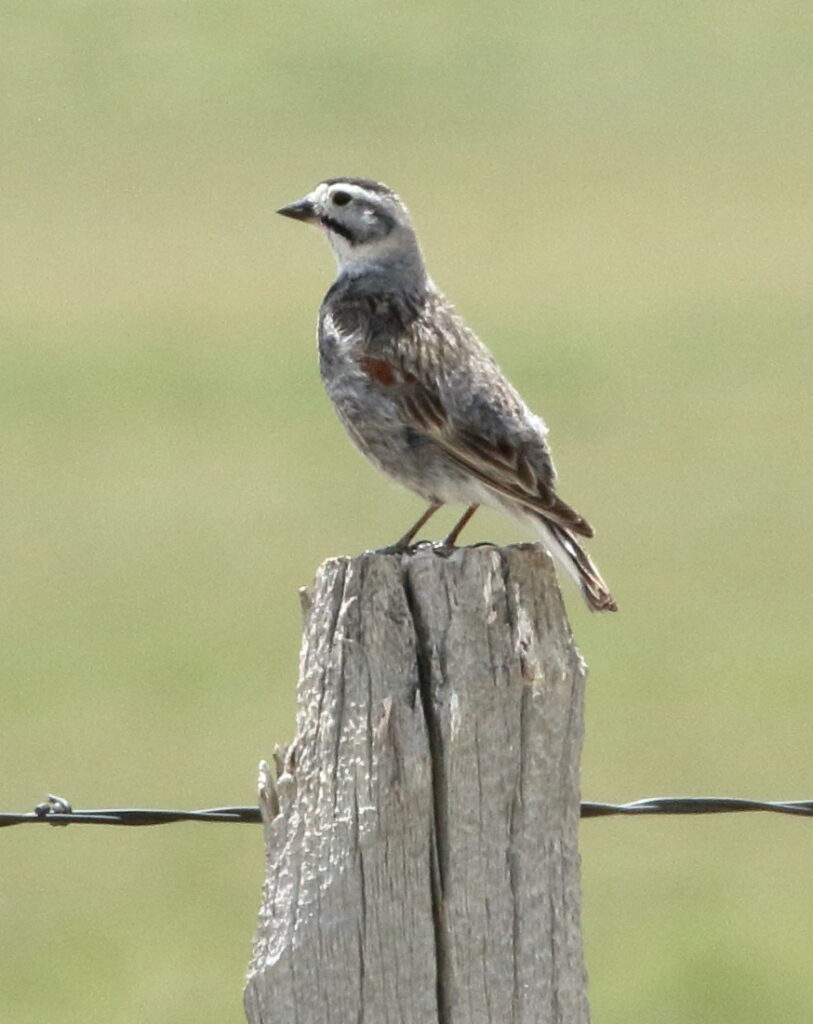
Which happened to be Birch Creek Road north of Dillon in Beaverhead County. Several years before, Braden and I had found our lifer Thick-billed (formerly McCown’s) Longspur on this road, and once again, the road delivered. I’d driven only a mile before I saw a suspicious dark shape on a fence. I actually didn’t think it was a Thick-billed, but my binoculars revealed otherwise. “Yay!” I exclaimed, feeling the weight of my earlier “whiff” lifting slightly. A few minutes later, I was examining another TBLO when I noticed a large shape sitting in a field about one hundred yards away. “Clearly a hawk,” I thought, “but what kind?” The answer: the best kind, at least for my goals for the trip—a ferruginous hawk. This was another bird I needed for the year and one that isn’t always easy to find in the state.
Digging out the peanut butter sandwich I’d made earlier, I tooled down I-15 for my next destination, Clark Canyon Reservoir. Braden and I had only ever birded here once before, and as near as I recall, we hadn’t found much, so I kept my expectations low. I stopped at one overlook and was surprised to see a Common Loon on the water below, along with a Double-crested Cormorant and a couple of Ring-billed Gulls. Violet-green swallows swirled around me and, as always, they brought a smile.

Snaking around the reservoir, I approached a sign for Horse Prairie Campground and spontaneously swerved left onto a dirt access road. The reason? Tall, healthy-looking sagebrush! Hm, this just might have one of my other target birds for the day. Almost immediately, I saw a really cool bird that had not been on my target list—a Common Nighthawk peacefully chillin’ on the split-rail fence. The bird barely blinked as I fired away with my camera through the car window from only thirty feet away.
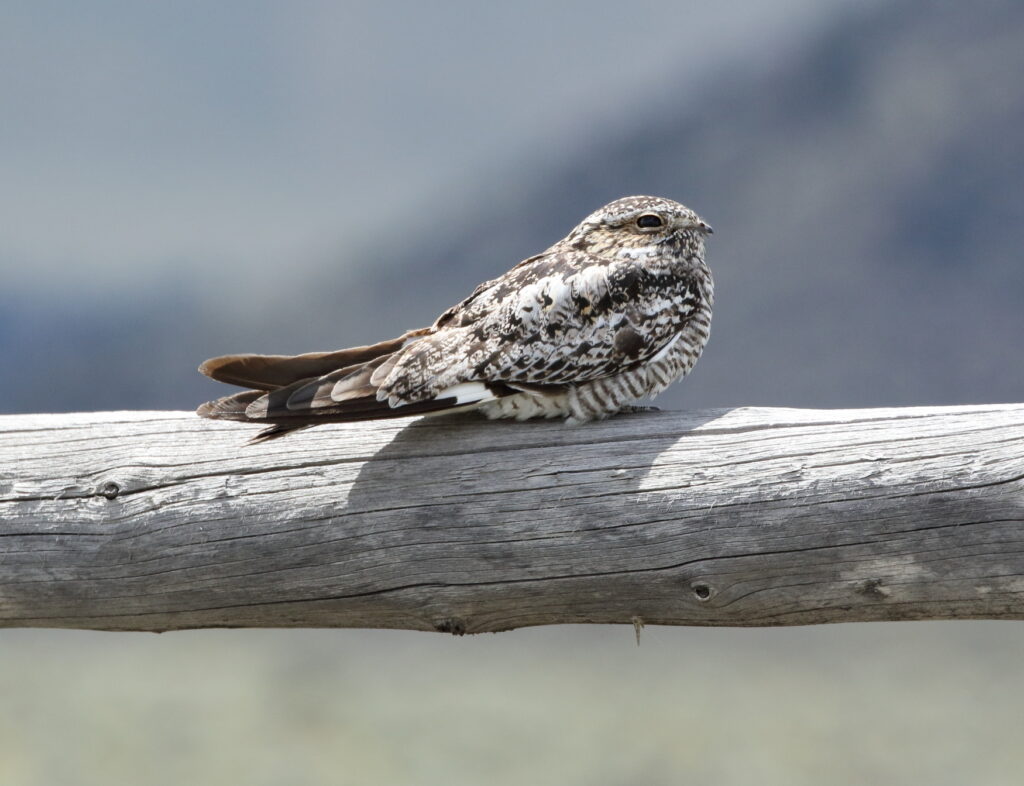
The first of three Common Nighthawks I spotted chilling on the wooden fence leading down to Horse Prairie Campground.

Creeping slowly forward, I heard a song I didn’t recognize—which was no great surprise in itself, but I did have a guess of what it was. Sound ID confirmed it: Brewer’s Sparrow! This bird loves healthy sagebrush and makes up for the world’s dullest plumage with a vigorous song that bewitches any birdwatcher who hears it. A few moments later, one even sat still long enough for a decent photo. Check. Another target bird—but not the one I expected to find here!
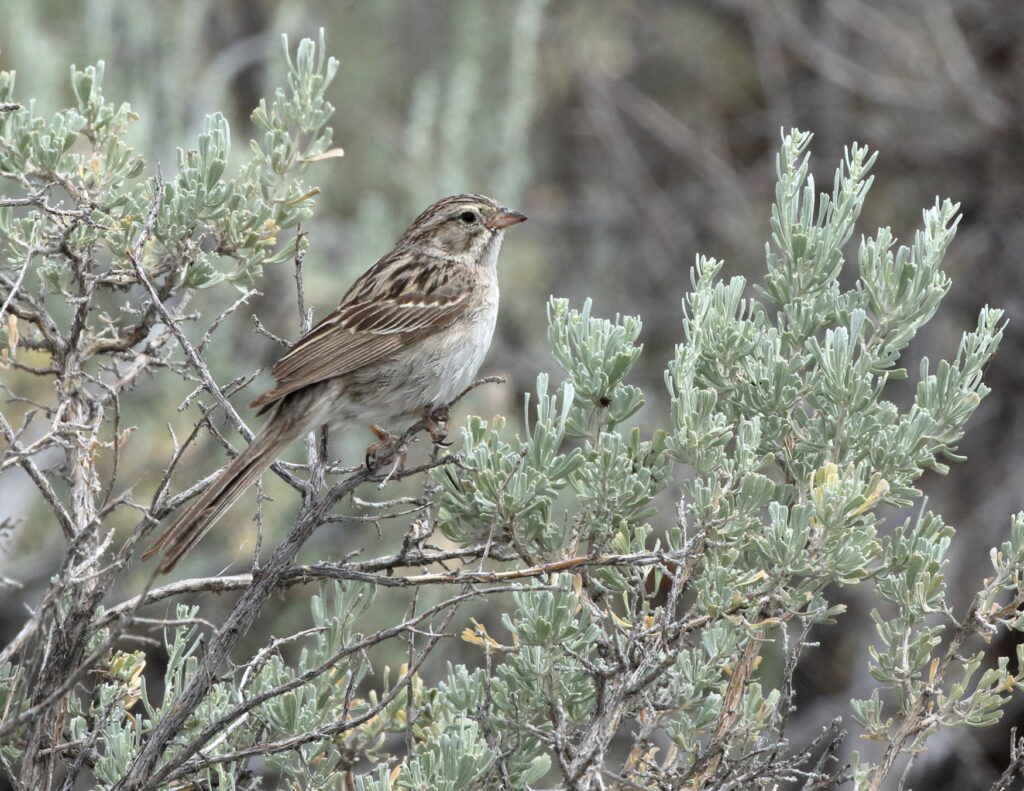
One of Montana’s drabbest birds, the Brewer’s Sparrow has an enchanting song.

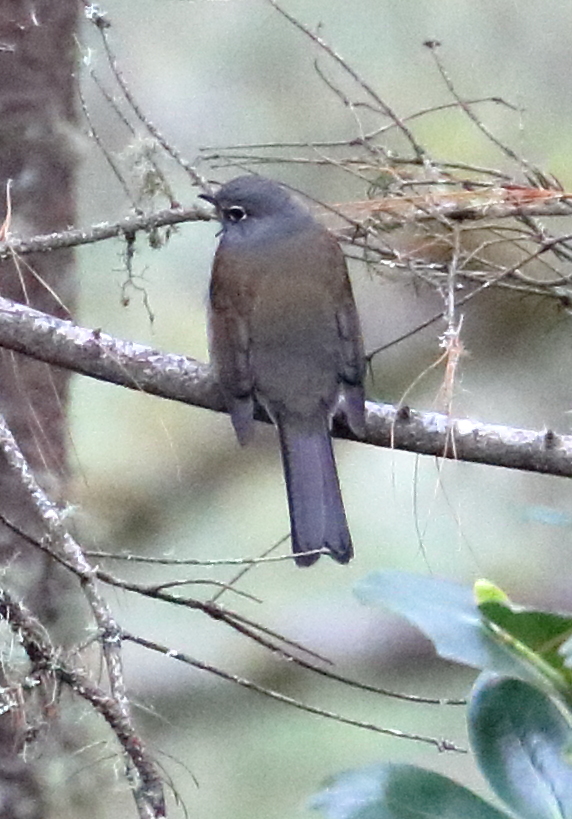
I kept driving slowly toward the campground and spotted a medium-sized, slender bird up ahead. Wishfully, I thought it might be a Say’s Phoebe—another bird I happened to need for my year list—but it flew off before I got close. As I pulled into the campground, though, two brownish birds were chasing each other around. I assumed they were robins, but when one landed on a “Day Use Only” sign, I realized with a start that it was exactly the bird I had hoped to find here—a Sage Thrasher!
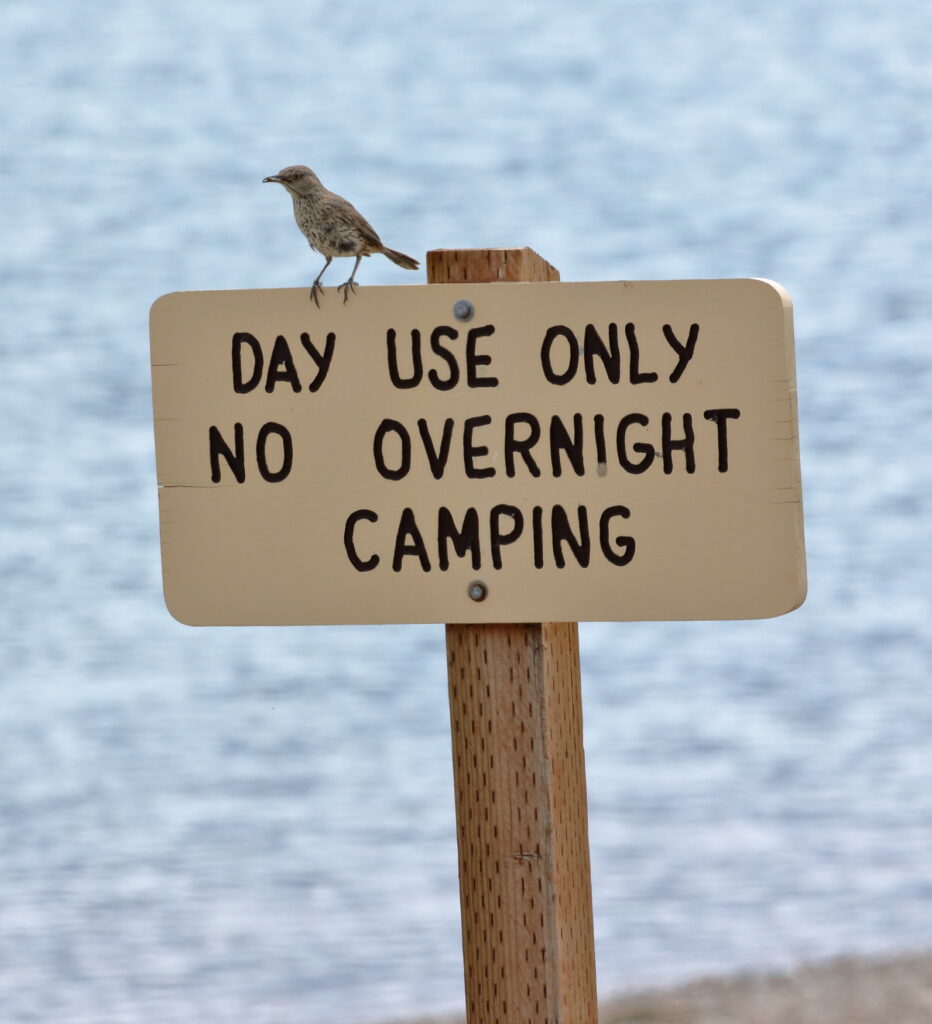
Sage Thrashers are so flighty that seeing one on a sign was about the last thing I expected!

Braden and I have never met a thrasher we didn’t like, but Sage Thrashers hold a special place in our birding hearts. For one, they’re the world’s smallest thrashers—which is why I mistook them for robins or phoebes. For another, they are charismatic songsters and often are the most common bird you see in sage country. As I sat in the car, in fact, I counted three more Sage Thrashers around me. Whoo-Hoo!
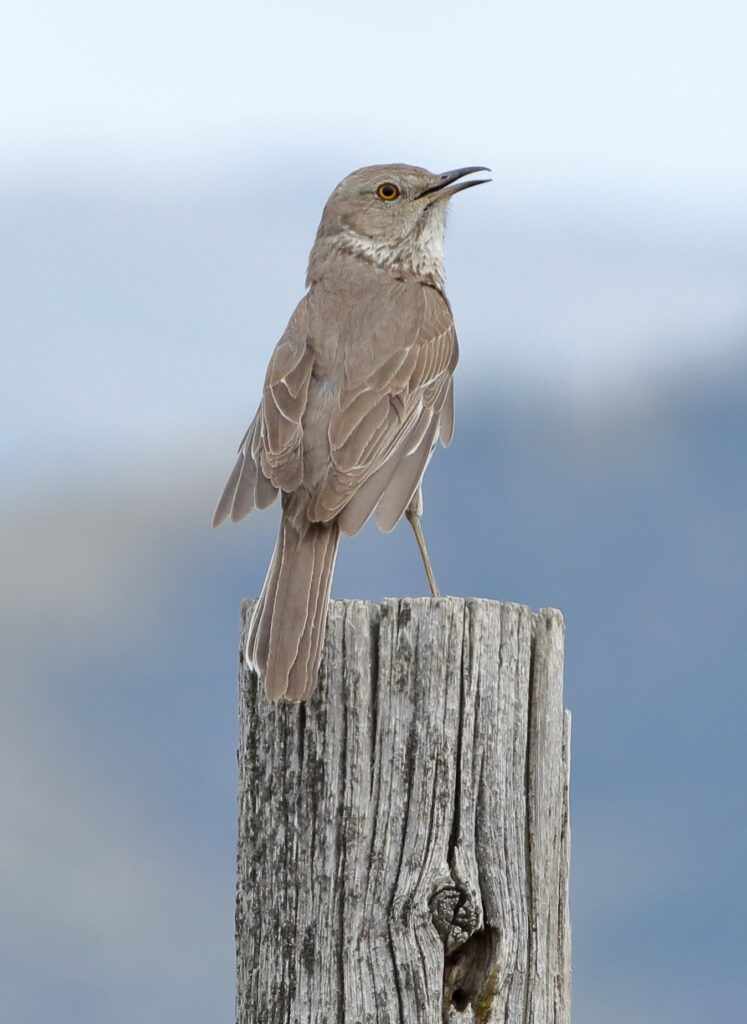
One of our favorite Montana birds, Sage Thrashers seemed to be everywhere I looked this afternoon.

Later, on the road where I was to meet up with Jeff Marks and Nate Kohler, I encountered seven more Sage Thrashers! It was a veritable thrasher party—by far the best experience I had ever had with these good-looking birds.

Unfortunately, the next morning, heavy rain and spitting snow kept me from seeing Gray Flycatchers with Jeff and Nate. More on that in another post. Almost as bad, I began the drive home without a Green-tailed Towhee under my belt and no expectations of seeing one. But bless Nate Kohler’s heart. He told me about a canyon I should check out on the way home. It was still raining when I got there, but I drove slowly and stopped frequently, listening and watching. Lazuli Buntings chattered everywhere and I saw a good variety of birds—but no towhee. Finally, I put on my raincoat, got out of the car and played a Green-tailed Towhee song. Almost immediately, a small shape darted up out of the sagebrush—the bird I was looking for! Not only that, it held still long enough for a photo—but the story hadn’t quite finished.
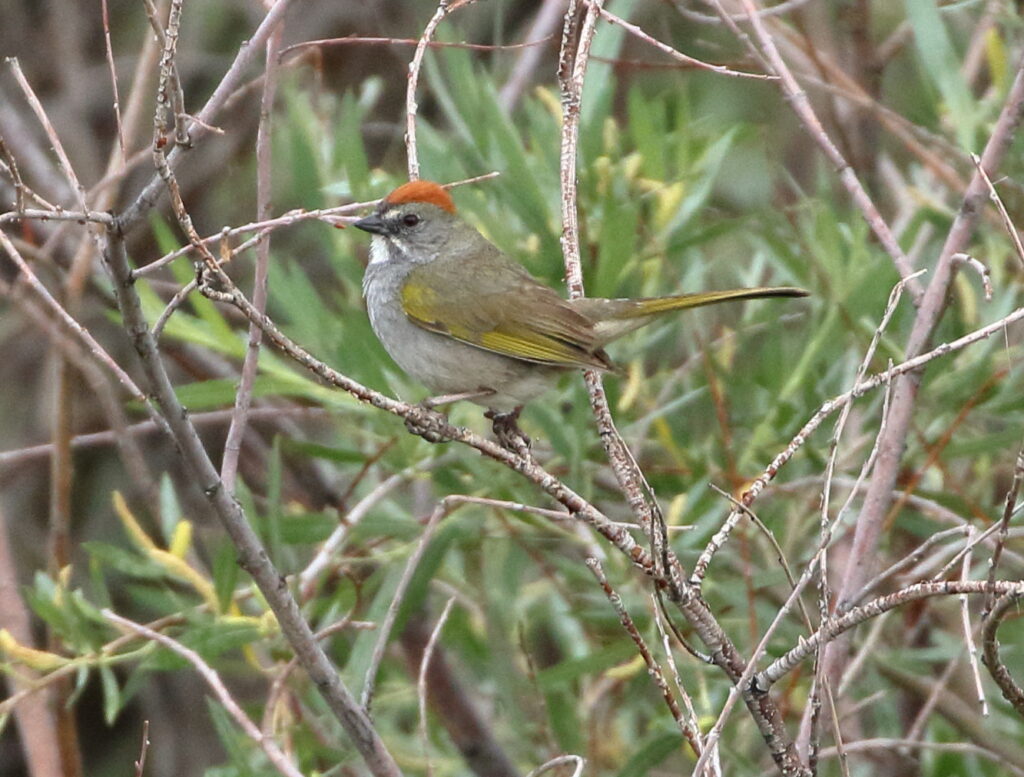
I worked hard for this Green-tailed Towhee—only to find that it wasn’t a year bird after all!

Once I got home and posted all of my checklists for the trip, I was surprised that eBird hadn’t added GTTO to my year list. What’s going on? I thought, and did a quick search to see if I had somehow seen one down in Texas and forgotten about it. Nope. What I did forget was the rare vagrant GTTO I had seen in Victoria, BC during Amy’s and my January trip (see Birding Victoria, BC)! So this one was not a year bird after all, but still a lot of fun to see. Meanwhile, my year list swelled to 503 species thanks to the Thick-billed Longspur, Ferruginous Hawk, Brewer’s Sparrow, Sage Thrasher, and a Prairie Falcon I had spotted the afternoon before. Not exactly the trip I expected, but one I already cherished.
Birding in Oaxaca, Mexico (report by Braden Collard)

As our final post for February, we feature a glimpse of Braden’s amazing winter break trip to Oaxaca (pronounced “wah-HA-kah”), Mexico with our friend, and now birding guide, Nick Ramsey. If you like tropical birds, we’ve got more treats coming your way—but we won’t spill the bird seed just yet. Meanwhile, if you’d like to support FatherSonBirding, please consider buying some of Sneed’s books—or supporting a bird conservation group of your choice (see our post “Saving Birds. It’s Time.”).

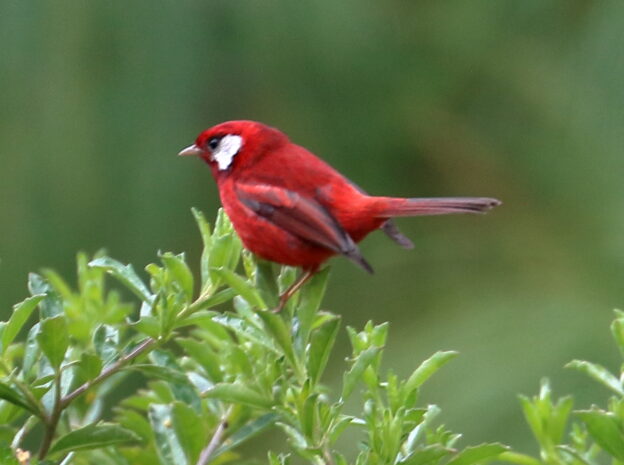
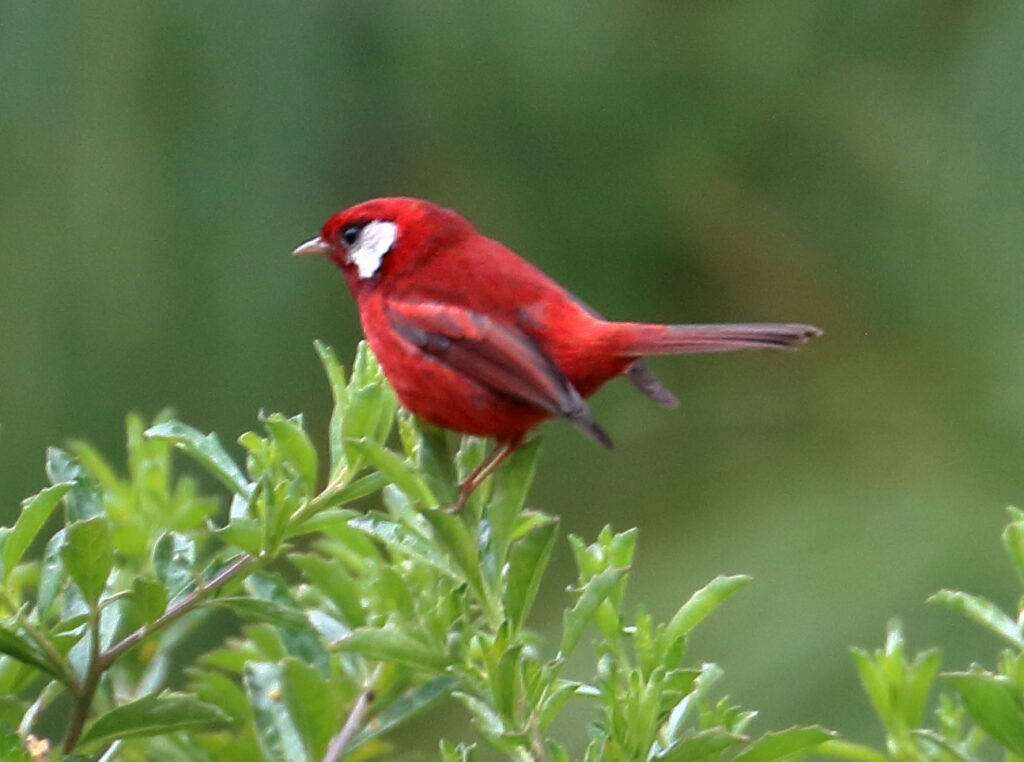
No words can capture the feelings of shock and disbelief that Nick Ramsey, Garrett Rhyne, Eugene Huryn and I felt when an adult male Red Warbler materialized in a bush in front of us. We’d originally pulled over to admire the view of Oaxaca City from several thousand feet up and, no surprise, had begun to notice birds the instant we got out of our rental car. Nick, who had been birding and traveling around northern Central America and Mexico for the last few weeks, pointed out the distinct high-pitched call of a Mexican Violetear, hidden somewhere in the foliage below us. Downslope, a large mixed flock of warblers was passing through, and we started to pick out species as they foraged on the ends of conifer branches—Hermit Warblers, Townsend’s Warblers, Olive Warblers, a Mexican Chickadee—species that birders could find in the western United States. Then the Red Warbler appeared, and we all lost our minds as we scrambled to take pictures of it against its light green backdrop.

One look at a Red Warbler and you know why we lost our minds seeing it!

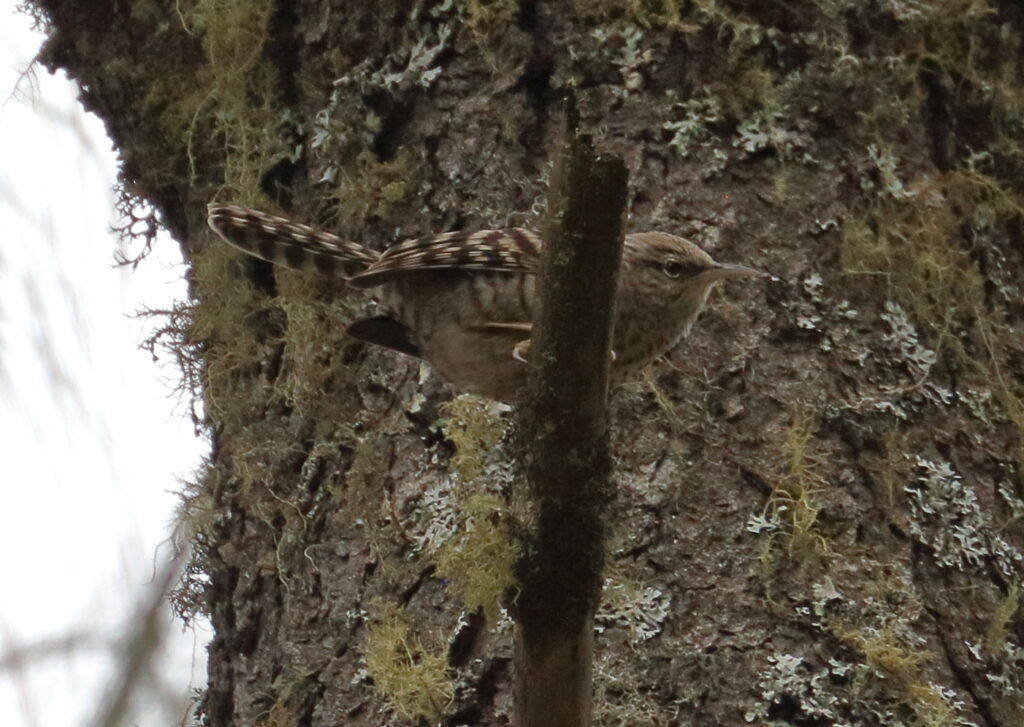
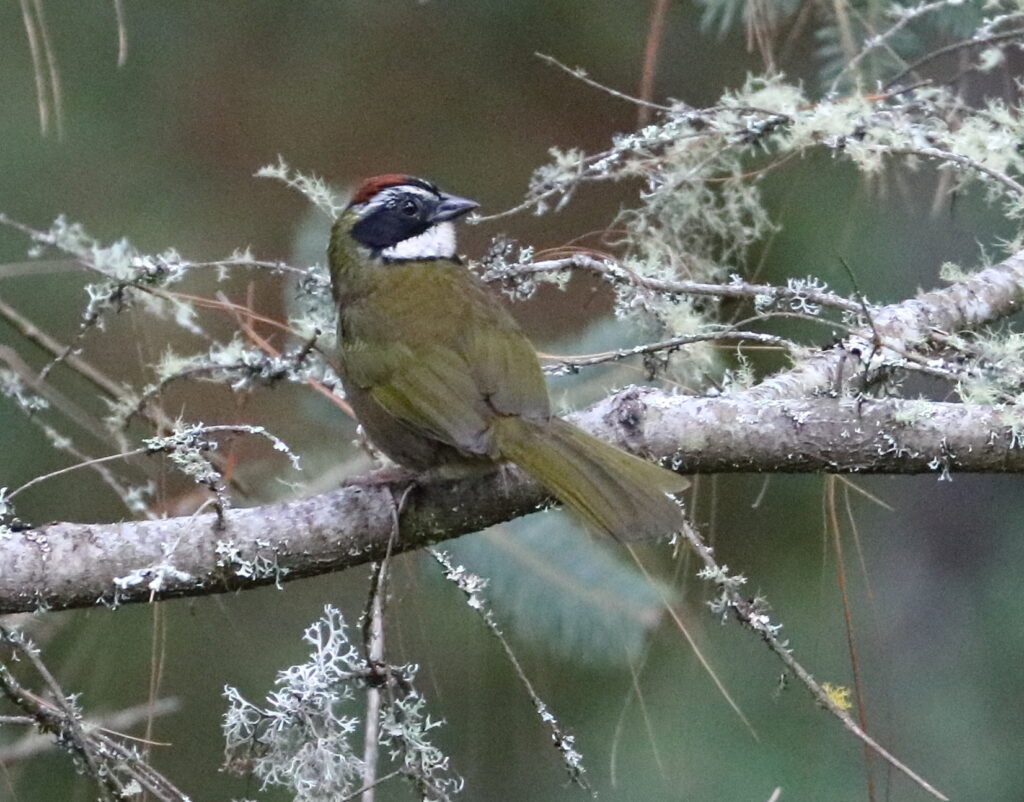
Camino la Cumbre, the road we’d turned onto ten minutes earlier, is one of Oaxaca’s more famous birding locations, and for good reason. As we continued driving up the road, which featured tall pine trees growing alongside ten-foot tall century plants, we stopped any time we heard or saw birds, which was often. Collared Towhees, White-eared Hummingbirds, Brown-backed Solitaires and more species we had on our target lists made appearances alongside the road, in habitat not all that different from what you might see in the middle elevations of California’s Sierra Nevada. Besides the Red Warblers, though, our biggest targets were a pair of species known for traveling together—one of the world’s largest wrens and one of the world’s smallest jays. The Gray-barred Wrens didn’t take long to find, and we bumped into several flocks of them, not skulking close to the ground like many US wrens do, but fifteen feet up in oak trees, picking through epiphytes in search of insects.

One of our biggest first-day targets, Gray-barred Wrens, proved easy to find. One of the world’s largest wrens, they are surprisingly visible at mid-tree level.

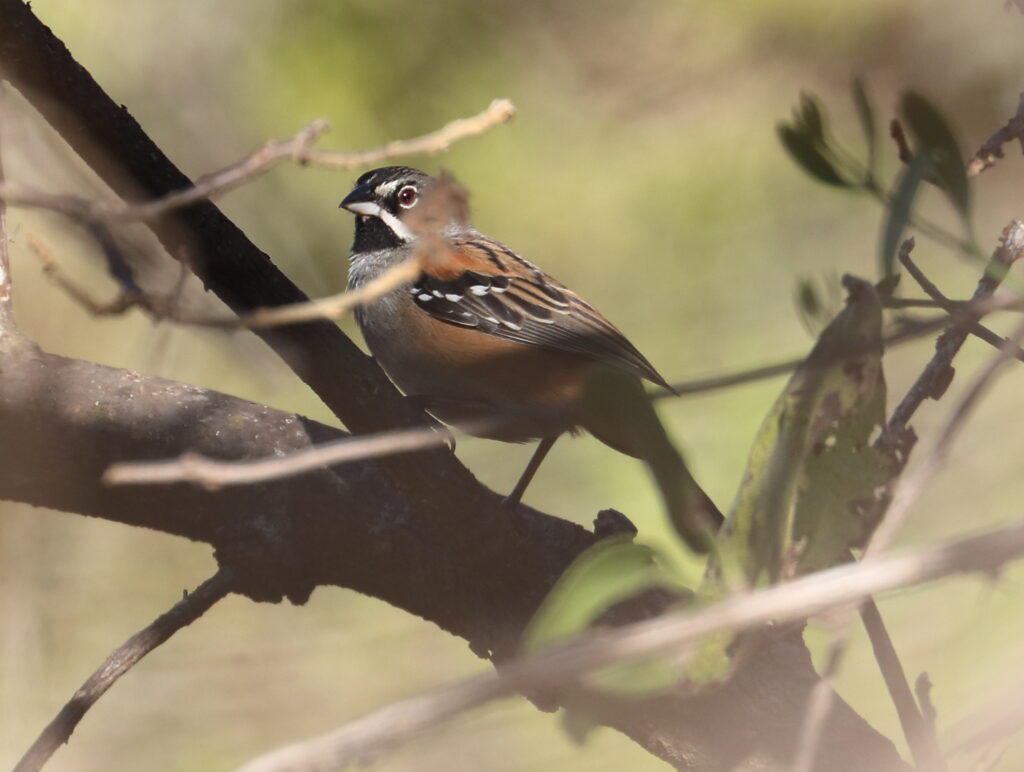
As we wound higher and higher up the road, the birds improved—as did the view of Oaxaca City below us. We’d flown in the previous day, and spent that evening and the following morning stalking through the scrubby, lowland habitat in search of other specialty birds, endemic only to dry valleys in south-central Mexico: Dwarf Vireo, Ocellated Thrasher, Bridled Sparrow. We’d been planning the six-day trip, which fell perfectly into my winter break, for several months, but only at the Dallas Fort-Worth Airport had I met Garrett and Eugene for the first time. Nick knew them from his time at LSU, and had brought us all together to see a small portion of the birds Mexico had to offer. And boy, did Mexico have a lot of birds to offer.

Bridled Sparrows remind one of the Five-striped and Black-throated Sparrows many US birders eagerly chase through Arizona.

The Mexican state of Oaxaca is positioned so that it includes both the dry tropical forest of the Pacific and the rainforests of the Caribbean. More importantly, it is home to a variety of mountain ranges and dry valleys, each far enough apart so that different bird species can be found in each area. This diverse array of habitats means that Oaxaca is one of the most diverse areas in Mexico, and we planned to see the full extent of this diversity on our intense six-day itinerary.

We at FatherSonBirding always feel gratified that so many birds are named after us, including this Collard, I mean, Collared Towhee.

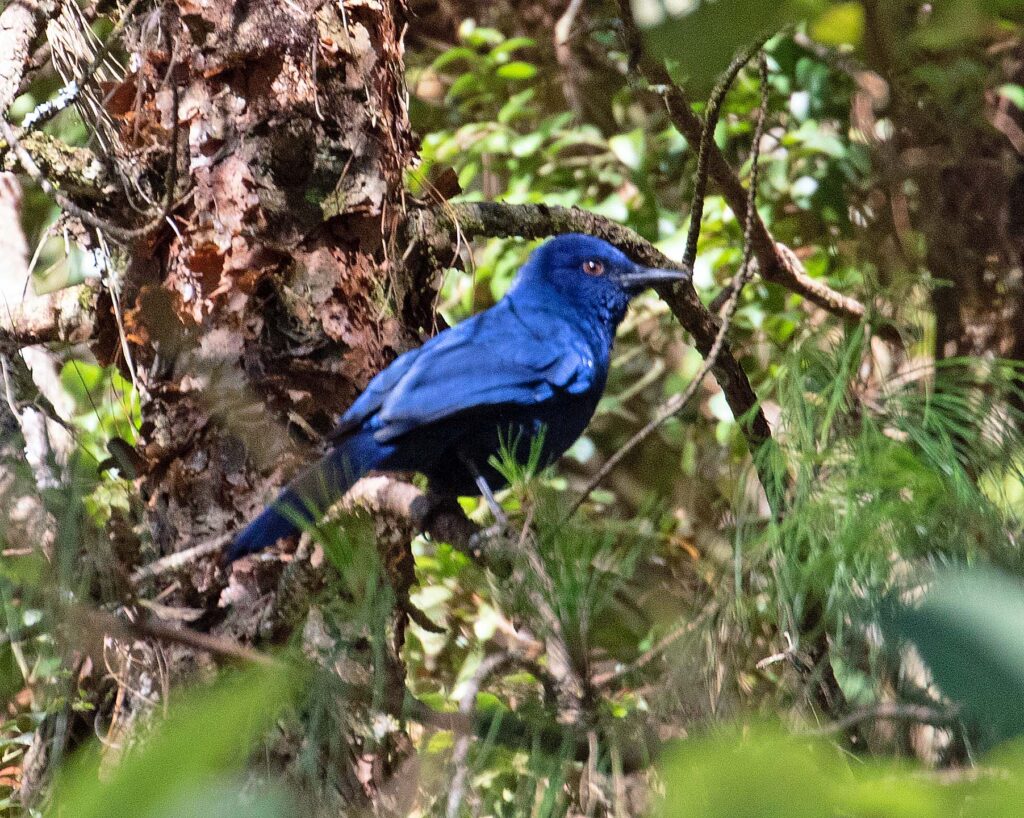
Camino la Cumbre was a major target area, and after an hour or so, we rounded a particularly foggy bend in the road, got out of the car, and laid eyes on our other major target: Dwarf Jays. Dwarf Jays are only known from the pine-oak woodland in the mountains north of Oaxaca, and thus the species was quite high on our target list. These tiny blue corvids were in the company of several Gray-barred Wrens as well as a Chestnut-sided Shrike-Vireo, a vireo that has evolved incredibly similar plumage to a Chestnut-sided Warbler, and we watched the mixed flock forage for a while, in awe of these birds we’d only seen in books before. We snagged a few more pine-oak species, including a beautiful male Bumblebee Hummingbird and a pair of particularly skulky Golden-browed Warblers, then continued north to our next birding location. In the following days, we would be driving down and then up the side of another mountain range into the cloud forest, then down into the rainforests of the Caribbean slope.

I unfortunately did not get a photo of a Dwarf Jay, so this Unicolor Jay will have to do!

Almost as exciting as the number of life birds all four of us were getting were the huge quantities of North American birds we saw at every stop! When I’d been in Costa Rica (see Braden’s post on El Copal and his other Costa Rica posts), the common neotropical migrants were eastern birds like Chestnut-sided Warbler and Wood Thrush, species that I’d gotten to know the summer before in Pennsylvania. But in southern and western Oaxaca? Half the birds were Montana species! In several locations we came across triple-digit numbers of Violet-green Swallows, as well as roving mixed flocks of orioles and Western Tanagers.  Our first morning of birding yielded a group of more than a hundred Cassin’s Kingbirds, and we found MacGillivray’s, Wilson’s, and Orange-crowned Warblers foraging low in bushes while Townsend’s and Hermit Warblers hunted higher up, near the tops of pine trees.

A Brown-backed Solitaire.

These species reminded us that Mexico is, after all, a part of North America, even though American birders and citizens seem to forget that frequently. The birds and habitats in parts of Oaxaca mirror what you might encounter on a warm February day in southeastern Arizona. Plus, ABA birders spend hundreds and thousands of dollars driving and flying across the country to see rarities like Slate-throated Redstart or southern Texas specialties like Altamira Oriole . . . and yet, for a similar amount of money, they can fly just a little bit farther to where these birds are not only common but joined by hundreds of other spectacular tropical species. If there’s one thing I was sure of, even on Day One of our Oaxaca trip, it’s that I would be coming back to Mexico.

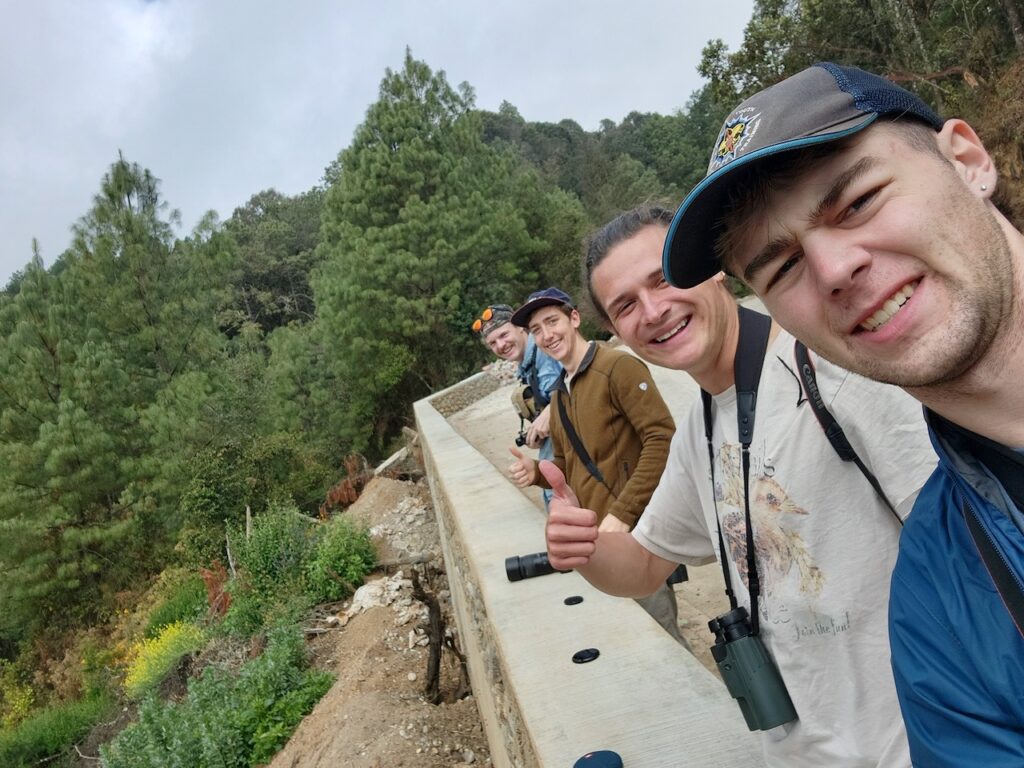
Our Oaxacan Birding Crew (left to right: Eugene, Garrett, Nick, and Braden) on Camino la Cumbre.

This post is written, photographed, and edited by human beings!

Adventures in Ekalaka: Our 2024 Eastern Montana Odyssey Continues

We are pleased to present our sixth installment of our 2024 Eastern Montana Odyssey. Here, we leave the “interstate less traveled” and push into the brand new birding territory of southeastern Montana. We experience delightful new towns and vistas, and a wealth of surprising birds. We also keep knocking off new counties, drawing closer to completing our Montana eBird map. If you are enjoying these episodes, please share them with your birding friends and consider supporting our efforts by buying a *NEW* copy or two of one of Sneed’s books on the right.

Leaving Glendive, Braden and I had our work cut out for us. Not only would we be birding the southeast corner of the state for the very first time, this might be our only chance to nail down the last six Montana counties we needed to complete our eBird birding map! We had started the trip needing seven counties, and picked up one a few days before (see our post “Big Surprise on the Way to Plentywood”). Today, we planned to conquer Prairie, Wibaux, Fallon, and Carter Counties—and it would take some effort.

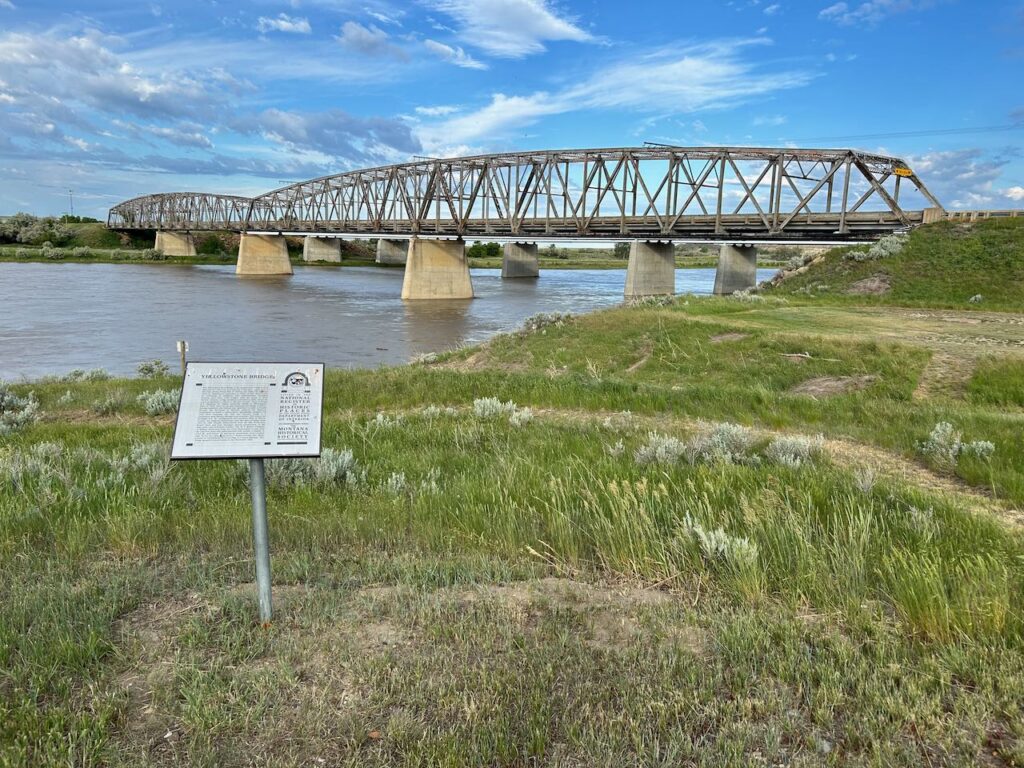
Fallon Bridge allowed us to bird the first of six Montana counties we planned to pick up in the next 48 hours.

First up? Prairie County which, unfortunately, didn’t sit anywhere on our way to or from someplace else we wanted to go. Before heading down to the southeast corner of Montana, therefore, we zoomed about twenty miles west down Interstate 94. Entering Prairie County, we spotted Western Meadowlark, Mourning Dove, and Cliff Swallow along the highway and we could have technically just turned around at that point. Braden and I decided, however, that to make our county map more meaningful we had to find at least ten, count ‘em, TEN species in each of our last seven counties. In Prairie County, we accomplished this with a stop at Fallon Bridge. Apparently, this also is a place to see Least Terns (see our last post), but we didn’t know that. Instead, we just got out and spent a few minutes enjoying what was there, including American White Pelican, more than fifty Cliff Swallows, a Lark Sparrow, and our County Bird of Prairie County, Brown Thrasher.

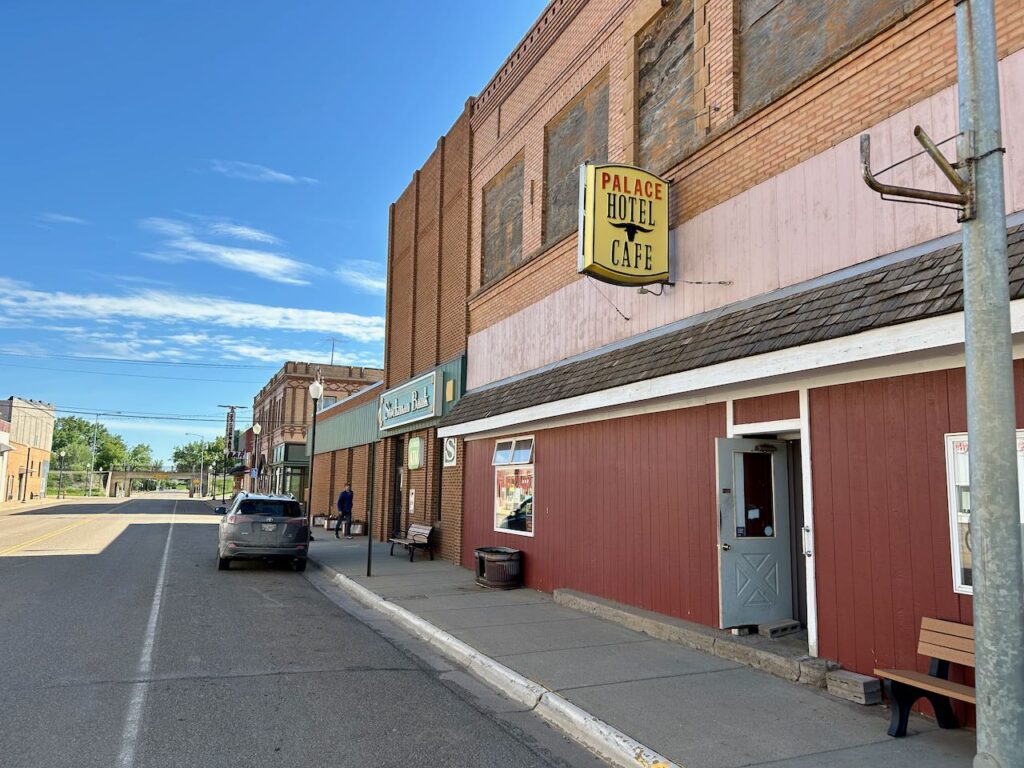
We raced back east on the interstate, past Glendive, to our main Wibaux County destination, the Wibaux Fish Pond. Here, we saw a satisfying 17 species including our County Bird of Wibaux County, Orchard Oriole. By this time our stomachs were complaining loudly about how we prioritized birding over eating. Fortunately, Wibaux is home to a wonderful little diner, the Palace Café. We stuffed ourselves on a scrumptious fat-and-protein-filled breakfast and emerged prepared to continue our vigorous Montana counties campaign.

A good small-town diner is one of a birder’s greatest pleasures. Don’t miss the Palace Hotel & Cafe in Wibaux!

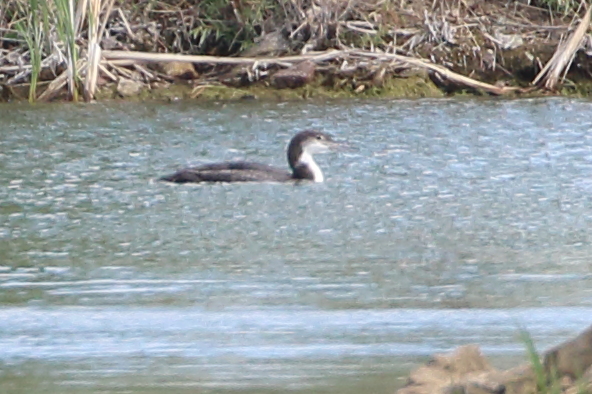
Next stop: Lake Baker in the town of Baker, Fallon County. We were both somewhat surprised to find a giant lake in the middle of the town. True, it was pretty developed, but we spotted nice surprises here including Eared Grebes, Western Grebes, and the star of our Fallon County lists, a Common Loon!

This Common Loon was a major surprise at Lake Baker.

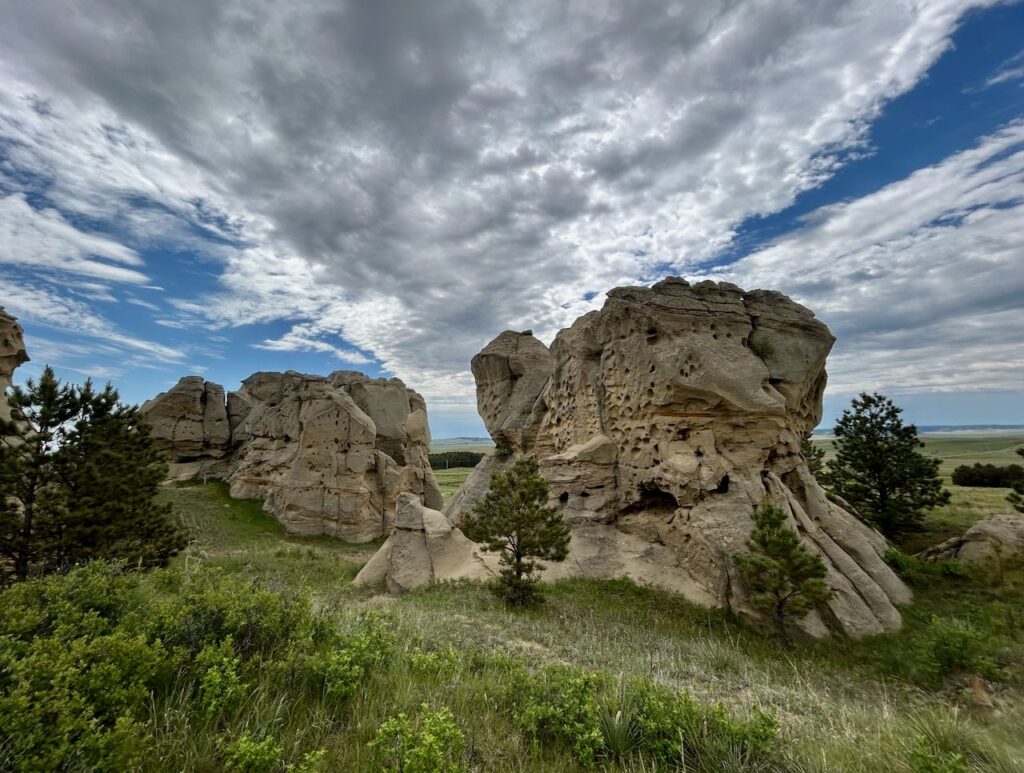
From Baker, it was on to Carter County, and here we settled into some more serious birding with a hike through the spectacular Medicine Rocks State Park. The fantastic, hoodoo-style rocks at Medicine Rocks were sculpted by wind and rain from soft inland sea sandstone. Not surprisingly, when humans came along the rocks assumed important sacred and cultural significance for native peoples and a fair share of interest from early white settlers.

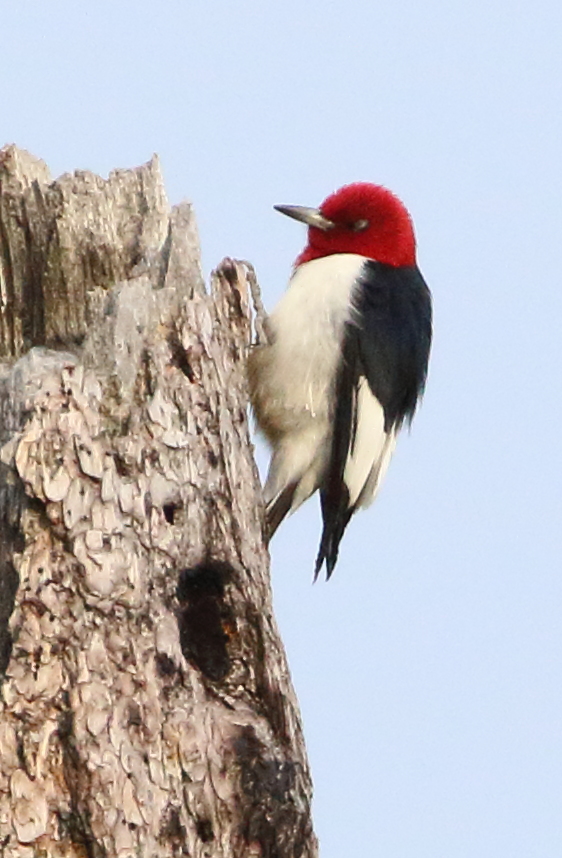
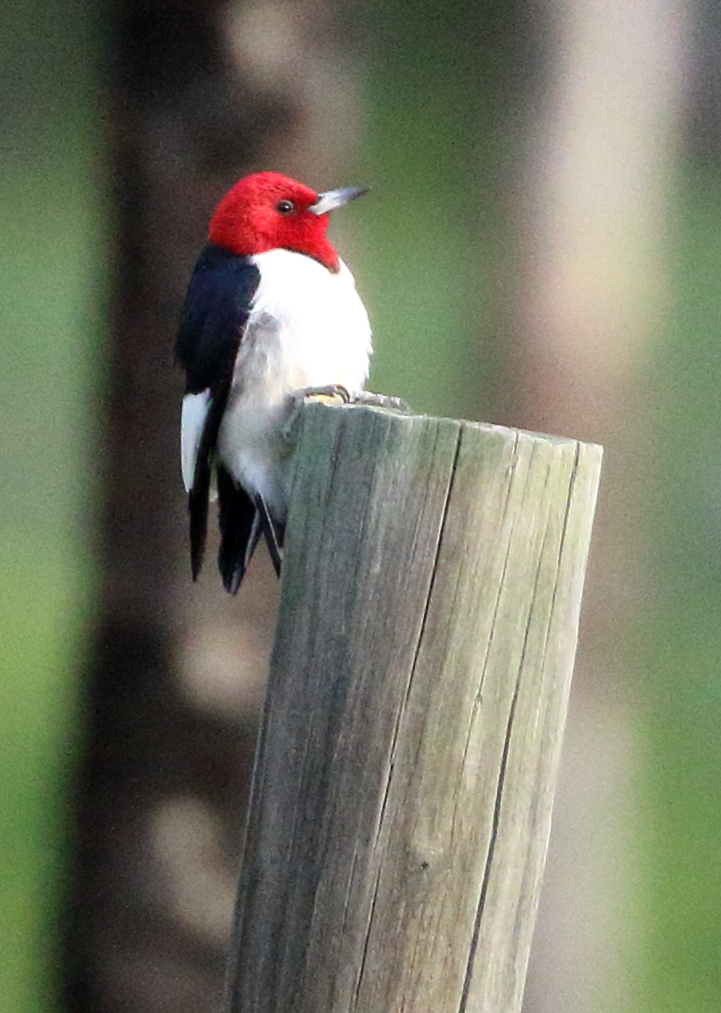
Medicine Rocks State Park is plenty dramatic—especially with Red-headed Woodpeckers lurking nearby.

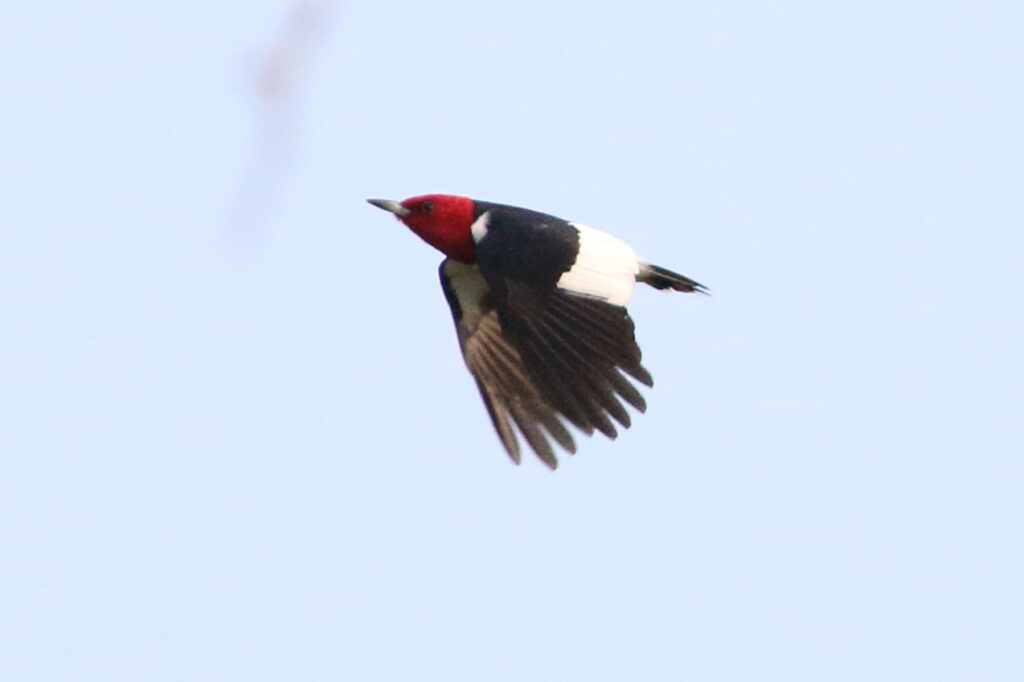
It was at Medicine Rocks that we spotted one of the birds we had most wanted to see on the entire trip. After walking a mile or so through the rocks, we connected with the pine tree-lined dirt road back to our car. As we walked, we caught a glimpse of a medium-sized bird that flashed white as it was flying away. “Red-headed Woodpecker!” Braden shouted. We didn’t get great looks, but never fear. This would not be the last RHWO we would see.

This fuzzy flight photo shows the dramatic color contrasts Red-headed Woodpeckers present, making them easy to identify from a distance.

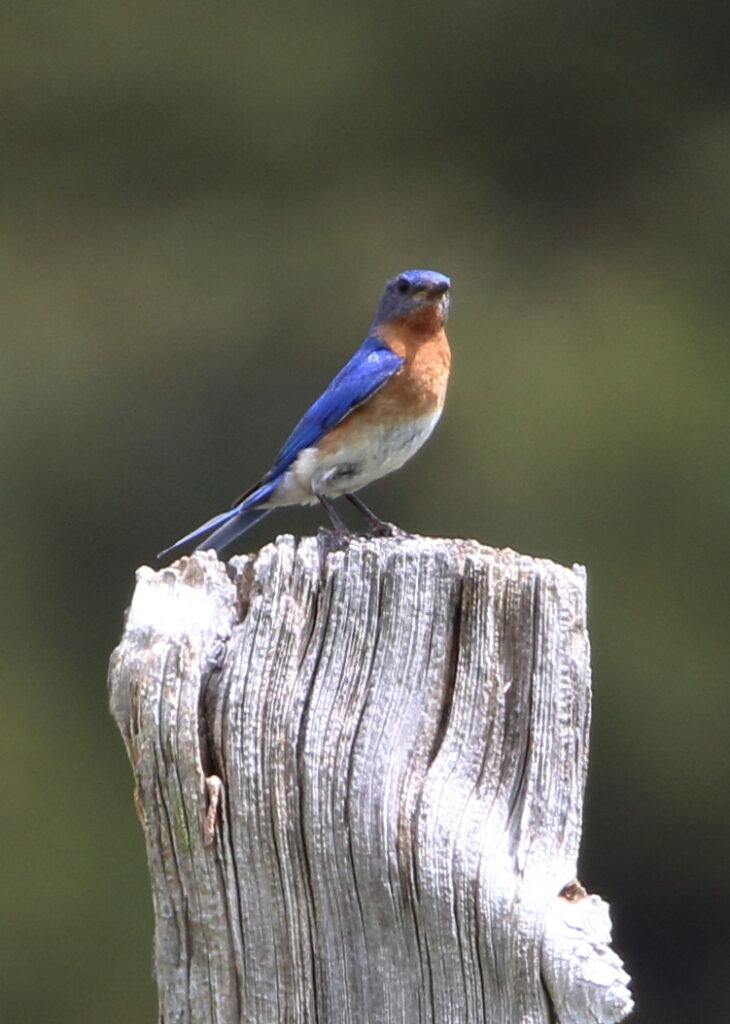
From Medicine Rocks, we made our way to our camping destination for the night, Ekalaka Park Campground. It was barely noon as we turned off on the dirt road into the higher hills south of Ekalaka, and we took our time, stopping to look at whatever cool birds we happened to encounter. Sure enough, we glimpsed two more RHWOs as they fled up and over a little hill. “Let’s follow them,” I said, steering up a little two-track up along a fence line. As we crested the rise, one of the woodpeckers was sitting on a fence post. It fled as I got out to try to photograph it, but meanwhile, Braden had sighted a surprise Montana life bird for us—Eastern Bluebird! Though almost identical to their Western counterparts, Easterns are easily distinguished by their red throats compared to the blue throats of WEBLs.

The red throat of this Eastern Bluebird easily distinguishes it from its Western Bluebird counterpart. Montana Lifer!

We continued to pick up great birds along the road: Yellow-breasted Chat, Lark Sparrow, Field Sparrows, and more Red-headed Woodpeckers. My favorite was our first ever really good look at a Plumbeous Vireo. We spent several minutes watching this handsome, “spectacled” bird. Alas, my camera was back in the car so we failed to get a photo of it. Some photos you just have to store in your brain!

Although abundant, the Red-headed Woodpeckers in Ekalaka were on the shy side. I never managed to get closer than fifty yards or so to one.

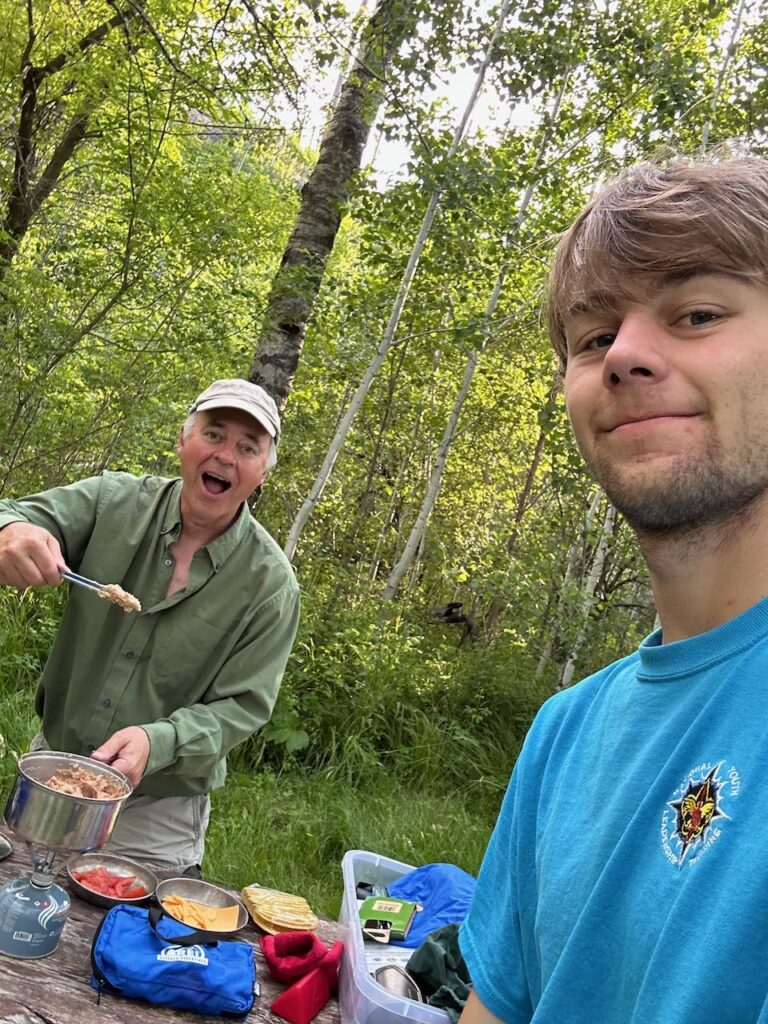
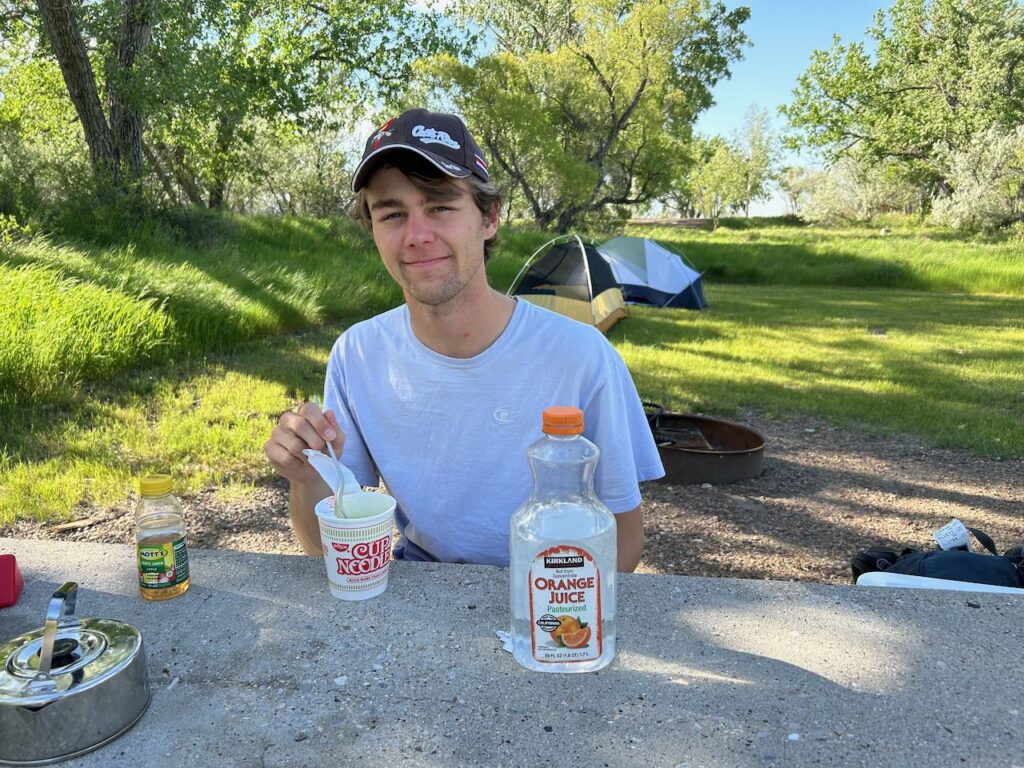
We spent a delightful evening in Ekalaka Park Campground—the only campers there. The campground sits in a little bowl surrounded by dramatic cliffs and an older burned forest, making it the perfect habitat for Red-headed Woodpeckers. Sitting at our picnic table, we could hear and see woodpeckers all around us. Every once in a while, one would fly right through our camp. I made bean and cheese tacos and we settled in for our best camping experience of the trip.

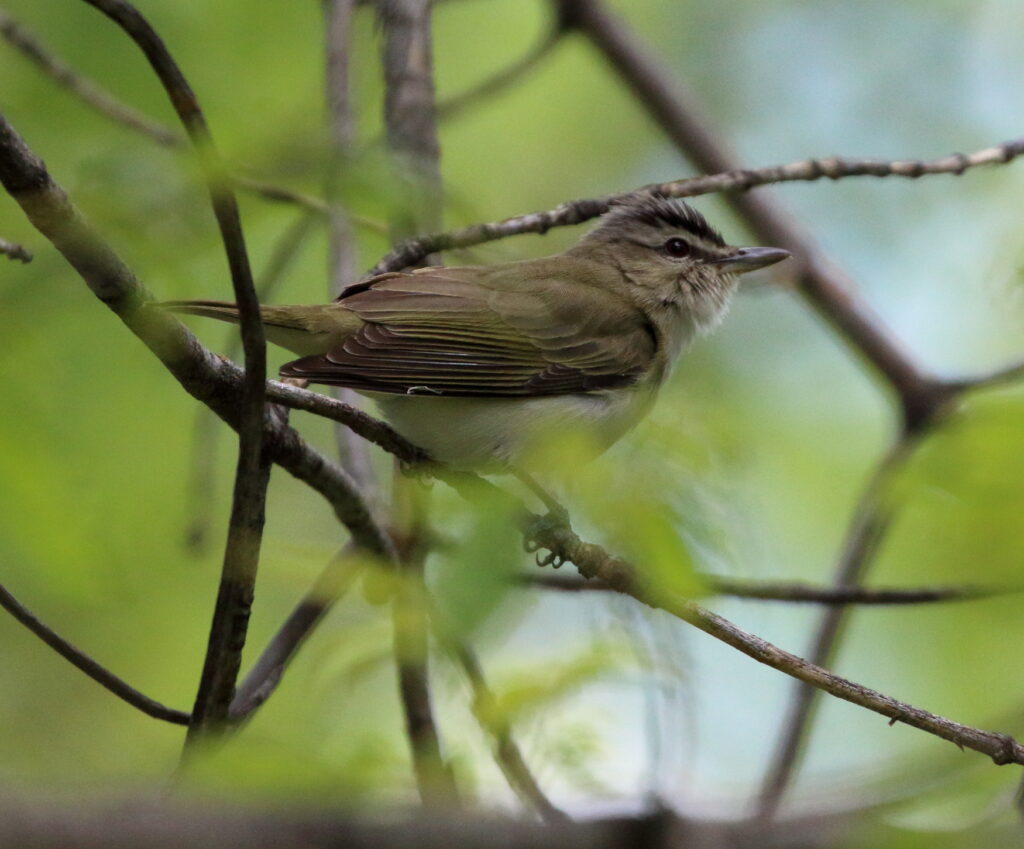
Ekalaka Park Campground offered perhaps our best-ever experience with Red-eyed Vireos, which serenaded us the whole time we were there.

The woodpeckers weren’t the only show offs in camp. That evening, Common Poorwills lulled us to sleep. We also had some of our best experiences ever with Red-eyed Vireos. In fact, when I woke the next morning, it was to a REVI’s delightful song. After working my way out of my sleeping bag, I climbed a nearby hill into the burned forest and picked a log to perch on. The air was cool and fresh, and woodpeckers flew from one snag to another. Sitting there, I felt very grateful for life, and that Braden and I could share the wonders of Montana birdlife together.

Taco Time in Ekalaka Park Campground.

Eastern Odyssey 2024: Return to Westby

Our fourth post about our epic 2024 eastern Montana expedition takes us to the birding mecca of Westby. Over the years, Westby has grown an outsized reputation in the imaginations of Montana birders. To find out why, read on—and don’t forget to check out Sneed’s newest picture book, Like No Other—Earth’s Coolest One-of-a-Kind Creatures by clicking on the image to the right!

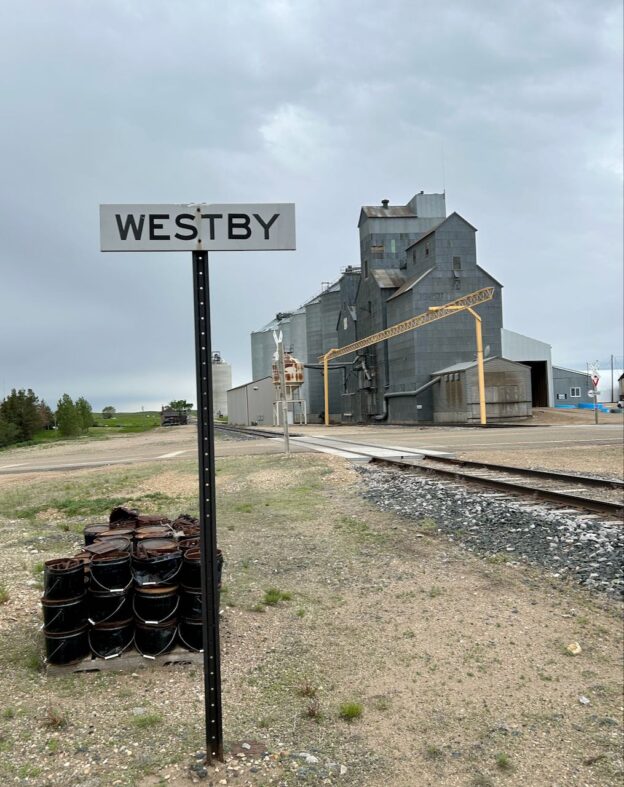
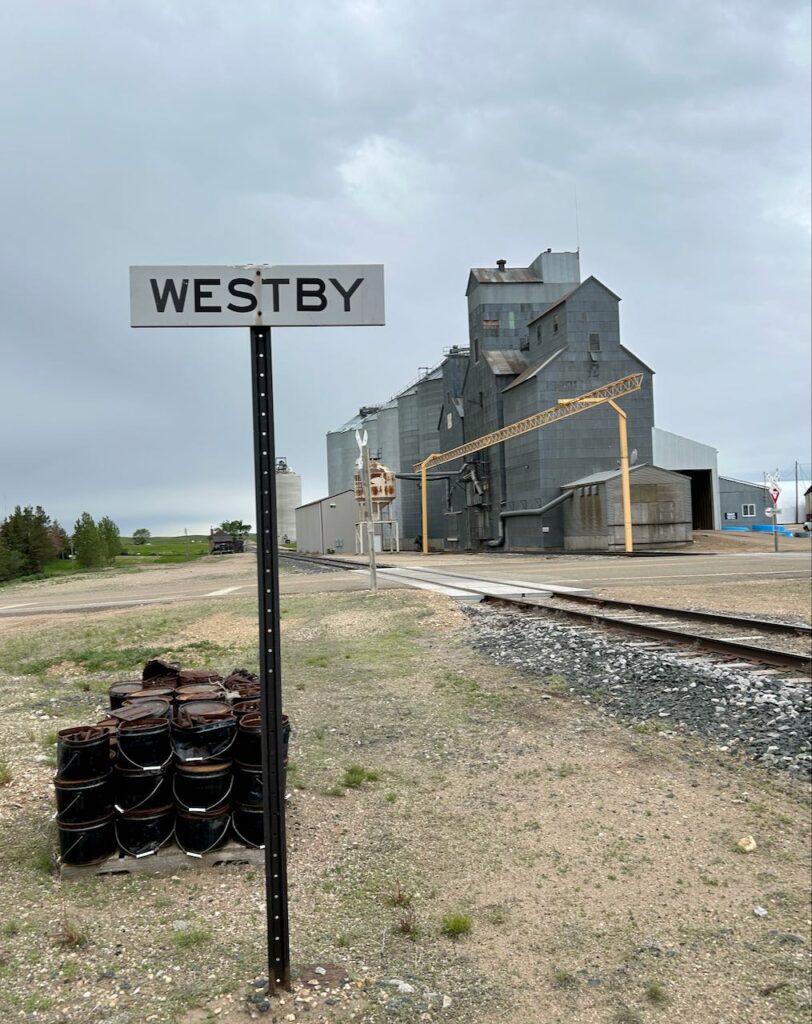
After, to be honest, a pretty disappointing time in Plentywood (see last our last post), Braden and I continued our Eastern Montana Odyssey 2024 by driving twenty-six miles to a place that has obtained almost mythical status among Montana birders: Westby. Westby sits in the very northeastern corner of the state and has long been known as a place where eastern songbirds clip Montana on their way to northern breeding grounds. Some fool cut down some of the best bird habitat there a few years ago, before Braden and I ever visited, but birders still discover rarities such as Mourning Warblers, Black-throated Green Warblers, and Rose-breasted Grosbeaks every year. The bad news? Braden and I were about two weeks late to have a serious shot at anything like that. The good news? We still had a great chance to see migrating shorebirds.

Westby literally straddles the North Dakota border, making it a go-to destination for birders hoping to snag rare migrants for their Montana life lists.

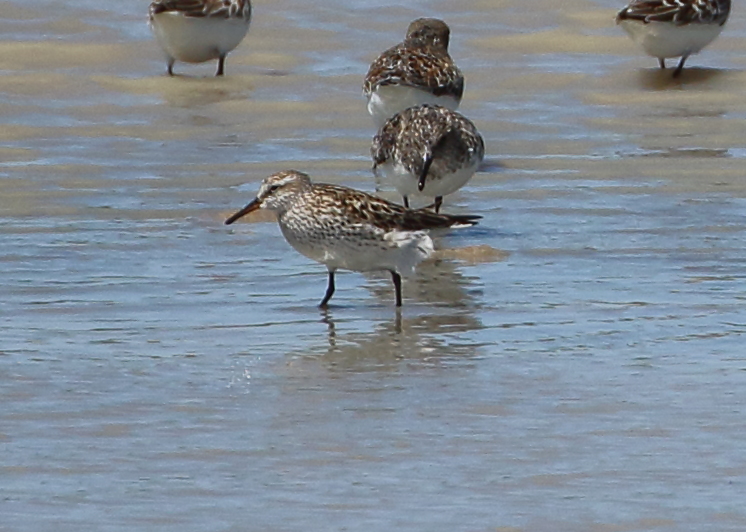
We arrived early and decided not even to waste time looking for songbirds right away. Instead, we immediately drove north out of town toward a series of pothole lakes well known for shorebirds. Changes in water levels can be shocking out here year to year, and I quickly saw with dismay that one pond that had brimmed with water during my visit with my pal Scott Callow last year had gone bone dry. Fortunately, another pond with just a brief window of visibility did have water. “Shorebirds!” I shouted. We broke out the spotting scope and did our best to ID what was out there. Sanderlings could be made out by their distinct dark red heads and boldly black legs and bills. More exciting, we were able to ID Semipalmated Sandpipers and a species we hadn’t seen in Montana for four years, White-rumped Sandpipers.

This is about as close as we got to a White-rumped Sandpiper, but you can see a distinctive ID feature—the dark spots stretching down its side under the wings. Sanderlings are feeding behind it.

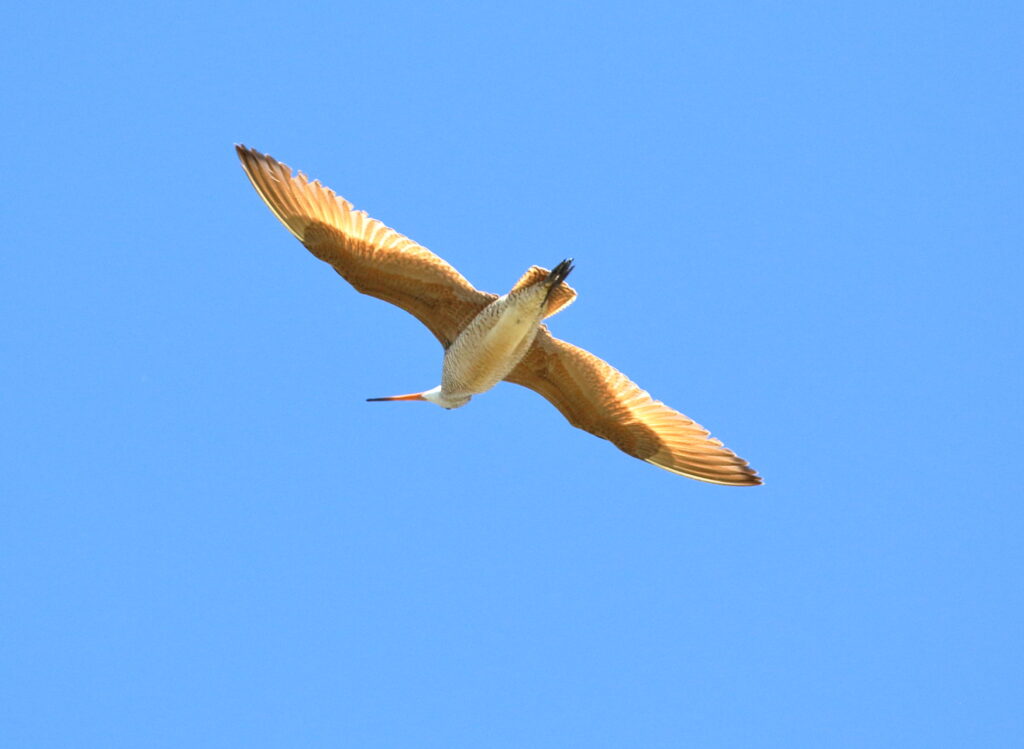
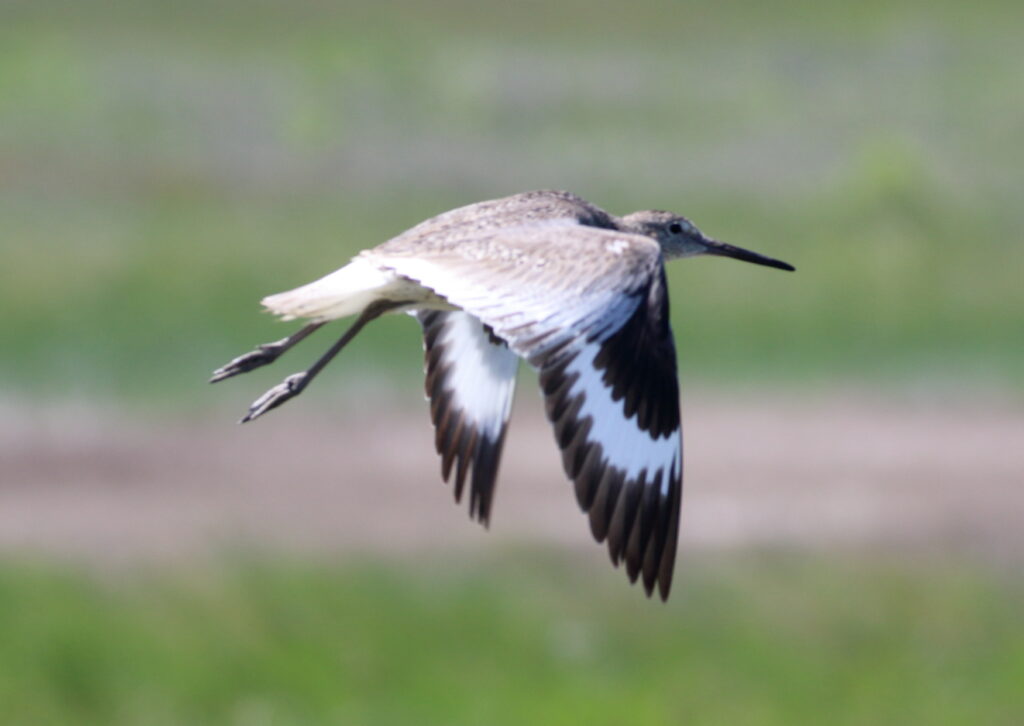
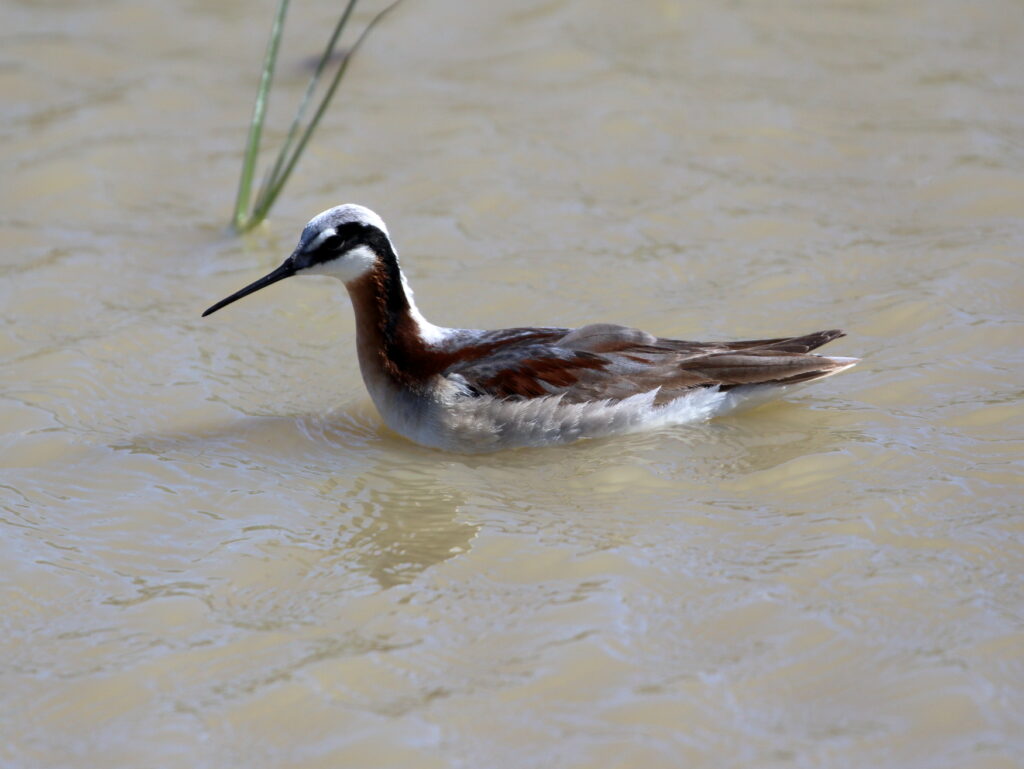
As we continued to explore, we got better looks at all of these birds in various places, along with Wilson’s Phalaropes, Willets, and Marbled Godwits. One bird high on our list was Nelson’s Sparrow, and at a little marshy area right next to the road, Braden was able to hear one, though my crummy hearing once again thwarted me.

A Marbled Godwit checked us out as we were scoping other shorebirds.

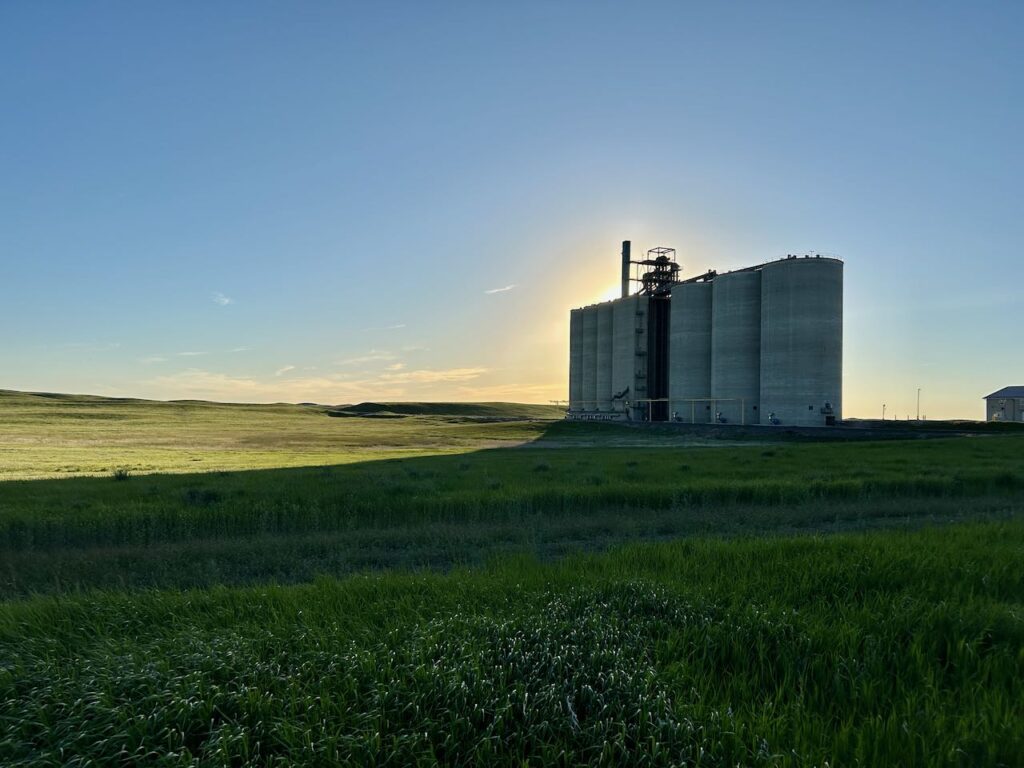
We continued to explore the rest of the day, both driving north and south of town and even making a foray across the border into North Dakota, where we picked up a respectable 23 species in a couple of miles. A wonderful development in Westby is a new AirBnB about fifty yards from the border and I had reserved it for two nights. That evening, I took a stroll through town to see what could be seen. No rare warblers, but I did have a lovely visit with a Brown Thrasher and gobs of American Goldfinches feeding on spilled grain next to the grain elevators looming over the north end of town. When I returned, a Say’s Phoebe was sitting on our house!

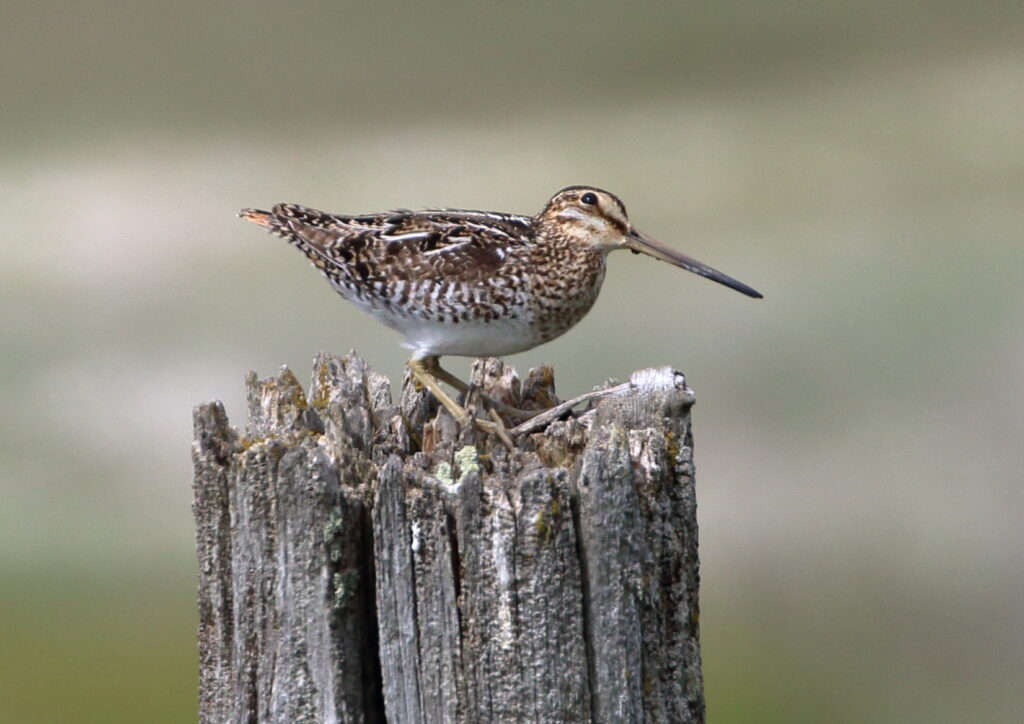
Thanks to our rented house, we hit the streets of Westby early the next morning. Again, no rare songbirds, but we did see a couple of Swainson’s Thrushes, along with Orchard Orioles and Purple Martins as part of our 22-bird list. Once again, our best surprises popped up as we explored surrounding areas. Venturing north we got great, close looks at the shorebirds we’d seen before, with a soundtrack of Wilson’s Snipe and Soras—one right next to the car—filling the air. Braden identified a Ferruginous Hawk flying overhead and we heard two Baird’s Sparrows and even a Sprague’s Pipit! Braden picked up at least four Nelson’s Sparrows and one popped up right next to our car, giving us our best look ever. Range maps don’t even show that Nelson’s reach into Montana, so this is a great place for birders to pick them up for their Montana life lists!

With few people on the roads, this Wilson’s Snipe took time to check out what we were up to.

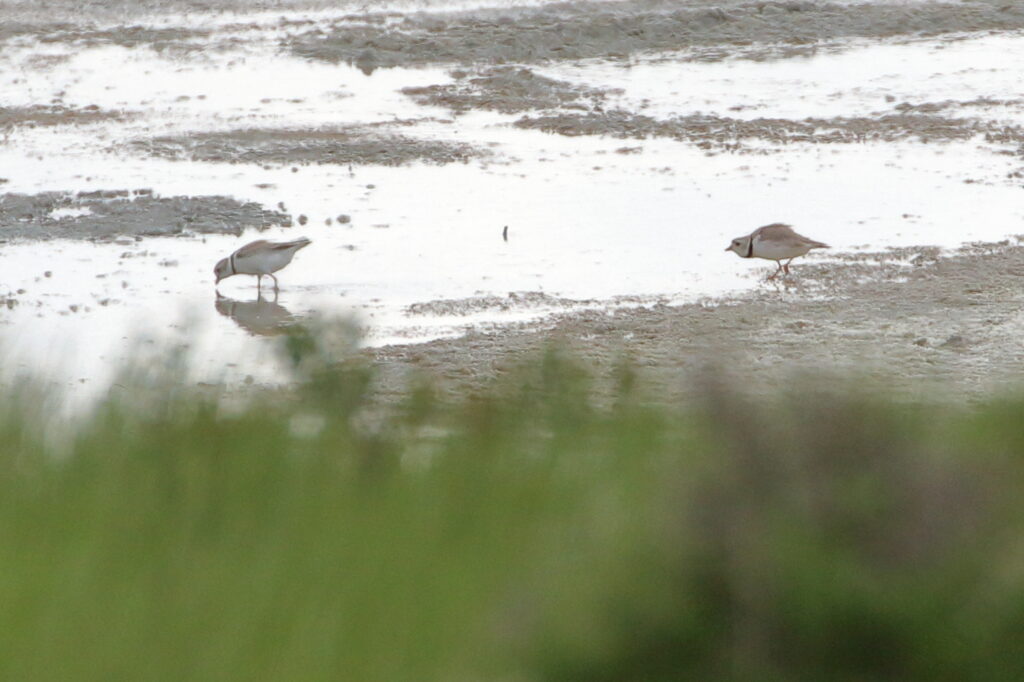
Still, the “catch” of the morning happened as we were skirting Round Lake. Ever since arriving, we had kept our eyes sharp for one particular shorebird. This morning as I drove, Braden suddenly yelled, “Stop!” We quickly got our eyes on it and then set up our spotting scope. It was none other than a Piping Plover! I had seen my Montana lifer PIPL last year with my buddy Scott, but this was Braden’s Montana lifer. Even better, there were two—one stalking another with obviously amorous intentions.

I think that Piping Plover on the left should be looking over its shoulder, don’t you?

North America has three distinct breeding populations of Piping Plovers: one in the Northeast, one in and around the Great Lakes, and one on the northern Great Plains. The world total population may have dropped to as low as 3,000 pairs, but the Great Lakes and Northeast populations have apparently been making a comeback. Montana, is home to a breeding population of perhaps 1-200 pairs of these delightful birds, but the outlook for the northern plains population may not be as rosy as it is for the Northeastern population. Frequent drought (exacerbated by climate change), poor water management practices, pesticides, and an increase of predators make its future dicey. Still, this near-threatened bird is hanging on and our fingers are crossed that some better management practices will also help it increase.

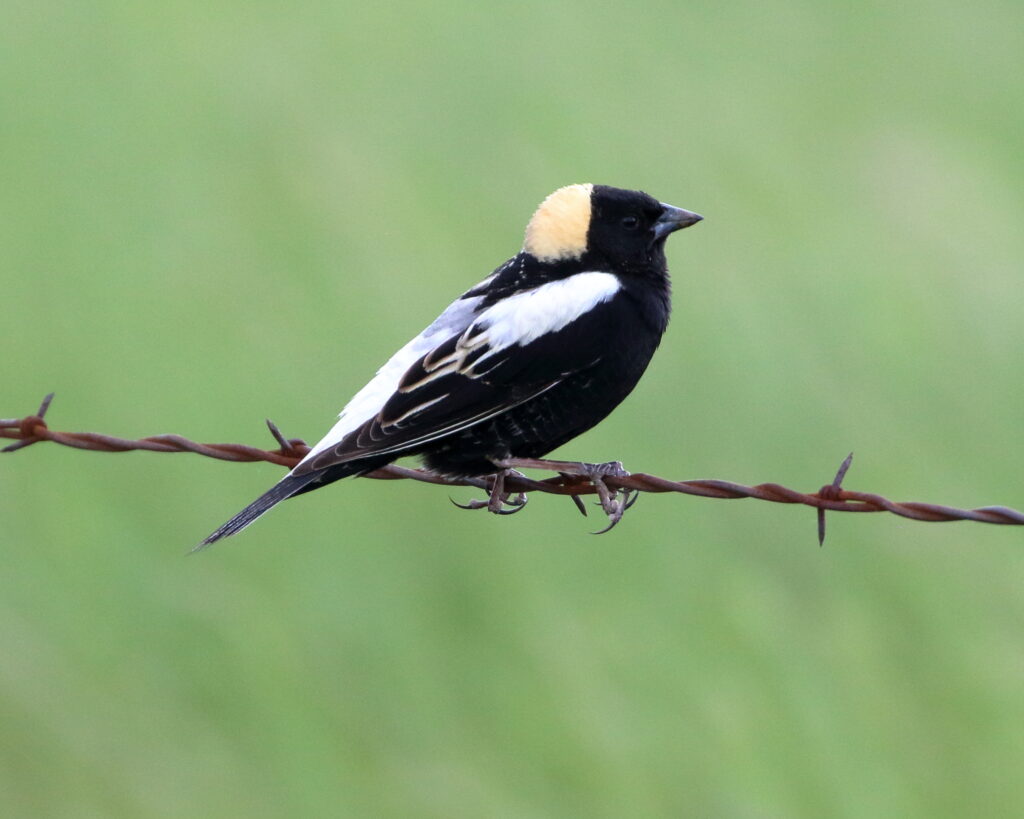
We got an amazing number of great Bobolink photo opportunities on the trip, including this one south of Westby.
This Baird’s Sparrow popped up on the fence while we were scoping a brand new lake south of town.

In the trip’s spirit of birding new places, we decided to head down a new road south of town. We had low expectations, but soon encountered a lake with lush green grasses surrounding it. We got out to scope the lake and discovered at least 250 Sanderlings out on a sand bar. It is while we were scoping that we got our biggest surprises, however. Grassland birds just kept popping up on the barbed wire fence to check us out or perch on plants very close to us. During the next forty or fifty minutes, we got incredible looks at Bobolinks, Baird’s Sparrows, Chestnut-collared Longspurs, Grasshopper Sparrows, Clay-colored Sparrows, Horned Larks, and of course, Savannah and Vesper Sparrows. Every time we looked up, there was another great bird not fifty feet away. It truly was one of the coolest things we’ve ever experienced—and was a great reminder to keep taking the road not birded!

It’s become a tradition to visit this old homestead every time we trek to Westby. Each visit, the old place loses a bit of ground. Soon it will be part of the prairie earth.

Eastern Montana Odyssey 2024: Bowdoin NWR & Fort Peck

Here is Part 2 of Braden’s and my eastern Montana trip report, which began with a wonderful time at the Wings Across the Big Sky birding festival in Helena (see our last post by clicking here). Today’s installment details this year’s visit to one of our favorite birding destinations, Bowdoin National Wildlife Refuge, and then our evening birding and camping at Fort Peck. Enjoy and please feel free to share this post!

After our two days enjoying scintillating field trips and lectures at this year’s Wings Across the Big Sky birding festival in Helena, Braden and I spent two nights at American Prairie’s Antelope Creek Campground. I’d tell you what we were doing there, but for now at least, our lips are sealed. On Tuesday morning, however, we rose early, packed the car and headed toward what has become an annual favorite father-son destination: 15,551-acre Bowdoin National Wildlife Refuge.

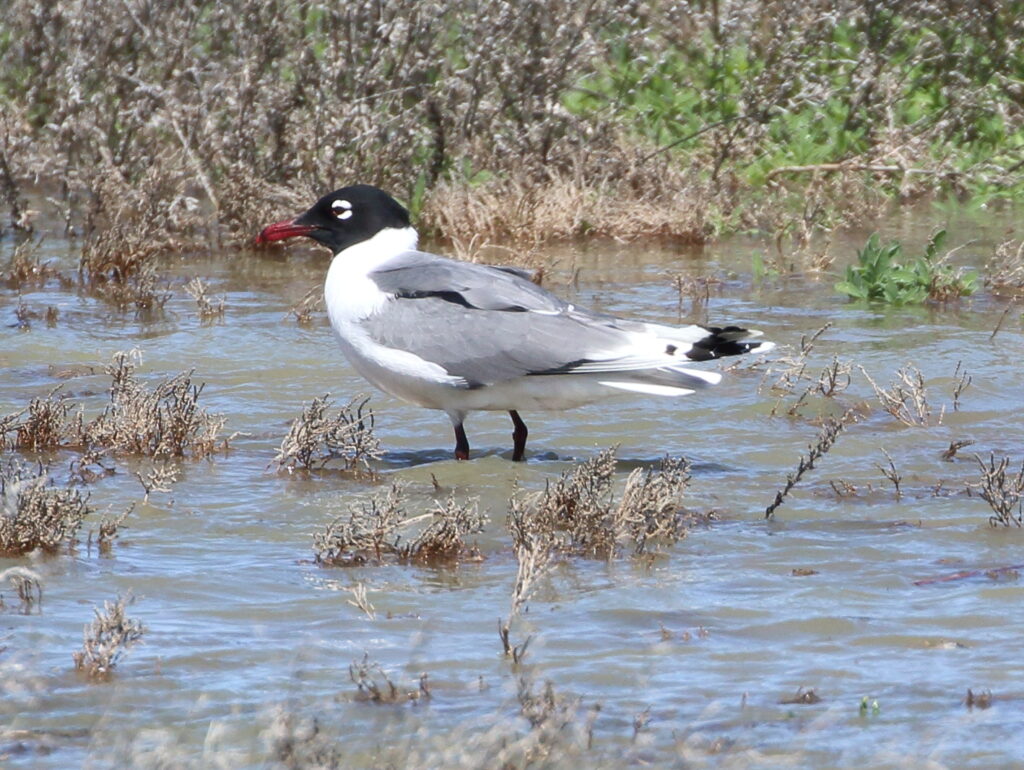
You know you’ve reached eastern Montana when you start seeing Franklin’s Gulls. These gulls were made famous by ZZ Top’s classic hit, “Sharp-Dressed Gulls!”

It had actually been a couple of years since Braden and I visited Bowdoin together, so we especially relished this year’s opportunity. Bowdoin offers a wonderful mix of wetlands and prairie habitat where you can find a terrific diversity of birds. Even better, this year’s water levels showed a significant improvement over last year, when it looked as though the main lake might dry up altogether.

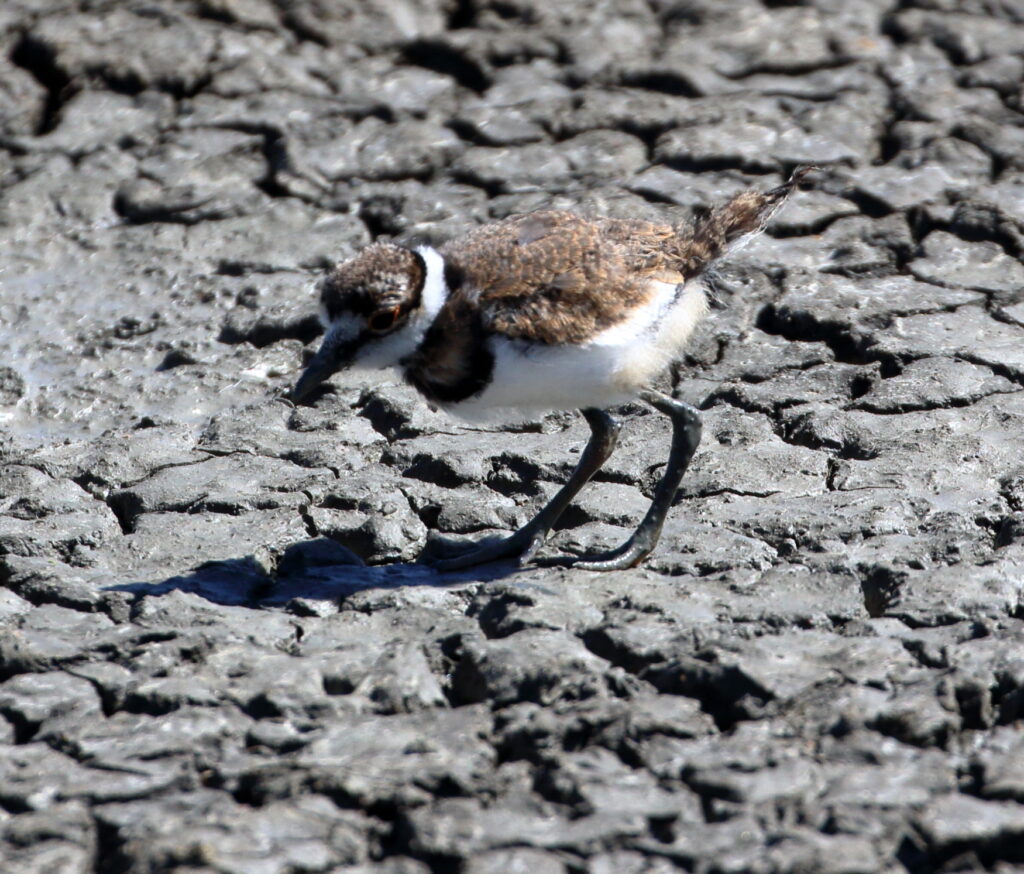
Aaaaaw. Baby Killdeer at Bowdoin!

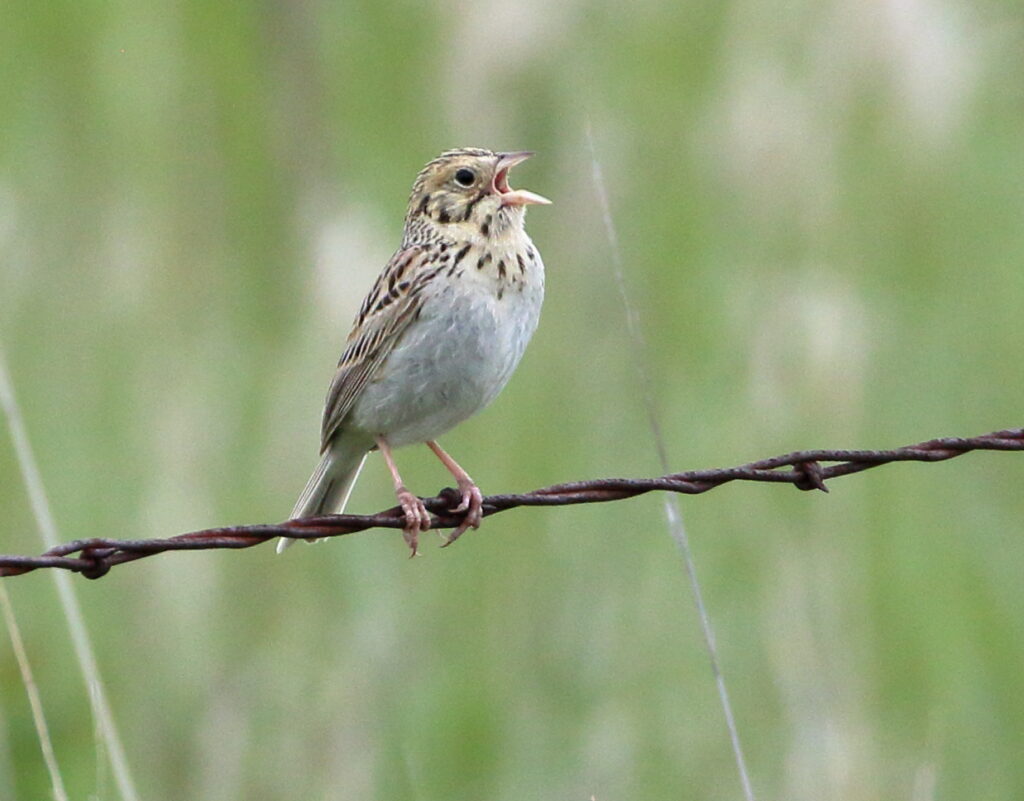
Unfortunately, today, windy conditions proved a challenge, especially in the grassland sections. While usually we can just drive with the windows open, listening for various songs, this year we generally had to keep the windows rolled up to keep from being sand-blasted by wind and dust. The wind also forced the smaller sparrows that we especially sought to sit down in the grass where they were difficult if not impossible to see. Only the intrepid meadowlarks braved the tops of sage plants, being blown back and forth as if they were on a carnival ride.

We saw at least 18 Willets while driving the Bowdoin loop—a record for us there. These birds, like several other shorebirds, breed in the grasslands around the main lake.

Nonetheless, thanks to diligence and Braden’s great ears, we managed to locate at least a few Chestnut-collared Longspurs, Lark Buntings, and Grasshopper, Lark, Clay-colored, Savannah, and Song Sparrows.

We also got great looks at White-faced Ibises, Willets, American Avocets, and other “usual suspects” in the aquatic realm. It’s always reassuring to see the hundreds of white pelicans nesting out on the main island.

We never get tired of seeing Wilson’s Phalaropes, which breed at Bowdoin NWR in good numbers.

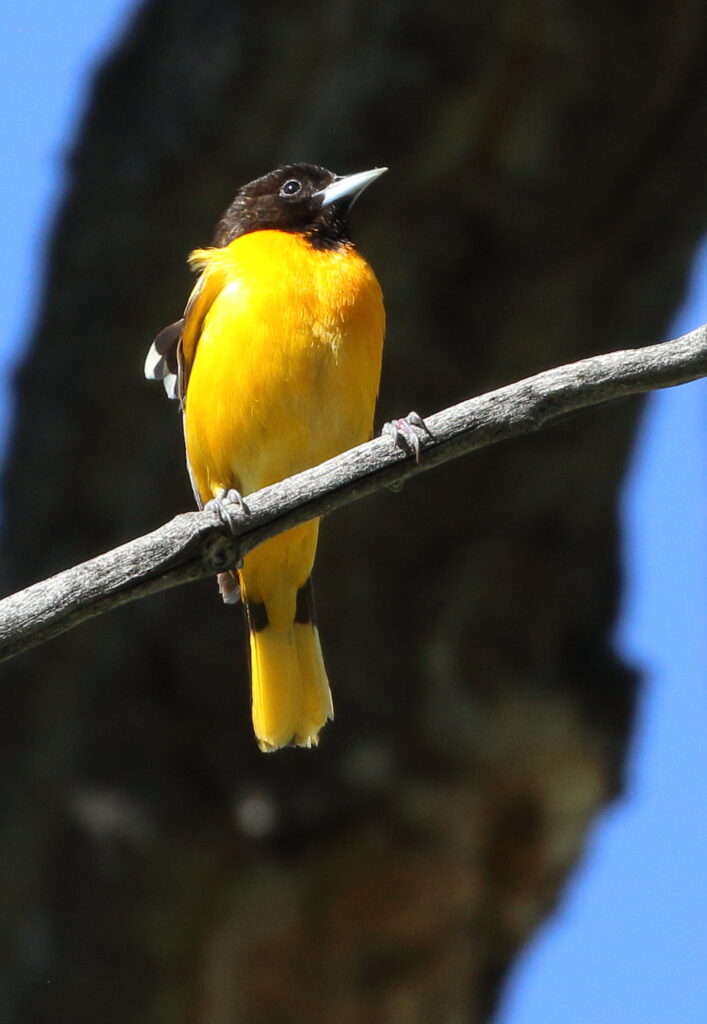
One bird we especially missed was a Baltimore Oriole, which we usually see by stopping at the refuge visitor center before driving the big loop. After we finished the loop, however, we decided to give the BAORs one more shot and sat in our car munching our turkey-and-cheese sandwiches. Sure enough, after ten minutes, a bright orange bird with a black head flew across our vision! Sometimes, you just gotta be patient. All told, we observed 76 species at Bowdoin. But our day had not yet finished.
Our Bowdoin Bird List.

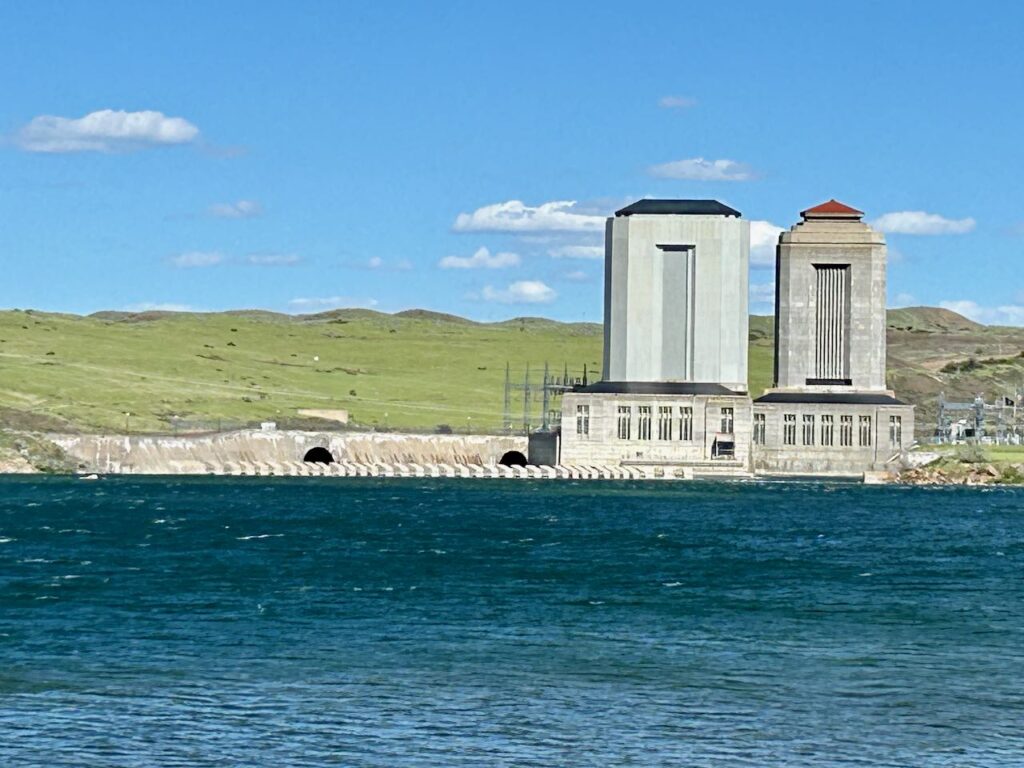
I’ve always felt captivated by these giant Art Deco power station towers at Fort Peck Dam. By camping here, we discovered that the towers are brilliantly lit up at night—a strange effect so far from “civilization.”

After Bowdoin, we drove to Fort Peck to spend the night camping below the dam. I’ve always been fascinated with the story of the Fort Peck dam and how, out in the middle of nowhere, a medium-sized city sprang up to build what, at the time, was by far the largest dam in the world. Today, it is still impressive, stretching more than four miles long, and “looked over” by two large (and to me beautiful) Art Deco power plant towers.
Who said Fort Peck doesn’t have fine dining?

Braden and I found a cozy campsite, set up our tents, and set out to explore the extensive campground. Our top target here were Field Sparrows. We didn’t see any. But we did get an unexpected triple shot of orioles: Baltimore, Bullock’s, and Orchard, all of which dropped by our campsite at least once.

Fort Peck gave us by far our most cooperative experience ever with Baltimore Orioles. This male was part of at least two breeding pairs we found in the campground.

We also got great looks at another Montana favorite, Brown Thrashers, the first of quite a few we would see on our trip.

One of our favorite Montana birds, Brown Thrashers would put in several appearances on our trip, including right in our Fort Peck campsite!

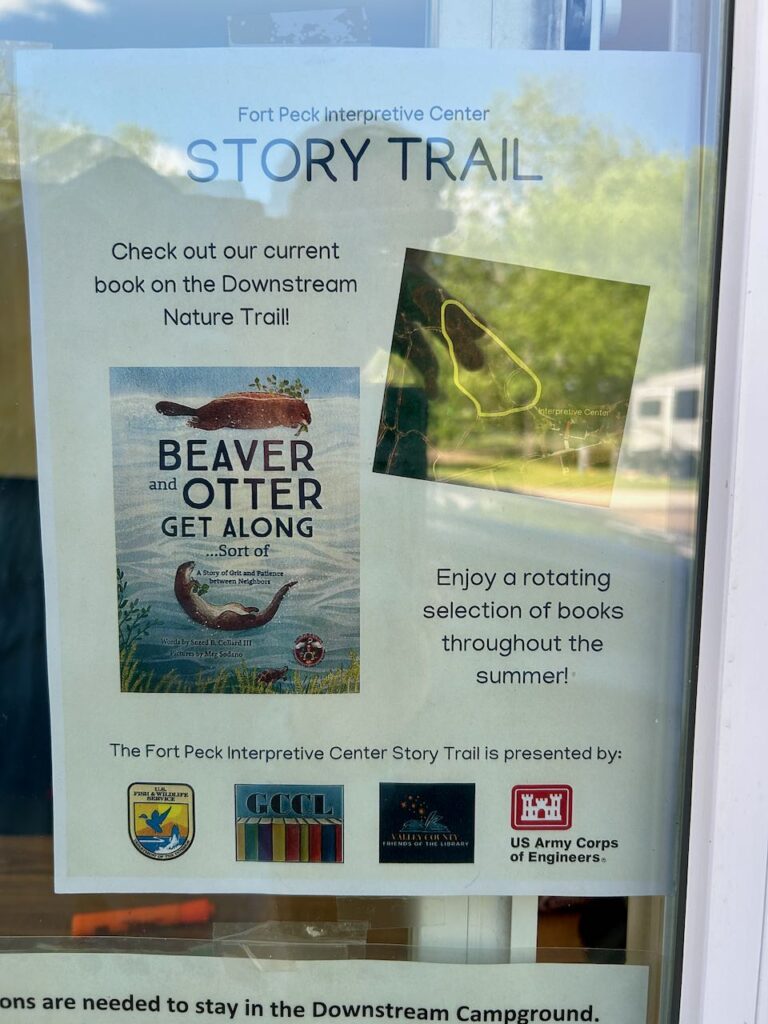
We generally try to avoid staying at large campgrounds, which can be noisy and sterile, but I was glad we gave Fort Peck a try. Even though my sleeping pad kept deflating through the night, the campground was a bit out of the wind, and offered up birds aplenty! Besides, how could I dislike a place that featured my book Beaver & Otter Get Along . . . Sort Of on its summer reading program? Tomorrow, we would try more prairie birding and hope that the wind would die down . . . but would it? Stay tuned for our next report!

As we were lining up our campsite, Braden suddenly exclaimed, “Oh my god! It’s your book!” Helped make my day! Thank you Fort Peck!