Category Archives: Songbirds

Least Terns and Black-and-White Warblers: Birding Medicine Lake to Makoshika

Welcome to the fifth installment of Braden’s and my remarkable 2024 Eastern Montana Odyssey. With this episode, and more than 1,000 miles under our belts, we round the halfway mark of our trip, approaching brand-new birding territory for us. Before that, however, we had some truly remarkable birding at past favorite birding sites. If you are enjoying these episodes, please share them with your birding friends and consider supporting our efforts by buying a *NEW* copy or two of one of Sneed’s books on the right.

After two fascinating, fulfilling days in Westby (see our last post), Braden and I were primed to tackle the next stage of our Eastern Montana safari. We’d already had some amazingly packed grassland birding experiences, so I have to admit I wasn’t as excited about Medicine Lake National Wildlife Refuge as I should have been. Part of that may be because last year, my pal Scott and I were turned back from the refuge by thick, slippery mud (aka “gumbo”). In any case, my bad attitude proved to be way off the mark, as Medicine Lake delivered one of our best grassland birding days ever.

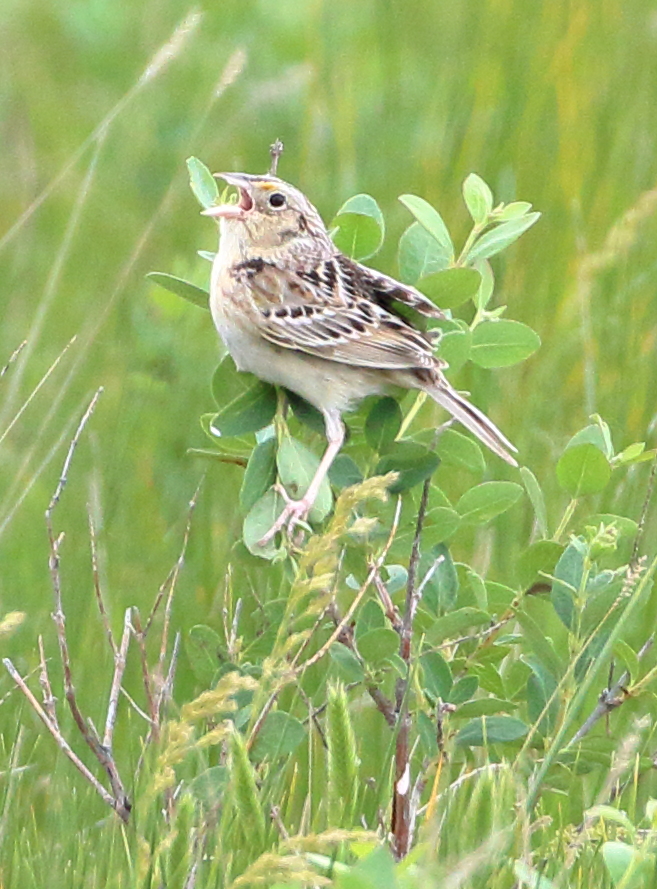
At Medicine Lake, Braden counted 67, say it loud, SIXTY-SEVEN Grasshopper Sparrows!

Our visit began promisingly when Braden IDed an Alder Flycatcher by its distinctive “free beer” call right near the (closed) visitor’s center. What unfolded afterward was nothing less than a full-on showcase of grassland birds. Over the next nine miles, Braden recorded approximately 75 Chestnut-collared Longspurs, 67 Grasshopper Sparrows, 9 Clay-colored Sparrows, 6 Baird’s Sparrows and much, much more. He detected many of these by song, of course, but longspurs and sparrows were literally flying up everywhere around our car in some sections. As Braden noted in our eBird list: “Ridiculous.”

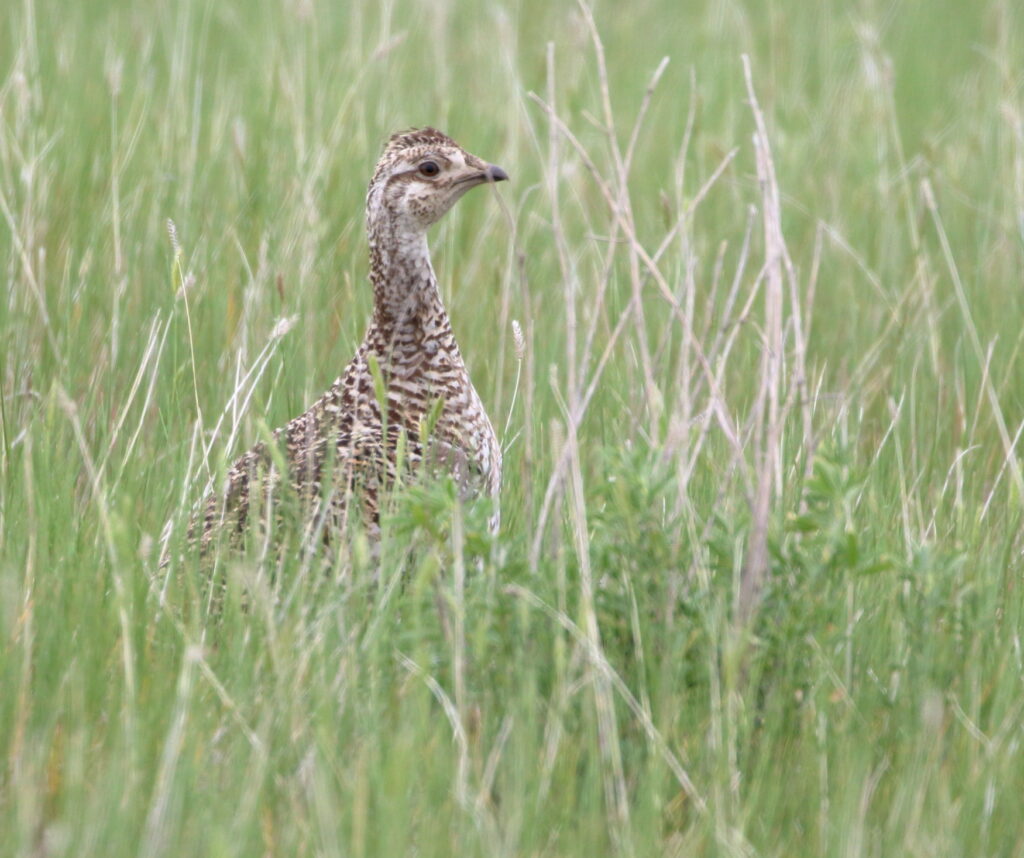
One of our better looks at Sharp-tailed Grouse in recent years was one of many delights at Medicine Lake NWR.

Not to be outdone, impressive numbers of waterfowl and game birds, including three Sharp-tailed Grouse, clamored to get on our eBird list. Surprisingly, so did a number of shorebirds. Where the road threaded two ponds, four White-rumped Sandpipers landed, giving us our closest looks of the entire trip. Here, we also saw eleven birds we desperately wanted to find—Red-necked Phalaropes. It’s lucky we did, too, since they would be the only RNPHs of our expedition.

After spending days poring through flocks of Wilson’s Phalaropes, we finally located a group of 11 Red-necked Phalaropes at Medicine Lake. Even better, they were in their uber-handsome breeding plumages.

Our Medicine Lake checklist: https://ebird.org/checklist/S180177051

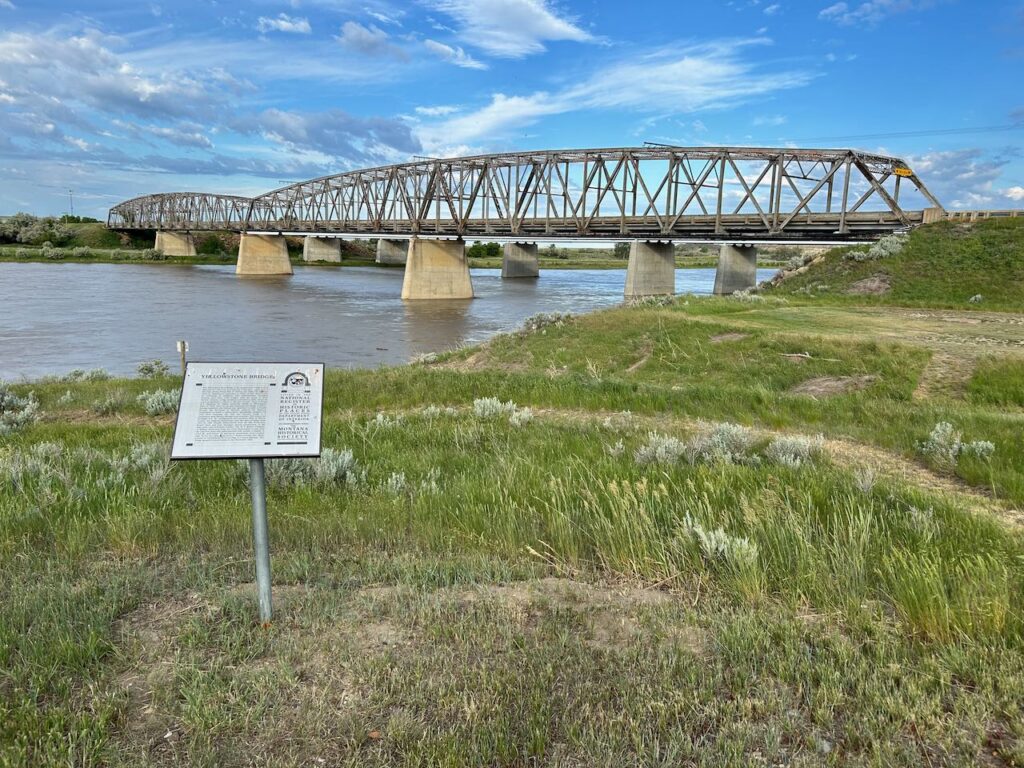
On our way down to Glendive, we stopped at Culbertson Bridge for a modest 21 species, and then turned right down a dirt road. “What are we doing here?” I asked Braden. “There are supposed to be Least Terns nesting on sandbars in the Missouri River,” he told me. Okay, I admit it, Least Terns were totally off my radar and, honestly, I’m not sure I realized they even nested in Montana. Sure enough, they do. There are five subspecies of Least Terns, and Montana’s belong to the “Interior” group. Unfortunately, this group is federally endangered due to its small population, habitat loss, and disturbance by recreational activities. Only about fifty are thought to live in Montana.

Several miles down the road, I pulled over at a spot overlooking several large sand islands in the river. We scanned them with our binoculars. Zippo. At that point, I was ready to move on, but Braden decided to put in the extra effort of setting up our spotting scope, even though he also thought we were out of luck.

“I see them!” he suddenly shouted.

A distant view of some of Montana’s rarest birds, Least Terns. In the nation’s interior, these birds nest on sand islands in the middle of large rivers.

Indeed, almost impossible to see with the naked eye or through binoculars, two were sitting there blending in perfectly with the sand. As we watched, we saw two more for a total of four—probably the rarest birds we would see on the entire trip! More excitement was yet to come.

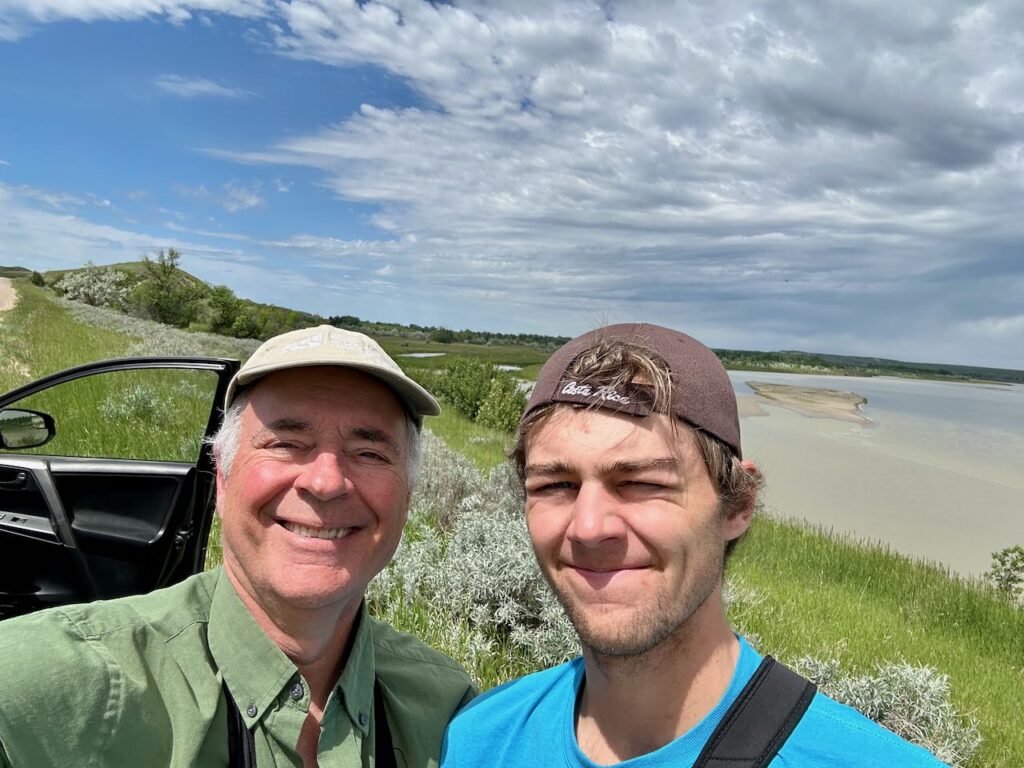
We were still squinting when we took this photo—after squinting at the sand island in the background to see four of Montana’s handful of Least Terns. Squint and you might be able to see them, too!

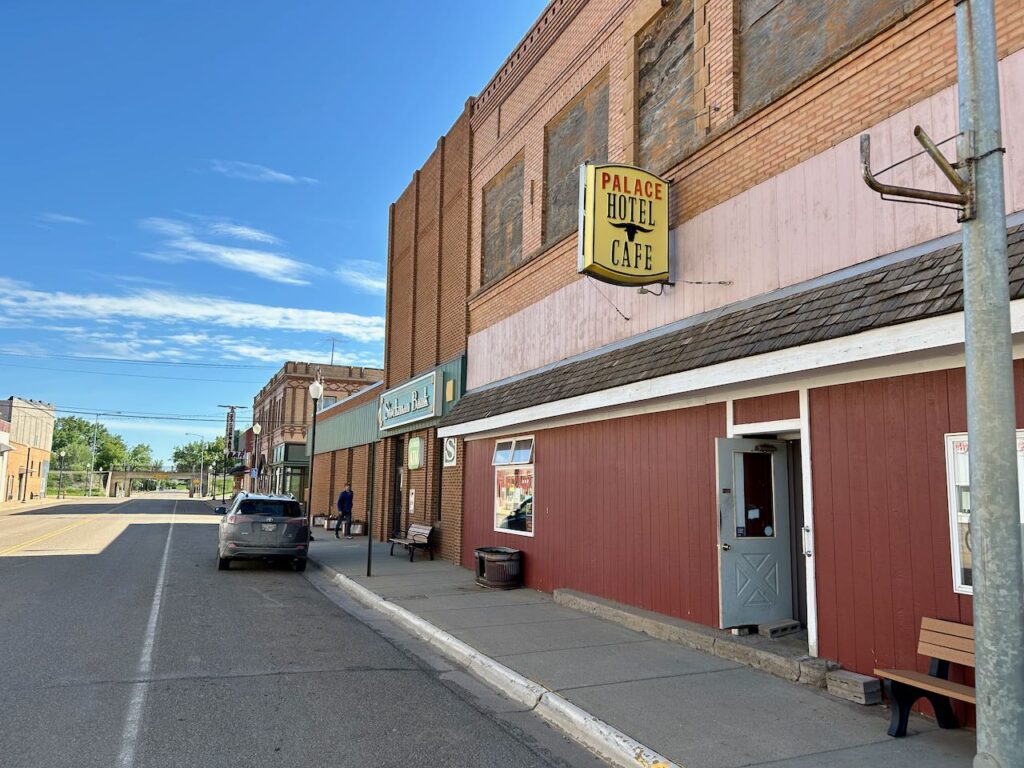
After a great late breakfast-for-lunch at Sunny’s diner in Sidney, we made it to Glendive, where we checked into a motel. After resting up a bit, we embarked on our final bird outing of this already-packed day—to Makoshika State Park.

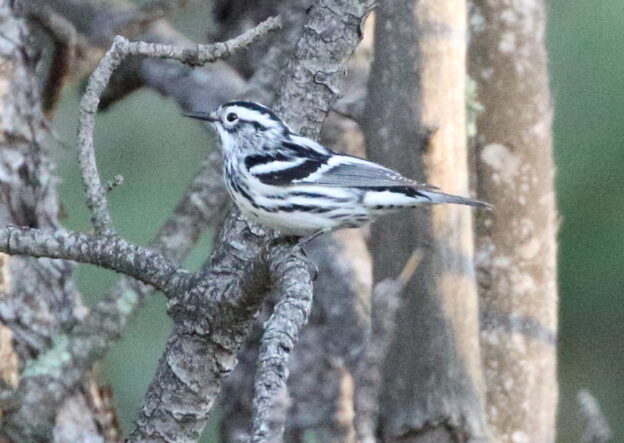
Scott and I had a great time in Makoshika last year watching Field Sparrows and Rock Wrens, and as we entered the park, Braden and I also picked up both species. We had another agenda, however: finding Black-and-White Warblers. Predominantly an Eastern species, these handsome little birds are known to breed in Montana, but the only other one we’d ever seen was right here in Makoshika on a trip with Nick Ramsey in 2017. Dutifully, Braden and I hiked the same trail to see if we could find another one.

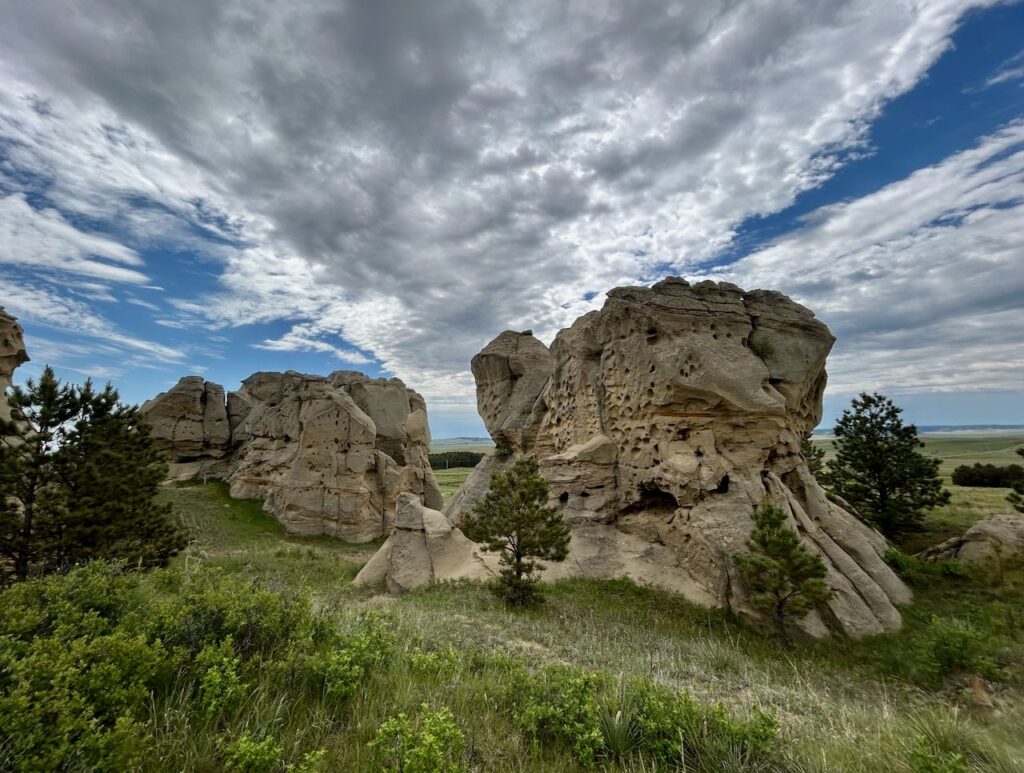
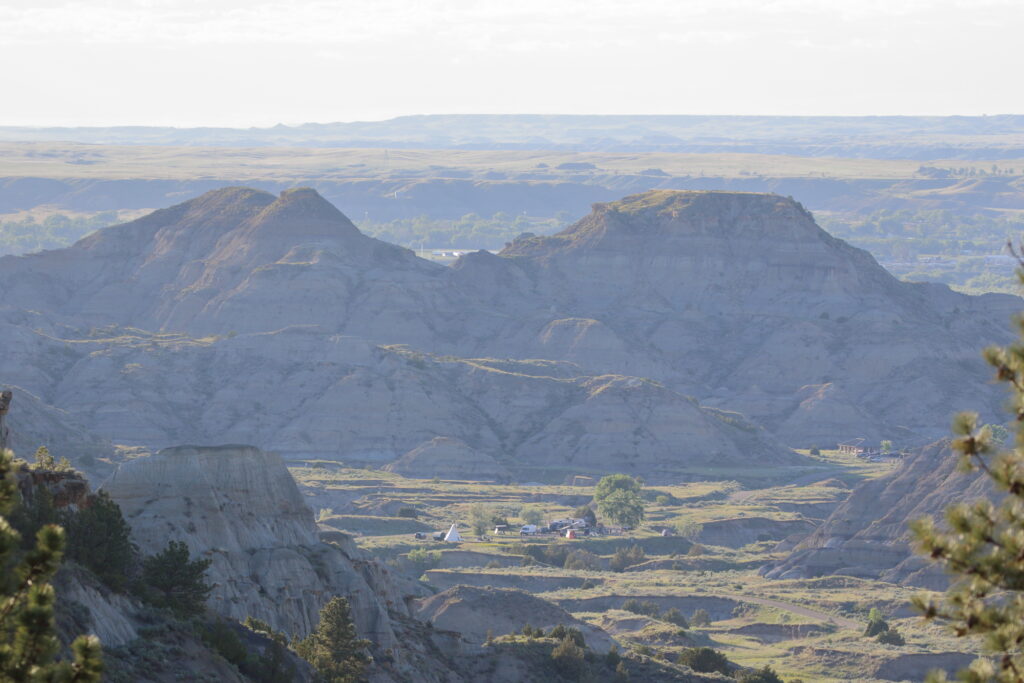
Even without birds, the badlands scenery at Makoshika State Park is some of Montana’s most dramatic.

Nope. Worse, the hike wore me out after our extremely long day. Still, we had one more place to check—a campground way up on top of the hills with spectacular views of the surrounding badlands. We parked, got out, and began looking around. As usual, I was fairly skeptical of finding one, but then Braden’s ears perked up: “I think I hear one.”

We scrambled down a fairly steep slope until Braden stopped and looked up into a tree. “There it is!”

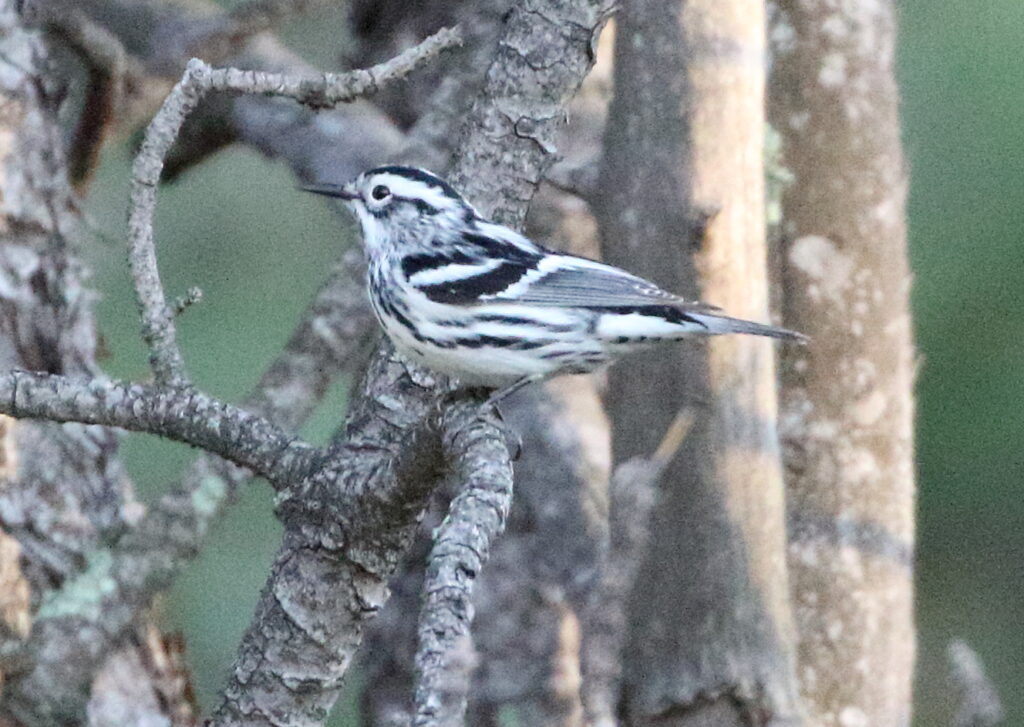
Elated, we both quickly got our binoculars on it, and I even took some crummy photos. After that, we just slowly followed this amazing, improbable little bird as it searched for insects on one tree, then another. By this time, the sun had started to sink low in the West, and standing there watching this bird created a sublime experience—one of those memorable moments that makes birding the best activity on earth.

Finding this Black-and-White Warbler at Makoshika was a powerful testament to perseverance in searching for uncommon birds. Much like nuthatches, these birds often hang upside down or point downward as they rapidly search tree trunks and branches for unsuspecting insects.

Eastern Montana Odyssey 2024: Bowdoin NWR & Fort Peck

Here is Part 2 of Braden’s and my eastern Montana trip report, which began with a wonderful time at the Wings Across the Big Sky birding festival in Helena (see our last post by clicking here). Today’s installment details this year’s visit to one of our favorite birding destinations, Bowdoin National Wildlife Refuge, and then our evening birding and camping at Fort Peck. Enjoy and please feel free to share this post!

After our two days enjoying scintillating field trips and lectures at this year’s Wings Across the Big Sky birding festival in Helena, Braden and I spent two nights at American Prairie’s Antelope Creek Campground. I’d tell you what we were doing there, but for now at least, our lips are sealed. On Tuesday morning, however, we rose early, packed the car and headed toward what has become an annual favorite father-son destination: 15,551-acre Bowdoin National Wildlife Refuge.

You know you’ve reached eastern Montana when you start seeing Franklin’s Gulls. These gulls were made famous by ZZ Top’s classic hit, “Sharp-Dressed Gulls!”

It had actually been a couple of years since Braden and I visited Bowdoin together, so we especially relished this year’s opportunity. Bowdoin offers a wonderful mix of wetlands and prairie habitat where you can find a terrific diversity of birds. Even better, this year’s water levels showed a significant improvement over last year, when it looked as though the main lake might dry up altogether.

Aaaaaw. Baby Killdeer at Bowdoin!

Unfortunately, today, windy conditions proved a challenge, especially in the grassland sections. While usually we can just drive with the windows open, listening for various songs, this year we generally had to keep the windows rolled up to keep from being sand-blasted by wind and dust. The wind also forced the smaller sparrows that we especially sought to sit down in the grass where they were difficult if not impossible to see. Only the intrepid meadowlarks braved the tops of sage plants, being blown back and forth as if they were on a carnival ride.

We saw at least 18 Willets while driving the Bowdoin loop—a record for us there. These birds, like several other shorebirds, breed in the grasslands around the main lake.

Nonetheless, thanks to diligence and Braden’s great ears, we managed to locate at least a few Chestnut-collared Longspurs, Lark Buntings, and Grasshopper, Lark, Clay-colored, Savannah, and Song Sparrows.

We also got great looks at White-faced Ibises, Willets, American Avocets, and other “usual suspects” in the aquatic realm. It’s always reassuring to see the hundreds of white pelicans nesting out on the main island.

We never get tired of seeing Wilson’s Phalaropes, which breed at Bowdoin NWR in good numbers.

One bird we especially missed was a Baltimore Oriole, which we usually see by stopping at the refuge visitor center before driving the big loop. After we finished the loop, however, we decided to give the BAORs one more shot and sat in our car munching our turkey-and-cheese sandwiches. Sure enough, after ten minutes, a bright orange bird with a black head flew across our vision! Sometimes, you just gotta be patient. All told, we observed 76 species at Bowdoin. But our day had not yet finished.

Our Bowdoin Bird List.

I’ve always felt captivated by these giant Art Deco power station towers at Fort Peck Dam. By camping here, we discovered that the towers are brilliantly lit up at night—a strange effect so far from “civilization.”

After Bowdoin, we drove to Fort Peck to spend the night camping below the dam. I’ve always been fascinated with the story of the Fort Peck dam and how, out in the middle of nowhere, a medium-sized city sprang up to build what, at the time, was by far the largest dam in the world. Today, it is still impressive, stretching more than four miles long, and “looked over” by two large (and to me beautiful) Art Deco power plant towers.

Who said Fort Peck doesn’t have fine dining?

Braden and I found a cozy campsite, set up our tents, and set out to explore the extensive campground. Our top target here were Field Sparrows. We didn’t see any. But we did get an unexpected triple shot of orioles: Baltimore, Bullock’s, and Orchard, all of which dropped by our campsite at least once.

Fort Peck gave us by far our most cooperative experience ever with Baltimore Orioles. This male was part of at least two breeding pairs we found in the campground.

We also got great looks at another Montana favorite, Brown Thrashers, the first of quite a few we would see on our trip.

One of our favorite Montana birds, Brown Thrashers would put in several appearances on our trip, including right in our Fort Peck campsite!

We generally try to avoid staying at large campgrounds, which can be noisy and sterile, but I was glad we gave Fort Peck a try. Even though my sleeping pad kept deflating through the night, the campground was a bit out of the wind, and offered up birds aplenty! Besides, how could I dislike a place that featured my book Beaver & Otter Get Along . . . Sort Of on its summer reading program? Tomorrow, we would try more prairie birding and hope that the wind would die down . . . but would it? Stay tuned for our next report!

As we were lining up our campsite, Braden suddenly exclaimed, “Oh my god! It’s your book!” Helped make my day! Thank you Fort Peck!

A Rare Warbler in Western Montana—and our Wings Across the Big Sky Festival Report 2024

In case you missed our last post, Sneed’s new book, Like No Other: Earth’s Coolest One-of-a-Kind Creatures, is now out just in time to enhance summer science education. To order, click on the book jacket in the right column!

Have you ever contemplated attending a birding festival? Braden and I have attended festivals in Monterey Bay, San Diego, and Rockport-Fulton near Corpus Cristi. All were terrific. I have to say, though, that our favorite is right here in Montana. After last year’s Wings Across the Big Sky birding festival in Great Falls, I was skeptical that this year’s fest in Helena could match it. How wrong I was! This year’s festival would not only prove wonderful in itself, but provide the perfect launch pad for Braden’s and my 13-day birding safari to eastern Montana. In fact, even before we reached Helena, Braden made what may be his greatest Montana bird discovery yet.

We left Missoula early on Friday, May 31st. Our first destination? Browns Lake, site of many past wonderful birding experiences—but nothing like we would have today. After the turnoff to Browns Lake, we always stop at a little riparian area and, as usual, got out to listen and look. Right away, we heard Dusky Flycatchers, Warbling Vireos, and Yellow and Yellow-rumped Warblers. Then, Braden heard an American Redstart and began “pishing” it in so that we could catch a look. I had my camera focused on a Yellow Warbler when Braden urgently hissed, “Daddy! Get over here now!” I rushed over to find him training his binoculars on a mind-blowing find: a Bay-breasted Warbler!

Perhaps Braden’s best Montana bird find ever, this glorious male Bay-breasted Warbler gave us great looks despite my horrible photos. This bird made the Montana Rare Bird Alert.

For those of you who don’t know it, Bay-breasted Warblers breed mainly in spruce forests of northern Canada across to the far northeast of the U.S. During migration, they almost never pass through eastern Montana, not to mention western Montana. True, I had seen a female in Missoula several years ago, but the gorgeous male in front of us shouldn’t have been anywhere within 500 miles of where we were standing—and, accordingly, made Montana’s Rare Bird Alert.

With that auspicious beginning, we happily proceeded to Carroll College in Helena for the Wings Across the Big Sky opening banquet. That featured an excellent talk by Tiffany Kersten, who set the Lower 48 Big Year record in 2021, and spoke eloquently about the challenges of birding as a solo female. Tiffany now is the proud owner of NatureNinja Birding Tours, and I can only guess that her guiding and tour experiences are not to be missed.

Usually uncooperative, Yellow Warblers gave us great looks at Vigilante Camprground near Helena.

Saturday morning, Braden and I convened at the festival breakfast for our first field trip, led by the highly-skilled veteran Montana birder, Sharon Dewart-Hansen. We were excited about the field trips we had signed up for because they would take us to places we had never before birded, and Sharon led us to Vigilante Campground northeast of Helena. After driving up a spectacular canyon, about 15 of us piled out to bird. Immediately, a Broad-tailed Hummingbird loudly buzzed us—a Montana Lifer for both Braden and me. Walking the campground, we were regaled with the songs of Ovenbirds, MacGillivray’s Warblers, Hammond’s Flycatchers, Veerys, and always my personal favorites, Lincoln’s Sparrows. A Ruffed Grouse drummed cooperatively several times.

Have I posted more Lincoln’s Sparrows than any other bird on FatherSonBirding? Perhaps, but who can blame me? I just love these guys!

After scouring the campground, we headed up canyon on foot and were treated to Violet-green Swallows and White-throated Swifts. On the way to the Vesta Cerra Ranch, whose owners generously allowed us to stop to eat lunch and admire their hummingbird feeders, we stopped for better looks at Broad-tailed Hummingbirds!

This Broad-tailed Hummingbird was a Montana Lifer for both Braden and me. These birds are quite rare and localized in the state, with the heart of their breeding range south of Montana.

Our Vigilante Campground List.

After some fascinating afternoon seminars, Saturday night’s dinner featured a wonderful report on Montana Audubon’s conservation activities by Executive Director Larry Berrin. These included a program I am particularly excited about, the Audubon Conservation Ranching program, which works with ranchers to maintain vital grassland bird habitat. Most touching was the presentation of Montana Audubon’s annual conservation award to the sixteen pioneering young people who successfully took the State of Montana to court for not taking sufficient actions to protect us all from climate change. Truly inspirational.

After packing up our car early Sunday morning, we headed out for our second field trip, guided by expert Montana birders Hilary Turner and Andrew Guttenberg. Once again, we were treated to fabulous birding through brand new territory that featured awesome grassland, riparian, and canyon birding. The highlight was a visit to the private Phantom Springs Ranch, where we recorded 45 species, including wonderful looks at displaying Bobolinks. Here, two Sandhill Cranes tried to join our group, but we had to politely inform them that our field trip was full.

These two Sandhill Cranes tried to join our group at Phantom Springs Ranch, but we had to politely turn them away.

After birding several other wonderful spots northwest of Helena, Braden and I sadly said goodbye to our intrepid birding companions. That sadness quickly turned to excitement, however, as we steered north on the next stage of what would become a 2,500-mile birding extravaganza . . .

Led by trip leaders, field biologist Hilary Turner (far left) and Andrew Guttenberg (third from left), our group enjoyed superlative birding in places Braden (second from left) and I had never before explored.

Our Phantom Springs Ranch List.

Note: Next year’s Wings Across the Big Sky festival will take place right in our hometown of Missoula. I hope we see you there!

Birding Ohau: A Hawai’i Report from Roger Kohn

Following Memorial Day, it is fitting that FSB presents a wonderful guest birding post about Hawai’i by Roger Kohn. For many Americans, World War II began in Hawai’i and left few families untouched by the experience. Roger’s dad served in the Navy during the war, and both of my grandfathers (Braden’s great-grandfathers) served in the Pacific. Meanwhile at home, my grandmother and great aunt worked in the huge Pratt & Whitney aircraft engine plant in Kansas City. As we honor all who served, I can’t help wonder how astonished our veterans would be to see peacetime Hawai’i today—a peace won by their commitment, intelligence, and sacrifice.

“I’m just going out there to hang out with my brothers, sip a few local beers, and eat good seafood”, I told Sneed in a February phone call. “Of course I’ll bird some, but it’s not really a birding trip.” I had made plans for what I called The Brother Summit. My California brother and I would go to Honolulu in April and visit our other brother, a Hawai’i resident. “Every trip is a birding trip,” Sneed quipped. I immediately knew he was right.

Our Special Hawai’i Correspondent, Roger Kohn, celebrates a big birding score at a viewpoint on the descent from the Koʻolau mountains.

Although I wanted to see as many birds as possible, I faced some built-in barriers. My brothers are not birders and I would not have a car, so I would have to find creative ways to get to some good birding hotspots. One way was to book a tour with a bird guide. I knew this was my only chance to see two Oahu endemic species (found nowhere else in the world, including other Hawaiian Islands): the Oahu Amakihi and the Oahu Elepaio.

On the first morning of the trip, my guide and I ascended the Koʻolau mountains that tower above Honolulu. Our first stop? A roadside spot for seeing the Oahu Amakihi, a bright yellow honeycreeper and our first Oahu endemic target. As we searched for the Amakihi, we picked up two dove species (Spotted and Zebra, both very common), Red-vented Bulbuls, the omnipresent Red-crested Cardinals and Rose-ringed Parakeets (an invasive species considered a pest in Hawaii due to its impacts on agriculture, but I must confess, fun to see). I also saw my first Warbling White-eye of the trip, a Lifer for me. (For some fun perspective on this and other widely-introduced species, also Sneed’s Japan posts such as “Birding Japan: Tokyo, Part I” and Braden’s and Sneed’s post, “Layover Birding in Amsterdam.”)

I saw this Warbling White-eye near the pool at my brother’s condo tower.

After a while, the guide spotted our target bird feeding in a ginger plant at the edge of the road, and we enjoyed good looks. The Oahu Amikihi is a beautiful bird, and the first honeycreeper species I’ve ever seen. The species is designated “near threatened” in eBird, so I felt very fortunate to see it. With this success under our belts, we headed down from the mountains, pausing at a viewpoint to take in epic views of Honolulu, with its skyscrapers and Diamond Head (the volcanic feature that looms over the city), backed by the deep blue waters of the Pacific.

I loved seeing an Oahu Amakihi, a honeycreeper found on Oahu and nowhere else.

Our second stop was a forest trail with the goal of locating the Oahu Elepaio. This proved difficult, and at one point we had been trying for at least an hour and half without success. Finally, as we made our way back to the trailhead, the guide spotted two or three individuals in bushes near the trail! We did not have good looks at the birds, which moved rapidly and offered us only brief, very filtered views as they flitted among the bushes. This flycatcher species is not much to look at, brown on top and white-ish underneath. But this Oahu endemic is listed as “vulnerable” in eBird, and once again I was grateful for the chance to see a rare Hawai’ian species.

A gorgeous Red-billed Leiothrix allowed me a few good looks in the Makiki Forest Recreation Area. Even though introduced species such as this have had direct and indirect impacts on native Hawai’ian animals and ecosystems, they do offer an unusual opportunity to observe and learn birds from other parts of the world.

The next day, I got my first good looks at a Pacific Golden Plover on somebody’s front lawn. In breeding plumage, this plover species is quite striking, with a black belly and face, a thick, clean white stripe down the side of the neck, and brown, white, and shiny gold patches on the back. I would subsequently see this species all over town in any available stretch of green space, from small lawns to big city parks. Their migration to Alaska loomed, so my April visit proved ideal.

Resplendent Pacific Golden Plovers were a common sight in any available green space in Honolulu as they prepared to migrate to Alaska.

Fast-forward a couple of days, and I was thrilled to get a chance to score some seabird Lifers. I had a big gap in my life list, with no shearwater, tropicbird, noddy, or booby species. However, during my pre-trip study, I came across a hotspot where many of these species could potentially be seen: the Japanese Fishing Shrine, on the southeastern coast of Oahu. This hotspot is literally just a shrine on a hunk of lava rock that juts out into the sea. There is nowhere to walk, so whatever birds I would see would have to come to me. One species that I particularly wanted to find was the Red-tailed Tropicbird, an elegant white seabird with a red bill and long red tail streamers. Not long after I arrived, I got my target, as four or five Red-tailed Tropicbirds traced large circles in the sky. At first, they were pretty far away, but as time went on their flight paths kept coming closer and closer to me and I was able to see them up close and capture great photos. A Lifer, and a spectacular one at that! In between tropicbird sightings, I scanned for other species and managed to pick up a pair of Sooty Terns, another Lifer, flying low over the ocean in the distance. Rendezvousing with my brothers, we headed to Kona Brewing, where they helped me celebrate my seabird treasure with a couple of rounds of delicious seasonal beers at the bar, with sea breezes whooshing around us in a pretty marina setting.

An elegant Red-tailed Tropicbird patrols the southeastern coast of Oahu.

One area that piqued my interest was the wetlands near Kailua, on the southeastern coast. After a pretty, 25-minute drive on the Pali highway and a superb lunch of a grilled mahi mahi sandwich and guilt-free fries (highly recommended!), my brothers dropped me off at Kaha Park. This is the starting point for exploring the Kawainui Marsh Wildlife Sanctuary, a delightful spot graced with abundant water and velvety green mountain views. Right away, I was rewarded with up-close views of Common Gallinules, including a super cute youngster that would melt the heart of even the most jaded observer.

A Common Gallinule chick at the Kawainui Marsh Wildlife Sanctuary. Whoose da cutest bird in the marsh?!

As I continued walking, I got good looks at both bulbul species (Red-whiskered and Red-vented), Common Waxbills, and Northern Cardinals. In the grasses, I saw another Lifer: a Scaly-breasted Munia, a songbird with rich chestnut hues above and an attractive and well-defined scaly pattern on the belly. Another introduced species (native to India and southeast Asia), this was another Lifer for me.

A handsome Scaly-breasted Munia in the grasses on my wetlands exploration.

As I returned to the trailhead, someone pointed out a Black-crowned Night Heron, which I had missed as it stood as still as a statue in the water a mere 50 feet away from me. While I waited to be picked up, I scored yet another Lifer, Java Sparrows (which are actually finches, so I wonder what genius named them Sparrows?), which were foraging in a grassy field nearby. In an hour and a half, I had picked up three Lifers, which I celebrated with my brothers at Lanikai Brewing. The parking lot for the brewery faces a pretty stretch of Hamakua Marsh, where I was delighted to pick up another Lifer, Hawaiian Coot, and see Black-necked Stilts for the only time on the trip. Bonus brewery birding, woohoo!

Finding Black-necked Stilts in Hamakua Marsh right behind Lanikai Brewing was a serendipitous event.

Another trip highlight was finding a small flock of Yellow-fronted Canaries, a boldly patterned bright yellow finch native to Africa, in a waterfront park. I had assumed I’d have to head up into the mountains or to some specific hotspot to find this species. Yet here they were, busily calling and feeding in a park amidst the hubbub of Waikiki. I also got brief but spectacular views of a Red-billed Leiothrix in all its multicolored glory, which I had barely seen on the guided tour, in the Makiki Forest Recreation Area. Bird of the Trip honors is a tough call, but I’d say it’s a toss-up between this species and the Red-tailed Tropicbird.

A Yellow-fronted Canary poses for me at Fort Derussy park in Waikiki.

As of mid-May, according to eBird, 108 species have been reported in Honolulu County (encompassing the entire island of Oahu) so far this year. In a nine-day trip in which birding was only one of several priorities, I managed to see 31 species. Seventeen of those were Lifers, which far exceeded my expectations. With determination and a little help from my brothers, I had an excellent birding trip to Honolulu. Indeed, in the words of a wise blogger I know, every trip is a birding trip.

Our Bend, Oregon-based correspondent, Roger Kohn traces his birding obsession to a November 2016 Sneed visit to the Bay Area and considers Sneed his birding mentor. Though grateful for that, he sure wishes Sneed would increase his consumption and appreciation of craft beer. (Editor’s Note: I’m not sure what Roger is complaining about. I have been known to drink up to two beers a month!)

For more on birding Hawai’i, see Braden’s post “Hawai’i: The International Jungle.”

All photos copyright Roger Kohn.

Wedding Birding in Washington State, Part II

Braden and I write FatherSonBirding in the hopes of sharing the wonders of birds and birding, and the urgency to protect them. We do not accept advertising or donations, but if you’d like to support our work, please consider buying *NEW* copies of some of Sneed’s books—First-Time Japan, for instance, or my forthcoming picture book for younger readers, Like No Other: Earth’s Coolest One-of-a-Kind Creatures, available for pre-order now. We appreciate your interest and hope you will keep reading!

In case you missed Wedding Birding Part I, click here!

Saturday was the long-anticipated wedding day of our friends, Jazz and Brad, but the Big Event wasn’t kicking off until 3:30 p.m. True to my recent trend, I awoke at 3:30 a.m. with ample time to hit the birding spot that I most looked forward to on the trip: March Point. Why? Because I thought it might offer my best opportunity to find both seabirds and shorebirds. Looking at a map, in fact, March Point looked like a wonderful, natural area and I was already envisioning pristine beaches and offshore waters loaded with birds. Imagine my surprise when I arrived at 6:00 a.m. to find that March Point is actually the site of a gigantic Marathon Petroleum refinery!

March Point was not quite the undisturbed natural area I was expecting!

It was a cold, blustery morning, but undeterred, I pulled over and scanned the offshore waters. I spotted several groups of presumed Pelagic Cormorants, but precious little else on the waters or the shore. With some persistence, I did locate another Pigeon Guillemot out near the ginormous pier jutting out into Puget Sound, but it was slim pickins.

What do you suppose this Pelagic Cormorant is about to eat? I’m guessing an eel-like fish called a wrasse!

I kept driving, pulling over now and then to scan the shore—no doubt closely monitored by the refinery’s security team. Finally, at one pull-out, I spotted a bird near the top of my trip wish list: a Black Oystercatcher. I watched this magnificent bird from my car for several minutes before it flew off, leaving a smile on my face.

This Black Oystercatcher at March Point definitely strolled into contention for “Trip Bird” honors for our Wedding Day weekend.

Turning around, I made my way back around immense oil storage tanks and stopped to study some Glaucous-winged X Western hybrid gulls. It took some research and a discussion with Braden to figure out exactly what these gulls were. Glaucous-winged Gulls are known for beautiful soft gray wings and wing tips, but all of the gulls I was seeing looked too dark—yet not dark enough to be Western Gulls. According to Braden, though, this part of Washington State was dead center in the transition zone between the two species, and accordingly, most of the birds were hybrids.

This Glaucous-winged X Western hybrid gull is typical of the gulls I saw during our entire trip to Washington: too dark for Glaucous-winged, too light for Western. Very educational!

On my way back to the hotel, I stopped at Padilla Bay at the base of March Point for a nice visit with some warblers and swallows. There, I heard my year’s first Black-headed Grosbeak giving off its frenetic robin-like song. Then, it was back to Burlington to prepare for the wedding.

The wedding was a smash hit, full of love and music and joy. And never fear, dear readers, I did amass an eBird list of six species at the wedding venue, including the year’s first look at a Black-headed Grosbeak, singing in celebration of Jazz and Brad’s big day. Oh, and they (Jazz and Brad, not the grosbeaks) served Thai food at the wedding. How good is that???

Alas, the next day, we were due to return to Seattle for our flight home. Fortunately, we didn’t need to be at the airport until noon or one o’clock, leaving time for one last morning birding adventure. I really wasn’t sure where I should go. I wasn’t having much luck along the coast, and felt I’d seen most of the forest birds that interested me. But there were two more species I wanted to take a shot at: Black-throated Gray Warbler and Red-breasted Sapsucker.

Ted Reep Park offered the trip’s last birding opportunity—and my best shot at seeing both Red-breasted Sapsuckers and Black-throated Gray Warblers. A bit of bush-whacking required!

It had been years since I’d seen either one of these birds and, well, I was missing them. Lucky me, eBird showed a spot only a mile from our hotel which had recorded both birds in the past month. I wasn’t sure what my chances of finding them might be, but after a quick bowl of oatmeal, I made my way over to Ted Reep Park. I parked in the deserted YMCA lot, despite warning signs threatening that I would be towed. After all, I was a member of the Missoula YMCA!

From the time I pulled up, the spot looked—or rather, sounded—promising. Merlin’s Sound ID immediately picked up White-crowned Sparrow, Black-headed Grosbeak, Warbling Vireo, Song Sparrow, Yellow Warbler, and more, and I soon started seeing some of these birds.

You just gotta love Song Sparrows. Not only are they incredibly handsome critters, they often pose for close-up photographs!

This was thick riparian habitat, however, where visuals were hard to come by and most birding was by ear—not ideal for someone like myself with hearing disabilities and a brain that had trouble remembering bird vocalizations. My new hearing aids were a vast improvement over my old ones, though, and with the help of Sound ID I began teasing out most of the species around me. Then, I heard something that got me really excited: a stuttering drumming sound, like a car having trouble starting up! A sapsucker! But which one?

A quick look at my Sibley app told me that Red-breasted was the only sapsucker remotely likely to be in this area, so I plunged into the woods, following the trail toward the stutter-step drumming. Predictably, the trail grew more and more sketchy, and I soon found myself crawling under and over logs that had fallen across the path. Nevertheless, after five minutes, I found myself standing directly beneath the sapsucker drumming.

There were at least two sapsuckers—but probably three or four—and it became evident that they were dueling, perhaps over territories or mates. But darn it, try as I might, I could not spot any of them against the backlit tree trunks and branches! Just as frustrating, the birds kept moving around, so like a Keystone Cop I chased the birds up and down the trail. Finally, I despaired of getting a look at any of them, but by now I at least was confident that these were indeed Red-breasted Sapsuckers. And wouldn’t you know, as soon as I decided that, two of the birds chased each other right by me, their red heads clearly visible even in the dark forest!

Happy, I bushwhacked through raspberry vines and a swath of chest-high grass until I ran into another trail that led me back toward my car. I still hadn’t seen a Black-throated Gray Warbler, and didn’t find one on the hike back, but I was delighted to have discovered such a wonderful birding spot. It again reaffirmed how important it is to protect natural habitats for animals and people. Bravo Washington for protecting places like Ted Reep Park!

Washington Wedding Trip Report!

I failed to capture any photos of the Red-breasted Sapsuckers, but just love this White-crowned Sparrow’s pose out at March Point. I think he’s singing “Once we all wean ourselves off of fossil fuels, we can turn this place back into the natural habitat it is meant to be!” At least that’s what Google Translate came up with.