Category Archives: Migration

Soccer Ball Birding: Birding Therapy Week Day Three

Thank you for sharing this post!

Day 3 of Birding Week Therapy proved an easy task thanks to my daughter’s regular Wednesday night soccer practice out at Fort Missoula—a location that happens to sit next to what may be Missoula’s best birding location, affectionately known as “the gravel quarry.” Over the past years, Braden and I have birded the quarry dozens of times and counted about 130 different species there, including a number of rarities such as Long-tailed Duck, Pacific Loon, and Eurasian Wigeon that swing by during spring and fall migrations. This time of year, I was especially keen on finding some cool sparrows, which can also drop in for a week or two at a time. I would have preferred a morning visit, but birders can’t always be choosers, so after dropping my daughter off, our dog Lola and I set off to see what we could find.

The late-season Merlin was a real treat, especially watching it in action hunting another bird!

Few ducks graced the pond and they were too far away to ID without a scope, so we hurried on to the river to look for sparrows. Alas, the action proved pretty slow, but as I was peering into one of my favorite sparrow spots, two larger birds dived into a patch of tansy. One flew off again before I could ID it, but the other extricated itself and perched on a nearby tree. Its behavior led me to believe it was a Sharp-tailed Hawk, but on closer inspection I saw that it was a Merlin! And quite late in the year for the location! I took my time studying it since I often have difficulty identifying these in the field.

Cooper’s Hawks are common at the quarry, but I wondered if this was a resident or just passing through.

Minutes later I saw another raptor circling and just assumed it was the Merlin, but no, it proved to be a Cooper’s Hawk! Braden later reminded me that raptor migration was in full swing so both sightings made sense, along with the lone Turkey Vulture I saw in the distance.

I never tire of watching Sandhill Cranes and it seems we’ve been finding them at this location more consistently the past couple of years.

Soon, I heard weird guttural calls that I have come to love—Sandhill Cranes. Three of them caught the gorgeous evening light and I am guessing they breed nearby since they’ve become a common sight out there. Alas, songbirds proved scarce but on our way back to the car, Lola and I finally dissected a White-crowned Sparrow from some brush. I’d had bigger days at the quarry—and better photos, too—but also much worse days. I knew, though, that I’d be returning for Day 6 of Birding Therapy Week—and in the morning!   
Presume Not the Common Robin

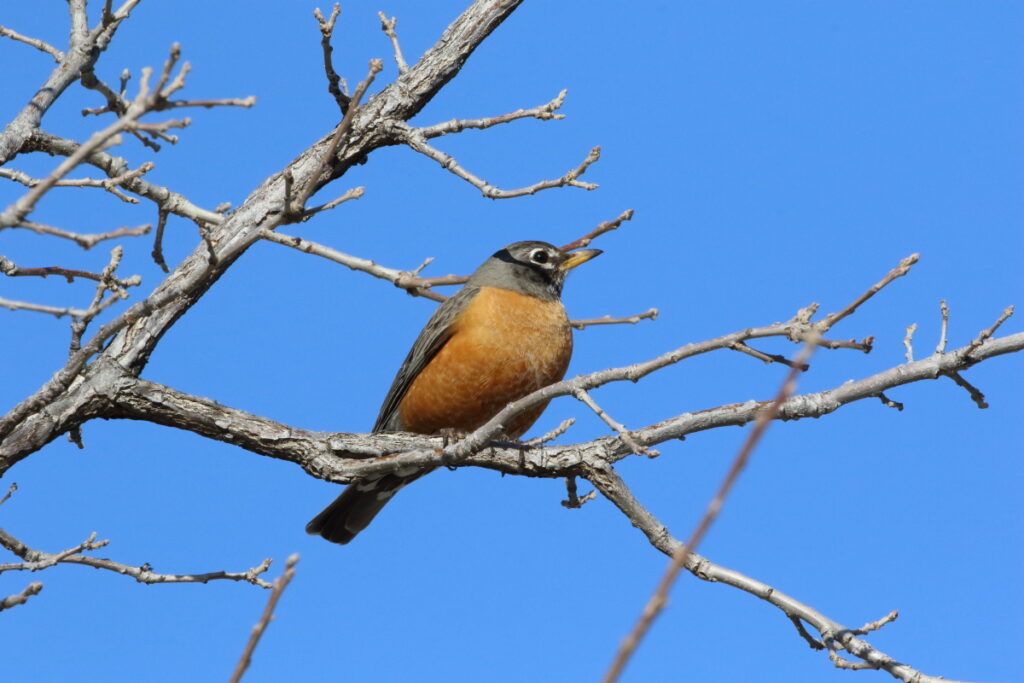
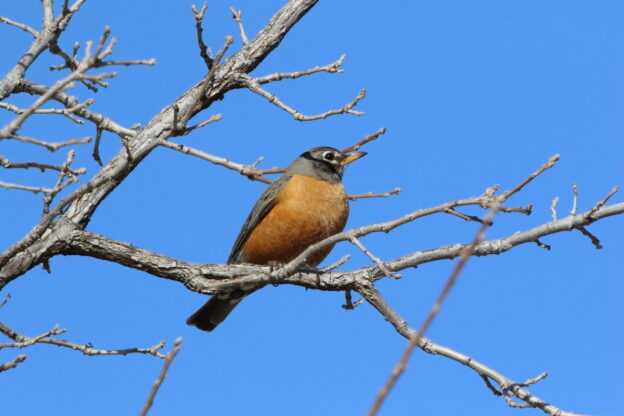
This time of year we observe a remarkable influx of American Robins in western Montana. True, the birds are year-round residents in small numbers through much of the state, but by April, instead of spotting the occasional bird, Braden and I begin counting them by the dozens. As much as I love this “thrush flush”, I have to admit it has led to some close calls in bird IDs this past week.

This time of year, it’s easy to assume that every medium-sized bird is a robin—but BIRDERS BEWARE!

Every morning I grab my binoculars when I head out to take our dog Lola for her morning tramp around our neighborhood. We follow a mile-long route around a school, down to a park, and then back up home, skirting the edges of houses, woods, and Rattlesnake Creek. Over the years, Braden and I have compiled a healthy bird list for the route, but I have to say that it rarely yields any real surprises. As a result, I become lulled into a sense of complacency about what I am looking at.

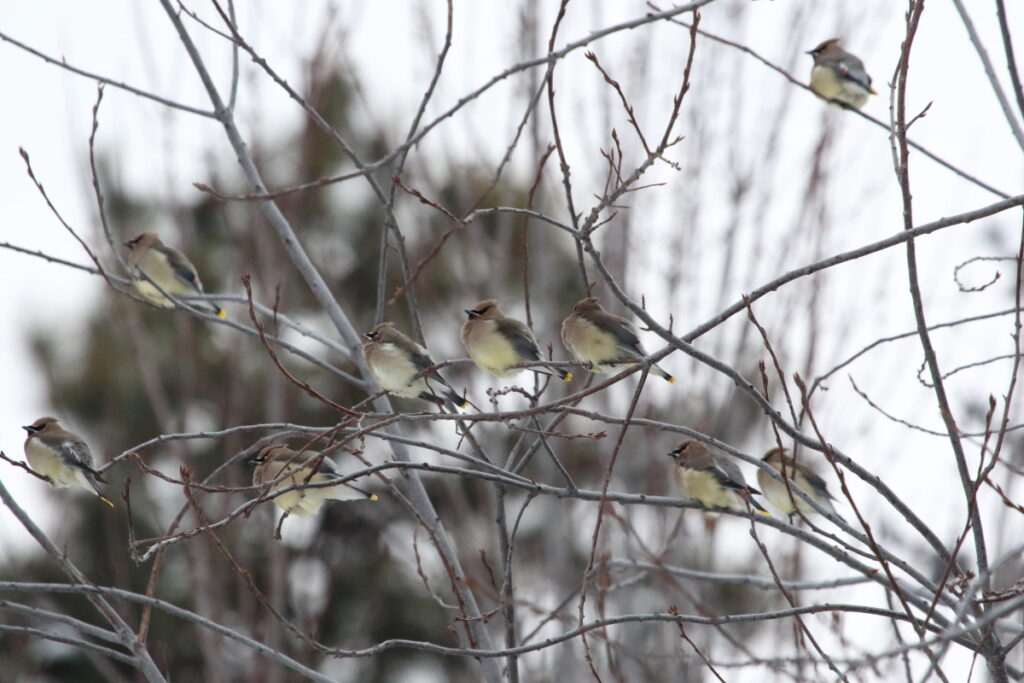
To wit, with all the robins around lately, I have naturally assumed I am looking at Turdus migratorius when I see medium-sized, nondescript birds perched in a distant tree. On my Wednesday dog walk, I again made those assumptions. I mean, there were a ton of robins about and I identified many by sight and sound. When I saw fifteen birds sitting in another tree, I thought, “More robins.” Fortunately, something made me pause—perhaps my inner birder conscience or a feather that didn’t look quite right. Ignoring Lola’s piercing eyes, which pleaded for me to throw the ball again, I raised my binoculars and found . . .

This photo sheds light—or shadow—on how easy it is to mistake other groups of birds for American Robins.

Cedar Waxwings! “Huh,” I thought. “That’s cool.” Waxwings weren’t earth-shattering, but I didn’t expect to see such a group this time of year. I threw the ball for Lola and continued walking, and a hundred yards later saw another group of birds in a tree. “More robins,” I thought, then remembered the waxwings and again raised my binoculars to find . . .

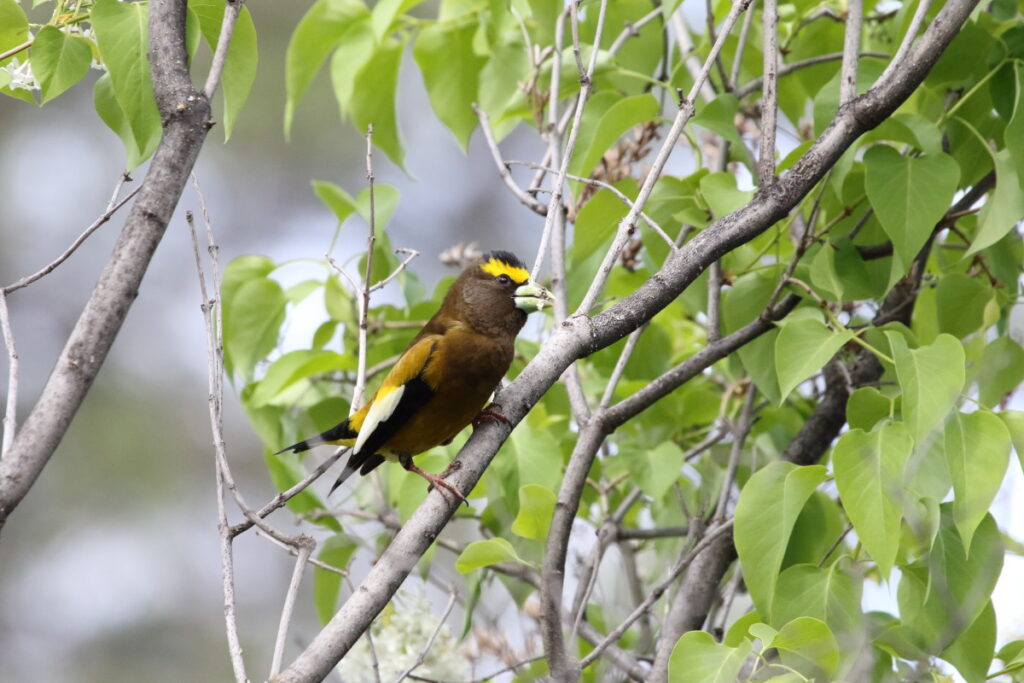
Evening Grosbeaks! Even better, it was my first good look at them for the year! Those two back-to-back sightings taught me a valuable birding lesson: never assume what you’re looking at just because certain birds are more common or you’ve seen them before. I hope it’s a lesson that will serve you well this spring—not that there’s anything wrong with robins.  

Up close, an Evening Grosbeak’s markings are distinctive, but even from medium range, light and shadow can obscure an accurate ID!

Camas National Wildlife Refuge Update

Enjoy these posts? Please share with others and subscribe by filling out the boxes down in the right-hand sidebar.

After last week’s post on our visit to Camas National Wildlife Refuge (see Pocatello or Bust), I received a welcome call from Refuge Manager Brian Wehausen. I had left a message with him, wanting to learn more about the seemingly bleak situation at the refuge, and he generously shared half an hour with me explaining the water shortage and prospects for the future.

When the refuge was purchased in 1937, Brian began, local farmers were taking water from the nearby Henry’s Fork stream and surface irrigating their crops in such a way that loads of excess water “skipped down” to the refuge, creating ample ponds for birds and other wildlife. When farmers switched to sprinkler irrigation in the 1980s, that load of water ceased and the refuge began drying up. “Before agriculture,” Brian shared, “the refuge probably had good and bad years, but we don’t really have any way of knowing what it was like.” Even so, the current situation has been impacted by the drop in the aquifer due to overpumping by agricultural and other interests so that in bad years such as this, migrating birds meet mud instead of water on their way north.

While offering little for migrating birds now, infrastructure improvements at Camas NWR will soon allow the refuge to fill at least some of their ponds even in bad years.

The good news is that the refuge recently received money from the Great American Outdoors Act to drill new wells that will put water into areas that they know retain it better. Brian doesn’t think they can return the refuge to what it was in its heyday in the 60s and 70s, but hopes to definitely improve the situation for waterfowl. “My whole goal,” he said, “is to be efficient with the surface water and also be efficient with the well water, and most of the water we pump will go right back into the aquifer.”

Unlike in some other places, the local community supports the refuge and agrees it’s worth keeping wet. “Generally, people love to see the birds,” Brian says. “We were a mecca for hunting in the 1970s, and that’s gone away, but people still come. Photography is our Number One use today.”

Before we hung up, I was curious what happens to the snow geese and other birds who arrive to find the refuge dry. Brian told me that when Camas is dry, Dillon (just over the border in southern Montana) also tends to be dry so most of the birds head straight up to Freezeout Lake (see our post A Real Wild Goose Chase)—which is where many birders are enjoying them as I write this. It sounds, though, that we’ll all be able to add Camas to our great birding hotspot lists in the very near future!

Pocatello or Bust

Enjoy these posts? Please share with others and subscribe by filling out the boxes down in the right-hand sidebar.

In our last post, I gave the background story of my newest book, Waiting for a Warbler. The irony is that even as I posted it, Braden and I, like many of you, were impatiently waiting for warblers and other spring migrants to show up—so much so that we jumped the gun and leaped into our intrepid minivan for a 1,000-mile road trip. The trip’s main impetus was to hear Boreal Owls after dusk at Lost Trail Pass on the Montana/Idaho border, and things started well as we picked up an uncommon Eurasian Wigeon near Lee Metcalf NWR on the way down. Alas, despite spending two hours hitting the ski area parking lot and various locations along highway 43, we heard not a single bird—this, despite our friend Nick hearing FIVE Boreal Owls several years ago. Disappointed, but not shocked, we proceeded to Wisdom to spend the night at the comfortable Pioneer Mountain Lodge.

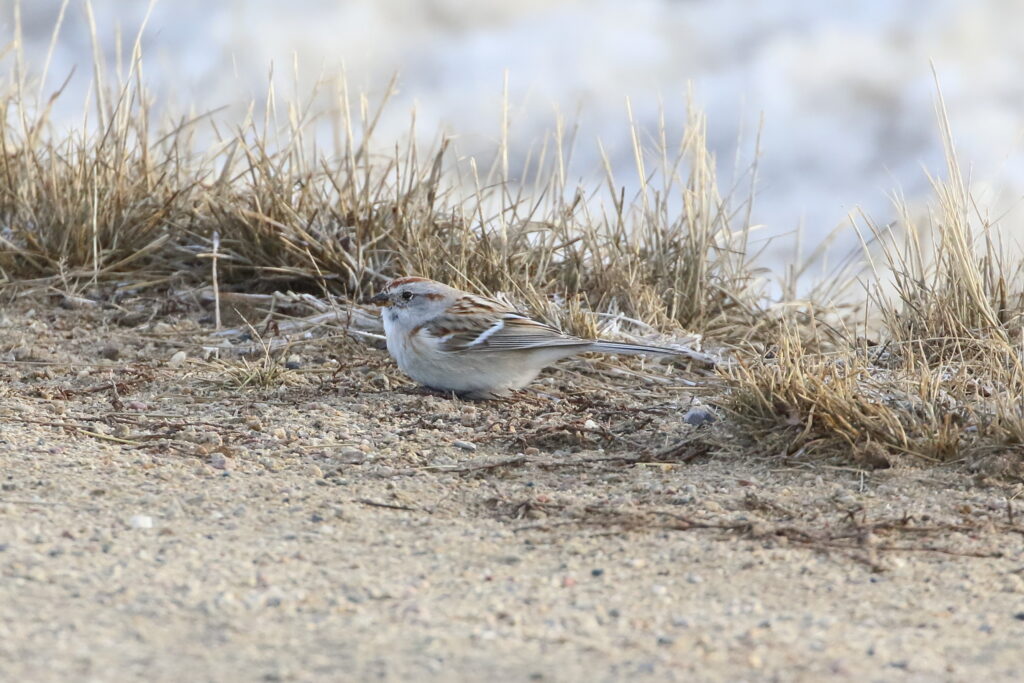
Totally unexpected, this was perhaps our closest look ever at one of our favorite winter birds, American Tree Sparrows, right alongside the road in Wisdom, MT.

Before heading south the next morning, we decided to do a quick tour of Wisdom and were fortunate to spot American Tree Sparrows and a Northern Shrike. Along the highway, our luck continued with great raptor looks, including a ginormous Great Horned Owl sitting on a mile marker next to the road! At the ghost town of Bannack, however, we struck out on Sagebrush Sparrows and Sage Thrashers (still too early) and, after “dipping” on Chukars in Dillon as well, decided to head to Idaho for our first interstate birding in months.

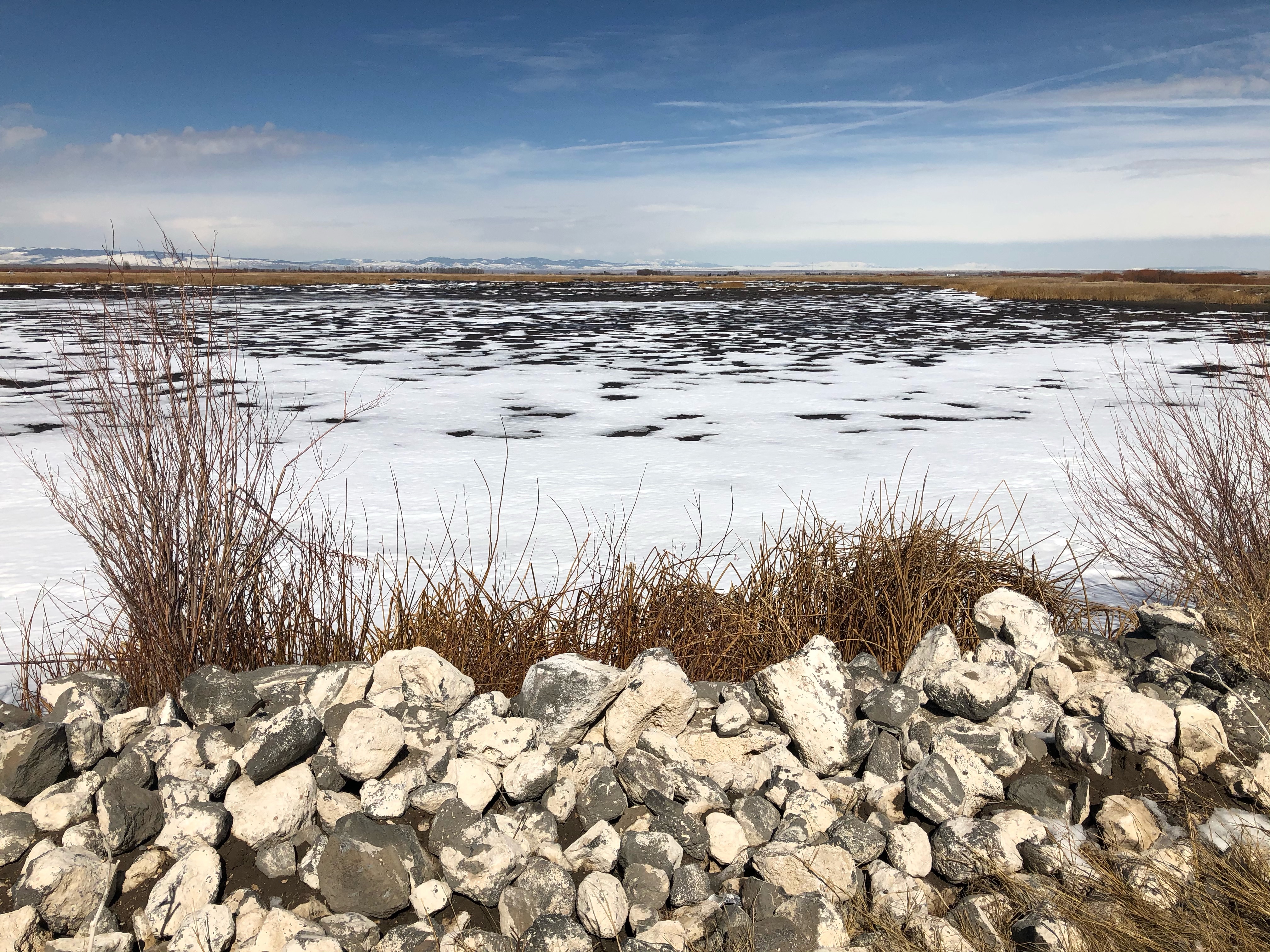
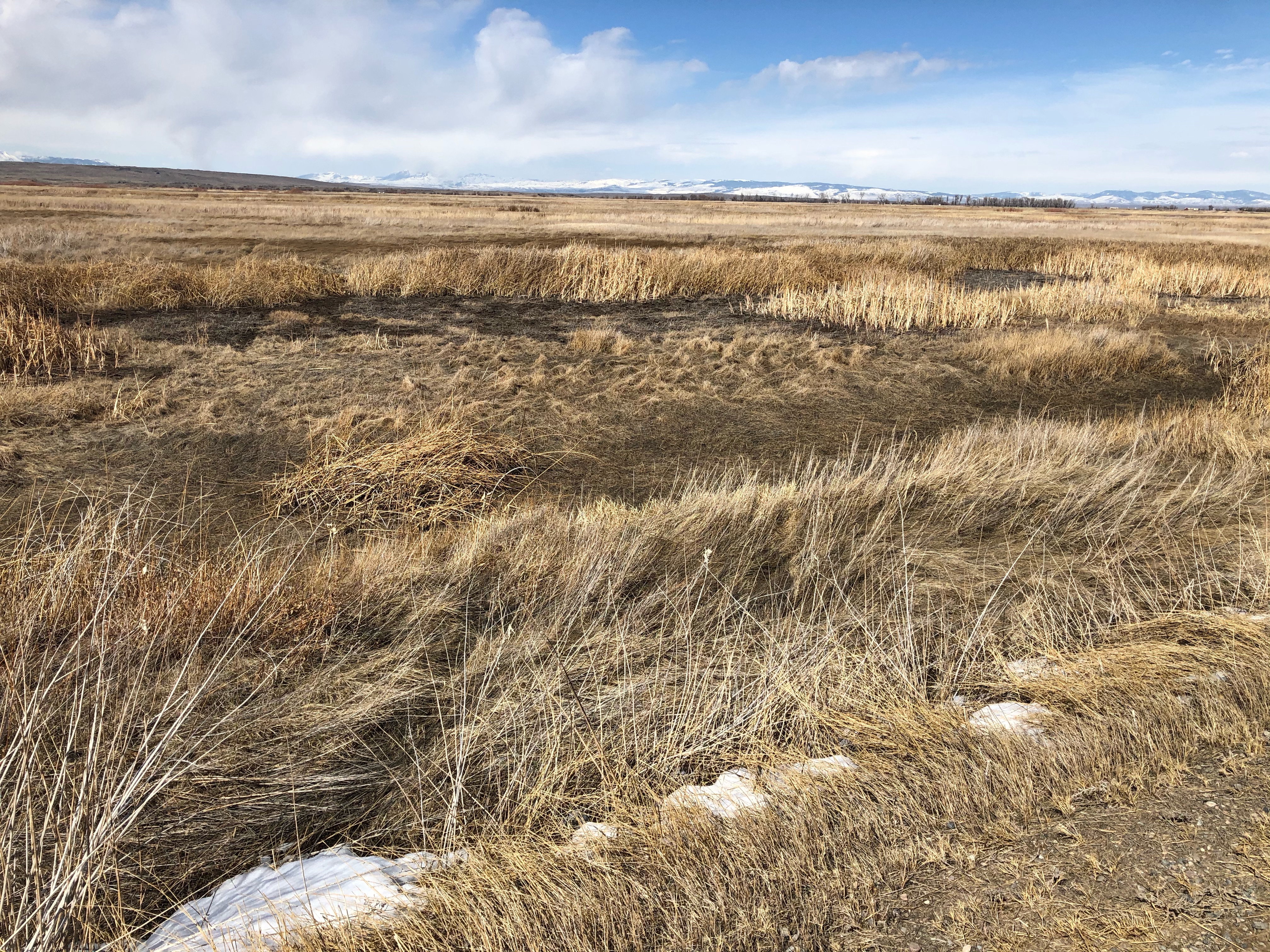
We were especially excited to visit Camas National Wildlife Refuge, but when we arrived, instead of ponds overflowing with waterfowl, we found depressing drying mud with a few determined Canada Geese and Mallards wondering what the heck was going on. We wondered, too, and a little research pointed both to a dry year and, more crucially, a lowered water table caused by over-pumping of groundwater by agricultural interests. This is a situation faced by more and more places in the West and national wildlife refuges seem to be particularly at risk as their budgets for new wells, staff, and infrastructure haven’t nearly kept up with their needs (see the Audubon article “Overwhelmed and Understaffed, Our National Wildlife Refuges Need Help”).

The kind of depressing scenes we found at Camas National Wildlife Refuge are playing out all over the West as human demand for water robs wildlife of essential habitat and resources.

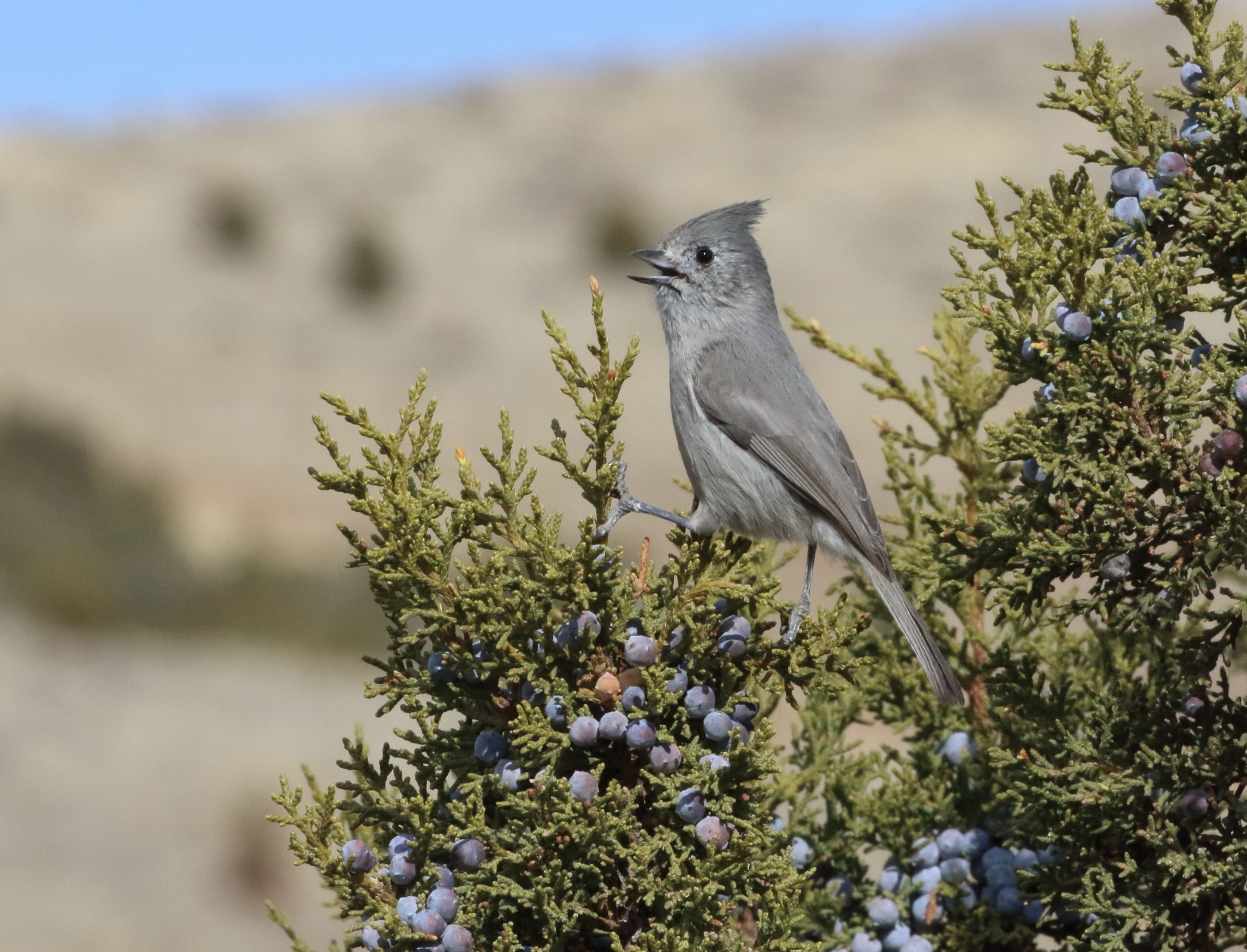
Determined to redeem our day, we pushed on to Pocatello, where we had a delightful hike through juniper forest and saw our Lifer Juniper Titmice. In fact, these wonderful little birds may have ended up being the highlight of our trip as we got to watch them sing, bicker at each other, feed on berries, and generally make the most of life.

Both Braden and I fell in love with Juniper Titmice, described by eBird as “Possibly the plainest bird in North America.”

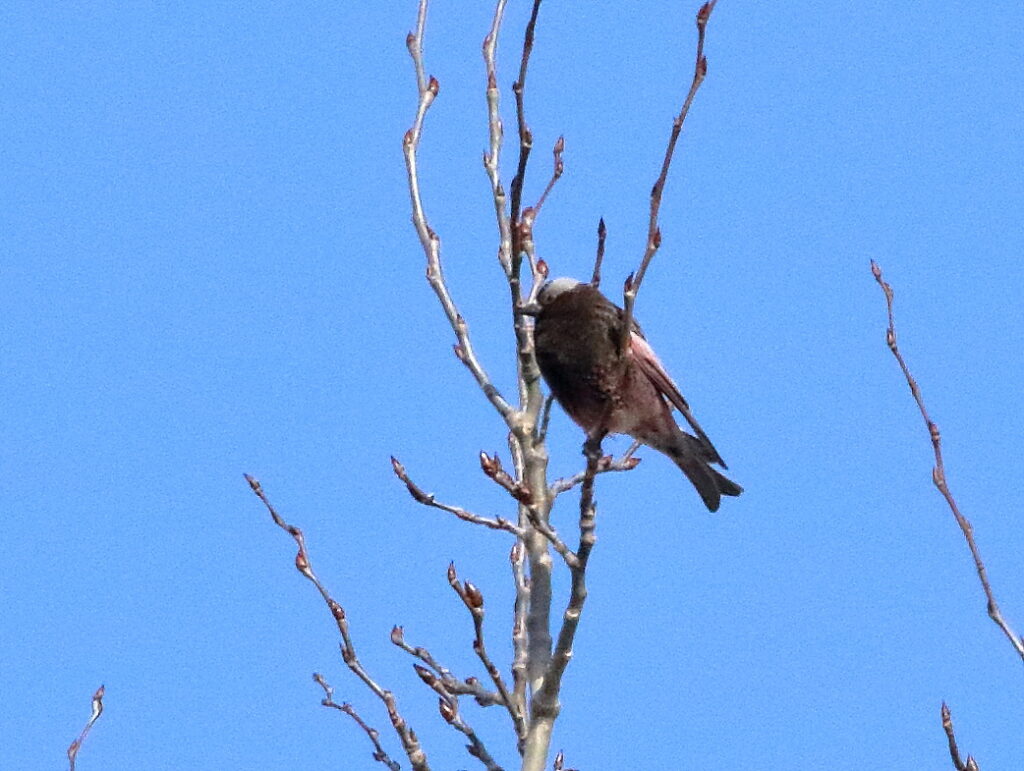
The next morning we decided to heed Supertramp’s advice and take the long way home through Craters of the Moon National Monument (closed) and Sun Valley. We had a special interest in Sun Valley because another Lifer, Black Rosy-Finch, had been reported there, and as we drove up a long canyon road we wondered if we would again be disappointed as this was the year’s fourth attempt to find this elusive bird. We arrived and . . . no birds. We hung out for several minutes, though, and suddenly heard finchy chirps above us. The rosy-finches! And not just Black, but Gray-crowned, too. It was particularly gratifying to find these gorgeous little passerines both because we’d looked for them many times and because this might well be Braden’s last chance to see them before he heads east for college this summer. The rosy-finches and titmice made the scenic drive home through the Sawtooths especially enjoyable—and a surprise find of a Ruffed Grouse along the highway extra sweet.

Hard to find at best, Black Rosy-Finches are some of North America’s most beautiful passerines. They nest at high altitudes and, not surprisingly, are some of America’s least-studied birds.

Birds and Books

As always, we’d be delighted if you share this post with anyone you think might be interested.

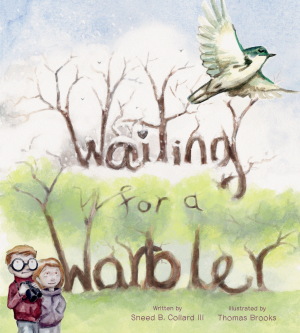
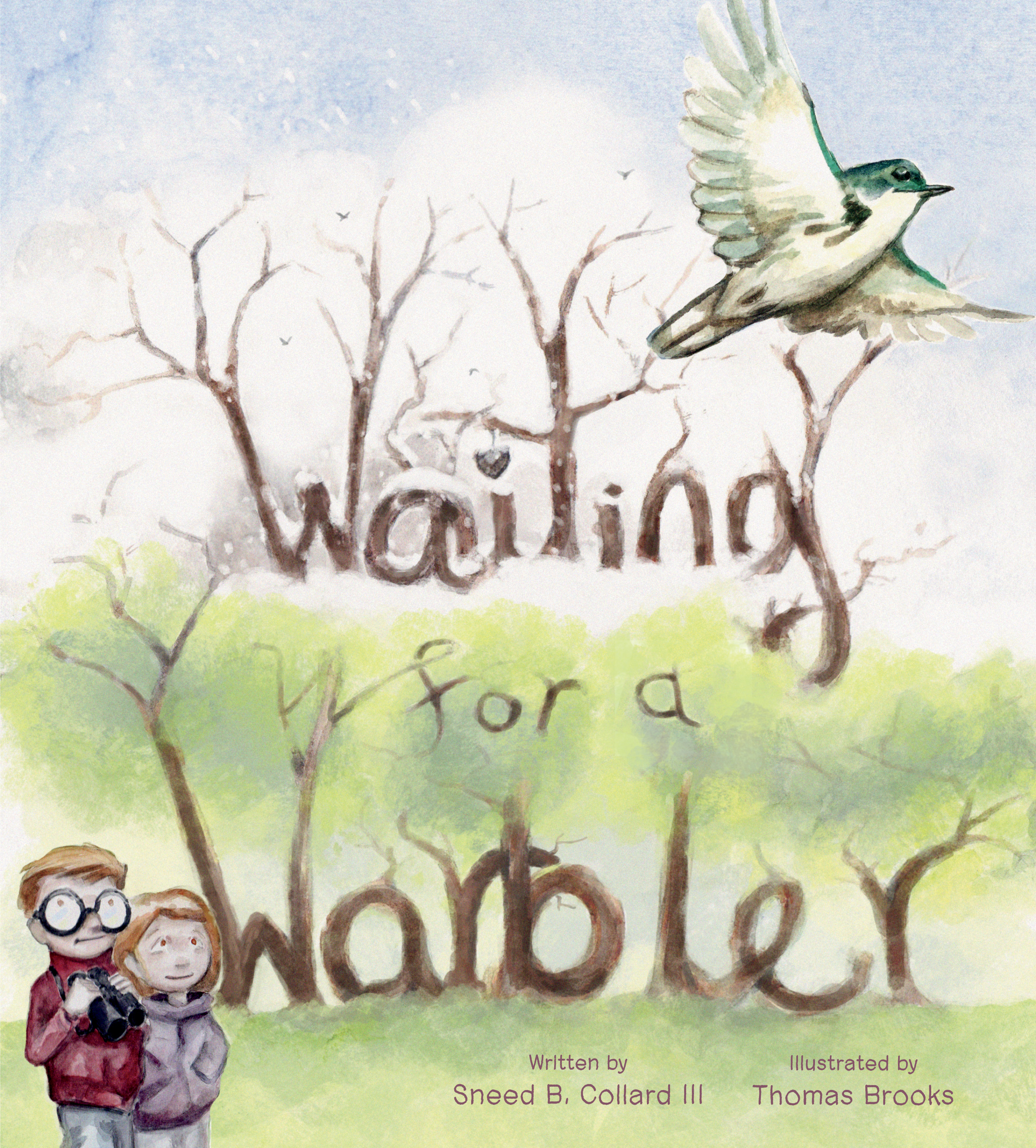
Waiting for a Warbler (Tilbury House, 2021) is my first illustrated picture book in more than a decade. It tells the charming stories of a migrating Cerulean Warbler, and a family that has been improving its backyard habitat for birds. You can order it now by clicking on the image or, better yet, placing a call to your local independent bookstore.

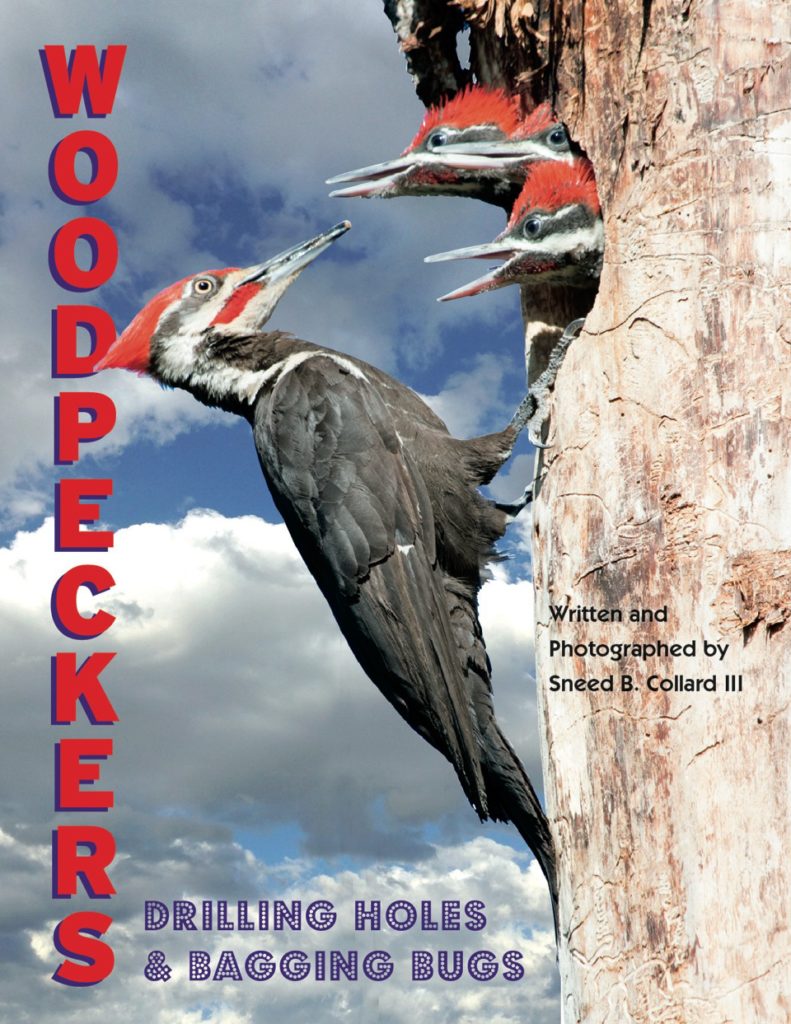
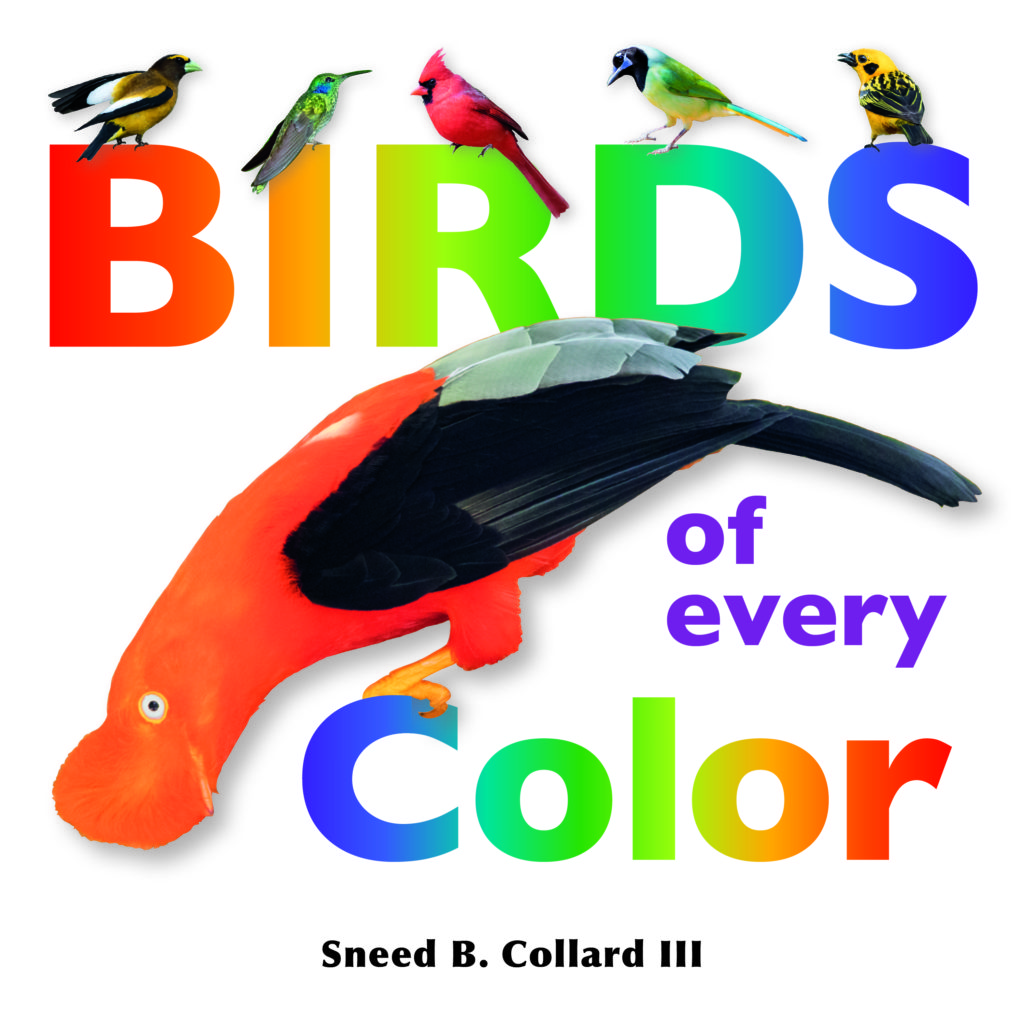
As a writer, birding gives me much more than inspiration. It has granted me a second lease on my career. When Braden and I dived into birding, it was the heart of the Great Recession and, like now, publishers were buying zilch. I was trying different things with mixed results, but felt more or less directionless. Birding changed all that. The more we saw and learned about birds, the more ideas I had to write—ideas that have resulted in adult books and magazine articles, and in my children’s books Fire Birds; Woodpeckers: Drilling Holes & Bagging Bugs; and Birds of Every Color. My newest title, Waiting for a Warbler, has a special history I’d like to share.

The idea to write about warbler migration blossomed in my brain only days after Braden and I visited High Island, Texas during our 2016 Big Year of birding. High Island is what’s called a migrant trap. The shelter and food it provides lures thousands of exhausted, migrating songbirds as they complete their marathon eighteen-hour flights across the Gulf of Mexico. We spent only a day at High Island, but during that time observed more than a dozen kinds of warblers along with tanagers, thrushes, vireos, and many other songbirds, and I was so inspired I quickly wrote down a story and sent it to a publisher who had expressed interest. I heard . . . nothing. No call. No feedback. No offer.

I let the idea sit for a year or so—often a useful thing to do to get perspective on a manuscript—and took another look at it. I realized it read a little stiff and impersonal, and decided to recast it as the story of one individual warbler crossing the Gulf of Mexico. I sent it to a different publisher, who wrote back within a month or two and said that he liked it, but what about working in the idea of a family waiting for the warbler to arrive? It was a great suggestion and I quickly revised the story and sent it off. Two years later, the book has been published!

The book recounts the epic, dangerous journey of a male Cerulean Warbler that runs headlong into a storm halfway across the Gulf of Mexico, but it also focuses on a family that has been working hard to improve its backyard habitat for birds and other wildlife. The two children had glimpsed a Cerulean Warbler the year before, but the bird had not stayed, and they hope to see the bird again this year. I will leave the rest to your imagination—or, better yet, until you read the story for yourselves—but I have to say that I am extremely proud of this book both because of the adventure it shares and the positive role models it offers. The delightful illustrations by Thomas Brooks help make Waiting for a Warbler both a perfect read-aloud and a useful resource for a family or class-room conservation project. Braden and I hope that you all enjoy it, and would be grateful if you share this post with friends, teachers, and others. Bird—and write—on!