Category Archives: Migration

Bear Canyon—Montana’s “Tropical Birding” Paradise

With this post, I am officially back from Japan—and loving the spring birding around Montana. In this episode, I revisit one of our favorite Montana places to bird, Bear Canyon. As is often the case, I was hot on the heels of one of my nemesis birds, Sagebrush Sparrow. Thanks for following along—and Happy Mother’s Day and Global Big Day!

When I shared my most recent Montana birding list with my friend, Roger, he joked, “Does Montana have secret tropical zones I’m not aware of?” I answered, “It does. It’s called Bear Canyon.”

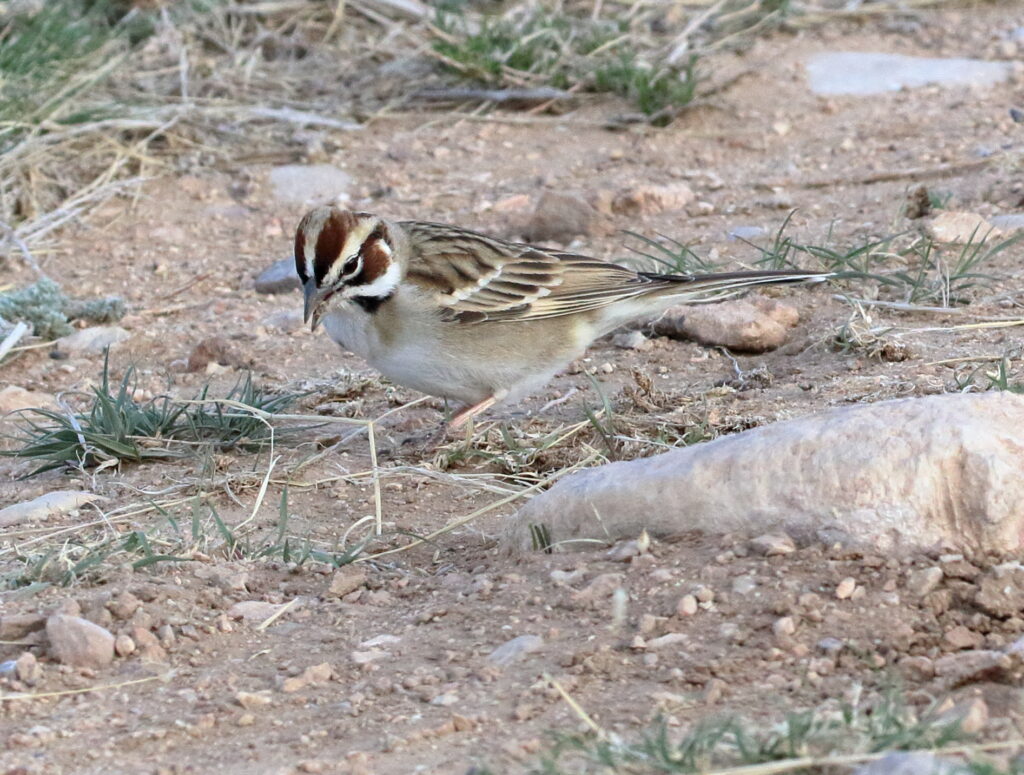
In all honesty, to call Bear Canyon tropical is a stretch, but it may be the state’s best example of the Big Basin habitat that dominates much of the interior West—and it’s probably the best place to pick up “southern leaning” species that are truly elusive elsewhere in the state. These include Blue-gray Gnatcatcher, Gray Flycatcher, Sage Thrasher, Pinyon Jay, and my nemesis bird, Sagebrush Sparrow. When I was invited for some speaking events in the Billings area in early May, in fact, Bear Canyon immediately popped to mind. Studying the eBird bar charts it looked I might be a tad early for some of the species there—but that didn’t stop me from going for it. I was on the road from Billings by 6:30 and pulled up to a rocky parking spot at the mouth of the canyon just before 8:30. Two gorgeous Lark Sparrows greeted me as I parked. A good omen.
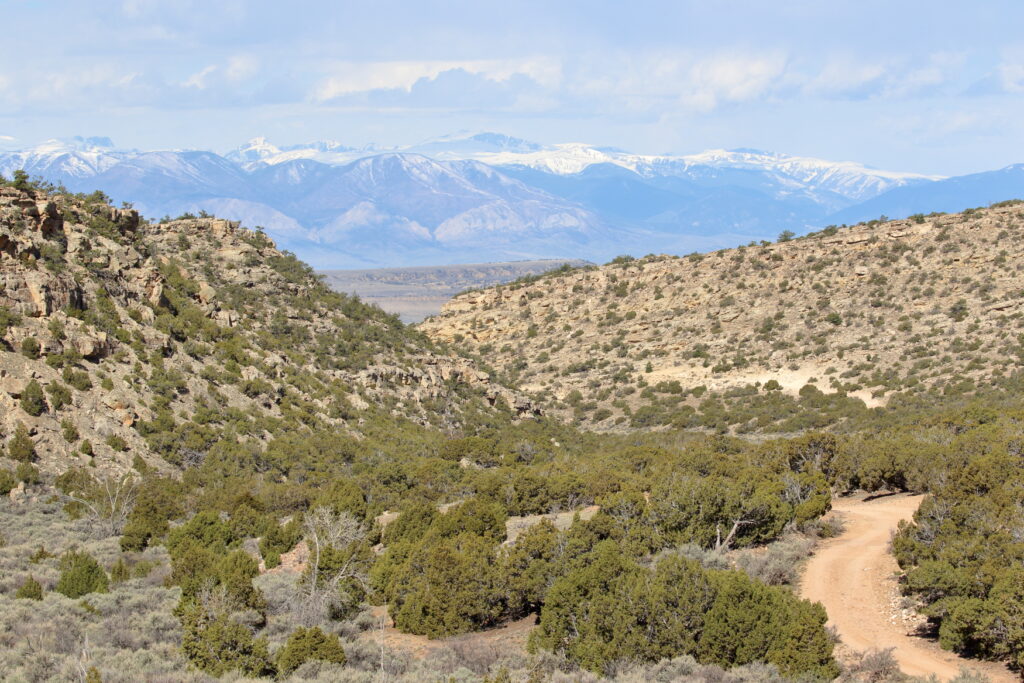
As I hiked up and over a small hump into the canyon, the birds wasted no time revealing themselves. A Rock Wren—my first of the year—belted out its scratchy, repetitive song from the top of a juniper tree, and almost immediately, another song caught my attention. I punched in Sound ID and pumped my fist. “Yeah! Gray Flycatcher!” Moments later, I observed the bird a hundred yards away—the first of half a dozen Gray Flycatchers I would see that morning. Sound ID also recorded Brewer’s Sparrows and Green-tailed Towhees, but since I don’t know their calls and didn’t see either one, I didn’t record them. It also picked up my nemesis, Sagebrush Sparrow—but I think that was an error since to my knowledge they are rarely reported in the canyon itself.
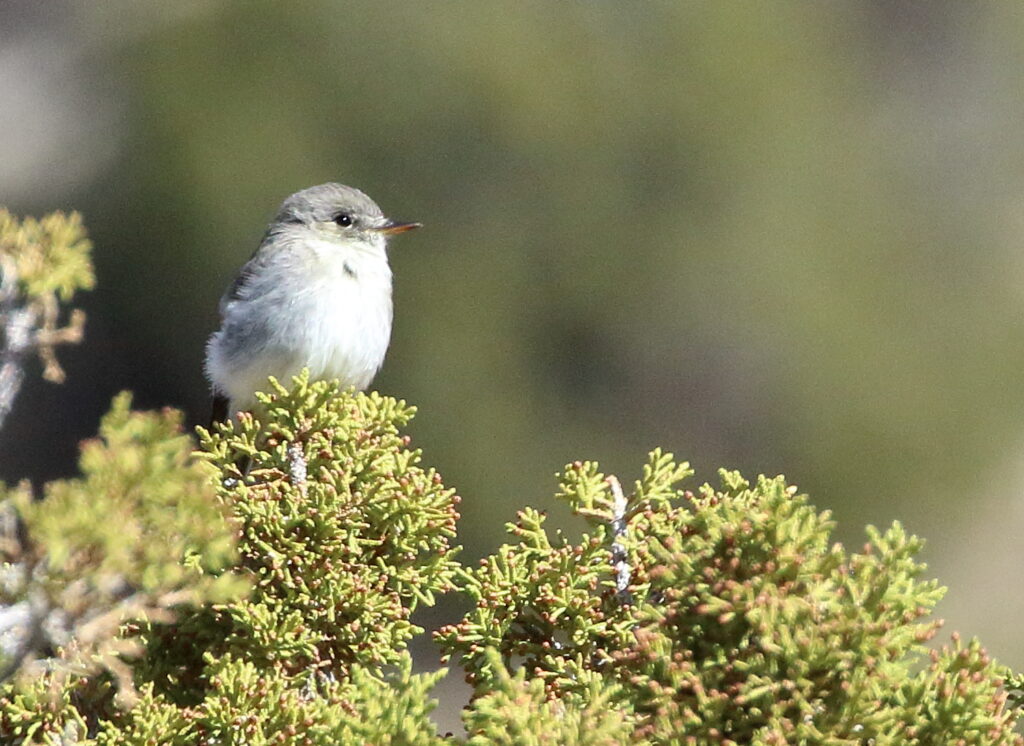
Seeing Gray Flycatchers was a treat, but to have one pose a reasonably short distance away added greatly to the experience.

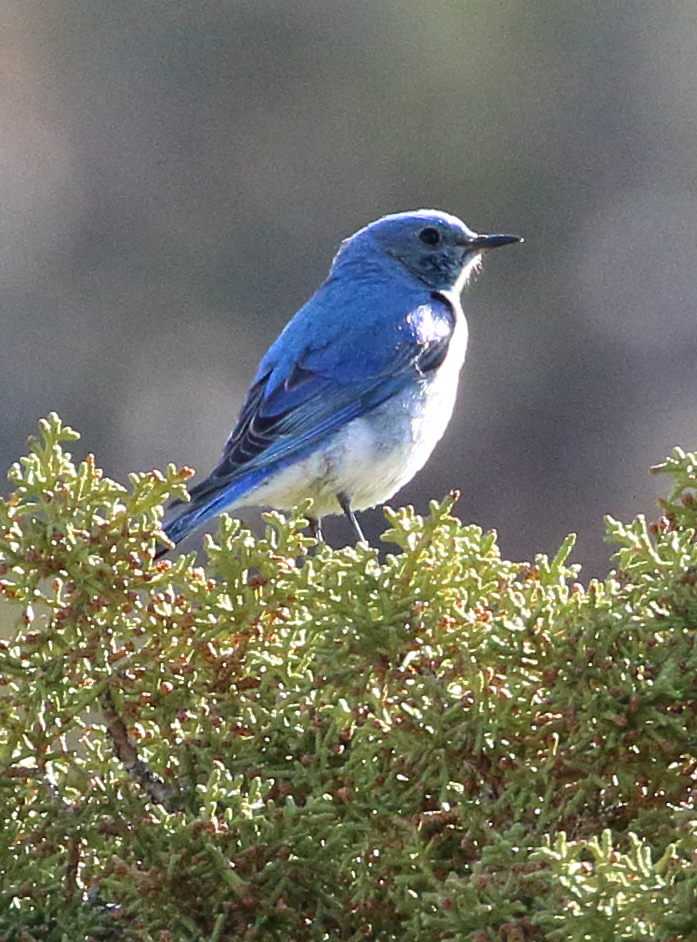
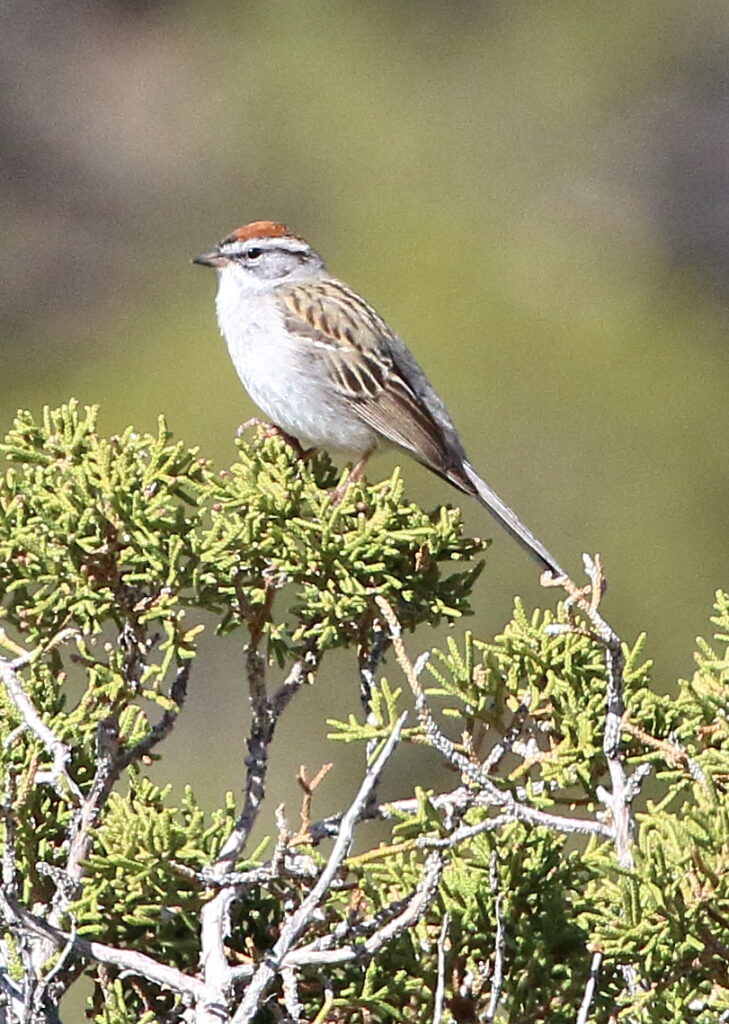
A host of other birds also showed including Chipping Sparrows, Mountain Bluebirds, Mountain Chickadees, and Vesper Sparrows—but that still left some big misses including Blue-gray Gnatcatchers (too early) and Pinyon Jays (probably off in another canyon). Still, it was a spectacular morning, and Bear Canyon was about as pretty a place I could ever hope to have all to myself.
After two hours, I returned to the car and moved onto the next phase of my day—searching for Sage Thrashers and Sagebrush Sparrows. Driving south down a dirt road from the canyon, I remembered Braden’s advice to get out and actually walk through the sagebrush if I really wanted to find the sparrow. I dutifully did this three times. The first time, a jackrabbit about scared the sagebrush out of me! However, I also was rewarded with actual looks at the Brewer’s Sparrows I had been hearing in Bear Canyon proper, which was great. In fact it was the first time I actually got to study these handsome, but subtle, birds and watch them sing.
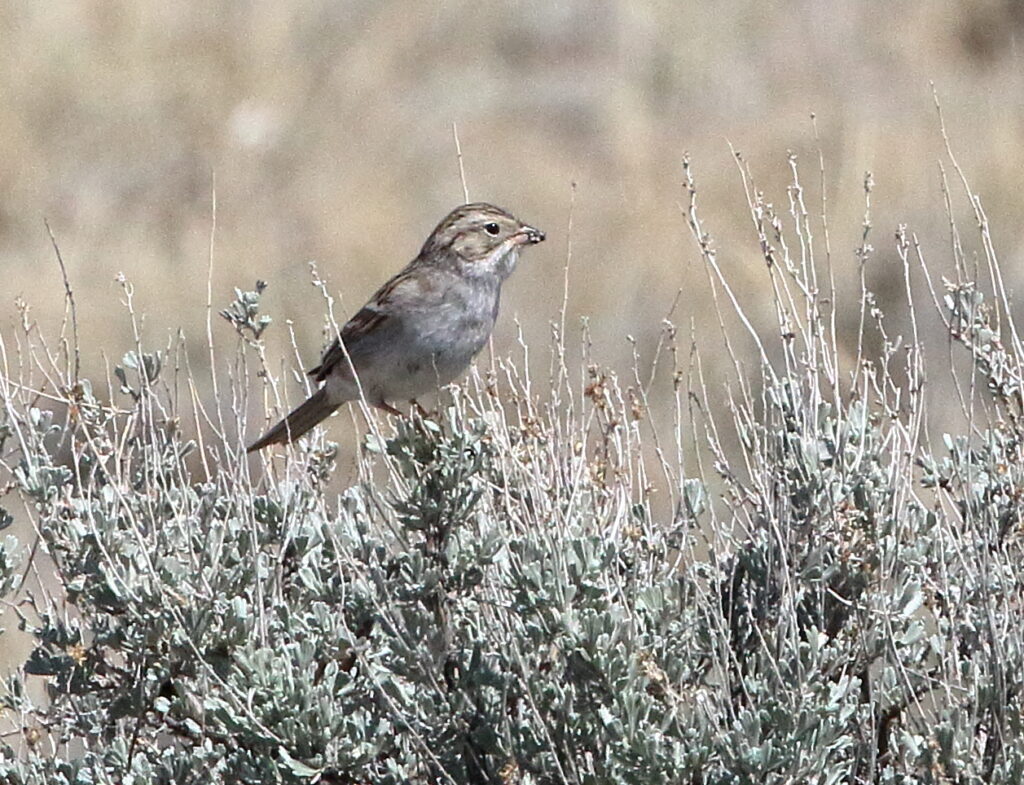
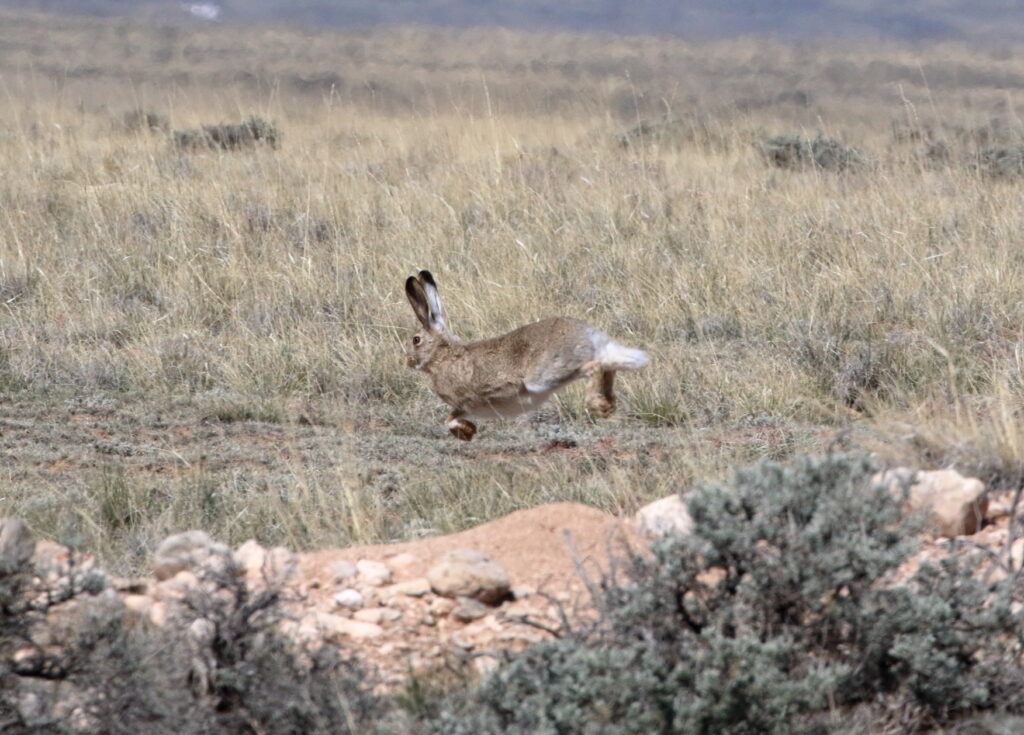
My second walk revealed more Brewer’s Sparrows, along with numerous Vesper Sparrows, Horned Larks, and Western Meadowlarks that inundated the area.

Which brings me to my third walk—and you’re going to guess that’s when I finally found a Sagebrush Sparrow, right? Alas, no. As I was walking back toward the car, however, a large bird suddenly burst into the air right in front of me. Its wings sounded like a helicopter. I immediately knew it was some kind of grouse, and guessed it was a Greater Sage-Grouse. Watching it fly away through binoculars, though, I just couldn’t be sure. Darn, I thought. That would have been super cool. Only a few footsteps later, though, SIX of the big birds leaped out of the sage and thundered away—and this time there was no doubt. I caught bold black and white head markings on a couple of the grouse, and even more revealing, black bellies on most of them. I was elated! This was the first time I’d seen Greater Sage-Grouse since birding with Nick and Braden six years before and to find them on my own, well, it felt like an accomplishment.
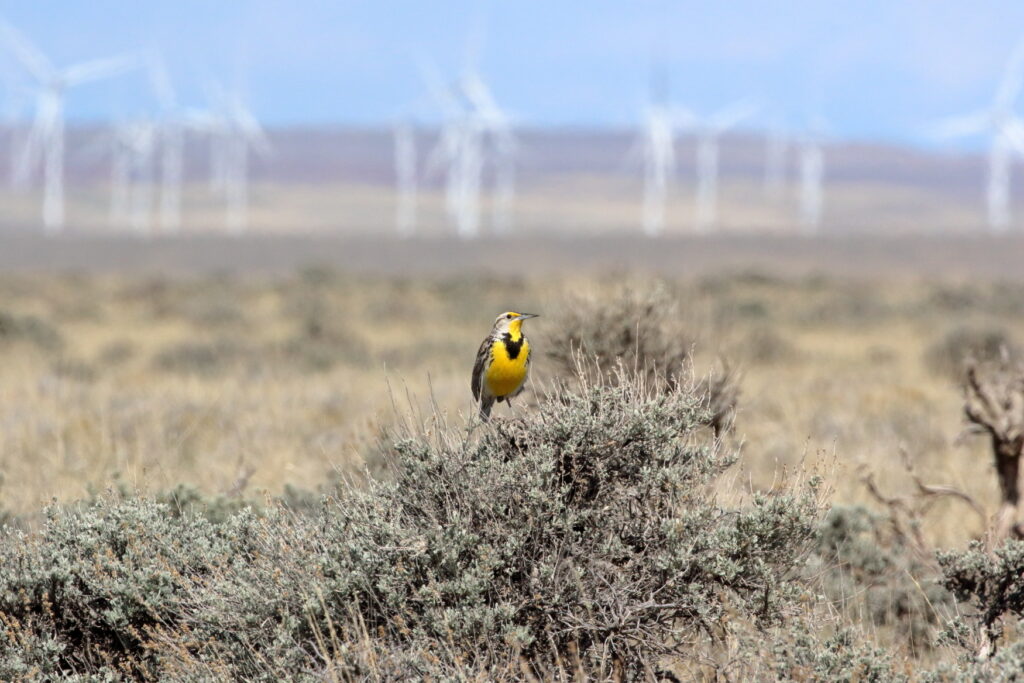
I haven’t talked much about it much, but this was some of the best country ever for Western Meadowlarks and Vesper Sparrows—and pretty decent for Horned Larks, too.

Disappointingly, I saw not a trace of Sage Thrasher, a bird Braden and I had seen here in numbers only three years before. According to the eBird bar charts, they should have been here, too. And the Sagebrush Sparrow? Well, to be honest, I didn’t expect to find one of those on my own. After all, it was a nemesis bird, right? Still, I clung to the memories of the Greater Sage-Grouse as I continued driving down the dirt road, and just tried to appreciate the magnificent sagebrush and snow-covered mountains around me.

Eventually, the road connected with a larger dirt road, and I turned right. I could see the highway up ahead, but coming around a corner I spotted a small bird landing on a bush fifty yards away. Better look, I told myself. I parked the car and whipped my binoculars to my eyes.

Then, I started to get excited.

The bird definitely looked like a sparrow, but with a darker head. It was partly obscured by a branch, so I took a few steps to the left, praying it wouldn’t fly away. It didn’t. And that was enough to confirm it—my first and only Sagebrush Sparrow!
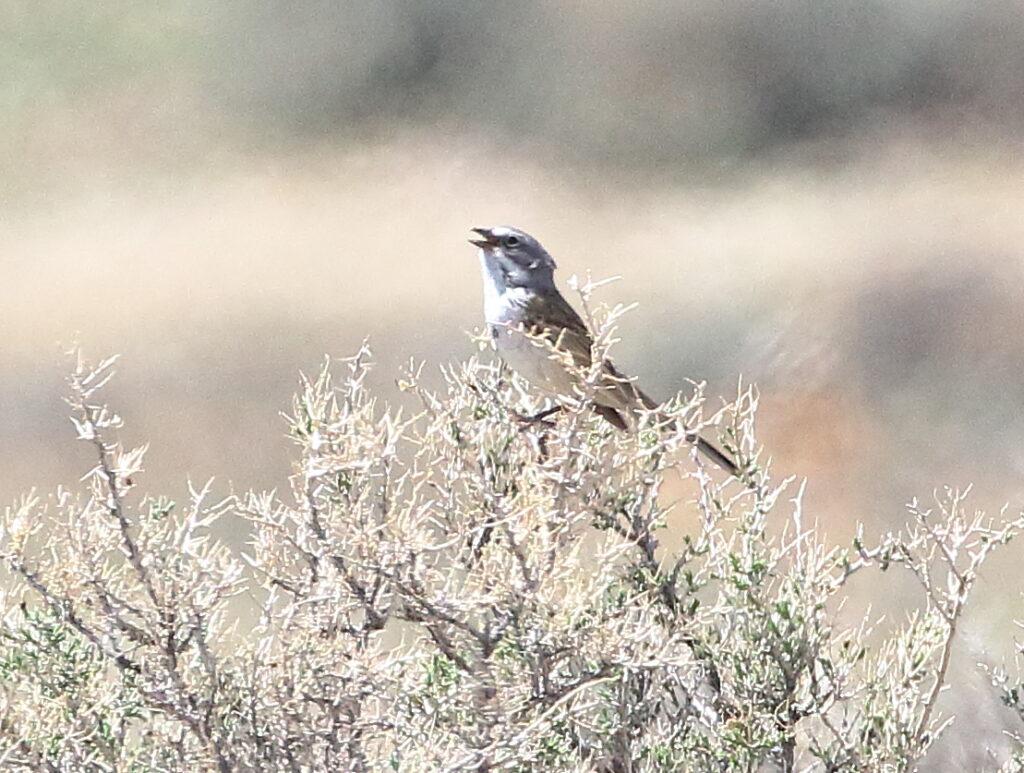
AT LAST! Right when I’d about given up hope, a gorgeous adult Sagebrush Sparrow decided I’d worked hard enough to find him! Thank you!

The bird flew across the road to another bush and I pulled the car up a bit closer before again getting out. Now, I had a fairly distant, but wonderful view of the bird as it sang its melodious song. Nemesis no more! I thought and watched it for several minutes before it flew off. I thanked the bird and this remarkable ecosystem, and then headed back to Billings.
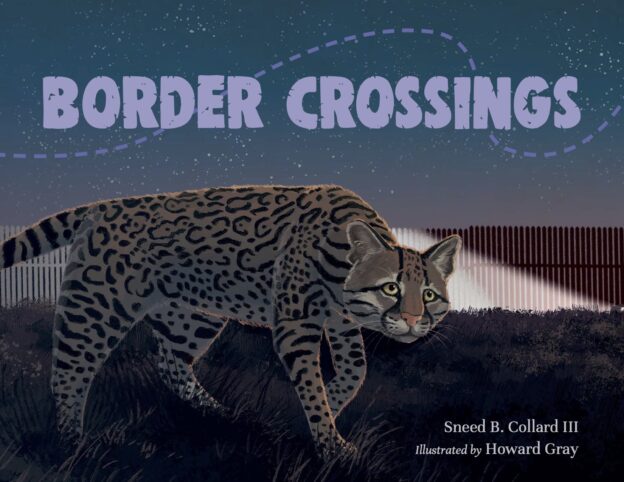
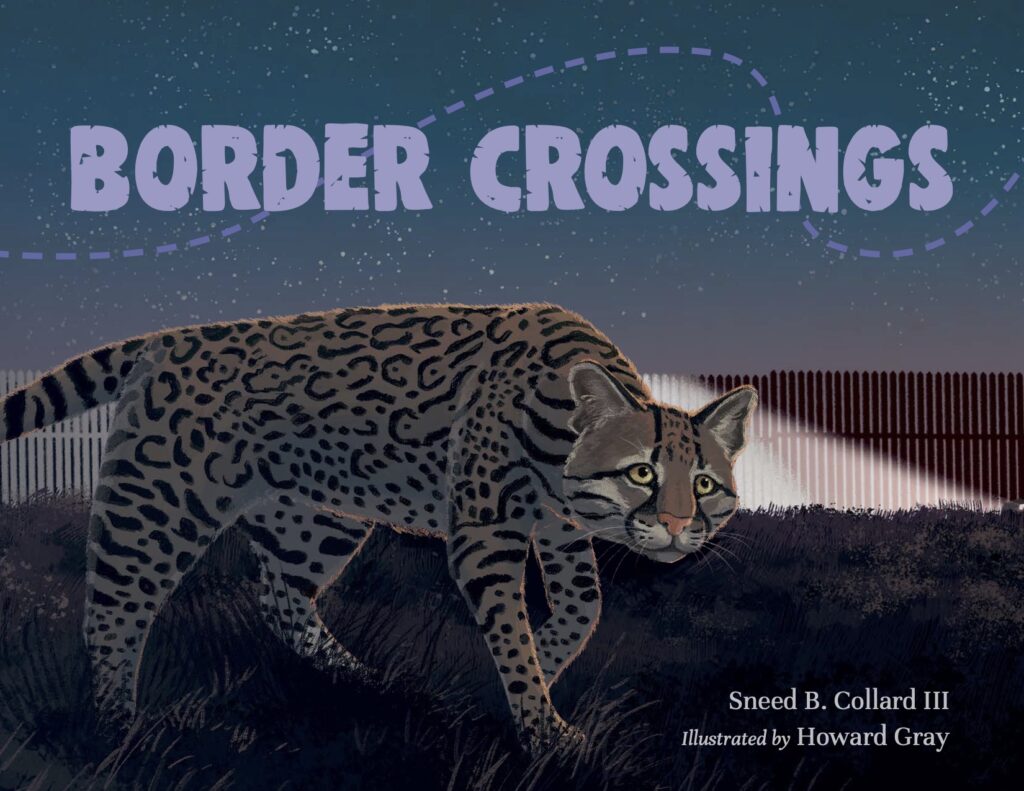
Birding and Books: Sneed’s New Picture Book, BORDER CROSSINGS

My new picture book, Border Crossings, was inspired by Braden’s and my amazing trips birding along the U.S.-Mexico border. Order now through your local bookstore or directly from Charlesbridge Publishing.

Watch the book trailer for Border Crossings now!

If you ever doubt how inspiring birds are to people, just look at the incredible bird-related creativity writers, artists, and photographers pour forth into the world. I plead guilty to be among their ranks as birds have inspired at least half a dozen of my books and countless articles. Sometimes, though, birds themselves are not the topic. Instead, my pursuit of birds gives me another idea. Such is the case with my new picture book, Border Crossings.

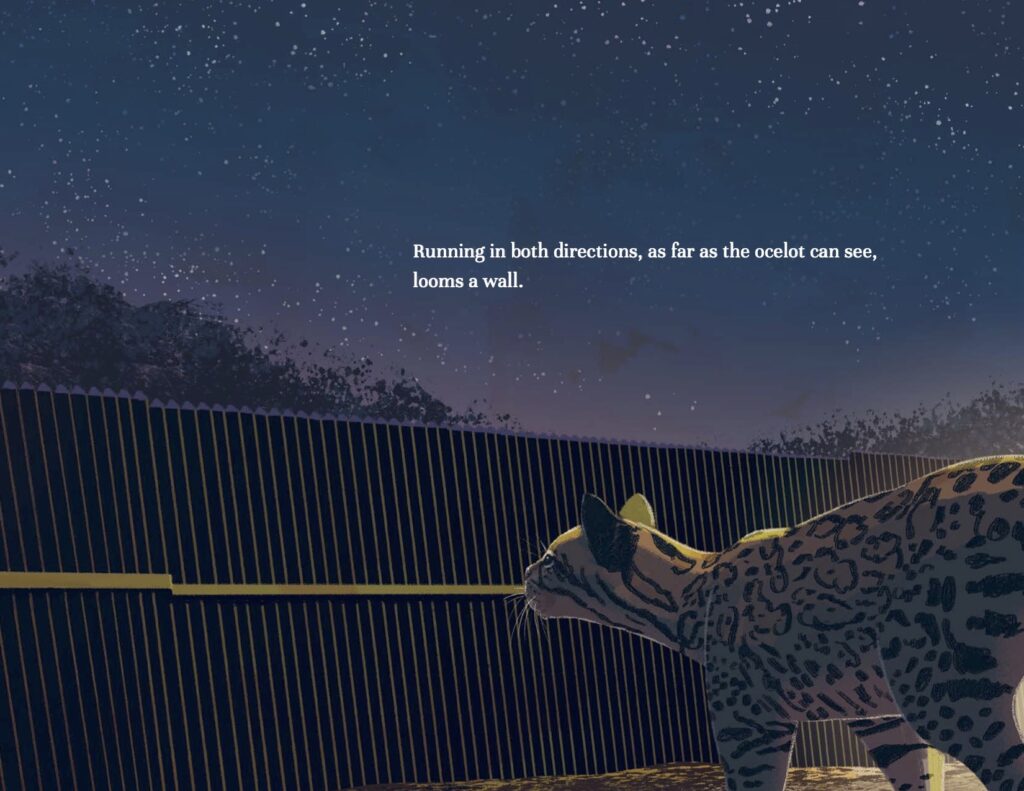
From Border Crossings, illustrated by Howard Gray.

During the past seven years, Braden and I have been fortunate to be able to bird along the U.S.-Mexico border at least four times: twice in Arizona, and once each in Texas and California. These trips have been among the most inspiring of our birding lives, not only providing glimpses of hundreds of remarkable birds, but introducing us to the rich human culture that spans the border region. When our former president announced plans to build a steel barrier the full length of our border, it rang alarm bells for numerous reasons. For one thing, it seemed a giant slap in the face to Mexico, a country we depend on and take advantage of in many ways. I also worried how a wall would impact the myriad animal species that regularly cross back and forth across the border.

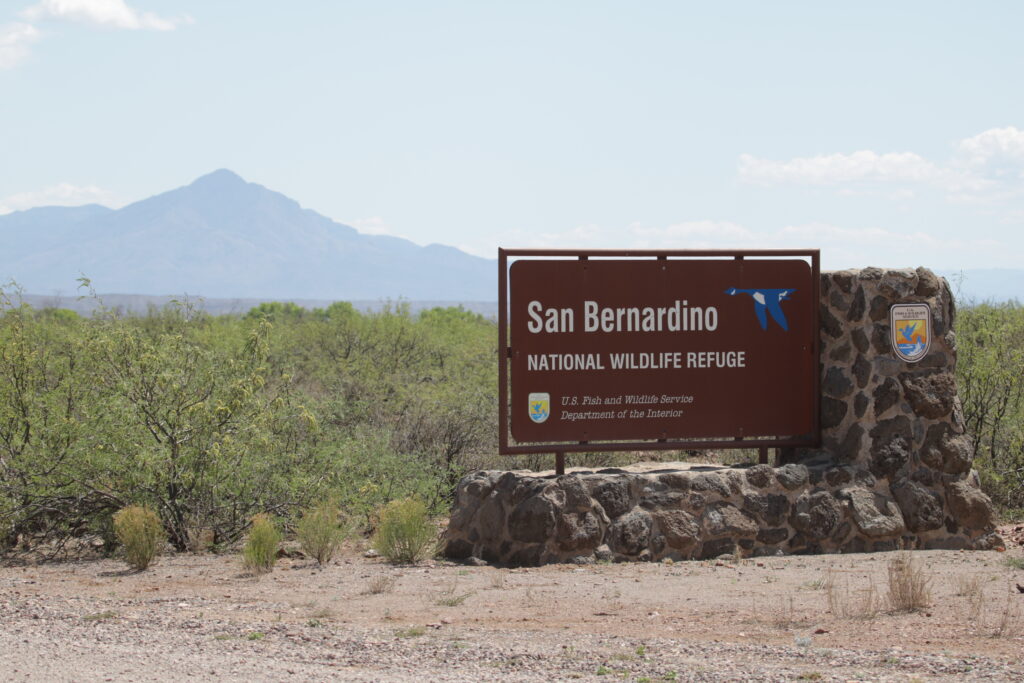
San Bernardino NWR is one of many places we birded in 2016 that was wall-free. Now, a giant steel barrier both prevents many animals from moving freely through their natural home—it directly endangers several officially listed endangered fishes. To read about that click here.

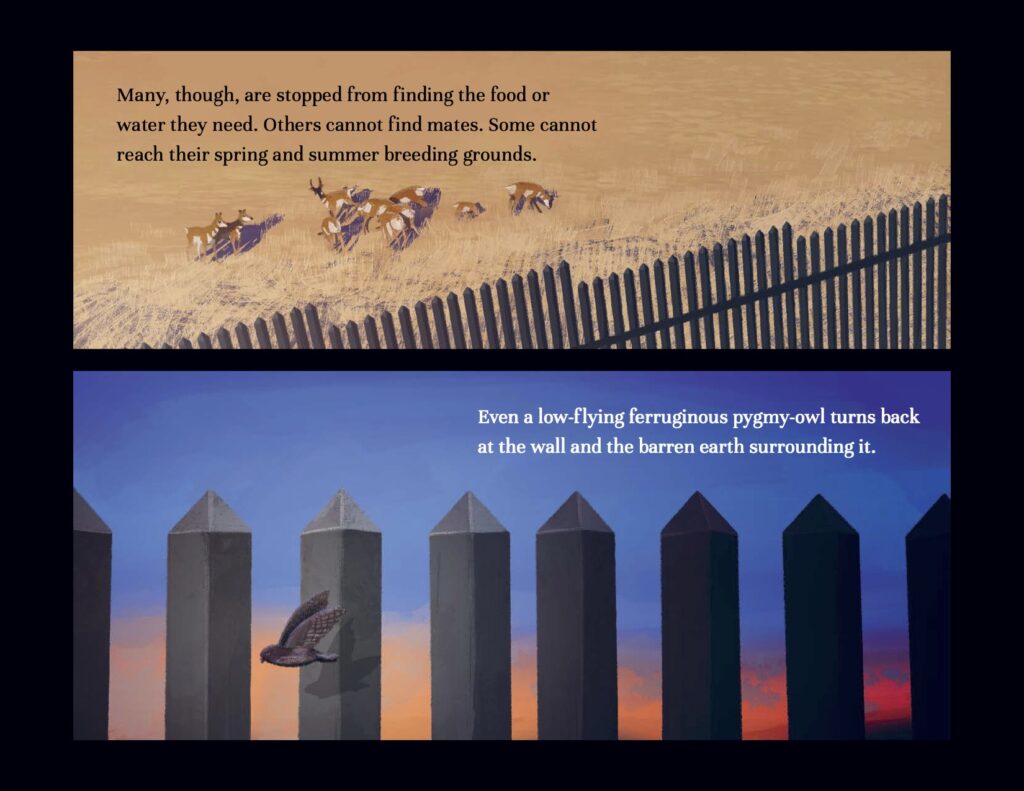
Though we humans have drawn an artificial line separating the U.S. and Mexico, the fact is that continuous ecosystems run through this remarkably biodiverse region. In these ecosystems, animals routinely cross back and forth from one country to another. Many do this in the course of their daily routines while others cross mostly during annual migrations. The steel “bollard” wall, however, has gaps only four inches wide—small enough to exclude hundreds of animal species. Even some birds—think game birds, roadrunners, and Ferruginous Pygmy-owls—probably turn back from this monstrosity. That’s not to mention javelinas, pronghorn, tortoises, hares, wolves, and dozens of other larger animals. Clearly, in their rush to build a political statement, no one in charge gave wildlife the slightest thought.

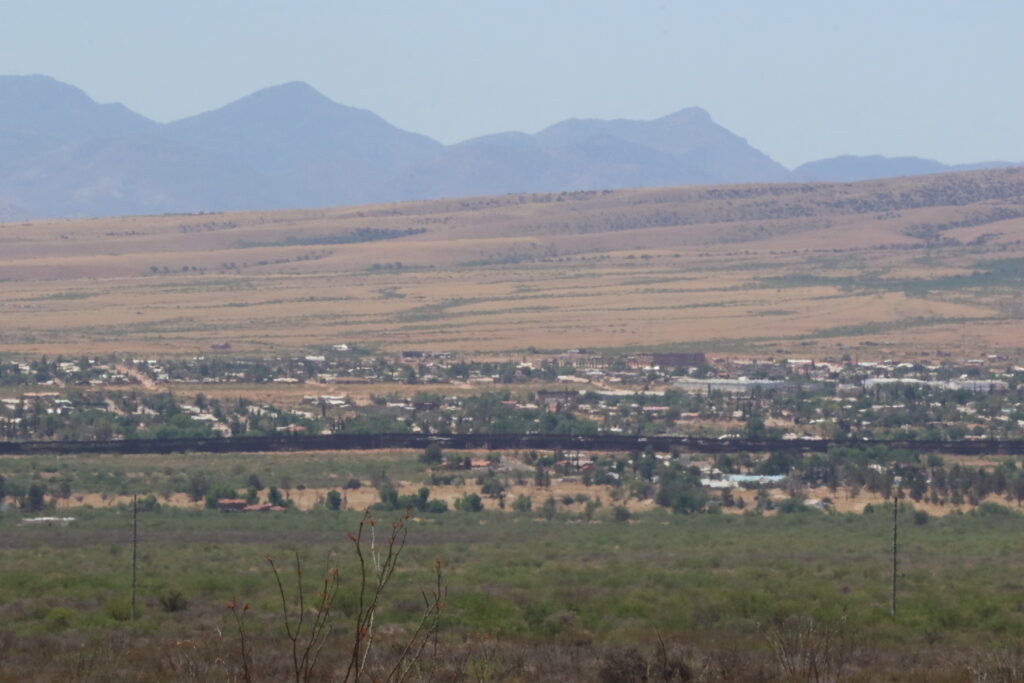
One of many Arizona border communities that was wall-free during our 2016 trip is now permanently divided by an ugly barrier—one that is doing untold damage not only to these communities but to wildlife.
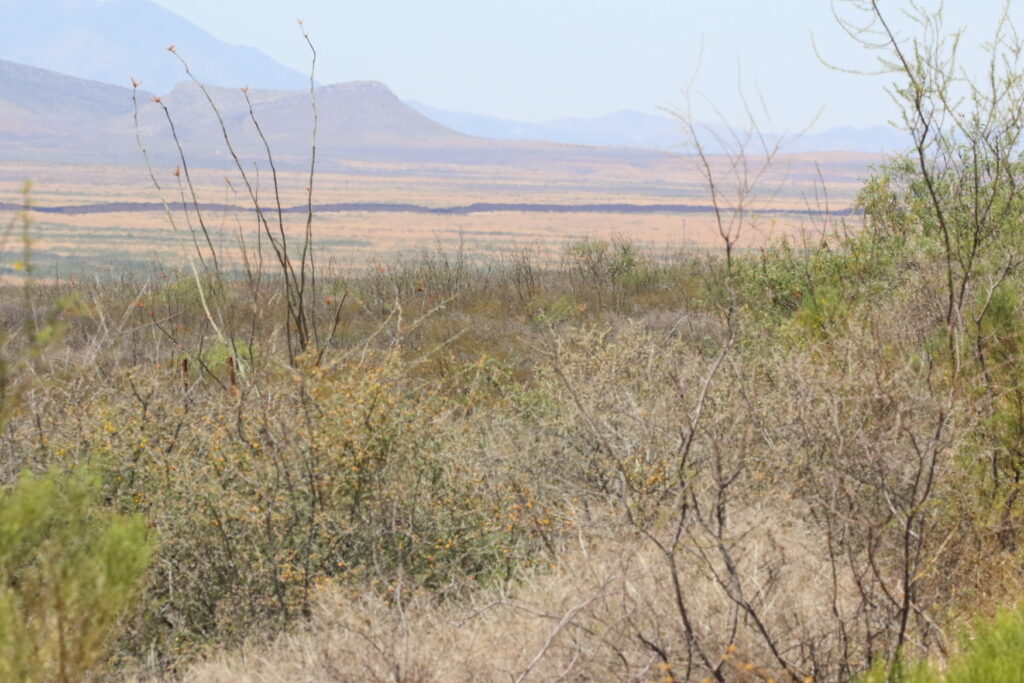
The wall.

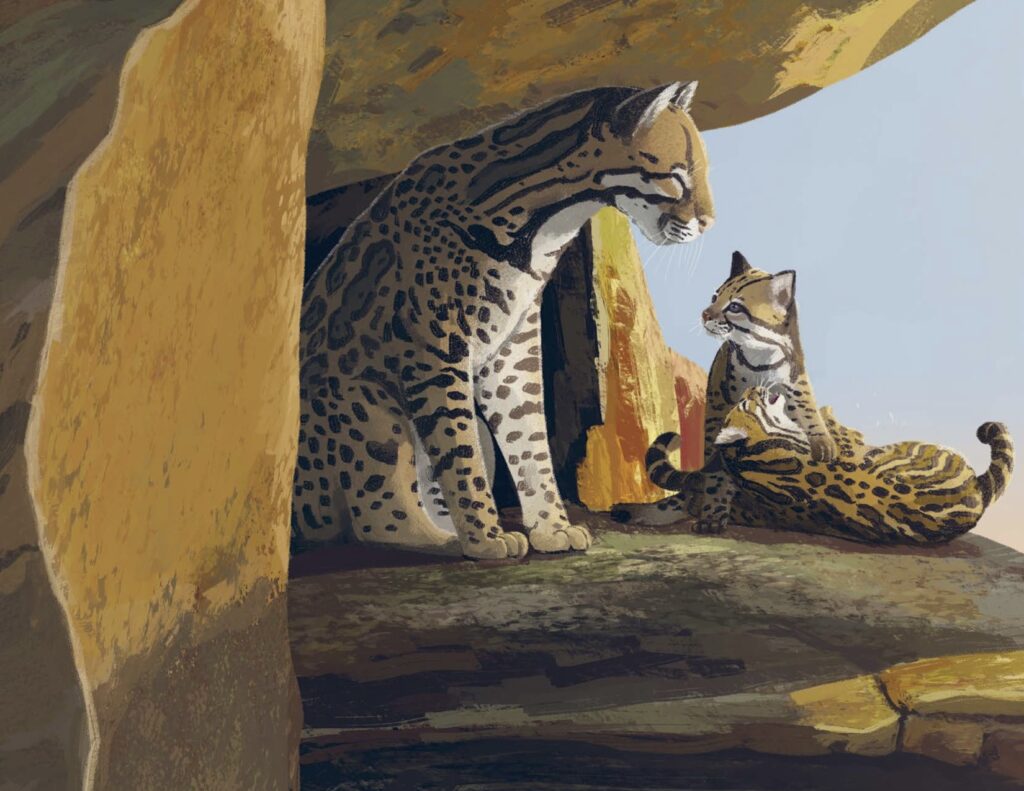
Border Crossings is my attempt to raise awareness of this important issue. To illustrate the dilemma, the story follows two ocelots. These beautiful wild cats live in both Texas and Arizona as well as Mexico, and I decided to show the plight of one that is free to cross the border without obstruction—and one that is blocked by the imposing steel barrier. I was fortunate that my publisher hired the talented Howard Gray to illustrate the book. His remarkable illustrations really bring the story to life and, I hope, make readers young and old think about the often catastrophic consequences of simple-minded solutions.

From Border Crossings, illustrated by Howard Gray.

One problem I had writing the story is that wall construction proceeded at breakneck speed even as we were going through the editing process. On our last trip to Arizona, in fact, Braden and I were dismayed to see this ugly barrier stretch across several regions that had been beautifully wall-free during our previous trip in 2016. Rather than trying to rewrite the story, I explain the situation in the backmatter. Realistically, I don’t see the wall coming down anytime soon, but I hope Border Crossings will help create momentum to at least build numerous wildlife crossings through it. If you’d like to make a difference, share your concerns with your U.S. Senators and Congressmen. As great men have stated in the past, only if we stay silent can tyranny—and in this case, horrible ideas—triumph.   

For humans, the border is just a problem to be solved, but for thousands of species, this region is home. (From Border Crossings, illustrated by Howard Gray.)

Braden’s 2022 Recap: Scrambling to 500

Well, another great year of birding has passed for Braden and me—and we hope for you, too. Both of us had remarkable experiences the likes of which we’d never had before, and in the process once again broke our previous Big Year records—I, accidentally, and Braden with determination and grit. As you enjoy Braden’s year-end recap, we want to tell you how much we appreciate your interest in our adventures over the years. In 2022 we smashed viewership for our blog with more than 7,000 views for the first time, bringing our total to more than 21,000 views since we first began writing this blog (gasp) five years ago. We have never had any goals with the blog except to share our love of birding, provide some education about birds, and encourage a will to protect them. With that in mind, we don’t know how long we’ll continue writing it, but as long as you all keep checking in, chances are good that we’ll stay with it, too. Happy 2023 and may birds continue to grace your lives!

Roaring winds, carrying hordes of gulls and Northern Gannets with them, ripped past Schoodic Point as I stood on the wave-battered rocks. The sky was beginning to brighten, and a few other people had made an appearance, including a guy in the parking lot with a spotting scope who I’m pretty sure was counting migrating sea ducks. I had no particular need to talk to him. Instead I was content to stare at the sea, reflecting on one of the most memorable weekends I’d had in a long time.

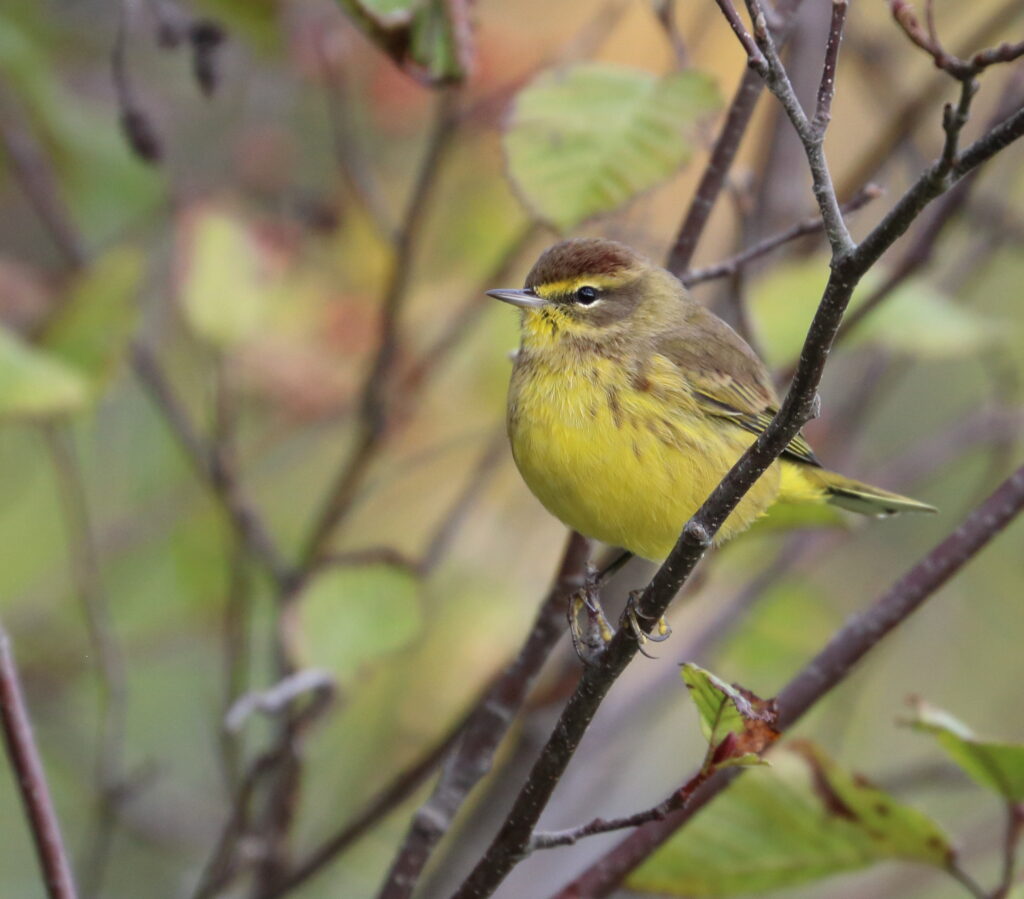
One of the fun things about returning to Maine for fall semester was hitting the Cornfield Loop and seeing tons of fall warblers, including this Palm Warbler. (See also warbler photos below.)

I was several hours away from the end of my EES 217 class, a one-credit course completely confined to the past two and a half days. During this time, I and a group of like-minded students had designed projects relating to the ecology of the Schoodic Peninsula, a part of Acadia National Park. My group was chosen to study the impact that humans were having on Acadia’s saltmarshes, and we tackled this issue by wading out into the marshes around the peninsula and collecting data on trash, invasive species (specifically a tall grass called Phragmites) and erosion. Yesterday we had arrived back at the Schoodic Institute, our home for the weekend, to begin analyzing our data, and later today we would be presenting our project to the public, all under the guidance of the head of the University of Maine Ecology and Environmental Sciences Department, Katharine Ruskin.

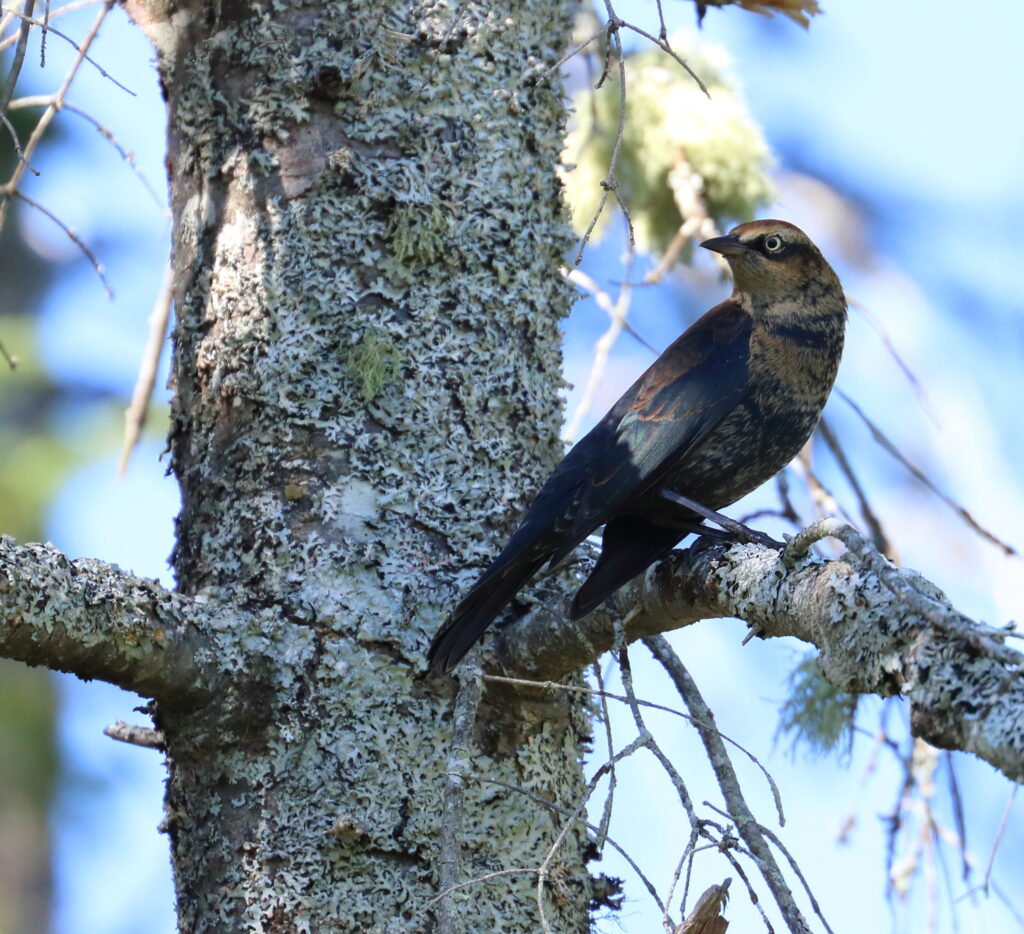
The first Rusty Blackbird I’d seen in six years, also on the Cornfield Loop, was a key ingredient to hitting my Big Year goal.

The fact that I’d been doing science all weekend wasn’t the only great thing about this class. The food was great— welcome relief from dining hall food—and the people were amazing. It was the first time I had been surrounded by like-minded people in a long time, people who cared deeply about conservation and the environment. No one knew each other whatsoever on the Friday that we left, but by Sunday night I felt like I had made some really great friends. I talked to everyone I possibly could during the brief breaks we had to be social, including on Saturday night, when we all grouped together to do icebreakers for a few hours, and Sunday morning, when we all walked out to see the sunrise at Schoodic Point. It truly was an incredible experience.

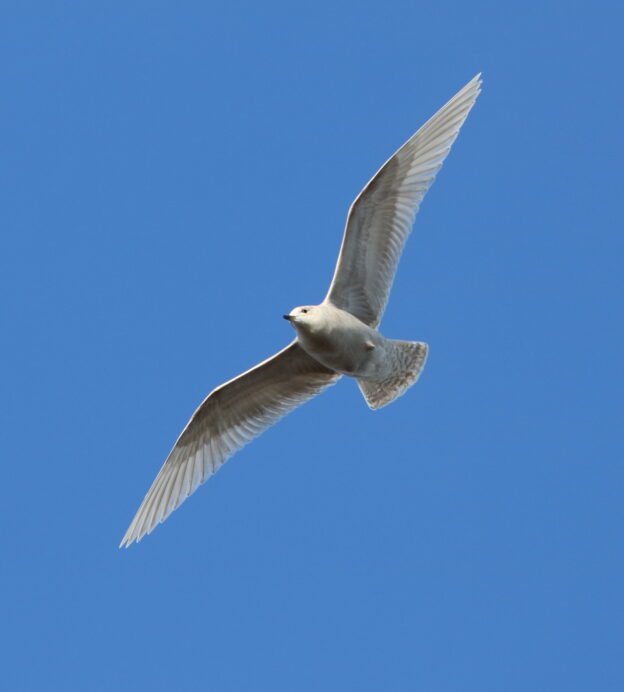
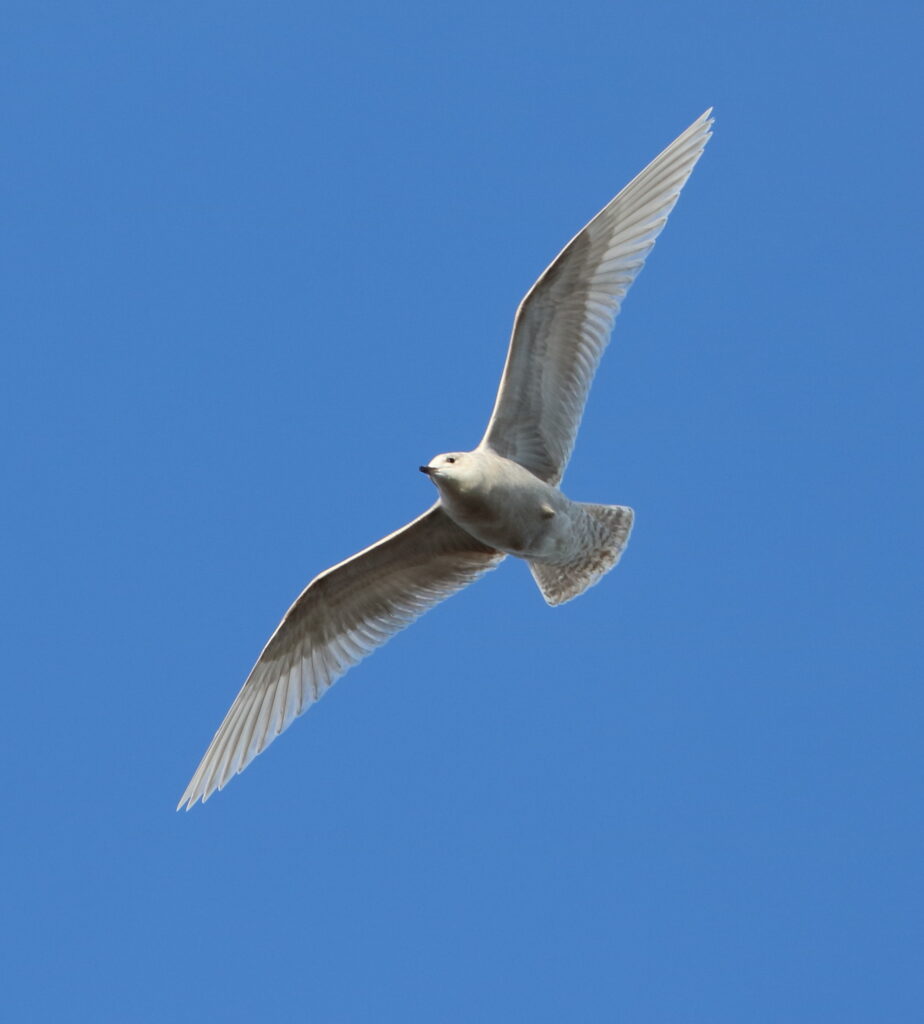
I was especially proud to pick out this juvenile Iceland Gull from a flock of Herring Gulls at the UMaine campus this fall.

Now, as I stood on the rocky cliffs above the Atlantic (half an hour after everyone else had gone back to eat breakfast), I spotted a tiny gull fly by—one with a yellow bill and tiny black wingtips. 

“Kittiwake!” I yelled, to no one in particular.

Black-legged Kittiwake was not a bird I had been expecting to see on this trip, or this year for that matter, and had the distinction of being my 498th bird species for the year. 

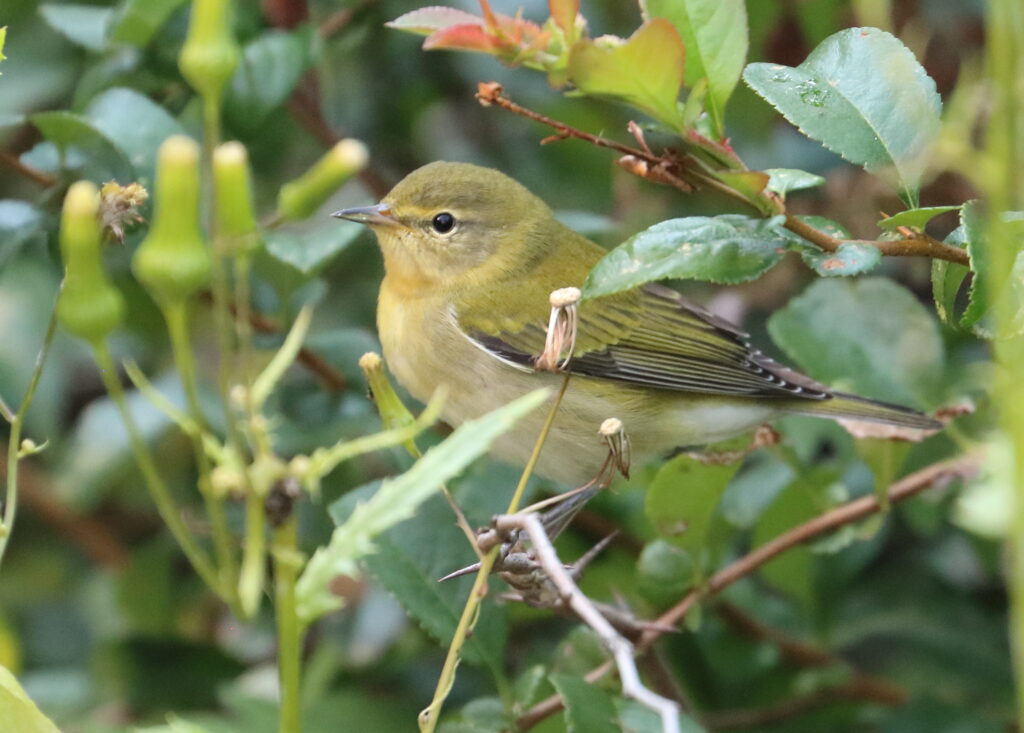
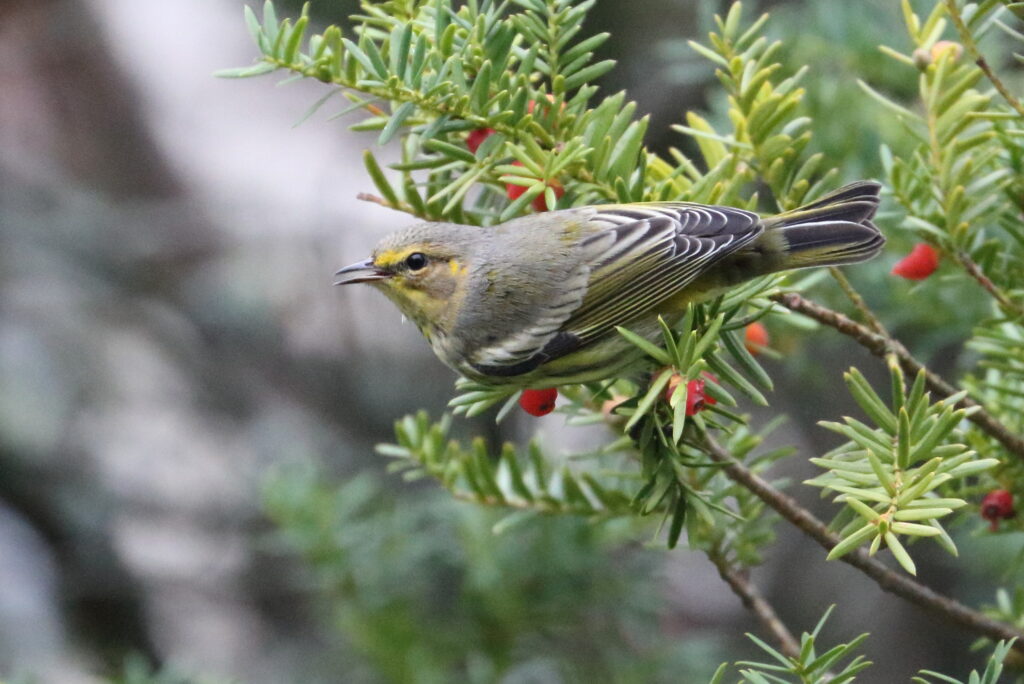
After my dad’s and my amazing shorebirding and ptarmigan experience in August, I had arrived back on the University of Maine’s campus with low expectations—500 birds for the year was within reach, but unlikely since I had only 484 species and didn’t know where 16 more could possibly come from. I took advantage of my campus’s great location during the month of September, however, circling the campus’s Cornfield Loop as often as possible to look for warblers as they migrated south from their breeding grounds in the boreal forest. During that month, I added six species of warblers to my year list: Blackburnian, Bay-breasted, Canada, Cape May, Blackpoll and Tennessee. I also saw the first Rusty Blackbirds and Scarlet Tanagers that I’d seen in six years. Suddenly, my year list passed 490. A trip to St. John, New Brunswick with my girlfriend added White-rumped Sandpiper to my ABA list, and in late October, my friend Wesley Hutchens volunteered to drive me to Lake Sebasticook to see two long-staying Hudsonian Godwits, which I got to watch through fellow Montana birder Ed Harper’s spotting scope. And then, on November 6th, I saw those Black-legged Kittiwakes, cruising by Schoodic Point, and was suddenly two birds away from 500 with two months left.

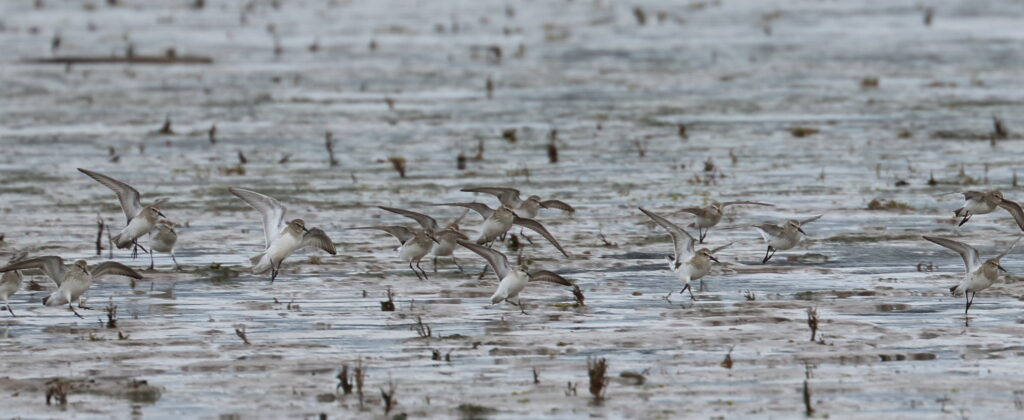
During a long weekend in New Brunswick, Canada, I encountered the largest flock of White-rumped Sandpipers I’d ever seen.

I was not to be deceived by that seemingly long amount of time remaining, however. There just weren’t that many possibilities left, and the birds were leaving. American Golden-Plovers were making brief appearances around the state, but my chances of finding one were slim. Rare wintering birds like Glaucous Gulls and King Eiders also were things I needed on my year list, but again, there was no easy way to find them. Besides, my class load had picked up significantly, and the time I had allotted for birding diminished with every day.

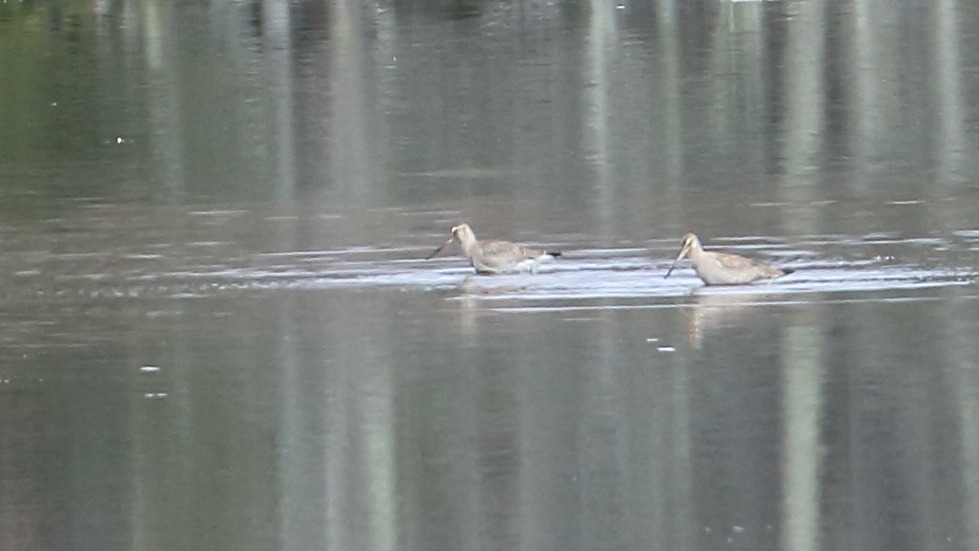
Thanks to Ed Harper and his spotting scope, I picked up my Lifer Hudsonian Godwits in late October at Sebasticook Lake, about an hour away from Orono.

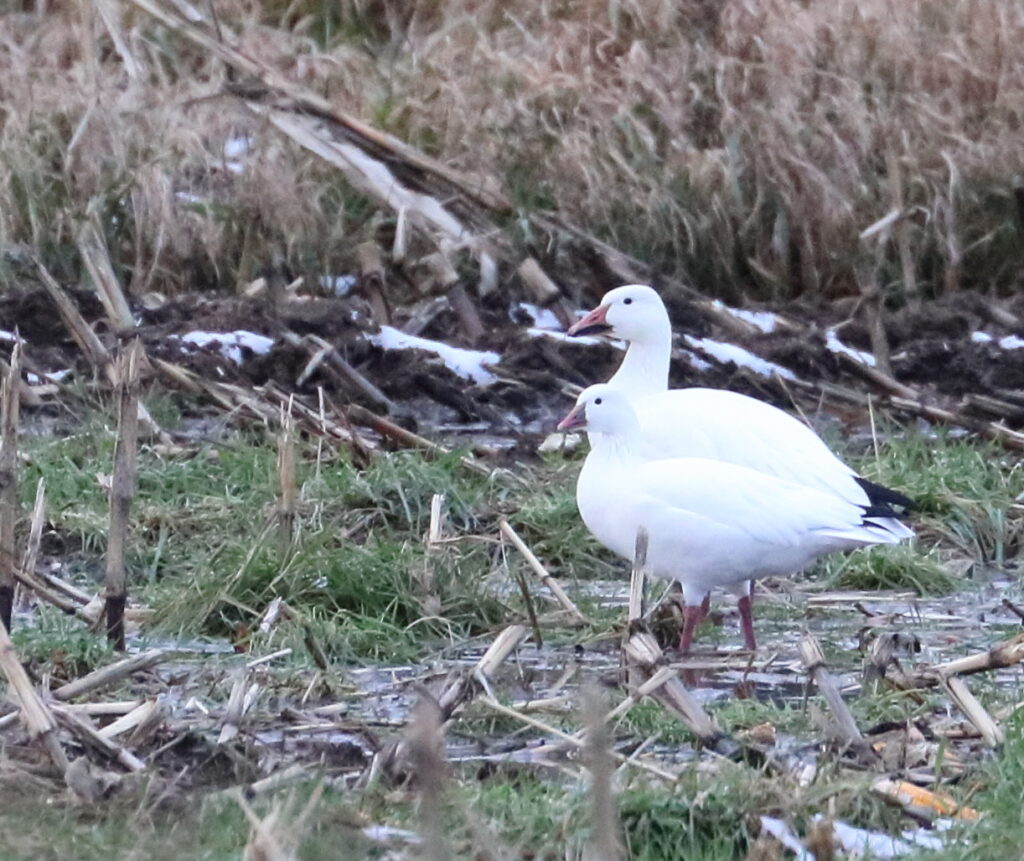
And yet, in mid-November, a local birder reported a Snow Goose from a farmer’s field in Bangor, Maine. The next day, people went to see it, and apparently the identification had changed to Ross’s Goose. Wesley Hutchens went that morning, and reported back to me as I was getting out of my Honors Lecture: it wasn’t a Snow Goose or a Ross’s Goose. It was both. And I needed both for the year, which was ironic given that had I been in Montana, I likely would have picked them up months earlier. I couldn’t resist, but I also couldn’t get there. I didn’t have a car.

Wes solved that problem. “Dude, you’re going to get these geese. I might be late to class, but we gotta get you these geese.”

Needless to say, Wesley Hutchens had been responsible for a large chunk of the birds I’d seen this fall, and I’m very grateful to him for that. We drove the fifteen minutes from campus, pulling over near an abandoned church across the road from a large field, and there they were. Two differently-sized white geese, standing right next to each other. It was almost too easy. And yet, maybe it was a reward for all of the time I’d put into getting the other 498 birds I’d seen in 2022. I’d seen a lot of birds in 2022.

Who would have thought my 499th (Ross’s Goose) and 500th (Snow Goose) birds of the year would be standing right next to each other—and only a few miles down the road?

Before leaving Montana in January, my dad and I had racked up nearly 70 species just birding around Montana, including uncommon winter species like Great Gray and Short-eared owls, Lapland Longspur, Pine Grosbeak and Canada Jay. February had been a rough month for birding, but March brought the trip from New Orleans to Key West with Nick Ramsey, giving me lifers in the form of Prairie Warblers singing from mangroves and Swallow-tailed Kites circling over the Pineywoods. That trip got me over 200 for the year. April was when a few migrants showed back up in Maine, followed by a stellar few days of May birding in New York City with my dad. I arrived back home to Missoula later that month, just in time for the migrants to hit Western Montana, which allowed me to see 100 species in a day just birding around my hometown.

Then, it was off to Southeastern Arizona, a region that was already wilting under ninety-degree temperatures during the middle of the day. Thoughts of Spotted Owls and Scott’s Orioles accompanied us as we crossed the border into southern California, then up the coast, across the Central Valley into the Sierras, where the town of Twain Harte became my home base for three months. It was there that I’d met Sam Darmstadt, Miles Carlile and Ivara Goulden, amazing people with whom I shared amazing experiences throughout the summer. We camped in the hottest desert in the world, we climbed one of California’s tallest peaks, we set off into the formidable Pacific Ocean in search of lifers. If you want to know what wildlife we saw during these adventures, well, there are posts about each and every one of them!

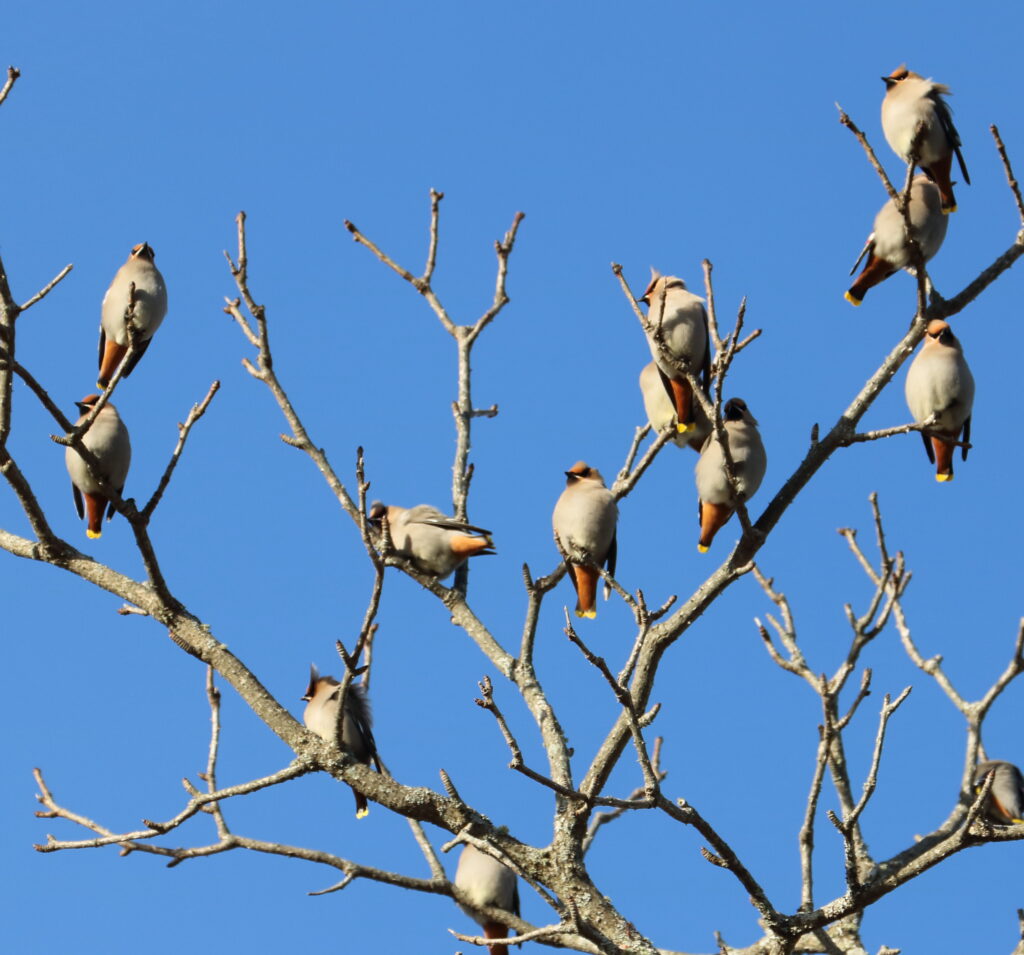
Despite all of the great adventures I’ve had this year, I never tire of being home and enjoying Montana’s birds, including the Bohemian Waxwings flying around our neighborhood.

And now, flash-forward to now, December 26th, 2022. I’m back home in Missoula for a few more weeks, then I head back to Maine to kick-off another year. My goals? I don’t have any numbers in mind, but I would like to see a Northern Pygmy-Owl while I’m still out west. Learning the Eastern wood-warblers by song would also be awesome, should I get a summer job in New England somewhere. 

But what about the birds of 2022? What were my dad and I’s top ten, or top twenty? You’ll just have to stay tuned!

Another Accidental Big Year: Sneed’s 2022 Recap

FatherSonBirding’s millions of loyal fans will have no doubt noticed a paucity of posts the past few months, and we sincerely apologize, noting the severe nationwide downturn in consumer confidence and the real estate market that this has obviously precipitated. Fortunately, our silence has been a result of good things happening to Braden and me. Braden has been having some exceptional academic experiences during his fall semester at UMaine while I have been kept busy both birding and working on several exciting book projects that have come my way. That said, we’d like to take a couple of posts to wrap up the last few months and, indeed, our entire year of birding. Since Braden is studying for finals, I’ll go first.

Some of you followed my “Accidental Big Year” last year in which I set a new personal best of 352 ABA species during 2021. Believe it or not, I’ve blundered into another accidental Big Year in 2022. How the heck did that happen? I mean, I have definitely underperformed in my home state of Montana this year, notching my lowest total in several years. Fortunately, our trips to New York City and Arizona put me within striking distance. By early October, my count sat at a tantalizing 335 species, only 17 birds short of tying last year’s record, but where would the additional species come from? Some good writing news led to the answer.

This summer, I landed a contract to write about conservation on military bases, with a special focus on Eglin Air Force Base in the Florida panhandle. I chose this base because I spent all of my summers growing up with my father in Pensacola—adjacent to Eglin. Call it nostalgia or a desire to learn more about the area’s species, but I arranged to interview biologists down there to find out what they were doing. First, though, I decided to stop to see my brother in Atlanta, Georgia.

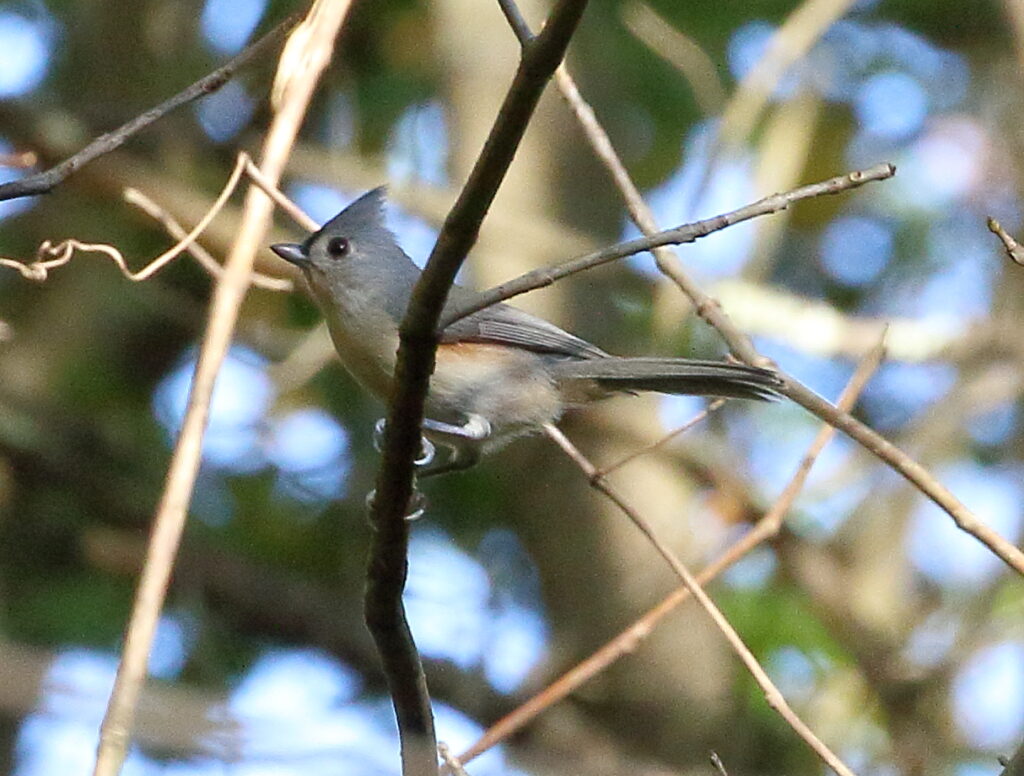
On my recent trip, I didn’t get photos of my best Atlanta birds, but Tufted Titmice are always a blast to see.

Honestly, I didn’t know how many new birds I’d see in Atlanta. Migration season was waning, and it was possible warblers and other songbirds had already moved through. In general, they had, but thanks to some intensive studying and tutelage by Braden, I was able to score a number of great birds including a trio of wonderful warblers: Blackpoll, Tennessee, and most exciting, Cape May—a Lifer pour moi.

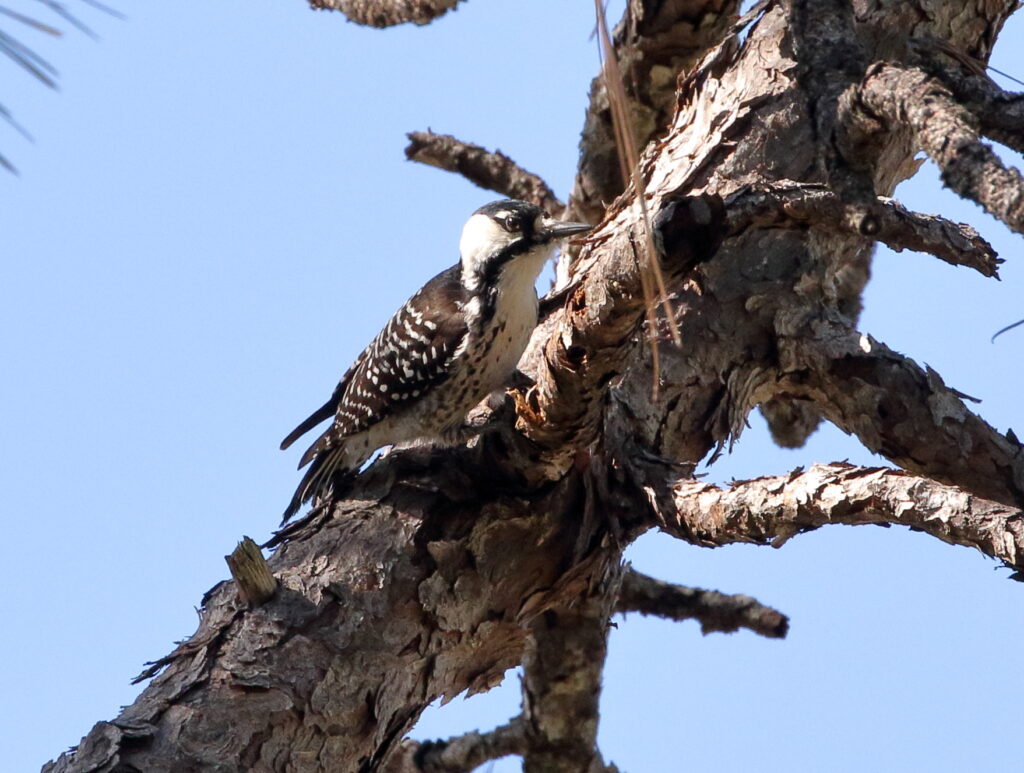
Leaving Georgia to take up a week-long residence with my stepmother Suzanne and her partner Jim in Milton, Florida, I wondered if I was close enough to top 352 for the year? Unfortunately, I arrived in Florida suffering from my first cold in three years—one I am just now getting over six weeks later. Not how I wanted to begin three consecutive long days of work at Eglin! Nonetheless, I persevered and got a bunch of great information from the base biologists. Oh, and I kept adding up Year Birds! In fact, I couldn’t have asked for a better bird to break my record. As biologist Kelly Jones drove me around teaching me about endangered salamanders, we ran into a group of Red-cockaded Woodpeckers, one of America’s coolest and most unusual birds. These birds became endangered due to the catastrophic loss of longleaf pine ecosystems across the Southeast, but many people have been working to restore both the pines and the woodpeckers. Last I heard, Eglin is home to the nation’s fourth-largest population, but this was the only group I ran into while there.

Red-cockaded Woodpeckers are the only North American woodpeckers that carve holes in living trees. Apparently, the sap running down the tree trunk helps deter snakes and other potential predators.

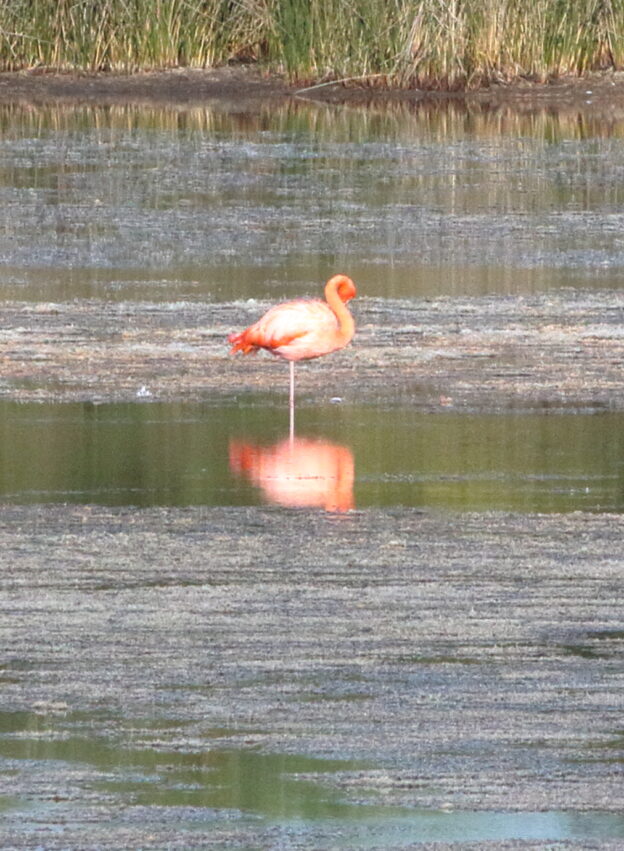
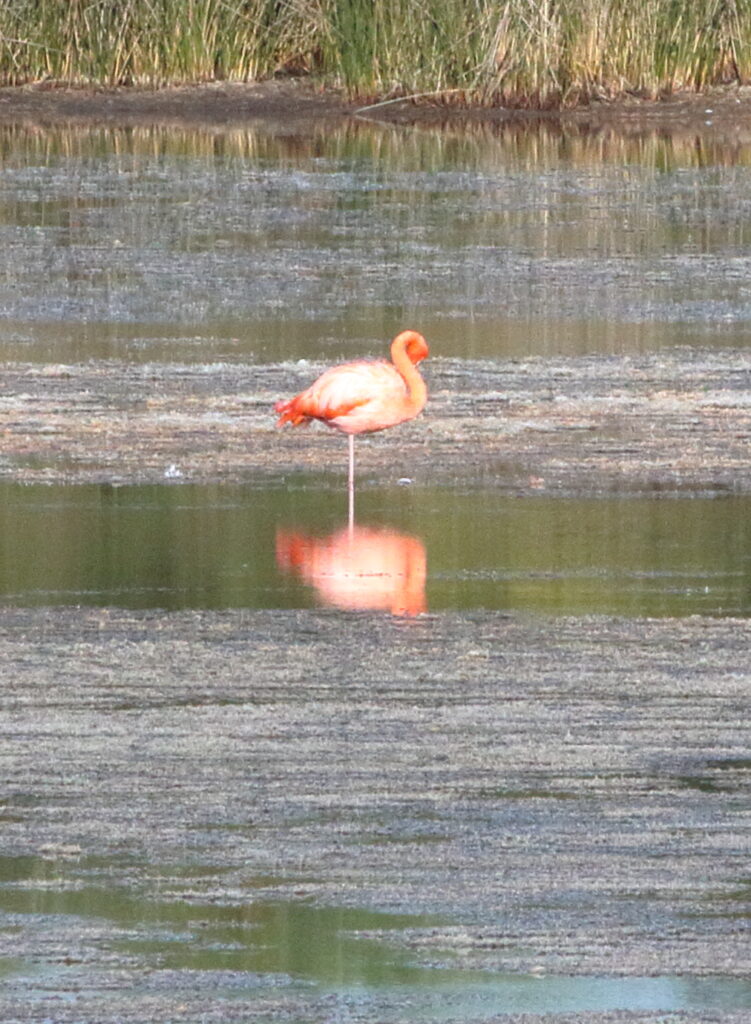
Not wanting to wear out my welcome with Suzanne and Jim, I used the weekend to take a jaunt over to Tallahassee to visit St. Marks National Wildlife Refuge. My dad, a professor at the University of West Florida, led many field trips to St. Marks and always raved about it. More recently, Braden and Nick Ramsey, visited the refuge, seeing among other things a lone flamingo that has lived at the refuge for the past four years. I hoped also to see this bird—dubbed “Pinky”—but kept my expectations low.

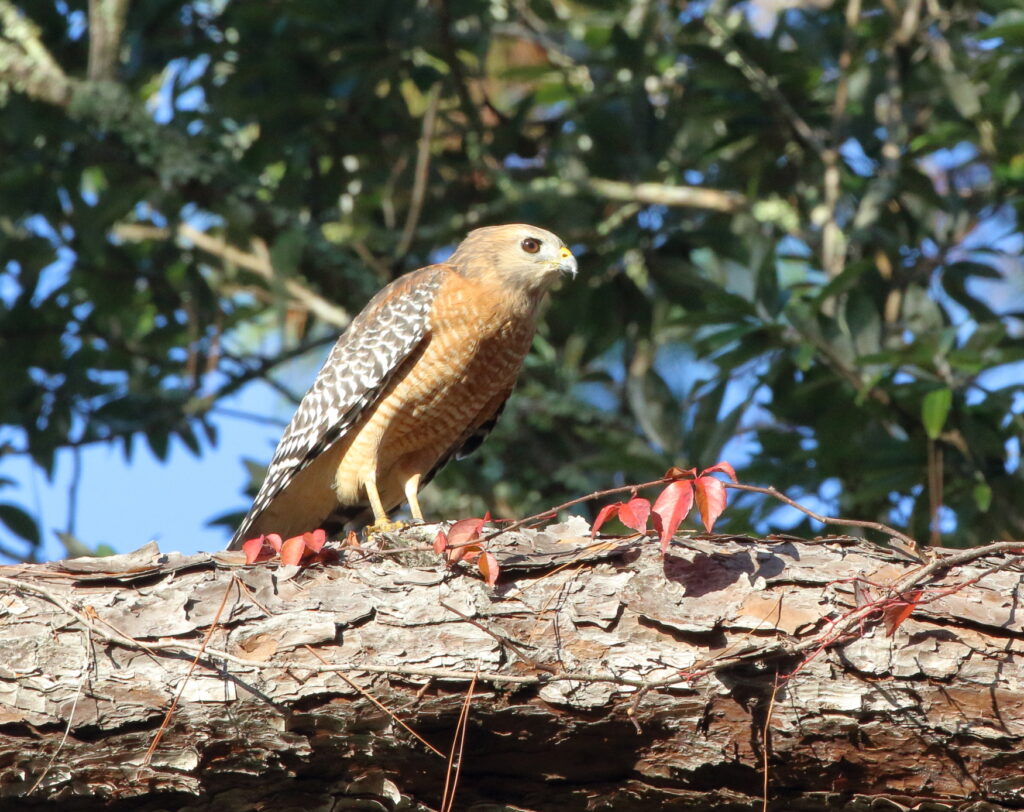
I know they’re common, but I love Red-shouldered Hawks, and this is by far the best photo I’ve ever taken of one.

Upon arriving, I discovered that St. Marks truly is a magical place—a remnant of “Old Florida” with towering oaks and pristine marshes—and my visit got off to a good start with great views of a Red-shouldered Hawk and Yellow-bellied Sapsucker at the visitor’s center. I asked the local naturalist if anyone had seen Pinky the flamingo lately and she said yes, but didn’t know where, so I decided to head down to Lighthouse Pool and work my way back. As I reached the pond, I happened to glance right. There, in the middle of the pond, stood a large orange blob.

“No way!” I exclaimed, braking to the side of the road as I reached for my binoculars. Sure enough, there stood Pinky—America’s most famous flamingo. Full disclosure: Pinky was not the most exciting bird on the planet, content to just stand there and preen when s/he felt like it. Taking a walk along the southern edge of the pond, however, I picked up lots of other nice Year Birds including Reddish Egret, Tricolored Heron, Short-billed Dowitcher, Semipalmated Plover, and more.

I’m not sure where Pinky got his name, but to me he looked obviously orange. Still, an official Lifer for me, though I did see American Flamingos thirty years ago in Bonaire.

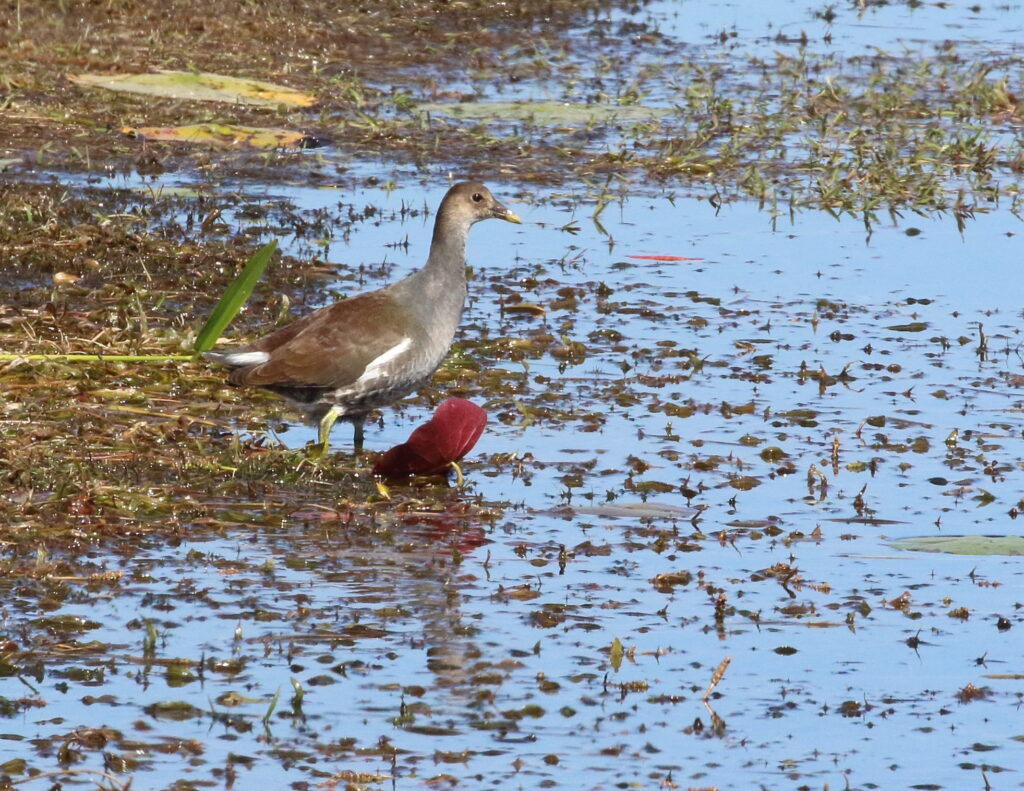
My visit to St. Marks was far from finished. As I drove back up the road, I thought I spotted a rail at the East River Pool location. I didn’t—and this was not the first time I’d mistaken a Common Gallinule for a rail! Training my eyes out on the pond, though, my heart picked up. Why? Because way out there among a large group of wading birds, I spotted another Lifer: Wood Stork! Along with Roseate Spoonbills, another Year Bird. My Lifer-palooza hadn’t ended, either. Following Braden’s directions I drove to another part of the refuge to hear my Lifer Clapper Rails.

This is at least the second time I’ve mistaken a Common Gallinule for a Clapper Rail. I do believe they’re closely related, though, so I hope that you, my dear readers, cut me some slack!

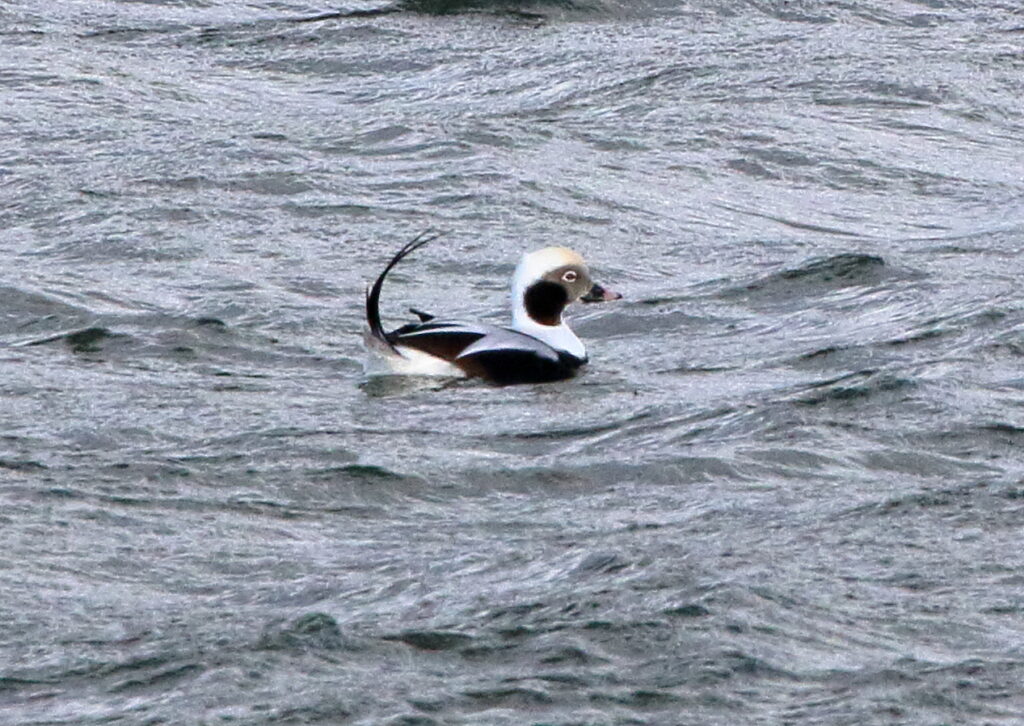
I returned to Montana with a total of 372 Year Birds and have since picked up a few more, thanks to a fortuitous discovery of Montana’s first Long-tailed Duck of the winter, along with the first Bonaparte’s Gulls I’ve ever seen in Missoula County. These and a Horned Grebe now have me sitting at 375, well in excess of my previous ABA Big Year record. My guess is that I’ll pick up one or two more when Braden gets home in a couple of weeks—though what they might be I have no idea. And you know, it really doesn’t matter. While it’s fun to count birds, it’s even more fun to get out and see them and, hopefully, make some new friends along the way. At St. Marks I met several delightful birders to share my adventures with. I hope that as 2022 draws to a close, you all have your own memorable birding adventures combined with heavy doses of peace and friendship.

My Lighthouse Pool checklist.

Perhaps my biggest score of the year was seeing the first Long-tailed Duck recorded this winter in Montana—and my first male ever. If this isn’t a glorious animal, I don’t know what is!

All “Cooped” Up!

Today, we take a break from Braden’s High Sierra adventures to explore how we all bird through the summer doldrums. Here I share a surprising discovery right in my own neighborhood. If you subscribe to FSB, please share your own similar story, and if you don’t subscribe—what are you waiting for? We only sell your information to people who will give us a LOT of money (just kidding; we do not share any of this information). So please fill out the box down to the right—and make sure you receive every “episode”.

How are you spending the summer birding doldrums? When we first started, Braden and I pretty much stopped birding during July and August—until we learned that there are still many birds to be had during the Dog Days! Even though it’s still summer, some shorebirds are already making their way south from their Arctic breeding grounds and can show up almost anywhere. Last summer, Braden and Nick Ramsey joined a bunch of other stellar birders for an epic day at Glacier National Park—and, of course, this summer Braden is birding the heck out of California. As for me, I am simply enjoying the ordinary birds around Missoula, trying to sharpen my skills so I can distinguish the call of a Lazuli Bunting from that of a Yellow Warbler! Experienced birders know, however, that even “ordinary birding” can produce extraordinary results.

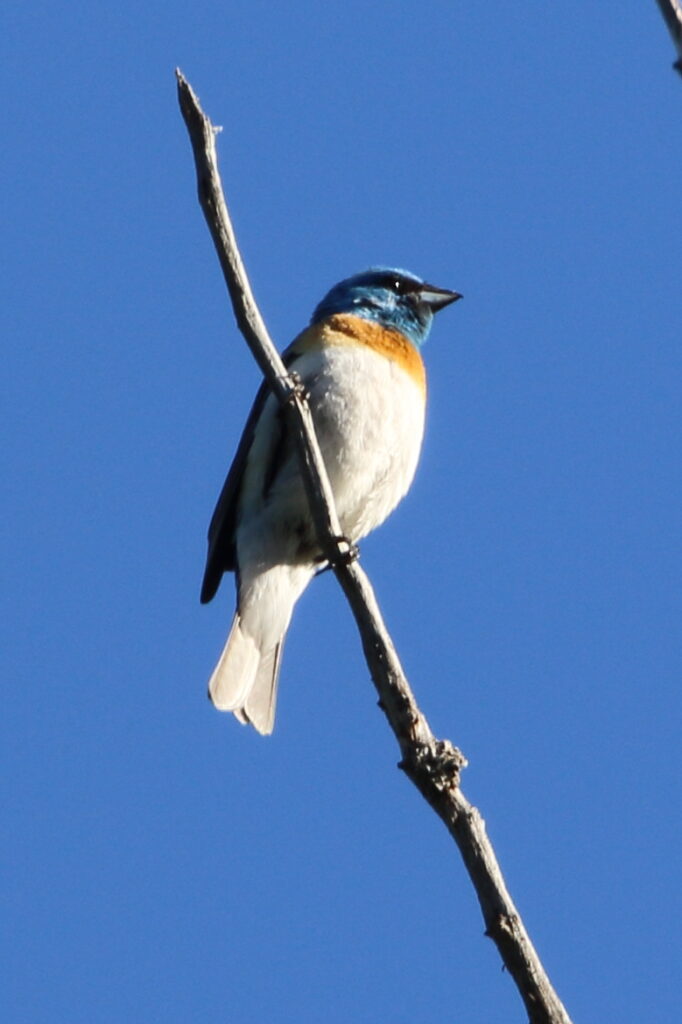
Even during the Summer Blahs, an occasional bird will fly out for a photo-op! Thank you, Mr. Lazuli Bunting!

A couple of weeks ago, I decided to take our dog Lola on an early walk around Greenough Park to beat the heat. For those of you familiar with Greenough, Lola and I parked in the lot midway up the east side of the park, and crossed the two pedestrian bridges so that we could begin walking clockwise around the park—and better spot any caffeine-crazed bicyclists barreling down on us. Sure enough, after only a hundred yards on the main path, a large, crazed shape came right at us. But it wasn’t a bicycle. It was a bird—and it zoomed a mere ten feet above my head! On instinct, I spun around and chased after it, hoping for a solid ID before it disappeared. To my surprise, the bird swooped up into a tree only fifty meters away.

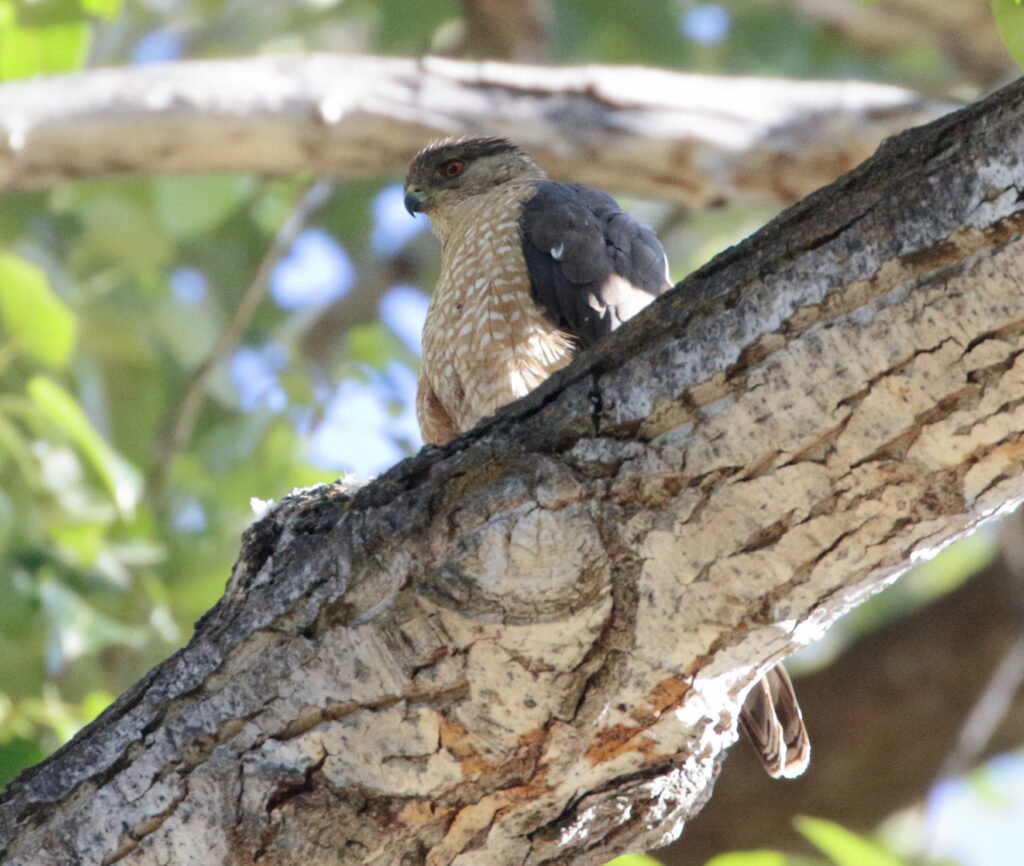
Even while not actively hanging with the chicks, at least one Cooper’s Hawk parent never perched far away.

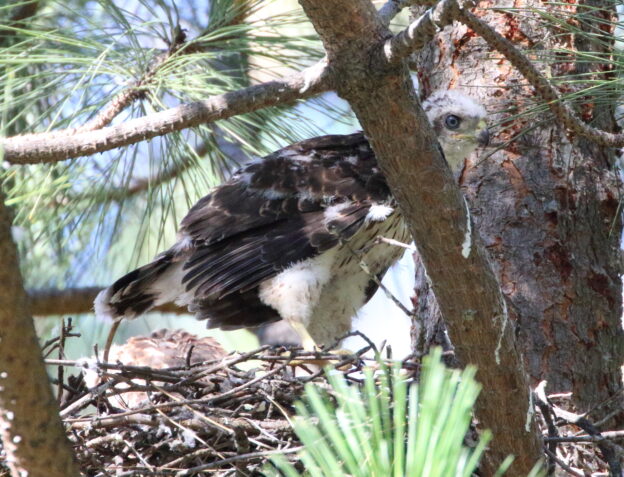
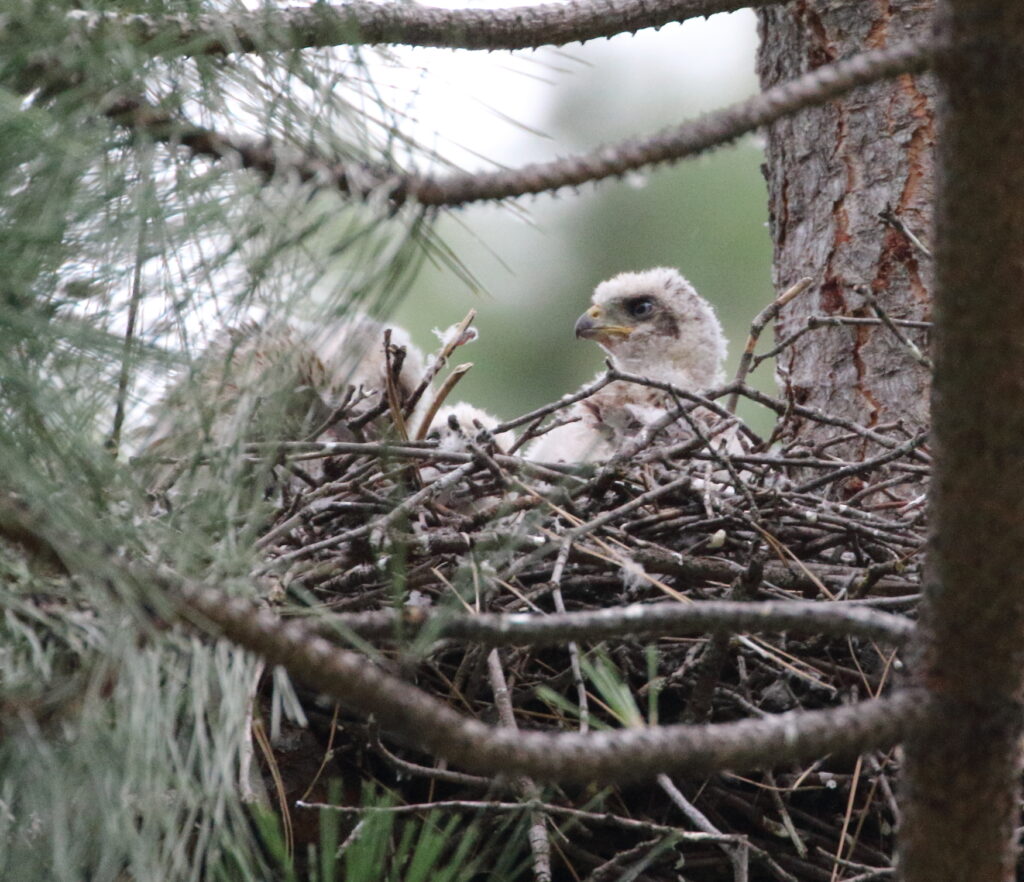
By this time, I had 99% concluded that this was a Cooper’s Hawk—a kind of accipiter especially adapted for catching birds and flying through trees. According to Birds of the World, 47 species of accipiters live on the planet, but here in the U.S. we have only three: the smaller Sharp-shinned Hawk or “Sharpie”; the larger Cooper’s Hawk or “Coop”; and the Northern Goshawk, our largest accipiter and the bird Braden is chasing around the Sierras this summer. Braden and I don’t often get good looks at Coops so I hoped that this one would stay in the tree long enough for me to observe it. It did—and the reason startled me. In a pine next to the busy path, the Cooper’s Hawk couple had built a nest! Even better, the nest had babies!

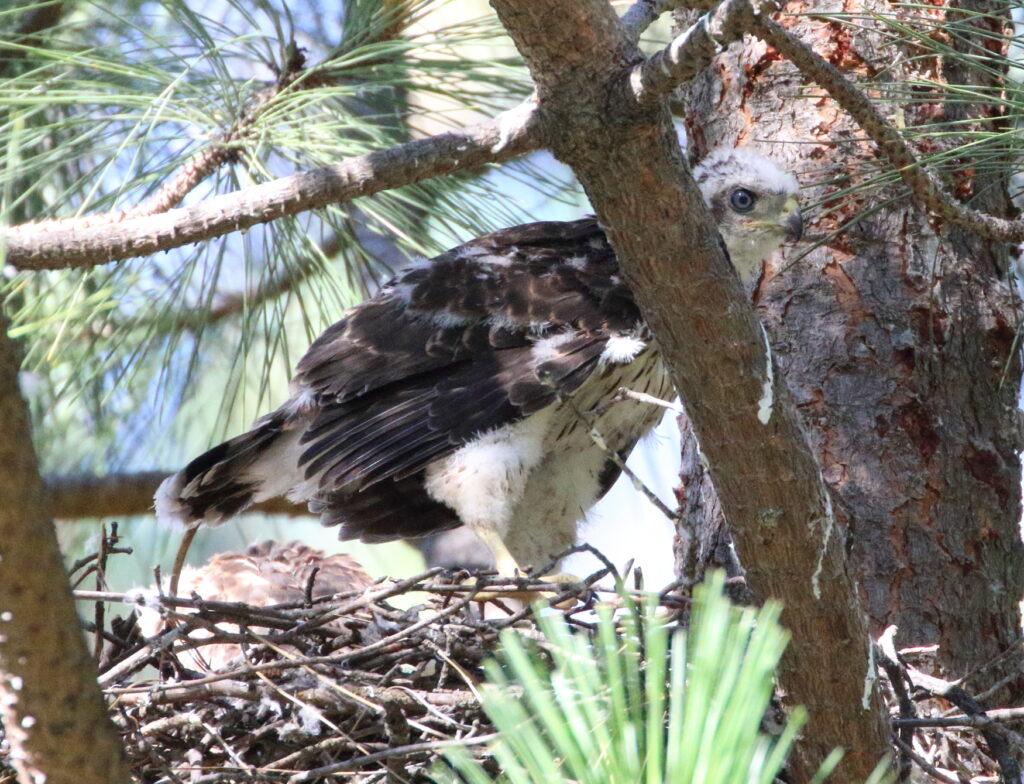
During my second visit to the Coop nest, the babies generally kept their heads down—save for this guy. Want to bet s/he is first out of the nest?

I, of course, hadn’t brought my camera with me, but in a way that was better because it allowed me to observe the action without worrying about getting a good photo. Speaking of action, I forgot to mention that when the adult flew by me it had been carrying prey—something large and furry, maybe a rabbit. As I watched, the adult started butchering this critter and feeding it to the ravenous chicks. And speaking of chicks, I was amazed to see four of them—and all quite large. Later, I learned that this is not unusual, and a pair will sometimes raise even more, a testament to the hard-working parents. In fact, even though first-year mortality runs fairly high, Cooper’s Hawks seem to have an excellent survival rate as adults and have been known to breed up through twelve years of age.

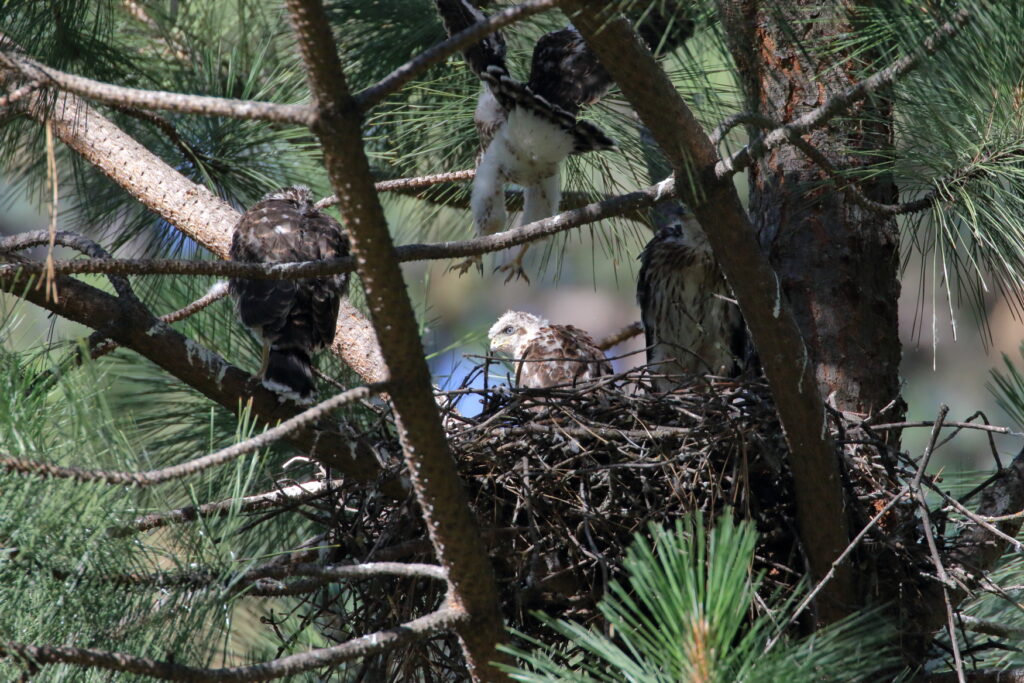
Incoming! On my third visit, I just loved watching the young Coops testing out their flying abilities—even if they did occasionally land on each other!

Since discovering the nest, I’ve returned two more times, and each time the babies had made marked progress. My last visit, I watched them hopping in and out of the nest, testing their wings for a departure that couldn’t have been more than a couple of weeks away. They also were quickly filling out their juvenile coloration, transforming from white fuzz balls to serious-looking predators before my eyes. At least one parent, though, was never far away.

Ready for launch? Pretty darned close. Observing the Coop nest made me realize that the young have blue eyes! How’s that for a blue-eyed baby?

It all just goes to show that even when we think birding is dead, there’s a lot going on. We just have to keep getting out there and paying attention. Who knows? You may have a Cooper’s nest in your backyard right now! Coops are famously adaptable and found in every region of the Lower 48, often in urban environments and often all year-round. In fact, their numbers have increased dramatically in the past half-century—a nice success story in a time when so many birds are in trouble.