Category Archives: Listing

From One Nemesis Bird to Another

Before sharing my recent search for nemesis birds, a quick update on our last post, “Welcoming White-crowned Sparrows—with Observer Bias”. In the post, I discussed how the apparent abundance of White-crowned Sparrows coming through western Montana this year may have to do more with my birding effort than actual sparrow numbers. Well, after I published the post, several birders around the state shared that they also have been seeing unusually high numbers of White-crowneds. This greater “sample size” of observations leads me to believe that the birds might be having an exceptional year after all. Go White-crowneds! This last Monday, in fact, I saw another WCSP feeding with some American Goldfinches. Will it be my last observation of the season?

There’s not many better things in life than birding in the Mission Valley on a glorious fall day—even when nemesis birds are eluding you!

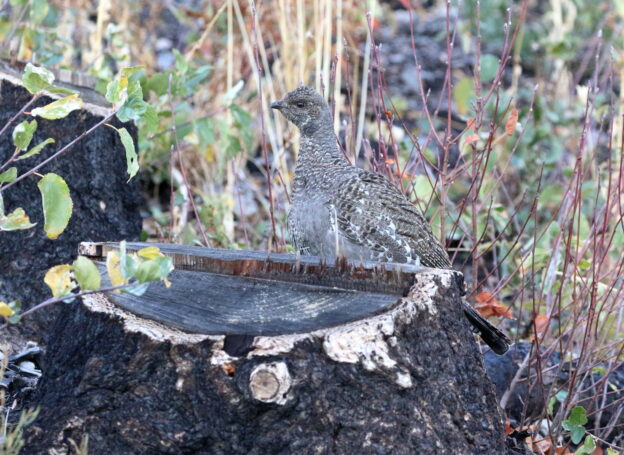
In recent posts, I have shared my foiled attempts at finding one of my biggest nemesis birds, Spruce Grouse. Here in Montana, I have started to become known as “The guy who’s never seen a Spruce Grouse.” It’s not my favorite moniker, but well, I am learning to live with it. To distract me from my shame, last week I decided to look for a different nemesis bird: American Golden-Plover.
Arguably one of America’s most stunning birds during breeding season, the AGPL has thwarted Braden and me here in Montana at least a dozen times. Every year, birders spot the plovers up in the Mission Valley north of us, and countless times we have saddled our trusty minivan and galloped up to Ninepipe National Wildlife Refuge or Pablo Reservoir—only to find no American Golden-Plovers in sight. Braden did finally find one in Maine a couple of years ago (see his post “A Montana Nemesis Bird in Maine”), but the arrival of 2023 still saw the absence of this marquis bird on my Life List, let alone my or Braden’s Montana lists. This has obviously caused us great pain and anguish, so when I saw that someone had observed six, count ‘em SIX, American Golden-Plovers up at Ninepipe last week, I had to seriously ask myself if I wanted to put myself through yet more misery.

My answer, with Braden’s encouragement: Yes.

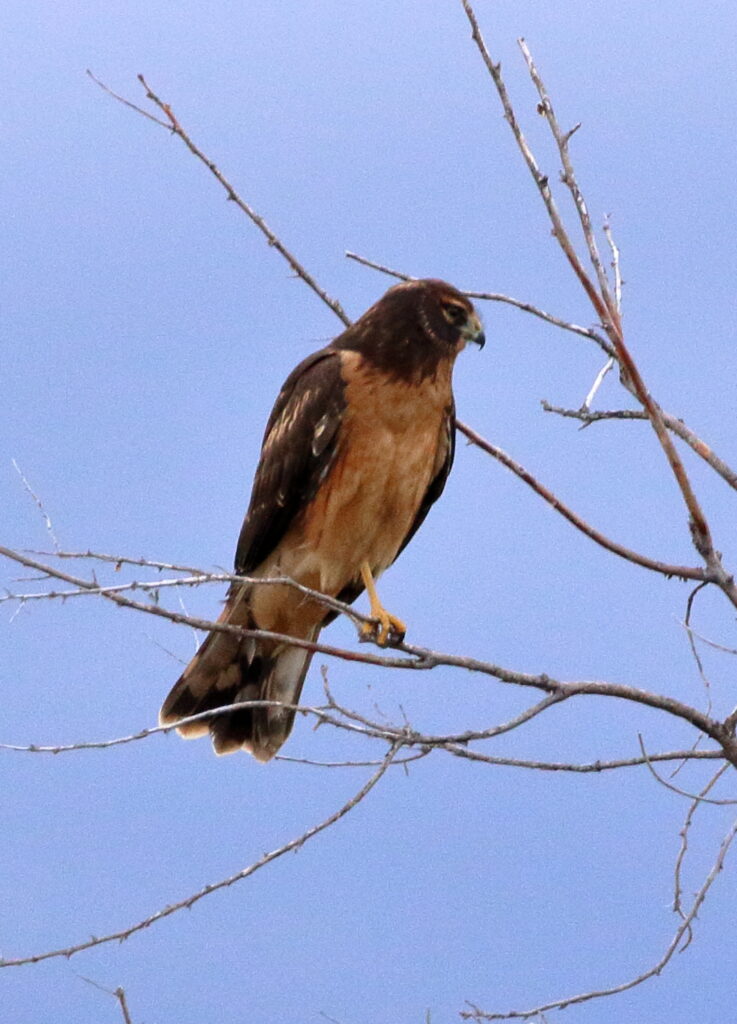
The second of two Peregrine Falcons I would see this day. Definitely PEFA migration season!

As a result, last Thursday, I woke early, walked Lola, and then headed north on 93. My first stop? Ninepipe. I usually begin my explorations here with a drive down Duck Road, but today I was a man on a mission, so I entered at the bottom end of the refuge. Almost immediately, I spotted small shorebirds at the edge of a pond and pulled over to get out my spotting scope. Before I could get my eyes on them, though, a large dark shape swooped in and the shorebirds frantically flung themselves into the sky. Peregrine Falcon! my mind shouted as I excitedly watched the raptor give chase. The falcon and shorebirds circled the pond twice, but then fled toward the horizon. I had failed to get a look at the shorbs, but seeing a Peregrine was a thrilling start to the day!

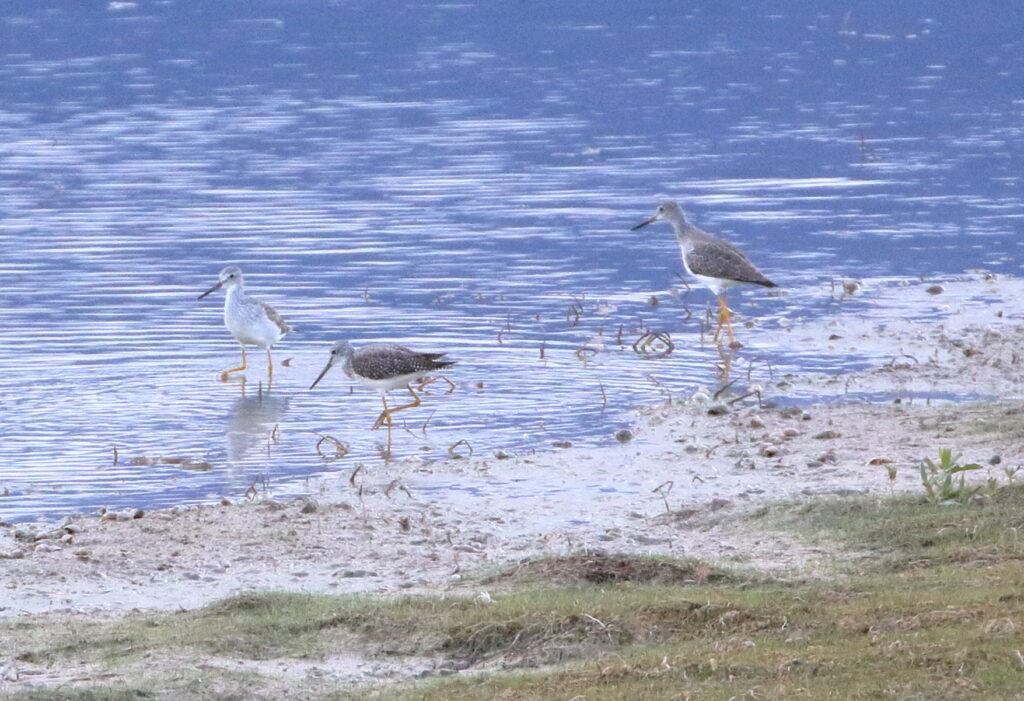
They weren’t the plovers I was looking for, but it’s always, ahem, great to see Greater Yellowlegs in Montana.

After climbing back into the car, I continued to wind my way north, getting glances at Trumpeter Swans and several kinds of ducks. I also got great looks at a trio of American Pipits on the road. My major destination, though, was the dam on the west side of the main lake. There, I observed several Greater Yellowlegs and, driving a bit farther, a couple of other shorebirds on the muddy shore below. I quickly parked and began breaking out my spotting scope when a car pulled up containing yet another impressive trio: accomplished Montana birders Craig Hohenberger, Shawn Richmond, and Braydon Luikart! I had last met Craig all the way out in Westby this past summer so it was a nice surprise to see him here again now, and to chat with all of them.

“Are you the one who is trying to find the Spruce Grouse?” Shawn asked.

“Well, uh, yeah,” I sheepishly replied. “But today I’m looking for American Golden-Plovers.”

Shawn knows the Mission Valley like the back of her hand, and said, “They should be around.” She then gave me the name of a place she had seen them only in the past few days.

“Thanks,” I told her, “I’ll check that out.”

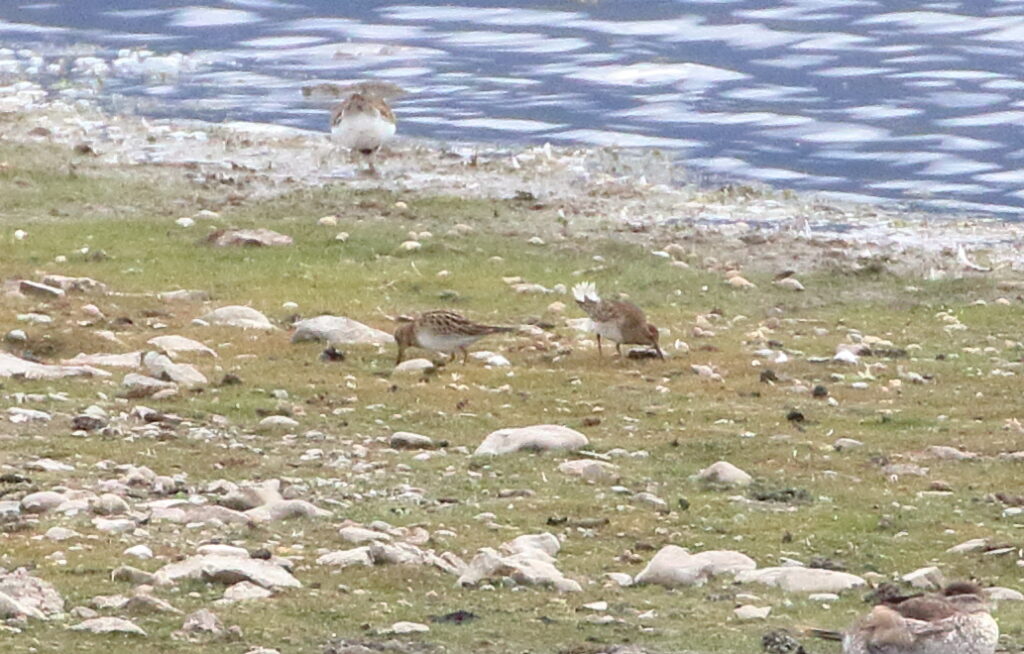
First, though, I wanted to scope the ground in front of me. To my surprise, the pair of shorebirds below me turned out to be Pectoral Sandpipers—Year Birds for me and, I suspect, what the Peregrine Falcon had been going after earlier. Again, though, no golden-plovers, so I packed up my scope and moved on.
Still no golden-plovers, but it was great to see Pectoral Sandpipers for the first time this year.

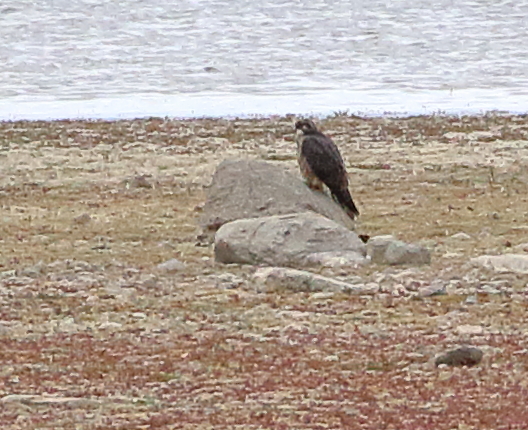
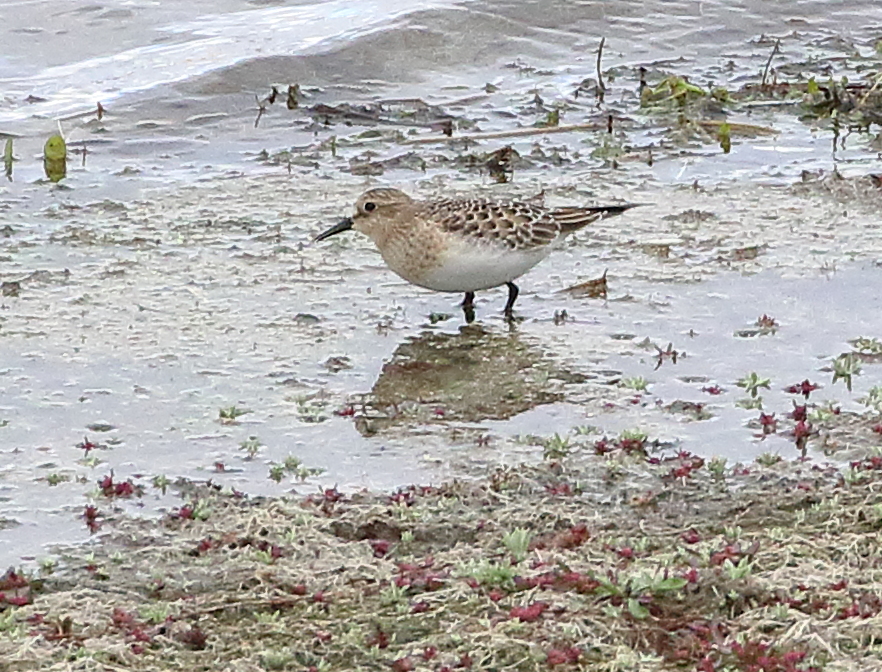
In a tradition Braden and I have followed since we began birding, I grabbed an egg biscuit at the McDonald’s in Ronan, and continued on to another well-known place for sighting AGPLs, Pablo Reservoir. Again, I began at the south end and slowly continued north on top of the dam. I was delighted to discover a pair of Baird’s Sandpipers scouring the shore in the company of half a dozen American Pipits. The gurgling calls of Sandhill Cranes ricocheted across the water as I looked out on hundreds of geese, ducks, gulls—and a lone American White Pelican. A dark shape perched on a little rock on the far mudflats, and I trained my scope on it with a strong suspicion. Yes! It was another Peregrine Falcon! I was definitely hitting migration season for those! As for the American Golden-Plovers???

Nada. Zilch. Klum.

Though the golden-plovers again foiled me at Pablo Reservoir, I got my best look of the year at a couple of Baird’s Sandpipers!

Normally, that would have been the end of my day—except for running into Shawn Richmond earlier. “I’m here,” I told myself. “I have plenty of iced tea. I might as well check out the spot she told me about.”

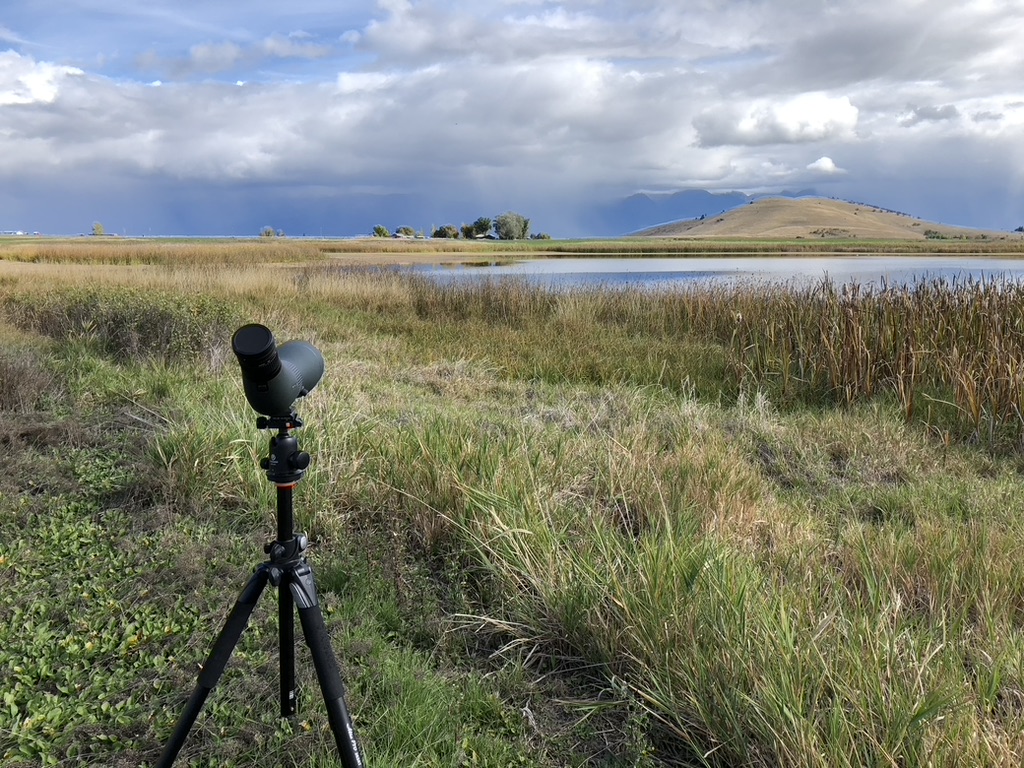
I punched up the location on Google Maps and it showed a 25-minute drive. Though an official hotspot, it definitely sat off the beaten path enough to receive fewer visitors. I parked behind an abandoned house of some sort and could see that viewing would be less than ideal. A lake lay several hundred meters away, but the near shore was obscured by vegetation while the far shore shimmered another couple of hundred meters beyond that. Nonetheless, even through my binoculars I could see that there were birds on that far shore. Even better, I felt pretty sure they were shorebirds!

I assembled my scope and began tromping across the field, hoping I wouldn’t scare any of the distant birds. I didn’t, but before I could get closer, a Northern Harrier did, and the birds on shore scattered before I had any hope of identifying them. I cursed at my luck, but then, amazingly . . . the birds came back! This spectacle, it turns out, would repeat itself quite a few times during my short visit.

A Northern Harrier kept stirring up the shorebirds as I was trying to ID them. Don’t tell the shorebirds, but I think the harrier had its sights on other prey!

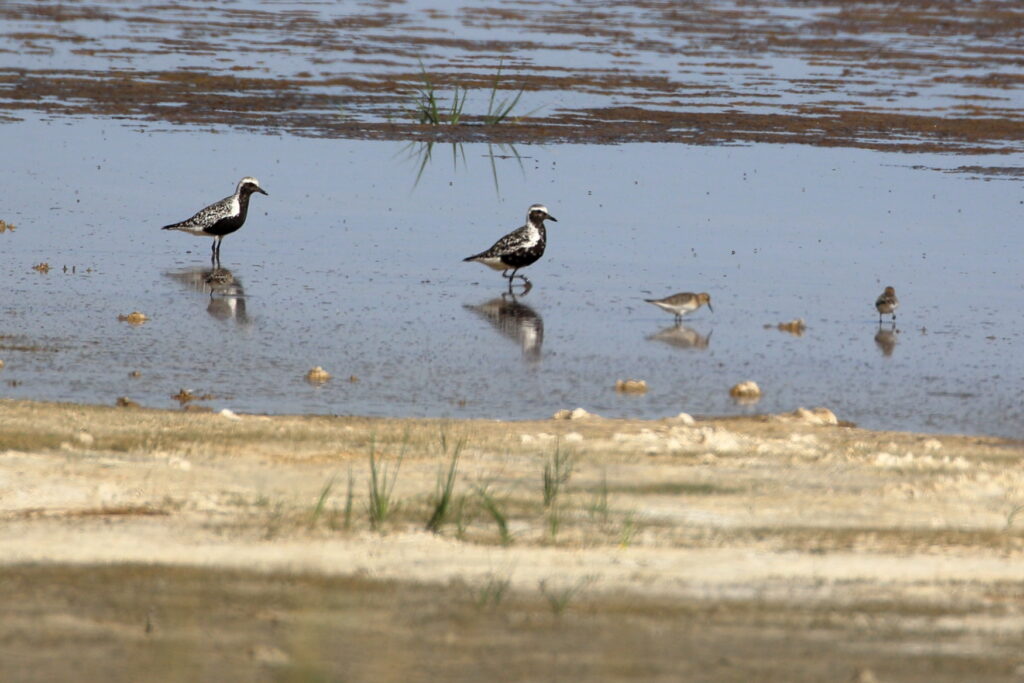
I got my scope focused and picked out about a dozen each Greater Yellowlegs, Killdeer, and Pectoral Sandpipers—but they weren’t what got my heart beating. Among the other birds, I also saw three distinct shapes. Plover shapes. Large plover shapes. Zeroing in on them, I got even more excited. They definitely could be what I was looking for!

One problem with finding American Golden-Plovers is that in nonbreeding plumage, they are challenging to distinguish from Black-bellied Plovers. That’s not as much of a problem when Black-bellieds are in breeding plumage as they were here when Braden and I visited Benton Lake NWR near Great Falls last summer.

The problem is this: the plovers were not breeding males. Instead, they were in their much drabber juvenile or nonbreeding plumage, and that meant that they possibly could be either Black-bellied Plovers or American Golden-Plovers. I had seen nonbreeding Black-bellied Plovers several times—but didn’t have enough experience with them to say, “Those are NOT Black-bellied Plovers out there in front of me.” Still, thinking back on prior experiences, and studying my Sibley phone app, I had a hunch these might just be my nemesis Amercian Golden-Plovers. For one thing, their bodies and necks seemed slimmer than Black-bellied Plovers. They also gave off a kind of smooth, grayish sheen on their bellies whereas I remembered BBPLs as being whiter and more distinct.

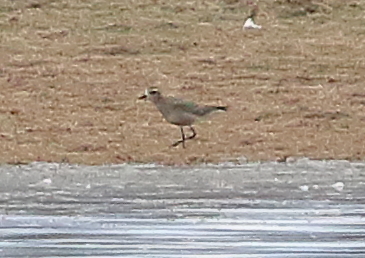
It looked like an American Golden-Plover, but was it??? I would have to wait to hear from Braden to be sure!

Bottom line: I just wasn’t sure.

I took tons of lousy photos, and as soon as I got home, sent them to Braden. A couple of hours later, he called me from Maine. “Daddy!” he exclaimed. “You saw American Golden-Plovers!” We then proceeded to detail the various aspects of his ID. Not only was it a great learning process, it felt good to be able to share this nemesis sighting with my son from all the way across the continent. AGPL, finally, after many years, became my 301st Montana Life Bird and the 997th on my Life List.

I’ll bet you can guess what I hope number 998 will be!

997!

Birding Japan: Return to Tokyo and Trip Wrap

Since we published them, our birding posts about Japan have been read in more than a dozen countries. If you are planning your own trip to Japan, you’re in luck! Sneed’s new book, FIRST-TIME JAPAN: A STEP-BY-STEP GUIDE FOR THE INDEPENDENT TRAVELER, tells you everything you need to know about how to plan your trip to this remarkable, yet sometimes intimidating, country. Order now by clicking here.

This wraps up Sneed’s birding adventures in Japan. We hope you’ve enjoyed these posts, especially if you might be contemplating a birding or, more likely, semi-birding trip to this remarkable country. If this is your first time seeing these posts, please do start at the beginning so you can enjoy them all the way through. Thanks for tuning in!

After our tour around the southern part of Honshu, returning to Tokyo felt like coming home for Tessa and me, but our excitement for the world’s largest megalopolis remained undimmed. While we’d spent our first stint near Tokyo Station, I chose Shibuya for our second Tokyo visit of four nights. As expected, this part of town immediately seemed a lot more “swinging” than Tokyo Station, with gazillions of young people streaming between trains, malls, restaurants, and, well, you name it. Even better, Shibuya Station is home to the famous statue of Hachiko—the subject of a wonderful picture book by Pamela S. Turner and a pretty awful movie with Richard Gere. Having written my own heart-rending dog book, Shep—Our Most Loyal Dog, I naturally felt great affection for Hachiko.

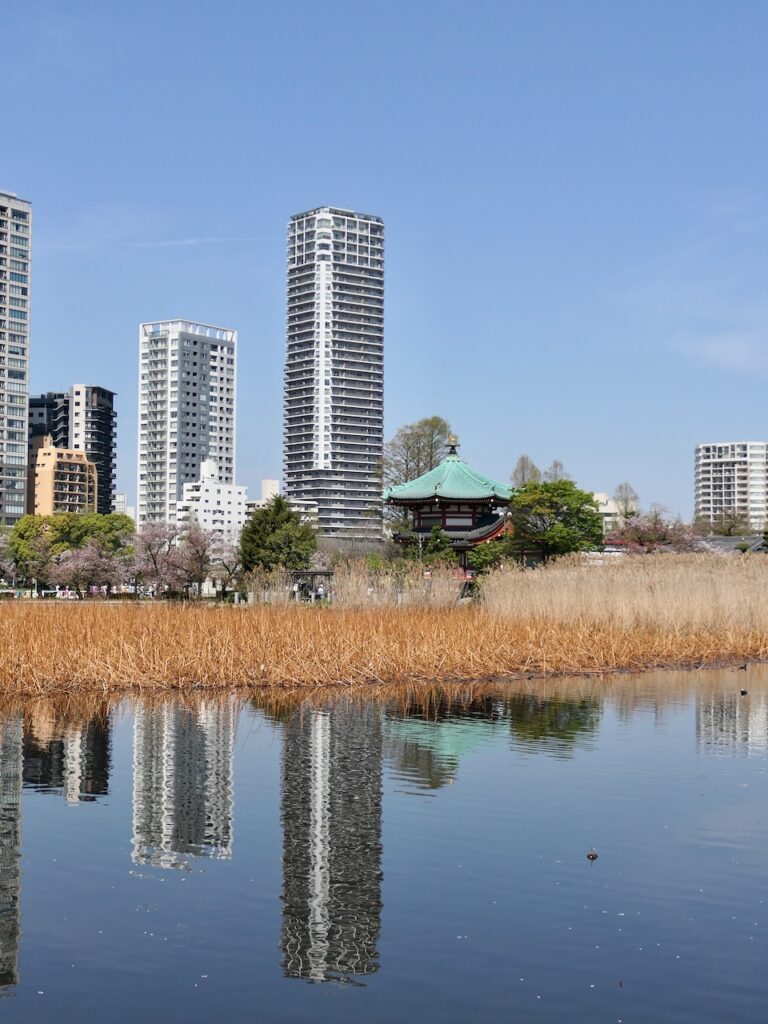
I felt less sure of my birding strategy from Shibuya, but several large parks beckoned. I also had left my beloved headlamp at the hotel near Tokyo Station, giving me an excuse to drag Tessa across town to what turned out to be one of our favorite Tokyo places, Ueno Park. The southern part of the park in particular has a large area of reed beds conducive to watching waterfowl, gulls, cormorants, and other birds.

Rather than give a blow-by-blow of Tokyo, though, I’d like to use this last post to briefly reflect on my overall impressions of birding in Japan—keeping in mind that my experiences were somewhat limited by our decision to travel almost exclusively by public transport and that we didn’t go to any great lengths to reach any truly wild regions of the country. Then again, that is how most people visit Japan (unless they are shackled to tour buses), so my reflections may have some resonance for you.

First, I didn’t find what I consider a great diversity of birds in Japan. The country has an impressive overall total, but my guess is that many of these require travel to the extreme northern and southern points of the country. Then again, as only a modestly skilled birder, I often find that less is more. Before our trip, I learned probably 70 or 80 birds—which, to be honest, was about my capacity. Also, while I thought we might hit migration season, that did not seem to be the case. Most of the birds I saw at the end of March and beginning of April appeared to be year-round residents. A month later . . . who knows?

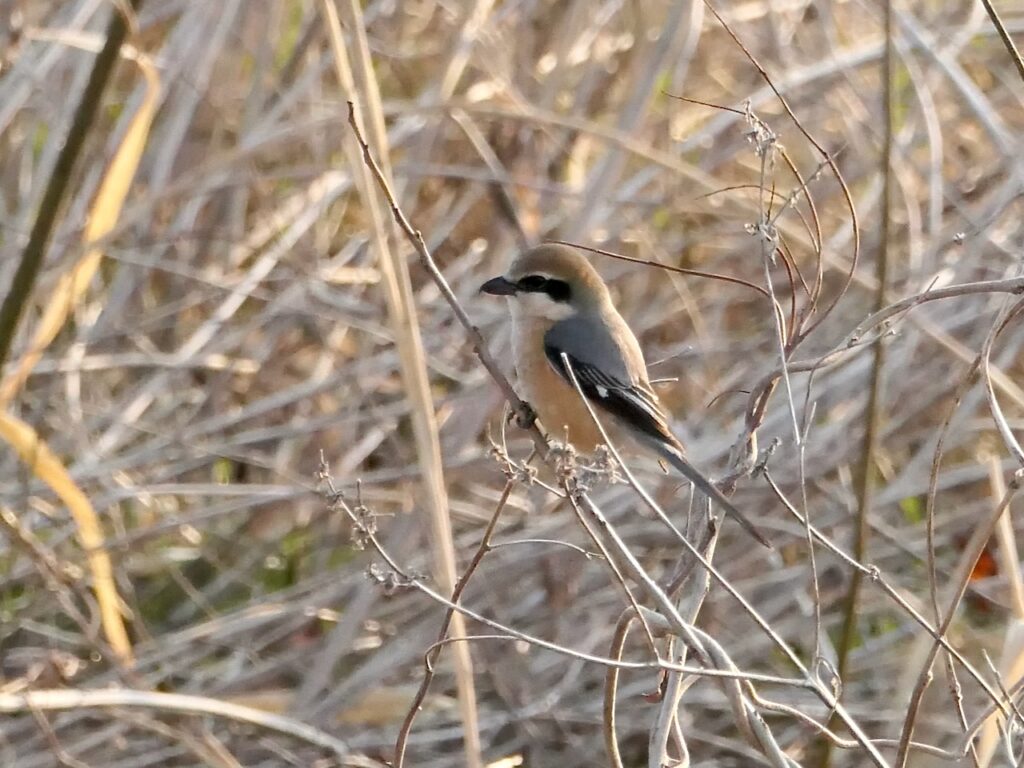
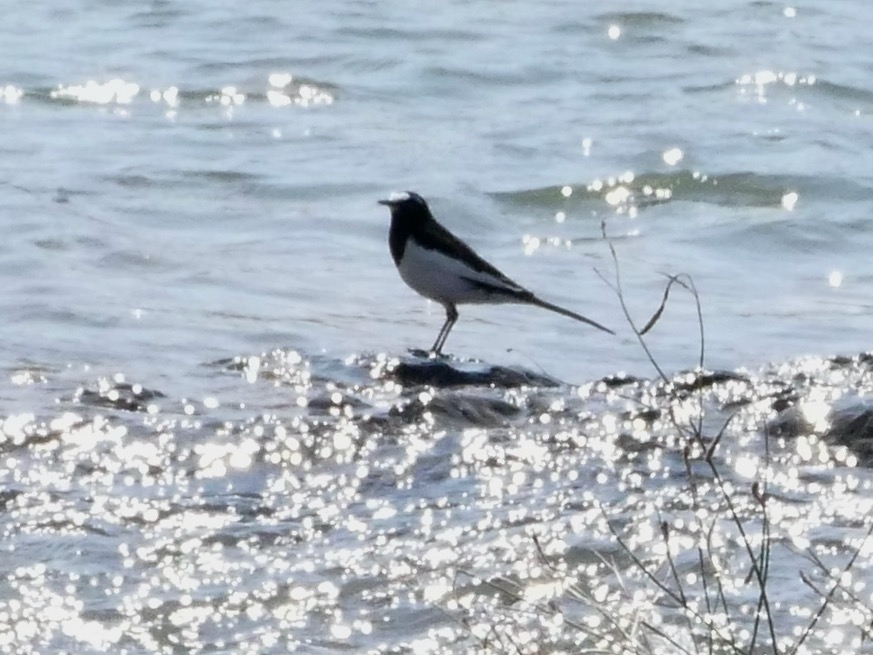
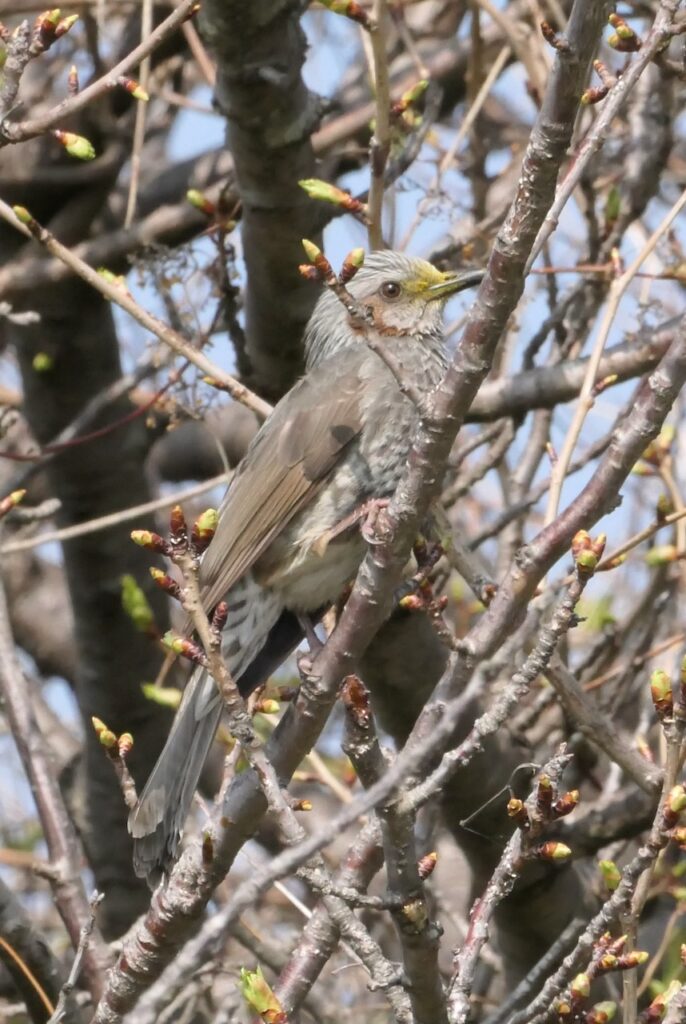
Second, Japan does have very cool birds. I loved getting to know the common birds such as Black Kite, Brown-eared Bulbul, White-cheeked Starling, Japanese Tit, Dusky Thrush, and Eastern Spot-billed Duck. Added to these were some truly adrenaline-producing species such as Japanese Wagtail, Daurian Redstart, Little Ringed Plover, Japanese Pygmy Woodpecker, and Bull-headed Shrike. Bottom line: even in tourist areas, birders can reap big rewards by birding Japan.

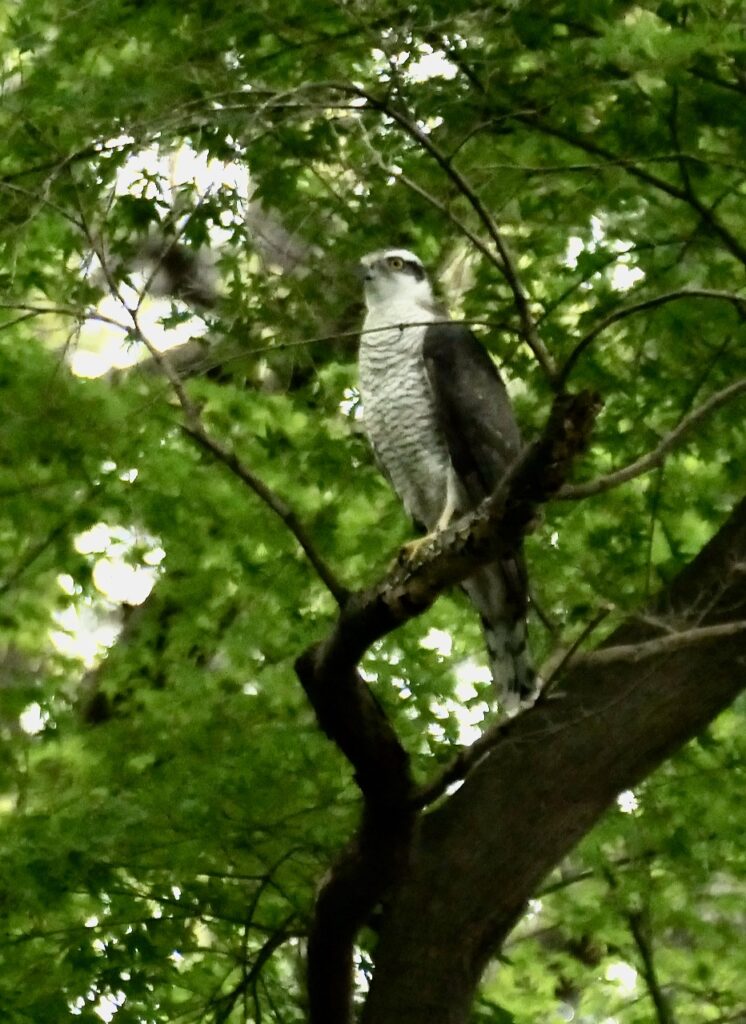
One of the real surprises of birding Japan was seeing a Northern Goshawk—a bird I’ve seen only three or four times in Montana. This is a sensitive species in Japan, so I can’t share where I saw it, but it was a trip highlight for sure.

Third, if I am fortunate enough to return to Japan, I definitely want to explore some of the more way-out places. Tessa and I invariably loved the places we visited that were more off the beaten path such as Sendai and Kanazawa, and I can only imagine what it might be like to visit tropical southern Japan and the oft-frozen isle of Hokkaido.

Fourth . . . well there is no fourth. It was an amazing trip, and birding played a significant role in my enjoyment of this unique, friendly, accessible country. With that, here are some stats for the curious . . .

Number of eBird Checklists: 27

Number of Species Observed: 56

Number of New Life Birds: 37

Species I’ve also seen in the US: 13

Most Common Bird by Number of Individuals: Brown Eared Bulbul (194 birds, just beating out Large-billed Crow with 193)

Most Surprising Bird: Northern Goshawk!!!

Favorite Bird: (tie) Japanese Wagtail & Bull-headed Shrike

Major Lesson: Keep Birding!

Birding Japan: Tokyo, Part I

Since we published them, our birding posts about Japan have been read in more than a dozen countries. If you are planning your own trip to Japan, you’re in luck! Sneed’s new book, FIRST-TIME JAPAN: A STEP-BY-STEP GUIDE FOR THE INDEPENDENT TRAVELER, tells you everything you need to know about how to plan your trip to this remarkable, yet sometimes intimidating, country. Order now by clicking here.

Well, I warned you it would be a while before you heard from us again, but we hope you find the reasons acceptable. Braden has been chasing salamanders and frogs in Maine while I have spent the last three weeks with my daughter, Tessa, in Japan! We had dreamed of visiting the Land of the Rising Shopping Mall for many years, and the country and people delivered in every way. While birding was not the purpose of the trip, you might guess that I took advantage of every opportunity to get to know Japan’s avian wildlife—experiences I’d like to share in the next few posts, starting with the focal point of Japanese civilization, Tokyo.

While disguised as a train station, Tokyo Station is actually a small city in itself—and the transportation hub for Birding Central HQ during our stay.

While we planned to visit several Japanese locations, Tessa and I agreed that we wanted to spend the most time in Tokyo. Accordingly, we reserved five days there on the front end of the trip and four days to finish up our journey. Wrapping our heads around such an incredibly large and diverse city proved a challenge, but after much research I booked our first hotel near Tokyo Station. Mind you, this is no ordinary train station. Trains for hundreds of destinations come in and out of the place and the station itself is a vast, entertaining commercial complex featuring hundreds of shops and restaurants, many lined along extensive underground “streets”. The area also happened to make a pretty good headquarters to begin birding.

On our first day there, we worked in a visit to Hamarikyu Gardens in between Tsukiji Outer Market (former home of the famous tuna auctions) and Tokyo Tower. While Tessa enjoyed a park bench in the sun, I quickly snapped up six life birds including Eastern Spot-billed Duck, Common Pochard, Tufted Duck, Oriental Goldfinch, White-cheeked Starling, and Brown-eared Bulbul. I was especially taken with the bulbul—only to find that apparently it is the most commonly observed bird in Japan! Still, I didn’t let that dampen my enthusiasm for these noisy, beautiful birds.

My first day of Japan birding, I was so excited to see my first Brown-eared Bulbul, a bird that I’d been studying assiduously. Little did I know that it’s probably the most common bird in Japan!

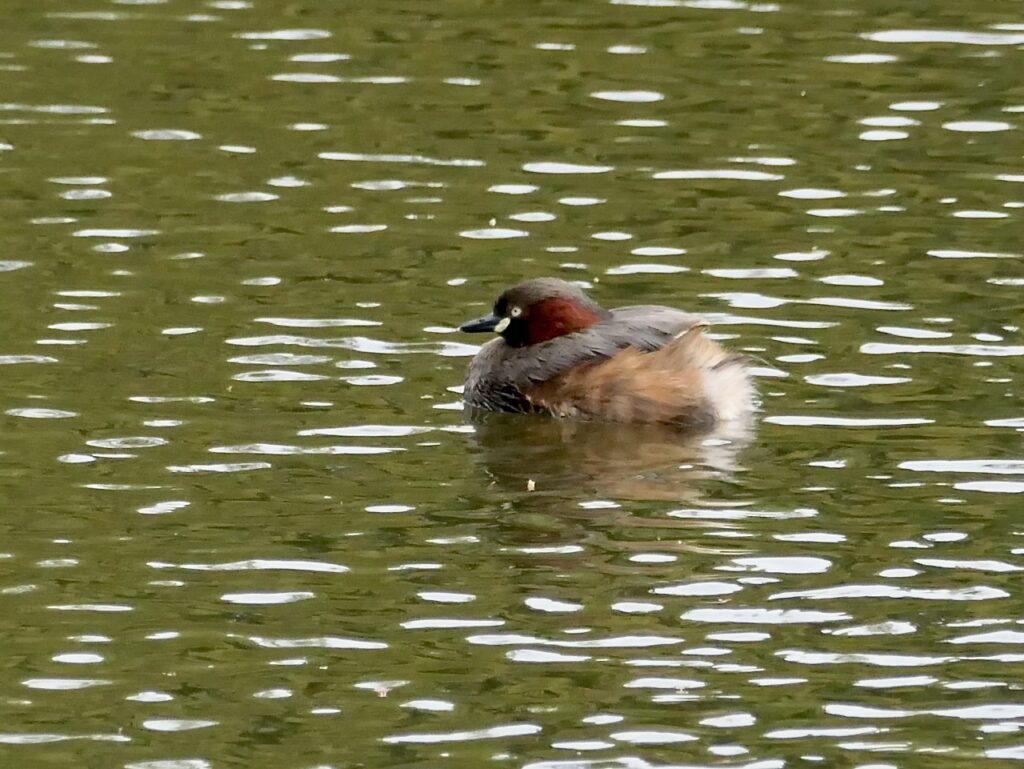
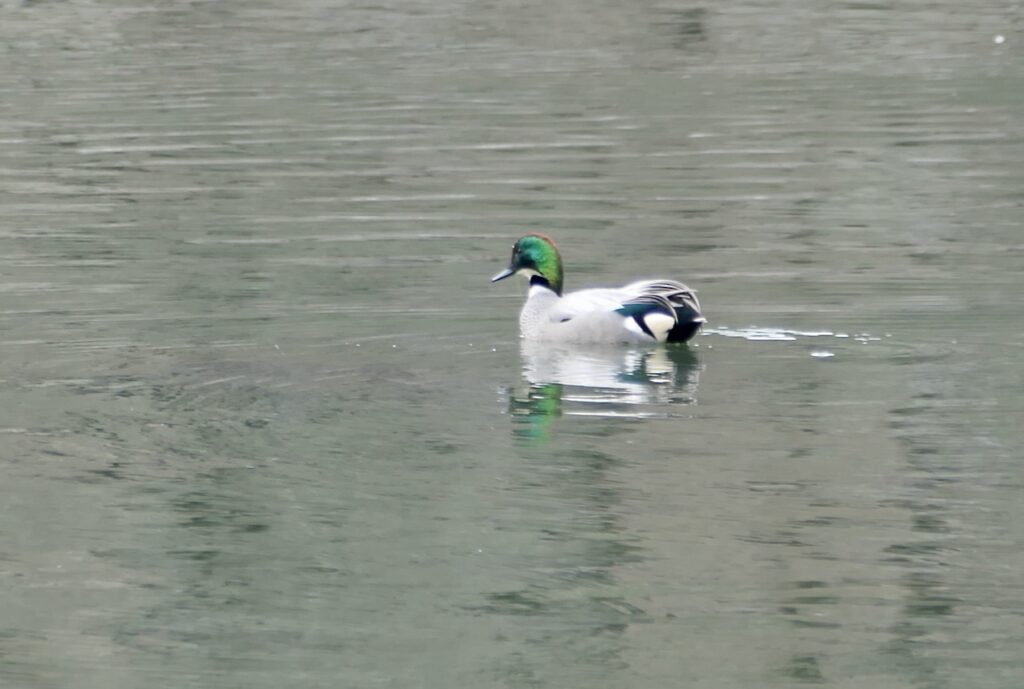
Because of the 15-hour time difference with Montana, I woke at 3 a.m. the next day, and as soon as it got light I let Tessa sleep in and walked over to the Imperial Palace a few blocks away. The grounds were still closed, but I began exploring the moat around the walls and some potentially birdy parks across the street. Right away, I saw a Little Grebe, and then the discoveries grew even more exciting. I saw a small, greenish bird flitting around some bushes—another life bird, Warbling White-eye! Continuing my prowl, I discovered two more lifers—Falcated Duck and Dusky Thrush, two species I had studied intensively before the trip. They put me in a great mood before we went to watch the Yokohama BayStars defeat the Yomiuri Giants 1-0 in the Tokyo Dome that afternoon!

I should pause at this point and say that besides wanting to see Japan’s birds, I had another ulterior motive for birding. When we left Montana, my life list stood at 968 species—perilously close to 1,000. Maybe, just maybe, I thought, I can crack 1,000 while in Japan. In fact, looking over what I might see, I felt fairly confident about meeting that goal—something that spurred me to take advantage of every opportunity.

Falcated Ducks were a new species I studied before heading to Japan. After seeing them on Day 2, I had no idea this would be the only time I’d see them on the entire trip.

On the third full day of our adventure, Tessa and I planned to head over to Tokyo Disney to try to score tickets. We did get some and visited the Disney Sea park—but that’s another story. More important, we stopped at perhaps Tokyo’s best birding location, Kasai Rinkai Park. As we got off the train, the reason this park is birdier than others seemed evident: it is one of the few Tokyo locations with remotely natural habitat. Tessa got some of her now-favorite milk tea from a vending machine and settled in to draw on a bench while I hurried off to see what might be living there.

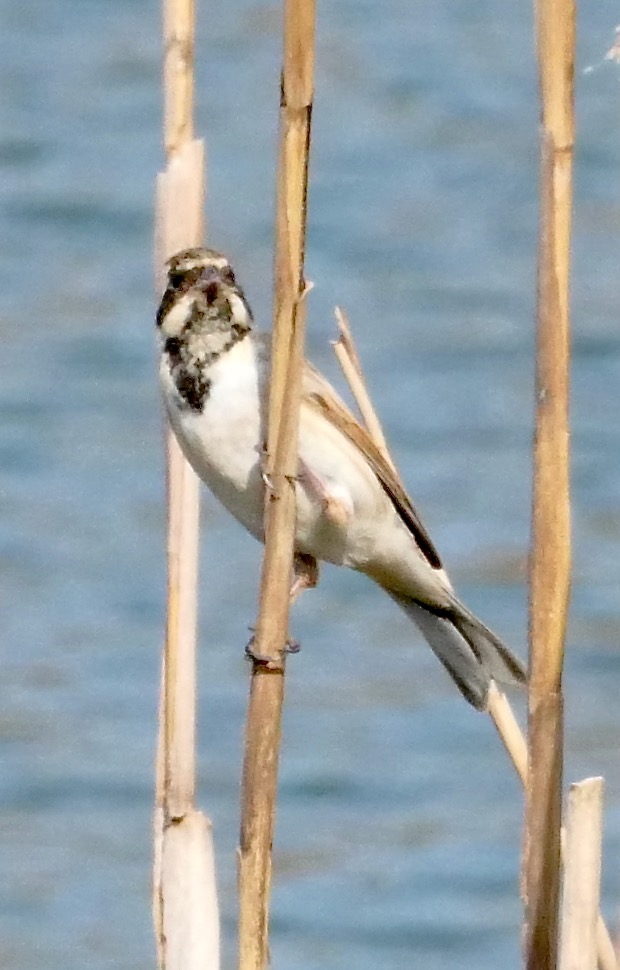
I had not yet met any Japanese birders, but a couple of hundred meters down the trail, a woman with binoculars and a camera saw me looking for birds and silently pointed into reeds next to a pond. “Arigato gozaimasu,” I whispered and crept toward where she was pointing. Sure enough, a half a dozen small brown birds were gleaning seeds and once again, my study paid off. They were Reed Buntings—birds I had hoped, but not expected, to see!

I left my good camera at home for this trip, opting for a lighter “travel camera” that unfortunately didn’t produce the sharp bird images I craved, but I was still delighted to get a photo of this male Reed Bunting who is obviously shouting something important at me.

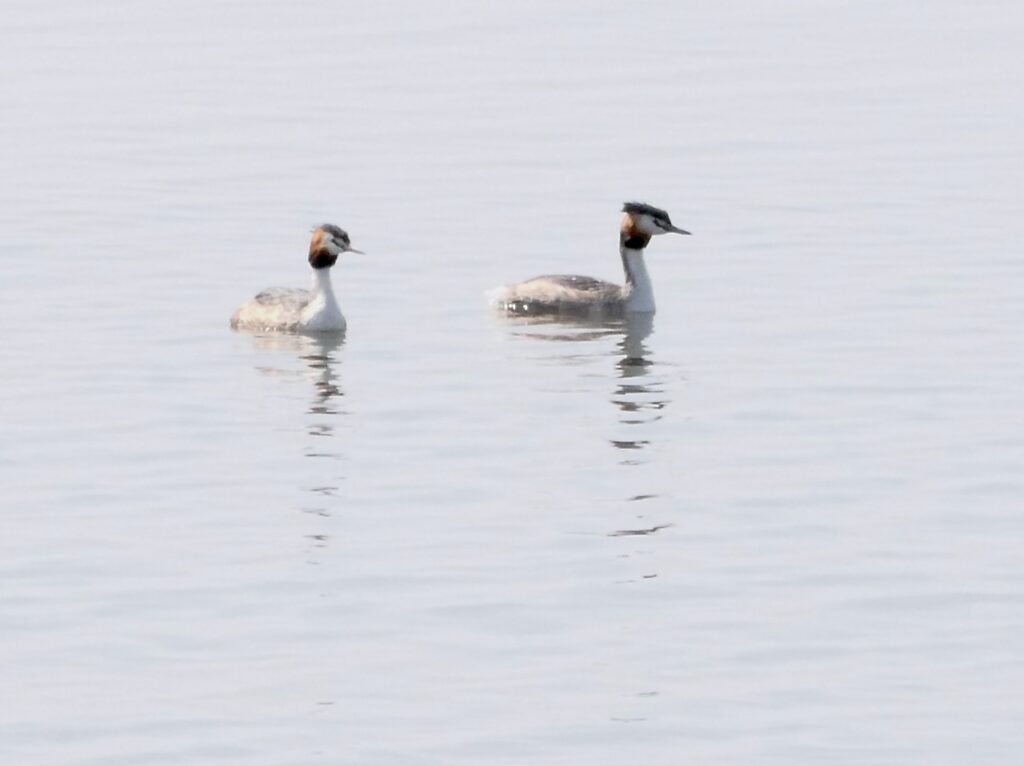
Continuing down the trails I made more discoveries including Japanese Tits and Masked Buntings, both also lifers! Then, walking along the water, I spotted two suspicious shapes about one hundred meters offshore. As I grew closer, the shapes resolved into what has to be one of Earth’s most gorgeous, elegant water birds, Great Crested Grebes!

Despite this lousy photo, you can probably get an idea of why I was so excited to see my first Great Crested Grebes!

As I went back to meet Tessa, I was happy with what I had found, but I also knew I had missed some important species here that I would probably not get a second shot at. These included Azure-winged Magpie and any kinds of shorebirds. No matter. I felt grateful for this look at Japanese nature and optimistic for the days to come!

Sneed’s Kasai Rinkai Park eBird checklist.

March Madness Birding in Missouri

Congratulations to our loyal follower Roger Kohn for notching his 300th Life Bird this week—and a Golden Eagle no less! Way to go, Rog, and may it be just a prelude to a great spring birding season!

I can’t believe we didn’t post the entire month of February. Nonetheless, we appreciate your loyalty and devotion, and believe it or not, we picked up our 100th subscriber in the last few weeks. We should have more than that, but Russian hackers led to a subscriber catastrophe some years back. No matter, we are glad to have you with us.

But back to the lack of posts, we’ve had solid excuses. Braden has been studying hard for a tough group of science and math classes this semester while I’ve been laboring to complete two new books and get them turned in. Mission accomplished! I celebrated by heading off to the Children’s Literature Festival in Warrensburg, Missouri. It was my “dozenth” or so time there, and this one proved particularly delightful, with more than twenty authors speaking to thousands of kiddos over the course of two days. This trip was made even more delightful by the fact that I roped several of those authors into joining me for a birding excursion!

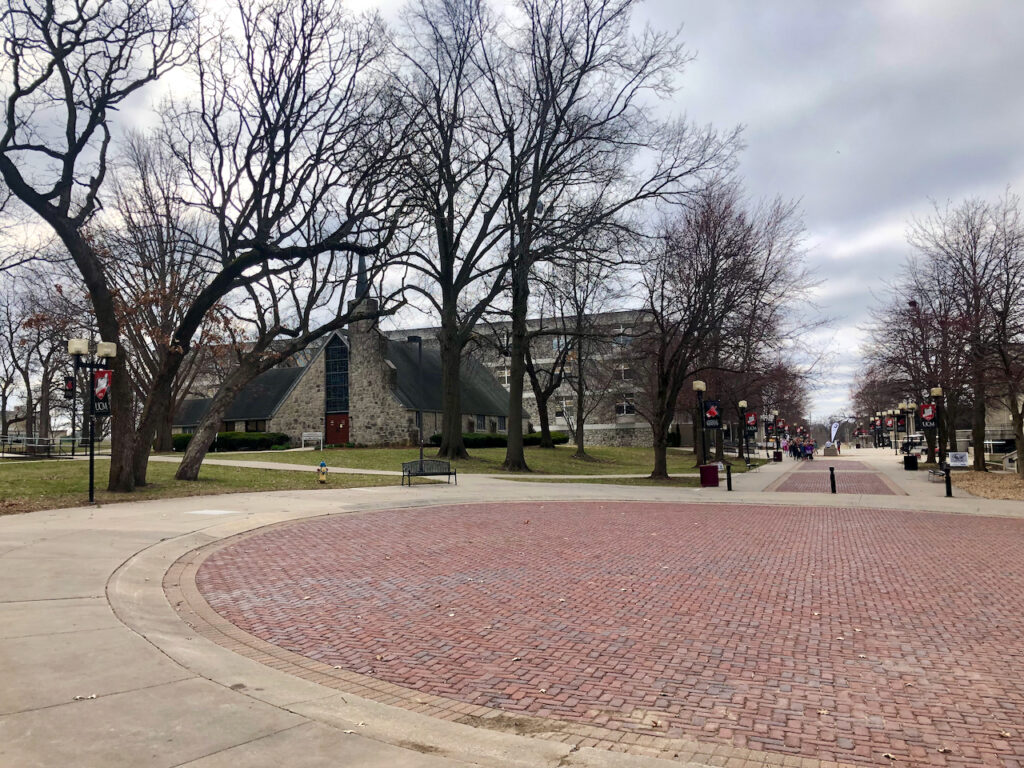
The University of Central Missouri in Warrensburg provided a friendly, intimate setting for 54th Children’s Literature Festival—the first full festival since Covid!

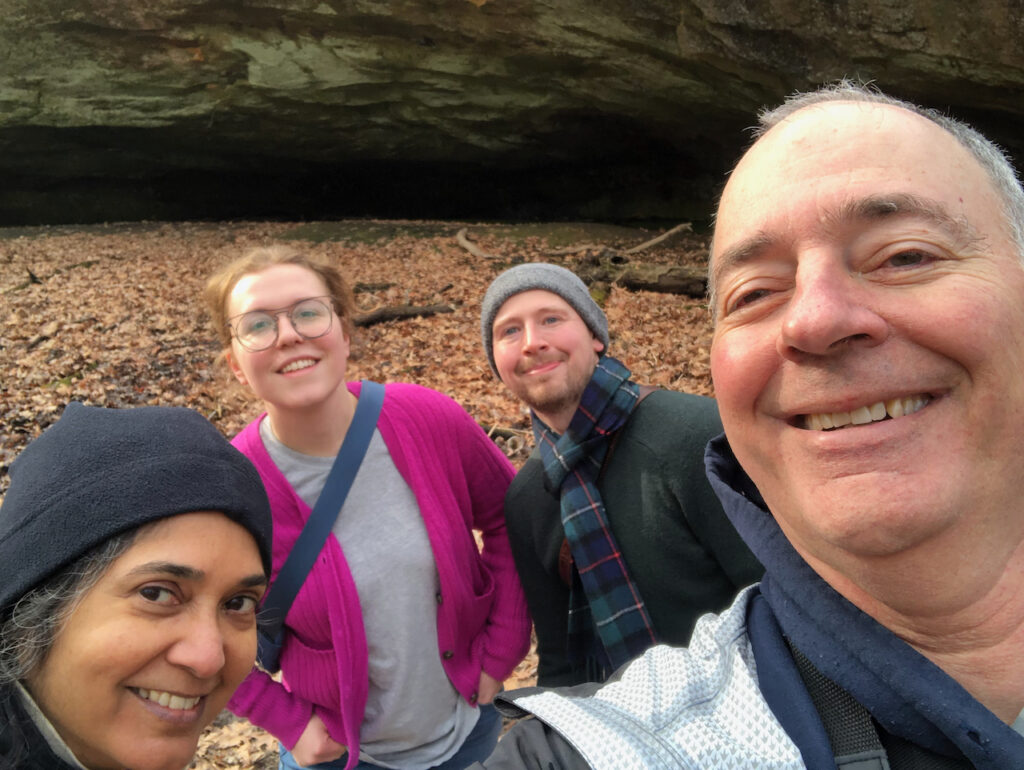
My one complaint about the literature festival is that it always happens before spring migration hits Missouri. Undaunted, I led authors Padma Venkatraman and Samantha Edwards, and Samantha’s husband, Jason Tucker, to Cave Hollow Park this past Sunday morning. Braden and I had birded the park many years back, but before we really knew what we were doing. We’d seen only a handful of species and had left disappointed. This time, I hoped for a better result—and was richly rewarded!

Working the woods that lined the large grassy areas, our intrepid crew saw—and heard—Northern Cardinals and Eastern Phoebes. Then, an American Kestrel flew over, not to be outdone by Red-bellied Woodpeckers, a Northern Flicker, and one of our biggest surprises, a Pileated woodpecker. Of the three woodpeckers, I discovered that the Red-bellied is definitely the most common in the Show Me State. That seemed wonderfully strange for a guy accustomed to Downy Woodpeckers holding down the top spot!

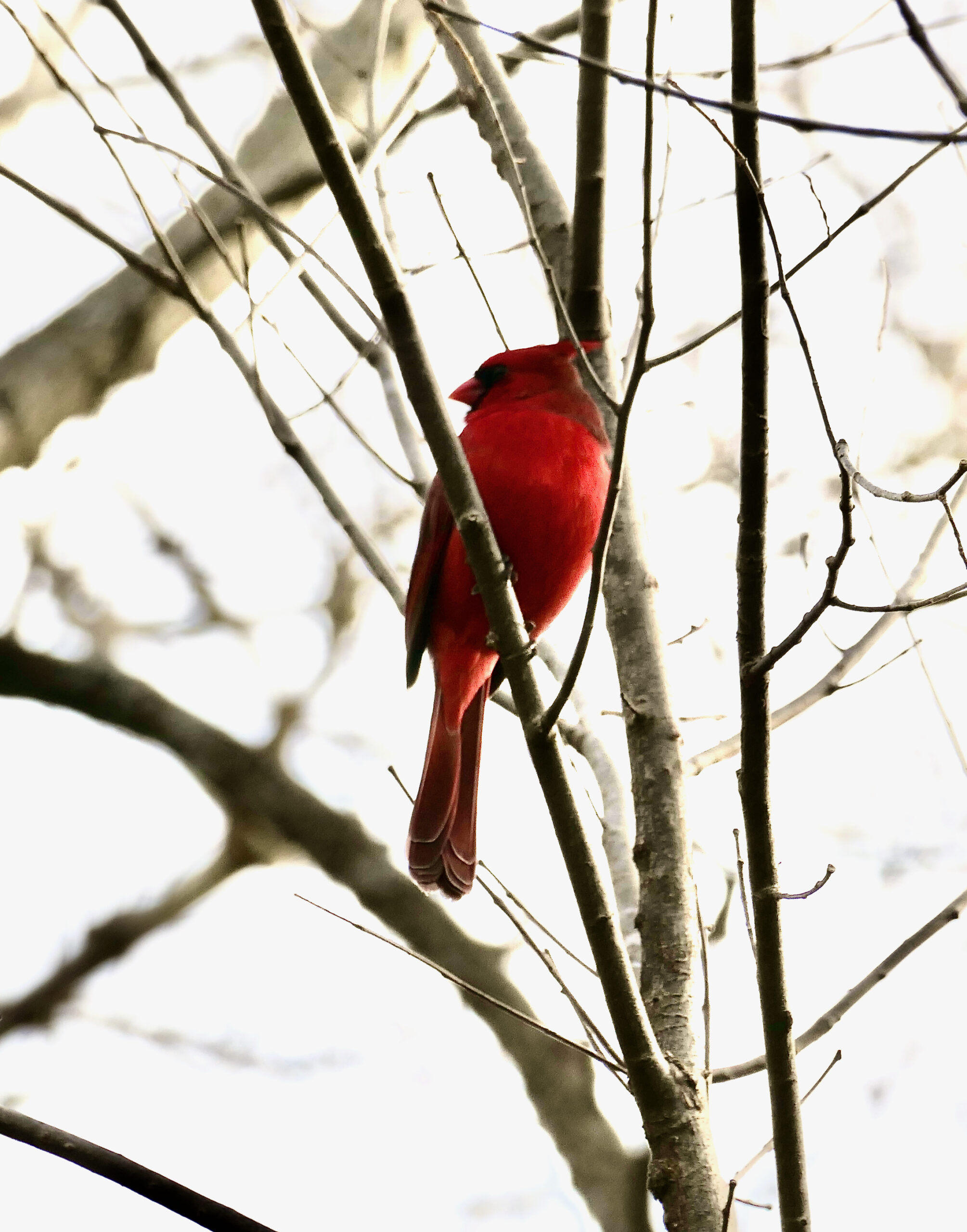
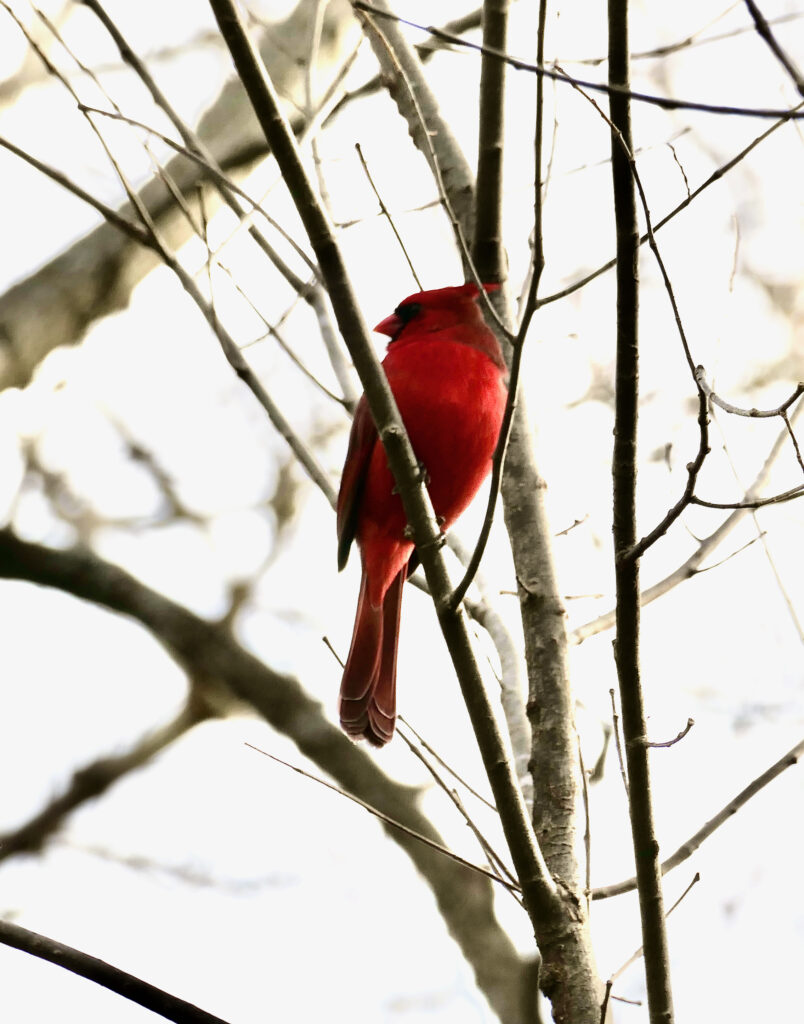
The trip to Missouri was my first opportunity to test my new Panasonic “travel camera” and as you can see from this Northern Cardinal, I didn’t really know what I was doing. Am hoping I’ll get to share better photos with you soon!

We continued our excursion, venturing into the park’s wooded trail system. This is where Braden and I had pretty much struck out before, but today our group was pleased to encounter Black-capped Chickadees, Tufted Titmice, and a surprise White-breasted Nuthatch. For the first time, I also recognized the “Fee-bee” call of an Eastern Phoebe. “Ah,” I told my companions, “that’s how they got their name.” To my satisfaction, my companions loved our outing, as did I. While we didn’t see anything rare, I don’t often get a chance to enjoy the birds of the East, so it was a special treat to get out there on this sunny, crisp morning. It was also great to have such enthusiastic company!

My intrepid fellow birders and I were excited to discover some of the “hollows” for which Cave Hollow Park is named (Left to right: Padma Venkatraman, Samantha Edwards, and her husband, Jason).

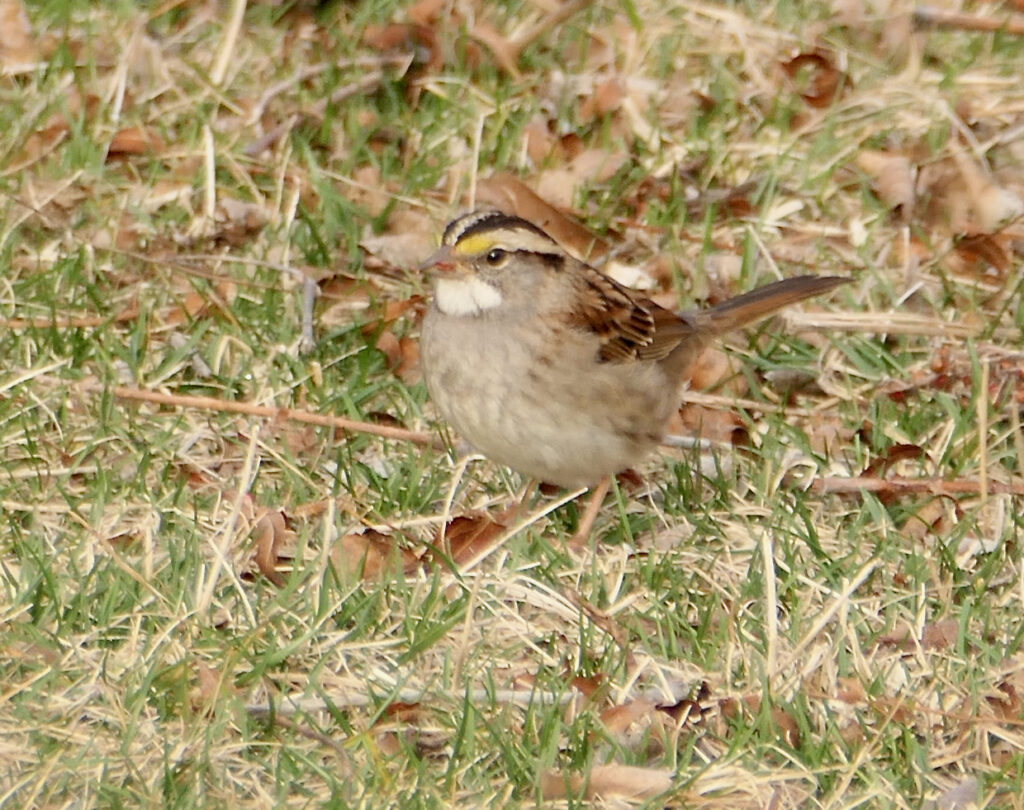
I was so pumped that I woke early the next morning and birded the woods right next to our hotel. I had barely set out when I saw eight or ten sparrows close by. The yellow above the eye made me at first think “Savanna Sparrows.” Then I realized with excitement that they were White-throated Sparrows—a species that wasn’t even on my radar! More surprises followed with a look at a Song Sparrow and Turkey Vulture. Then, I heard an even bigger surprise—a Carolina Wren. That afternoon, I bumped my Missouri Life List to 31 species when a Red-shouldered Hawk landed on a lamp post next to the hotel as I and my friend and fellow author, Roland Smith, returned back from work. I ended the trip more than happy with my March Missouri birding . . . but that doesn’t keep me from dreaming they’ll one day move the festival to April when the full flush of spring songbirds will be moving through!

I’m not sure why, but White-throated Sparrows just make me happy. I hope you’re getting to see some wherever you are! Fun fact: President Teddy Roosevelt especially enjoyed listening to White-throated Sparrows on the grounds of the White House!

Advance Warning: You will most likely have to endure another lengthy delay before our next post as I (Sneed) is about to embark on a major trip. The good news is that I will be traveling to a country I have never been, and I can almost guarantee that your patience will be rewarded!

Counting Down Braden’s and Sneed’s Top 2022 Birds

A tradition Braden and I have formed over the years is to make top birds lists after any big trip or, as this year, for our entire year of birding. This probably stems from the many hours I listened to Casey Kasem counting down the American Top 40 every weekend as a youth. Our own “Top 40” lists have diverged a bit since Braden is now on the East Coast for most of the year—but this year we still managed to have a lot of birding adventures together, and so have a lot of common birds on our list. It’s funny, though, how some birds we might have been super excited about when we first saw them often drift lower on the list. I suppose it’s like being super excited about Barry Manilow when you first heard him—and then realizing you could be listening to the likes of the Rolling Stones, Neil Young, and John Lee Hooker. Anyway, we thought you might enjoy our Top 10 birds of 2022—and hope you might share some of your own!

# 10

Coming in at Number 10 for Braden was the Florida Scrub-Jay, which is remarkably vulnerable in Florida, but Braden got to see with his birding buddy Nick Ramsey on their epic Spring Break Florida adventure. Read about it here. Sneed’s #10 was an unlikely Cape May Warbler—his Lifer—that he spotted in front of the house of his good friends Mollie and Craig Bloomsmith in Atlanta this fall.

Florida Scrub-Jays are the only bird species entirely restricted to Florida.

#9

Braden had excellent adventures with Northern Saw-whet Owls while out in California, running into some adorable juveniles while thrashing through the woods during his job with the Institute for Bird Populations. Elegant Trogon finished #9 on Sneed’s list—an exotic bird if there ever was one! And yet, both Braden and Sneed wondered why this bird didn’t finish higher on either of their lists. Probably just too much on the beaten birding path. (Photo at top of the blog.)

Non-stop birding for his job throughout the summer led Braden to a remarkable encounter with these juvenile Northern Saw-whet Owls.

#8

Braden’s night car camping (literally) in the Everglades landed Chuck-will’s-widow on his Top 10 while Zone-tailed Hawk swooped out of a flock of Turkey Vultures at Madera Canyon to nab Sneed’s Number 8.

Zone-tailed Hawks are well-known mimics of Turkey Vultures and often hang out with them—which is where we spotted this one at Madera Canyon, Arizona; only our second ZTHA ever.

#7

Ah, who doesn’t love a Swallow-tailed Kite—especially one that swoops right over your head? Braden obviously DOES, as yet another bird from his Florida trip snagged a Top Ten spot. Sneed, meanwhile, went with the shockingly beautiful Scott’s Oriole for Lucky Number 7. He and Braden both fell in love with these birds, and were lucky enough to see them several times on their Arizona adventures. In fact . . .

Braden never tired of seeing Swallow-tailed Kites on his and Nick’s epic Florida adventure.

#6

Scott’s Oriole grabbed Braden’s Number 6 while Sneed went with Sulphur-bellied Flycatcher, also in Arizona, in a case that he couldn’t quite explain. “There was just something mysterious and intriguing about that bird,” he was quoted as telling a New York Times reporter.

Though relatively widespread in the Southwest, Scott’s Oriole is a bird Braden and I wondered if we’d ever really get to see—or even if it really existed. It does!

#5

Unfortunately, the same New York Times reporter caught Sneed cheating for Number 5, as he listed THREE birds tied for #5: Mexican Whip-poor-will, Whiskered Screech-Owl, and Elf Owl. “How can you possibly justify this?” demanded the reporter. “Well, I only ever heard these three birds, but we listened to them on a magical night in Portal, walking down a darkened road. It’s just a night that Braden and I won’t ever forget.” Meanwhile Braden went with his many amazing experiences with Prairie Warblers this year for his #5 spot, seeing them throughout Florida, including the Everglades, in Maine, and during the Collard Family’s epic New York City trip in May.

It blew Braden’s mind to learn that Prairie Warblers breed in the mangroves of Florida.

#4

The night walk in Portal also left a big impression on Braden, giving him his Number 4 in the form of Mexican Whip-poor-will. Sneed, meanwhile, went with Red-faced Warbler, spotted just a few miles and a couple thousand feet away—the first, and still only, RFWA the father-son duo has ever seen.

Another fairly common Southwest bird that had eluded us until this trip, the Red-faced Warbler immediately captured our hearts. This is still the only we have ever seen.

#3

Number 3 is getting into some Serious Birds, and Braden selected Spotted Owl for his. Not only did Sneed and Braden both see them for the first time in the Chiricahuas, Braden got to see the California subspecies several times during his summer job. Sneed went with his recently self-found Long-tailed Duck—the first male he had ever seen—and one he discovered pretty much in his backyard near Missoula.

When you find a bird by yourself, it naturally ranks higher in a Year List. Such was the case with this male Long-tailed Duck Sneed found near Frenchtown last fall.

#2

Braden paid for his Number 2 bird, Long-tailed Jaeger (a second cousin to former lead singer for the Rolling Stones) with repeated upchucking over the side of the boat during his summer pelagic boat trip out of Half Moon Bay. After cavorting with a bunch of Sabine’s Gulls, however, this bird took flight and then passed only ten feet above Braden’s head. He celebrated by once again barfing into the sea. Sneed opted for White-tailed Ptarmigan, just one of the coolest birds on the planet, seen during his and Braden’s stunning hike up to Piegan Pass in Glacier National Park in August.

Blurry photo notwithstanding (or puking as was the case), this Long-tailed Jaeger flew into Braden’s #2 spot for the year.

Drum Roll . . . And their Number 1s are . . .

#1

The adventure and thrill of seeking out and finally finding a LeConte’s Thrasher on the east side of the Sierras stayed with Braden strongly enough to make it his Number 1 Bird of 2022! Remarkably, Spotted Owl, which had been only #4 on Sneed’s Arizona Trip list mounted an epic comeback to grab his Number 1 spot!

Thanks for tuning in as we’ve relived our top birds. Be sure to click on the links to get the full accounts, and may 2023 generate a memorable list for you, too!