Welcome to Part 3 of our 2024 Eastern Montana Odyssey! In this installment, we recount our adventures traveling from Fort Peck to Plentywood, including a wonderful grassland birding site and a big raptor surprise as we start trying to knock off our last seven birding counties in Montana. Enjoy, and don’t be shy about sharing!
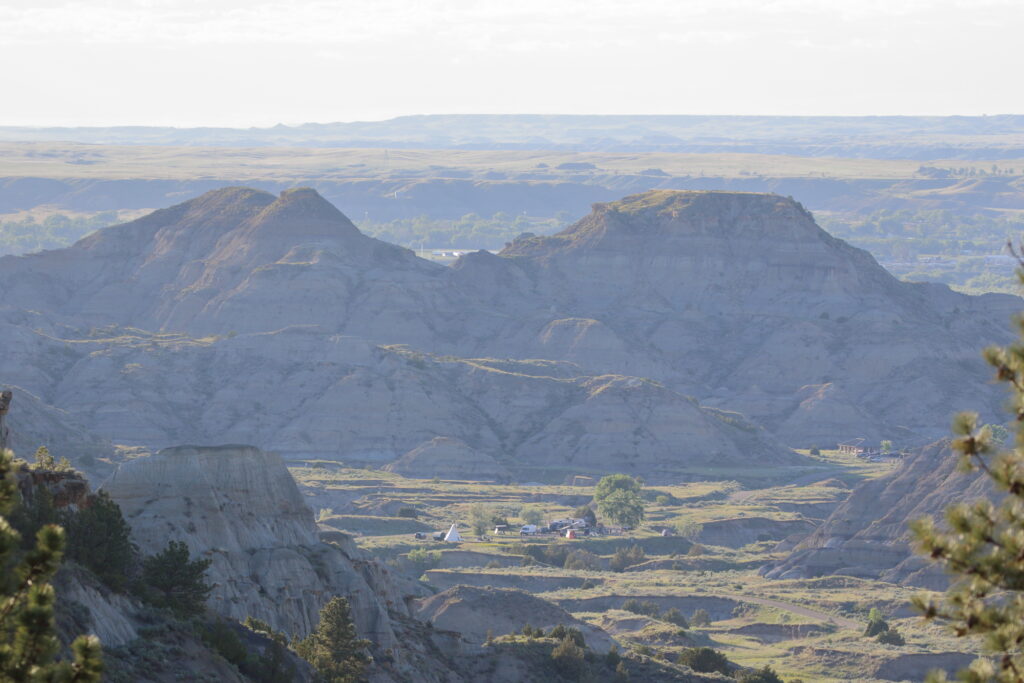
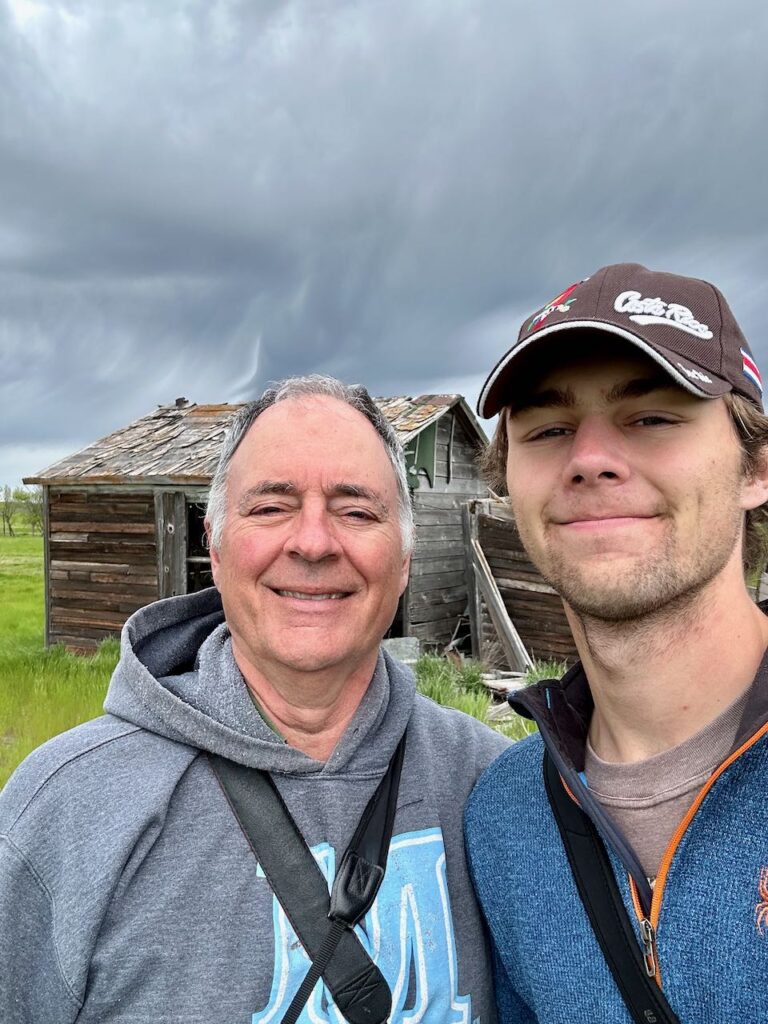
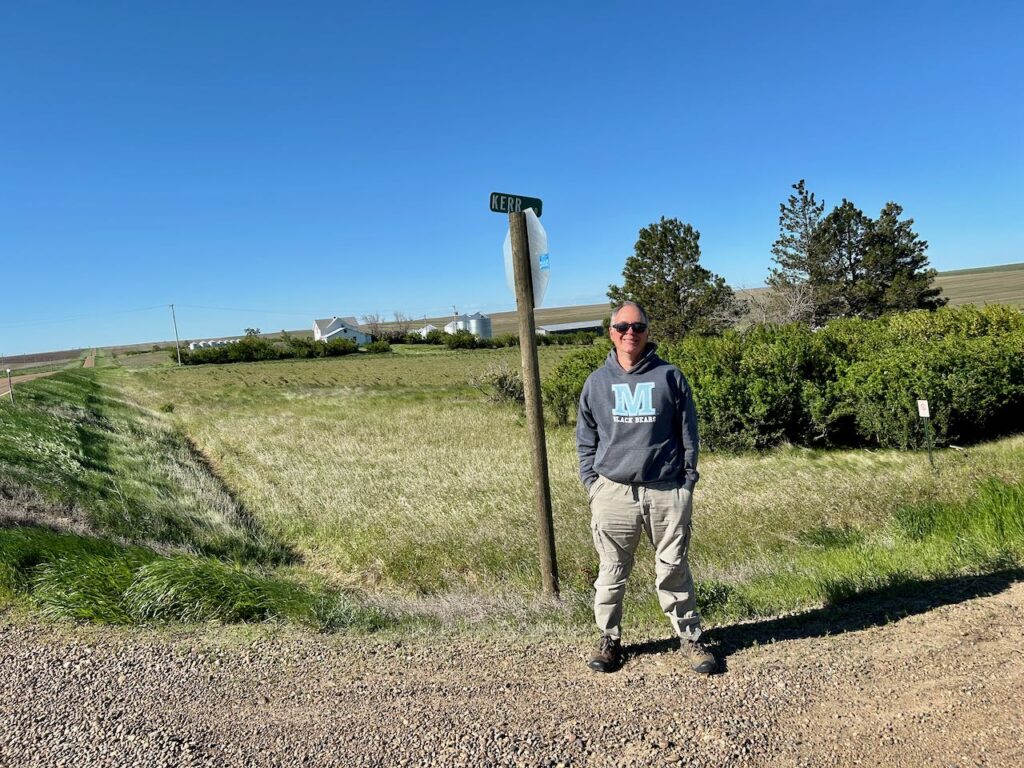
After breaking camp at Fort Peck (see our last post), Braden and I continued onto the next stage of our epic eastern Montana safari. We had several goals for the day, including birding one of the remaining seven counties we had yet to fill in on our eBird maps. Unfortunately, gusty 20-40 mph winds continued, so we knew we needed to stay flexible. After grabbing breakfast at the French restaurant Le McDaniels in Glasgow, we headed north to our first stop, Kerr Road, south of Opheim, Montana. Last spring, FWP biologist Heather Harris (see my brand new Montana Outdoors article “12 Little Brown Grassland Birds Every Montanan Should (Kinda) Know” in the July/August 2024 issue) took me and my buddy Scott Callow on a delightful visit to Kerr in search of grassland birds, and I was eager to show Braden the area as well.
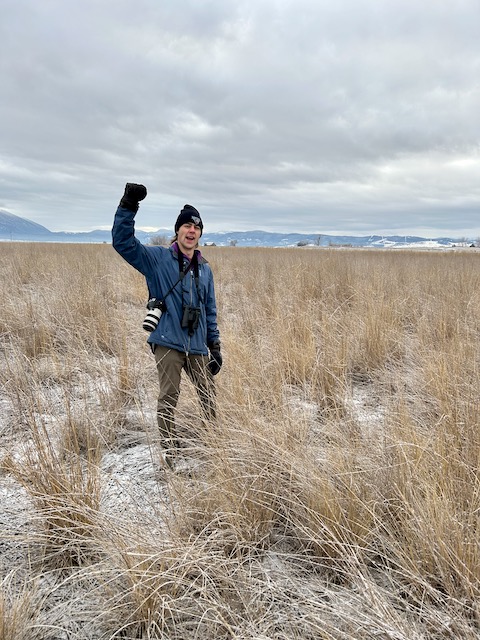
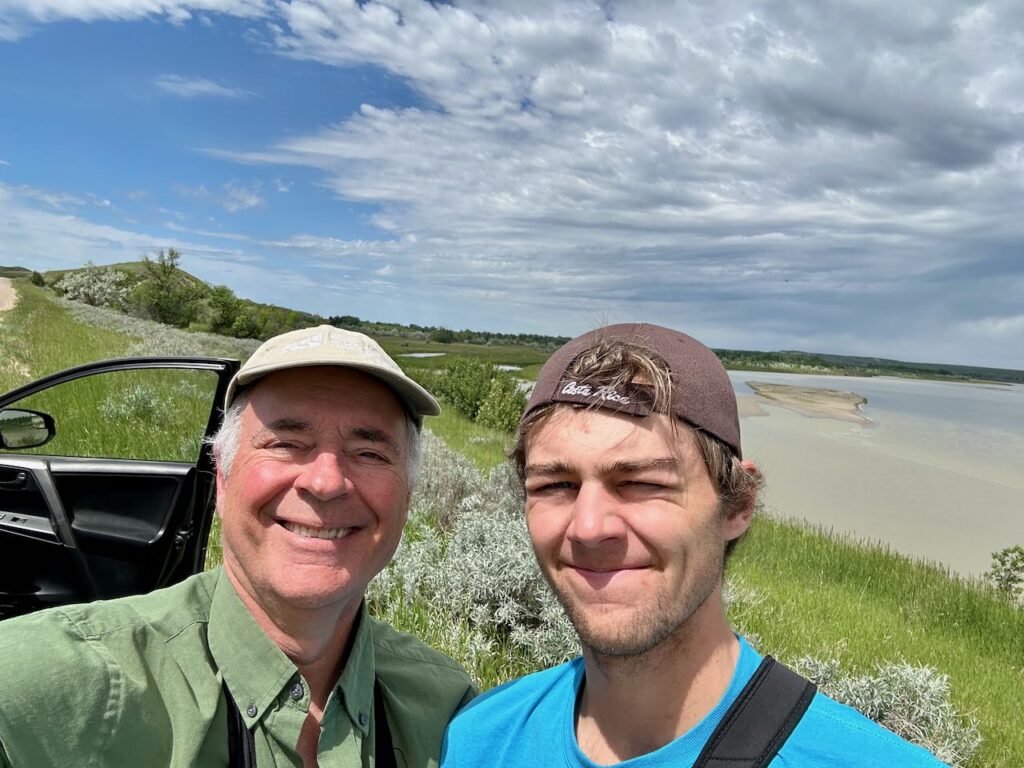
If this shot of me posing near the beginning of Kerr Road doesn’t get me a modeling contract, I don’t know what will. Can you shout, “ROCKIN’ IT!”?
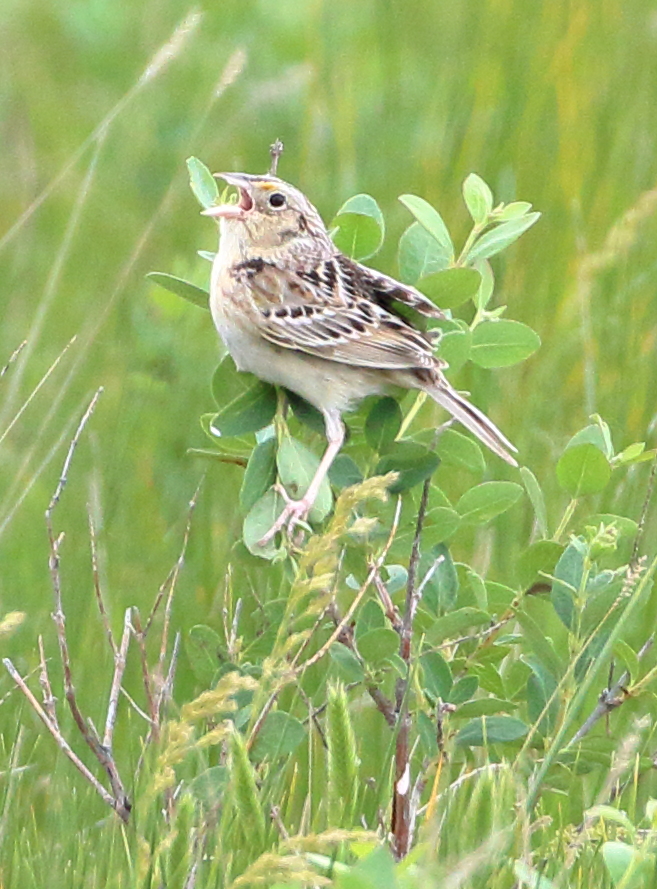
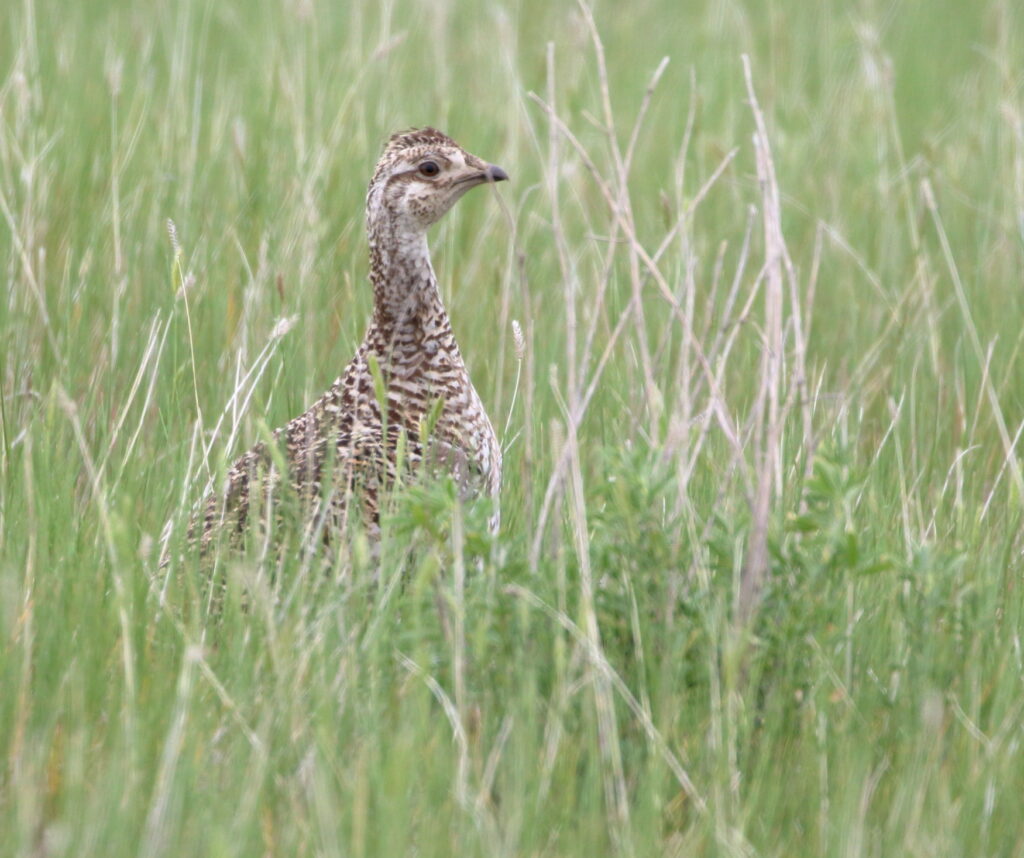
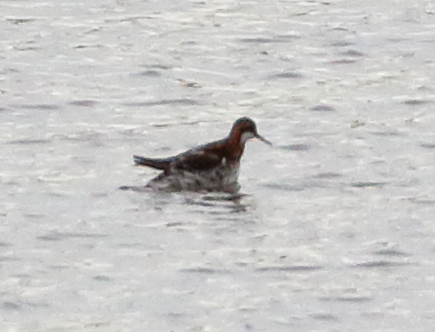
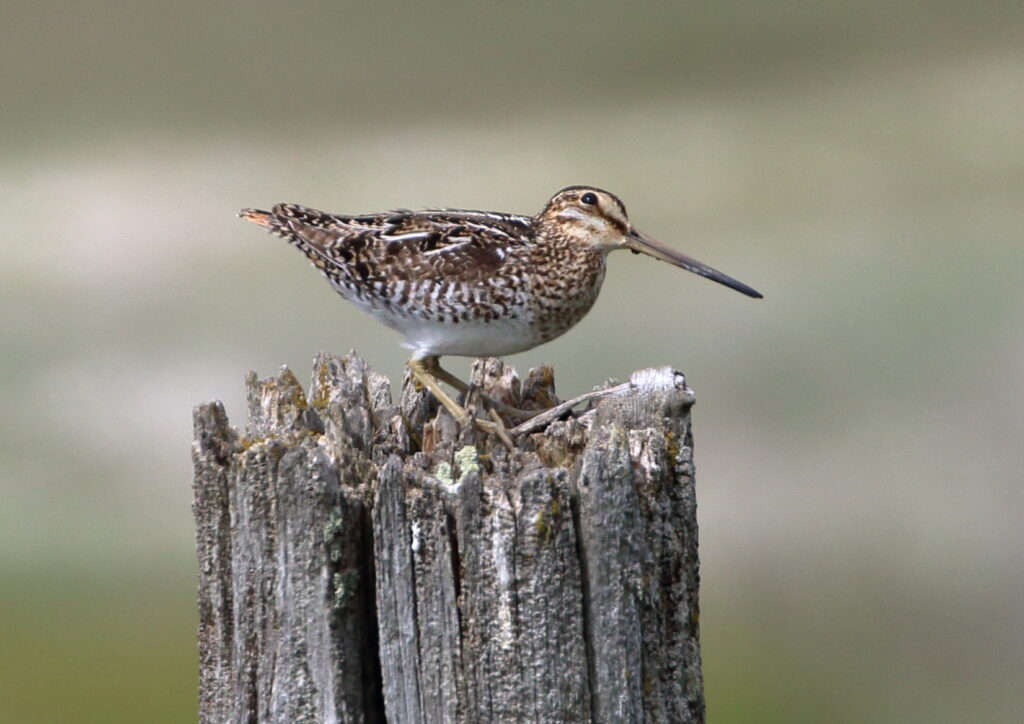
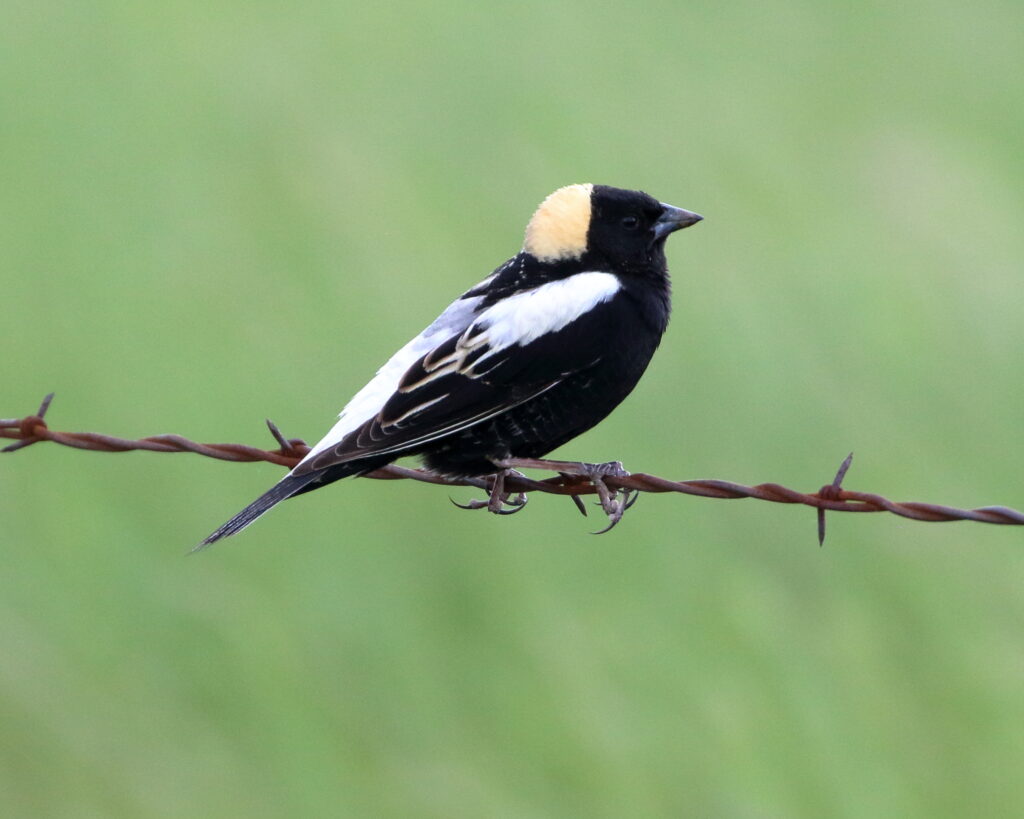
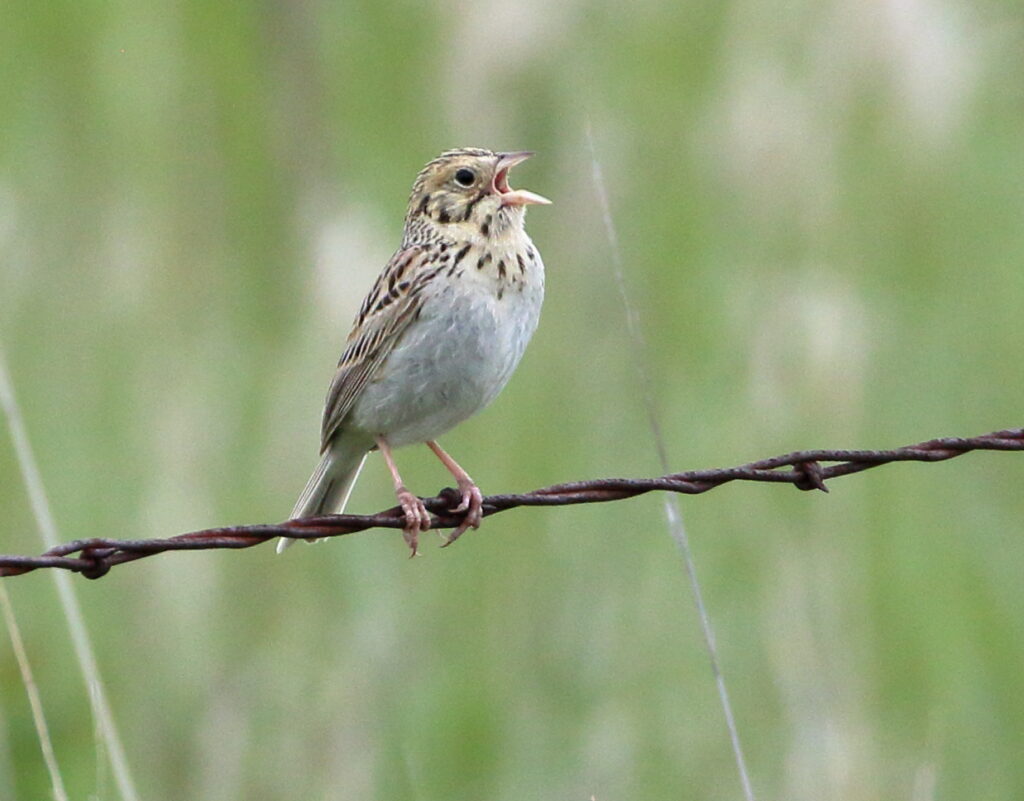
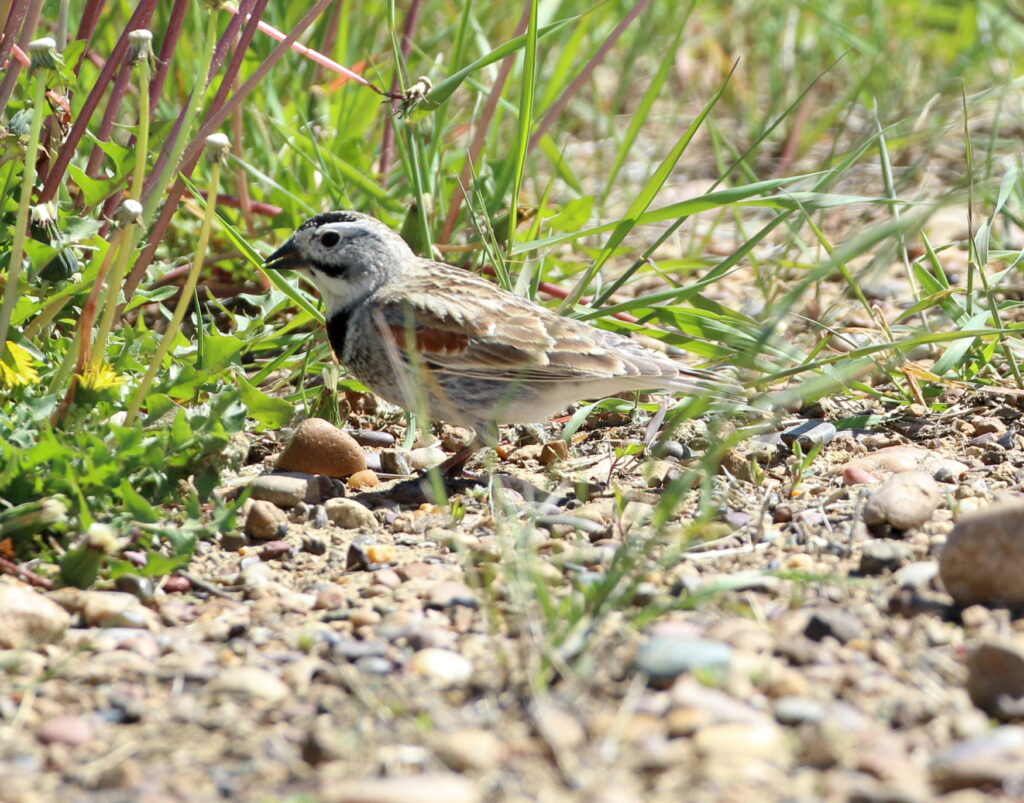
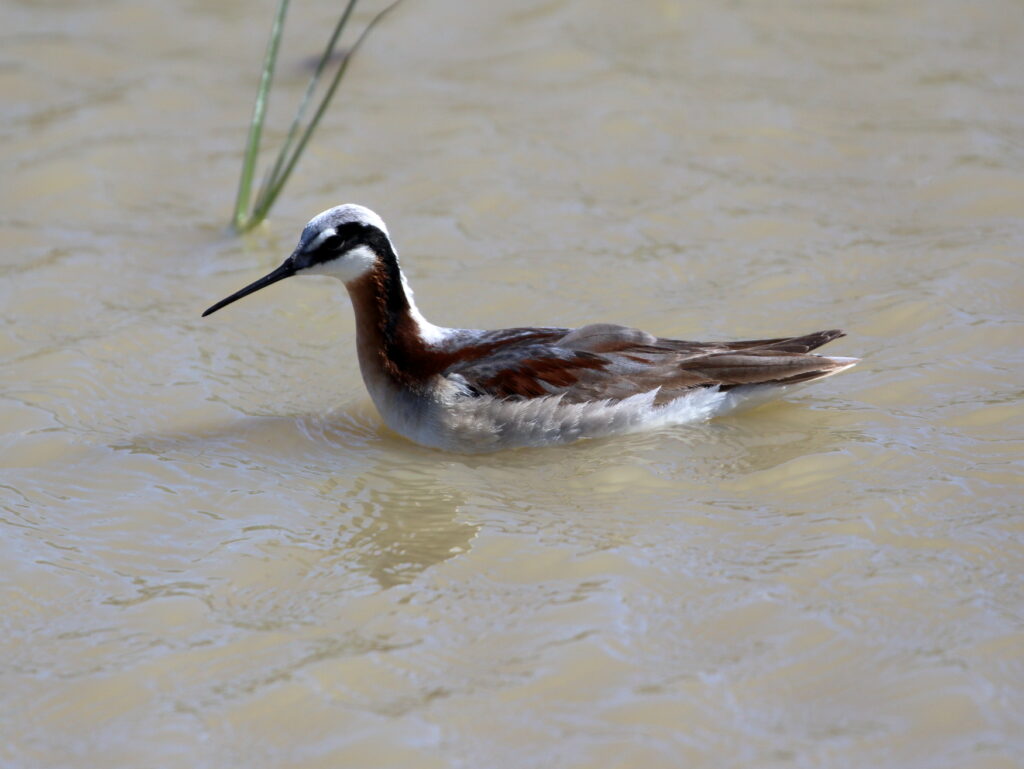
Thanks to progressive grazing and conservation policies, much of the land alongside the road has been kept in grass, making it great habitat for grassland birds. Despite the wind, we spotted Upland Sandpipers, Willets, and at a spot called Ward’s Dam, Wilson’s Phalaropes. We also saw or heard a full complement of smaller grassland birds including 17 Chestnut-collared Longspurs, Lark Buntings, a Baird’s Sparrow, and what would turn out to be our only Thick-billed Longspurs of the entire trip! All told, we saw forty species, but our total would have undoubtedly been higher without the howling gusts from up north.
Kerr Road offered great looks at what would be our only Thick-billed (formerly McCown’s) Longspurs of the trip. Braden and I just love the interesting colorations on these birds. In Montana they are much less common than the equally impressive Chestnut-collared Longspurs.
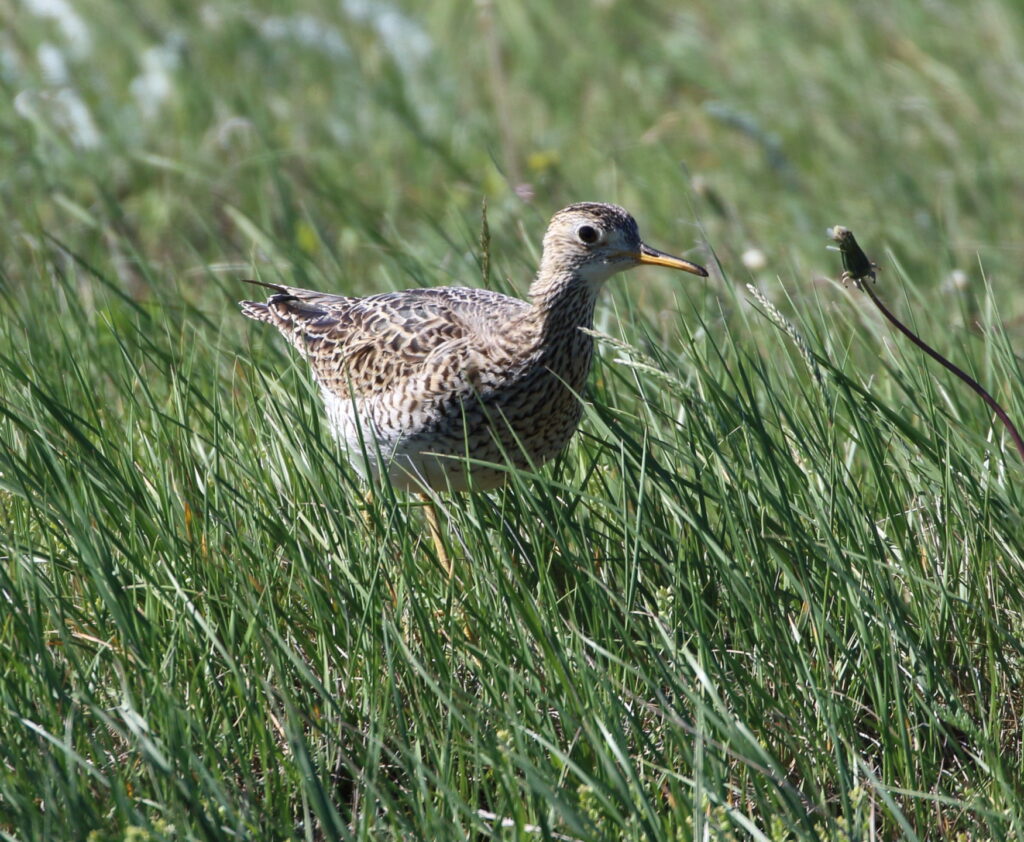
The grass along Kerr Road offers wonderful habitat for Upland Sandpipers and, sure enough, we saw three of them on our relatively brief excursion.
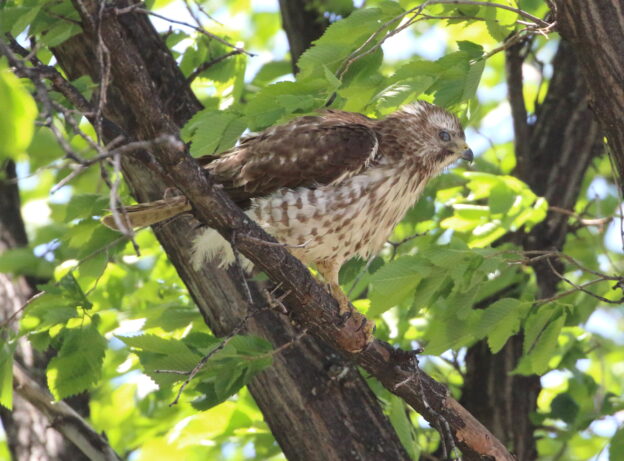
Our next destination? Daniels County, the first of the final seven counties Braden and I needed to bird to fill in our lifetime Montana county birding map profiles. Humorously, we first stopped to bird in the small town of Richland—only to discover that it sat not in Daniels County, but in Valley County, a county in which we already had a long history of birding! Our blunder turned out to be a good thing, though, because it forced us to stop for a picnic in Roseland Park in Scobey—yielding one of the biggest surprises of the trip. As soon as we parked on the street next to the park, Braden said, “Look over there!” I trained my binoculars on a large raptor sitting in a tree—a raptor that turned out to be a Broad-winged Hawk!
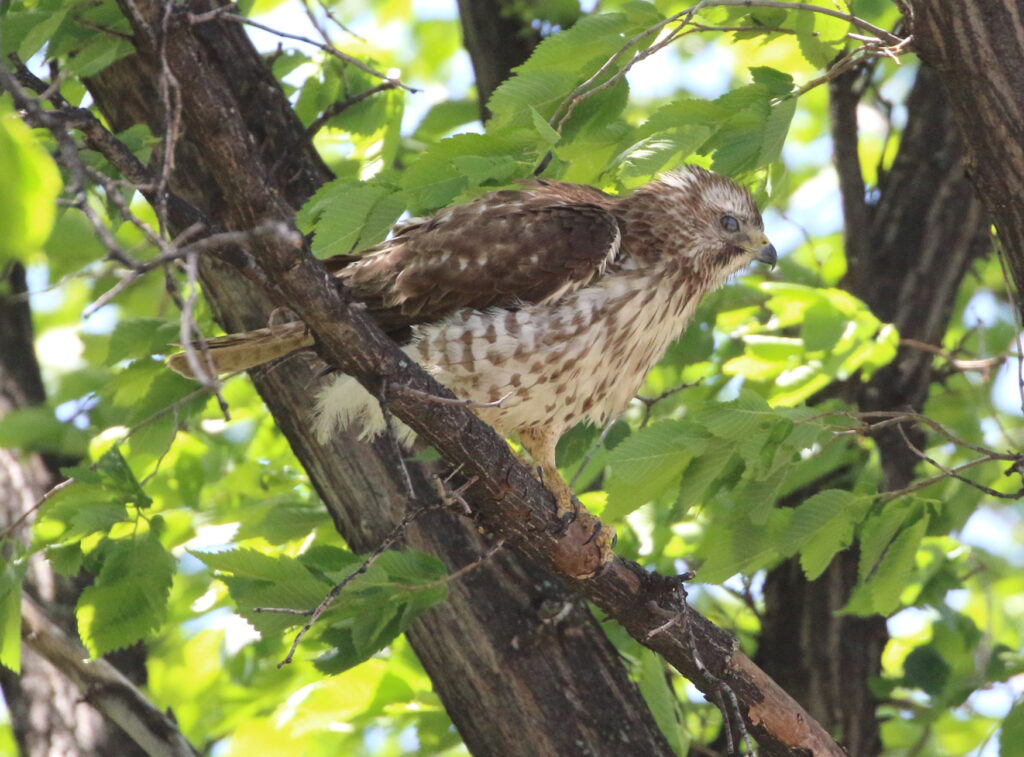
Our second Montana Broad-winged Hawk in three days couldn’t have been more cooperative, perched only yards from where we had chosen to picnic.
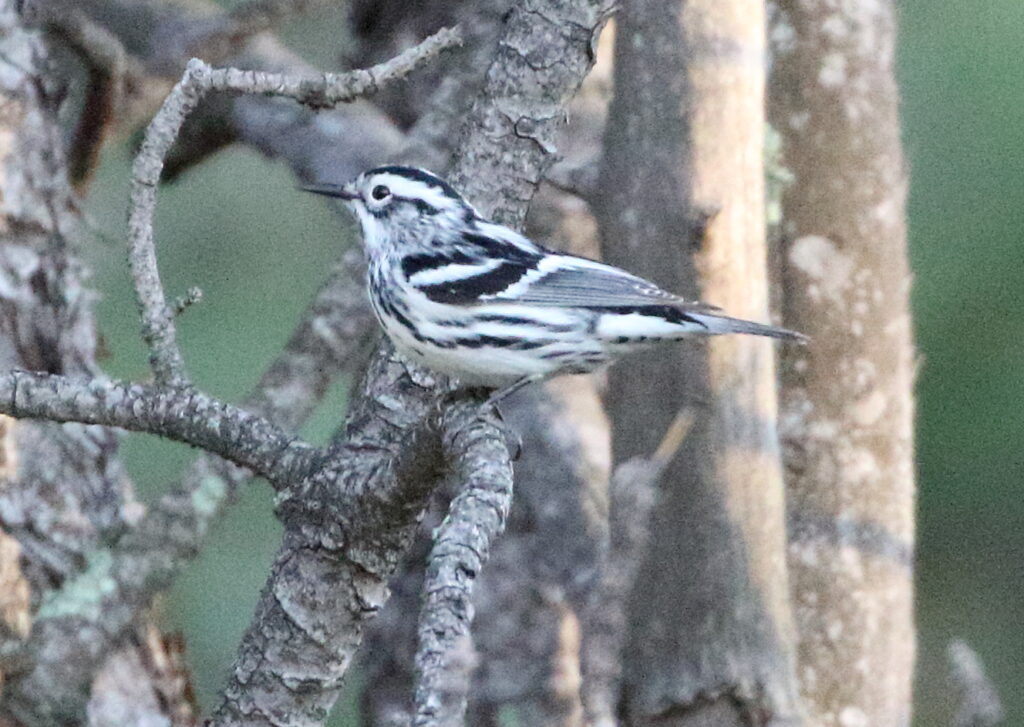
A few BWHAs come through Montana every year, but you usually see them hundreds of feet high as they migrate across the state. In fact, Braden and I had collected our first Montana Broad-winged only three days before while birding Camp Creek Campground near Zortman. And yet, here was another, sitting right in front of us! We were both totally astonished and it put us in great moods to eat our turkey-and-cheese sandwiches and do a little birding on nearby streets. We ended up with 14 species for our first Daniels County list, including Swainson’s Thrush, Warbling Vireo, and three Yellow Warblers. Not bad for a (sort of) accidental stop!
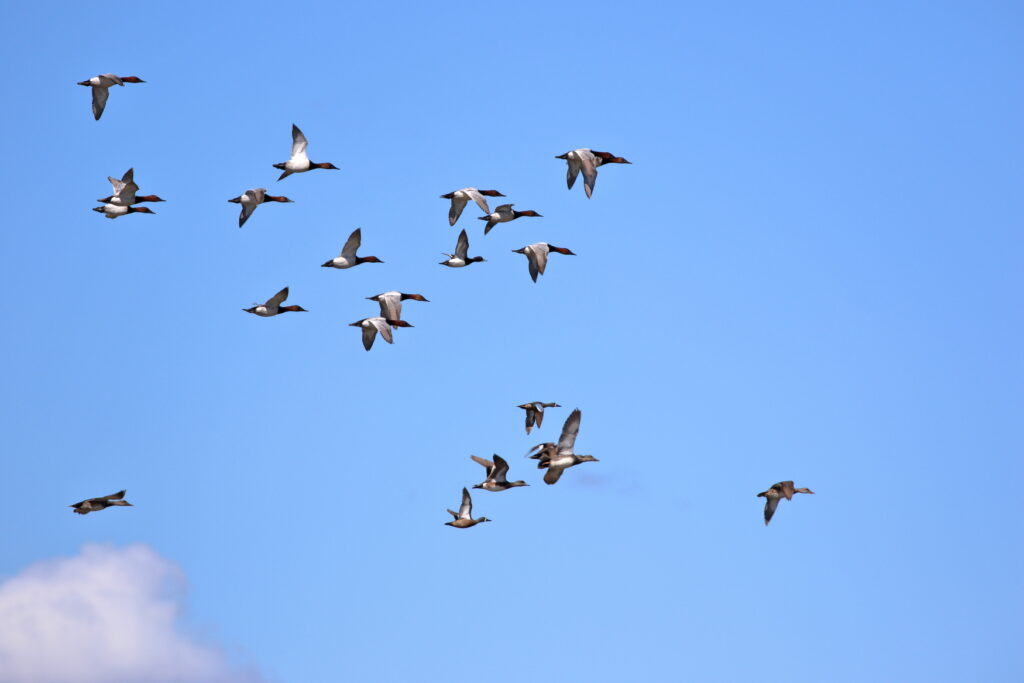
Canvasbacks put on a show in several places on our trip, including Ward’s Dam. Can you spot the Blue-winged Teal and American Wigeon flying among them?
From Scobey, we bee-lined for Plentywood, a known hotspot for rare migratory birds that clip Montana’s northeastern corner on their way north. Alas, for various reasons we were missing the peak migration opportunity to find rare eastern warblers, Rose-breasted Grosbeaks, and other songbirds. Not only that, but warm, howling winds continued, squashing our plans to camp that night. Instead, we checked into a local motel and birded two local hotspots, Harry de Silva Park and Bolster Dam Campground.
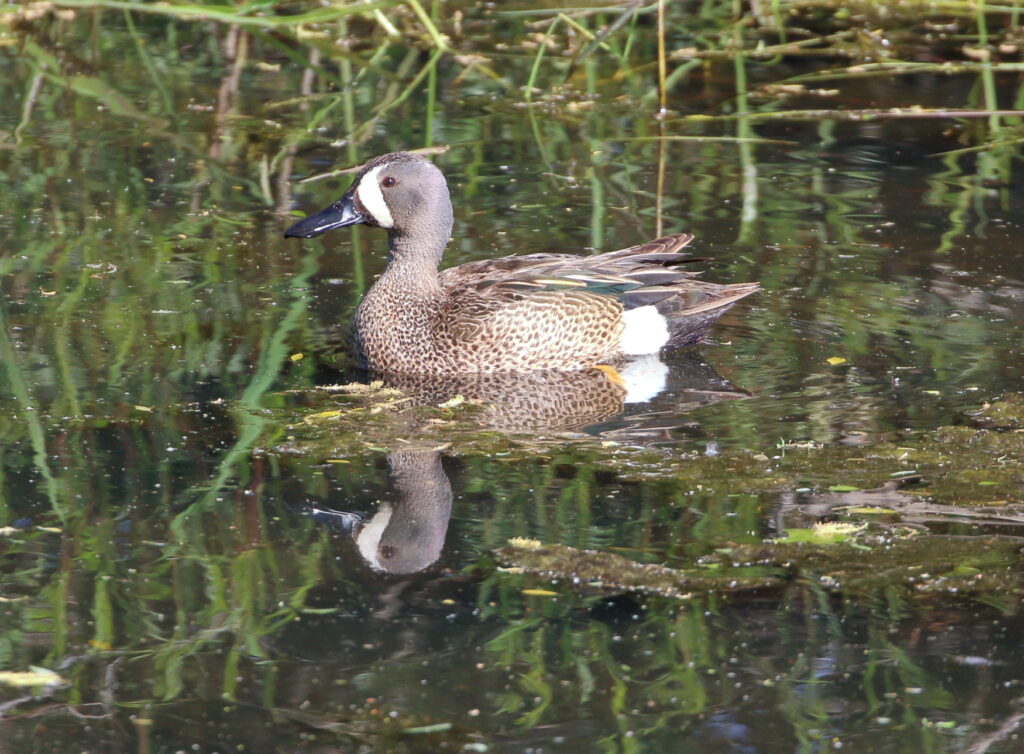
A tiny roadside marsh along Kerr Road afforded us the trip’s best opportunity to observe a Blue-winged Teal.
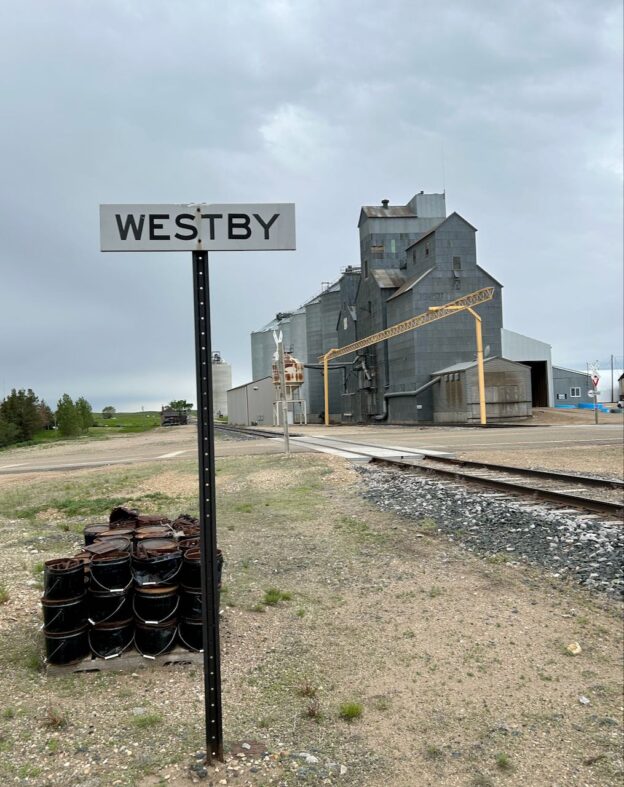
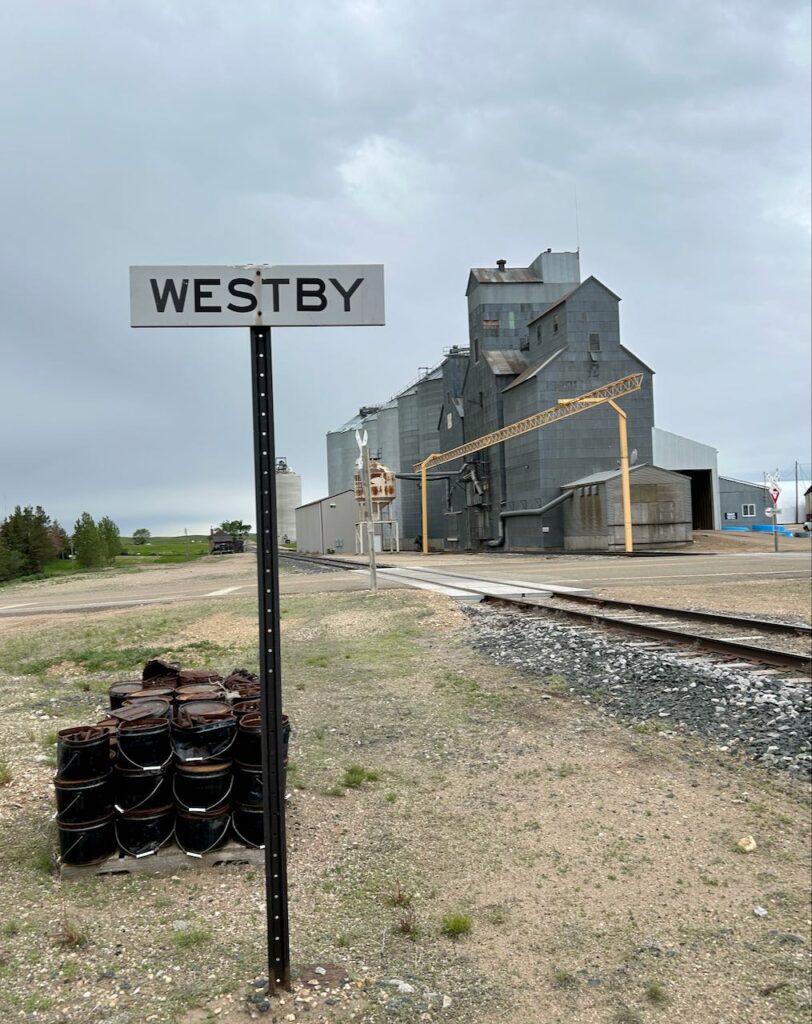
Not unexpectedly, results were disappointing. The highlights were spotting several Purple Martins and a nice kettle of Turkey Vultures. To make matters worse, downed power lines had knocked out electricity to most of the town’s restaurants, forcing us to eat at Dairy Queen. It had been several decades since I’d eaten at a DQ, and I have to admit it wasn’t the worst meal in the world. Unfortunately, our food situation was destined to worsen as, the next day, we prepared to head to Montana’s Birding Mecca, Westby.
Make sure you don’t miss the next installment of our epic eastern Montana adventure by subscribing to FSB now. Simply scroll down on the right and fill out the “Subscribe Now” box that you find there!
Here is Part 2 of Braden’s and my eastern Montana trip report, which began with a wonderful time at the Wings Across the Big Sky birding festival in Helena (see our last post by clicking here). Today’s installment details this year’s visit to one of our favorite birding destinations, Bowdoin National Wildlife Refuge, and then our evening birding and camping at Fort Peck.Enjoy and please feel free to share this post!
After our two days enjoying scintillating field trips and lectures at this year’s Wings Across the Big Sky birding festival in Helena, Braden and I spent two nights at American Prairie’s Antelope Creek Campground. I’d tell you what we were doing there, but for now at least, our lips are sealed. On Tuesday morning, however, we rose early, packed the car and headed toward what has become an annual favorite father-son destination: 15,551-acre Bowdoin National Wildlife Refuge.
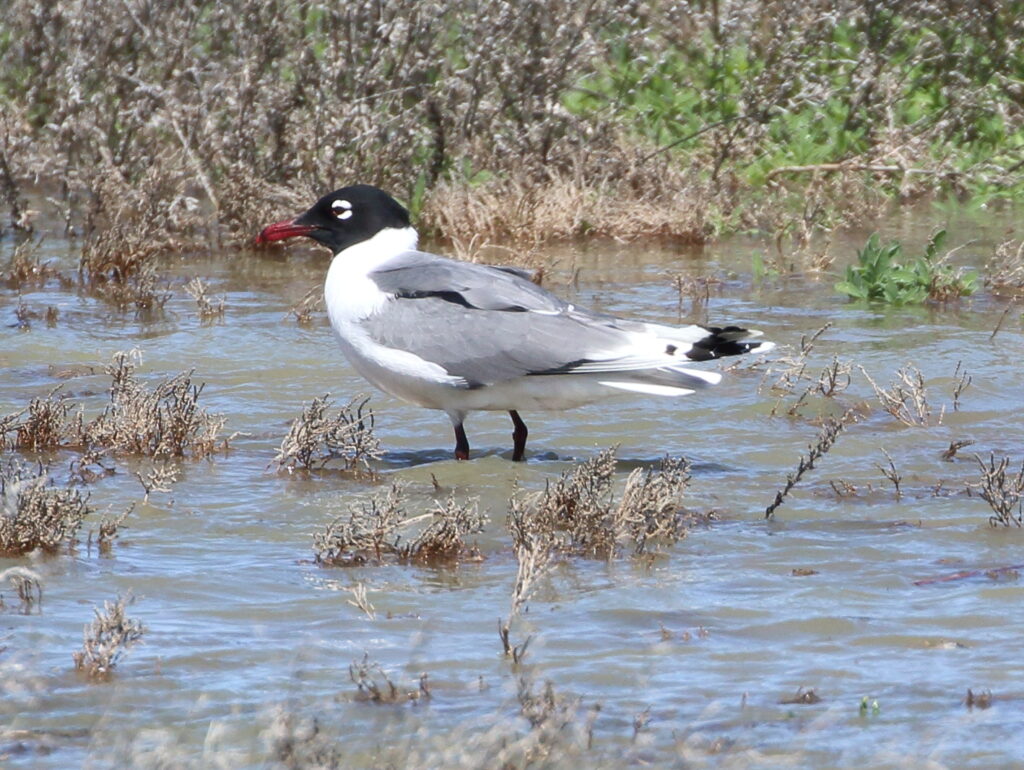
You know you’ve reached eastern Montana when you start seeing Franklin’s Gulls. These gulls were made famous by ZZ Top’s classic hit, “Sharp-Dressed Gulls!”
It had actually been a couple of years since Braden and I visited Bowdoin together, so we especially relished this year’s opportunity. Bowdoin offers a wonderful mix of wetlands and prairie habitat where you can find a terrific diversity of birds. Even better, this year’s water levels showed a significant improvement over last year, when it looked as though the main lake might dry up altogether.
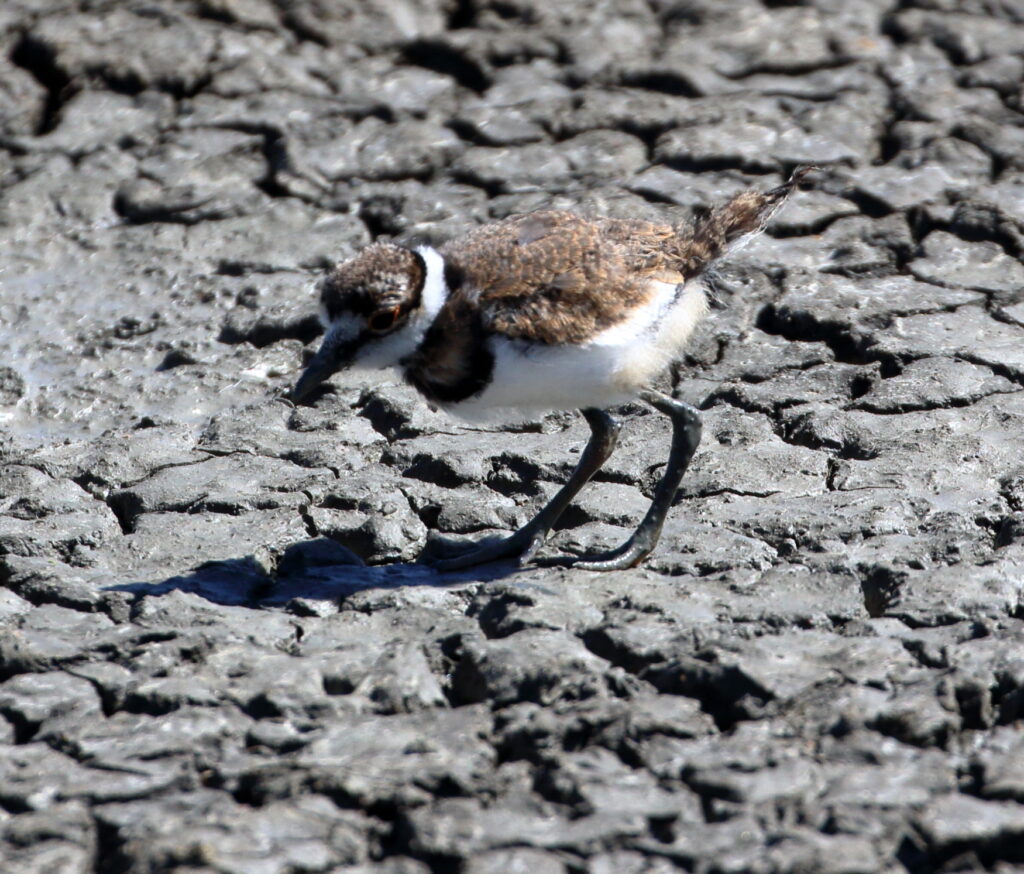
Aaaaaw. Baby Killdeer at Bowdoin!
Unfortunately, today, windy conditions proved a challenge, especially in the grassland sections. While usually we can just drive with the windows open, listening for various songs, this year we generally had to keep the windows rolled up to keep from being sand-blasted by wind and dust. The wind also forced the smaller sparrows that we especially sought to sit down in the grass where they were difficult if not impossible to see. Only the intrepid meadowlarks braved the tops of sage plants, being blown back and forth as if they were on a carnival ride.
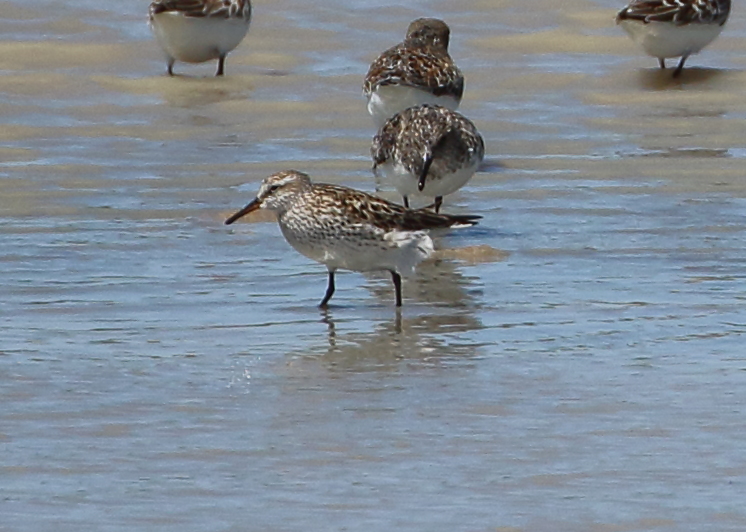
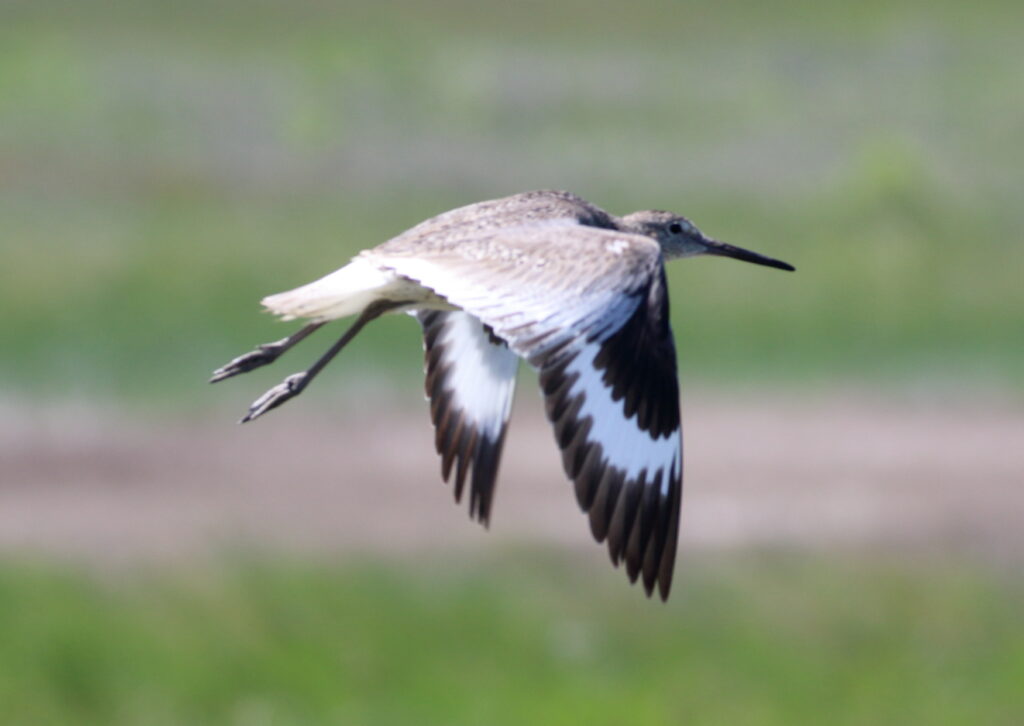
We saw at least 18 Willets while driving the Bowdoin loop—a record for us there. These birds, like several other shorebirds, breed in the grasslands around the main lake.
Nonetheless, thanks to diligence and Braden’s great ears, we managed to locate at least a few Chestnut-collared Longspurs, Lark Buntings, and Grasshopper, Lark, Clay-colored, Savannah, and Song Sparrows.
We also got great looks at White-faced Ibises, Willets, American Avocets, and other “usual suspects” in the aquatic realm. It’s always reassuring to see the hundreds of white pelicans nesting out on the main island.
We never get tired of seeing Wilson’s Phalaropes, which breed at Bowdoin NWR in good numbers.
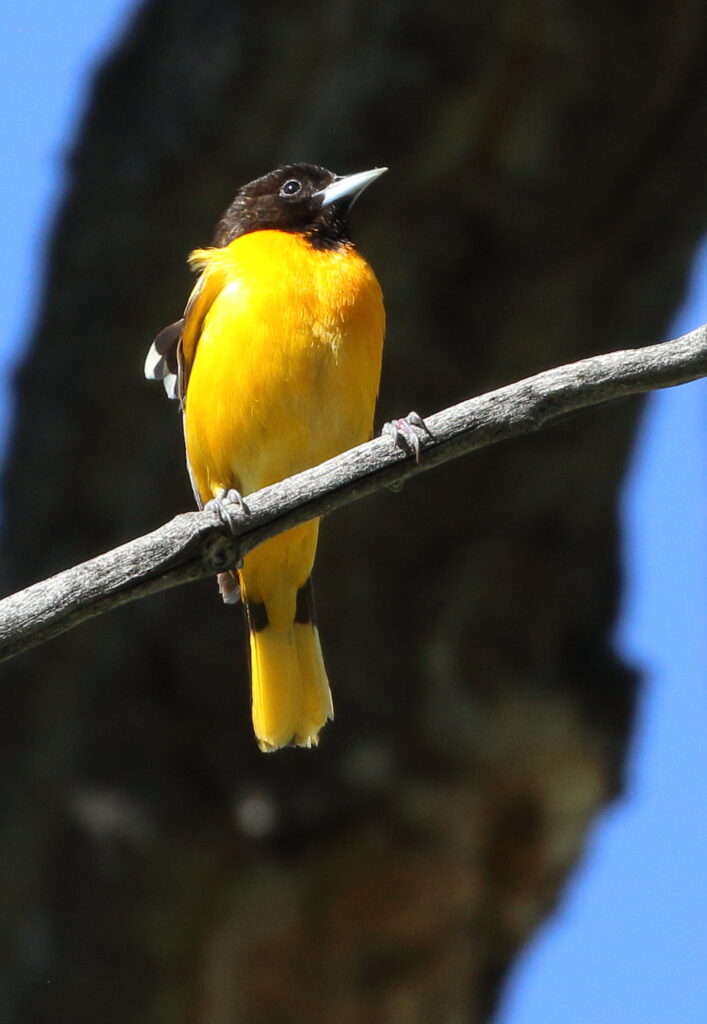
One bird we especially missed was a Baltimore Oriole, which we usually see by stopping at the refuge visitor center before driving the big loop. After we finished the loop, however, we decided to give the BAORs one more shot and sat in our car munching our turkey-and-cheese sandwiches. Sure enough, after ten minutes, a bright orange bird with a black head flew across our vision! Sometimes, you just gotta be patient. All told, we observed 76 species at Bowdoin. But our day had not yet finished.
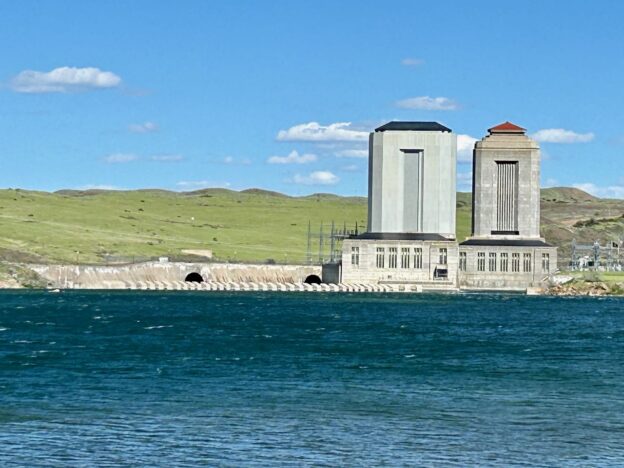
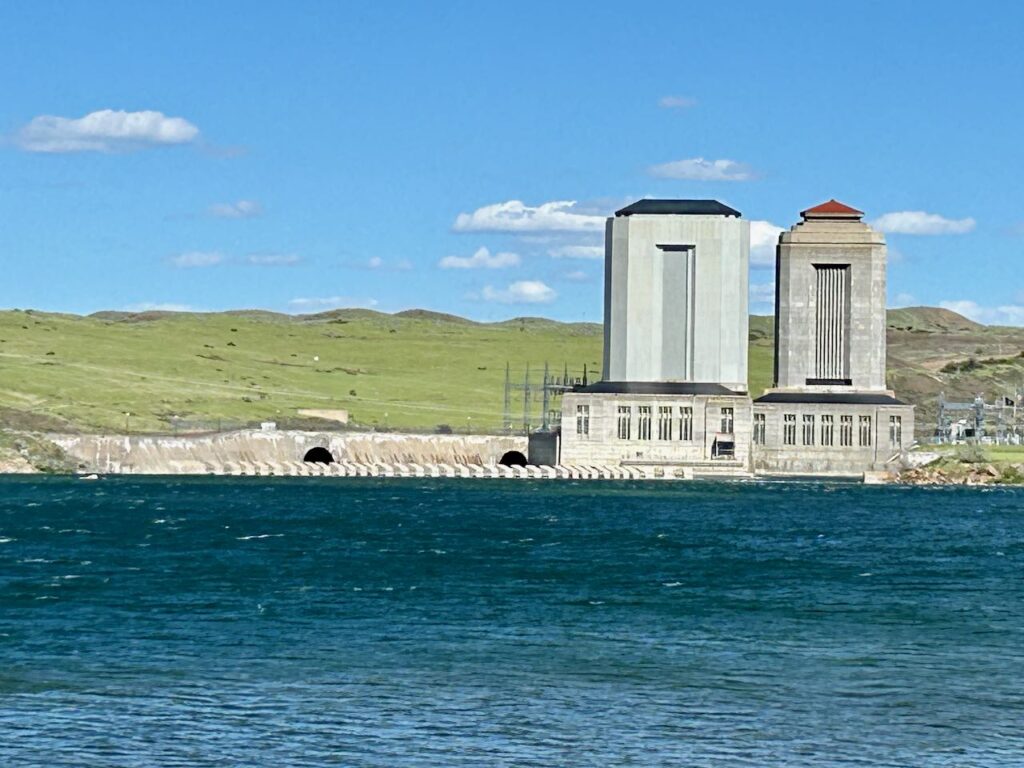
I’ve always felt captivated by these giant Art Deco power station towers at Fort Peck Dam. By camping here, we discovered that the towers are brilliantly lit up at night—a strange effect so far from “civilization.”
After Bowdoin, we drove to Fort Peck to spend the night camping below the dam. I’ve always been fascinated with the story of the Fort Peck dam and how, out in the middle of nowhere, a medium-sized city sprang up to build what, at the time, was by far the largest dam in the world. Today, it is still impressive, stretching more than four miles long, and “looked over” by two large (and to me beautiful) Art Deco power plant towers.
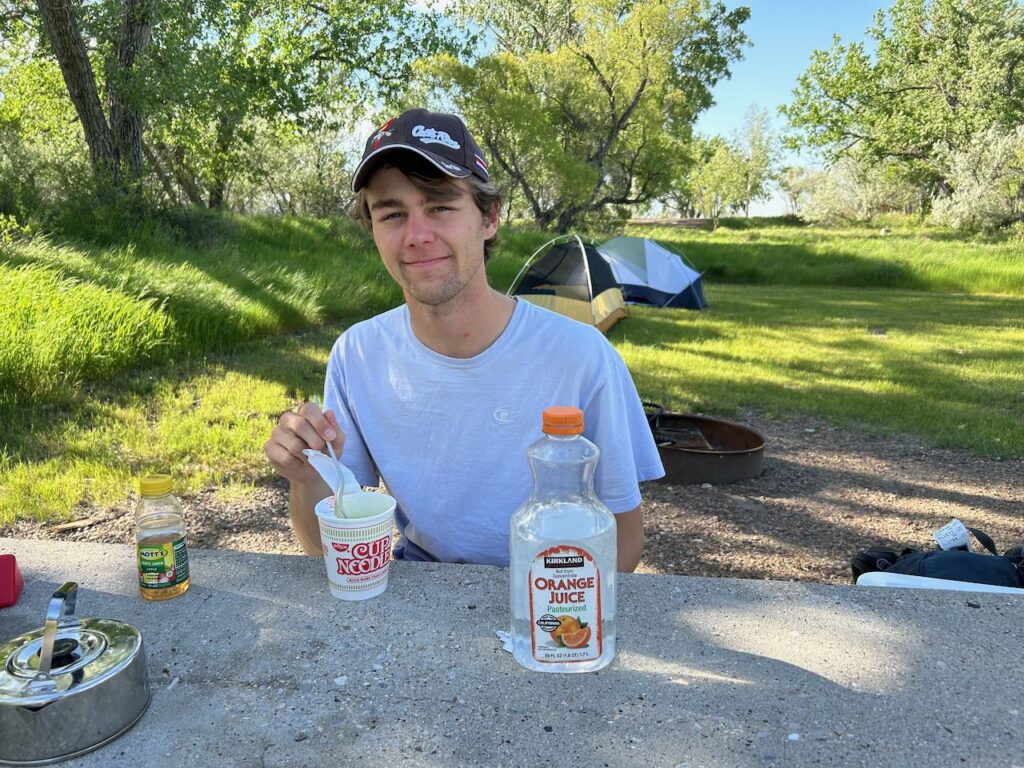
Who said Fort Peck doesn’t have fine dining?
Braden and I found a cozy campsite, set up our tents, and set out to explore the extensive campground. Our top target here were Field Sparrows. We didn’t see any. But we did get an unexpected triple shot of orioles: Baltimore, Bullock’s, and Orchard, all of which dropped by our campsite at least once.
Fort Peck gave us by far our most cooperative experience ever with Baltimore Orioles. This male was part of at least two breeding pairs we found in the campground.
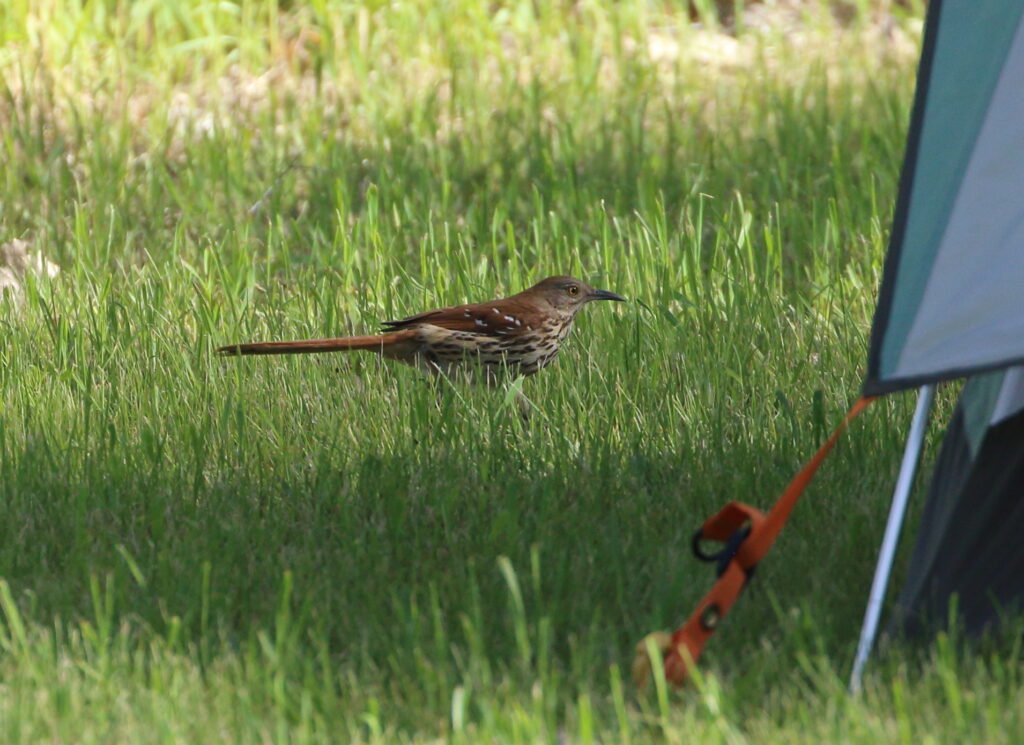
We also got great looks at another Montana favorite, Brown Thrashers, the first of quite a few we would see on our trip.
One of our favorite Montana birds, Brown Thrashers would put in several appearances on our trip, including right in our Fort Peck campsite!
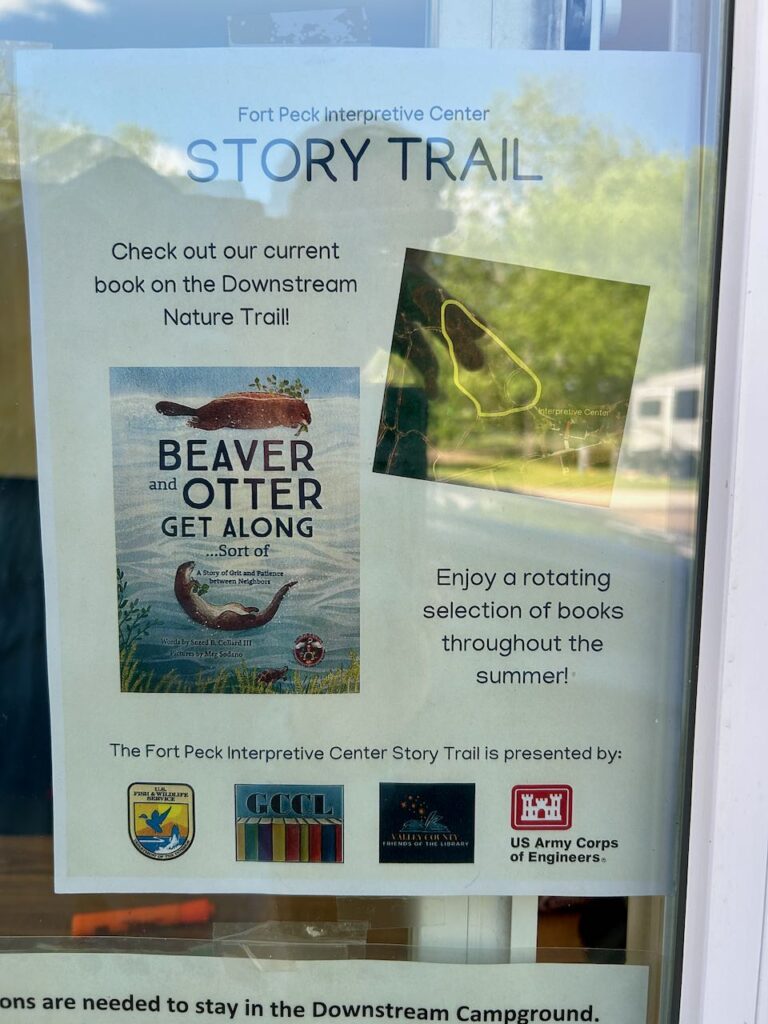
We generally try to avoid staying at large campgrounds, which can be noisy and sterile, but I was glad we gave Fort Peck a try. Even though my sleeping pad kept deflating through the night, the campground was a bit out of the wind, and offered up birds aplenty! Besides, how could I dislike a place that featured my book Beaver & Otter Get Along . . . Sort Of on its summer reading program? Tomorrow, we would try more prairie birding and hope that the wind would die down . . . but would it? Stay tuned for our next report!
As we were lining up our campsite, Braden suddenly exclaimed, “Oh my god! It’s your book!” Helped make my day!Thank you Fort Peck!
In case you missed our last post, Sneed’s new book, Like No Other: Earth’s Coolest One-of-a-Kind Creatures, is now out just in time to enhance summer science education. To order, click on the book jacket in the right column!
Have you ever contemplated attending a birding festival? Braden and I have attended festivals in Monterey Bay, San Diego, and Rockport-Fulton near Corpus Cristi. All were terrific. I have to say, though, that our favorite is right here in Montana. After last year’s Wings Across the Big Sky birding festival in Great Falls, I was skeptical that this year’s fest in Helena could match it. How wrong I was! This year’s festival would not only prove wonderful in itself, but provide the perfect launch pad for Braden’s and my 13-day birding safari to eastern Montana. In fact, even before we reached Helena, Braden made what may be his greatest Montana bird discovery yet.
We left Missoula early on Friday, May 31st. Our first destination? Browns Lake, site of many past wonderful birding experiences—but nothing like we would have today. After the turnoff to Browns Lake, we always stop at a little riparian area and, as usual, got out to listen and look. Right away, we heard Dusky Flycatchers, Warbling Vireos, and Yellow and Yellow-rumped Warblers. Then, Braden heard an American Redstart and began “pishing” it in so that we could catch a look. I had my camera focused on a Yellow Warbler when Braden urgently hissed, “Daddy! Get over here now!” I rushed over to find him training his binoculars on a mind-blowing find: a Bay-breasted Warbler!
Perhaps Braden’s best Montana bird find ever, this glorious male Bay-breasted Warbler gave us great looks despite my horrible photos. This bird made the Montana Rare Bird Alert.
For those of you who don’t know it, Bay-breasted Warblers breed mainly in spruce forests of northern Canada across to the far northeast of the U.S. During migration, they almost never pass through eastern Montana, not to mention western Montana. True, I had seen a female in Missoula several years ago, but the gorgeous male in front of us shouldn’t have been anywhere within 500 miles of where we were standing—and, accordingly, made Montana’s Rare Bird Alert.
With that auspicious beginning, we happily proceeded to Carroll College in Helena for the Wings Across the Big Sky opening banquet. That featured an excellent talk by Tiffany Kersten, who set the Lower 48 Big Year record in 2021, and spoke eloquently about the challenges of birding as a solo female. Tiffany now is the proud owner of NatureNinja Birding Tours, and I can only guess that her guiding and tour experiences are not to be missed.
Usually uncooperative, Yellow Warblers gave us great looks at Vigilante Camprground near Helena.
Saturday morning, Braden and I convened at the festival breakfast for our first field trip, led by the highly-skilled veteran Montana birder, Sharon Dewart-Hansen. We were excited about the field trips we had signed up for because they would take us to places we had never before birded, and Sharon led us to Vigilante Campground northeast of Helena. After driving up a spectacular canyon, about 15 of us piled out to bird. Immediately, a Broad-tailed Hummingbird loudly buzzed us—a Montana Lifer for both Braden and me. Walking the campground, we were regaled with the songs of Ovenbirds, MacGillivray’s Warblers, Hammond’s Flycatchers, Veerys, and always my personal favorites, Lincoln’s Sparrows. A Ruffed Grouse drummed cooperatively several times.
Have I posted more Lincoln’s Sparrows than any other bird on FatherSonBirding? Perhaps, but who can blame me? I just love these guys!
After scouring the campground, we headed up canyon on foot and were treated to Violet-green Swallows and White-throated Swifts. On the way to the Vesta Cerra Ranch, whose owners generously allowed us to stop to eat lunch and admire their hummingbird feeders, we stopped for better looks at Broad-tailed Hummingbirds!
This Broad-tailed Hummingbird was a Montana Lifer for both Braden and me. These birds are quite rare and localized in the state, with the heart of their breeding range south of Montana.
After packing up our car early Sunday morning, we headed out for our second field trip, guided by expert Montana birders Hilary Turner and Andrew Guttenberg. Once again, we were treated to fabulous birding through brand new territory that featured awesome grassland, riparian, and canyon birding. The highlight was a visit to the private Phantom Springs Ranch, where we recorded 45 species, including wonderful looks at displaying Bobolinks. Here, two Sandhill Cranes tried to join our group, but we had to politely inform them that our field trip was full.
These two Sandhill Cranes tried to join our group at Phantom Springs Ranch, but we had to politely turn them away.
After birding several other wonderful spots northwest of Helena, Braden and I sadly said goodbye to our intrepid birding companions. That sadness quickly turned to excitement, however, as we steered north on the next stage of what would become a 2,500-mile birding extravaganza . . .
Led by trip leaders, field biologist Hilary Turner (far left) and Andrew Guttenberg (third from left), our group enjoyed superlative birding in places Braden (second from left) and I had never before explored.
Braden and I write FatherSonBirding in the hopes of sharing the wonders of birds and birding, and the urgency to protect them. We do not accept advertising or donations, but if you’d like to support our work, please consider buying *NEW* copies of some of Sneed’s books—First-Time Japan, for instance, or my picture book for younger readers, Birds of Every Color. We appreciate your interest and hope you will keep reading!
The birds are back! Well, at least a lot of them. Last weekend, our dog Lola and I hiked our favorite four-mile loop from our house up to a ridge called the Mount Jumbo Saddle and then back down past what has become my favorite “bird thicket” in Missoula. We first began hiking this route when I was training to take Braden’s scouting troop to Philmont Scout Camp in 2019. Honestly, Lola isn’t crazy about the route since she hates loud noises and we often hear guns firing from a range a couple of miles away. I keep making her do it, though, because I’ve discovered that it’s a great way to keep up with the neighborhood bird community, especially in spring. The past couple of years, I’ve tried to do this route on a regular basis, carefully recording new arrivals and learning more about their migration patterns.
The past couple of years, Lola and I have regularly hiked up to Mount Jumbo Saddle and back to check in on which birds are currently in residence. Lola likes the route except for the gunshots she hears from east Missoula!
Songbird migration builds slowly here in Montana. This year in late March, I noted the first Western Meadowlarks, Western Bluebirds, and Spotted Towhees on the route—but four weeks later, April 21, not much had changed. Two weeks after that—yesterday—the dam broke. I set off up the hill hoping to see perhaps the year’s first Vesper Sparrows, but quickly discovered that new arrivals were spouting off everywhere I turned. It began halfway up Jumbo Saddle when I heard a song that reminded me of a Western Meadowlark and I guessed that it was my season’s first Vesper Sparrow. The problem? I didn’t know for sure—a situation faced by millions of birders who have not, or cannot, learn more than a few bird vocalizations.
In our neck of the woods, Spotted Towhees are among the earliest spring songbird migrants. Fortunately, their weird “bouncing ball” rattle is easy to pick out.
What to do?
In the past couple of years, I have developed a strategy for dealing with these situations—one that might help you, too. It used to be that when you heard a song or call that you couldn’t identify, one’s options were limited. You could just guess, and play various bird calls on your app, hoping to land on the right one. You could record the call and play it back to an expert. More often, you’d try to follow the song and get a visual on the bird to see what it was. Unfortunately, all of these methods are slow and cumbersome, and in spring, well, there are just too many vocalizations to keep up with.
And then along came Merlin’s Sound ID feature.
Sound ID is (almost) every birder’s dream. You simply tap a button on the Merlin phone app and it begins recording and identifying the songs and calls around you in real time. The app is not infallible. You have to be fairly close to birds for it to pick up and identify them, and the app has difficulty handling background noises such as wind, rushing streams, and cars roaring by on a freeway. The app also makes mistakes. Starlings, mockingbirds, and Steller’s Jays can fool it with their imitations of other birds. If the app only picks up part of a call, it sometimes can mistake one bird for another. The bottom line: you should never use the app alone to identify a bird.
So how do you make proper use of it? I employ it in two ways.
Strategy One: Confirmation
The first is to confirm a song or call that I may be somewhat familiar with—but am not 100% sure about. The putative Vesper Sparrow in the second paragraph is a perfect example. In past years, I had learned that a Vesper Sparrow kind of sounds like the call of a Western Meadowlark—but a bit simpler and cruder. When I heard a “somewhat meadowlark” call near Mount Jumbo Saddle, I immediately thought “Vesper Sparrow” but couldn’t be sure, so I started Sound ID. Sure enough, the song lit up as Vesper Sparrow. Other things made me confident about this ID, too. The timing was right from previous years. Most important, I was standing in perfect Vesper Sparrow habitat—open meadows with tall grass and scattered perching shrubs.
The arrival of Vesper Sparrows is a cause célèbre for Braden and me. I always need to confirm its meadowlark-like song, however.
As my hike continued, in fact, I used Sound ID to confirm several other birds in this way, including Steller’s Jay and the year’s first Chipping Sparrows and Yellow-rumped Warblers. Things were about to get more challenging, however.
Strategy Two: Possible Presence
Not long after hearing my first (and second, third, and fourth) Vesper Sparrow, I reached a nice brushy area where Braden and I have heard Orange-crowned Warblers in previous years. Unfortunately for me, I have a very difficult time distinguishing one warbler song from another. I usually recognize Yellow-rumped Warblers when they first show up, but as other species arrive they plunge me into, in the words of Sir Topham Hatt, “confusion and delay.” This morning, I could hear what sounded like warblers—but I didn’t know which ones.
Again, Sound ID comes in very useful in these situations because it can give you an idea of what to look for. I started a new recording and the app failed to come up with any Orange-crowned Warblers. It did, however, identify Yellow-rumped, Yellow, and most exciting, Nashville Warblers! I did not log any of these on eBird, however—not right away. Because I am not good with warbler songs, I needed to confirm these in at least one or two other ways.
Once the Orange-crowned Warblers arrive, I know I’m in for a real challenge to start distinguishing different warblers by song. That’s when I lean heavily on Sound ID.
One is to compare what you are hearing with known recordings on other apps. If what you are hearing is identical to vocalizations in the Merlin sound library or on the Sibley app, depending on your experience, I feel confident that you can go ahead and record the bird—again keeping in mind the caveat that some birds imitate others.
Still, I only do this when I am really sure the two songs are the same—understanding that bird songs from the same species can vary tremendously. If I have any doubts, I wait to log a bird on eBird until I have confirmed it with a visual sighting or by running it past an expert. With this technique, Sound ID isn’t cinching the identification for me, but it is helping me a lot by giving me a better idea of what to look for.
This morning, however, I could not find any of the three warblers in the first thicket, so Lola and I kept hiking. Ten minutes later, I spotted a Yellow-rumped Warbler in a tree—and recorded it—but it was the Nashville Warbler I was really after.
Lincoln’s Sparrows are hands-down one of my and Braden’s favorite songbirds. Unlike the warblers, they also seem kind of curious and make themselves for visible to the eager birder.
Eventually, I came to another thicket, and here I was thrilled to see my first Lincoln’s Sparrow of the year. Just as enticing, I also was hearing warbler sounds all around me so I turned on Sound ID once again. This time, Orange-crowned and Nashville songs started lighting up Sound ID like a pinball machine. Thanks to the app, I was quickly able to distinguish the two species by ear, and I confirmed these by playing other recordings on the Merlin library. Soon after, I actually saw the birds for myself. Yes! I thought, and finally logged them onto eBird.
Sound ID has helped me find many more Nashville Warblers than when Braden and I first started birding ten years ago.
All together, Lola and I saw eight new first-of-year species on our hike. For several of them, Sound ID not only helped me identify them, it alerted me to look for them in the first place. I want to emphasize, however, that Sound ID is not a substitute for putting in the hours to learn and identify birds yourself. Recently, Cornell has issued friendly cautions not to rely on it as your sole basis for identification. Instead, I consider Sound ID a wonderful “helper tool” that can especially assist beginning birders, as well as more experienced birders like myself who just find it difficult to learn vocalizations. And did I mention the Merlin app (with Sound ID) is free? Cornell Lab, the app’s developer, has generously made it available to anyone who wants it. Even better for our international readers, Cornell Lab is rapidly expanding what the app can identify to countries around the globe. All you need is a phone. Learn more at https://merlin.allaboutbirds.org/.
Today, Braden and I would like to especially welcome our increasing number of international readers. Our posts are now regularly viewed by birders from more than a dozen different countries, and new countries seem to pop up every week. Thank you for your interest and we invite you to comment and share your own birding interests and experiences!Oh, and check out the quiz in the last photo caption!
I hadn’t intended my visit to central Montana last week to be a birding trip. Rather, I had been invited to Butte to speak at the annual conference of the Montana Library Association, and so had planned a simple, quick overnight. A few days before the conference, however, things got more complicated. Braden has heroically gone without a car during his first three years in college, but as he looked forward to his senior year, we all agreed it was time for his own wheels, and I had been doing a little “car scouting” while he finishes up his semester abroad in Costa Rica. Wouldn’t you know it, I found what looked like the perfect used vehicle in Billings. “Hm,” I thought, “if I got up early, I could drive to Billings on Thursday, look at the car, and make it back to Bozeman (most of the way to Butte) ahead of the conference.”
Long story short: I bought the car, and Friday morning, found myself with an entire morning to bird between Bozeman and Butte.
Brown Pelicans are my favorite birds, but American White Pelicans definitely make the top 100. Unlike their brown cousins, AWPEs prefer inland freshwater habitats for breeding. I’m guessing these might be heading to Bowdoin NWR near Malta, but they could be on their way farther north.
Three Forks ponds can be very hit and miss. I had actually stopped there on my way to Billings, but hadn’t found anything too notable except some American White Pelicans. This morning, though, I decided to try them again before heading up Bench Road. Was I in for a surprise! The first bird I spotted in Three Forks ponds was a bird I had never before discovered on my own: a Red-breasted Merganser! Not only that, I found seven more in the next pond over. These northern breeders pass through Montana only during migration—and not in large numbers—so I felt particularly fortunate to see them. The ponds, though, held other surprises.
Red-breasted Mergansers can be distinguished from Common Mergansers by their spiky “punk” hair-do, gray sides (here, under water), and of course, that reddish band on their breasts.
Beyond a much larger group of pelicans, I saw a good assortment of ducks and then spotted birds with bold black-and-white wings fly to an island in the second pond. Shorebirds, I thought excitedly, running back to the minivan for my spotting scope. Other than Killdeer and Spotted Sandpipers, I had never before seen shorebirds at Three Forks, and my pulse picked up as I focused in on a group of eight gray birds at the edge of the island. I quickly ran through all the possibilities in my head, examining their size, color, and bills. My conclusion: Willets! They were obviously migrating, and this was the first time I’d ever seen them moving through this part of Montana. Apparently, I was not alone as the birds’ timing landed them on the Montana Rare Bird alert for the day!
This group of eight migrating Willets surprised me by making the Montana Rare Bird Alert! They also tested my powers of ID elimination.
From the ponds, I headed up Bench Road. This was the first place Braden and I ever saw Burrowing Owls, and I hoped to see them again today—but didn’t hold out a lot of hope as I’d missed them my last couple of times here. The road, though, holds a wealth of other birds. In the lower stretch, I pulled over at the marsh to enjoy my first Yellow-headed Blackbirds, Marsh Wrens, and Cinnamon Teals of the year. It was the road’s upper stretch that most excited me, however.
Cinnamon Teal. Most stunning duck ever? Maybe not, but definitely part of the conversation!
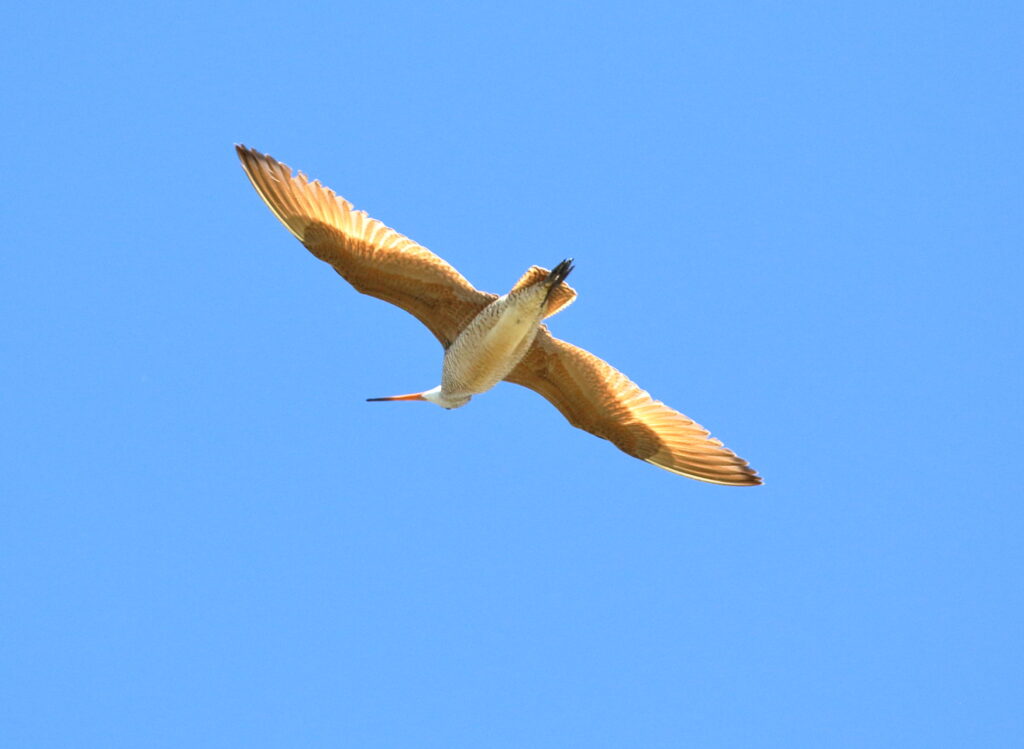
As I climbed up over the first “bench,” I smiled at the many Horned Larks and Western Meadowlarks singing along the road. After a couple of miles, though, I thought I saw a larger bird landing along a side road. Could it be a Burrowing Owl? I turned the minivan down this sketchy, rutted path and after a couple of hundred meters saw a large shape in a field. It wasn’t a Burrowing Owl, but almost as exciting—my first Long-billed Curlew of the year! This greatly interested me because Braden and I had never birded this road so early in spring and I didn’t realize LBCUs would already be here. Turning the van around, though, I spotted four more calling in flight, obviously ready to get busy breeding!
There is something magical about seeing a large, majestic shorebird setting up a breeding territory in our nation’s grassy heartland!
I also encountered the first of three women who were birding as a team in their own cars. She said she had spotted a couple of Burrowing Owls earlier and that one of her friends was up on Baseline Road (which tees off of Bench Road) at a BUOW burrow. I decided to head there, but before I reached it, saw a medium-sized brown shape flying low to the ground across a field. I hit the brakes and raised my binoculars. “Yes!” A Burrowing Owl! Not only that, a second one hunched down next to it. I snapped a poor photo from my car, but didn’t want to disturb them by getting out. BUOWs, though, are incredibly adorable animals and these two had obviously excavated a burrow here at the edge of a field. I hoped the farmer would notice them and not unknowingly evict them!
Come plowing time, I am hoping the owner of this field spots the burrow of this delightful Burrowing Owl couple.
I continued up the road and sure enough found the other burrow that was staked out by the friend of the first woman I had met. The owls didn’t show right away, but soon popped up for a distant view. These appeared to be in much safer habitat than the field of the first pair. After fifteen minutes, I started the minivan back up, wishing the owls luck and hoping Bench Road would be a home for them for years to come. On my way back down the road, I stopped at the marshy area for one last treat—a great, brief glimpse at a Virginia Rail!
Montana birding at its finest, cruising (almost) deserted prairie roads for amazing grassland birds.
That evening in Butte, after my first talk at the conference, I paid my first visit to Butte’s Lexington Street ponds and wetlands, which were undergoing a major birder-friendly construction project. I set up my scope outside of a chain-link construction fence and saw a great variety of ducks, along with a Western Grebe—a bird that had never before been reported there! As I was packing up, I heard a familiar rattling call and turned to see two gorgeous Sandhill Cranes touching down a couple of hundred meters away. As wonderful as this all was, however, my spontaneous birding weekend had only just begun. Stay tuned for Part 2.
A teaser for our next post: Can you tell which white geese are of special interest and why? If so, send us your answers!