Category Archives: Adventure

Braden’s Maine to Montana Birdventure, Part 1: A Day in “The County”

Today, FSB kicks off Braden’s accounts of his truly remarkable spring birding trip from Maine to Montana. This adventure would take him to an astonishing variety of habitats most of us never get to experience. Along the way, he would drive 5,000 miles, visit nine states and provinces, and record 264 bird species, seven of them lifers. He begins this series with a visit to Maine’s arguably wildest and most inaccessible county: Aroostook.

Twenty-four hours after walking across the stage of the Cross Insurance Center in Bangor and receiving my college diploma, I was alone in a tent in Northern Maine. I’d gone to school in the state for four years, but never experienced it in the summertime, those three months when Maine is at its best. Now, with an abundance of time, I could leisurely make my way back to Montana instead of the six-day dash I’d done across the country last August. Because of this distant deadline, I’d arranged to spend a week in Maine birding and exploring following my graduation, and there was no better place to start than with one of the two counties I’d never visited: Aroostook County.

A Cedar Bog up in Aroostook County! This one shimmied with Palm and Magnolia Warblers.

Known simply as “The County” to locals, Aroostook is by far the largest and least populated part of Maine. The County contains a large portion of the state’s agriculture, mostly located on its eastern flank, whereas the rest is coniferous forest. Aroostook’s high latitude and cooler climate create a haven for many boreal species of birds that have receded from their more southerly haunts because of warming and excessive logging that promotes regrowth of a different, unsuitable habitat. This northern conifer forest is also a hotspot for the primary topic of my dad’s previous post: warblers.

Warblers, in fact, were a major factor in my decision about where to go to school. I wanted to go to college somewhere where I could see as many warblers as possible, and Maine fit that bill perfectly. With almost thirty species of breeding warblers (nearly triple what Montana, a state twice the size, has) there is no better place to be, and that is especially true of Aroostook County, where most of them could be found. Lying in bed the night of Monday, May 12th, I felt nervous. It was still fairly early as far as migration goes. What if the birds weren’t here yet?

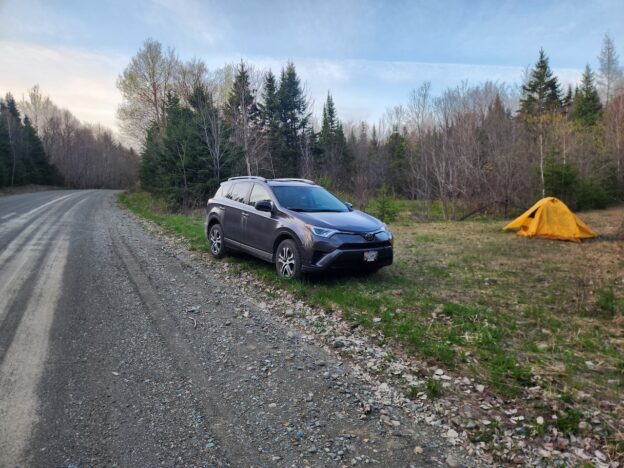
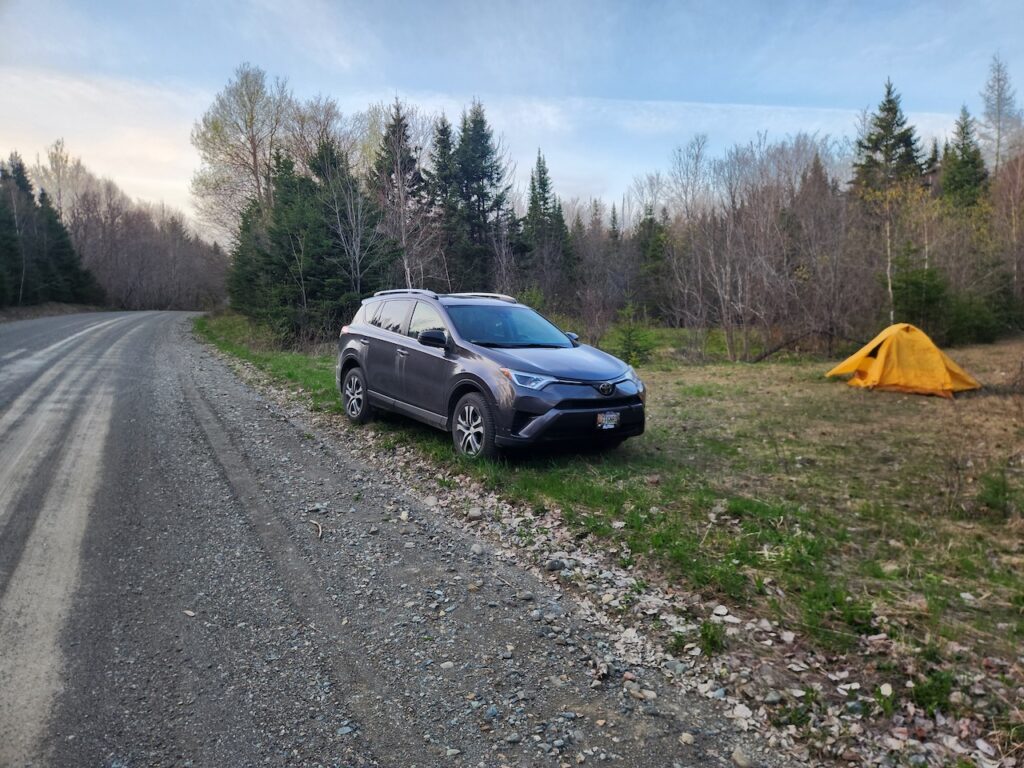
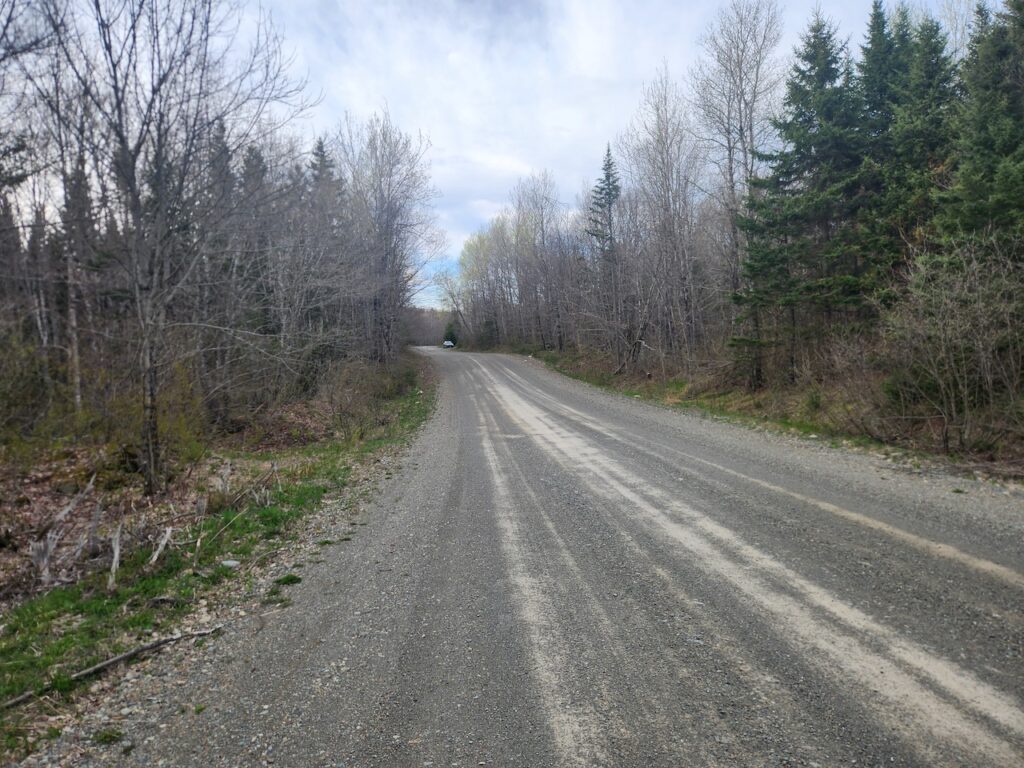
This was my camping spot in Aroostook County, on a backroad in northern Maine!

On Tuesday, May 13th, my worries were settled when I woke up to the sound of a Nashville Warbler singing above my tent. I dressed as quickly as I could and set off down the logging road I’d driven in on, my ears receptive to any and all of the birds sounding off in the surrounding woods. Every level of the forest had songsters belting out their tunes: Ovenbirds from the ground, Black-and-white Warblers from spruce trunks, Magnolia Warblers from ten-year-old firs and Yellow-rumped Warblers from high in the canopy. Present in lower numbers were species like Blackburnian Warblers, Black-throated Blue Warblers, and American Redstarts, all likely early representatives of their species, most of which were still farther south, booking it north.

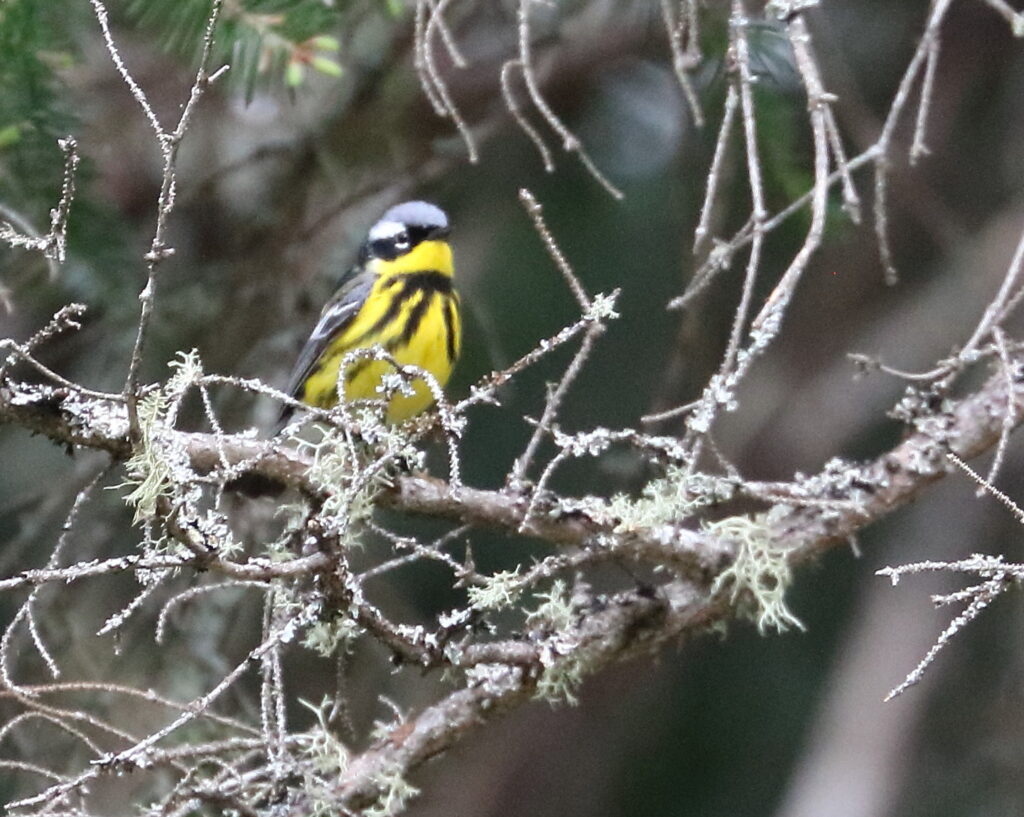
Magnolia Warbler in a spruce tree.

I was especially excited about the two Cape May Warblers. While I’d seen a fair number of Cape Mays before, I’d rarely seen them in their breeding colors and I’d never heard them sing before. This is because of their distributions. While I’d encountered many of the East Coast warblers on their breeding grounds during my time in Pennsylvania, I was hundreds of miles too far south for Cape Mays, which use contiguous spruce-fir forest and are mostly confined to Canada. These warblers (which are named after Cape May, New Jersey, where they neither breed nor spend the winter) are particularly dependent on an insect known as spruce budworm. Budworms are spruce parasites, and their populations are cyclical. During outbreak years the insect infects and ravages thousands of acres of spruce trees before the population crashes. Cape May Warblers, Bay-breasted Warblers, and Evening Grosbeaks, therefore, all have populations that rise and fall with the populations of this insect.

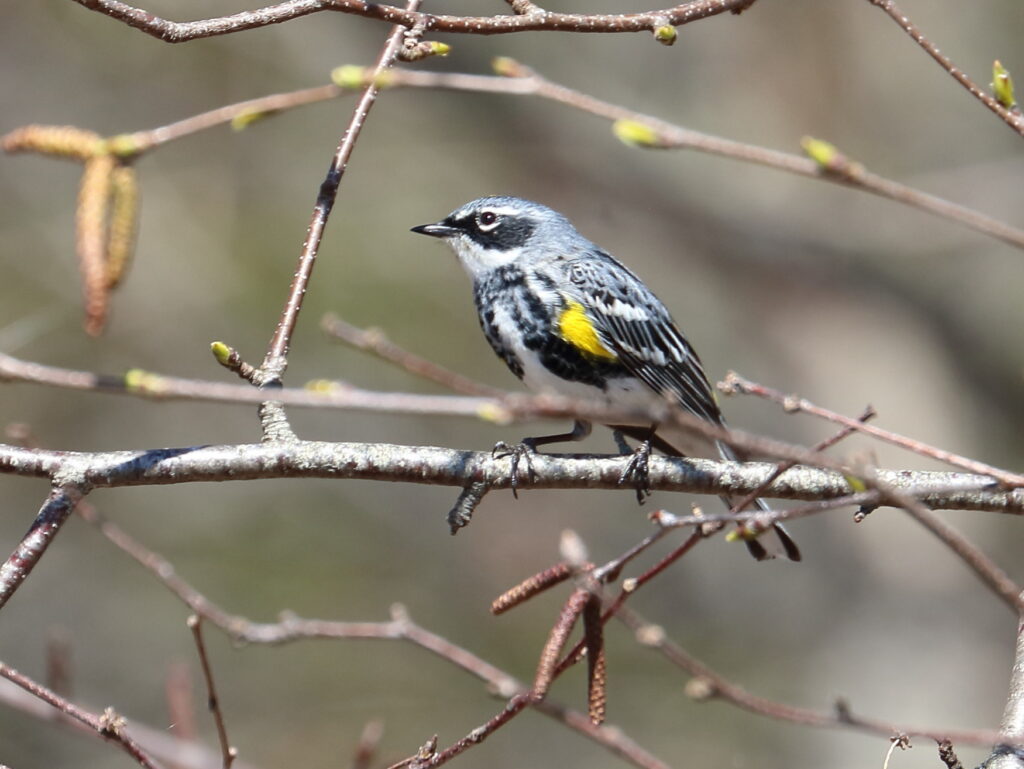
A “Myrtle” Yellow-rumped Warbler, which is the subspecies that lives on the East Coast!

Besides agriculture, the main industry in Aroostook County is logging, and understandably, the logging industry is not the biggest fan of an insect that defoliates thousands of acres of their crop. Unfortunately, the industry’s historical response to spruce budworm outbreaks (which, remember, are ecologically “normal” and important for the birds dependent on them) has been to clear-cut hundreds of hectares of infected forest. Spruce-fir forest is a mature ecosystem that takes centuries to develop, however, and the forest that grows back after these clearcuts is not coniferous but deciduous. This is a major reason why many spruce budworm-specialists, like Cape May Warbler, and many other birds found in boreal forests, like Canada Jays and Black-backed Woodpeckers, have retreated from much of southern Maine in the last hundred or so years. Their habitat has simply disappeared.

I saw evidence of this as I birded The County. Sure, there was a lot of seemingly healthy spruce habitat. There were also massive empty lots, covered in nothing but slash and debris. The forests were filled with birds, while the lots had almost none. It almost seemed apocalyptic. At least the empty lots provided good views of Mt. Katahdin, Maine’s highest peak, rising in the distance.

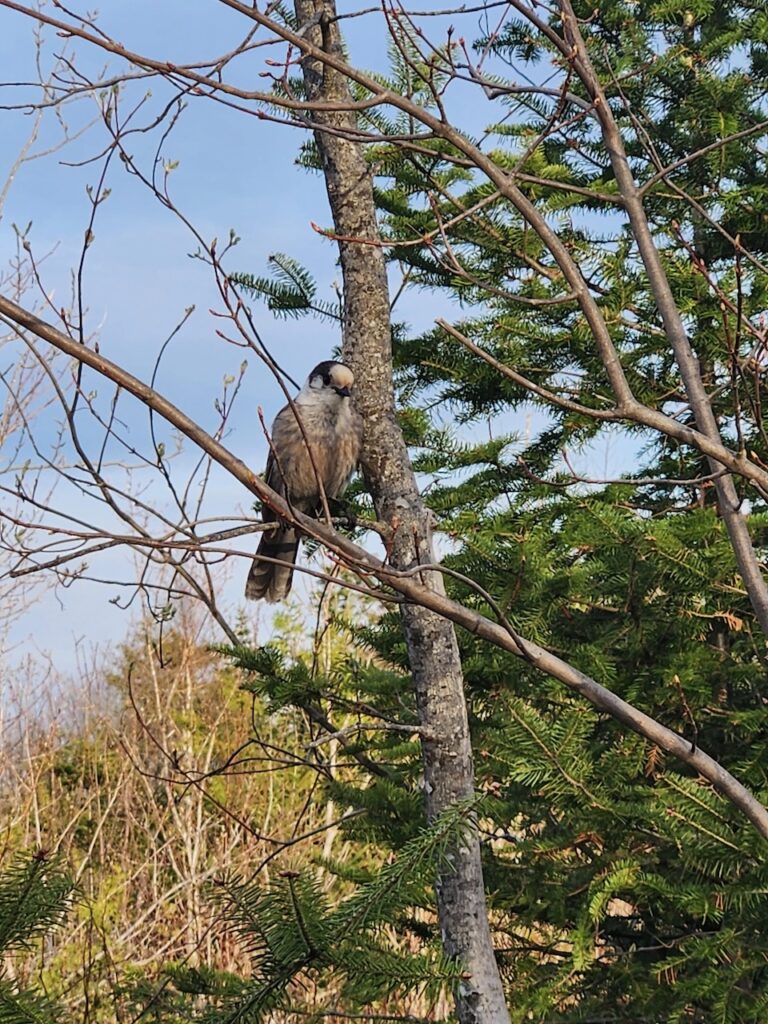
Again, though, the forests DID have birds, and not just warblers. Many migrants had not yet arrived (namely the flycatchers, of which I saw very few), but I recorded dozens of Ruby- and Golden-crowned Kinglets, Blue-headed Vireos, and Winter Wrens. Ruffed Grouse drummed from wet thickets, Hermit Thrushes foraged in the road, and I even got to see an American Goshawk bomb overhead at a million miles per hour, chasing something or perhaps just trying to give me as least satisfying a look as possible. In the evening, a walk along a side road yielded incredible, up-close views of Canada Jays, or “Whiskeyjacks” as they are known colloquially. These subtle, white-and-gray corvids landed in the trees less than five feet from me, curiously searching for insects while paying me no mind.

A photo of a Canada Jay that I took with my phone!

After a night and a day spent in The County, I headed back south to investigate the other corners of Maine I had yet to explore. Stay tuned!

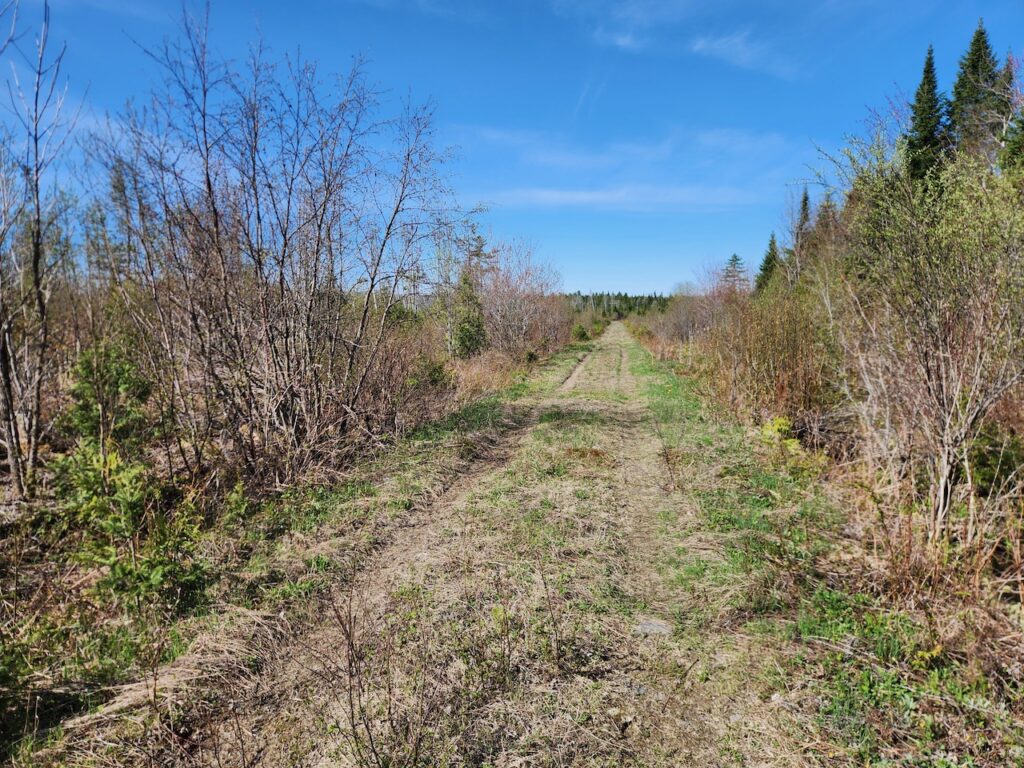
What the forest looked like in Aroostook!

Hi-Line Report: Bad Weather Can Bring Good Birds

Want to support FatherSonBirding? It’s easy! Simply pick up a copy of Birding for Boomers by clicking here—or by ordering it from your local independent bookstore! We thank you!

Most serious Montana birders try to make it up to the Hi-Line every year. If you’ve never heard of the Hi-Line, it is the northern region of the state that basically follows Highway 2 from East Glacier National Park all the way to the North Dakota Border. It’s an area full of rolling hills, badlands, farms and ranches—and a whole lotta birds. For Braden and me, the region is best represented by the Bowdoin National Wildlife Refuge, a sprawling 15,551-acre refuge near Malta that encompasses a rich variety of wet and dry habitats. We don’t make it up to Bowdoin every year, but this year I was fortunate enough to get invited to visit a school in nearby Chinook. Even better, I timed the visit for spring migration and breeding. I booked an Airbnb in Malta and drove up two days early to give me a full day at Bowdoin. The bad news? The forecast called for rain.

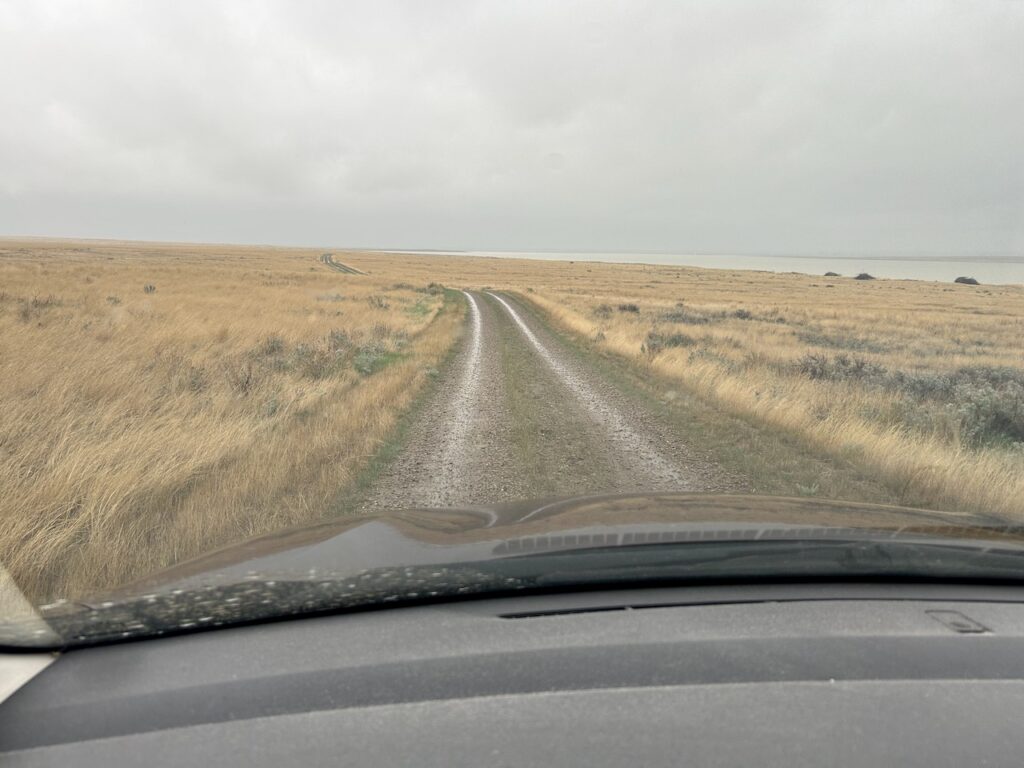
Indeed, when I arrived at the refuge at 6:00 a.m., rain pelted the car, propelled by a cold wind. Geez, I thought. I’m not going to see anything today. It was so cold and wet that I skipped my usual stop at the visitor center and instead headed straight out onto the first, five-mile section of the fifteen-mile loop around the lake. I noted that water levels, although not great, were better than I’d seen them two years before, but the first five-mile section was a time to focus not on water birds, but on denizens of the grass. Normally, in fact, Braden and I spend the most time in this section, stopping frequently to listen for Grasshopper Sparrows, Baird’s Sparrows, Chestnut-collared Longspurs, and other grassland favorites (see our post “Great Grassland Birding”). Today, that proved impossible. Every time I opened the window, wind and rain cascaded in and made it almost impossible to hear calls beyond the heavy-metal songs of Western Meadowlarks.

Steady rain and wind limited my ability to find grassland birds!

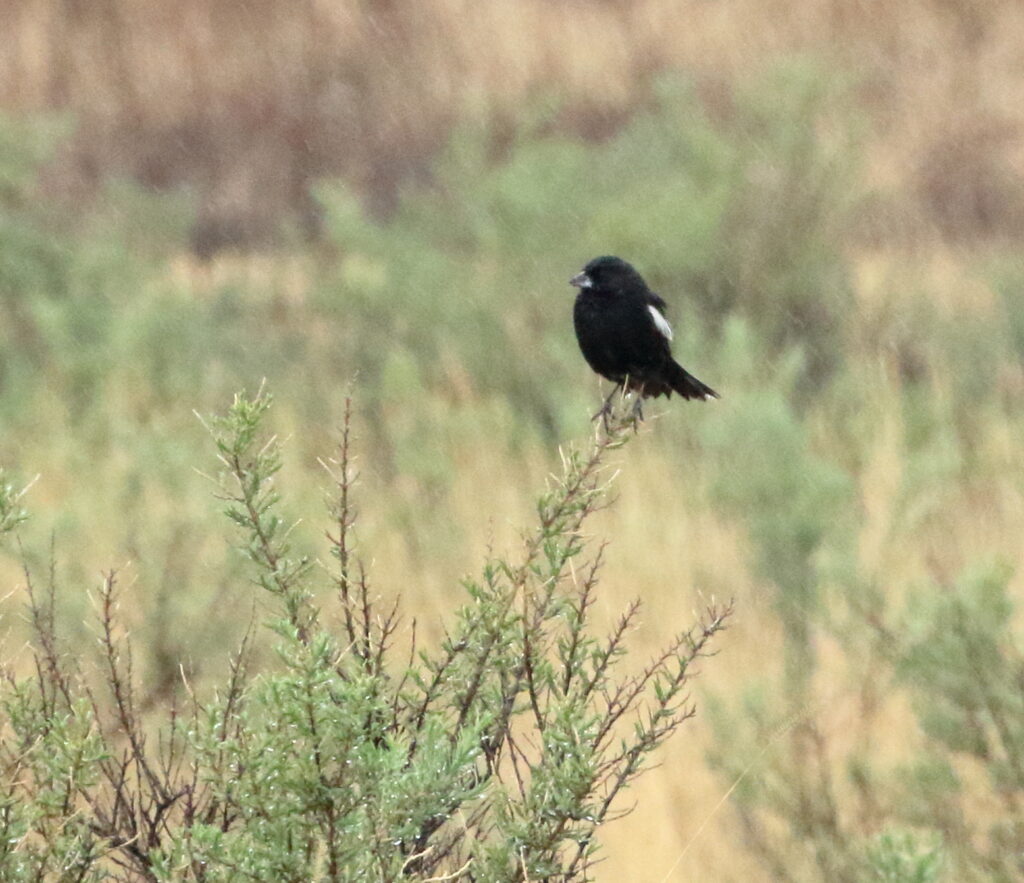
Mercifully, a few species took pity on me. Right off the bat, I espied one of our favorite birds, a Bobolink—the only one I would see the entire trip. Then, I spotted a drenched Grasshopper Sparrow perched on a small bush—the lone GRSP I would see that day. Lark Buntings also put in an appearance, along with Horned Larks and Savannah Sparrows. I also was pleased to see shorebirds, but on this section of the drive, they were far away. At one point, I leaped out to set up the scope I was testing out (see our next post), but immediately got drenched and was unable to ID much except for Wilson’s Phalaropes, American Avocets, and a Willet.

Lark Buntings were the most cooperative grassland birds I managed to see on this cold, wet, windy day. Thank you, Lark Buntings!

As I kept driving, however, conditions steadily improved and I got better looks at shorebirds. The phalaropes were especially impressive and I estimated at least a thousand out on the water and working the shore. The vast majority were Wilson’s, but with patience, I found a group of four Red-necked Phalaropes—most clearly identified by their smaller size, overall darker appearance, and distinct light lines running down their dark backs. Ducks were not super abundant, but plentiful and I counted at least ten species, including my first-of-the-year Canvasbacks!

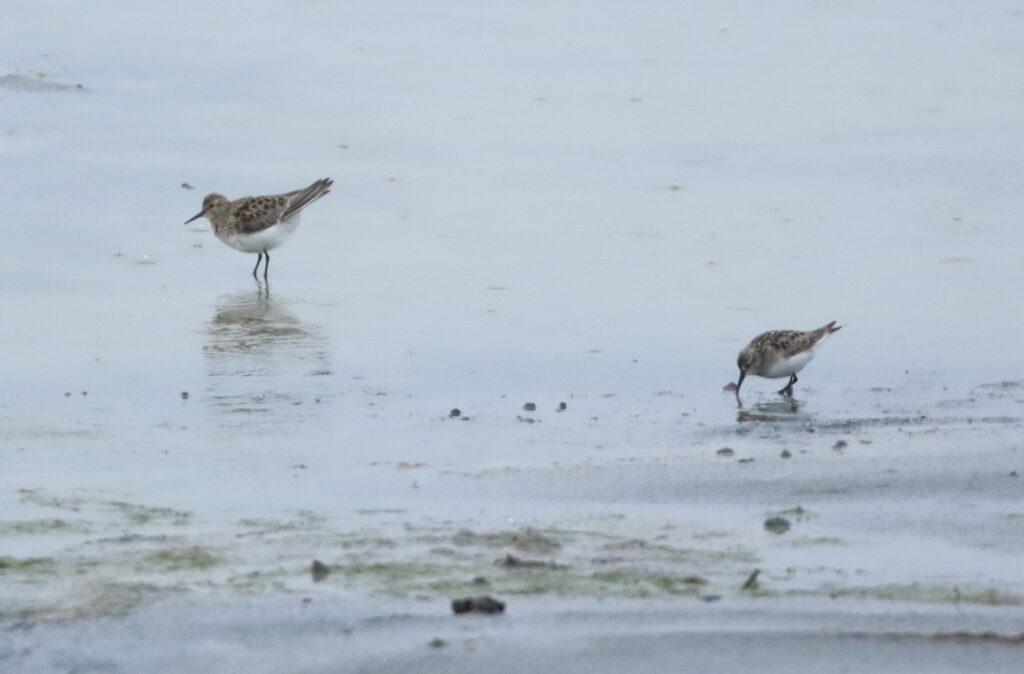
Twice, I drove down to some boat ramps and, despite the rain, nabbed a good “harvest” of shorebirds. I found about half a dozen Semipalmated Sandpipers and one Western Sandpiper. The real surprises, which I confirmed later with Braden’s help, were a Baird’s Sandpiper and a White-rumped Sandpiper! The latter was especially difficult to figure out because it didn’t readily show the diagnostic, thin lines of spots extending from the neck down to below the wings, but the overall appearance and body size fit. I was thrilled to find these birds as we’d never found them at Bowdoin before. Then again, we’d never birded Bowdoin this early in the season, so they were all part of my continuing Montana birding education.

Both this Baird’s (left) and several Semipalmated Sandpipers (right) proved early season surprises on this cold, rainy Bowdoin day. The larger size, long wing tips extending beyond the tail, and “medallion” appearance on the wings help distinguish Baird’s from the smaller peeps.

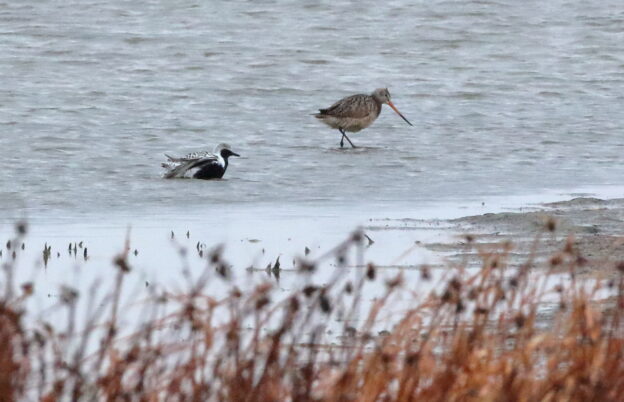
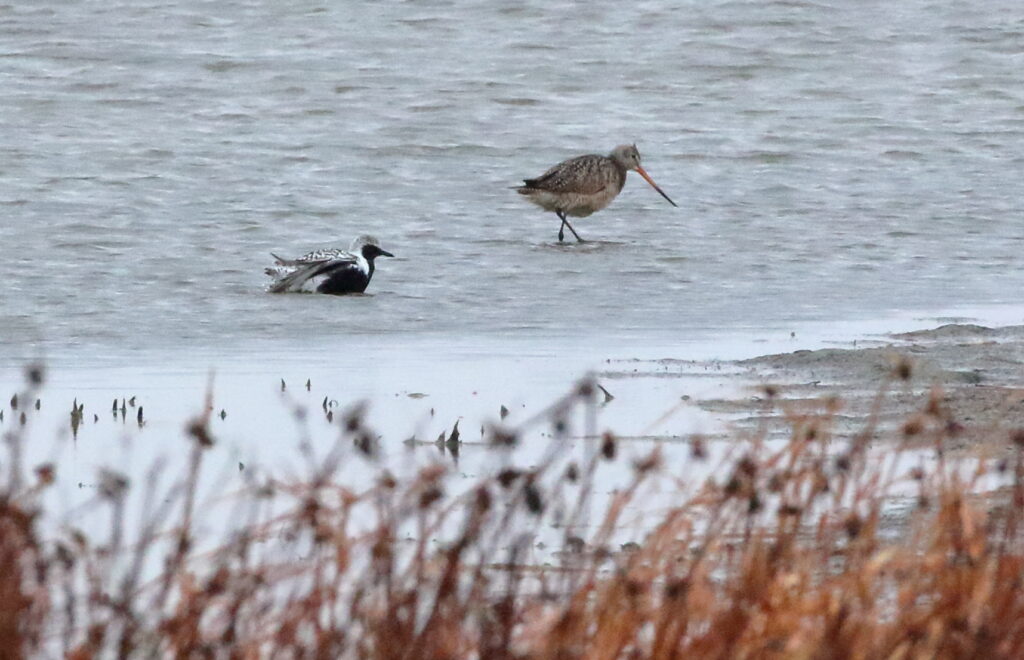
As I was leaving the second boat ramp, I noticed a Marbled Godwit in the parking area. Godwits, like Willets and Long-billed Curlews, are shorebirds and grassland birds. They nest in grasslands, usually near water, so seeing one here didn’t surprise me. I was about to drive off when the godwit suddenly launched itself. As I watched, it flew a hundred yards or so to the shore—and landed next to two birds I had especially hoped to see: Black-bellied Plovers! Loyal FSB readers will note that I’ve written about these fine birds a lot in the past couple of years (see, for instance, this post), and so it was with special pleasure I observed them now—and in their best black-bellied breeding plumage. Thank you, Mr. Godwit, for pointing them out!

This helpful Marbled Godwit (right) made a special effort to point out two Black-bellied Plovers that I had so woefully overlooked!

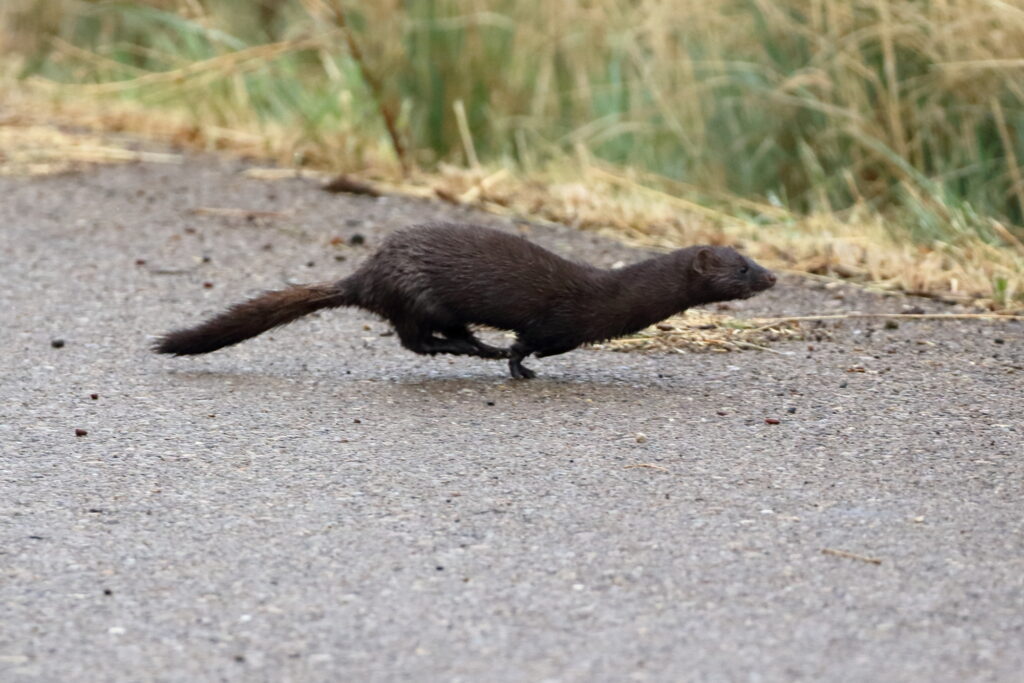
By the time I made it back to the visitor center, my stomach rumbled and, though the rain had slackened, the cold and wind remained. I debated whether I should even get out of the car to explore around the small pond there, but I knew that Braden would never forgive me if I didn’t. Marshaling my determination, I walked over to the start of the little path that circumscribes the pond. Almost immediately, a curious face popped up from behind a bush thirty feet away. “Whoa!” I whispered. At first, I thought it was a weasel, but it was much larger than the three or four weasels I’d observed in the past. Stoat? Ferret? I asked myself. Could it possibly be a mink? I’d never seen a mink and didn’t know if they even lived in Montana, but it seemed to fit the profile. Later, iNaturalist experts helped me confirm that that’s what it was. After looking at me for several moments, the long, bizarre-looking creature loped across the road and disappeared into the brush. The birds, however, were not to be outdone by a mere mammal!

Seeing my lifer American Mink was about the last thing on my mind as I braved Bowdoin’s visitor center area for one last birding effort!

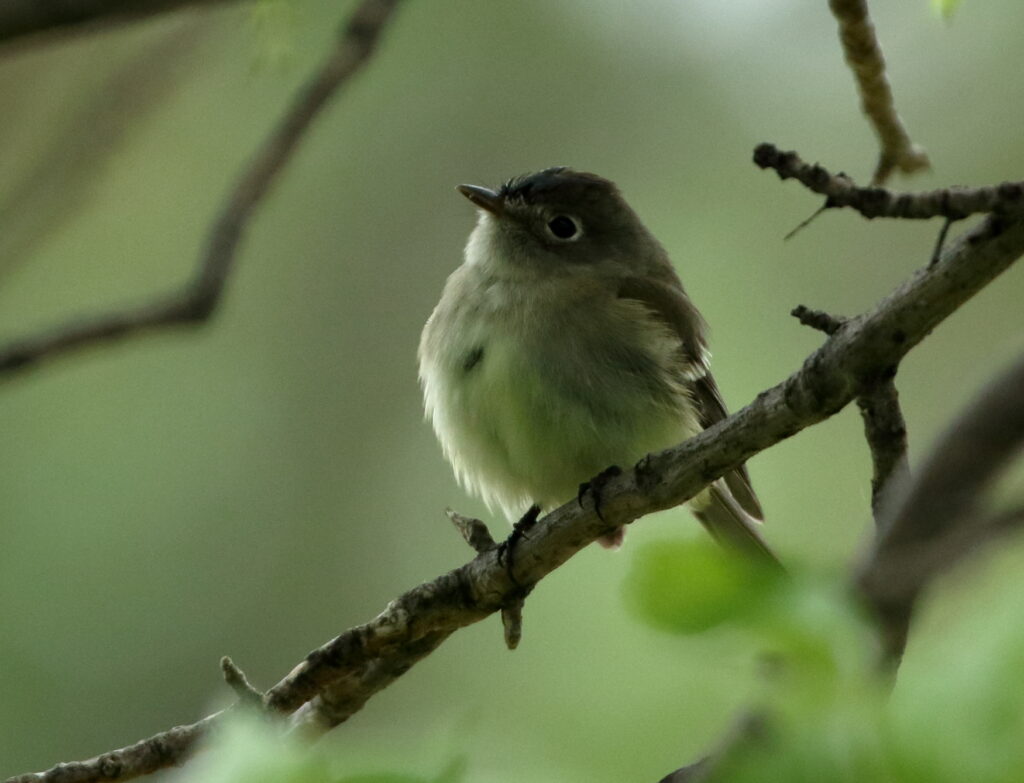
As I began poking around the beginning of the trail, I saw shapes flitting about in the bushes. A brownish bird streaked by me giving off Swainson’s Thrush vibes, but I didn’t see it well enough to definitely identify it. Minutes later, a reddish-backed bird landed on a nearby branch below me—a Veery! Then I got a good look at another Swainson’s Thrush, this time confirming the ID. In the branches above it, an adorable little Least Flycatcher watched me, but none of these would be the stars of the show.

Empidonax flycatchers are notoriously difficult to identify by sight, but this bird’s “cute” appearance—and the fact that no other empids should have been anywhere in the area—helped clinch the ID.

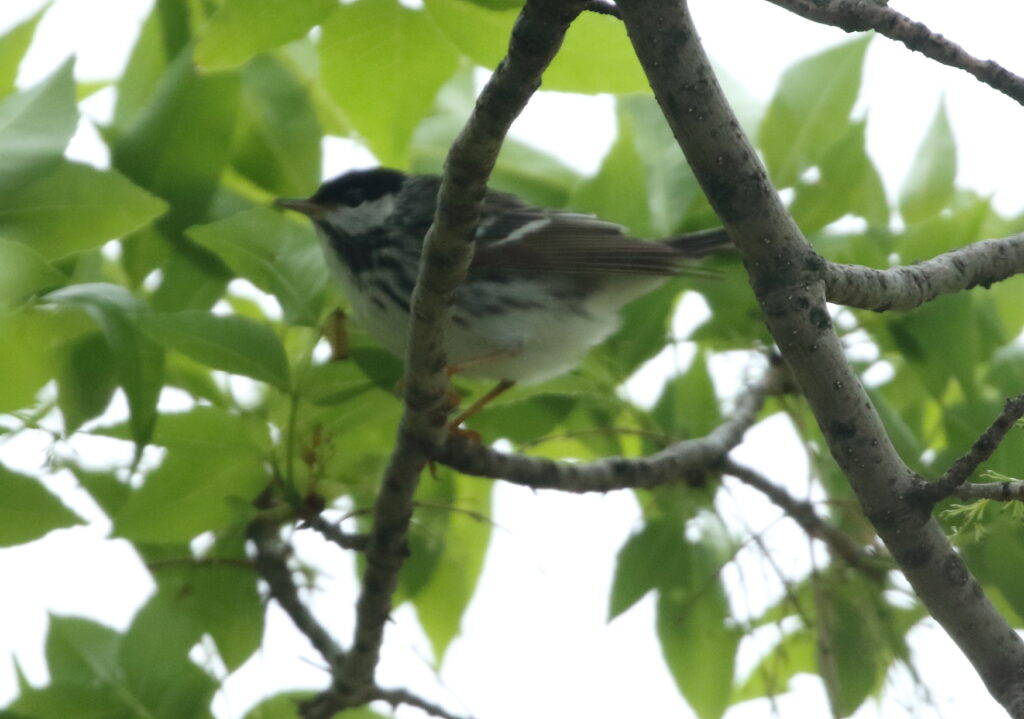
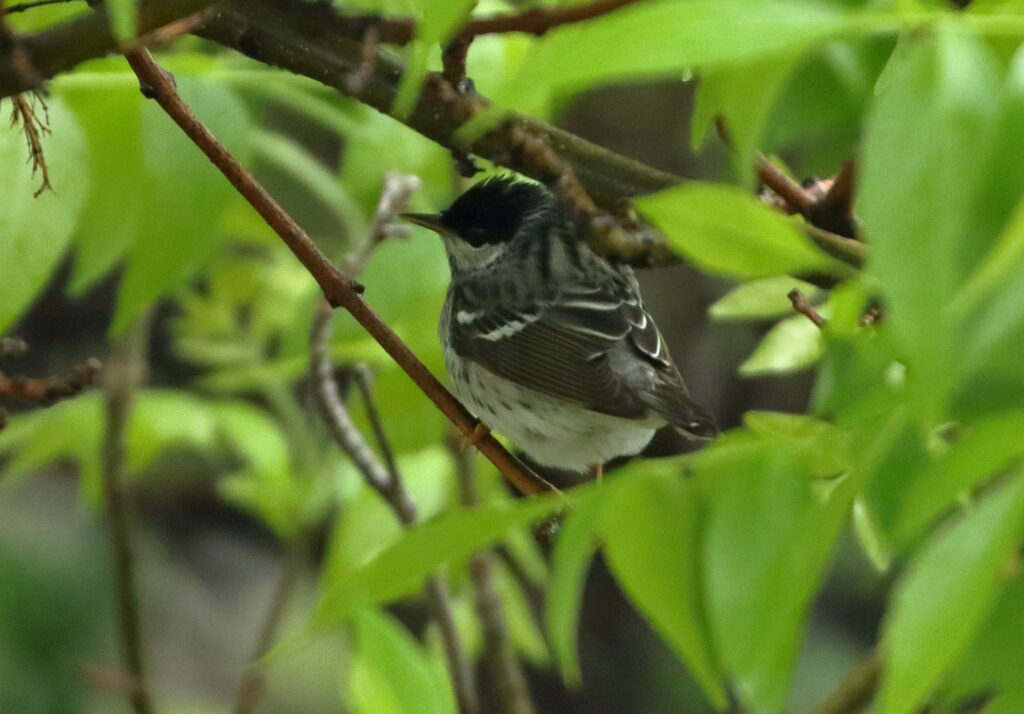
Even through the wind, I could hear both Yellow Warblers and Common Yellowthroats around me, even if I couldn’t get clear looks at any of them. Then, a small songbird landed in a tree about thirty feet away. I got my binoculars up in time to recognize a species I had longed to see—a Blackpoll Warbler! Like the Swainson’s and Veery, the warbler was clearly in migration, on its way to northern breeding grounds in Canada and Alaska. Braden and I had found them three times before in Montana, but always females. Not only did a gorgeous, breeding plumage male now stare back at me, it was the first Blackpoll I had ever found on my own!

As you can tell, the day proved tough for photography all-around, but I managed to get fuzzy ID photos of my Bird of the Trip, Blackpoll Warbler!

You won’t be surprised to hear that the Blackpoll Warbler immediately secured Bird of the Trip honors. Even more, it cemented the notion that just because conditions are bad for birders, they can still be great for birds. In fact, storms often cause birds to hunker in place for a day or two—perhaps the reason I found some of the especially cool birds I found today. I plan to remind myself of that the next time I’m debating whether to venture out into the pelting wind and rain.

Chasing Morelet’s Seedeaters—or Why You Shouldn’t Depend on Map Apps Near the Mexican Border (Texas 2025, Final Installment)

My success finding Black-capped Vireos and Golden-cheeked Warblers (see our last post) left me a welcome gift: an extra day to pursue another bird that keenly interested me. It was a bird Braden and I had unsuccessfully tried for on our 2018 trip to the Lower Rio Grande Valley: Morelet’s Seedeater. Though not rare in its core year-round range of Central America and eastern Mexico, this adorable “finchy” songbird just barely creeps over into the US along the Rio Grande Valley.

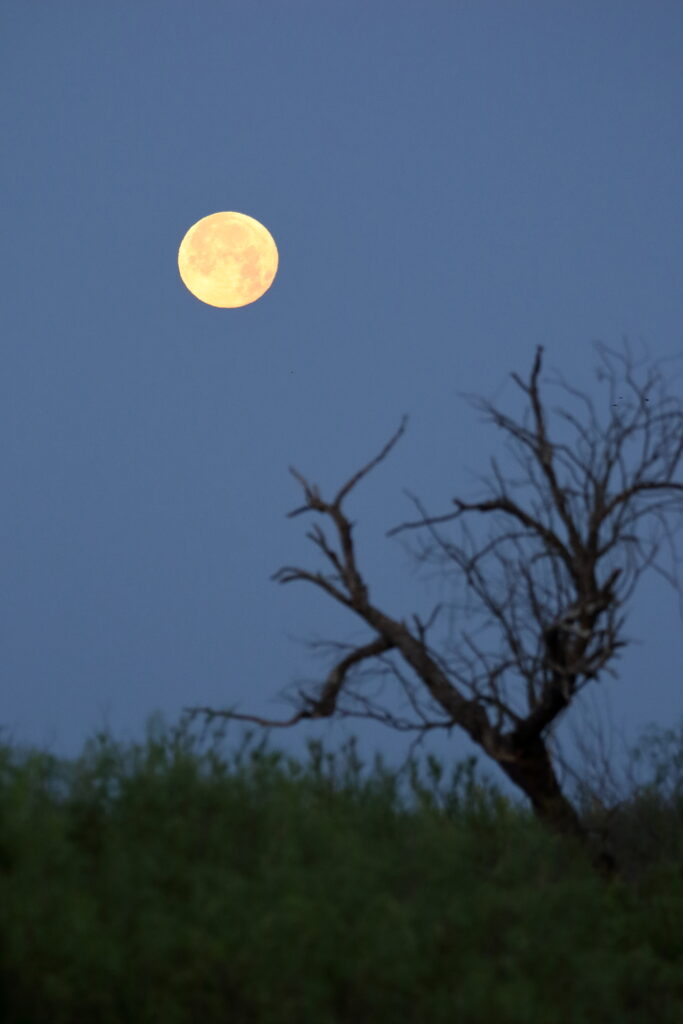
Catching sights such as this setting moon is one of the benefits of being an “early birder.”

Sunday morning, I rose at four a.m. and headed south from Uvalde. As they had on the previous morning, both a spectacular sunrise and unforgettable setting full moon rewarded me. As light crept over this flat country, caracaras flew along the road and Scissor-tailed Flycatchers perched on telephone wires. I even got a glimpse of a flock of quail leaping over a fence. Scaled Quail? I could only guess! After ninety minutes, my little highway joined Interstate 35.

And that’s where the trouble began.

I-35 is a main artery for trade between Mexico, the US, and Canada. As I sped south, I kept seeing signs for Mexico, but my map app directions assured me that I should keep going and turn off at an exit called Riverbank Drive. As I kept driving, however, I saw no signs for that—or any other—exit, and I realized that the only other traffic around me consisted of huge 18-wheelers. Finally, a thought occurred to me: Uh-oh.

Soon I found myself at a dead stop, surrounded by big rigs, with no way to turn around. There are moments in life where you know you are in a fix, and there’s not a thing you can do about it. This was one of those. Still, hope springs eternal and I climbed out of the car and walked to a big rig next to me. The kind Mexican driver, undoubtedly flummoxed by what I was doing there, rolled down his window, and we had the following conversation:

Me: Uh, I think I made a mistake. I’m trying to go to Laredo.

Driver: Laredo, Mexico?

Me: Uh, no. Laredo, Texas.

Driver (looking worried for me): You’ll have to turn around.

Me: Where?
Driver (after conferring with his partner): I don’t know.

These Big Rigs kept me company as I contemplated life as a Mexican citizen.

It was then that I began pondering the frightening ramifications of entering Mexico without a passport. I mean, could I have picked a worse time in history for this to happen??? The only good thing was that a Scissor-tailed Flycatcher perched nearby, blissfully unconcerned by my human drama. A few minutes later, the border opened and I eased in front of my new trucker friend. For ten minutes I and the big rigs inched forward until we reached a wide No Man’s Land of pavement and there I spotted an actual border worker. I pulled up next to him and explained my mistake. Looking vaguely amused and overly patient, he said, “See my buddy back there? Turn around and he’ll keep the trucks stopped while you exit at that road on the side.” I proceeded as instructed, gratefully waving to the “buddy.” I could have burst into tears at this point, but instead, I laughed all the way to the next exit—the real exit—which led to my original destination, Father McNaboe Park.

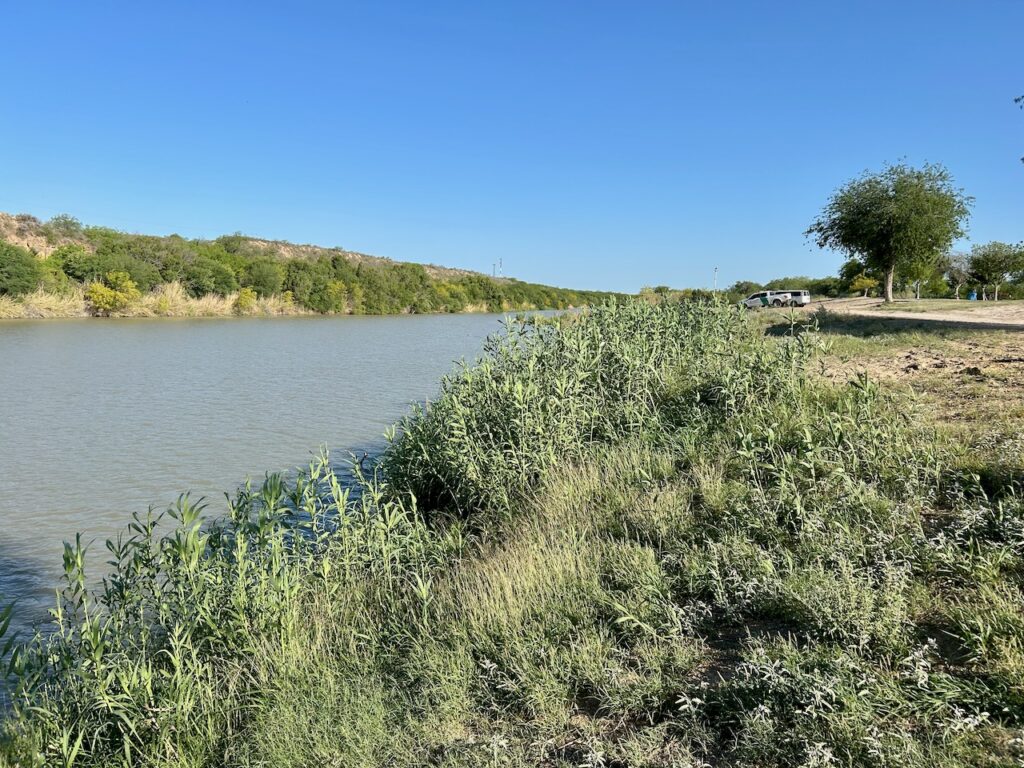
The Rio Grande River, aka the Mexican Border, complete with Border Patrol agents and lots of Carrizo cane, where Morelet’s Seedeaters like to hang out.

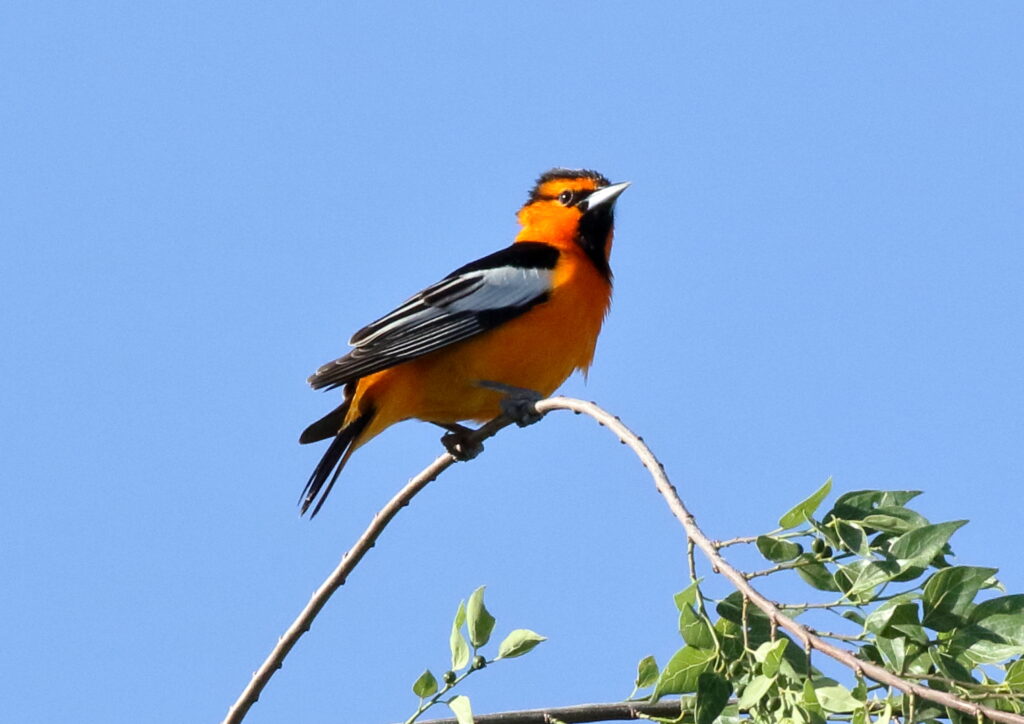
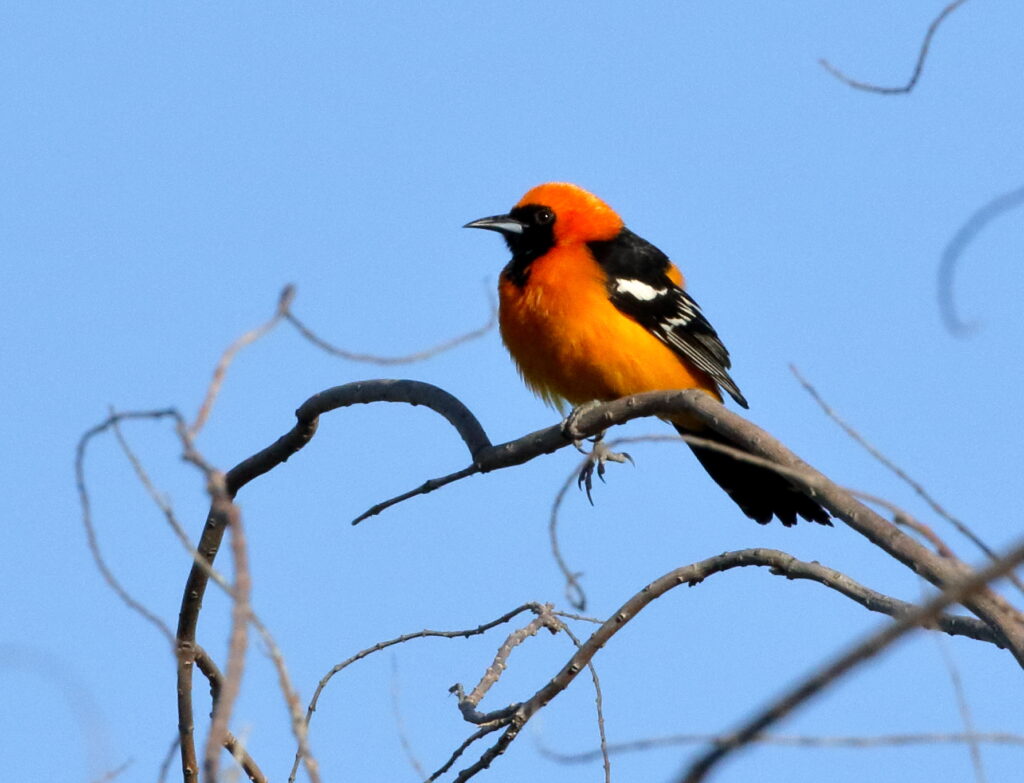
By the time I reached the park, I had experienced a week’s worth of drama, but remember, I still had some serious birding on the agenda. In 2018, Braden and I had visited the Lower Rio Grande Valley (LRGV) and even spent a night in Laredo, but had somehow failed to find McNaboe Park. I don’t know how, as the park consisted of a wide, long swath of trails, playing fields, and other amenities right on the Rio Grande River. Today, the park was jammed with people and I felt at ease as I walked toward the river. Before I even got there, I spotted my first great birds of the day—a pair of Hooded Orioles, a species I hadn’t seen since visiting Southern California seven years before. Not long afterward, I saw another oriole, a Bullock’s Oriole—perhaps on its way to Montana?

Over the phone the night before, Braden had told me to look for the Morelet’s Seedeaters in the “cane grass,” a tall invasive species known in Texas as Carrizo cane. Apparently, this plant can be found all along the 1,255-mile reach of the Rio Grande, and it didn’t take me long to find thick stands of it. I began walking along them looking for little black and brown birds. I covered a couple of hundred yards without seeing any and then walked down to a little sandbar right at river level. No seedeaters.

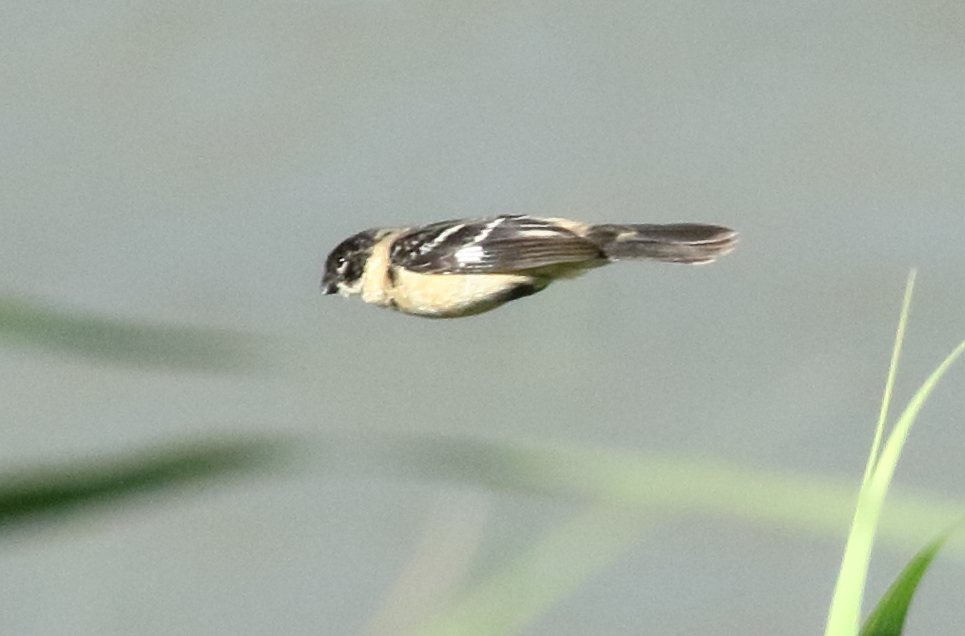
Then, I happened to glance up a side channel at another thick stand of cane. There, perched on one of the stalks was an erect little bird with a finchy bill. I didn’t get my binoculars up in time to get a good look, but I immediately knew: I had found my bird!

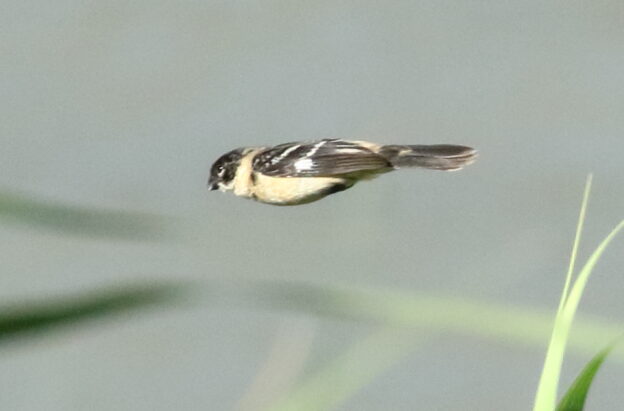
I was just about to get a great photo of this Morelet’s Seedeater when a loud car rumbled up next to me. I accidentally managed this flight shot, though, which is kind of fun.

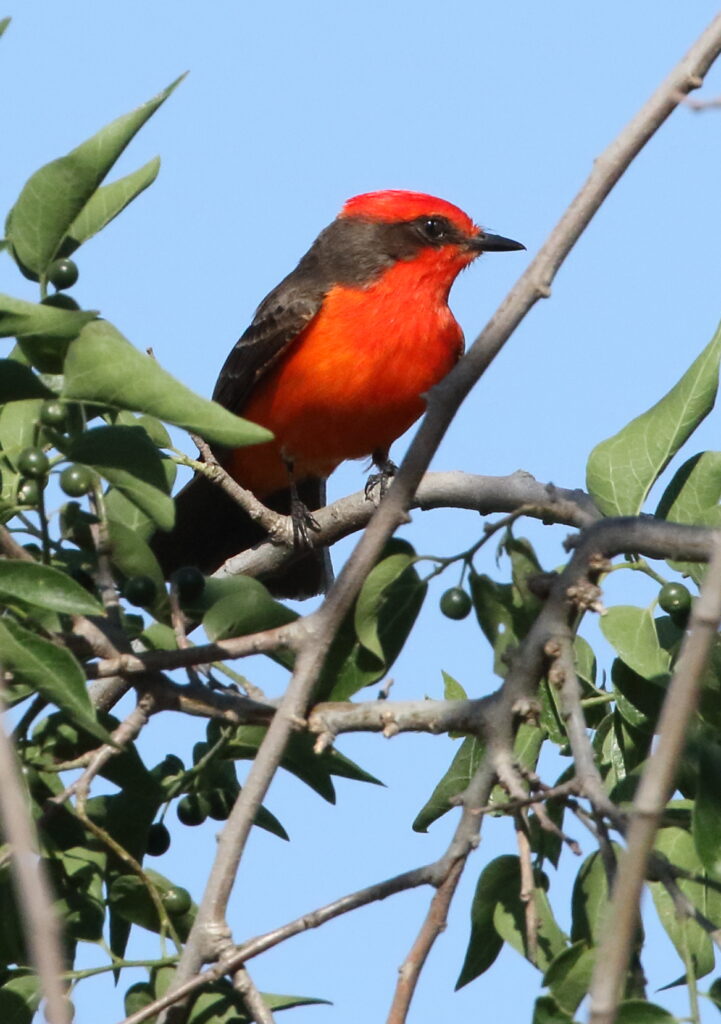
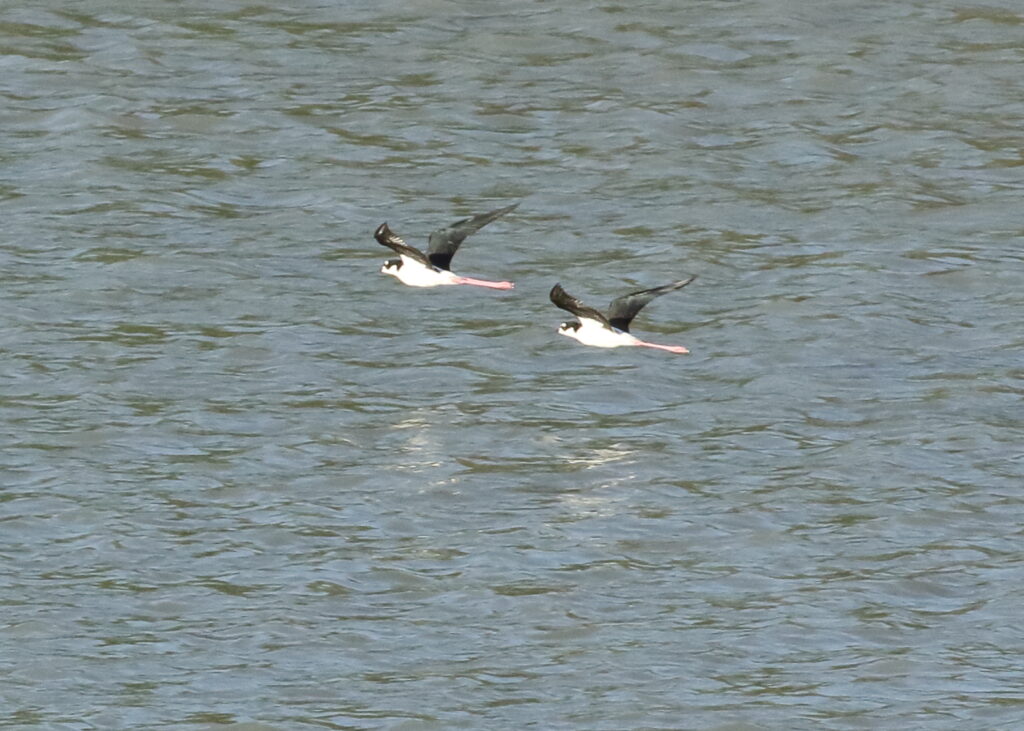
Of course, that didn’t keep me from wanting better looks, and for the next hour or so, I walked various paths and channels. I got to know the bird’s song and it wasn’t long before I was hearing and seeing more of these cute little guys. They were pretty shy, but I managed good looks—and saw some other great birds as well. These included a pair of Black-necked Stilts, a Spotted Sandpiper, a Green Heron, and even a lone Mexican Duck in the middle of the river. Not including the seedeaters, the show stoppers, as usual, were a pair of Vermillion Flycatchers.

Do Vermillion Flycatchers get way more attention than they deserve? Probably. Does anyone ever get tired of looking at them? I doubt it!

After a late breakfast at the French restaurant McDaniels, I decided to hit one more park in Laredo—North Central Park. Remarkably, I had failed to find a Golden-fronted Woodpecker so far on the trip, and though the heat was comin’ on fast, the park had abundant sightings of them. It took only five minutes to hear and then see one of these handsome birds and, walking a couple of miles or so, I also added Great Kiskadees and Bell’s Vireo to my trip list. Then, before I inadvertently wandered toward Mexico again, I turned tail and headed back up I-35 for San Antonio.

Link to my Texas Trip Report: https://ebird.org/tripreport/351263

Total Number of Species for the Trip: 144

My Top 6 Trip Birds:

Least Bittern (see post “Anahuac Lifer Attack”)

Yellow-throated Warbler (see Texas Hill Country post)

Black-capped Vireo (see Texas Hill Country post)

Golden-cheeked Warbler (see Texas Hill Country post)

Morelet’s Seedeater (this post)

Yellow-throated Vireo (see Peveto Woods post)

A pair of Black-necked Stilts flying downstream over the Rio Grande.

Target Birds and a Shocking Surprise in the Texas Hill Country (Texas 2025 Part 3)

After spending two glorious birding days along the east Texas & Louisiana coasts (see “Peveto Woods, Louisiana: Spring Migration Hotspot.”), I returned to San Antonio for my four minutes—yes, you read that right—four minutes of work to promote my book Birding for Boomers. While there, I reprised my now-sort-of-famous birding route along San Antonio’s Riverwalk (see our post “Birding San Antonio’s Riverwalk—Are You Nuts?”). Once again, I found birds—but not enough to write another blog about it. As soon as I finished my speaking gig, though, I headed west into the Texas hill country. Why? To try to find two birds Braden and I had talked about our entire birding careers.

Leaving San Antonio, I drove two hours to the hot, fairly flat town of Uvalde and booked myself into a Hampton Inn. That afternoon, I picked up a few nice birds in the town’s Memorial Park including another Yellow-throated Vireo and my first—and only—Green Jay of the trip. I also grabbed an excellent Tex-Mex meal at El Herradero de Jalisco restaurant. The next morning, I hit the road before dawn.

One bonus to birding is that we birders invariably get to see spectacular sunrises and sunsets. As I headed north, I witnessed an unforgettable sizzling orange sunrise on one side of the car while an equally spectacular orange full moon set in the west. It boded well for what would be arguably the most important—and most demanding—birding day of my trip: my quest to find Black-capped Vireos and Golden-cheeked Warblers.

Anyone who has been birding for more than a couple of years has probably heard of these two Texas specialties. Of the near-threatened Black-capped Vireo, Braden simply says, “It’s the best vireo.” Quite a statement considering how cool other vireos are! The bird winters in Mexico, and its primary breeding range lies in central Texas—though it technically extends from far northern Mexico to southern Kansas. The endangered Golden-cheeked Warbler winters in Central America and far southern Mexico, but breeds exclusively in central Texas.

According to eBird lists, Lost Maples State Natural Area is one of the most reliable places to find both Black-capped Vireos and Golden-cheeked Warblers.

As usual, I felt a bit skeptical of my ability to find these birds. Call it psychological protection against failure. Nonetheless, I did have a plan. After scouring eBird hotspots, bar charts, and birding lists before the trip, I settled on Lost Maples State Natural Area as the most reliable location to find both species. Indeed, when I pulled into the parking lot, I met a couple who had staked out a bush where they had seen a Black-capped Vireo the previous day. “We saw Golden-cheeked Warblers in that tree about fifteen minutes ago,” the woman added, motioning to a nearby oak tree. I briefly pondered waiting around for either species, but the canyon before me beckoned and I reasoned I could hang around the parking lot later if need be.

I immediately loved Lost Maples, especially since its habitat reminded me of the chaparral and oak woodland I’d grown up with in Southern California.

I headed up the park’s East Trail and immediately felt at home in the scenic canyon’s xeric landscape full of oaks, junipers, mesquite, and other classic Western vegetation. I also realized that I had tackled some tough birding! Birdsong rang out all around me, but I got few glimpses of actual birds. Thank god for Merlin’s Sound ID, which I ran multiple times to get an idea of what might be around me: an impressive list that included Canyon and Carolina Wrens, Olive Sparrows, Yellow-breasted Chats, and at least four (other) kinds of vireos. Finally, however, “Black-capped Vireo” popped up on Sound ID and I stopped to seriously scour the nearby vegetation. Over the next five minutes, I got a brief glimpse of a Blue-headed Vireo and good looks at a White-eyed Vireo.

I had to work hard for actual bird sightings at Lost Maples, but managed a great look at a White-eyed Vireo—one of five vireos on my checklist for the day.

Finally, I saw the distinctive black head and white spectacles of the bird I most hoped to see: a Black-capped Vireo! Soon, I saw another. The birds definitely did not want to strike a pose and I followed them as they flitted almost frantically from bush to tree and tree to bush. I finally managed a couple of ID photos, and then just tried to relax and observe them. It was a good moment, and I felt glad I hadn’t just waited around the parking lot hoping for one to appear.

I was so glad that I hadn’t waited around the parking lot to find my Lifer Black-capped Vireos!

That left the Golden-cheeked Warbler. Sound ID had picked it up a couple of times as I hiked the canyon, but it wasn’t until I was back in the park next to my car that I began to figure out the bird’s song. With my imperfect hearing, it sounded like a high-pitched buzzing trill—a lot like an insect, but distinct from any other bird calls around me. Soon, I found myself standing for five minutes directly in front of an oak tree as a Golden-cheeked sang repeatedly.

I never saw it.

This frustrating experience repeated itself several times. I eventually added the bird to my eBird list (“Heard only”), but I was not a happy camper and I thought I might remove it later. As shy as they were, the Black-capped Vireos had been publicity hogs compared to the Golden-cheekeds! Knowing when I was beaten, I headed off to some bird feeders set up in the park about a mile away. There, I tried to console myself with leisurely views of Woodhouse’s Scrub-Jays and Scott’s Orioles. I also told the bird hostess about my lack of success actually seeing a Golden-cheeked Warbler. “Any suggestions?” I asked.

While pondering my next moves, I spent a pleasant half-hour watching Woodhouse’s Scrub-Jays and Scott’s Orioles at the Lost Maples bird feeders.

“Well,” she said, “I’d head up the East-West Trail right here until you come to the ponds about a mile on. Just keep scanning the trees as you walk.”

By now, the heat had built into the low 80s. Another hike did not sit high on my priority list, but darn it, I hadn’t come all the way to the Texas hill country for nothing! Slinging my camera and new Vortex Viper 8X42s over my shoulders I resolutely started marching.

Fortunately, a number of beautiful oak trees provided shade to parts of the trail. I kept stopping frequently and soon enough began hearing more Golden-cheeked Warblers. Again, they absolutely refused to be seen, even when I seemed to be standing right in front of them! As I was scouring one oak tree, though, I detected movement and a flash of yellow. My excitement rose . . . but something didn’t look quite right. Finally, I got my binoculars on the bird and I realized what it was. This wasn’t a Golden-cheeked Warbler. For me, it was even better: my lifer Yellow-throated Warbler!

My Bird of the Day wasn’t actually the Black-capped Vireos or Golden-cheeked Warblers I’d set out to find. It ended up being my Lifer Yellow-throated Warbler—a complete surprise!

I couldn’t have been more thrilled. On other trips, I had hoped to see one of these birds multiple times without success, but today, it hadn’t even been on my radar! The bird was every bit as beautiful as a Golden-cheeked, and a quick look at the Merlin app confirmed that I was indeed within its breeding range—but just barely. According to Cornell’s Birds of the World, it has a relatively small, disjunct breeding range in central Texas separate from its more extensive breeding range across the Southeast. While fortunately not endangered or threatened, this bird had assumed an almost mythical status in my mind and to see it now . . . well, it felt exhilarating.

I felt both grateful and relieved to finally see a single Golden-cheeked after multiple GCWAs had taunted me all day!

Long story short: I finally spotted a single Golden-cheeked Warbler after spending almost an hour standing in front of trees where one or another GCWA sat singing and taunting me. While I had hoped to add just the Black-capped Vireo and Golden-cheeked Warbler to my life list during my entire Texas week, I had now seen an amazing seven lifers. Even better, having tracked down the BCVI and GCWA, I now had the entire next day to pursue one more. Check out the next post for details!

Shopping for a great new pair of binoculars that are reasonably priced? Be sure to check out our recent (unpaid!) review of Vortex Viper HDs by clicking here!

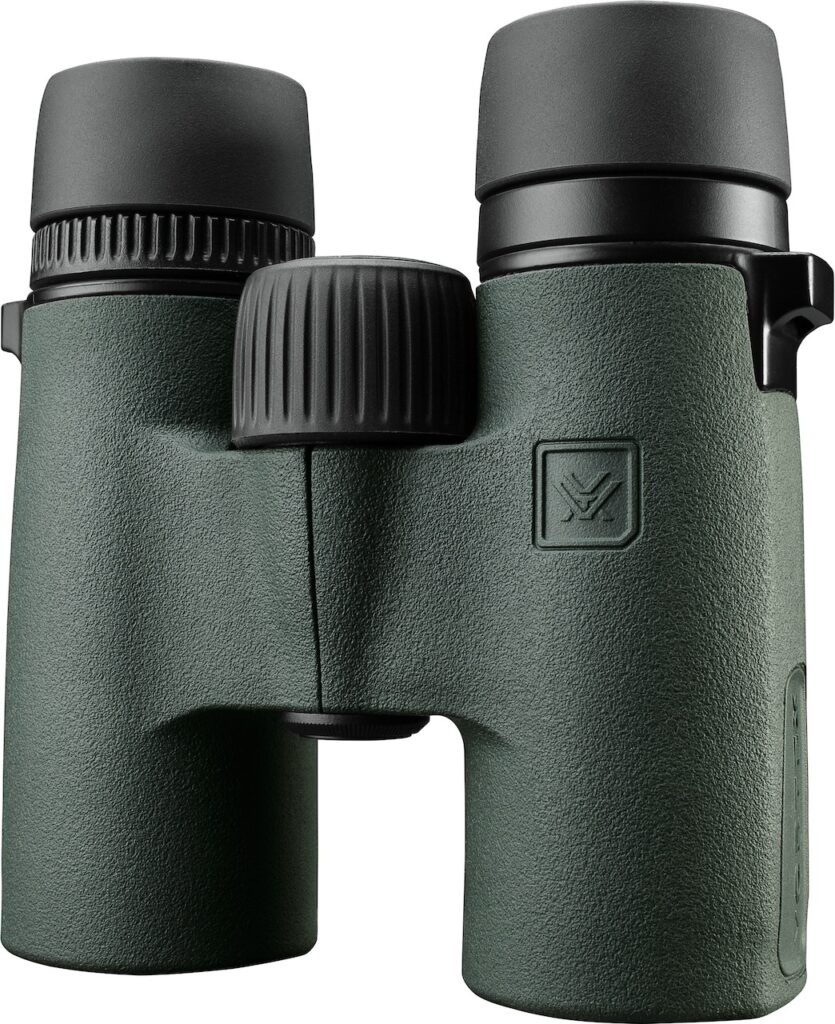
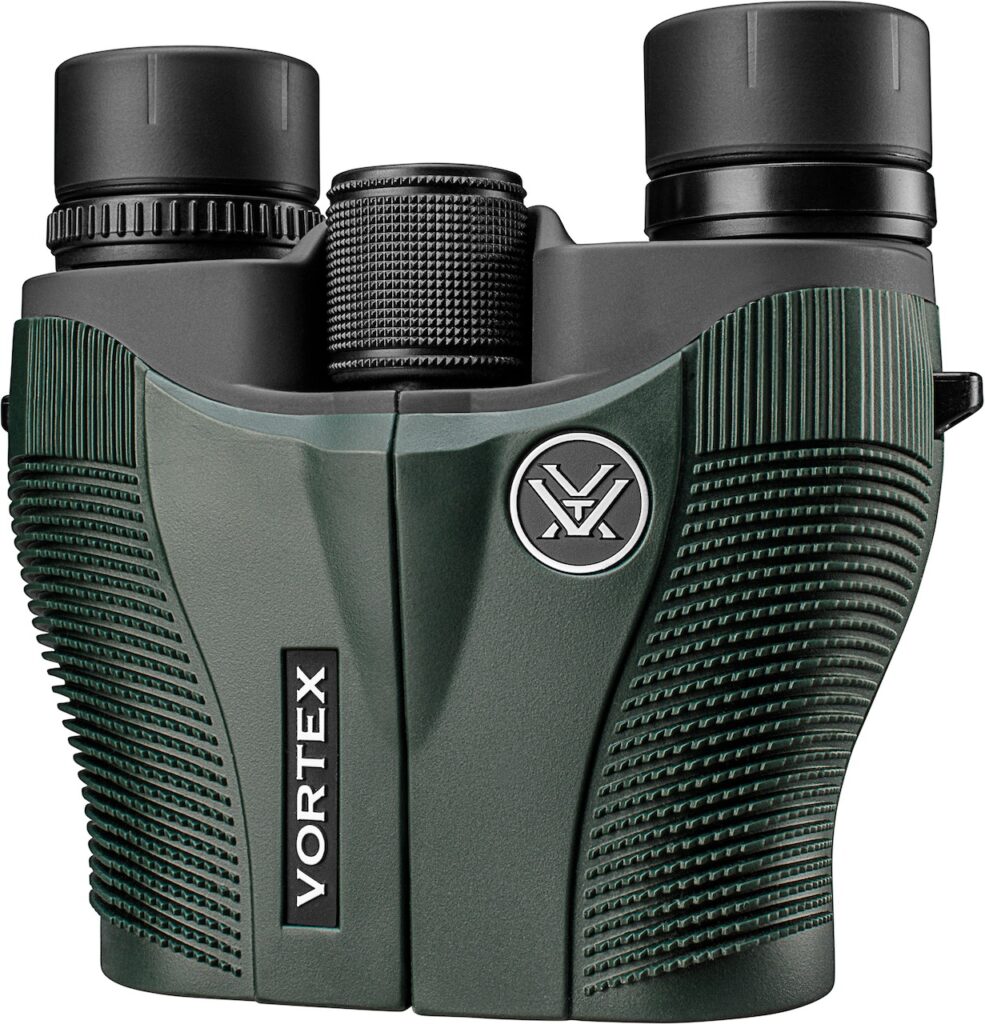
Vortex Viper HD Binoculars (Equipment Review, and/or Texas 2025 Part 2-½)

Thank you for checking out our reviews! Braden and I write this blog to share our love of birding and provide useful information for our fellow birders. We do not receive any payment for any of our posts, but if you’d like to support our work, please consider buying one or more *new copies* of Sneed’s award-winning books such as Birding for Boomers or Warblers & Woodpeckers: A Father-Son Big Year of Birding. We appreciate your support and hope that you keep enjoying the world’s greatest activity!

I hope that you’ve enjoyed our last two posts about my recent Texas birding adventures. Never fear, more Texas posts are coming! Today, however, we’d like to offer up another in our popular new series of equipment reviews. Why? Because my Texas trip gave me a wonderful opportunity to field test a pair of Viper HD 8X42 binoculars from Vortex.

Vortex Viper HDs offer great quality at a reasonable price.

If you’re out in the field a lot, you’ll see many birders using the Viper HDs, and for excellent reasons. In hand, the binoculars are sturdy and comfortable to hold, yet lightweight enough to carry around all day without discomfort. Like all Vortex optics, they come with an incredible no-questions-asked, fully transferable, lifetime warranty—something almost priceless for the peace of mind it offers. But the question remains: how do they perform in the field?

Backlit conditions—especially on water—are one of the true tests of binocular clarity and light transmission. The Viper HDs performed extremely well under these conditions.

My Texas trip allowed me to test the Vipers in a variety of birding situations. In my last post, I shared my thrilling visit to the Anahuac National Wildlife Refuge (now renamed to the Jocelyn Nungaray NWR), and almost immediately, I was confronted with the daunting task of observing shorebirds and waterfowl under extreme backlit conditions. Anyone who has experienced this knows how difficult it is to discern details of birds when bright glare turns the birds into shadowy figures, and I immediately thought, “Oh man, I don’t know if I’ll even be able to start identifying some of these critters.” To my surprise, the Viper HDs cut right through the glare. One small backlit shorebird particularly caught my attention, and I was sure I wouldn’t be able to see enough details to ID it. Focusing in with the Vipers, the bird’s features just popped—including its yellow legs, which allowed me to identify it as a Least Sandpiper.

The Viper HD’s excellent light transmission allowed me to ID this Least Sandpiper and other shorebirds under badly backlit conditions.

A couple of days later, I arrived at an exciting new (to me) location called Lafitte’s Cove on Galveston Island. This cool little nature reserve sits in the middle of an upscale housing development and features ponds, walking paths, and wooded areas. My main goal was to try to find migrating warblers and, thanks to the advice of some local birders, I staked out a drip in the wooded area that provides fresh drinking water for birds. Soon, I saw two shapes flitting around in deep shadow behind the drip. One leaped out into the sunlight—a Tennessee Warbler. The other bird proved much more cagy. Even as it stayed in the shadows, though, the Vipers gave me the sharp, full-color details that allowed me to confirm that it was a Nashville Warbler—a real surprise since I had never seen one before in the eastern US!

Lafitte’s Cove on Galveston Island was a wonderful addition to my list of spring migration birding hotspots—and helped me test the Viper HDs under dark, shady conditions.

As always, prospective buyers will ask, “Are the Vipers worth what they cost?” On the Vortex website, the 8X42s and 10X42s list for $719.99 and $729.99 respectively—not an inconsiderable sum. However, in “real life” the binoculars can be purchased for under $500, putting them in range of a doable investment for many birders who are ready to get serious, but can’t or don’t want to shell out thousands of dollars. Even for $500, though, you expect binoculars to be durable and weather-resistant, and the Vipers deliver on that count. Other great features include:

* a diopter ring that allows independent focus adjustment for each eye

* long (18 mm) eye relief for those who wear glasses, and smooth, pull-out rubberized eye-relief tubes (or eye cups) for those who don’t

* a close (six-foot) minimum focal distance

A comfortable grip and long, comfortable eye-relief tubes are just two great selling points for the Viper HDs.

As I have tried various brands and models of binoculars, though, for me it has become mainly about clarity. In other words, how well do the binoculars transmit light and how sharp is the image they deliver? As noted above, the Vipers deliver excellent performance in this regard. During my week in Texas, I never found a situation in which I had difficulty picking out colors and other details. That’s because, for the extra price investment, Vipers offer two advantages over many cheaper binoculars:

* extra low-dispersion glass that reduces chromatic aberrations and improves light transmission, even under difficult conditions such as those I experienced above

* high-quality coatings on both the glass and internal prisms which improve light transmission, creating a sharper, clearer image.

I have not yet found the perfect binoculars—if they indeed exist—and one thing I wasn’t crazy about is that I had to turn the focus knob quite a bit to bring the Vipers into focus between near and far situations. Presumably, this allows users to obtain a more precise focus on an object, but I found it wasted a bit of time and effort. This is a personal preference, however, and I’m guessing that most users will be just fine with this.

A final note: frequent FSB contributor Roger Kohn and his wife both happen to use Vortex Vipers. “We are very happy with them,” he says. “Really good quality glass, clear images. Feels good in the hands.”

Conclusion: the Vortex Viper HDs are an outstanding pair of binoculars for those ready to make a mid-range investment into the world’s greatest hobby. Sturdy construction, a light weight, and excellent light transmission make them suitable for almost every situation, and will provide years of satisfaction to the vast majority of birders.

Vortex Vipers

Post Update: After posting this review, I traveled to Maine for our son’s graduation (see post “Graduation Birding Bonanza in Maine”), and I took along a pair of Vortex Viper HD 8X42 binoculars. This was my first chance to use them in rainy conditions and I have to say, they performed incredibly well. While my companions’ bins were fogging up, the Viper HDs stayed clear as a bell during our two-hour drizzly session. I also had a chance to use the Vipers in “almost night” conditions to view the American Woodcock mentioned above. Again, I was impressed with the amount of light they transmitted, allowing me to easily follow the bird’s silhouette in flight. Back at our Airbnb, I let Braden look at a distant loon on the lake and he said, “Wow, those are good binoculars!” I suspect I’ll be using these a lot more!

The author received no financial compensation for this review, but binocular images and sample binoculars are provided courtesy of Vortex.