Tag Archives: Sparrows

Braden’s & Nick’s Epic Florida Adventure, Day 5: Diving into Ding Darling

Braden and Nick are close to the finish line! This penultimate day of their epic Florida adventure would bring revelation, frustration, traffic jams, and finally, the realization of a key (no pun intended) target species of the trip. They also happened to be nearing their goal of 200 species for their expedition—as well as moving Braden significantly along in his quest to see 400 species during his 2022 Big Year. Read on to find out what happens . . .

Unfortunately, sleep was not in our immediate future after leaving the Keys that night. We pulled back into the Everglades, passing the campsite I’d enjoyed the night before, Chuck-will’s-widow calls sailing through our rolled-down windows. As we drove south in the dark towards Flamingo, the “town” at the bottom of the glades, we scanned the roads looking for our targets: snakes. Soon enough, Nick spotted one, and we pulled off the road, turning on our emergency lights so oncoming cars wouldn’t run us, or the snake, over as we walked down the road towards it. We left Dixie in the car, given that this snake was a Florida Cottonmouth, and probably could have killed Dixie if she got too close. The snake coiled on the warm road, its mouth open, and we showed another group of people that pulled over to see what we were photographing. Our spirits high, we headed back to the car—only to discover that Dixie had peed all over both seats. The smell infiltrated our noses, and we wiped up the mess with various towels and toilet paper that would be going in the next garbage can we came across.

Half an hour later, we rolled into the dark parking lot of a wooded trail near Flamingo. We set off in the dark, using a stick to brush spiderwebs out of the way and looking back frequently to make sure we wouldn’t get lost. Eventually, the trees gave way to a massive field of saltbush, slightly silver in the moonlight. This was the winter home of another incredibly elusive species, the Black Rail. This bird, a member of a group of birds already known to be difficult to find, was the size of a mouse and completely nocturnal. If Mangrove Cuckoo wasn’t the hardest regularly-occurring species to see in North America, it was definitely Black Rail. While hearing them was slightly easier, they didn’t seem to know that as we played for them in the dark, and we walked back to the car, our legs covered in scratches from the saltbushes, after forty fruitless minutes of searching. Nick fell asleep immediately as I took the wheel, just trying to get a little further north before crashing so the driving would not be as terrible during the next few days. I didn’t get far, however, and pulled into another parking lot. Between the smell of urine and the oppressive humidity, I didn’t get very much sleep that night.

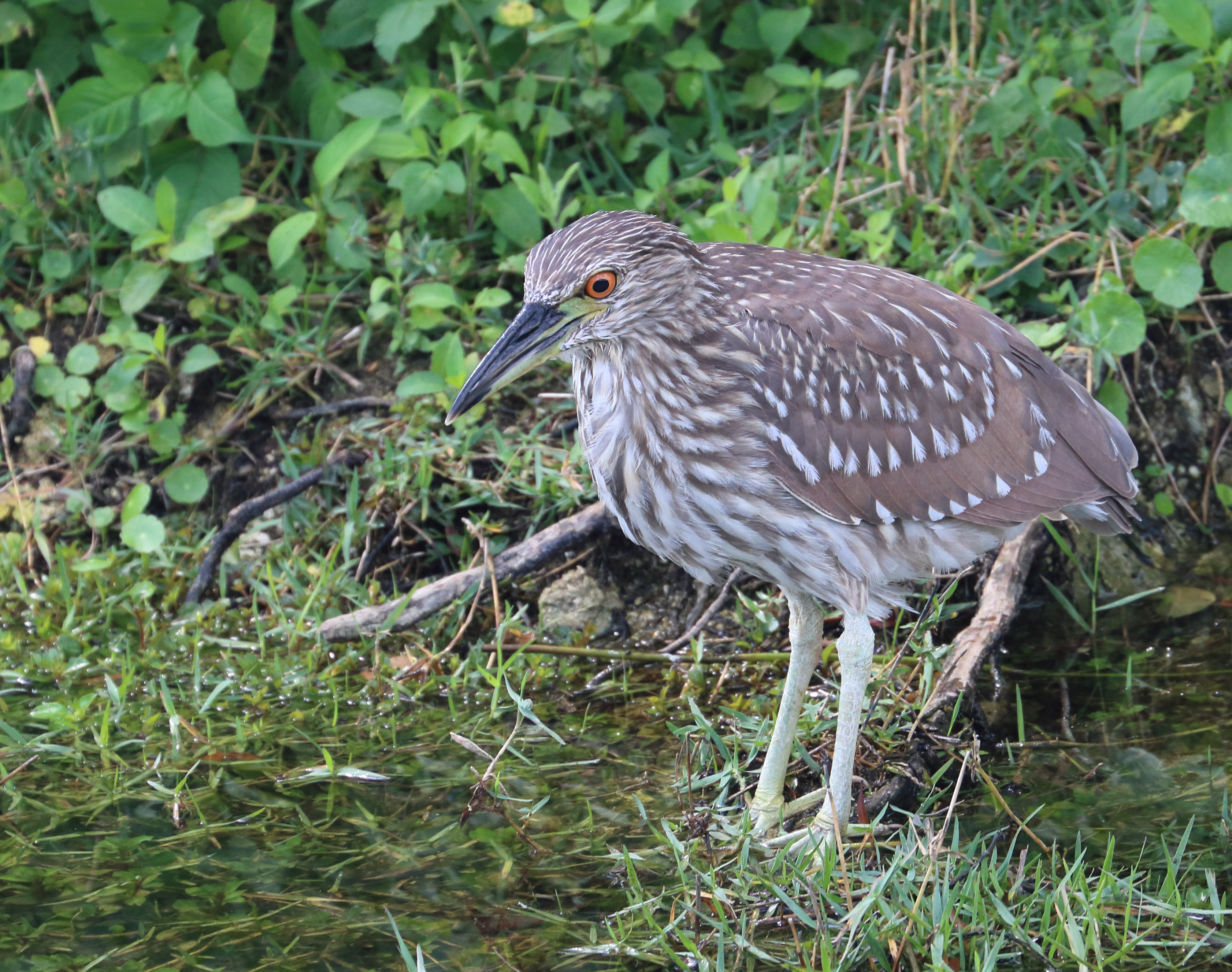
Birds such as this juvenile Black-crowned Night Heron helped compensate for a terrible night’s sleep and Dixie’s, ahem, perfuming of the car seats!

At seven, Nick drove us to our next spot, a place called the L31W Canal, a little northeast of the Everglades. Struggling against my fatigue, I stepped out of the car in the brightening sky, and we began trudging along a straight road bordered by brambles on one side and grassy pine forest on the other. We had several goals here, the primary one being a Smooth-billed Ani that had been hanging out for a while. After doing some digging on eBird, I discovered that the ani was a ways down the dusty road, and I sighed, preparing for a long, hot, uneventful hike. Fortunately, I was quickly proven wrong.

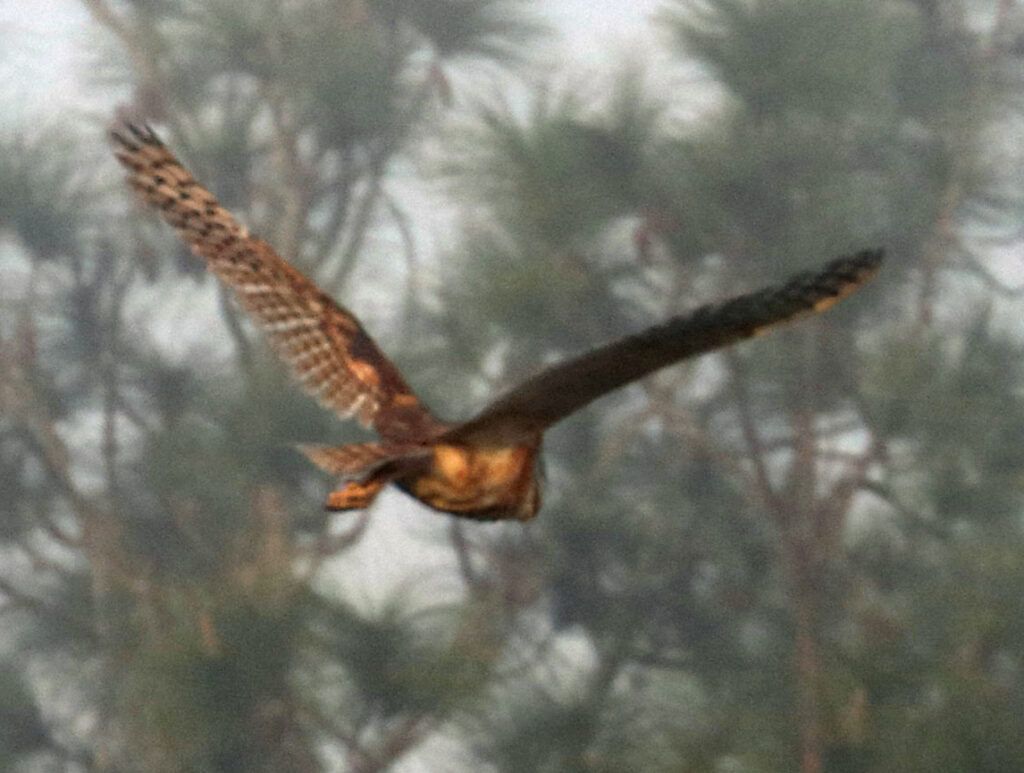
We passed another pair of birders, one of them guiding the other. Nick pointed out the calls of Northern Bobwhites, quail I hadn’t seen since South Texas and had never before heard, and all of a sudden, an orange blur caught my eye. I looked to the right, where a beautiful Barn Owl had just alighted on top of a tall, branchless snag.

This was the best photo I could manage of my first really good look at a Barn Owl.

“Holy cow, look!” I said, pointing as all four of us birders turned towards it and raised our various devices (camera, binoculars, and in the guide’s case, a scope). The bird had dark eyes and a grayish, circular face peering at us in the morning fog. It took off before I was able to secure any good pictures, its flight reminiscent of a bounding rabbit. We watched the Barn Owl, a species I had only seen the butt of before, our eyes transfixed on the vibrant orange of its wings as it floated around for a while and then disappeared. It was almost like the birds had seen my poor mood and responded accordingly, putting the smile back on my face—and they were just getting started. In fact, the best birding of the entire trip unfolded before us.

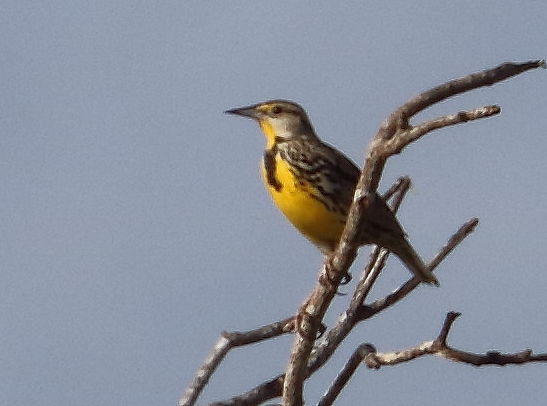
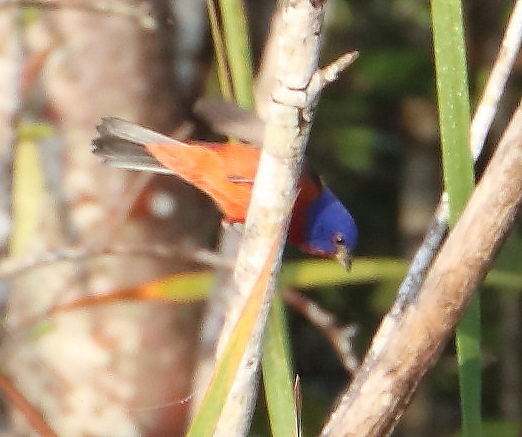
As we scanned the pine savannah to our right, searching for White-tailed Kites, Nick pointed out Eastern Meadowlarks, a bird I somehow hadn’t seen until now. Pishing in agricultural parts of the walk yielded a variety of sparrows, including Savannah and, surprisingly, a Grasshopper Sparrow, a bird I associated with the shortgrass prairie of Eastern Montana rather than the humid scrubland of south Florida. More Swallow-tailed Kites appeared above us, circling above the pineywoods as if cheering us on. At one point, a bright red bird zoomed across my path, briefly perching up in a low bush—a male Painted Bunting! The bird was even more stunning than I’d expected, with its deep blue head, green back and brilliant crimson belly lit up in the sun. 

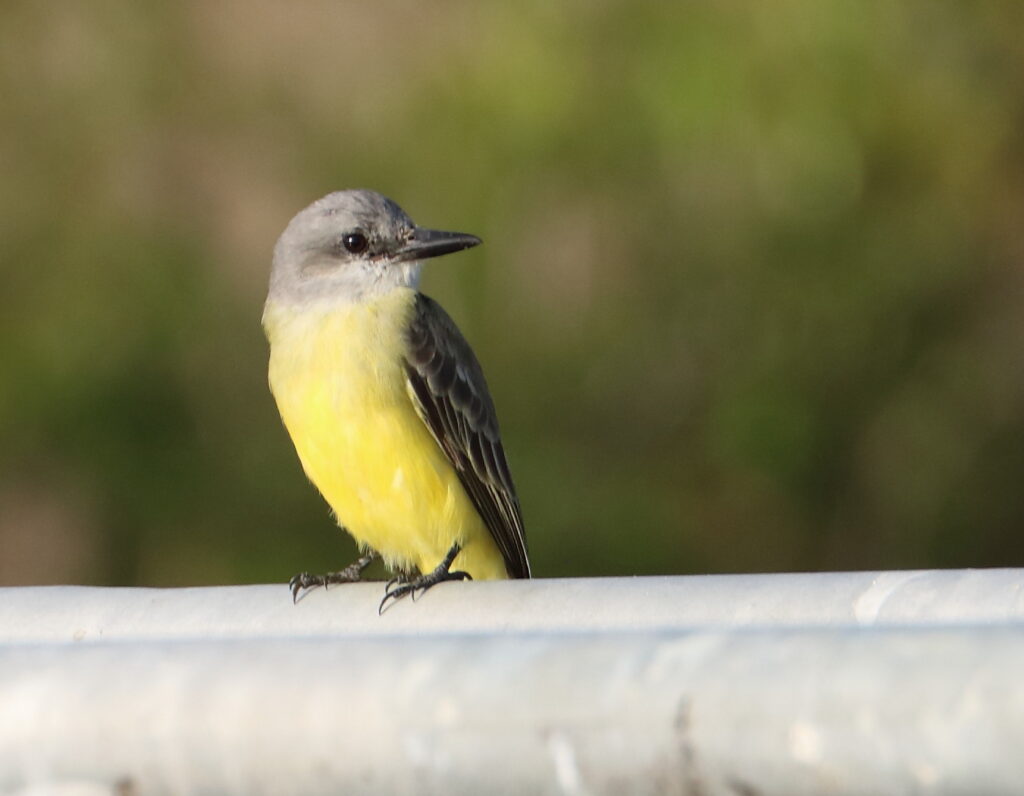
While we didn’t find the ani, the other birders pointed out other rare species to us. This place seemed to be a rarity hotspot, which became apparent with a kingbird flock we found. Western Kingbirds were regular winter residents in this area, but this flock also included both a Cassin’s Kingbird (a Western species) and a Tropical Kingbird (a tropical species), and I learned the difference between the three as we watched them fly around us. As much as Nick and I wanted to stay longer, we had miles to cover and Mangrove Cuckoos to find, so we said goodbye to the other birders and began the drive through the glades towards the Gulf Coast.

This was my first time getting to directly observe the differences between Tropical (shown above), Cassin’s, and Western Kingbirds in the field.

Yet again, we drove through prime Snail Kite habitat, and yet again, we found no Snail Kites. The sawgrass marshes gave way to densely forested glades as we drove along the Tamiami Trail, and we pulled into the visitor center for Big Cypress National Preserve for a quick glance around the center grounds. While we did see a fair number of birds along the drive and at the visitor center, the main attractions were the aquatic creatures. Amazingly, we spotted a pair of porpoises in the canal as well as a Brown Pelican, both an unusually far distance inland. That meant that somehow, this canal must have had some saltwater. What’s more, at the visitor center we found large schools of fish, including mean-looking Florida Gar. In front of our eyes, a Softshell Turtle snagged one of them and was promptly ambushed by several more. However, the most mind-blowing animals were the alligators. Dozens sulked in the canal, and at the visitor center alone I counted thirty or so, all within several feet of the humans peering at them from the safety of the boardwalk. 

Eventually, the scenery changed as we left Snail Kite habitat and entered the habitat of the snowbirds, people who migrated south from the northern United States to their homes in the warmth of Florida. More specifically, we were in Cape Coral, a hot, concrete-covered town known for its tourists as well as another species that I’d only seen previously in the prairies of Montana: the Burrowing Owl. A threatened, urban owl population existed in this part of Florida, surviving in parks, yards and abandoned lots here only because of the protection the city provided. As we pulled up to the Cape Coral Public Library, we saw the fencing and stakes marking their burrows, although no birds were to be found. The heat of the day seemed to be keeping them down, so we headed west, towards our last chance at Mangrove Cuckoo: Ding Darling National Wildlife Refuge on Sanibel Island.

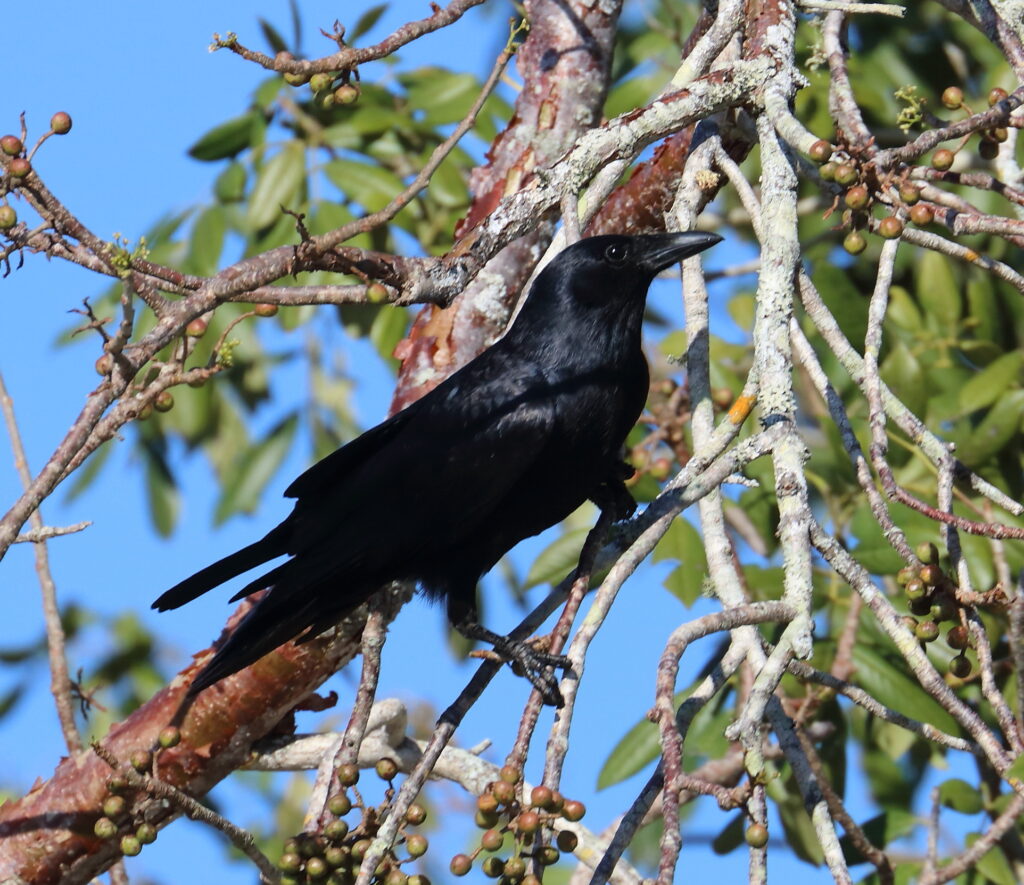
Fish Crows entertained us in many of South Florida’s habitats, including mangroves.

Again, this refuge caught me off guard. I’d expected large marshes and ponds, similar to Montana’s refuges. Instead, we were met with thick, tall, healthy mangroves. The trees were larger and denser than what we’d seen in the Keys, and more accessible too. We drove the main refuge loop, stopping at various trails to play for the cuckoo. One boardwalk in particular displayed the complexity of the Red Mangrove ecosystem, giving us great looks at the trees’ prop roots as they plunged into the shallow, salt-covered mud, and the crabs scampering up their trunks. Fish leapt from the water of the mangrove-encased bays, and we spotted a few shorebirds and waders wherever land showed itself. Here, again, the primary songs we heard were those of Prairie Warblers, singing from all around us in this perfect breeding habitat. And yet again, more Swallow-tailed Kites flew over us, reminding us of the excitement we’d felt when we’d first seen them at Merritt Island.

As we left Ding Darling, cuckoo-less, we discovered what else the area was known for: traffic—the worst traffic I’d ever been in, hood-to-bumper cars stretching for miles as people tried to get off the island. We probably could have gotten off Sanibel faster if we’d been as we covered three or so miles in roughly an hour. Eventually, though, we made our escape, and headed to a nearby baseball field in a last ditch attempt for Burrowing Owls. Again, though, after half an hour of walking around, they evaded us, frustration rising inside us. While the day had been great, we’d missed every single target—no ani, no cuckoo, no kites and no Burrowing Owls, not to mention the uncomfortable night spent looking for nonexistent Black Rails. As the sun began to set, a baseball game started next to us. I stared as the young Little League players hit line drives over each others’ heads. A single ball flew into the outfield, and then I saw it: yellow fencing, located just beyond the baseball diamond. I raised my binoculars, revealing two brown lumps perched on the chain link fence within the yellow caution tape.

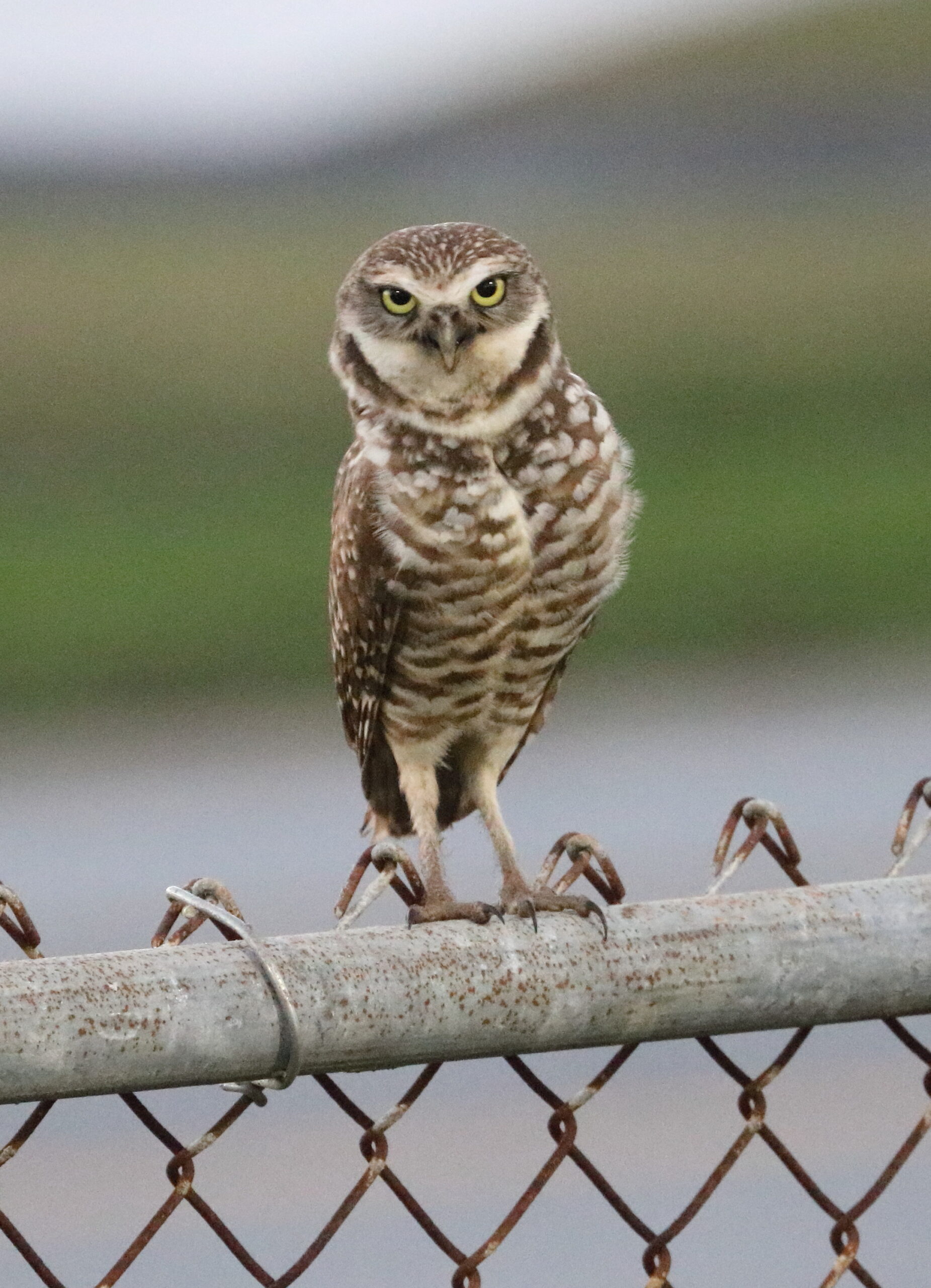
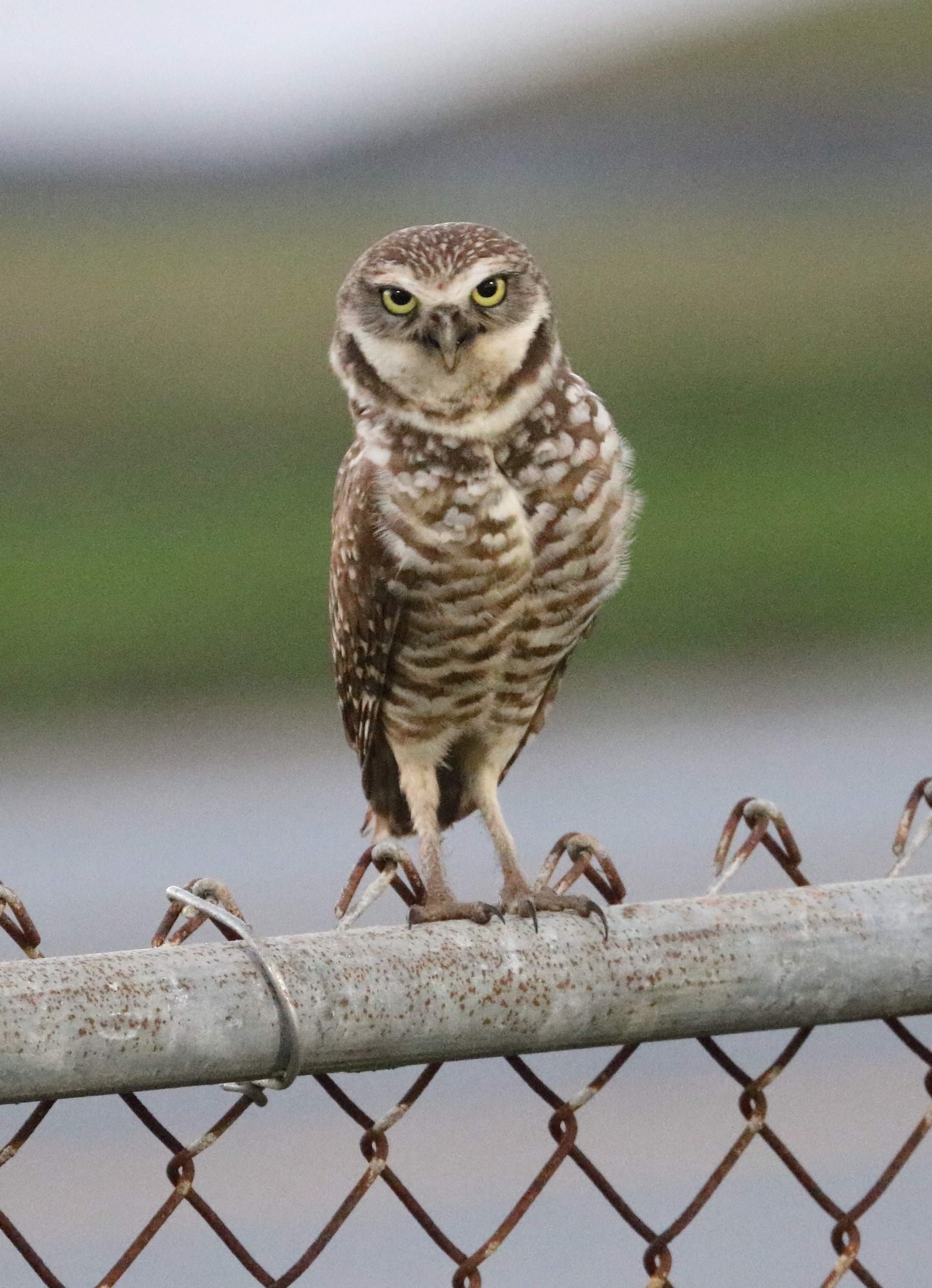
“I’ve got em!” I said, and Nick and I began running, Dixie leading the way. As we got close, we put Dixie on a leash, lying down to photograph what we’d found: two incredibly cooperative Burrowing Owls perched in front of us, one on the lawn and one on the fence above the first. They stared at us, their mottled brown-and-white pattern complementing their intense, unmoving eyes. Nick and I moved a little further to take a selfie. Finally, we’d found something we were looking for! 

Finally, after an afternoon-long search complete with horrendous South Florida traffic, we were rewarded with a great look at Burrowing Owls in Cape Coral.

We ended our day at a campsite just south of Gainesville at roughly eleven o’clock, a surprisingly earlier bedtime compared to the rest of the trip. While my goal was sleep, Nick went off in search of Eastern Whip-poor-wills. I lay there, in the back of Nick’s truck, thinking about where we’d been. After spending the day in the glades and the mangroves, we were back in the Pineywoods, hoping for another chance at their birds tomorrow before heading back to New Orleans. While we’d gotten several of my target birds for the trip so far, we’d missed an unfortunate number, and I’d hoped that tomorrow would go better. Would it? Or would we miss everything yet again, to return to Louisiana only with a few of the birds we’d set out to find? Stay tuned to find out!

Rare Bird Hat Trick!

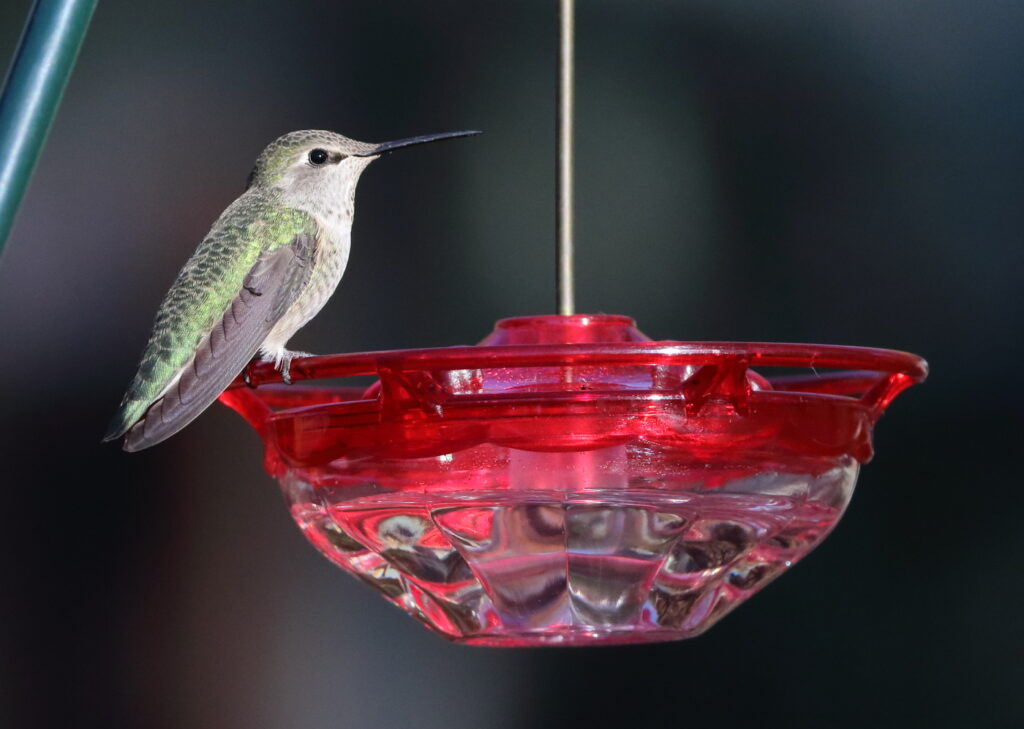
In my last blog, My Accidental Big Year, I recounted my fun birding adventures with some of Houston’s top birders in my quest to “accidentally” break my Big Year record of 336 ABA species. Even as I posted that blog, I harbored serious doubts if I could do it. However, after this week’s—dare I call them shocking?—events, I am more optimistic. It all started when I got a great email from Will Sebern, who had read my last blog and asked if I had gotten an Anna’s Hummingbird for the year and, if not, would I like to come over and see the one visiting his feeder. The answer: No and a resounding Yes! Less than 24 hours later, I was pleasantly chatting with Will on his porch admiring a gorgeous beauty sipping at his feeder. Ka-ching! My year count rose to 328—only nine short of my goal! Thank you, Will! (Note, I picked up number 327—Woodhouse’s Scrub-Jay— during a daddy-daughter trip to Salt Lake City last week!)

Anna’s Hummingbirds sweep through western Montana every year, but Braden nor I had ever seen one—until my surprise invitation from Will Sebern!

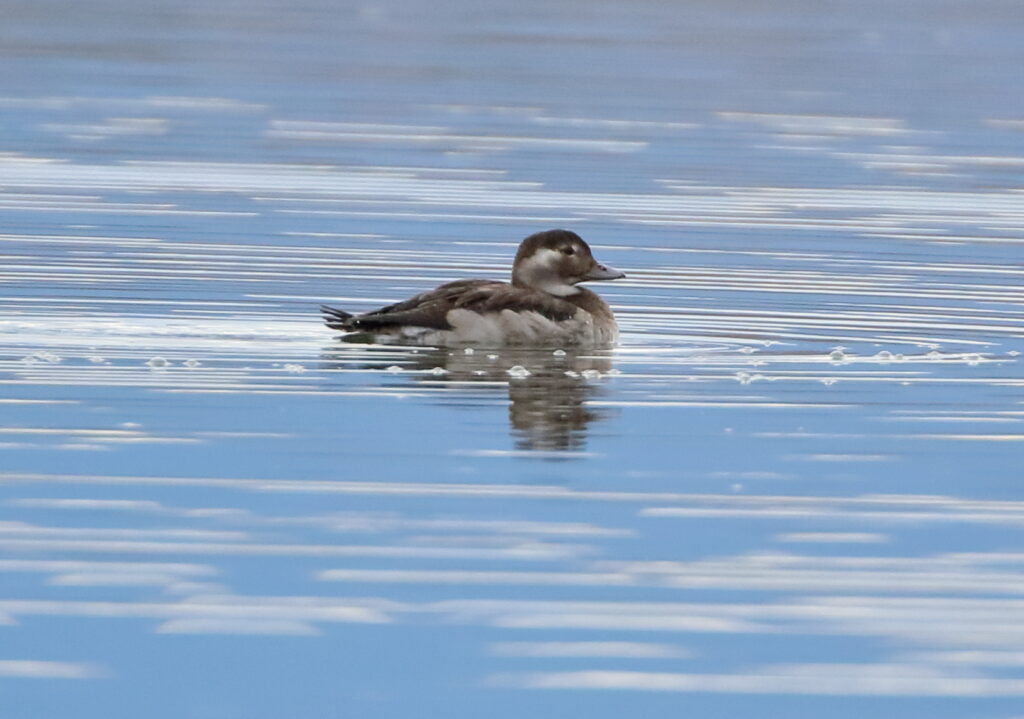
That said, nine new Year Birds in Montana—in winter—was not a small number. For one thing, I was not willing to race everywhere across the state to chase birds. Burning up gasoline to see birds, birds that are directly harmed by carbon dioxide emissions, has become more and more of a concern for me and other birders. I was willing, though, to travel an hour or two, especially if I could carpool with others. “Maybe,” I thought, “I might be able to run into two or three rarities fairly close to Missoula,” and began eyeing eBird rare bird alerts. During my trip to Texas, I missed quite a few opportunities, but then, a few days ago, Montana eBirder Sharon Dewart-Hansen posted a picture of a Long-tailed Duck at Brown’s Lake only an hour from Missoula! I couldn’t go that day or the next, but called Braden and asked, “Do you think it will still be there tomorrow?” He answered, “Well, ducks often stick around for a while. I’ll bet it will.”

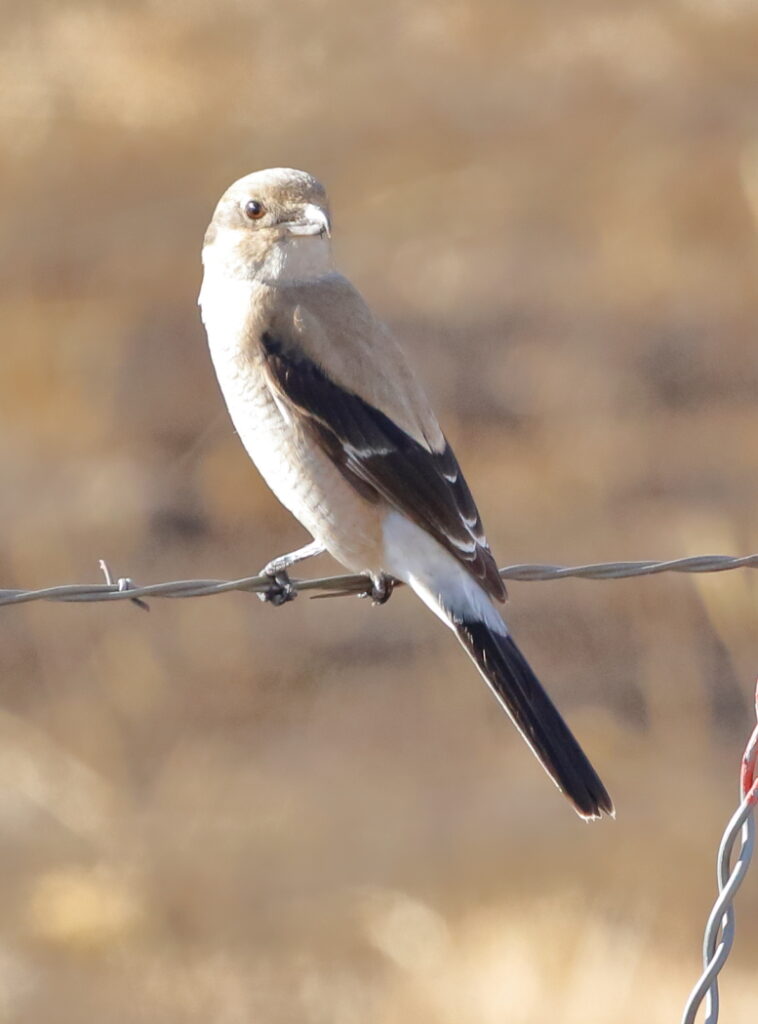
One of the delights of our day was the first sightings of so many of Montana’s western winter birds—including this immature Northern Shrike!

I fired off a text to several local birders to see if they wanted to join me—and no one could make it. “That’s okay,” I thought. “I’ll take the dog and we’ll have a good time whether or not we see anything.” The next morning, though, Steve Flood texted that he could make it after all. We rendezvoused at the truck stop in Bonner and merrily headed up Highway 200.

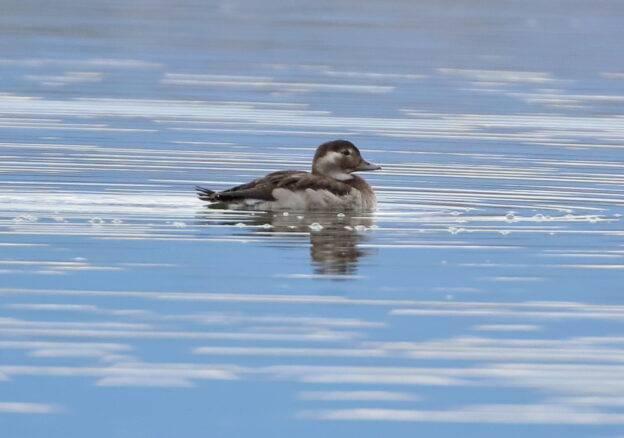
Arriving at Brown’s Lake, a surprise flock of Common Redpolls greeted us, but though we saw some cool grebes and ducks, THE duck was nowhere in sight at our first stop. We kept circling the lake, though, and spotted a suspicious critter near the campground. I hit the brakes. “Is that it?” Steve answered, “I think it is!” Sure enough, the Long-tailed Duck paddled only fifty feet offshore. The duck, however, was just the beginning. At the campground, Steve found three distant Pacific Loons while I spotted two gulls that turned out to be Bonaparte’s Gulls. A pair of American Tree Swallows—the first of winter—put an accent on our finds.

Seeing only my second Long-tailed Duck ever will long lodge itself in my memory banks. Never did I suspect it would be the first of three Big Year birds Steve Flood and I would see that day!

Elated with our finds, we headed out along the backroads behind Brown’s Lake, which I had never birded, but Steve knew well. More surprises greeted us including a bevy of other new winter arrivals including my first Rough-legged Hawks, Bohemian Waxwings, and Northern Shrikes of the season! Since we were on a roll, I asked, “Hey Steve, you want to take a quick run up to Seeley Lake on our way home?” Steve was game. We turned right at Clearwater Junction and twenty minutes later pulled into the River Point picnic area on the lake’s west side. I had few expectations, but we saw Common Loons, Western Grebes, Hooded Mergansers, and another surprise flock of Common Redpolls. Then, looking through his scope, Steve said, “I have a present for you.” I peered into the eyepiece and saw . . . A beautiful Pacific Loon! Er, check that . . .

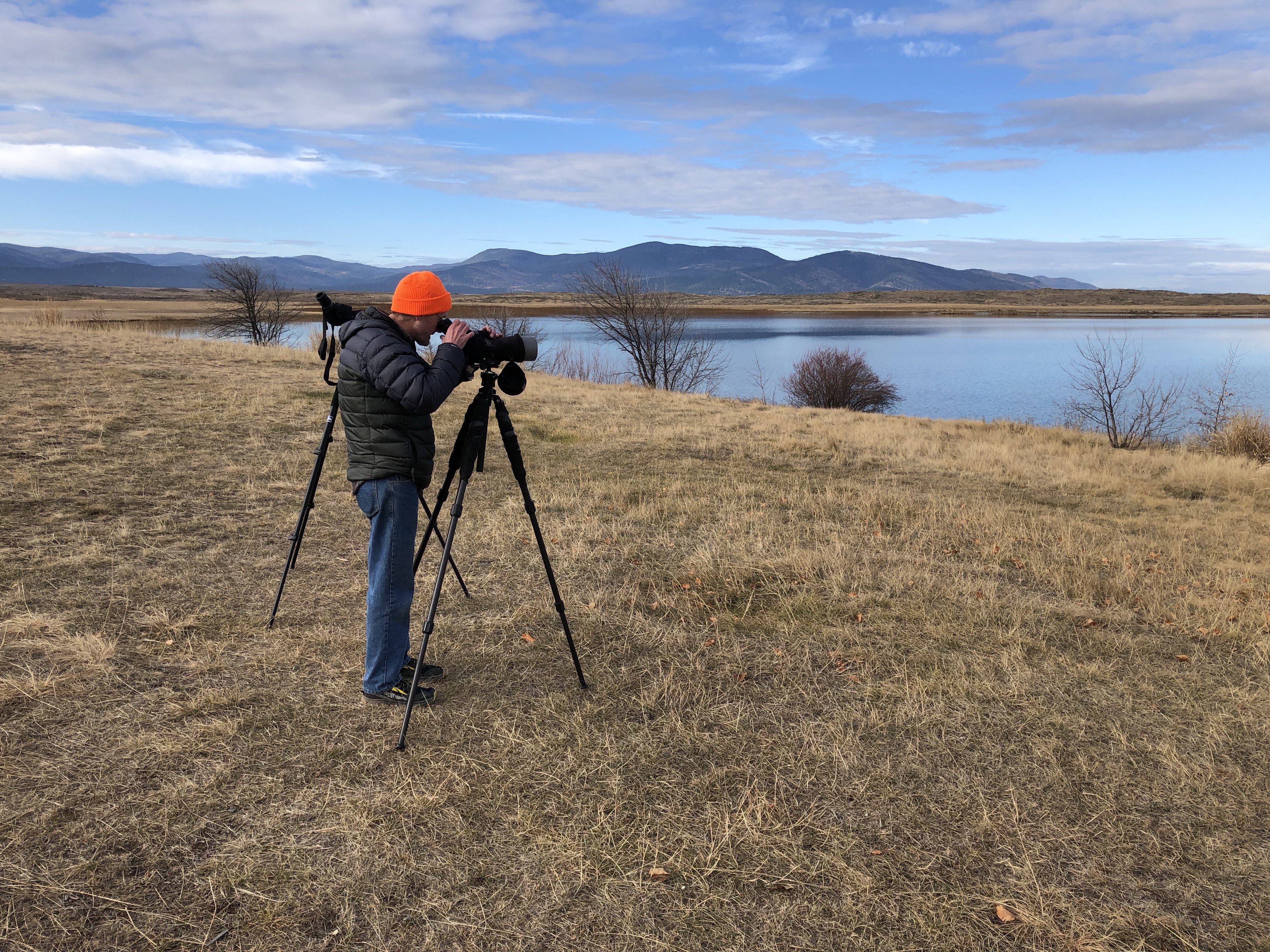
Birding with top-notch birder Steve Flood proved not only a way to learn a lot and help reduce our carbon footprints, it was a great way to make a new friend!

It was the same Red-throated Loon Steve had discovered a couple of weeks before! Neither of us had any idea it would still be around, and it capped a remarkable day, one that not only netted me three new Big Year birds, but almost every winter bird that Braden and I work hard to find every year. Well, okay, except for Snowy Owls, Great Gray Owls, Lapland Longspurs, and Snow Buntings. You’ve got to save something for later, right? Even better, I felt like I’d made a new friend in Steve, who is not only an excellent birder, but a pretty darned good guy! Once again, it brings up the adage, “In birding, you just never know—but you won’t unless you keep getting out there!”

A Tornado of Warblers (Braden’s first report from Maine)

My dad and I were hungry. Not for food; we’d already eaten at a fabulous breakfast place in Bar Harbor following the cancellation of our whale-watching trip (which we weren’t all that disappointed by). No, my dad and I wanted warblers.

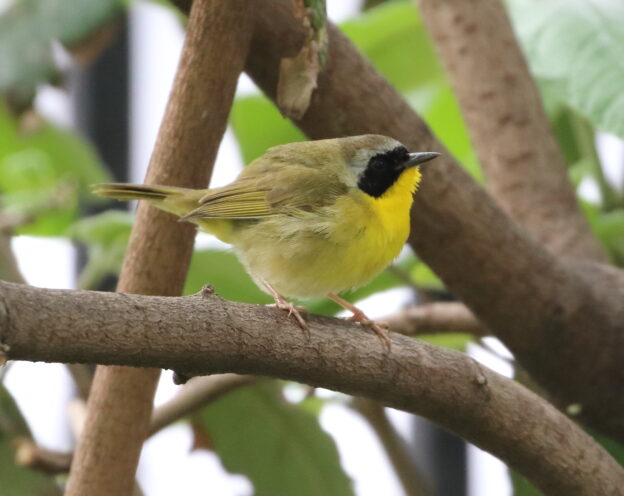
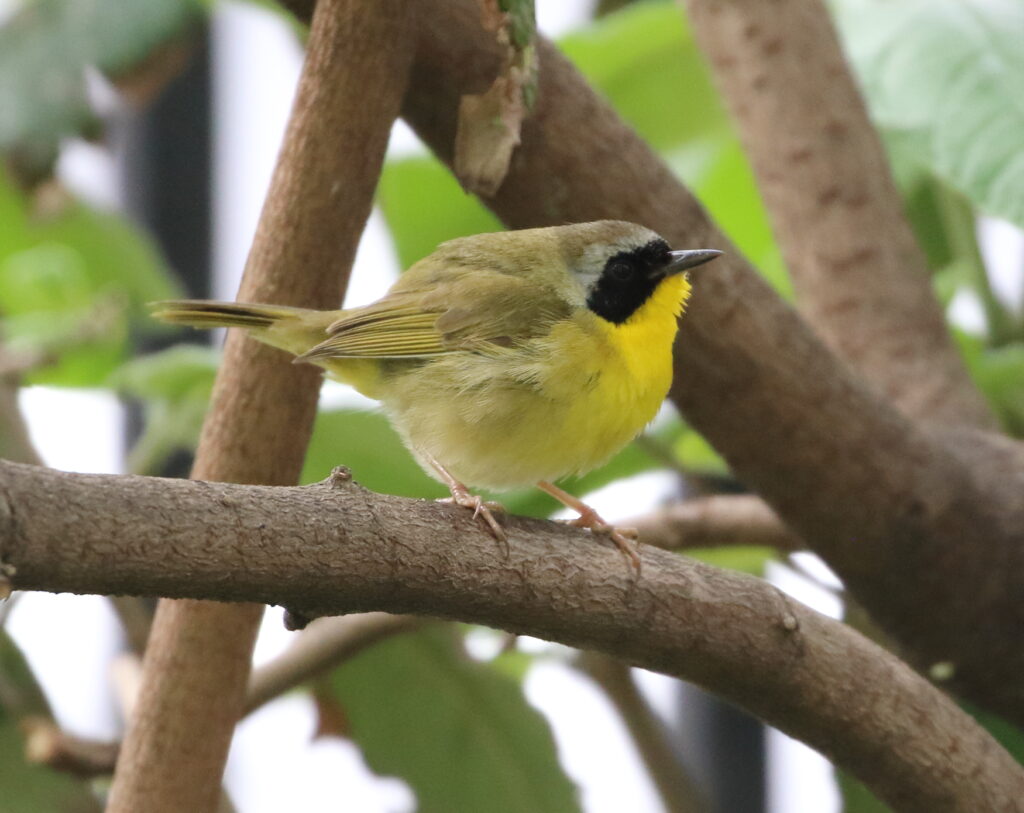
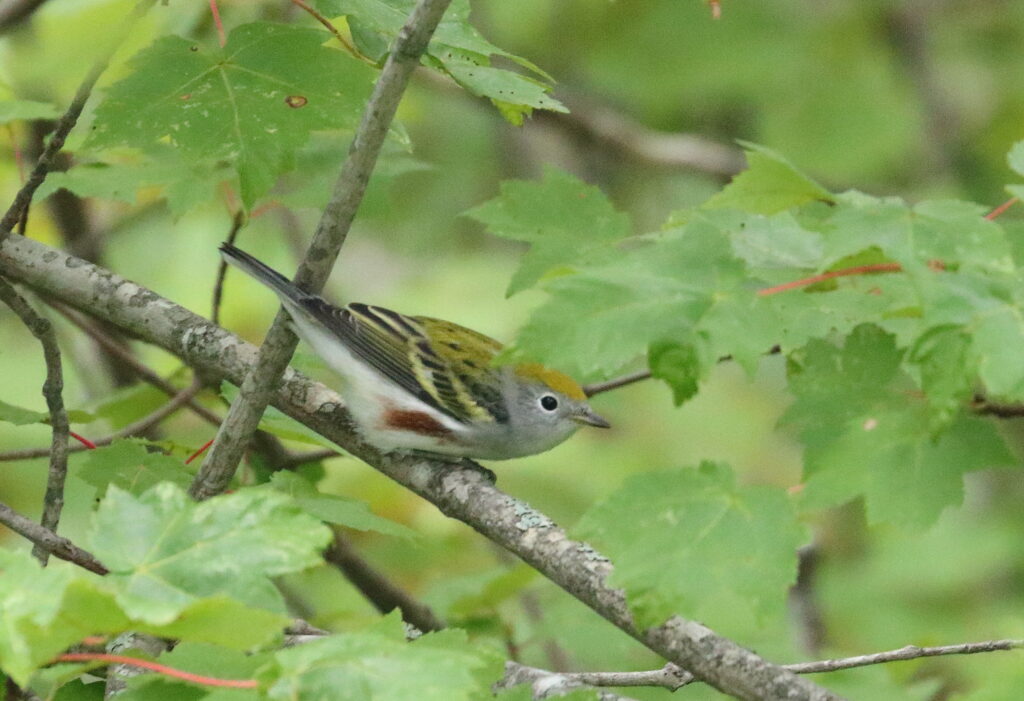
Earlier that week we’d gotten a taste of the eastern warblers we’d heard so much about, nabbing Common Yellowthroat, Yellow, and a nice Black-and-White Warbler in Massachusetts. The day before today we’d gone to Taylor Bait Farm, a well-known hotspot in Orono, Maine, where the University of Maine (my new home for the next few years) was located. The farm was fairly productive, nabbing us a few cool county birds like Solitary Sandpiper and some Great Egrets. The best part about Taylor Bait Farm, however, was the warblers—specifically, a bright, nonbreeding male Chestnut-sided Warbler that posed for us below eye level for thirty seconds before diving back into the bushes! It was a first lifer warbler in several years, and probably the best-looking one in terms of nonbreeding plumage. During our whole outing at Taylor Bait Farm, we saw a few more Chestnut-sided Warblers and Northern Parulas, and got a really poor look at a Palm Warbler, another lifer, in a tree above us.

Chestnut-sided Warbler proved our Bird of the Day when my dad and I visited the Taylor Bait Farm in Orono.

But it wasn’t enough. Furthermore, we had ended up at Acadia National Park, which was known for its beautiful views and seabirds, not its warblers. My dad and I started driving around the main park loop, stopping at parking lots to try to pick up some of the eastern seabirds that we needed. After a few stops with nothing but eiders and Great Black-backed Gulls, we finally got our dose of Atlantic birds with a few Black Guillemots floating offshore and a distant Northern Gannet flying through the sea fog, both lifers for my dad. Unfortunately, it looked like that very fog was going to limit our chances of seeing things like shearwaters and storm-petrels from shore.

At the third parking lot, as we piled out to scope the beach, I happened to look up at a tree just beginning to turn yellow and I spotted a small yellow bird foraging in it. I brought my binoculars to my eyes and yelled, “Daddy! There’s a Blackburnian Warbler above you!” As he looked up, I started to see that the Blackburnian Warbler, a species we hadn’t seen since 2016, was not the only bird above us. There were passerines flying between and feeding in trees all around us.

We started calling out names as we followed the mixed flock. 

“Red-eyed Vireo! Black-and-White Warbler! American Redstart!”

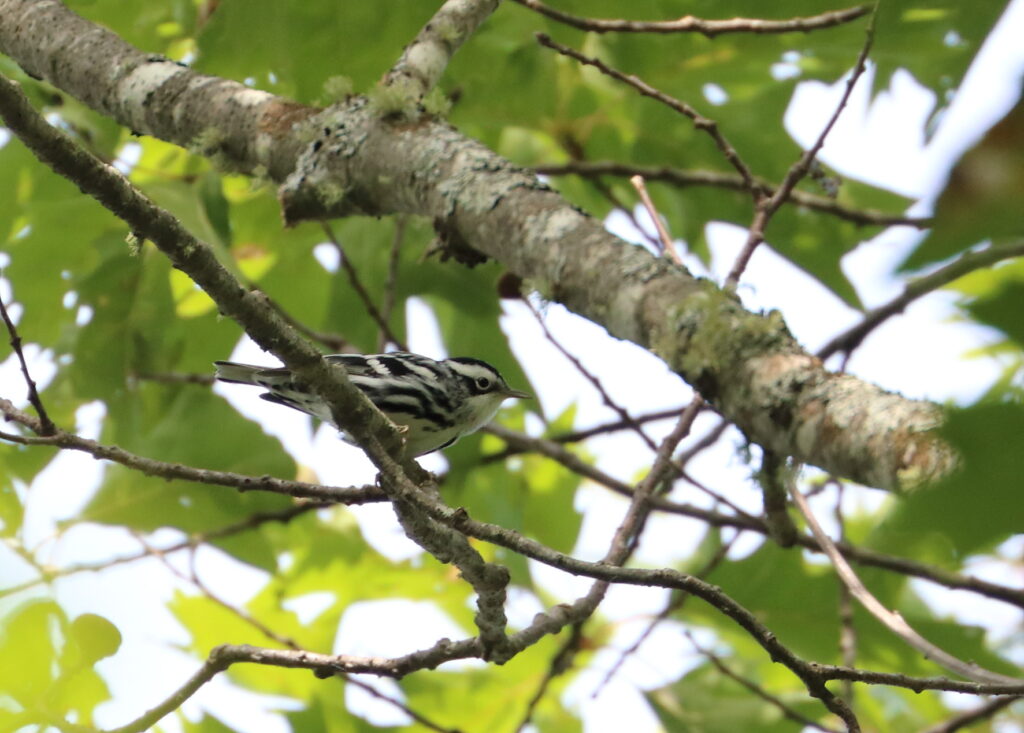
One of our favorite songbirds, Black-and-White Warblers have become almost commonplace for me since moving East.

As the flock moved into a group of conifers I glimpsed one of our target species for the trip feeding on the left side of a spruce. “Magnolia Warbler, get your eyes on it!”

We left the parking lot (and the people wondering what we were gawking at) and walked into the woods, continuing to see if we could pull more warblers out of the already insane mixed flock. I spotted several “Baypoll” warblers at one point, a group that includes Blackpoll and Bay-breasted Warblers that look notoriously similar in fall. Finally, I watched one long enough to see a hint of a bay-colored side, identifying it as a Bay-breasted. The mixed flock, in total, had 14 species including 8 species of warblers—more than we’d ever seen in any flock in Montana!

https://ebird.org/checklist/S93635091

Unfortunately my dad had to fly home a few days later, but the warblers weren’t done with me yet. September, the best birding month in much of the east, had just begun, and the University of Maine campus happened to be located next to some perfect habitat for warblers during fall migration. I began birding a trail near my dorm, called the Cornfield Loop, several times a week to search for my other eastern target species: Canada Warbler, Cape May Warbler and Philadelphia Vireo.

The hits came fast. After about a week of scoping the area out, I started seeing large mixed flocks of migrating warblers coming through and in one spot had both of my first two targets within a few trees of one another! My reaction for both of them was the same: I can’t believe this bird actually exists! Warblers became the norm, and I got used to listening for chickadees in order to tell me if there might be something else nearby. Red-eyed and Blue-headed Vireos, Northern Parulas, American Redstarts and Common Yellowthroats popped out of every piece of plant life available, and one marsh yielded huge flocks of sparrows every time I walked through it. Seeing familiar warblers was also a treat: I found both Nashville and Wilson’s during my walks, the latter of which isn’t the easiest to find in the east. Here is one of my lists:

https://ebird.org/checklist/S94686023

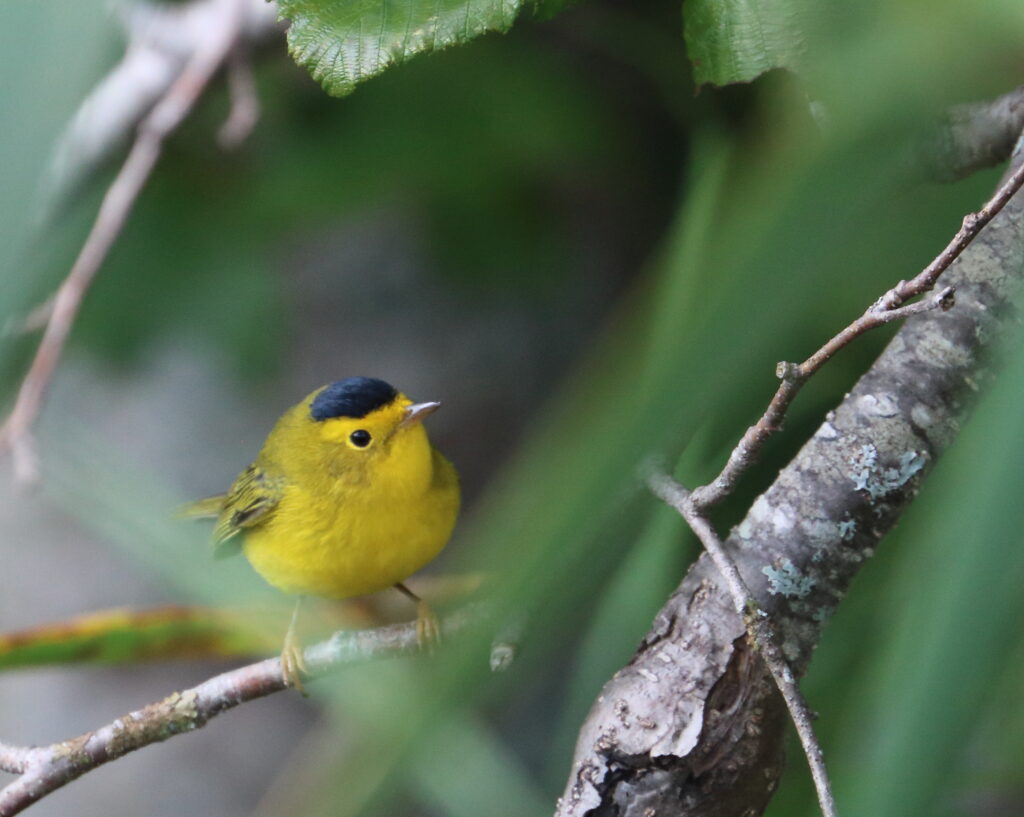
It is odd seeing warblers, such as this Wilson’s Warbler that my dad and I see fairly frequently in Montana, back here in Maine—especially since they are more difficult to see here.

It wasn’t just the Cornfield Loop that had warblers; campus was covered in them. Several mornings I left my dorm for breakfast to be greeted by Black-throated Green Warblers foraging in my face. One night as I walked back from a movie with friends, I began to wonder what all of the high-pitched chips I was hearing were. Could they be sleeping chickadees? No, that doesn’t sound right…and then it hit me. The east was known for its nocturnal migration, and the University of Maine sat right in the middle of the Atlantic Flyway. This meant that the chips I was hearing were the nocturnal flight calls of hundreds, maybe thousands of birds passing over in the dark on their way south to Texas, Florida and beyond! I stared up at the stars, hoping to catch a glimpse of a silhouette as one of these migrating champions flew over.

I got my Philadelphia Vireo by mid-September, pointed out to me by a non-birder friend. 

“Hey,” he asked, “What kind of warbler’s that?”

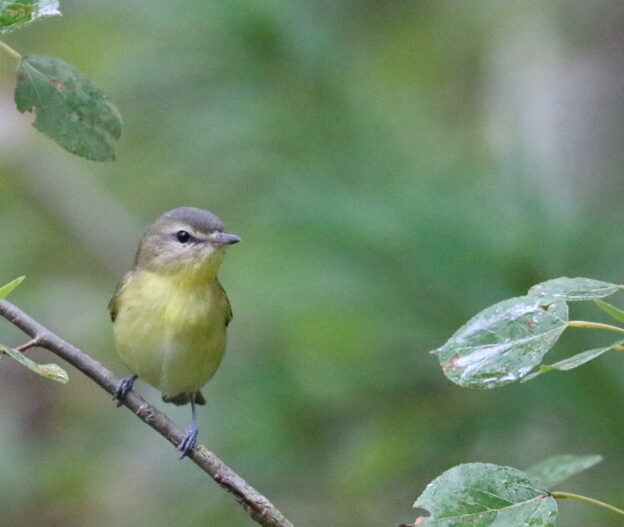
Before I even had my binoculars up I could see the yellow breast, dark eyeline and cute demeanor of a species I’d been dreaming about finding in Montana ever since my friend Nick first alerted me to it. “Philadelphia Vireo, nice find!”

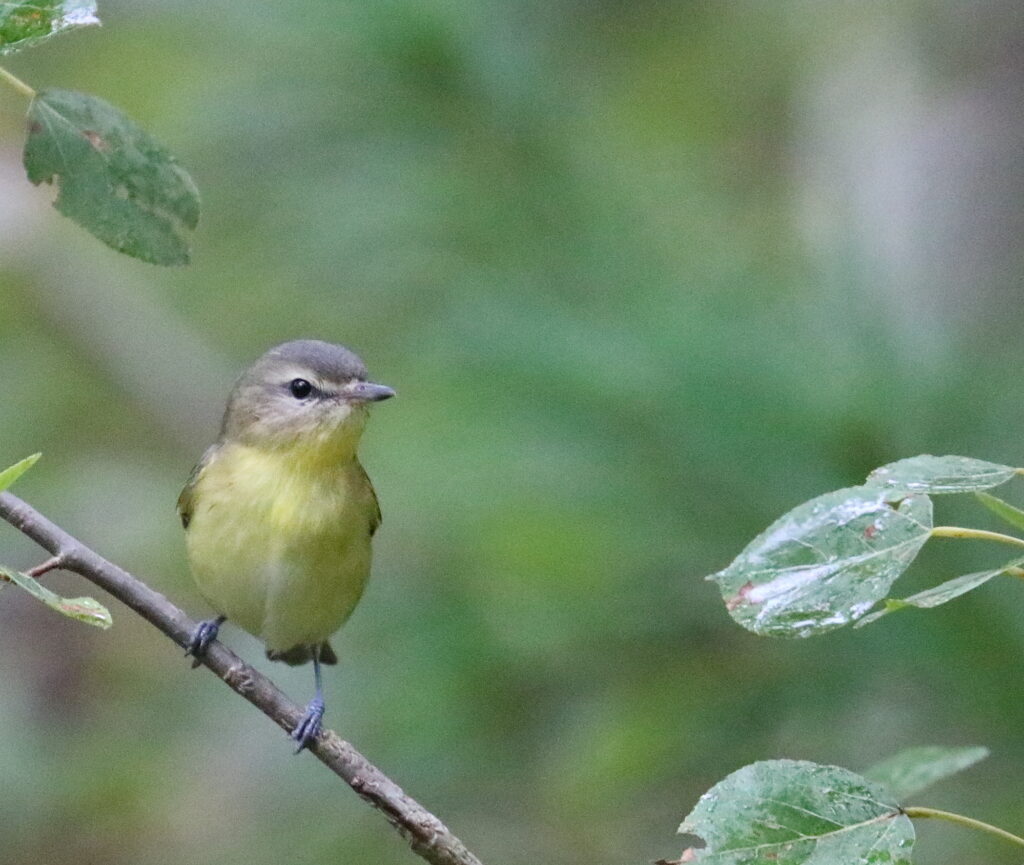
Philadelphia Vireo has definitely been one of my favorite new eastern birds, and I’ve seen them multiple times right on the Cornfield Loop right across from my dorm!

On one walk about a week ago, I was running through the options in my head as to what warblers I still needed for Maine. I had not yet found a Tennessee or Blackpoll Warbler, which was kind of funny considering those were two species my dad and I have found the last few springs in eastern Montana. I was also somehow missing Black-throated Blue, a supposedly common bird that I still needed for my life list.

Suddenly, I spotted a skulky, heavyset passerine fly into a bush near me, making heavy calls. It was acting a lot like a Common Yellowthroat, by far the most common warbler on campus, but I continued to watch it just in case it was one of the rarer species. Sure enough, it briefly popped into view before flying over the trail and out of sight. It flashed me a very dark chest spot contrasting with a complete gray hood as it flew, what I would have called a MacGillivray’s out west. That meant that I’d just scored a Mourning Warbler—MacGillivray’s eastern counterpart and a supposedly much more difficult bird to find. No way!! While Mourning had been on my radar, I hadn’t expected to get it or any of the rarer warblers given that I’d just gotten to Maine less than a month before and was still very content with the common birds.

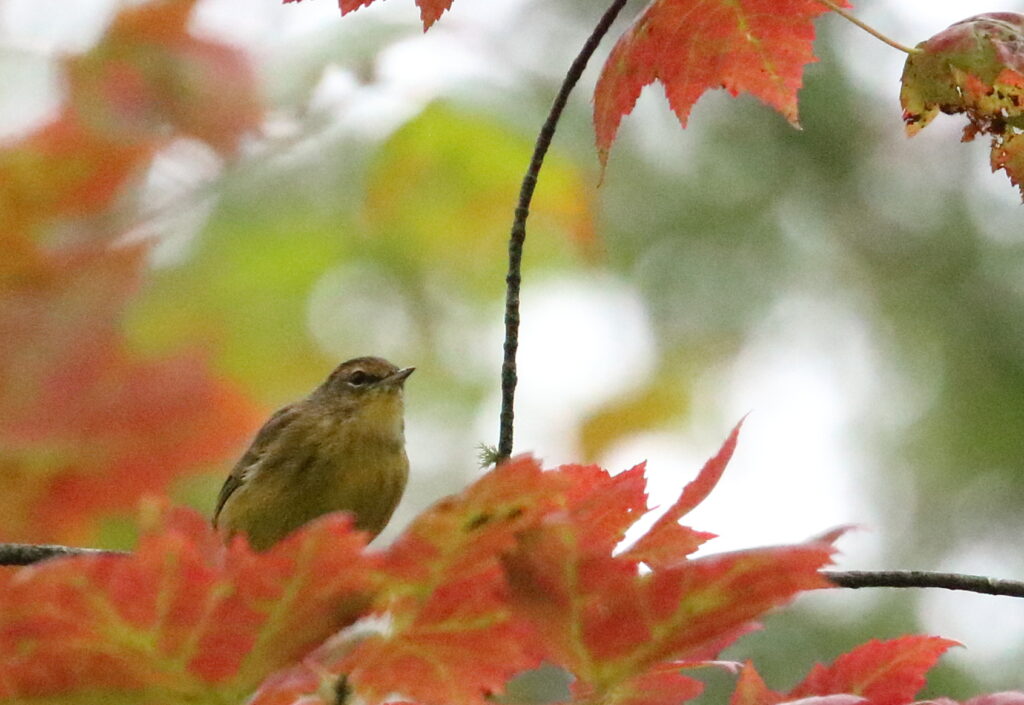
Though not as flashy as many other species, Palm Warbler surprised me and my dad, and was a welcome addition to our Life Lists.

This past week I’ve gotten both Blackpoll and Tennessee Warbler on the Cornfield Loop, bringing the total number of warbler species of seen in Maine to 20, all of which I’d seen in a month compared to the sixteen species of warblers I’d seen in Montana across seven years of birding. I still don’t have Black-throated Blue (though it is definitely still possible), but unfortunately warbler migration is beginning to die down here. Just yesterday eBird marked my report of American Redstart as rare, meaning that a few species are beginning to leave for good. The warblers are now moving through much of the southern United States, including Texas, which you may get to hear about soon from my dad!

Parker River NWR and the 3 Ps of Birding

If it’s one thing we at FatherSonBirding hammer over and over again, it is the 3 Ps: Planning, Persistence, and Preparation.

Okay, actually, we have never talked much about this, but it’s a catchy concept, isn’t it? The 3 Ps, in fact, came very much into play recently when, after our rather disappointing birding in Boston, Braden and I headed up the coast to a place Braden had carefully researched (P Number 1) ahead of time: the Parker River National Wildlife Refuge.

One of the gems of the New England coast, Parker River NWR turned out to be our favorite birding spot of our week-long sojourn.

I had actually never heard of Parker River before, but Braden learned about it from some online birding buddies and checked it out to see if it was “visit-worthy”. His verdict? Definitely. Not only might we collect a handful of Life Birds there, the refuge protected one of his top ABA target birds: Saltmarsh Sparrow.

Now, I have to say that when we visit a National Wildlife Refuge, I generally expect a pretty low-key, rarely visited location. Imagine my surprise when we encountered a mini traffic jam waiting to get in. In fact, it became evident that the refuge served not only to protect wildlife, but as a critical outdoor outlet for congested coastal Massachusetts. Our visit started auspiciously with a stop at Lot 1, where we got a quick fly-over of a Baltimore Oriole—the only one we would see on our trip. Crossing the highway, we encountered an even cooler surprise: the closest looks we’d ever had of Semipalmated and Least Sandpipers! This was especially useful after the ID struggles we’d had with birds in eastern Washington only weeks before, and it really helped us examine the unique properties of each.

As we moved on, though, Braden felt pessimistic about seeing Saltmarsh Sparrows. He had Planned. He had Prepared himself with knowledge. But Boston had put an “unlucky” vibe in his head. As we made our second stop along the refuge’s main road, however, he suddenly shouted, “I see them!” Indeed, not thirty feet from us, at least four or five fairly nondescript little birds bumbled about in some tall marsh grass, seemingly not knowing what they were doing. “They seem like juveniles,” Braden surmised, and having studied this species quite a bit, he would know.

Saltmarsh Sparrows used to be lumped with Nelson’s Sparrows as one species, the Sharp-tailed Sparrow. As its own species, however, the Saltmarsh Sparrow occupies a narrow range of saltmarsh habitat along the East Coast and, in fact, requires this habitat for nesting. Because of this, it is at extreme risk from higher sea levels caused by climate change, and its population has been steadily declining. This makes protecting places like Parker River NWR even more important—and made us feel especially privileged to have such a close experience with them.

Our amazing experience with Saltmarsh Sparrows proved once again that persistence just may be the most important attribute of a successful birder.

Leaving the Saltmarsh Sparrows, we continued to hit other places in the refuge and were rewarded with a host of Year Birds, and two more Life Birds: Purple Finch and Great Crested Flycatcher—our number one ABA need to that point. Which all demonstrates the third P of birding: Persistence. Sure, luck plays a role, but just getting out there again and again will eventually take luck out of the equation, something we learned for the thousandth time at Parker River.

Click for a link to our largest Parker River checklist. Crazy migrating swallows!

Birding by 5-Ton Truck: a 100-bird Quest

Having missed out on Braden’s epic Glacier birding day because of, you won’t believe this, a job, I have struggled for ways to console myself. Fortunately, birding opportunities are dove-tailing nicely with my new temporary career: delivering fire-fighting equipment by truck to various fire camps around Montana and Idaho. As you’ve probably noticed, it is shaping up to be an unprecedented fire season with record, early heat and little rain in sight. Just another reason that we need to make climate change our number one priority as a species (see Saving Birds. It’s Time.).

On the personal front, however, this radical summer has provided me with an interesting, useful part-time job driving for the Forest Service, and I have to say, I’ve been impressed with their entire operation. As I began my job, though, I asked myself, “How many birds could I see just driving around Montana and Idaho through the fire season?” I decided to set a goal of 100 species for myself—a number that seemed optimistic for this time of year, especially since I would have few opportunities to venture off roads into wildlife refuges and other birding hotspots. Below is my interim report, but first I should lay out the ground rules that I have set for myself, and they are simple: every bird can be counted from the moment I leave for work until I get back. I can’t count birds at my house or on my street, but everything else is game. So how goes the quest?

Who knew I’d be drivin’ truck at my age, but as in most of my life, trying new things has led to new birding—and writing—opportunities!

Well, so far I have driven approximately 3,000 miles and seen 59 species of birds, or about one new species every 51 miles—far more than I expected at this point. Let’s start with raptors. These are birds I expected to do well with because, duh, they are big and easy to see, and they sit on telephone poles. Strangely, I have seen only one Bald Eagle since I began and no Goldens, but have been delighted with Red-tailed Hawks, Swainson’s Hawks, Northern Harriers, Osprey, and a Prairie Falcon. My best raptor? A Ferruginous Hawk that I passed three separate times on my way to Ennis before I could positively ID it at 70 mph!

I had to drive by it three separate days before I could ID a Ferruginous Hawk near Ennis (actual bird not shown), but it was a major score in my “birding by truck” goals to find one of these.

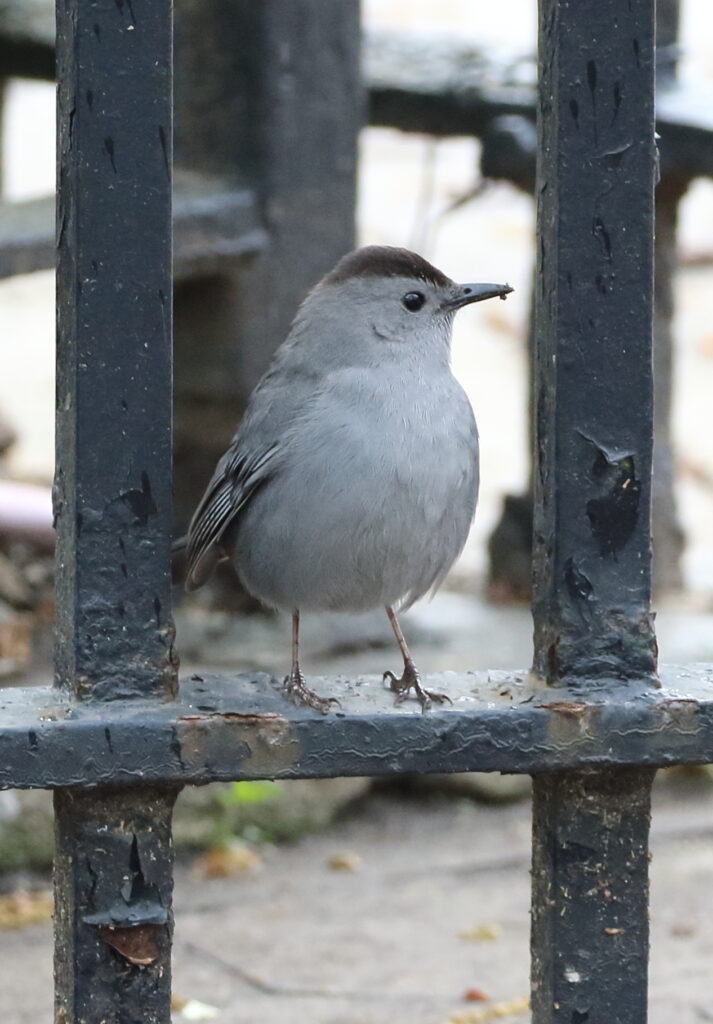
Songbirds promised to be the most difficult category because they are almost impossible to ID at high speed—and often at low speed! Still, I’ve lucked out with birds such as American Redstart and Evening Grosbeak around the ranger station in Seeley Lake, and good looks at Western Tanagers, catbirds, and other species along river roads. While my truck was being emptied down at the Goose Fire south of Ennis, I walked over to “pish” (make a fake bird sound, not doing, well, you know) some bushes and was flabbergasted to see a Lincoln’s Sparrow pop up in front of me—maybe my favorite “truck bird” so far.

Without a doubt my favorite sparrow, Lincoln’s Sparrow made my “birding by truck” list in surprising fashion while I was delivering a load to the Goose Fire crew south of Ennis. (Again, actual bird not shown—it’s hard to get bird photos while working another job!)

On my way back from the Dixie Fire camp in Idaho, I found myself at dusk crossing over Lolo Pass and needed a break, so I pulled into the visitor’s center to see if I could hear a Flammulated Owl. No luck, but White-crowned Sparrows and Swainson’s Thrushes called in the twilight, and suddenly I heard a deep sub-woofer sound. “My god,” I thought. “That’s a Ruffed Grouse!” It wasn’t. Later, after consulting with Braden, I realized I’d heard, appropriately for twilight, a Dusky Grouse. I hadn’t even known they made a similar deep-bass call. It pays to have a well-educated son!

Hearing a Dusky Grouse at, well, dusk at Lolo Pass taught me an important new bird call—and made an unlikely addition to my “truck list.”

The question remains: will I make it to 100? It’s going to take some doing, and I especially need to get into some large groups of waterfowl or migrating shorebirds or songbirds, but I remain hopefully optimistic. Stay tuned for the next installment! And yes, I would sacrifice my goal for a good, soaking rain!