Tag Archives: songbirds

Birding Japan: Quick Stop in Nagano

Since we published them, our birding posts about Japan have been read in more than a dozen countries. If you are planning your own trip to Japan, you’re in luck! Sneed’s new book, FIRST-TIME JAPAN: A STEP-BY-STEP GUIDE FOR THE INDEPENDENT TRAVELER, tells you everything you need to know about how to plan your trip to this remarkable, yet sometimes intimidating, country. Order now by clicking here.

Welcome to Sneed’s fifth—and penultimate—post on his and Tessa’s recent trip to Japan. Once again, some of the least expected places lead to some marvelous birding surprises—this time in the site of the 1998 Olympics, Nagano. Please feel free to share this post and catch up on the other Japan installments.

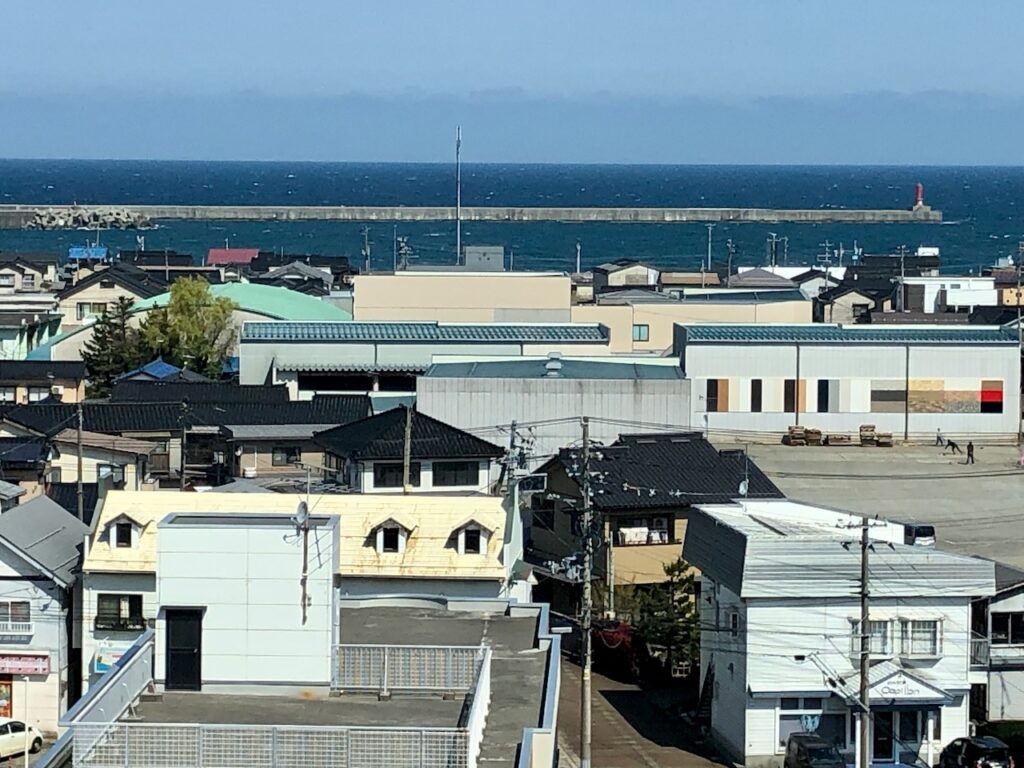
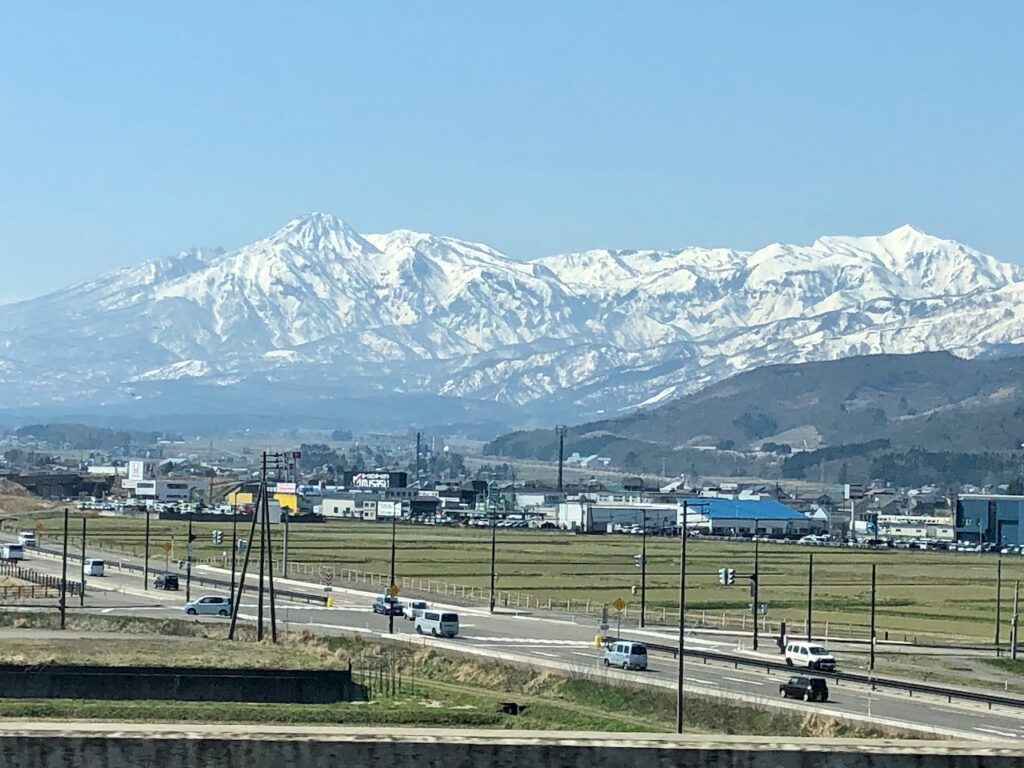
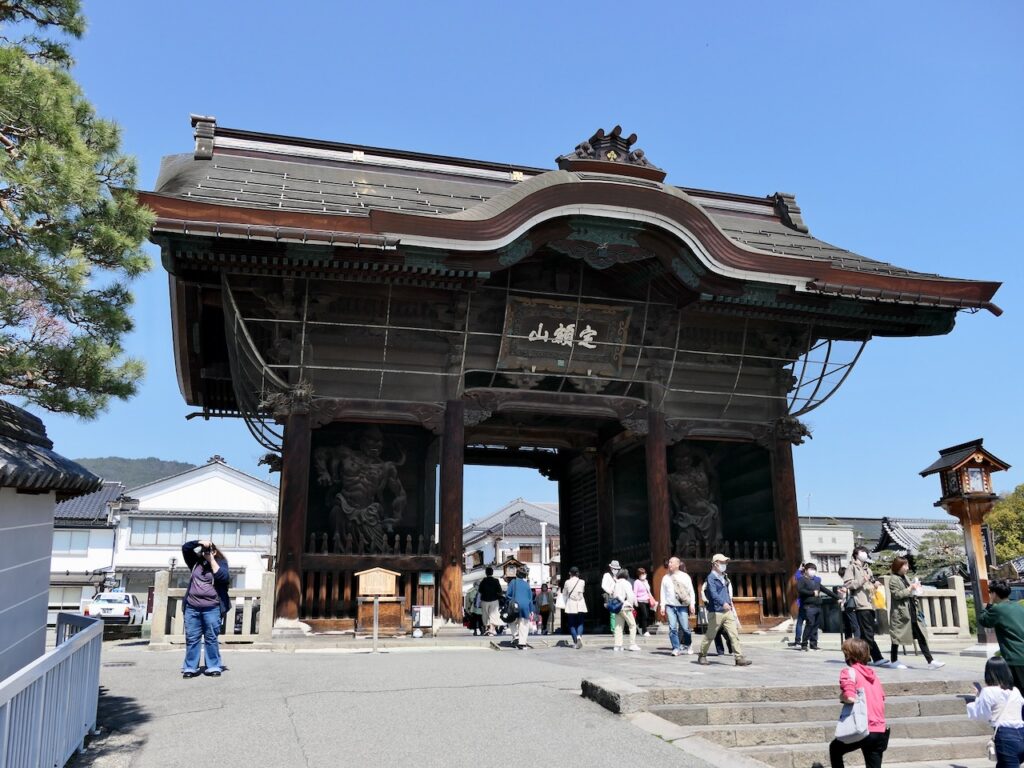
After a wonderful two-night visit to Kanazawa, Tessa and I definitely felt like we’d passed the halfway mark of our trip as we boarded the shinkansen back toward Tokyo. First, however, I’d scheduled a brief stop in the home of the 1998 Winter Olympics—Nagano. To be honest, I didn’t know if we’d have much to do there. Japan’s famous “hot springs monkeys” lived outside of town, but a little research had shown it probably wouldn’t be worth the hassle to try to find them. Nagano also was home to the very famous Zenko-ji Temple, but it turns out that the train ride alone was worth making the entire loop back to Tokyo. Leaving Kanazawa, the bullet train quickly began hugging a section of the wildest ocean I’d yet seen in Japan. Meanwhile, on the other side of the train, enormous snow-covered peaks rose suddenly and majestically. Passing through the town of Itoigawa, population 40,000, I even imagined living there—that is, until I learned it receives more than 100 inches of rain per year!

We arrived in Nagano about 11:00 and left our bags at our economy hotel, a perfectly clean, comfortable place that cost less than $90 a night. Then we took a leisurely stroll about a mile up to Zenko-ji Temple, which truly was impressive and a bit mysterious. The map showed the temple surrounded by parks and I thought I might find some cool birds there, but I didn’t espy anything particularly interesting. I soothed my disappointment by trying this kind of apple custard tart thing just outside of the temple and thought, “Ah, well, can’t find birds everwhere.”

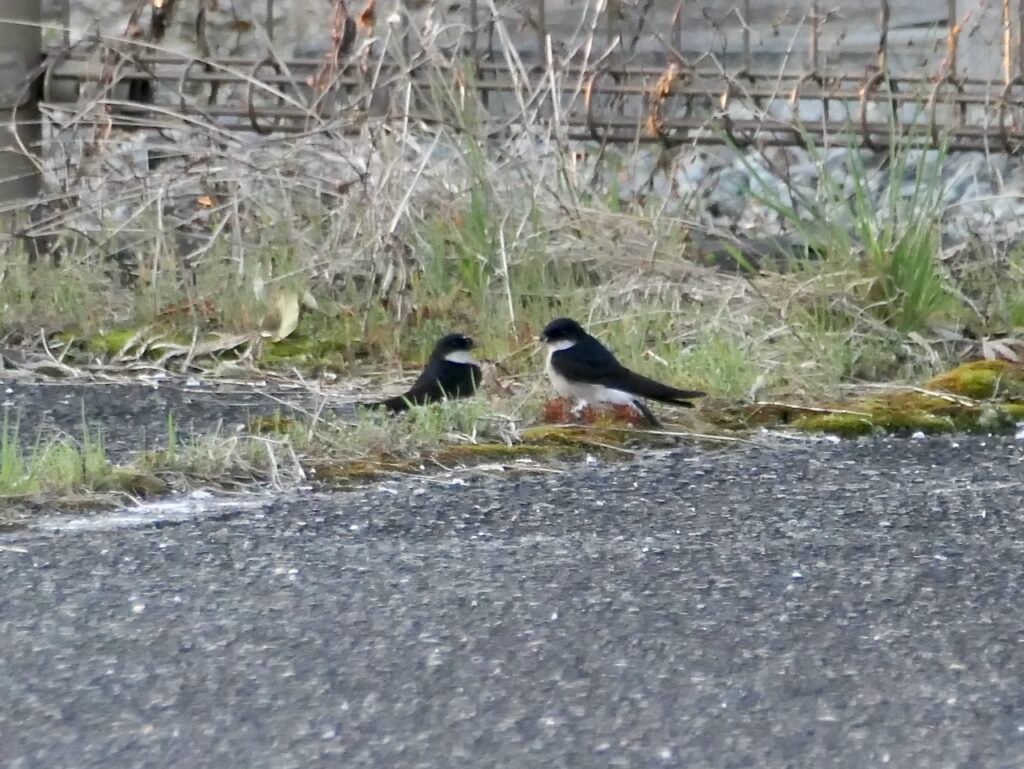
The next morning, however, I woke at 6:00 a.m. wide awake. Tessa was still snoozing so I’m sure you can guess what I did. On a map, I had noticed a small tributary of the Sai River about half a mile from the hotel. Plenty of time to sneak in a bit ‘o birding before breakfast. Nagano was so built up I had few expectations—and actually wasn’t even sure I could access the river itself. Even before I neared it, though, I was surprised by a large flock of Asian House-Martins flying over a large street. It didn’t take long to discover they were nesting under a pedestrian bridge and I paused for ten minutes to study and enjoy them.

Though I had glimpsed Asian House-Martins in Kanazawa, it was a real pleasure to visit them up-close and personal!

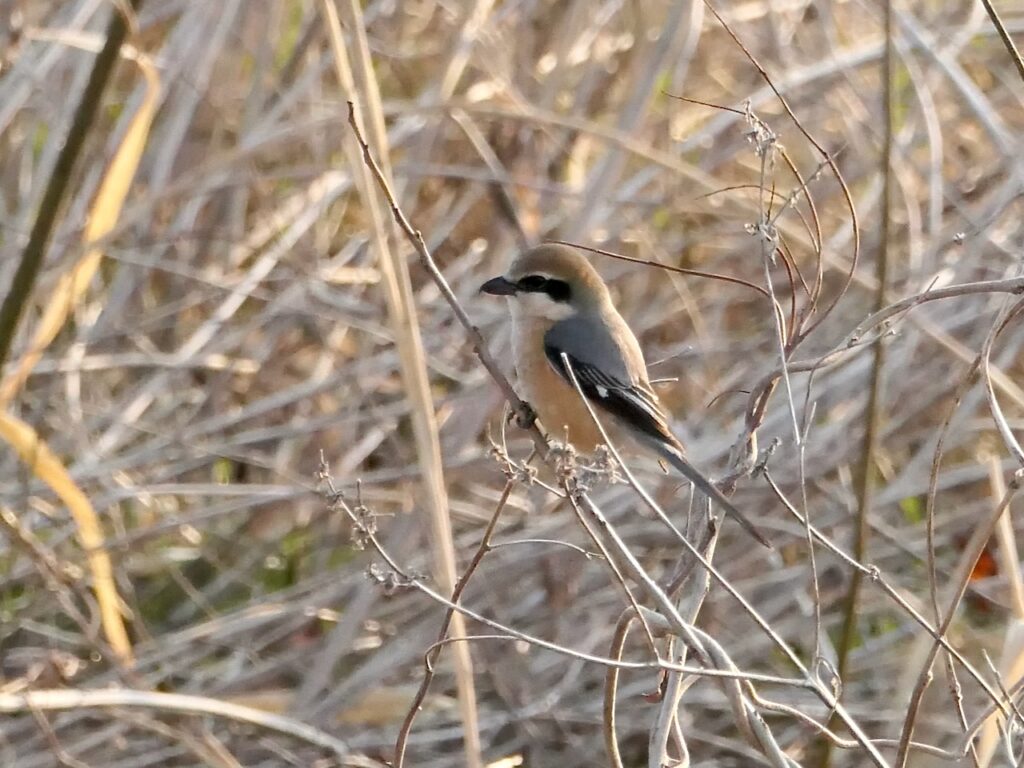
Several blocks later, I was delighted to reach the river and discover that nice footpaths ran along both sides of it. I saw only the usual suspects until I crossed a bridge to the other side. Suddenly, I glimpsed an unusual brown shape taking flight and landing on another nearby branch. “Oh my god!” I muttered out loud, rapidly quickening my pace while simultaneously turning on my camera. I took a quick photo and then confirmed it through my binoculars. It was a species I had badly wanted to see—but figured I’d exhausted my last opportunity: Bull-headed Shrike!

I was SO HAPPY to finally see a Bull-headed Shrike that I was grinning and talking to myself. I’m surprised the citizens of Nagano didn’t call the police with reports of a crazy foreigner wandering around.

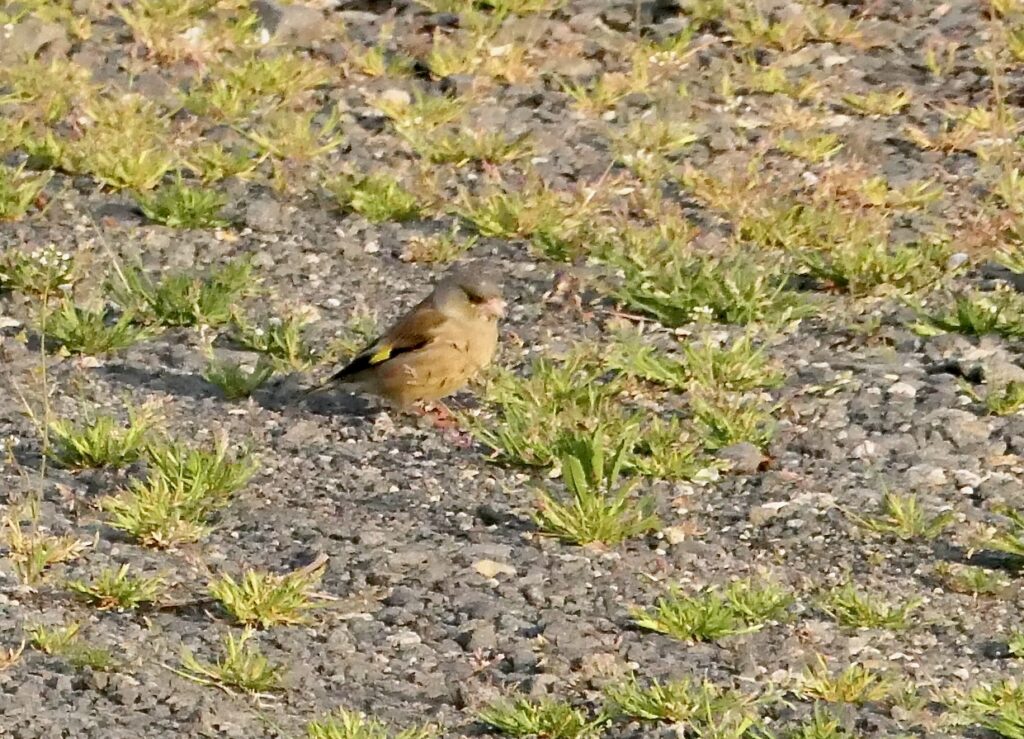
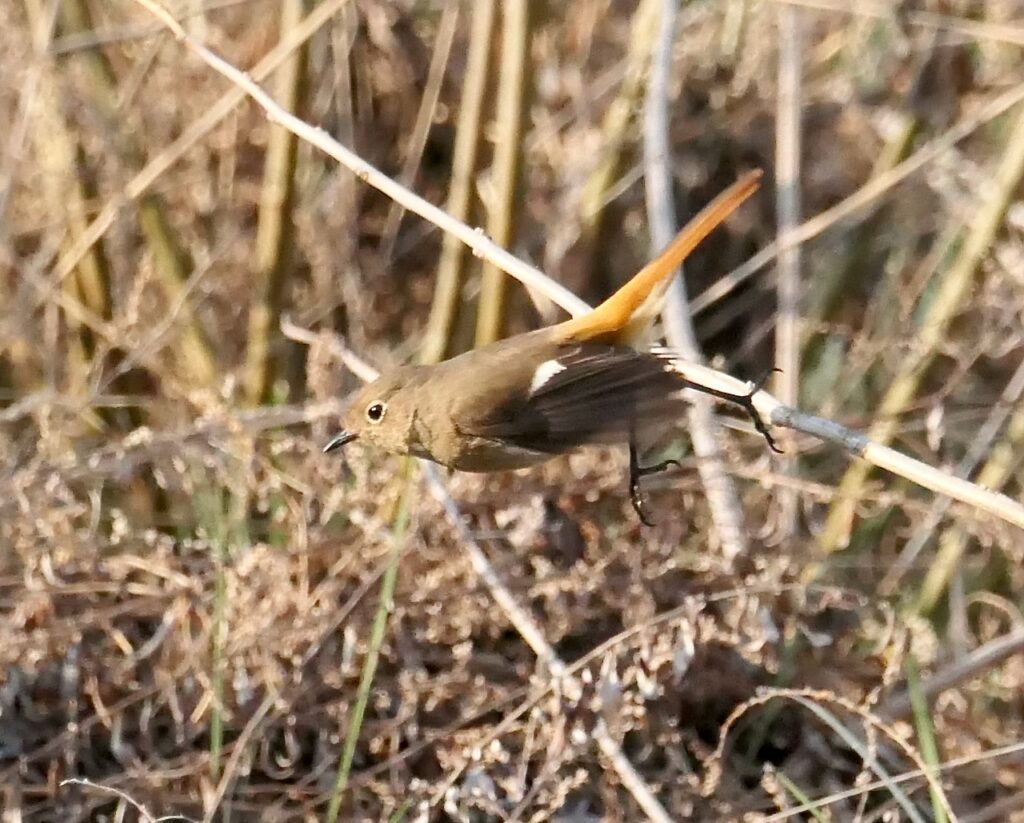
The shrike behaved like our shrikes back home, but with even less fear. I followed it as it worked its way upstream and am glad I did. I immediately spotted another Meadow Bunting in a bush up ahead, and several Eurasian Greenfinches feeding in someone’s front yard. Then, as the shrike approached one riverside clump of bushes, two Daurian Redstarts popped up to challenge it!

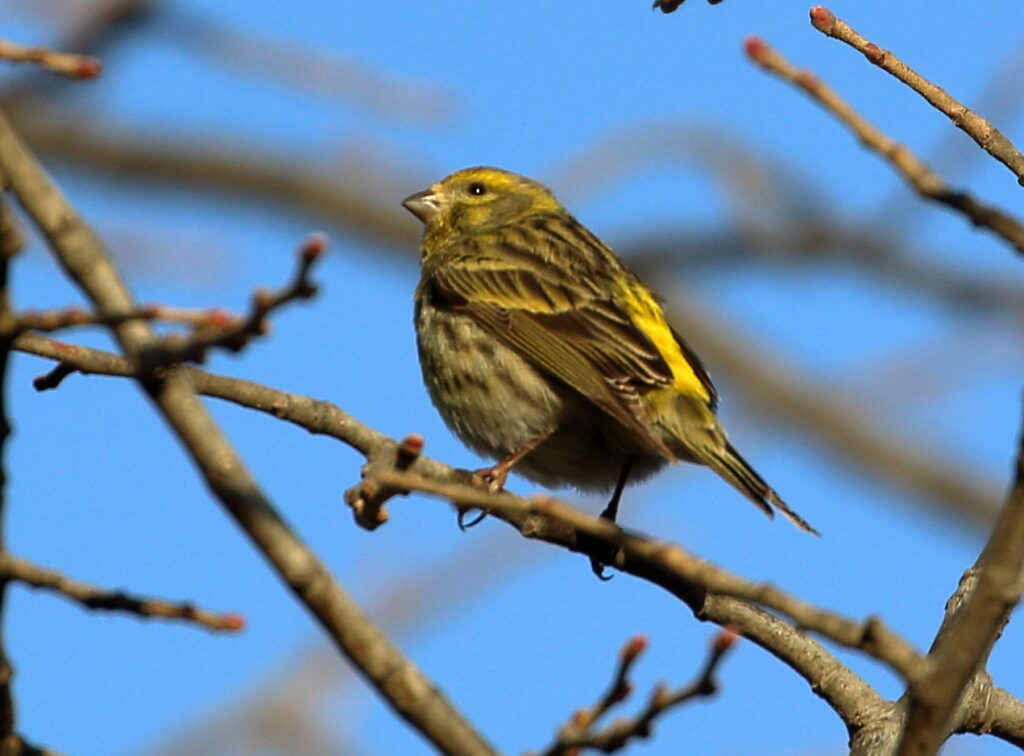
And I present . . . yet another lousy photo of a Eurasian Greenfinch!

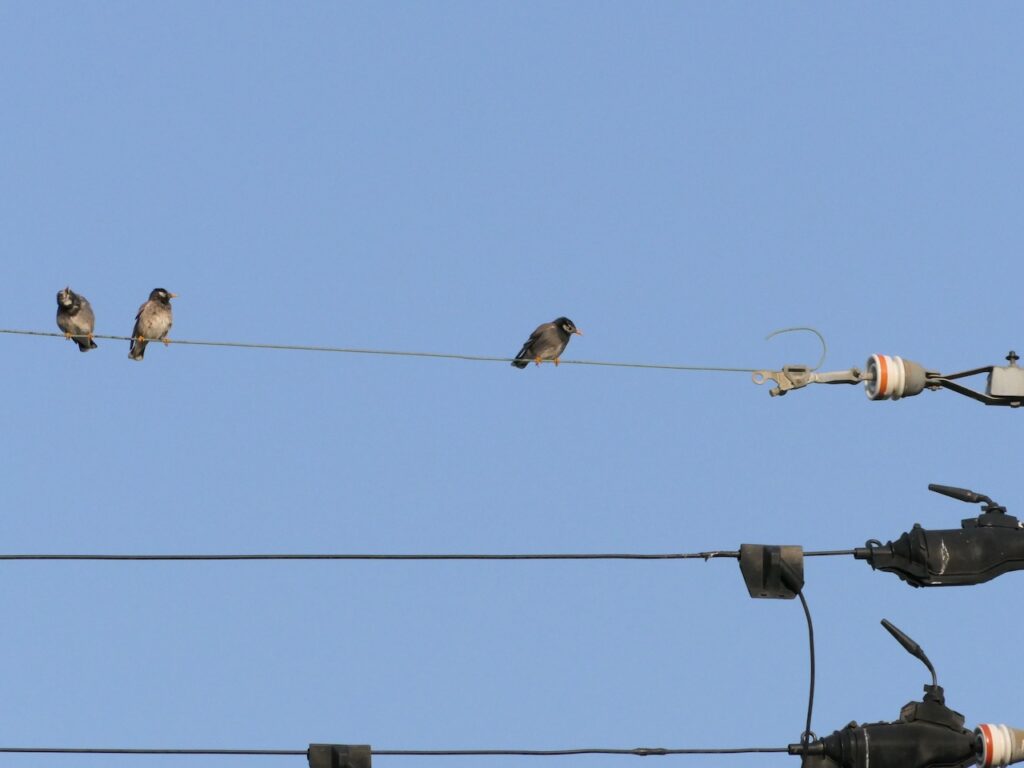
I was grinning broadly by this time, not believing my luck, but the session was far from over. As I made my way back downstream and across the river, I also saw White-cheeked Starlings, a Great Cormorant, Oriental Turtle-dove, a Dusky Thrush, and more.

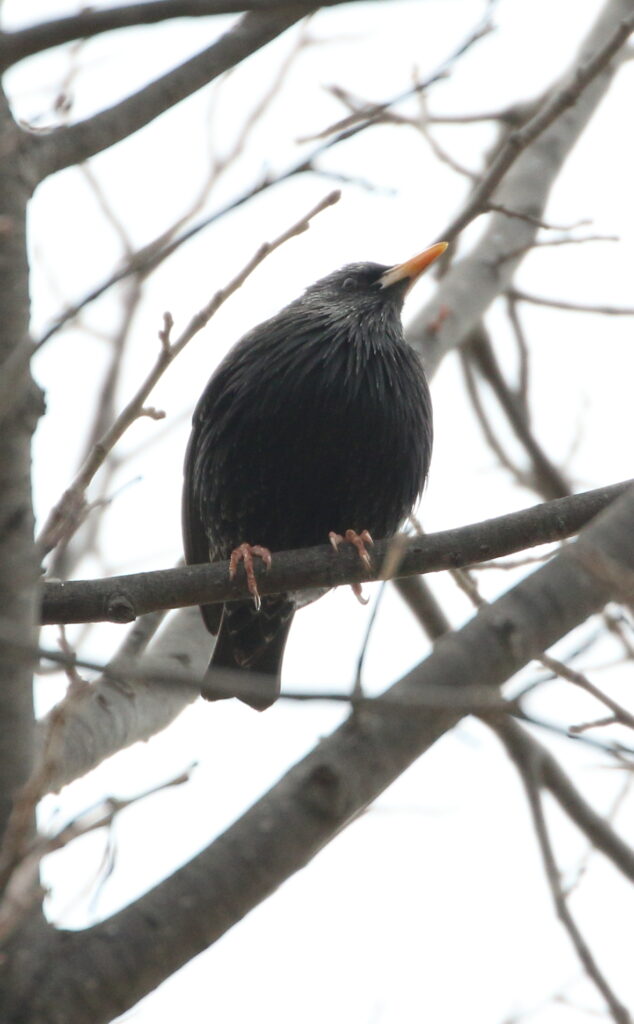
Despite seeing them almost everywhere, I never tired of seeing White-cheeked Starlings. If only I could say the same for our European Starlings back home!

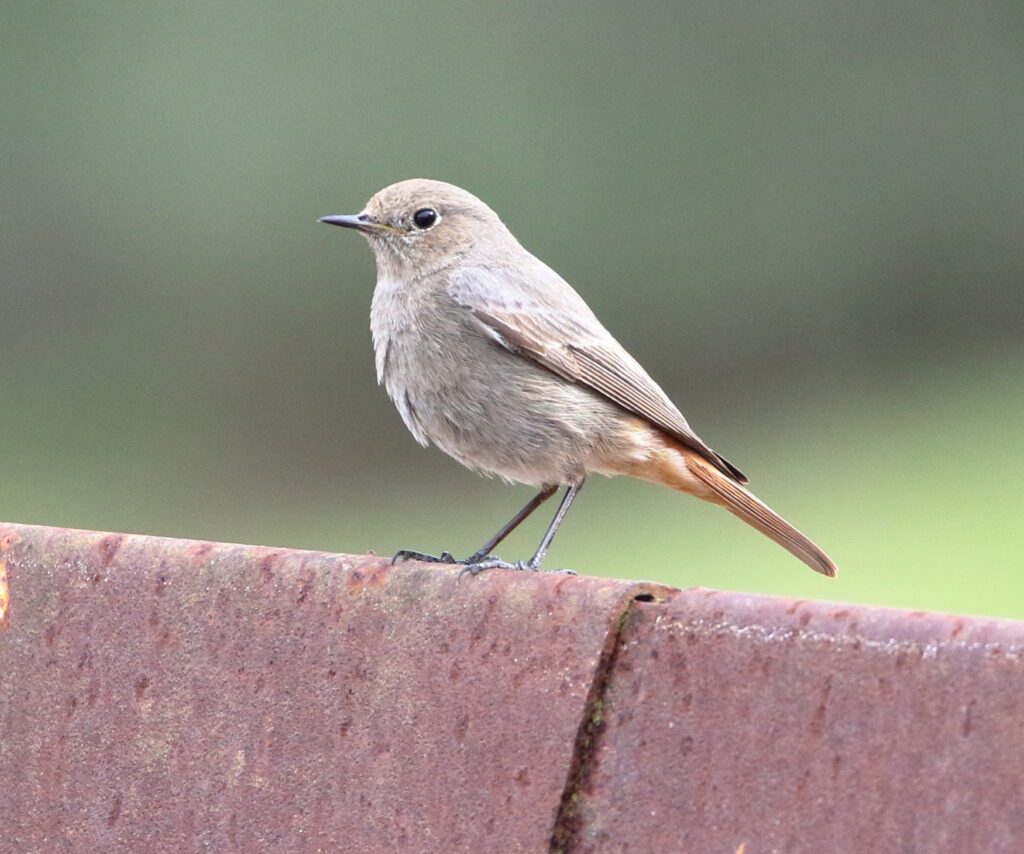
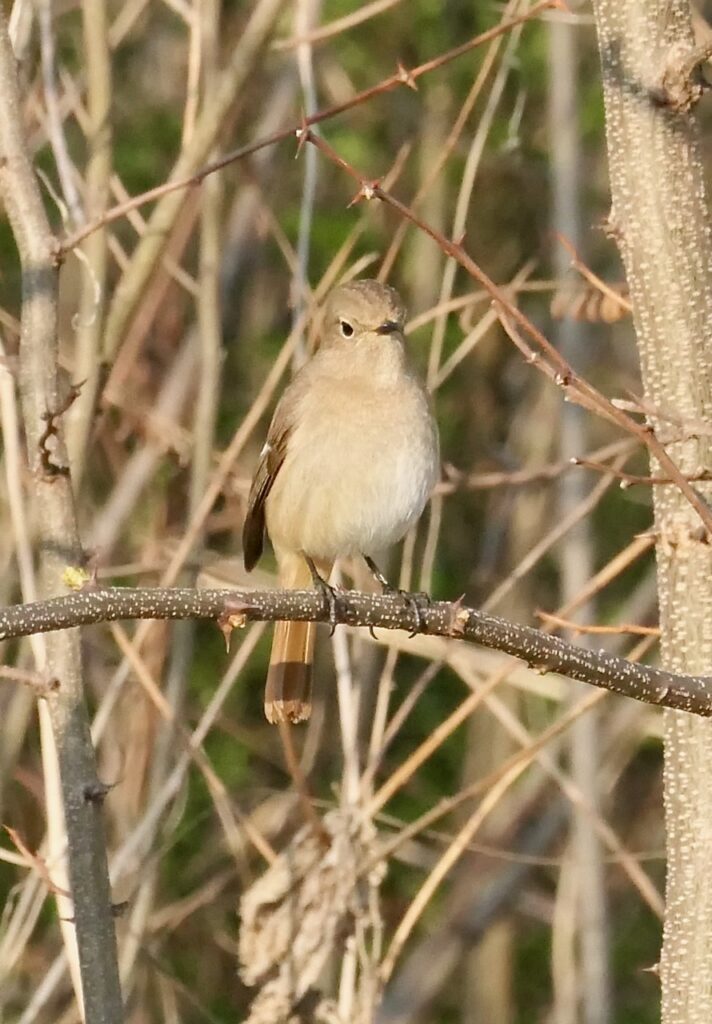
As I approached my exit point, I noticed movement in a thick patch of bushes. I quickly identified several Masked Buntings, but that wasn’t all. I’m pretty sure I saw a Japanese Bush Warbler. Then, to cap it off, a female Daurian Redstart gave me a terrific photo session (even if I didn’t have a terrific photo device), posing for many moments on various branches as the morning sun beautifully illuminated it. The whole experience once again proved that when in doubt, you should always take a look and that, really, you just never know.

Sneed’s eBird checklist of Nagano.

Birding Japan: Kyoto

Since we published them, our birding posts about Japan have been read in dozens of countries. If you are planning your own trip to Japan, you’re in luck! Sneed’s book, FIRST-TIME JAPAN: A STEP-BY-STEP GUIDE FOR THE INDEPENDENT TRAVELER, tells you everything you need to know about how to plan your trip to this remarkable, yet sometimes daunting, country. Order now by clicking here.

Welcome to Part 3 of Sneed’s recent Japan adventure. If you missed the first couple of Japan posts, start here. As always, we appreciate your interest, and please share these with anyone you think will enjoy them.

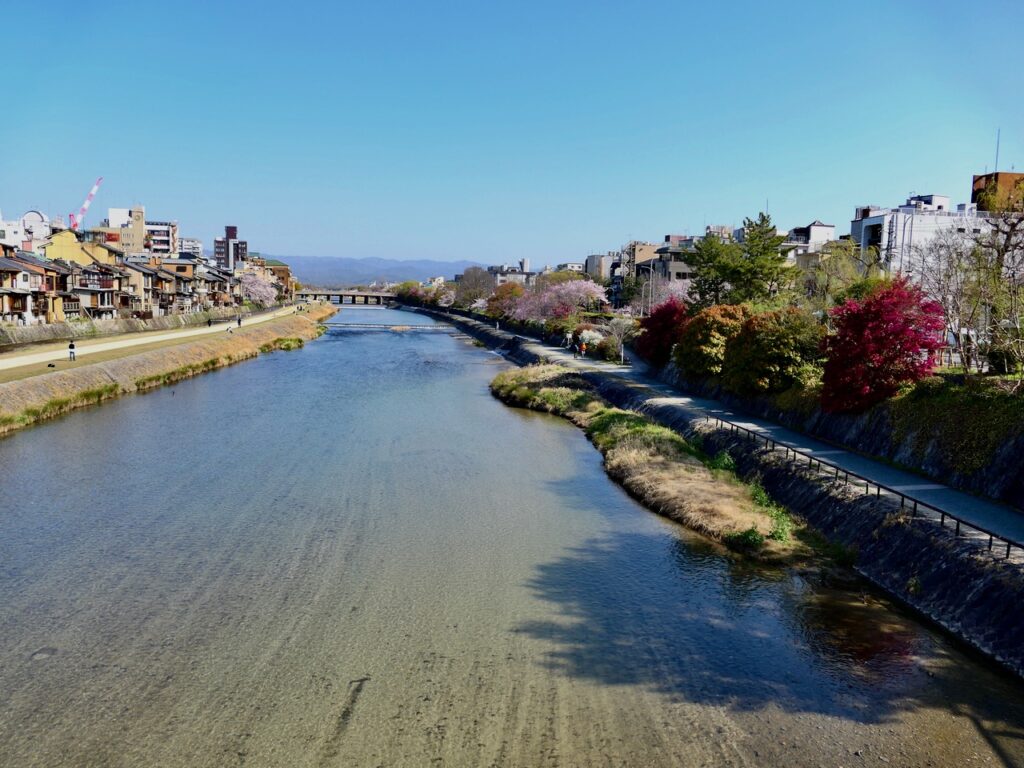
Our journey to Kyoto gave us one last chance to ride the Enoshima Electric Railway, the adorable little train Tessa and I both fell in love with during our long, rainy weekend in Kamakura. In fact, Japan’s train system is so well thought-out that we simply rode the EER to the end of the line in Fujisowa to catch the Tokaido train to Odawara. There, we boarded the shinkansen (bullet train) for the two-hour ride to Kyoto. Easy peasy. I have to say, however, that Kyoto Station was quite a bit more confusing than Tokyo or any of the other stations we’d visited, but fortunately I knew which subway to catch to our accommodation, a rather modern version of a traditional Japanese inn, or ryokan. As far as I can tell, there’s no perfect location to stay in Kyoto, but our place was only an 8-10 minute walk to two different subway stations. Even better, it was close to what turned out to be a wonderful birding spot, the Kamo River—a place that Tessa and I would return to several times.

Our first look at Kyoto’s Kamo River convinced us to return as often as possible. Kyoto’s birds felt the same way!

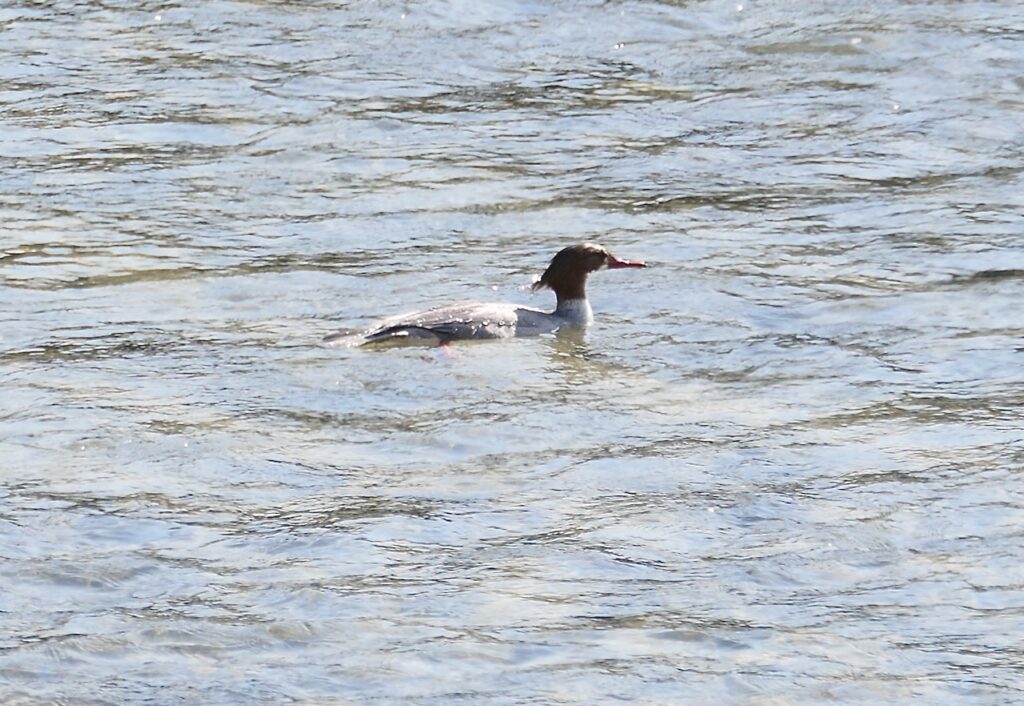
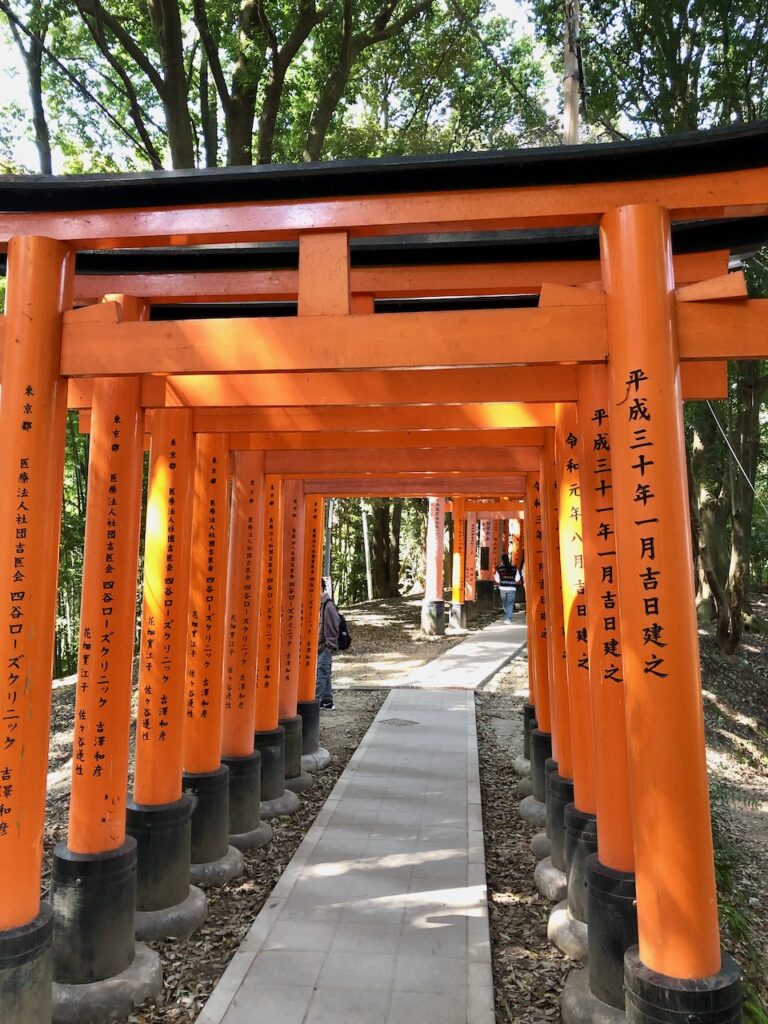
Our first full day in Kyoto, I planned for us to visit Fushimi Inari Taisha, a shrine famous for its hundreds (thousands?) of red “torii” gates straddling the paths leading up the mountain. Conveniently, to catch the train to the shrine, we got to walk along the Kamo River. It was a glorious day and many others were out enjoying the sunshine and blooming sakura trees. For my part, I also couldn’t help noticing a lot of birds enjoying the relatively unkempt river bed—including a real surprise, Common Merganser, a duck that we often see in our rivers in Montana!

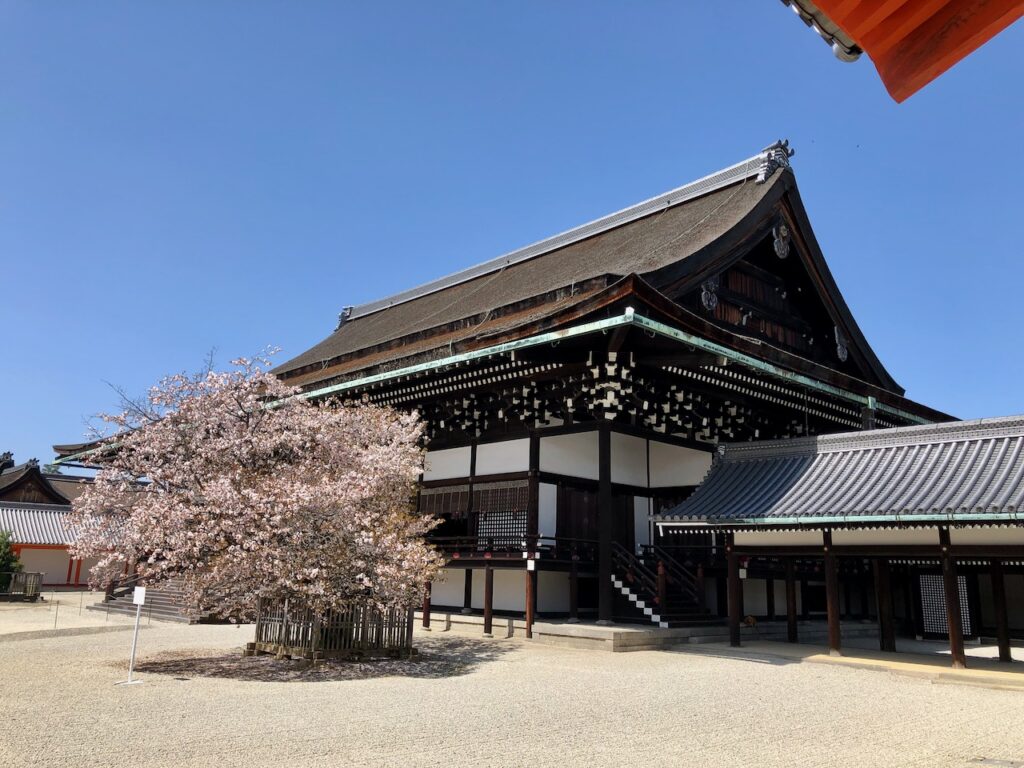
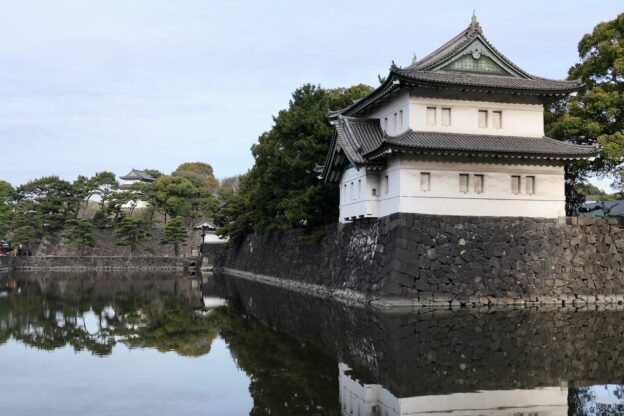
We finished Fushimi Inari Taisha early enough that we decided to go ahead and visit Kyoto’s Imperial Palace and the surrounding Kyoto Gyoen National Garden. The palace was impressively, well, palatial and I was hoping for some excellent birding in the gardens. The over-manicured park, however, once again limited its attractiveness to only the hardiest of species. I did run into a nice little mixed flock that contained a Warbling White-eye, Long-tailed Tit, and my lifer Japanese Bush Warbler, but have to say that I was disappointed overall. Nothing that a big bowl of steaming hot ramen at Ichiran Ramen didn’t cure!

The next morning, after hitting Kyoto Station to reserve shinkansen tickets for the upcoming legs of our trip, we rode a JR local train out to Arashiyama. Tessa had especially been wanting to visit a bamboo grove, and a large, famous one grew here. We also visited Kameyama Park, located at the mouth of the Katsura River gorge. The sakura were especially wonderful here and, well, the birds turned out to be pretty great, too! As we strolled the gorgeous grounds, I saw a Warbling White-eye and the complete triumvirate of tits: Japanese, Varied, and Long-tailed. Just saying the word “tit” provokes giggles but these birds are essentially the Old World version of chickadees. They look like chickadees. They behave like chickadees. Just as in the States, if you see a tit, chances are other interesting birds are lurking nearby, so I am always happy to spot one.

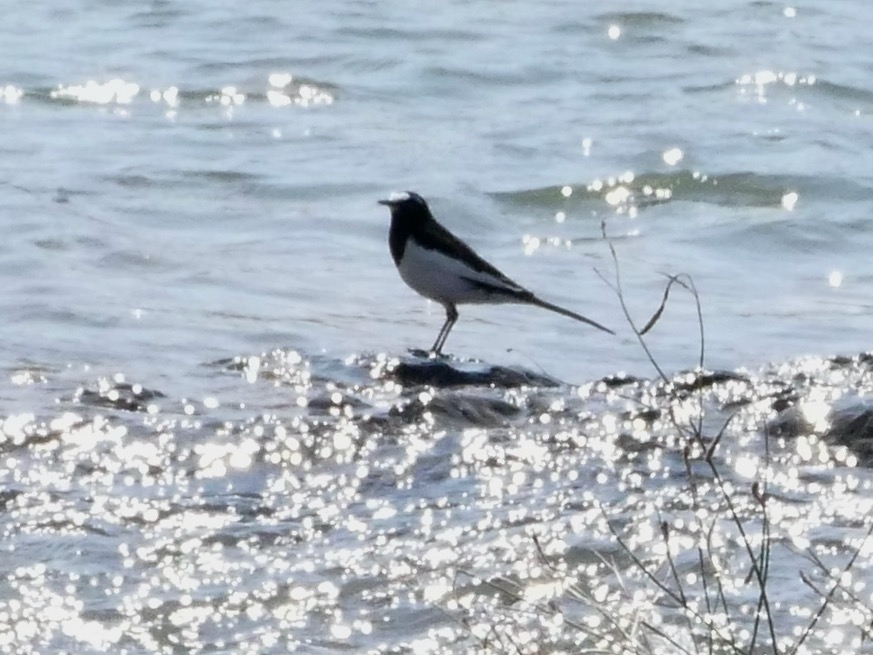
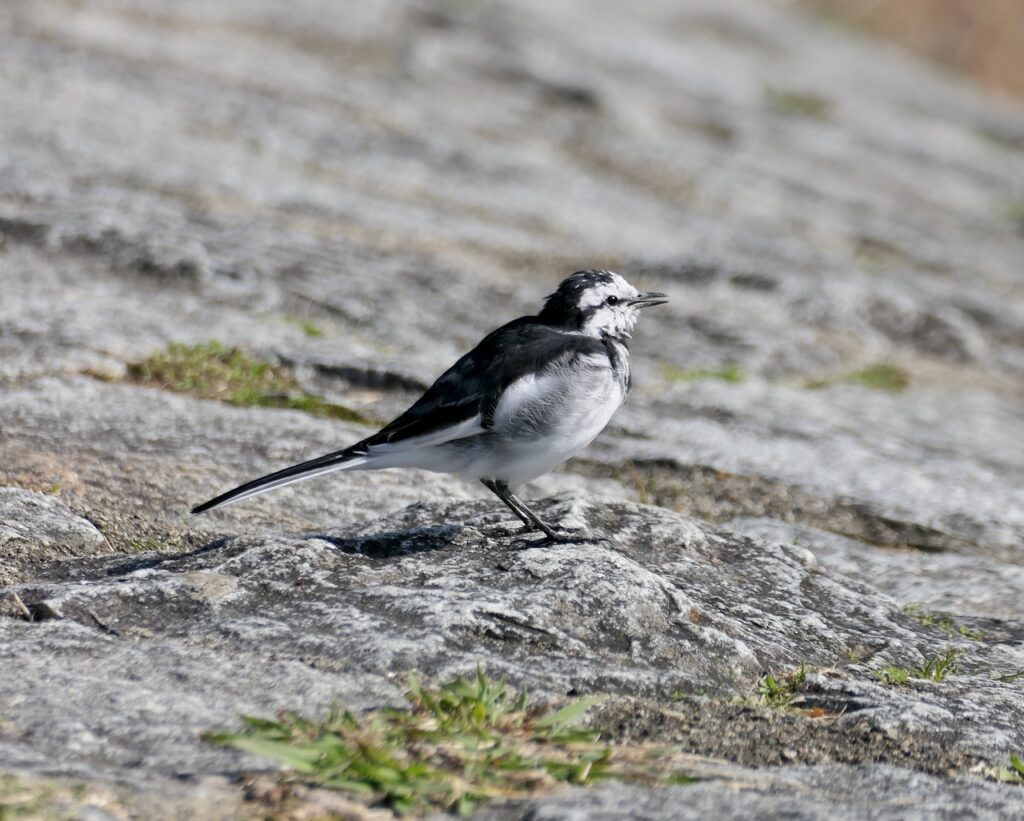
Following the trails down to the river, we encountered a nice collection of ducks and my first-ever Japanese Wagtail and House Swift! By this time, large crowds had gathered to enjoy the sunshine and sights, so after a quick bite at a local food stand, we high-tailed it back to our ryokan. Our birding in Kyoto was not quite finished, however. I managed two more sessions at Kamo River, the final one the evening before our departure. Tessa was chilling in our room after a busy day of seeing Nijo Castle and the Manga Museum, and doing some gift shopping  in Teramachi-dori, one of the expansive covered street malls that seem to be popular in Japan. I had some extra energy so decided on taking one last visit to the river.

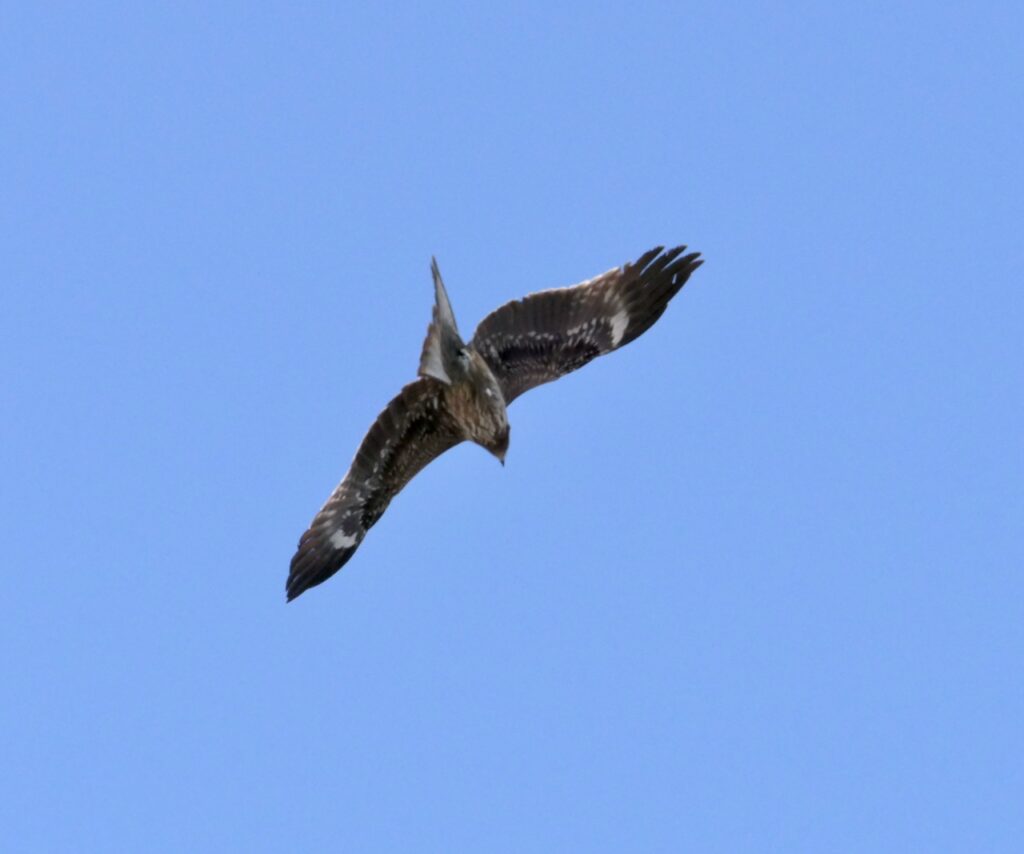
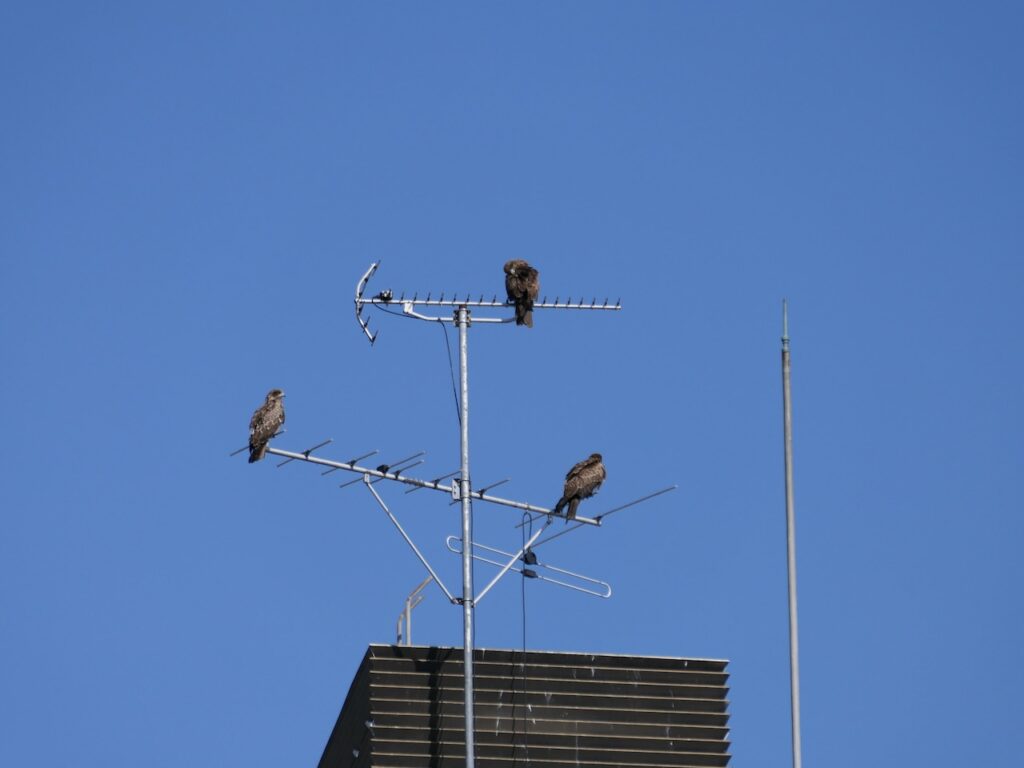
It was a lovely afternoon, and hundreds of Kyoto residents were out taking advantage of it. I walked downstream, enjoying the Black Kites flying overhead and Gray Herons, Great and Little Egrets, Great Cormorants, ducks, and Japanese and White Wagtails along the river. One thing I’d sorely missed on the trip were any kind of shorebirds, but suddenly I saw a suspicious bird standing on a rock across the river. From eBird quizzes I’d taken, I immediately guessed that my shorebird drought might be at an end and that this could be a Common Sandpiper. I was too far away to get a good look at the bill, though, and it seemed too short. That was good because it forced me to call up the Merlin app and dive deeper into the Common Sandpiper’s ID features. Two things stuck out: COSAs had a prominent white “spur” at the shoulder and they often bobbed their tails like wagtails. I again focused my binoculars. “Yep,” I said out loud. “That’s a Common Sandpiper!” Just a few minutes later I saw yet another bird sitting on a rock in the river—this one a Gray Wagtail, completing the “Wagtail Trilogy” for the trip. Neither the Common Sandpiper nor Gray Wagtail were lifers for me, but they brought my Japan bird list up to 47 species. More important, they were an awesome way to finish up our time in Kyoto.

More, much more, lay in store.

Sneed’s Kameyama Park eBird checklist.

Sneed’s final Kamo River eBird checklist.

Birding Japan: Tokyo, Part I

Since we published them, our birding posts about Japan have been read in more than a dozen countries. If you are planning your own trip to Japan, you’re in luck! Sneed’s new book, FIRST-TIME JAPAN: A STEP-BY-STEP GUIDE FOR THE INDEPENDENT TRAVELER, tells you everything you need to know about how to plan your trip to this remarkable, yet sometimes intimidating, country. Order now by clicking here.

Well, I warned you it would be a while before you heard from us again, but we hope you find the reasons acceptable. Braden has been chasing salamanders and frogs in Maine while I have spent the last three weeks with my daughter, Tessa, in Japan! We had dreamed of visiting the Land of the Rising Shopping Mall for many years, and the country and people delivered in every way. While birding was not the purpose of the trip, you might guess that I took advantage of every opportunity to get to know Japan’s avian wildlife—experiences I’d like to share in the next few posts, starting with the focal point of Japanese civilization, Tokyo.

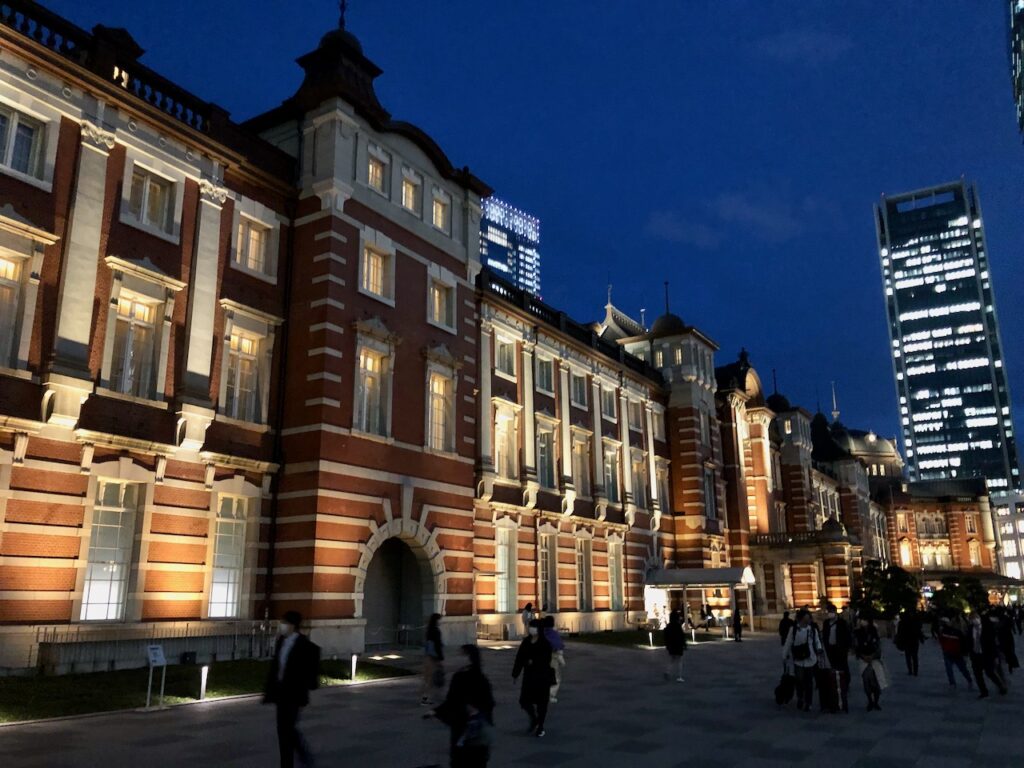
While disguised as a train station, Tokyo Station is actually a small city in itself—and the transportation hub for Birding Central HQ during our stay.

While we planned to visit several Japanese locations, Tessa and I agreed that we wanted to spend the most time in Tokyo. Accordingly, we reserved five days there on the front end of the trip and four days to finish up our journey. Wrapping our heads around such an incredibly large and diverse city proved a challenge, but after much research I booked our first hotel near Tokyo Station. Mind you, this is no ordinary train station. Trains for hundreds of destinations come in and out of the place and the station itself is a vast, entertaining commercial complex featuring hundreds of shops and restaurants, many lined along extensive underground “streets”. The area also happened to make a pretty good headquarters to begin birding.

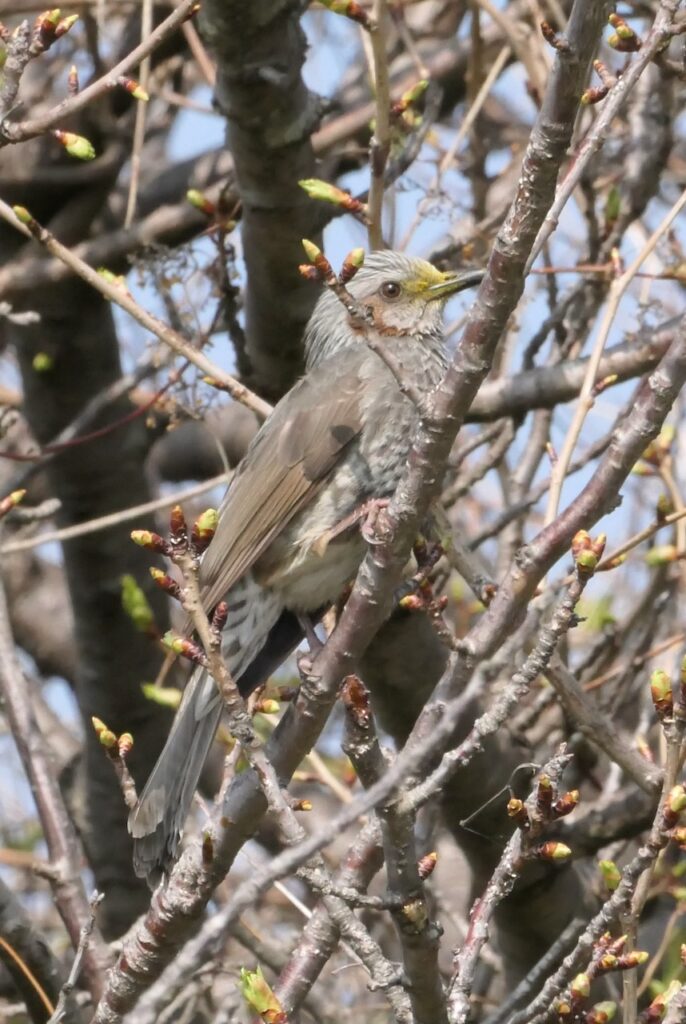
On our first day there, we worked in a visit to Hamarikyu Gardens in between Tsukiji Outer Market (former home of the famous tuna auctions) and Tokyo Tower. While Tessa enjoyed a park bench in the sun, I quickly snapped up six life birds including Eastern Spot-billed Duck, Common Pochard, Tufted Duck, Oriental Goldfinch, White-cheeked Starling, and Brown-eared Bulbul. I was especially taken with the bulbul—only to find that apparently it is the most commonly observed bird in Japan! Still, I didn’t let that dampen my enthusiasm for these noisy, beautiful birds.

My first day of Japan birding, I was so excited to see my first Brown-eared Bulbul, a bird that I’d been studying assiduously. Little did I know that it’s probably the most common bird in Japan!

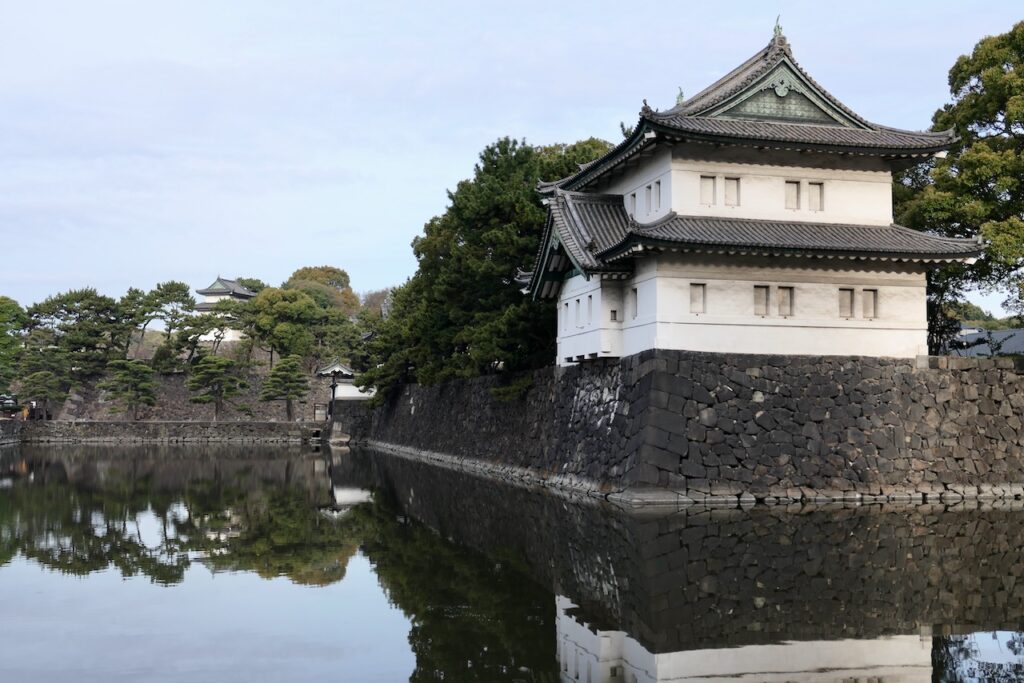
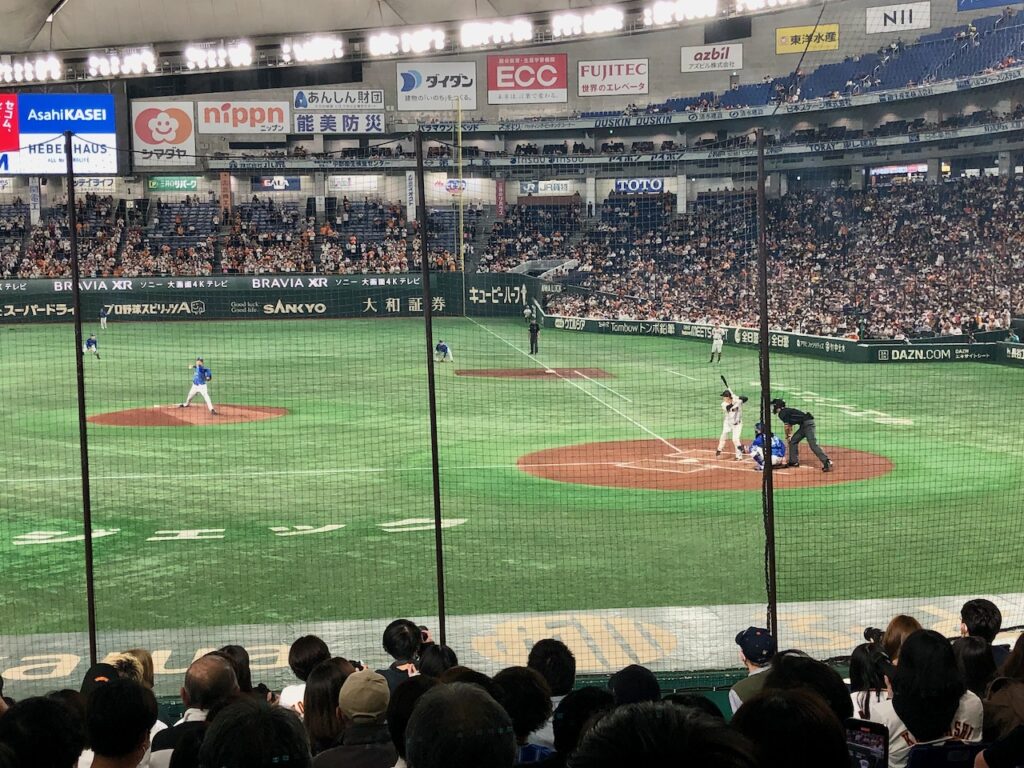
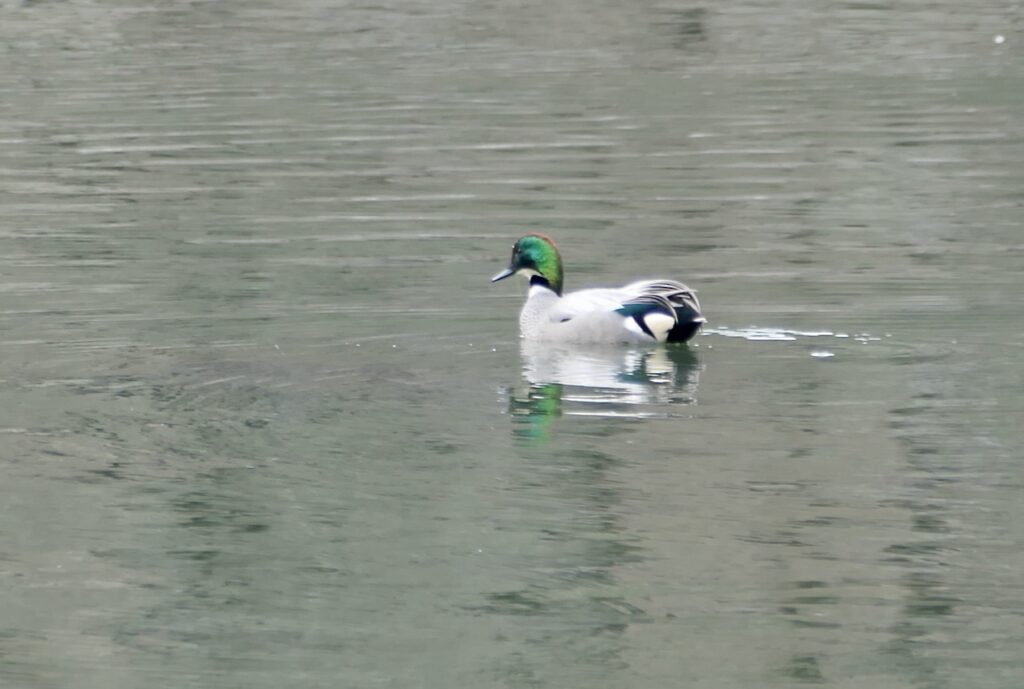
Because of the 15-hour time difference with Montana, I woke at 3 a.m. the next day, and as soon as it got light I let Tessa sleep in and walked over to the Imperial Palace a few blocks away. The grounds were still closed, but I began exploring the moat around the walls and some potentially birdy parks across the street. Right away, I saw a Little Grebe, and then the discoveries grew even more exciting. I saw a small, greenish bird flitting around some bushes—another life bird, Warbling White-eye! Continuing my prowl, I discovered two more lifers—Falcated Duck and Dusky Thrush, two species I had studied intensively before the trip. They put me in a great mood before we went to watch the Yokohama BayStars defeat the Yomiuri Giants 1-0 in the Tokyo Dome that afternoon!

I should pause at this point and say that besides wanting to see Japan’s birds, I had another ulterior motive for birding. When we left Montana, my life list stood at 968 species—perilously close to 1,000. Maybe, just maybe, I thought, I can crack 1,000 while in Japan. In fact, looking over what I might see, I felt fairly confident about meeting that goal—something that spurred me to take advantage of every opportunity.

Falcated Ducks were a new species I studied before heading to Japan. After seeing them on Day 2, I had no idea this would be the only time I’d see them on the entire trip.

On the third full day of our adventure, Tessa and I planned to head over to Tokyo Disney to try to score tickets. We did get some and visited the Disney Sea park—but that’s another story. More important, we stopped at perhaps Tokyo’s best birding location, Kasai Rinkai Park. As we got off the train, the reason this park is birdier than others seemed evident: it is one of the few Tokyo locations with remotely natural habitat. Tessa got some of her now-favorite milk tea from a vending machine and settled in to draw on a bench while I hurried off to see what might be living there.

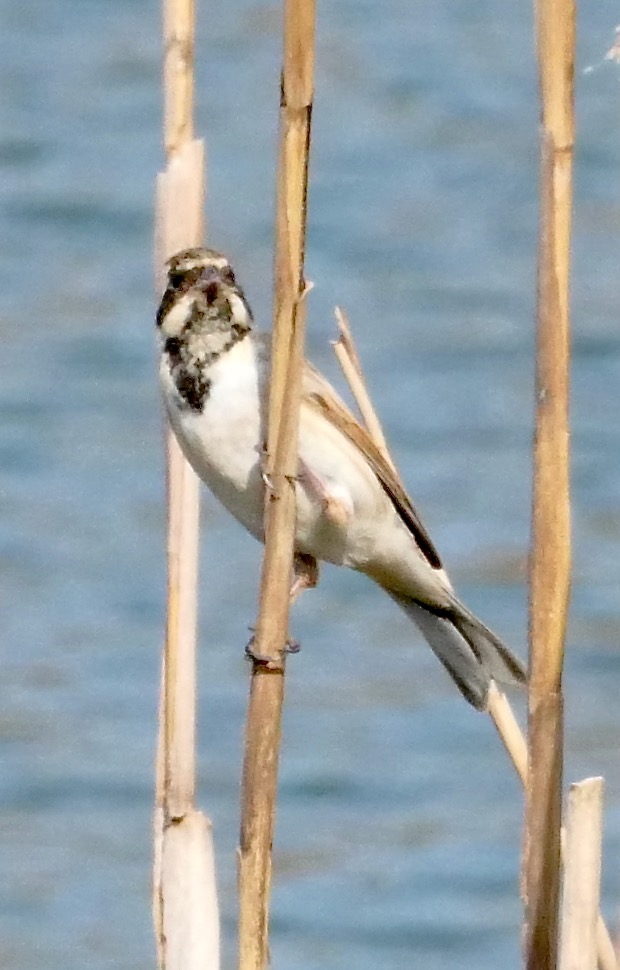
I had not yet met any Japanese birders, but a couple of hundred meters down the trail, a woman with binoculars and a camera saw me looking for birds and silently pointed into reeds next to a pond. “Arigato gozaimasu,” I whispered and crept toward where she was pointing. Sure enough, a half a dozen small brown birds were gleaning seeds and once again, my study paid off. They were Reed Buntings—birds I had hoped, but not expected, to see!

I left my good camera at home for this trip, opting for a lighter “travel camera” that unfortunately didn’t produce the sharp bird images I craved, but I was still delighted to get a photo of this male Reed Bunting who is obviously shouting something important at me.

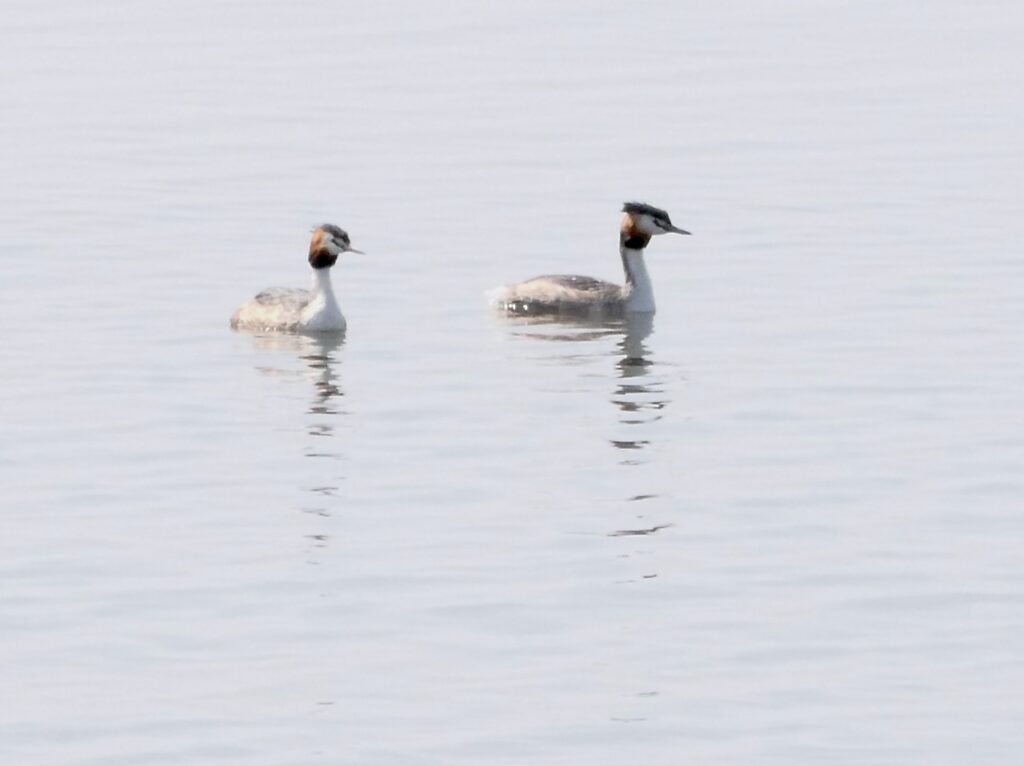
Continuing down the trails I made more discoveries including Japanese Tits and Masked Buntings, both also lifers! Then, walking along the water, I spotted two suspicious shapes about one hundred meters offshore. As I grew closer, the shapes resolved into what has to be one of Earth’s most gorgeous, elegant water birds, Great Crested Grebes!

Despite this lousy photo, you can probably get an idea of why I was so excited to see my first Great Crested Grebes!

As I went back to meet Tessa, I was happy with what I had found, but I also knew I had missed some important species here that I would probably not get a second shot at. These included Azure-winged Magpie and any kinds of shorebirds. No matter. I felt grateful for this look at Japanese nature and optimistic for the days to come!

Sneed’s Kasai Rinkai Park eBird checklist.

An Owl a Day . . .

Our recent post on Montana’s famous Northern Hawk Owl generated an astonishing two million views . . . or was that, er, two hundred? Either way, that’s pretty good for us, but it did put us in a quandary over how to follow up. Our answer? Look for more owls!

But first, I promised you some other winter birds. As revealed in past posts, Braden and I have discovered that one of the best way to make sure we see certain winter birds is to go to Discovery—ski area, that is. This year, on the way back from seeing the Northern Hawk Owl, we detoured through Anaconda to see what we could find. Fate seemed to shine on us as we spotted a Golden Eagle just outside of Anaconda, but when we pulled into the crowded Discovery parking lot, we didn’t see a single bird. “Hm, that’s strange,” Braden murmured. “And we forgot to bring bird seed with us,” I added.

Though more common than some other winter birds, getting to see Steller’s Jays up close made us realize anew how spectacular these birds are.

Prepared for disappointment, we climbed out of the minivan, cameras and binoculars slung around our shoulders, and began trekking around the parking lot. After fifty yards, Braden stopped and said, “Hear that? Clark’s Nutcracker.” We followed the harsh calls toward the back of Discovery’s first aid hut, and saw a promising red flash of something flying. Drawing closer, we hit a veritable bonanza of winter birds cashing in on a generous scattering of bird seed behind the hut. Mountain Chickadees flew out to greet us first, but we soon encountered almost every other bird we could imagine: Steller’s Jays, Clark’s Nutcrackers, Evening Grosbeaks, and our favorites, Pine Grosbeaks. Each had a different strategy for attacking the food supply and we stood mesmerized for twenty minutes watching them.

This male Pine Grosbeak may be one of my favorite bird photos I’ve ever taken. Gotta love the pose, which shows off the bird’s “Ooh” and “Ah” factors to the max. Good thing I got it, too, as the bird signed with a major talent agency minutes afterward.

“The only thing we haven’t seen,” I said, “are Canada Jays.” As we began walking back toward the car, however, Braden spotted a silhouette on top of a distant tree. He raised his binoculars for a moment, then turned to me. “Guess what it is,” he said. “Canada Jay?” I hazarded. “Yeah.” We laughed and moments later had a great photo shoot with two CAJAs that ventured closer. Leaving Discovery, we drove some side roads looking for Great Gray Owls, and the bird Braden most wanted to see before he returned to Maine for spring semester: Northern Pygmy-owl. Unfortunately, this winter the Owl Gods have decreed a limit of one owl per day for us and we saw no other Strigiformes (the bird order of owls) for the day.

Though not exactly rare, sightings of Canada Jays in Montana are unpredictable, so getting good looks at these “ski area” birds is especially appreciated. These birds apparently survive by stashing perishable food under the loose bark of trees for later retrieval. Climate change may be eroding the conditions the birds need to survive along the southern parts of their range.

Still, we both really wanted to see a NPOW before Braden left, so a couple days later we headed out to Maclay Flat, where we’d seen our very first NPOW in 2016. They weren’t reported too frequently, but they were being seen, and as soon as we got out of the car, we heard the distinctive periodic advertising call of a Northern Pygmy-owl. We followed the sound toward the river, and then crunched through snow down a side trail—only to discover a photographer set up with a very long camera lens. He silently pointed up into a tree and we worked around until we could see it—a small, fuzzy blob about thirty feet above us.

While owls aren’t guaranteed, Maclay Flat is definitely one the best places in Montana to see owls. We were glad this Northern Pygmy-owl came through for us on Braden’s last birding expedition before returning to college.

Braden and I grinned and gave each other a quiet Hi-Five. After taking some photos, we settled in to watch it. The photographer said he’d heard at least three NPOWs calling back and forth—which seemed odd in broad daylight, and seemingly well before breeding season. Biologists I’ve talked to, though, emphasize how territorial these birds are, so perhaps the vocalizations help maintain their territories all year long. Whatever was going on, we—like most people—can’t get enough of owls and once again felt privileged to enjoy them as part of our world. It helped soften the blow of missing Braden when I took him to the airport a couple mornings later. Just not enough.

Golf and Birding

Welcome to our new subscribers! We appreciate your interest in our adventures and experiences, and hope you feel free to share this post with others. If you’d like to support FatherSonBirding, feel free to order some of Sneed’s books from online stores or, better yet, by through your local independent bookstore. Thanks, and have a great weekend! Next week: more of Braden’s High Sierra adventures!

Did you ever stop to think that the words “golf” and “bird” both have the same number of letters in them? No? Good. It’s a stupid lead to a blog. Plus, golf is a sensitive subject for me. In my mid-thirties, I began playing with friends and found I quite enjoyed it. Sort of. In between the tears and swearing and bouts of hopelessness and low self-esteem. After my golf swing betrayed me once and for all, in fact, I tossed my clubs into the basement to collect dust for the better part of a decade. Foolishness springs eternal, however, and a few years ago I began a ritual of golfing once a year with a buddy—only to discover an aspect of golf I had never before recognized: Birds.

Many golf courses’ locations adjacent to wetlands and other natural habitats give them a wide range of opportunity for the golfing birder!

When I golfed in earlier years, Braden and I hadn’t yet become birders. Imagine my surprise, then, when I got back onto the links to discover that birds abounded—at least at Linda Vista Golf Course, my favorite course in the area (and one that happens to have a great cafe). I realized, in fact, that this course could actually be one of the best birding spots in Missoula. The problem? It is challenging to golf and record birds at the same time, and I have to thread a fine line so that my buddy doesn’t brain me with a 4-iron while I’m trying to figure out which kinds of swallows are circling around us. This dilemma, however, gave me an idea—one that I finally carried out last week: to get permission to bird the course sans clubs one morning before the golfers showed up.

Even with the distractions of actually playing a round of golf, I had managed to record 25 species of birds a couple of days earlier. These had included surprises such as Cinnamon Teal and Red-naped Sapsucker. I wonder what I’ll find with more time to study my surroundings? I asked myself as I again headed out two days later.

Almost immediately, it became evident that there were greater numbers of birds than I had noticed before. The Yellow Warblers were particularly insane with a new one spouting off every twenty or thirty yards—about the distance of a short pitching wedge. This made sense because part of what made this course such a great birding spot is that it was shoe-horned between river and wetlands on two sides and farm/pasture on another. Along with the Yellow Warblers I noted an abundance of Red-winged Blackbirds and Gray Catbirds—but was also surprised by an absence of Common Yellowthroats and dearth of Song Sparrows. Hm . . . maybe they were just quieting down for the season?

Spotted Sandpipers are always a welcome sight—though I’m not sure the plastic sheeting around this pond made it a great choice for this bird.

Continuing around to the third hole, I came across several open ponds where I was pleased to see at least seven Wood Ducks, Killdeer, a Spotted Sandpiper, and a pair of Ring-necked Ducks, an unlikely find for the time of year. One of the delights of birding a place that doesn’t get much attention is the frequency of red “unreported” dots that appear on the eBird checklist. The Killdeer were unreported and while I was logging species on eBird, another unreported species, Double-crested Cormorant, flew by. I devoted a good ten minutes to figuring out swallows and quickly noted Tree and Northern Rough-winged. As my binoculars pin-balled back and forth, however, I made another great discovery: Bank Swallows! Braden and I love finding these because they always seem to pop up when we least expect it, and this morning they followed tradition!

Double-crested Cormorants were one of several species that earned me a coveted red “Unreported” dot on eBird!

The rest of my birding round yielded nothing that will upend the scientific community, but proved mightily enjoyable nonetheless. While talking to the lone golfer out this early in the day, I spotted a gorgeous male Western Tanager. A Bullock’s Oriole also flew by. Over on the pasture side of the course, Eastern Kingbirds abounded and Cliff Swallows replaced the Bank Swallows zooming around me. I finished the day with 33 species—not dramatically more than I had found while actually golfing, but I had savored every tee, fairway, and green.

One of the fun things about my round of birding was the number of juveniles about—including this young Eastern Kingbird waiting to be fed by a nearby parent.

Speaking of golfing, I did notice an odd phenomenon while doing the round with my buddy two days earlier. I actually played better than I had in recent memory. It may have been that I had forgotten my bad habits, but I think that the birds actually helped. One of my problems with golf is that I overthink everything. Instead of just hitting the ball, I am telling myself Remember to tuck in your hip as you draw back or Keep that left foot planted and your elbow straight. With half of my mind on birds, I didn’t have time to do that—and hit some of my best shots in years. The lesson? There isn’t one. Just get out there and keep birding, wherever you happen to be.

Note: if you would like to bird your local course, be sure to ask permission—and it obviously wouldn’t hurt if you already golf that course yourself. With the manager, discuss the best time to go out and stay polite even if she/he/they says no. After all, golf courses generally are money-making ventures and they have real customers to take care of. But speaking of that, I can’t help wondering if any particularly birdy courses have considered charging a modest fee to people who would like to bird them? Especially for courses that adopt green practices such as using less water, pesticides, and fertilizers, it might be a great way to earn a bit of extra income while promoting sustainability. Just a thought.