If you’d like to see us continue our posts, PLEASE SUBSCRIBE by filling out the box down and to the right. We promise we will not share or give away your information to ANYONE—though you can always feel free to share our posts with others who might enjoy them!
Do you remember listening to American Top 40 as a kid? Sure you do! To celebrate our 100th post, we decided to count down FSB’s All-Time Most Popular Posts—with a video!
Yes, believe it or not, this is FatherSonBirding’s 100th post! Since we seem to be evolving toward a video world, Braden and I agreed that a video post would be a fun way to celebrate our last four years of birding and blogging. Just don’t get used to it! Videos take a lot more effort than regular blogging and, frankly, making videos eats into our birding time!
A few notes about the Top 5. They may not be technically correct since for some of our early posts, we may not have been gathering statistics on views. Also, we had not yet switched to a Payola scheme by which people pay us to make sure that certain posts are more popular. Just kidding! About the Payola, that is. I’ll always be curious just how many views our first post, A Quest for Snowy Owls (published March 13, 2018) has really received!
Also, below are some quick links to the posts mentioned in this blog. They are NOT IN ORDER of popularity so there’s no opportunity for cheating here! You’ll just have to watch the video to find out WHAT IS NUMBER ONE! Also, I have misspelled “Maclay Flat” as “McClay Flats” and other permutations. You’ll just have to forgive me!
Thank you for following our birding adventures. We appreciate you and hope this winter brings you plenty of birding adventures of your own!
Links to Blogs mentioned in the video (not in order of popularity):
Enjoy these posts? Please share with others and subscribe by filling out the boxes down in the right-hand sidebar.
In our last post, I gave the background story of my newest book, Waiting for a Warbler. The irony is that even as I posted it, Braden and I, like many of you, were impatiently waiting for warblers and other spring migrants to show up—so much so that we jumped the gun and leaped into our intrepid minivan for a 1,000-mile road trip. The trip’s main impetus was to hear Boreal Owls after dusk at Lost Trail Pass on the Montana/Idaho border, and things started well as we picked up an uncommon Eurasian Wigeon near Lee Metcalf NWR on the way down. Alas, despite spending two hours hitting the ski area parking lot and various locations along highway 43, we heard not a single bird—this, despite our friend Nick hearing FIVE Boreal Owls several years ago. Disappointed, but not shocked, we proceeded to Wisdom to spend the night at the comfortable Pioneer Mountain Lodge.
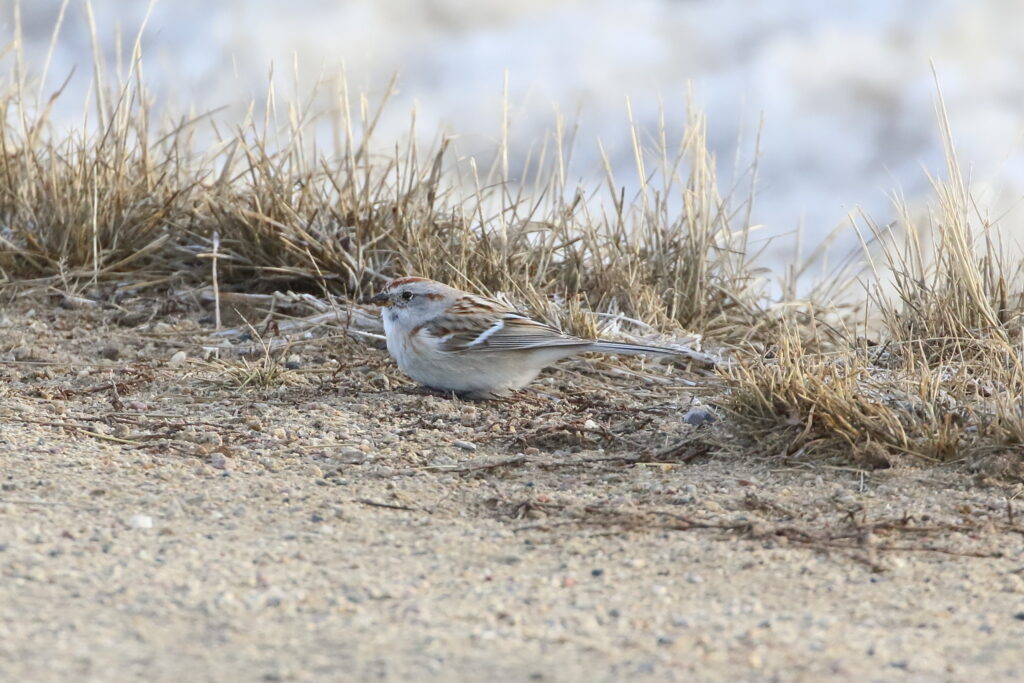
Totally unexpected, this was perhaps our closest look ever at one of our favorite winter birds, American Tree Sparrows, right alongside the road in Wisdom, MT.
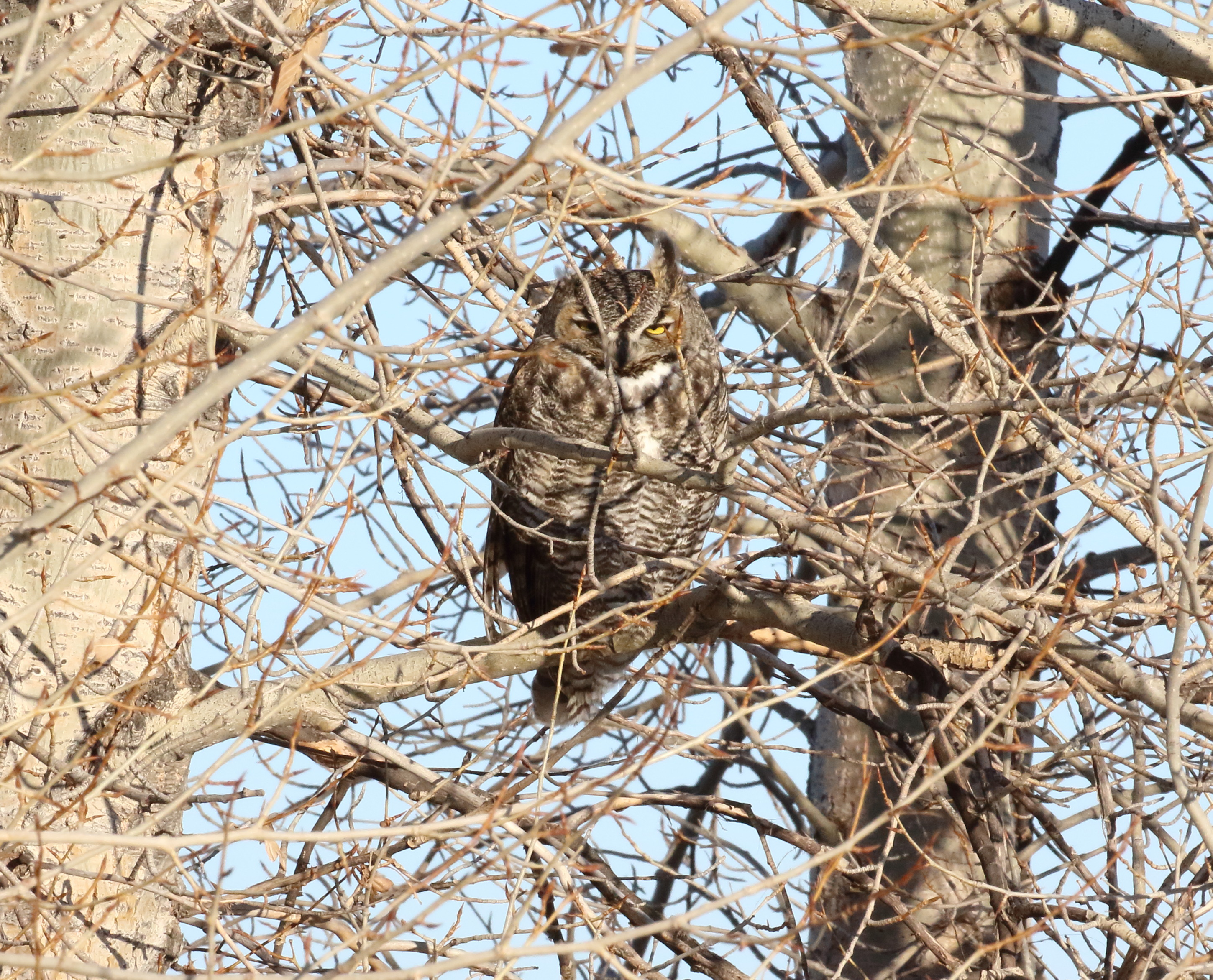
Before heading south the next morning, we decided to do a quick tour of Wisdom and were fortunate to spot American Tree Sparrows and a Northern Shrike. Along the highway, our luck continued with great raptor looks, including a ginormous Great Horned Owl sitting on a mile marker next to the road! At the ghost town of Bannack, however, we struck out on Sagebrush Sparrows and Sage Thrashers (still too early) and, after “dipping” on Chukars in Dillon as well, decided to head to Idaho for our first interstate birding in months.
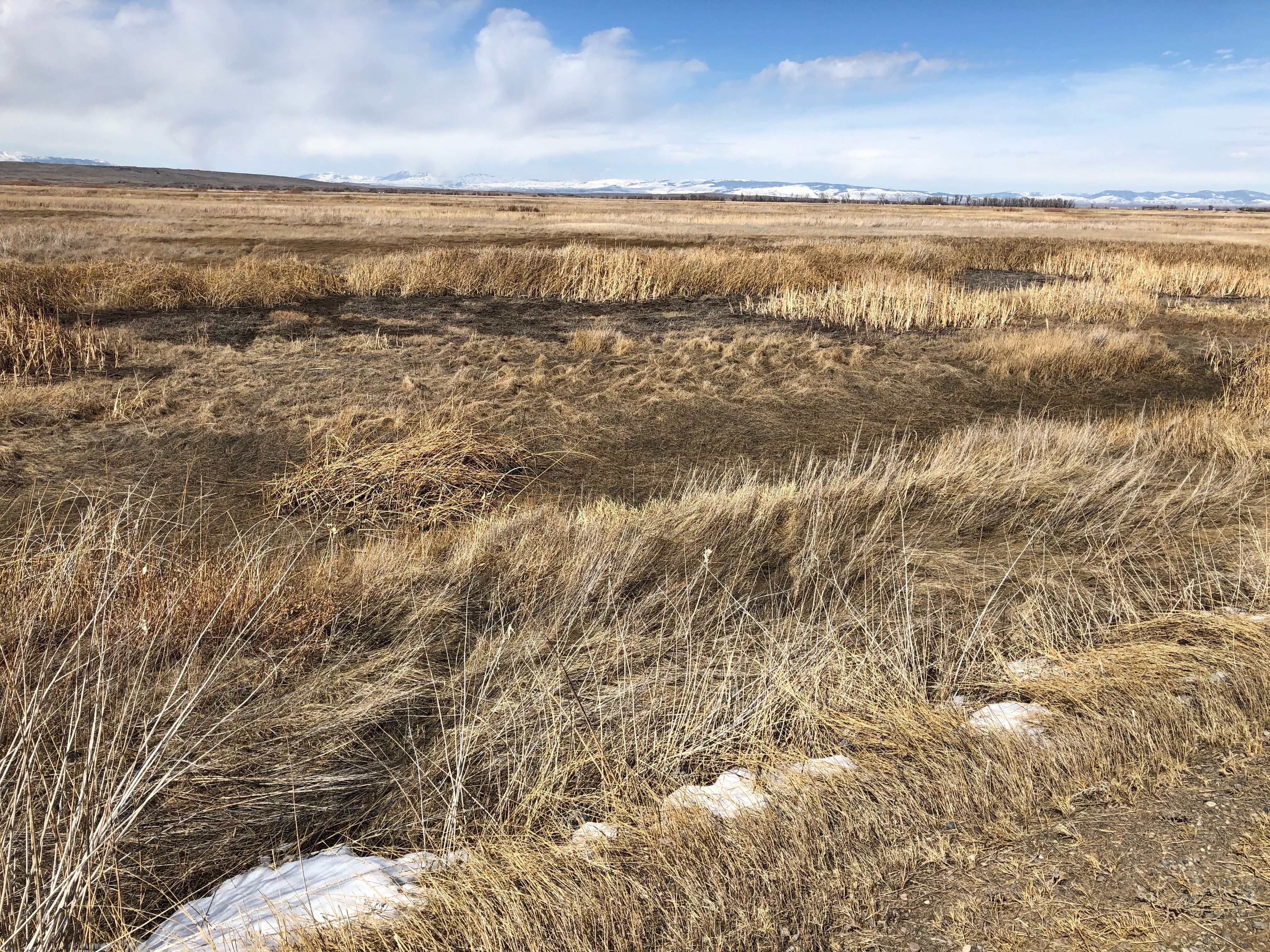
We were especially excited to visit Camas National Wildlife Refuge, but when we arrived, instead of ponds overflowing with waterfowl, we found depressing drying mud with a few determined Canada Geese and Mallards wondering what the heck was going on. We wondered, too, and a little research pointed both to a dry year and, more crucially, a lowered water table caused by over-pumping of groundwater by agricultural interests. This is a situation faced by more and more places in the West and national wildlife refuges seem to be particularly at risk as their budgets for new wells, staff, and infrastructure haven’t nearly kept up with their needs (see the Audubon article “Overwhelmed and Understaffed, Our National Wildlife Refuges Need Help”).
The kind of depressing scenes we found at Camas National Wildlife Refuge are playing out all over the West as human demand for water robs wildlife of essential habitat and resources.
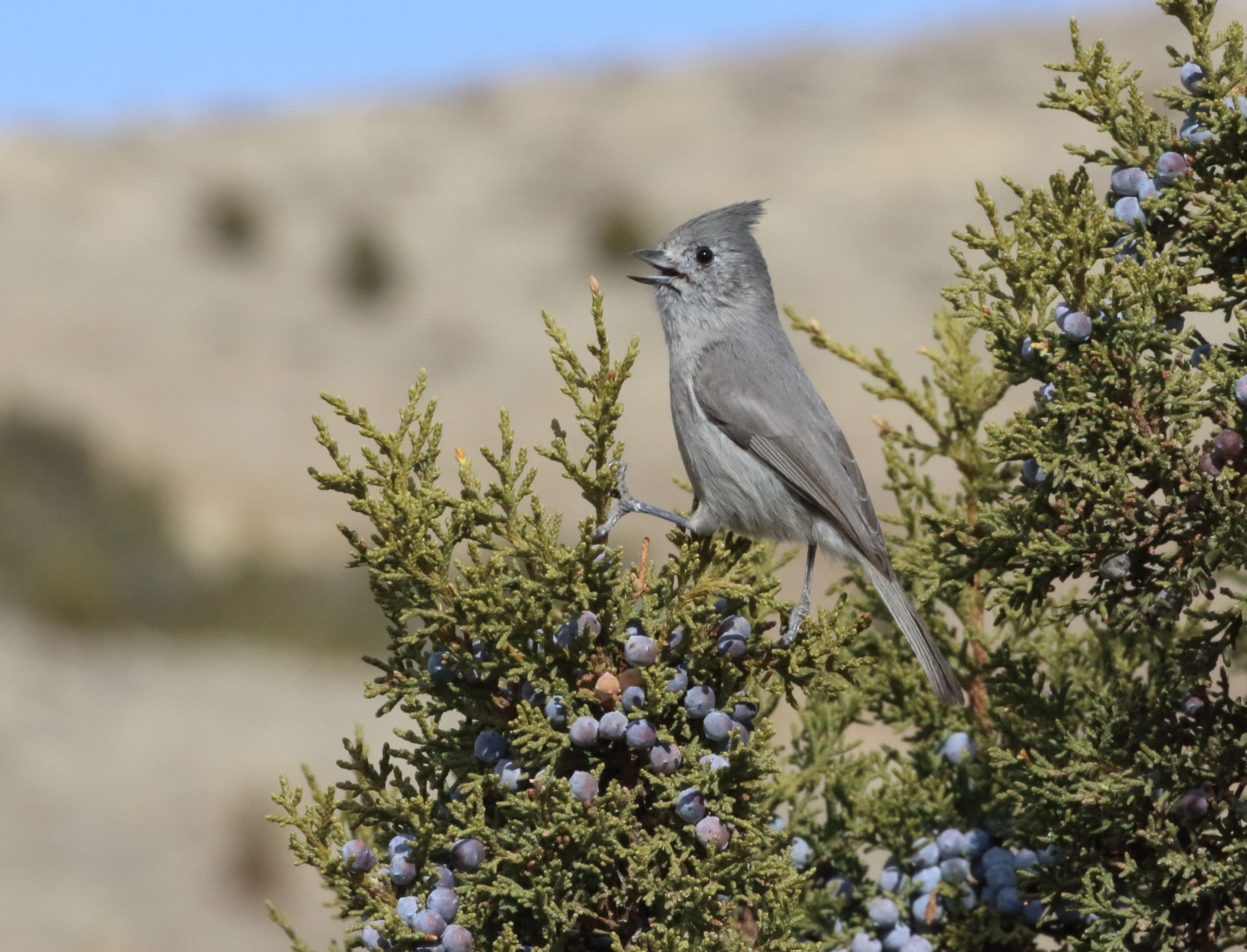
Determined to redeem our day, we pushed on to Pocatello, where we had a delightful hike through juniper forest and saw our Lifer Juniper Titmice. In fact, these wonderful little birds may have ended up being the highlight of our trip as we got to watch them sing, bicker at each other, feed on berries, and generally make the most of life.
Both Braden and I fell in love with Juniper Titmice, described by eBird as “Possibly the plainest bird in North America.”
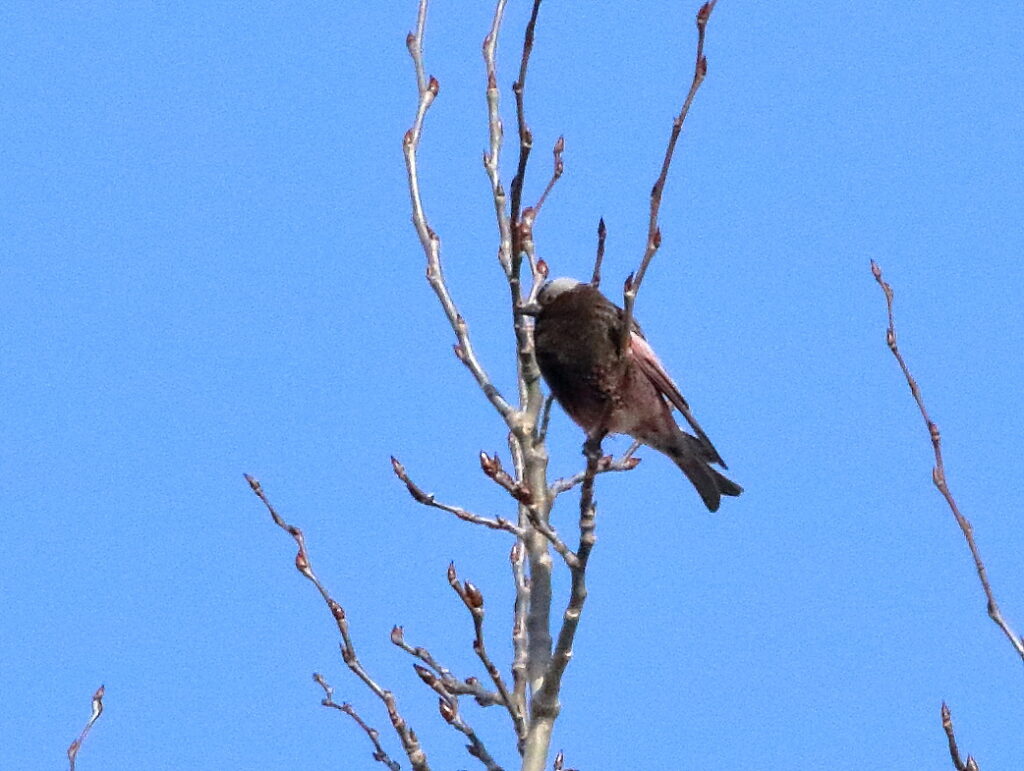
The next morning we decided to heed Supertramp’s advice and take the long way home through Craters of the Moon National Monument (closed) and Sun Valley. We had a special interest in Sun Valley because another Lifer, Black Rosy-Finch, had been reported there, and as we drove up a long canyon road we wondered if we would again be disappointed as this was the year’s fourth attempt to find this elusive bird. We arrived and . . . no birds. We hung out for several minutes, though, and suddenly heard finchy chirps above us. The rosy-finches! And not just Black, but Gray-crowned, too. It was particularly gratifying to find these gorgeous little passerines both because we’d looked for them many times and because this might well be Braden’s last chance to see them before he heads east for college this summer. The rosy-finches and titmice made the scenic drive home through the Sawtooths especially enjoyable—and a surprise find of a Ruffed Grouse along the highway extra sweet.
Hard to find at best, Black Rosy-Finches are some of North America’s most beautiful passerines. They nest at high altitudes and, not surprisingly, are some of America’s least-studied birds.
Our loyal followers have undoubtedly noticed that our posts have slowed in the past year. While we have been birding as much as ever, Braden has less time to write as college looms, and I too am busy plotting what I want to do when I grow up. Nonetheless, we want to wrap up 2020 for you and give you a taste of 2021 so far.
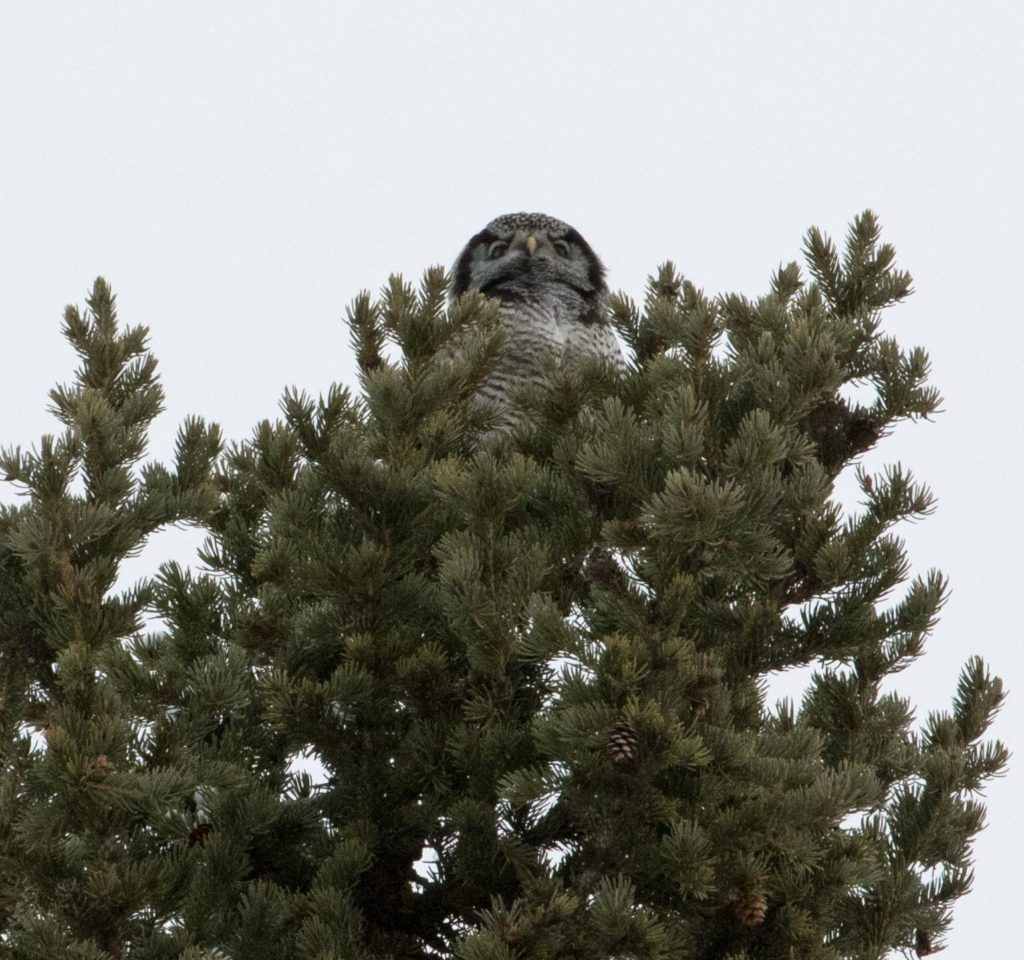
Sneed’s Bird of 2020, the Northern Hawk Owl, a Lifer we found on Braden’s seventeenth birthday. May his 18th bring him as much birding luck!
2020, in fact, was an epic year for Team Collard. It kicked off with our amazing trip to Israel and Jordan, and once back home we embarked on a mission of seeing 250 species in Montana. For perspective, my previous Montana record was 222 species in a year and Braden’s was 225, so we knew that we had our work cut out for us. Astoundingly, we surpassed 250 by last August, leaving the question, how high could we go? For me, the answer turned out to be 267, and for Braden, 274! With Braden probably heading out of state for college next fall, it seems unrealistic we could equal that number for 2021, so we’ve invented some new goals for ourselves.
Goal #1: to end the year with an eBird checklist in every Montana county. (Braden still has nine counties to bird in and I have ten.)
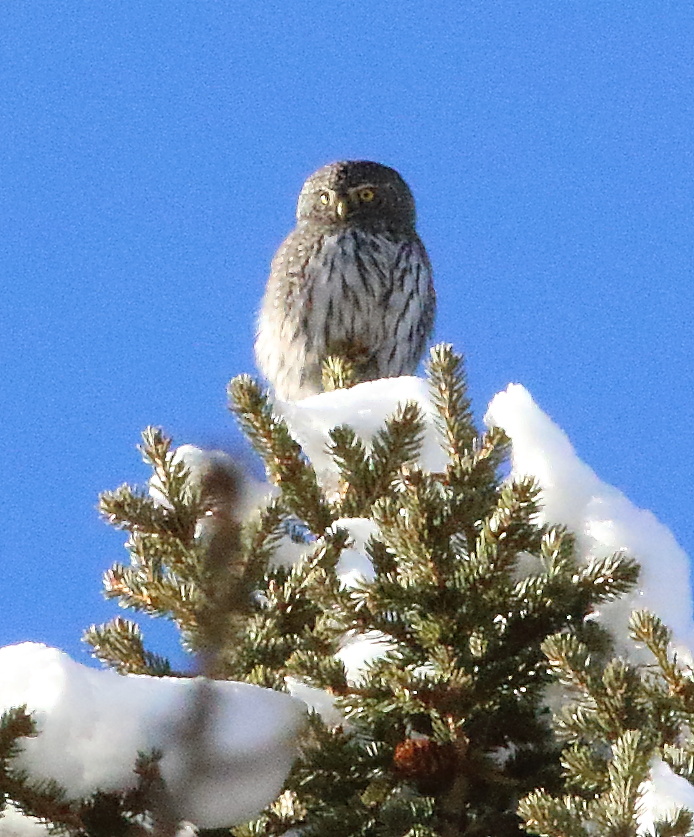
2021 has already brought us amazing owl sightings including this Northern Pygmy-Owl near Bozeman and this studious Great Horned Owl in Meagher County, a new birding county for us.
Goal #2: to see birds we’ve never seen in Montana before.
Goal #3: to reach a Montana Life list of 300 species (currently Braden is at 293 while I am just behind at 289).
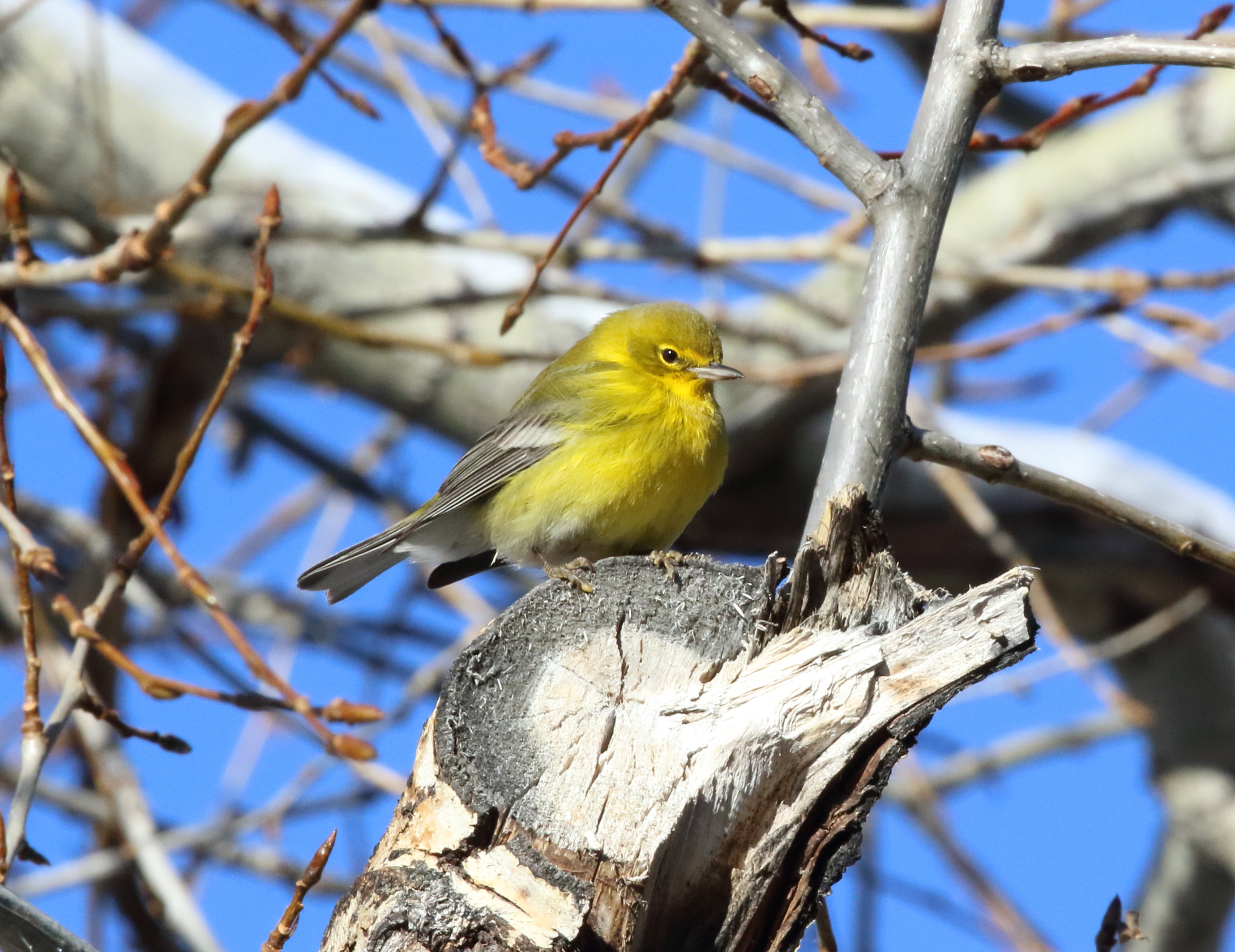
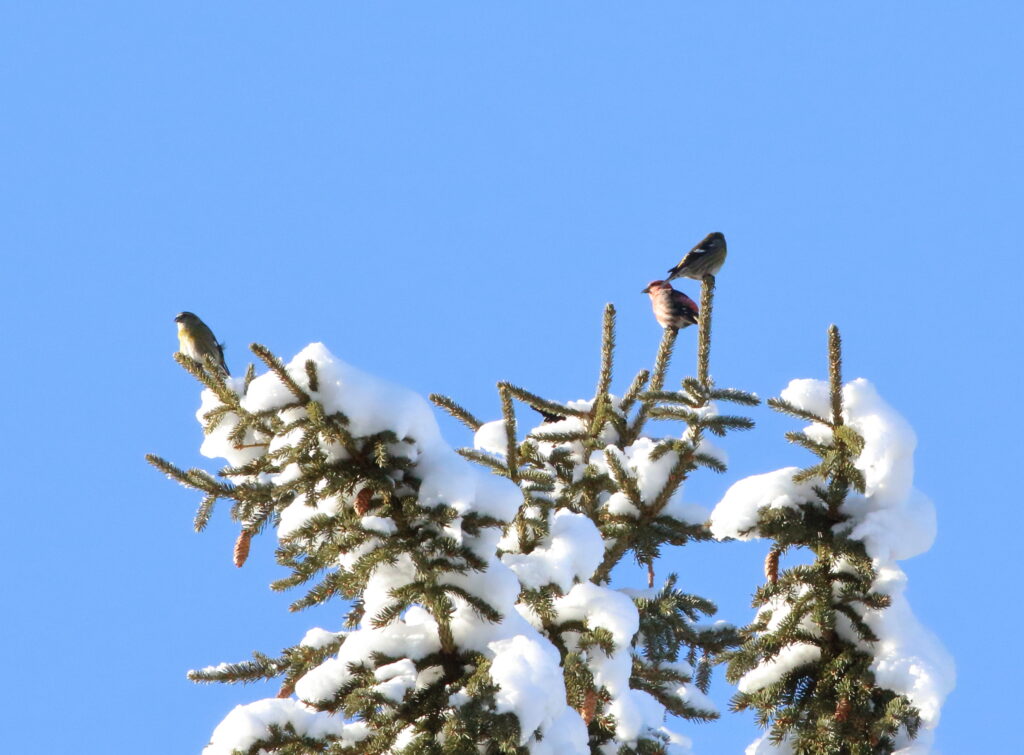
How are we doing so far? Even though it is still January, we are making progress on all fronts. Last weekend, we embarked on a thousand-mile, three-day birding safari to the center of the state. We added Meagher County to our eBird list, and added two Montana Lifers: White-winged Crossbills in Bozeman’s Sunset Hills Cemetery and Pine Warbler—a bird that shouldn’t have been within 1000 miles of Montana—at a feeder in Red Lodge. We had hoped to add at least two other species, but the birding gods were against us. The White-winged Dove in Bozeman that has lit up the Montana birding boards got eaten by a Sharp-shinned Hawk about half an hour before we saw it! Or more accurately, we saw the bird being devoured! We had also hoped to see our first Gyrfalcon, but despite searching the White Sulphur Springs area for more than six hours, the majestic predator was a no-show. Sigh.
Thanks to the generosity of Susan Hovde, who not only discovered but has been feeding him, we were able to spend a glorious winter morning with this out-of-range Pine Warbler—a Lifer for Braden and Montana Lifer for me!
Nonetheless, we found a lot of other great birds and met some terrific other birders. In the process, we set a January species record with still a couple of weeks to go. We do not know what the rest of 2021 has in store for us, but we will keep you updated as we are able. In the meantime, we wish you peace and health, and offer our hopes that this year will see some meaningful progress not only in saving birds, but in protecting this incredible planet we all share.
Though not much to look at from a distance, we were thrilled to see our first-ever White-winged Crossbills in Bozeman’s Sunset Hills Cemetery!
As always, we encourage you to share this post in the hopes that it might keep education rolling during these difficult, unprecedented times.Thank you!
In our last post, I explained how close Braden and I had come to reaching our goal of 250 Montana species for the year. Braden, in fact, had reached 245 birds while I pulled up the rear with 239. Now, as some of your comments pointed out, 250 species would seem like a slam dunk with six months to go in 2020, but not so. Not only had we exhausted our supply of “easy birds”, but another large birding safari seemed unlikely—until, that is, Braden and his birding buddy Nick Ramsey came up with the idea for a Big Day. The plan? To get up before dawn and drive 500 miles, birding Ninepipe National Wildlife Refuge, the Swan River Valley, Glacier National Park, all the way to Malta, home of Bowdoin NWR. Insane? Yes. Would we do it? Definitely!
None of us knew how many species we might see in a day. Our record for a day in Montana was only in the 80 or so species range, but we’d never attempted anything like this and hoped we might get as many as 150. Alas, the weather gods frowned on us the morning of June 30, with steady drizzling rain. Undaunted, we set off, missing a number of target species here in Missoula and near the National Bison Range. At Ninepipe NWR, however, we hit Short-eared Owl City! Braden and Nick both still needed SEOWs for their Year Lists, but neither of us had ever seen one at Ninepipe until I spotted one about a month ago. This morning, driving Duck Road in the rain, we hadn’t gone a mile before Braden shouted, “There’s an owl!” In the next three miles, we saw NINE MORE! Maybe they should call the refuge Nineowls?
Our first Big Success of our first Big Day was to hit the Short-eared Owl Jackpot at Ninepipe NWR.
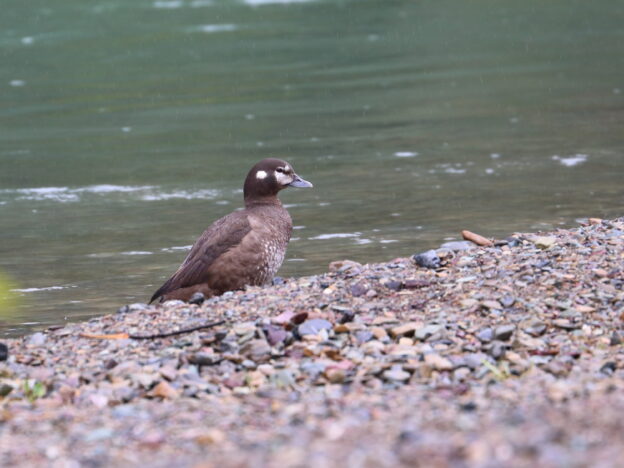
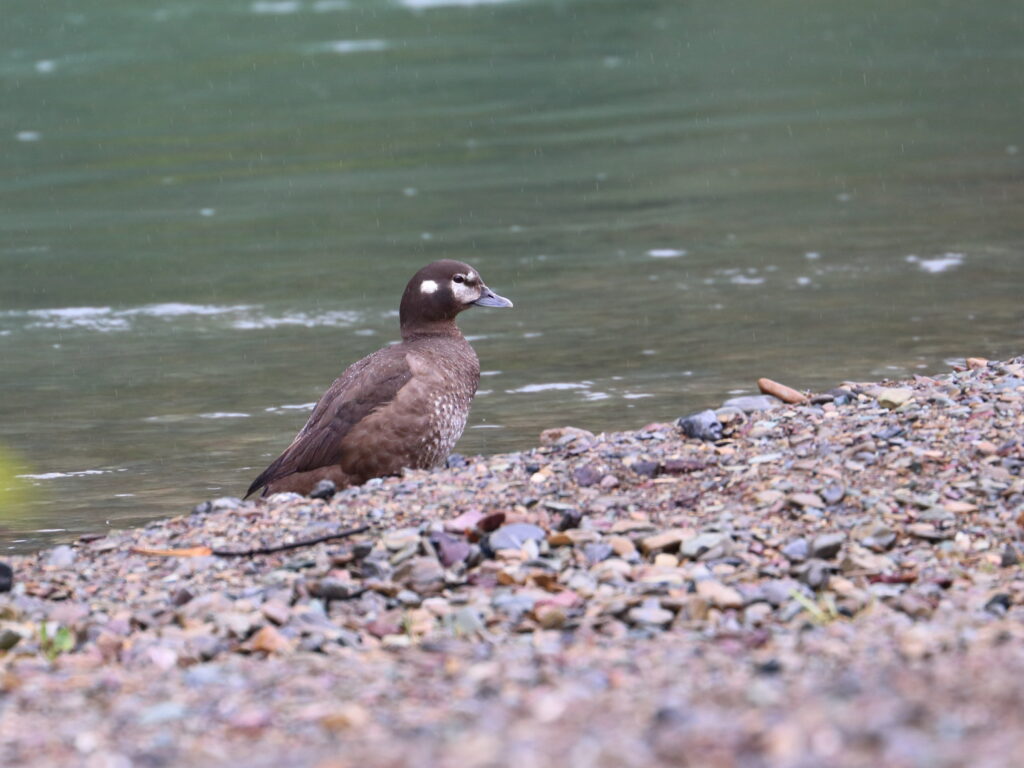
After missing LeConte’s Sparrow at Swan Valley (but seeing lots of Lincoln’s Sparrows), we headed to Glacier, where my top priority of the trip just might be located: Harlequin Duck. With the coronavirus raging, we didn’t know what kind of traffic we might expect, but the poor weather ended up a blessing as we cruised right into the park and made record time to Avalanche Creek. Still, none of us really expected to see a Harlequin Duck as the males had fled and breeding was probably winding down. We walked out onto the beach on the river, though, and sixty seconds later, we all saw a duck flying downstream. It was a female Harlequin! Even better, it landed fifty feet from us! None of us could believe it. After admiring the beautiful creature, we walked around a bit, picking up the eerie calls of Varied Thrushes, but failing to get our pie-in-the-sky target, Black Swifts. Still, our stop a success, we headed back out to West Glacier and began the six-hour drive to Bowdoin, picking up new birds all along the way and ending up with a day’s total of 119 species—a personal Montana record and not bad given the weather.
One of my favorite all-time birds, this Harlequin Duck was just waiting for us as we zoomed into Glacier National Park during our (first) Big Day!
Of course, the problem with doing a Big Day that finishes up in a place like Malta, Montana, is that you have to get back home again! Not surprisingly, we spent two days finding our way home—and not without some adventures that included Braden almost stepping on a rattlesnake, almost getting our minivan permanently mired in mud far from civilization, and getting a rear tire blowout—fortunately, just at an exit in Butte.
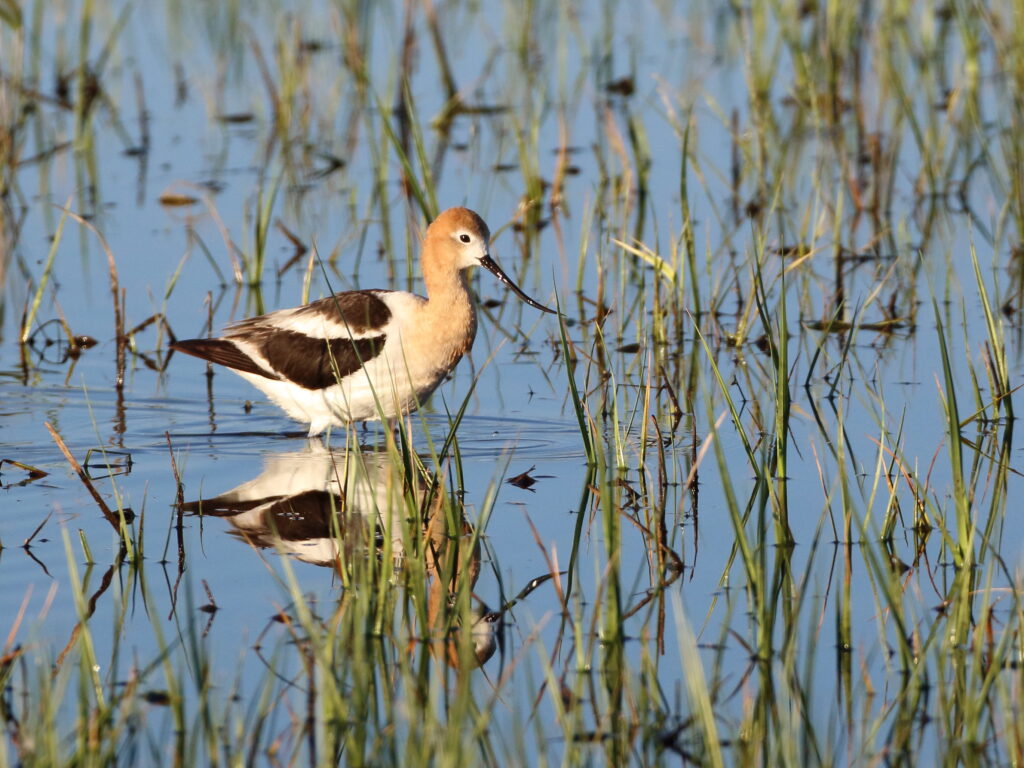
On Day 2 of our, ahem, Big Day, we had some of our best experiences with nesting shorebirds—including the spectacular American Avocet at Bowdoin National Wildlife Refuge!
“So did you make your 250 birds?” you may be asking yourselves. Well . . . YES! Braden finished the trip with 255 species for the year while I slipped in there with 251. Which begs another question, “What now?” Well, fortunately birding is fun, interesting, and educational even without keeping track of lists. Every day, in fact, we see cool birds and learn more about them. Will we object if our species counts climb higher in the next six months? No way, but do we need them to? Naw. Birds are great any time and in any season—even if we’ve seen them before.
Hey Everyone! Well, the hackers are back. We’ve had a number of suspicious sign ups recently so if you really have subscribed in the last three months, please shoot Sneed a confirmation email at collard@bigsky.net and I will make sure that you stay subscribed. Meanwhile, feel free to share this post with all the wonderful birders in your lives. Thanks!
On Tuesday, February 4th, my dad woke me up at 7 o’clock, a
restful relief from the 4:45 wake-up time I’d adapted to being on the Hellgate
High School Swim Team. Despite an increasingly significant school workload, I’d
decided (with parental permission, of course) to take my birthday off and head
north to bird with my dad. Aside from the obvious perks of birding places like
Ninepipe National Wildlife Refuge and Flathead Lake, we had several goals in
mind. A few days earlier, an Ivory Gull, an incredibly rare arctic species, had
been sighted at Blue Bay on Flathead. There was also supposedly a Northern Hawk
Owl, a boreal species that rarely visited the United States, at Swan River
National Wildlife Refuge in the valley just to the east of the lake. We set out
at eight o clock, fifteen minutes after the bell for my school rang, heading
north with visions of rare birds soaring through our minds.
Though the gull, being the rarest of the possibilities
today, was our priority, we had to make several stops. First, we made a
speed-run of Ninepipe, visiting both the frozen lake itself and a nearby road
that supposedly had been supporting a Ferruginous Hawk all winter. The hawk
wasn’t quite as rare as the other species we were chasing, but raptors proved
hard to find even in their regular, summer habitat in the eastern prairies. Today,
we found the white-breasted bird fairly easily, along with several Red-taileds,
Bald Eagles, Rough-leggeds and a Prairie Falcon flashing its dark armpits as it
fled from a telephone pole. At Ninepipe itself, we almost collided with an
airborne Ring-necked Pheasant, and crept down a dirt drive to snap photos of a
possible Ross’s-Snow Goose hybrid.
We grabbed a delicious breakfast at the Ronan Cafe, then drove north through Polson, stopping at a fishing access on Flathead to check for gulls. The Ivory had last been seen heading south, and this hotspot, known as the Ducharme Fishing Access, also reliably held uncommon arctic and seafaring gulls like Iceland, Herring and Mew. In fact, due to the lake’s size, seabirds showed up on an annual basis, confusing it with an inland sea. The Ivory Gull was just the most recent, and possibly rarest, of these visitors. Today, however, we glimpsed only a few Ringed-billeds in the distance.
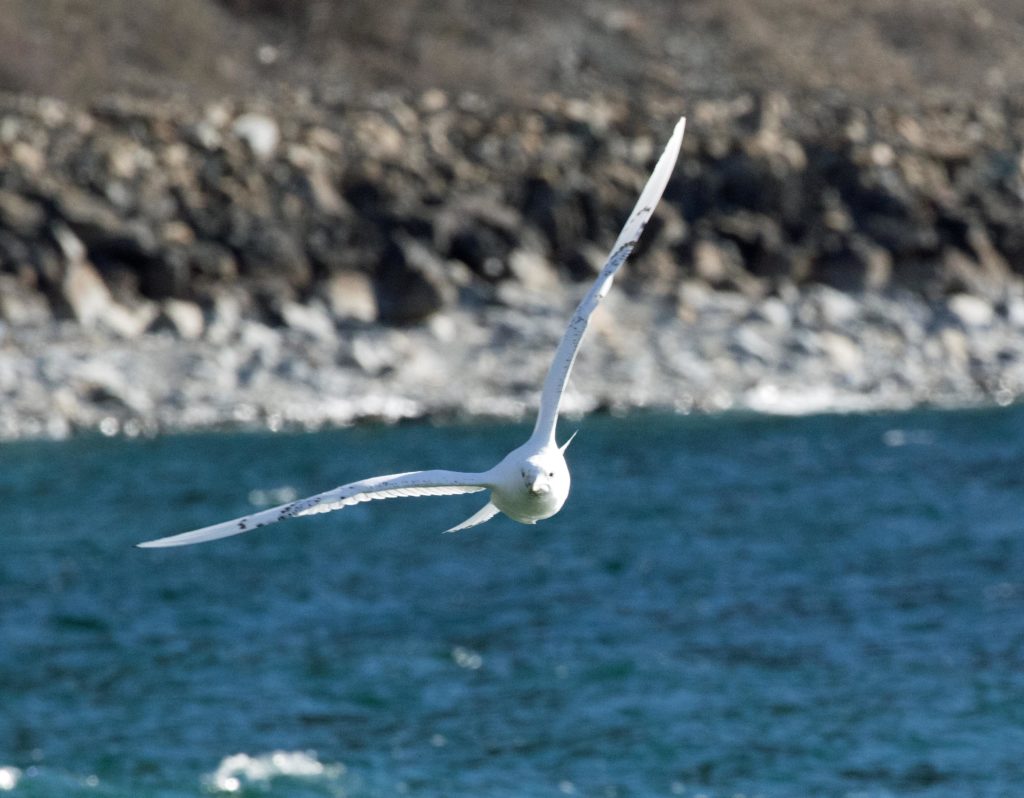
When the gull took flight, we thought it might be leaving. Instead it landed on a dock only about fifteen feet from us. Wish we’d had some krill in our pockets!
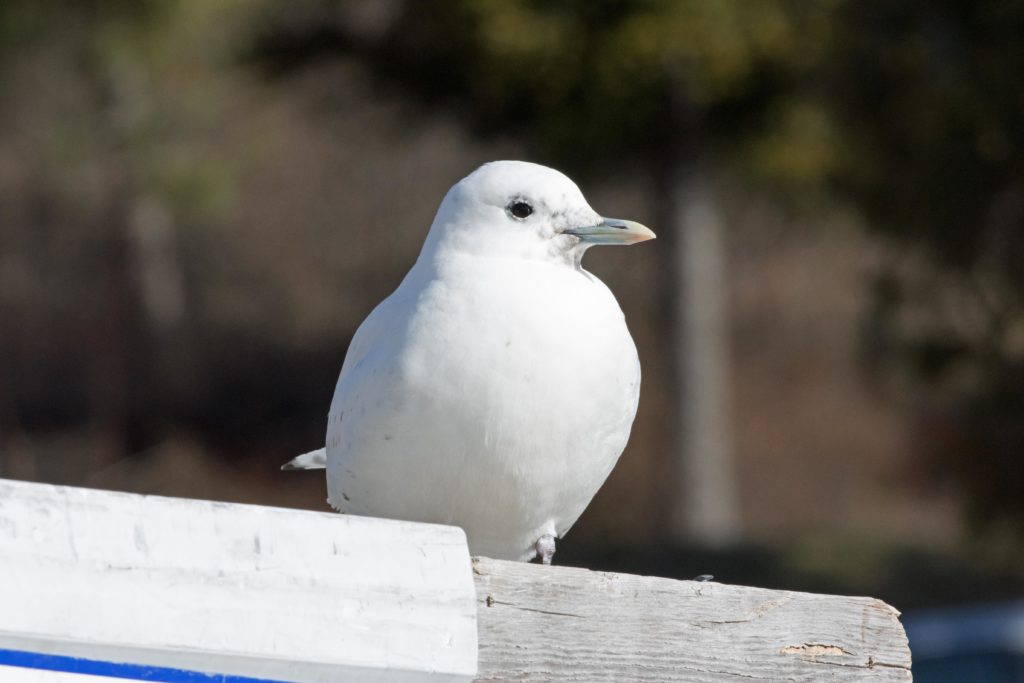
Normally, my dad and I don’t have the best luck chasing rarities. We’ve successfully found a few, usually by accident or thanks to excessive diligence of Nick Ramsey. Last summer, for instance, we chased an Indigo Bunting, Virginia’s Warbler, Black-throated Gray Warblers and Blue-gray Gnatcatchers in central Montana, only finding the bunting, which was difficult to miss in its neon blue plumage. When we pulled up to Blue Bay, though, we found two birders and one bird. That bird was the Ivory Gull, dressed in blank plumage dotted with black. At first we thought it was a plastic bag, due to its immobility, and proceeded to freak out immediately after raising our binoculars. The other birders, who had travelled from Washington to see this bird that normally dwells among the pack ice with polar bears, left fairly quickly after our arrival, leaving us alone on the beach to bask in the bird’s rarity and fill up our camera memory cards. The gull was incredibly tame, at one point landing five feet from us on a dry dock!
Strike a pose! This gull is obviously a huge Madonna fan!
After our success with the gull, we decided to drive north, then east, to Swan River in hopes of finding the owl. The location had been given to us by Nick, and it was much less direct and accessible than the gull had been. First we pulled off the highway at a makeshift parking lot, far from civilization, then trudged a mile through snow to a huge, open field. We proceeded to check and double-check the top of every pine, fir, larch and spruce in the area, searching for the diurnal bog-dweller. After searching the entire south end of the field, where the owl was supposed to be, we took a quick glance across the other side of the field. On a particular conifer far from us, a gray smudge caught the edge of my vision. I took a distant photo, confirming that it indeed was a gray smudge, and we continued to walk towards it. Once we got close enough to determine that it was at least bird-shaped, it disappeared!
If this isn’t an imposing, regal look, we don’t know what is. Good thing the owl couldn’t shoot lightning bolts down at us!
We frantically began re-checking every tree in the area, eventually relocating it again and—it was the owl! This time we didn’t take our eyes off it, eventually getting to about twenty feet from the tree that it perched on top of, like a star on a Christmas Tree. It glared at us, and we stared back, taking in its broad shoulders, square head and beautifully-patterned plumage. In an attempt to get better photos, my dad crossed a ditch, filling his rain boots with ice-cold water, and after the owl got bored with us, everyone departed. We had set out and seen every bird we’d wanted to, including three rarities, one of which (the gull) would quickly become at least nationally famous! To seal the deal, on the way home we glimpsed a Northern Shrike, another uncommon winter species that we hadn’t seen in a while. All in all, an incredible bird-filled birthday!
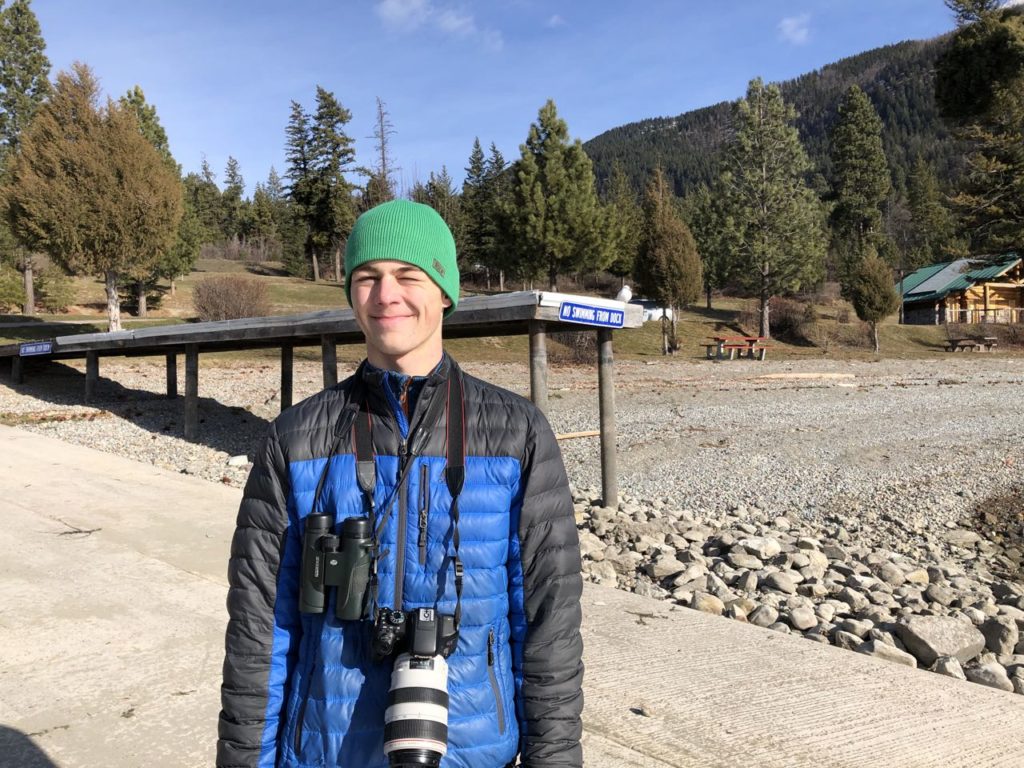
Me with my Birthday Gull perched behind me. Best Gift Ever!