In this post, we continue our account of our return to southern Arizona while on a quest to get Braden to his Big Year goal of 400 bird species. To read the first part of our journey, click here. As always, we appreciate you sharing this post, and if you haven’t already done so, subscribing by filling out the box below and to the right. Enjoy!
After our close encounter with bedbugs, we set off from Safford early the next morning and were pulling into our trip’s first Major Destination by 8:45 a.m. When we had contemplated visiting Portal, Arizona during our 2016 Big Year, we had considered it as “a place to see hummingbirds.” Six years later, we still wanted hummingbirds, but harbored a long list of other targets—including a slew of Lifers and Year Birds that would propel Braden closer to his Big Year goal of 400 species. Driving into town, we blundered into our first. I had pulled over so Braden could get a look at some Phainopeplas (see next post) when I noticed a large-ish bird over in a sage plant. Getting my eyes on it, I saw right away that it was some kind of kingbird—and that it had an extraordinarily large bill! Turns out it was a Thick-billed Kingbird that had been reported around town recently! This Code 2 rarity created great momentum for the day—one that would not diminish until we were snug in our sleeping bags 12 hours later.
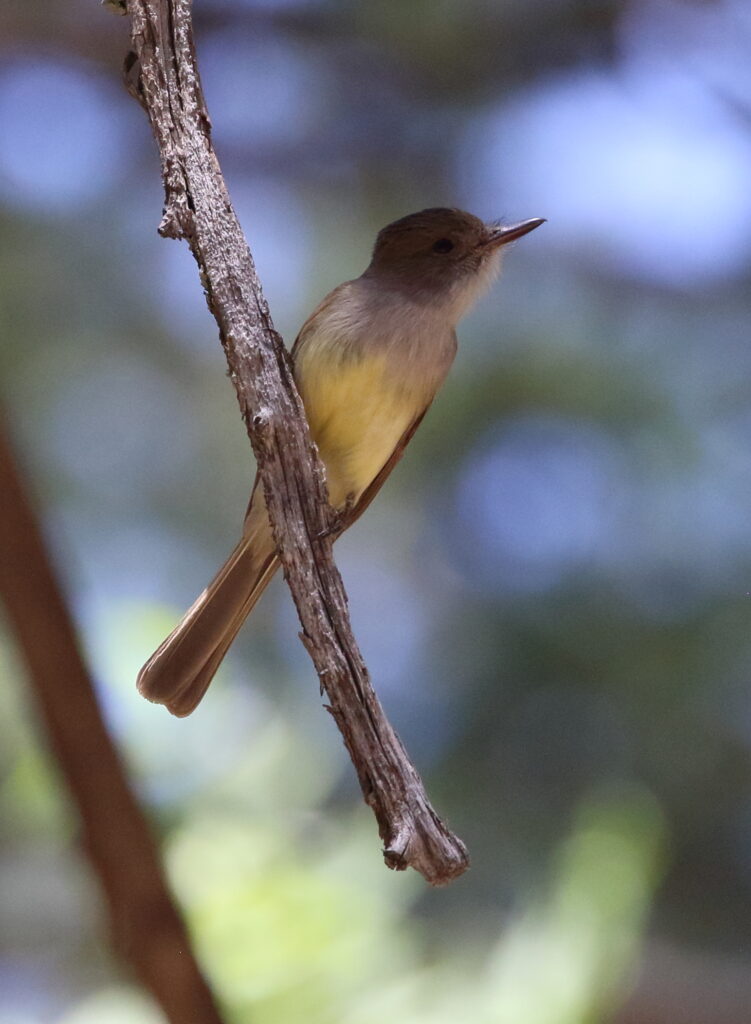
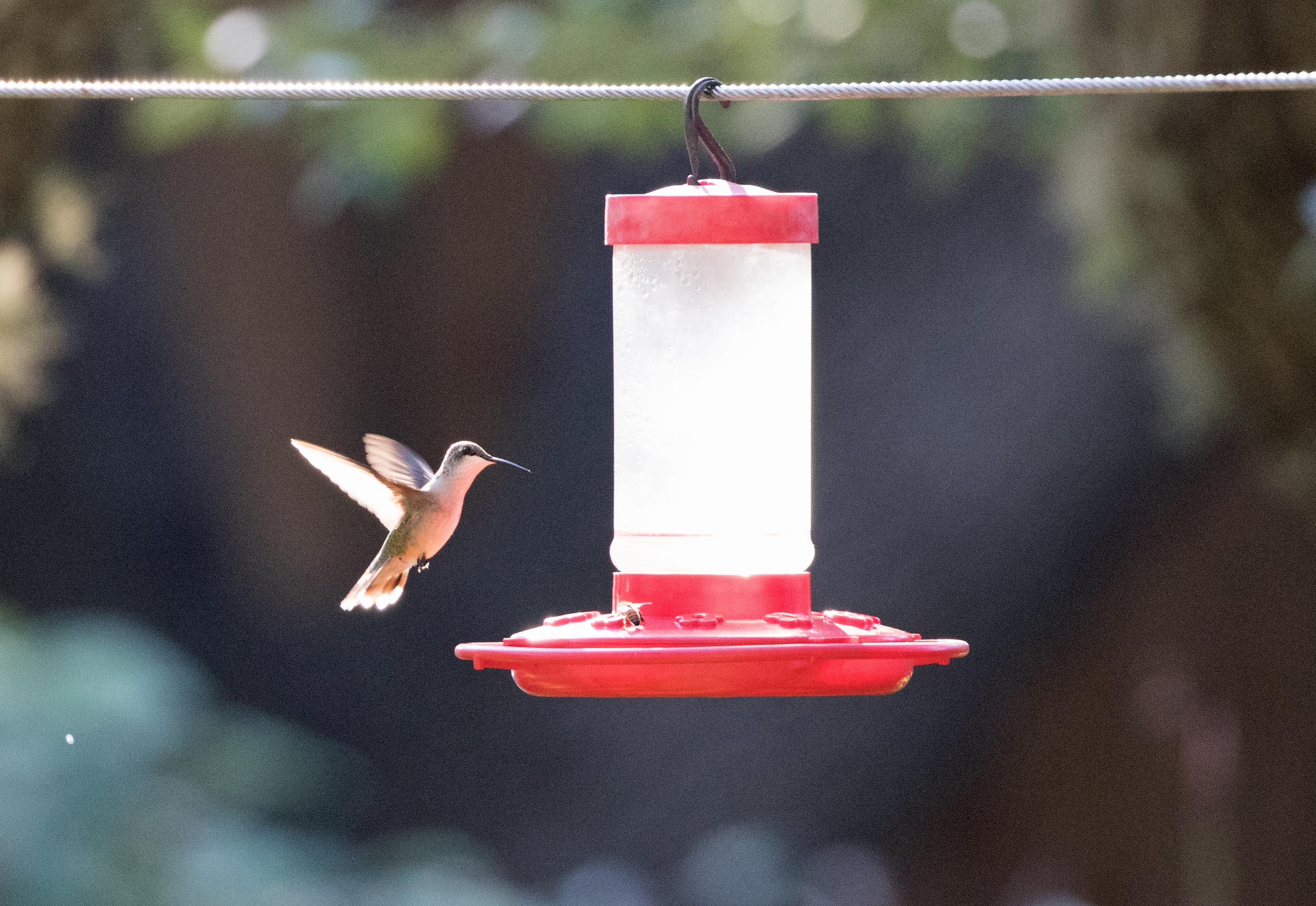
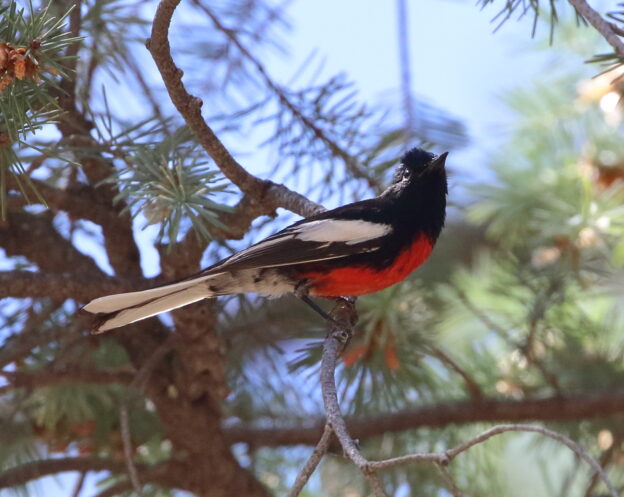
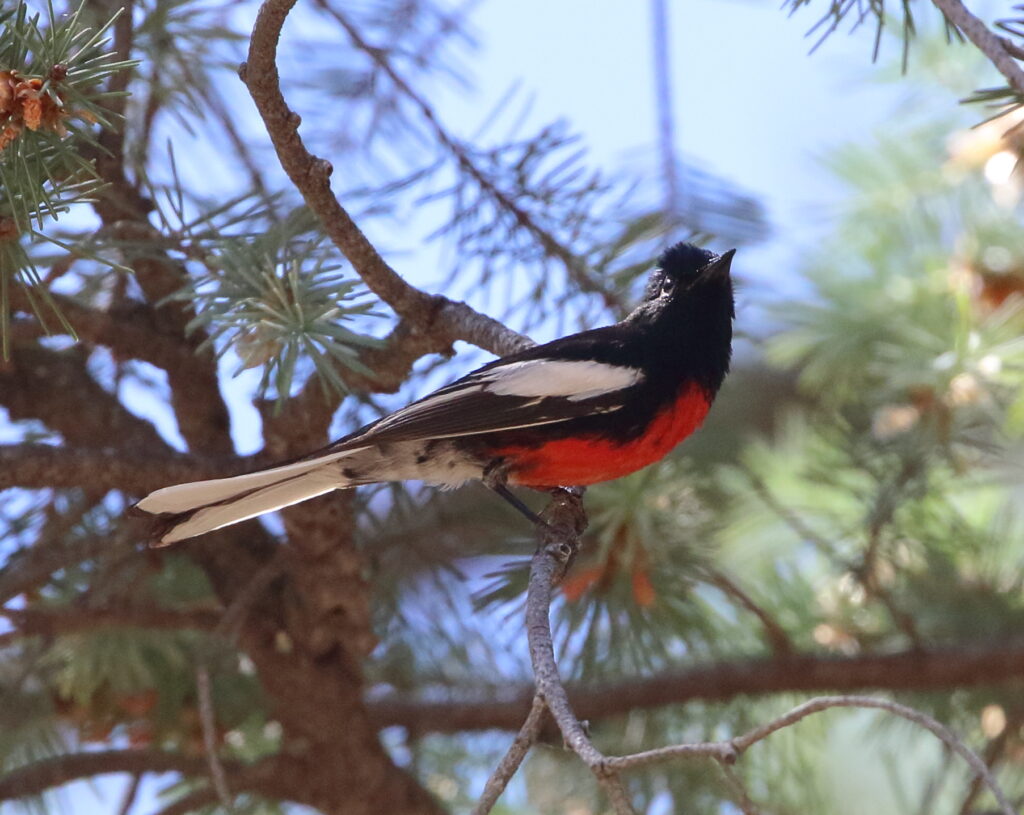
But back to those hummingbirds, it’s true that Portal does have hummingbirds thanks to the many kind people who put up bird feeders, but of equal avian importance is that the town sits at the mouth of a canyon of the Chiricahua Mountains. One of Arizona’s famed “sky island” mountain ranges, the Chiricahuas attract a host of birds from Mexico that are uncommon in the US, from Mexican Chickadees and Yellow-eyed Juncos to Sulphur-bellied Flycatchers and everyone’s Number One target, Elegant Trogons. After grabbing a campsite at Sunny Flat campground, Braden and I set up our tents and, as the day was already warming, decided to drive to high altitudes for our first proper birding session. We had a couple of specific destinations in mind, but as we wound our way slowly up the dirt road, we decided to pull over at a small stream crossing—and are so glad we did! Almost immediately, one of our favorite birds—Painted Redstart—perched over our heads. This was followed by a veritable bird parade that included Hepatic & Western Tanagers, Hutton’s Vireos, Bridled Titmice, Grace’s Warblers, and Dusky-capped and Cordilleran Flycatchers—all birds we had especially wanted to see or hear!
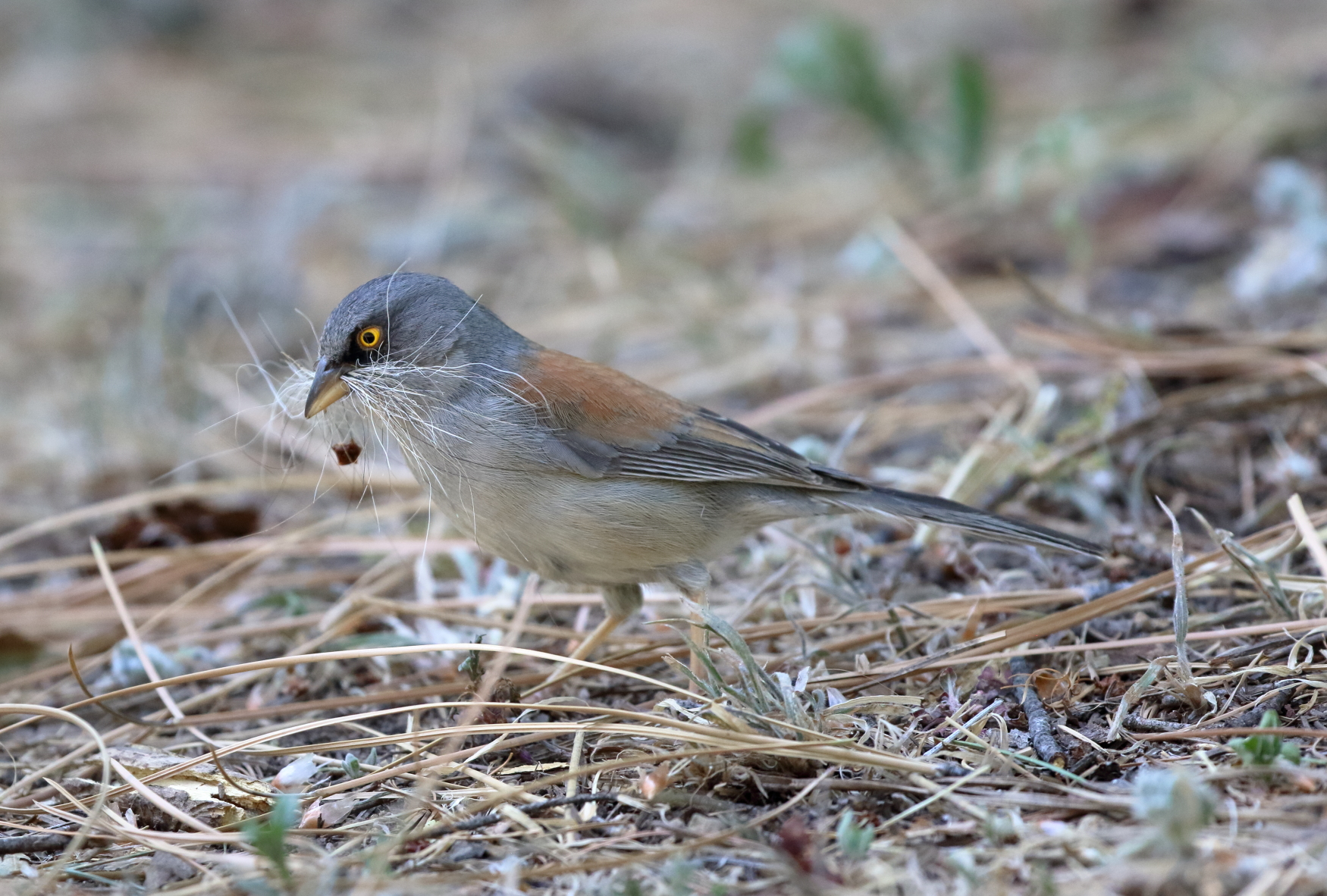
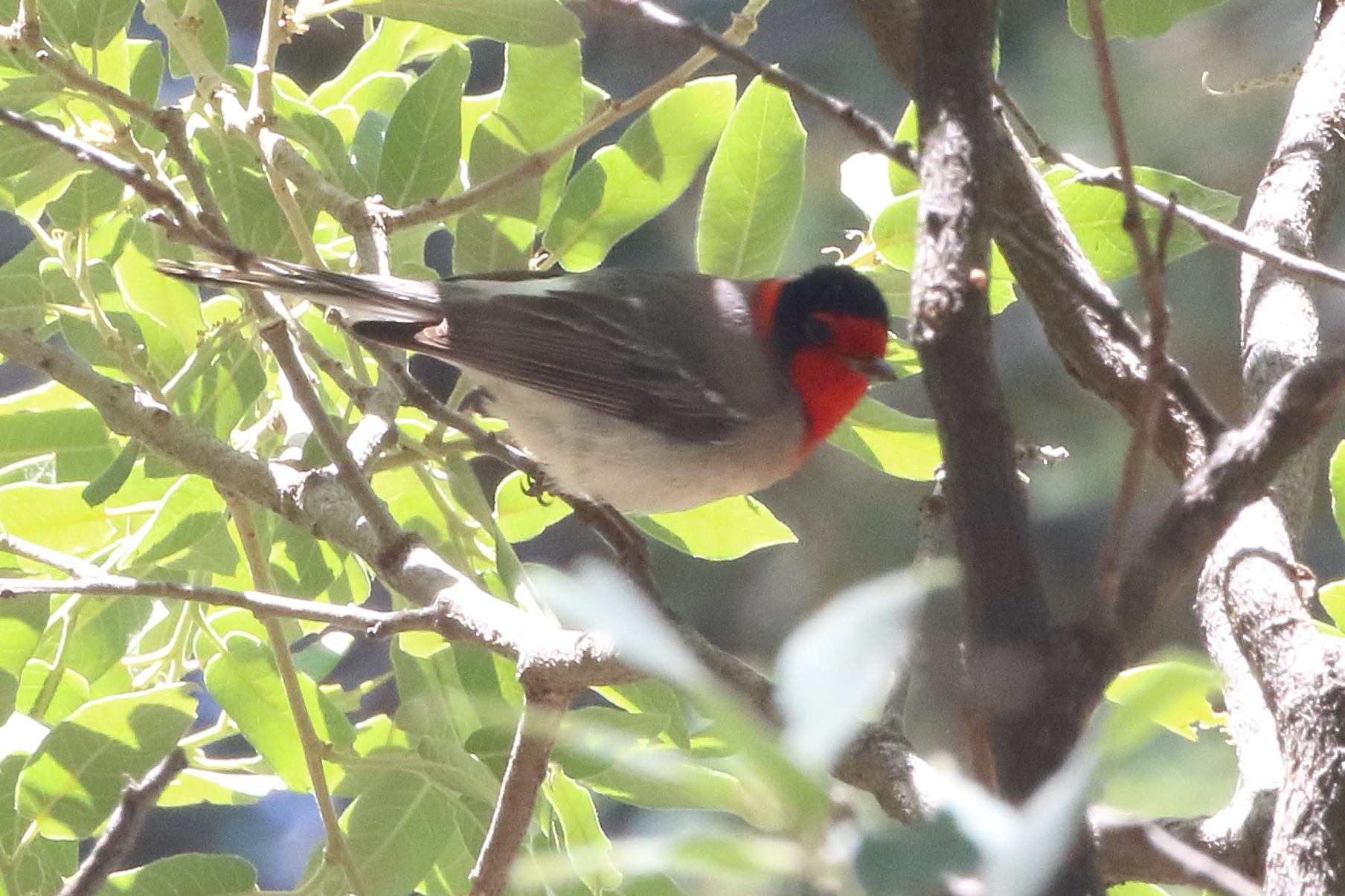
After a few more miles, we reached a loose collection of canyon campsites strung out along the road. The canyon held a wonderful mix of conifers and oaks, and in five minutes, we saw two Life Birds: Yellow-eyed Junco and Red-faced Warbler. The Red-faced Warbler is one of those birds that you learn about, but don’t really believe exists until you see it perched in front of you. Not to be out-done, the junco put on a great show for us, often collecting nesting materials at our feet as we burned gigabytes of camera storage photographing it! One bird we searched for and didn’t find was Mexican variety Spotted Owl. “That’s okay,” I reasoned. “I never really expected to see one of those in my lifetime, anyway.”
It was such a beautiful spot that we decided to have a picnic lunch there before moving back to higher elevation, but before we did, we took one last look around for an owl. Braden was trying to photograph a couple of Verdin when I turned and glanced up in a tree—only to be greeted by the unmistakable silhouette of an owl. Braden was saying, “I guess we’re not going to find the owl,” when I casually remarked, “Except that I just found it.” He thought I was kidding, but I pointed up into the tree, and we both fell into a silent reverie that lasted a full fifteen minutes.
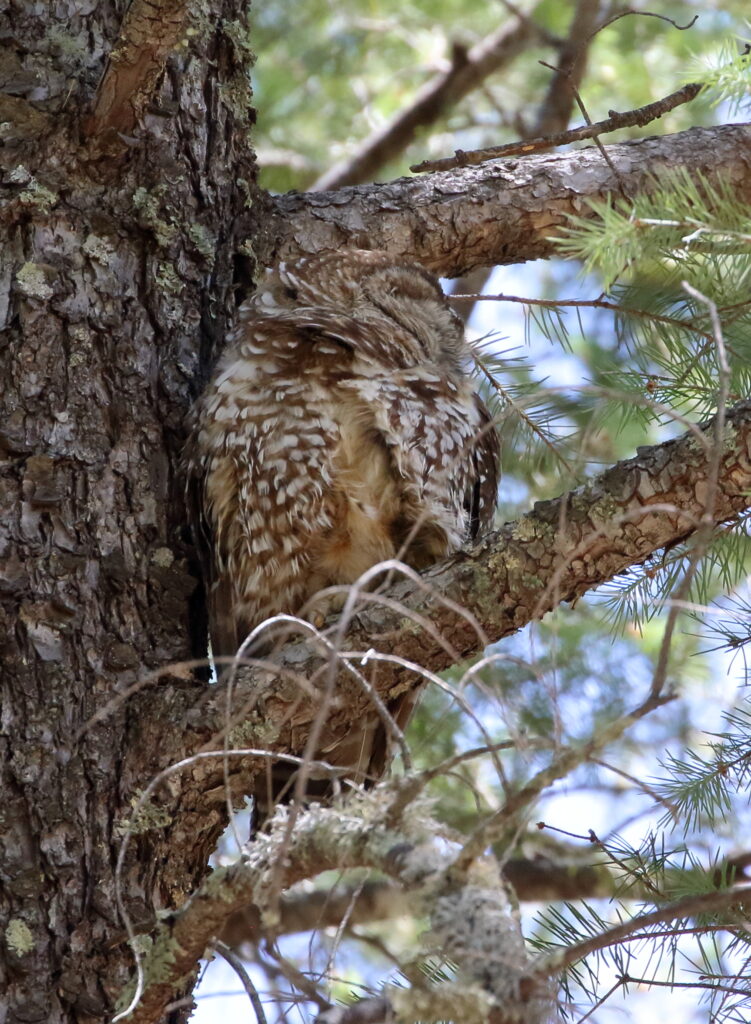
If we’d seen nothing else on the trip, that owl would have made the entire journey worthwhile. Nonetheless, we bid it adieu and headed up to a place called Rustler Park. Here, thanks to Braden’s hard work and determination, we found two more Lifers: Mexican Chickadee and Olive Warbler—the bird that isn’t really a warbler, but inhabits its own strange group of birds. Remarkably, our day still had a long way to run.
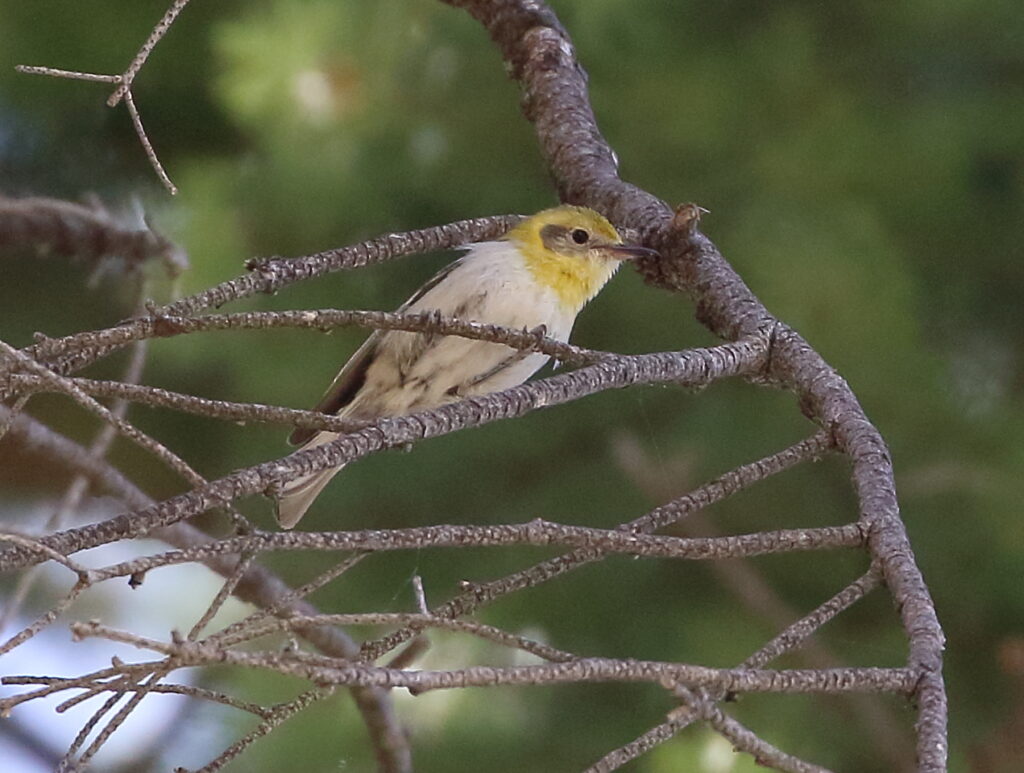
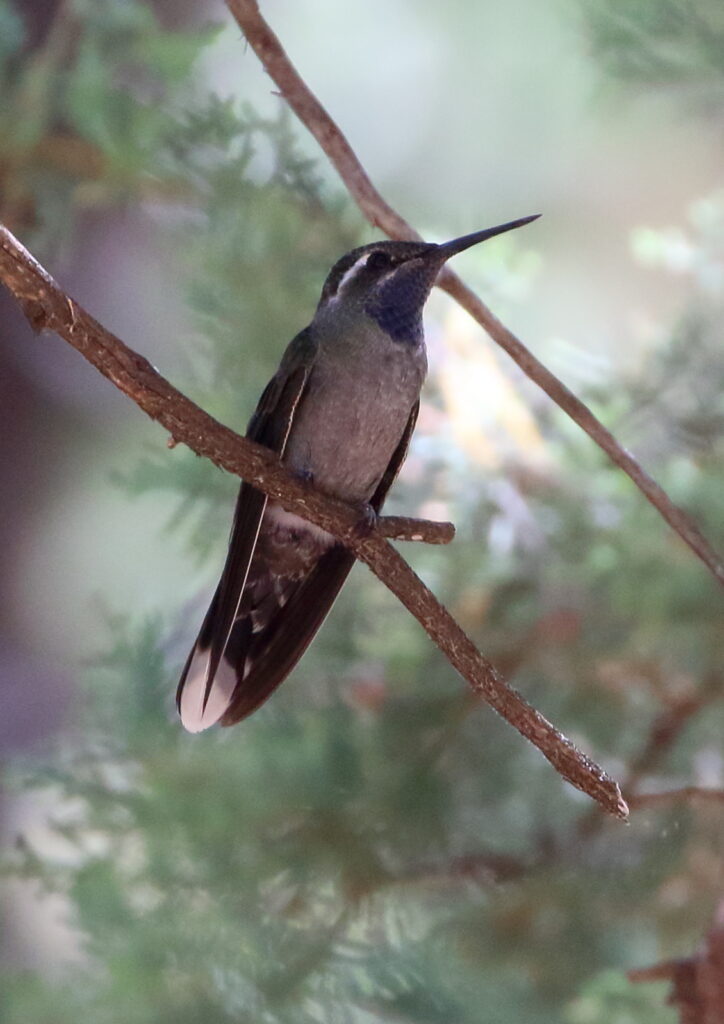
Back in Portal, we scoured the bird feeders, and even hung our own feeder in our campsite, netting yet more Lifers: Scott’s Oriole, a bird at the top of my “to see” list, and Blue-throated Mountain Gem, a gorgeous hummer that came right to our camp feeder! As the shadows deepened over Cave Creek Canyon, however, we had one more very special treat in store for us. Grabbing our flashlights, we set off in darkness down Cave Creek Road, listening intently for a trio of nighttime denizens. We heard the haunting call of the Mexican Whip-poor-will, followed quickly by Whiskered Screech Owl, and finally the “bark” of Elf Owls! Standing together, listening to these magical sounds truly was one of our most memorable birding experiences ever and one that we will both cherish as long as we draw breath. The same can be said for the entire day.
Even better, two full days of Arizona birding remained. Would they include, say, an Elegant Trogon? Stay tuned . . .