Category Archives: Shorebirds

Montana Shorebird Surprise

We’re sharing our most recent birding adventure in reverse order. The day before chasing the wily White-Tailed Ptarmigan, Braden and I had an incredible outing at Benton Lake National Wildlife Refuge (see also The Best Prairie Day Ever). Normally a go-to place for grassland birds and waterfowl, Benton didn’t seem likely for the birds we most wanted to see—shorebirds. Were we in for a surprise! Here’s Braden’s report.

Visiting the Pacific Ocean this summer and having several great days of birding there did nothing but increase my drive to find shorebirds. Between Monterey, the Bay Area and Point Reyes, I had seen species like Red Knot (my lifer), Black and Ruddy Turnstones, Red and Red-necked Phalaropes, Short-billed Dowitchers and more. Now, I was ready to see these and other species during my short stay in Montana before heading back to college in Maine. However, seeing shorebirds along the ocean, where there were miles and miles of great habitat for thousands of birds to choose from, was one thing. In Montana, shorebirds were often hard to find, even during their peak migration in August and September. Two autumns ago, my dad and I had birded hard, visiting the Ninepipe Valley half a dozen times as well as Helena and Three Forks in a quest to find shorebirds. While we had found most of our target species eventually (including finding Baird’s and Pectoral Sandpipers a handful of times and Western Sandpiper once), we found very low numbers across the whole season and missed our main target species, American Golden-Plover. This was fairly normal for Western Montana.

This year, on our way to Glacier National Park for an entirely different bird (see In Search of the Wily White-tailed Ptarmigan), my dad and I decided to seek shorebirds at refuges along the Rocky Mountain Front. I’d seen several reports of large numbers of Stilt Sandpipers at Freezeout Lake in past Augusts, and so we thought maybe we could find some of them there. And so, two days after I arrived home from California, we woke up at four in the morning and headed for Great Falls.

Unfortunately, we didn’t find that much at Freezeout. A few yellowlegs and Solitary Sandpipers picked the mud along the shoreline of the ponds, and we ran into a small flock of Baird’s Sandpipers right at the end of the driving loop. Overall, the refuge—famous for its spring Snow Geese—had been disappointing. However, that didn’t really matter given that we had gone to Benton Lake National Wildlife Refuge first. 
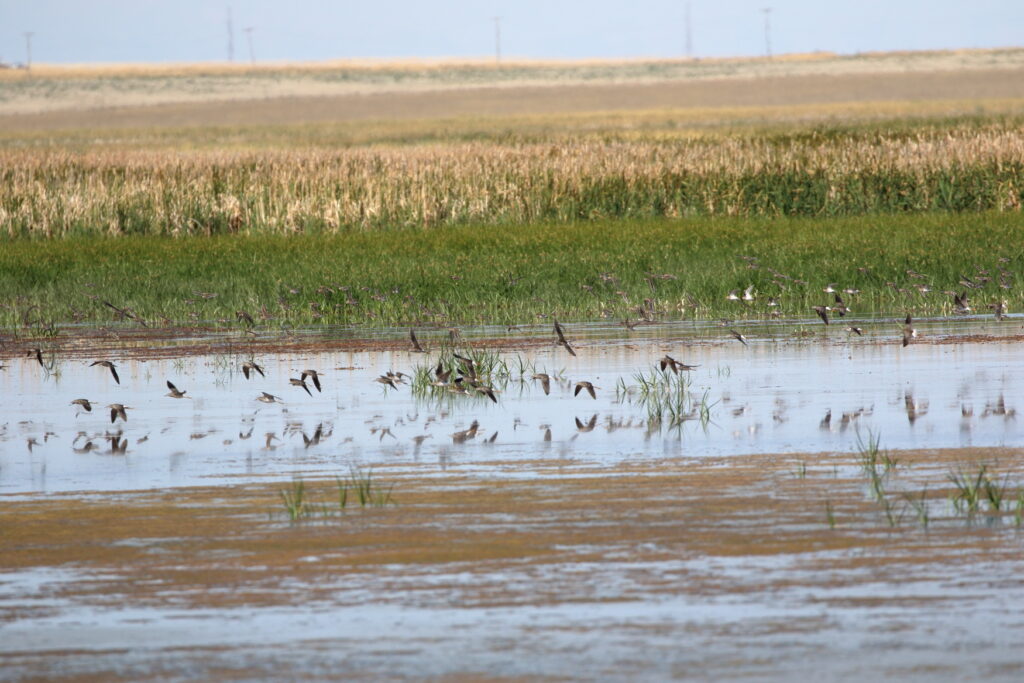
As soon as we arrived at Benton Lake, flocks of Baird’s and (probably Greater) yellowlegs greeted us.

Benton Lake normally did not seem to have good shorebird habitat. Every May, when we would come here to get our Upland Sandpipers and Chestnut-collared Longspurs for the year, we would drive by cattail marshes and open grasslands—not mudflats. The drought in the West this year had been changing everything, though. Bowdoin, one of the best refuges in Montana, had such low water levels that ducks were hard to come by. At Ninepipe National Wildlife Refuge, the ponds on Duck Road had disappeared by May. The upside? Some lakes that previously had been terrible for shorebirds suddenly had extensive mudflats filled with millions of tasty invertebrates for these arctic migrants to feed on. Which is what happened at Benton Lake.
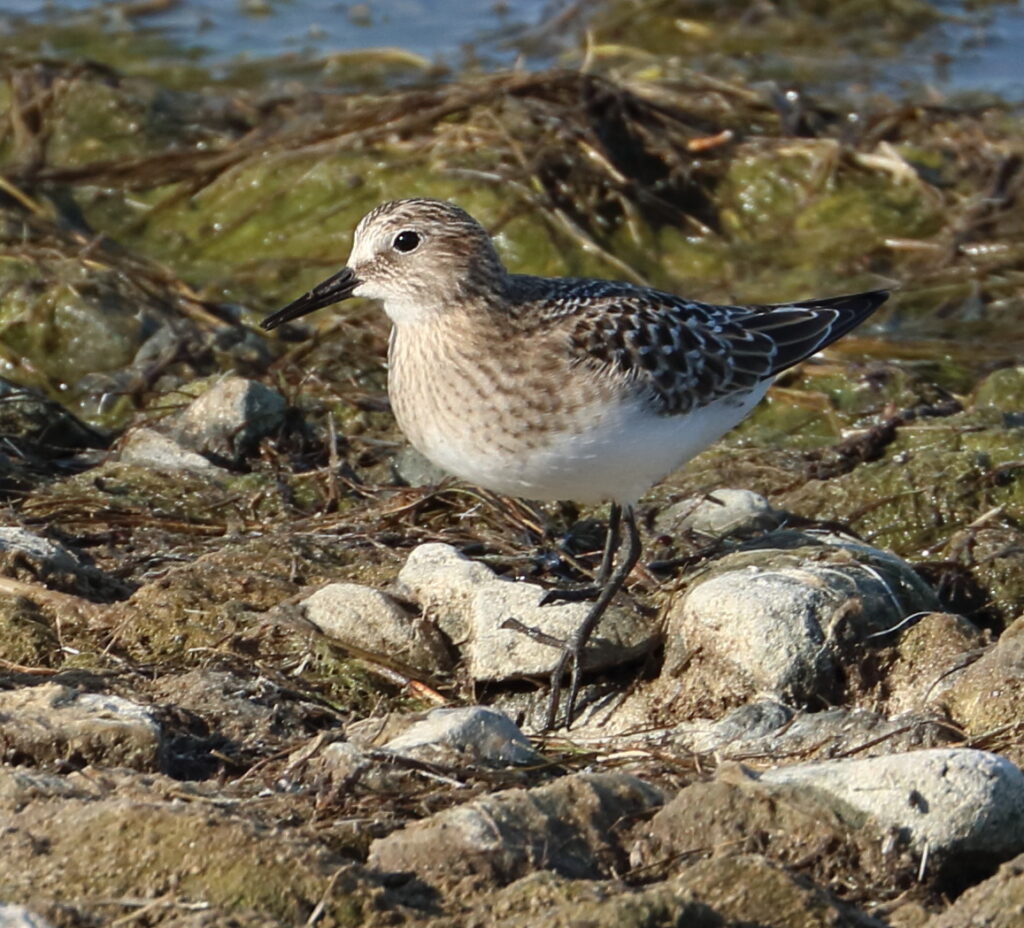
With high numbers and some close approaches, Baird’s Sandpipers proved to be the highlight of our Benton Lake shorebird extravaganza. Baird’s are larger than peeps (though some people group them together), and are identified by their black legs, robust breast markings, medium bill, and wings that extend out over the tail.

In fact, as soon as we arrived at the first pond, a large flock of small shorebirds lifted off from some distant mud, speeding over another flock feeding in the shrinking lake. My dad set up the spotting scope and we quickly determined that both of these flocks were primarily composed of one of Montana’s most common fall shorebirds, Baird’s Sandpipers. As we scanned these favorite sandpipers, we marveled at how much individual variation there was within each group. Though every bird was of the same species, each differed slightly in color, size, shape or bill length, allowing us to learn about what features confirmed a bird as a Baird’s. Soon, I noticed several more Baird’s on the shoreline next to us less than ten feet away, allowing us to get even better views and great photos. However, Baird’s were not the only species out on the mudflats. During my scan of one of the more distant flocks, I spotted a taller sandpiper, with a longer, more curved bill and thick supercilium.

“Stilt Sandpiper!” I yelled, and my dad was able to glimpse the species before the whole flock took off again. That same flock held a few peeps that I struggled to identify, debating whether the bills were long enough for Westerns or if the colors were right for Least or Semipalmated. Despite having some practice with peeps, they always manage to confuse me.

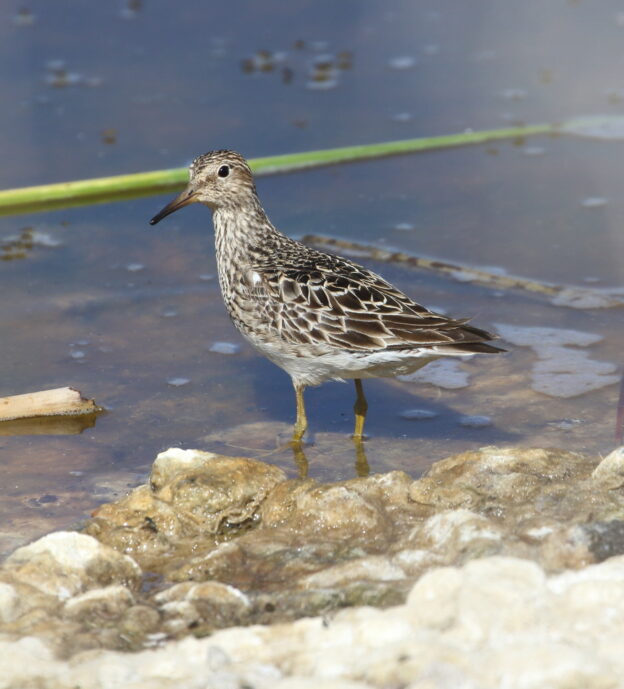
We moved on to the next pond, where more shorebirds waited. More Baird’s flew circles around us, and we spotted a huge group of dowitchers lifting off in the distance, complete with both species of yellowlegs. Solitary Sandpipers foraged on the shore, alongside Killdeer and a few Leasts. Near the end of the final lake, I spotted two Pectoral Sandpipers, another one of our targets, picking invertebrates off the rocks right next to the car alongside our only Wilson’s Snipe of the day! We’d never had better looks or photos of any of these species, and never in these high numbers! At least the drought was creating some good.
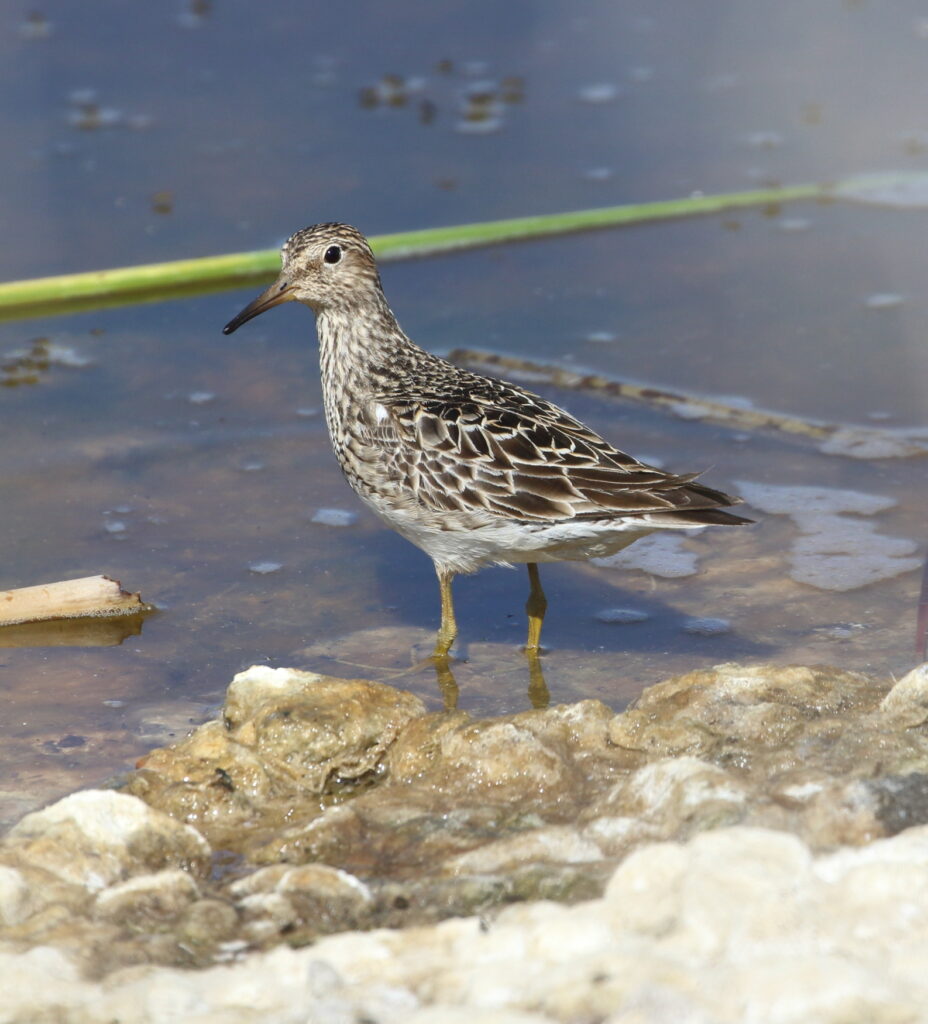
Right along the road, we got our best looks ever at several species including this cooperative Pectoral Sandpiper, distinguished from Baird’s by its yellow legs, larger size, and more extensive and abrupt cutoff of markings on its breast.

Our most astounding discovery happened as we were picking through another flock of Baird’s Sandpipers, searching for something unusual. As I looked up, I spotted three striking black and white birds flying towards us, and my heart rate jumped. They landed a short distance away, and I stared at them through my binoculars: three Black-bellied Plovers, still completely in breeding plumage! While we’d seen these birds in Montana in previous years, we’d never had such an experience with their breeding colors! They hadn’t been on my radar at all, either, though perhaps they should have been.
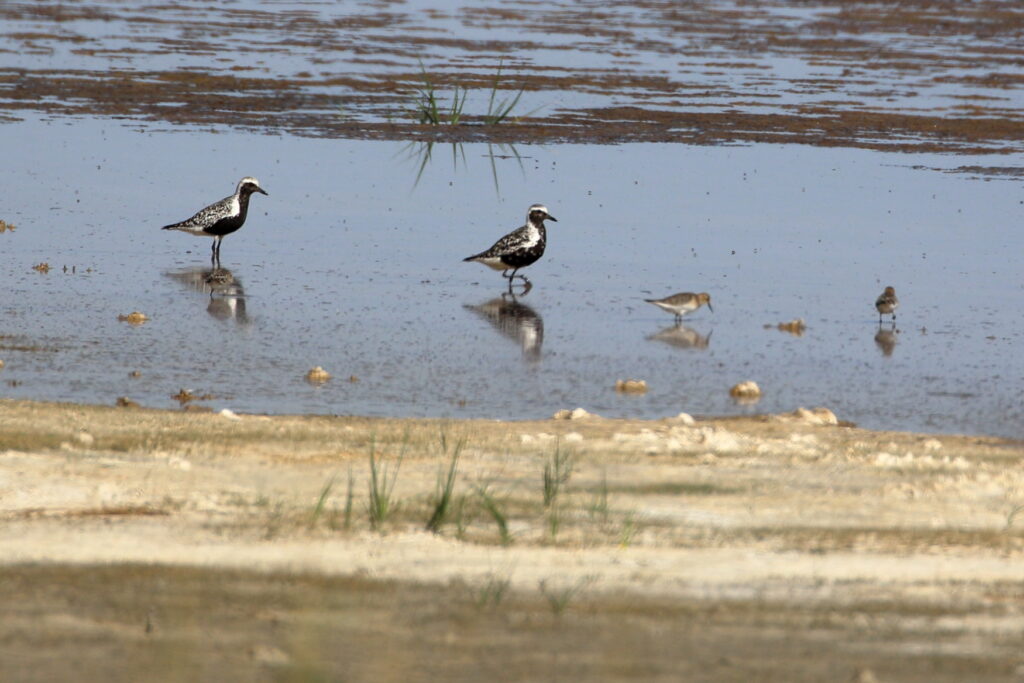
Black-bellied Plovers weren’t even on our radar, so imagine our delight seeing three fly in—and in full breeding plumage! (Note the Baird’s Sandpipers next to them.)

My dad and I had finally done it. This was the shorebird experience we’d been hoping to have in Montana for years, and Benton Lake, not any other famous shorebird hotspot, had been the place to provide it for us. The next day we’d leave the prairie behind and head for the mountains of Glacier, though hopefully our year of shorebirds wasn’t quite through!
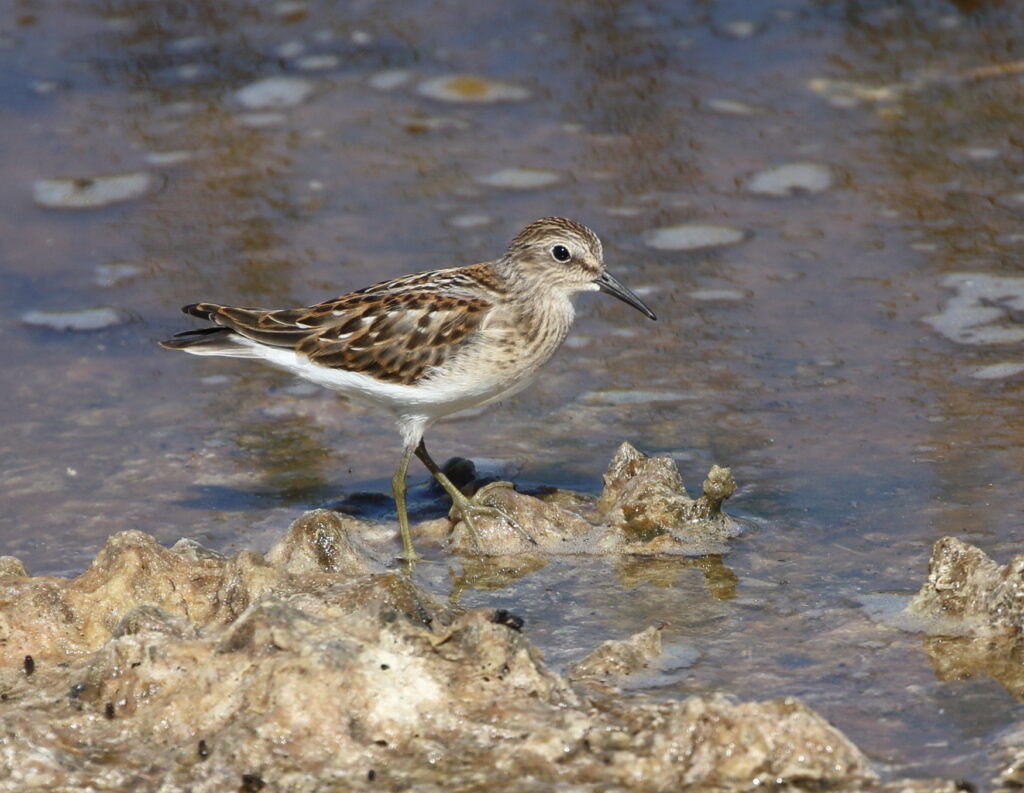
As usual, peeps were hard to pick out, but we did get a great experience with a Least Sandpiper near the end of the driving loop.

Golf and Birding

Welcome to our new subscribers! We appreciate your interest in our adventures and experiences, and hope you feel free to share this post with others. If you’d like to support FatherSonBirding, feel free to order some of Sneed’s books from online stores or, better yet, by through your local independent bookstore. Thanks, and have a great weekend! Next week: more of Braden’s High Sierra adventures!

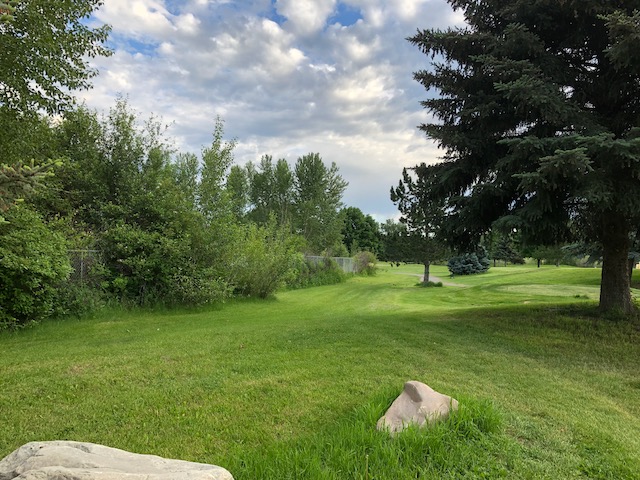
Did you ever stop to think that the words “golf” and “bird” both have the same number of letters in them? No? Good. It’s a stupid lead to a blog. Plus, golf is a sensitive subject for me. In my mid-thirties, I began playing with friends and found I quite enjoyed it. Sort of. In between the tears and swearing and bouts of hopelessness and low self-esteem. After my golf swing betrayed me once and for all, in fact, I tossed my clubs into the basement to collect dust for the better part of a decade. Foolishness springs eternal, however, and a few years ago I began a ritual of golfing once a year with a buddy—only to discover an aspect of golf I had never before recognized: Birds.

Many golf courses’ locations adjacent to wetlands and other natural habitats give them a wide range of opportunity for the golfing birder!

When I golfed in earlier years, Braden and I hadn’t yet become birders. Imagine my surprise, then, when I got back onto the links to discover that birds abounded—at least at Linda Vista Golf Course, my favorite course in the area (and one that happens to have a great cafe). I realized, in fact, that this course could actually be one of the best birding spots in Missoula. The problem? It is challenging to golf and record birds at the same time, and I have to thread a fine line so that my buddy doesn’t brain me with a 4-iron while I’m trying to figure out which kinds of swallows are circling around us. This dilemma, however, gave me an idea—one that I finally carried out last week: to get permission to bird the course sans clubs one morning before the golfers showed up.

Even with the distractions of actually playing a round of golf, I had managed to record 25 species of birds a couple of days earlier. These had included surprises such as Cinnamon Teal and Red-naped Sapsucker. I wonder what I’ll find with more time to study my surroundings? I asked myself as I again headed out two days later.

Almost immediately, it became evident that there were greater numbers of birds than I had noticed before. The Yellow Warblers were particularly insane with a new one spouting off every twenty or thirty yards—about the distance of a short pitching wedge. This made sense because part of what made this course such a great birding spot is that it was shoe-horned between river and wetlands on two sides and farm/pasture on another. Along with the Yellow Warblers I noted an abundance of Red-winged Blackbirds and Gray Catbirds—but was also surprised by an absence of Common Yellowthroats and dearth of Song Sparrows. Hm . . . maybe they were just quieting down for the season?

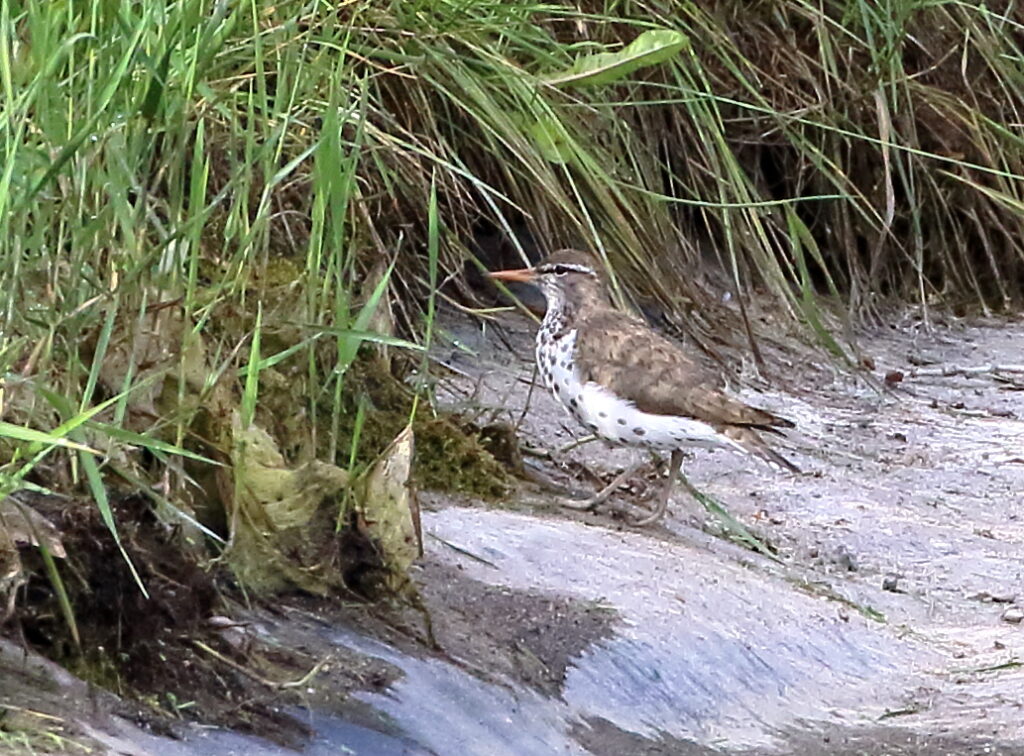
Spotted Sandpipers are always a welcome sight—though I’m not sure the plastic sheeting around this pond made it a great choice for this bird.

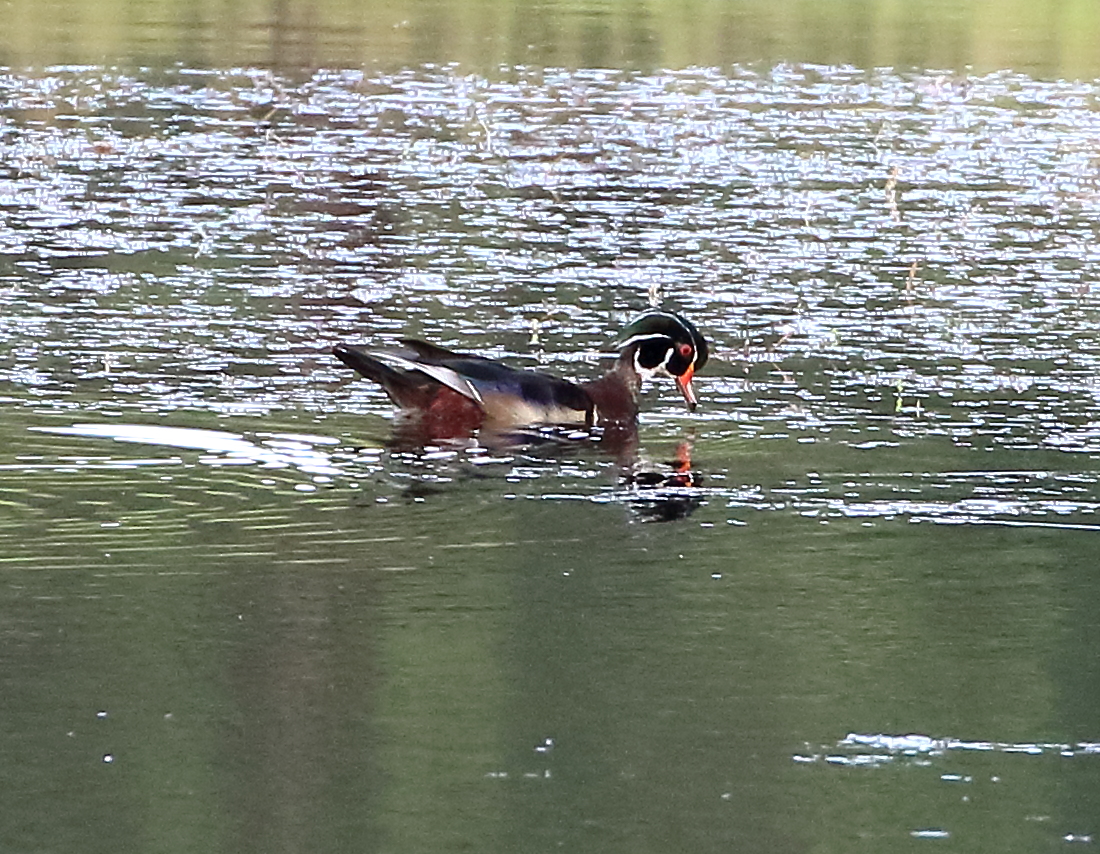
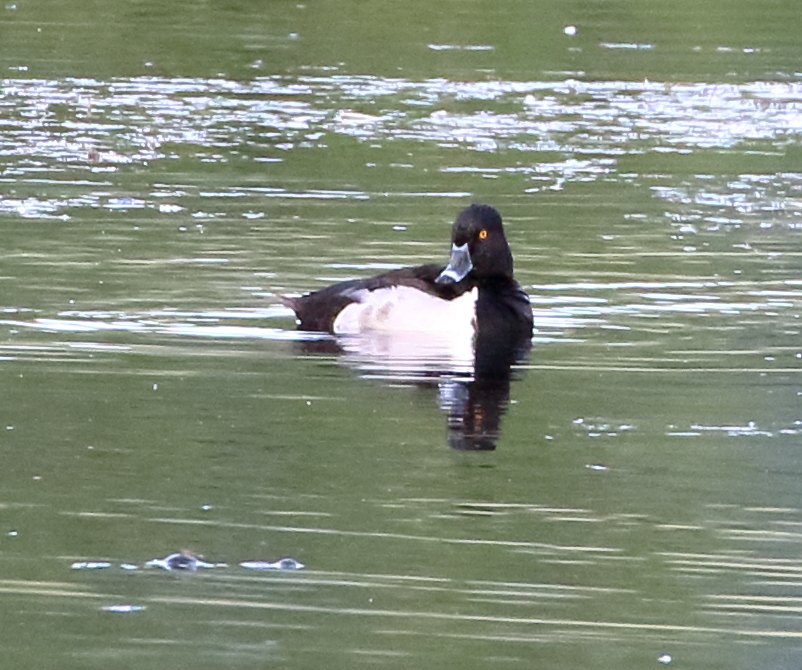
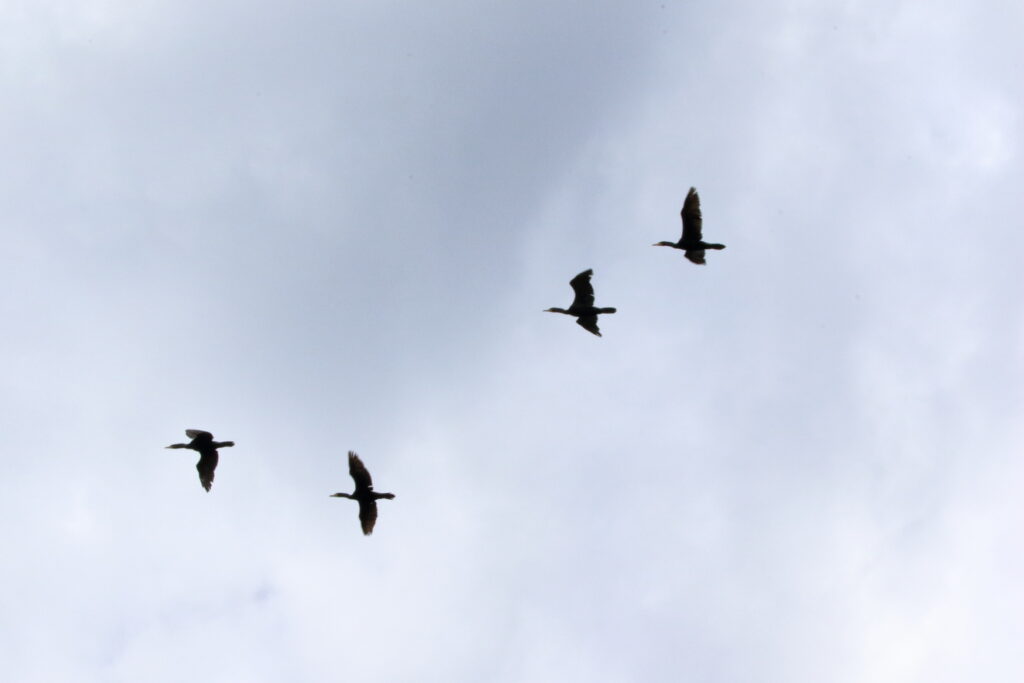
Continuing around to the third hole, I came across several open ponds where I was pleased to see at least seven Wood Ducks, Killdeer, a Spotted Sandpiper, and a pair of Ring-necked Ducks, an unlikely find for the time of year. One of the delights of birding a place that doesn’t get much attention is the frequency of red “unreported” dots that appear on the eBird checklist. The Killdeer were unreported and while I was logging species on eBird, another unreported species, Double-crested Cormorant, flew by. I devoted a good ten minutes to figuring out swallows and quickly noted Tree and Northern Rough-winged. As my binoculars pin-balled back and forth, however, I made another great discovery: Bank Swallows! Braden and I love finding these because they always seem to pop up when we least expect it, and this morning they followed tradition!

Double-crested Cormorants were one of several species that earned me a coveted red “Unreported” dot on eBird!

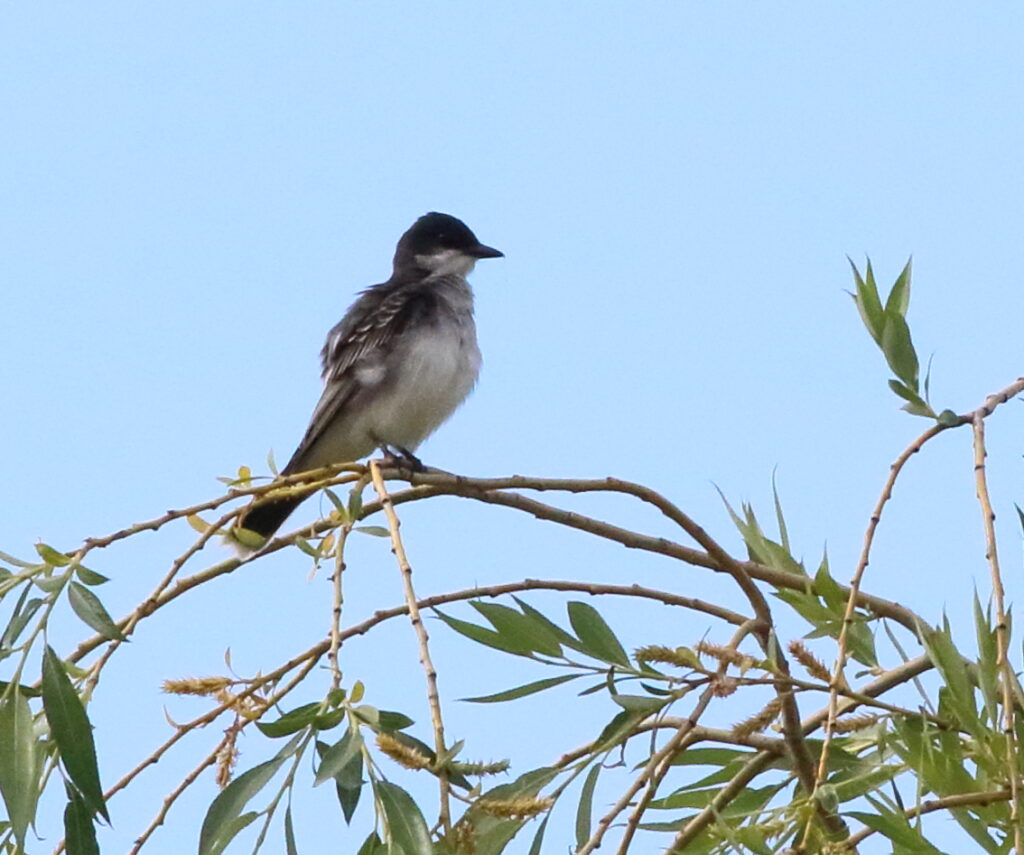
The rest of my birding round yielded nothing that will upend the scientific community, but proved mightily enjoyable nonetheless. While talking to the lone golfer out this early in the day, I spotted a gorgeous male Western Tanager. A Bullock’s Oriole also flew by. Over on the pasture side of the course, Eastern Kingbirds abounded and Cliff Swallows replaced the Bank Swallows zooming around me. I finished the day with 33 species—not dramatically more than I had found while actually golfing, but I had savored every tee, fairway, and green.

One of the fun things about my round of birding was the number of juveniles about—including this young Eastern Kingbird waiting to be fed by a nearby parent.

Speaking of golfing, I did notice an odd phenomenon while doing the round with my buddy two days earlier. I actually played better than I had in recent memory. It may have been that I had forgotten my bad habits, but I think that the birds actually helped. One of my problems with golf is that I overthink everything. Instead of just hitting the ball, I am telling myself Remember to tuck in your hip as you draw back or Keep that left foot planted and your elbow straight. With half of my mind on birds, I didn’t have time to do that—and hit some of my best shots in years. The lesson? There isn’t one. Just get out there and keep birding, wherever you happen to be.

Note: if you would like to bird your local course, be sure to ask permission—and it obviously wouldn’t hurt if you already golf that course yourself. With the manager, discuss the best time to go out and stay polite even if she/he/they says no. After all, golf courses generally are money-making ventures and they have real customers to take care of. But speaking of that, I can’t help wondering if any particularly birdy courses have considered charging a modest fee to people who would like to bird them? Especially for courses that adopt green practices such as using less water, pesticides, and fertilizers, it might be a great way to earn a bit of extra income while promoting sustainability. Just a thought.

The Best Prairie Day Ever: Benton Lake NWR

After speaking at the inaugural Billings Kid Lit Festival (see Billing’s Riverfront Park: Montana’s Premier Songbird Hotspot?), I awoke at 4:30 the next morning and hit the road by 5:15. My plan was to book it to Bowdoin National Wildlife Refuge and start driving around the lake by 8:30. The problem? I kept passing ponds with birds in them—and I, of course, had to stop to find out what they were! My efforts were rewarded with a variety of ducks, Wilson’s Phalaropes, American White Pelicans, Sandhill Cranes and more, but delayed my arrival at Bowdoin until 9:30. Then, even greater disaster struck: I ran into way more birds than I expected at the Bowdoin visitor’s center—including both male and female Baltimore Orioles!

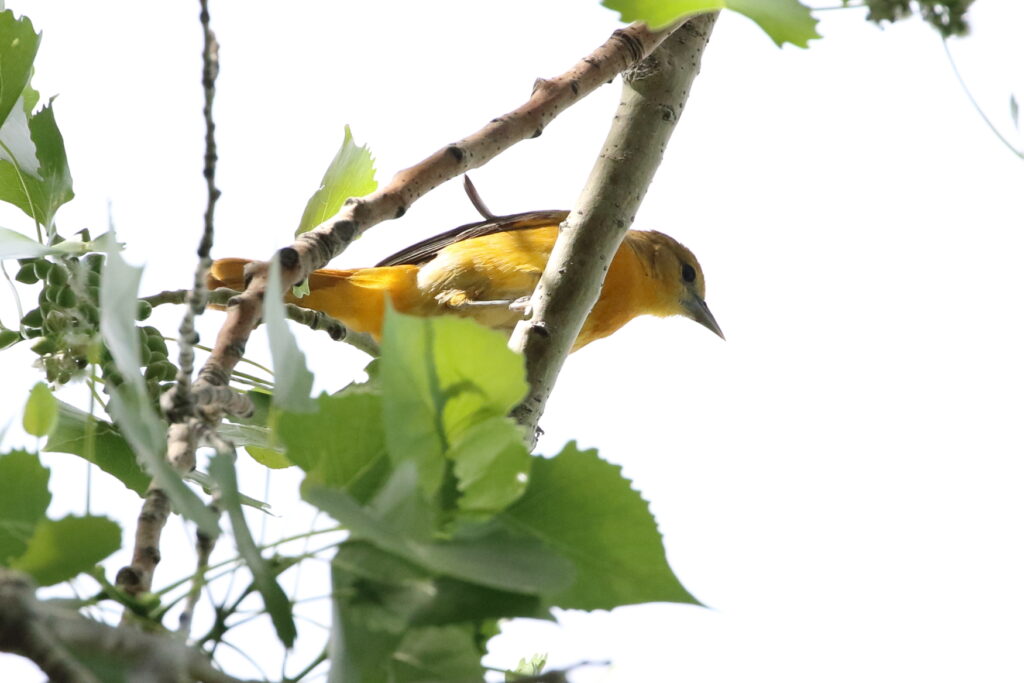
Bowdoin NWR lies at the eastern edge of the Baltimore Oriole’s range, but Braden and I have seen them often enough that it seems certain they breed there. Oh, and seeing both the male and this female offers an added clue!

Finally entering the first five-mile stretch of the loop, I was shocked by how much of the lake had been sucked dry by eastern Montana’s multi-year drought. This really was a disaster and I wondered if I would even find any place conducive to water birds. Meanwhile, I encountered great grassland birds including Long-billed Curlews, Loggerhead Shrike, Chestnut-collared Longspurs, Lark Buntings, and Grasshopper, Vesper, Clay-colored, and Savannah Sparrows. Finally, near the end of the lake, I found water but at pathetically low levels. A much-vaunted Cassin’s Sparrow (discovered by Joshua Covill, I believe) had been observed repeatedly at about Mile 7 of the loop and I ran into Robin Wolcott and her husband who had driven over from Big Fork to see it. While we stood there, Robin did hear the sparrow, but with my crummy ears I couldn’t be sure so didn’t count it. I also had many miles to drive so I kept on truckin’, driving the three hours to Great Falls.

The next morning I again woke early, loaded up the car and arrived at Benton Lake NWR as dawn filtered over the prairie. After the dry conditions at Bowdoin, I fretted about Benton Lake—but my worries were hijacked by what may have been the most astonishing grassland birding experience I’ve ever had. It began with a sighting of a Long-billed Curlew in flight, always a welcome bird. Then, I saw other large shorebirds and stopped to behold the incredible courtship displays of Willets, flying madly around emitting their haunting, looping calls over the prairie. Other curlews joined in and a Marbled Godwit briefly gave chase to a Willet. Meanwhile, meadowlarks sang and a pack of coyotes unleashed their insane yelping cacophony across the landscape—all in the dawn light.

Most birders take Willets for granted, but watching and listening to them display over the prairie where they breed will forever make them a favorite bird ‘o mine.

Suddenly, I spotted a small bird rising high into the sky in an obviously courtship display. “No way,” I excitedly muttered, struggling to focus my camera on the small black dot. My thought? That it could be one of the prairie’s most magical creatures, a Sprague’s Pipit! Alas, Nick Ramsey studied my photos later and suggested it was actually a Horned Lark, and after further study, I agree. Still, it was no less incredible—especially because I didn’t even know that Horned Larks make such displays!

This “Sprague’s Pipit” got me uber-excited, but I learned later that it was almost surely a Horned Lark performing a similar high-altitude display. Thank you, Nick Ramsey, for setting me straight!

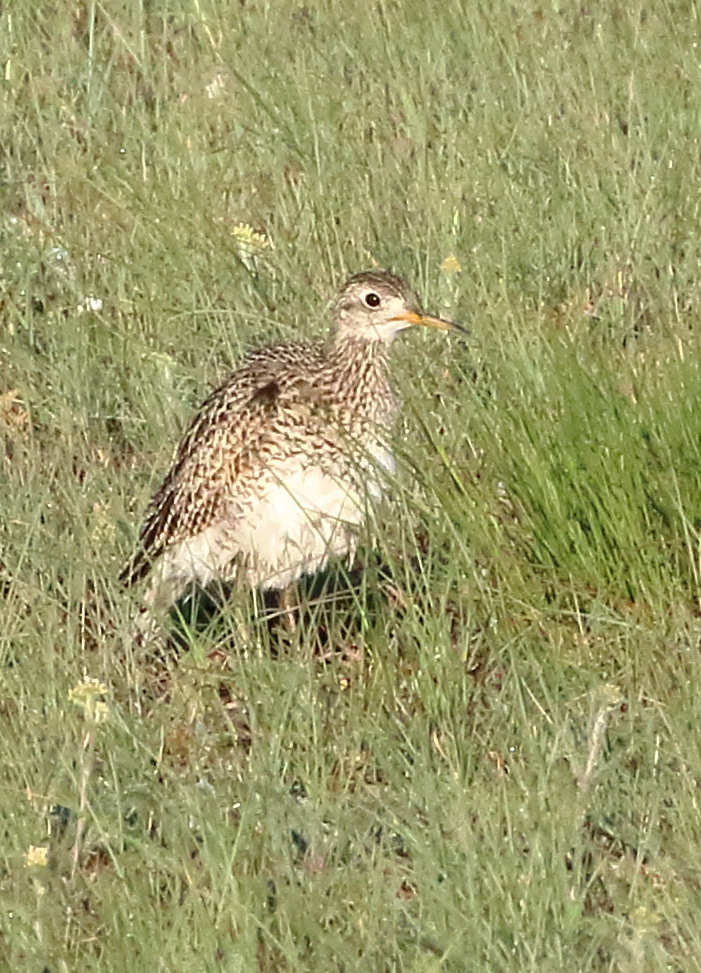
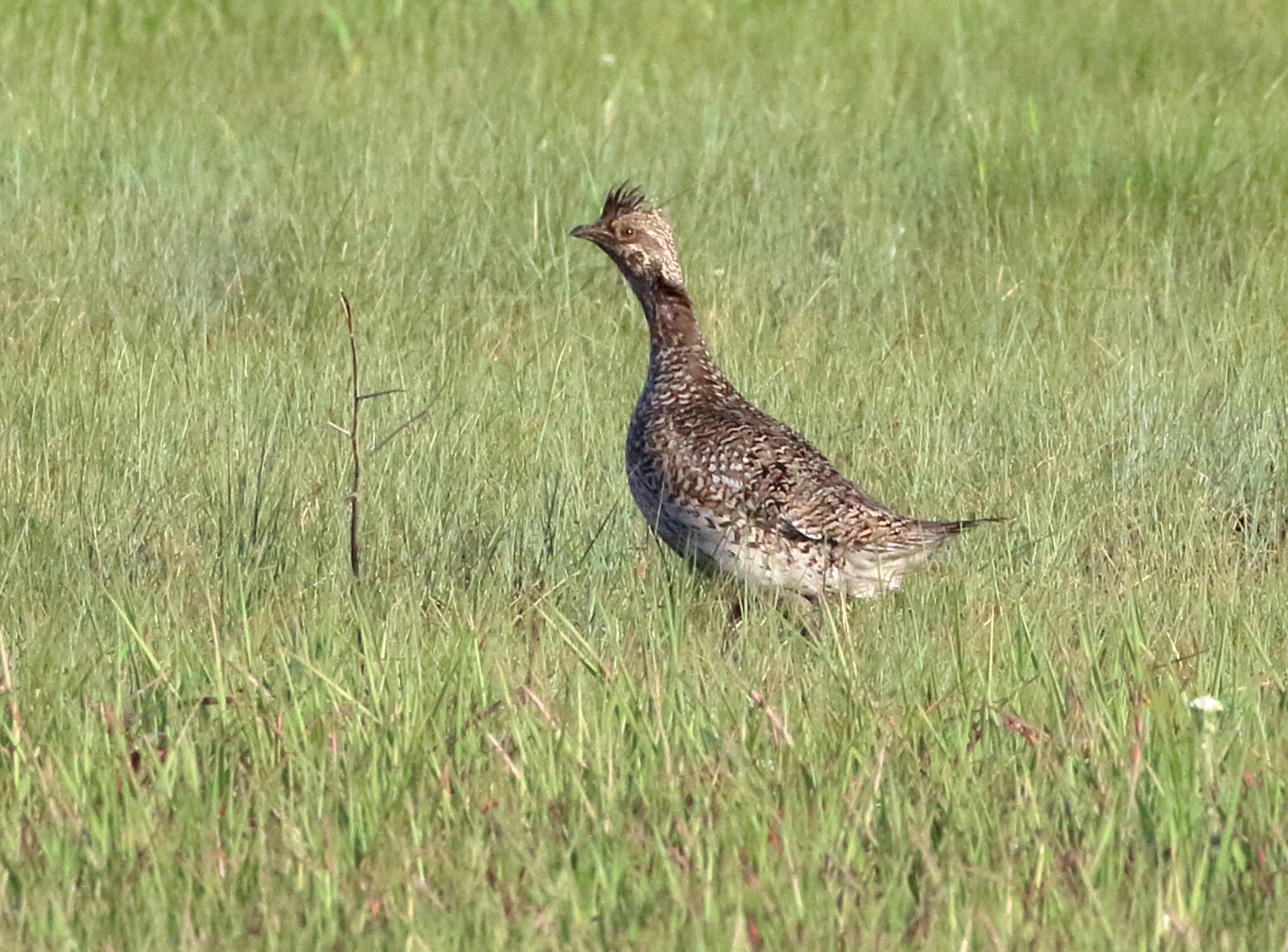
Passing the visitor center, I thought that I would finally make my way to the lake and start looking for water birds. Guess again. As soon as I turned right, down the dirt road, I stopped to look at juvenile Horned Larks and saw more Willets and curlews. Then, I spotted one of my top target birds: Upland Sandpipers! I had barely had a chance to look at them, when I saw another top target bird—a Short-eared Owl! As I was snapping some blurry photos of the owl, eight Sharp-tailed Grouse flew low across the road 100 meters in front of me and zoomed like cruise missiles across the prairie—something Braden and I had never seen at Benton Lake. But the best was yet to come . . .

Upland Sandpipers are one of our favorite grassland species—and they undertake one of Earth’s most incredible migrations, traveling from our prairies to southern South America in a matter of weeks each year!

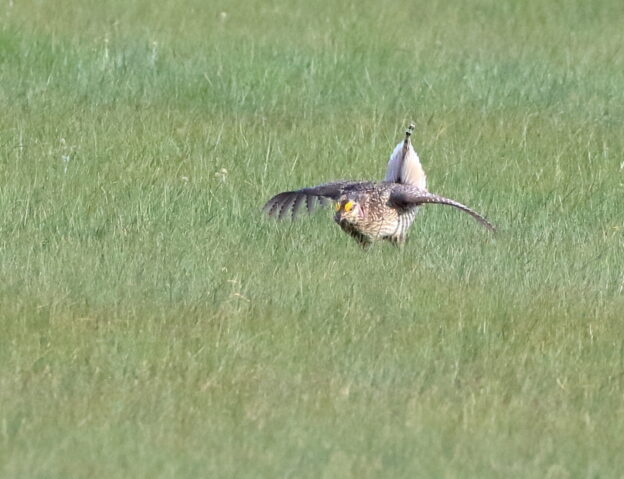
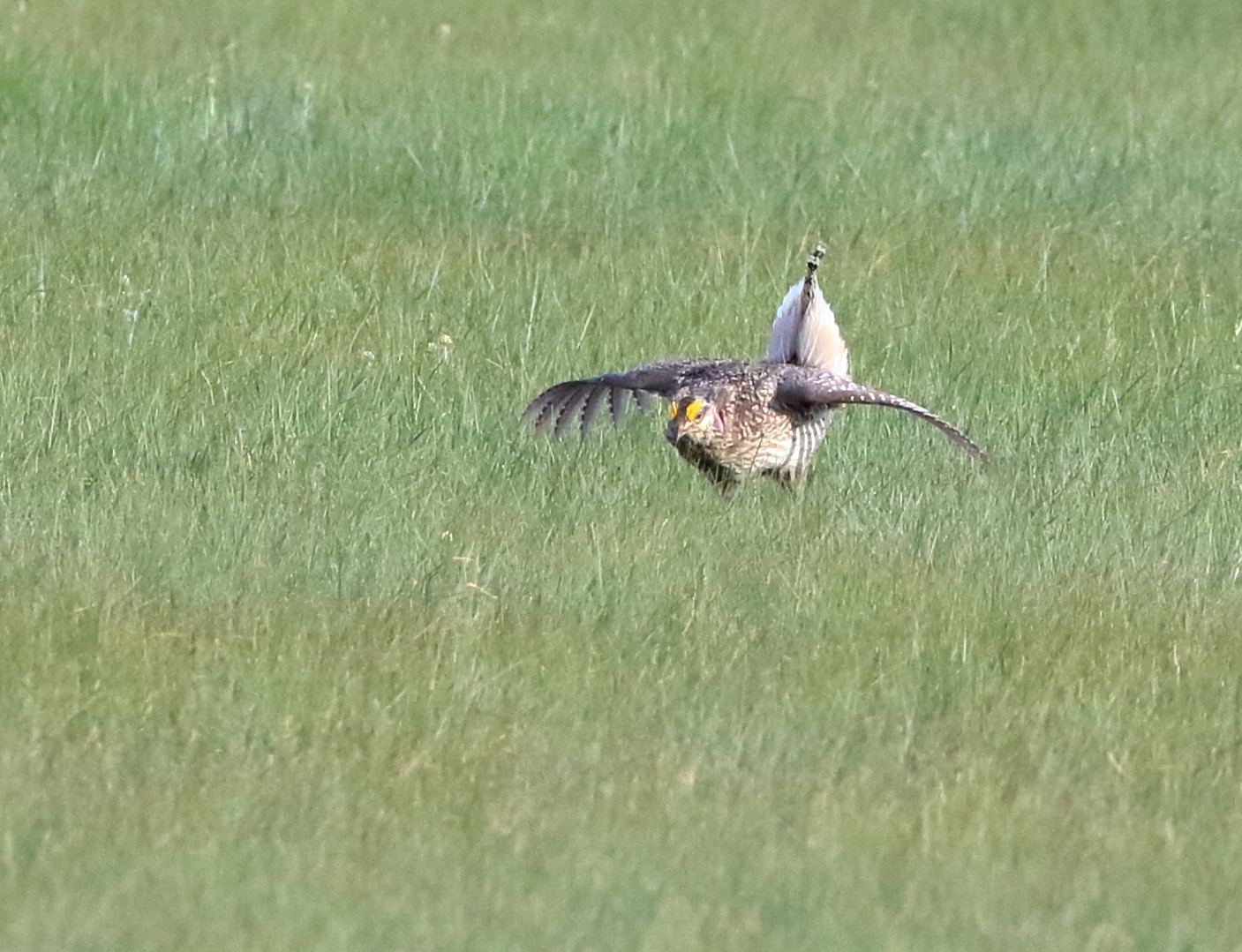
As I was watching the Short-eared Owl, I noticed a white spot perhaps a quarter-mile away. At first I thought it was some man-made structure, but then it moved. I drove closer and raised my binoculars to see a sight I had never in my life observed—a male Sharp-tailed Grouse in full “impress mode” trying to woo a nearby female! Fumbling for my camera, I was so excited that my hands actually shook, and I watched this chase-and-pursue courtship for the next ten minutes. Like so many birds recently, a displaying male grouse was something I never thought I would see, and yet here it was when I was least expecting it!

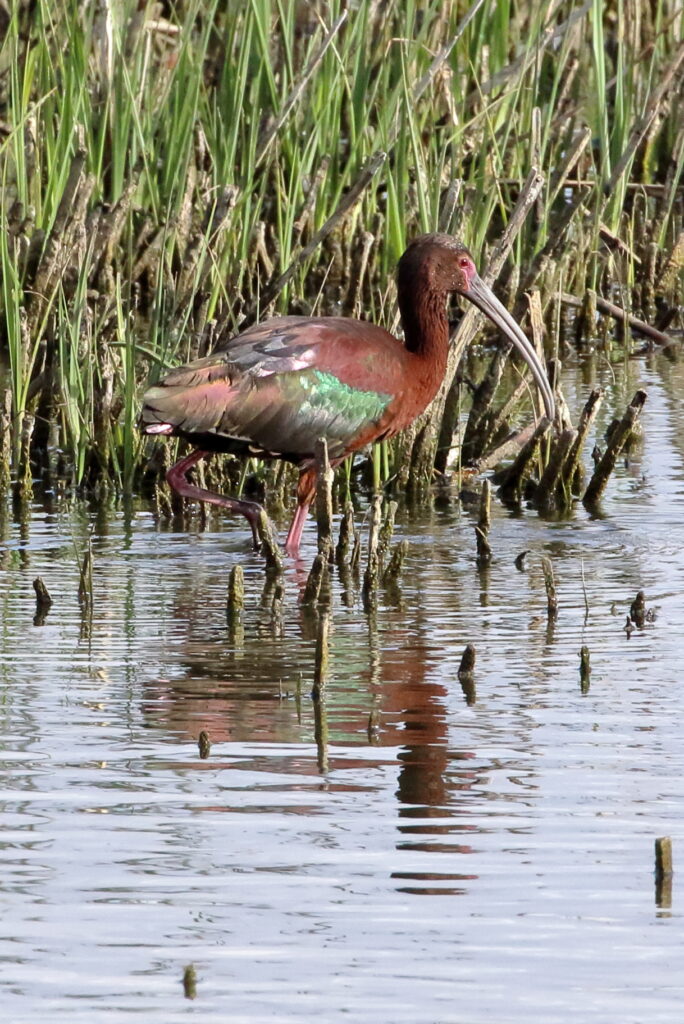
My heart still racing, I finally moved on, and was relieved to see water filling the two main ponds—along with thousands of avocets, ducks, Eared Grebes, Yellow-headed Blackbirds, phalaropes, Forster’s Terns, Franklin’s Gulls, White-faced Ibises and just about everything else I had hoped to see. Water levels looked good to me, but refuge manager Bob Johnson later told me that they struggled to keep the ponds filled. They had the water rights, he said, but it cost so much—think hundreds of thousands of dollars—to pump the water up to the refuge that they had run out of money. That makes it more imperative than ever to support increased funding for our refuges and other wild lands by calling or emailing U.S. Senator Daines and our other representatives.

It’s hard not to love ibises, and I was delighted to see at least nine White-faced during my circumnavigation of Benton Lake.

I had planned to continue on to Freezeout Lake, but after four breathless hours at Benton, I wasn’t sure my sensory systems could handle it. As I said, it was my most incredible grassland birding day ever, and certainly my best at Benton Lake, not just for the species I saw, but for the intimate observations of their natural behaviors as they repeated their ancient life cycles. What’s more, I didn’t see a soul the entire time I was on the driving loop. It gave me a real, reverent feel for what the prairies must have been like before we plowed, grazed, and harnessed the vast majority of them. My wish is that we continue to protect Benton Lake and other vital refuges—and that all of you reading this get to visit there on a summer sunrise of your own.  

My Benton Lake eBird list Oh, and my species count for the trip totaled 110!

The only thing better than experiencing the beauty of the prairie is to do it in the company of an Upland Sandpiper and Long-billed Curlew. Can you find them?

Arizona 2022, Part 1: Braden’s Big Year or Bust

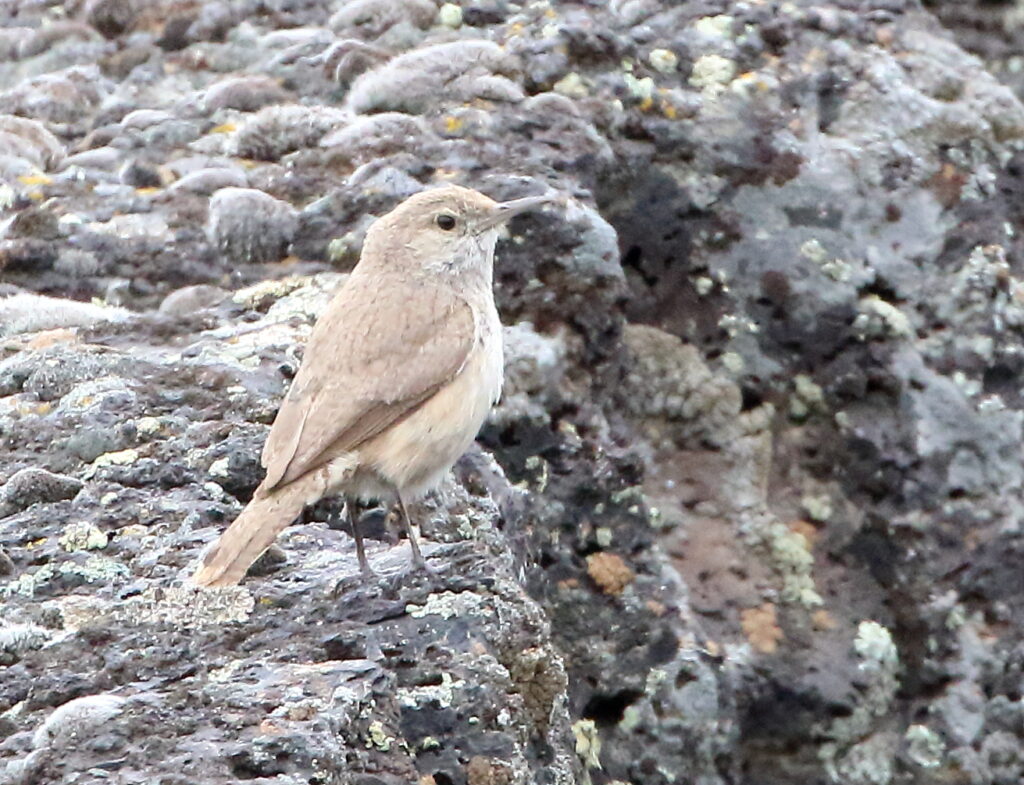
It’s been a while since we posted, and that’s no accident. When Braden landed a field job monitoring Northern Goshawks in California’s Sierras for the summer, I impulsively offered to drive him there—via Arizona and Southern California. We had wanted to return to Arizona since falling in love with the state during our Big Year in 2016. The fact that Braden was out to smash his own Big Year record with a goal of 400 species made the argument even stronger, especially after he and Nick Ramsey had ransacked the state of Florida only weeks before, followed by our amazing time birding New York City. So on May 22, rashly ignoring the price of gasoline, Braden and I made a beeline down Interstate 15, pulling over to pick up Thick-billed Longspurs near Dillon, Sage Thrashers and Rock Wrens in southern Idaho, and Burrowing Owls and phalaropes at Antelope Island near Salt Lake City. After a short, peaceful night in Kanab and a stop to ogle the rapidly disappearing Lake Powell, we rolled into Phoenix for our first major Arizona stop of the trip: Prospector Park, east of Phoenix.

We found Rock Wrens at a delightful I-15 rest area of lava called Hell’s Half Acre in southern Idaho. Don’t pass it up!

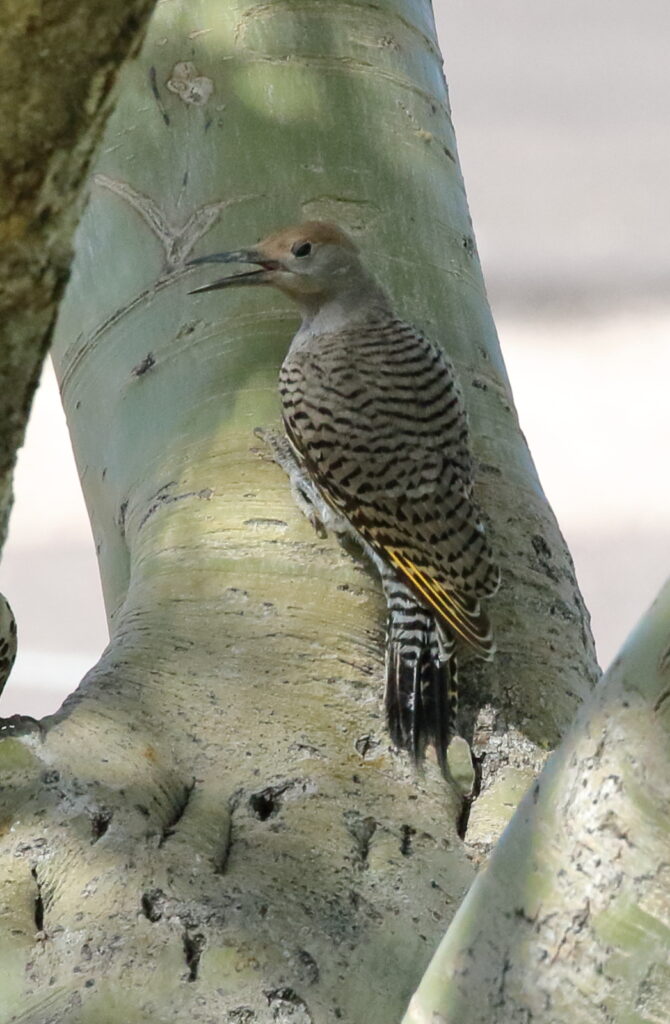
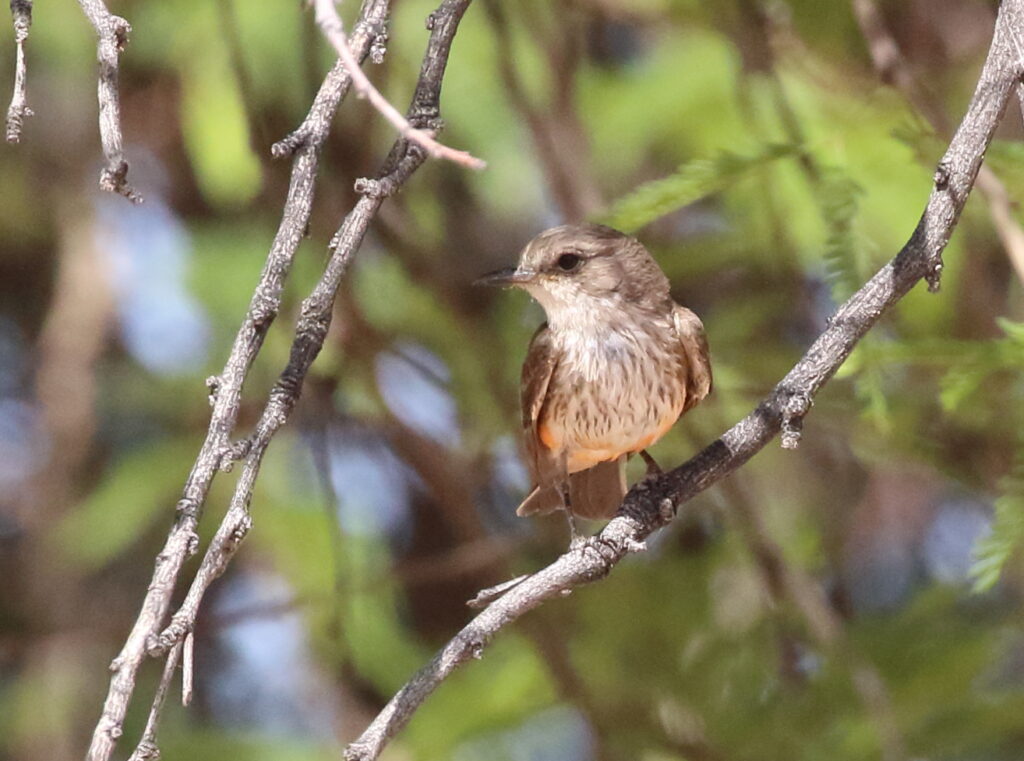
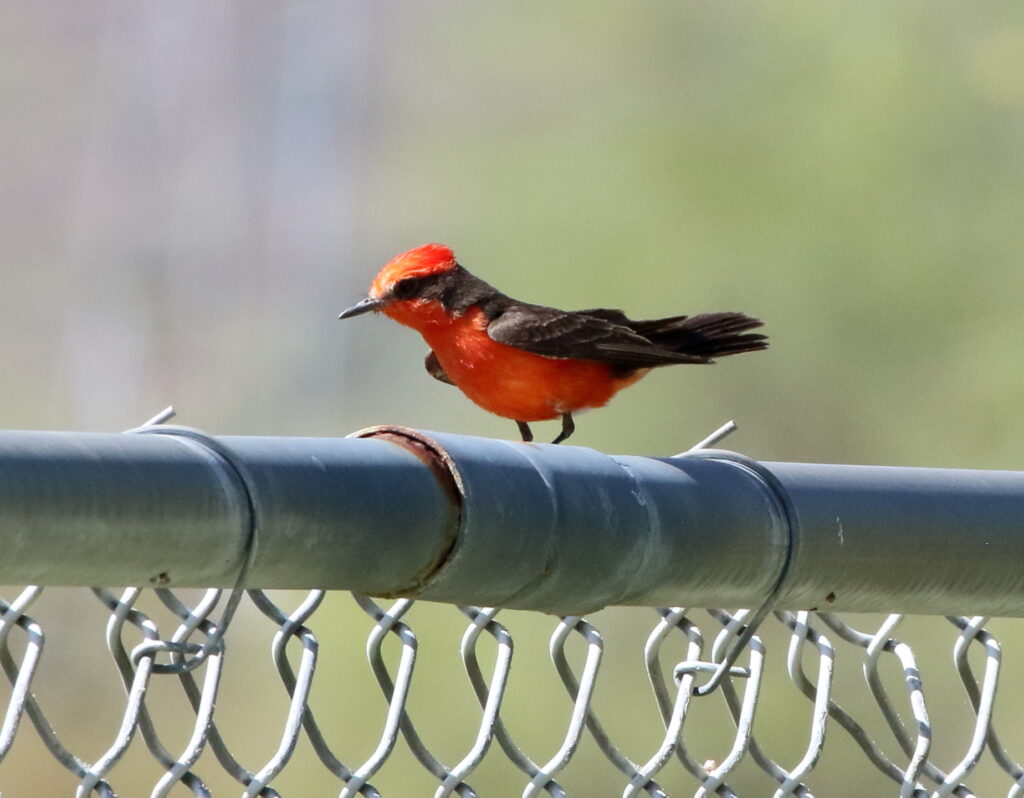
As usual, Braden ferreted out our hotspots for the trip and Prospector Park blew away all expectations. An unlikely-looking suburban park with playing fields and lots of lawn, we tumbled out of the car and began racking up Life Birds before we could utter “Holy Bird, Batman!” As soon as he raised his binoculars to his eyes, Braden called out “Abert’s Towhee!” Five minutes later, “Gilded Flicker”—the last ABA woodpecker I needed for my Life List. This was not to mention the gobs of Year Birds Braden needed to advance toward his magic 400 number. In fact, one of the great things about Arizona is that for Montanans, almost every bird we see is likely to be a Year Bird. Verdin, Ladder-backed and Gila Woodpeckers, Vermillion Flycatcher, Lucy’s Warbler, Gambel’s Quail, Curved-billed Thrasher—and another Lifer, Bendire’s Thrasher. For a birder, Arizona truly is a pot ‘o gold.

Gilded Flicker was a species I had needed for several years to complete my ABA woodpecker list. Okay, I admit it—not the most exciting critter, but we both enjoyed seeing it nonetheless.

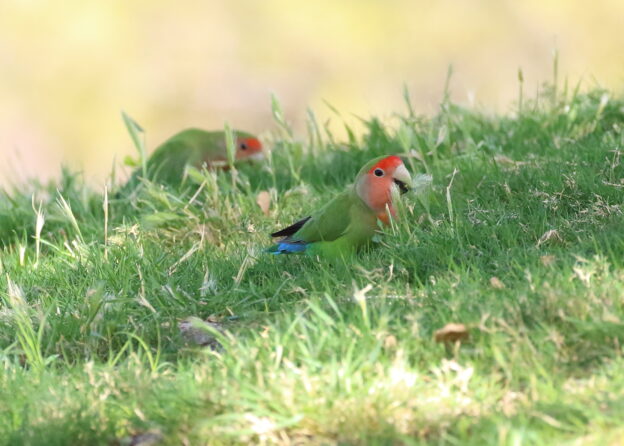
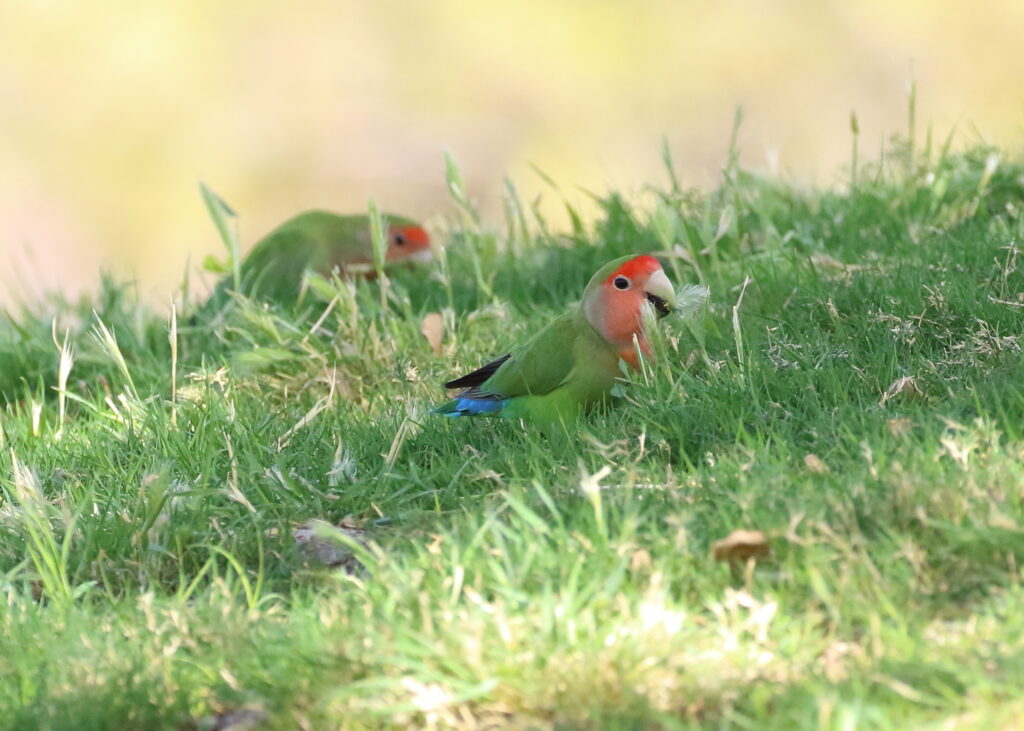
Not for the first time, one of our most fun finds turned out not to be a native species, but an exotic. We were completing our circuit around the park when we noticed a group of (I think) Mennonite birders staring at something in the grass. We couldn’t tell what they were until green shapes flew over to another patch of grass. “Rosy-faced Lovebirds!” Braden called with delight. It was a species he had especially hoped to see—and another Lifer for both of us. We spent a satisfying fifteen minutes just watching these little guys as they gathered grass seed heads—presumably to eat, but perhaps also for nesting material.

Introduced parrots such as these Rosy-faced Lovebirds always stir conflicting emotions in Braden and me. I mean, they definitely don’t belong here, but dang it, why do they have to be so darned cute?

But we had miles to go before we slept, so we reluctantly climbed back in the car for that night’s destination, Safford, where we checked into a cheap motel—only to find bed bugs hiding under the mattress. After quickly getting a refund, we headed to a pricier, bed-bug free place down the street (and yes, we checked the mattresses there, too!) for a welcome, but short night’s sleep. Our two-day, 1270-mile drive had already netted us five Life Birds and raised Braden’s Big Year total from 322 to 345 species—and we hadn’t even reached our first real destination. Would we be able to get Braden to 400? Things were looking good, but in birding as in life, nothing is certain . . .

Our Prospector Park List

Epic Florida Adventure Day 2: Merritt Island

This is Braden’s second installment of his epic Florida adventure with our recent guest blogger, Nick Ramsey. In six days, the daring duo hoped to bird the entire length of Florida from N’Orleans to Key West and back—and see 200 species of birds in the process. Day 2 began well when all of a sudden, they were beset by an equipment malfunction. Would they push on? What about the mosquitoes? Read on to find out—and, as usual, please share this saga, which we hope will soon become a major Hollywood movie called “The Big Tear”.

A buzzy rising song, marked by short, evenly-spaced notes, echoed from a nearby mangrove. “Northern Parula?” I asked Nick as he walked up with his dog Dixie by his side.

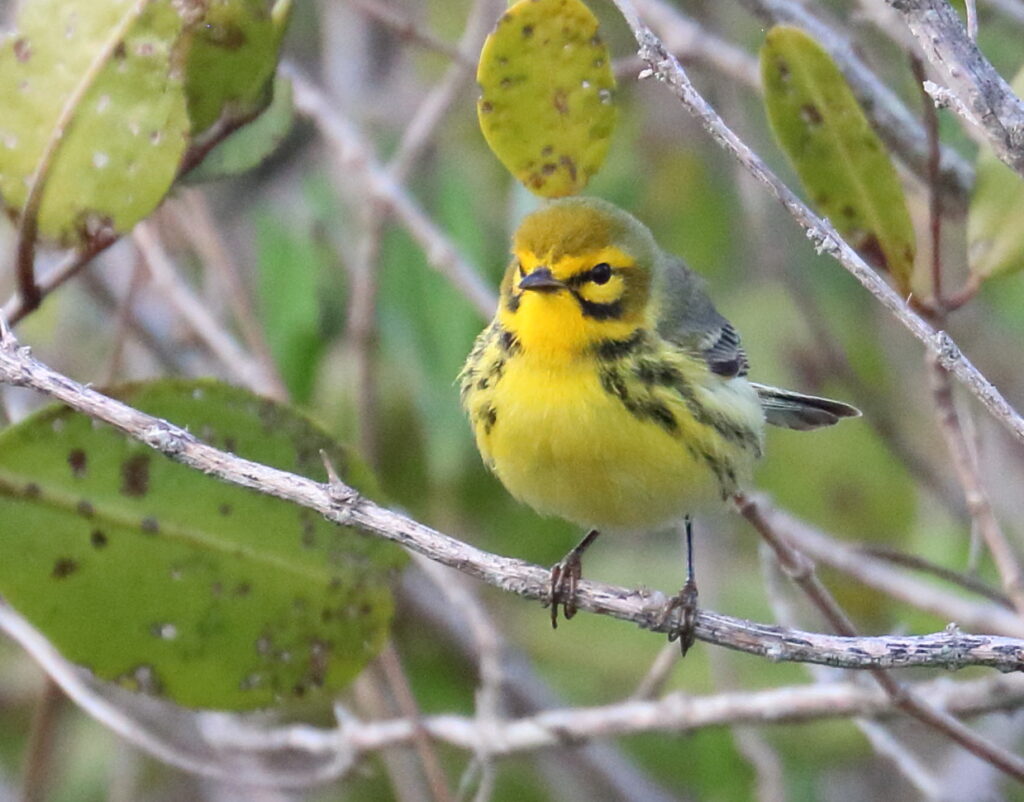
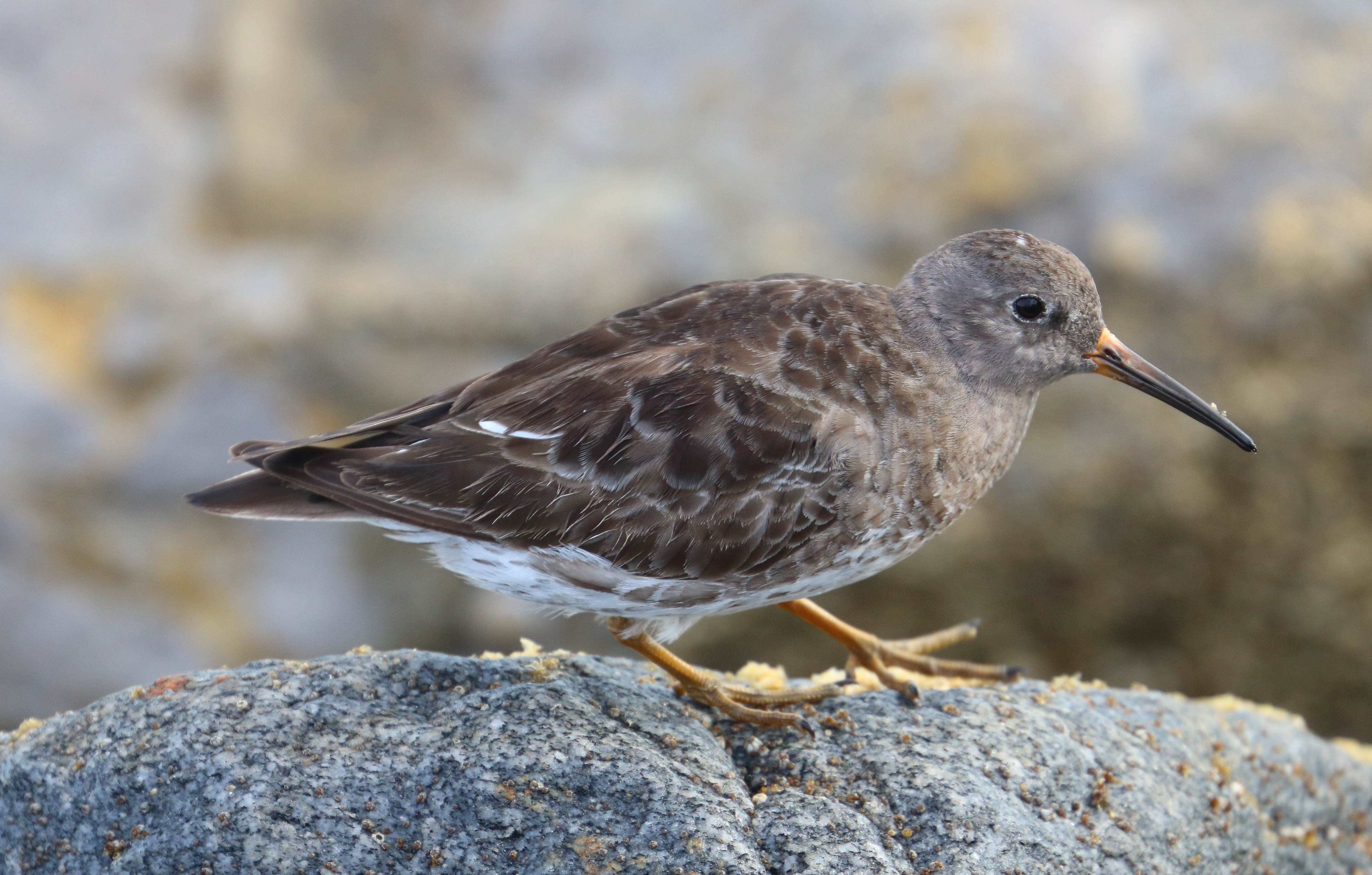
“Prairie Warbler!” he said, holding up his phone to record the song and then playing it back at the bird. Sure enough, a bright yellow male, complete with eye stripes like a football player, hopped into view, singing its heart out as I snapped dozens of photos. We were at the Lighthouse Point Park and Jetty in New Smyrna Beach, approaching the Atlantic Ocean, a different body of water than the day before. Common Ground Doves called from the mangroves around us, and early-morning beachgoers strolled past as we scanned the dunes for Gopher Tortoises and Wilson’s Plovers. Our primary target this morning was a well-known bird of the Atlantic, although not one that was supposed to be this far south: Purple Sandpiper. I’d recently seen my United States lifer on a rocky shore in the Maine winter, and yet one had been reported consistently from this subtropical beach. Soon enough, we located the jetty where the bird had to be, passing a large flock of roosting Royal Terns with a ratty-looking Black Skimmer in their midst. Ruddy Turnstones wandered the beach and Forster’s Terns plunge-dived around us as we walked out on the rocks, scanning for a small, gray shorebird with a slightly curved bill. Right near the end, Nick shouted “I’ve got it!” and sure enough, there it was, acting exactly like every other “jetty bird” I’d ever seen: tame and fearless. With Purple Sandpiper and a Florida sunrise under our belts, we headed back to the car and our next destination: Merritt Island National Wildlife Refuge.

This may be the most co-operative Prairie Warbler ever!

Merritt Island is well-known for its birds, but the island itself is more famous for something else. To the south of the refuge stand the tall, white towers of Cape Canaveral, the site of numerous rocket launches, positioned so that, in case of emergency, the rockets can be safely brought down into the ocean without harming anyone. I was more interested in the Florida scrub habitat of the wildlife refuge, however. Lone pines sprouted dozens of feet above the sea of palms and brambles, and Tree Swallows and Purple Martins flew overhead as we pulled into the parking lot of the Pine Flatwoods Trail. As soon as we got out of the car, we were met by Nick’s grandmother and her boyfriend Bud, whose cabin we had slept at the night before in New Smyrna Beach. I’d heard countless stories of the adventures Nick and his grandma had had, so it was great to finally meet her.

Purple Sandpipers look almost identical to the West Coast’s Rock Sandpipers. Don’t believe me? Watch our video!

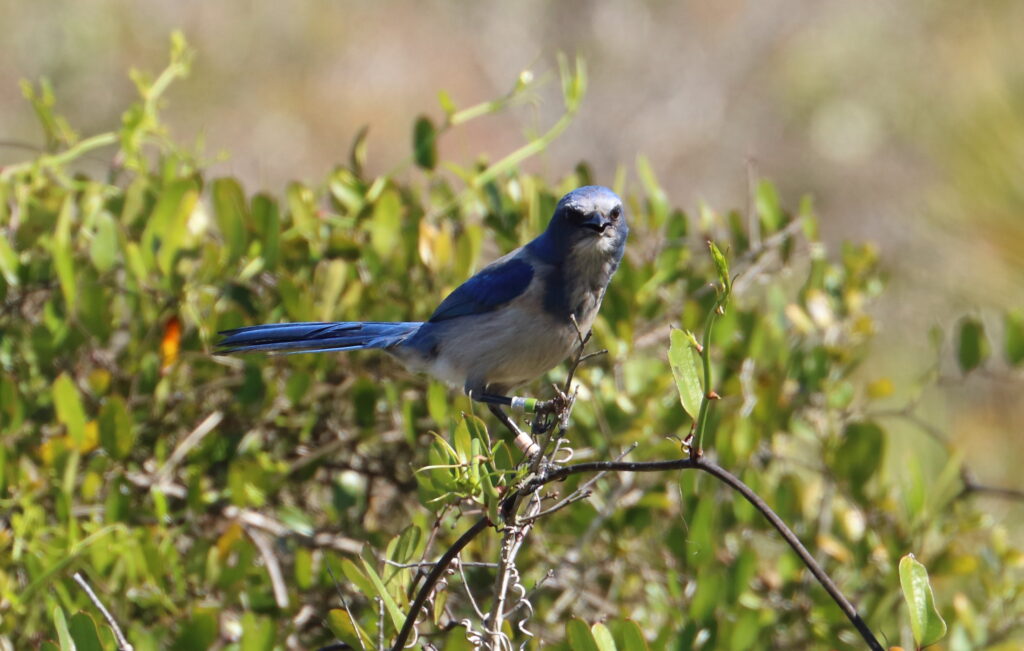
The three of us began walking, with Bud staying behind to watch the car. As we did so, Nick’s grandma handed me a flyer starring a dark blue corvid with a long tail and a mischievous expression—our major target for this outing. The flyer informed me that Florida Scrub-Jays occurred only in roughly 51 locations across the state, threatened by habitat loss from the clearing of Florida scrub habitat. As Florida’s only endemic bird species—and one that is Federally Endangered—the scrub-jay’s remaining habitats would fortunately remain undeveloped for the foreseeable future. In no time, Nick pointed out the call of a scrub-jay, and we began scanning the brush intently. Suddenly, I spotted several long-tailed silhouettes flying in the distance. As they grew closer, their plumage matched the color of the blue sky above.

“There they are!” I yelled, and the three of us raised our binoculars to watch them alight on a nearby bush. Several more scrub-jays called from behind us, gradually increasing our total count to eleven, and given their conservation status, it was heartening to see so many of them.

Florida Scrub-Jay is a species I’d been wanting to see since I started birding eight years ago. To see so many was a real treat.

We high-fived, then headed back to the car to drive to our next spot. As we pulled out of the empty parking lot, however, Nick slammed on the brakes, pointing forward.

“Swallow-tailed Kite, incoming!”

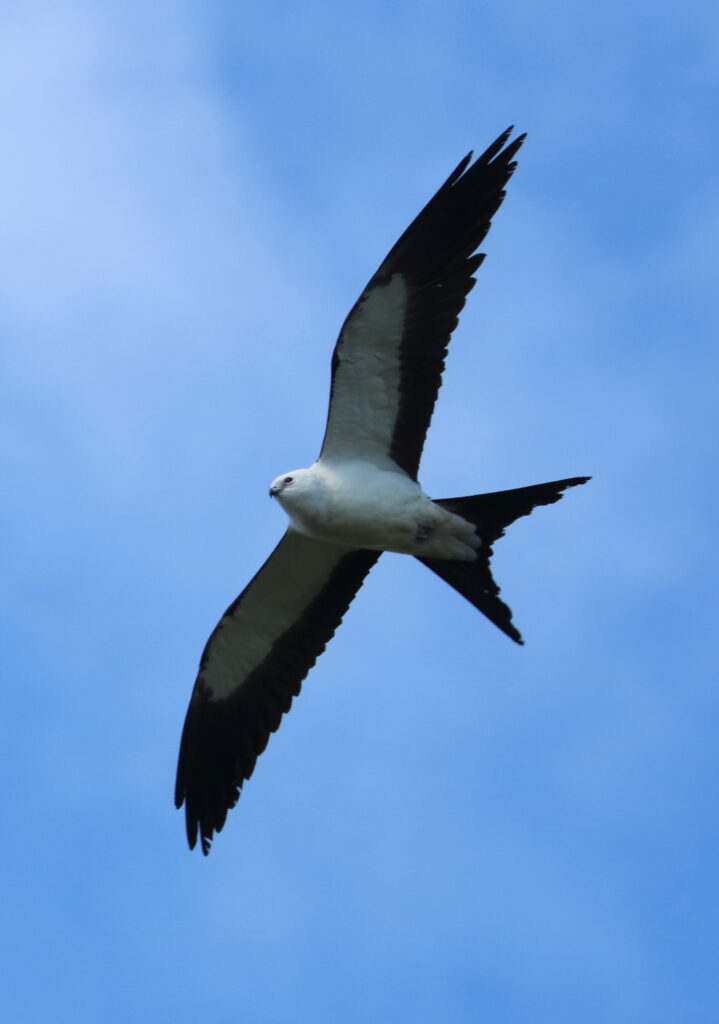
We’d been watching the skies all of yesterday and today looking for this neotropical migrant, a species with a population of only several thousand in the United States. I jumped out of the car, armed with my camera as two of the most beautiful birds I’d ever seen soared several feet above us, their white-and black plumage shimmering in the rising heat. They circled for a few moments, allowing me to snap some decent photos, then resumed their journey, long tails flowing behind them. The birds reminded me of oddly-proportioned, differently-colored Barn Swallows, which is indeed how they had gotten their name. My dad and I had seen this species while zip-lining through the cloud forest of Ecuador, but it had been five years since then and this was a much better look. As I got back into the car, Nick smiled. “They never give looks that good! Did you see their backs??? It’s impossible to see their backs!!”

Though I’d seen Swallow-tailed Kites in Ecuador, nothing compared to the view we got on this morning!

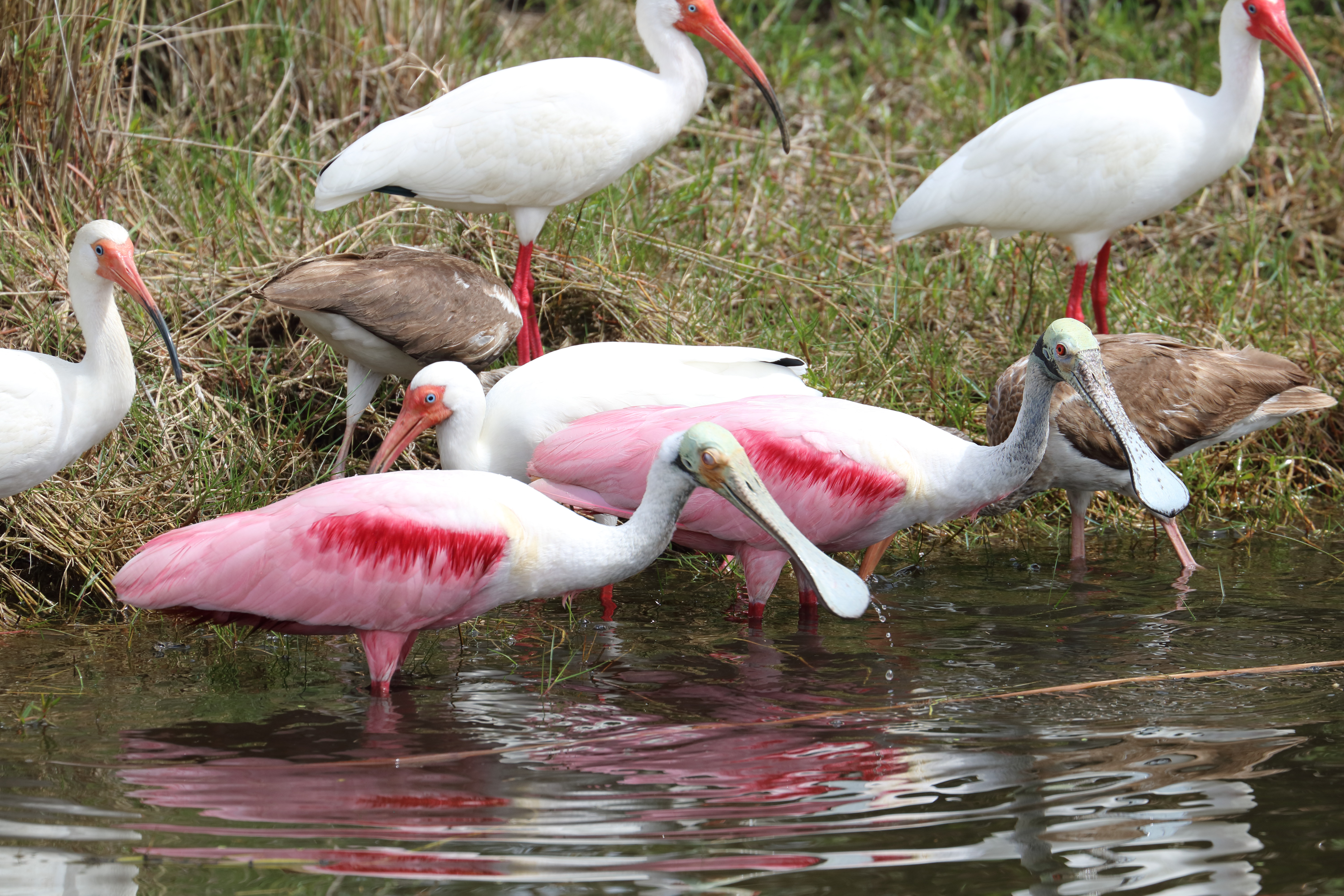
We spent most of the rest of the day at Merritt Island, driving loops and investigating the visitor center. Just like at St. Marks, the ducks that the refuge was famous for weren’t here in large numbers, though we did find one flock of American Wigeon and Northern Shoveler. However, White and Glossy Ibises, the three egrets, Little Blue, Green and Tricolored Herons, and Roseate Spoonbills put on spectacular shows, feeding in almost every habitat from lawns to roadside ditches to marshy lagoons. Many of the birds were in breeding plumage, sporting fun plumes and colors that I’d never seen before. These plumes were the exact feature that had led to the birds’ downfall a century earlier. Snowy and Great Egrets especially had gorgeous white feathers reminiscent of wedding dresses trailing from their wings that had attracted the lady’s hat industry in the nineteenth century. Millions of birds were slaughtered during this time, and the two species disappeared from much of their range. However, with the beginning of a conservation movement in the early twentieth century, these birds soon began to recover, once again becoming common across the southern United States.

Anyone who gets bored with Roseate Spoonbills has lived too long—or should go bowling!

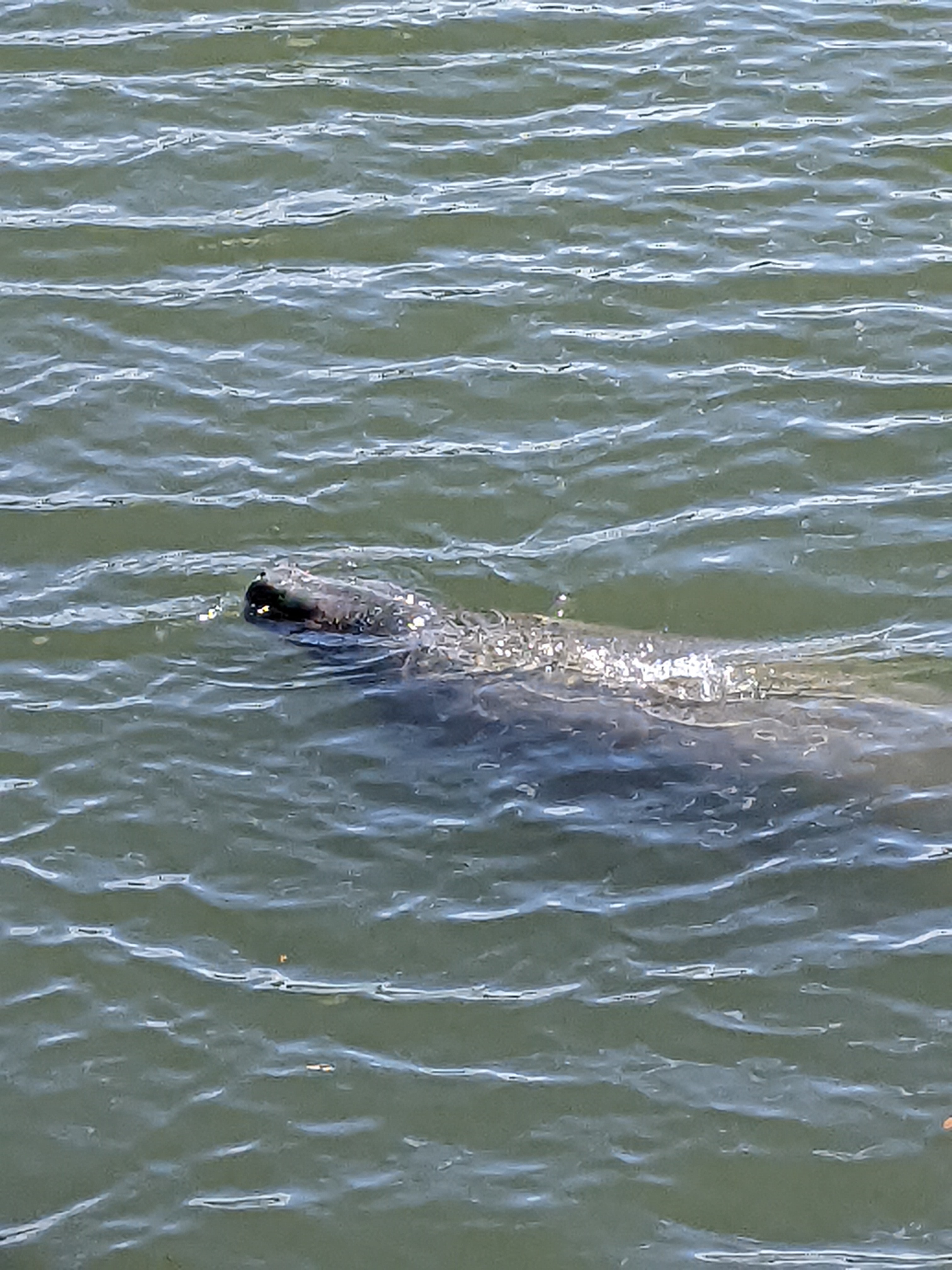
Immediately after seeing the scrub-jays and kites, we drove to a small path overlooking a large lagoon. Manatees surfaced and at the visitor center Nick found two White Peacock butterflies, beautiful white insects with intricate orange details on their wings. And while looking for a previously-reported Eurasian Wigeon at the edge of the refuge, we came across a Prickly Pear Cactus fruiting! We both tried one of the magenta fruits after brushing off the spines, and they weren’t half bad!

It’s hard for a mammal to compete with birds, but manatees come pretty close!

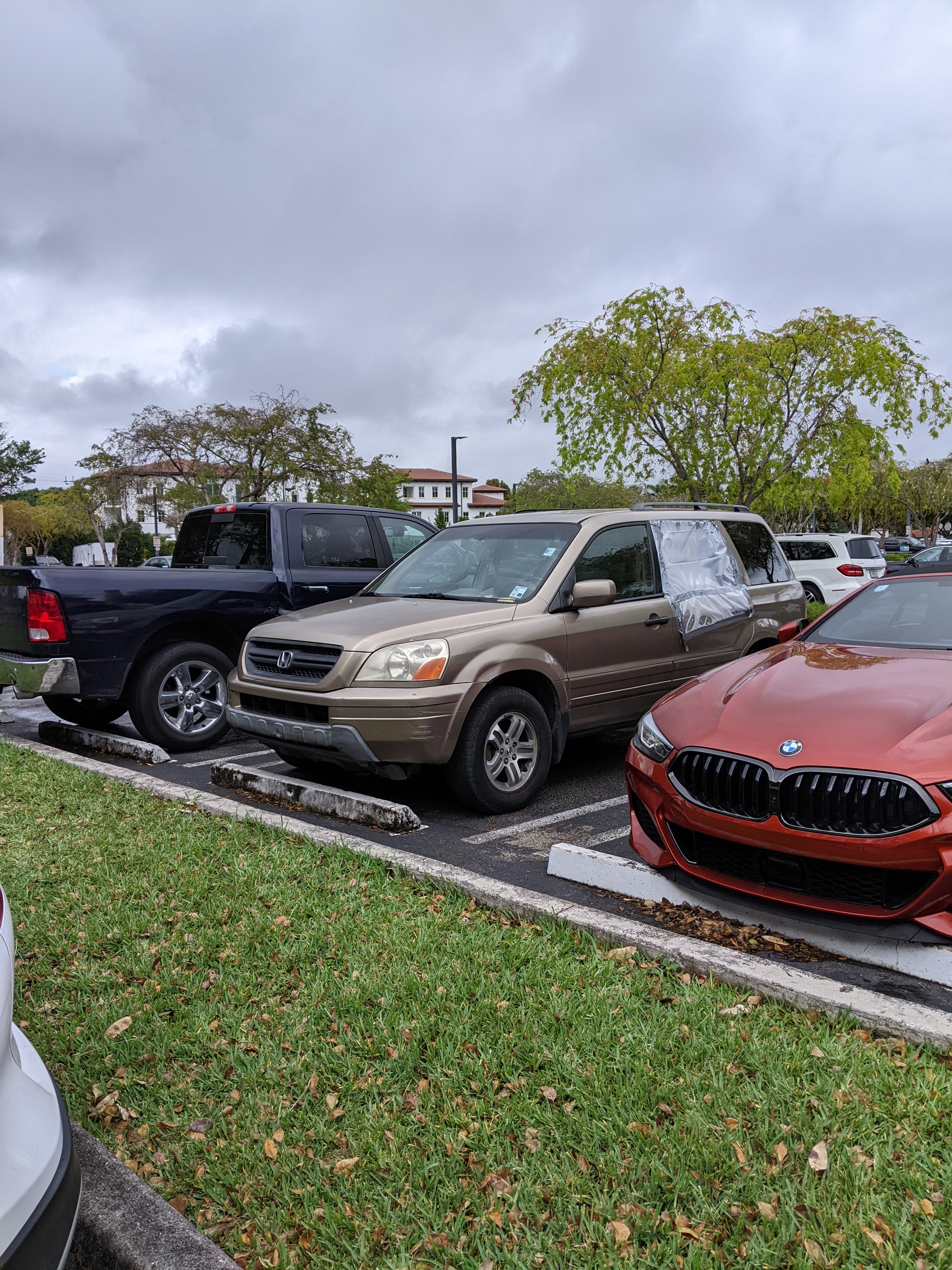
When we got back in the car, Nick began rolling up the windows when we heard a click, followed by one of our back windows falling down into the door, its mechanism broken. Deciding to deal with the problem later, we taped a large yellow towel to the window with Nick’s emergency supply of duct tape, then followed Nick’s grandmother to a nearby Thai restaurant where she bought us a tasty lunch. We said our farewells to her, then drove to an Ace Hardware to look for solutions to our window problem. Eventually, we came up with a makeshift window of plastic wrap and duct tape, which Nick carefully applied while I fed Dixie and a daring, dog-food-snatching Boat-tailed Grackle. Back on the highway, we headed south towards our last spot for the day as a light rain started, testing Nick’s makeshift window. The plastic held, despite making loud smacking sounds, and we pulled into a shady-looking restaurant on the side of the highway called Doc’s Bait House. A Black-headed Gull, another northeastern vagrant, had been hanging out at this strange place, and we hoped to add it to Nick’s life list.

It wasn’t perfect, but Nick’s window-repair job would get us through the rest of the trip!

Unfortunately, as we walked around in the light rain and the setting sun’s light, no Black-headed Gull showed. The birds were active, though—Lesser Black-backed Gulls, Brown Pelicans, Forster’s Terns and other common coastal birds circled the harbor in impressive numbers, and a Wood Stork flew right over us on its way to its roost. It was a great way to end the birding part of day two, as Nick put another layer of plastic over the window and we headed south towards the outskirts of Miami. A long night lay ahead of us and little did we know that our birding luck was about to run out.