Day 3 of Birding Week Therapy proved an easy task thanks to my daughter’s regular Wednesday night soccer practice out at Fort Missoula—a location that happens to sit next to what may be Missoula’s best birding location, affectionately known as “the gravel quarry.” Over the past years, Braden and I have birded the quarry dozens of times and counted about 130 different species there, including a number of rarities such as Long-tailed Duck, Pacific Loon, and Eurasian Wigeon that swing by during spring and fall migrations. This time of year, I was especially keen on finding some cool sparrows, which can also drop in for a week or two at a time. I would have preferred a morning visit, but birders can’t always be choosers, so after dropping my daughter off, our dog Lola and I set off to see what we could find.
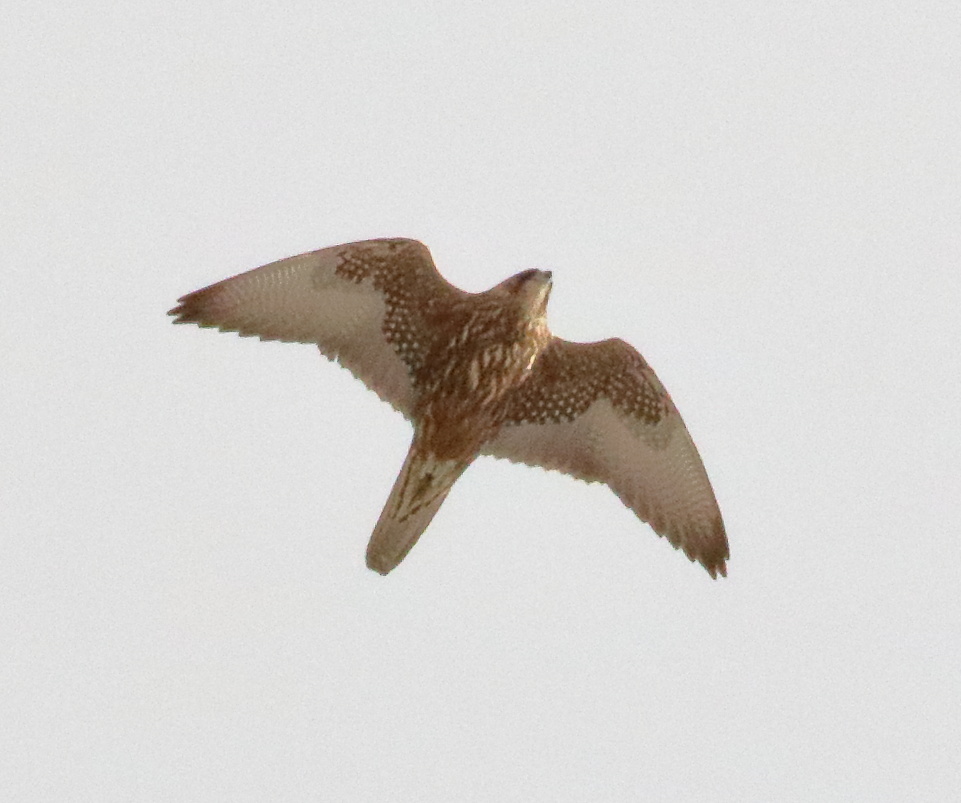
The late-season Merlin was a real treat, especially watching it in action hunting another bird!
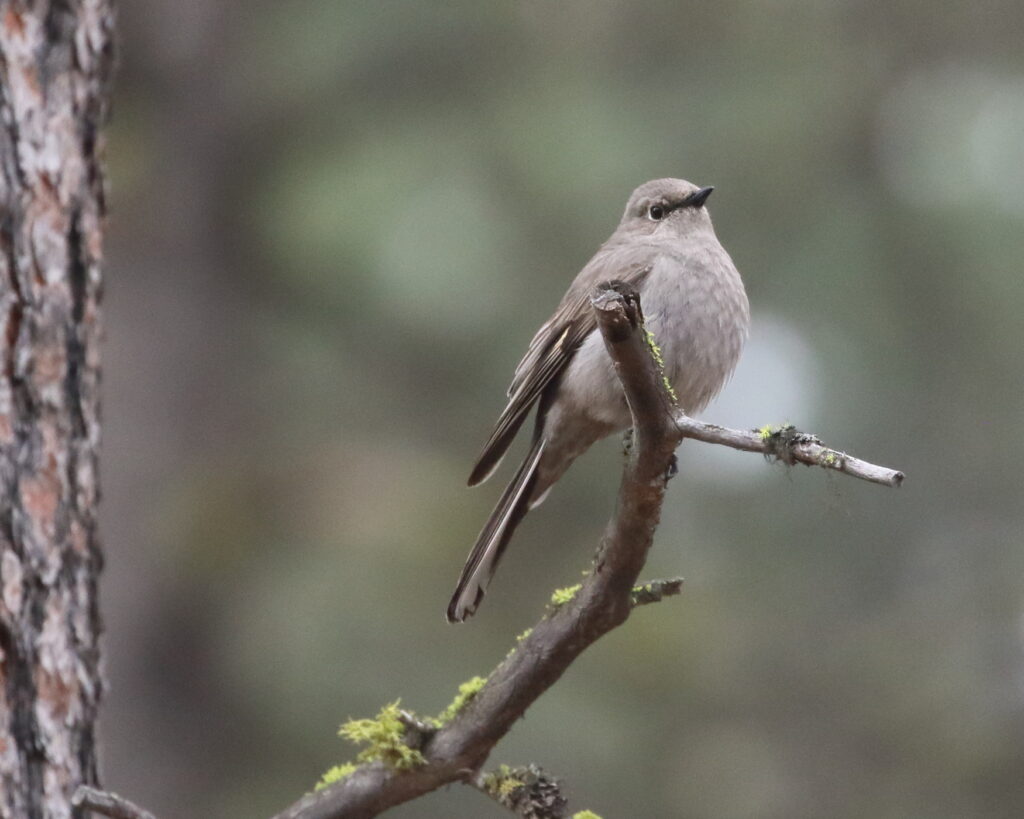
Few ducks graced the pond and they were too far away to ID without a scope, so we hurried on to the river to look for sparrows. Alas, the action proved pretty slow, but as I was peering into one of my favorite sparrow spots, two larger birds dived into a patch of tansy. One flew off again before I could ID it, but the other extricated itself and perched on a nearby tree. Its behavior led me to believe it was a Sharp-tailed Hawk, but on closer inspection I saw that it was a Merlin! And quite late in the year for the location! I took my time studying it since I often have difficulty identifying these in the field.
Cooper’s Hawks are common at the quarry, but I wondered if this was a resident or just passing through.
Minutes later I saw another raptor circling and just assumed it was the Merlin, but no, it proved to be a Cooper’s Hawk! Braden later reminded me that raptor migration was in full swing so both sightings made sense, along with the lone Turkey Vulture I saw in the distance.
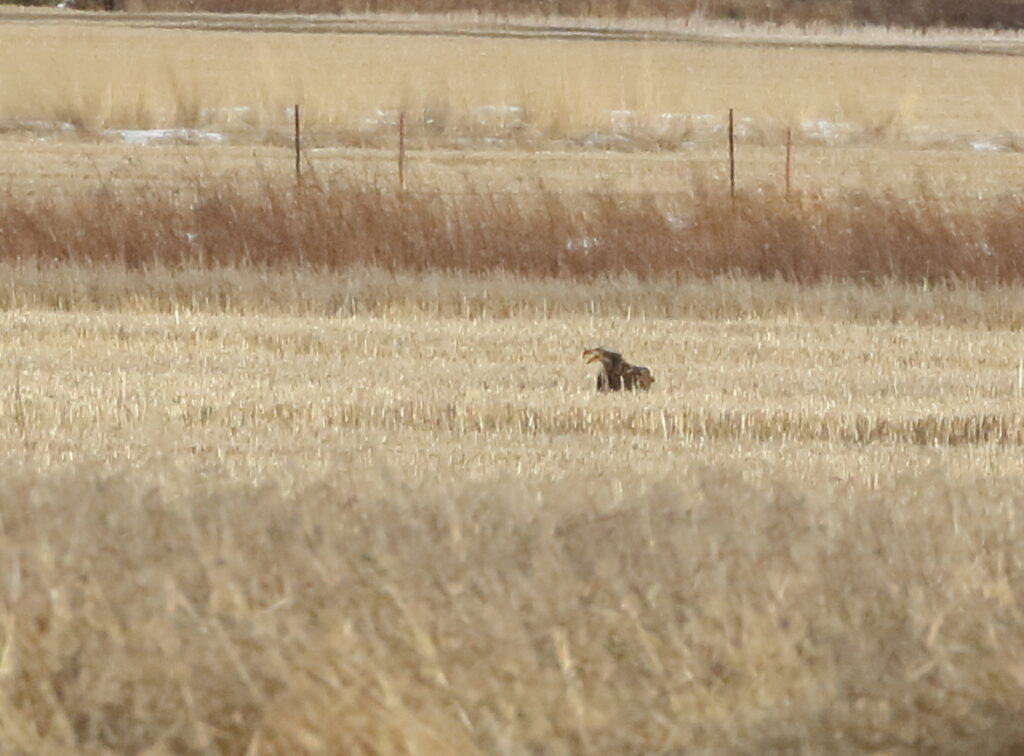
I never tire of watching Sandhill Cranes and it seems we’ve been finding them at this location more consistently the past couple of years.
Soon, I heard weird guttural calls that I have come to love—Sandhill Cranes. Three of them caught the gorgeous evening light and I am guessing they breed nearby since they’ve become a common sight out there. Alas, songbirds proved scarce but on our way back to the car, Lola and I finally dissected a White-crowned Sparrow from some brush. I’d had bigger days at the quarry—and better photos, too—but also much worse days. I knew, though, that I’d be returning for Day 6 of Birding Therapy Week—and in the morning!
Ever wanted to visit the Amazon—the rainforest, not the store? Check out Sneed’s new travel article at Perceptive Travel online magazine!
So after getting home from my Blue Mountain hike on Monday, I began planning Tuesday’s birding therapy outing to the Missoula Cemetery, a place I have monitored since the pandemic began last year. Almost immediately, however, I received a message from a friend of a friend (FOAF) about a putative Peregrine Falcon pair a few miles from our house. Peregrines are not uncommon in Montana with well over a hundred nesting pairs—a remarkable resurgence considering the DDT disaster that devastated dozens of bird species through the 1960s and 70s. However this possible nest site was one that neither Braden nor I had heard of, so instead of hitting the cemetery Tuesday morning, I convinced Braden to skip first period and go check it out by bike.
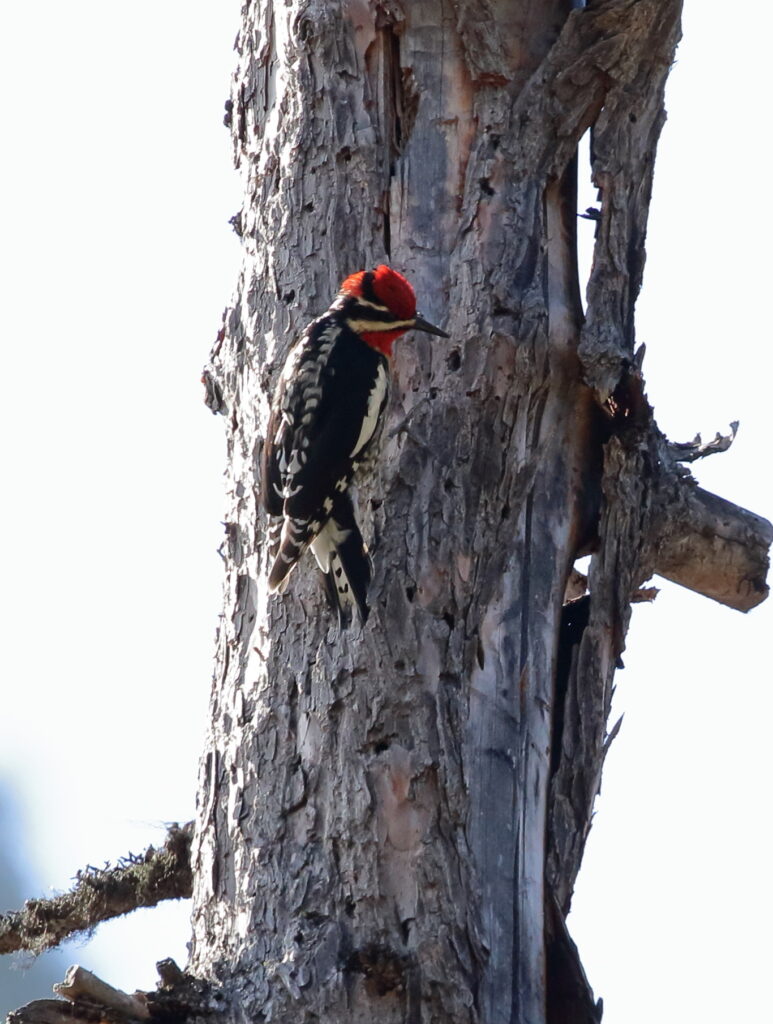
Braden and I never tire of seeing Red-naped Sapsuckers, especially in a new location!
It was a perfect morning for a bike ride and we spotted or heard Black-capped and Mountain Chickadees, Red-breasted Nuthatches, and an assortment of other birds—Braden more than I thanks to his Bionic Ears of Youth! We were especially excited to find a nice boggy area with a couple of Red-naped Sapsuckers drumming on snags. Finally, we reached the area the FOAF had described and almost immediately thought that we heard the peregrines calling. We set up “camp” and watched, hoping to catch sight of them. No luck. Even worse, Braden had to leave to get back to school. “Well crap,” I thought. I didn’t want to see them without him, but also knew I might not head back to the spot anytime soon so decided to stay longer.
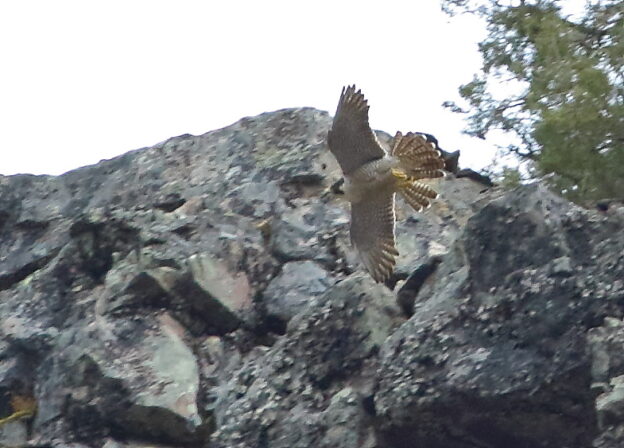
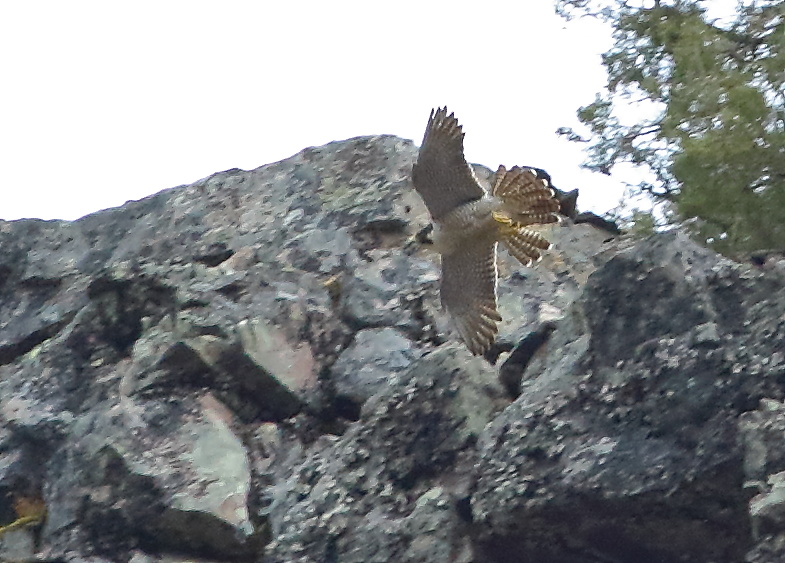
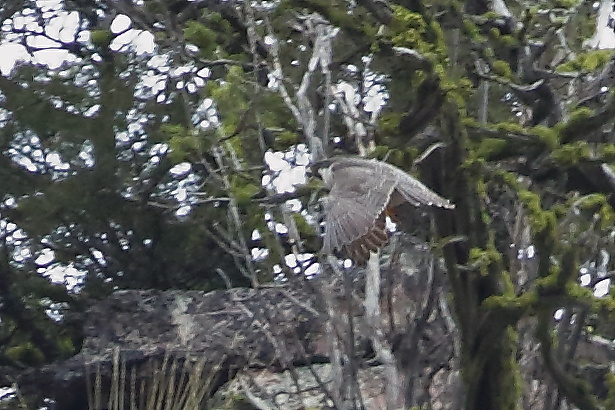
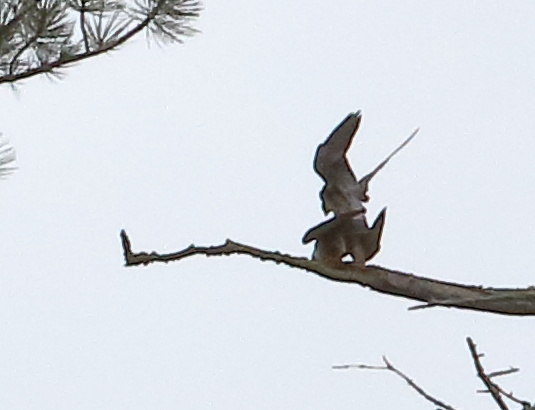
One of the benefits of hauling a camera with you is to “slow down” birds that are too fast and too far away to easily observe. Peregrine Falcons are a case in point!
I pulled out my phone to play a peregrine recording—not to attract them but to make sure what they sounded like. WHAM! Almost instantaneously a loud answering call hit me from above and I looked up to see the unmistakable shape of a falcon flying against the gray skies. That turned out to be just the opening salvo in an amazing twenty-minute aerial exhibition that the peregrine and his mate put on for me. I watched them chase off another raptor, skim forest treetops, and in a grand finale, copulate on the branch of a tree! Granted, the birds were far away, but I can’t recall a more exciting raptor experience—well, at least since seeing the Gyrfalcon with Braden earlier this year.
I got in touch with the Montana Peregrine Institute to see if they knew about this particular nest and it turns out that the pair was first discovered in 2020 and had apparently successfully fledged three young! My FOAF went even further and single-handedly convinced the Forest Service to delay a controlled burn that was supposed to happen this last week—right in the peregrines’ territory! Hopefully, the burn will go ahead in the fall—and give the birds a wonderful larder of new prey to raise their next batch of chicks.
Even though the birds were far away, it was thrilling to watch them mate—something that will hopefully ensure a new crop of peregrines this year!
I know it’s hard to believe but even underpaid writers living in Montana can get to feeling down sometimes. Covid certainly has not helped the situation since it and the gut-wrenching economic and societal upheavals it has triggered make the future look blurry at best. In this kind of situation, however, birders have a distinct advantage over non-birders. Why? Because we can immediately step outside for a dose of birding therapy. Last weekend, in fact, I decided I needed not one day, but a week of birding to try to set things right. I began with a return to a place that in many ways inspired my and Braden’s journey into birding: the Blue Mountain Nature Trail just south of Missoula.
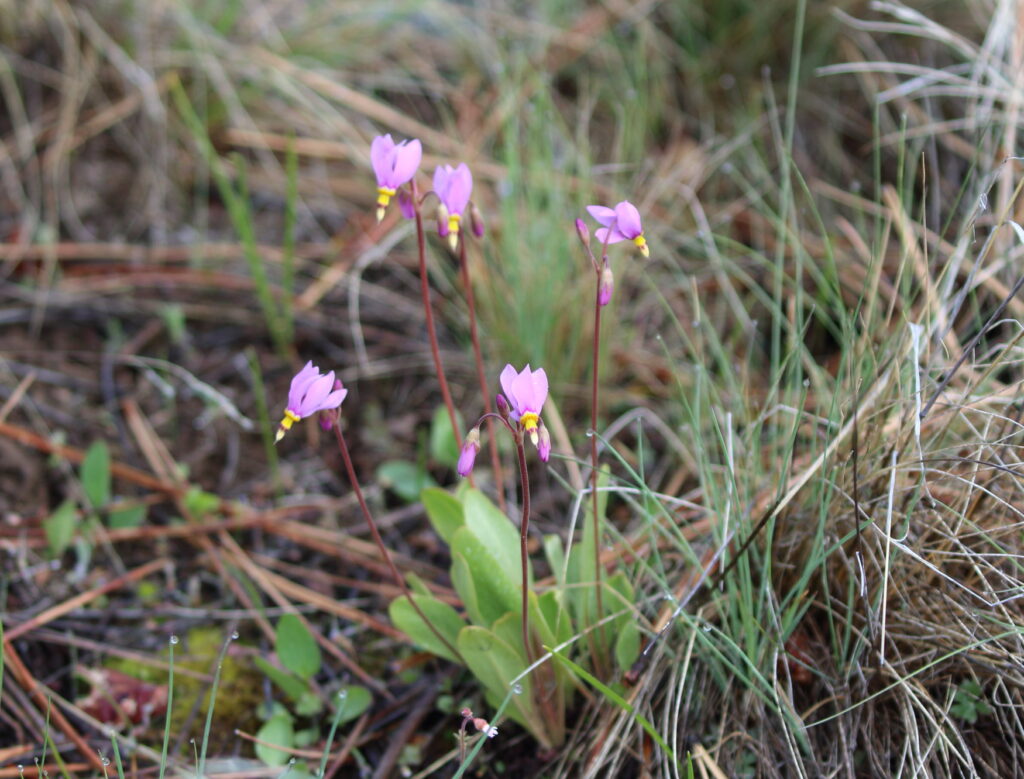
It’s always a good day when you see shooting stars in the wild. We tried planting them in our garden when we moved in 15 years ago and the deer loved them. Only one highly-protected plant survives!
The nature trail takes hikers through a twenty-year-old burn that in years past has been a birders’ paradise with plenty of snags for woodpeckers and a lush resurgence of native plant growth on the newly-sunlit forest floor. The trail, in fact, is where UM biologist Dick Hutto—an expert on the value of burns to birds—took me when I began researching my book Fire Birds: Valuing Natural Wildfires and Burned Forests. At the time, Black-backed Woodpeckers still lived there, but I wondered what it would be like some eight years later. I was not disappointed.
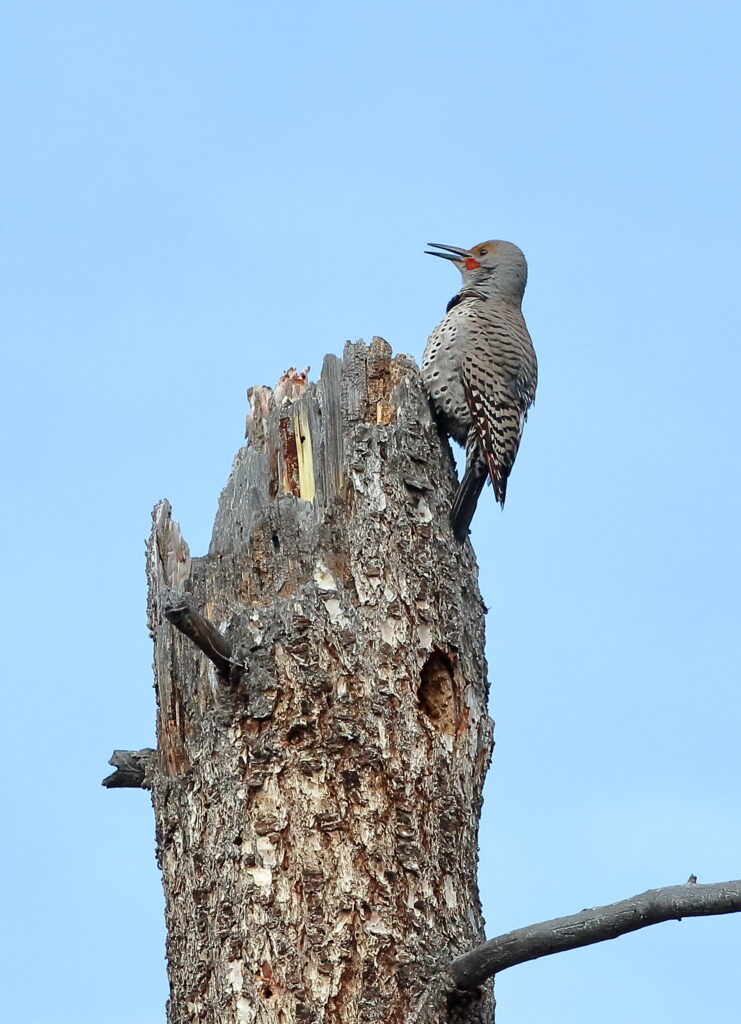
Though the Black-backed Woodpeckers have long departed for blacker pastures, Northern Flickers still take full advantage of the burned forest twenty years after the blaze.
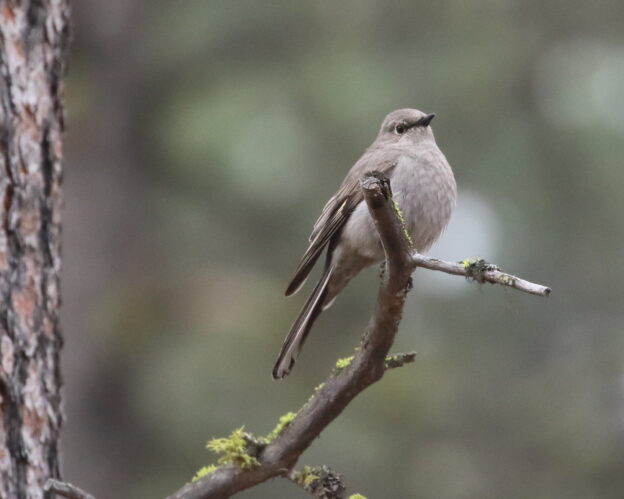
Though I arrived a week or two early for the crush of cavity nesters about to descend on the forest, seeing my first shooting stars and Pasque flowers of the year immediately cheered me up. And the birds, while not abundant, were of the highest quality. On my way up I saw a pair of Townsend’s Solitaires, and heard Cassin’s Finches and my year’s first Williamson’s Sapsucker, which I IDed both by its higher, forest-edge location and its almost halting, hesitant drum pattern. Moving on, I spent time with a Hairy Woodpecker and Northern Flicker, and at the forested saddle where I usually turn around, spotted my year’s first Cooper’s Hawk flying furtively and low to the ground.
Townsend’s Solitaires are hands-down one of our favorite Montana passerines and nest in the root balls of fallen trees. This makes them perfect burn birds.
I had hoped to hear an Orange-crowned Warbler, but alas, was probably a bit too early for those. Back near the road, however, I was rewarded by Red Crossbills and the year’s first look at a dazzling male Yellow-rumped Warbler. Satisfied with my thirteen species, I continued on to the car, planning my next day’s trip to the Missoula Cemetery to see what I could find. Unbeknownst to me, fate was about to deal Braden and me a radically different birding destination for Tuesday . . .
Gamblers and fishermen are famous for being superstitious. Birders aren’t much better. Sure, we feed ourselves platitudes such as, “The more you get out, the more you’ll see,” but deep down, we know that the birding gods control our fates, and that our success depends on whether we’re deemed worthy. In our last post, I recounted how Braden and I spent six hours and two days looking for a Gyrfalcon near White Sulpher Springs, only to endure the gods’ wrath. Yesterday morning, when we set out on a quest for a Snowy Owl, we wondered if the gods would continue to scorn us, or whether we had proven ourselves humble and dedicated enough to curry their birdly favor.
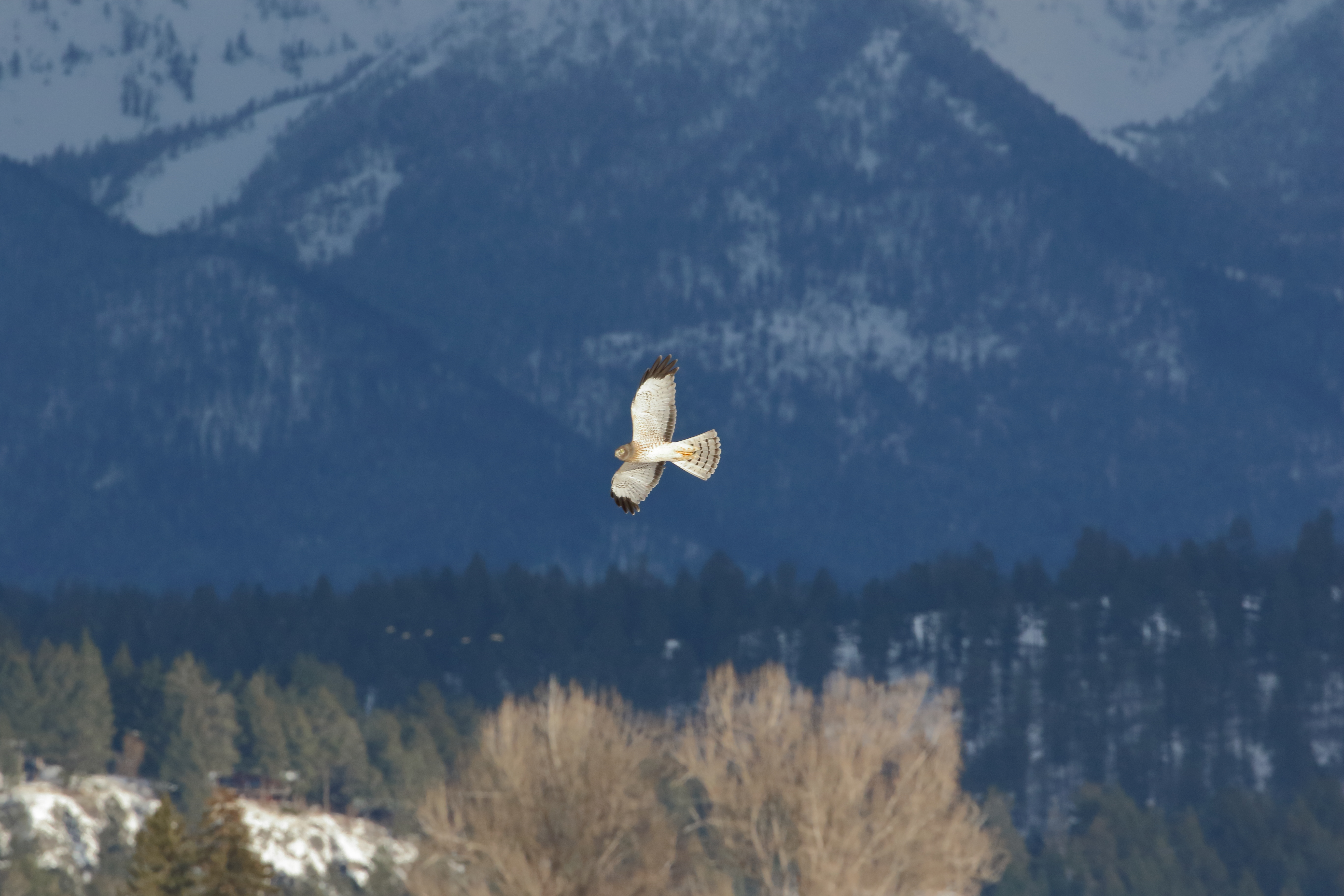
Northern Harriers and other raptors were abundant wherever we looked. They, unfortunately, were not the birds we set out to see!
We left the house at 6:30 a.m. and by 7:30 were at Ninepipe National Widlife Refuge, where we hoped to score an elusive Year Bird, Short-eared Owl. We drove the dirt roads for more than an hour and saw more than a dozen Red-tailed Hawks, Rough-leggeds, Bald Eagles, Harriers—even a Merlin. No Short-eared Owl. “Ah, well,” I told Braden. “We’ll get ‘em next time.” Inside, though, I was thinking, “Oh, man. Is it going to be that kind of day? Again?”
Well, apparently, it was. Reaching the Snowy Owl neighborhood near Kalispell, we again drove for more than an hour without so much of a glimpse of a white owl. By now, I realized that the BGs must be really pissed at us. We decided to chase some other birds and come back later, however, and did score our first Gray-crowned Rosy-finches in three years at the Kalispell dump—while getting bawled out by the “dump lady” for our efforts. We also found a White-winged Crossbill among a flock of Red Crossbills feeding on some nearby spruce trees. Nice, but not a Snowy Owl.
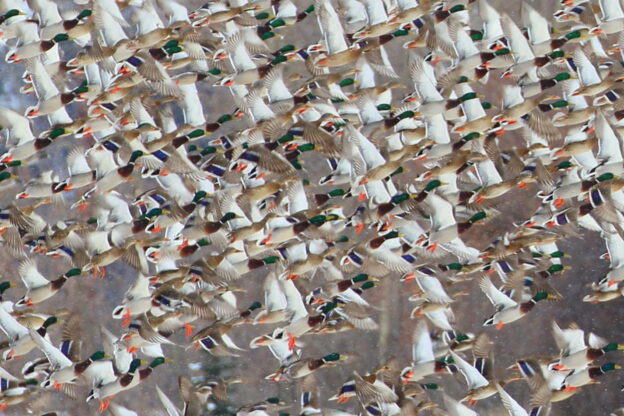
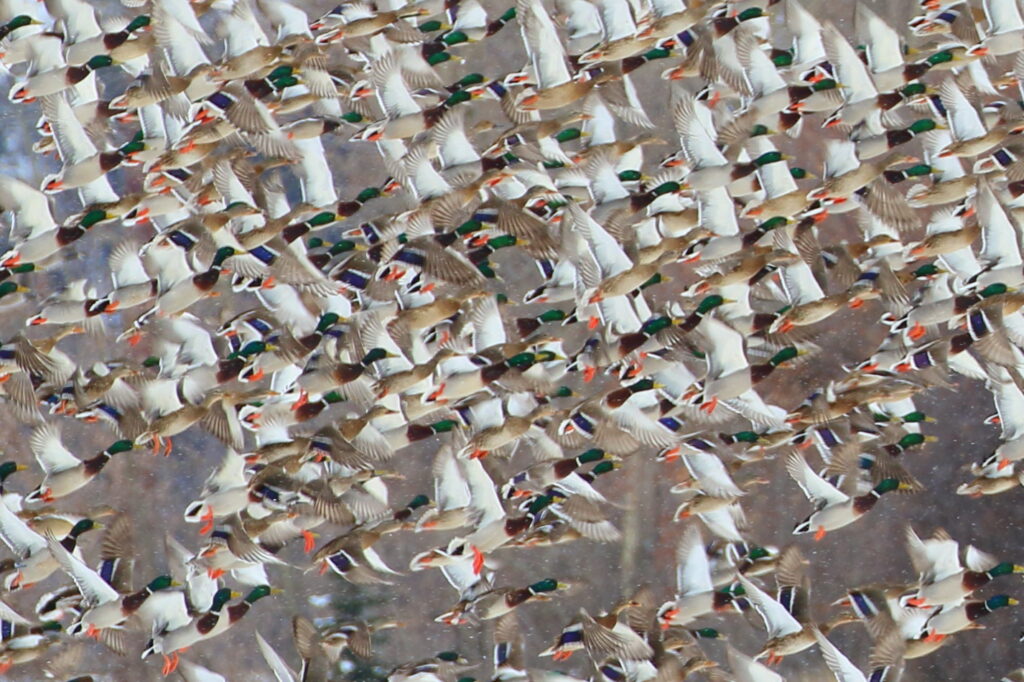
Mallards are no doubt the most underrated duck, but this flock of five thousand birds made a big impression on Braden and me!
After a lunch at Panera Bread (hey, more chicken in my Napa Almond Chicken Salad Sandwich, please!), including our favorite kitchen sink cookies, we hit an amazing field full of about 5,000 Mallards. Stunning! Then, we returned to the Snowy Owl site, where we encountered several other birders. None of them had had any success, either, but while we were commiserating, a photographer named Dick Walker introduced himself and asked, “Are you the father-son birding team?” We’d never been called that, but I answered “Yes,” and he started talking about the Mallard spot we’d just left. He showed us photos of Lapland Longspurs and, most exciting, a Gyrfalcon he had seen only thirty minutes before!
We tore back to the place, forever hopeful. No longspurs. No falcon. After fifteen minutes, though, a massive group of a thousand Mallards lifted off and seconds later, a sleek, jet-fighter shape zoomed across our field of vision. “It’s the Gyr!” Braden shouted.
Our first Gyr was a darker bird and left no doubt it was master of the skies. We’ll never forget it!
Indeed it was. We quickly lost it in the distance and decided to race over to another road closer to where it disappeared. We got there and jumped out of the car just as the amazing raptor reappeared, obviously enjoying terrifying the thousands of ducks and geese swirling around it. While Braden set up our scope, I tracked the bird with my binoculars. It seemed to toy with a large group of ducks, but its madness had some method as more and more Mallards peeled off until only two remained. As I watched, breathless, the Gyr hit one of them and took it to the ground. “It got a duck!” I shouted.
I was astounded how quickly this Baldie swooped in to steal the Gyr’s kill. It made me wonder how many ducks the falcon has to kill before it actually gets to eat one!
Its victory was temporary. Within thirty seconds, a much larger brown shape swooped in—an immature Bald Eagle. It effortlessly drove the Gyr from its kill, eliciting shouts of outrage from yours truly. We continued watching the amazing creature for another fifteen minutes before it vanished again. Then, after another unsuccessful Snowy Owl circuit, we began the long drive home. As we headed south along Flathead Lake, I thought about BB King, who often talked about paying his dues, and asked myself why we’d seen a Gyrfalcon here, in the last place we’d ever expected. “Maybe our efforts in White Sulphur Springs satisfied the birding gods after all,” I speculated. “Or maybe we just had to pay our birding dues to see the Gyr.” Either way, it had been one of the best birding days Braden and I had ever experienced—even without the Snowy Owl.
Our loyal followers have undoubtedly noticed that our posts have slowed in the past year. While we have been birding as much as ever, Braden has less time to write as college looms, and I too am busy plotting what I want to do when I grow up. Nonetheless, we want to wrap up 2020 for you and give you a taste of 2021 so far.
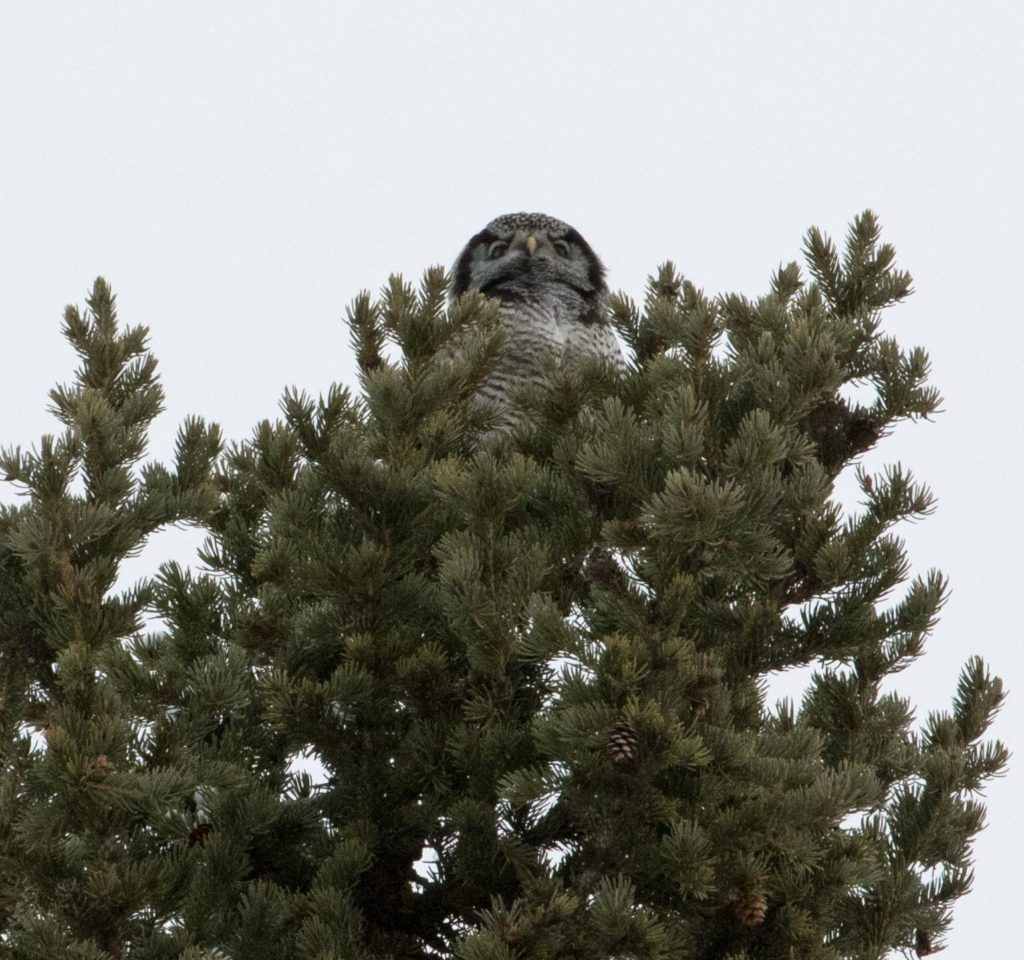
Sneed’s Bird of 2020, the Northern Hawk Owl, a Lifer we found on Braden’s seventeenth birthday. May his 18th bring him as much birding luck!
2020, in fact, was an epic year for Team Collard. It kicked off with our amazing trip to Israel and Jordan, and once back home we embarked on a mission of seeing 250 species in Montana. For perspective, my previous Montana record was 222 species in a year and Braden’s was 225, so we knew that we had our work cut out for us. Astoundingly, we surpassed 250 by last August, leaving the question, how high could we go? For me, the answer turned out to be 267, and for Braden, 274! With Braden probably heading out of state for college next fall, it seems unrealistic we could equal that number for 2021, so we’ve invented some new goals for ourselves.
Goal #1: to end the year with an eBird checklist in every Montana county. (Braden still has nine counties to bird in and I have ten.)
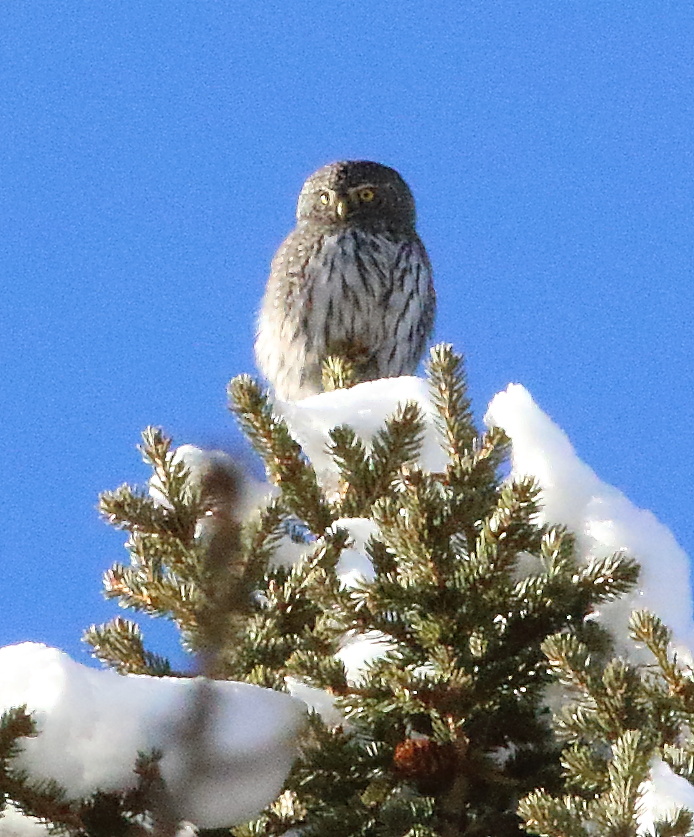
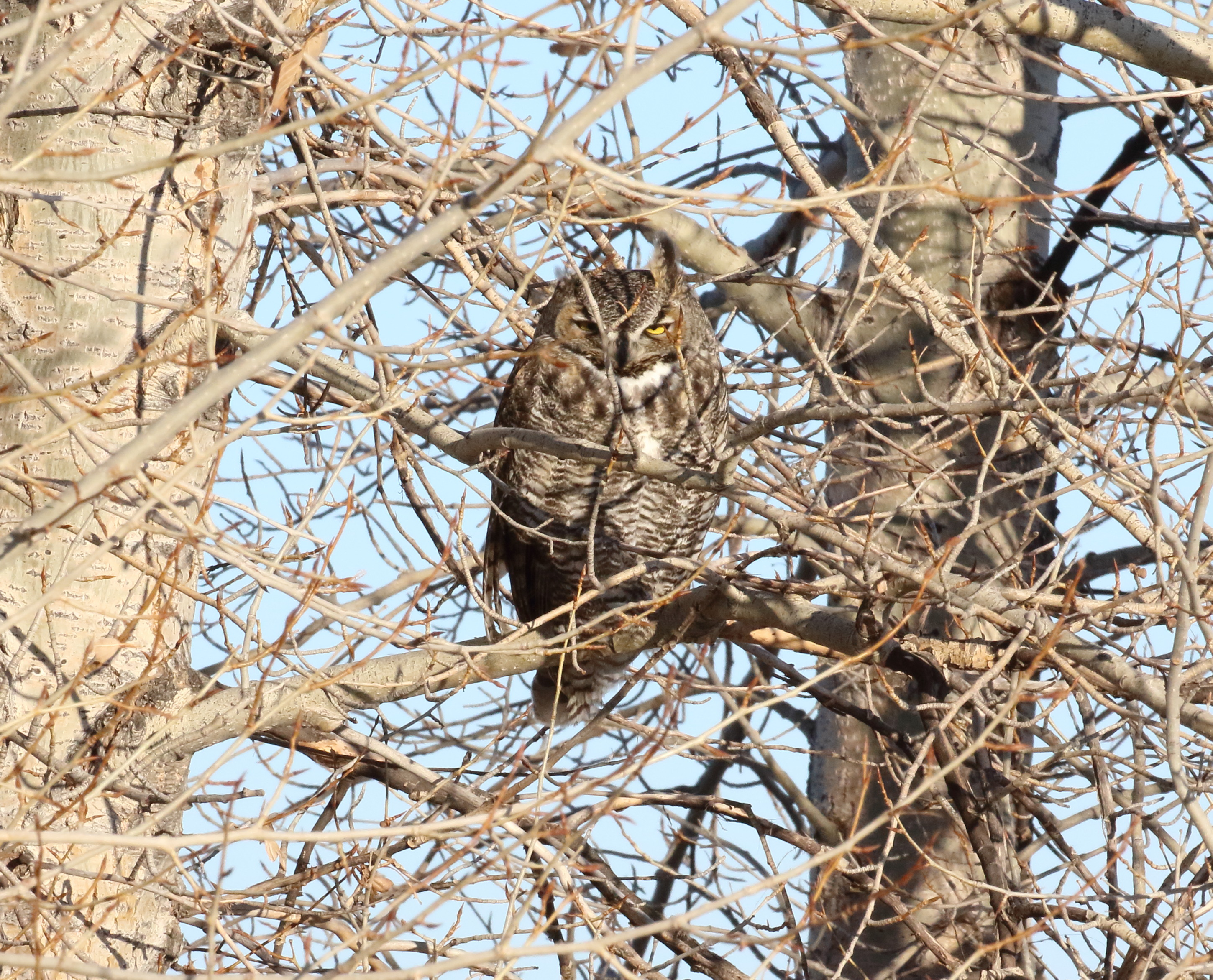
2021 has already brought us amazing owl sightings including this Northern Pygmy-Owl near Bozeman and this studious Great Horned Owl in Meagher County, a new birding county for us.
Goal #2: to see birds we’ve never seen in Montana before.
Goal #3: to reach a Montana Life list of 300 species (currently Braden is at 293 while I am just behind at 289).
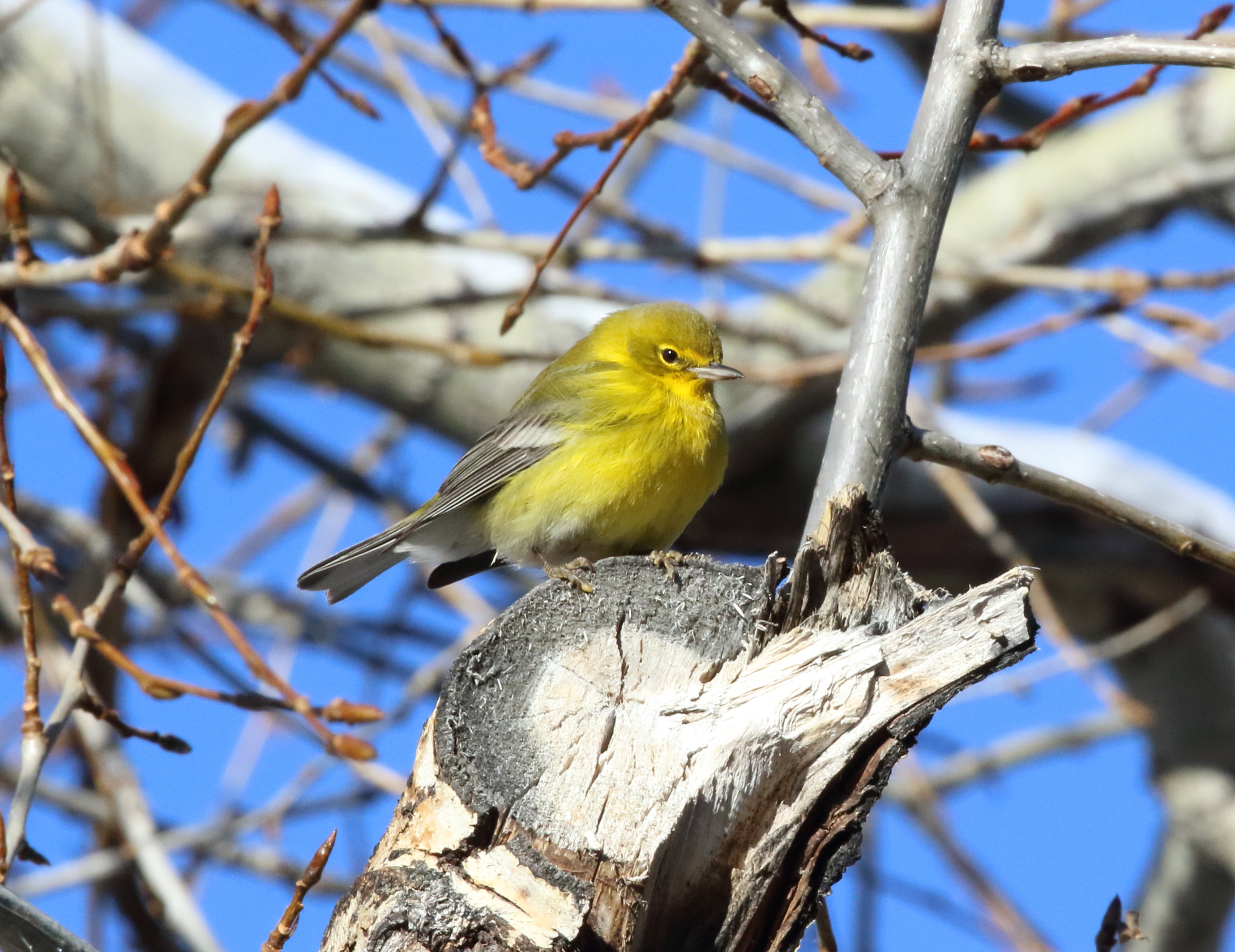
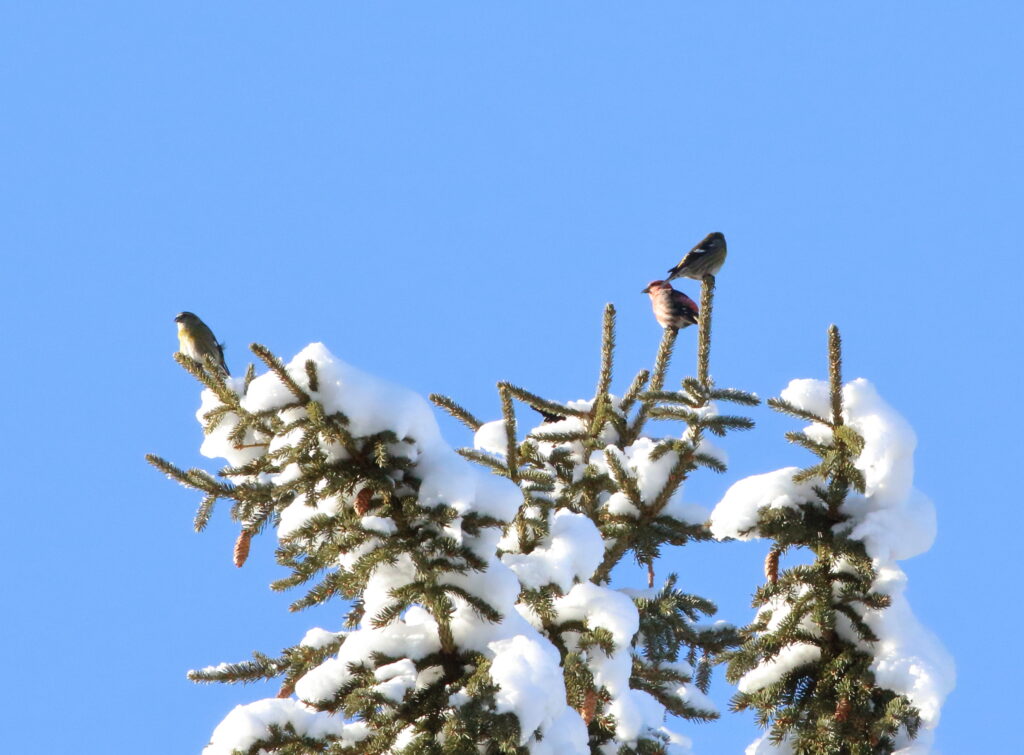
How are we doing so far? Even though it is still January, we are making progress on all fronts. Last weekend, we embarked on a thousand-mile, three-day birding safari to the center of the state. We added Meagher County to our eBird list, and added two Montana Lifers: White-winged Crossbills in Bozeman’s Sunset Hills Cemetery and Pine Warbler—a bird that shouldn’t have been within 1000 miles of Montana—at a feeder in Red Lodge. We had hoped to add at least two other species, but the birding gods were against us. The White-winged Dove in Bozeman that has lit up the Montana birding boards got eaten by a Sharp-shinned Hawk about half an hour before we saw it! Or more accurately, we saw the bird being devoured! We had also hoped to see our first Gyrfalcon, but despite searching the White Sulphur Springs area for more than six hours, the majestic predator was a no-show. Sigh.
Thanks to the generosity of Susan Hovde, who not only discovered but has been feeding him, we were able to spend a glorious winter morning with this out-of-range Pine Warbler—a Lifer for Braden and Montana Lifer for me!
Nonetheless, we found a lot of other great birds and met some terrific other birders. In the process, we set a January species record with still a couple of weeks to go. We do not know what the rest of 2021 has in store for us, but we will keep you updated as we are able. In the meantime, we wish you peace and health, and offer our hopes that this year will see some meaningful progress not only in saving birds, but in protecting this incredible planet we all share.
Though not much to look at from a distance, we were thrilled to see our first-ever White-winged Crossbills in Bozeman’s Sunset Hills Cemetery!