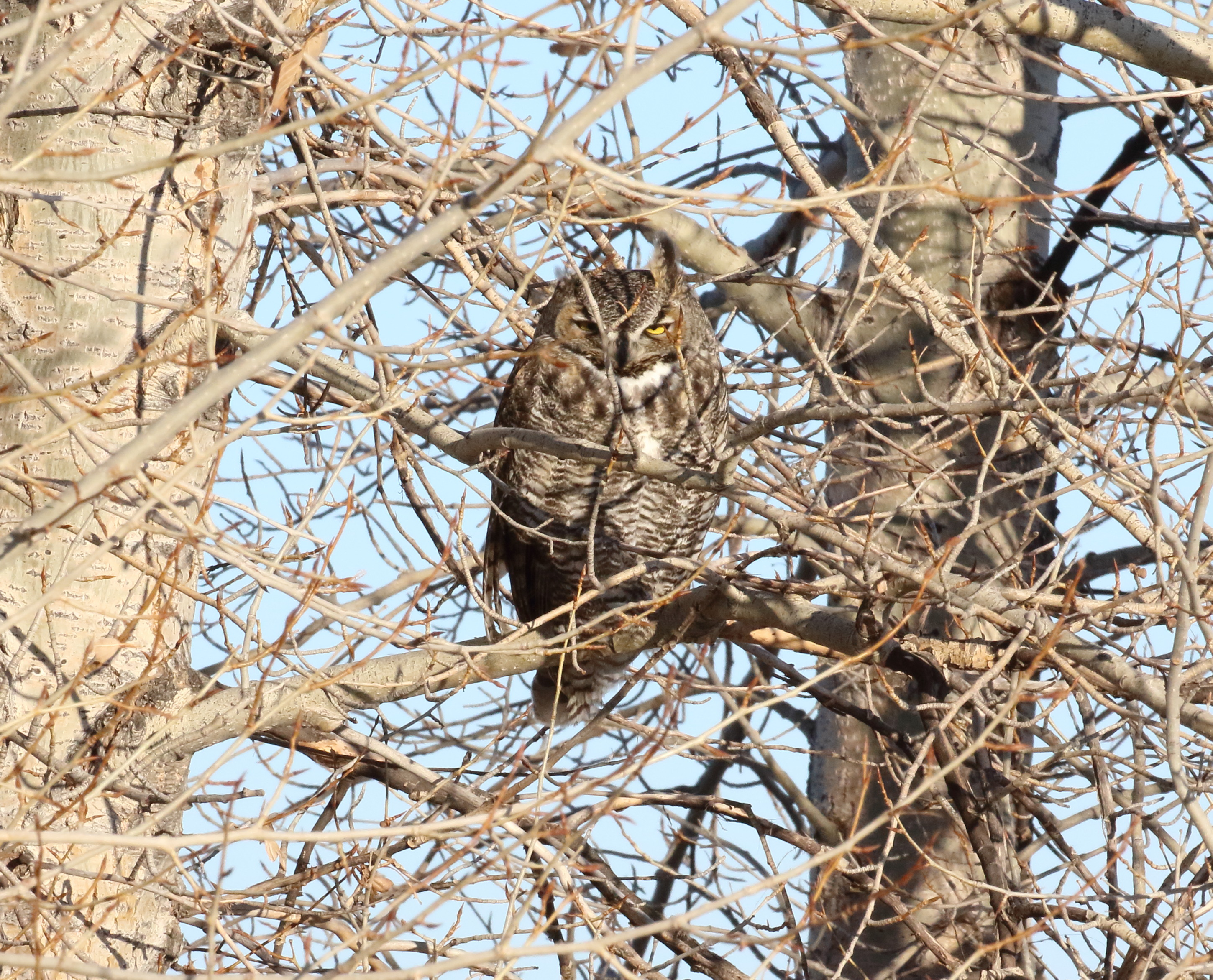
Tag Archives: Father-Son Birding

Presume Not the Common Robin

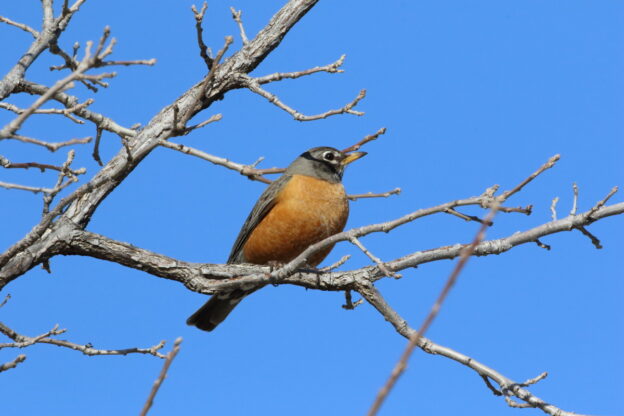
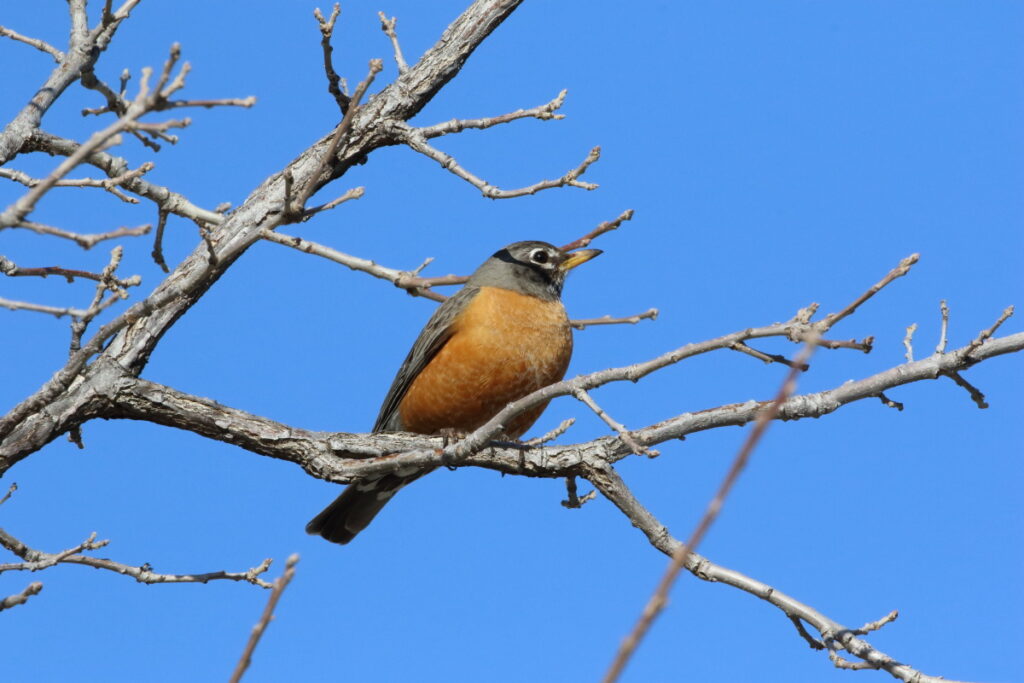
This time of year we observe a remarkable influx of American Robins in western Montana. True, the birds are year-round residents in small numbers through much of the state, but by April, instead of spotting the occasional bird, Braden and I begin counting them by the dozens. As much as I love this “thrush flush”, I have to admit it has led to some close calls in bird IDs this past week.

This time of year, it’s easy to assume that every medium-sized bird is a robin—but BIRDERS BEWARE!

Every morning I grab my binoculars when I head out to take our dog Lola for her morning tramp around our neighborhood. We follow a mile-long route around a school, down to a park, and then back up home, skirting the edges of houses, woods, and Rattlesnake Creek. Over the years, Braden and I have compiled a healthy bird list for the route, but I have to say that it rarely yields any real surprises. As a result, I become lulled into a sense of complacency about what I am looking at.

To wit, with all the robins around lately, I have naturally assumed I am looking at Turdus migratorius when I see medium-sized, nondescript birds perched in a distant tree. On my Wednesday dog walk, I again made those assumptions. I mean, there were a ton of robins about and I identified many by sight and sound. When I saw fifteen birds sitting in another tree, I thought, “More robins.” Fortunately, something made me pause—perhaps my inner birder conscience or a feather that didn’t look quite right. Ignoring Lola’s piercing eyes, which pleaded for me to throw the ball again, I raised my binoculars and found . . .

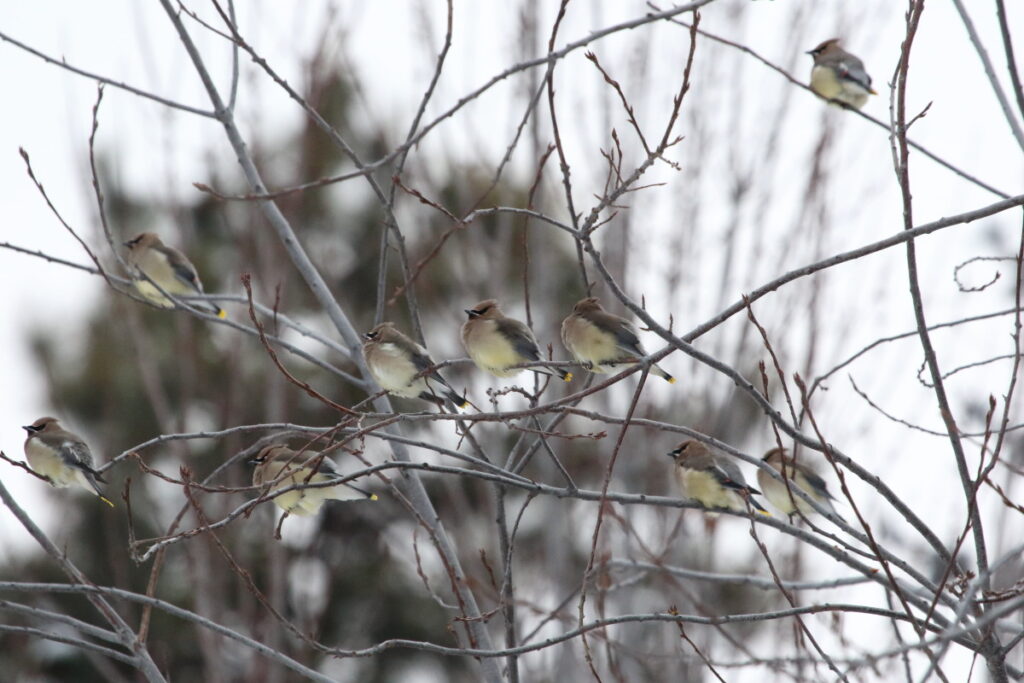
This photo sheds light—or shadow—on how easy it is to mistake other groups of birds for American Robins.

Cedar Waxwings! “Huh,” I thought. “That’s cool.” Waxwings weren’t earth-shattering, but I didn’t expect to see such a group this time of year. I threw the ball for Lola and continued walking, and a hundred yards later saw another group of birds in a tree. “More robins,” I thought, then remembered the waxwings and again raised my binoculars to find . . .

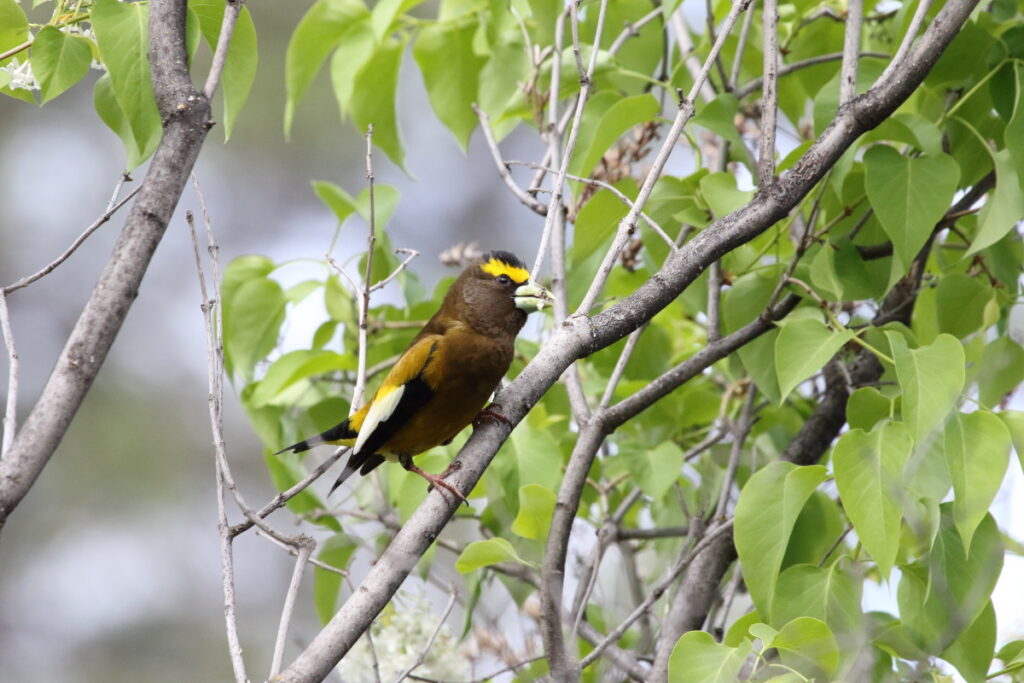
Evening Grosbeaks! Even better, it was my first good look at them for the year! Those two back-to-back sightings taught me a valuable birding lesson: never assume what you’re looking at just because certain birds are more common or you’ve seen them before. I hope it’s a lesson that will serve you well this spring—not that there’s anything wrong with robins.  

Up close, an Evening Grosbeak’s markings are distinctive, but even from medium range, light and shadow can obscure an accurate ID!

2020 Wraps, 2021 Underway!

Our loyal followers have undoubtedly noticed that our posts have slowed in the past year. While we have been birding as much as ever, Braden has less time to write as college looms, and I too am busy plotting what I want to do when I grow up. Nonetheless, we want to wrap up 2020 for you and give you a taste of 2021 so far.

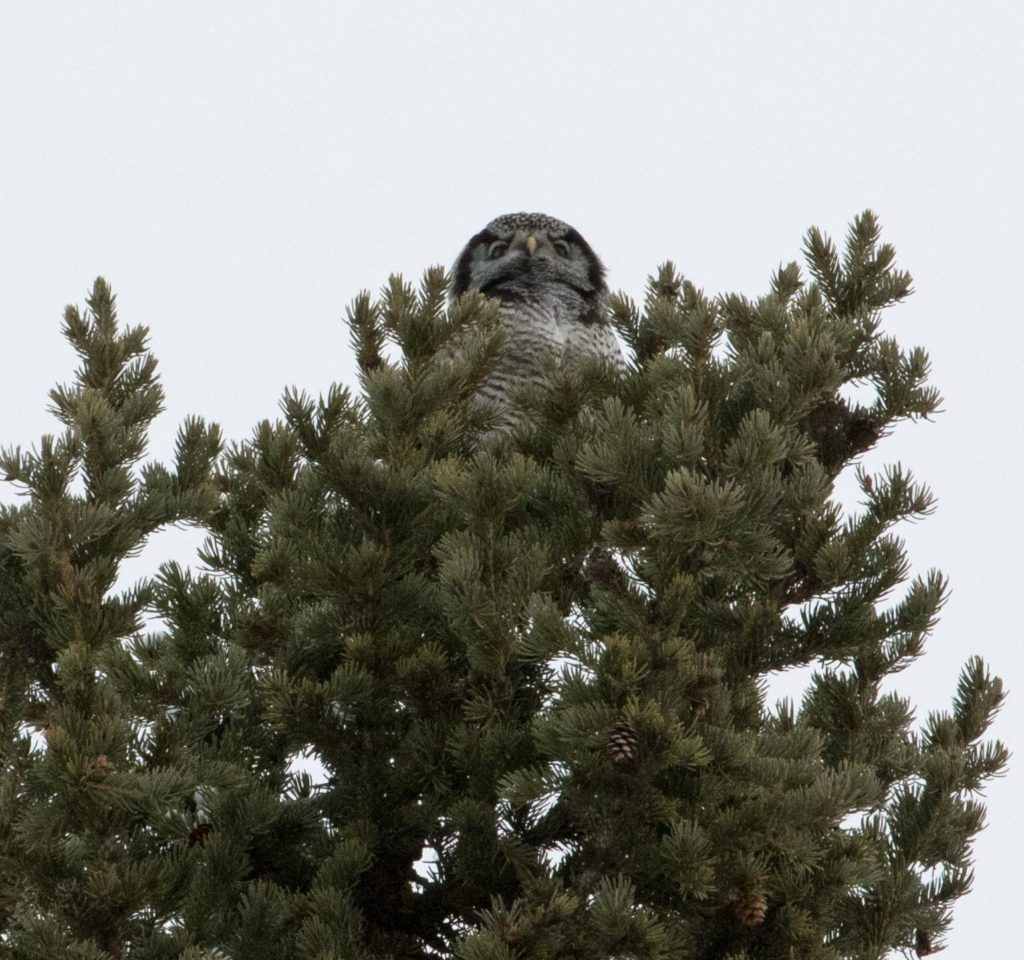
Sneed’s Bird of 2020, the Northern Hawk Owl, a Lifer we found on Braden’s seventeenth birthday. May his 18th bring him as much birding luck!

2020, in fact, was an epic year for Team Collard. It kicked off with our amazing trip to Israel and Jordan, and once back home we embarked on a mission of seeing 250 species in Montana. For perspective, my previous Montana record was 222 species in a year and Braden’s was 225, so we knew that we had our work cut out for us. Astoundingly, we surpassed 250 by last August, leaving the question, how high could we go? For me, the answer turned out to be 267, and for Braden, 274! With Braden probably heading out of state for college next fall, it seems unrealistic we could equal that number for 2021, so we’ve invented some new goals for ourselves.

Goal #1: to end the year with an eBird checklist in every Montana county. (Braden still has nine counties to bird in and I have ten.)

Goal #2: to see birds we’ve never seen in Montana before.

Goal #3: to reach a Montana Life list of 300 species (currently Braden is at 293 while I am just behind at 289).

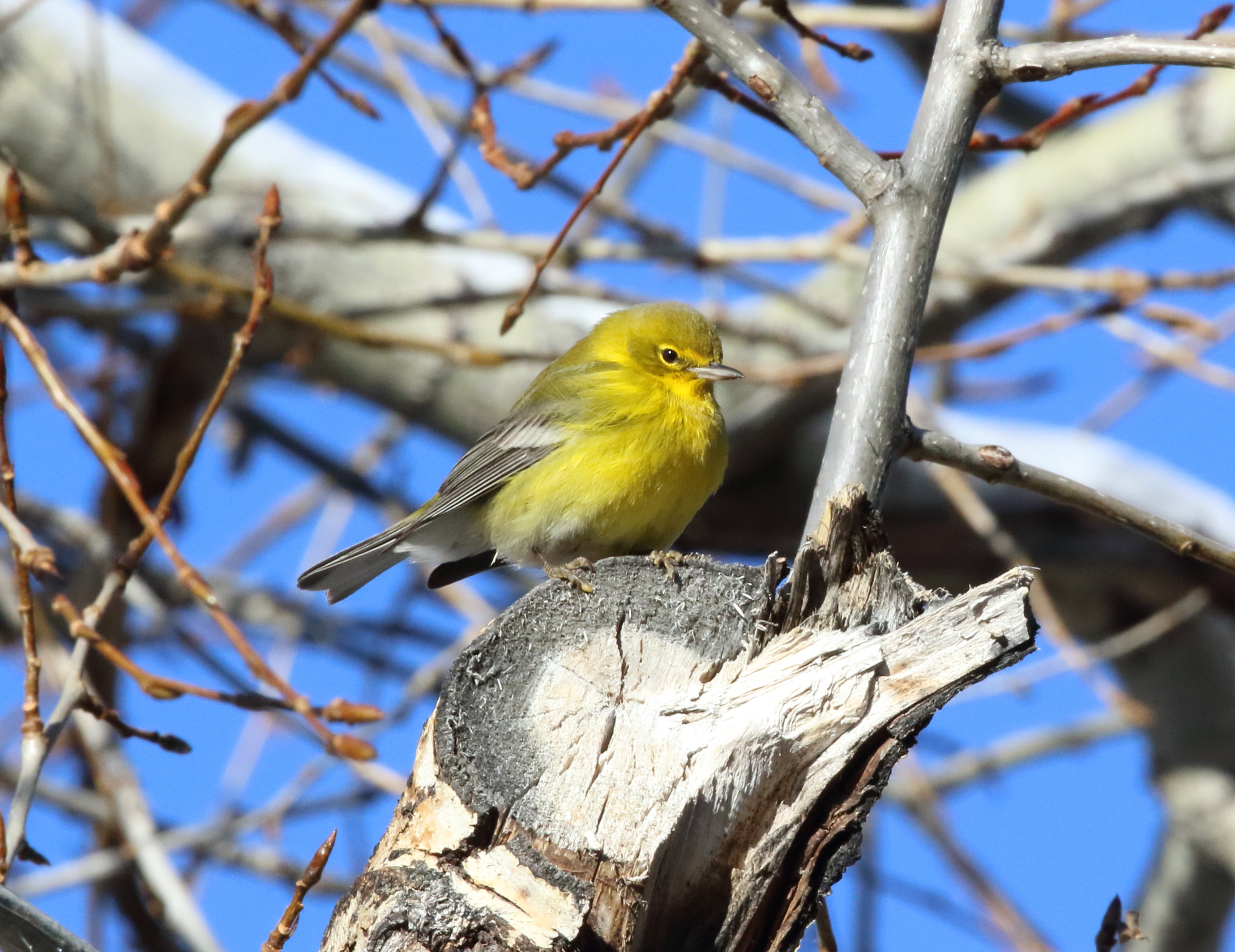
How are we doing so far? Even though it is still January, we are making progress on all fronts. Last weekend, we embarked on a thousand-mile, three-day birding safari to the center of the state. We added Meagher County to our eBird list, and added two Montana Lifers: White-winged Crossbills in Bozeman’s Sunset Hills Cemetery and Pine Warbler—a bird that shouldn’t have been within 1000 miles of Montana—at a feeder in Red Lodge. We had hoped to add at least two other species, but the birding gods were against us. The White-winged Dove in Bozeman that has lit up the Montana birding boards got eaten by a Sharp-shinned Hawk about half an hour before we saw it! Or more accurately, we saw the bird being devoured! We had also hoped to see our first Gyrfalcon, but despite searching the White Sulphur Springs area for more than six hours, the majestic predator was a no-show. Sigh.

Thanks to the generosity of Susan Hovde, who not only discovered but has been feeding him, we were able to spend a glorious winter morning with this out-of-range Pine Warbler—a Lifer for Braden and Montana Lifer for me!

Nonetheless, we found a lot of other great birds and met some terrific other birders. In the process, we set a January species record with still a couple of weeks to go. We do not know what the rest of 2021 has in store for us, but we will keep you updated as we are able. In the meantime, we wish you peace and health, and offer our hopes that this year will see some meaningful progress not only in saving birds, but in protecting this incredible planet we all share.

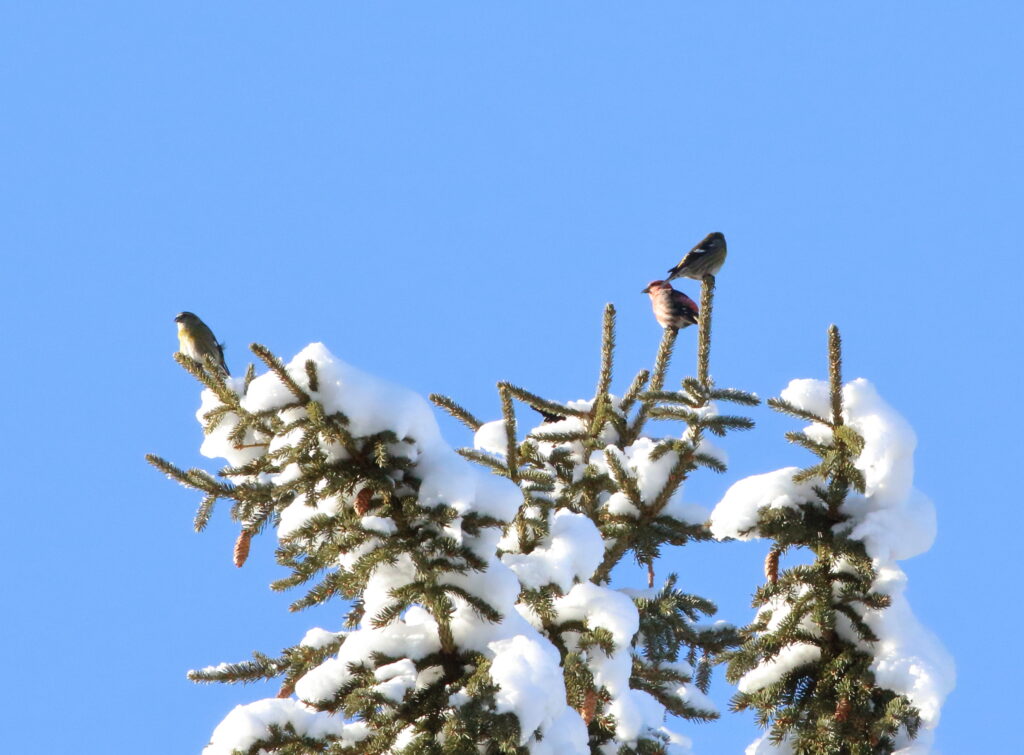
Though not much to look at from a distance, we were thrilled to see our first-ever White-winged Crossbills in Bozeman’s Sunset Hills Cemetery!

Best Fall Warbler Flock Ever!

After a couple of slightly disappointing birding outings in a row, Braden and I were feeling a little down, especially because we felt like we’d missed our chances to see some uncommon fall migrants as they make their all-too-brief passages through Montana. Nonetheless, I continued taking my binoculars with me on my morning dog walks just to keep an eye on things and learn more about how fall birds behave. Early last Sunday, I decided to take Lola on one of our Top Secret routes—places we can’t tell you about or we’d have to kill you—and had just started down a street near Pineview Park when I saw activity in weird poplar-type trees up ahead. I unslung my binocs and focused.

You Californians are probably used to this, but sixty Yellow-rumped Warblers in Montana? Almost unheard of!

I saw about eight or ten little birds, and the first two I identified happened to be Ruby-crowned Kinglets, so I at first assumed they were all kinglets. Rookie mistake. Upon further study, I realized that many of them were Yellow-rumped Warblers (Banding Code: YRWA). What’s more, many more birds filled the surrounding trees. “Hm . . . This could be serious,” I thought and settled in for a better look. For the next twenty minutes, I did my best to identify the frantically-moving targets, finding Red-breasted Nuthatches, Black-capped Chickadees, Evening Grosbeaks—and about twenty Yellow-rumped Warblers. As I was looking at the top of a spruce tree, however, a shocking black-and-yellow face suddenly popped up: a Townsend’s Warbler! By now, TOWAs were supposed to be long gone and when I punched it into eBird, well, the app flagged it as RARE.

Anyone know what this tree is? Whatever it is, it apparently hosted a lot of insects because the birds loved it!

Lola and I hurried home and woke Braden. “You don’t have to come,” I told him, “but there’s an amazing mixed-species flock down by Pineview, including a Townsend’s Warbler.” Five minutes later, cameras and binoculars in hand, we zoomed down there in our ’86 4-Runner. To our relief, the birds hadn’t left, and we spent the next seventy minutes following them. My major goal was for Braden to see the Townsend’s, but together, we soon began making other discoveries. For one thing, there weren’t just twenty YRWAs. There were at least sixty of them, along with at least ten Ruby-crowned Kinglets. It wasn’t long before Braden found a Wilson’s Warbler and we both began detecting an occasional Orange-crowned in the crowd. Thanks to Braden’s ears, we also heard Pine Siskins, Red Crossbills, a Song Sparrow—even a pair of Sandhill Cranes in the distance!

Full Disclosure: I still confuse Cassin’s Vireos with Ruby-crowned Kinglets. The white “spectacles” are the key to IDing the Cassin’s.

Not to be outdone, vireos made an appearance. Braden spotted a pair of one of our favorite songbirds, Cassin’s Vireo, while I saw another surprise bird face, that of a Warbling Vireo—also flagged as RARE for this time of year.

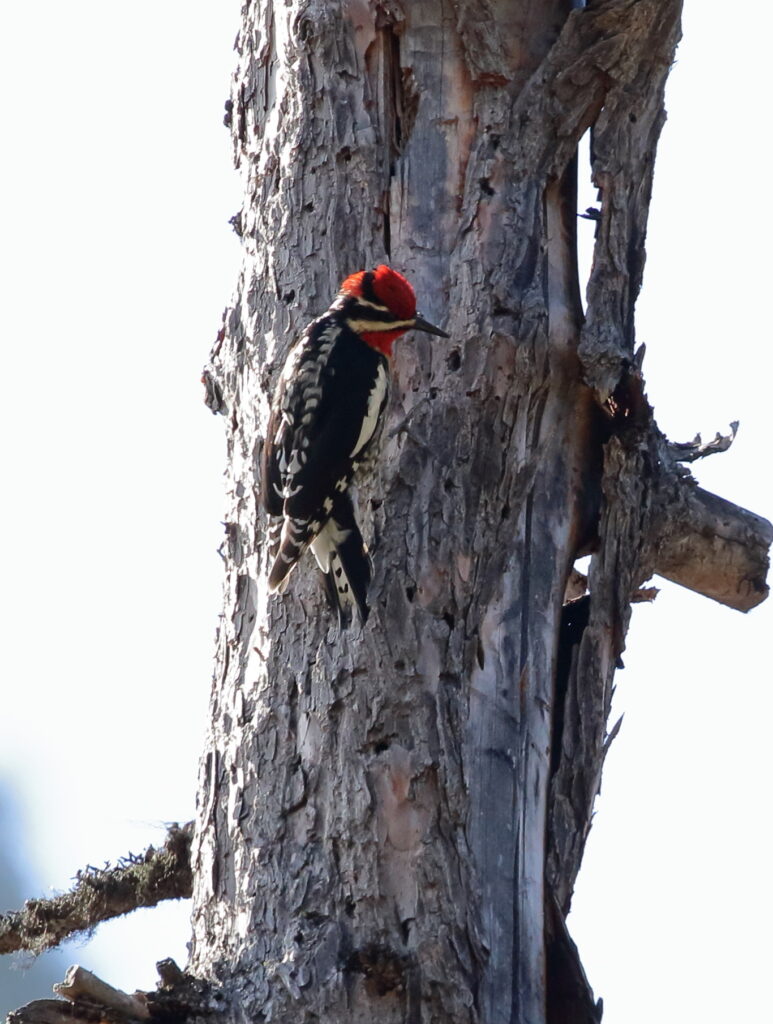
The species kept piling up with Hairy Woodpecker, flickers, and another surprise, Red-naped Sapsucker. But where was that sneaky Townsend’s Warbler? Had I been imagining it? Had it struck out on its own? Finally, after almost an hour, Braden shouted, “I’ve got the Townsend’s!” I hurried over and sure enough, there it was. I even managed a poor, but unmistakable, photo of it. As the flock made its way slowly down Rattlesnake Creek, Braden and I climbed back into the 4-Runner. “Wow,” I said, “I think that’s the best mixed-species flock we’ve ever seen in Montana!” After some thought, Braden agreed. It hadn’t provided us any Year Birds or Lifers, but had been something we would never forget—and almost in our back yard. Birding doesn’t get better than that.

Click here for our complete list: https://ebird.org/checklist/S74123665

Townsend’s Warblers are supposed to be long gone by now, but this one apparently liked traveling with the YRWA herd!

Banding, Bad Weather, and Old Friends

The sun was still asleep as the Collard minivan circled the roundabout, turning off on the road leading to MPG Ranch. Thirteen months ago, we had had our first banding experience with the University of Montana Bird Ecology Lab on Upper Miller Creek road, and now we were back for more—Erick Greene, a UM professor working with my dad on an article, had invited us to join the Ranch team. We pulled up to the gate, and soon enough the banders arrived. We followed them through the gate and onto MPG Ranch, a place neither my dad nor I had been in at least two years. A brand new sign pointed directions to familiar places, and we followed the truck towards the Orchard House, where Nick Ramsey and I had spent many days watching the feeder birds. We passed the Duck Mahal, a seasonally-flooded building, located adjacent to a slough that provided habitat for the first Bullock’s Orioles, Gray Catbirds, Wood Ducks and Red-naped Sapsucker I had ever seen. 

While we hoped that the wind would die down, UMBEL’s Mike Krzywicki gave us a tour of their MPG banding site. Just the week before, they’d caught a rare Gray Flycatcher here.
The research carried out at MPG Ranch grows more and more important as climate change worsens and we grapple with how to protect and restore fragile Western ecosystems.

The vehicles parked in a lot north of the Duck Mahal, and from there we followed Mike, the lead bander, down into a shrubby riparian area. The rising sun brought with it constant gusts of wind, and the gray sky threatened us with rain.

“Well,” said Mike, “It looks like we won’t be banding for a while, so why not go birding?”

As we walked around the floodplain, we learned about what projects UMBEL and each of the individual banders and students were working on. The birds, for the most part, were completely hunkered down, and most of the songbirds we recorded as flyovers. One group of birds was out in full force, however; it was peak raptor migration. 

Pairs of Red-tailed Hawks performed acrobatics in the sky as the wind sprinkled rain around us. A golden-bellied female Northern Harrier passed right in front of us as we scanned the brush for warblers, and several accipiters made close passes (including one that sat on a bare log that we puzzled over for several minutes).

It is definitely raptor migration season as we are seeing large numbers of birds riding mountain ridges and, when we’re lucky, coming close to the ground. (Red-tailed Hawk)

The weather did not lighten, and so, for the safety of the birds, the banding session closed before it opened. My dad and I, still thirsty for species, said our thanks and drove back across MPG’s windswept plain towards another old friend: Lee Metcalf National Wildlife Refuge.

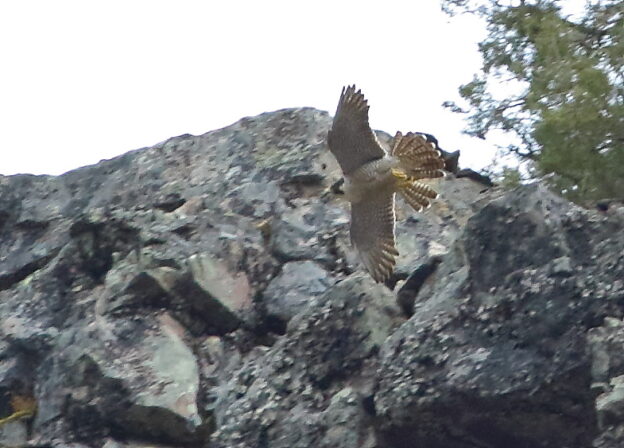
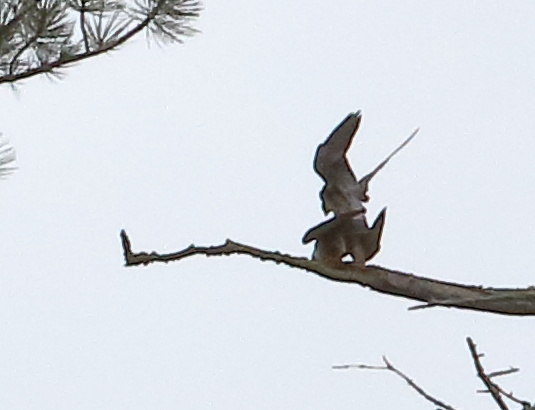
What we discovered upon arriving at the main ponds by the Refuge visitor center is that the season of brown, unidentifiable ducks was wrapping up, and the open water produced great looks at breeding-plumaged American Wigeon, Northern Pintail and Gadwall alongside prehistoric white pelicans. We hadn’t seen this much waterfowl in a long time, yet, again, our eyes turned to the sky. Raptors continued to stream over the Bitterroot Valley, and we studied each Red-tailed carefully, hoping to spot a Broad-winged Hawk, a rare but regular migrant this time of year. No Broad-wingeds appeared, but rafts of Turkey Vultures did. On our way out of the refuge, we spotted yet another raptor, one we had just begun to get familiar with: a crisply-patterned Peregrine devouring a blackbird on a fencepost.

Most people still think of the Bitterroot Valley as relatively untrammeled. As this photo shows, the valley is filling up fast, and we need careful planning to protect the wildlife that all Montanans cherish. (American White Pelicans at Lee Metcalf NWR)

Next, my dad and I headed to Kootenai Creek Road—not the road leading to the trailhead, but the one I’d accidentally driven earlier this summer. Why? California Quail, an introduced resident of the Bitterroot Valley, had been abundant the last time I’d been here, and this was the first time my dad had gotten his butt down here to add them to his year list. Nabbing quail was a necessity. Thankfully, we spied a lone male on our way back down the road, adding another year bird to at least one of our lists after a two-week drought.

Okay, we admit it. A lone California Quail isn’t likely to make the cover of “Hollywood Birds Tonight”, but when it’s a Year Bird? Heck ya, we’ll take it!

Finally, we hit the Fort Missoula Gravel Quarry, a birding classic, before heading home. Upon entry, we were hit with a large flock of robins feeding on berries, and soon began pulling other species from the flock. Butterbutts (Yellow-rumped Warblers) flycaught above leaf-gleaning Orange-crowned Warblers, and we spotted a pair of Cassin’s Vireos, adorned in yellow vests and white eyeglasses. As we made our way towards the water, I heard a high, metallic “chip” coming from a bush behind us. After about a half hour of pishing, using playback and circling the bush multiple times, an adult “tan-striped” White-throated Sparrow popped into view for a second, adding another species to my dad’s year list (I’d found one at the Rocky Mountain Elk Foundation a few weeks prior). Like at MPG and Lee Metcalf, raptor silhouettes lined the horizon, and we continued scouring the sky for Broad-wingeds. Unfortunately, we didn’t find any, but there would be other days.

On the way home we hit another old favorite: Taco Bell. It had been a day of new experiences and old memories. We had no choice but to feel fulfilled.

Smokin’ Birds

As always, we appreciate you sharing this page, and hope that all of you are staying healthy and sane during these difficult times!

Very Unhealthy. That’s what Missoula’s air quality had been pegged at for the last five days, thanks to smoke from the catastrophic fires raging across the West. Braden and I were supposed to stay indoors, but faced a huge problem: fall migration, when waves of birds were traversing the state. Birds we could only see now. What to do? Simple. Go birding.

Unlike our past few outings, we decided to stick to the Missoula Valley, and began by heading out to Frenchtown to see if we might catch a rare Sabine’s Gull or Greater White-fronted Goose. We arrived at our intended water-filled gravel pit and what did we see? Exactly one American Coot on the water. Then, we spotted some action in a few sad-looking invasive trees along the road. We sauntered over to discover a delightful assortment of American Goldfinches, Yellow-rumped Warblers, and Lincoln’s Sparrows, along with a surprise Red-naped Sapsucker, a species we thought would be long gone by now. A duet of American Pipits flying overhead capped off our visit.

Even though Yellow-rumped Warblers are our most common Montana warblers, it’s so much fun to see them moving through in big fall groups.

After an uneventful stop at the Frenchtown Slough, we headed to our main destination, Mocassin Lane. This road is always hit and miss for us, but in previous years runoff irrigation has created muddy pools that sometimes attracted shorebirds. Since we’d had fairly dismal luck in our last few outings, we harbored no real expectations, but we hit the jackpot! Setting up our spotting scope, we identified a surprising assortment of ducks, and then focused in on our real treasure: shorebirds. “There’s a ton of Wilson’s Snipe out there,” Braden said, scanning slowly. “Oh, wait. I’ve got a Pectoral Sandpiper!” In fact, there wasn’t just one, but 17—the most we’d ever seen at one time. It was also the most snipe—13—we’d ever seen in one place. Other delights included a lone Red-necked Phalarope and more than twenty pipits. It was a great chance to study birds we rarely came in contact with, and we spent a good hour enjoying them.

How many shorebirds do you see? This photo perfectly encapsulates how challenging it is to detect, observe, and identify species. See what you come up with—answer at the end of the post!

https://ebird.org/checklist/S73744019

Our outing yesterday was by far our best look ever at Pectoral Sandpipers. The striped breast and yellow legs are distinguishing marks for these handsome birds.

After our big shorebird score, we thought we’d exhausted the day’s luck, but at Council Grove State Park we again landed amid a great assortment of birds including the Nuthatch Trifecta (Pygmy, White-Breasted, and Red-breasted), another Lincoln’s Sparrow, and a late-season Spotted Towhee. The highlight? A Merlin and American Kestrel perched face-to-face on a bare branch. We couldn’t tell if they were trying to make friends or face off like Clint Eastwood and Lee Van Cleef in a spaghetti western. Either way, it was a great cap to a great day that netted us 55 species, firmly sending us into record territory for September birding. Meanwhile, our Montana Big Year totals now stand at 256 species for me and a whopping 263 for Braden. Take that, fire smoke!

Falcon Stand-off: “A bird with a rifle will win over a bird with a pistol any time.”

Shorebird Answer: Well, I count at least nine shorebirds in this photo including at least four Pectoral Sandpipers, one Killdeer, and four Wilson’s Snipe—with a couple American Pipits thrown in for good measure!