Instead of your regularly-scheduled blog, we today invite FSB readers to join in on an urgent appeal to help protect one of North America’s coolest and most vital bird habitats—the globally important Bolivar Peninsula. Learn more and donate by clicking here—or on the Piping Plover below.
If you’ve followed FatherSonBirding—or read my books Birding for Boomers or Warblers & Woodpeckers: A Father-Son Big Year of Birding—you know that High Island and the Bolivar Peninsula outside of Houston have played pivotal roles in Braden’s and my birding experiences. In these locations, the Houston Audubon Society (HAS) has worked tirelessly to obtain, restore, and protect vital habitat for both migrating and resident birds. On our first visit to High Island and the Bolivar Peninsula in 2016, Braden and I saw an astounding forty-five Life Birds in one day! These included everything from Scarlet Tanagers and Least Terns to Piping, Black-bellied, and Semipalmated Plovers.
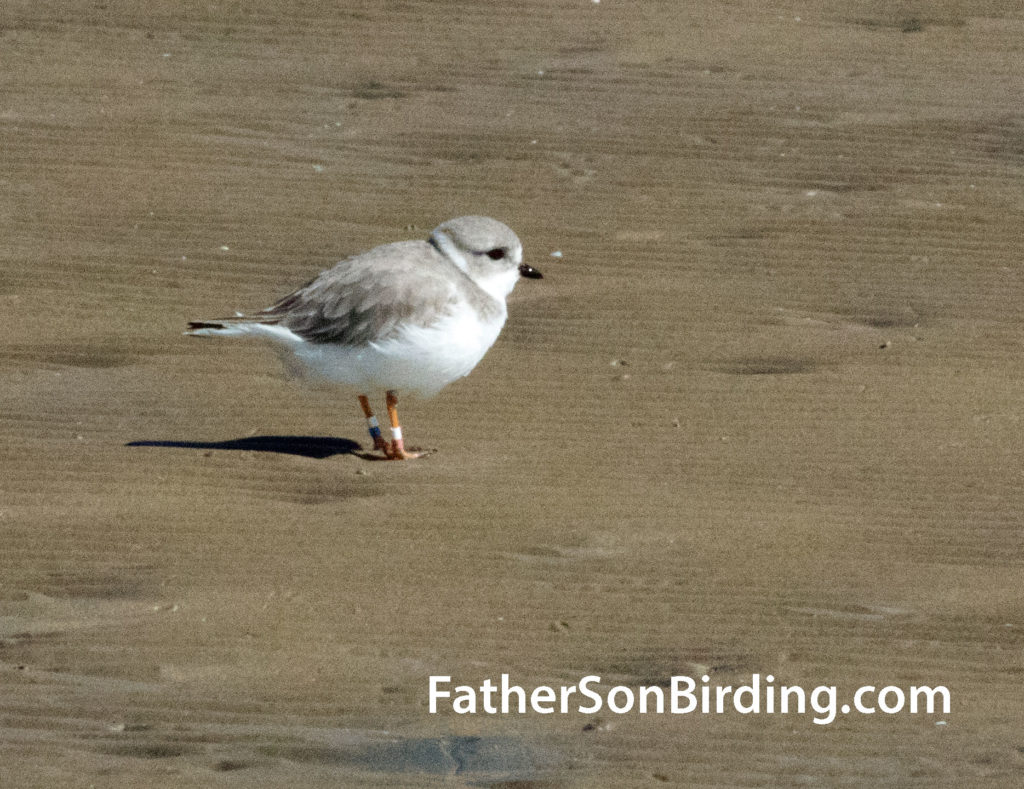
Braden and I saw our first-ever Piping Plovers on the Bolivar Peninsula, and I was lucky to see this endangered species again on a subsequent visit.
Even though I live in Montana, I became an annual supporter of HAS shortly after that visit. Even better, I have been fortunate to visit the area three more times. Every trip has been a highlight of my birding career. Each time, I have seen gobs of amazing songbirds, shorebirds, and waders, and learned a ton about birds. Just check out some of my past posts about visiting the region:
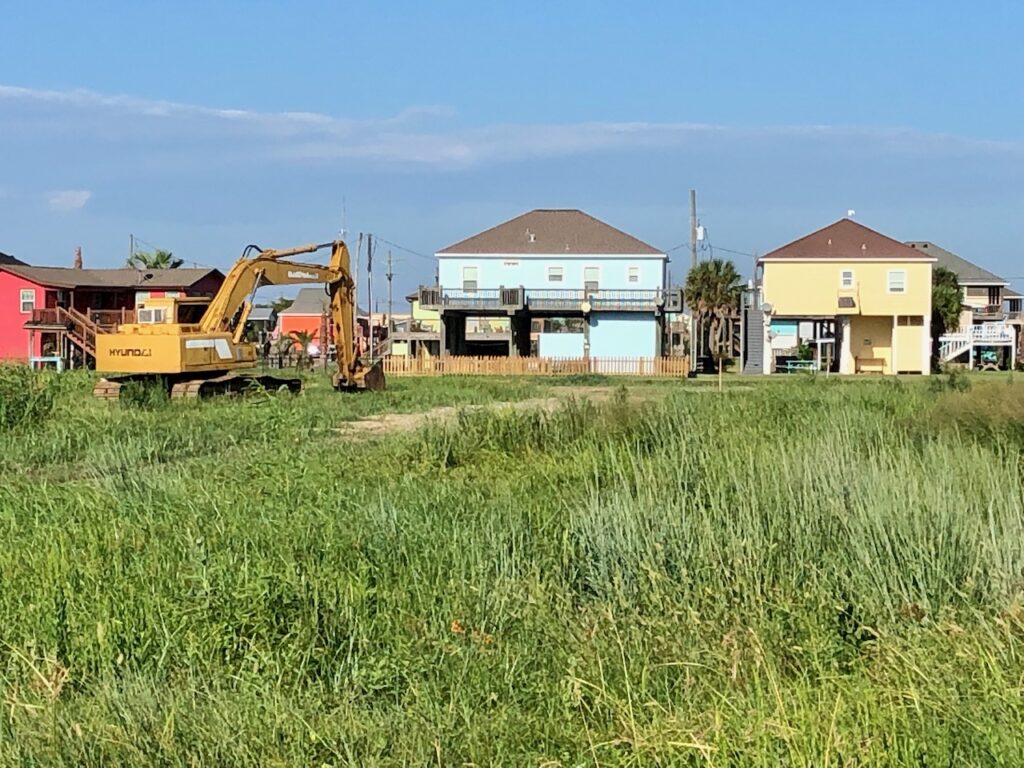
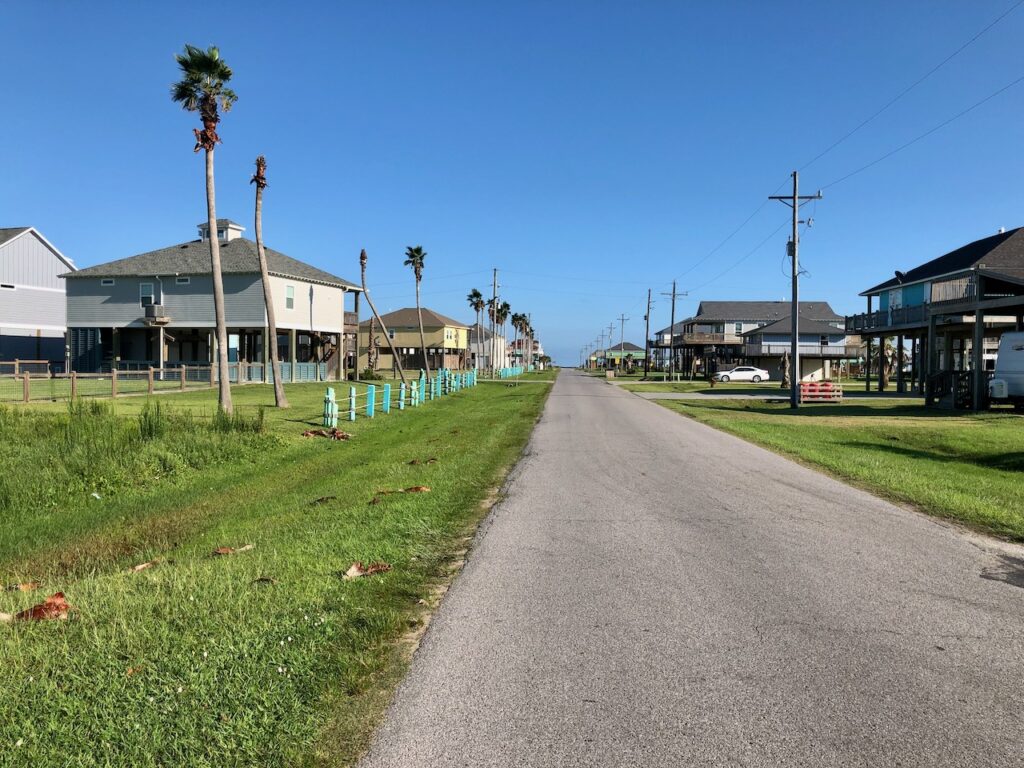
Unfortunately, during my visits, I also have noticed an inescapable fact: the Bolivar Peninsula is being developed at an astounding rate and the reason is clear: beachfront property. During our first visit there, Braden and I noticed quite a few houses along the 25-mile or so stretch of the peninsula. On each subsequent visit, I was blown away by how many new houses had sprung up since my previous visit! On my most recent trip, this past April, I realized with dismay that the entire peninsula would soon be wall-to-wall housing developments.
One of dozens of major housing developments that have sprung up on the Bolivar Peninsula since Braden and I first visited in 2016.
I can’t even begin to explain how poorly-conceived this kind of rampant development is. Never mind that it has gobbled up some of the best remaining Gulf Coast wildlife habitat, it is virtually guaranteed that hurricanes will totally destroy these developments as they have in the past—and with increasing frequency thanks to climate change (see this Hurricane Ike story and this astonishing storm list). In fact, the ability of the peninsula in its natural state to block tidal surges, prevent erosion, and soak up storm water economically outweighs by far the short-term profits from this get-rich-quick development.
Rampant development in coastal areas not only destroys critical habitat, it greatly diminishes the ability of the coast to withstand hurricanes and other major storms. Though I’d love to enjoy a beachfront house like this myself, economically it is a lose-lose situation, both for homeowners and taxpayers, who often get stuck with paying the bills for disaster cleanup and rebuilding.
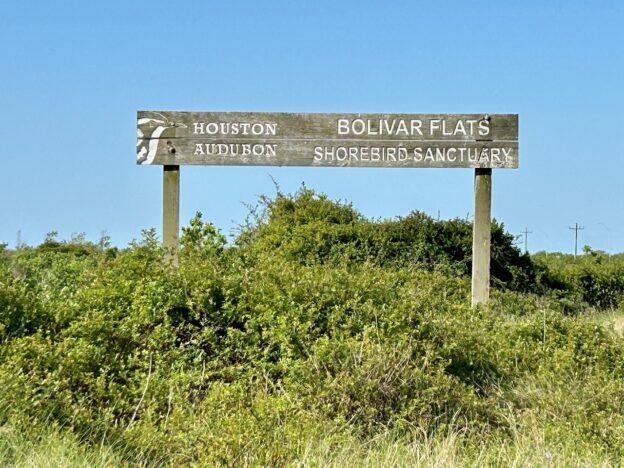
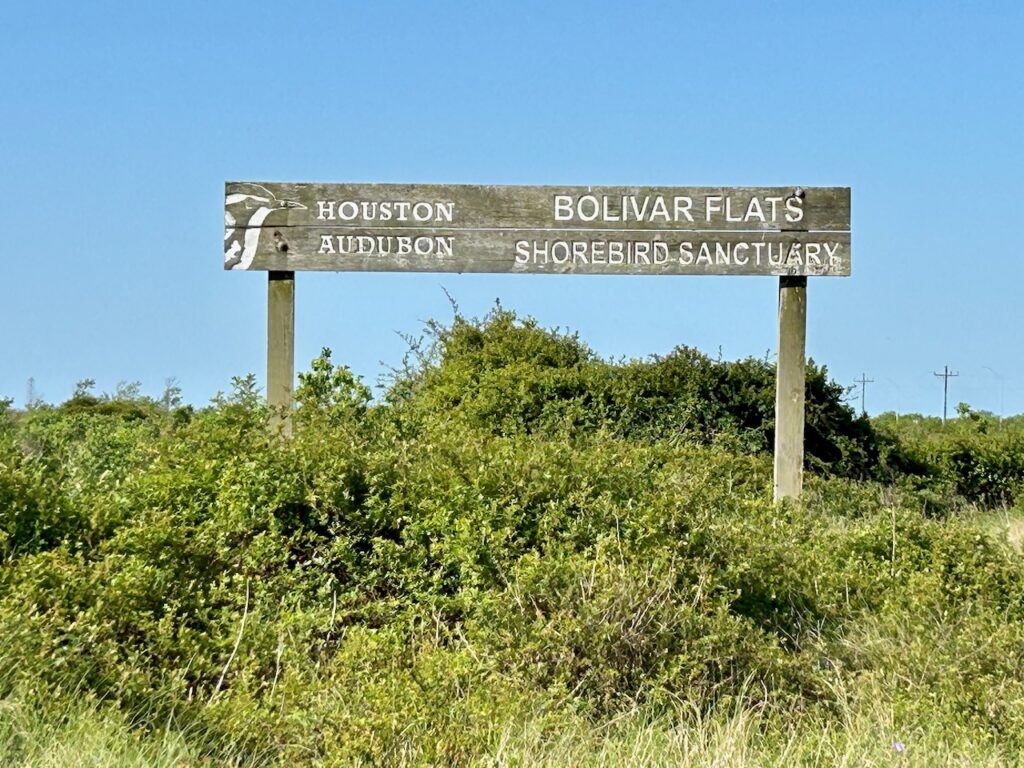
Still, the lure of fast profits is just too much here as it is in many other places. And that’s why I’m writing this post. Right now is one of our last best chances to protect what remains of this globally vital birding habitat. How? Currently, HAS owns and manages more than 3,000 acres of Bolivar Peninsula habitat—natural islands in an expanding sea of development. And yet, right at the entrance to their Bolivar Flats Shorebird Sanctuary, a new development recently cropped up. Ironically dubbed the Sanderling Development, it threatened to wipe out critical habitat and destroy a buffer to the core of the Bolivar refuge. The good news? Through heroic efforts, HAS managed to raise $3 million to buy 25 acres of the land this past July. Now, however, they need another $3 million to complete purchase of the remaining 27 acres of the property. This land is so vital that for the first time in decades, HAS has issued a public appeal for funds—And that’s where we come in!
Just one of many Bolivar housing developments, the proposed Sanderling Development directly threatened the ecological integrity of the Bolivar Flats refuge right across the road. However, HAS still needs to raise $3 million to complete the property’s acquisition. Click on this photo to donate!
No matter where we live, securing this last bit of property should be a major priority for birders. Not only does it help provide essential stop-over areas for millions of migrating birds that spread out across the continent, it helps protect critical breeding and wintering habitat. Endangered Piping Plovers, Black Rails, and Red Knots are just three endangered species among hundreds of other species that use this important area.
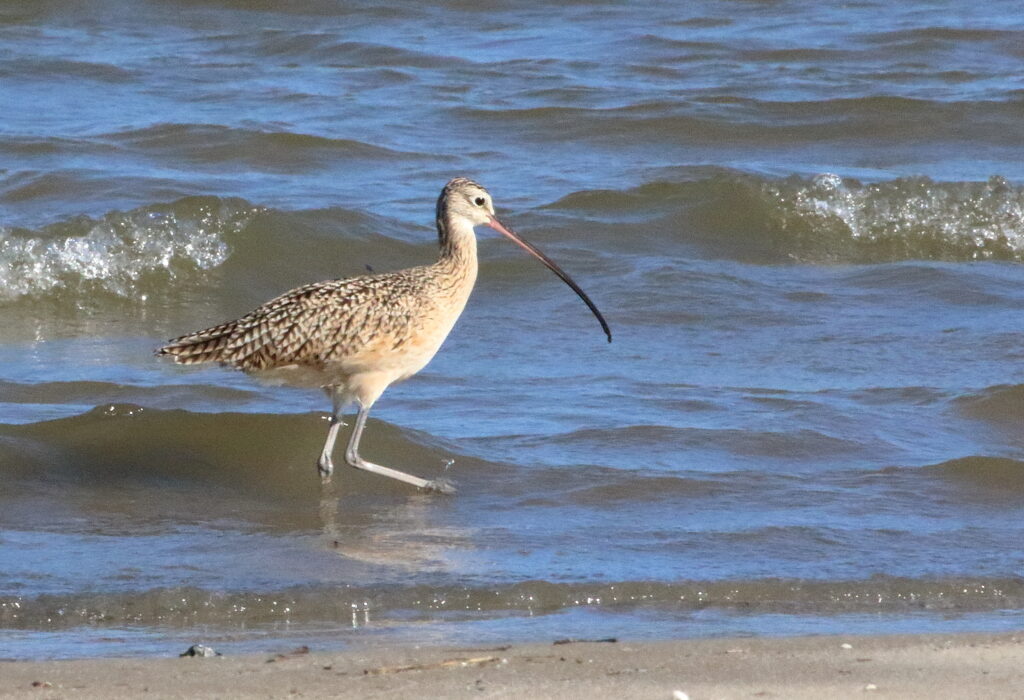
A fall Long-billed Curlew at Bolivar Flats—perhaps just returned from breeding in Montana?
So how about it? Do you have $25 to chip in? $100? $1000? If you do, I can say with confidence that your money will rarely be better spent. Along with donating, why not plan a spring or fall trip down to the area? If you are fortunate enough to be able to do this, I can almost guarantee it will be one of the highlights of your birding experiences. You also will not have the slightest doubt that your investment in this area is one of the best you will ever make. To donate, CLICK HERE NOW!
And with that, I will sign off so I can make a contribution myself!
Houston Audubon’s Bolivar Peninsula’s sanctuaries are not only vital for Texas birds, but for breeding birds throughout North America.
“Call me asap,” Roger’s text read. A few minutes later, I dialed his number. “What’s up?”
The answer: a chance of a lifetime.
As faithful FSB readers know, Roger is a longtime friend of mine from UC Berkeley, and a guest contributor to FatherSonBirding. More than six months ago Roger and his wife, Claudia, began planning a dream birding trip to the world’s epicenter of awesome birding—the country of Colombia. How awesome is Colombia? Well, during the Global Big Day of birding each year, Colombia regularly kicks butt on all challengers. In 2024, its birders recorded an astounding 1558 species in a single 24-hour period—more than twice the number of the US despite submitting only about 15% of the number of checklists. It is widely considered to have the highest biodiversity per square meter of any country on earth.
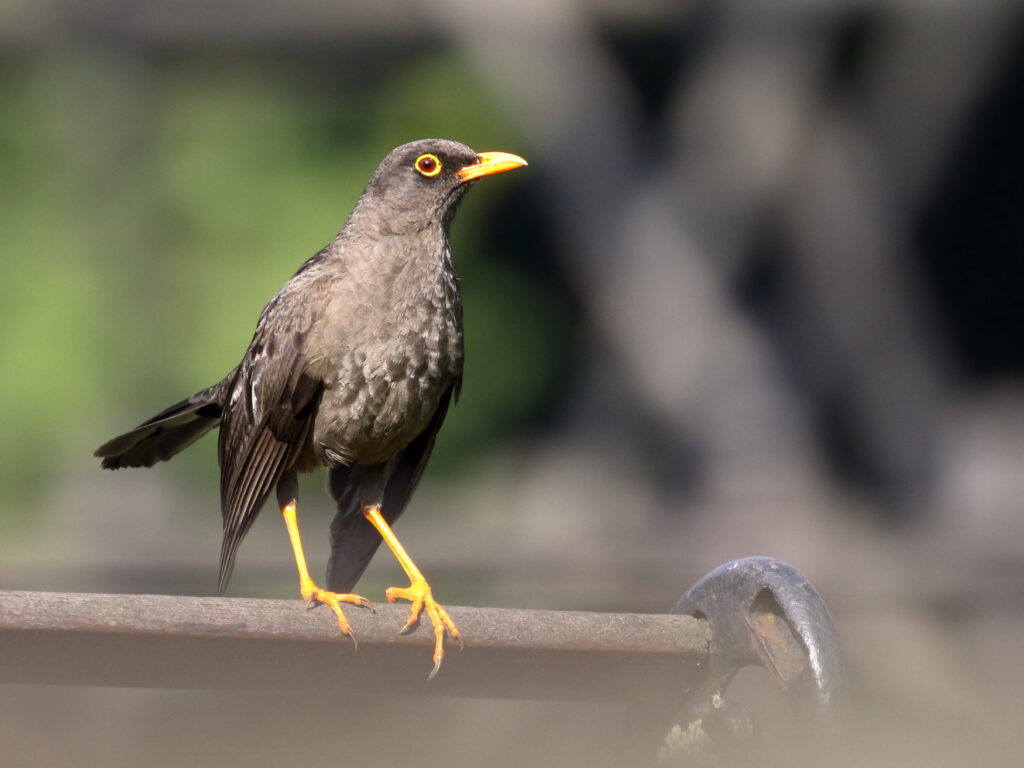
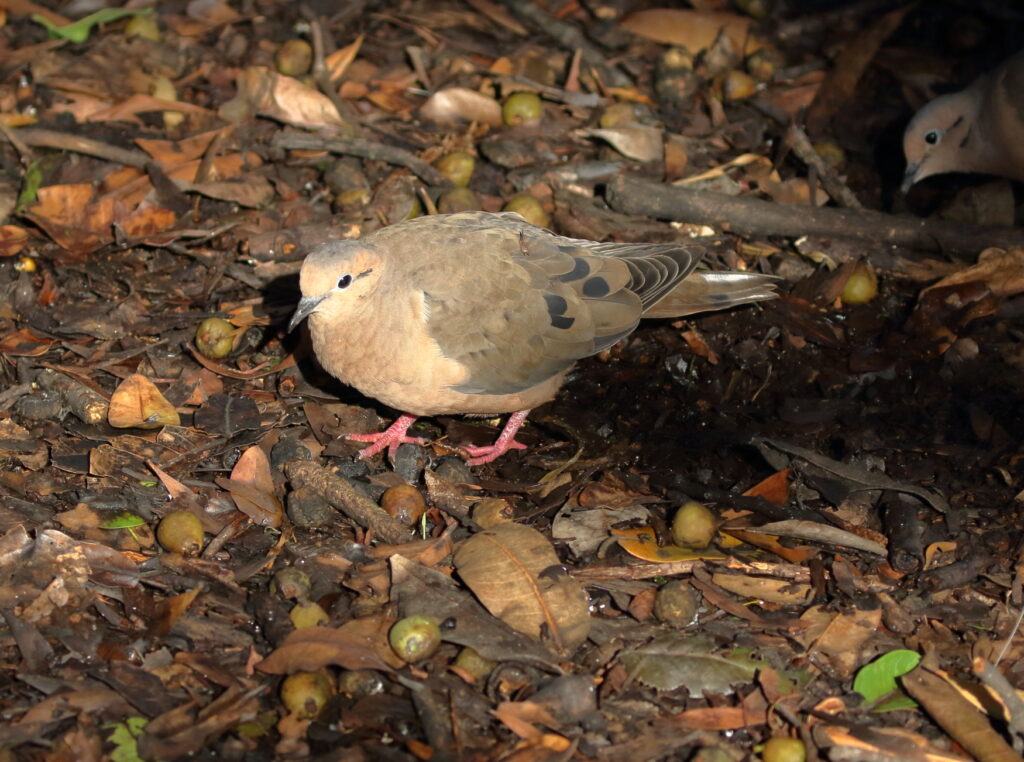
Great Thrush and Eared Dove . . .are two of the first birds you’re likely to see in Bogota!
Sadly, Colombia has a long history of violence that has made it mostly off-limits to birders for decades. That began to change in 2016, when a peace agreement was signed between the government and FARC, the military wing of the Colombian Communist Party. Violence still racks some parts of the country, but that has not prevented a growing number of birders from seizing the chance to visit one of the world’s most spectacular ecological regions. About six months ago, Roger decided to join those growing ranks. He and Claudia mapped out a two-week trip that would include a feast of birding opportunities. However, as the great oracle of our time, Neil Young, sang, “The devil fools with the best-laid plans.” Two weeks before their trip, Claudia was forced to cancel, and Roger asked if I wanted to fill her slot. With a quick nod from Amy and the urging of Tessa, it took me about two minutes to decide.
The plan was to meet up in the Andean city of Pereira to begin our birding adventure (of which I’ll write much more later). Roger planned to fly from his home in Bend, Oregon to Miami and spend the night; then fly to Pereira via Panama City the following day. Being a Delta Airlines loyalist, I left a day earlier, spent the night in Atlanta and then flew to Bogota for a night. This excited me greatly because it would give me a morning to myself before catching a flight to Pereira to meet Roger. Gee, what oh what might I do with that morning?
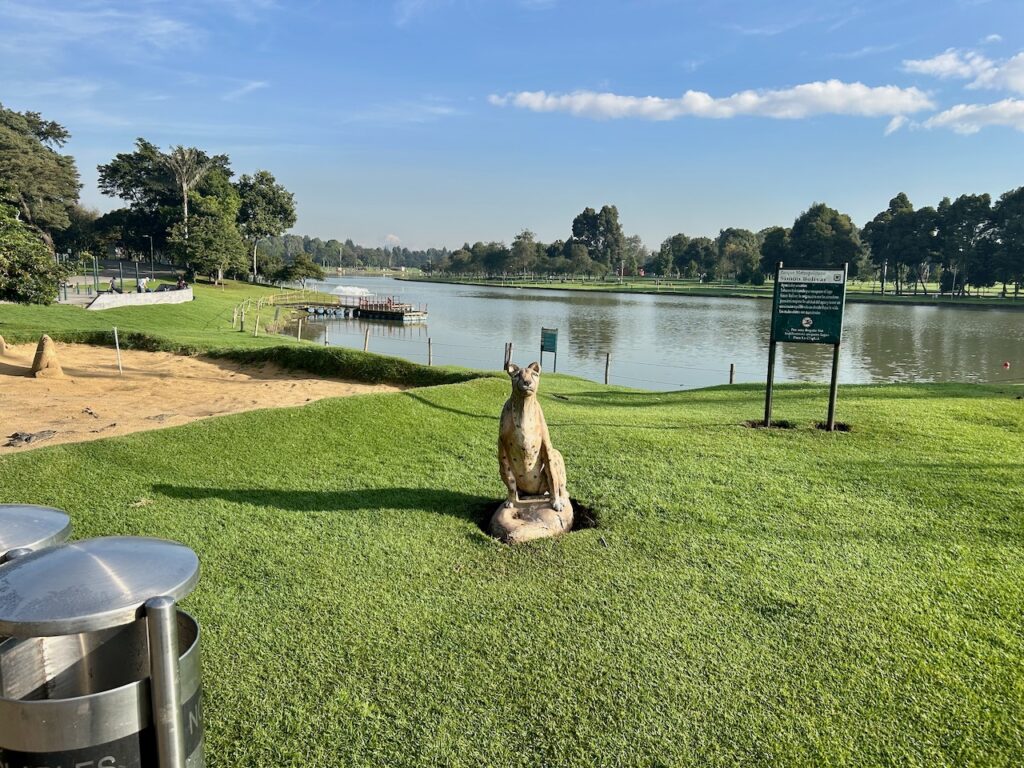
Simon Bolivar Park, Bogota.
Not by accident, I booked a room in the Hotel Capital, strategically located a short taxi ride to two major birding possibilities. Rising early, I wolfed down a granola bar for breakfast and then caught a cab to Parque Metropolitano Simón Bolívar, one of the world’s largest urban parks. In my atrocious Spanish, I told the cab driver of my interest in birds and he dropped me off at the SW corner of the park near a large central lake. I had worried a bit about carrying my camera and binoculars in this unfamiliar city, but my hotel concierge had assured me the park would be safe. Sure enough, I was relieved to see a steady stream of joggers, dog walkers, and cyclists taking advantage of a beautiful sunny morning. But what of the birds?
As I walked toward the lake, I saw plenty of Great Thrushes and Eared Doves, and Sound ID picked up the songs of Rufous-collared Sparrows, a bird Braden and I had become friends with on our family trip to Ecuador and Peru in 2017.
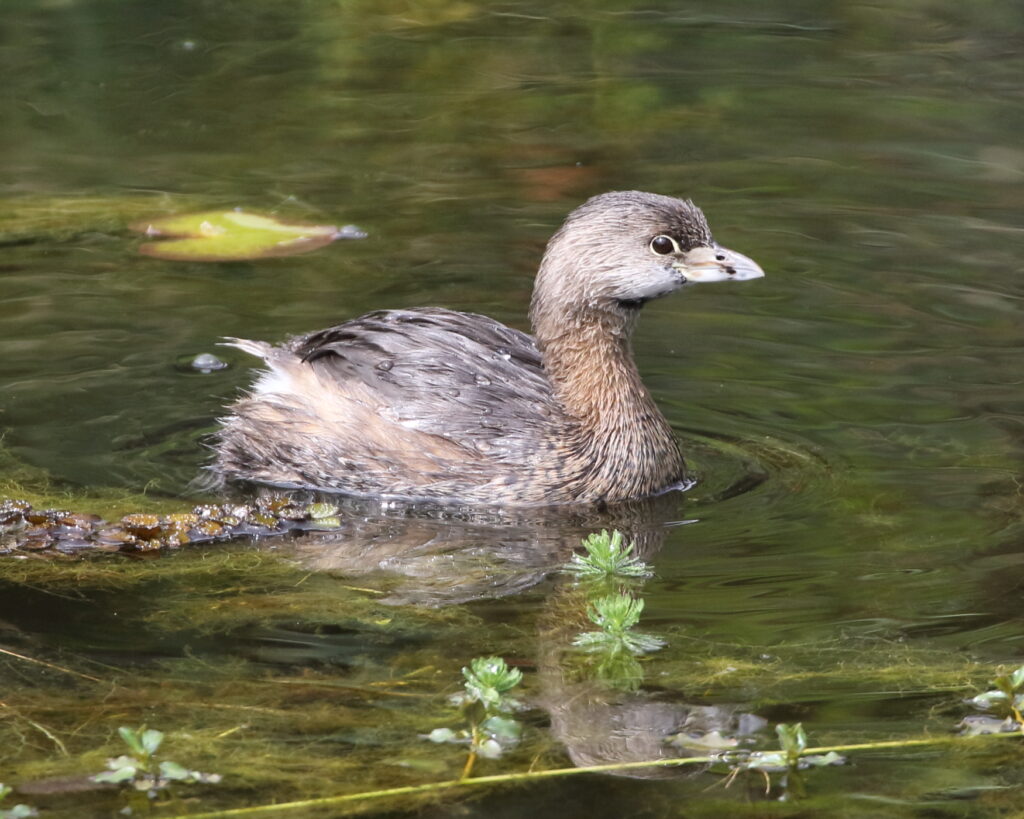
Like a birder magnet, however, the lake drew me forward. When approaching a large body of water like this, I always look for legions of water birds to be gracing the water, and in Japan and last year’s trip to Barcelona, that had indeed been the case. Not today. Evidently, ducks just aren’t as big a deal in the tropics as in temperate zones. I did spot what looked like a domestic hybrid duck of some sort, accompanied by a much smaller bird, and I focused in on the latter for the day’s first surprise—a Pied-billed Grebe! “I didn’t know they lived this far south,” I thought. Indeed, I later learned that in the Americas, Pied-billed Grebes have the largest distribution of any grebe, stretching from mid-Canada almost to the tip of South America.
Pied-billed Grebes have the widest distribution of any American grebes.
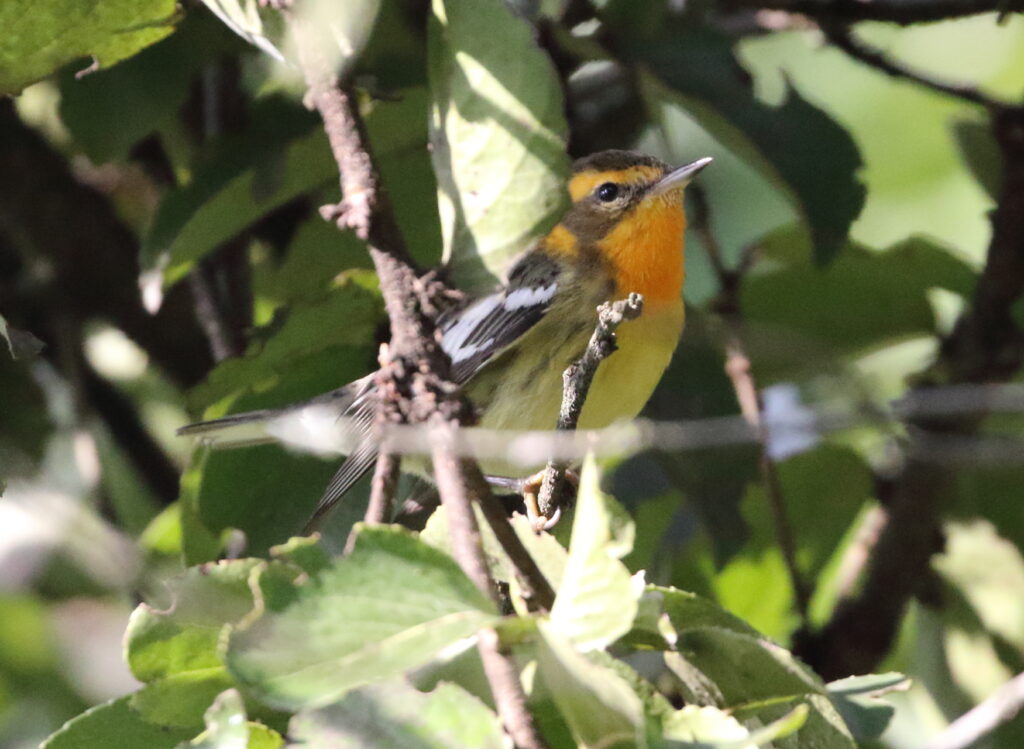
A hundred meters farther, I caught movement in bushes and discovered one of the real prizes of my outing—a mixed flock of warblers! And not just any warblers, but three species that breed in the eastern US. One revealed a brilliant splash of orange on its face. Can you guess which one it was? That’s right—Blackburnian Warbler! It was accompanied by several Tennessee Warblers and my first look at an actual Rufous-collared Sparrow.
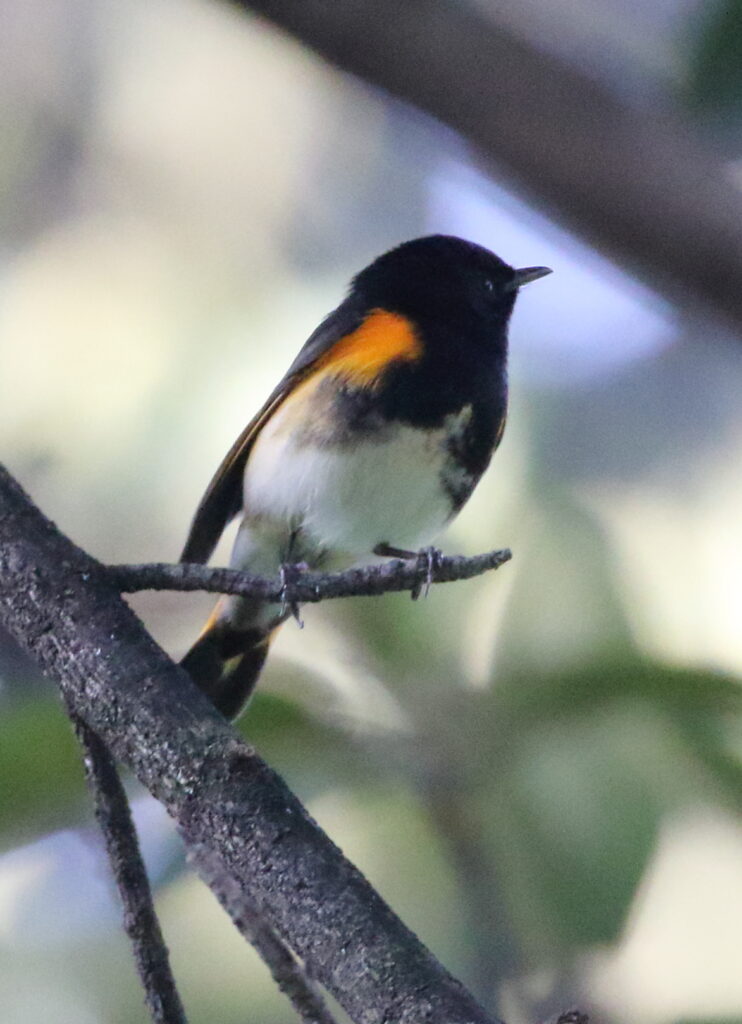
Blackburnian Warbler and . . .American Restart in Bogota!
As I followed the flock around, I got an even bigger surprise—a bonafide American Redstart. “Wow!” I said out loud, trying to get a photo of one of everyone’s favorite warblers.
From the main “parky park,” I crossed a pedestrian bridge over jammed up morning traffic and entered a sprawling sports complex.
You’ll be relieved to learn that Colombia has the same kinds of traffic problems as we do!
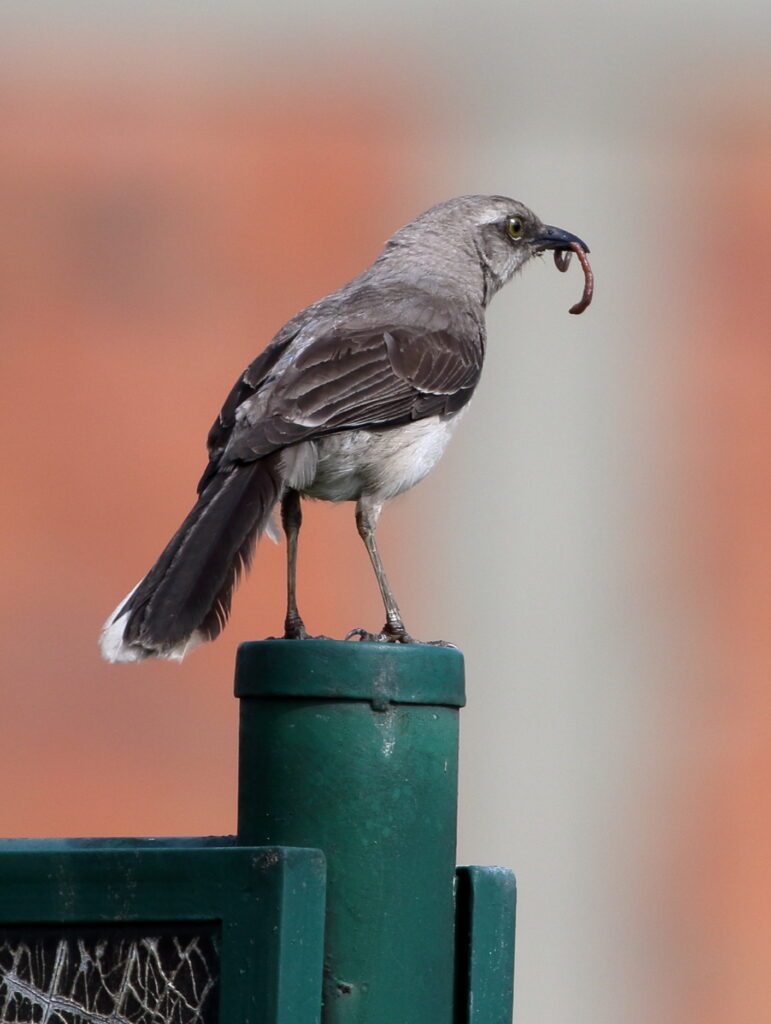
Soccer players were warming up, track and field athletes ran around a track, and tennis players smacked balls back and forth. Next to the walking path, a pair of familiar-looking black-and-white birds hopped up onto a sign. It didn’t take me long to figure out they were Tropical Mockingbirds—the only ones I would see on the trip! Then, a familiar, largish bird flew noisily by and disappeared over the wall into a stadium. Here, Braden’s and my travels to Israel paid off. Southern Lapwing! my mind immediately shouted. My real destination, though, lay just ahead.
Look familiar? It didn’t take me long to figure out that this handsome fellow was a Tropical Mockingbird.
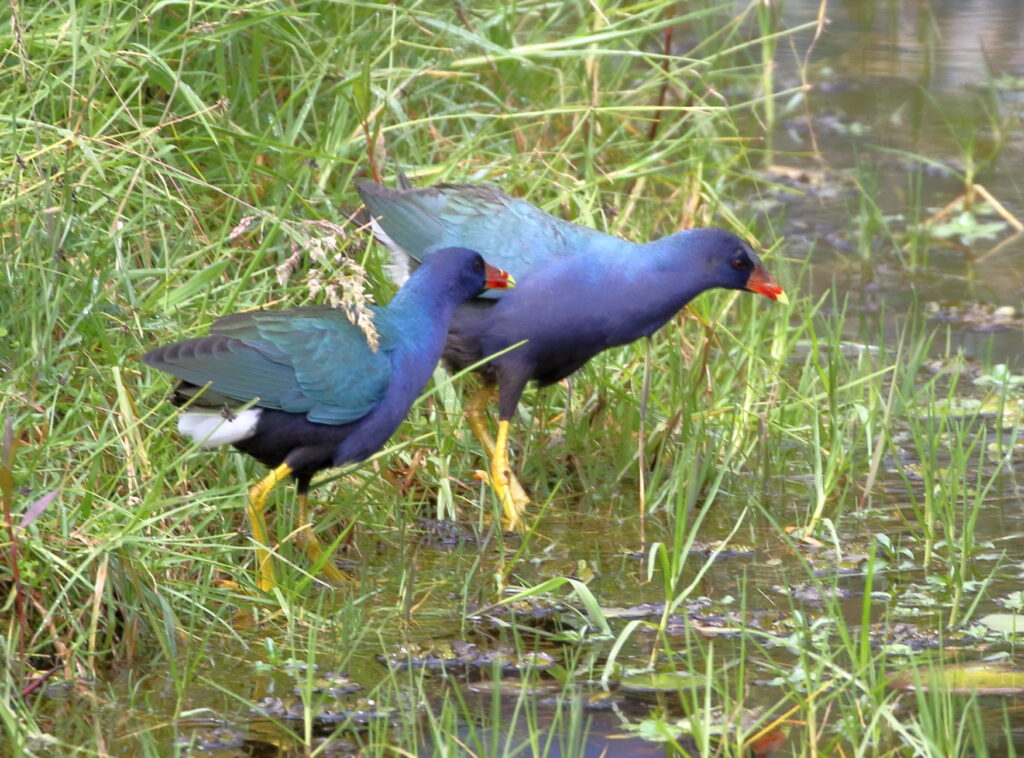
I paid two bucks to enter the Jardin Botanico de Bogota—which, like the sporting complex, was technically part of the Simón Bolívar Park—and asked a greeter where I might find birds. Then, I set off to explore. My first find? Gorgeous Purple Gallinules. Hummingbirds also flew by, but knowing just how many hummers fill South America, I wasn’t psychologically ready to tackle those just yet.
It’s hard not to be impressed with the technicolor plumage of Purple Gallinules.
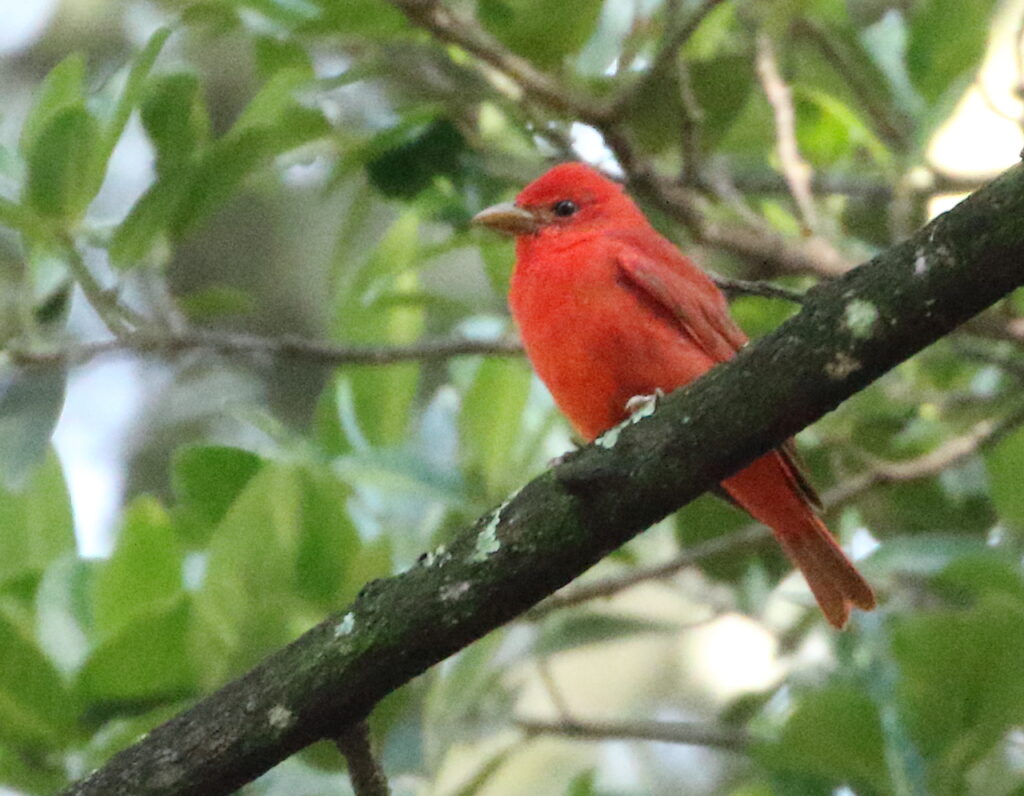
Continuing on alongside a wooded area, I spotted a bright red shape about twenty feet high on a branch—my first South American Summer Tanager! I saw another traveler staring up into the trees and walked over to introduce myself. “My name is Edwin,” he told me, along with the fact that he was from the Netherlands. “Are you seeing anything?” I asked him. “Yes, but I don’t know what they are,” he confided. I got my eyes on fast-moving, small shapes and recognized another Blackburnian Warbler, along with what I think were more Tennessee Warblers. I told Edwin what I was seeing.
“Hey, did you see the Summer Tanager?” I asked, and his eyes widened. “No!” So I led him back to where I’d spotted it, relieved to finding it still perched, evidently being well-paid by the botanical gardens staff to stay in place.
I had hoped to see some of our northern birds in their southern wintering grounds, but didn’t expect to see a Summer Tanager in downtown Bogota!
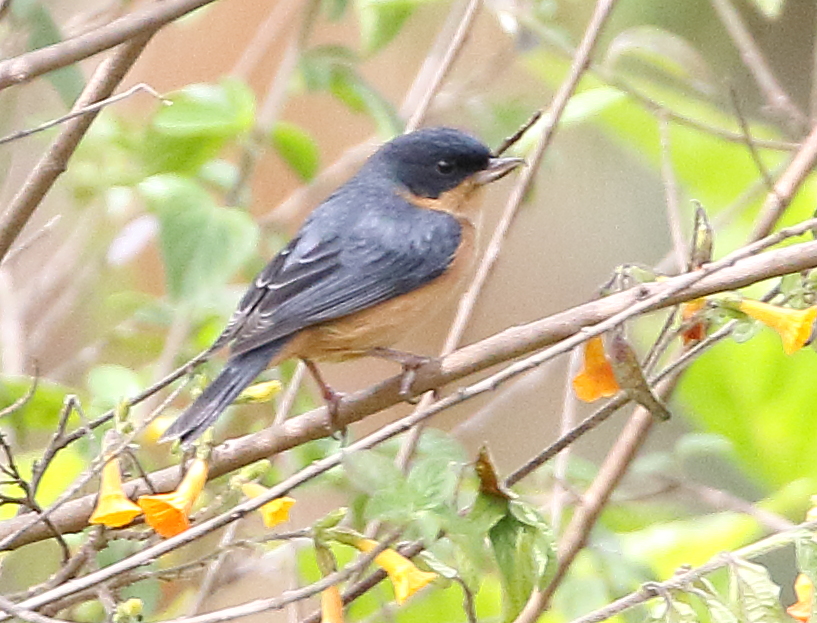
By this time, I was only up to about twenty species, which seemed like a rather poor showing for a morning in a brand new tropical country, even if I was in a major city. Only one of those species, Shiny Cowbird, was a lifer. Even worse, it was about time for me to flag down a cab and make my way back to the hotel so that I could shower, pack, and get to the airport for my flight to Pereira. Before leaving the gardens, however, I decided to make one last stop where I had seen the gallinules. Suddenly, I detected a small bird flitting among some flowers, and my pulse picked up. I didn’t know what it was, but got some decent ID shots of it. As I zoomed in on one of my photos, a smile spread across my face. It was a flowerpiercer—the first I had ever knowingly seen! Later, I consulted with Braden and we agreed that it was a beautiful little species called a Rusty Flowerpiercer.
I was thrilled to find this Rusty Flowerpiercer, the first flowerpiercer I’d ever identified on my own.
It was a great way to finish off a fun morning of layover birding in a new country. It also laid the groundwork for what would promise to be an adventurous—sometimes too adventurous—next couple of weeks.
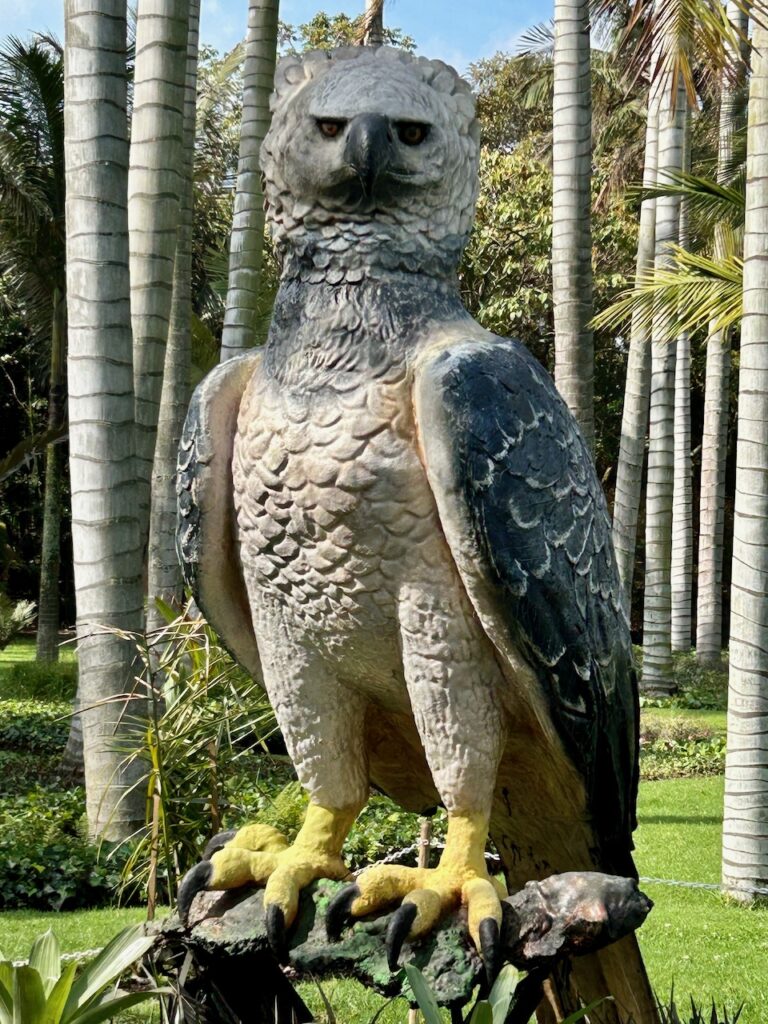
Oh, wait, did I forget to mention the giant Harpy Eagle I saw in Bogota’s Botanical Gardens?
Following Memorial Day, it is fitting that FSB presents a wonderful guest birding post about Hawai’i by Roger Kohn. For many Americans, World War II began in Hawai’i and left few families untouched by the experience. Roger’s dad served in the Navy during the war, and both of my grandfathers (Braden’s great-grandfathers) served in the Pacific. Meanwhile at home, my grandmother and great aunt worked in the huge Pratt & Whitney aircraft engine plant in Kansas City. As we honor all who served, I can’t help wonder how astonished our veterans would be to see peacetime Hawai’i today—a peace won by their commitment, intelligence, and sacrifice.
“I’m just going out there to hang out with my brothers, sip a few local beers, and eat good seafood”, I told Sneed in a February phone call. “Of course I’ll bird some, but it’s not really a birding trip.” I had made plans for what I called The Brother Summit. My California brother and I would go to Honolulu in April and visit our other brother, a Hawai’i resident. “Every trip is a birding trip,” Sneed quipped. I immediately knew he was right.
Our Special Hawai’i Correspondent, Roger Kohn, celebrates a big birding score at a viewpoint on the descent from the Koʻolau mountains.
Although I wanted to see as many birds as possible, I faced some built-in barriers. My brothers are not birders and I would not have a car, so I would have to find creative ways to get to some good birding hotspots. One way was to book a tour with a bird guide. I knew this was my only chance to see two Oahu endemic species (found nowhere else in the world, including other Hawaiian Islands): the Oahu Amakihi and the Oahu Elepaio.
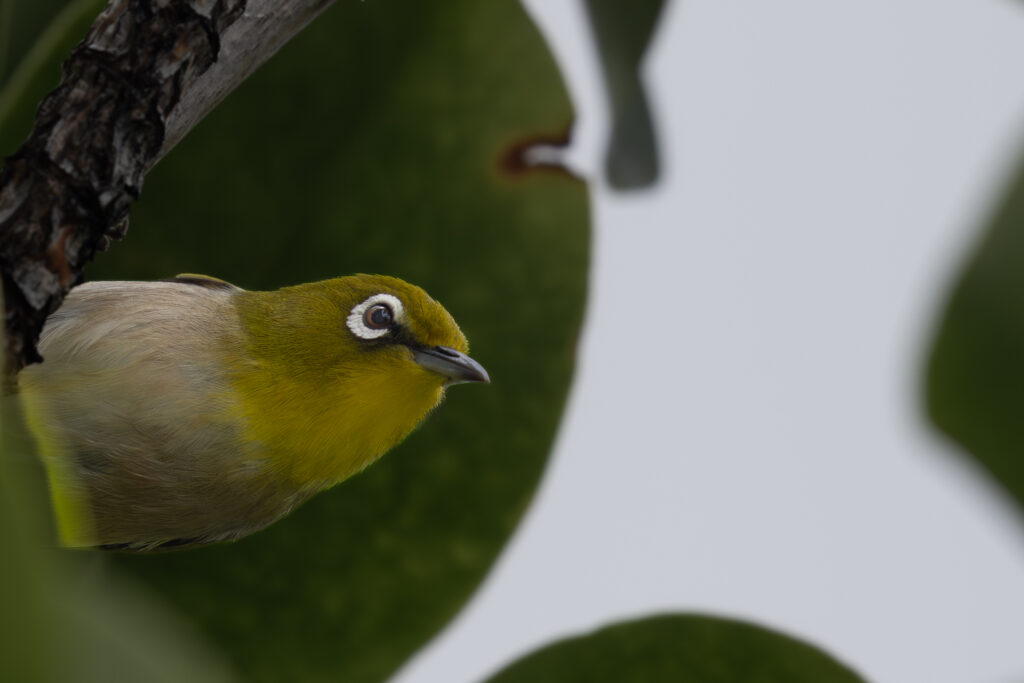
On the first morning of the trip, my guide and I ascended the Koʻolau mountains that tower above Honolulu. Our first stop? A roadside spot for seeing the Oahu Amakihi, a bright yellow honeycreeper and our first Oahu endemic target. As we searched for the Amakihi, we picked up two dove species (Spotted and Zebra, both very common), Red-vented Bulbuls, the omnipresent Red-crested Cardinals and Rose-ringed Parakeets (an invasive species considered a pest in Hawaii due to its impacts on agriculture, but I must confess, fun to see). I also saw my first Warbling White-eye of the trip, a Lifer for me. (For some fun perspective on this and other widely-introduced species, also Sneed’s Japan posts such as “Birding Japan: Tokyo, Part I” and Braden’s and Sneed’s post, “Layover Birding in Amsterdam.”)
I saw this Warbling White-eye near the pool at my brother’s condo tower.
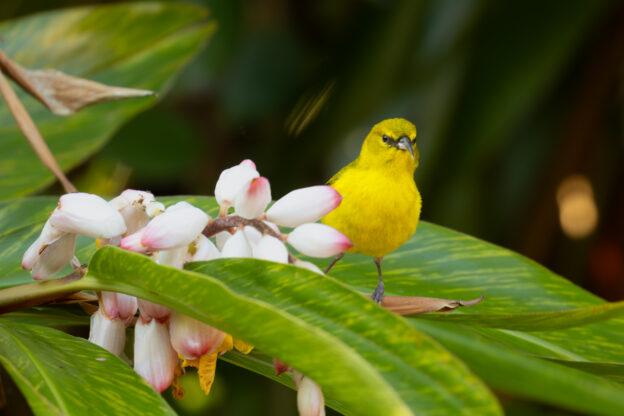
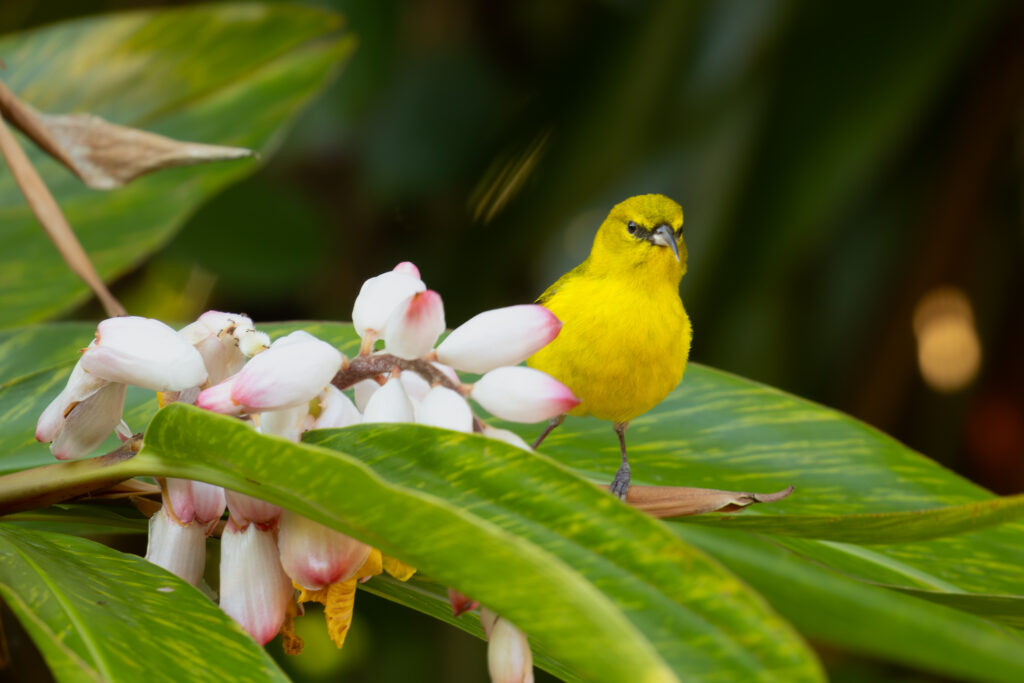
After a while, the guide spotted our target bird feeding in a ginger plant at the edge of the road, and we enjoyed good looks. The Oahu Amikihi is a beautiful bird, and the first honeycreeper species I’ve ever seen. The species is designated “near threatened” in eBird, so I felt very fortunate to see it. With this success under our belts, we headed down from the mountains, pausing at a viewpoint to take in epic views of Honolulu, with its skyscrapers and Diamond Head (the volcanic feature that looms over the city), backed by the deep blue waters of the Pacific.
I loved seeing an Oahu Amakihi, a honeycreeper found on Oahu and nowhere else.
Our second stop was a forest trail with the goal of locating the Oahu Elepaio. This proved difficult, and at one point we had been trying for at least an hour and half without success. Finally, as we made our way back to the trailhead, the guide spotted two or three individuals in bushes near the trail! We did not have good looks at the birds, which moved rapidly and offered us only brief, very filtered views as they flitted among the bushes. This flycatcher species is not much to look at, brown on top and white-ish underneath. But this Oahu endemic is listed as “vulnerable” in eBird, and once again I was grateful for the chance to see a rare Hawai’ian species.
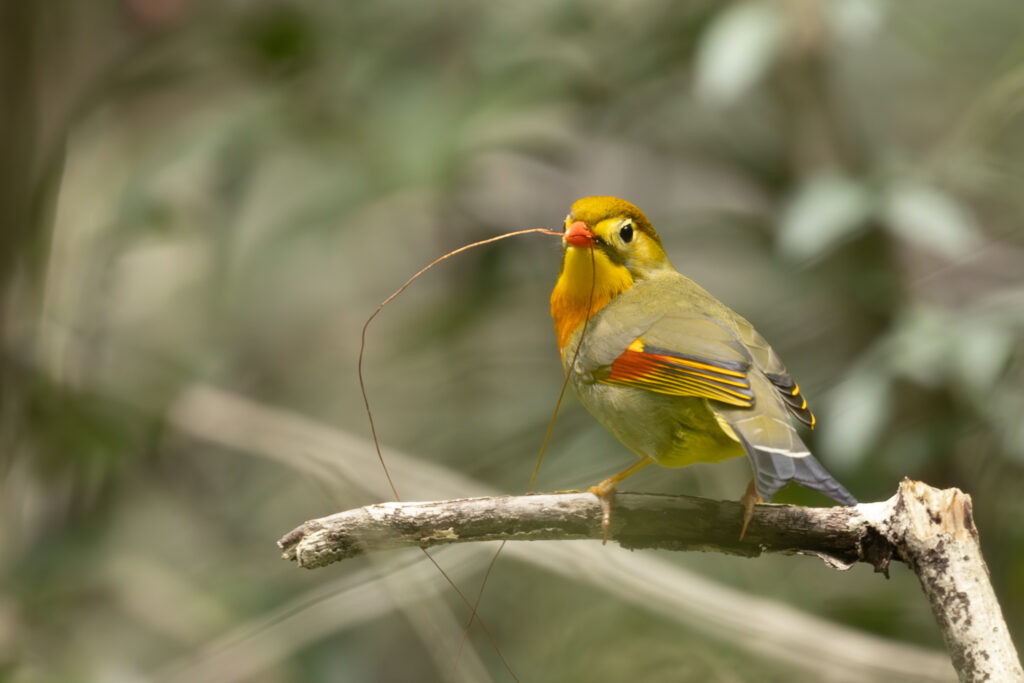
A gorgeous Red-billed Leiothrix allowed me a few good looks in the Makiki Forest Recreation Area.Even though introduced species such as this have had direct and indirect impacts on native Hawai’ian animals and ecosystems, they do offer an unusual opportunity to observe and learn birds from other parts of the world.
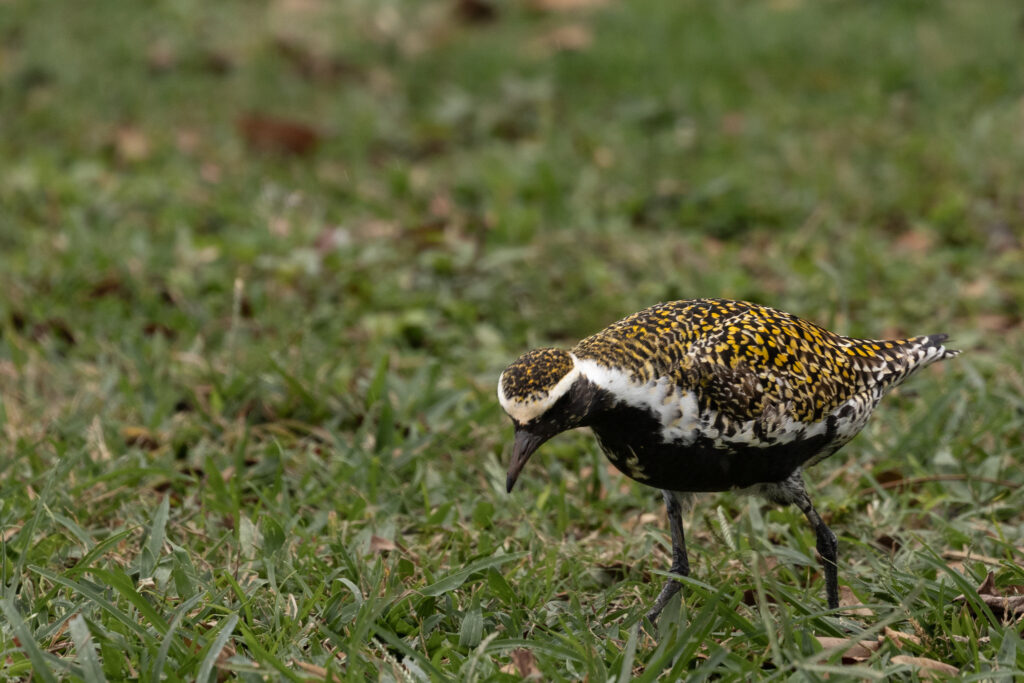
The next day, I got my first good looks at a Pacific Golden Plover on somebody’s front lawn. In breeding plumage, this plover species is quite striking, with a black belly and face, a thick, clean white stripe down the side of the neck, and brown, white, and shiny gold patches on the back. I would subsequently see this species all over town in any available stretch of green space, from small lawns to big city parks. Their migration to Alaska loomed, so my April visit proved ideal.
Resplendent Pacific Golden Plovers were a common sight in any available green space in Honolulu as they prepared to migrate to Alaska.
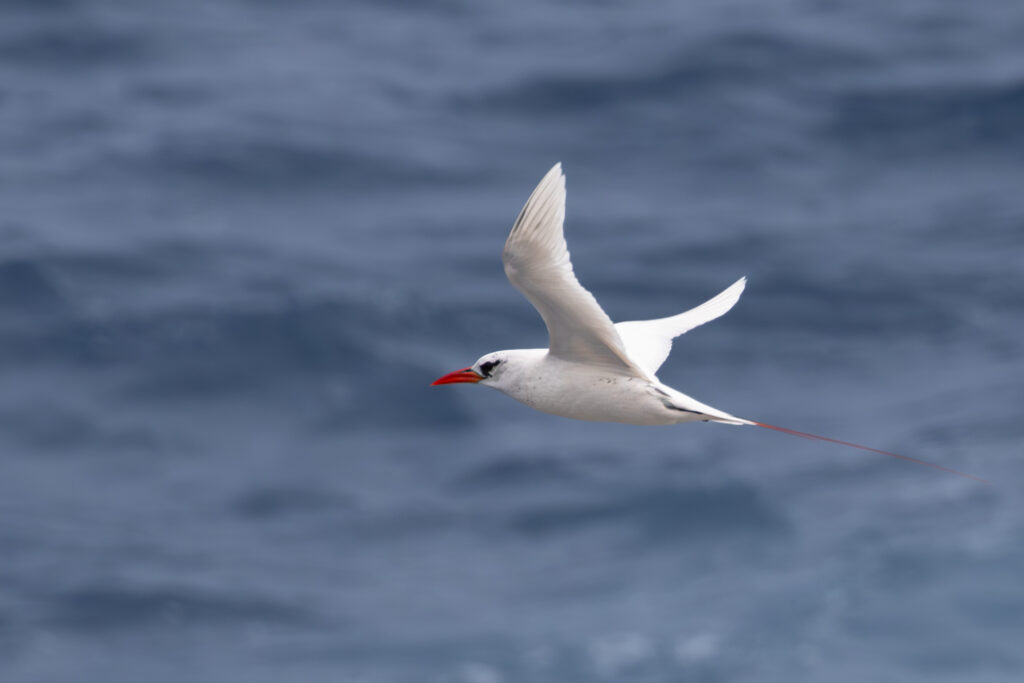
Fast-forward a couple of days, and I was thrilled to get a chance to score some seabird Lifers. I had a big gap in my life list, with no shearwater, tropicbird, noddy, or booby species. However, during my pre-trip study, I came across a hotspot where many of these species could potentially be seen: the Japanese Fishing Shrine, on the southeastern coast of Oahu. This hotspot is literally just a shrine on a hunk of lava rock that juts out into the sea. There is nowhere to walk, so whatever birds I would see would have to come to me. One species that I particularly wanted to find was the Red-tailed Tropicbird, an elegant white seabird with a red bill and long red tail streamers. Not long after I arrived, I got my target, as four or five Red-tailed Tropicbirds traced large circles in the sky. At first, they were pretty far away, but as time went on their flight paths kept coming closer and closer to me and I was able to see them up close and capture great photos. A Lifer, and a spectacular one at that! In between tropicbird sightings, I scanned for other species and managed to pick up a pair of Sooty Terns, another Lifer, flying low over the ocean in the distance. Rendezvousing with my brothers, we headed to Kona Brewing, where they helped me celebrate my seabird treasure with a couple of rounds of delicious seasonal beers at the bar, with sea breezes whooshing around us in a pretty marina setting.
An elegant Red-tailed Tropicbird patrols the southeastern coast of Oahu.
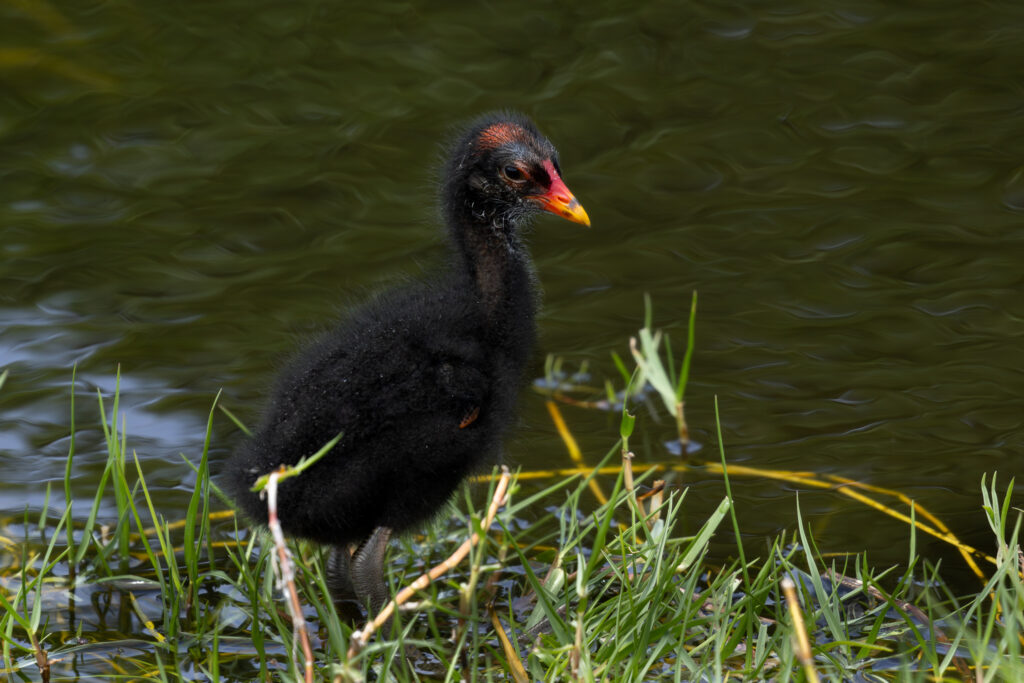
One area that piqued my interest was the wetlands near Kailua, on the southeastern coast. After a pretty, 25-minute drive on the Pali highway and a superb lunch of a grilled mahi mahi sandwich and guilt-free fries (highly recommended!), my brothers dropped me off at Kaha Park. This is the starting point for exploring the Kawainui Marsh Wildlife Sanctuary, a delightful spot graced with abundant water and velvety green mountain views. Right away, I was rewarded with up-close views of Common Gallinules, including a super cute youngster that would melt the heart of even the most jaded observer.
A Common Gallinule chick at the Kawainui Marsh Wildlife Sanctuary. Whoose da cutest bird in the marsh?!
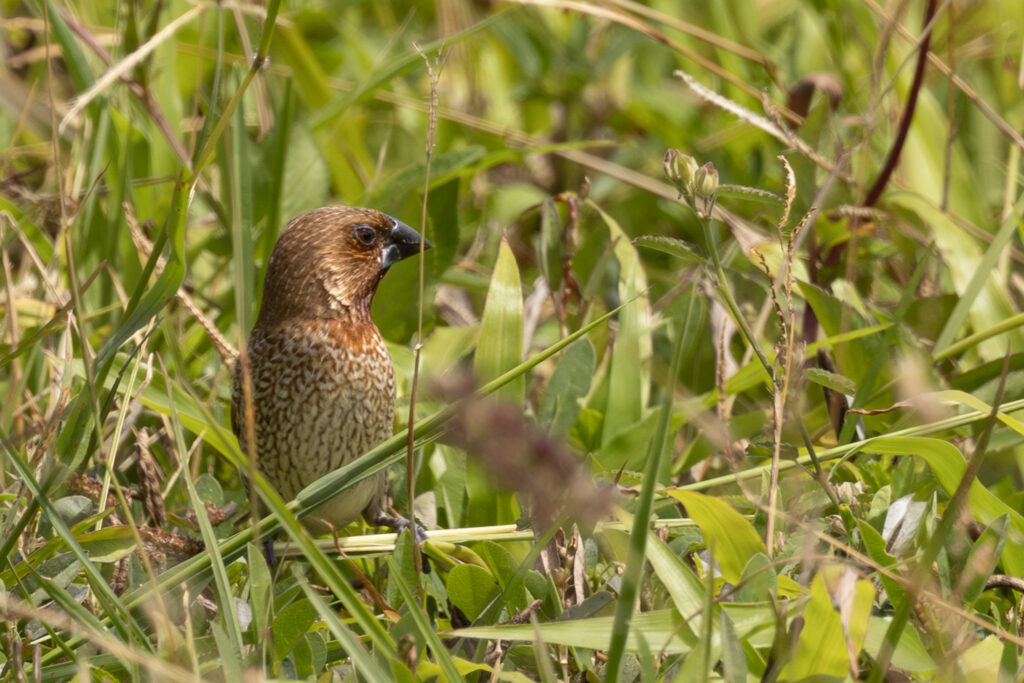
As I continued walking, I got good looks at both bulbul species (Red-whiskered and Red-vented), Common Waxbills, and Northern Cardinals. In the grasses, I saw another Lifer: a Scaly-breasted Munia, a songbird with rich chestnut hues above and an attractive and well-defined scaly pattern on the belly. Another introduced species (native to India and southeast Asia), this was another Lifer for me.
A handsome Scaly-breasted Munia in the grasses on my wetlands exploration.
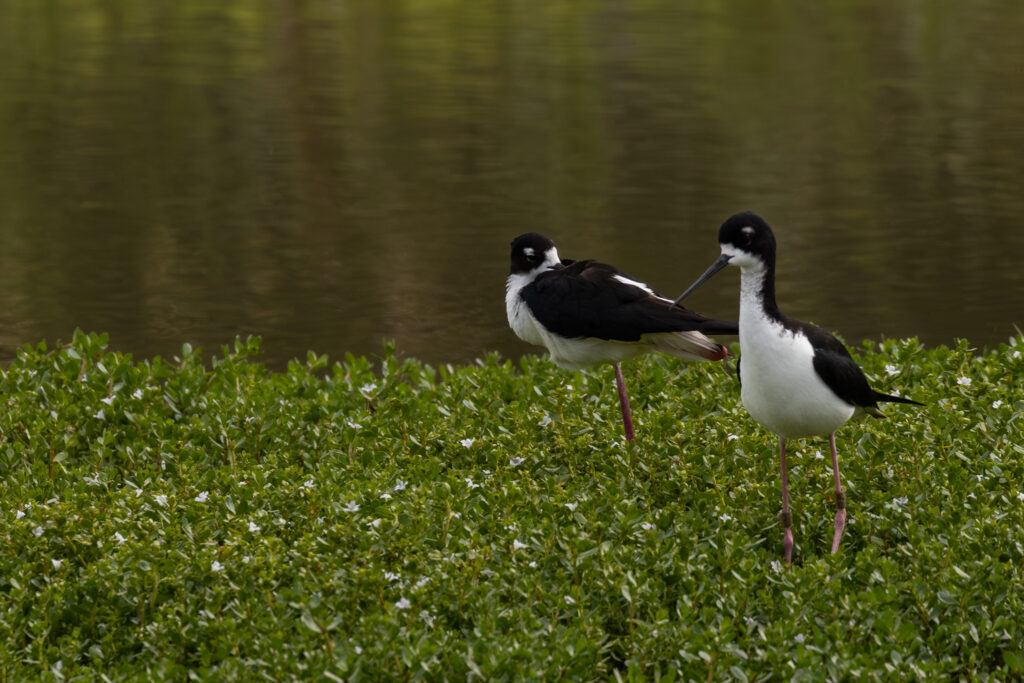
As I returned to the trailhead, someone pointed out a Black-crowned Night Heron, which I had missed as it stood as still as a statue in the water a mere 50 feet away from me. While I waited to be picked up, I scored yet another Lifer, Java Sparrows (which are actually finches, so I wonder what genius named them Sparrows?), which were foraging in a grassy field nearby. In an hour and a half, I had picked up three Lifers, which I celebrated with my brothers at Lanikai Brewing. The parking lot for the brewery faces a pretty stretch of Hamakua Marsh, where I was delighted to pick up another Lifer, Hawaiian Coot, and see Black-necked Stilts for the only time on the trip. Bonus brewery birding, woohoo!
Finding Black-necked Stilts in Hamakua Marsh right behind Lanikai Brewing was a serendipitous event.
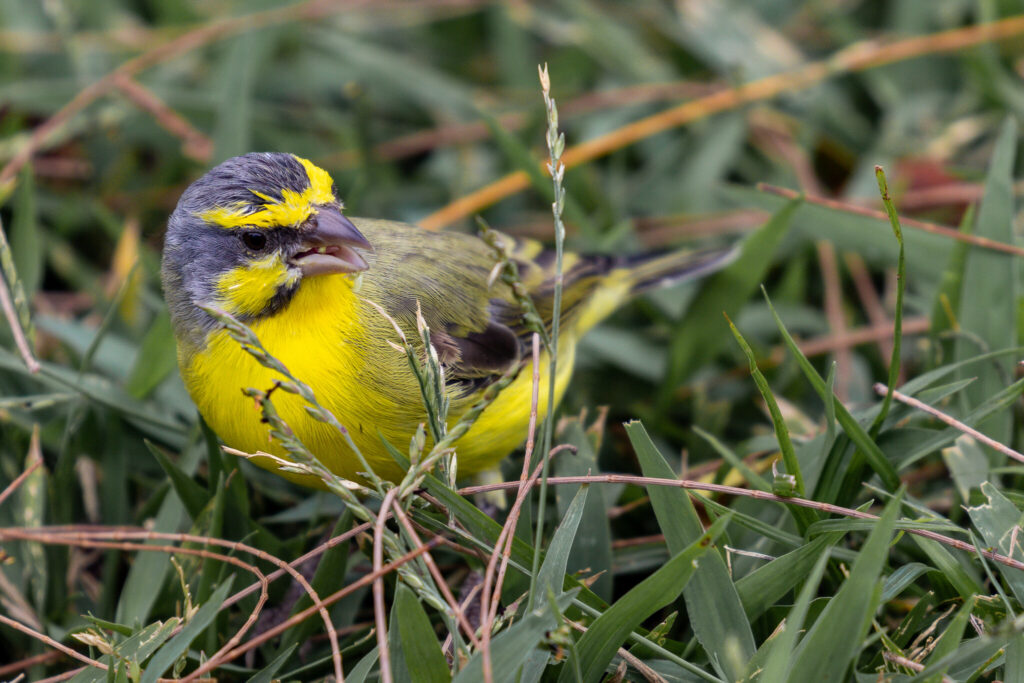
Another trip highlight was finding a small flock of Yellow-fronted Canaries, a boldly patterned bright yellow finch native to Africa, in a waterfront park. I had assumed I’d have to head up into the mountains or to some specific hotspot to find this species. Yet here they were, busily calling and feeding in a park amidst the hubbub of Waikiki. I also got brief but spectacular views of a Red-billed Leiothrix in all its multicolored glory, which I had barely seen on the guided tour, in the Makiki Forest Recreation Area. Bird of the Trip honors is a tough call, but I’d say it’s a toss-up between this species and the Red-tailed Tropicbird.
A Yellow-fronted Canary poses for me at Fort Derussy park in Waikiki.
As of mid-May, according to eBird, 108 species have been reported in Honolulu County (encompassing the entire island of Oahu) so far this year. In a nine-day trip in which birding was only one of several priorities, I managed to see 31 species. Seventeen of those were Lifers, which far exceeded my expectations. With determination and a little help from my brothers, I had an excellent birding trip to Honolulu. Indeed, in the words of a wise blogger I know, every trip is a birding trip.
Our Bend, Oregon-based correspondent, Roger Kohn traces his birding obsession to a November 2016 Sneed visit to the Bay Area and considers Sneed his birding mentor. Though grateful for that, he sure wishes Sneed would increase his consumption and appreciation of craft beer.(Editor’s Note: I’m not sure what Roger is complaining about. I have been known to drink up to two beers a month!)
Braden and I write FatherSonBirding in the hopes of sharing the wonders of birds and birding, and the urgency to protect them. We do not accept advertising or donations, but if you’d like to support our work, please consider buying *NEW* copies of some of Sneed’s books—First-Time Japan, for instance, or my forthcoming picture book for younger readers, Like No Other: Earth’s Coolest One-of-a-Kind Creatures, available for pre-order now. We appreciate your interest and hope you will keep reading!
If you’ve followed our adventures for a while, you probably realize that Braden and I are opportunistic birders. Sure, we take occasional trips solely for the purpose of birding, but more often we exploit other travel opportunities in the pursuit of our birding passions. This piggy-backing not only reduces our carbon footprints relative to taking dedicated birding trips, it provides cheaper ways to bird places we never would have imagined. Last weekend, for instance, Braden was invited by the nonprofit group Defenders of Wildlife to Washington, D.C., to speak with Maine’s Congressional delegation about the importance of safeguarding and improving the Endangered Species Act—one of the most important pieces of conservation legislation ever enacted in this country. While there, he birded the National Mall, the botanical gardens, and several other places. As Braden winged his way back to Missoula, Amy and I headed to the “other Washington,” Washington State.
Amy and I enjoying the Edmonds waterfront before the big wedding event.You may see some clues that I was also looking hard for seabirds!
We flew to Washington to attend the wedding of the youngest daughter of some of our dearest friends, the Isaacsons, and as we were planning the trip, I have to admit that birding didn’t enter my mind. Shocking, huh? As the date approached, however, I realized I might be able to sneak in a couple of birding outings. Then, as I remembered Amy’s penchant for sleeping in and realized how busy our friends would be preparing for the wedding, I recognized that I might be able to sneak in more than one or two birding sessions; I might be able to hit quite a few different places! I set several goals for myself:
* Bird new places I’d never birded before.
* Find as many seabirds and shorebirds as possible.
* Pick up some songbird targets I rarely got to see.
* Avoid getting killed in Seattle’s traffic.
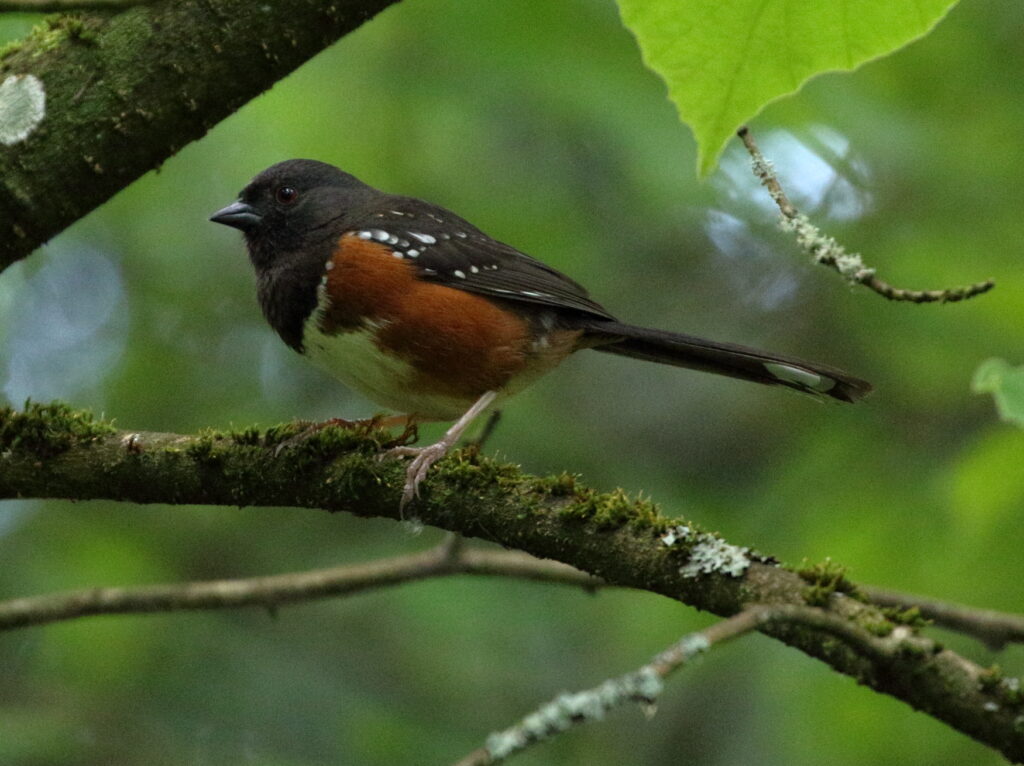
Although short of waterfowl and shorebirds, Washington Park Arboretum offered a nice urban birding location to see a variety of songbirds including this Spotted Towhee.
We spent our first night in Seattle, and the next morning I woke at 5:30 and made my way to the Washington Park Arboretum, which seemed to have habitat for both songbirds and waterfowl. Here, I made a disappointing discovery—waterfowl and shorebirds had pretty much fled coastal Washington for breeding areas farther north. Bummer, right? I mean, I kind of suspected as much since many of these birds had already passed through or arrived in Montana, but I guess I was hoping to run into a few. On the plus side, I found songbirds aplenty and enjoyed seeing my first Western Tanagers of the year and hearing my first Western Flycatcher—which led to the observation that migrating songbirds probably reach Washington a week or two ahead of Montana.
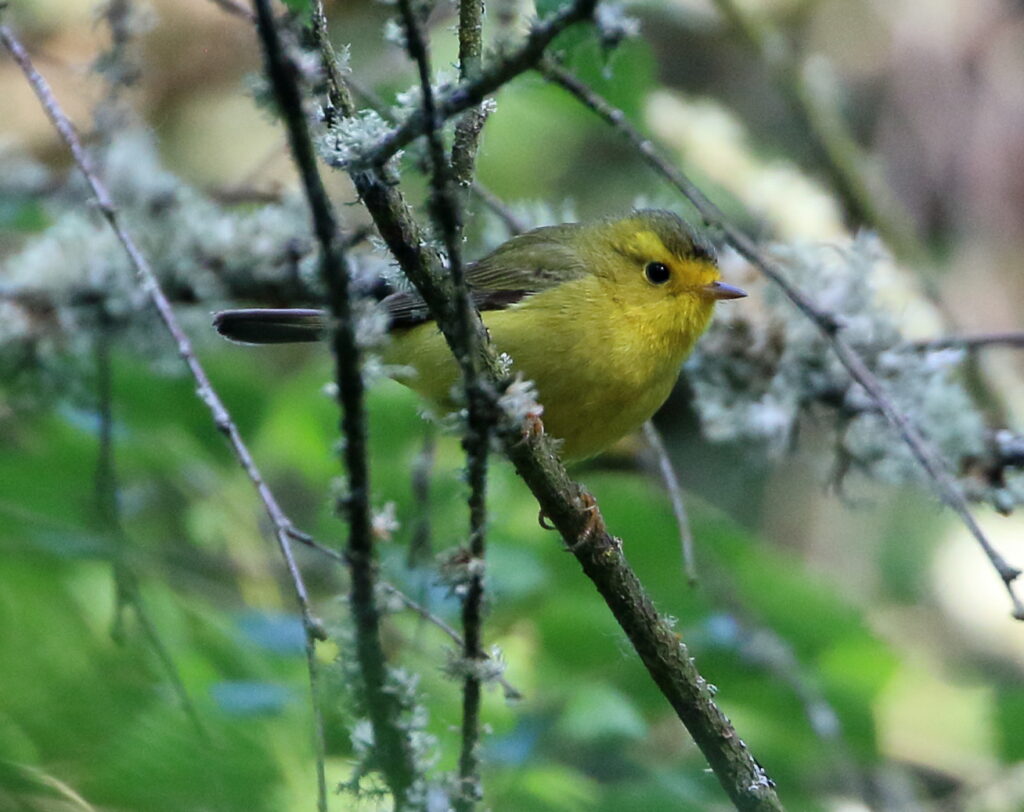
I’m a sucker for Wilson’s Warblers, which can be hard to find in Montana, and our wedding trip offered several good looks at them.
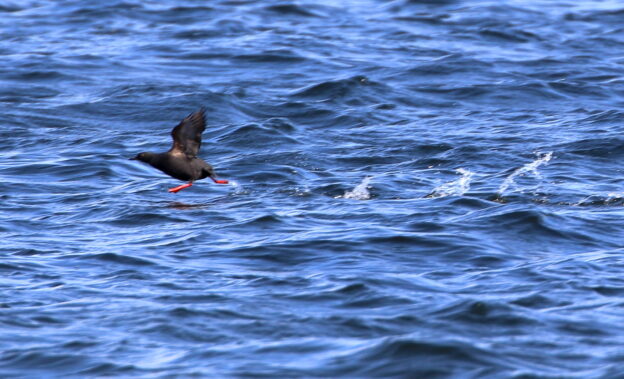
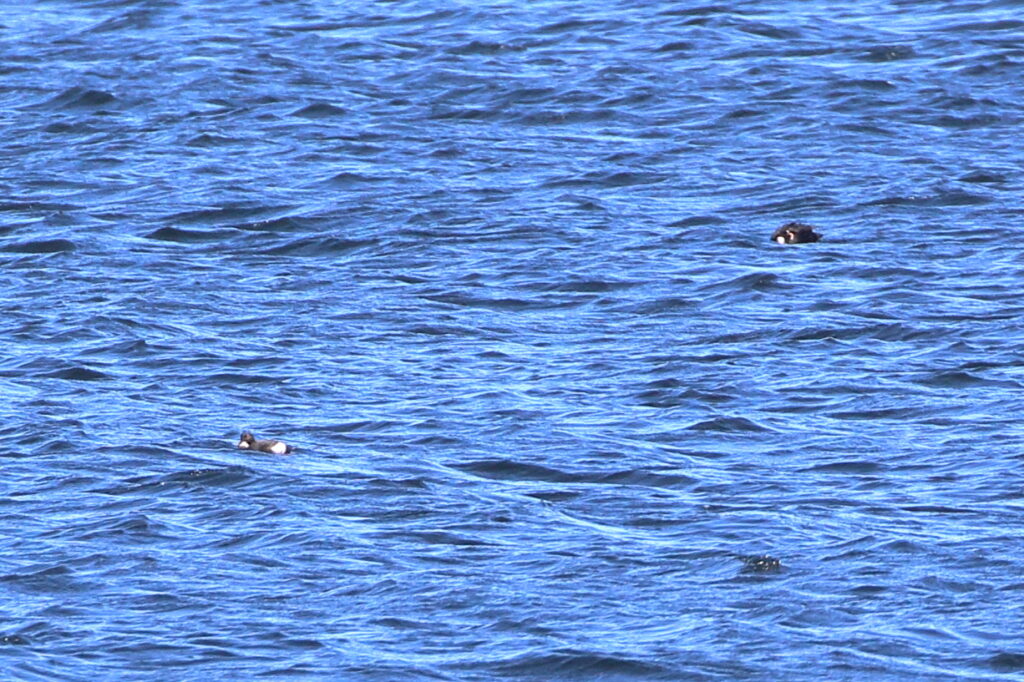
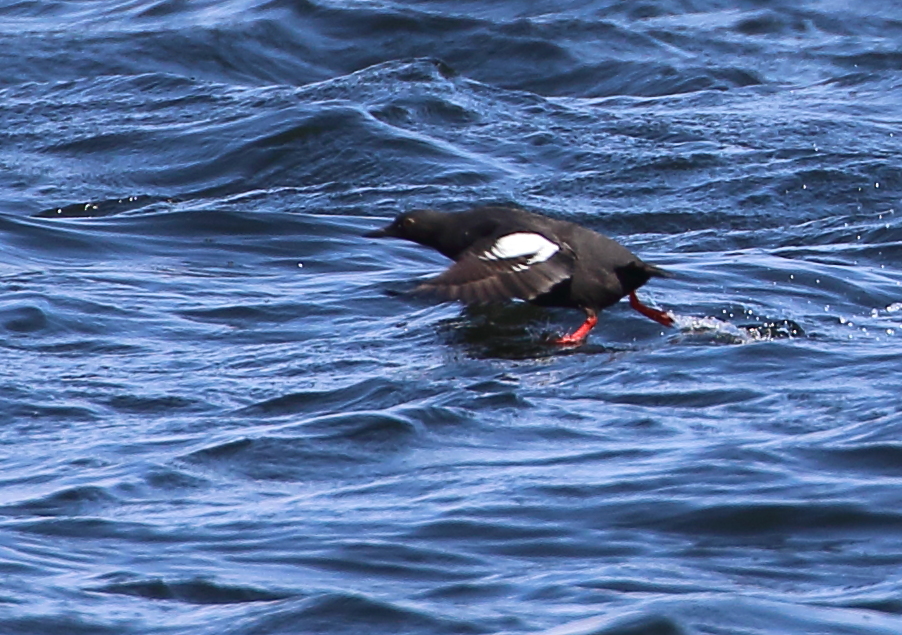
After collecting Amy and checking out of our hotel, we decided to explore Edmonds, twenty minutes away. Edmonds is a cute little town where the ferry to Kingston departs, but we mostly wanted to poke around looking for coffee shops, bookstores, and other items of interest—including birds. Alas, as we walked along the waterfront area, the waters of Puget Sound looked disappointingly empty. I spotted a few Pelagic Cormorants and hybrid Glaucous-winged X Western gulls, but none of the big rafts of scoters and pelagic species I had hoped for. Nonetheless, I stood on a little rocky viewpoint and carefully scoured the choppy seas with binoculars, wishing I had a proper spotting scope. Suddenly, I saw a black bird with a white head patch and orange-and-white bill about a quarter mile offshore. Surf Scoter! my brain shouted, but I immediately lost it in the chop. As I tried to “reacquire” my target, however, I saw a black bird that looked much different. This one had no colored bill that I could see, but did have a prominent white patch on its flanks. My heart soared as I recognized one of the birds I had most hoped to encounter on the trip: Pigeon Guillemot! Hooray! Ten minutes later, I got a bonus PIGU on the other side of the ferry dock—a perfect reward for my perseverance.
Without a spotting scope, I had to work hard to locate these two dark birds offshore. Can you identify them? The upper-right bird is a Surf Scoter (at the moment hiding its head), and the lower left bird is one of my favorite pelagic species, a Pigeon Guillemot.
Not the best photo, but it does show the Pigeon Guillemot’s distinctive white wing patch as this bird prepares to take off.
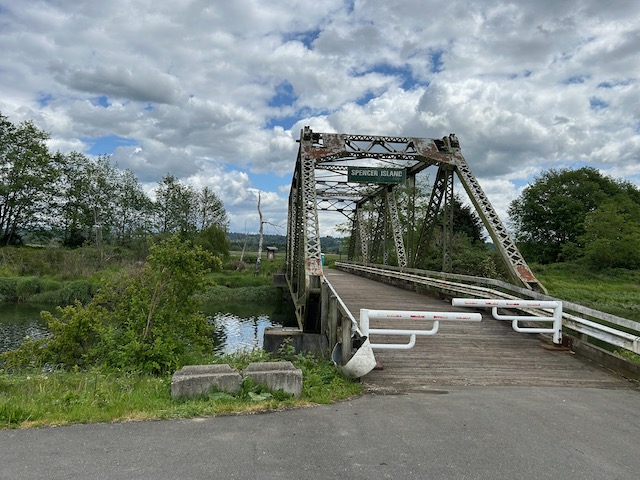
The wedding was to be held up near Burlington, Washington, and on the drive up I convinced Amy to stop at another place I had driven by many times but never visited. I wasn’t even sure what it was called, but at various times of year I had seen dozens of ducks spread out across big ponds there. A little research revealed that it was Spencer Island, site of both sewage treatment settling ponds and some restored natural wetland areas. Thank god for Google Maps, because it required quite a convoluted route to reach it off of the freeway.
Spencer Island was a challenge to get to, but undoubtedly offers some incredible “water birding” during winter and migration seasons. During our visit, it was the songbirds that put on a show.
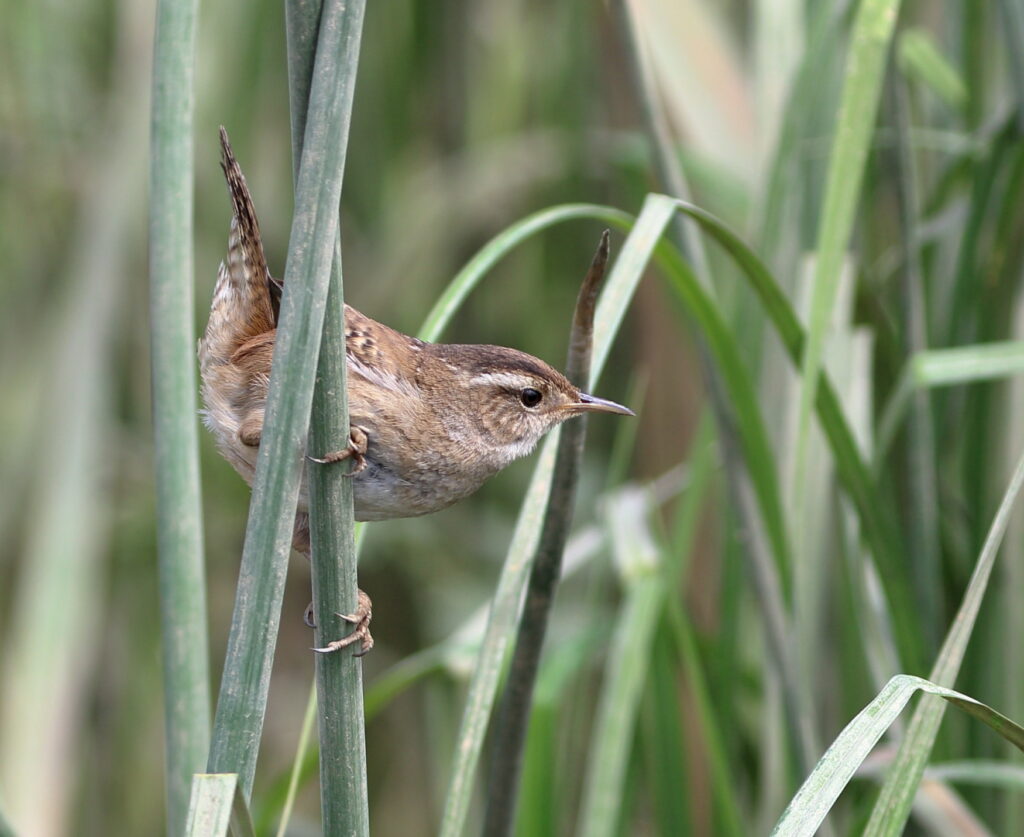
Alas, here as elsewhere, most of the water birds had fled, but a short walk did net us my best look ever at Marsh Wrens, along with glimpses of Anna’s Hummingbirds, which are rare in Montana. However, I encountered my biggest score as we were driving out. I had the window rolled down, when I heard a distinctive “kiddick-kiddick!” from the marsh to our left. In previous years, I doubt I would have even noted it, but one of the great things about birding is that the longer you live, the more experience you acquire, and this time, I knew what it was: a Virginia Rail! My third one of the year already, which is quite astonishing given that Braden have spent entire years never seeing or hearing one at all.
Spencer Island offered only a few waterfowl, but did provide my best-ever Marsh Wren experience along with the year’s third Virginia Rail.
From Spencer Island, my early day was catching up with me, so Amy and I headed straight to our hotel in Burlington for a pleasant afternoon eating Mexican food, reading, and enjoying being on holiday. The wedding was the next day and we looked forward to that. Unbeknownst to moi, however, the trip’s best birding also lay ahead . . .
Today, Braden and I would like to especially welcome our increasing number of international readers. Our posts are now regularly viewed by birders from more than a dozen different countries, and new countries seem to pop up every week. Thank you for your interest and we invite you to comment and share your own birding interests and experiences!Oh, and check out the quiz in the last photo caption!
I hadn’t intended my visit to central Montana last week to be a birding trip. Rather, I had been invited to Butte to speak at the annual conference of the Montana Library Association, and so had planned a simple, quick overnight. A few days before the conference, however, things got more complicated. Braden has heroically gone without a car during his first three years in college, but as he looked forward to his senior year, we all agreed it was time for his own wheels, and I had been doing a little “car scouting” while he finishes up his semester abroad in Costa Rica. Wouldn’t you know it, I found what looked like the perfect used vehicle in Billings. “Hm,” I thought, “if I got up early, I could drive to Billings on Thursday, look at the car, and make it back to Bozeman (most of the way to Butte) ahead of the conference.”
Long story short: I bought the car, and Friday morning, found myself with an entire morning to bird between Bozeman and Butte.
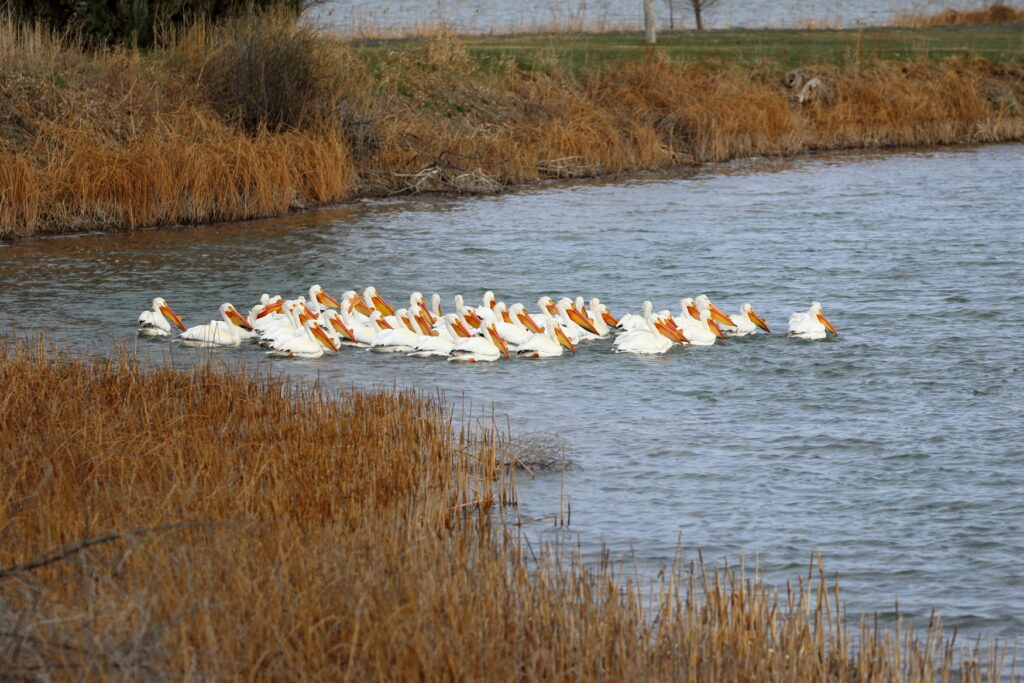
Brown Pelicans are my favorite birds, but American White Pelicans definitely make the top 100. Unlike their brown cousins, AWPEs prefer inland freshwater habitats for breeding. I’m guessing these might be heading to Bowdoin NWR near Malta, but they could be on their way farther north.
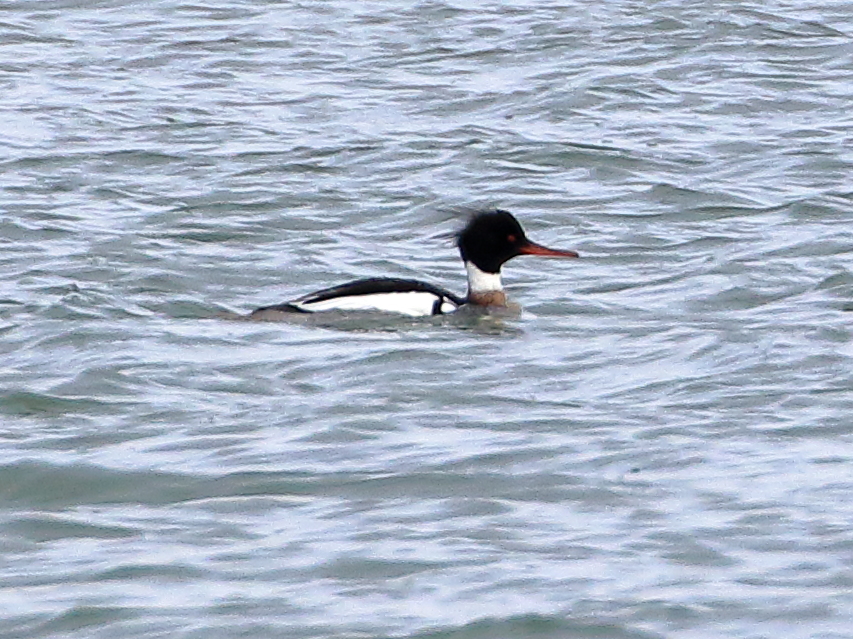
Three Forks ponds can be very hit and miss. I had actually stopped there on my way to Billings, but hadn’t found anything too notable except some American White Pelicans. This morning, though, I decided to try them again before heading up Bench Road. Was I in for a surprise! The first bird I spotted in Three Forks ponds was a bird I had never before discovered on my own: a Red-breasted Merganser! Not only that, I found seven more in the next pond over. These northern breeders pass through Montana only during migration—and not in large numbers—so I felt particularly fortunate to see them. The ponds, though, held other surprises.
Red-breasted Mergansers can be distinguished from Common Mergansers by their spiky “punk” hair-do, gray sides (here, under water), and of course, that reddish band on their breasts.
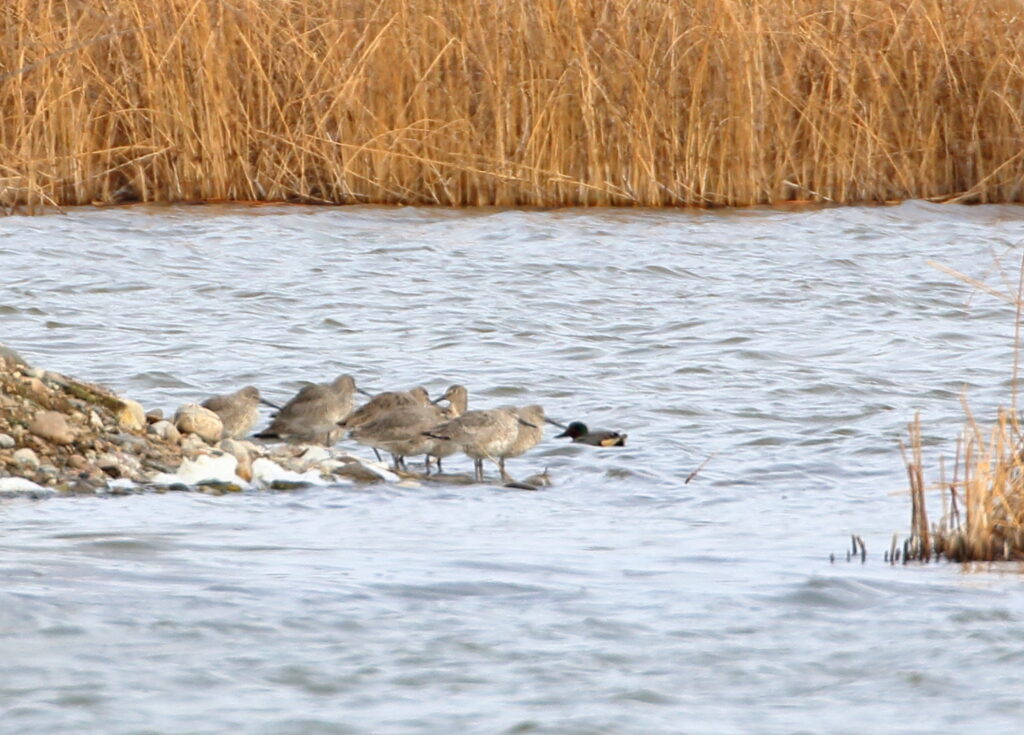
Beyond a much larger group of pelicans, I saw a good assortment of ducks and then spotted birds with bold black-and-white wings fly to an island in the second pond. Shorebirds, I thought excitedly, running back to the minivan for my spotting scope. Other than Killdeer and Spotted Sandpipers, I had never before seen shorebirds at Three Forks, and my pulse picked up as I focused in on a group of eight gray birds at the edge of the island. I quickly ran through all the possibilities in my head, examining their size, color, and bills. My conclusion: Willets! They were obviously migrating, and this was the first time I’d ever seen them moving through this part of Montana. Apparently, I was not alone as the birds’ timing landed them on the Montana Rare Bird alert for the day!
This group of eight migrating Willets surprised me by making the Montana Rare Bird Alert! They also tested my powers of ID elimination.
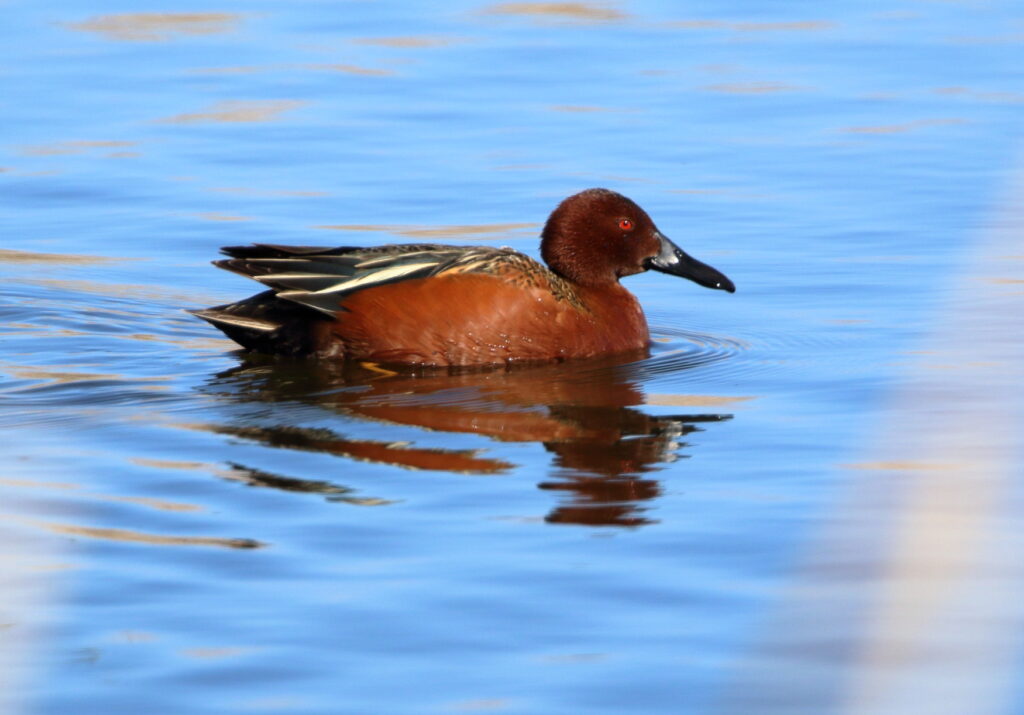
From the ponds, I headed up Bench Road. This was the first place Braden and I ever saw Burrowing Owls, and I hoped to see them again today—but didn’t hold out a lot of hope as I’d missed them my last couple of times here. The road, though, holds a wealth of other birds. In the lower stretch, I pulled over at the marsh to enjoy my first Yellow-headed Blackbirds, Marsh Wrens, and Cinnamon Teals of the year. It was the road’s upper stretch that most excited me, however.
Cinnamon Teal. Most stunning duck ever? Maybe not, but definitely part of the conversation!
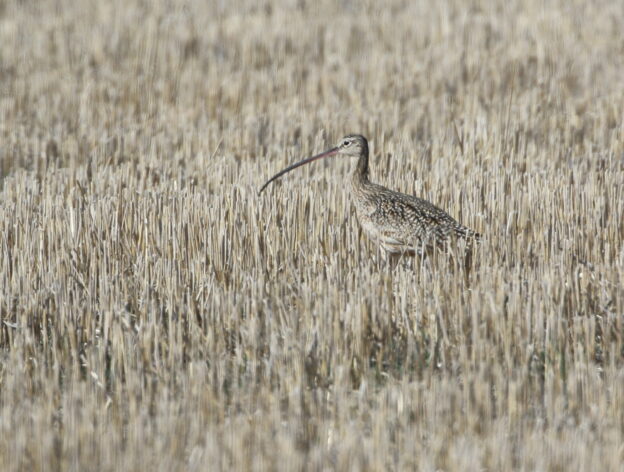
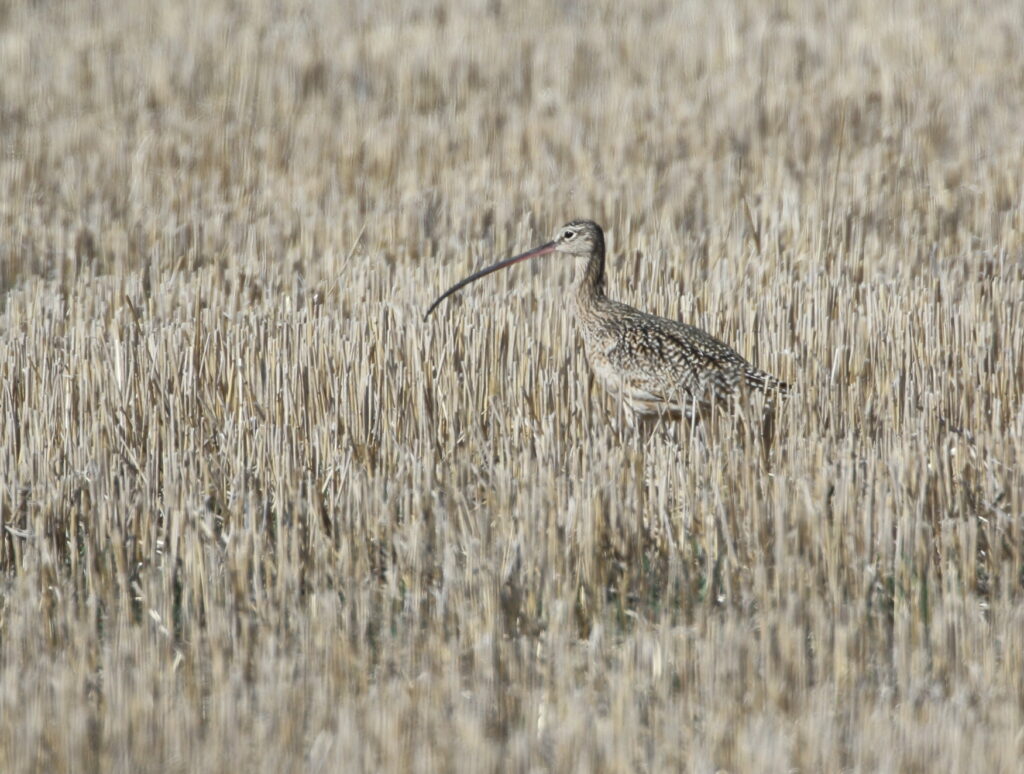
As I climbed up over the first “bench,” I smiled at the many Horned Larks and Western Meadowlarks singing along the road. After a couple of miles, though, I thought I saw a larger bird landing along a side road. Could it be a Burrowing Owl? I turned the minivan down this sketchy, rutted path and after a couple of hundred meters saw a large shape in a field. It wasn’t a Burrowing Owl, but almost as exciting—my first Long-billed Curlew of the year! This greatly interested me because Braden and I had never birded this road so early in spring and I didn’t realize LBCUs would already be here. Turning the van around, though, I spotted four more calling in flight, obviously ready to get busy breeding!
There is something magical about seeing a large, majestic shorebird setting up a breeding territory in our nation’s grassy heartland!
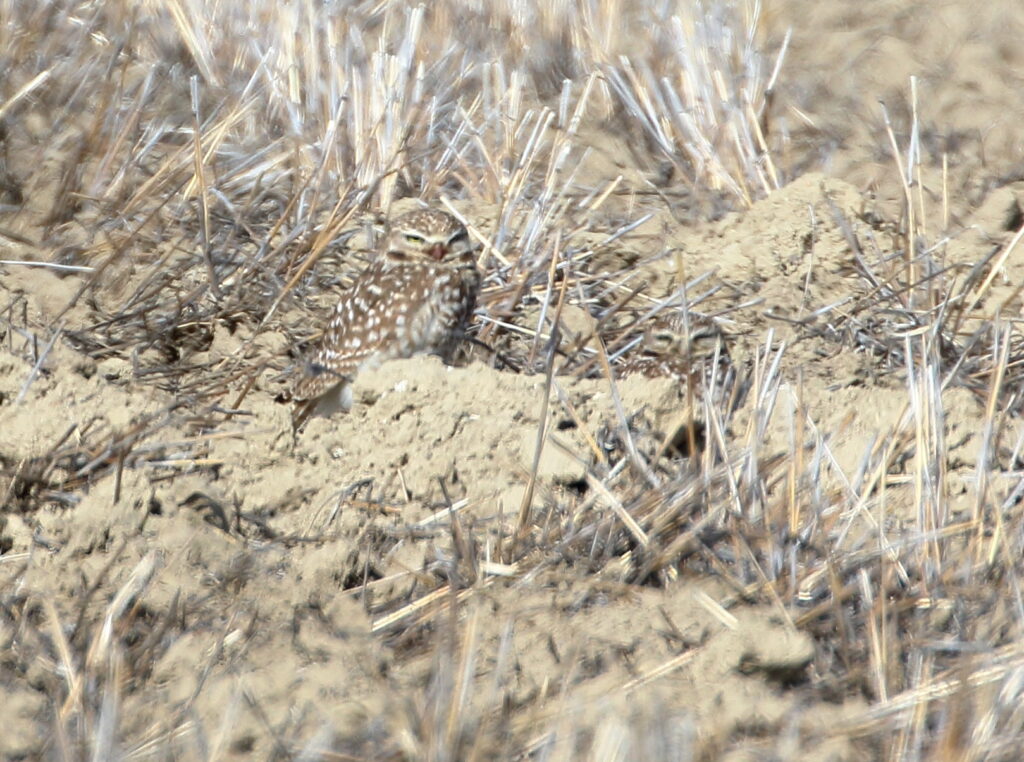
I also encountered the first of three women who were birding as a team in their own cars. She said she had spotted a couple of Burrowing Owls earlier and that one of her friends was up on Baseline Road (which tees off of Bench Road) at a BUOW burrow. I decided to head there, but before I reached it, saw a medium-sized brown shape flying low to the ground across a field. I hit the brakes and raised my binoculars. “Yes!” A Burrowing Owl! Not only that, a second one hunched down next to it. I snapped a poor photo from my car, but didn’t want to disturb them by getting out. BUOWs, though, are incredibly adorable animals and these two had obviously excavated a burrow here at the edge of a field. I hoped the farmer would notice them and not unknowingly evict them!
Come plowing time, I am hoping the owner of this field spots the burrow of this delightful Burrowing Owl couple.
I continued up the road and sure enough found the other burrow that was staked out by the friend of the first woman I had met. The owls didn’t show right away, but soon popped up for a distant view. These appeared to be in much safer habitat than the field of the first pair. After fifteen minutes, I started the minivan back up, wishing the owls luck and hoping Bench Road would be a home for them for years to come. On my way back down the road, I stopped at the marshy area for one last treat—a great, brief glimpse at a Virginia Rail!
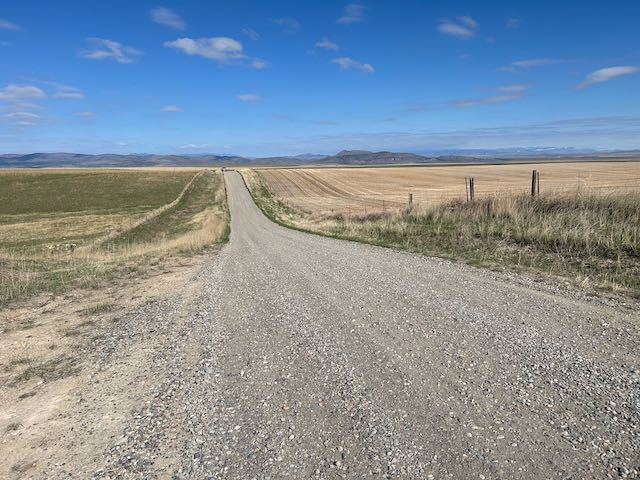
Montana birding at its finest, cruising (almost) deserted prairie roads for amazing grassland birds.
That evening in Butte, after my first talk at the conference, I paid my first visit to Butte’s Lexington Street ponds and wetlands, which were undergoing a major birder-friendly construction project. I set up my scope outside of a chain-link construction fence and saw a great variety of ducks, along with a Western Grebe—a bird that had never before been reported there! As I was packing up, I heard a familiar rattling call and turned to see two gorgeous Sandhill Cranes touching down a couple of hundred meters away. As wonderful as this all was, however, my spontaneous birding weekend had only just begun. Stay tuned for Part 2.
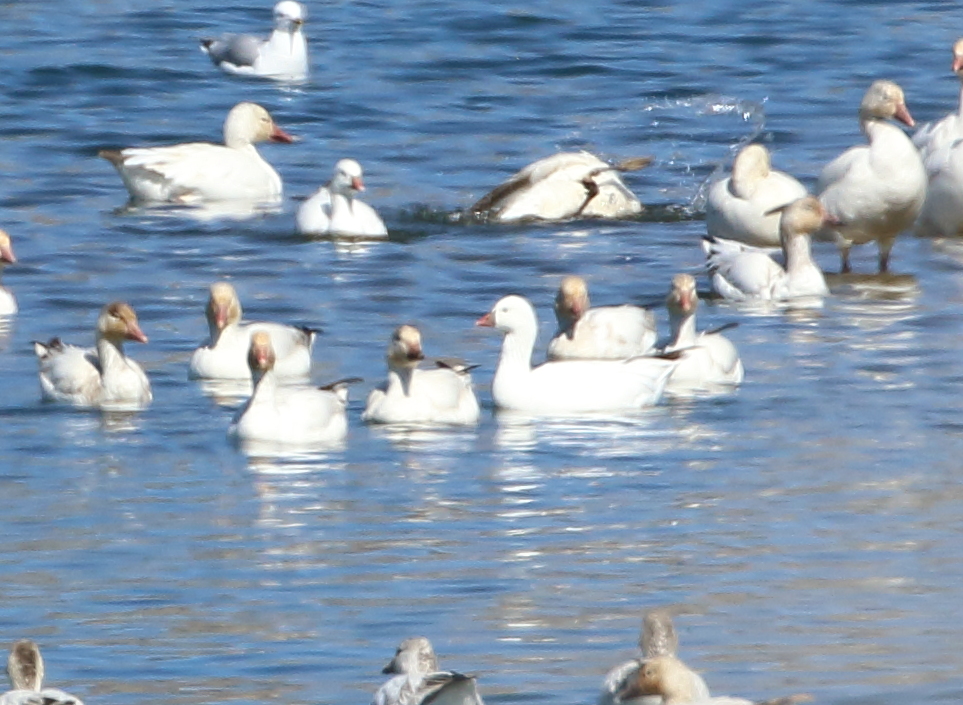
A teaser for our next post: Can you tell which white geese are of special interest and why? If so, send us your answers!