Category Archives: Listing

Six Months and 245 Birds

It continues to be a crazy year for everyone, and we feel deeply for all of those who are being directly or indirectly affected by the coronavirus, either through their physical or mental health, loss of employment, or simply missing their friends and family. It stinks. One bright spot is that many people are rediscovering the simple pleasures of spending time outdoors, and for many, birding is a big part of that. A reminder that Braden and I have posted several bird-related educational videos on my YouTube channel, including a Birding Basics that introduces people how to bird and some common birds to look for. Our friend, ornithologist Dick Hutto, and his wife Sue Reel, have also been posting some great short tip videos for you to look at.

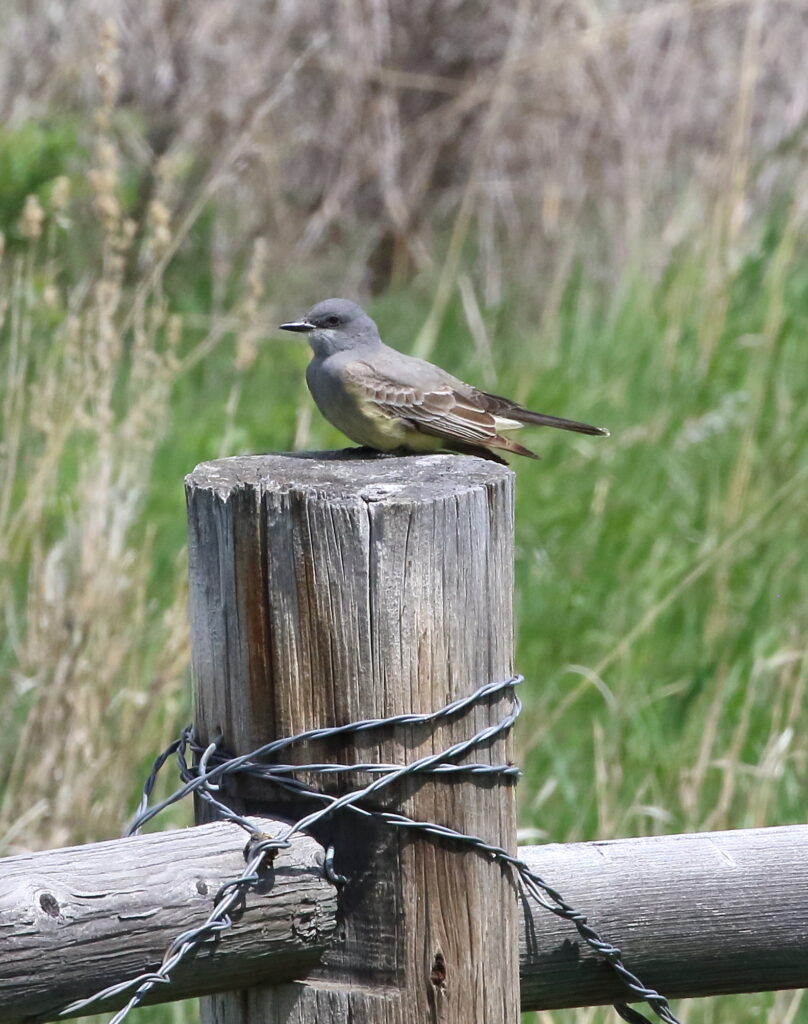
Cassin’s Kingbirds were one of seventy Year Birds we found on our epic Eastern Montana birding safari.

As you can see from our last post, we haven’t been blogging as much—but we have been birding. In fact, once we returned from Israel, we decided to shoot for 250 Montana birds as our goal for the year. We spent an exhilarating week taking an eastern Montana birding safari, during which we saw more than 180 species of birds—including about 70 Year Birds. Braden also has been conducting an independent bird-related science project for his upcoming senior year of high school. So how are we doing?

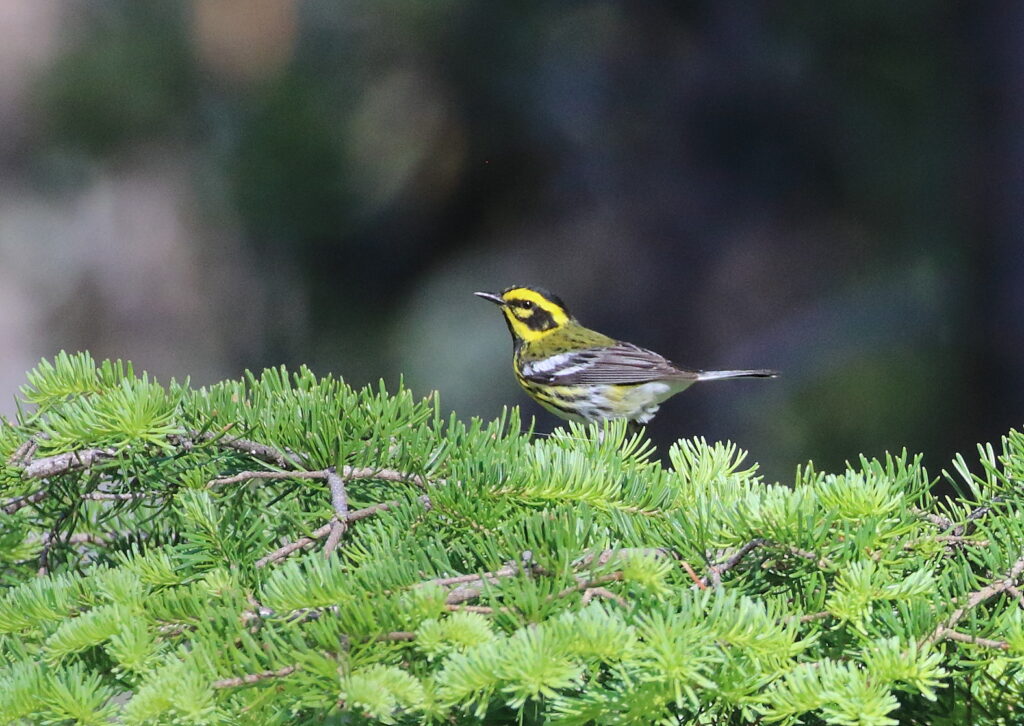
A great thing about climbing a mountain is that it can put you at birds-eye level with spectacular species you usually just see from below. Meet a Townsend’s Warbler!

By the beginning of this week, Braden had seen 243 species of birds while I was pegged at 234. Now for non-birders it might seem like a shoe-in for us to hit 250, but believe it or not, we were (and remain) more than a little anxious about our prospects. For one thing, we have seen virtually every one of the “easy” species there is to see in Montana. For another, birds are “quieting down” now that they are in the process of, or have already finished, nesting, making them more difficult to find. In other words, every new Montana Year Bird we get from now on will take significant effort, luck, or both. Undaunted, we woke early Wednesday morning to investigate a new birding location for us just west of the town of Lolo. A logging road led up into the high country from there, and even more intriguing, it passed through a two-year-old burn area where we hoped to see one of our most coveted species, the Black-backed Woodpecker.

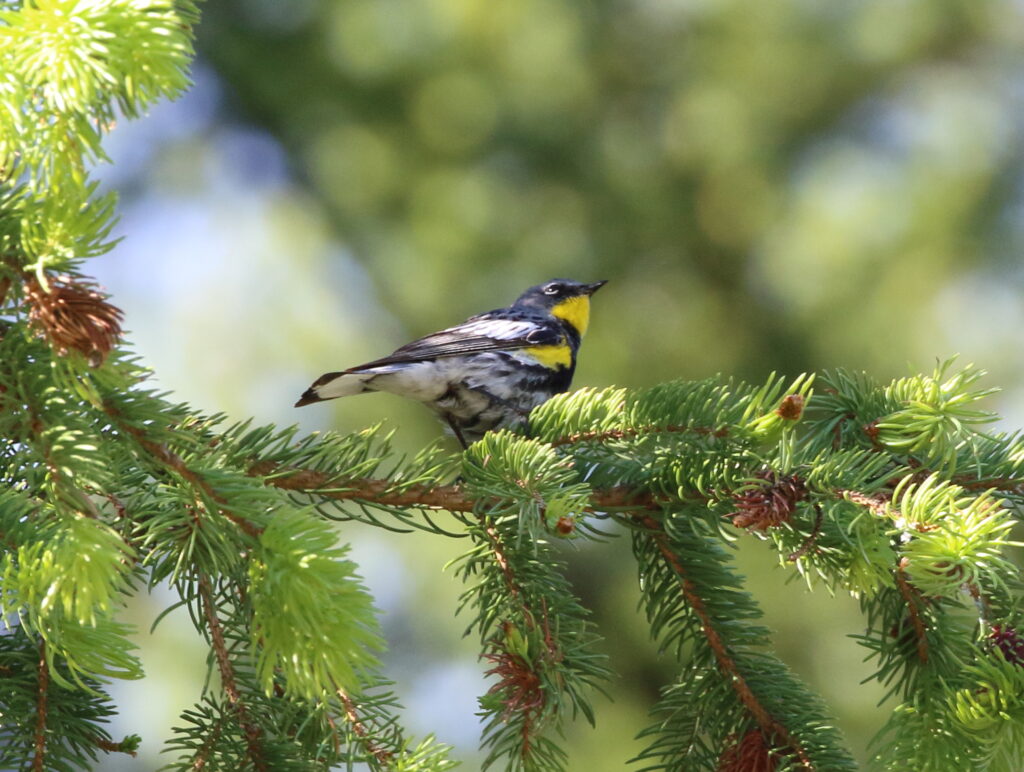
On the day, we located five of the dozen or so common warbler species that breed in Montana, including this stunning Yellow-rumped.

It was a flawless day, and we pulled over a couple of times to listen for birds in green, lusher forest. Thanks to Braden’s sharp ears and ear-birding skills, we immediately picked up a host of species including several kinds of warblers, Swainson’s Thrushes, Warbling Vireos, and a surprise flock of Gray Jays (I refuse to cede this species to Canada!). Driving further, we finally reached a burn area where Braden had seen a Three-toed Woodpecker several days before. The burn had mostly smaller trees and I wasn’t optimistic, but Braden played a Three-toed drumming call and a Hairy Woodpecker immediately responded. Then, a blacker bird swooped in. “Three-toed!” Braden shouted. Ka-ching. A Year Bird for me.

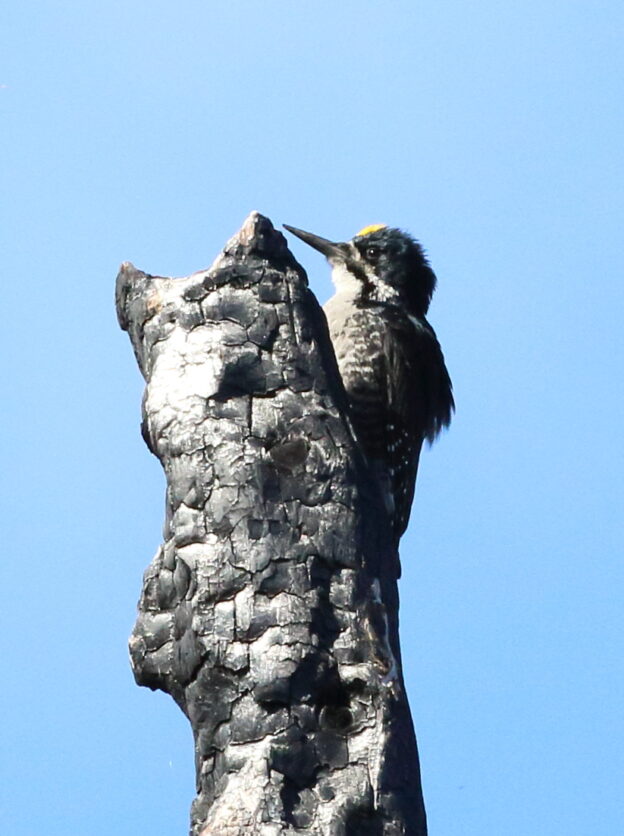
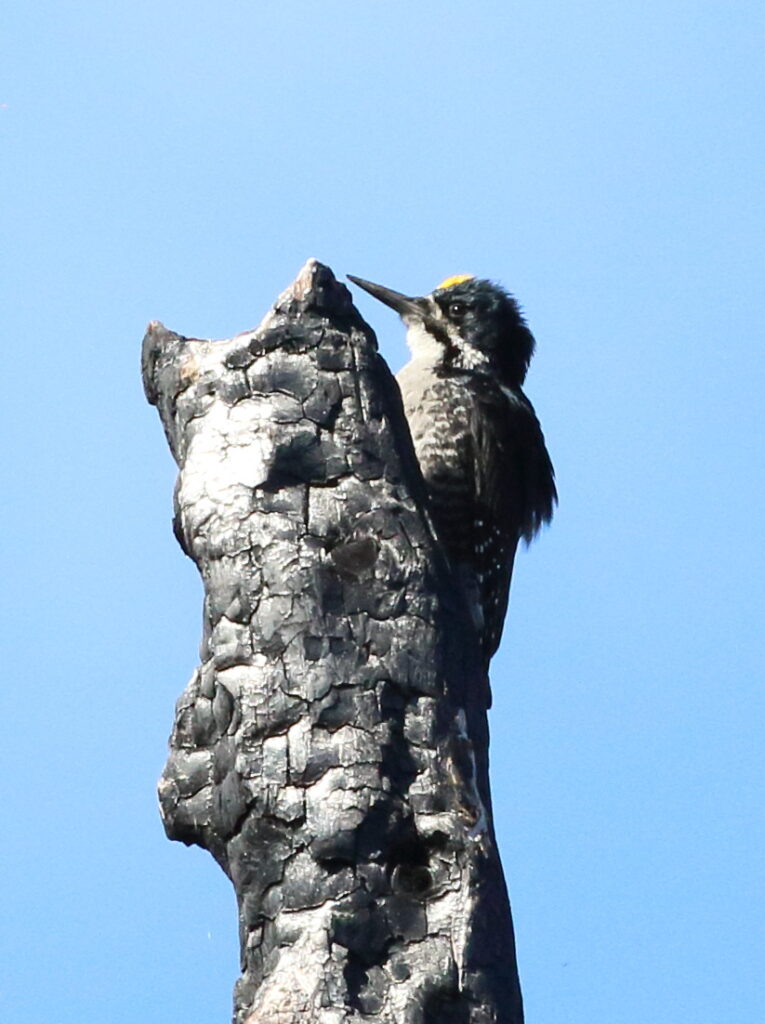
Black-backed Woodpeckers aren’t endangered, but can usually only be found in burned forests 1-5 years old that have NOT been salvage-logged. This one immediately leaped into our Bird of the Year competition!

A mile or so further, we reached an even better burn area with larger-diameter trees. I pulled over and we played a Black-backed drumming call. Within fifteen seconds, a gorgeous female Black-backed arrived to investigate, but that wasn’t all. Another half-mile up the road, we found a yellow-crowned male! “A Black-backed! We found Black-backed Woodpeckers!” Braden exulted several times. They were our first since doing our Big Year in 2016. The day was far from finished, either. Over the next couple of hours, we added Sharp-shinned Hawk to our Year lists, and I added two more that Braden already had: Fox Sparrow and Golden-crowned Kinglet, both of which Braden found me by ear. We also found Wilson’s Warblers on their nesting grounds—our first time doing so near Missoula.

The day brought our totals to 245 and 239 respectively. Will we make it to 250? We’re finally starting to feel better about our prospects, but stay tuned. We still have a lot of birding to go!

Winter Birding in Israel, Part III: Eilat and the Red Sea

Our condolences to all those affected by the coronavirus—including those forced to cancel their well-earned vacations. We offer some small consolation by traveling to southern Israel to explore amazing birds of the desert and Red Sea. Enjoy, and don’t forget to share this with your birding buddies. Next week: Wadi Rum and Petra.

After our fabulous day in the Hula Valley, I rewarded myself by—you guessed it—catching the flu. Really. Not my first choice, but after a day in bed, Braden and I continued as planned and headed to Jerusalem for three days. The highlights were seeing a Eurasian Hoopoe on the walls of the Old City and grabbing a new Life Bird, Tristram’s Starling, literally on the Western Wall. Then, mostly recovered from my illness, we headed to more fertile birding territory: Eilat and the Red Sea.

The International Birding and Research Center (to the left of the closer salt ponds) and nearby Holland Park offer welcome relief to the hustle and bustle of Eilat.

For those who don’t know it, Eilat is on a major flyway between Africa and Asia and Europe. Some estimates place the number of birds flying through at half a billion per year, and it is especially known for raptor migration. Alas, Braden and I were not visiting during migration, but we still hoped to see some new and cool species. Our first full day there, we caught a cab to the International Birding and Research Center just north of town. The center is on the site of the former city dump and located next to expansive ponds used for salt manufacture. Since 1993, however, the sanctuary has been aggressively rehabilitating the site—something that was still very much in progress when we arrived.

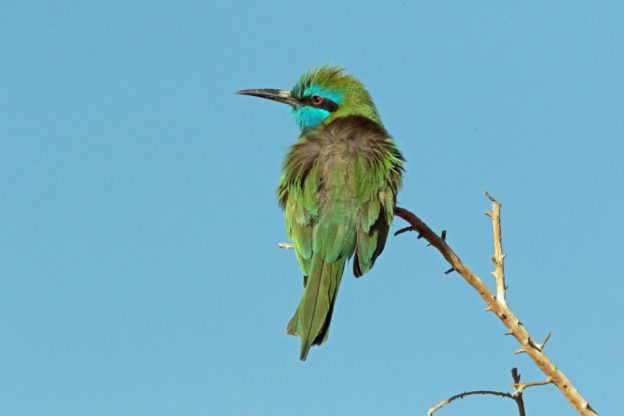
Without a doubt one of our trip’s most spectacular birds, the Green Bee-eater had perched firmly atop our Must See bird list.

In short order we were rewarded with a double-handful of Life Birds, including Common Ringed Plover, a pair of Common Greenshanks, Blackstarts, Bluethroats, a Green Bee-eater, Marsh Sandpiper, Rock Martin, House Crow, Long-legged Buzzard, and Braden’s Bird of the Day, a Great Gray Shrike! As a bonus, four Greater Flamingos lounged in a salt pond in the distance.

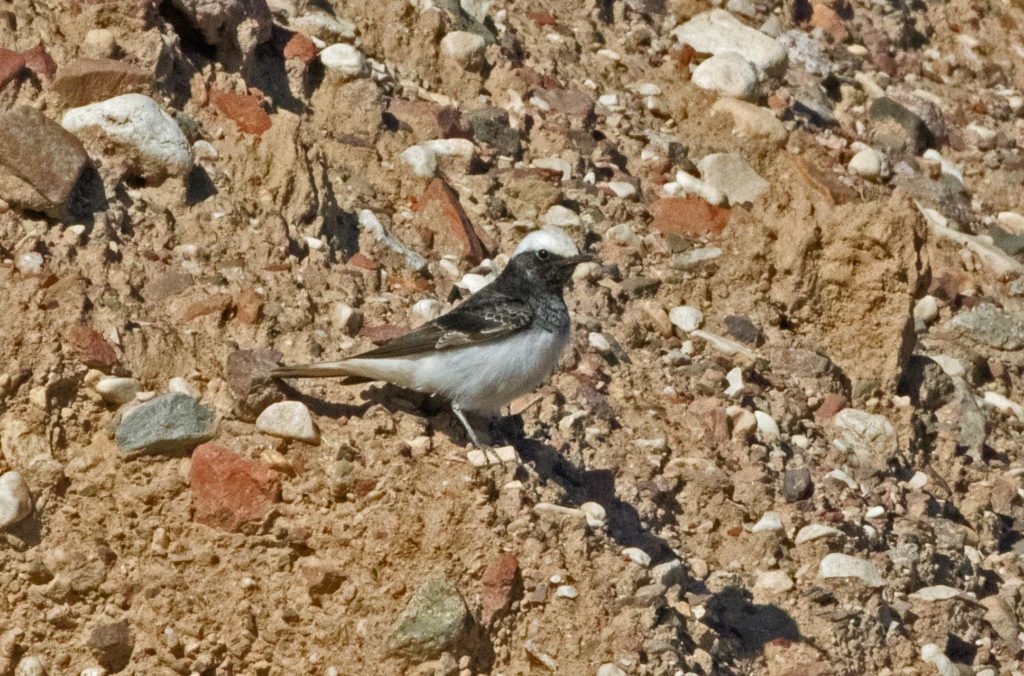
While there, one of the center’s guides confidentially told us that even better birding might be had at a place called Holland Park, a short mile or so walk away. Braden and I set off through the desert—only to end up at a kibbutz nowhere near the park! Some nice kibbutzniks straightened us out, so we resumed our hot march south along the highway. And that turned out to be a great thing because right next to the road, we spotted our only Hooded Wheatears of the trip.

This Hooded Wheatear introduced us to a totally new group of delightful birds that we’d only been vaguely aware of before the trip.

Holland Park. What can I say? I think this may be my favorite birding location of the entire trip. Hiking up a dry wadi filled with interesting native plants, Braden and I quickly left the bustle of Eilat behind and felt like we were in authentic habitat. We found only two additional Lifers—Sand Partridge and Mourning Wheatear—but the Blackstarts, Palestinian Sunbirds, Sardinian Warblers and other birds kept us plenty entertained. And our day’s birding hadn’t quite finished.

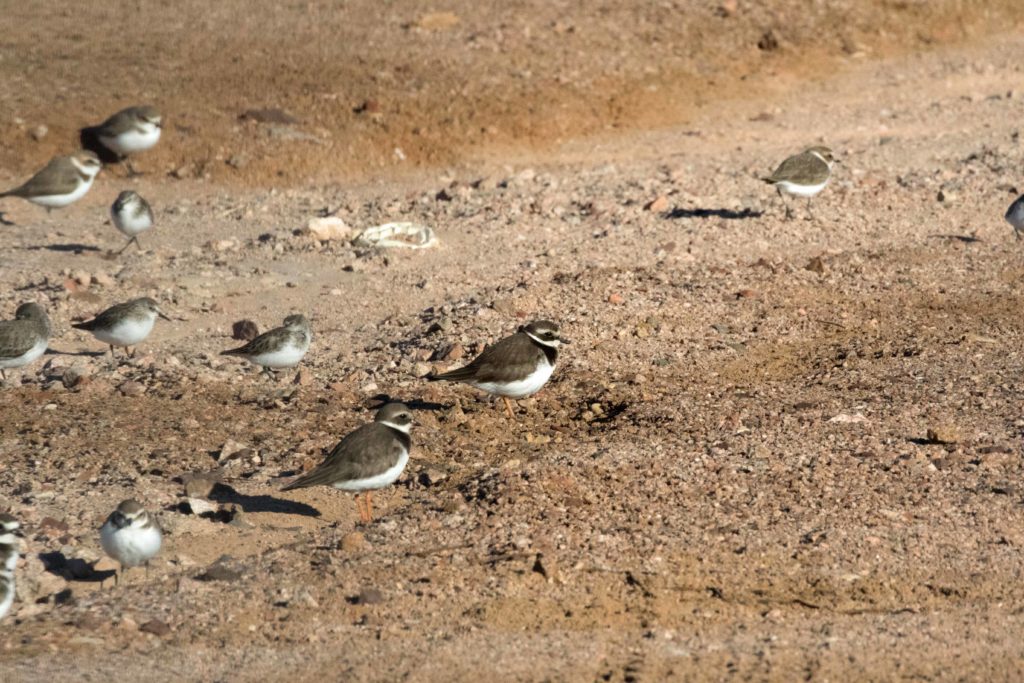
Israel’s extensive development of its tiny Red Sea shoreline doesn’t leave much room for wildlife, but these shorebirds found refuge behind a fence in a shipping yard. Center are two Common Ringed Plovers. Lower and Upper Left are Kentish Plovers, with Little Stints in between.

That afternoon, Braden cajoled me into taking a walk from our hotel along the Red Sea so that we could look for White-eyed Gulls. We found them, but also happened upon a huge group of Kentish and Common Ringed Plovers, Little Stints, and Dunlins huddled down against a stiff afternoon wind blowing up from Egypt and Saudi Arabia. All in all, it was an amazing day of birding—and far from the last of our trip.

All photos and text on FatherSonBirding.com are strictly protected under U.S. copyright law. To request permission to use, contact Sneed at sbcollardiii+2@gmail.com.

Winter Birding in Israel, Part 1: Neighborhood Birding

Alert: the hackers are back. We’ve had a number of suspicious sign ups recently so if you really have subscribed in the last three months, please shoot Sneed a confirmation email at collard@bigsky.net and I will make sure that you stay subscribed. Meanwhile, feel free to share this post with all the wonderful birders in your lives. Thanks!

If you are an avid fan of FatherSonBirding—and let’s face it, who isn’t?—you’ll know that Braden and I recently had an adventure of a lifetime in Israel and Jordan. Over the next few posts, we’d like to share that adventure, starting with ordinary neighborhood birding, and what any casual visitor might expect to see in Israel in January.

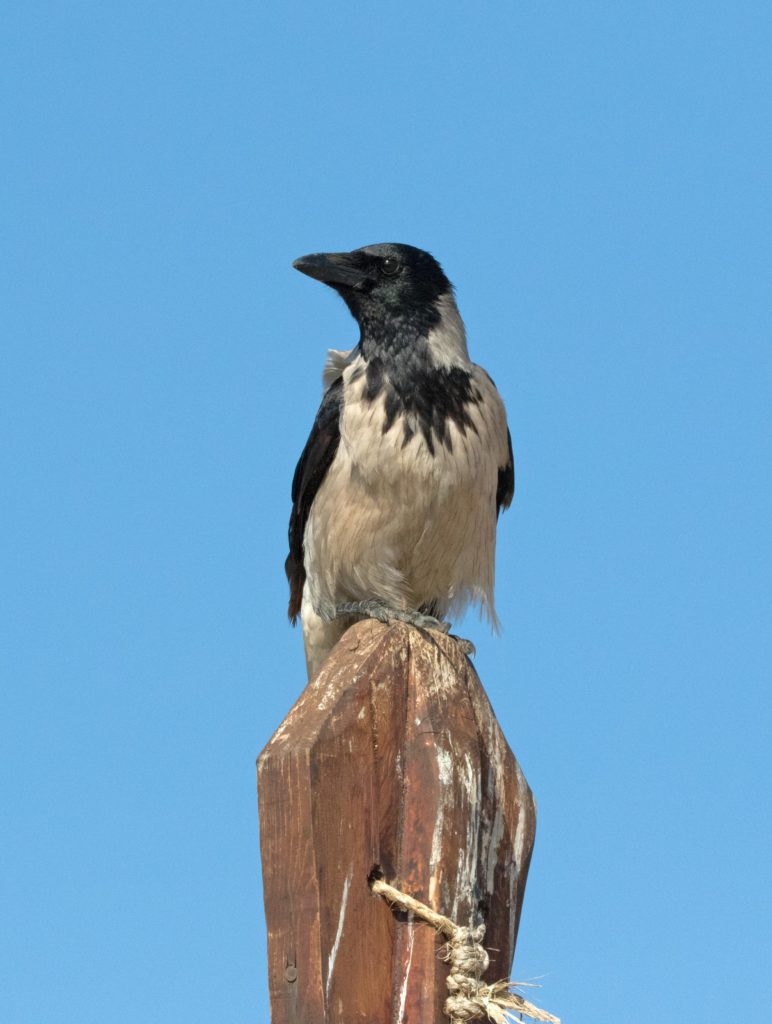
The Hooded Crow not only was our first Israeli bird, it was one that would provide constant entertainment and companionship throughout our trip.

Before flying to the Holy Land, Braden and I had already learned the value of studying up on birds of a new area, so when our flight touched down in Tel Aviv at 2 a.m., we hit the ground running. Well, sort of. First, we got on a train and traveled to our friends’ house in the pleasant coastal town of Binyamina. As soon as we’d showered and eaten breakfast, our hosts’ 14-year-old son, Noam, led us out on a tour of the neighborhood.

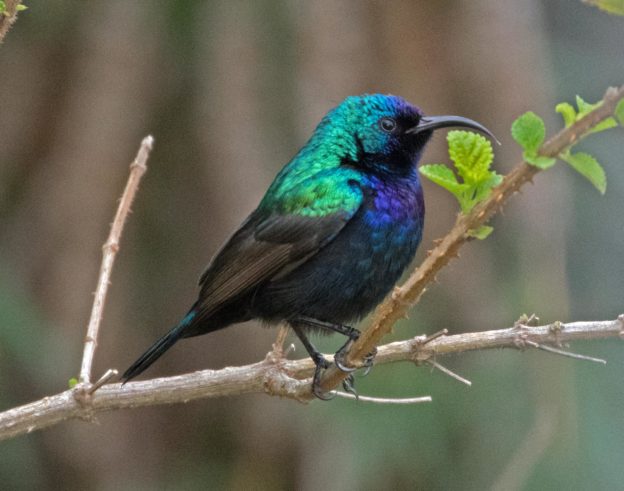
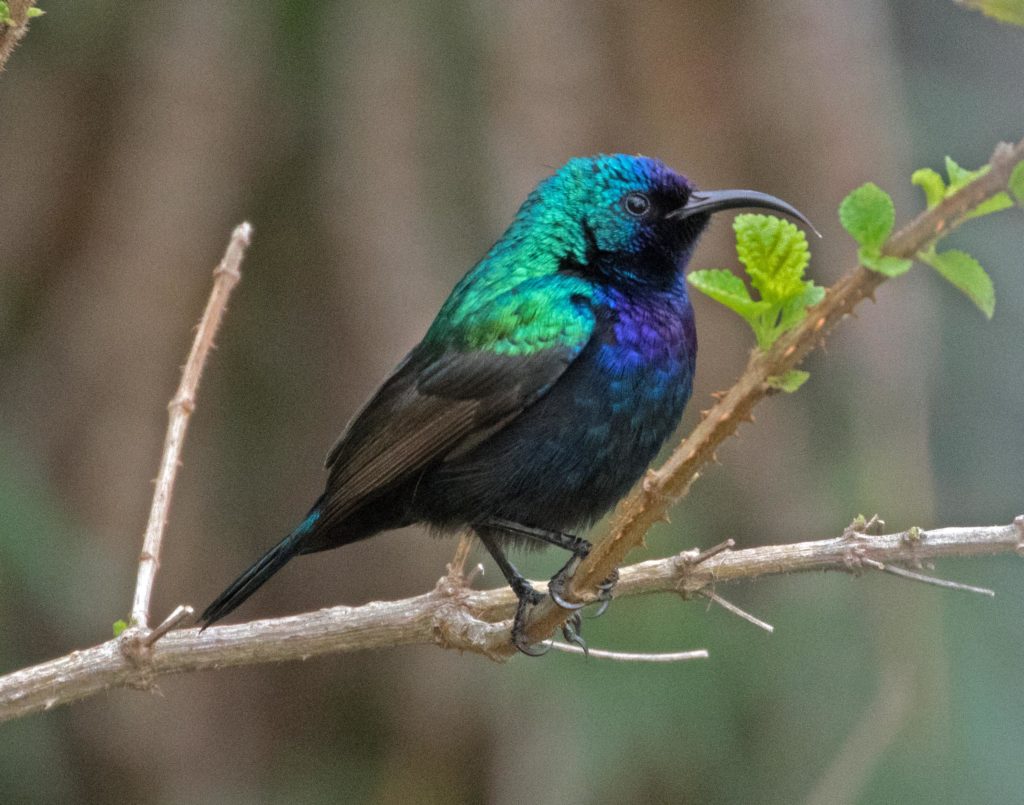
Now, I have to preface this by saying that Israel is the only place I know where if you go out birding, you not only have a chance of encountering some amazing historic site, you are almost guaranteed it. Only a block from his house, Noam led us to a remarkable Ottoman well that was 400-plus years old. Braden and I would have been more in awe if we weren’t already mesmerized by the variety of birds we were seeing! Our first Israeli bird? Hooded Crow, a handsome and charismatic corvid that would become a regular companion on our trip. This was soon followed by other delights including Great Tits, White-spectacled Bulbuls, Graceful Prinias, and Common Chiffchaffs, none of which we really expected to see! The most “crowd-pleasing?” The Palestinian Sunbird, an analog to American hummingbirds. We saw several, in fact, hovering to slurp up the nectar of some bright red flowers.

The Middle East’s “hummingbird”, the Palestinian Sunbird. The convergence of both habits and appearance of these guys with our own hummers is remarkable.

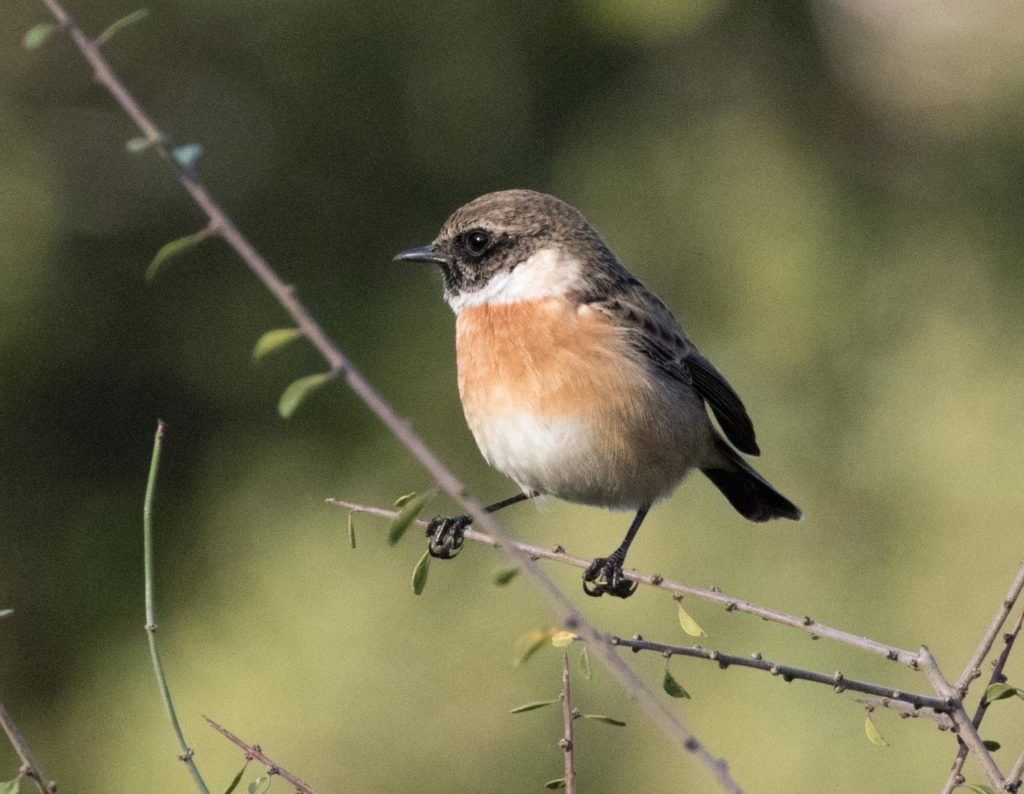
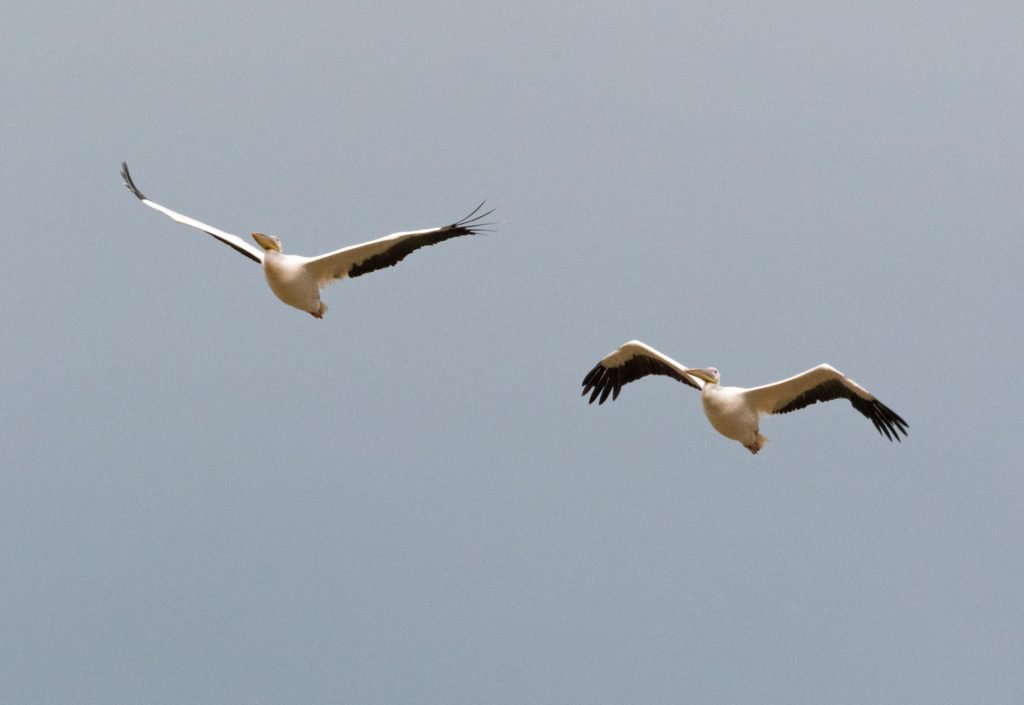
Once we passed the Ottoman well, we headed out to open farmland where we encountered a totally different suite of birds, starting with the same Rose-ringed Parakeets we’d seen in Amsterdam literally hours before (see our post “Layover Birding in Amsterdam”). Here we also encountered a charming little flycatcher called the European Stonechat—another frequent companion for our next two weeks. In the distance, we saw our first Black-winged Kite and Common Buzzard—Europe’s “Red-tailed Hawk.” Near a pond, we spotted several Glossy Ibis in flight and then came the punctuation of our first birding experience: a flight of four Great White Pelicans that flew right over us.

Besides having a great name, the European Stonechat is a great behavioral study as it behaves very similarly to American flycatchers.

Our first bird list totaled a satisfying twenty-one species, many of which we wouldn’t have recognized if we hadn’t done our homework ahead of time. Best of all, there was much, much more to come! Stay tuned . . .

The appearance of pelicans overhead both floored and delighted us!

Incredible Birthday Birding

Hey Everyone! Well, the hackers are back. We’ve had a number of suspicious sign ups recently so if you really have subscribed in the last three months, please shoot Sneed a confirmation email at collard@bigsky.net and I will make sure that you stay subscribed. Meanwhile, feel free to share this post with all the wonderful birders in your lives. Thanks!

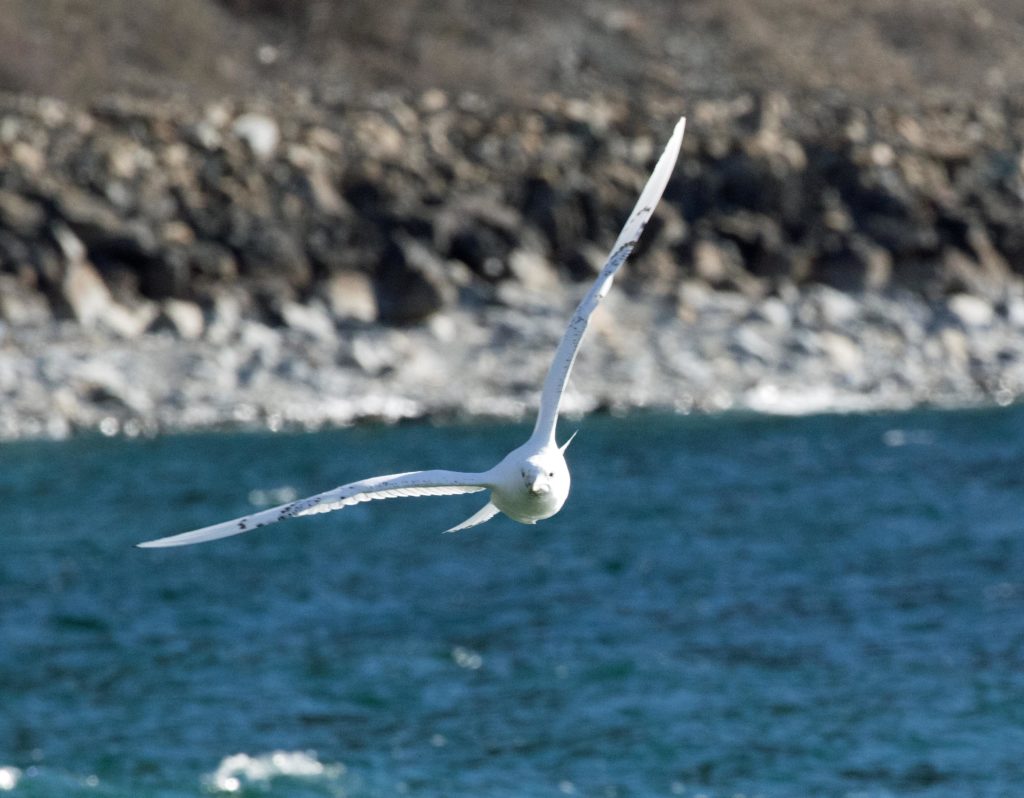
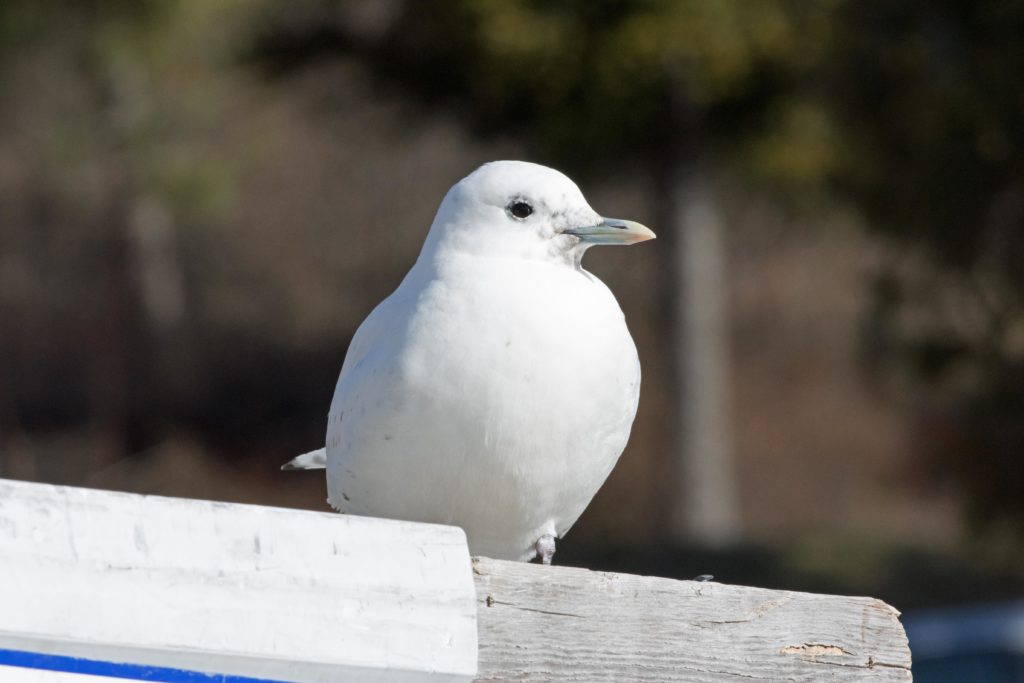
On Tuesday, February 4th, my dad woke me up at 7 o’clock, a restful relief from the 4:45 wake-up time I’d adapted to being on the Hellgate High School Swim Team. Despite an increasingly significant school workload, I’d decided (with parental permission, of course) to take my birthday off and head north to bird with my dad. Aside from the obvious perks of birding places like Ninepipe National Wildlife Refuge and Flathead Lake, we had several goals in mind. A few days earlier, an Ivory Gull, an incredibly rare arctic species, had been sighted at Blue Bay on Flathead. There was also supposedly a Northern Hawk Owl, a boreal species that rarely visited the United States, at Swan River National Wildlife Refuge in the valley just to the east of the lake. We set out at eight o clock, fifteen minutes after the bell for my school rang, heading north with visions of rare birds soaring through our minds.

Though the gull, being the rarest of the possibilities today, was our priority, we had to make several stops. First, we made a speed-run of Ninepipe, visiting both the frozen lake itself and a nearby road that supposedly had been supporting a Ferruginous Hawk all winter. The hawk wasn’t quite as rare as the other species we were chasing, but raptors proved hard to find even in their regular, summer habitat in the eastern prairies. Today, we found the white-breasted bird fairly easily, along with several Red-taileds, Bald Eagles, Rough-leggeds and a Prairie Falcon flashing its dark armpits as it fled from a telephone pole. At Ninepipe itself, we almost collided with an airborne Ring-necked Pheasant, and crept down a dirt drive to snap photos of a possible Ross’s-Snow Goose hybrid.

We grabbed a delicious breakfast at the Ronan Cafe, then drove north through Polson, stopping at a fishing access on Flathead to check for gulls. The Ivory had last been seen heading south, and this hotspot, known as the Ducharme Fishing Access, also reliably held uncommon arctic and seafaring gulls like Iceland, Herring and Mew. In fact, due to the lake’s size, seabirds showed up on an annual basis, confusing it with an inland sea. The Ivory Gull was just the most recent, and possibly rarest, of these visitors. Today, however, we glimpsed only a few Ringed-billeds in the distance.

When the gull took flight, we thought it might be leaving. Instead it landed on a dock only about fifteen feet from us. Wish we’d had some krill in our pockets!

Normally, my dad and I don’t have the best luck chasing rarities. We’ve successfully found a few, usually by accident or thanks to excessive diligence of Nick Ramsey. Last summer, for instance, we chased an Indigo Bunting, Virginia’s Warbler, Black-throated Gray Warblers and Blue-gray Gnatcatchers in central Montana, only finding the bunting, which was difficult to miss in its neon blue plumage. When we pulled up to Blue Bay, though, we found two birders and one bird. That bird was the Ivory Gull, dressed in blank plumage dotted with black. At first we thought it was a plastic bag, due to its immobility, and proceeded to freak out immediately after raising our binoculars. The other birders, who had travelled from Washington to see this bird that normally dwells among the pack ice with polar bears, left fairly quickly after our arrival, leaving us alone on the beach to bask in the bird’s rarity and fill up our camera memory cards. The gull was incredibly tame, at one point landing five feet from us on a dry dock!

Strike a pose! This gull is obviously a huge Madonna fan!

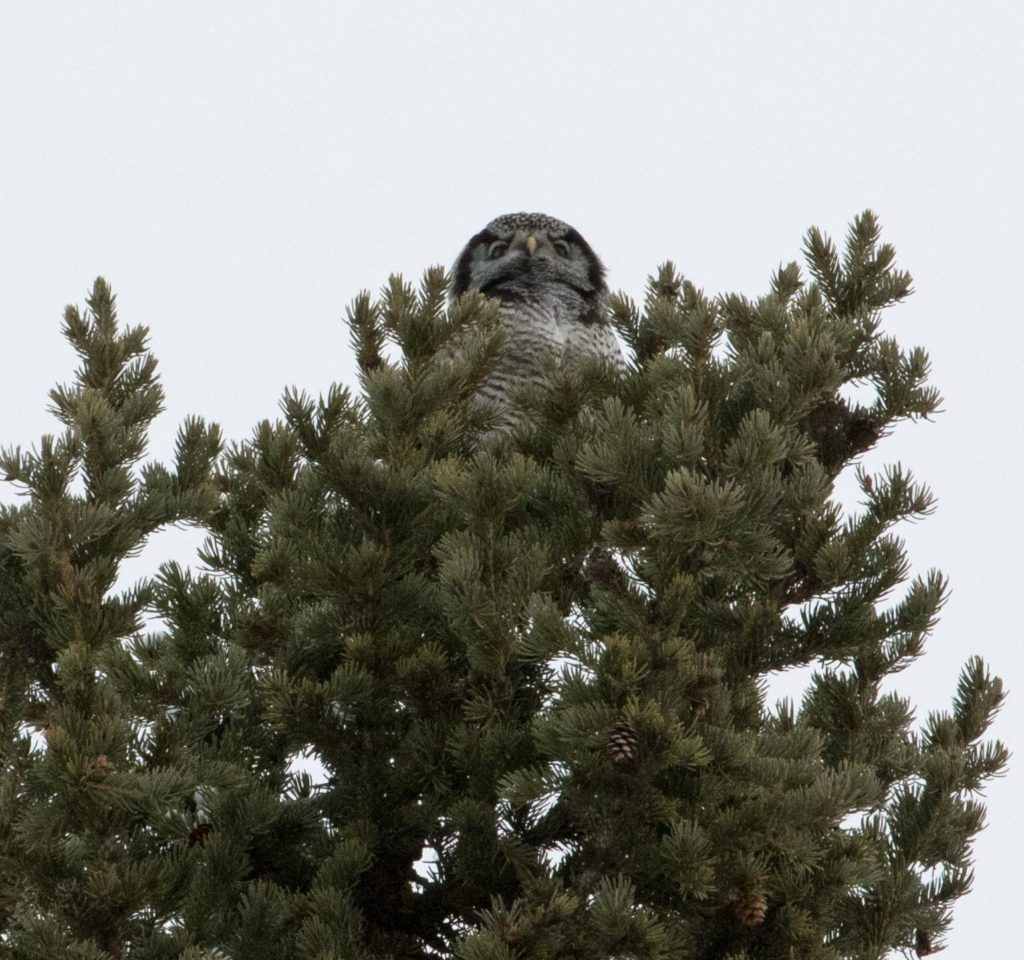
After our success with the gull, we decided to drive north, then east, to Swan River in hopes of finding the owl. The location had been given to us by Nick, and it was much less direct and accessible than the gull had been. First we pulled off the highway at a makeshift parking lot, far from civilization, then trudged a mile through snow to a huge, open field. We proceeded to check and double-check the top of every pine, fir, larch and spruce in the area, searching for the diurnal bog-dweller. After searching the entire south end of the field, where the owl was supposed to be, we took a quick glance across the other side of the field. On a particular conifer far from us, a gray smudge caught the edge of my vision. I took a distant photo, confirming that it indeed was a gray smudge, and we continued to walk towards it. Once we got close enough to determine that it was at least bird-shaped, it disappeared!

If this isn’t an imposing, regal look, we don’t know what is. Good thing the owl couldn’t shoot lightning bolts down at us!

We frantically began re-checking every tree in the area, eventually relocating it again and—it was the owl! This time we didn’t take our eyes off it, eventually getting to about twenty feet from the tree that it perched on top of, like a star on a Christmas Tree. It glared at us, and we stared back, taking in its broad shoulders, square head and beautifully-patterned plumage. In an attempt to get better photos, my dad crossed a ditch, filling his rain boots with ice-cold water, and after the owl got bored with us, everyone departed. We had set out and seen every bird we’d wanted to, including three rarities, one of which (the gull) would quickly become at least nationally famous! To seal the deal, on the way home we glimpsed a Northern Shrike, another uncommon winter species that we hadn’t seen in a while. All in all, an incredible bird-filled birthday!

Me with my Birthday Gull perched behind me. Best Gift Ever!

Make 2020 a Year of Saving Birds!

Welcome to all of our new subscribers—and thank you for your interest! Please note that Braden and I are about to embark on a once-in-a-lifetime trip to the Middle East, so won’t be posting for a few weeks. When we do, we should have some amazing stories to share!

Season’s Greetings Fellow Birders! Between school exams, swim meets, book deadlines, and the general craziness of life, Braden and I haven’t been out birding a lot in the last few months, but we wanted to wish all of you Happy Holidays and a dawning new year of birding. With your patience, we’d also like to reflect a bit on the past year, the future, and what we can all do to help the animals that we love.

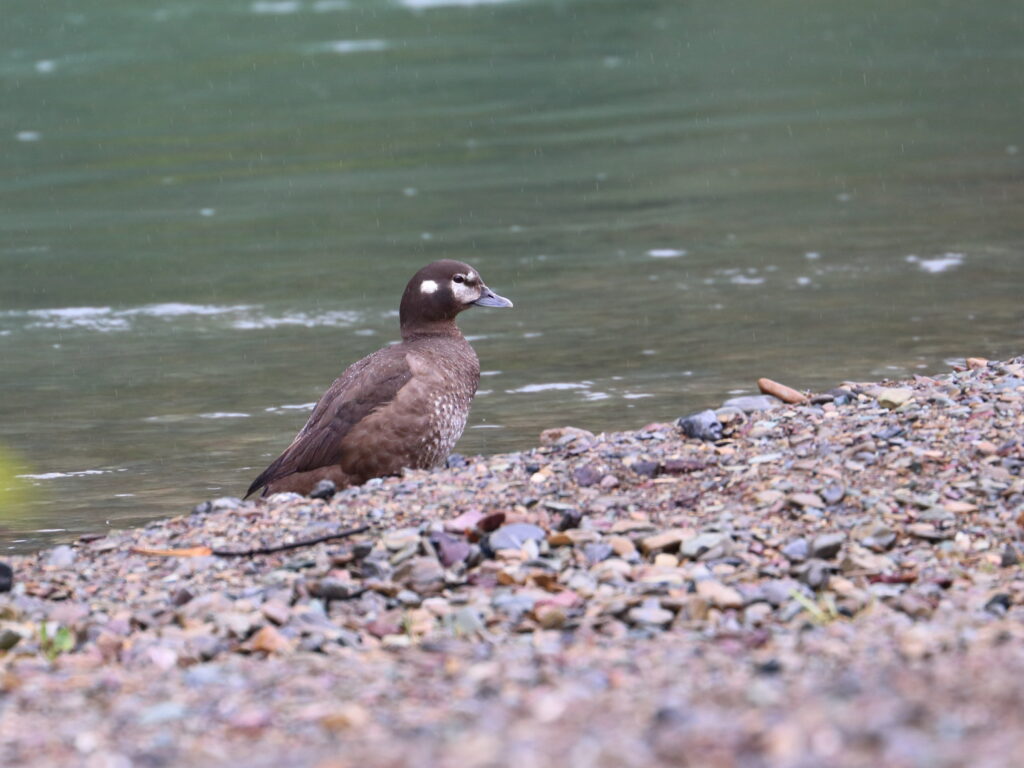
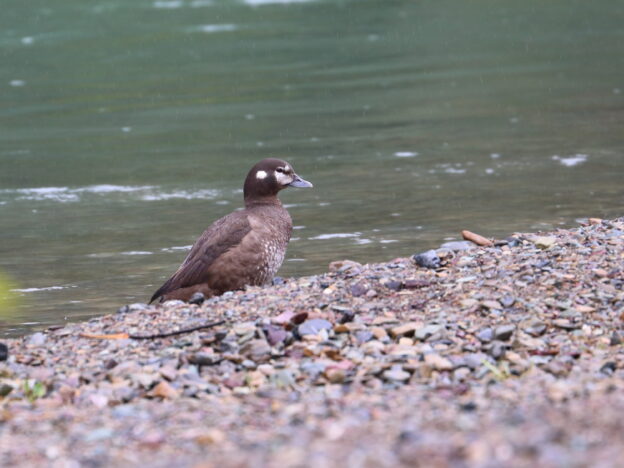
Getting to know Montana birds better—including this fabulous Harlequin Duck on McDonald Creek in Glacier National Park—has been one of the major 2019 achievements for Braden and me.

It was another amazing year of birding for Team Collard. Without intending to, we smashed our Montana Big Year records by at least a dozen birds each, with Sneed logging 222 species in the state (15 more species than in 2017) and Braden recording 225 species—12 more than in 2017. We also broke our combined Big Year record, though we’re too lazy to figure out the total (about 340 species together). This year, Braden tallied 44 new Life Birds while I added 21.

But while statistics are fun and motivating, for us they really aren’t what birding is about. Birding brings so many benefits to our lives, it’s hard to list them all, but top of the list are a chance to get outside, explore new places, see new species, learn about our remarkable planet, educate others about birding, and most of all, spend time together. This year, our favorite experiences included:

Perhaps our most rewarding 2020 activity? Leading birding trips for a new generation of young—and “almost young”—birders!

1) Participating in the San Diego Bird Festival

2) Getting to know Montana birds better

3) Leading birding trips for school groups and others

That last one brings up an important point. Those of us who love birds owe it to the planet to do as much as we can to protect them. That includes educating other people about the importance of birds and what’s happening to them worldwide. Don’t short-sell yourself. If you’ve ever been birding at all, you have important knowledge to share. Most people know almost nothing about birds, so even teaching a friend how to identify a House Sparrow or an American Goldfinch could be the beginning of a long and rewarding journey.

We were thrilled this fall to observe and help participate in long-term studies of bird migrations through western Montana using banding and flight call studies. Here, a Townsend’s Warbler (I think) gets unceremoniously dunked head-first into a weighing canister. This does nothing to harm the bird, but gives scientists at MPG Ranch and the University of Montana’s Bird Ecology Lab important data for monitoring and protecting songbirds.

We especially want to encourage everyone to give as much money—yes, cold hard CASH—as you can to organizations that are helping birds. Because of this year’s higher standard tax deduction, charitable donations have plummeted, and that has hurt a lot of nonprofit groups—especially in an era when they need support more than ever. Keep in mind, too, that if you donate to National Audubon, that doesn’t necessarily do much to support your state and local Audubon chapters. You have to give to all three. Here are some of Braden’s and my favorite groups that we give to:

National Audubon Society, and State and local Audubon chapters

The Cornell Lab of Ornithology

Owl Research Institute

BirdLife International

American Bird Conservancy

Please check out these groups and GIVE UNTIL IT HURTS. We thank you, and appreciate all you do to share your love of birds and, even more, to make sure that the next generation enjoys a bird-rich planet.

This Western Screech Owl says: “Instead of buying friends and family more junk this holiday season, why not give them a LASTING gift with a donation to the Owl Research Institute and other bird conservation organizations?”