Category Archives: Humor

Birding for Mammals

Like our blog? Please share and spread the word!

“eBird really needs to add a checklist for mammals!” I tell Braden for the 58th time. What has prompted my sudden outburst? A marmot scurrying off the road in front of us. The truth is that the past seven years of birding have led us to an amazing number of mammal sightings in Montana and beyond—mammals we wouldn’t otherwise have seen if not for birding. Sure, we’ve observed the usual pronghorn, elk, deer, and bison by the hundreds, but it’s those smaller, cooler mammals that I most remember.

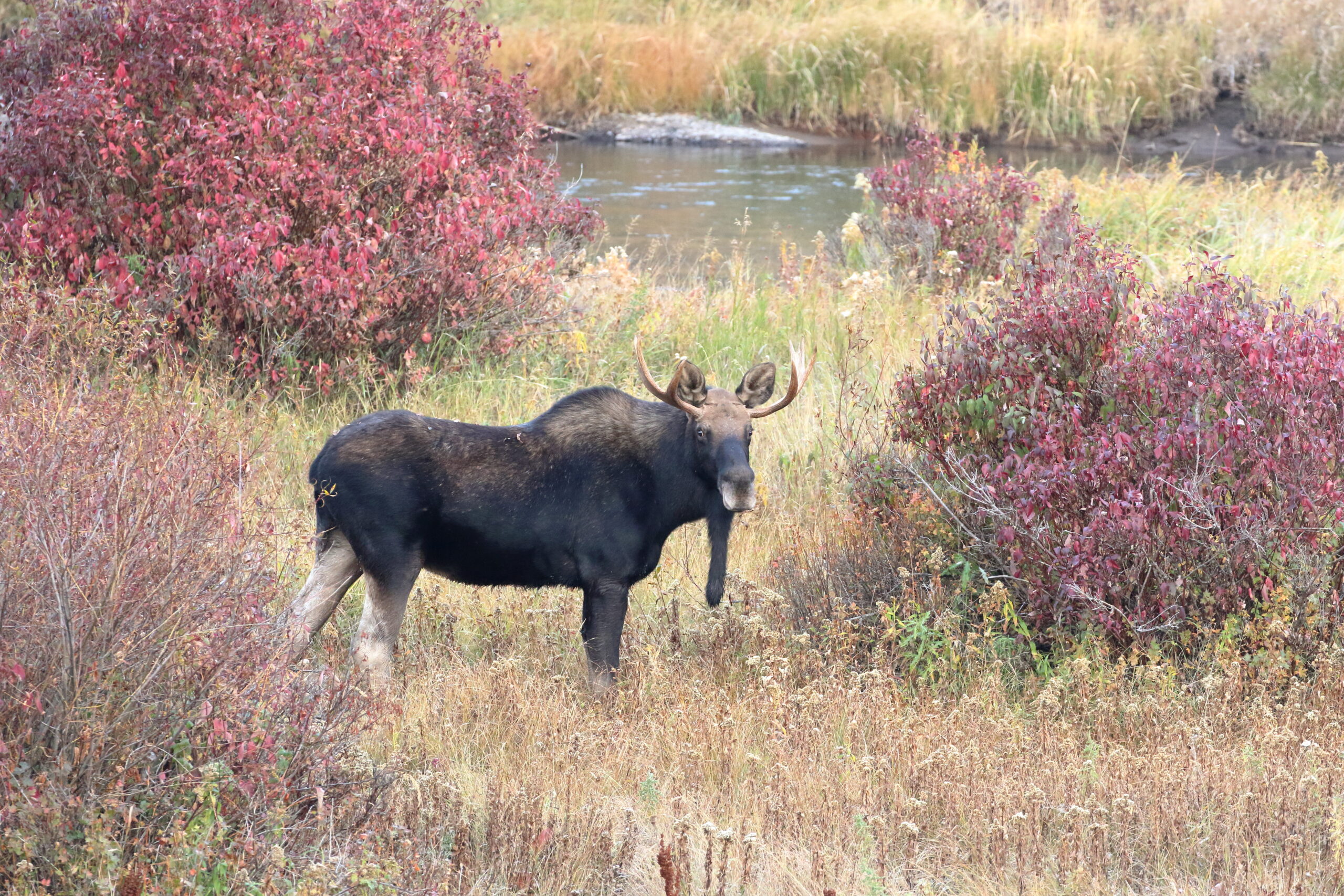
Actually, there are two moosii (plural for moose) here—the other behind that bush on the right.

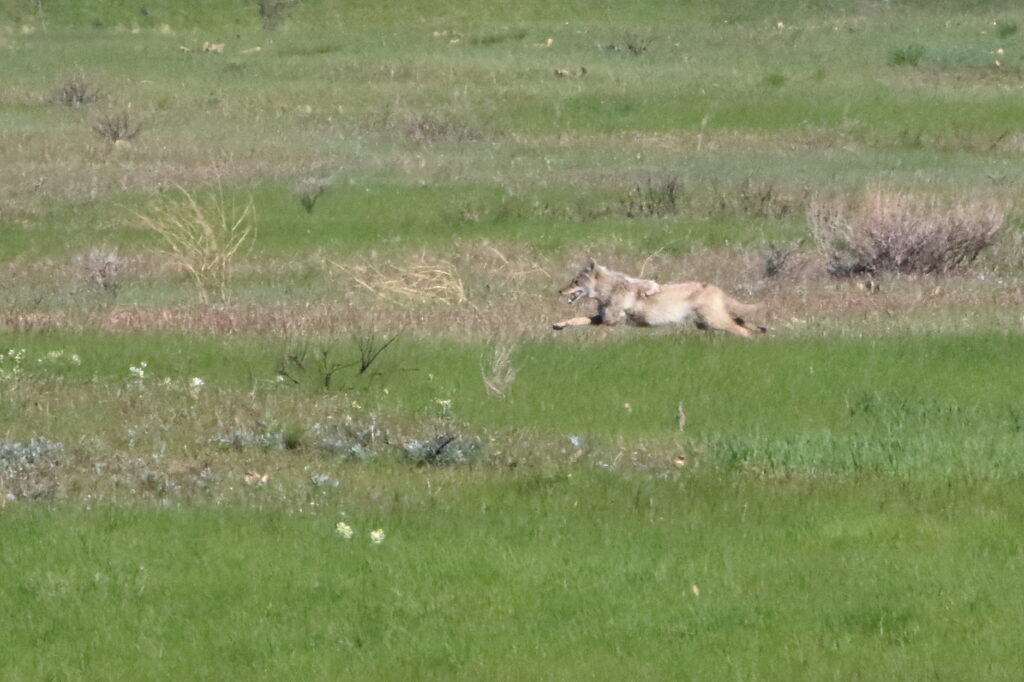
Let’s start with moose. Okay, they’re not smaller, but they are way cool—so cool that we remember every single moose location we’ve encountered, from the burn area around Lincoln to the meandering creek near Philipsburg. Coyotes rank similarly high in the mammal standings, whether they be trotting around one of our favorite birding hotspots, the Gravel Quarry, or galloping hell-bent-for-leather across the grasslands of Bowdoin National Wildlife Reserve like the one we saw last week.

Is there a roadrunner somewhere around here???

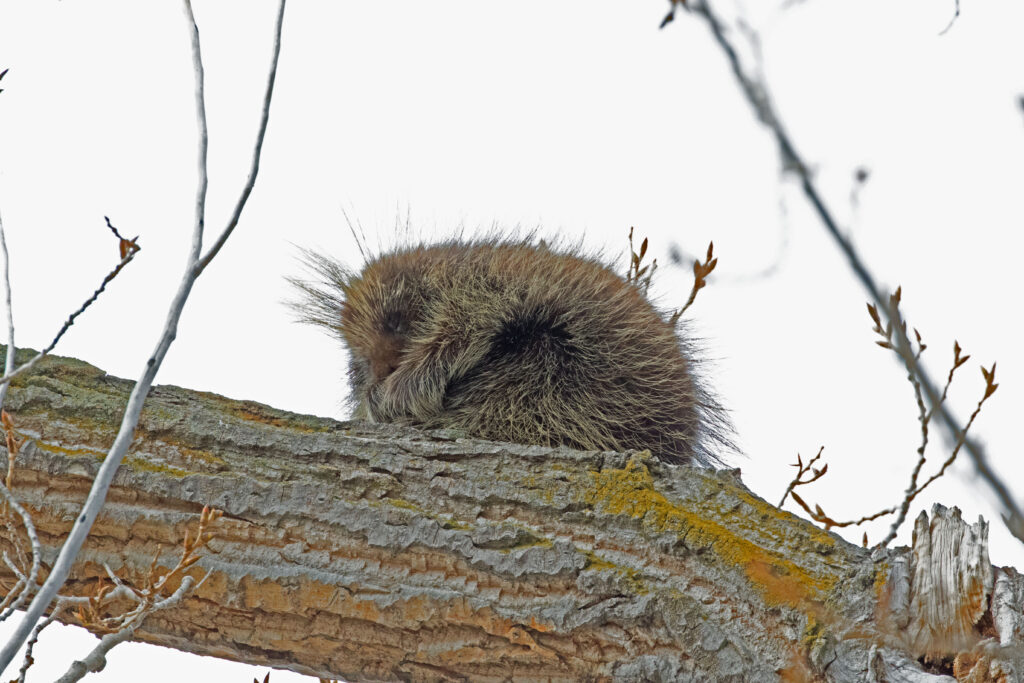
Some mammals, though, deserve special honors. For years, I’d been griping about never seeing a live porcupine—a fact that astounded me given how many dead ones I’d spotted over the decades. Shortly after covid hit, however, Braden and I were driving into the Lee Metcalf NWR when I noticed a suspicious shape balled up on a bare branch right above the road. “No, it isn’t. It couldn’t be . . . “ I gasped. It was. A live porcupine. Finally!

At last we meet, Mr. Porcupine!

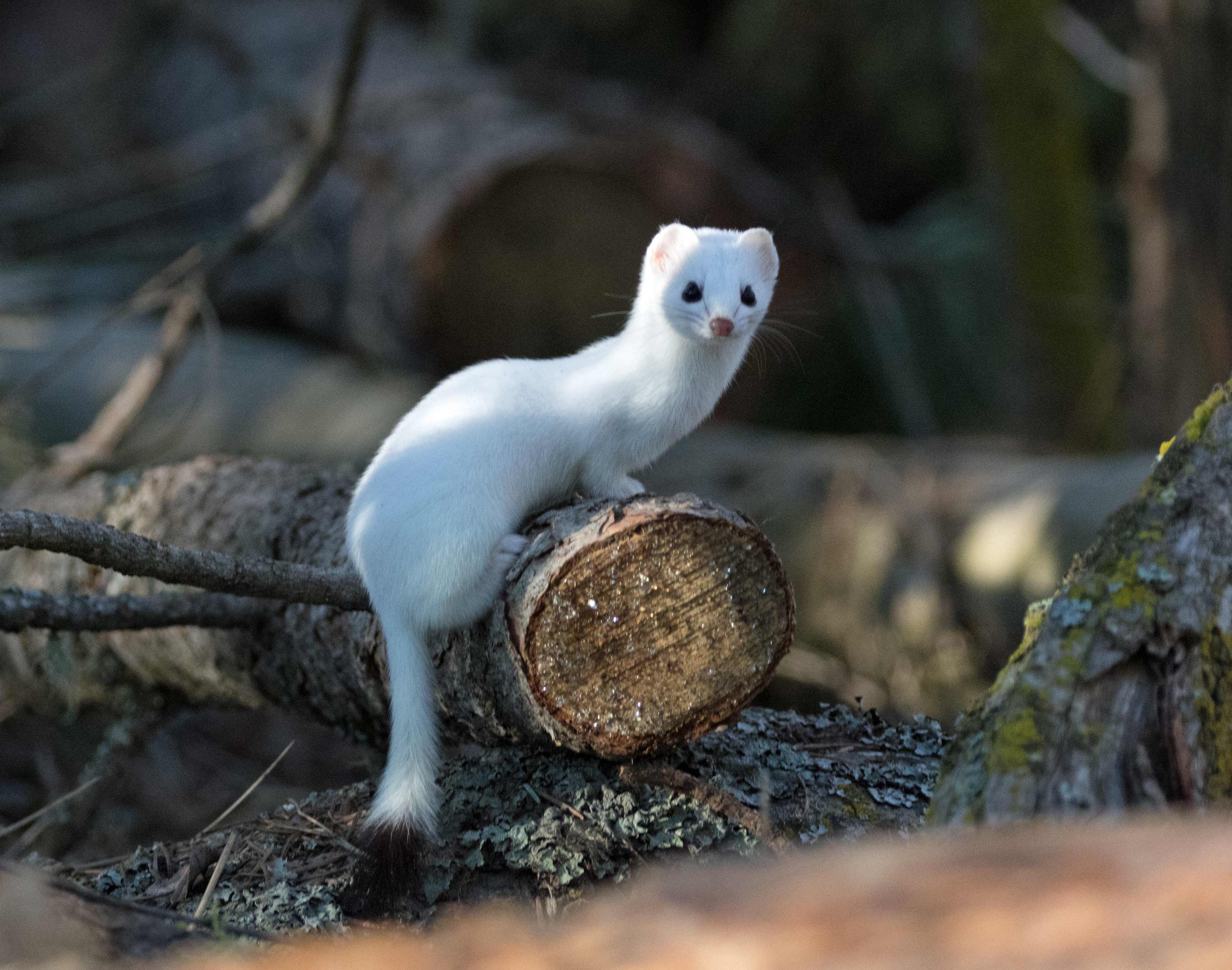
A few weeks later, I was hiking up a trail about a mile from our house looking for a Three-toed Woodpecker that Braden had found. Suddenly, a long white shape climbed up onto a rock not twenty feet from me. I stared and it stared back—though not with its mouth open like mine. It was a short-tailed weasel, by far the best look I’d ever seen! And as a bonus (and disadvantage for the weasel), it wore its mismatched winter coat against the snowless ground, demonstrating up-close-and-personal the threats animals face from global warming.

Mr. Weasel, find some snow. Quick!

Our mammal list also includes numerous red foxes, bighorn sheep, beavers, hares, otters, mountain goats, bats, muskrats, whales, dolphins, monkeys, raccoons, black and grizzly bears, seals, prairie dogs—even a bobcat in Aransas NWR and our first-ever javelinas down in Texas. And that’s not even mentioning the beluga whales, polar bears, and walrus Braden has seen on nature trips with his grandparents. I admit that we still have never glimpsed a wolf, lynx, wolverine, or thylacine—but we hope to.

Which goes back to my original point: Can’t eBird add a basic mammal checklist, at least for the ABA area? In no time, they’d be collecting millions of invaluable data points for scientists and conservationists. Plus, it would be a lot of fun. I know. I know. Some of you are saying, “Use iNaturalist!” I hear you—but I’m never going to. One app is plenty for my curmudgeonly brain. So what say you Cornell? Are you game—and not just Big Game? I and millions of other birders are waiting!

Heavy Metal Suckers: Birding Therapy Day Five

Enjoy these posts? Why not subscribe at the box below and to the right? You know you want to!

After my inspiring outing with Paul Queneau on Thursday, believe it or not I had another “man date” the next day with our awesome former Scoutmaster, Tony Higuera. Tony and I would be meeting for coffee, not birds, so to continue my week of birding therapy I decided leave early and hit another great Missoula birding location close to Starbucks—Tower Street.

Honestly, I am still getting to know Tower Street. It consists of meadow, pine, and riparian habitats, and Braden and I have birded it four or five times, but heading in there Friday morning I really didn’t know what to expect. From the parking lot, I could hear flickers, House Finches, Pine Siskins, and Red-breasted Nuthatches. As I walked along the path paralleling the giant metallic power poles, I spotted and heard more of the usual suspects. Then, an incredibly loud metallic drumming sound startled me. “Holy cow!” I gasped. “You’ve got to be kidding me.”

The source of the drum solo that startled me: a rocking Red-naped Sapsucker!

The drumming’s staggered, uncertain pattern told me which species had made it, but where was it coming from? More important, how could it be so loud? I looked up at the immense metal power pole a few yards away. I mean, this was not one of the street lamps you see. It was HUGE—an amplifier at least twenty meters high and a meter or two in diameter. I searched all around it but couldn’t find a bird. Then, I spotted an inconspicuous, hunched down figure on a climbing stud high above me. It was a Red-naped Sapsucker—and it had just found the best drum set in woodpecker history!

I watched as the bird again drummed against the power pole, and it immediately got a response from another Red-naped that flew in to investigate. I couldn’t help but laugh out loud and wondered if the bird would permanently stake out this amplified windfall.

Assuming this is the female, I wonder if she’s hear to consider the male’s mating proposition or just join his band—maybe on lead guitar?

During the next hour, I saw or heard another three or four sapsuckers and nothing else matched them, but when I reached the river, I heard a strange bubbly sound. At first I didn’t know what it was, but then recalled a song that Braden has been trying to teach me the last couple of years—the “giggle call” of a White-breasted Nuthatch. I didn’t see the bird at first, but then spotted it with its partner. Even more fun, I got to see the two of them mate. While WBNUs are by no means rare, we see them on only about 20% of our forest visits, so this was a real treat—and the only ones I would see during my Birding Therapy Week. That doesn’t mean my good birding was at an end. The next morning, in fact, I would experience my best birding—and therapy—of the week . . .

White-breasted Nuthatches are quite a bit less common than their Red-breasted brethren, but learning the “giggle call” certainly helps alert one to their presence.

Winter Birding in Israel, Part II: Valley of the Cranes

This week, enjoy Braden’s Part II of an Undetermined Series of Posts about our recent birding adventures in Israel and Jordan!

Over the next few days, our host family showed us around Northern Israel. We explored Akko, a seaside town with a great market full of delicious Arab and Jewish food and tall, Crusader-era walls. In Haifa, we took a drive around Mount Carmel and dined on amazing pizza and fantastic pistachio ice cream. My dad and I even spotted a Eurasian Griffon soaring over a residential area, a rare species of vulture that nested in the Carmel range. 

A lone Eurasian Spoonbill enjoys refuge in the Hula Valley Nature Reserve, once part of a vast wetlands that covered much of north-central Israel.

After sightseeing, though, we were ready to do some serious birding. One day, my dad, one of our friends named Noam and I hopped on the train to Haifa (spotting flamingos feeding in salt ponds on the way), where we were picked up by our host’s brother Barak and father Avi. We headed north, stopping only to grab a snack at a roadside falafel & humus stand overlooking the vast Sea of Galilee and its nearby canyons and mosques. Soon, though, we left the mountains, driving past agricultural fields filled with Common Cranes. Eventually we arrived at the Hula Valley Nature Reserve, and were greeted by a large, modern visitor center. The best way to sightsee the refuge was to rent a golf cart, and that we did, setting off around a lake at Formula 1 speeds—about 10 miles per hour. We were soon greeted by hundreds of cranes, as well as various tactics that farmers used to prevent the birds from eating their crops. Every few minutes a gunshot, firework or horn would echo across the landscape (the birds were protected, don’t worry), and we even glimpsed a few people chasing the huge flocks.

In the Hula, we got our first great look of the trip at what would prove to be one of our Top Five favorite Israeli birds—the White-throated Kingfisher.

Before reaching the main lake, we stopped at a forested spot and were immediately astonished to see not one, but two birds that we’d been hoping to see: a White-throated Kingfisher and a Eurasian Hoopoe! The large kingfisher showed off its azure wings as it scanned the ground for rodents, while the hoopoe foraged quietly like a flicker, probably looking for ants. Spur-winged Lapwings, birds with sharp patterns of black and white on their wings, stood right by the path, unafraid, and almost every bird in the area allowed us to snap sharp, close-up photos. Before leaving we spotted a pair of European Goldfinches, chirping cheerfully despite their “sunburnt” faces.

At the lake itself bird activity increased substantially. Raptors were abundant, including Black and Black-winged Kites, Eurasian Marsh-Harriers, Common Buzzards and Eurasian Kestrels, all flying over the marshes. One kestrel even posed for us on a sign, devouring a mouse right in front of us! The species diversity of ducks was low, but those that were here, primarily shovelers, mallards and teal, foraged in the fields in huge numbers, and Eurasian Coots, Eurasian Moorhens and Little Grebes floated on the water. Shorebirds and waders also were present, and we spotted a few Glossy Ibises, Black-winged Stilts, Ruff and a single Eurasian Spoonbill by the shoreline. Gray Herons, Great, Cattle and Little Egrets and Great and Pygmy Cormorants topped every bare branch and island in the area.

As this Eurasian Kestrel can attest to, there’s nothing like a good stretch after tearing the head off a mouse!

At a lookout a helpful naturalist pointed out several harder-to-see species to us, including Black-tailed Godwits and Northern Lapwings hiding in the distance among the huge numbers of cranes. I snapped photos of several raptors that flew by, later identifying them as eagles! The two we spotted were Booted and Greater Spotted, just a small percentage of the eagle species the Old World supported. Pied Avocets floated on the waves of the pond like ducks.

Sing along with us: “One of these things is not like the other. One of these things is not the same. One of these things—” Oh, you get the idea. It’s hard to blend in with 30,000 Common Cranes!

We completed our loop, tracking down cranes for better photos and spotting a Common Kingfisher skulking in the brush back at the visitor center, the only one we’d see for the rest of the trip! This little refuge, surrounded by farmland, was all that remained of the huge wetlands that had once covered much of this area and supported hippos, ostriches and cheetahs. While much of the diversity of the past had disappeared, Hula still provides habitat for thousands of birds during all seasons and efficiently allows the public to experience them. The day had not disappointed. 

All photos and text on FatherSonBirding.com are strictly protected under U.S. copyright law. To request permission to use, contact Sneed at sbcollardiii+2@gmail.com.

Our 50th Post—Philmont Scout Ranch, New Mexico!

Braden celebrates our “Half-Century” post with a lively recount of our two-week backpacking adventure in New Mexico. Why not celebrate with us by subscribing using the box on the right below? As always, feel free to share this with other birders, bloggers, Scouts—anyone you wish!

My dad and I recently got back from a two-week backpacking adventure on the Philmont Scout Ranch, a 220-square-mile swath of wilderness in northern New Mexico. The ranch is the largest of the Boy Scouts of America’s High Adventure Bases, and is jam-packed full of wildlife, history, culture and breathtaking experiences. Our trek, which we did with twelve other scouts and adults from our troop in Missoula, covered 74 miles. During this time, we hiked through canyons, and summited mountains, including the Ranch’s highest peak, Mount Baldy, at 12,441 ft. We also were exposed to and learned a wide variety of new skills at staffed camps we visited, including how to pack and unpack a burro, how to build a railroad, how to blacksmith, how to lasso, how to shoot Old West-style guns and black powder rifles and more.

Braden with our trusty Burro, “Nigel”—named because, when necessary, he could turn it up to “11”! We were lucky to have Nigel’s company for two days of our trek.

The trek also exposed us to a wide variety of diverse habitats. We travelled through Ponderosa Pine savannah and forest, valley riparian, desert scrub, spruce-fir forest, alpine meadow, aspen forest, subalpine forest and alpine tundra. We saw many different species of animals throughout our journey, including Monarch and other kinds of butterflies, pronghorn, mule deer, a rattlesnake, bats, and a praying mantis, not to mention evidence of elk. And then, of course, were the birds.

Because we didn’t haul our five-pound cameras with us, this was by far our best bird photo from the trip. Flamingoes in New Mexico? Who knew?

My dad and I together tallied a total of 84 species throughout the trip, including the birds we spotted in the desert on the drive from Albuquerque to the Ranch. The most common species we saw were Spotted Towhee, Cordilleran Flycatcher, Western Wood-Pewee and Common Nighthawk, which we saw almost every day. These four birds had adapted to almost every habitat on the ranch, especially the Cordilleran Flycatcher, which we tallied everywhere, from lowland riparian to subalpine forest, missing it only in the Ranch’s Base Camp. Other common birds included Pine Siskin, Red Crossbill, Rufous and Broad-tailed Hummingbird, Western Bluebird, American Robin, Pygmy and White-breasted Nuthatch, Mountain Chickadee, Chipping Sparrow, Black-headed Grosbeak and Western Tanager. What was especially interesting was the abundance of Black-headed Grosbeaks in most of the habitats we visited; while they seem to be much more riparian-based in Montana, we saw them in scrub, second-growth, aspen and spruce-fir forest.

We were surprised to commonly encounter White-breasted and Pygmy Nuthatches—but rarely Red-breasted—on our twelve-day trek.

Lesser Goldfinches were also quite common, though were much more exclusive to riparian areas. The subspecies here was different from the west coast—they had more solidly black backs, though still kept the same green necks. The main subspecies of Dark-eyed Junco at Philmont was also interesting, it being the Gray-headed rather than the Oregon we were used to. These juncos were slate gray with red backs and dark spectacles. More common Montana birds like Red-breasted Nuthatch, and both kinglets only occurred at very high altitudes.

Braden’s keen eyes and ears allowed us to pick up Clark’s Nutcrackers and most of Philmont’s other resident corvid species, though good looks were hard to come by!

While at Philmont we spotted six of the seven reported corvids (Steller’s Jay, Common Raven, Clark’s Nutcracker, Pinyon Jay, Gray Jay, Woodhouse’s Scrub-Jay), missing only the rare desert-specific Chihuahuan Raven. We also managed to get three lifers during the trip, those being the beautiful pine-loving Grace’s Warbler, the by-ear-only Common Poorwill and the previously mentioned Woodhouse’s Scrub-Jay. Other highlights include a family of Dusky Grouse, a small flock of Band-tailed Pigeons, a nesting pair of Williamson’s Sapsuckers and the hordes of migrating hummingbirds attacking the feeders at Base Camp, where we saw four species including with Black-chinned and Calliope. Overall, it was a great trip!

The (non-birding) highlight of the trip was our group’s ascent of 12,400-foot Mount Baldy on our second-to-last day of hiking. Braden and Sneed are third and fourth from the left. We thought we might catch some Andean Condors up there, but no such luck!

Nick the Owl Finder Strikes Again!

We need help! The last few weeks, we are facing a continuous onslaught of Russian hackers trying to subscribe—really! In the process of deleting them, we accidentally lost our entire subscriber list. If you are reading this, would you please resubscribe by filling out the boxes down in the right-hand column? We greatly appreciate it—and please share this with all your bird-loving friends! And now, to Braden’s new post!

When you’re a birder, nothing ever goes according to plan. For example, if you slog through a draw to find a Long-eared Owl, you’re more likely to see a flock of Bohemian Waxwings, or your state’s first record of a Red-flanked Bluetail, or a moose, or anything that is not a Long-eared Owl.

The plan on Sunday, February 10th was to sleep in. Instead, my dad shook me awake at seven in the morning (which I guess is technically sleeping in, but still).

“Nick found a Great Gray and a Barred at Maclay Flats! We have to go!”

Only an owl can get me out of bed early on a weekend!

I groaned and rolled out of bed, and within minutes we rumbled down the road in my dad’s Forerunner, dodging the potholes who tried to swallow us. The plan was to go the speed limit, but as I said earlier, things never go according to plan.

We reached Maclay in record time, and I texted Nick, asking for details. He responded quickly, providing great photos of both owls, and we trekked through the snow-blanketed forest, accompanied only by the occasional chirps of Red Crossbills flying over. As we passed the fields where we had spotted the Northern Pygmy-Owls two years prior, we scanned the bare trees. Nothing.

Then we hit the huge field in the center of Maclay, where Nick had said the Great Gray was hunting. We followed a trail of footsteps around the edge of it, running into another man that my dad knew, and we asked him if he’d had any luck.

When owls prove hard to find, Red-breasted Nuthatches provide entertaining diversion.

“None yet—but I’ve seen owls here before.”

“You heard about the Great Gray and the Barred here, though, right?”

“What? No, I just came out here today.”

Soon, we spotted two other birders on the edge of the field ahead of us, pointing cameras at the top of a Ponderosa.

“That’s a good sign,” said my dad.

We quickened our pace towards them, and I suddenly glanced up to see something I hadn’t seen in four years: a Great Gray Owl. The magnificent predator of the night’s eyes glowed with yellow fire, staring down at all of the peasants who had dared enter its domain. It wasn’t quite as large as I remembered, but then again it perched high on a pine bough.

Politicians spend a lifetime trying to master a Great Gray Owl’s stare!

As we snapped hundreds of photos, Nick suddenly joined us, accompanied by his stepmom and his dad, Phil.

“Nick!” I said, “How do you manage to find all these owls!?”

“Well, we came out looking for the Great Gray and just walked past the tree that the Barred was in. Do you want to see it?”

“Sure!”

Re-locating the Barred proved easier said than done. Nick had discovered the Barred in a spruce, but we trudged through deep snow, unable to find it. After half an hour, Nick finally stopped and pointed into the shaded interior of a tree. The Barred was smaller than the Great Gray, and much less active, as if trying to merge with its dark surroundings. After spending more time watching both owls, we returned to the car, tired, cold and fulfilled. Things definitely hadn’t gone according to plan!

“Just let me sleep!” this Barred was probably thinking, but he didn’t budge from his cozy roost.