Category Archives: Humor

Golf and Birding

Welcome to our new subscribers! We appreciate your interest in our adventures and experiences, and hope you feel free to share this post with others. If you’d like to support FatherSonBirding, feel free to order some of Sneed’s books from online stores or, better yet, by through your local independent bookstore. Thanks, and have a great weekend! Next week: more of Braden’s High Sierra adventures!

Did you ever stop to think that the words “golf” and “bird” both have the same number of letters in them? No? Good. It’s a stupid lead to a blog. Plus, golf is a sensitive subject for me. In my mid-thirties, I began playing with friends and found I quite enjoyed it. Sort of. In between the tears and swearing and bouts of hopelessness and low self-esteem. After my golf swing betrayed me once and for all, in fact, I tossed my clubs into the basement to collect dust for the better part of a decade. Foolishness springs eternal, however, and a few years ago I began a ritual of golfing once a year with a buddy—only to discover an aspect of golf I had never before recognized: Birds.

Many golf courses’ locations adjacent to wetlands and other natural habitats give them a wide range of opportunity for the golfing birder!

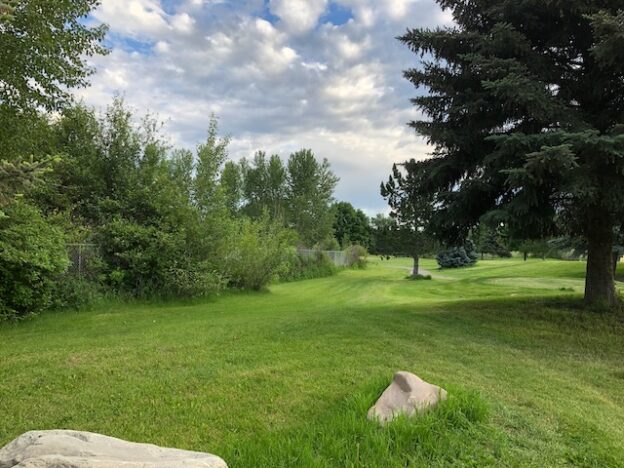
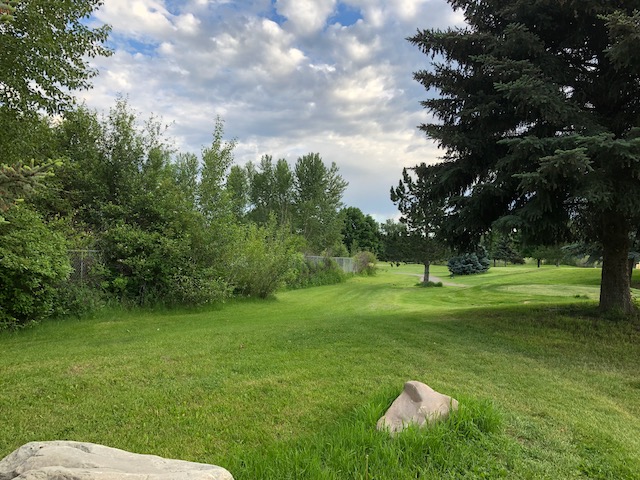
When I golfed in earlier years, Braden and I hadn’t yet become birders. Imagine my surprise, then, when I got back onto the links to discover that birds abounded—at least at Linda Vista Golf Course, my favorite course in the area (and one that happens to have a great cafe). I realized, in fact, that this course could actually be one of the best birding spots in Missoula. The problem? It is challenging to golf and record birds at the same time, and I have to thread a fine line so that my buddy doesn’t brain me with a 4-iron while I’m trying to figure out which kinds of swallows are circling around us. This dilemma, however, gave me an idea—one that I finally carried out last week: to get permission to bird the course sans clubs one morning before the golfers showed up.

Even with the distractions of actually playing a round of golf, I had managed to record 25 species of birds a couple of days earlier. These had included surprises such as Cinnamon Teal and Red-naped Sapsucker. I wonder what I’ll find with more time to study my surroundings? I asked myself as I again headed out two days later.

Almost immediately, it became evident that there were greater numbers of birds than I had noticed before. The Yellow Warblers were particularly insane with a new one spouting off every twenty or thirty yards—about the distance of a short pitching wedge. This made sense because part of what made this course such a great birding spot is that it was shoe-horned between river and wetlands on two sides and farm/pasture on another. Along with the Yellow Warblers I noted an abundance of Red-winged Blackbirds and Gray Catbirds—but was also surprised by an absence of Common Yellowthroats and dearth of Song Sparrows. Hm . . . maybe they were just quieting down for the season?

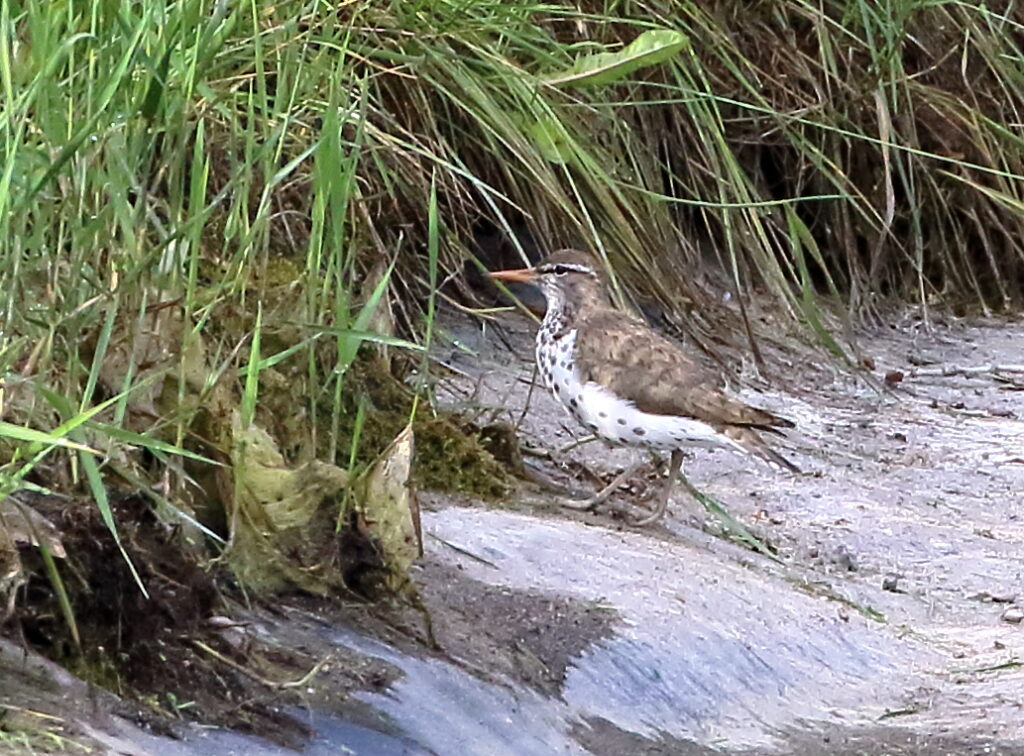
Spotted Sandpipers are always a welcome sight—though I’m not sure the plastic sheeting around this pond made it a great choice for this bird.

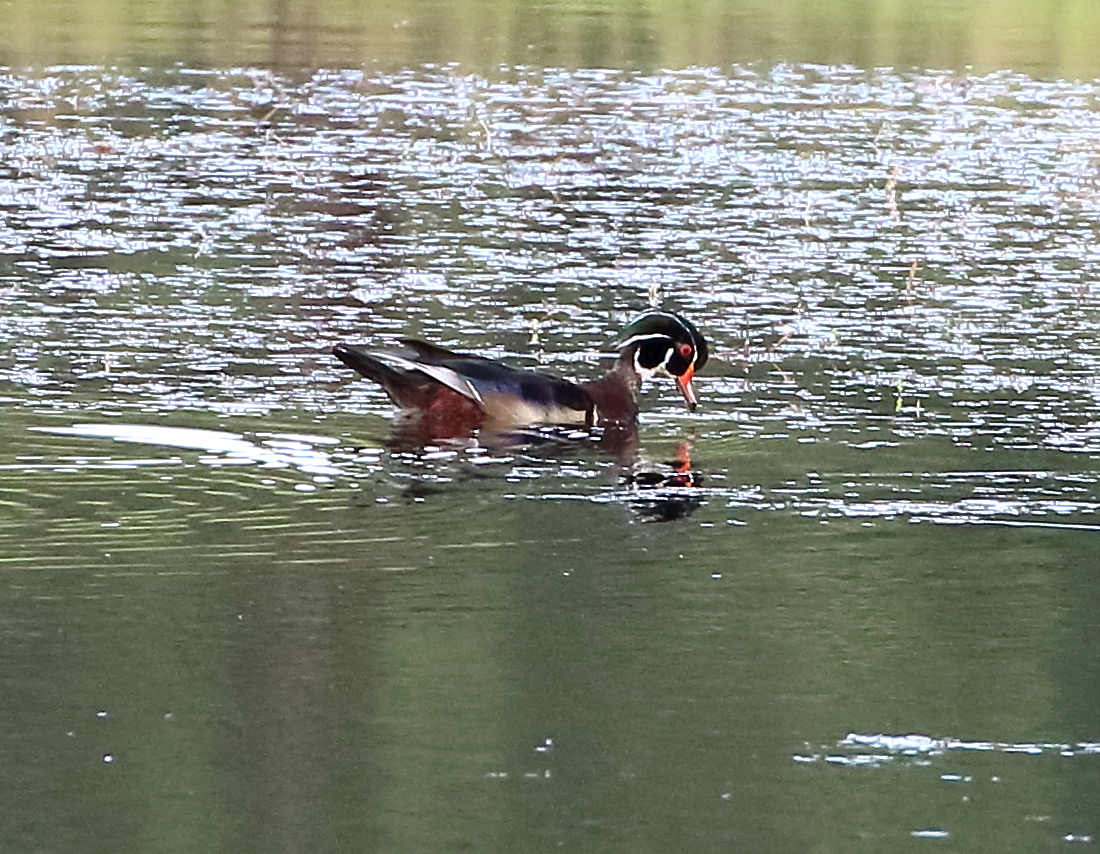
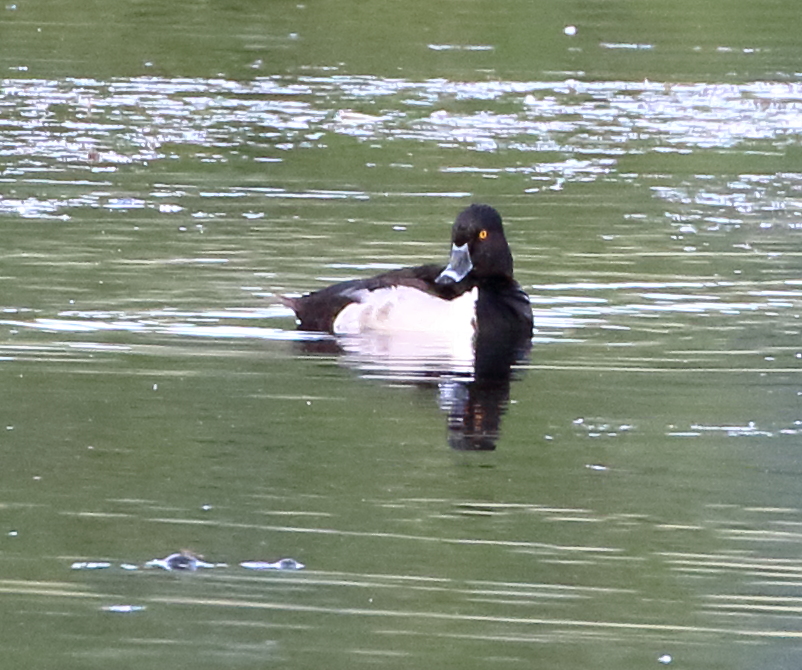
Continuing around to the third hole, I came across several open ponds where I was pleased to see at least seven Wood Ducks, Killdeer, a Spotted Sandpiper, and a pair of Ring-necked Ducks, an unlikely find for the time of year. One of the delights of birding a place that doesn’t get much attention is the frequency of red “unreported” dots that appear on the eBird checklist. The Killdeer were unreported and while I was logging species on eBird, another unreported species, Double-crested Cormorant, flew by. I devoted a good ten minutes to figuring out swallows and quickly noted Tree and Northern Rough-winged. As my binoculars pin-balled back and forth, however, I made another great discovery: Bank Swallows! Braden and I love finding these because they always seem to pop up when we least expect it, and this morning they followed tradition!

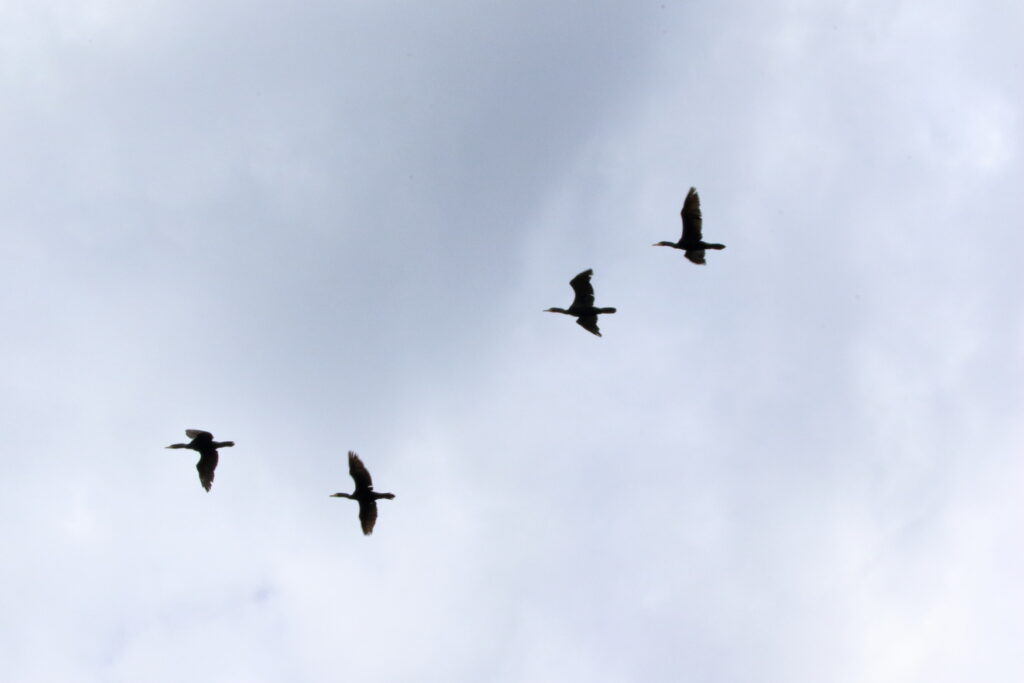
Double-crested Cormorants were one of several species that earned me a coveted red “Unreported” dot on eBird!

The rest of my birding round yielded nothing that will upend the scientific community, but proved mightily enjoyable nonetheless. While talking to the lone golfer out this early in the day, I spotted a gorgeous male Western Tanager. A Bullock’s Oriole also flew by. Over on the pasture side of the course, Eastern Kingbirds abounded and Cliff Swallows replaced the Bank Swallows zooming around me. I finished the day with 33 species—not dramatically more than I had found while actually golfing, but I had savored every tee, fairway, and green.

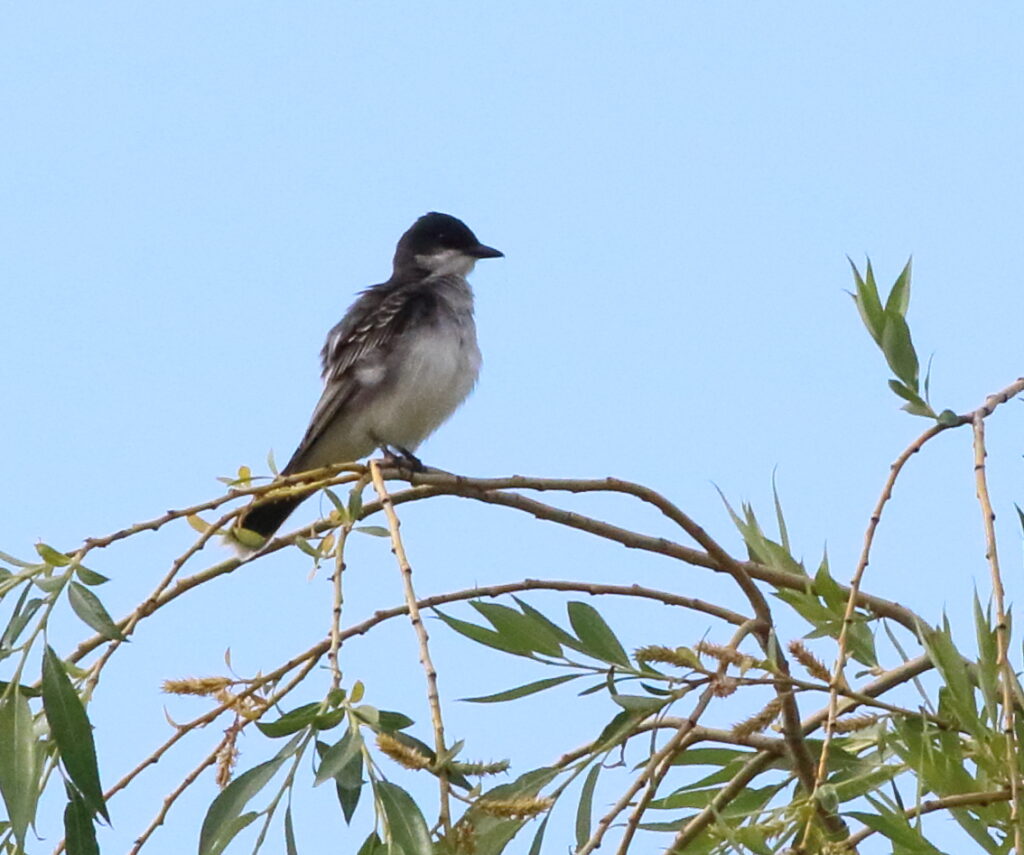
One of the fun things about my round of birding was the number of juveniles about—including this young Eastern Kingbird waiting to be fed by a nearby parent.

Speaking of golfing, I did notice an odd phenomenon while doing the round with my buddy two days earlier. I actually played better than I had in recent memory. It may have been that I had forgotten my bad habits, but I think that the birds actually helped. One of my problems with golf is that I overthink everything. Instead of just hitting the ball, I am telling myself Remember to tuck in your hip as you draw back or Keep that left foot planted and your elbow straight. With half of my mind on birds, I didn’t have time to do that—and hit some of my best shots in years. The lesson? There isn’t one. Just get out there and keep birding, wherever you happen to be.

Note: if you would like to bird your local course, be sure to ask permission—and it obviously wouldn’t hurt if you already golf that course yourself. With the manager, discuss the best time to go out and stay polite even if she/he/they says no. After all, golf courses generally are money-making ventures and they have real customers to take care of. But speaking of that, I can’t help wondering if any particularly birdy courses have considered charging a modest fee to people who would like to bird them? Especially for courses that adopt green practices such as using less water, pesticides, and fertilizers, it might be a great way to earn a bit of extra income while promoting sustainability. Just a thought.

Braden’s Tales from the High Sierras, Episode 2: Bearly Birding

We hope everyone had a nice 4th of July weekend. To help you get back into the usual routine, we’re delighted to present Braden’s second report from his job looking for Northern Goshawks in the California Sierras. So far, the goshawks are few, but the other animals abound! To see his first post, click here. Will there be more goshawks? What other surprises will greet his intrepid crew? Be sure to check in on upcoming posts to find out!

The Brushy Hollow PAC lay about forty-five minutes from Beardsley Lake, a man-made reservoir in the Stanislaus National Forest where we’d be spending the next two nights camping. After waking up at the crack of dawn and unsuccessfully trying to snag some good photos of the Black-throated Gray Warblers around camp, our crew began driving the cliffside road up to Brushy Hollow. As we neared the PAC, my peripheral vision caught a large brown animal absolutely booking it away from the car. Stanislaus National Forest was (unfortunately) filled to the brim with cattle–we either saw them or heard the bells hanging from their necks every time we went out. No cow had ever fled from the car this quickly, though, and as I snapped my head back to look I spotted paws, not hooves, trampling the brush before the mammal disappeared into the forest.

“Bear!” I shouted, but it was too late. The bear wanted nothing to do with us.

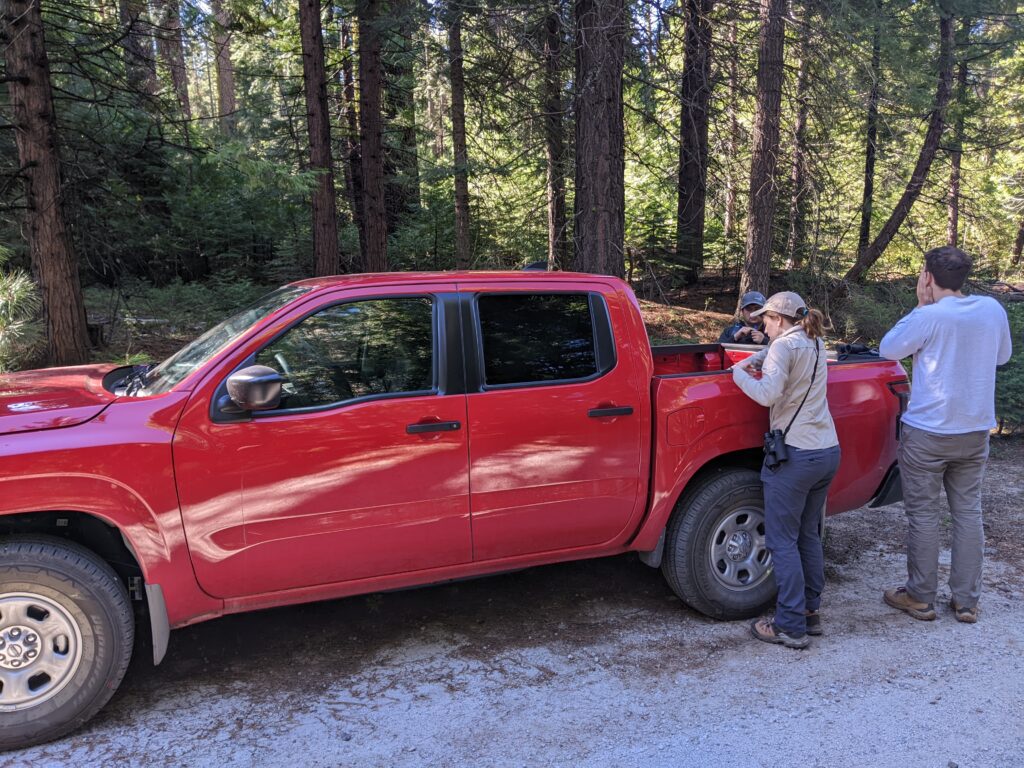
Our crew prepares to tackle another PAC in search of Northern Goshawks. But would mammals intervene?

Again, the rest of the crew missed it, so a slightly disappointed car arrived at the parking lot for Brushy Hollow. The parking lot consisted of a small patch of grass off to the side of the dirt road, and we were greeted by an army of mosquitoes as we stepped outside of our brand new, cherry-red Nissan rental truck that the rental car company had decided to give us for the summer. We set off into the forest, which was only somewhat brushy and somewhat a hollow, despite the name of the PAC. Many of the usual birds greeted us, including calling Mountain Quail, Olive-sided Flycatcher and pairs of White-headed Woodpeckers flying between the pines. As far as ease of travel, the PAC turned out to be one of our best. Mountain Misery—a native, ground-hugging plant also called “bear clover” (foreshadowing warning)—covered much of the ground, meaning we barely had to lift our feet as we followed our transects. Sam and I met up and began walking up a hill towards Miles where we would enjoy lunch. As soon as we spotted Miles, he stood up and pointed frantically behind us.

“Bear!”

“Bear, bear, bear!!” We echoed as we whirled around to spot another bear sprinting away from us down a nearby road. Ivara followed suit, and we all yelled at the animal for a little while as was protocol before sitting down for lunch.

Adrenaline filling our veins, we sat down in the Mountain Misery, slapping mosquitoes and talking about what we’d just seen. Two bears in one day! And then, our eyes darted again to the same road, where two MORE brown bears ambled by, as if on their way to work!

We finished our lunch quickly, heading towards the other side of the PAC. I proceeded to get very lost, then eventually found, and we took one last break on a log before finishing up our transects for the day. As we scarfed down our last snacks, a crack echoed behind us. The sound of a branch breaking. We turned around, and the response was immediate.

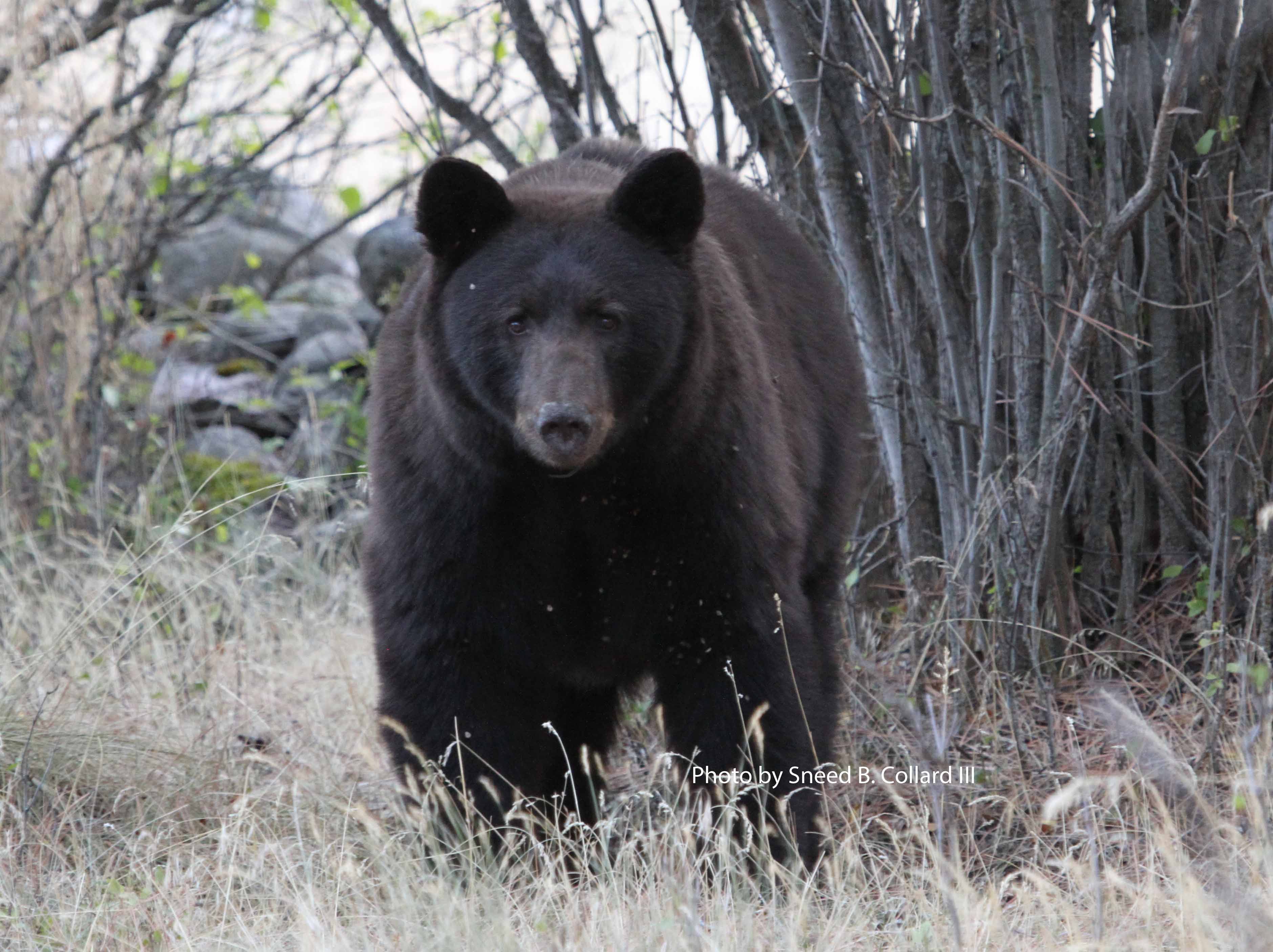
Five bears in one day was a record for all of us. We were too excited to remember to take any photos, but here’s a mama bear staring suspiciously at my dad in our backyard in Missoula.

“Bear! Bear!” 

This time the brown bear just watched us for several minutes, wondering why four humans had suddenly started yelling at it during its afternoon walk. Eventually, though, this bear did turn tail, but not after my adrenaline hit new levels! Five bears was enough, and Ivara called it for the day.

Bear Note: All bears in California today are black bears. Black bears vary widely in color from black and cinnamon to the “brown black bears” that Braden observed. The bear on the California state flag, however, is a subspecies of the much larger grizzly bear. Apparently, about 10,000 grizzlies once roamed California. Large carnivores such as the grizzly, however, were not welcome by cattle ranchers and the influx of settlers following the gold rush, and the California grizzly was shot, trapped, and poisoned to extinction by the mid-1920s. Some efforts have been made to reintroduce grizzlies to the state, but so far, all proposals have been rejected. To read a nice article about the situation, click here.

Birding Central Park

We continue our spring birding blog blitz by picking up on our New York City trip last week and the nail-biting account of our Central Park birding adventure. If you’re afraid you will get TOO excited while reading this, I suggest you ask someone to hold your hand. And don’t forget to tune in tomorrow for our next post “Birding Brooklyn”!

On Monday, Tessa and I left Amy to continue recovering and rode the Hudson Line up to see our good friends, fellow author Larry Pringle and his delightful wife Susan. After taking a great walk at Nyack Beach State Park and eating a nice lunch, we returned to Manhattan in time to meet Braden at Penn Station after his first year as a college student! Bright and early the next morning, though, he and I jumped on the C train to do something we’d dreamed about since we began birding eight years ago: bird Central Park during spring migration! (Well, after a stop at Liberty Bagels on 35th St., that is.)

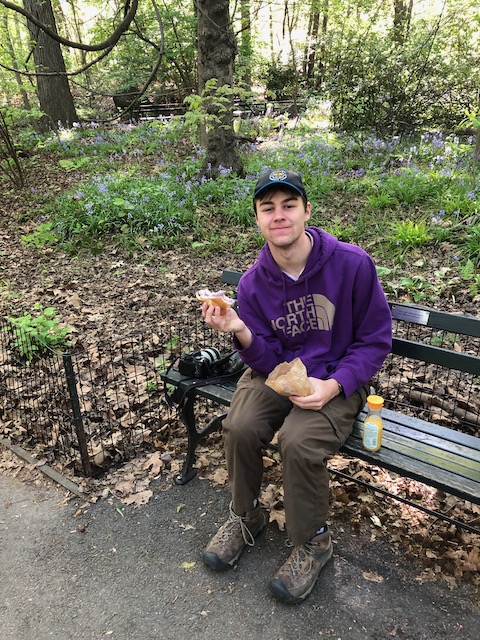
People often ask us the key to successful birding. Our trip to New York provided the definitive answer: bagels.

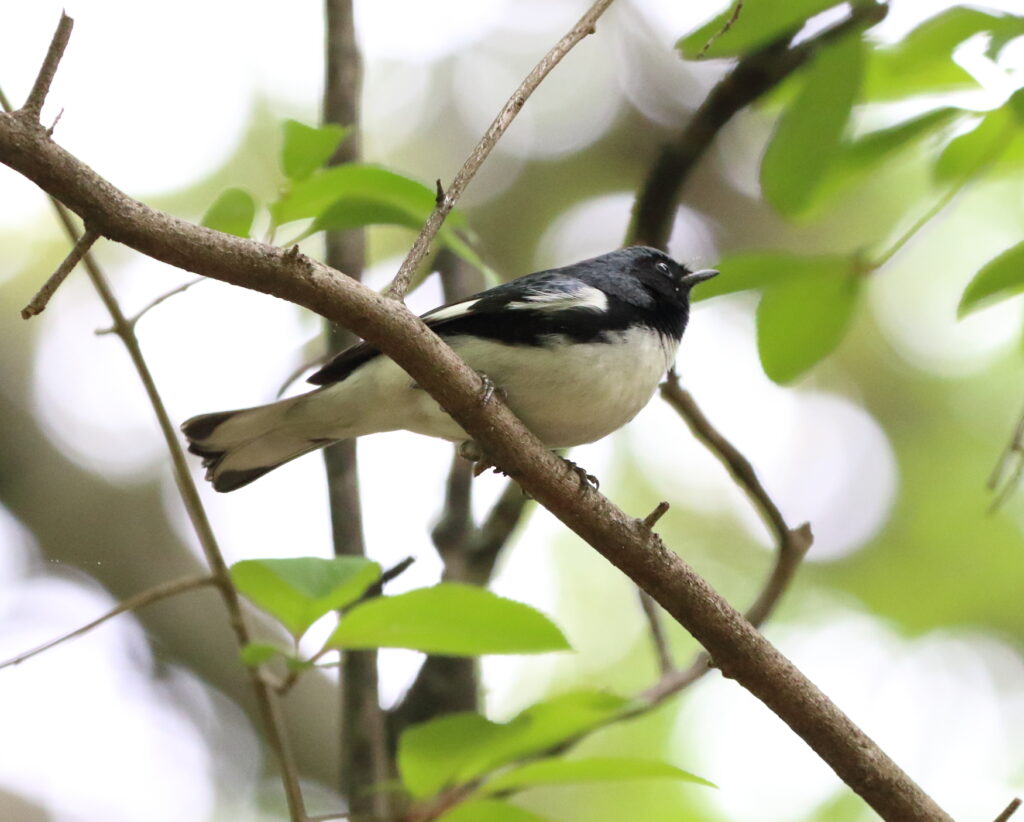
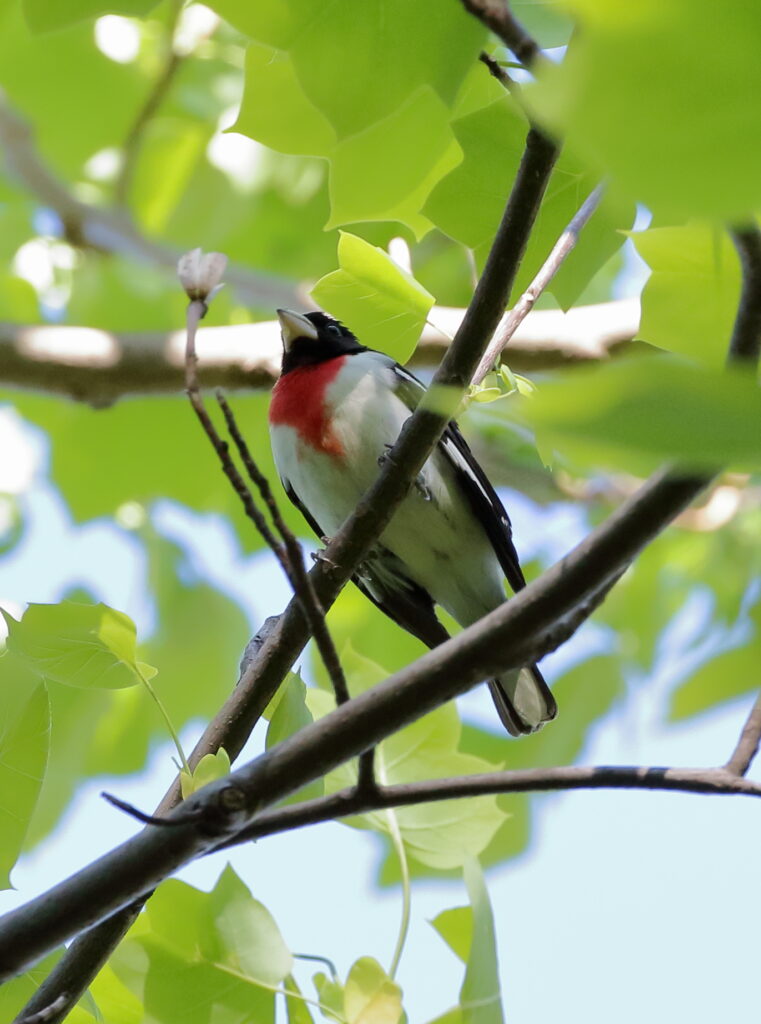
Just as Tessa and I had done two days earlier, we jumped off at 81st St. and immediately crossed over into Central Park, entering a particularly birdy area known as The Ramble. As mentioned in our last post, I worried that the birds might have left NYC already. Most migrating passerines only appear in the park during brief windows ranging from a few days to 2-4 weeks. They also come in waves that one can easily miss. Within a few minutes, however, the birds put my fears to rest when Braden called out a Black-throated Blue Warbler, a Life Bird for me and one of the most stunning of all warblers. Over the next hour and a half, a veritable songbird hit parade followed with sightings of Worm-eating Warbler, Nashville Warblers, Northern Parulas, Northern Waterthrushes, American Redstarts, Swainson’s and Hermit Thrushes, Magnolia Warbler and much more, including a male Rose-breasted Grosbeak high in the trees.

Black-throated Blue Warbler landed at Number 502 on my ABA (American Birding Association) Area Life List—and what an entry it was!
Not the best view, but this was our first male Rose-breasted Grosbeak since we’d hit High Island, Texas during our 2016 Big Year—so we took it!

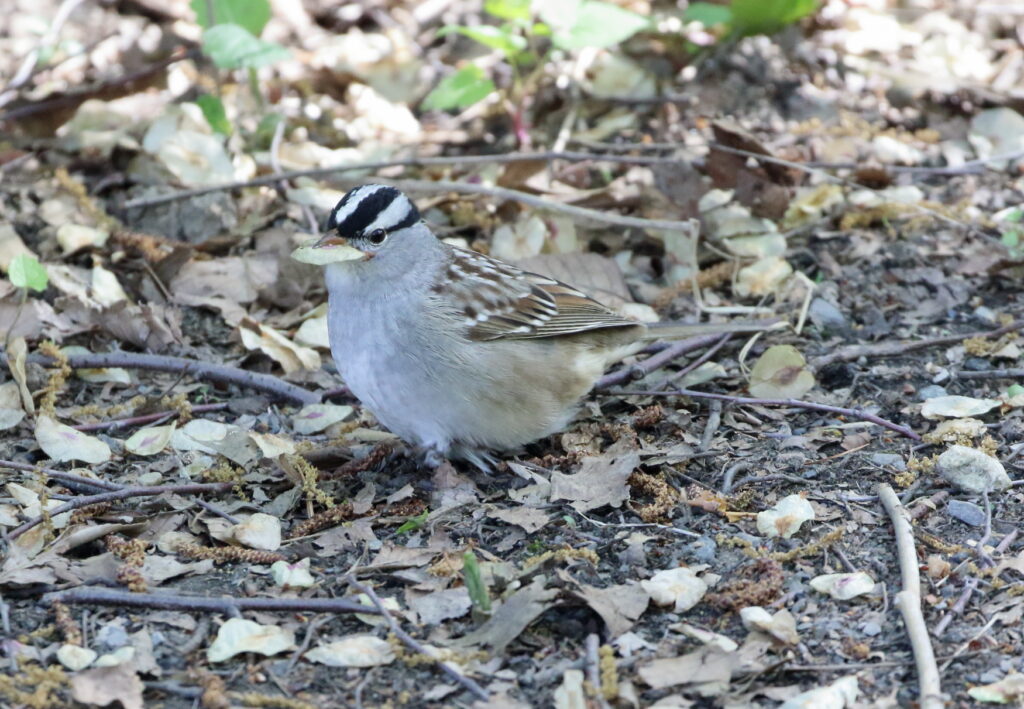
Among birders, it’s a well-known fact that seeing a lot of birds can generate an enormous appetite, so Braden and I were forced to sit down and attack our bagels. Mmmm . . . lox shmear . . . Partly satiated and with cream cheese smearing our faces, we again rose and made our way to our second birdy destination—an area of Central Park called North Woods. Along the way, we passed multiple landmarks familiar to anyone who has ever watched movies or Seinfeld including Belvedere Castle, the Jacqueline Kennedy Onassis Reservoir (where Dustin Hoffman jogged just before getting his teeth ripped out without anesthetic by a sadistic dentist), and the Central Park Tennis Center. We also made more bird discoveries such as a large group of White-crowned Sparrows.

Surprisingly, large numbers of White-crowned Sparrows are rare in Central Park. We were lucky to run across a group of five on our walk up to the North Woods section of the park.

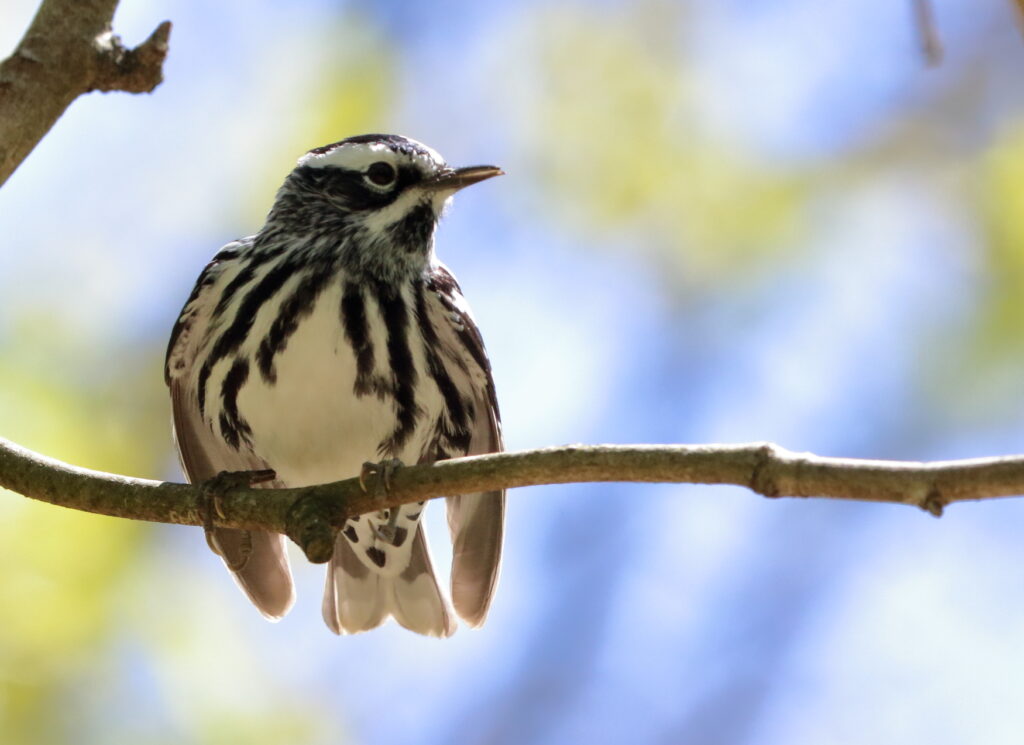
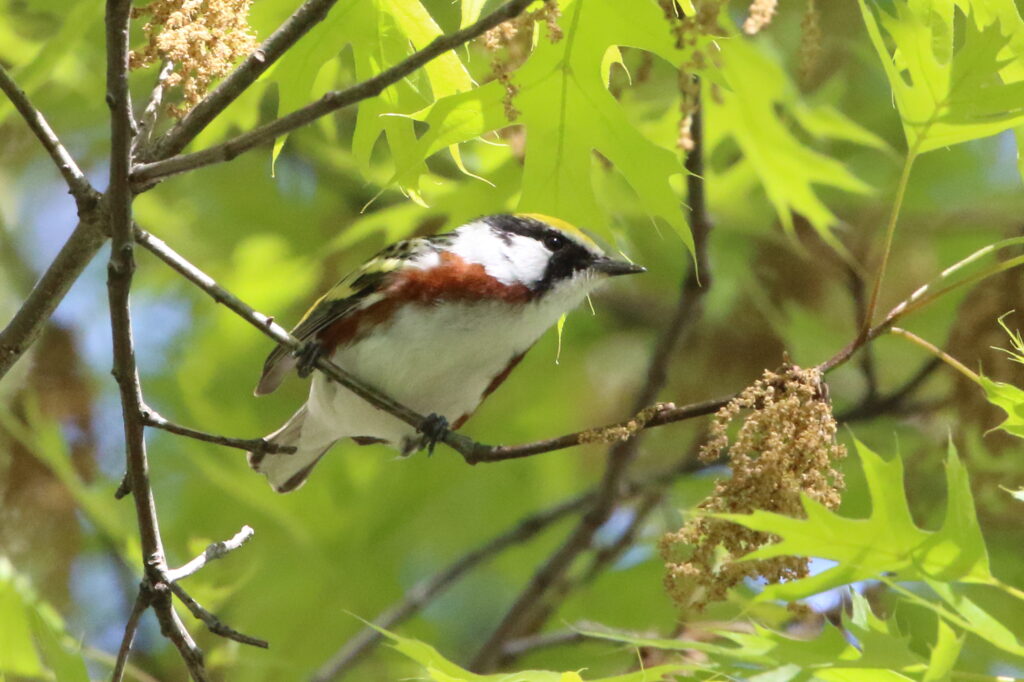
To be honest, however, we didn’t think the North Woods could possibly match The Ramble for birds, but we soon learned that . . . it CAN! Two targets, a Yellow-breasted Chat and a Red-headed Woodpecker had created a buzz in that section of the park, and we (ahem) chatted with several birders about them, but it was the other birds that grabbed our attention. These included incredibly cooperative Black-and-White Warblers, glorious Chestnut-sided Warblers, a Veery and Blue-headed Vireo. We struck out on the chat, but making our way east, we followed the creek through an area called The Loch and continued to rack up amazing sightings. These included a quick glimpse at the now-famous Red-headed Woodpecker, several Red-bellied Woodpeckers, a Yellow-throated Vireo, a Great Egret flying overhead, and a bird I especially wanted to see, Swamp Sparrow.

You wouldn’t think an animal that is just black and white could be so stunning, but Braden and I savor each encounter with Black-and-White Warblers.

By now we had birded for five straight hours and our energy was starting to flag, so we reluctantly dragged ourselves to the 103rd St. subway station and caught a ride back downtown. We learned later that we might have picked up Cape May and Blackburnian Warblers if we had hit a part of the Ramble called the Point, but did we mind? Only a little. In fact, our day had exceeded all of our expectations for birding Central Park. During our long morning, we had logged a remarkable 57 species including an amazing 13 kinds of warblers—as many as we could hope to find during a whole year in Montana!

Our Checklist.

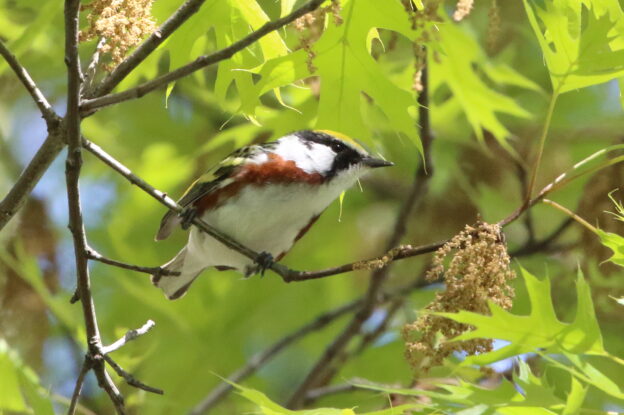
Though I’d seen Chestnut-sided Warblers when taking Braden back to college in Maine last fall, this was my first technicolor, breeding male!

Even better, when we returned to our hotel, Amy was feeling much better and had spent the day with Tessa at Ellis Island and the Statue of Liberty, so we all went out to a nice meal at Kung Fu Kitchen. Can you spell pork soup dumplings???? Then, while Braden and Tessa strolled Times Square, Amy and I set off to see The Book of Mormon, a musical we were supposed to see in Seattle when covid struck. But lest you think Braden’s and my Big Apple birding adventures had concluded, stay tuned for our next post . . .

Birding the Big Apple: Manhattan Practice Runs

We know you’ve been dying for Braden’s last installment of his Florida trip, but just to keep you waiting impatiently a bit longer, here is the first of a new series for you: our spring trip to New York—during migration season! Stay tuned for rapid installments, and to make sure you don’t miss a single one, be sure to subscribe by filling out the boxes down and to the right!

All birders have bucket lists and birding New York’s Central Park during spring migration stood close to the top of ours. Just when that would happen, we didn’t know, but this year the end of Braden’s spring semester, ahem, pigeon-tailed perfectly with my daughter’s desire to return to New York City, so we decided to make a family trip of it. We did not plan the exact dates around spring migrants, but first encounters bore promise.

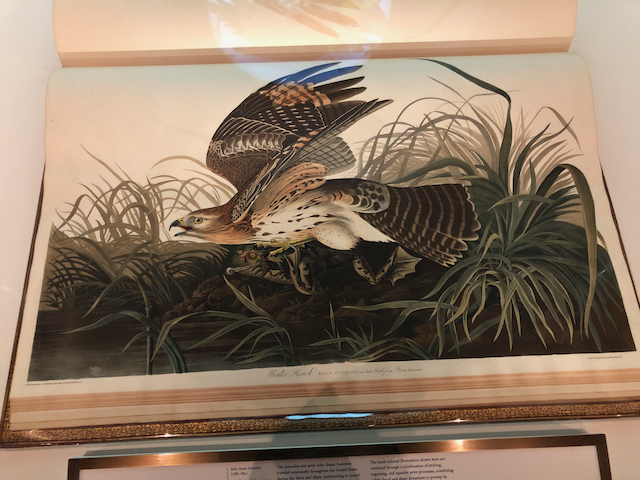
Seeing an original copy of Audubon’s Birds of America in all its giant glory was an unexpected, great way to launch my New York birding experience!

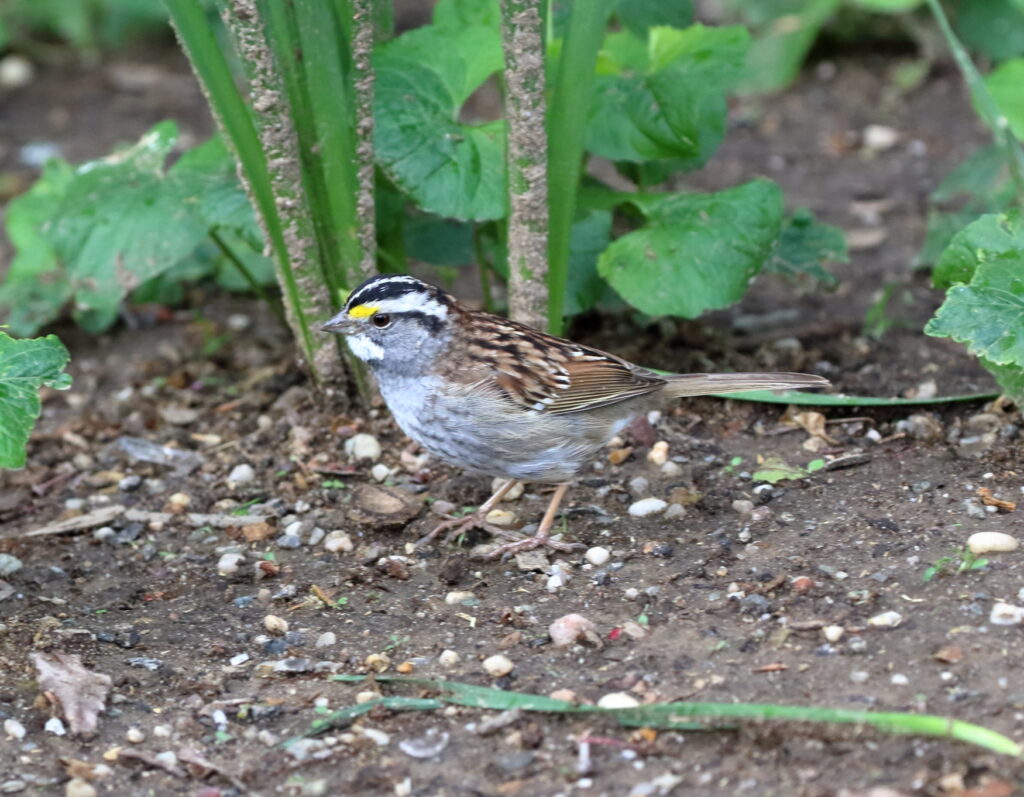
Amy, Tessa, and I arrived Friday, May 6, but Braden wouldn’t pull into Penn Station until the following Monday and I tried to hold off birding until then. I failed. Despite a rainy day Saturday, we wandered back through Bryant Park after an excursion to the New York Public Library, where I got to see a copy of Audubon’s original Birds of America (WOW!). Bryant Park lacked good habitat, but in a few short minutes I glimpsed Gray Catbirds, White-throated Sparrows, and a Hermit Thrush. The message was clear: THE BIRDS ARE HERE! Even more exciting, Tessa and I planned to take Amy to a well-known hotspot, Governor’s Island, for Mother’s Day the next day. Alas, that night Amy came down with a crummy cold, so Tessa and I decided to instead plan a visit to the American Museum of Natural History (AMNH).

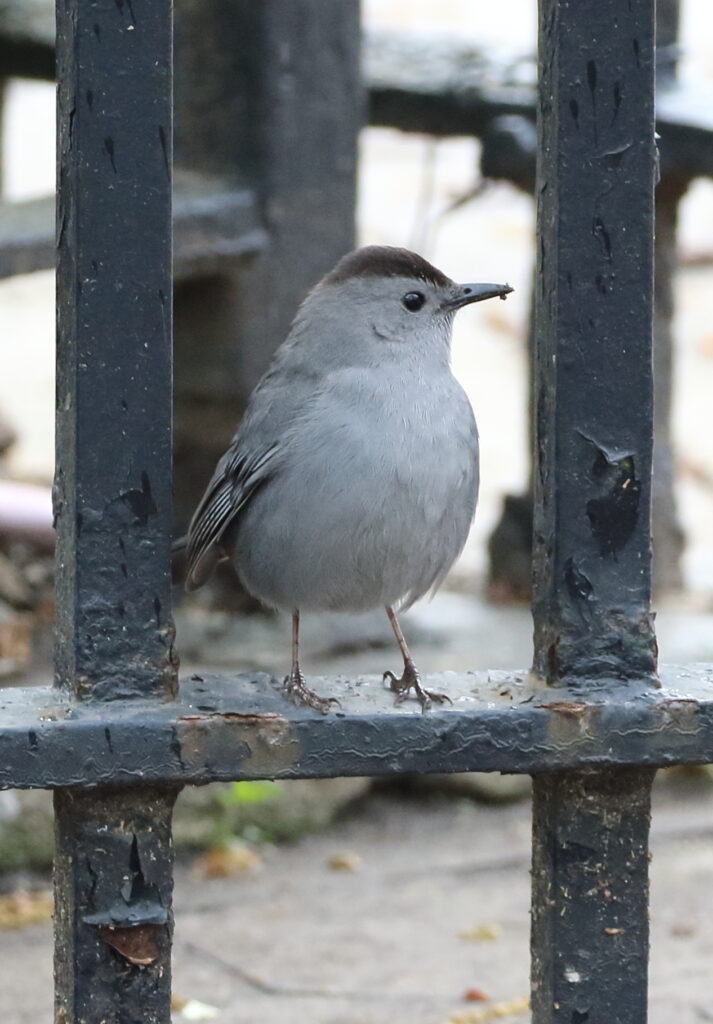
“I’ve been framed!” Actually, this Gray Catbird is not in jail—just visiting the Bright Lights and Big City Life on its way to breeding grounds.

The next morning, as is my wont, I rose way before Tessa so decided to do a bit ‘o bird reconnoitering before we hit the AMNH. Our overpriced, mediocre hotel stood fairly close to the Hudson and I thought There’s gotta be some birds down along the river, right? Uh, not really. Sure, I saw a cormorant, robins, a couple of fish crows (identified by their anemic calls) and the usual city birds—along with a giant aircraft carrier—but was disappointed by the paucity of greenery. On Google Maps, however, I noted a park a few blocks uptown and decided, “What the heck.”

My first cool bird of NYC, White-throated Sparrows are one of Braden’s and my favorites—probably because we have to work so hard to see them in Montana!

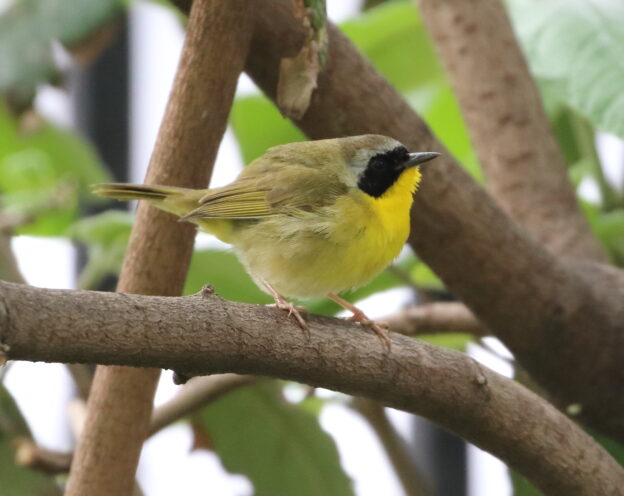
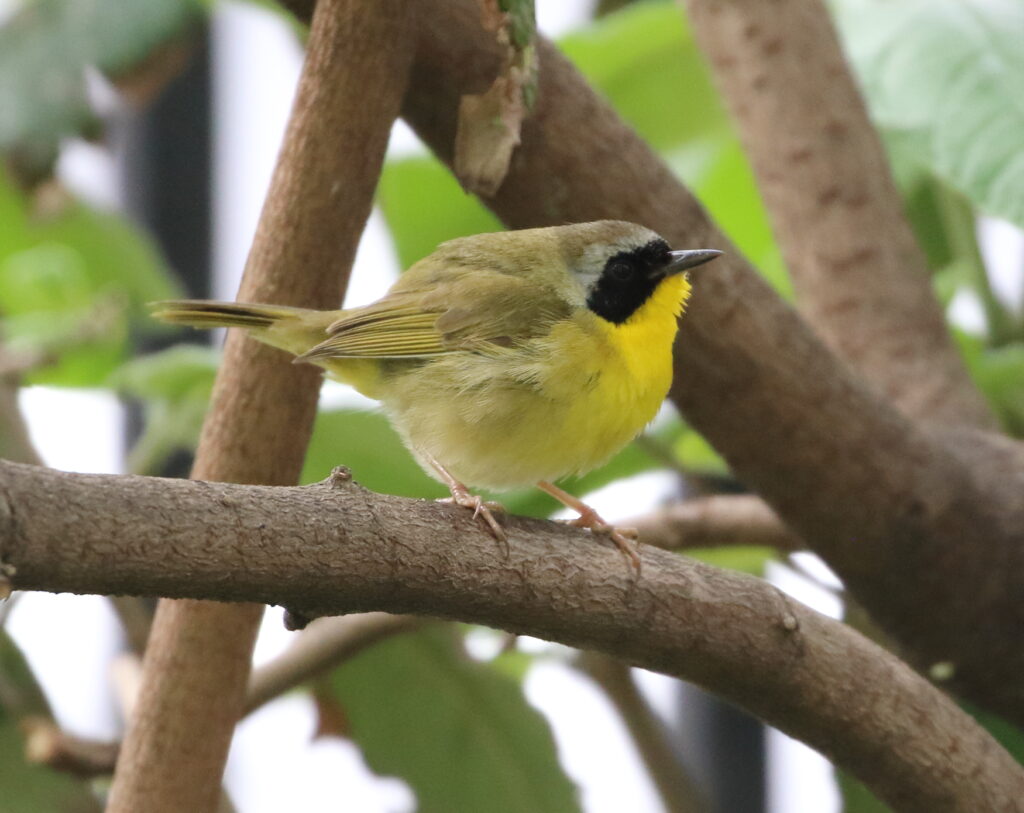
DeWitt Clinton Park would be considered a “postage stamp park” in Montana, but I’m guessing it’s an invaluable resource for its neighborhood New Yorkers, consisting of a doggie park and various courts. More important, even before entering I saw that it held trees and strips of shrubbery, and my pulse quickened with the possibilities. Sure enough, as soon as I walked up the first steps, I spotted a small shape scampering along a tree trunk—one of my favorite birds, Black-and-White Warbler! My Bird Excitement Meter surging, I hunkered down to some serious birding, and was rewarded by more catbirds and White-throated Sparrows, and then saw both Hermit and Swainson’s Thrushes. The biggest surprise? A Common Yellowthroat, very far from water—an obvious migrant passing through!

What are you doing here? Seeing a Common Yellowthroat in a postage stamp park in Manhattan both surprised me—and got me really excited about what else might be passing through the crowded megalopolis!

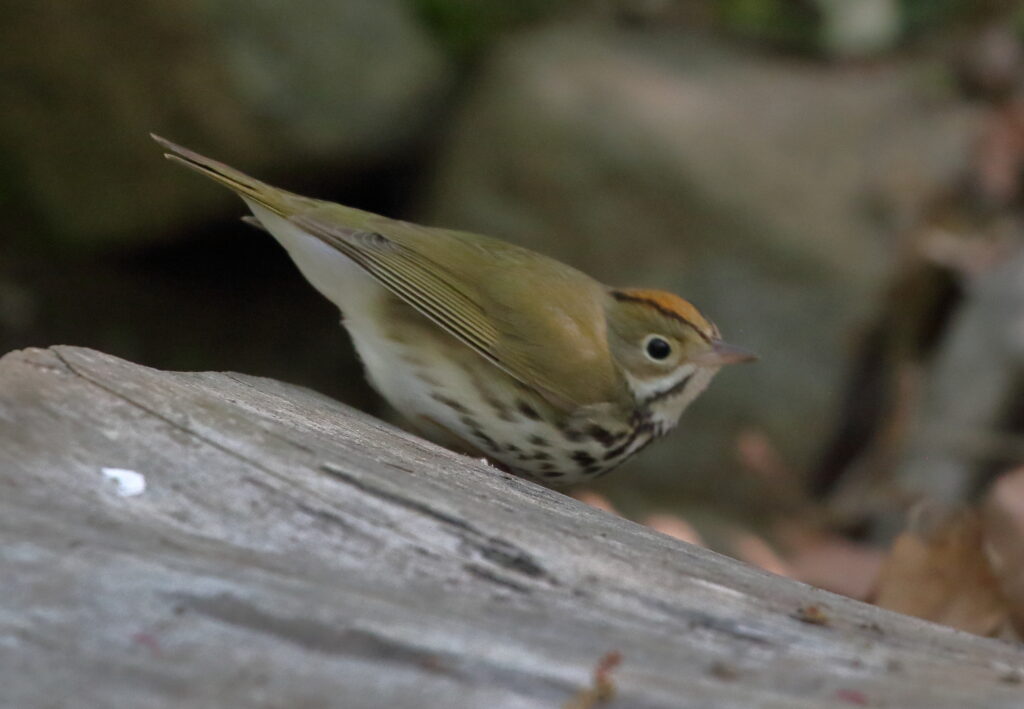
Returning to the hotel, I made sure Amy had what she needed for a day in bed, and then Tessa and I caught the C train up to 81st St. We had ANHM entry reservations for noon and arrived early enough for a quick stroll of Central Park across the street. I kept my expectations low as it was an overcast day and, well, I just didn’t know what spring migration might be like Out East. Within a couple of hundred yards, however, I spotted a small tan bird on the ground with a bold stripe on its crown. “Worm-eating Warbler?” I considered. “No, Ovenbird!” And not just one, but two.

Another bird challenging to find in Montana, Ovenbirds were evidently swinging through Manhattan in large numbers the week we arrived!

Emboldened, we continued walking, seeing catbirds, a blue jay, more WTSPs, a Red-tailed Hawk, and a surprise Chipping Sparrow. Then, a bold flash of yellow caught my eye. I had worried that I might not be able to ID some of the Eastern warblers, but this was a bright, bold male. Even better, it’s a bird I had for years been staring at on the cover of The Sibley Guide to Birds—Magnolia Warbler! Honestly, the bird was just stunning. I didn’t have my camera, but in a way that was better as I could just focus on enjoying this first male MAWA I had ever seen. Even Tessa, a non-birder, appreciated the warbler’s sublime beauty. With a twenty-minute list of 12 species (not even including Rock Pigeon!), we headed off to the museum, fingers crossed that the birds would still be here when Braden and I would get to bird Central Park in earnest two days later.

Our Accidental Big Year: Final Tally, Part 1

Request: with the year’s end at hand, please support the groups that depend on your help to protect our precious avian wildlife. If you need ideas, here are the groups we have given to so far this year: Houston Audubon, Cornell Lab of Ornithology, Montana Audubon, Five Valleys Audubon (our local group), National Audubon, BirdLife International (Braden’s favorite group), the American Birding Association, the Union of Concerned Scientists, the Center for Biological Diversity, Conservation International, the Montana Natural History Center and the Rainforest Alliance. Please share this list, and let us know if you have questions about any of them. If you want to donate to several of them at once, you can simplify the process by giving via Charity Navigator. You can also learn more about the groups there.

Dear Gentle Birders, Braden and I would like to wish you a Very Birdy 2022, with hopes that in the coming year you enjoy birding and helping birds more than ever. To wrap up the year, we have some very (choose one) a) exciting b) surprising c) alarming birding tales to share with you. Many of you read our post My Accidental Big Year, which highlighted how, quite by accident, I (Sneed) was closing in on my all-time Big Year record of 336 species. Thanks to unanticipated trips to New England, Texas, Washington—even Utah—I found myself creeping tantalizingly close to breaking the record thanks, in great part, to many of you helping me track down birds that I needed! Alas, with six species to go, my momentum ground to a halt in Montana as I unsuccessfully searched for Surf Scoter, Rusty Blackbird, and other rarities that might nudge me closer. Fortunately, I had one more “accidental” ace up my sleeve: our family Christmas trip to Oregon.

This rather blasé Western Gull on the roof of “Mo’s Chowdah” kicked off our final pushes to break both of our Big Year records!

After wrapping up his semester at UMaine, Braden flew home to Missoula early on December 16th, and the next day—thanks to Andy Boyce—we got him his 300th Montana Lifer: Anna’s Hummingbird! I mean, WOW! A couple days later, we headed West on I-90, encountering harrowing conditions that included snow, ice, rain, and a jack-knifed truck on the ascent to Idaho. Even worse, it looked like we would be hitting solid rain and snow in Oregon—potentially kyboshing my aspirations not only to reach 337 species, but push beyond it to 350, something I optimistically thought might be possible if I hit every Oregon target in the vicinity. We arrived at Cannon Beach at about noon on Monday and, since it was raining, and too early to check into our AirBnB, decided to stop at Mo’s for clam chowdah and then tool on down to Tillamook to gorge on cheese curds.

As we pulled into the Mo’s parking lot, Braden pointed to the roof and said, “Well, there’s the first of your six birds!” I laughed, spotting a Western Gull sitting in the rain. Half hour later, as we masticated mediocre chowdah, a Surf Scoter flew by the window. 2 down. 4 to go! Still, as we continued driving down the coast, I wondered if we’d see any other Year Birds in this weather. At Nehalem Bay, however, we pulled over to scout a flotilla of 50 Surf Scoters, and spotted a Red-breasted Merganser for Year Bird number 334. Then, before Tillamook, Braden instructed me to pull over at a place called Barview Jetty where we might find a number of birds high on my needs list. I should have known we were in for a treat when even before the car stopped, Braden exclaimed, “There’s a pair of Harlequin Ducks!” I eagerly jumped out to see my favorite ducks, ducks I had missed in Montana this past summer.

After missing breeding Harlequin Ducks in Montana last summer, I was thrilled to see a pair wintering on the Oregon coast—the only pair we would see during two intensive days of birding!

Within moments, though, other birds sent my head spinning. Five Black Oystercatchers were sitting out on the jetty. Then, through our new Vortex scope, we ID’ed my RECORD BREAKER: Brandt’s Cormorant! The thing? I hardly had time to appreciate it because, driving to another part of the jetty, we saw even MORE great birds. In the parking lot, we got Glaucous-winged Gull, and only a few yards from the car, Black Turnstones. Walking out onto the jetty, we saw Pelagic Cormorants, Dunlins and more turnstones—only to realize that they were another of our favorite birds, Surfbirds!

Braden and I ‘oohed’ and ‘ahed’ over these adorable Barview Jetty Surfbirds, birds that have long placed high on our Favorite Birds list. I especially love the rain bouncing off of their feathers in this photo!

As if that wasn’t enough, as we were walking back to the car, a group of gulls lifted off nearby and Braden studied them for possible Glaucous-winged Gulls. As he did so, I saw a bird that looked a lot like a winter Bonaparte’s Gull. “Oh, there! There! There!” I shouted, not sure what I was seeing. Braden, quickly spotted the bird and said, “Oh my god! That’s a Black Kittiwake!” Neither of us could believe it. It was a bird I never even imagined I’d see on this trip, and it pushed my Accidental Big Year total to a shocking 343 birds, smashing my previous record.

Braden had fallen in love with Black-legged Kittiwakes in Svalbard (Norway) and Iceland, but I never dreamed I’d see my first one right here in the U.S. of A.!

Would I tick off even more birds? Could I tempt that almost magical total of 350? Was it possible Braden would break his own Big Year record??? I’d tell you, but I am craving a chocolate chip cookie. Come back next time to find out!

Our Barview Jetty eBird list: https://ebird.org/checklist/S99200064