Category Archives: Humor

Our 50th Post—Philmont Scout Ranch, New Mexico!

Braden celebrates our “Half-Century” post with a lively recount of our two-week backpacking adventure in New Mexico. Why not celebrate with us by subscribing using the box on the right below? As always, feel free to share this with other birders, bloggers, Scouts—anyone you wish!

My dad and I recently got back from a two-week backpacking adventure on the Philmont Scout Ranch, a 220-square-mile swath of wilderness in northern New Mexico. The ranch is the largest of the Boy Scouts of America’s High Adventure Bases, and is jam-packed full of wildlife, history, culture and breathtaking experiences. Our trek, which we did with twelve other scouts and adults from our troop in Missoula, covered 74 miles. During this time, we hiked through canyons, and summited mountains, including the Ranch’s highest peak, Mount Baldy, at 12,441 ft. We also were exposed to and learned a wide variety of new skills at staffed camps we visited, including how to pack and unpack a burro, how to build a railroad, how to blacksmith, how to lasso, how to shoot Old West-style guns and black powder rifles and more.

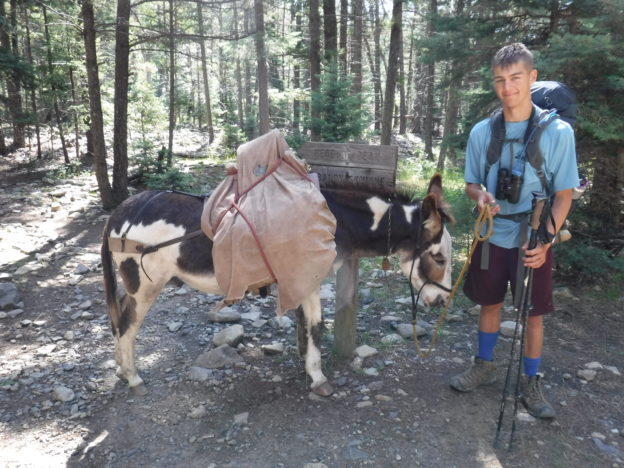
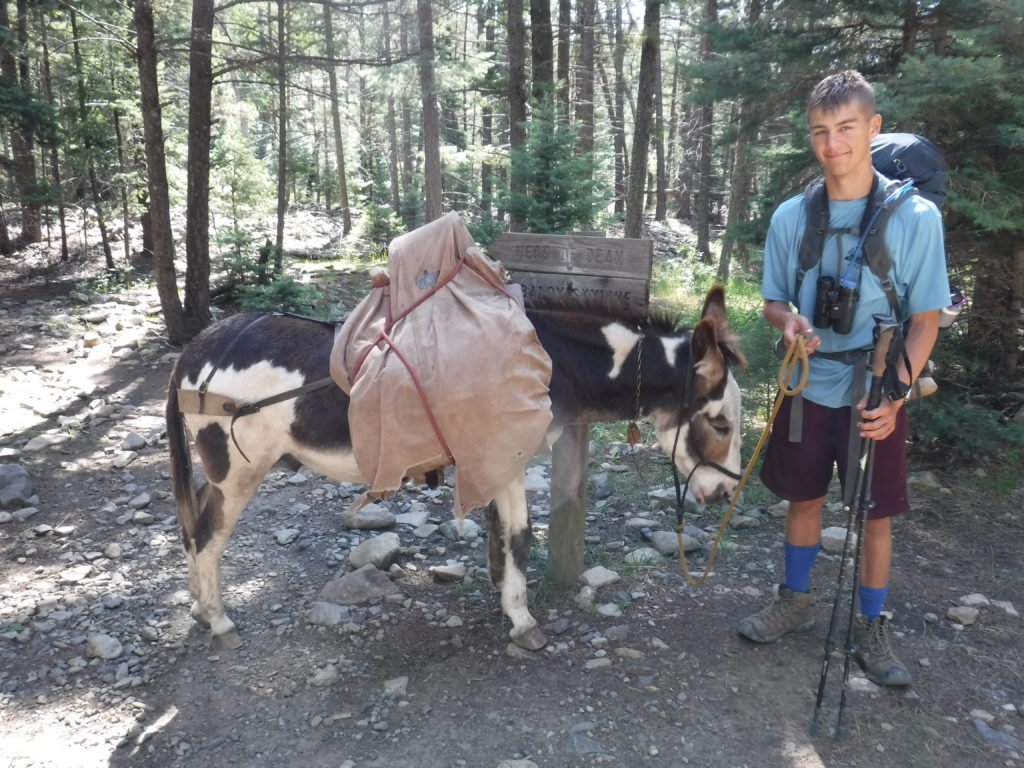
Braden with our trusty Burro, “Nigel”—named because, when necessary, he could turn it up to “11”! We were lucky to have Nigel’s company for two days of our trek.

The trek also exposed us to a wide variety of diverse habitats. We travelled through Ponderosa Pine savannah and forest, valley riparian, desert scrub, spruce-fir forest, alpine meadow, aspen forest, subalpine forest and alpine tundra. We saw many different species of animals throughout our journey, including Monarch and other kinds of butterflies, pronghorn, mule deer, a rattlesnake, bats, and a praying mantis, not to mention evidence of elk. And then, of course, were the birds.

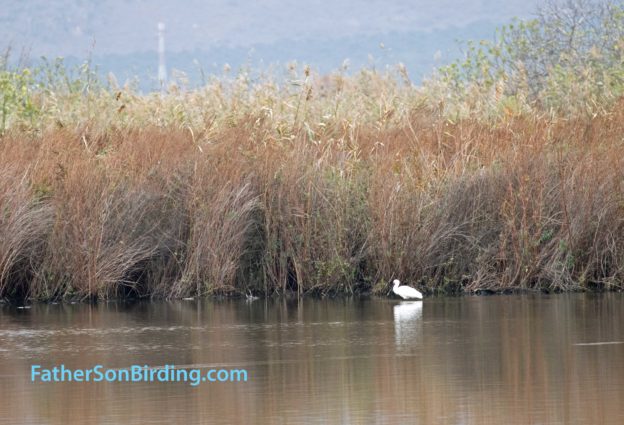
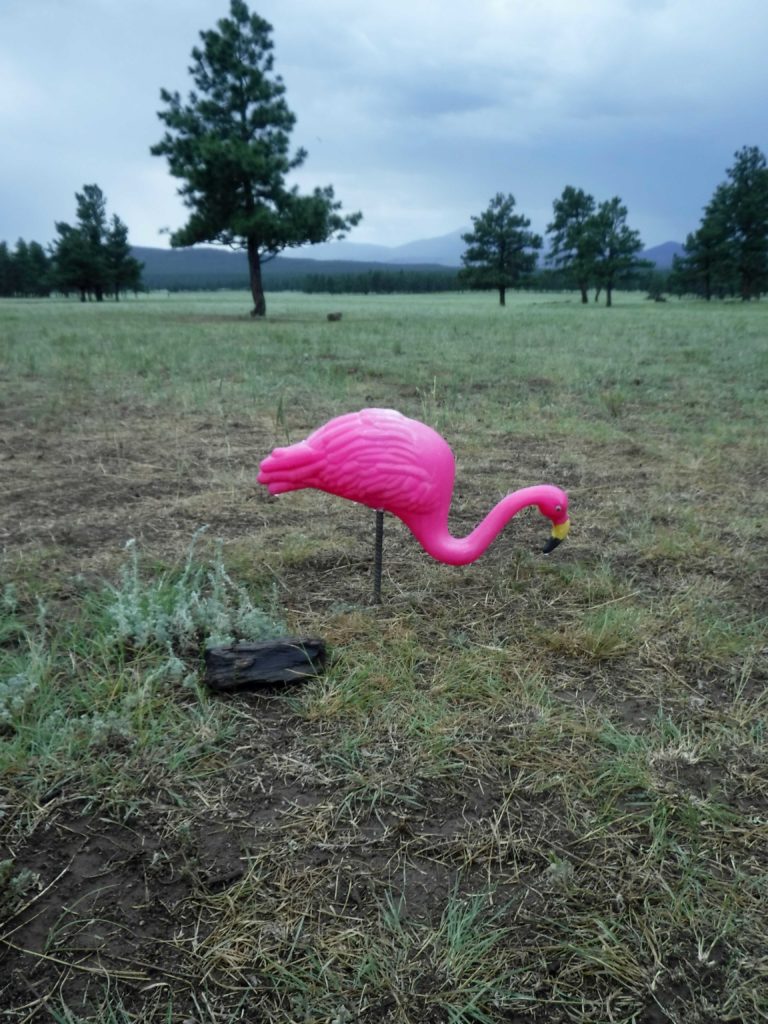
Because we didn’t haul our five-pound cameras with us, this was by far our best bird photo from the trip. Flamingoes in New Mexico? Who knew?

My dad and I together tallied a total of 84 species throughout the trip, including the birds we spotted in the desert on the drive from Albuquerque to the Ranch. The most common species we saw were Spotted Towhee, Cordilleran Flycatcher, Western Wood-Pewee and Common Nighthawk, which we saw almost every day. These four birds had adapted to almost every habitat on the ranch, especially the Cordilleran Flycatcher, which we tallied everywhere, from lowland riparian to subalpine forest, missing it only in the Ranch’s Base Camp. Other common birds included Pine Siskin, Red Crossbill, Rufous and Broad-tailed Hummingbird, Western Bluebird, American Robin, Pygmy and White-breasted Nuthatch, Mountain Chickadee, Chipping Sparrow, Black-headed Grosbeak and Western Tanager. What was especially interesting was the abundance of Black-headed Grosbeaks in most of the habitats we visited; while they seem to be much more riparian-based in Montana, we saw them in scrub, second-growth, aspen and spruce-fir forest.

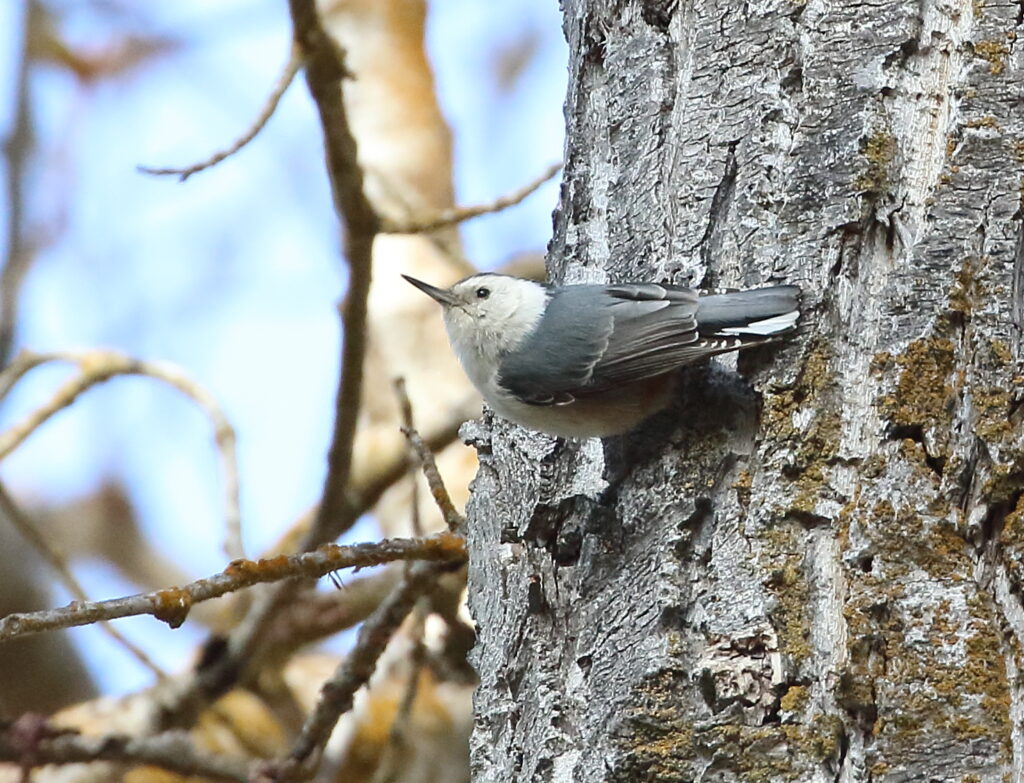
We were surprised to commonly encounter White-breasted and Pygmy Nuthatches—but rarely Red-breasted—on our twelve-day trek.

Lesser Goldfinches were also quite common, though were much more exclusive to riparian areas. The subspecies here was different from the west coast—they had more solidly black backs, though still kept the same green necks. The main subspecies of Dark-eyed Junco at Philmont was also interesting, it being the Gray-headed rather than the Oregon we were used to. These juncos were slate gray with red backs and dark spectacles. More common Montana birds like Red-breasted Nuthatch, and both kinglets only occurred at very high altitudes.

Braden’s keen eyes and ears allowed us to pick up Clark’s Nutcrackers and most of Philmont’s other resident corvid species, though good looks were hard to come by!

While at Philmont we spotted six of the seven reported corvids (Steller’s Jay, Common Raven, Clark’s Nutcracker, Pinyon Jay, Gray Jay, Woodhouse’s Scrub-Jay), missing only the rare desert-specific Chihuahuan Raven. We also managed to get three lifers during the trip, those being the beautiful pine-loving Grace’s Warbler, the by-ear-only Common Poorwill and the previously mentioned Woodhouse’s Scrub-Jay. Other highlights include a family of Dusky Grouse, a small flock of Band-tailed Pigeons, a nesting pair of Williamson’s Sapsuckers and the hordes of migrating hummingbirds attacking the feeders at Base Camp, where we saw four species including with Black-chinned and Calliope. Overall, it was a great trip!

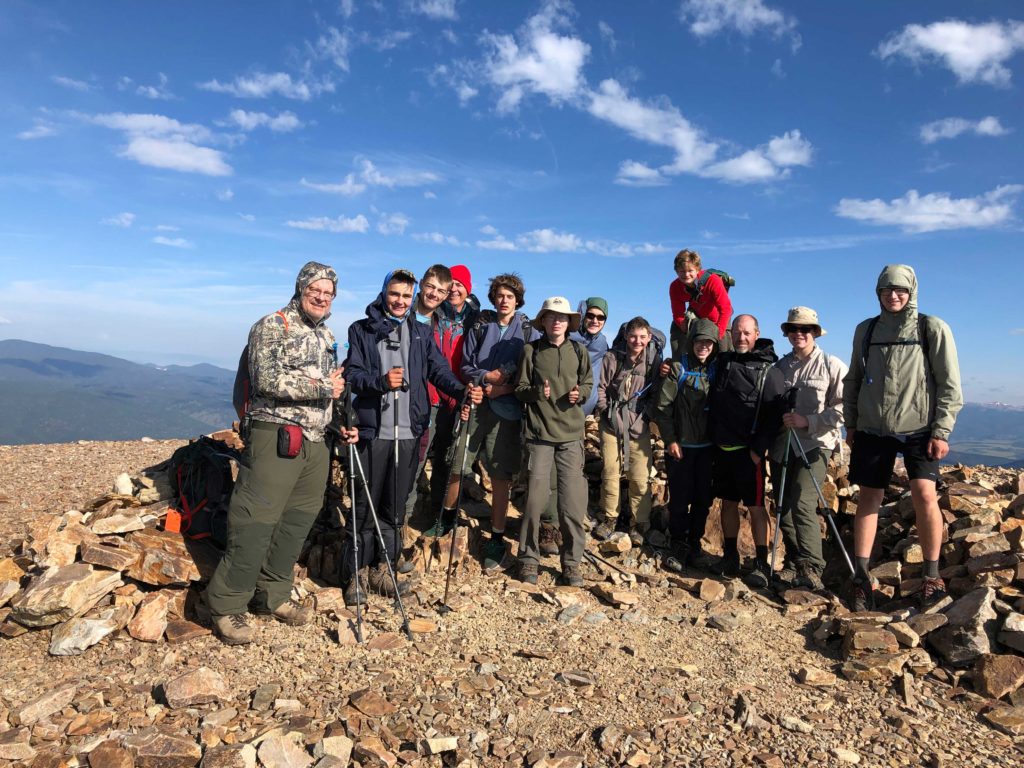
The (non-birding) highlight of the trip was our group’s ascent of 12,400-foot Mount Baldy on our second-to-last day of hiking. Braden and Sneed are third and fourth from the left. We thought we might catch some Andean Condors up there, but no such luck!

Nick the Owl Finder Strikes Again!

We need help! The last few weeks, we are facing a continuous onslaught of Russian hackers trying to subscribe—really! In the process of deleting them, we accidentally lost our entire subscriber list. If you are reading this, would you please resubscribe by filling out the boxes down in the right-hand column? We greatly appreciate it—and please share this with all your bird-loving friends! And now, to Braden’s new post!

When you’re a birder, nothing ever goes according to plan. For example, if you slog through a draw to find a Long-eared Owl, you’re more likely to see a flock of Bohemian Waxwings, or your state’s first record of a Red-flanked Bluetail, or a moose, or anything that is not a Long-eared Owl.

The plan on Sunday, February 10th was to sleep in. Instead, my dad shook me awake at seven in the morning (which I guess is technically sleeping in, but still).

“Nick found a Great Gray and a Barred at Maclay Flats! We have to go!”

Only an owl can get me out of bed early on a weekend!

I groaned and rolled out of bed, and within minutes we rumbled down the road in my dad’s Forerunner, dodging the potholes who tried to swallow us. The plan was to go the speed limit, but as I said earlier, things never go according to plan.

We reached Maclay in record time, and I texted Nick, asking for details. He responded quickly, providing great photos of both owls, and we trekked through the snow-blanketed forest, accompanied only by the occasional chirps of Red Crossbills flying over. As we passed the fields where we had spotted the Northern Pygmy-Owls two years prior, we scanned the bare trees. Nothing.

Then we hit the huge field in the center of Maclay, where Nick had said the Great Gray was hunting. We followed a trail of footsteps around the edge of it, running into another man that my dad knew, and we asked him if he’d had any luck.

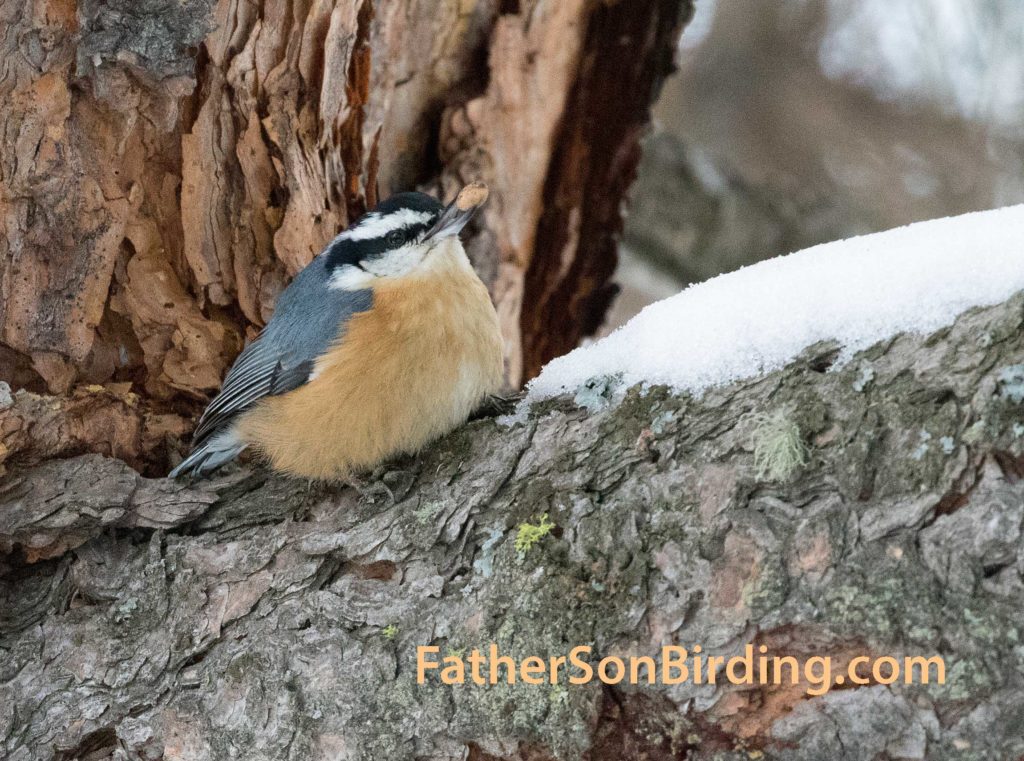
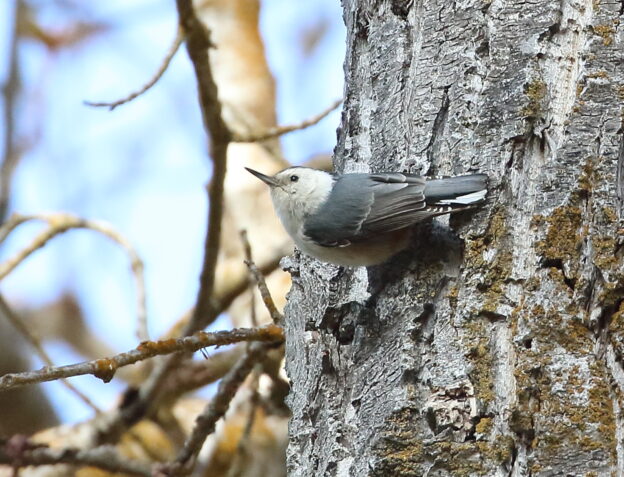
When owls prove hard to find, Red-breasted Nuthatches provide entertaining diversion.

“None yet—but I’ve seen owls here before.”

“You heard about the Great Gray and the Barred here, though, right?”

“What? No, I just came out here today.”

Soon, we spotted two other birders on the edge of the field ahead of us, pointing cameras at the top of a Ponderosa.

“That’s a good sign,” said my dad.

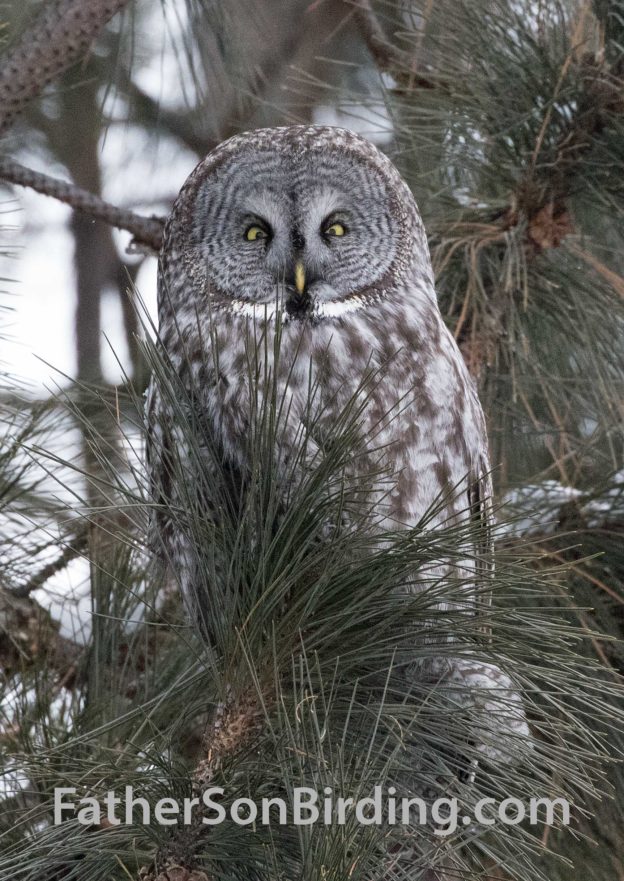
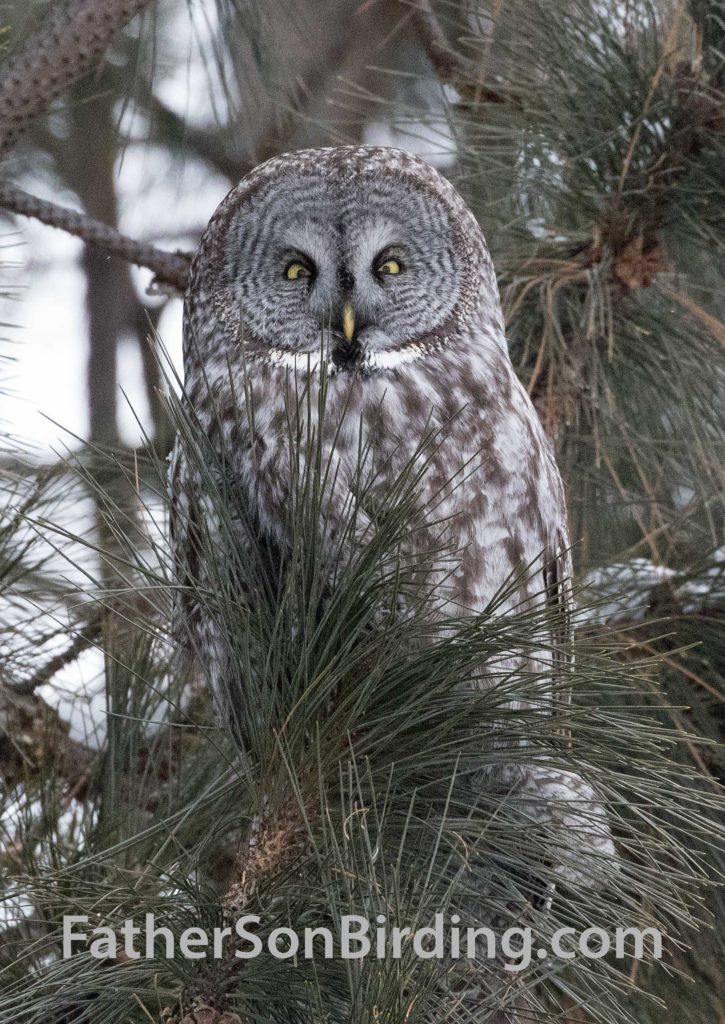
We quickened our pace towards them, and I suddenly glanced up to see something I hadn’t seen in four years: a Great Gray Owl. The magnificent predator of the night’s eyes glowed with yellow fire, staring down at all of the peasants who had dared enter its domain. It wasn’t quite as large as I remembered, but then again it perched high on a pine bough.

Politicians spend a lifetime trying to master a Great Gray Owl’s stare!

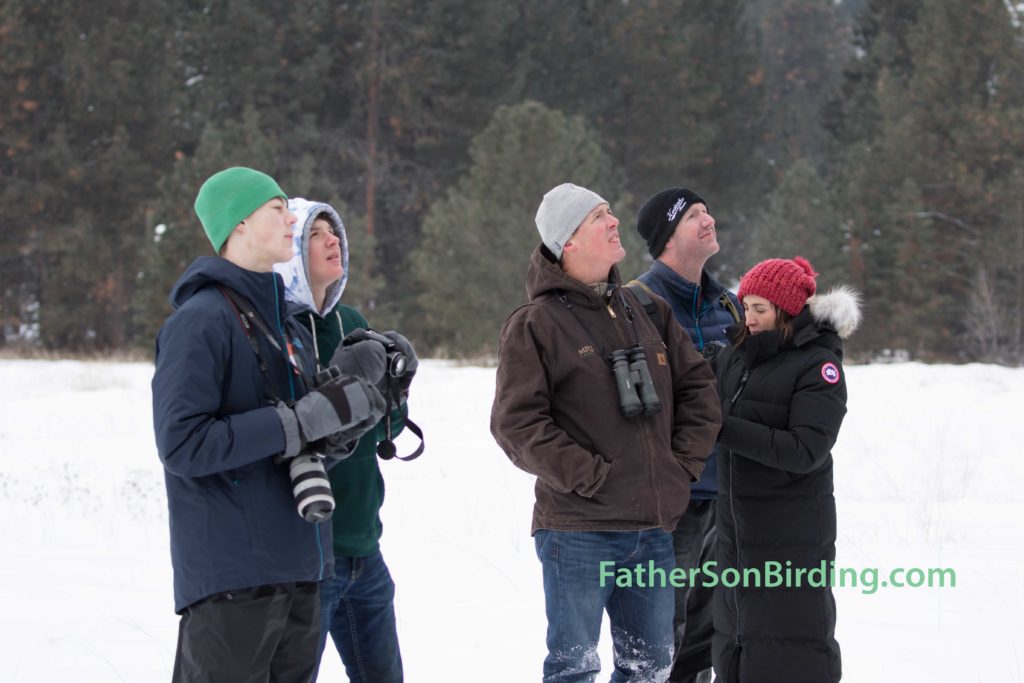
As we snapped hundreds of photos, Nick suddenly joined us, accompanied by his stepmom and his dad, Phil.

“Nick!” I said, “How do you manage to find all these owls!?”

“Well, we came out looking for the Great Gray and just walked past the tree that the Barred was in. Do you want to see it?”

“Sure!”

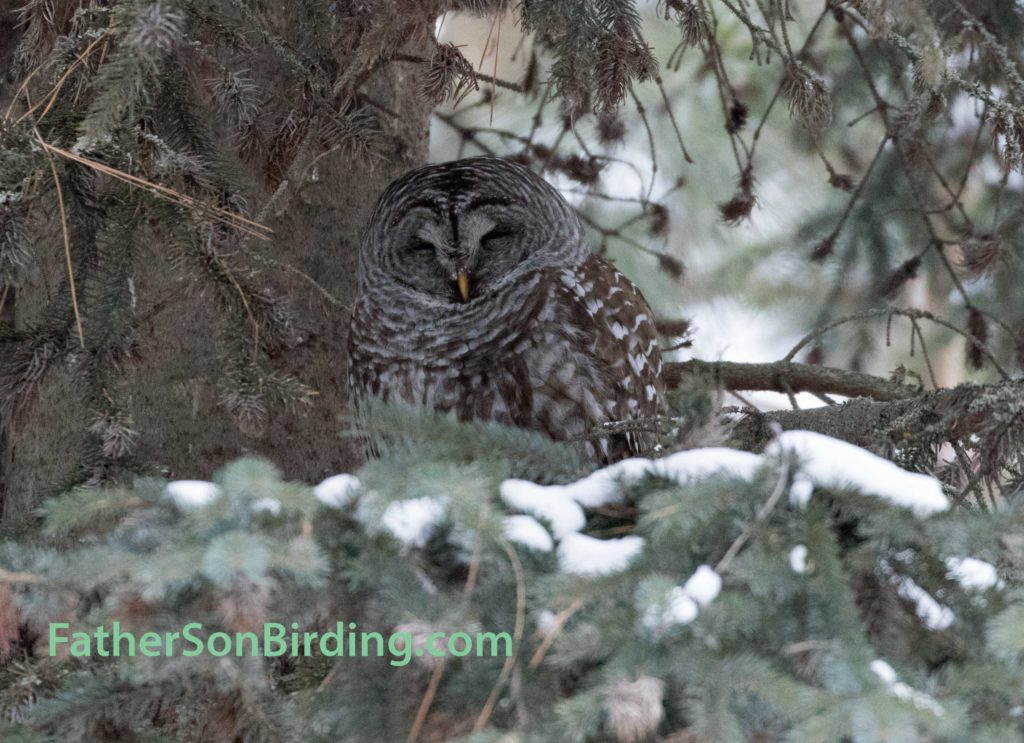
Re-locating the Barred proved easier said than done. Nick had discovered the Barred in a spruce, but we trudged through deep snow, unable to find it. After half an hour, Nick finally stopped and pointed into the shaded interior of a tree. The Barred was smaller than the Great Gray, and much less active, as if trying to merge with its dark surroundings. After spending more time watching both owls, we returned to the car, tired, cold and fulfilled. Things definitely hadn’t gone according to plan!

“Just let me sleep!” this Barred was probably thinking, but he didn’t budge from his cozy roost.

Montana Christmas Bird Count #2: Deer Lodge Discoveries

Unless a Northern Hawk-Owl or flock of Pine Grosbeaks lands in our backyard, this will most likely be our last post of the year. We thought we’d wish you a Happy Holidays and New Year by recounting, what else, our second Christmas Bird Count of the year! See you in 2019!

Only five days after participating in the Missoula Christmas Bird Count, Braden and I awoke at 5:45 a.m. on December 20 for our second bird count of the season: the Deer Lodge Valley count, near Butte. After making the 90-minute drive, we were delighted to see the parking lot full at our rendezvous point, Grant-Kohrs Ranch National Historic Site. Veteran birder and biologist Gary Swant headed up today’s count. Gary is well-known in Montana for doing bird monitoring related to the superfund cleanup of the Butte-Anaconda mining complex, but this was our first chance to meet Gary in person!

Braden and I were fortunate to be able to bird with Laura Swant and Shane Sater—even if we lost several digits to frostbite during our fruitless search of the Deer Lodge Golf Course!

Me and Braden, who was playing hooky from school, had two target species for the day: Snow Bunting and Gyrfalcon, both of which have foiled us throughout our four-year birding careers. Gary, though, paired us with his wife, Laura, and Carroll College Environmental Studies major Shane Sater to survey the area closest to where the Gyrfalcon had last been sighted, two weeks before.

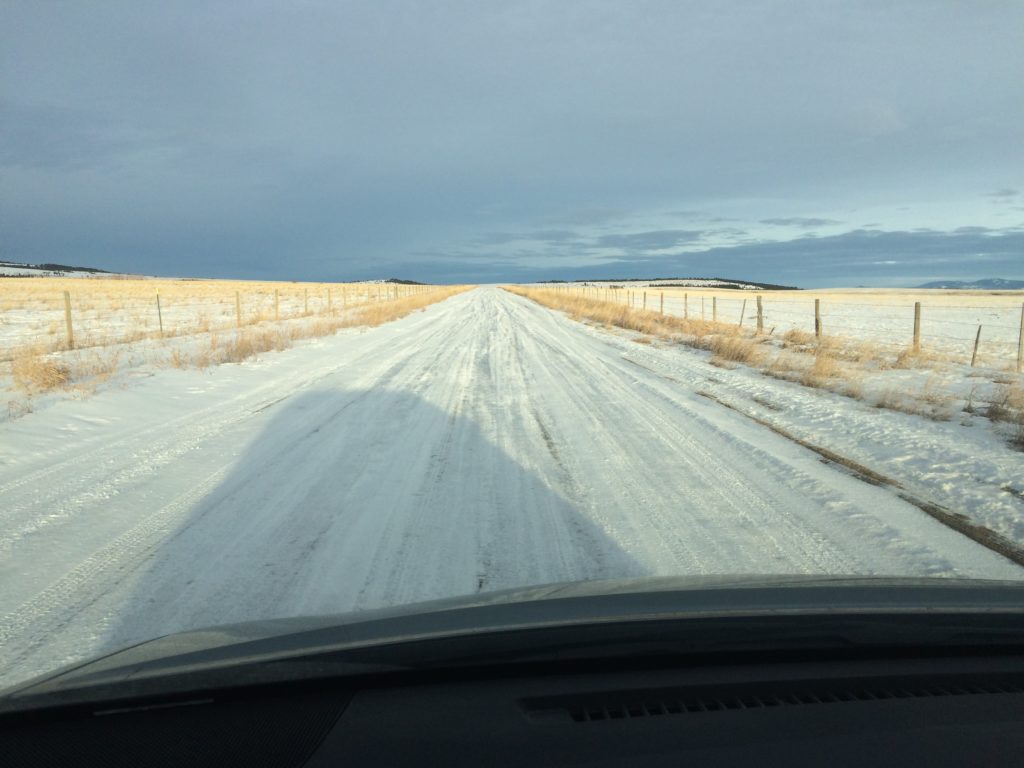
We began our survey near Deer Lodge State Prison, slowly crawling along an icy road that bordered prison property and led toward spectacular forested mountains a few miles away. On the way, we stopped to observe Bald Eagles, Rough-legged Hawks, and frequent ravens and magpies. After turning around, however, a flock of smaller birds flew right at us. Laura identified Horned Larks, and Shane called out Snow Buntings—but neither Braden nor I got good enough looks to count them. Those sneaky, soul-scarring Snow Buntings!

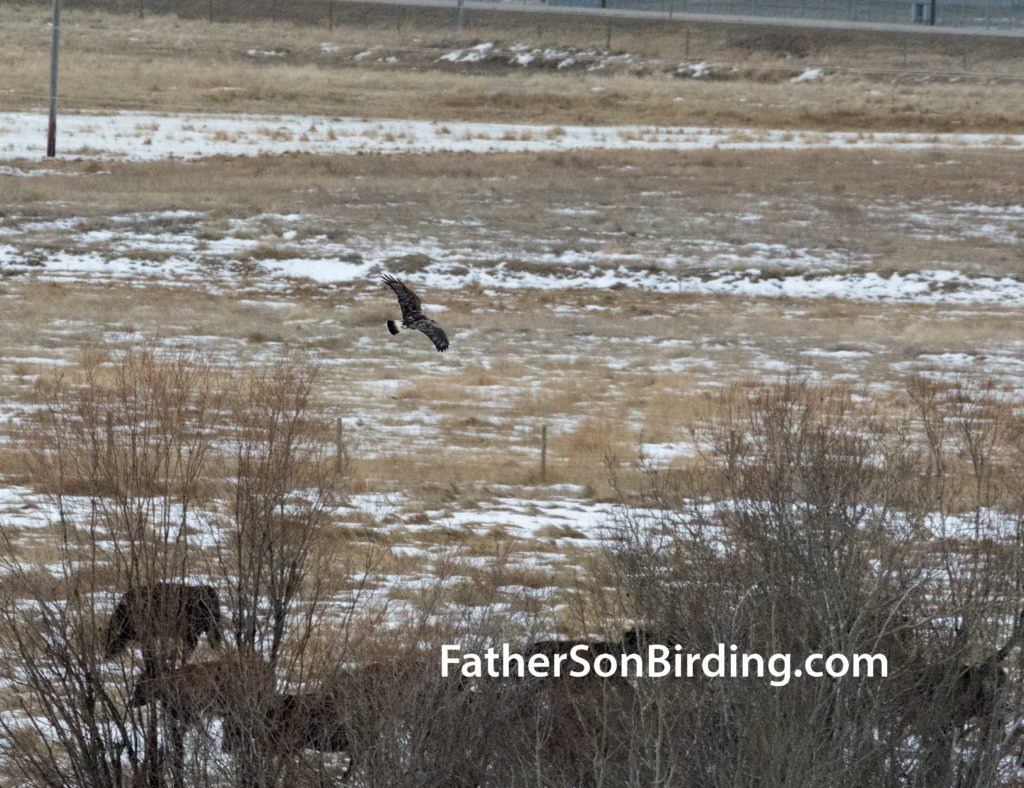
Raptors proved the stars of our Deer Lodge CBC—including this Rough-legged Hawk contemplating the wisdom of going after a cow next to Deer Lodge State Prison.

Only a few minutes later, however, I spotted a group of nine Gray Partridges in a narrow draw—the second week in a row we’d seen these handsome, elusive critters. Not too long after that, an entirely humorless guard from the State Prison pulled over to inform us that we were not allowed to watch birds within site of the prison. And Merry Christmas to you, too, buddy!

We ventured a short walk around the Deer Valley Golf Course, but the stiff wind quickly drove us back to our cars with only a few more pigeons and ravens to show for our suffering. As we kept exploring our sector, we happened upon a flock of about a thousand mallards. We saw more Bald Eagles and Roughies. Then, I spotted a raven on a telephone pole up ahead. I rolled down my window to take a picture.

“That’s not a raven,” Shane exclaimed. “That’s a raptor.”

“What?” I asked, not believing him.

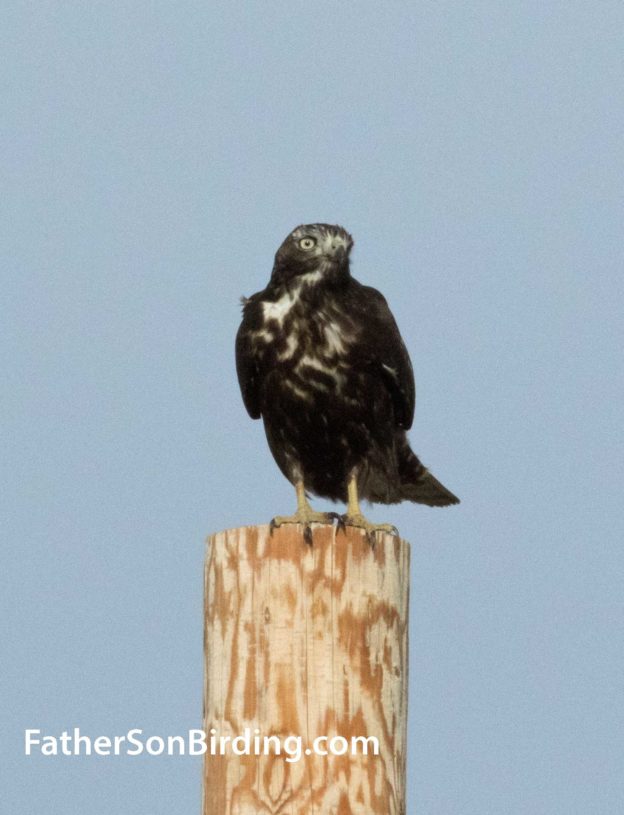
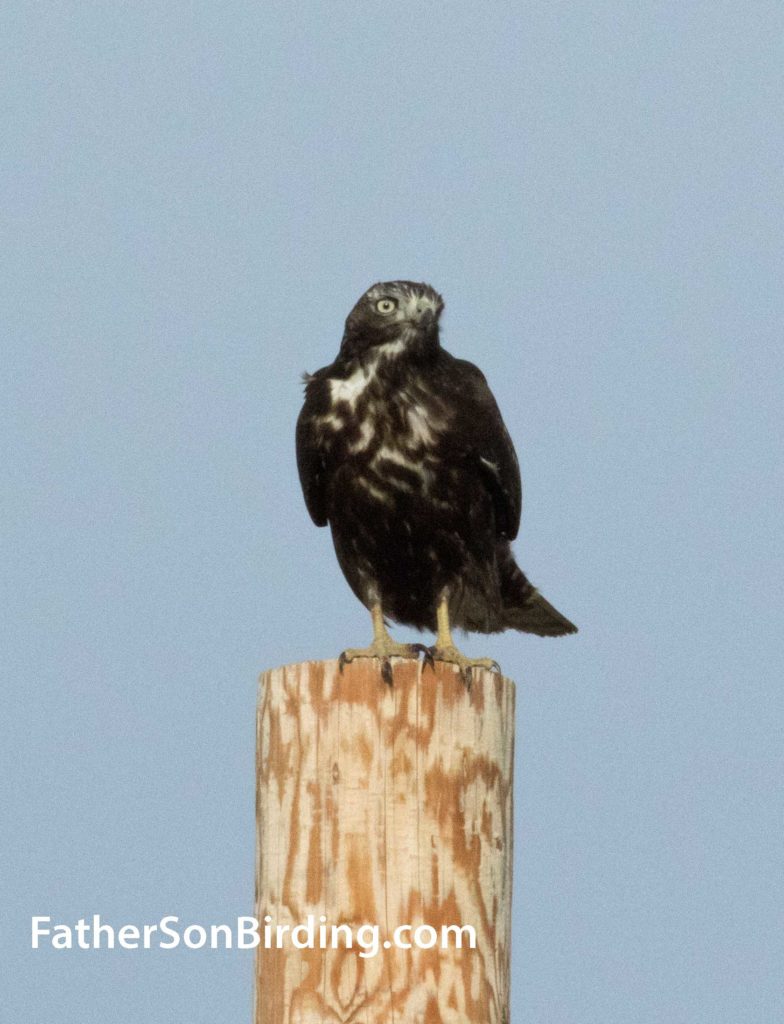
Though foiled in our quest to find a Gyrfalcon, our first look at a Harlan’s morph Red-tailed Hawk made up for it. Love these stunning black-and-white birds!

Sitting on the pole was Braden’s and my first ever Harlan’s hawk—an unusual black and white morph of the common Red-tailed. It was a stunning bird, and I got out to take a (poor) photo of it as it stared back at me with suspicious eyes.

After the count, we were treated to a scrumptious lunch of broccoli-cheddar soup and chicken salad crossant sandwiches provided by the Timber Eatery in Deer Lodge (do check them out—yummy!). As we polished off the last of the cookies, Gary did a quick check of the room to find that our combined species total reached 43 for the day. That wasn’t nearly as high as other parts of the state—Missoula had logged 86 species the week before—but the interesting terrain and great company more than compensated. After saying our farewells, Braden and I spent another hour searching for the Gyrfalcon and Snow Buntings, but the birds continued to scorn us. Maybe next year. Until then, Happy Holidays Everyone!

Though not as species-rich as other parts of the state, the Deer Lodge Valley offers stunning scenery and raptors galore!

All About Alcids

Braden here.

“Pigeon Guillem-wait, no that’s just a pigeon,” my dad said as we stood underneath the ferry dock in Anacortes, Washington, “I must have guillemots on the brain or something.”

Just then, a football-shaped bird shot out from underneath the platform we were on. It was jet black, with white wing patches and strawberry-red feet—an actual Pigeon Guillemot!

“Awesome!” I said as we high-fived, “It appeared just as you said it! Wait a minute…Marbled Murrelet.”

Unfortunately for us, a Marbled Murrelet did not shoot out from under the dock like the guillemot had, but we weren’t that disappointed. My dad hadn’t seen a guillemot since the year we started birding!


A Black Guillemot, identified from a Pigeon Guillemot by the lack of the black stripe across the wing patch.

The Pigeon Guillemot is a seabird belonging to a family of birds called Alcidae, or alcids. Alcids are the penguins of the north, and share many similarities: they both are much better in water than on land, they both(for the most part) live in the colder parts of oceans, and they even share the same coloring! Once upon a time, there was even an alcid that couldn’t fly, the Great Auk. Sadly, it went extinct in 1844 thanks to hunting and invasive species. Guess where the last individual lived? Iceland.

Iceland is a great place to start learning alcids. It has at least six fairly-regularly ocurring species: the Atlantic Puffin, Common Murre, Thick-billed Murre, Razorbill, Dovekie, and Black Guillemot, the last of which is the Arctic-dwelling cousin of the Pigeon Guillemots we saw in Washington.

When I was in Iceland, I saw all of these except the Dovekie, which, during the breeding season, only inhabits the pack ice of the high Arctic. Each one was under slightly different conditions. When it came to colonies, Puffins were the weakest of the bunch, digging burrows in dirt, while Razorbills nested in cracks and ledges on sheer rock cliffs. Unlike most birds, Razorbills actually lay lopsided eggs so that they will roll in a circle and not off the cliff. If not for seasickness and an angry ocean, I would’ve gotten to see Latrabjarg cliffs as we passed it, a huge expanse of rock in western Iceland home to 40% of the world’s nesting Razorbill population!

Razorbills are named for the white stripe that crosses their beaks.

We also saw Razorbills farther away from shore than the other alcids, some accompanying flightless chicks. Once the chicks are ready to leave the nest, one naturalist told me, it would jump straight off the cliff! The parent, and sometimes parents would then join it and undergo catastrophic molt—molting all of their feathers at the same time, meaning that for a few weeks, neither the adults or the chicks would be able to fly!

Not all alcids are as devoted parents, though. After a while, Atlantic Puffins just stop bringing food to the nest, forcing the starving chick to leave and fend for its own. And while this may be for many reasons, it is not for lack of food—using the spines on their bills, puffins can carry up to 20 fish at a time, unlike other alcids. The record for one bird is 80 fish!

Atlantic Puffins are declining in southern Iceland, as their main food supply, the sand eels, moves north. This also is affecting Arctic Terns.

Some alcids live all over the Northern Hemisphere, while others are much more localized For instance, while I saw Common Murres in both Iceland and Washington, every other species was unique to one of the locations. If you are looking for alcids, I suggest you start in Alaska, which is home to 17 species alone!


The Backyard Jungle

Braden is currently in Iceland, where he is birding with mom and grandparents—and will undoubtedly write some great upcoming posts about that—so I thought this would be a great time to talk about backyard bird habitat.

When we moved into our neighborhood in 2006, we faced a daunting task: transforming our property from a biological desert that had been scraped clean by bulldozers into something that not only looked nice, but provided habitat for native animals and plants. It hasn’t been easy. Aside from the usual tasks of battling weeds and keeping plants alive, we’ve faced a ravenous army of deer that consistently ignore signs that read “Deer-Resistant Plants.” Finally, after twelve years, however, we are enjoying a yard that truly resembles the habitat we set out to create.

A pair of Red-breasted Nuthatches took immediate advantage of this new bird condo in our messy yard this year. Audubon, I will expect my product placement check soon. (Photo by Sneed B. Collard III)

Food has certainly been a key to our success. Through luck and persistence, we’ve managed to establish a wide variety of plants that provide berries, nectar, seeds, and insects to multiple bird species. Oh yeah, and a backyard sunflower seed feeder doesn’t hurt!

One thing I underestimated when we began is the importance of structure. Sure, we planted trees, some of which have reached twenty feet or more, but we also have an array of buffalo berry, maple sumac, ocean spray, golden currant, and mountain mahogany that have proved extremely “bird popular” for their cover as much as for their food. We’ve also been helped by a row of lilacs along the back fence that were already here when we moved in and serve as a vital launch pad for birds wanting a turn at the feeder.

Female to Male Tree Swallow at our front birdhouse: “Hm, honey, I like the neighborhood, but the front door is a little small.” (Photo by Sneed B. Collard III)

One final thing we did just this year is put in two chickadee houses. Within days, one had been staked out by Black-capped Chickadees and the other by Red-breasted Nuthatches. For further fun, Violet-green Swallows nest under our eaves while a surprise robin pair has raised a family in a bordering fir tree. We believe that a Song Sparrow pair has also successfully raised chicks, but we’re not sure where!

The end result is that this year has seen an explosion of birds around our house—more than forty species to date, shattering our previous record. The most common residents have been the nesting birds, Evening Grosbeaks, Cassin’s Finches, Song Sparrows, Cedar Waxwings, Pygmy Nuthatches, Flickers, and yes, those pesky House Finches and House Sparrows. We’ve also made sightings of Pileated and Hairy Woodpeckers (thanks to the ponderosa pines behind the house), Common Nighthawks, American Goldfinches, Western Wood Pewees, and Rufous Hummingbirds.

One of this year’s delights has been the daily appearance of our first, apparently resident, Song Sparrows. (Photo by Sneed B. Collard III)

Sadly, few of our neighbors have followed our example in creating habitat, most sticking with pointless lawns and non-native shrubbery that is virtually useless to native animals. I like to hope, though, that our “messy” yard of diverse and unruly plants inspires at least the occasional passerby to boldly go where traditional landscape companies fear to tread. After all, those of us lucky enough to own a home with a yard have a responsibility to give back to the plants and animals that our extravagant human “nests” have displaced.