Category Archives: Bird Behavior

In Montana, Some Real October Surprises

For birders, October is an odd month—especially in Montana. Our resident birds have left. Winter residents are just arriving. Most migrating birds have passed through the state—but not quite all. The month poses a special dilemma for those trying to set any kind of Big Year milestone, because time for new birds is running out. This year, for instance, I have found myself tantalizingly close to making 2024 my second best Montana birding year ever. 2020 was Braden’s and my best year, when we put a ton of effort into it, and I recorded 266 species on my list (see our post “2020 Wraps, 2021 Underway”). Last year, thanks in part to an Eastern Montana trip with my pal Scott, I notched my second best year with 253 species. As October wound down this year, however, I found myself with 247 species—seemingly within striking distance of breaking that 253 mark. Or was it?

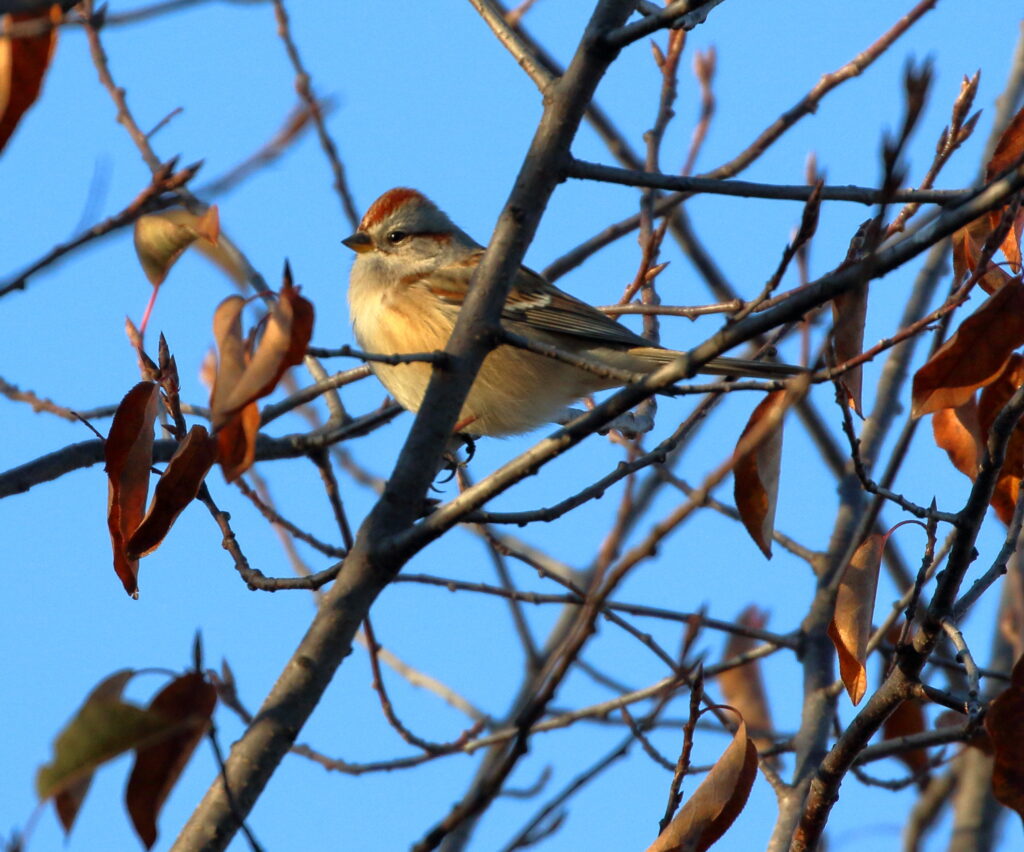
The Fort Missoula gravel quarry delivered our first American Tree Sparrows of the season—a bird that, unbeknownst to me, I had failed to see earlier in the year! This, dear readers, is also where Braden and I got our lifer ATSPs years ago.

A mere seven species might seem like an easy task with three months to go in the year, but that small number is deceiving. As mentioned above, very few new birds arrive this time of year. As for winter arrivals, most birders (myself included) already saw those in January and February. Bottom Line: By October, birders hoping to set a mark need to track down some rarities.

Braden and I have chased plenty of rarities in the past, but I am more reluctant to do so these days. The main reason? Unless I really, really want to see a particular bird, I can’t justify burning up gasoline just to notch another species on my list—especially to break a rather arbitrary record. After all, climate change—powered in large part by burning fossil fuels—is one of the major threats to birds, not to mention to all other species, and my desire to make 2024 my second best year doesn’t rate as a worthy enough goal to place the planet in even greater peril. With Braden gone, chasing rarities also isn’t as much fun.

Still, last week, with the end of the month in sight, I felt like I could use a good birding session to take advantage of our last warm weather and improve my mental health, made particularly jittery by the craziness of the upcoming elections. And then, out of the blue, I got a text from Nick Ramsey: “Hey! Are you in Missoula? And any shot you want to go birding tomorrow?” I didn’t hesitate. “Yes and yes!” I shot back.

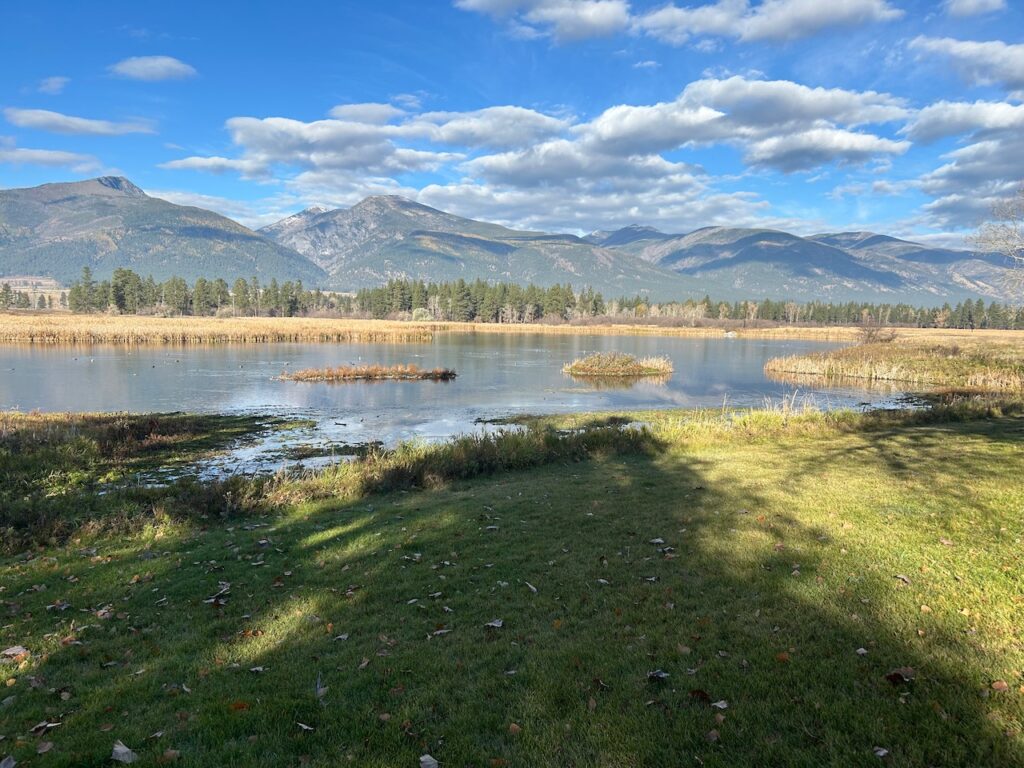
With only hours to spend in Missoula, Nick picked me up for a quick trip to the Fort Missoula gravel quarry and Lee Metcalf NWR, showed above.

Nick, it turns out, had a brief layover in Missoula between a summer field job in Alaska and guiding gigs in Louisiana. Regular readers of FatherSonBirding (or of my new book Birding for Boomers) will recognize Nick both as a member of our extended family, and as our most important mentor when Braden and I first started to bird. We’ve had countless birding adventures together including our first expedition to eastern Montana and Braden’s and Nick’s epic Florida birding trip in 2022. I was thrilled that Nick, who recently graduated from LSU, reached out to me—especially because he had only hours to spare before hitting the road for a 30-hour drive to Louisiana. I asked him what he’d like to do and he suggested visiting the Fort Missoula gravel quarry and Lee Metcalf National Wildlife Refuge. That sounded great to me, and just by coincidence, a Northern Parula had just been sighted at Lee Metcalf.

Decidedly eastern birds, Northern Parulas are almost unheard of in Western Montana. Although chances were low that it would still be there when Nick and I got there the following day, I couldn’t help thinking this could move me closer to tying my “second place” record of 253. For his part, Nick especially wanted to see a Swamp Sparrow, another uncommon bird for Montana. I figured we had almost no hope of finding one of those, but if anyone could, it was Nick.

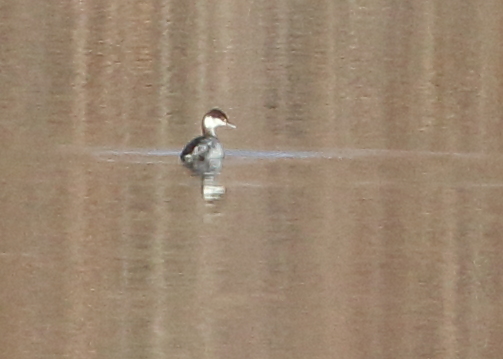
Nick picked me up at eight the next morning, in the company of his adorable diminutive companion, a chihuahua mix named Dixie, who decided that my lap would be her domain for the rest of the day. Our first stop? The gravel quarry. Nick hoped for a Swamp Sparrow here and we both thought it might be a good chance to see scoters, Long-tailed Ducks, or other laggards passing through the area. Unfortunately, a guy flying a drone was most likely scaring off any interesting water birds. Still, we had a nice sparrow session, finding a ton ‘o Song Sparrows, along with White-crowned Sparrows, and the season’s first American Tree Sparrows—which, I didn’t realize I had failed to find earlier in the year! By the time we headed back to the car, the drone flier also had departed, giving us a look at a few Hooded Mergansers. “Hey, there’s also a Horned Grebe!” I told Nick. That was a nice surprise since I’d managed to miss them in Montana the entire year. Click. With the American Tree Sparrows and Horned Grebe, my Montana Year List had leaped from 247 to 249!

I had given up on Horned Grebes for my 2024 Montana list when this one showed itself at the Fort Missoula gravel quarry.

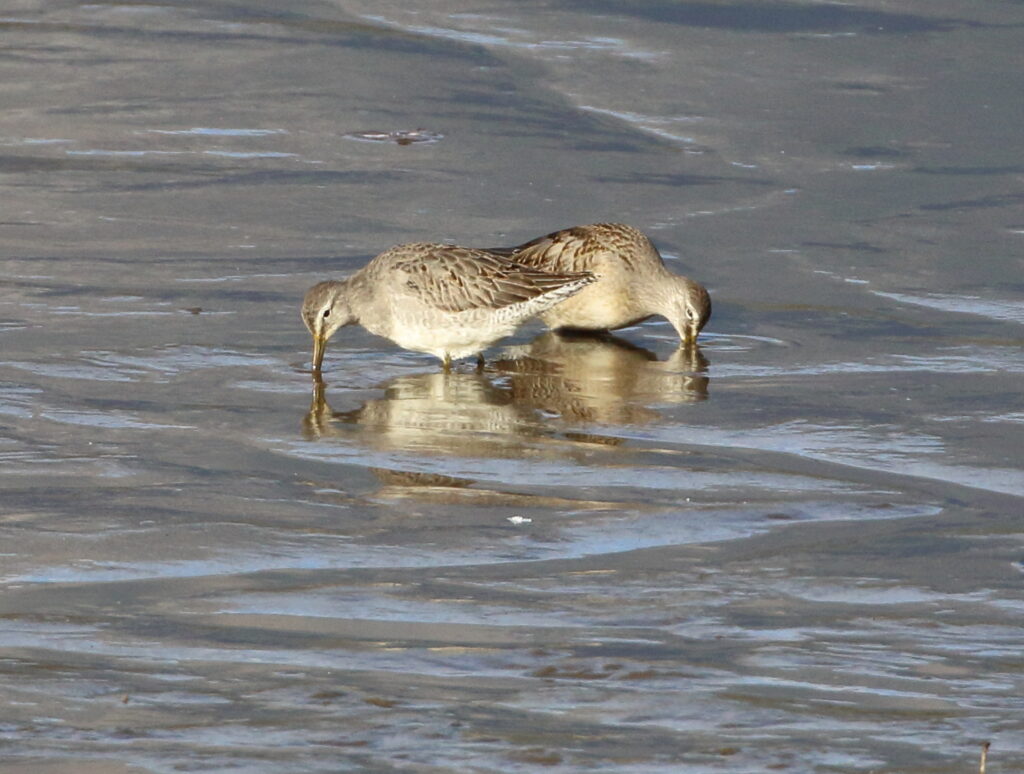
Continuing on to Lee Metcalf, Dixie keeping me warm, Nick and I caught up on the rest of our lives. This, I realized, was the first time Nick and I had ever birded together without Braden along, and though we both missed him, it was a great chance to share our adventures and discuss future birding dreams, plans, and possibilities. In no time, Nick was pulling into the Lee Metcalf visitor’s center parking lot. Several birders had arrived before us, but none seemed aware of the Northern Parula sighting the previous day. The bird had supposedly been seen in the elm trees next to the closest pond, but as we headed over there, what first caught our attention were two shorebirds pumping for food in the mud.

A pair of Long-billed Dowitchers presented our first surprise at Lee Metcalf. More surprises would follow!

“Are those Long-billed Dowitchers?” I asked Nick. “What are they doing here?” So late in the season, they surprised both of us and immediately made our trip down here worthwhile. While we were studying them, however, Nick’s sharp ears caught something else and he began walking over toward the south edge of the pond. I thought he had heard the Northern Parula, but when I caught up, I found him studying the cattails below us. “I thought I might have heard a Swamp Sparrow,” he explained. Then we saw movement. “There!”

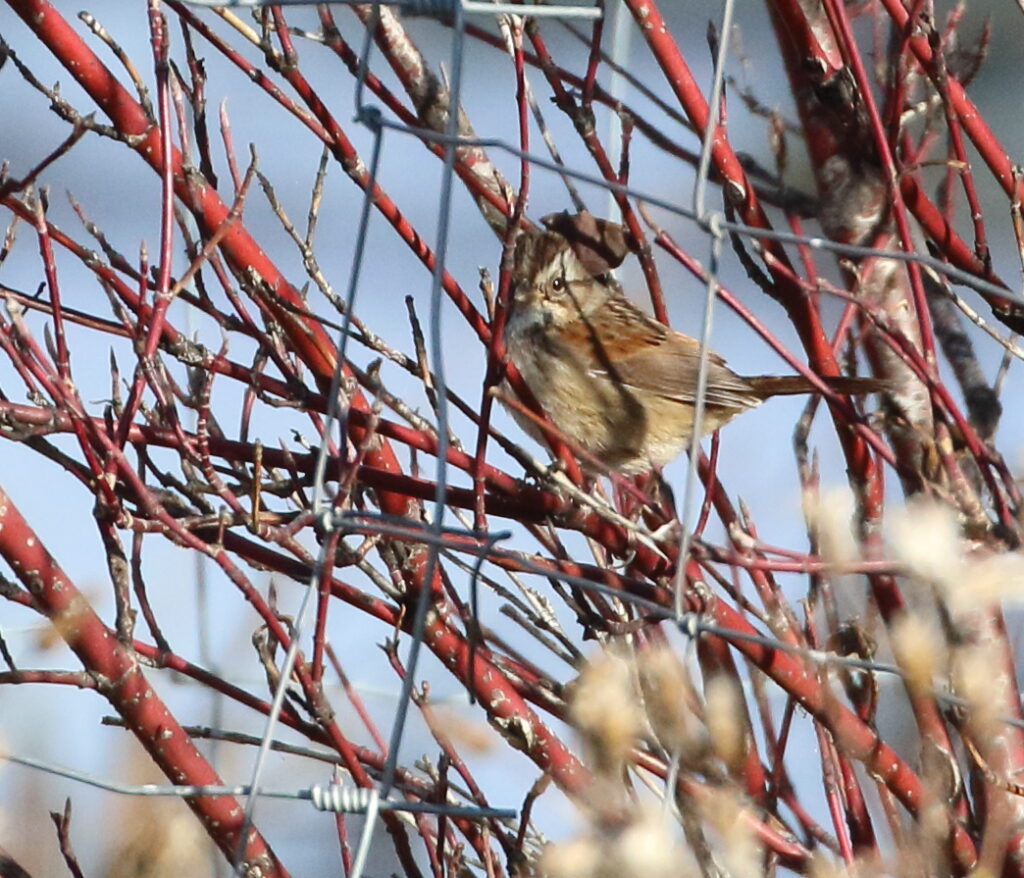
Nick’s Montana lifer Swamp Sparrow was too quick for me to catch in full sunlight, but did pause briefly behind this fence.

Several other birders joined us and it took several minutes for us to get clean looks at the bird. “Furtive” is a good word to describe Swamp Sparrows as they like to stay hidden in reeds along the water’s edge, but finally, the bird gave us full, if brief, views. I was astounded. While only about fifty records exist for Montana, Nick explained that the birds definitely move through the state every year, and Birds of Montana lists several cases where the birds have overwintered. I’d only ever seen one in Montana—in the Shiloh recreation area in Billings—so for me, this was a big deal. Click. 250.

As we moved slowly, following the sparrow to a small brush pile, Nick almost casually said, “The parula’s right behind us.”

What?

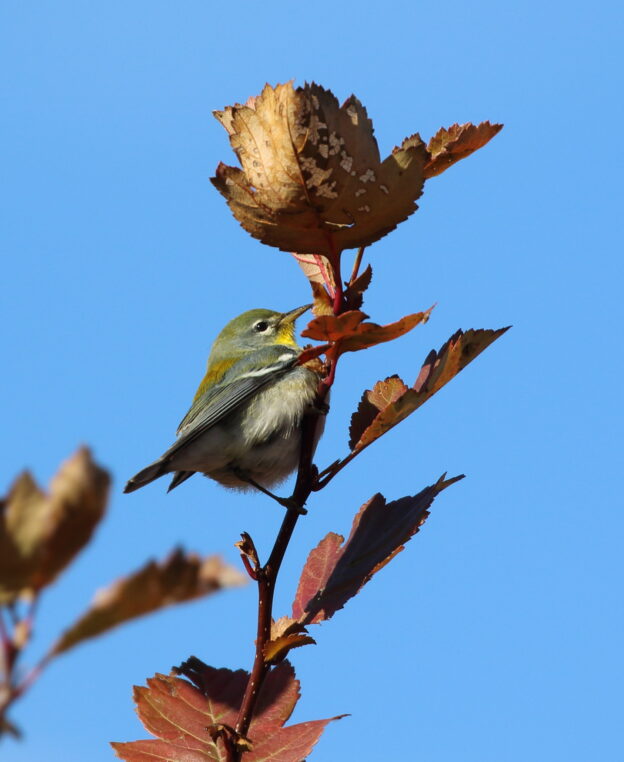
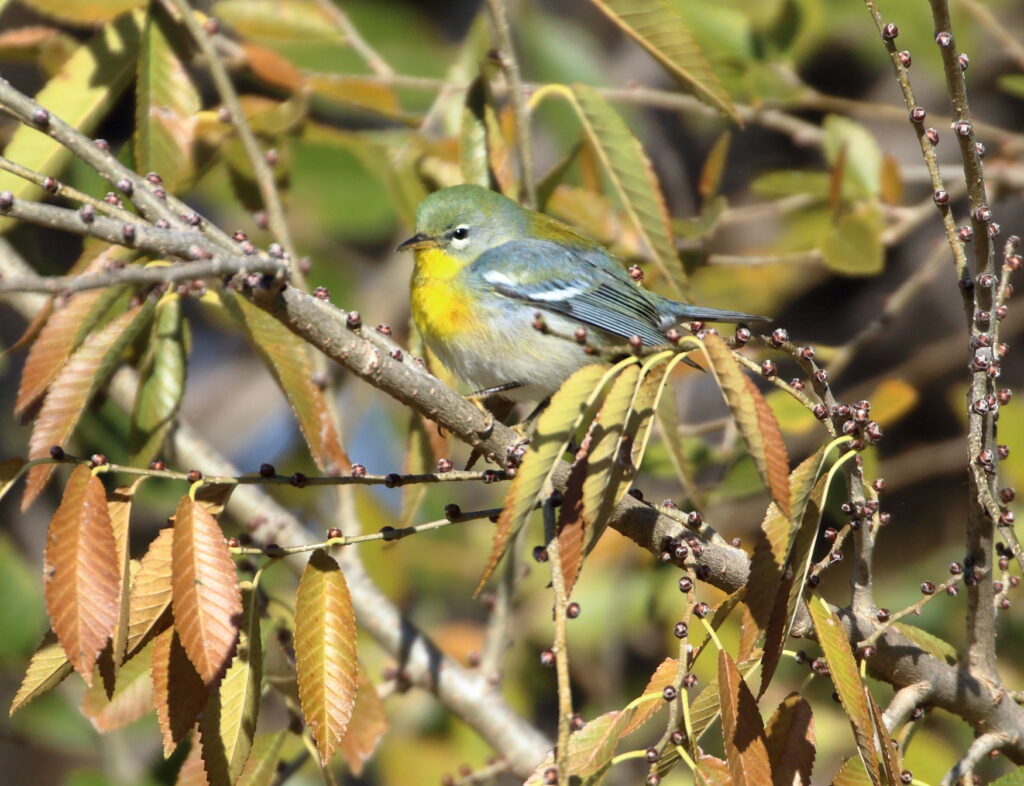
It being fall, I expected that if we saw the Northern Parula, it would be a drab specimen. The gorgeous bird, however, delivered a real October surprise.

I spun around and, sure enough, spotted a spectacular yellow-and-bluish-gray warbler plucking insects from leaves in a deciduous bush not twenty feet from us. Nick called to other nearby birders, and they joined us for one of the most leisurely looks at a rare migrant ever. Much like the Black-throated Blue Warbler that appeared in Lolo last year, this bird seemed little bothered by people. We all hung back about thirty feet, trying to fill up our cameras’ memory cards while the bird fattened up on whatever it could find. Just to mix things up, it flew over to an elm tree for a while, before heading back to the bush. After a hike out to the more distant ponds (still no scoters), Nick and I hit the road back to Missoula, making only a quick nearby stop to get Nick a look at California Quail for the year. In a single outing, and at a most improbably time of year, my year list had advanced to 251 species, making me wonder if I could somehow nab three more species through December. Even better, I had enjoyed a wonderful day of birding and companionship with one of the best rare migrants possible, our friend Nick.

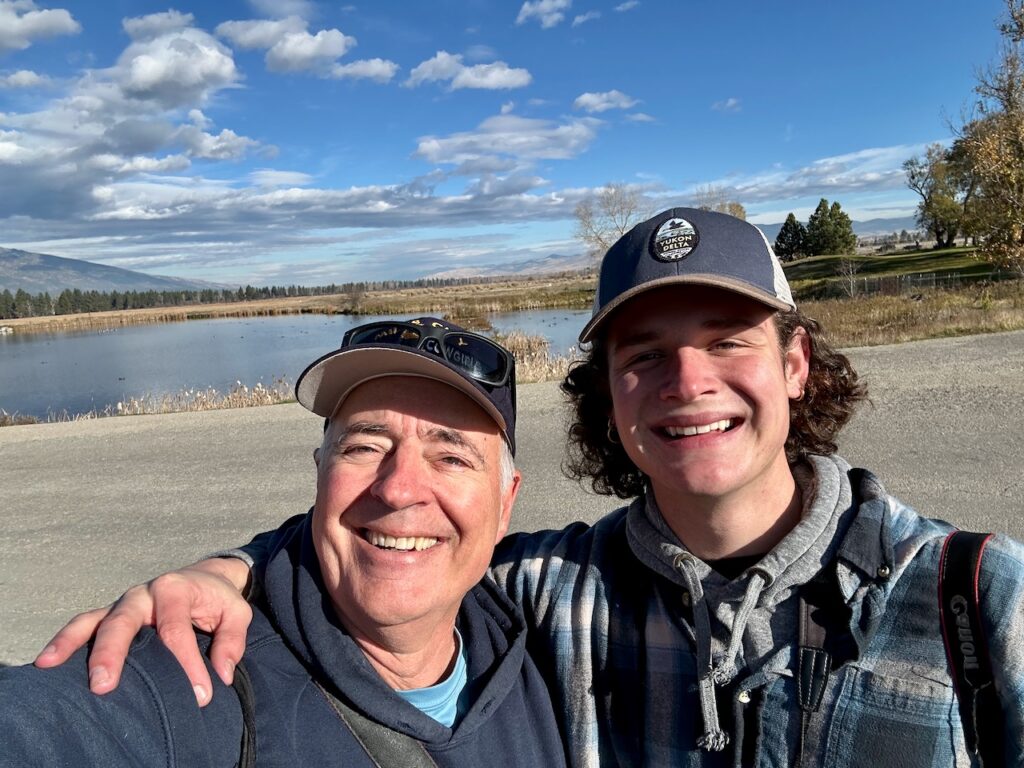
Two happy birders following an improbable day of October rarities.

Chasing Migrants, Part I: Swifts, Peeps, and Plovers

In case you missed our last post, be sure to check out my new book, Birding for Boomers. It’s a great gift for anyone you know of any age or background who might be interested in getting into birds. It’s also a great way to support our efforts here at FatherSonBirding! Why not order one or two copies—or even a dozen—right now?

I’ve had little time to catch up on our birding adventures this time of year. With new books to promote, house guests to entertain, seeing Braden off to his senior year at UMaine, and more, life has been a juggling act through August and September. I did manage two lovely trips to Freezeout Lake in August, one with my occasional birding buddy Steve Flood, the other with Braden right before he headed East. In mid-September, I also rewarded myself with a personal trip to the Bay Area to visit friends and relatives—and, of course, see as many birds as possible. Like the recent trips to Freezeout, my primary objective was to find and study as many migrating shorebirds as possible.

Despite birding for more than a decade, I still feel like a beginner when it comes to shorebirds. My recent trips to Freezeout were “study sessions” more than birding excursions, and I was grateful that Baird’s Sandpipers, Red-necked Phalaropes, Semipalmated Sandpipers and other species offered hours of observation and ID practice on each trip. I hoped for similar sessions in California. After I spent a few days with relatives in Oakland and reconnected with the delightful birds of oak woodlands, my friend Scott (see Eastern Odyssey 24: Return to Westby) whisked me off to the North Bay, where serious birding adventures commenced.

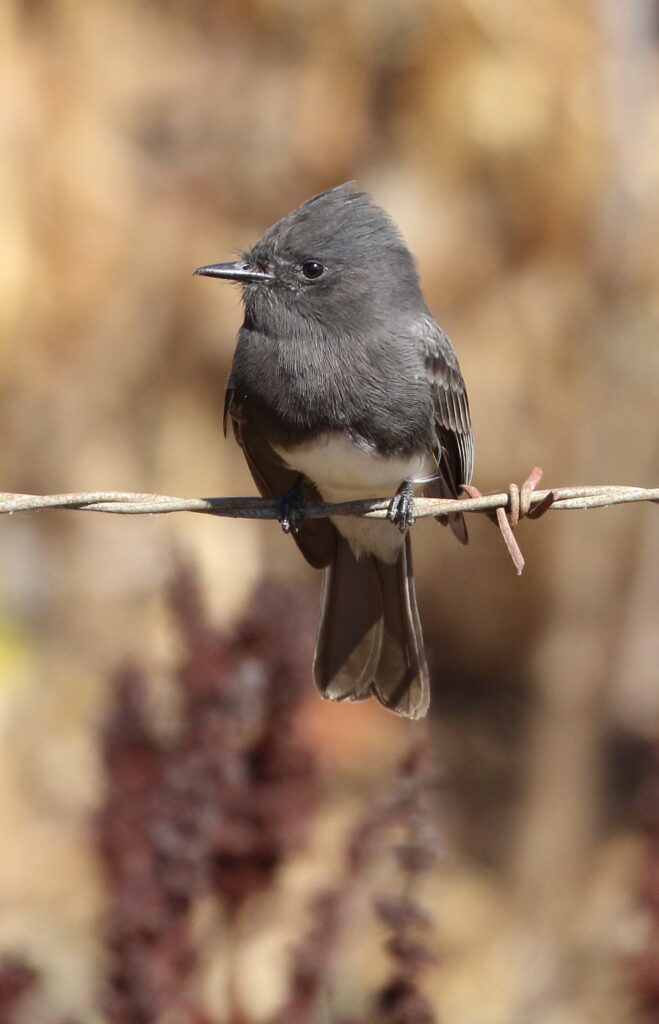
Before heading across the Richmond Bridge, we gave McLaughlin Eastshore State Park in Berkeley a try, but our timing was off as high tide covered the mudflats. Next, we visited the Las Gallinas Valley Sanitary District in Marin County. I enjoyed that, but again, we saw nothing spectacular. I was surprised to spot a lone Vaux’s Swift—a lifer for Scott—and eight or nine Black Phoebes put on a show, but it was a slow start to meeting our birding ambitions. Fortunately, things would pick up—dramatically.

Though they didn’t perch at the top of our target list for the day, Black Phoebes charmed us at the Las Gallinas water treatment ponds in Marin County.

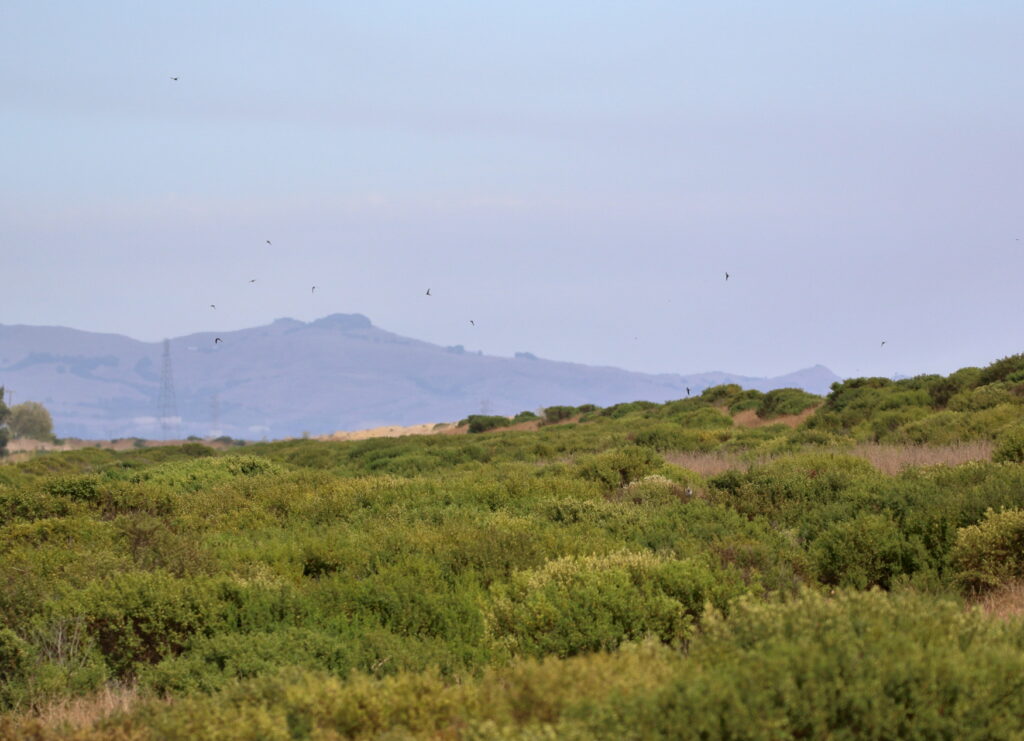
After Las Gallinas (“The Hens”), Scott drove us to Reclamation Road in the San Pablo Bay National Wildlife Refuge, where we hoped—finally—for some shorebird action. Our first surprise wasn’t shorebirds, however. As soon as we got out of the car, I spotted four tiny shapes frantically flying west. “Hey, there’s more Vaux’s Swifts.” I really hadn’t expected to see these, but it did make sense. I knew they’d departed Montana in the past few weeks and that they followed the West Coast down to their wintering grounds in Mexico and Central America. Our four birds were merely a prelude, however. As Scott and I walked out toward the shore, we saw half a dozen more swifts. Then a dozen. Then, as we looked east, we witnessed a veritable river of Vaux’s Swifts flying toward us.

This photo doesn’t begin to capture the remarkable river of migrating Vaux’s Swifts that passed over our heads. Yes, those “dots” are the swifts! Swifts are a species of concern because of the loss of old growth forests and other natural roosting sites. Ironically, saving old brick chimneys should be a priority for those interested in protecting these birds.

“This is amazing,” Scott said as the birds stiff-winged it over our heads. “Have you ever seen anything like this?”

I shook my head. The most VASWs I’d ever seen at one time was perhaps a couple of dozen. Now, hundreds streamed past us—probably thousands! We learned from a passerby that they were most likely heading to the chimney of an old brick-making plant, a well-known roosting place for them. Scott and I were suitably awed by the sight. It was enough to make the whole day worthwhile, whether or not we ended up seeing shorebirds.

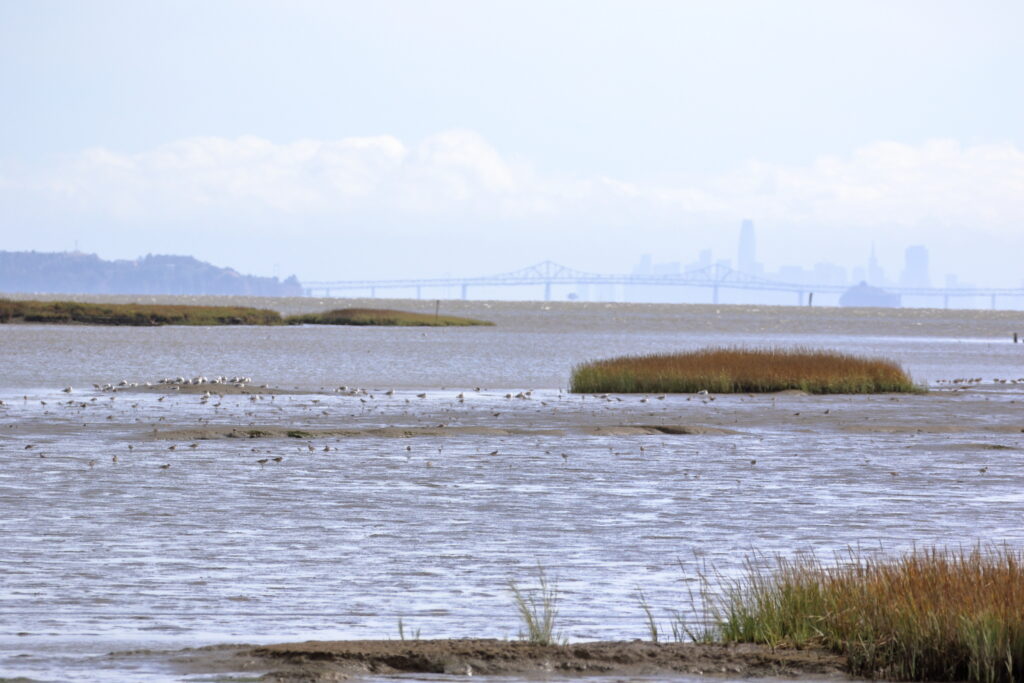
Nonetheless, as we walked out to the bay I was gladdened to see shallow mudflats and hundreds of dots scattered over them. “Shorebirds!” I rejoiced.

With San Francisco in the distance, you couldn’t ask for a more dramatic setting to study shorebirds! Many of those specks in the foreground are Least Sandpipers—though you’ll see a lot of other species mixed in!

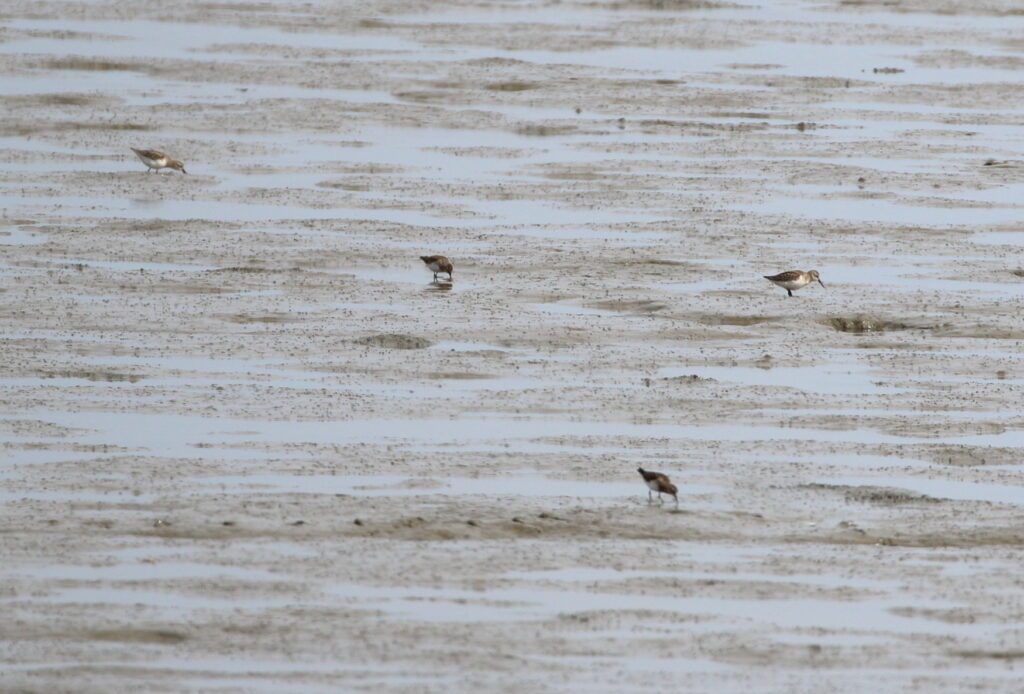
As we drew closer, I set up the spotting scope, and quickly zoomed in on a dozen-plus Long-billed Curlews, at least fifty Willets, and what would turn out to be a couple of hundred Marbled Godwits. These were easily-enough identified. Not so the hundreds of small sandpipers, or “peeps,” that peppered the scene in front of us. Birders generally include four species under the “peep” category: Sanderlings, Western Sandpipers, Semipalmated Sandpipers, and Least Sandpipers. Since it was the nonbreeding season, Sanderlings should have given off a distinctive whitish vibe by now, so I ruled them out, but what of the other three? The problem with peeps is that their coloration, size, bill shape and bill length overlap to a frustrating degree, and I just didn’t have enough experience with these to make a call. Least Sandpipers can be easy to pinpoint if you can see their leg color—yellow compared to black for Westerns and “Semipalms”—but when they were feeding in the mud, determining leg color often proved impossible.

As I often do in such situations, I called Braden. I described what I was seeing and said, “I am guessing that they are Semipalmated Sandpipers, but I just don’t know.”

“Well,” he informed me, “the good news is that if there are large numbers of them, they aren’t Semis because Semipalmated Sandpipers don’t move through the West Coast.”

With Braden’s help, I narrowed down these far-away “peeps” to either Least or Western Sandpipers. Confirmation would have to wait until later, however.

Doh! This surprised me because we do see them in Montana. I never realized, though, that our Montana birds were on the western edge of their migration pathway from their northern breeding grounds to their wintering grounds in the coastal tropics.

“If I had to guess,” Braden continued, “I’d say you’re looking at Least Sandpipers. You said that they’re darker brown and Westerns give off a grayer color.”

Still, even through the scope, the birds were too far away for me to be sure, so I recorded “peep sp.” in my eBird checklist—at least for now.

One species, however, excited me more than all the others. Almost as soon as we reached the mudflats, I spotted birds that I had especially hoped to see: Black-bellied Plovers. Black-bellied Plovers are one of the world’s largest plovers, and they have the widest distribution. Like many shorebirds, they breed mainly in the arctic regions, but in winter they disperse to coastal areas of every continent sans Antarctica.

At San Pablo Bay NWR, I was especially excited to see Black-bellied Plovers mixed in with Long-billed Curlews, peeps, Marbled Godwits, and other shorebirds.

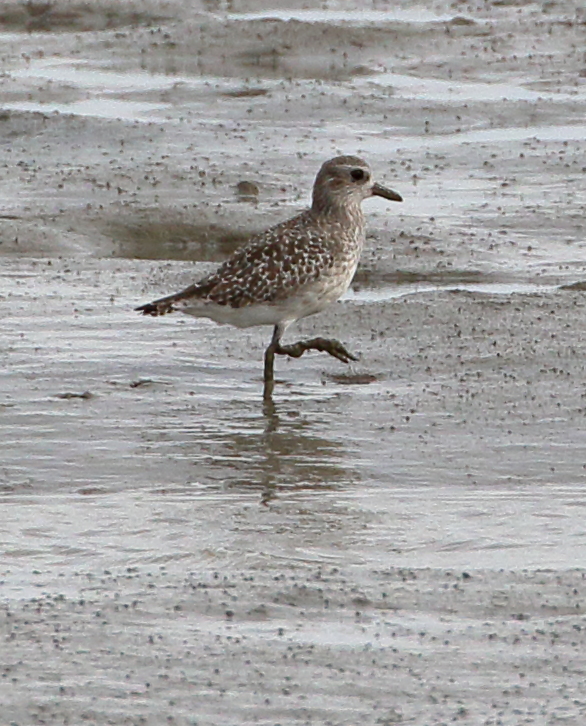
Braden and I had only ever seen Black-bellied Plovers about twenty times—and only four times as they migrated through Montana. The birds are known to flock up in winter, but even in places such as California and Texas, we generally only saw a few at a time. Now, as I trained my scope out over the mudflats, I began picking out more and more of these birds. At first, their light color and larger size made them look kind of like gulls, but their more erect posture and stubbier dark bill gave them away. One bird they can easily be confused with are American Golden Plovers, which look almost identical except for their smaller bill, head, and overall size. Some AGPLs also show flecks of gold color even in winter, but today, I saw no AGPL suspects and counted sixty Black-bellied Plovers in front of me.

“I don’t think I’ve ever seen this many before!” I effused to Scott. “This is really amazing.”

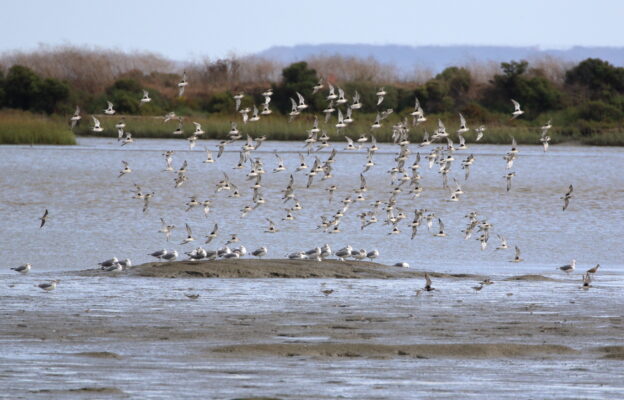
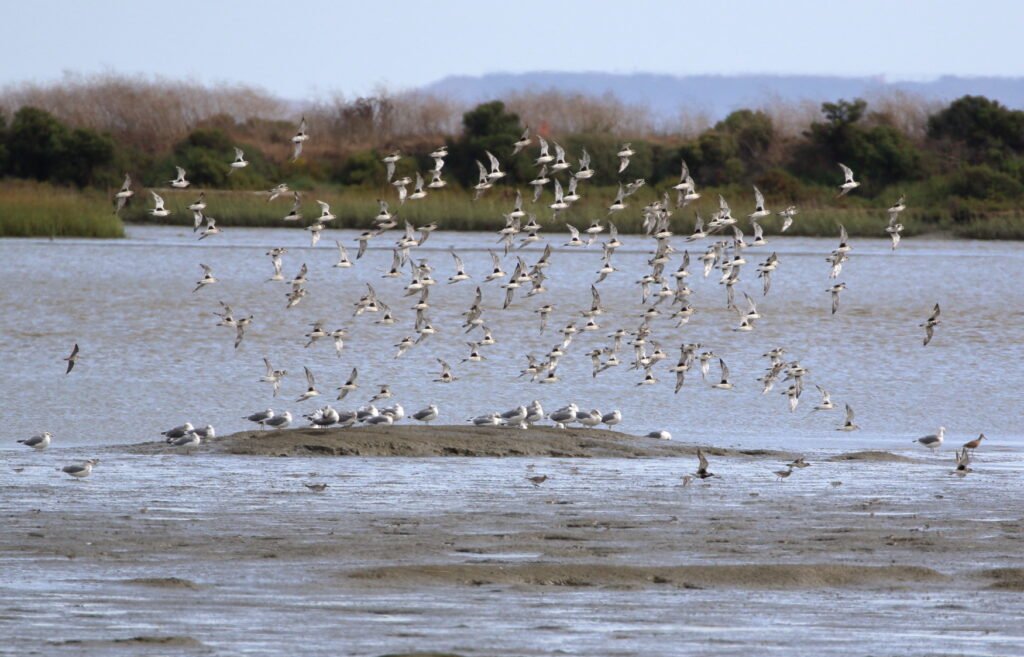
What I didn’t realize is that I vastly undercounted. I took a couple of photos of shorebirds in flight and later, going over the images, I made a startling discovery. One of the flying flocks consisted of at least 140 Black-bellied Plovers! How could I tell they were BBPLs instead of other shorebirds? In this case, it happened to be easy. Black-bellied Plovers are the only shorebirds to show distinct black armpits under their wings!

When I took this photo, I didn’t realize these birds were Black-bellied Plovers—easily the largest flock I have ever seen. The black armpits make IDing this species particularly easy in flight.

It was a great way to end the day for both me and Scott and we celebrated with a fabulous Mexican food dinner with Scott’s wife Ginny and step-daughter Hayley. I went to bed happy—but eagerly looked forward to more migrating bird opportunities ahead.

https://ebird.org/checklist/S195291789

Wedding Birding in Washington State, Part II

Braden and I write FatherSonBirding in the hopes of sharing the wonders of birds and birding, and the urgency to protect them. We do not accept advertising or donations, but if you’d like to support our work, please consider buying *NEW* copies of some of Sneed’s books—First-Time Japan, for instance, or my forthcoming picture book for younger readers, Like No Other: Earth’s Coolest One-of-a-Kind Creatures, available for pre-order now. We appreciate your interest and hope you will keep reading!

In case you missed Wedding Birding Part I, click here!

Saturday was the long-anticipated wedding day of our friends, Jazz and Brad, but the Big Event wasn’t kicking off until 3:30 p.m. True to my recent trend, I awoke at 3:30 a.m. with ample time to hit the birding spot that I most looked forward to on the trip: March Point. Why? Because I thought it might offer my best opportunity to find both seabirds and shorebirds. Looking at a map, in fact, March Point looked like a wonderful, natural area and I was already envisioning pristine beaches and offshore waters loaded with birds. Imagine my surprise when I arrived at 6:00 a.m. to find that March Point is actually the site of a gigantic Marathon Petroleum refinery!

March Point was not quite the undisturbed natural area I was expecting!

It was a cold, blustery morning, but undeterred, I pulled over and scanned the offshore waters. I spotted several groups of presumed Pelagic Cormorants, but precious little else on the waters or the shore. With some persistence, I did locate another Pigeon Guillemot out near the ginormous pier jutting out into Puget Sound, but it was slim pickins.

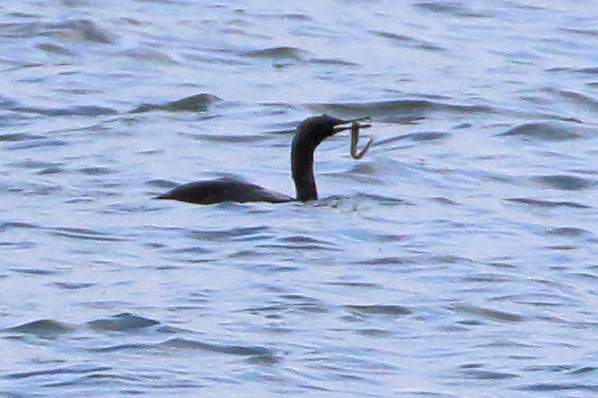
What do you suppose this Pelagic Cormorant is about to eat? I’m guessing an eel-like fish called a wrasse!

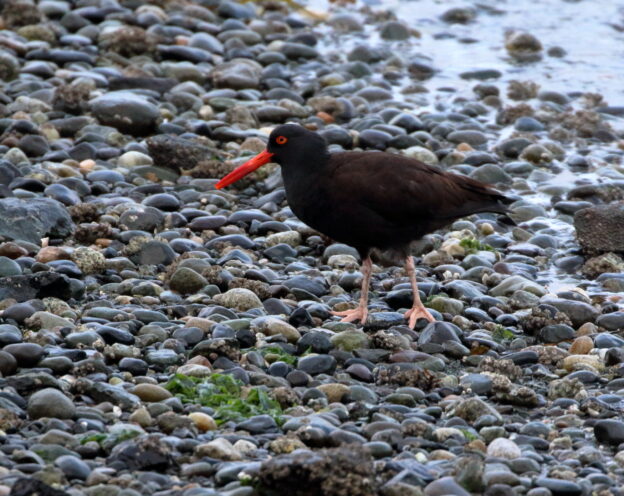
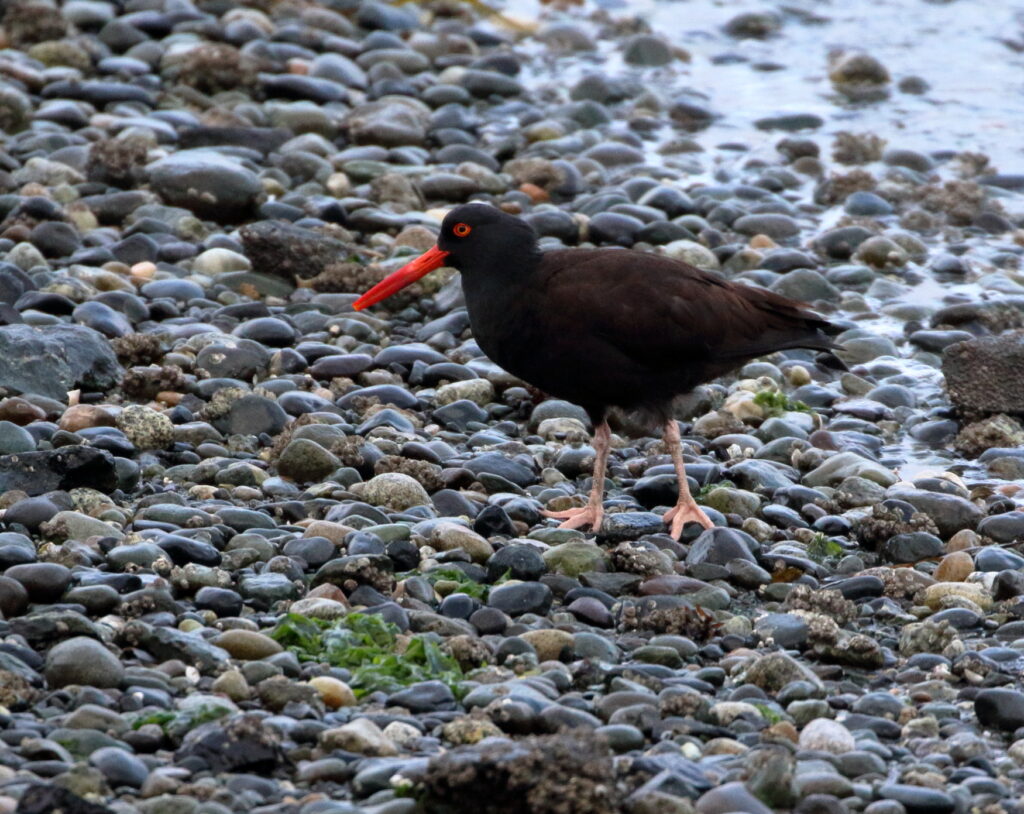
I kept driving, pulling over now and then to scan the shore—no doubt closely monitored by the refinery’s security team. Finally, at one pull-out, I spotted a bird near the top of my trip wish list: a Black Oystercatcher. I watched this magnificent bird from my car for several minutes before it flew off, leaving a smile on my face.

This Black Oystercatcher at March Point definitely strolled into contention for “Trip Bird” honors for our Wedding Day weekend.

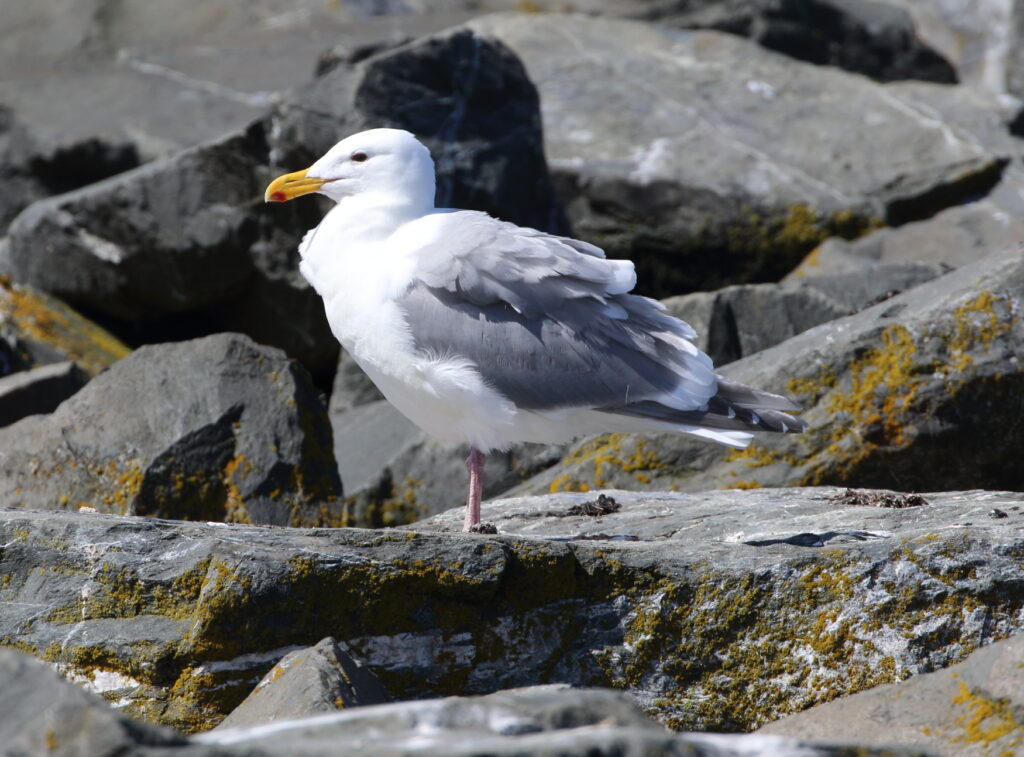
Turning around, I made my way back around immense oil storage tanks and stopped to study some Glaucous-winged X Western hybrid gulls. It took some research and a discussion with Braden to figure out exactly what these gulls were. Glaucous-winged Gulls are known for beautiful soft gray wings and wing tips, but all of the gulls I was seeing looked too dark—yet not dark enough to be Western Gulls. According to Braden, though, this part of Washington State was dead center in the transition zone between the two species, and accordingly, most of the birds were hybrids.

This Glaucous-winged X Western hybrid gull is typical of the gulls I saw during our entire trip to Washington: too dark for Glaucous-winged, too light for Western. Very educational!

On my way back to the hotel, I stopped at Padilla Bay at the base of March Point for a nice visit with some warblers and swallows. There, I heard my year’s first Black-headed Grosbeak giving off its frenetic robin-like song. Then, it was back to Burlington to prepare for the wedding.

The wedding was a smash hit, full of love and music and joy. And never fear, dear readers, I did amass an eBird list of six species at the wedding venue, including the year’s first look at a Black-headed Grosbeak, singing in celebration of Jazz and Brad’s big day. Oh, and they (Jazz and Brad, not the grosbeaks) served Thai food at the wedding. How good is that???

Alas, the next day, we were due to return to Seattle for our flight home. Fortunately, we didn’t need to be at the airport until noon or one o’clock, leaving time for one last morning birding adventure. I really wasn’t sure where I should go. I wasn’t having much luck along the coast, and felt I’d seen most of the forest birds that interested me. But there were two more species I wanted to take a shot at: Black-throated Gray Warbler and Red-breasted Sapsucker.

Ted Reep Park offered the trip’s last birding opportunity—and my best shot at seeing both Red-breasted Sapsuckers and Black-throated Gray Warblers. A bit of bush-whacking required!

It had been years since I’d seen either one of these birds and, well, I was missing them. Lucky me, eBird showed a spot only a mile from our hotel which had recorded both birds in the past month. I wasn’t sure what my chances of finding them might be, but after a quick bowl of oatmeal, I made my way over to Ted Reep Park. I parked in the deserted YMCA lot, despite warning signs threatening that I would be towed. After all, I was a member of the Missoula YMCA!

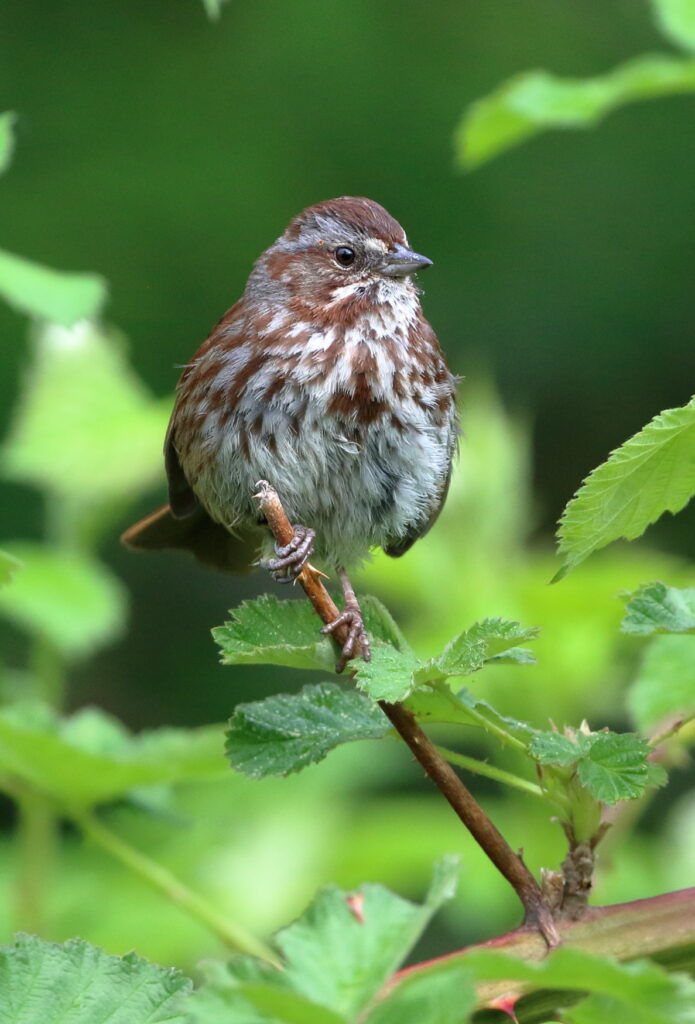
From the time I pulled up, the spot looked—or rather, sounded—promising. Merlin’s Sound ID immediately picked up White-crowned Sparrow, Black-headed Grosbeak, Warbling Vireo, Song Sparrow, Yellow Warbler, and more, and I soon started seeing some of these birds.

You just gotta love Song Sparrows. Not only are they incredibly handsome critters, they often pose for close-up photographs!

This was thick riparian habitat, however, where visuals were hard to come by and most birding was by ear—not ideal for someone like myself with hearing disabilities and a brain that had trouble remembering bird vocalizations. My new hearing aids were a vast improvement over my old ones, though, and with the help of Sound ID I began teasing out most of the species around me. Then, I heard something that got me really excited: a stuttering drumming sound, like a car having trouble starting up! A sapsucker! But which one?

A quick look at my Sibley app told me that Red-breasted was the only sapsucker remotely likely to be in this area, so I plunged into the woods, following the trail toward the stutter-step drumming. Predictably, the trail grew more and more sketchy, and I soon found myself crawling under and over logs that had fallen across the path. Nevertheless, after five minutes, I found myself standing directly beneath the sapsucker drumming.

There were at least two sapsuckers—but probably three or four—and it became evident that they were dueling, perhaps over territories or mates. But darn it, try as I might, I could not spot any of them against the backlit tree trunks and branches! Just as frustrating, the birds kept moving around, so like a Keystone Cop I chased the birds up and down the trail. Finally, I despaired of getting a look at any of them, but by now I at least was confident that these were indeed Red-breasted Sapsuckers. And wouldn’t you know, as soon as I decided that, two of the birds chased each other right by me, their red heads clearly visible even in the dark forest!

Happy, I bushwhacked through raspberry vines and a swath of chest-high grass until I ran into another trail that led me back toward my car. I still hadn’t seen a Black-throated Gray Warbler, and didn’t find one on the hike back, but I was delighted to have discovered such a wonderful birding spot. It again reaffirmed how important it is to protect natural habitats for animals and people. Bravo Washington for protecting places like Ted Reep Park!

Washington Wedding Trip Report!

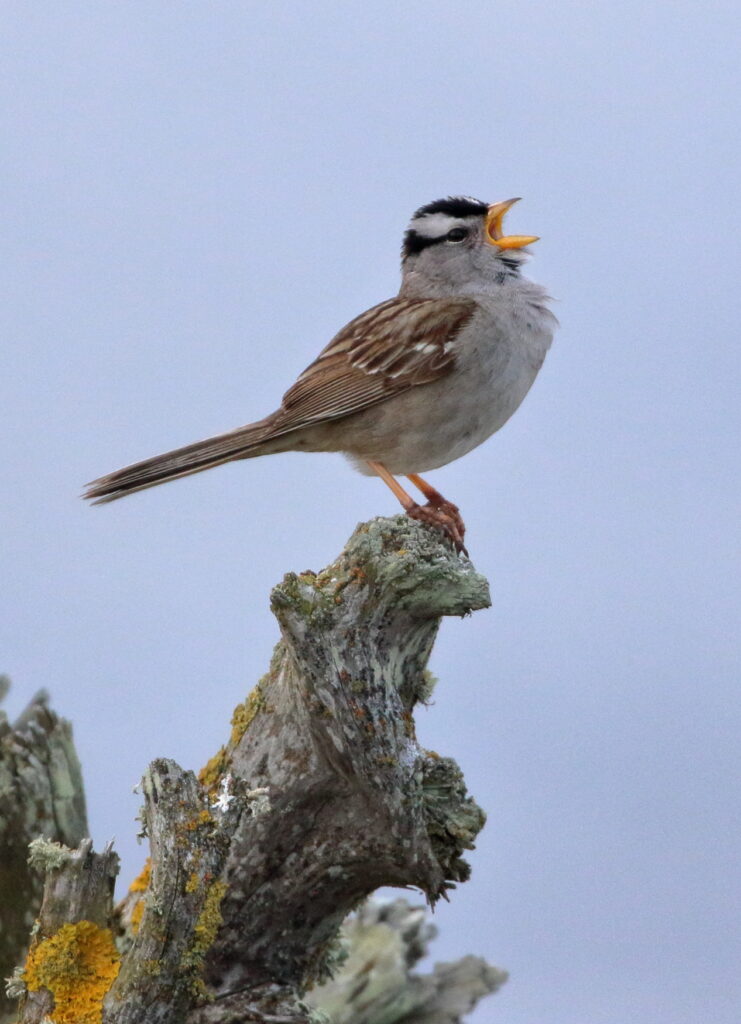
I failed to capture any photos of the Red-breasted Sapsuckers, but just love this White-crowned Sparrow’s pose out at March Point. I think he’s singing “Once we all wean ourselves off of fossil fuels, we can turn this place back into the natural habitat it is meant to be!” At least that’s what Google Translate came up with.

Wedding Birding in Washington State, Part I

Braden and I write FatherSonBirding in the hopes of sharing the wonders of birds and birding, and the urgency to protect them. We do not accept advertising or donations, but if you’d like to support our work, please consider buying *NEW* copies of some of Sneed’s books—First-Time Japan, for instance, or my forthcoming picture book for younger readers, Like No Other: Earth’s Coolest One-of-a-Kind Creatures, available for pre-order now. We appreciate your interest and hope you will keep reading!

If you’ve followed our adventures for a while, you probably realize that Braden and I are opportunistic birders. Sure, we take occasional trips solely for the purpose of birding, but more often we exploit other travel opportunities in the pursuit of our birding passions. This piggy-backing not only reduces our carbon footprints relative to taking dedicated birding trips, it provides cheaper ways to bird places we never would have imagined. Last weekend, for instance, Braden was invited by the nonprofit group Defenders of Wildlife to Washington, D.C., to speak with Maine’s Congressional delegation about the importance of safeguarding and improving the Endangered Species Act—one of the most important pieces of conservation legislation ever enacted in this country. While there, he birded the National Mall, the botanical gardens, and several other places. As Braden winged his way back to Missoula, Amy and I headed to the “other Washington,” Washington State.

Amy and I enjoying the Edmonds waterfront before the big wedding event. You may see some clues that I was also looking hard for seabirds!

We flew to Washington to attend the wedding of the youngest daughter of some of our dearest friends, the Isaacsons, and as we were planning the trip, I have to admit that birding didn’t enter my mind. Shocking, huh? As the date approached, however, I realized I might be able to sneak in a couple of birding outings. Then, as I remembered Amy’s penchant for sleeping in and realized how busy our friends would be preparing for the wedding, I recognized that I might be able to sneak in more than one or two birding sessions; I might be able to hit quite a few different places! I set several goals for myself:

* Bird new places I’d never birded before.

* Find as many seabirds and shorebirds as possible.

* Pick up some songbird targets I rarely got to see.

* Avoid getting killed in Seattle’s traffic.

Although short of waterfowl and shorebirds, Washington Park Arboretum offered a nice urban birding location to see a variety of songbirds including this Spotted Towhee.

We spent our first night in Seattle, and the next morning I woke at 5:30 and made my way to the Washington Park Arboretum, which seemed to have habitat for both songbirds and waterfowl. Here, I made a disappointing discovery—waterfowl and shorebirds had pretty much fled coastal Washington for breeding areas farther north. Bummer, right? I mean, I kind of suspected as much since many of these birds had already passed through or arrived in Montana, but I guess I was hoping to run into a few. On the plus side, I found songbirds aplenty and enjoyed seeing my first Western Tanagers of the year and hearing my first Western Flycatcher—which led to the observation that migrating songbirds probably reach Washington a week or two ahead of Montana.

I’m a sucker for Wilson’s Warblers, which can be hard to find in Montana, and our wedding trip offered several good looks at them.

After collecting Amy and checking out of our hotel, we decided to explore Edmonds, twenty minutes away. Edmonds is a cute little town where the ferry to Kingston departs, but we mostly wanted to poke around looking for coffee shops, bookstores, and other items of interest—including birds. Alas, as we walked along the waterfront area, the waters of Puget Sound looked disappointingly empty. I spotted a few Pelagic Cormorants and hybrid Glaucous-winged X Western gulls, but none of the big rafts of scoters and pelagic species I had hoped for. Nonetheless, I stood on a little rocky viewpoint and carefully scoured the choppy seas with binoculars, wishing I had a proper spotting scope. Suddenly, I saw a black bird with a white head patch and orange-and-white bill about a quarter mile offshore. Surf Scoter! my brain shouted, but I immediately lost it in the chop. As I tried to “reacquire” my target, however, I saw a black bird that looked much different. This one had no colored bill that I could see, but did have a prominent white patch on its flanks. My heart soared as I recognized one of the birds I had most hoped to encounter on the trip: Pigeon Guillemot! Hooray! Ten minutes later, I got a bonus PIGU on the other side of the ferry dock—a perfect reward for my perseverance.

Without a spotting scope, I had to work hard to locate these two dark birds offshore. Can you identify them? The upper-right bird is a Surf Scoter (at the moment hiding its head), and the lower left bird is one of my favorite pelagic species, a Pigeon Guillemot.
Not the best photo, but it does show the Pigeon Guillemot’s distinctive white wing patch as this bird prepares to take off.

The wedding was to be held up near Burlington, Washington, and on the drive up I convinced Amy to stop at another place I had driven by many times but never visited. I wasn’t even sure what it was called, but at various times of year I had seen dozens of ducks spread out across big ponds there. A little research revealed that it was Spencer Island, site of both sewage treatment settling ponds and some restored natural wetland areas. Thank god for Google Maps, because it required quite a convoluted route to reach it off of the freeway.

Spencer Island was a challenge to get to, but undoubtedly offers some incredible “water birding” during winter and migration seasons. During our visit, it was the songbirds that put on a show.

Alas, here as elsewhere, most of the water birds had fled, but a short walk did net us my best look ever at Marsh Wrens, along with glimpses of Anna’s Hummingbirds, which are rare in Montana. However, I encountered my biggest score as we were driving out. I had the window rolled down, when I heard a distinctive “kiddick-kiddick!” from the marsh to our left. In previous years, I doubt I would have even noted it, but one of the great things about birding is that the longer you live, the more experience you acquire, and this time, I knew what it was: a Virginia Rail! My third one of the year already, which is quite astonishing given that Braden have spent entire years never seeing or hearing one at all.

Spencer Island offered only a few waterfowl, but did provide my best-ever Marsh Wren experience along with the year’s third Virginia Rail.

From Spencer Island, my early day was catching up with me, so Amy and I headed straight to our hotel in Burlington for a pleasant afternoon eating Mexican food, reading, and enjoying being on holiday. The wedding was the next day and we looked forward to that. Unbeknownst to moi, however, the trip’s best birding also lay ahead . . .

Stay tuned for Part II on Friday!

Meditating with Loons: Spontaneous Birding Spectacular, Part II

Braden and I write FatherSonBirding in the hopes of sharing the wonders of birds and birding, and the urgency to protect them. We do not accept advertising or donations, but if you’d like to support our work, please consider buying *NEW* copies of some of Sneed’s books—First-Time Japan: A Step-by-Step Guide for the Independent Traveler, for instance, or the best kids’ woodpecker book ever, Woodpeckers: Drilling Holes & Bagging Bugs. Here, we are pleased to continue last week’s “spontaneous” narrative. For Part I, see our last post. Enjoy!

After giving my keynote talk to the Montana Library Association (and yes, it went well, thank you!), I changed out of my good clothes, checked out of my room and hit the road—but not too far. It was early afternoon by now, but before heading home I thought I’d better take advantage of the opportunity to visit Warm Springs Wildlife Management Area, one of Montana’s top birding destinations. It being migration season, the possibilities were almost endless of what I might find, but I kept my expectations low. Why? Primarily because much of Warm Springs is not easily accessible. The refuge consists mainly of several very large reservoirs designed to help clean toxic chemicals from the waters pouring out of the world famous Berkeley Pit copper mine in Butte. The road, however, only gets close to these bodies of water in certain places, so it’s easy to miss rarities that might show up. Nonetheless, I took the “back entrance” into the refuge and soon found myself at the bottom of the large, southernmost reservoir. The scene before me immediately put me in a happy place.

This photo doesn’t capture the size and scope of the Warm Springs ponds—or how amazing they look filled with waterfowl!

Stretching across the water were hundreds, no, thousands of ducks and other water birds, and I quickly set up my scope for a proper look. I usually try to estimate bird numbers wherever I am, but as I searched across the reservoir with the scope, I quickly abandoned that effort. I recorded 5000 coots, but that could easily be low. I also saw hundreds of Northern Shovelers and Ruddy Ducks, and noted plenty of Buffleheads, Ring-necked Ducks, Lesser Scaups, Gadwalls, American Wigeons, and more. A duck party!

Just a few of the birds stretching out before me at Warm Springs. Pop quiz: can you identify three species?

When scoping such a vast array of birds, it’s a natural instinct to look for the unusual or rare species, and after a few minutes, I landed on a pair of Red-necked Grebes—my first of the year. My biggest find, however, was the year’s first Yellow-rumped Warbler (Audubon’s) in the trees next to me! After making an inadequate attempt to eBird what I saw before me, I jumped back in the minivan and continued up the road. I passed a resident pair of Bald Eagles, and then pulled over at a small fishing access next to a long dike that separated this reservoir from the next. I grabbed my binoculars and ventured out onto the dike, and right away saw another Red-necked Grebe. Then, I recognized a bird that made me rush back to the minivan for my camera. I hurried back out onto the dike and trained my lens on it—a Common Loon!

During breeding season, Red-necked Grebes have a circumpolar distribution, but in the US they breed only in a few areas along our northern border. Fortunately, Montana is one of those places—though this guy/gal may well have been heading to Canada or Alaska.

Now, loons are not exactly rare in Montana, but they aren’t gimmes, either (for instance, see post “Rare Bird Hat Trick”). Last year, I saw only one—a quick fly-over at Glacier National Park. If you don’t visit one of the lakes where they breed in summer, you have to catch them during migration. Braden and I have seen a number of COLOs during fall migration, but this was the first I could remember in spring. But wait. As I was trying to get a decent photo of this loon, another one popped up nearby. “No way!” I muttered out loud. But wait, then I spotted a third, and eventually, a fourth! (I think I saw a fifth, but these ‘torpedoes’ can travel so far under water that I can’t be sure.)

This pair of Common Loons defines the word serenity.

Needless to say, I felt “loonstatic.” My only problem? Every bird was backlit, making a good photo impossible. To try to rectify this, I walked around to the parking area where I could get “up-light” of the birds, hoping they wouldn’t depart before I reached a good spot. They didn’t. I took enough photos that I finally got a really nice one (see below). My other problem, though, is that . . . I needed to relax.

After capturing my best COLO shot ever, it was time to Zen out with some quiet loon time.

More and more, recently, Braden and I have discussed the obsession to rack up species and get good photos without pausing to really appreciate them. Both of us, in fact, have been making an effort just to be still in the moment, and with four stunningly gorgeous loons diving for food in front of me, this seemed like a perfect time. I sat down on a rock and set my camera and binoculars on the ground next to me. I watched the loons for a few moments and then just closed my eyes. I thanked the universe for this special moment and tried to breathe deeply, focusing on the now for a few minutes.

Alas, I did not attain “loon-lightenment,” but when I opened my eyes, the loons were still floating, preening, and diving in front of me. Several times, I watched them surface with crayfish in their bills. I’m not sure if the loons did anything special to them, such as knocking loose their exoskeletons, but down the hatch they went. It was beautiful.

A little “crawfish loon-touffée” for lunch!

My birding had not finished, either. After Warm Springs, I tooled up the road a few miles to another spot that many birders don’t take time to check out—Racetrack Pond. Often, there’s not much to see at Racetrack, but I had occasionally stumbled into some treats. Again, it was migration season, so you just never knew. As I pulled off the interstate and turned right, I immediately saw a couple of hundred gulls out on small islands in the pond. “Hm,” I thought. “Maybe I can pick up some California Gulls there.” As I drove closer, however, I realized that they weren’t gulls. They were Snow Geese!

I pulled over and again set up the spotting scope—and not just to see the Snow Geese. I had an ulterior motive. Almost exactly a year earlier, at Browns Lake, I had stumbled into some migrating Ross’s Geese mixed in with a large Snow Geese flock. “Maybe there are some Ross’s hiding in this one,” I thought with an evil grin. I diligently scanned the flock for several minutes, mainly looking for any geese with stubby pink bills. Ross’s, though, also are a bit smaller than SNGO and tend to have a cleaner, whiter appearance. I thought I was going to strike out when I glimpsed two geese that fit the, ahem, bill. I watched them for at least ten minutes before discarding any doubts. Yay! This was only my third time ever seeing Ross’s Geese, and to get them two years in a row felt like an accomplishment. By the way, ROGOs are also a wonderful conservation success story. Their numbers had dropped to just a few thousand by the 1950s. Today, it is estimated that there are more than two million! Let’s hear it for conservation!

Can you pick out the two Ross’s Geese in this photo? Once you know what you’re looking for, they stand out like, well, um, Ross’s Geese. The prominent, clean white goose just right of center is one of them. The other is swimming toward it from about 10 o’clock.

My discoveries weren’t over. At the north end of the pond, I again pulled out the scope to discover a Greater Yellowlegs, a Killdeer, and two real surprises—an American Avocet and five, count ‘em, FIVE Marbled Godwits. “Perhaps they’re heading to the same place as yesterday’s Willets,” I wondered (see our last post). I later learned that large flocks of avocets had been rampaging through the state, so this one was right on schedule.

With the help of my spotting scope, I was able to pick out the American Avocet (far left) and Marbled Godwits (far right) along the far shore of Racetrack Pond.

With another wonderful day of birding under my belt, it was time to head home, but really, these days just primed my birding pump. Many adventures lie ahead—especially when Braden returns home from Costa Rica in a couple of weeks. Be prepared for plenty of posts this summer!