Category Archives: Adventure

Hawai’i: The International Jungle

If you haven’t done so already, please subscribe to our birdy blog by filling out your name and email in the form down in the right-hand column. We will not share your information with anyone. Thank you! Sneed & Braden

During Spring Break this year the Hellgate High School Band travelled to Oahu, Hawai’i for the Pacific Basin Music Festival. Almost every day my friends and I worked with music professors, performed, and enjoyed music in many different forms. The festival provided us with experiences we’d never forget. However, we did not spend every second playing—we actually had quite a bit of free time. During this time, we hiked, surfed, snorkeled and shopped around Honolulu, giving me time to take in the island and its birdlife.

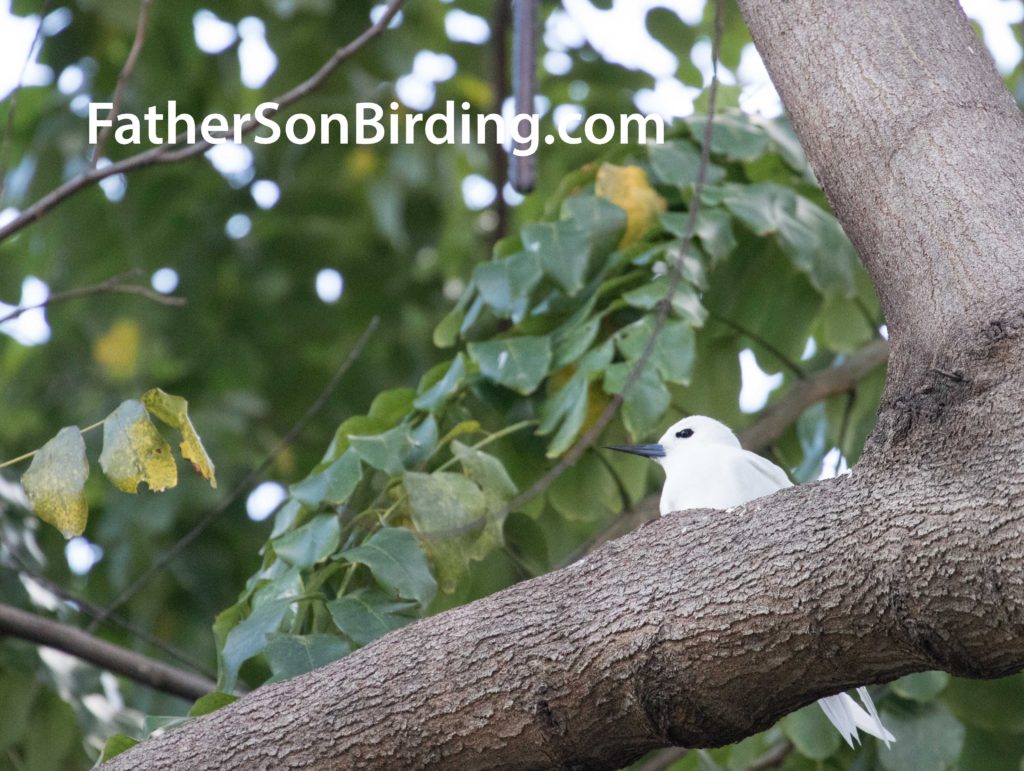
White Terns lay their eggs precariously on bare branches, without nests. In Oahu, the White Terns did not discriminate between native and nonnative trees.

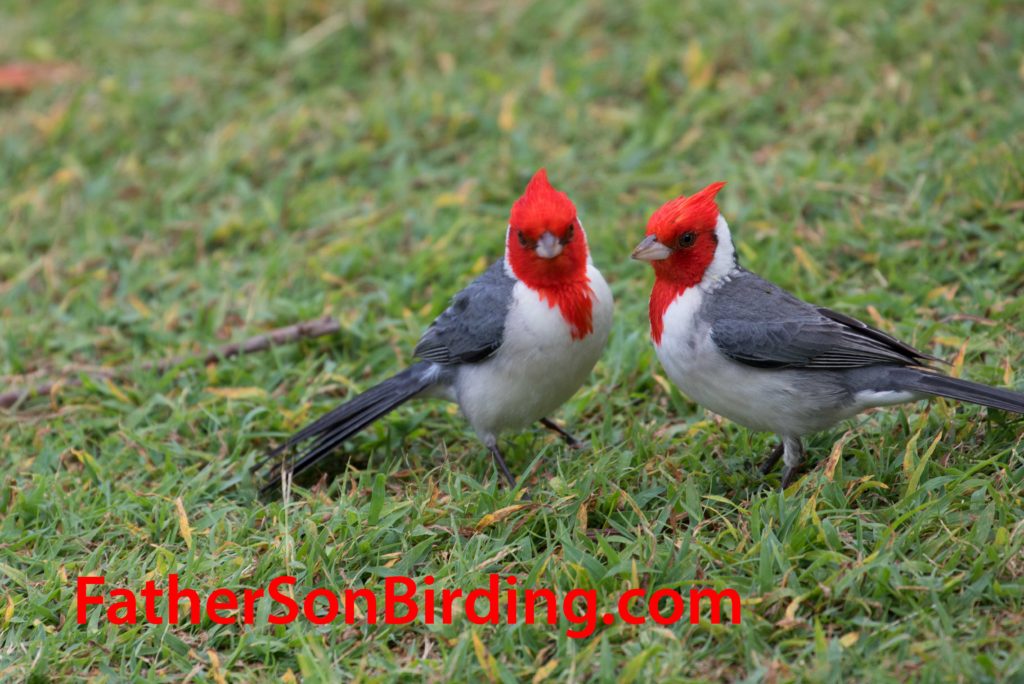
Only about 6 of the birds I spotted on the trip were actually native to the island chain (Brown Booby, Hawai’ian Coot, White Tern, Pacific Golden-Plover, Oahu Amakihi and Wandering Tattler), which opened my eyes to the exotics of the tropics. The city of Honolulu itself was an international jungle, full of plants and birds from all over the globe. A few native Hawai’ian birds had taken to the civilized landscape; wintering Pacific Golden-Plovers lounged on lawns, suited in their dappled patterns, and ghostly White Terns floated between skyscrapers. The majority of the birds, though, hailed from other continents. Familiar birds included Rock Pigeons and House Sparrows (Europe), and House Finches and Northern Cardinals (North America). Lawns yielded a high diversity of species, including Common Mynas, Red-vented Bulbuls, Chestnut Muñias, Zebra and Spotted Doves, and Java Sparrows (Asia) and Cattle Egrets, Common Waxbills, African Silverbills and Yellow-fronted Canaries (Africa). Red-crested Cardinals (South America), which are brilliant gray birds topped with crimson crests, sang from palm trees.

Red-crested Cardinals swarmed the streets of Honolulu. They were almost as common as pigeons!

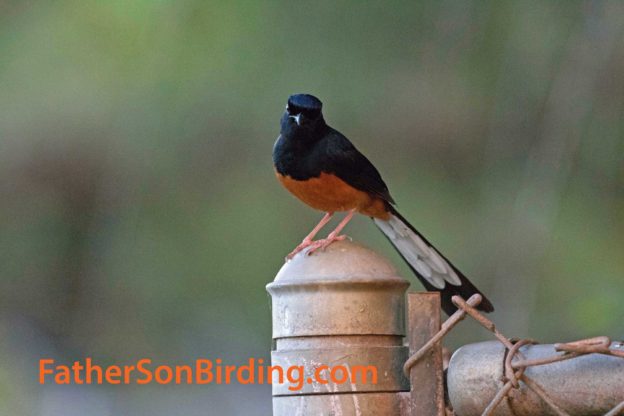
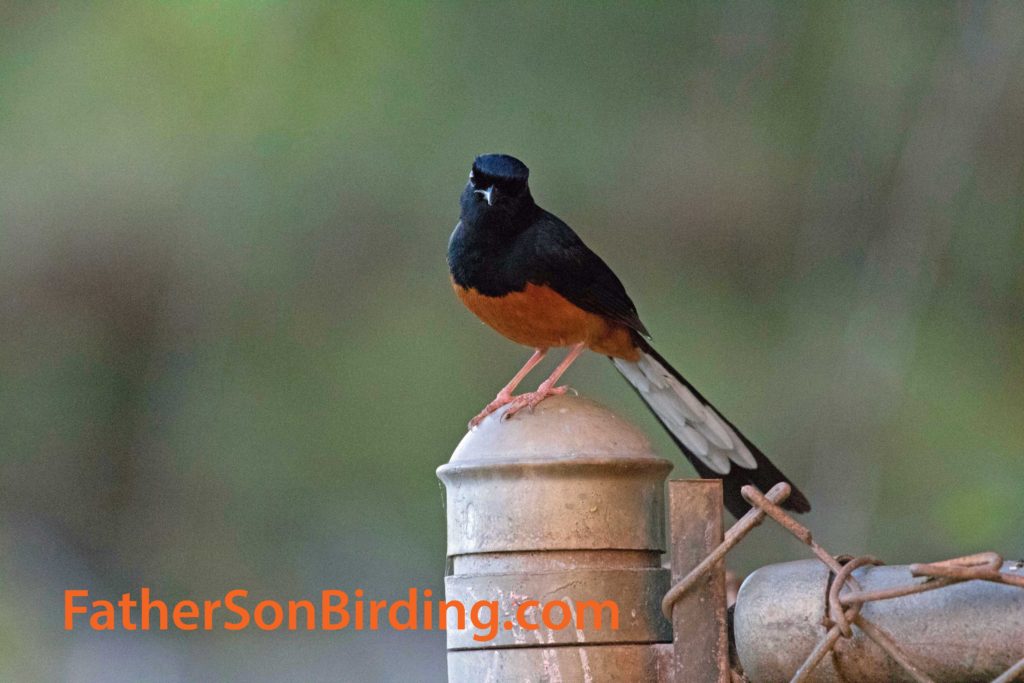
One morning, when hiking through densely rain-forested canyons, I encountered a plethora of different species. I did manage to hear one native, the Oahu Amakihi, but the forest echoed with mostly non-natives’ songs, like in the city. White-rumped Shamas (Asia) belted out complex, froglike songs, and Red-billed Leiothrixes, Japanese White-eyes and Red-whiskered Bulbuls (Asia) lurked high in the damp canopies. Red Junglefowl (Asia), the ancestors of domesticated chickens, as well as actual domesticated chickens, ruled the streets. By the end of the trip I had reached my goal of 30 species, even if one of them was an unidentifiable white booby (I’m guessing a Red-footed) dodging the waves off of North Shore.

The White-rumped Shama is a subtly beautiful Asian songbird that now makes its home on the forest-covered slopes of Oahu’s extinct volcanoes.

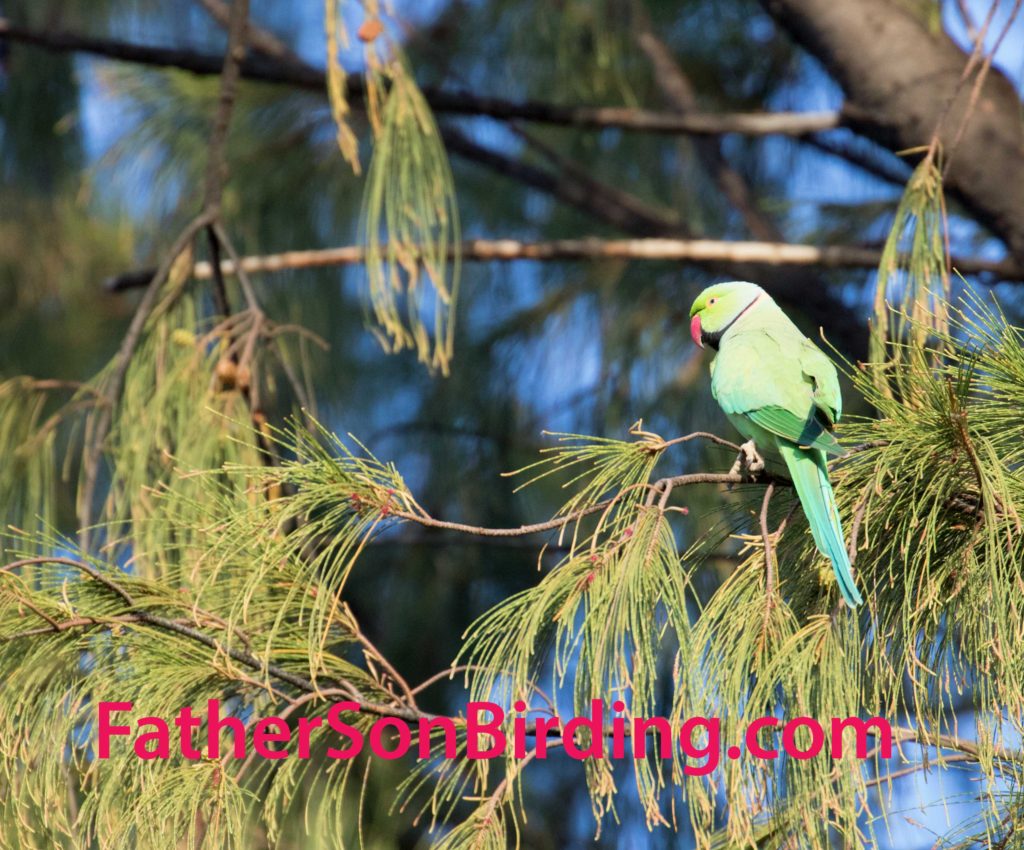
We ran into large numbers of Rose-ringed Parakeets (Asia and Africa) on several occasions, and I glimpsed a pair of Red-masked Parakeets (South America) shooting past the scrubby slopes of Diamond Head volcano in southeastern Honolulu.

Rose-ringed Parakeets (or known by pet-lovers as Indian Ringnecks) aren’t just introduced to Hawaii. Parrots escaped from a damaged aviary in Bakersfield, California a while ago, and now also can be found there with a little effort.

This raised controversial questions. Most of these species definitely did not belong here, that much was true. But now, thanks to human involvement, they had established and thrived, and many of them caused no obvious harm to the native birds. So, what should we do with them? Should we eradicate them, killing innocent birds because of a crime humanity committed? Or should we allow them to stay, letting these foreign species form their own niches in Hawai’i and other places?

In the case of many of the birds, it is too late. For better or for worse, they will be here forever, and I think that if they are not harming indigenous birds, we should let them be, and let nature decide what to do with them. Introduced predators such as cats, rats, and mongooses, however, are another matter and take a terrible toll on all of the islands’ birdlife. More resources should definitely be allocated to eliminating these destructive invasive pests.

San Diego Seabirds

Well, it looks like we have solved our Russian hacker problems but we’re still missing half of our subscriber list. You can help by sharing this with your birding friends and urging them to resubscribe. If you have a problem doing this, please let us know at collard@bigsky.net and I’ll subscribe you. We thank you, birder to birder!

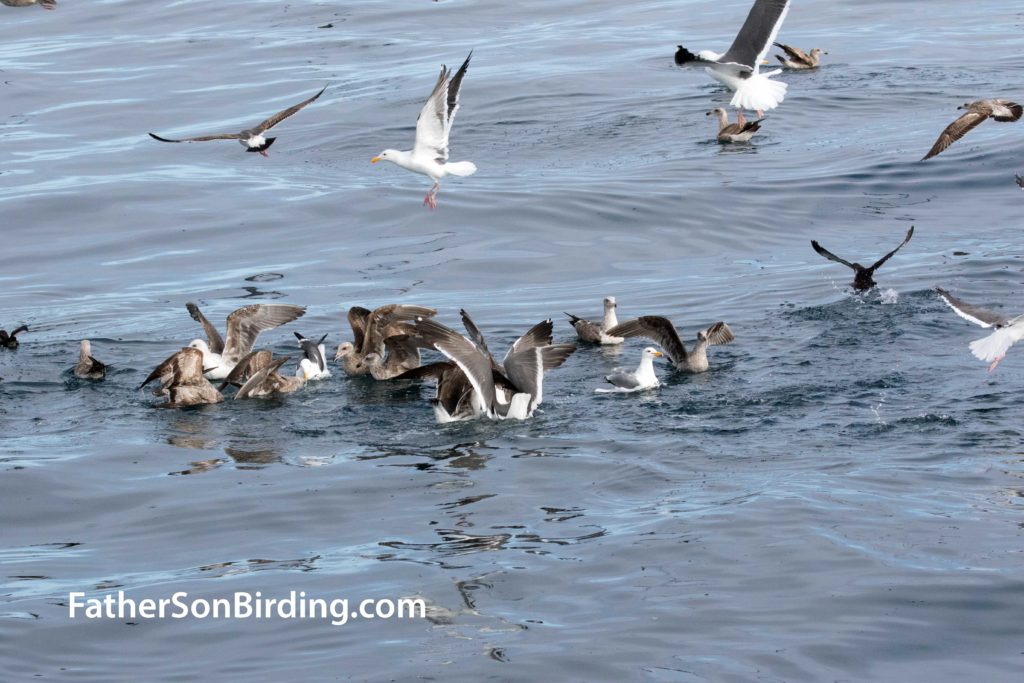
Our last day of the San Diego Bird Festival took us away from shore on the mighty birding (and perhaps fishing) vessel New Seaforth. This would be Braden’s and my third California pelagic birding cruise and in many ways it proved the most memorable. Almost immediately upon leaving the safety of Mission Bay, we began seeing dozens of Black-vented Shearwaters heading north and, of course, we followed them. They led us to a massive fish feast, where from 5-10,000 shearwaters gorged themselves on acres of anchovies. At least a thousand gulls, countless cormorants, and sea lions and common dolphins joined the fray.

Every time a shearwater surfaced stuffed with anchovies, gulls mobbed it until it regurgitated part of its catch. Note the shearwater on the far right fleeing the gang ‘o gulls!

After enjoying this spectacle for half an hour, we turned south and angled farther out to sea. Braden said, “I have three priorities today: Scripps’s Murrelets, Pomarine Jaegers, and Brown Boobies.” My own priority was simpler: I really wanted to see a Brown Booby—or any booby for that matter. It wasn’t long before our target species began showing up.

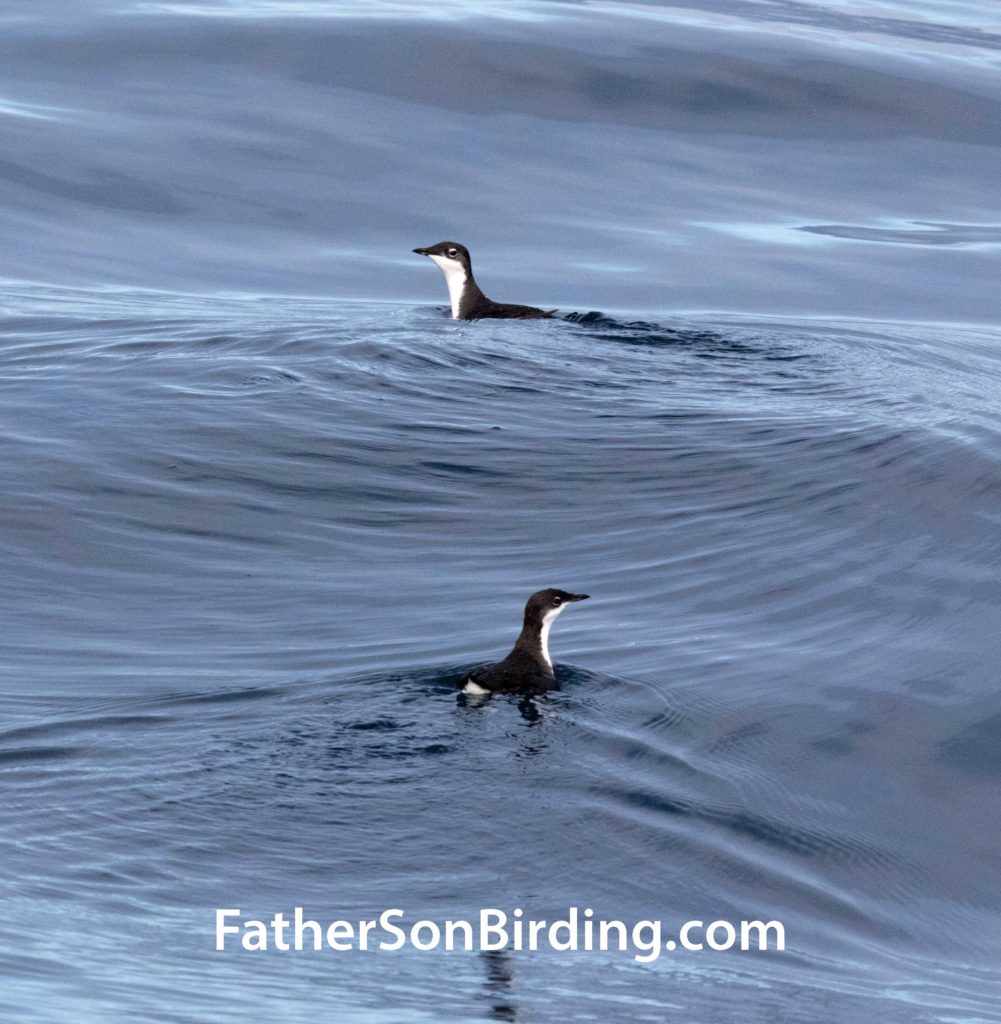
Scripps’s Murrelets were only described for science in 1859 and were heading toward extinction before efforts to rid their nesting islands of invasive rats and cats.

Undoubtedly the stars of the day were the Scripps’s Murrelets. These birds nest only in the Santa Barbara Channel Islands and on Mexico’s Coronado Islands, which loomed in the distance. The murrelets lay gigantic eggs compared to their body sizes—a full twenty percent of an adult’s weight. This advanced “in egg” development is no accident. Only two days after hatching, the chicks sneak away to the ocean to be raised by their parents almost entirely at sea. As we steamed south, we saw more and more of these adorable alcids, usually floating in pairs.

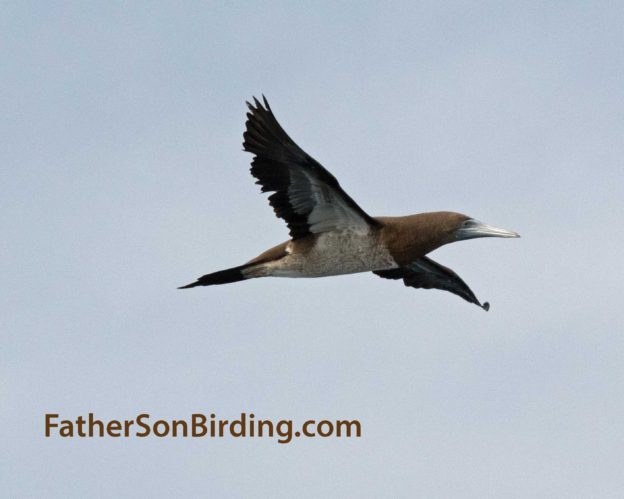
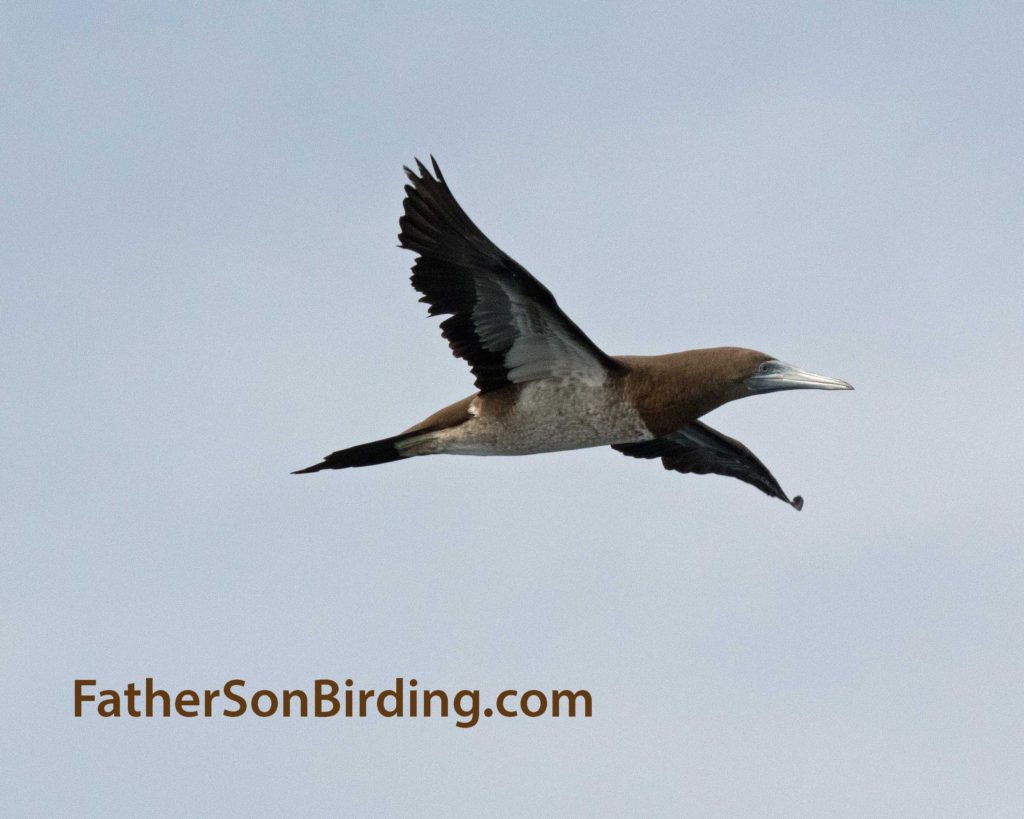
The boat “chummed” with popcorn, and that kept the gulls busy behind the boat, but also attracted brief visits from Braden’s second target, Pomarine Jaegers. Then Paul Lehman, our leader for the day, shouted over the PA, “Brown Booby at 12:00 o’clock, coming straight toward the boat!”

Braden and I had longed to see a booby in American waters since visiting the Galapagos in 2016.

I hurried to the rail in time to see the elegant “gannet shape” of the booby as it sped fifty yards off the port side. The bird even did a quick circuit around the stern, giving us all good looks at its handsome chocolate-covered head and back before speeding away again.

“Yes!” I whispered to myself.

The day wasn’t without its challenges. The steady 3-foot swell took a toll on Braden, forcing him below deck for part of the journey. Still, he agreed that the birds were worth the queasiness and, as if to drive home the point, a pod of common dolphins escorted us part of the way back to the mainland.

Hasta la vista, San Diego—until the next time!

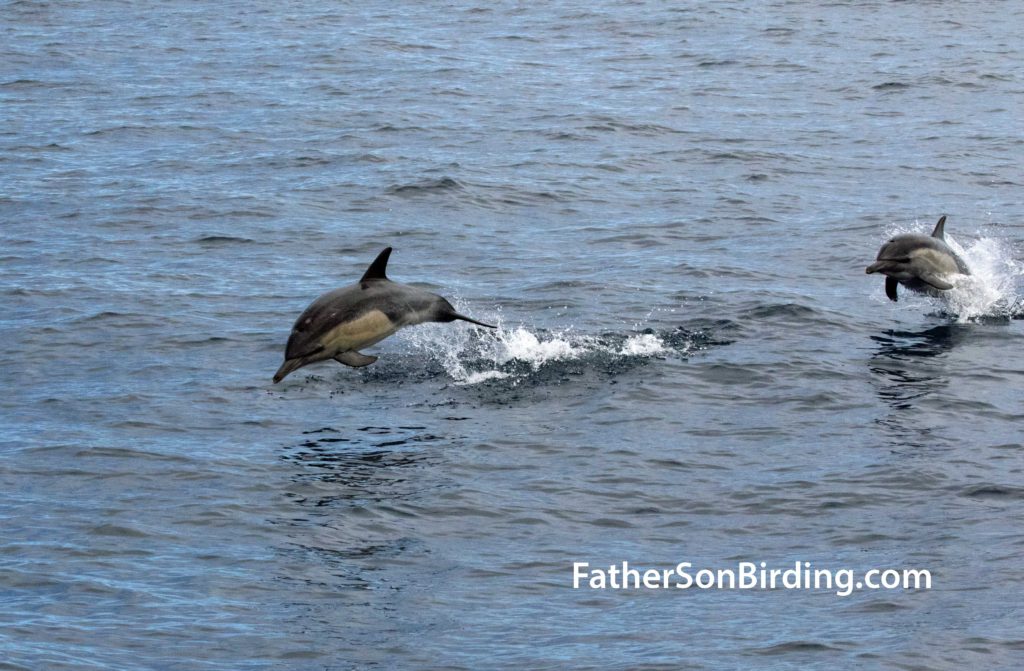
Dolphins are a highlight of any pelagic birding adventure—even if they are mammals!

Big Day Mentality

This is the Big Day Mentality: Every species, no matter how rare, is worth one tally. During a 24-hour period, a team of birders try to collect as many tallies as possible; the end total is the sum of every single bird species seen or heard during the day by at least two members of the team. At the San Diego Birding Festival, my dad and I were invited to be “first lieutenants” on two Big Day field trips.

We co-led our first outing under the expert leadership of veteran birder Phil Pryde, a local San Diegoan who had an ambitious schedule planned out for the day, in order to maximize the amount of species we saw. From dawn to dusk we scoured San Diego county, which is larger than Delaware and Rhode Island combined; a bird only counted if one of the leaders and one of the participants identified it. By the end of the day we had arrived at a total of 113 species, and my dad and I at just over a hundred individually. The number wasn’t bad, and the day had given us a rough idea of how many birds to expect for the next Big Day. Overall, though, the day hadn’t been very “birdy”—we had missed quite a few common species.

At Lindo Lake we spotted several pairs of the most photogenic Wood Ducks we had ever encountered!

On our next Big Day, under the guidance of our good-natured chief, Eitan Altman, we were determined to break this record. Unfortunately, the conditions didn’t look good—a low, wet mist had rolled over the area. Thanks to the rain, we didn’t have to rush inland to get early-morning songbirds (they were probably huddled in their warm, dry nests with no intent on warbling at the weather), so we birded along the coast at a relaxed pace. While doing this, we saw an unexpectedly high number of species, including Common Loon, Surf Scoter and Brant, which had not been a guarantee, a huge flock of Black Skimmers, and rarities such as Glaucous-winged Gull and the well-known Reddish Egret which hung out in the San Diego River Estuary. The eccentric bird’s gait reminded me of Kramer from the TV show Seinfeld.

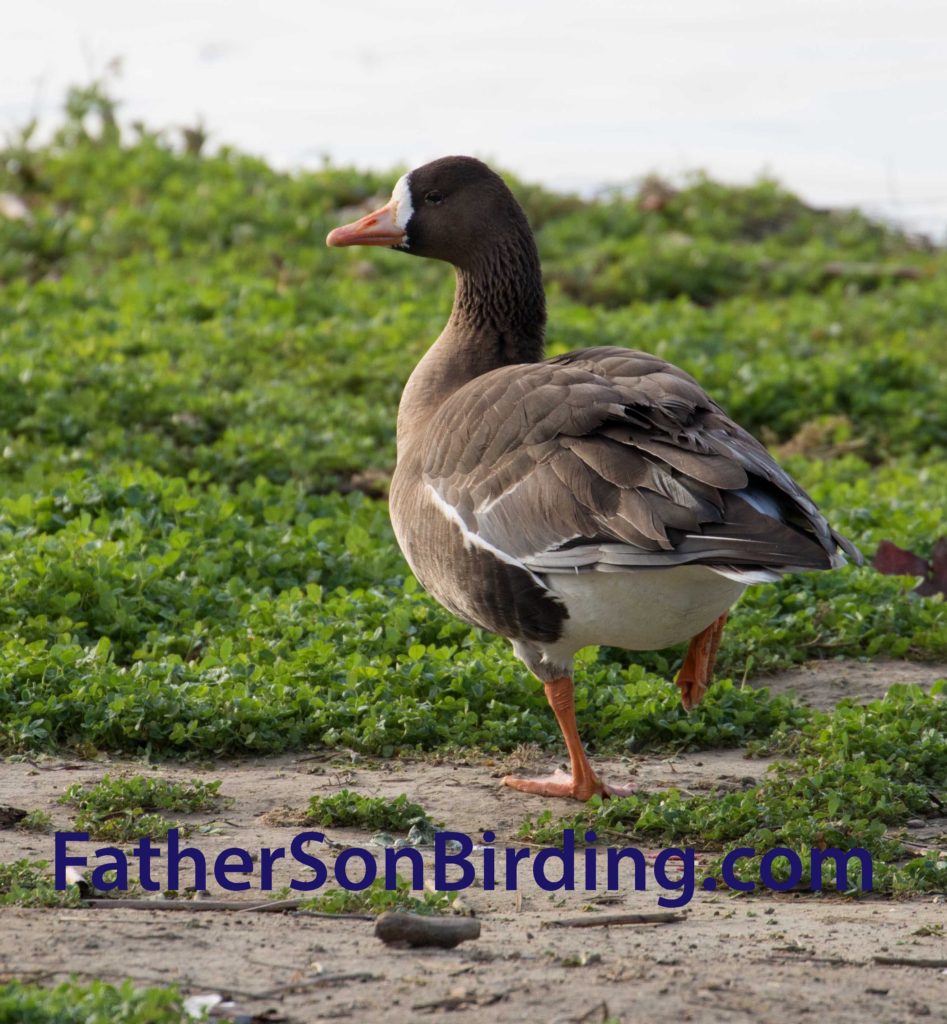
This Greater White-fronted Goose is a regular at Lindo Lake.

Finally, around nine in the morning, we headed inland to Lindo Lake, the place which had yielded the highest number of species to us on the previous Big Day. We tallied high numbers of waterfowl, woodpeckers and more, including some more rarities: the resident Greater White-fronted Goose hanging out with a flock of domestic geese, not one but two Yellow-bellied Sapsuckers, and a Bonaparte’s Gull that had somehow wound its way inland.

We continued hitting different habitats to nab species, and by three in the afternoon our total sat at 120 species, the most recent being an altitudinally-challenged Band-tailed Pigeon, a calling Canyon Wren and the ever-rare American Robin. As soon as I confirmed our total, Eitan began thinking of other species we could pick up, now determined to beat his personal record of 128. On our way back to the coast we stopped at places to grab specific birds, including White-tailed Kite and Greater Roadrunner. The tide was out now, and at the San Diego River Estuary we grabbed another six species, though unfortunately none of the rarities being reported there (Tricolored Heron, Mew Gull, Eurasian Wigeon) except the spunky Reddish Egret and a beautiful double rainbow.

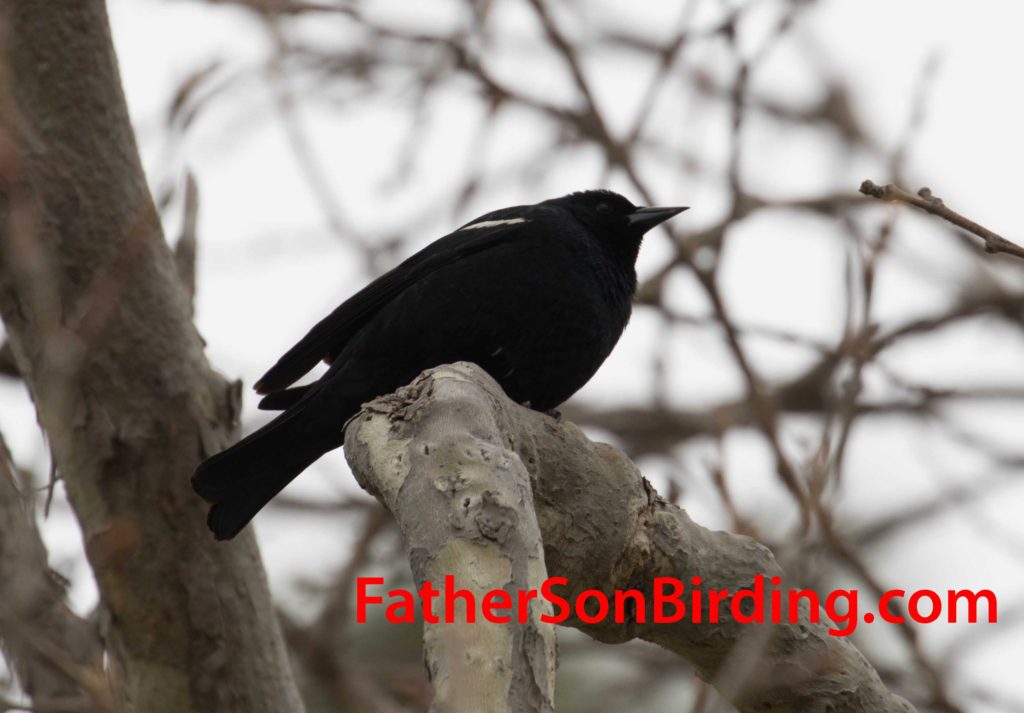
We spotted a wintering flock of blackbirds at Lindo Lake, including many Tricolored Blackbirds, a California endemic.

As the day grew closer to our deadline of five o’clock, we opted to try and get a few last birds at a place called Fiesta Island, arguing over possible birds:

“Was that a Northern Harrier?”

“I don’t think so.”

“Are you sure?.”

And finally, right at the entrance to the island we hit 130 with a Spotted Sanspiper bobbing along the rocks of the coastline. A pair of American Kestrels on the actual island sealed the deal.

We finished the trip, said our goodbyes, then responded appropriately to our biggest day ever by collapsing into bed.

Birding the Mexican Border

Due to the continuing onslaught of Russian hackers (aka jerks), we’re experimenting with how best to handle new subscriptions. If you’d like to make sure you get subscribed please shoot us an email at collard@bigsky.net with your name and email address and we’ll put you on. You can also use the subscription box down in the right-hand column. Thank you for following us—and for your patience with this crazy world!

Listen to our interview with Sarah Aronson on Montana NPR’s “The Write Question” which aired Thursday, March 7!

Last week, Braden and I had the opportunity to attend the San Diego Bird Festival and do some of the most intense—and fun—birding of our lives. The festival will undoubtedly fill several posts, but before it began, we wanted to do something we’d been thinking about for at least a year—bird the California/Mexico border.

The border couldn’t have provided a greater contrast between the open wetlands and scrub on the U.S. side and the bustling city of Tijuana right across “la frontera.”

Because of a missed connection, we didn’t reach San Diego until 1 p.m., but we picked up our rental car and made a beeline down I-5 toward Tijuana. Our destination was the actual spot where the border meets the Pacific Ocean, and we weren’t sure how close we could drive. We ended up in a parking lot about a mile east and north of our destination and began trekking along a dirt road heading toward the ocean. It was a surreal experience as helicopters circled overhead—Navy fliers, evidently, training for duty—and the city of Tijuana pulsed just beyond the formidable border wall a mile to the south. Around us, though, stretched intertidal wetlands and fields, where we picked up Savannah Sparrows and meadowlarks and collected a number of duck species and a lone Eared Grebe.

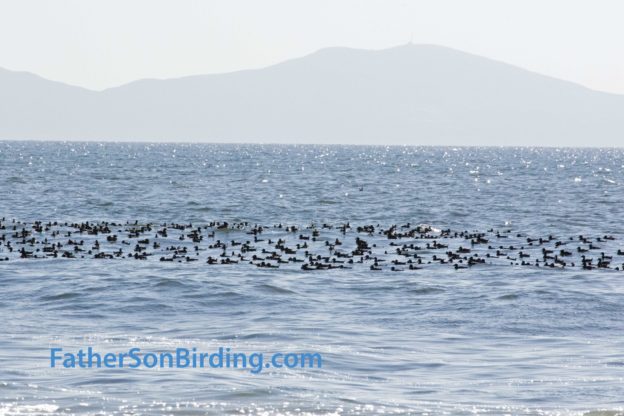
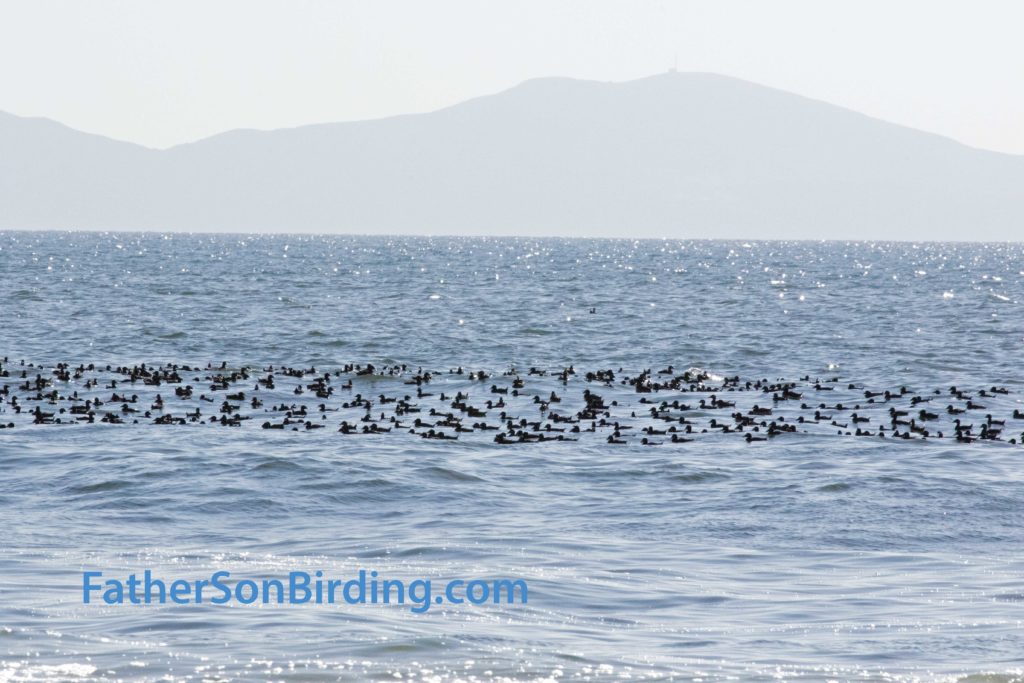
This group of 500 Surf Scoters delighted us—especially when Braden identified a Black Scoter among them! Note Mexico’s Coronado Islands in the background—an important nesting site for Scripps’s Murrelets.

After hitting the beach, we headed south, the border fence looming in the distance. Almost immediately, we got a great surprise—a group of 500 or so Surf Scoters floating just offshore. For we Montana boys, this was a true delight—made even more so when Braden discovered a Black Scoter in one of his photos! We were hoping to go all the way to the fence and talk to some folks on the Mexico side, but a stoic Border Patrol agent shooed us back.

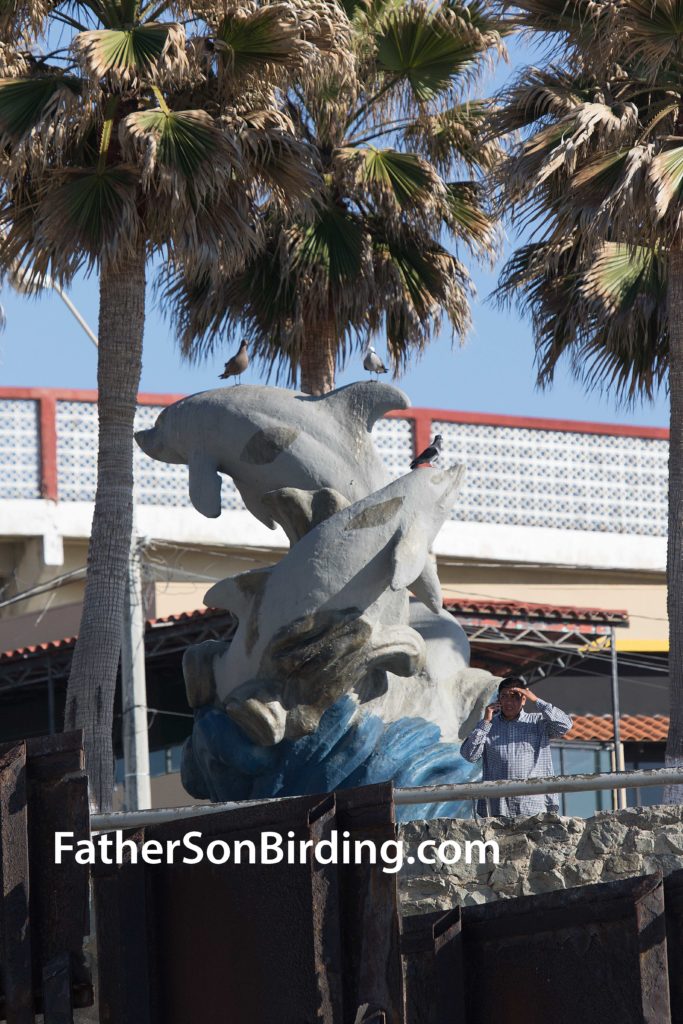
The two Heermann’s Gulls on top of these dolphins were vaunted additions to our Mexico list!

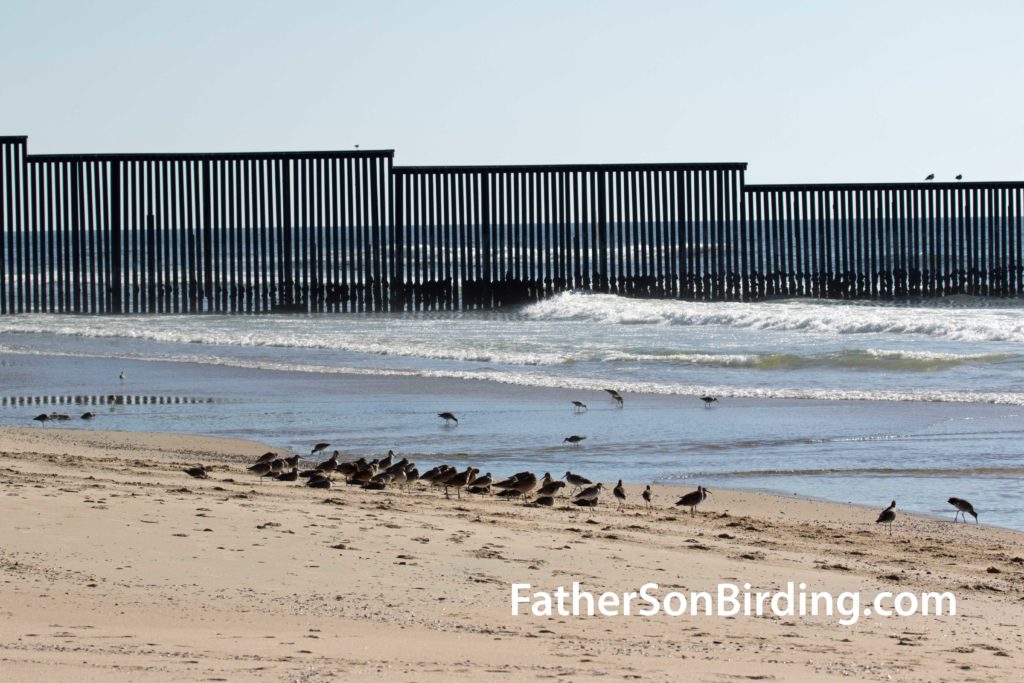
Undaunted, Braden said, “Let’s start a Mexico list,” so we spent half an hour watching birds perching on the border fence and flying between nations—without passports! President Trump would have been furious. In all, we tallied seven Mexico species: Rock Pigeon, Willet, Heermann’s Gull, Western Gull, Ring-billed Gull, European Starling, and a lone Willet sitting on the fence. Oh yeah, and a group of twenty Surf Scoters who had drifted across the border without a care in the world!

Next Up: San Diego Big Day #1!

These Willets weren’t the only birds who totally ignored our artificial geopolitical boundary. Go Willets!

Birding San Antonio’s River Walk? Are You Nuts?

To Subscribe to FatherSonBirding—and nothing else—please fill in your email address in the box down in the column to your right. Thanks!

If you’ve ever visited the downtown River Walk area of San Antonio, you’d be forgiven if you viewed it as less than a premier birding destination. Grackles, starlings, pigeons, and freakazoid hybrid ducks that grew up too close to Chernobyl overrun the place. Still, as a birder, I felt obligated to give it a legitimate chance, so on my work trip last weekend, I determined to explore the River Walk’s distant outposts.

From our recent trips to Texas and Georgia, we are learning just how well Red-shouldered Hawks adapt to an urban lifestyle. A big thank you to my daughter for letting me steal her point-and-shoot camera for the trip!
How many margarita-wielding tourists do you suppose notice this Red-shouldered nest?

Day 1: Even before leaving the main tequila-drenched tourist loop, I caught a surprising shape flashing above the river and landing in a nearby tree. I hurried to the top of a bridge for a closer look and, sure enough, IDed a Red-shouldered Hawk surveying potential prey (tourists?) below. Its mate soon swooped by and I located their nest in a tall palm near the junction of Commerce Street. “Whoa! Good start,” I thought to myself, but more surprises awaited me.

In the nearby Villita market area, I picked up Blue Jays, White-winged Doves, mockingbirds, and an unanticipated Orange-crowned Warbler diving into a drainage grate. Then, joining the main river, I began working my way downstream to meet a trio of Double-crested Cormorants near a small dam. “What the heck are they doing here?” I asked, astonished—but then found seven Neotropic Cormorants nearby! Before hurrying back to my conference, I rounded out my three-mile expedition by picking up Yellow-rumped Warblers, Ruby-crowned Kinglets, Northern Cardinals and my biggest prize of the day, a Lincoln’s Sparrow co-mingling with some House Sparrow hoi polloi.

Even though I saw them on the eBird checklist, the presence of cormorants on the uber-engineered San Antonio River caught me by surprise.

Day 2: After delivering a keynote address at the wonderful TCTELA conference, I had nervous energy to burn so decided to skip lunch and head directly upstream. As on the previous day, the farther I got from downtown, the better the habitat, and the better the birds. I saw some of the same species as the day before, but was delighted to flush six Inca Doves and a Yellow-rumped on the grounds of the San Antonio Museum of Art while two Black Vultures circled overhead.

I hadn’t intended to hike all the way to Brackenridge Park (about three miles each way), but am glad I did. In oaks along the trail, a Rufous Hummingbird landed next to me and I spotted an elusive songbird of some sort moving through the trees. I spent five minutes trying to get a clear view, and then . . . Blue-headed Vireo! Only my second one ever! In the marsh at the south end of Brackenridge, I added a lone Egyptian Goose, an Eastern Phoebe, and a Great Egret to my growing list. Then, I saw a startling splash of red fly to a nearby branch. Vermillion Flycatcher!

Okay, I admit it. When I saw this Egyptian Goose, I at first thought it was a Black-bellied Whistling Duck. In my defense, it was only the second time I’d seen these guys!

The lesson? Once again, that birding never fails to surprise and please, and can turn any trip into an adventure. After returning to the main tourist area, I decided to reward myself for my exploits with cheese enchiladas and a Corona, all the while gazing up at the flights of grackles and starlings above me.

Up next: my report on my first Uber ride and San Antonio’s Botanical Gardens—if Braden doesn’t come up with something even better!