Category Archives: Adventure

Our 50th Post—Philmont Scout Ranch, New Mexico!

Braden celebrates our “Half-Century” post with a lively recount of our two-week backpacking adventure in New Mexico. Why not celebrate with us by subscribing using the box on the right below? As always, feel free to share this with other birders, bloggers, Scouts—anyone you wish!

My dad and I recently got back from a two-week backpacking adventure on the Philmont Scout Ranch, a 220-square-mile swath of wilderness in northern New Mexico. The ranch is the largest of the Boy Scouts of America’s High Adventure Bases, and is jam-packed full of wildlife, history, culture and breathtaking experiences. Our trek, which we did with twelve other scouts and adults from our troop in Missoula, covered 74 miles. During this time, we hiked through canyons, and summited mountains, including the Ranch’s highest peak, Mount Baldy, at 12,441 ft. We also were exposed to and learned a wide variety of new skills at staffed camps we visited, including how to pack and unpack a burro, how to build a railroad, how to blacksmith, how to lasso, how to shoot Old West-style guns and black powder rifles and more.

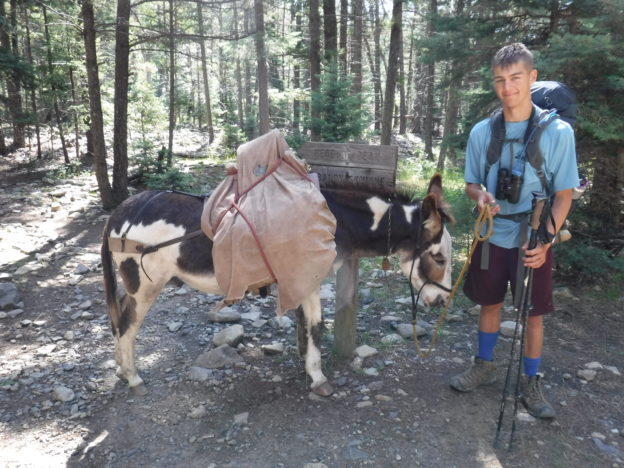
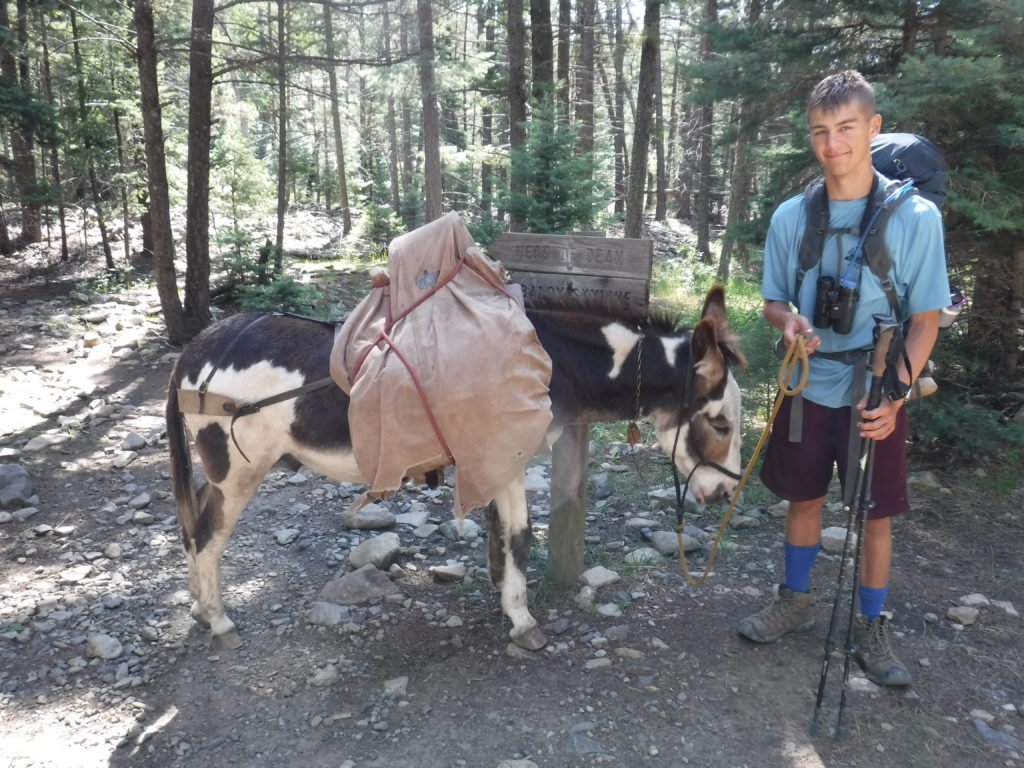
Braden with our trusty Burro, “Nigel”—named because, when necessary, he could turn it up to “11”! We were lucky to have Nigel’s company for two days of our trek.

The trek also exposed us to a wide variety of diverse habitats. We travelled through Ponderosa Pine savannah and forest, valley riparian, desert scrub, spruce-fir forest, alpine meadow, aspen forest, subalpine forest and alpine tundra. We saw many different species of animals throughout our journey, including Monarch and other kinds of butterflies, pronghorn, mule deer, a rattlesnake, bats, and a praying mantis, not to mention evidence of elk. And then, of course, were the birds.

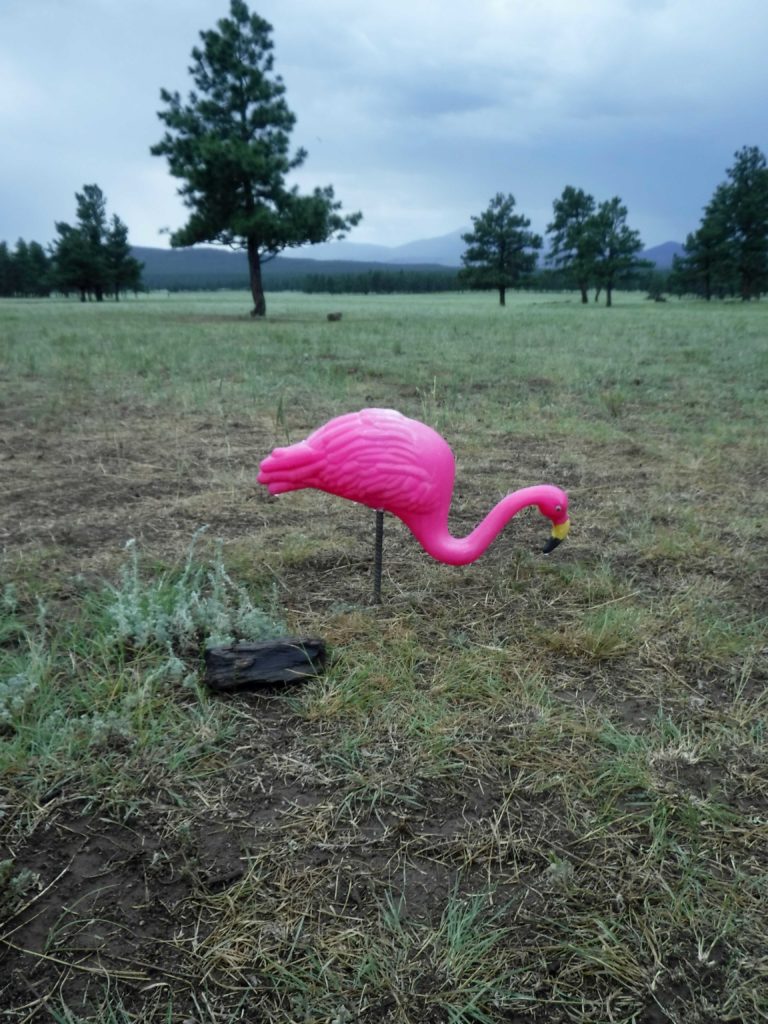
Because we didn’t haul our five-pound cameras with us, this was by far our best bird photo from the trip. Flamingoes in New Mexico? Who knew?

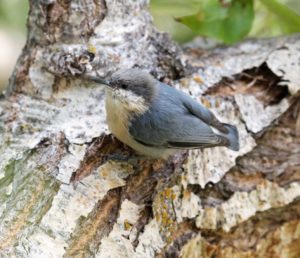
My dad and I together tallied a total of 84 species throughout the trip, including the birds we spotted in the desert on the drive from Albuquerque to the Ranch. The most common species we saw were Spotted Towhee, Cordilleran Flycatcher, Western Wood-Pewee and Common Nighthawk, which we saw almost every day. These four birds had adapted to almost every habitat on the ranch, especially the Cordilleran Flycatcher, which we tallied everywhere, from lowland riparian to subalpine forest, missing it only in the Ranch’s Base Camp. Other common birds included Pine Siskin, Red Crossbill, Rufous and Broad-tailed Hummingbird, Western Bluebird, American Robin, Pygmy and White-breasted Nuthatch, Mountain Chickadee, Chipping Sparrow, Black-headed Grosbeak and Western Tanager. What was especially interesting was the abundance of Black-headed Grosbeaks in most of the habitats we visited; while they seem to be much more riparian-based in Montana, we saw them in scrub, second-growth, aspen and spruce-fir forest.

We were surprised to commonly encounter White-breasted and Pygmy Nuthatches—but rarely Red-breasted—on our twelve-day trek.

Lesser Goldfinches were also quite common, though were much more exclusive to riparian areas. The subspecies here was different from the west coast—they had more solidly black backs, though still kept the same green necks. The main subspecies of Dark-eyed Junco at Philmont was also interesting, it being the Gray-headed rather than the Oregon we were used to. These juncos were slate gray with red backs and dark spectacles. More common Montana birds like Red-breasted Nuthatch, and both kinglets only occurred at very high altitudes.

Braden’s keen eyes and ears allowed us to pick up Clark’s Nutcrackers and most of Philmont’s other resident corvid species, though good looks were hard to come by!

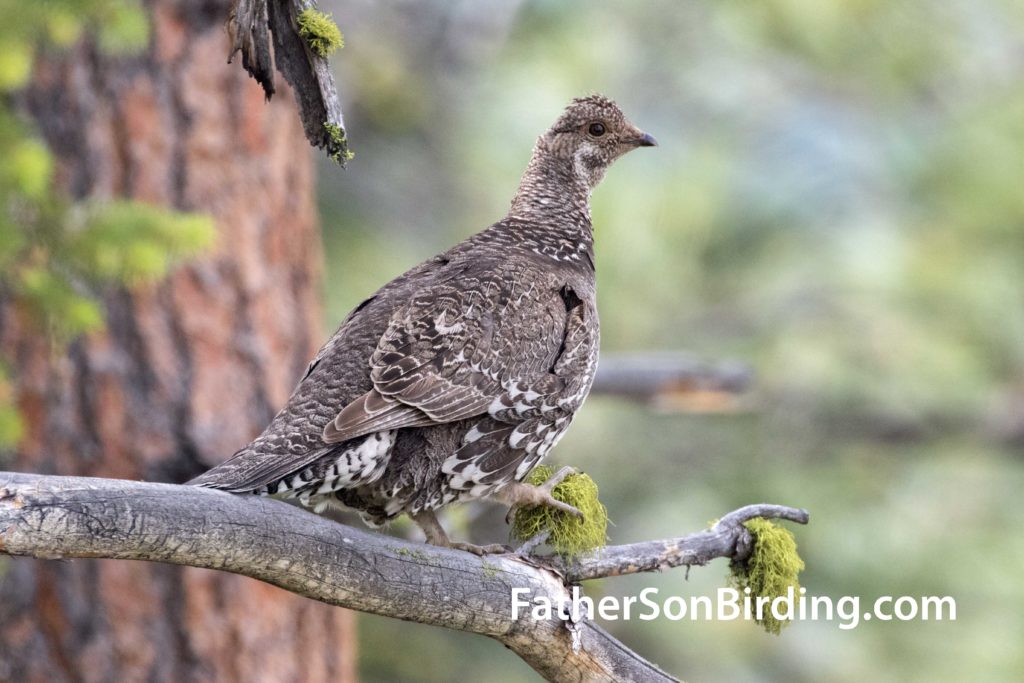
While at Philmont we spotted six of the seven reported corvids (Steller’s Jay, Common Raven, Clark’s Nutcracker, Pinyon Jay, Gray Jay, Woodhouse’s Scrub-Jay), missing only the rare desert-specific Chihuahuan Raven. We also managed to get three lifers during the trip, those being the beautiful pine-loving Grace’s Warbler, the by-ear-only Common Poorwill and the previously mentioned Woodhouse’s Scrub-Jay. Other highlights include a family of Dusky Grouse, a small flock of Band-tailed Pigeons, a nesting pair of Williamson’s Sapsuckers and the hordes of migrating hummingbirds attacking the feeders at Base Camp, where we saw four species including with Black-chinned and Calliope. Overall, it was a great trip!

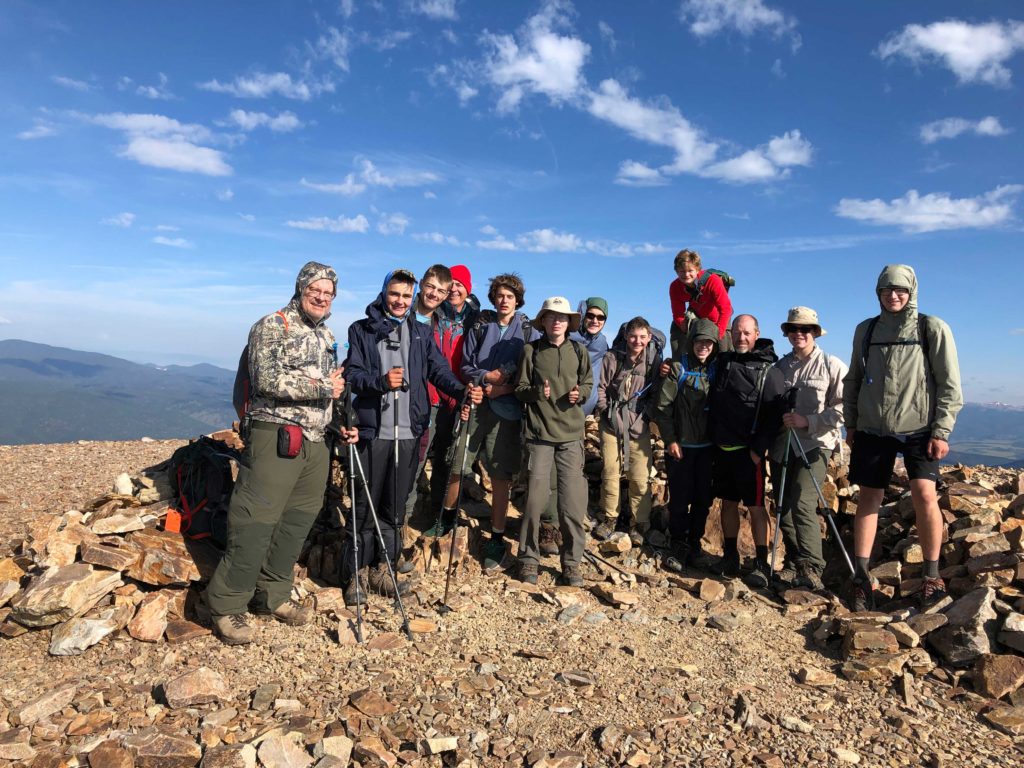
The (non-birding) highlight of the trip was our group’s ascent of 12,400-foot Mount Baldy on our second-to-last day of hiking. Braden and Sneed are third and fourth from the left. We thought we might catch some Andean Condors up there, but no such luck!

Chasing Rarities

If you are enjoying these posts, please share them with friends, family, and other birders. Also, be sure to subscribe by filling out the form down in the right-hand column. Hoo-Hoo!

On Wednesday, July 10, both my dad and my Montana year lists stood at 203, mere inches from our previous all-time records. Two days before, we’d had an awesome all-day birding session, nabbing five year birds (Bobolink, Dusky Grouse, White-throated Swift, California Quail for my dad and Black-chinned Hummingbird for me). Now, a couple of days later, I had gone to swim practice and was surfing the recent Montana eBird reports when suddenly, I spotted something. A Virginia’s Warbler had been seen in Lewis and Clark Caverns State Park! Upon further investigation, I discovered that not one but two Black-throated Gray Warblers had been seen in the same spot. Up a nearby canyon an Indigo Bunting was hanging out! I talked to my dad, and we couldn’t take it anymore. The rarities coupled with other year bird possibilities pushed us to the brink.

Bolstered by this Dusky Grouse and four other year birds we’d seen on Monday, July 8, we decided to make an all-out push to break our Montana Big Year records.

The next evening—Thursday—we hit the road for a Super 8 in Butte and the next morning were up at dawn, heading for the caverns. I had a pretty good idea of where the rare birds were (or so I thought), so we started off on a mildly steep trail from the campsite, encouraged by neon Bullock’s Orioles swooping around us. In our haste, however, we had forgotten our bug spray, and about two miles in, the mosquitoes attacked, forcing us back to the campsite.

Slightly disheartened, we moved on to our next stop: Milligan Canyon Road. A male Indigo Bunting had taken up residence here among the usual Lazuli Buntings, and we expected him to stick out like an indigo wildebeest in a pack of green lions. As we continued up the road, though, seeing all lions and no wildebeest, we began to grow disappointed. At the actual entrance to the canyon, though, my dad pulled off the road and whipped out his binos.

“I’ve got him!”

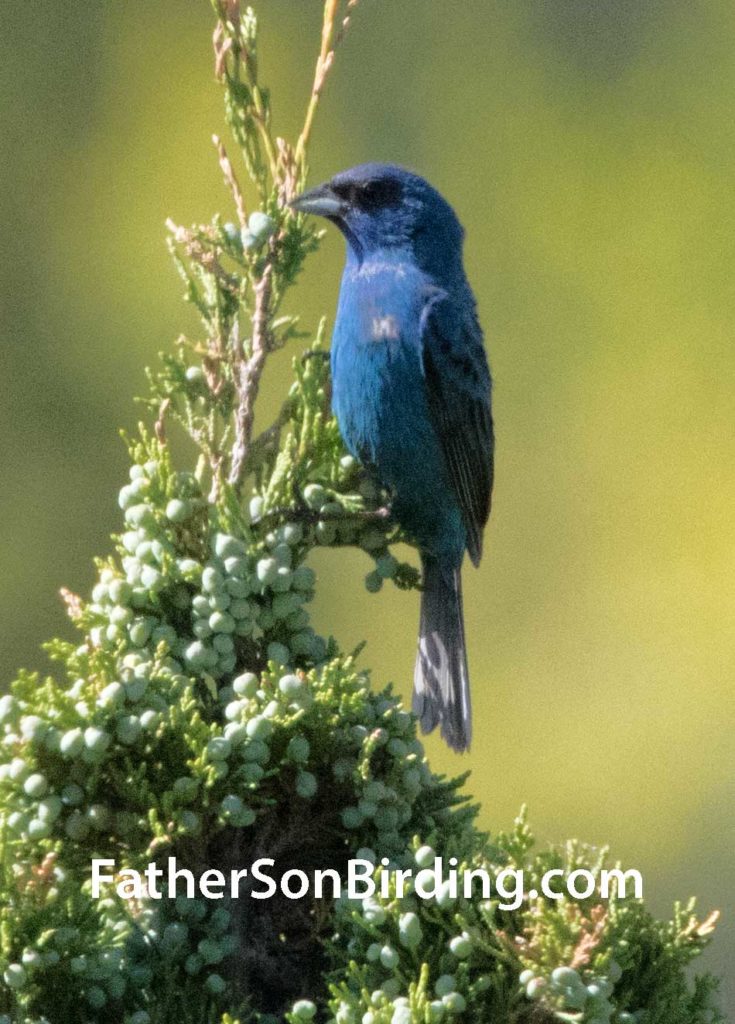
While common in the middle and eastern U.S., this Indigo Bunting was probably the rarest Montana bird we’d ever seen.

We leapt out of the mini-van like it was about to explode and ran across the road, and sure enough, there he was. The wildebeest was singing his tiny heart out, as if nothing was weird about the fact that he was in Montana rather than North Carolina. My dad and I celebrated our first successful rarity chase in Montana with a high-five.

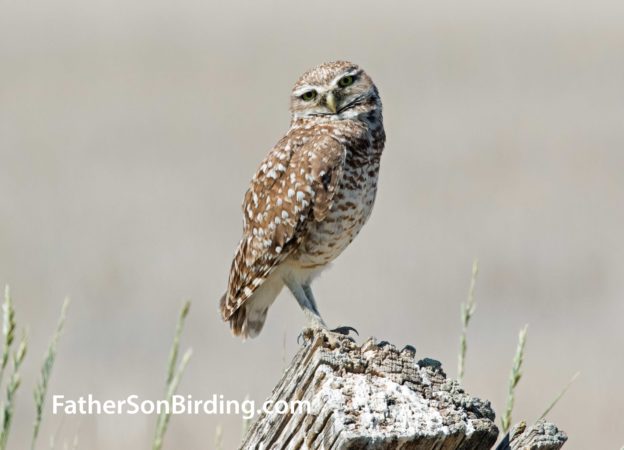
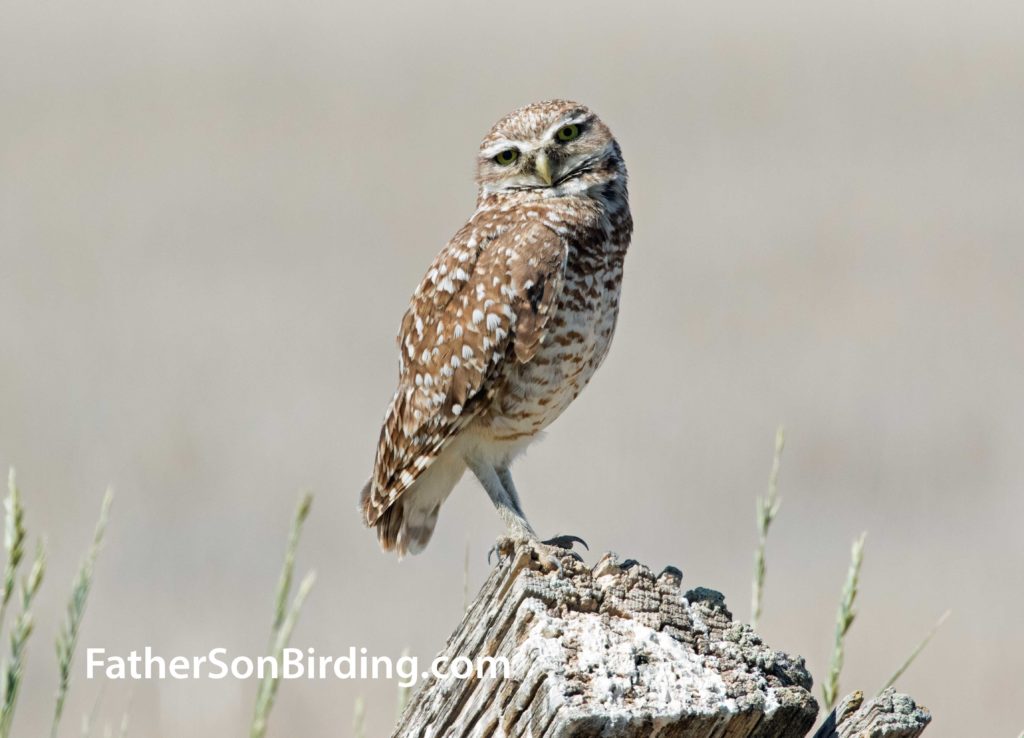
After a quick search up the canyon for Yellow-breasted Chats and Green-tailed Towhees (we found a Golden Eagle instead), we made our way towards Three Forks. We pulled onto the dusty Bench Road and spotted harriers and Swainson’s Hawks, bringing back memories of our first-ever eastern Montana trip two years before when we’d found curlews and Burrowing Owls with Nick Ramsey on this road. Soon, we saw our main quarry: a tiny owl picturesquely perched on a fence post ahead of us. We pulled up alongside it, and flushed another!

We love it when birds pose only a few feet from us. This Burrowing Owl was really trying to score a permanent modeling contract, or at least a spot on “Project Owlway.”

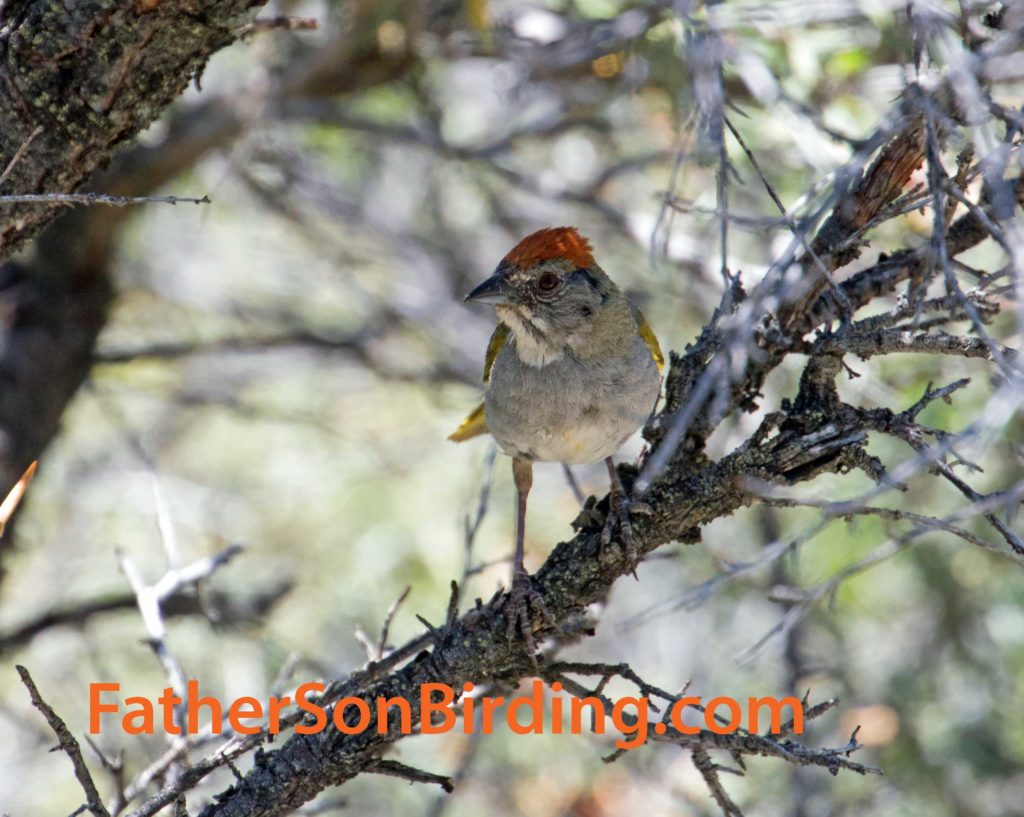
The owls gave us great pics, and after a half hour we turned tail and headed back to Lewis and Clark Caverns. Why? It turned out I had picked the wrong trail for the rarities! We gave it another shot, this time driving to the top of the state park. Sprawled in front of us were beautiful juniper and pine-covered hills, and we started off on another short trail after being interrogated by the park officials (“We aren’t going to sneak into the caverns, we’re looking for birds!”). A few hundred yards up the path, a new sound rattled across the landscape, different from the regular sounds of the Spotted Towhees. I peered down the slope, and saw a bird with the strangest color combination—green, gray and orange. Green-tailed Towhee! We pished it up the slope and got awesome looks. This wasn’t just a year bird; we’d never seen it before!

We tried one more trail before giving up all hope on the two warblers, then steered towards Helena. After a brief rest at yet another Super 8—this one far more depressing than the first—we visited a Helena cemetery, where my dad had gotten Pinyon Jays earlier in the year. I was skeptical, but sure enough, eight blue-and-gray corvids crossed the road in front of us, hopping onto a few tombstones and then loudly flying off. Another lifer for me!

Chipping Sparrow? No! Green-tailed Towhee, a long sought-after Lifer for Team Collard!

We had dinner at MacKenzie River Pizza, then hung out there reading and watching the men’s Wimbledon semifinal since our next and final stop wouldn’t produce what we were looking for until later. Flammulated Owls, one of the most secretive in North America, had been regularly reported in a nearby location known as Grizzly Gulch (ironically, there were no grizzlies there), and we arrived at the coordinates at about 9:00 p.m. Almost immediately we heard a low, single hoot in the trees. No way! Who knew owls could be this easy? We tried to make our way towards the sound, but gave up and opted to let the owls come to us. Making our way farther down the road, we picked up winnowing snipes and Willow Flycatchers, and tried in vain to find a Common Poorwill flycatching in the road. We never did see the owl, but were fine with that! My dad had surpassed his all-time Montana record, and now we have 210 and 211 species respectively in Montana this year. Can I break my old record of 213? Stay tuned to find out!

In Glacier National Park, When It Rains, It Pours—Animals

If you are enjoying these posts, please share them with friends, family, and other birders. Also, be sure to subscribe by filling out the form down in the right-hand column. Tweet-Tweet!

When my dad and I stepped out of our car at Swiftcurrent Lake in Glacier National Park we were welcomed with a barrage of raindrops. Water fell from every imaginable place, and small puddles had formed in the miniature valleys of the parking lot. Thankfully, both of us had our raincoats, but for some reason during the packing stage of the trip we had looked at our rain pants and said, “Nah. We won’t need them.”

As it turns out, we did.

We did not have any other places we planned to bird today, however, so we decided to brave the monsoon and see if any birds were dumb enough to be out in the rain like we were. Swiftcurrent Lake was known for having great birds, including Dusky and Spruce Grouse, Boreal Chickadee, Tennessee Warbler, Varied Thrush and Olive-sided Flycatcher.

A wet day in Glacier National Park is better than a dry day almost anywhere else!

After being greeted by a wet Gray (or Canada) Jay in the parking lot, the first quarter-mile along the lake shore did not yield any living creatures. We listened for the grouse that the park rangers had said were here, but either the rain masked the sounds, or, more likely, the grouse were taking shelter from the storm. At one point we did have an encounter with two thrushes, but they uncooperatively disappeared into the brush, leaving us to wonder at their identities.

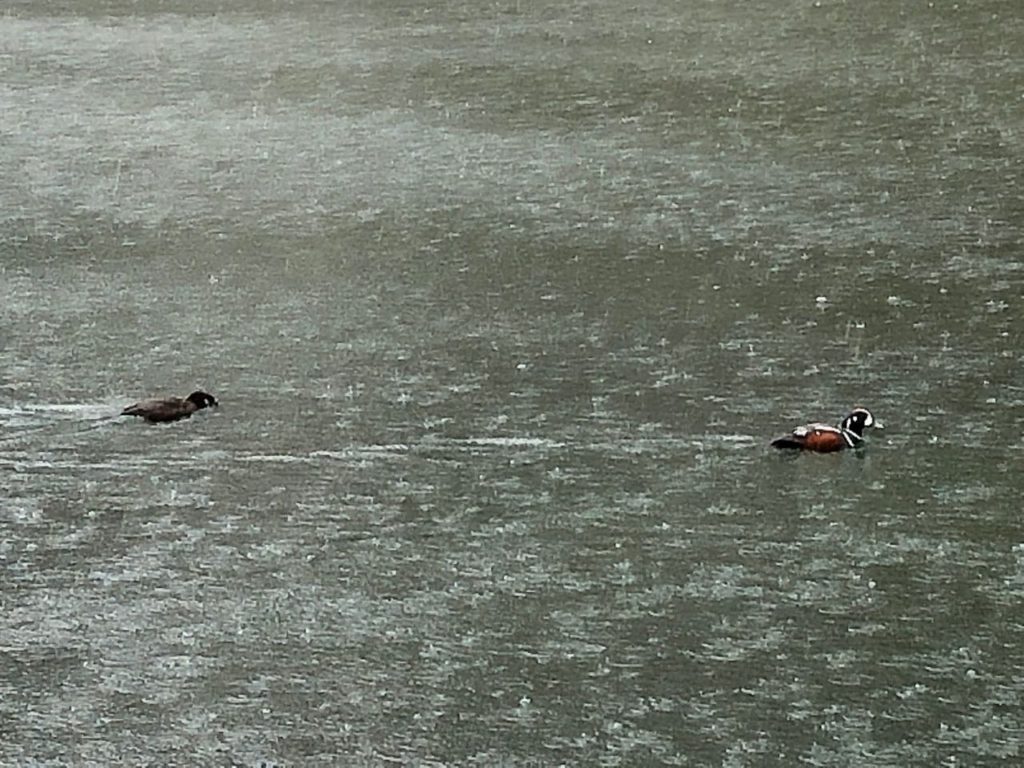
We came to an intersection and turned right to hike over the small glacial moraine to Lake Josephine. There, we walked out onto the dock and scanned the water, looking for any avian action. By the shore off to the left, I thought I saw a splash, so I focused my binoculars on it. After a minute, a slate-gray, blue and cinnamon-colored waterfowl with distinctive white markings popped up—a male Harlequin Duck!

Even with the limits of my dad’s iPhone camera, you can see how magnificent Harlequin Ducks are. Fortunately, we got another view of a Harlequin Duck the next day on MacDonald Creek—with our cameras this time.

We stalked closer to the duck and its mate, marvelling at our luck while at the same cursing ourselves for not bringing our cameras. The two ducks continued to dive, oblivious to the rain and completely fearless of us. Soon, they floated closer, and passed three meters from where we stood, gracing us with their incredible but subtle beauty.

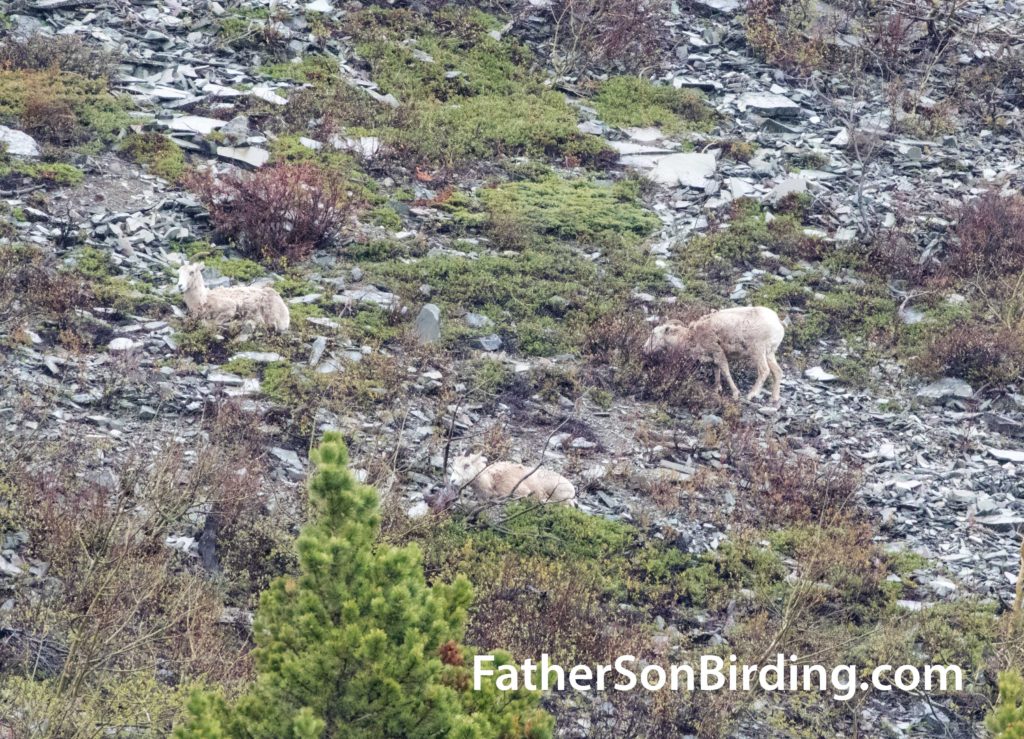
We spent thirty minutes watching the ducks, wet but happy, then decided to book it back to the car. We started the long drive back to East Glacier, but stopped beside Swiftcurrent Lake when we saw people staring up at the mountain beside the road. We raised our binoculars, and sure enough, spotted a herd of at least twenty Bighorn Sheep staring back at us from their rocky vantage points.

“Wait a minute,” said my dad, “There are three more much higher up. Wait, no! Those are Mountain Goats!”

Mountain Goats high on the mountain slopes of the Many Glacier area, Glacier National Park.

We watched them for a second, then continued driving. We had just seen two of the Glacier Park Big Four—the rare, large mammals most commonly seen in the park. The other two were Grizzly Bear and Moose, but I doubted we’d see those.

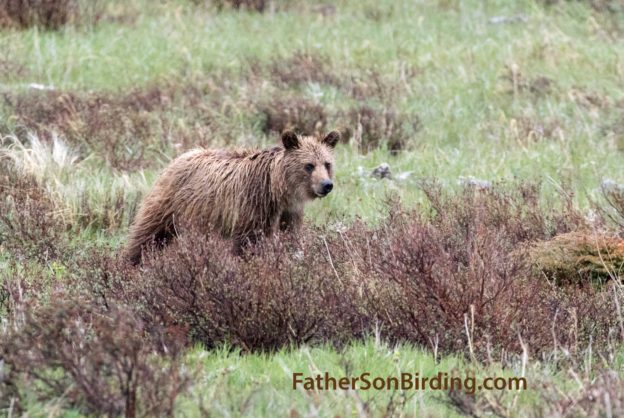
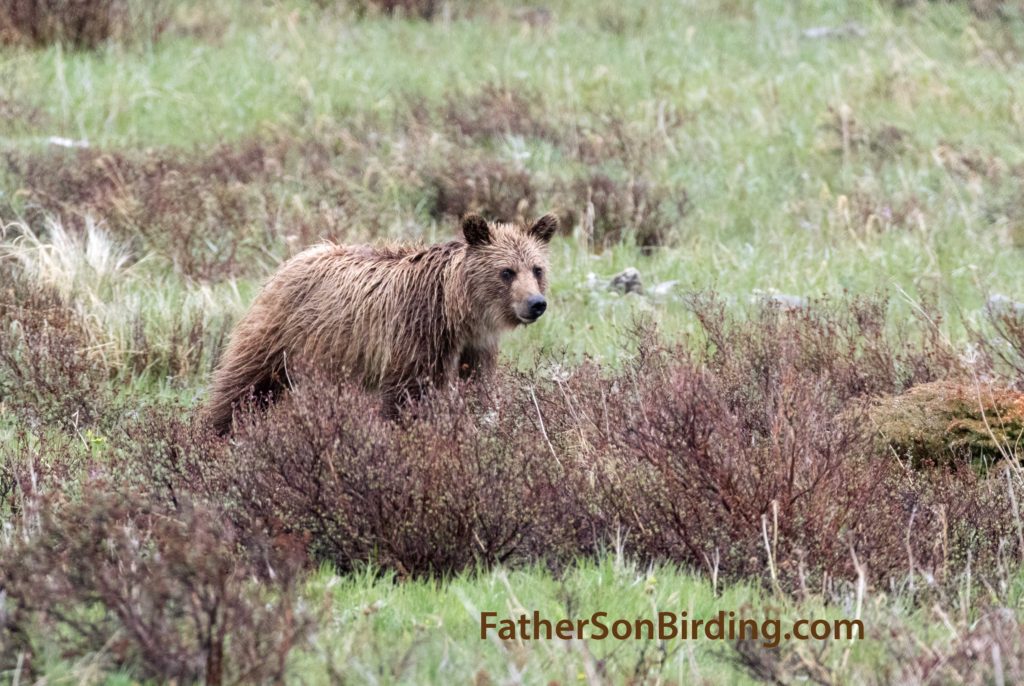
I was wrong. Just a little ways past the goats and sheep, we spotted a pair of stopped pickup trucks, their drivers gazing at the meadow right off the road. Two wet but content-looking Grizzly adolescents dug for roots in the brambles, unafraid of us! Well, you know what they say: When it rains, wildlife pours!

Between the Harlequin Ducks and Grizzly Bears, we had a most memorable day in one of our favorite places.

Dynamic Spring Birding in Deer Lodge

Are you enjoying our posts? If so, we’d love it if you subscribe to FatherSonBirding by filling out the box down in the right-hand column—and urge your friends to sign up too :)!

When life hands you an opportunity—especially a birding opportunity—you’d better take it. We learned that the easy way last weekend when Phil Ramsey, dad of our birding buddy Nick, offered us a two-night stay at the Clark Fork Coalition’s amazing Dry Cottonwood Creek Ranch. Phil couldn’t join us, but on Friday Nick picked Braden and me up in his truck, and off we went.

Thanks to Montana’s abundant spring daylight, we reached Deer Lodge with plenty of time to bird and after a quick dinner at 4Bs, explored the back roads leading south from the prison. Nick’s top target for the weekend was a long-shot, Greater White-fronted Goose, while Braden especially wanted to see his first Golden Eagle of the year. Me? I had my own goal: Long-billed Curlews, a species Braden and I had seen only once before in Montana. Altogether, Braden figured that for the weekend we might pick up eight new year birds while I predicted ten.

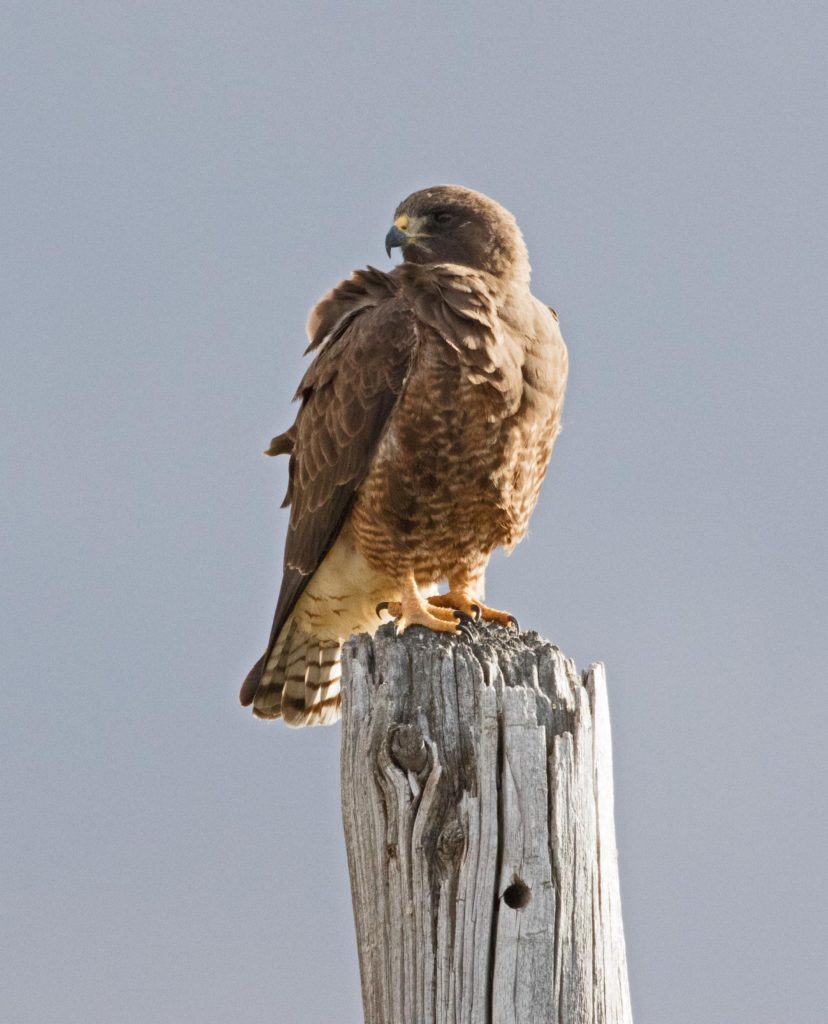
This was Braden’s and my first good look at an (intermediate morph?) Swainson’s Hawk and the bird cooperated beautifully, sitting on this post for a full five minutes.

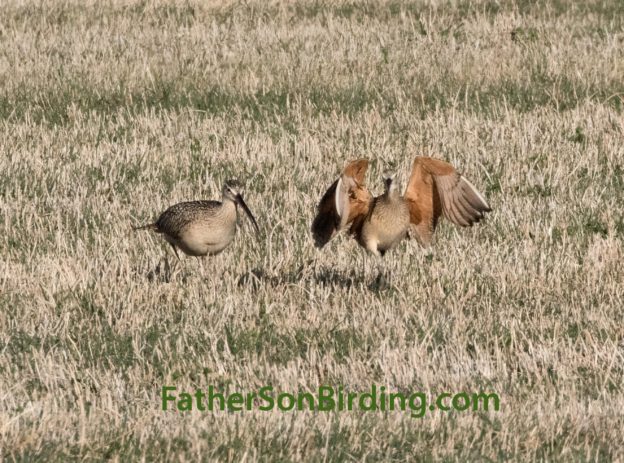
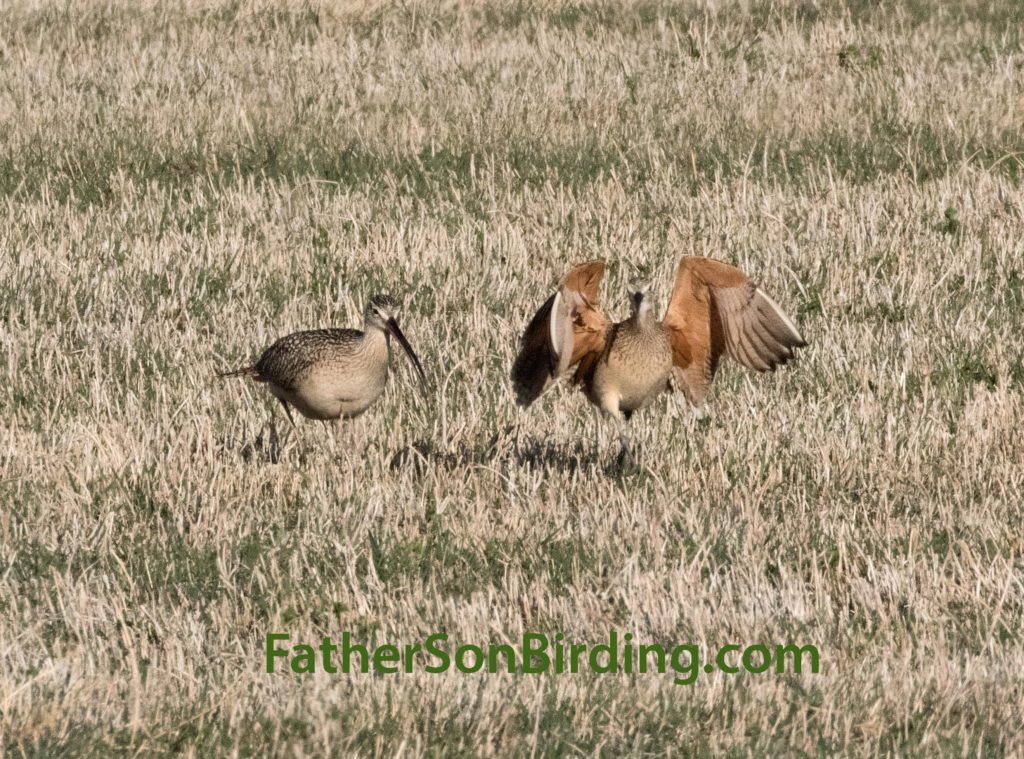
As we drove, we spotted a number of nice, albeit expected, birds: Mountain Bluebirds, American Kestrel, and a scattering of ducks. We also got to observe a beautiful Swainson’s Hawk on a telephone pole—the first real surprise of the weekend. As we turned right, down a dirt road, however, I suddenly shouted “Look out there!” Sure enough, three Long-billed Curlews hunted insects under beautiful evening light. Before the evening was out, we would tally 20 more of these graceful bizarre-looking birds, a number of them dancing out their courtship rituals.

Several pairs of curlews were feeling especially frisky but the females seemed a bit antagonized by the attention. Maybe the males should have opted for dinner and a movie?

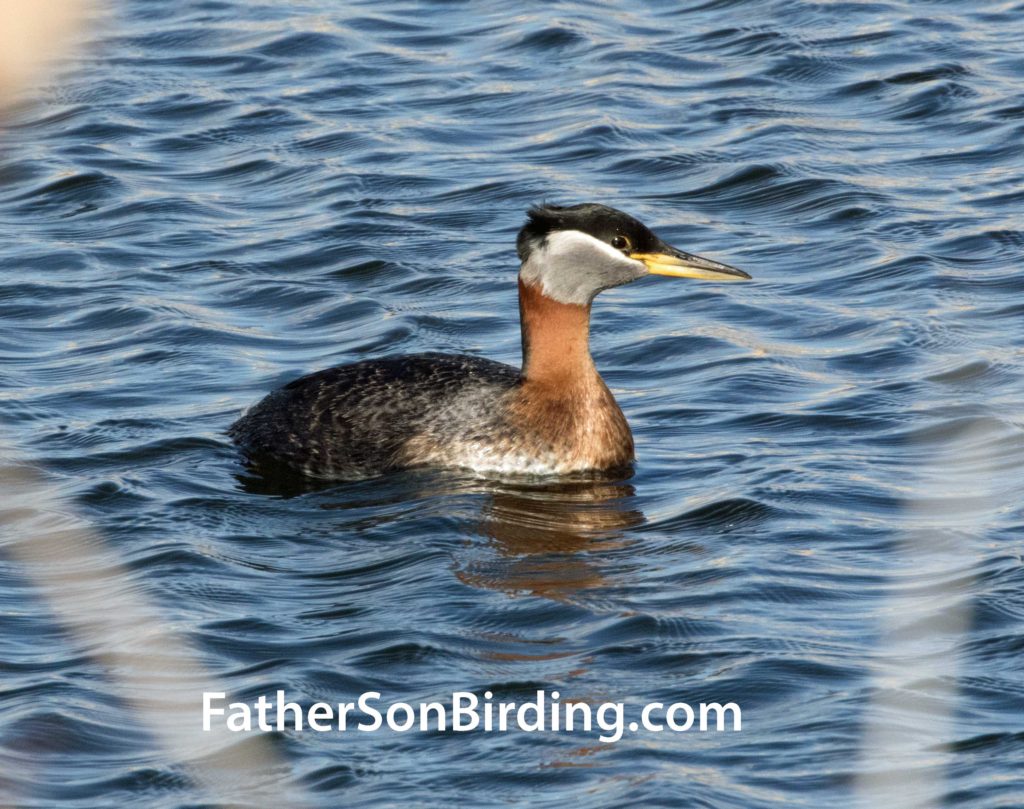
Part of the weekend package was a personalized tour of the ARCO superfund ponds with Gary Swant (see post “For Birders, Every Year is a Big Year”). Nick, Braden, and I had been lucky enough to bird with Gary the last Christmas Bird Count, but we were eager to see how spring species differed from the area’s winter visitors. As expected, waterfowl were out in full force—including Eared, Horned, Western, and Red-necked Grebes. We enjoyed Red-breasted Mergansers and Nick spotted a Sora, but the real surprise was the number of loons—eight, all told. “That’s easily the most we’ve ever seen together,” Braden exulted.

We saw at least twenty Red-necked Grebes during our day with Gary—and enjoyed every single one of them! It’s easy to see why.

Leaving the ponds, Gary took us to a place near Anaconda that we’d never birded: Dutchman’s Slough where, within minutes, Braden nabbed his top weekend target, Golden Eagle. Then we noticed three wading birds in the distance and assumed they must be more Long-billed Curlews. One of them was, but the other two were something we’d never seen: Marbled Godwits in the middle of a grassy field! After bidding a fond farewell to Gary, we rounded out the day with one more great score—Solitary Sandpiper in a large puddle on the south edge of Deer Lodge.

We were sad to be leaving the next morning, but an unseasonal snow storm urged us home. On the drive, however, we decided to stop at Rock Creek, the site of Braden’s Eagle Project (see post “Five Valleys, Many Birds”). Almost as soon as we got out of the car, we spotted three more stunning year birds: Chipping Sparrow, Hermit Thrush, and shockingly, Lark Sparrow. The latter two were most likely just migrating through and we felt lucky to nab them as they often prove difficult to find in Montana.

The Clark Fork Coalition’s Dry Cottonwood Creek Ranch proved the perfect HQ for birding the spectacular Deer Lodge Valley.

So how did we do for the weekend? Well, we shattered our estimates for how many new year birds we might see, adding more than twenty to each of our lists. More important, the trip drove home a lesson for every birder: during spring migration, anything can show up—and does! Well, except for the elusive Greater White-fronted Goose! Sorry, Nick.

Birding the Burn—Again!

If you’ve followed our blog, you’ve probably realized that some of our favorite places to bird are recent burn areas—that is, burn areas that have not been destroyed by so-called “salvage logging.” I first fell in love with burn areas while researching my book Fire Birds—Valuing Natural Wildfires and Burned Forests. The book highlighted the fascinating work of biologist Dick Hutto, who showed what vital habitat burned forests are for more than one hundred bird species. Yesterday, after dropping Braden off for a Boy Scout leadership weekend near Seeley Lake, I decided to hit a burn area we’d visited with Dick last spring—the Morrell Creek watershed.

Burn areas provide outstanding habitat to more than one hundred species of birds. Unfortunately, so-called “salvage logging” destroys the burned forest by removing the larger-diameter trees that woodpeckers and other birds most need for food and shelter.

I had two ulterior motives for going there. One was to scout out a good place to bird with some kids next month. The other was to see one of Braden’s and my favorite birds, the Black-backed Woodpecker. As I was driving in, I was dismayed to find that the “salvage loggers” had already ruined a lot of the habitat along the road, but I eventually pulled over at a likely place to explore, one with larger-diameter dead trees still left standing.

Forget bluebird boxes! If you really want bluebirds to thrive, leave burned forests alone. Untouched burned forests may be the favorite habitat of these birds, providing food, shelter, and safety from squirrels and other small predators.

Right off the bat, I encountered large numbers of two favorite burn species: Mountain Bluebirds and Dark-eyed juncos, who seem to prefer burn areas to almost any other habitat. The bluebirds especially were going crazy. Twice, I saw groups of three (two males and a female, I think) chasing and mobbing each other, sometimes driving themselves to the ground. A territorial dispute? The birding equivalent of a bar fight over a girl? I wondered.

It didn’t take too long for me to hear woodpecker drumming and my heart raced as I hurried through the trees hoping to see a Black-backed. Unfortunately, I didn’t see the woodpecker until it was too late and spooked it before I got a good ID. Curses!

While Black-backed and Three-toed Woodpeckers get more attention, Hairy Woodpeckers are also burned forest specialists. If you have any doubt, just look at how well this Hairy blends in with its burned background. Like the Black-backed and Three-toed, the Hairy Woodpecker is “hard-headed” enough to drill into the rock-hard wood of newly-killed trees for wood-boring beetle grubs and to drill out nesting and roosting holes.

I kept walking through the forest, finding a great sense of peace from the sounds of Morrell Creek splashing below and from the dark, silent sentries surrounding me. Eventually I located another woodpecker drumming, but only snatched two blurry photos of it before it, too, flew away. My photos, though, did show a yellow crown, narrowing the bird to a Black-backed or Three-toed Woodpecker. Unfortunately, it was a crummy day for light and photography and the next woodpecker I saw was too backlit for me to identify. I did see a Golden Eagle circling above and an American Dipper in the creek below. A Hairy Woodpecker also posed for a picture. Finally, as I was about to leave, I heard more drumming. I grabbed my camera from the car seat and chased it down.

Success!

On a high narrow snag sat a beautiful male Three-toed Woodpecker drumming his heart out. It wasn’t a Black-backed, but I didn’t care. Three-toed Woodpeckers, like Black-backeds, are specialists of burned forests and I was delighted to meet up with this fellow—and even more delighted that he’d found a beautiful, blackened home.

Though lighting conditions stunk, I was delighted to finally get a good look at this Three-toed Woodpecker drumming on one of many awesome “drumming posts” to be had in the burned forest.