Be sure to catch Sneed at the Montana Festival of the Book on Friday, September 8. He will be on a panel at 11:30, followed by his own session about his recent books Waiting for a Warbler and Border Crossings at 1:15. The following Monday, Flathead Audubon will be hosting Sneed for a presentation. Hope to see you there!
This past Friday, Braden and I set out on a quest for a bird that has steadfastly evaded my life list: Spruce Grouse. In truth, I’ve probably seen one of these birds before—but long before I became a birder—and Braden wanted to help me officially nail it down before he headed back to Maine for his junior year of college. To try to find it we decided to explore a road we’d never before birded—the road up to Garnet Ghost Town, a once thriving mining community about ten miles off of Highway 200. Spoiler alert: we didn’t find a Spruce Grouse. What we did find proved to be a lot more interesting.
As I’ve mentioned before, Braden and I used to pretty much write off August as a good birding month. In recent years, shorebirds especially have shown us that this was an egregious mistake. As far as passerines are concerned, however, we retained our bad August attitude. After all, our typical birding areas around Missoula get eerily quiet in August—almost as if all of the birds have gone on vacation. Turns out they aren’t on vacation. They’re working hard—at a little bit different elevation.
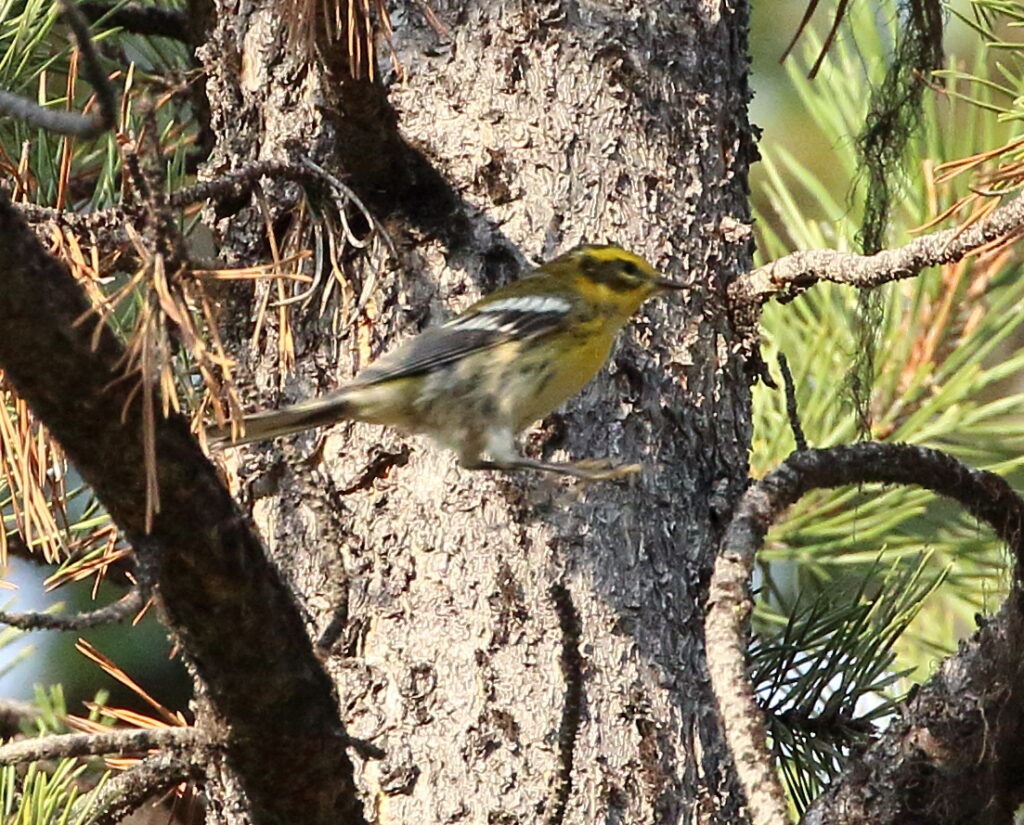
As we turned off of the highway, the road to Garnet began climbing in elevation. We saw a few robins and flickers from our car, but in these kinds of situations, you really don’t know what’s around unless you stop, get out, and listen. After a few miles, we did exactly that—and were amazed by what we found. In what is always a good sign, Mountain Chickadees were sounding off, and as we always hope, a lot of other species accompanied them. We quickly spotted MacGillivray’s, Yellow-rumped, and Orange-crowned Warblers—and a warbler that had stubbornly eluded my crummy ears all year, Townsend’s Warbler!
While I failed to capture a nice photo, I was thrilled to actually see my first Townsend’s Warbler of 2023.
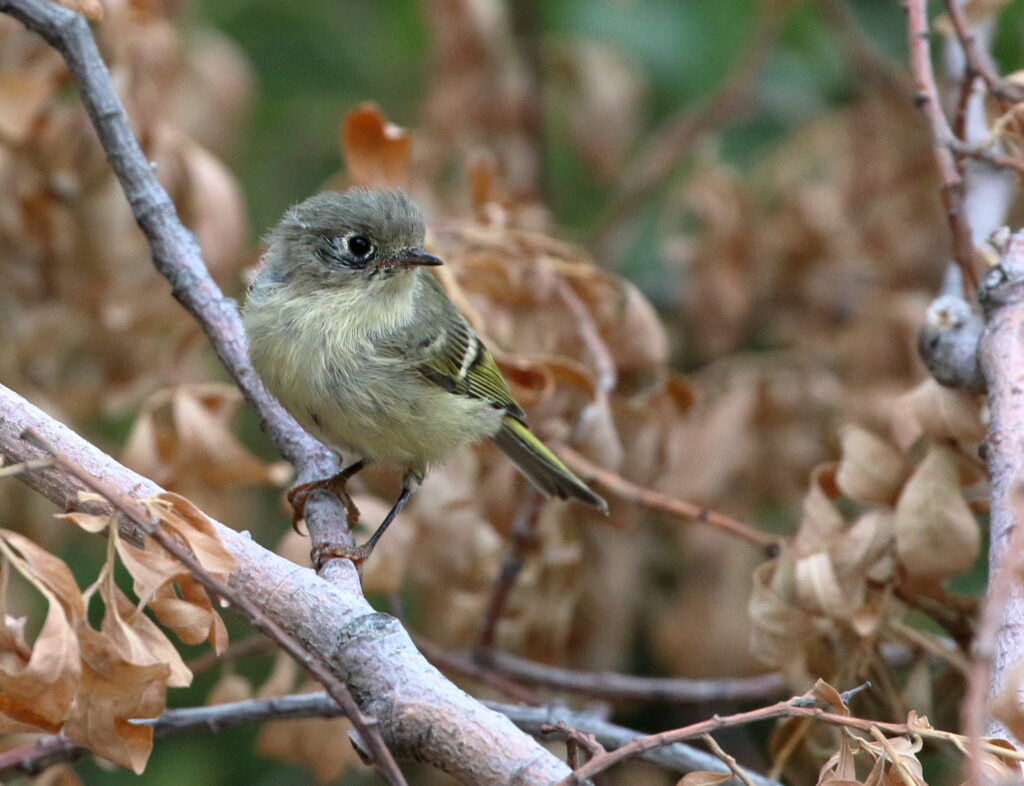
Along with the warblers, Williamson’s Sapsuckers and a Hairy Woodpecker put on a good show, along with Evening Grosbeaks, Canada Jays, Warbling and Cassin’s Vireos, Pine Siskins, and a whole slew of Chipping Sparrows, Western Tanagers, and Ruby-crowned Kinglets. Braden’s excellent ears also detected Golden-crowned Kinglets and a Brown Creeper—the first I’d managed to see all year.
Scads of “Rickies” (Ruby-crowned Kinglets) swarmed the forest edges near Garnet—which explains why they haven’t been in our yard lately!
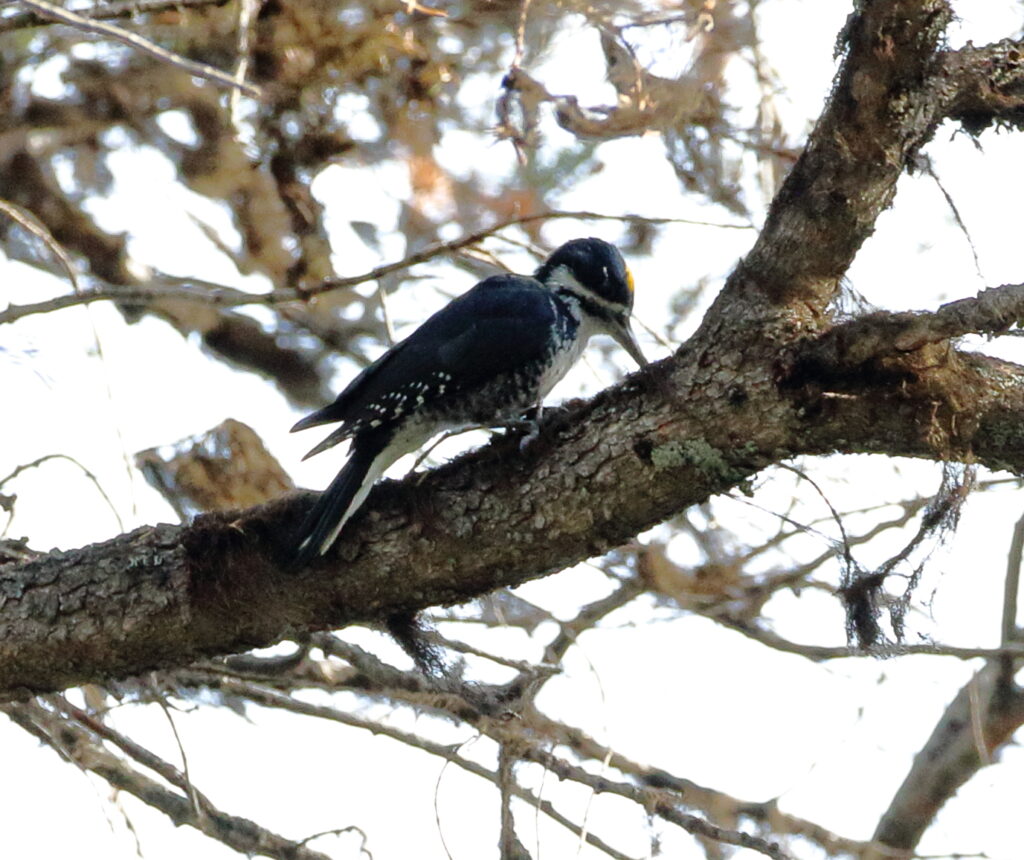
Our next stop a mile or two later gave up an even greater encounter. We saw a bunch of birds heading away from the road so decided to follow them. As a trio of Canada Jays entertained us, we heard a woodpecker methodically pecking away and Braden went to search for it. “Three-toed!” he excitedly called, looking up at a backlit bird high in a tree. Though the yellow head marking was clearly visible, it actually turned out to be an even more surprising bird—a Black-backed Woodpecker, the first I’d ever seen outside a burn area! The habitat made sense, though, as burns weren’t too far away and a lot of dead trees seemed ready to give up beetle grubs.
This Black-backed Woodpecker both delighted and surprised us with its unexpected location outside of a burn area.
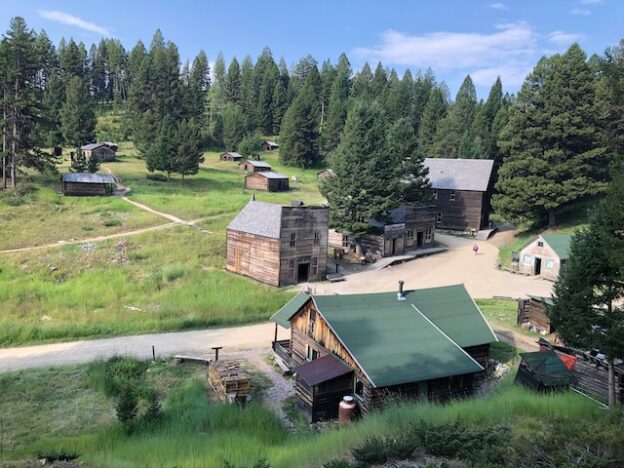
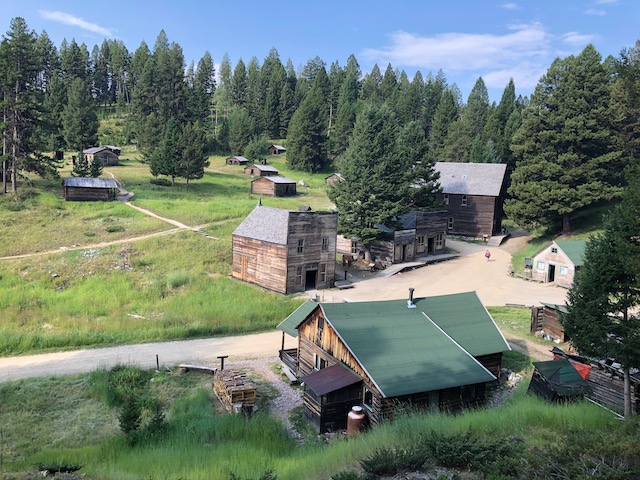
Thrilled with this discovery, we continued onto Garnet Ghost Town. Like most ghost towns, this one has an interesting story. It went from gold boom to bust between approximately 1895 to 1905, and at its peak was home to about a thousand people. By around 1948, the last hangers-on abandoned the town. Thanks to dedicated preservation efforts, however, Garnet today boasts that it is “Montana’s Best-Preserved Ghost Town” and, indeed, the remaining buildings seem in remarkably good shape. Even better, the town sits in a stunning location, surrounded by forests and, even at this time of year, green meadows.
In addition to having a fascinating history, Garnet Ghost Town sits in one of the loveliest spots in Montana.
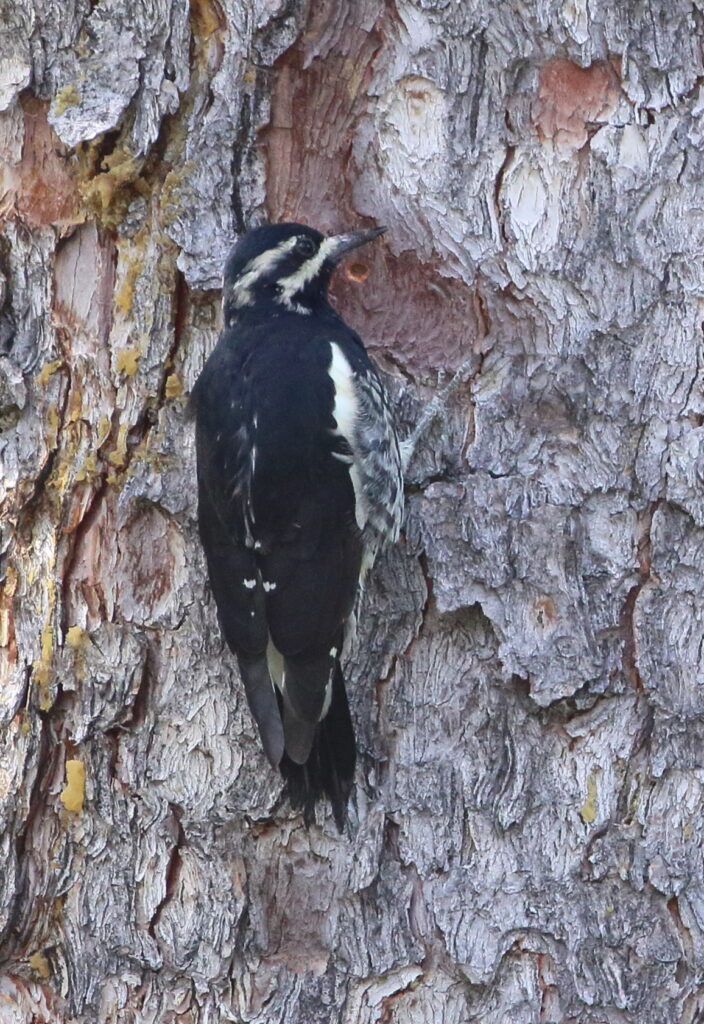
After exploring the town for a few minutes, Braden and I decided to walk a loop trail in a last effort to find a Spruce Grouse. Again, no grouse. We did walk by plenty of caved-in mine shafts, however, and encountered even more cool birds. These included another Williamson’s Sapsucker, a Vaux’s Swift, and two Olive-sided Flycatchers! Then, a Common Night-hawk called above us and we spotted a second one perched in a tree. Garnet, though, had one more treasure for us.
One of four Williamson’s Sapsuckers we observed near Garnet Ghost Town.
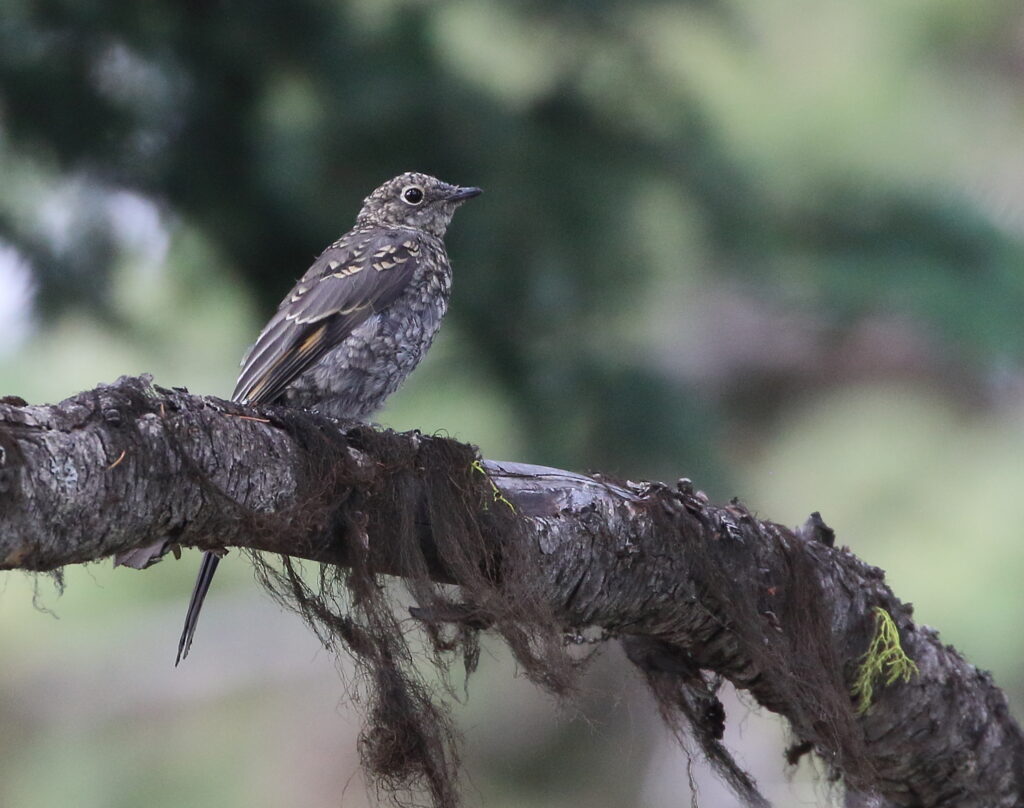
As we neared the end of the loop trail, we saw a bird flitting about on a log. I didn’t at first recognize it, but Braden’s many hours of study paid off. “It’s a Townsend’s Solitaire—and in its ‘pine cone’ plumage!” he exclaimed. I had never heard of the pine cone plumage, but sure enough, this juvenile bird sported a pattern distinctly different from the smoother coloration of the adults. I can best describe it as, well, uh . . . a pine cone!
The “pine cone bird”—our first juvenile Townsend’s Solitaire! What a beauty, huh?
We admired the bird for many minutes and then headed back to our trusty minivan. It had been an outing that far exceeded our expectations, and had proved highly educational. I had heard from Dick Hutto and other biologists that many birds head up to higher elevations to hunt and forage after their babies have fledged, but this was the first time I could remember coming face to face with them—and in such numbers! Though we knew birds continue to face many threats, our experience today made Braden and I both feel better about the state of Montana’s birds, and we excitedly added the Garnet area to our permanent August “must do” birding locations.
I had thought about everything I needed for the two-day trip to Cape May, New Jersey. Tent and sleeping supplies, check. Food and water, check. Cash for toll roads, check. Nothing could go wrong, right? And then, I turned on the field vehicle and promptly backed it into a fence post.
Thankfully, as my crew leader Tyler Hodges assured me later, the damage was limited to some paint marks and a small crack on the plastic on the end of the Jeep, and I was soon on my way, navigating Pennsylvania and New Jersey highways as I headed east, then south. My days off this summer would be limited to one per week, which meant any and all birding trips would have to be quick, even more so than last summer. This one, my first of the summer, was just about as quick as possible, as I planned to spend the night in southern New Jersey and drive back to the Pocono Mountains of northeastern Pennsylvania the following afternoon. I had rarely driven this far on my own, so I made sure to take as many breaks as necessary as I drove south. One of these included a fifteen-minute rest at a place called Cheesequake State Park in northern New Jersey, which produced a very cooperative Great Crested Flycatcher, calling on top of an exposed branch as I walked into the park bathroom. Good birds already!
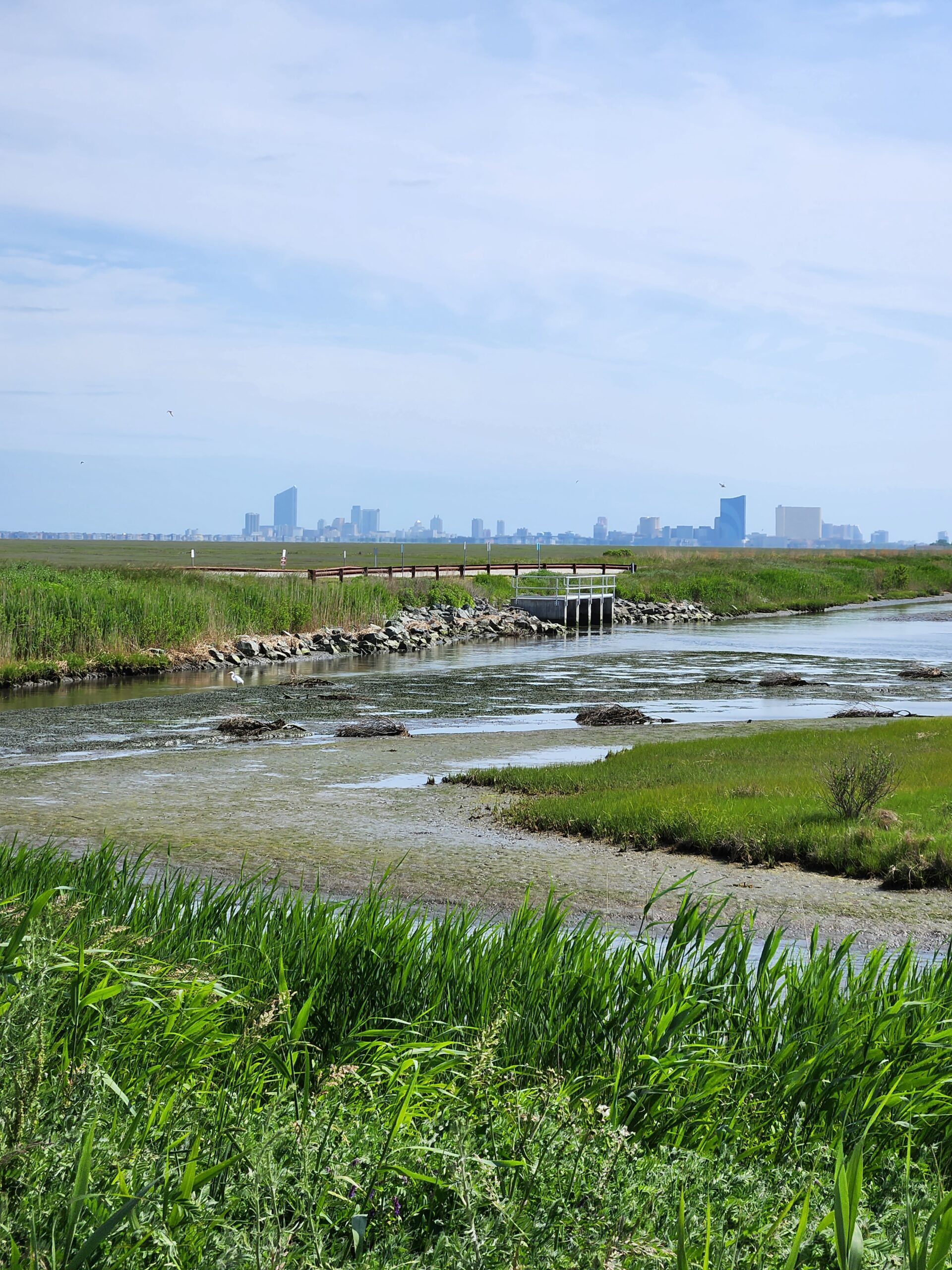
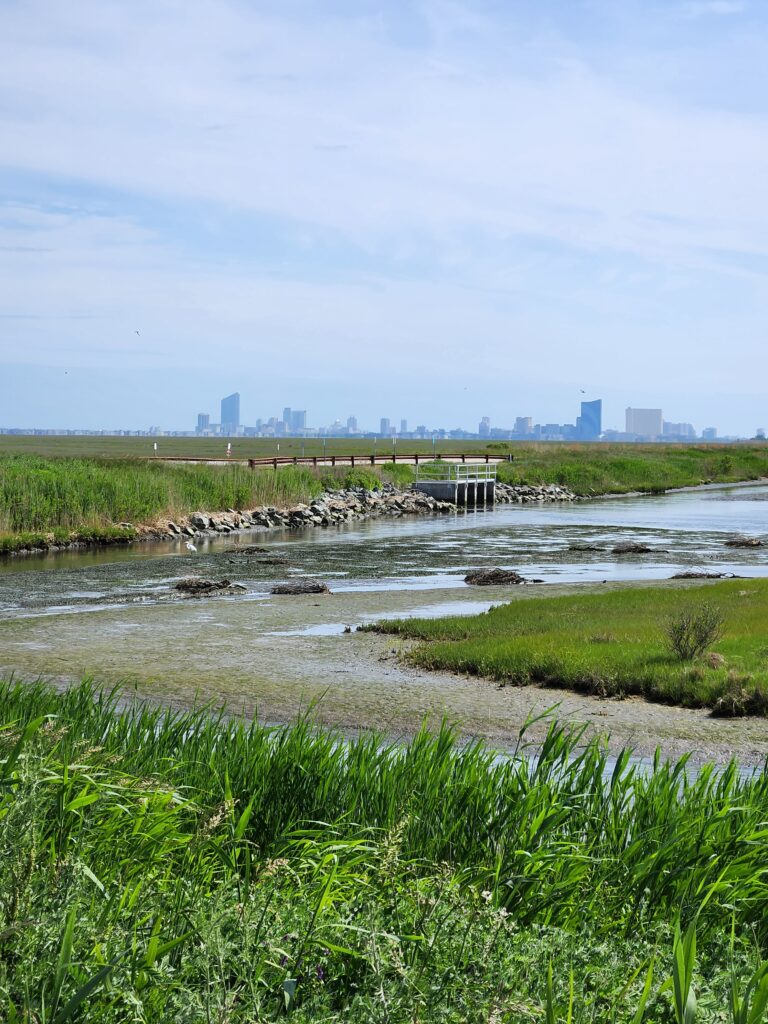
Edwin B. Forsythe National Wildlife Refuge with “America’s Playground”, Atlantic City, on the horizon.
At around 2 p.m., I pulled into Edwin B. Forsythe National Wildlife Refuge, the birding hotspot that had originally caught my eye and led me to take this trip. The primary target birds I had here were Gull-billed Terns, one of the last common North American terns I had yet to see. These odd-looking terns lived on coasts all over the world, and this wildlife refuge was their most northern colony in North America. As I paid my entry fee and started the loop drive around the refuge, I could quickly see why the terns loved it here. An expansive saltmarsh sprawled before me, interspersed with patches of open water and exposed mudflats. I could see both the skyscrapers of Atlantic City and the blue horizon of the Atlantic Ocean in the distance. I had timed my visit so that I would arrive during the low tide, targeting a group of birds that my dad and I always seem to be chasing: shorebirds. Sure enough, the mudflats in front of me were covered in them. Hundreds of tiny Semipalmated Sandpipers probed the mud, extracting invertebrates with their bills. A buzzy song came from the grasses on the opposite bank from me, and I lifted my binoculars to reveal a male Seaside Sparrow, belting his little heart out. I’d gotten my lifer Seaside Sparrow last year in Florida, but these were far better views, which would continue to improve throughout the day.
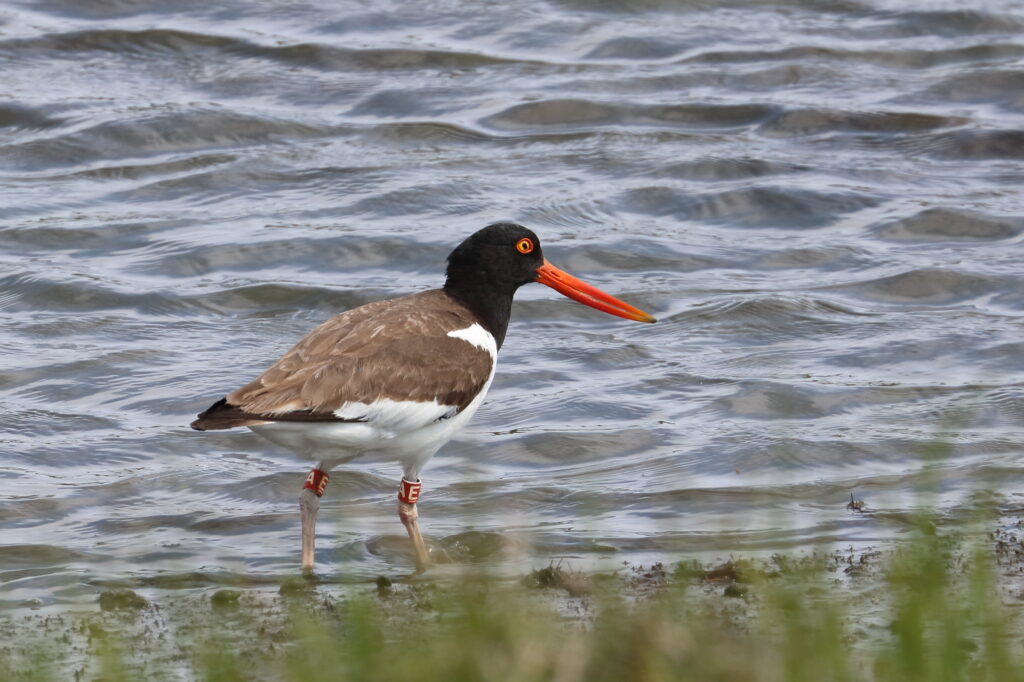
A banded American Oystercatcher.
As I continued driving, the birds just kept coming. Semipalmated Sandpipers were not the only shorebirds taking advantage of the exposed mud, although they were by far the most numerous. I was granted close views of Short-billed Dowitchers, Dunlin, Ruddy Turnstones and Black-bellied and Semipalmated Plovers, all in their sharp breeding plumages. I spotted a Black-necked Stilt in one pond, an apparently rare bird here, and was treated to a few looks at a Whimbrel flock as it lifted from a field and flew over me. Later on during the drive, I added Least Sandpiper and both yellowlegs to my list. Almost all of these birds were on the move, having stopped here to refuel on their way to their arctic breeding grounds. There were a few resident shorebirds around, too, including the “Saltmarsh” Willet (a subspecies I had never seen before) and a single, banded American Oystercatcher in a ditch on the side of the road.
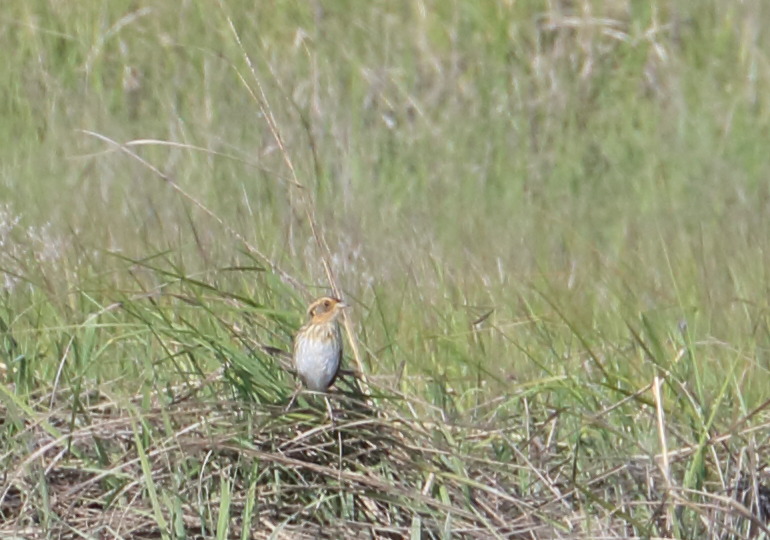
Apparently I had hit Edwin B. Forsythe at the perfect time, because all of the saltmarsh birds were out to play. Along with the Seaside Sparrows, I also glimpsed a few Saltmarsh Sparrows, a bird that I’d last seen with my dad in Massachusetts two summers prior. I had also spent my spring semester at the University of Maine working for Dr. Kate Ruskin, a Saltmarsh Sparrow researcher, so it was really cool to see the species that much of my work had revolved around! Unfortunately, this species is expected to go extinct by 2060 due to climate change-induced sea level rise, which would wipe out its entire nesting habitat. Lots of work is being done on the species, however, and hopefully some solutions arise to combat their disappearance. Along with the sparrows, I also was treated to fabulous looks at a Clapper Rail out in the open, and nearly double-digit numbers of Ospreys.
Saltmarsh Sparrows are some of the birds most threatened by rising sea levels due to climate change.
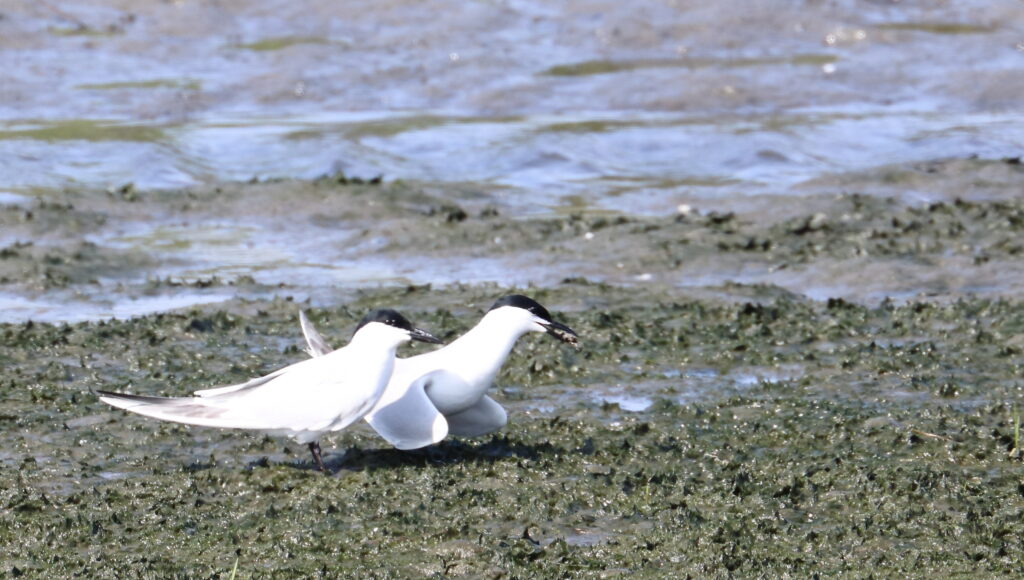
But the real treat at Edwin B. Forsythe was the terns. Forster’s Terns seemed to be in charge around here, and I saw dozens of them, plunge-diving into the shallow water for fish and resting on mudflats. There were also Least Terns, the smallest terns in the world, and one Caspian Tern, the world’s largest tern, providing great looks. One crowd of birders revealed a large flock of roosting Black Skimmers, also in the tern family, and always a joy to see. And, as I rounded a bend about halfway through the drive, I got my first lifer of the trip: three Gull-billed Terns, lounging on the mudflats! I stared at them for a while, admiring their blunt, black beaks. Unlike the other terns mentioned, Gull-billeds apparently never plunge-dive, instead preferring to eat crabs and other invertebrates. That likely explains the unique bill shape!
A quick glance at these birds reveals how they got their name, Gull-billed Terns.
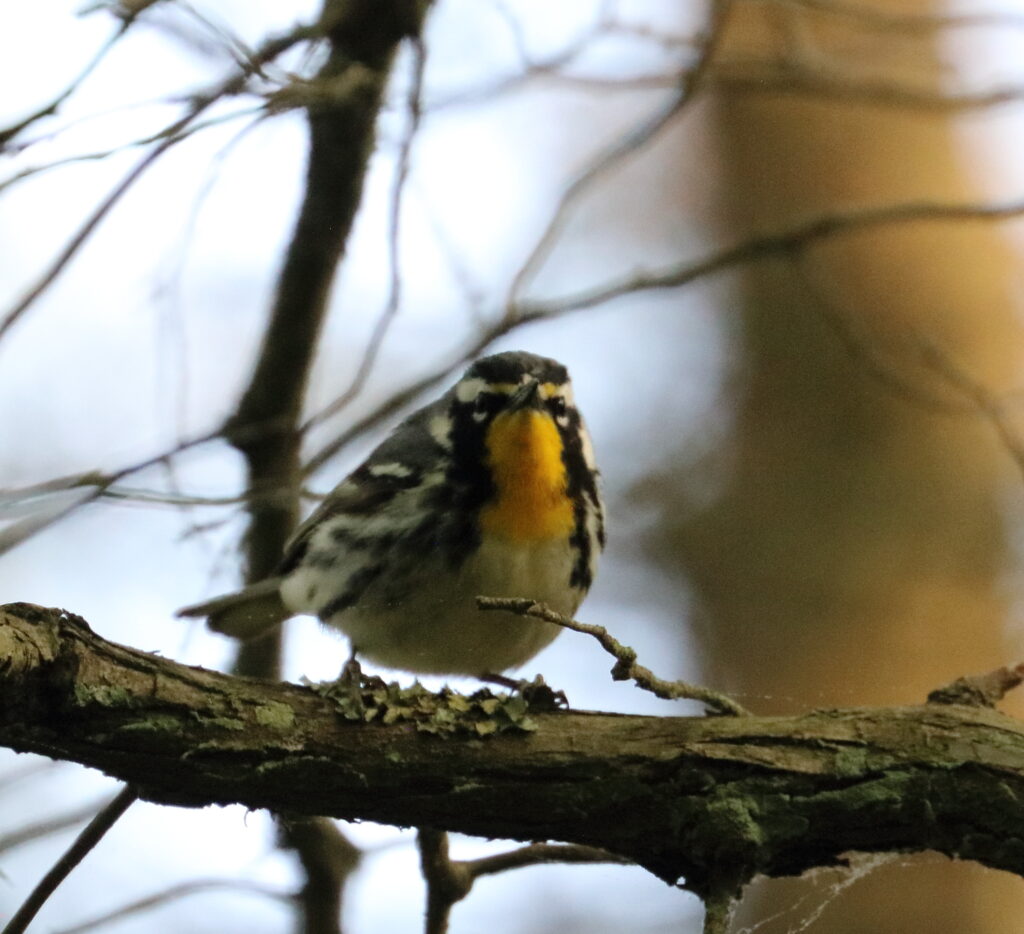
The sun began to hang low as I pulled out of Edwin B. Forsythe, and I headed for my next birding location, where I’d be staying for the night. Belleplain State Forest was located pretty far south in New Jersey, smack dab in the middle of the largest tract of Atlantic coastal pine barrens left in the world. This unique ecosystem was full of pine trees as well as a diverse assemblage of plants and animals, partially thanks to the area’s sandy soil. As I drove up to my campsite, I was reminded of the southeastern Longleaf Pine forests, the same ones that host Red-cockaded Woodpeckers and Brown-headed Nuthatches. While neither of those birds make it this far north, several southerners do, and I quickly set up my tent so I could get out and look for them. The campground bordered Nummy Lake, and I chose this as my focus, noting the tall pine trees and swampy terrain surrounding it. Within seconds, I heard my first target bird: a Yellow-throated Warbler. A little bit of pishing soon brought the bird into view: a beautiful gray, black and white warbler with a splash of yellow on the throat. My lifer Yellow-throated had been in a very similar habitat down at St. Marks National Wildlife Refuge in northern Florida the previous spring, though not quite as confiding as this individual. After checking me out, the bird returned to the tops of the trees, where it continued to belt out its song.
My second Yellow-throated Warbler proved much more cooperative than my first with my friend Nick at St. Marks NWR in 2022.
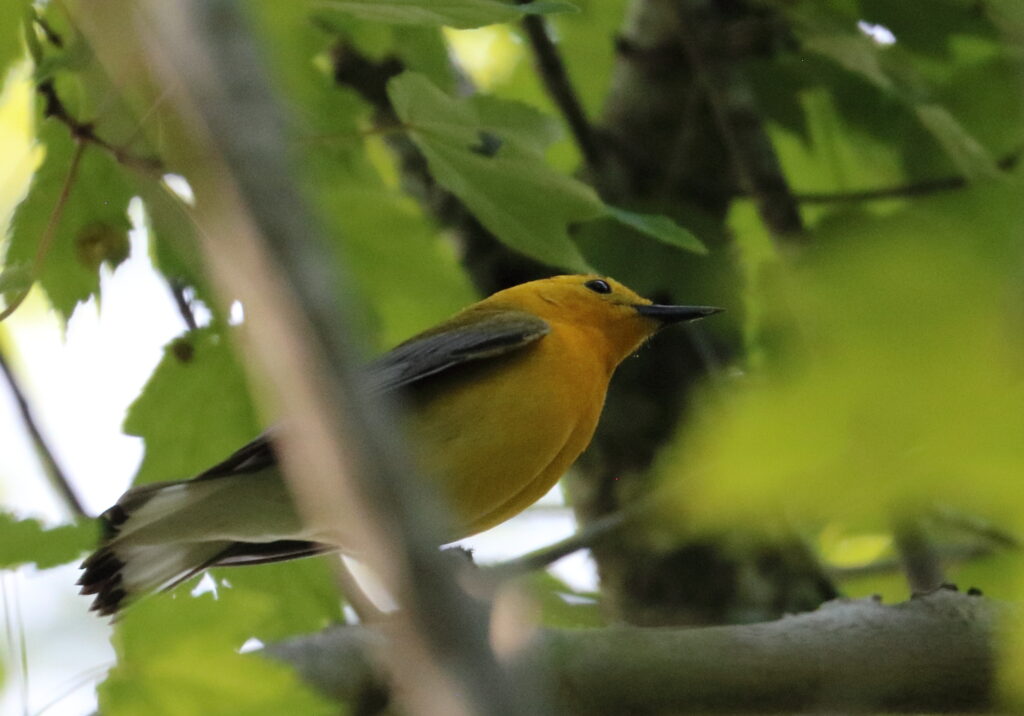
I picked up White-eyed Vireo, another more-southerly bird, as I kept walking, searching the trees for my second target at Belleplain. Then, in the distance, I heard a song that matched the recording on Merlin almost exactly, and made a beeline straight for that location. Once there, I played for the bird twice. No dice. I sighed. “I was really hoping to get this one. Oh well.” Suddenly, I heard a flutter of wings right above me. I looked up, to see a Prothonotary Warbler staring down at me from a branch no higher than two feet above my head. Even in the dying sunlight, it’s brilliant golden feathers stuck out against everything else. My jaw dropped. The Prothonotary flew over to a bush beside me, staring at me with curiosity and searching for the rival bird it had just heard. While I’d seen a lot of birds in the last few weeks, including a fair number of life birds, no bird had made my heart thump this hard inside my chest. A few incredibly special moments passed, and then the bird fluttered away, probably headed for bed, as I would be soon. The last time I had seen this bird was seven years ago, at High Island Texas, during my dad’s and my first big year. It had been the first bird on that trip to blow our minds, and represented the first year that I’d really begun to take birding seriously. Prothonotary Warbler had helped kick off my passion, and here I was seven years later, sharing a moment with another one, more than a thousand miles from that first encounter. I had no idea I would feel this way when I’d set my sights on one during this trip.
This was my first Prothonotary Warbler in seven years since my Dad and I had one of our first big birding adventures, in Houston, Texas.
The sun was setting, but the day wasn’t done. I plugged a Google Maps pin into my phone for another bird that loved southeastern pine forests. As I headed towards the spot, I took a brief stop at the Belleplain State Forest visitor center to go to the bathroom and brush my teeth. As I stepped out of the car, the songs of three flycatchers greeted me—two Eastern Phoebes and an Acadian Flycatcher, the latter a lifer! After missing that one at Nummy Lake, I certainly had not expected to get one singing at dusk along the side of the road, but then again, there is something special about parking lots! I listened to its “pizza” calls for a bit, then hopped back into the Jeep. Five minutes later, I pulled over on the side of the road and was immediately rewarded with my next target bird: Chuck-will’s-widow. Four of them called from the trees surrounding this random, rural dirt road, and I was reminded of my lifer last March in the Everglades.
The next morning, pounding rain on my tent woke me. While I’d been hoping for a better forecast, I had prepared for it and didn’t expect to see many birds today. However, what I would see was almost as cool. Forty minutes after leaving Belleplain State Forest, I got off at the last exit on the Garden State Parkway and entered the town of Cape May, New Jersey, one of the best birding spots on the continent. I joined several birders who already had their scopes trained on the waters of Delaware Bay at a hotspot called the Coral Avenue Dune Crossing, which consisted of a large wooden standing area overlooking a sandy beach and the ocean. While there weren’t many birds flying around (although the Forster’s Terns were again putting on a show), a tour group showed up after about half an hour, and I eavesdropped to learn a little bit about the famous birding location. The tour, it turns out, was being led by Tom Reed, the top eBirder for the hotspot location and one of the people who started many of the projects happening at Cape May. While Cape May, a peninsula at the bottom of New Jersey, certainly held plenty of potential during spring migration, it really outshined anywhere else on the eastern seaboard in fall. Because of its shape, thousands of migrating birds following the Atlantic coast would be funneled into it every autumn, halted by the daunting flight across the mouth of Delaware Bay. The migrants all stopped here, in mind-boggling numbers—Tom spoke of kettles of thousands of raptors circling above the platform on which I stood, trying to gain enough height to make it across the water crossing.
Coral Avenue Dune Crossing, one of Cape May’s most famous hotspots.
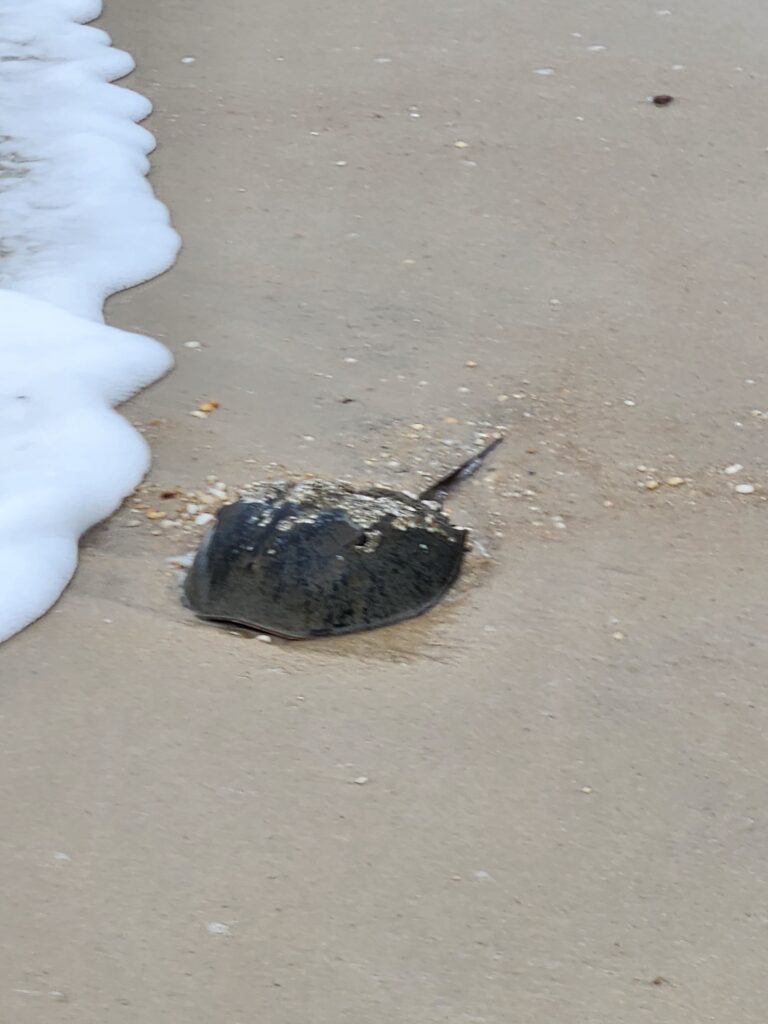
At the recommendation of some of the birders at the Coral Avenue Dune Crossing, I headed to Higbee Beach WMA. In the pouring rain, I did not see many birds, and I definitely didn’t see the migrating warblers I’d been hoping for. I did spot some Horseshoe Crabs on the beach, however, as well as a few Prairie Warblers and Indigo Buntings on territory in the subtropical dune scrub. Following that, I hopped in the car to dry off, and turned back north, heading for the Poconos. While I hadn’t seen many birds today, I hadn’t really had many targets any way, and I had seen Cape May. On top of that, the day before I had gotten two lifers and knocked all of my targets out of the park. Coastal New Jersey, you can bet I’ll be back.
Among my last “birds” of the trip, horseshoe crabs are a vital resource for migrating Red Knots, who feast on the crabs’ eggs.
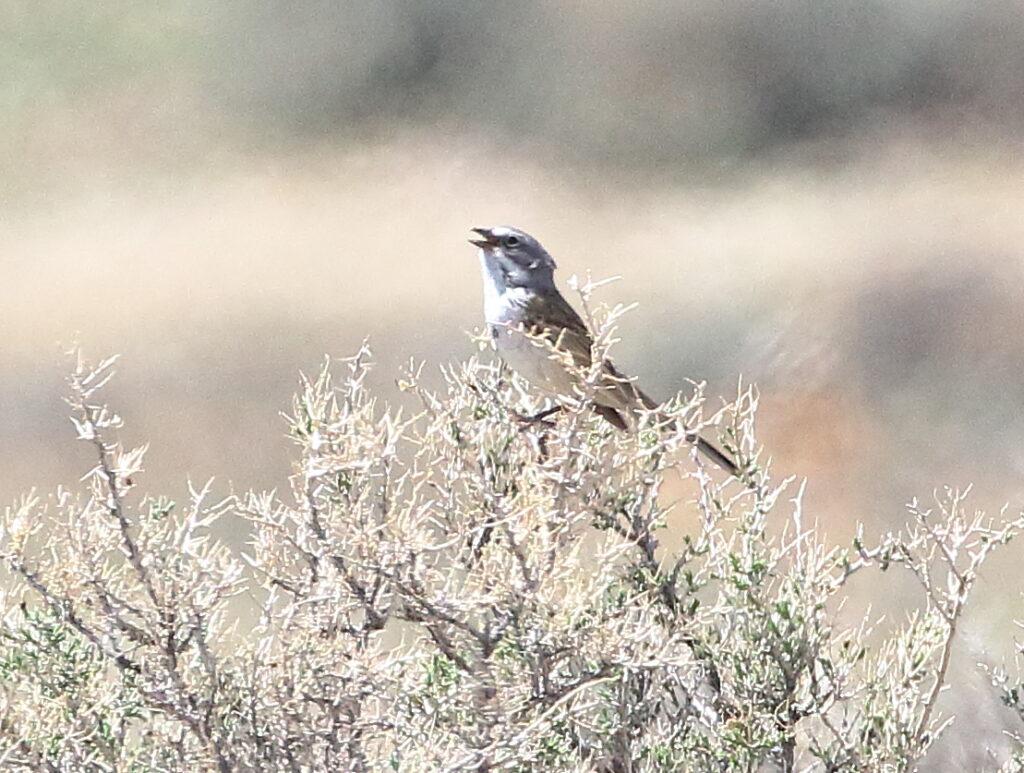
With this post, I am officially back from Japan—and loving the spring birding around Montana. In this episode, I revisit one of our favorite Montana places to bird, Bear Canyon. As is often the case, I was hot on the heels of one of my nemesis birds, Sagebrush Sparrow. Thanks for following along—and Happy Mother’s Day and Global Big Day!
When I shared my most recent Montana birding list with my friend, Roger, he joked, “Does Montana have secret tropical zones I’m not aware of?” I answered, “It does. It’s called Bear Canyon.”
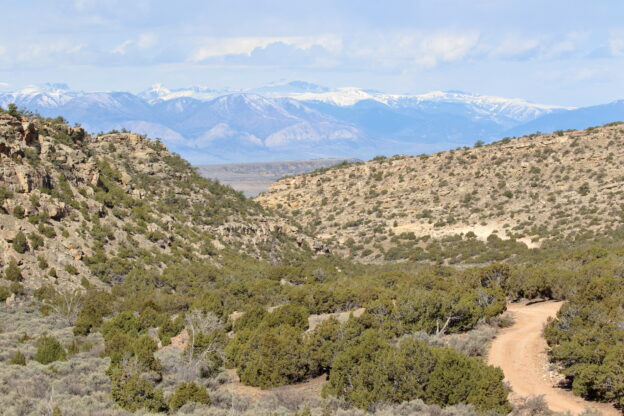
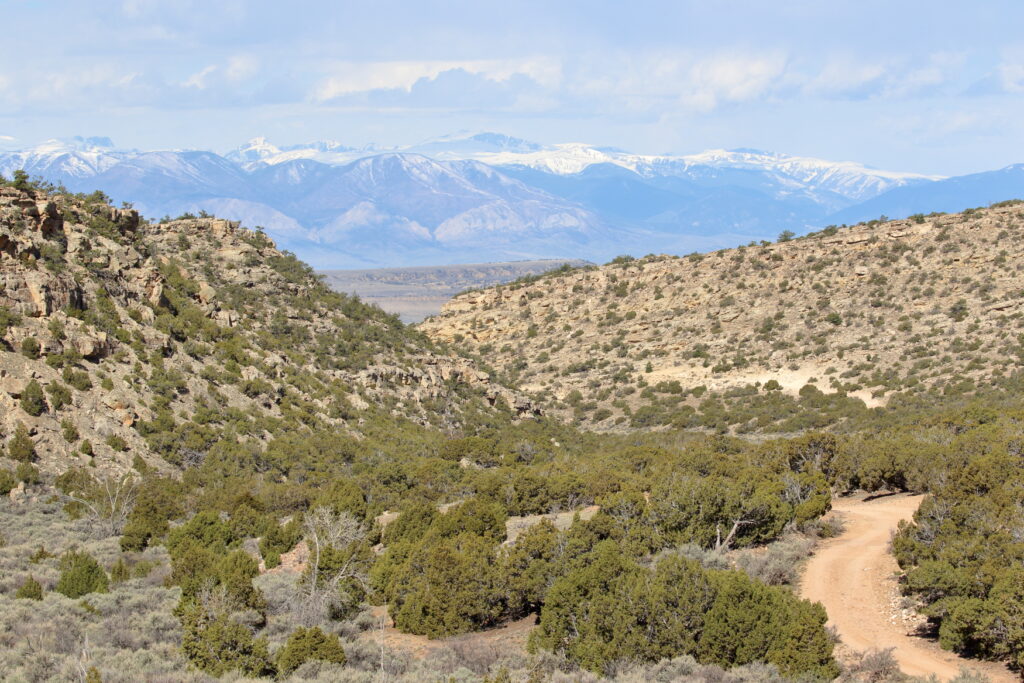
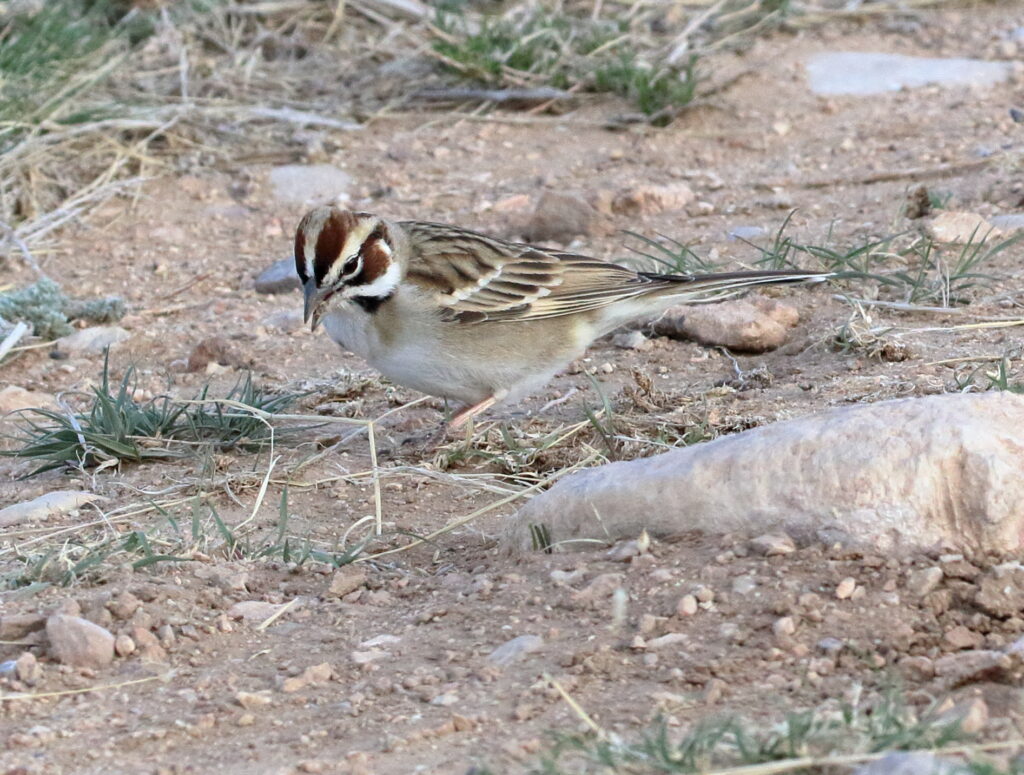
In all honesty, to call Bear Canyon tropical is a stretch, but it may be the state’s best example of the Big Basin habitat that dominates much of the interior West—and it’s probably the best place to pick up “southern leaning” species that are truly elusive elsewhere in the state. These include Blue-gray Gnatcatcher, Gray Flycatcher, Sage Thrasher, Pinyon Jay, and my nemesis bird, Sagebrush Sparrow. When I was invited for some speaking events in the Billings area in early May, in fact, Bear Canyon immediately popped to mind. Studying the eBird bar charts it looked I might be a tad early for some of the species there—but that didn’t stop me from going for it. I was on the road from Billings by 6:30 and pulled up to a rocky parking spot at the mouth of the canyon just before 8:30. Two gorgeous Lark Sparrows greeted me as I parked. A good omen.
View looking down toward the mouth of Bear Canyon—truly one of Montana’s magical places.A pair of Lark Sparrows greeted me as I parked—the best views I’ve ever had of these handsome, charismatic birds.
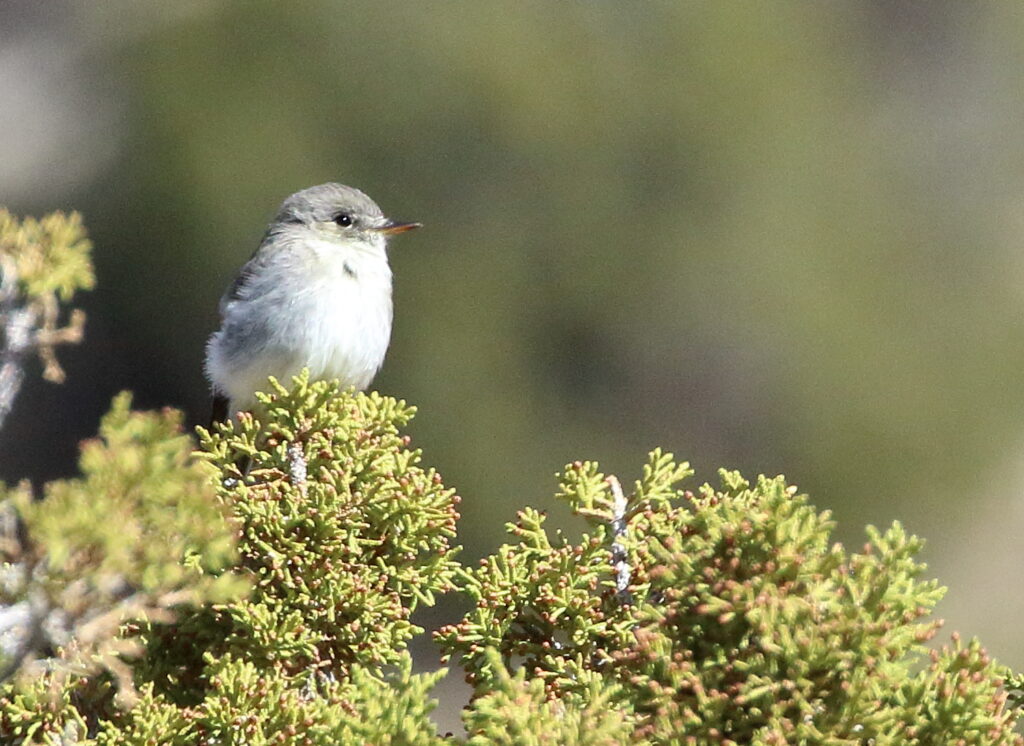
As I hiked up and over a small hump into the canyon, the birds wasted no time revealing themselves. A Rock Wren—my first of the year—belted out its scratchy, repetitive song from the top of a juniper tree, and almost immediately, another song caught my attention. I punched in Sound ID and pumped my fist. “Yeah! Gray Flycatcher!” Moments later, I observed the bird a hundred yards away—the first of half a dozen Gray Flycatchers I would see that morning. Sound ID also recorded Brewer’s Sparrows and Green-tailed Towhees, but since I don’t know their calls and didn’t see either one, I didn’t record them. It also picked up my nemesis, Sagebrush Sparrow—but I think that was an error since to my knowledge they are rarely reported in the canyon itself.
Seeing Gray Flycatchers was a treat, but to have one pose a reasonably short distance away added greatly to the experience.
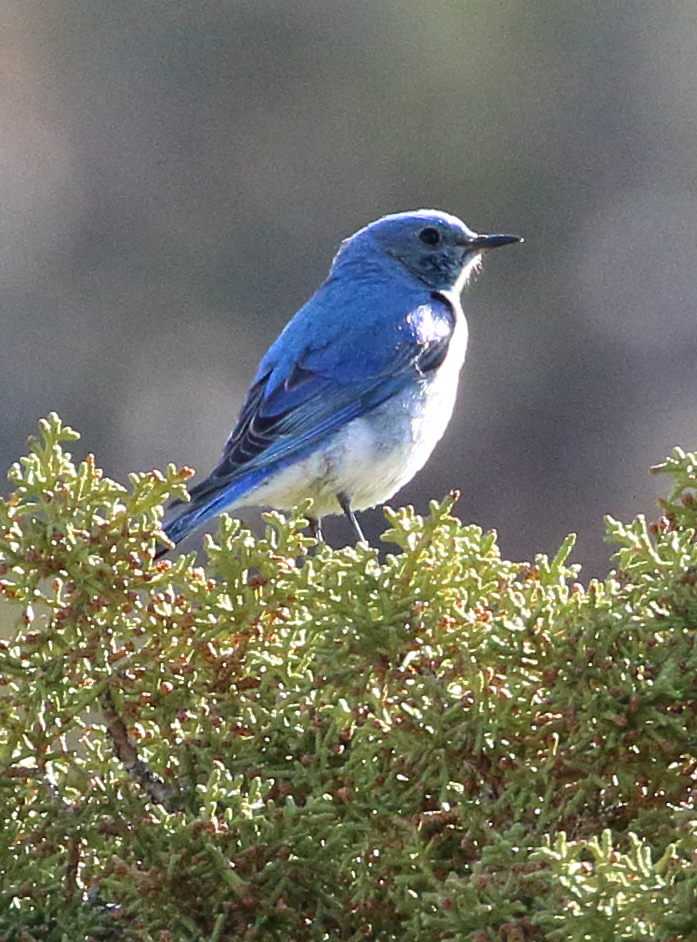
A host of other birds also showed including Chipping Sparrows, Mountain Bluebirds, Mountain Chickadees, and Vesper Sparrows—but that still left some big misses including Blue-gray Gnatcatchers (too early) and Pinyon Jays (probably off in another canyon). Still, it was a spectacular morning, and Bear Canyon was about as pretty a place I could ever hope to have all to myself.
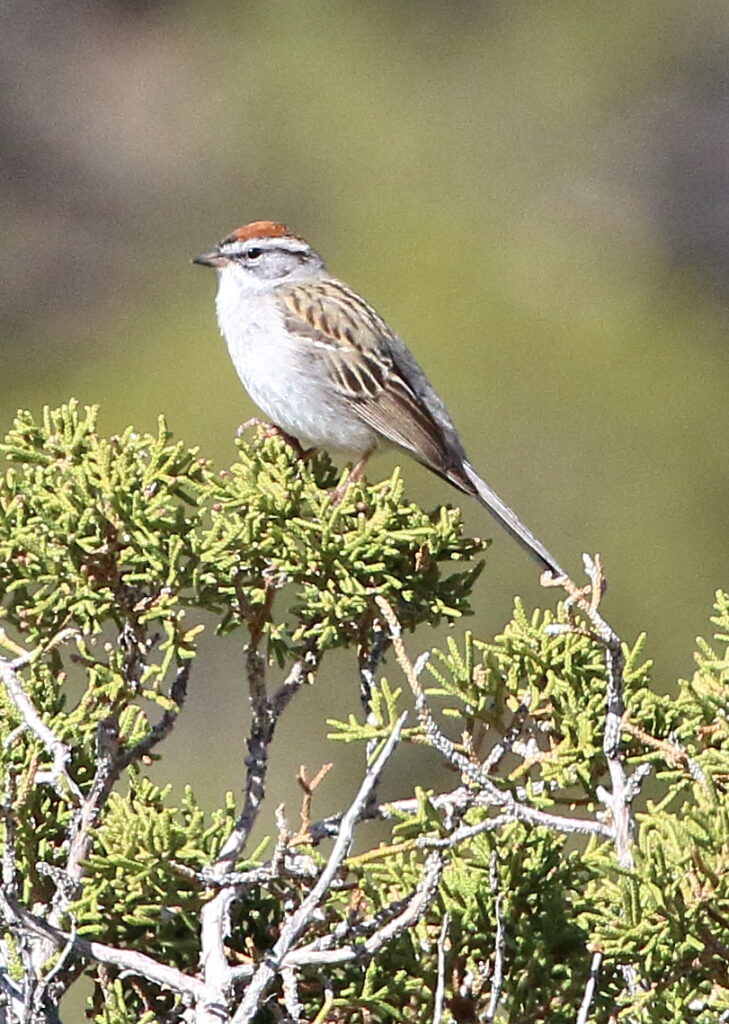
A pair of Mountain Bluebirds definitely added a splash of color to the sagebrush country.How can you not love Chipping Sparrows. They make me smile every time I see one.
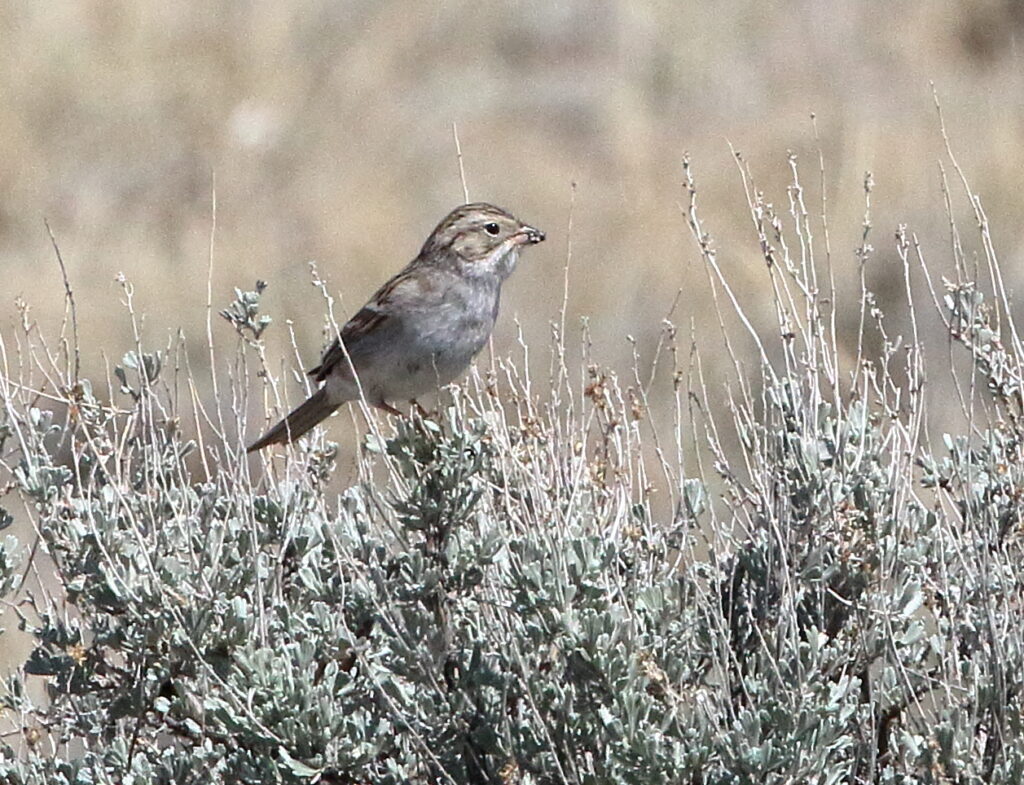
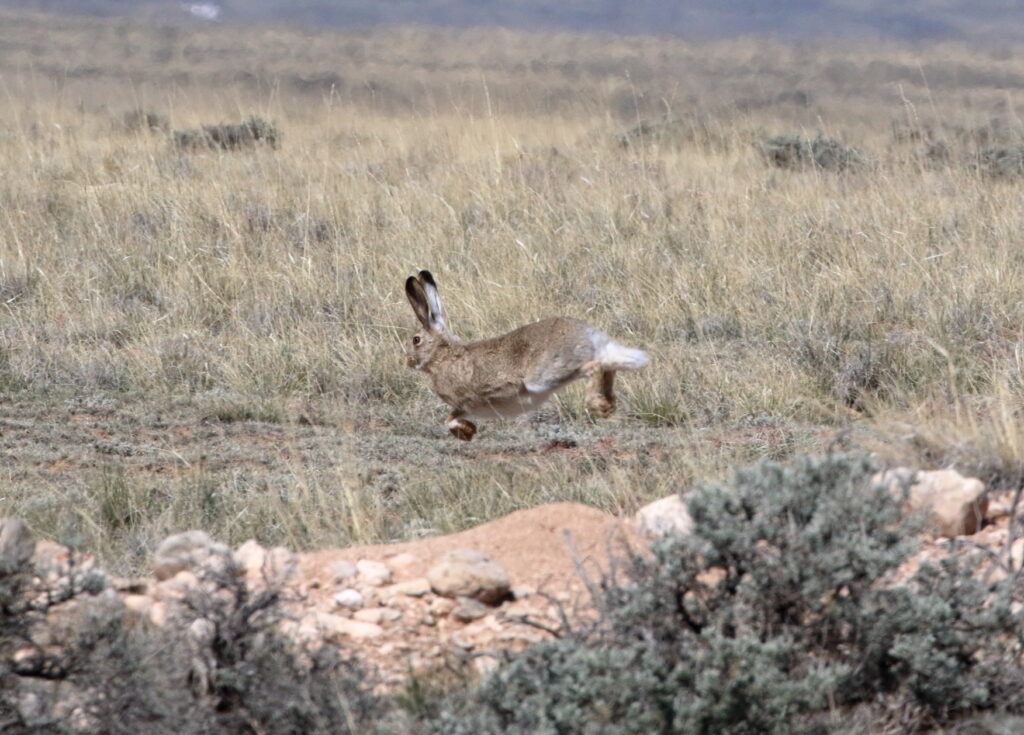
After two hours, I returned to the car and moved onto the next phase of my day—searching for Sage Thrashers and Sagebrush Sparrows. Driving south down a dirt road from the canyon, I remembered Braden’s advice to get out and actually walk through the sagebrush if I really wanted to find the sparrow. I dutifully did this three times. The first time, a jackrabbit about scared the sagebrush out of me! However, I also was rewarded with actual looks at the Brewer’s Sparrows I had been hearing in Bear Canyon proper, which was great. In fact it was the first time I actually got to study these handsome, but subtle, birds and watch them sing.
As drab as they are, Brewer’s Sparrows truly are gorgeous when you give them a close look. They are closely related to Clay-colored Sparrows, a species I have yet to see in 2023. Hey, that rhymes!This jackrabbit burst out of the brush in front of me. As my dad might have said, “It scared the pee-waddin’ out of me!”
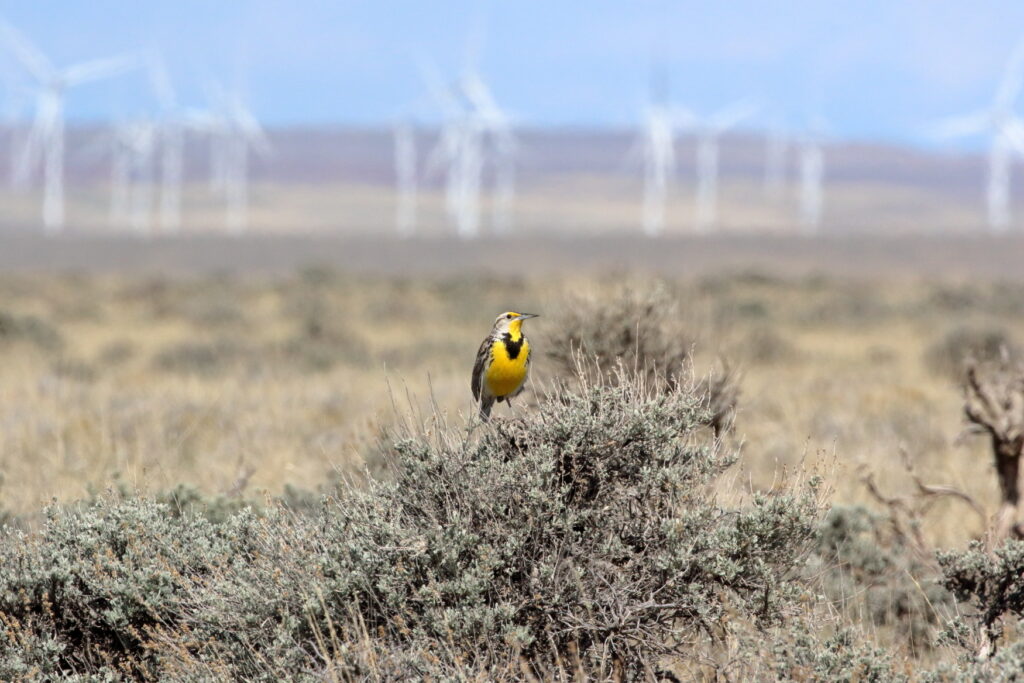
My second walk revealed more Brewer’s Sparrows, along with numerous Vesper Sparrows, Horned Larks, and Western Meadowlarks that inundated the area.
Which brings me to my third walk—and you’re going to guess that’s when I finally found a Sagebrush Sparrow, right? Alas, no. As I was walking back toward the car, however, a large bird suddenly burst into the air right in front of me. Its wings sounded like a helicopter. I immediately knew it was some kind of grouse, and guessed it was a Greater Sage-Grouse. Watching it fly away through binoculars, though, I just couldn’t be sure. Darn, I thought. That would have been super cool. Only a few footsteps later, though, SIX of the big birds leaped out of the sage and thundered away—and this time there was no doubt. I caught bold black and white head markings on a couple of the grouse, and even more revealing, black bellies on most of them. I was elated! This was the first time I’d seen Greater Sage-Grouse since birding with Nick and Braden six years before and to find them on my own, well, it felt like an accomplishment.
I haven’t talked much about it much, but this was some of the best country ever for Western Meadowlarks and Vesper Sparrows—and pretty decent for Horned Larks, too.
Disappointingly, I saw not a trace of Sage Thrasher, a bird Braden and I had seen here in numbers only three years before. According to the eBird bar charts, they should have been here, too. And the Sagebrush Sparrow? Well, to be honest, I didn’t expect to find one of those on my own. After all, it was a nemesis bird, right? Still, I clung to the memories of the Greater Sage-Grouse as I continued driving down the dirt road, and just tried to appreciate the magnificent sagebrush and snow-covered mountains around me.
Eventually, the road connected with a larger dirt road, and I turned right. I could see the highway up ahead, but coming around a corner I spotted a small bird landing on a bush fifty yards away. Better look, I told myself. I parked the car and whipped my binoculars to my eyes.
Then, I started to get excited.
The bird definitely looked like a sparrow, but with a darker head. It was partly obscured by a branch, so I took a few steps to the left, praying it wouldn’t fly away. It didn’t. And that was enough to confirm it—my first and only Sagebrush Sparrow!
AT LAST! Right when I’d about given up hope, a gorgeous adult Sagebrush Sparrow decided I’d worked hard enough to find him! Thank you!
The bird flew across the road to another bush and I pulled the car up a bit closer before again getting out. Now, I had a fairly distant, but wonderful view of the bird as it sang its melodious song. Nemesis no more! I thought and watched it for several minutes before it flew off. I thanked the bird and this remarkable ecosystem, and then headed back to Billings.
Since we published them, our birding posts about Japan have been read in more than a dozen countries. If you are planning your own trip to Japan, you’re in luck! Sneed’s new book, FIRST-TIME JAPAN: A STEP-BY-STEP GUIDE FOR THE INDEPENDENT TRAVELER, tells you everything you need to know about how to plan your trip to this remarkable, yet sometimes intimidating, country.Order now by clicking here.
Welcome to our Japan birding posts. In this edition, Sneed explores the “less visited” city of Kanazawa, a place that would turn out to be perhaps one of their favorite stops on trip—and with some surprising birds. If you are just tuning in to Japan, be sure to check in on our last post from Kyoto!
Leaving Kyoto, our (non-bullet) train took us through my favorite scenery yet in Japan. Just north of Kyoto, the train hugged the shoreline of Lake Biwa for more than half an hour. Seeing the lake on a map, I envisioned a forested wilderness, marked perhaps by some resorts or getaways, but the entire lakeshore was surprisingly built up with cities, towns, and farmland. Alas, the train was too far away from the lake to identify any birds except Black Kites and crows, though I did see an enticing shorebird flying across a field. Passing through a tunnel, we then entered picturesque mountain areas where I looked in vain for a Brown Dipper in the roaring streams we crossed. No luck. Emerging back onto a large plain, we more or less re-entered civilization until we arrived at our next destination, Kanazawa.
Both Tessa and I were taken with Kanazawa Castle and its grounds from the moment we approached the main entry gate.
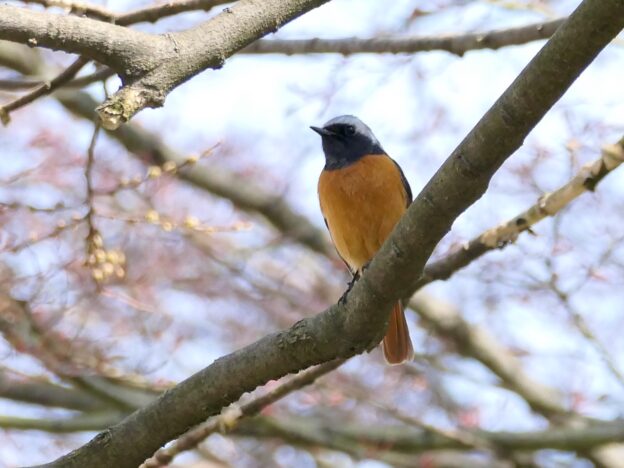
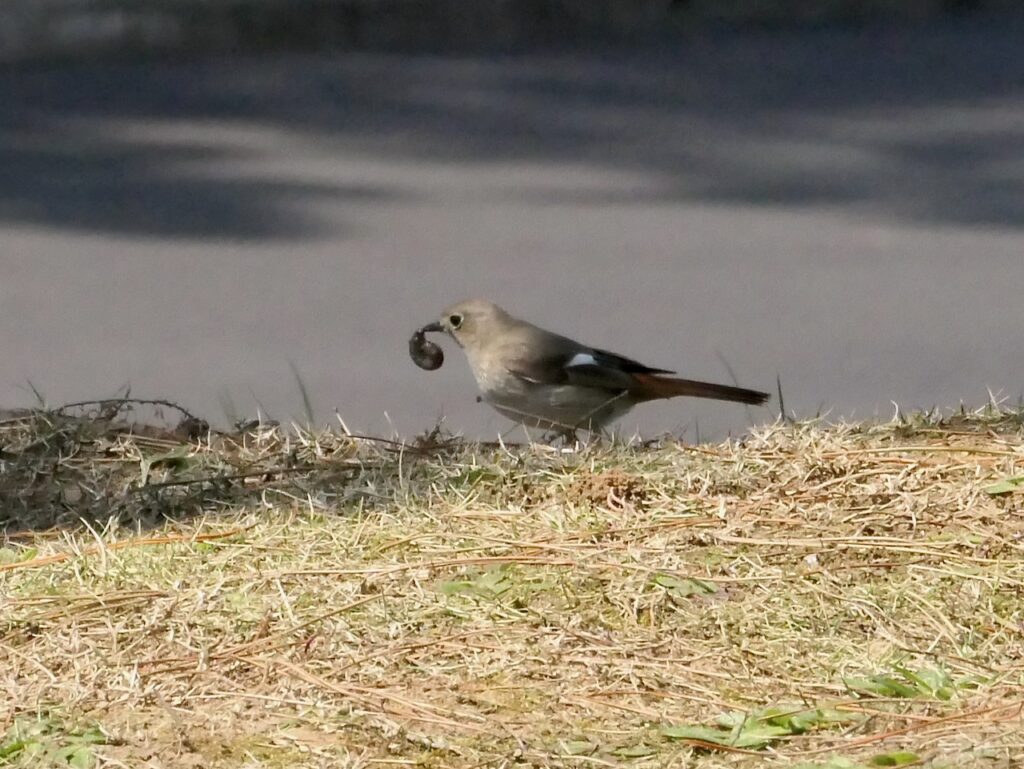
I had booked us a hotel right next to Kanazawa’s major tourist feature, a large castle set in a park-like setting, and as soon as we dropped our bags at the hotel, we grabbed a “set lunch” at a local café and headed straight to the castle. Tessa hadn’t seemed too impressed with other castles on the trip, but this one wowed us both—perhaps because of its dramatic approach and the glorious sakura flowers blooming at the gates. After going inside the castle, we took a wonderful walk on paths above it, where Tessa declared this was her favorite place so far on the trip. The birds also liked it well enough, with the omnipresent bulbuls, crows, and kites surrounding us. Descending back toward the castle, though, I spotted a trio of Oriental Greenfinches, and then a bird that stopped me in my tracks. “Oh my god,” I said out loud, and hurried forward hoping the bird wouldn’t move. It didn’t, and I got my first look at another bird at the top of my “To See” list: Daurian Redstart!
This male Daurian Redstart just made my day—and, of course, my life list. I love the blooming sakura flowers behind it.
As delighted as I was with the redstart, I saved my real birding enthusiasm for the next morning when I left Tessa to hang out and grabbed a cab out to Kenmin Seaside Park, perhaps the only place left on the trip where I might see shorebirds or pelagic species. As soon as I arrived I glimpsed a departing tit of some kind and saw multiple Dusky Thrushes and White-eared Starlings feeding in a field. I hurried past them until I reached my primary destination, the beach. Alas, this was no natural beach. Giant cement breakwaters were piled up offshore and it was clear the area had been heavily worked over by dredging and industry. I saw a few flying birds too distant to identify and a flock of cormorants that took off long before I got close enough to attempt an ID, but that was it. No shorebirds. No waders. Just trash littering an evidently sterile expanse of sand.
Trash has become a scourge on beaches throughout the planet. I was hoping Japan’s dedication to cleanliness might make this Kanazawa beach an exception, but no dice.
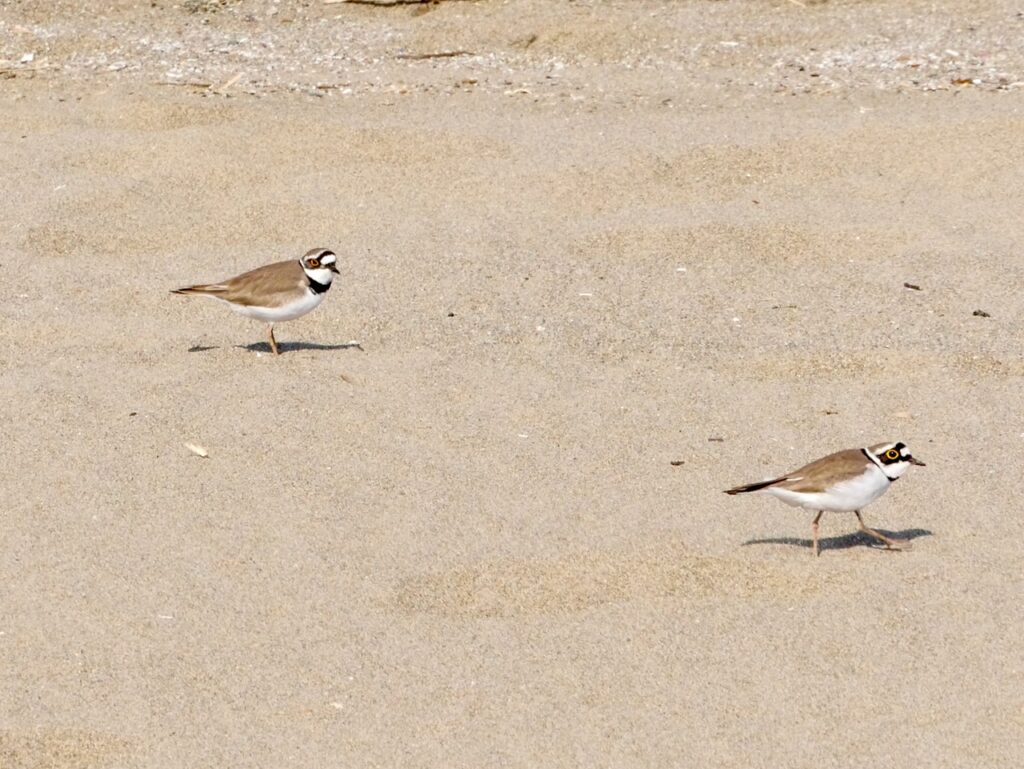
I nonetheless started trudging my way north, planning to round the tip of the small peninsula and make my way back to the park to try some forest birding. Suddenly, my eyes caught movement. There among the trash, I saw one tiny shorebird, then another. I guessed right away they might be plovers and as I moved closer, the yellow rings around their eyes cinched it: Little Ringed Plovers—another life bird and perhaps my most rewarding Japanese species yet. I wish I could tell you that this find unleashed a flood of shorebird sightings, but no. They were it—two hardy survivors on a desolate beach.
Definitely some of my favorite birds of the entire trip, this pair of Little Ringed Plovers were the sole shorebirds on the vast desert of beach next to Kenmin Seaside Park.
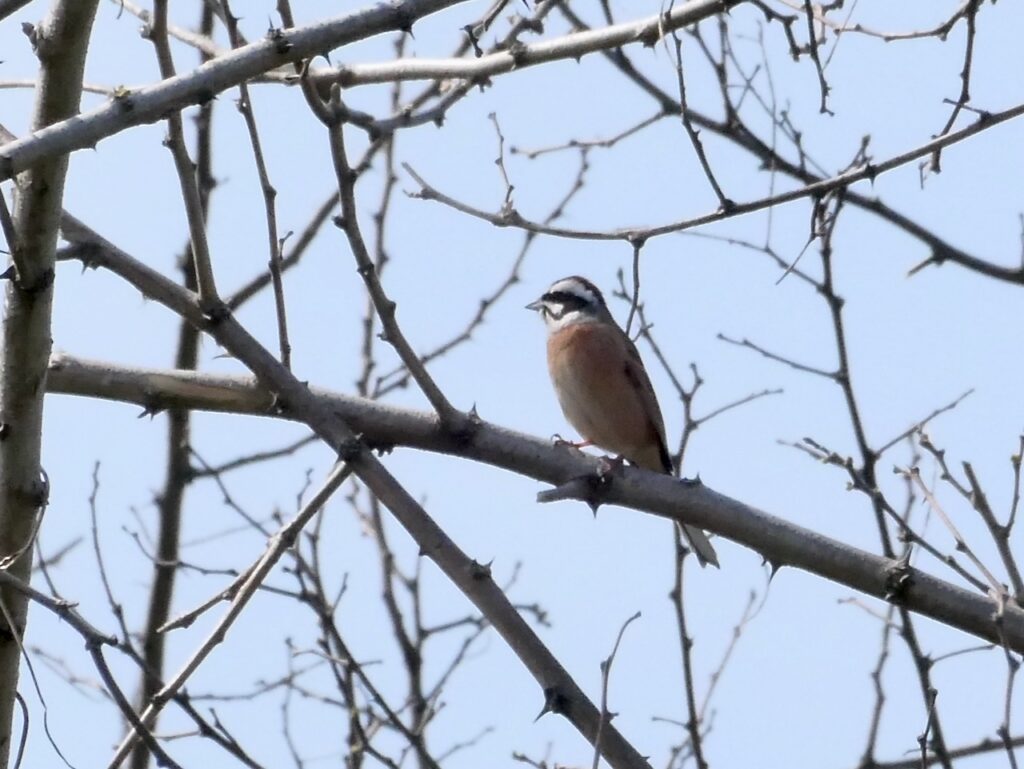
Fortunately, the birding got significantly better as I made my way back toward the main park. I picked up two more lifers in quick succession: Meadow Bunting and Asian House-Martin. Back in the forest, I encountered my best mixed flock of the trip, containing Japanese and Varied Tits, two Japanese Pygmy Woodpeckers, a Warbling White-eye, and a Japanese Bush Warbler.
I had to text Braden a photo of this one to know what it was. I had studied Meadow Buntings a number of times, but for some reason the real thing didn’t register.The relatively natural trails of Kenmin Seaside Park made me feel back in my element after almost two weeks of solid city life.It took me a while to figure out that this bird was a FEMALE Daurian Redstart. Fortunately, I would see several more of these on the trip.
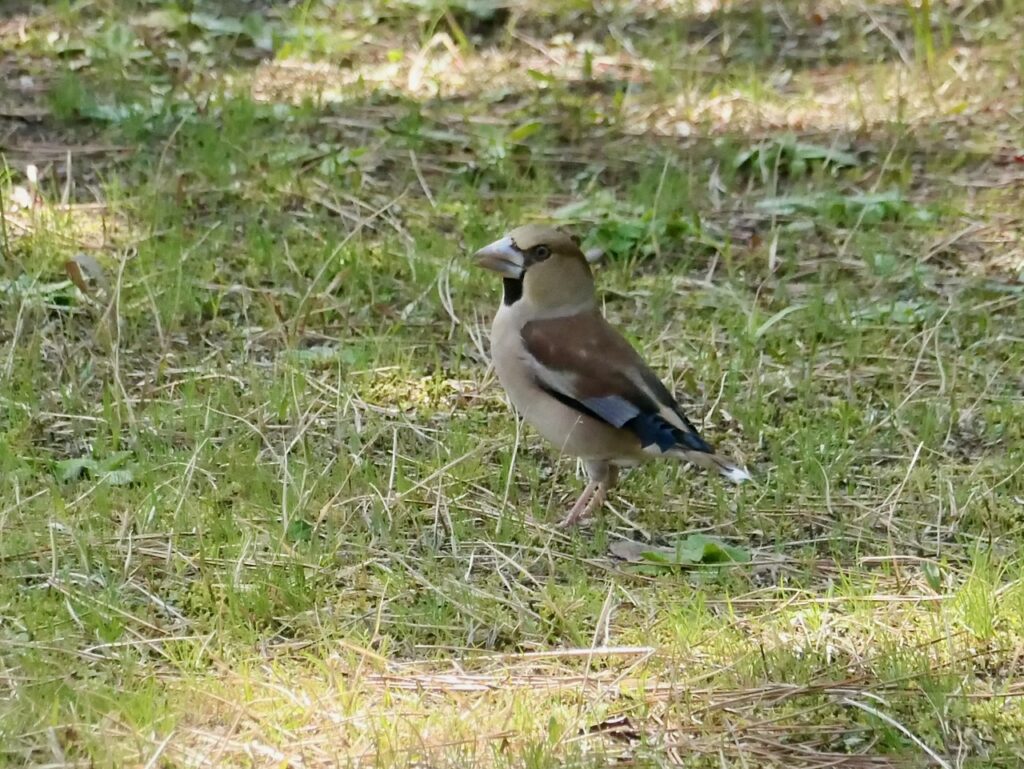
My time to meet my cab was, unfortunately, running out quickly, but as I hurried along a trail, I noticed three birds foraging under some trees. The first was a Dusky Thrush and I automatically assumed that the others were, too. I was wrong. They were Hawfinches! Braden and I had really hoped to see these odd chubby birds in Amsterdam or Israel in 2019, but to no avail. Now, on the other end of the Asian continent, I was staring at two of them cocking their heads at me in between going about their business. It was a great way to end the morning, and fixed Kanazawa as one of my favorite birding spots in Japan.
Congratulations to our loyal follower Roger Kohn for notching his 300th Life Bird this week—and a Golden Eagle no less! Way to go, Rog, and may it be just a prelude to a great spring birding season!
I can’t believe we didn’t post the entire month of February. Nonetheless, we appreciate your loyalty and devotion, and believe it or not, we picked up our 100th subscriber in the last few weeks. We should have more than that, but Russian hackers led to a subscriber catastrophe some years back. No matter, we are glad to have you with us.
But back to the lack of posts, we’ve had solid excuses. Braden has been studying hard for a tough group of science and math classes this semester while I’ve been laboring to complete two new books and get them turned in. Mission accomplished! I celebrated by heading off to the Children’s Literature Festival in Warrensburg, Missouri. It was my “dozenth” or so time there, and this one proved particularly delightful, with more than twenty authors speaking to thousands of kiddos over the course of two days. This trip was made even more delightful by the fact that I roped several of those authors into joining me for a birding excursion!
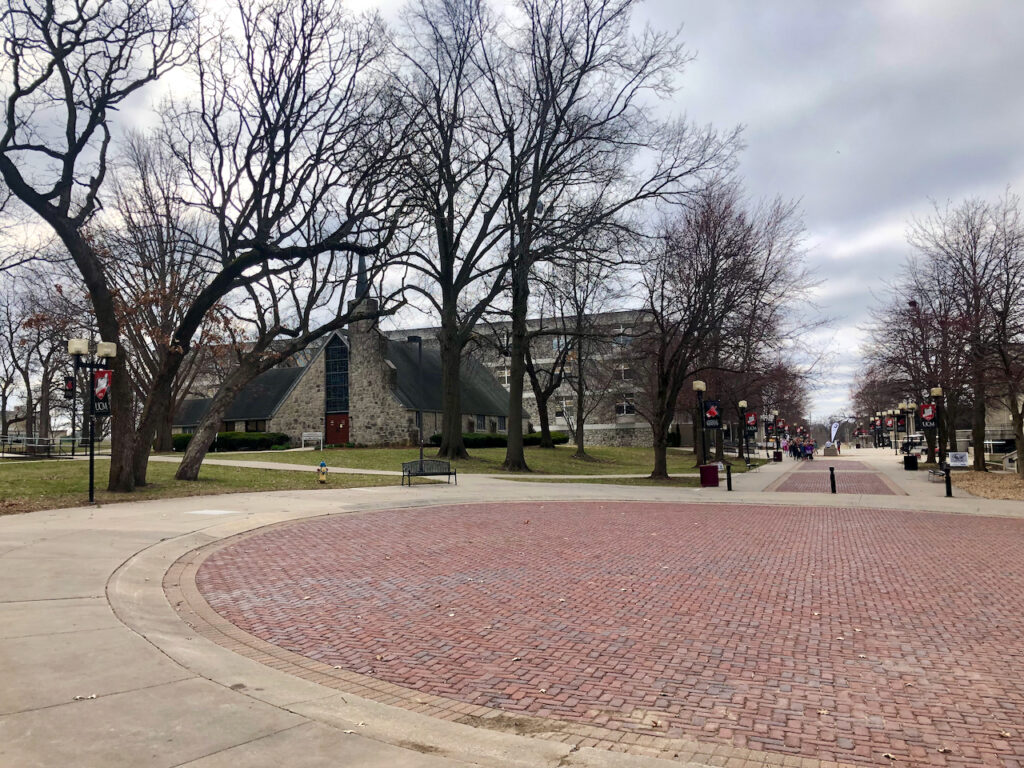
The University of Central Missouri in Warrensburg provided a friendly, intimate setting for 54th Children’s Literature Festival—the first full festival since Covid!
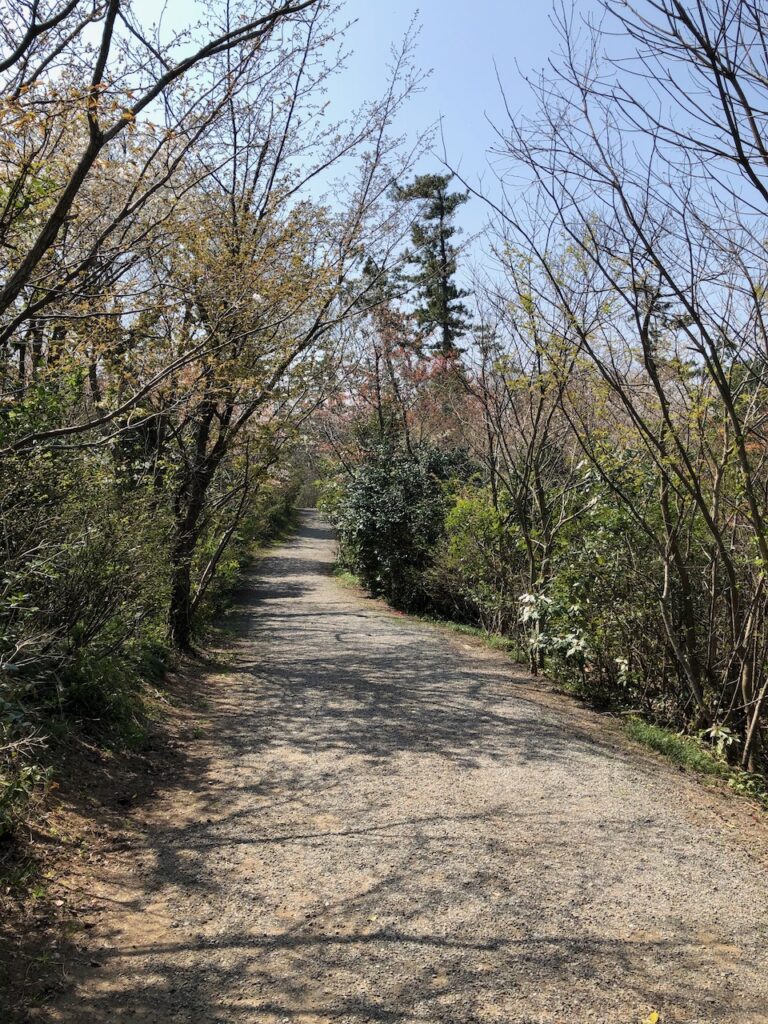
My one complaint about the literature festival is that it always happens before spring migration hits Missouri. Undaunted, I led authors Padma Venkatraman and Samantha Edwards, and Samantha’s husband, Jason Tucker, to Cave Hollow Park this past Sunday morning. Braden and I had birded the park many years back, but before we really knew what we were doing. We’d seen only a handful of species and had left disappointed. This time, I hoped for a better result—and was richly rewarded!
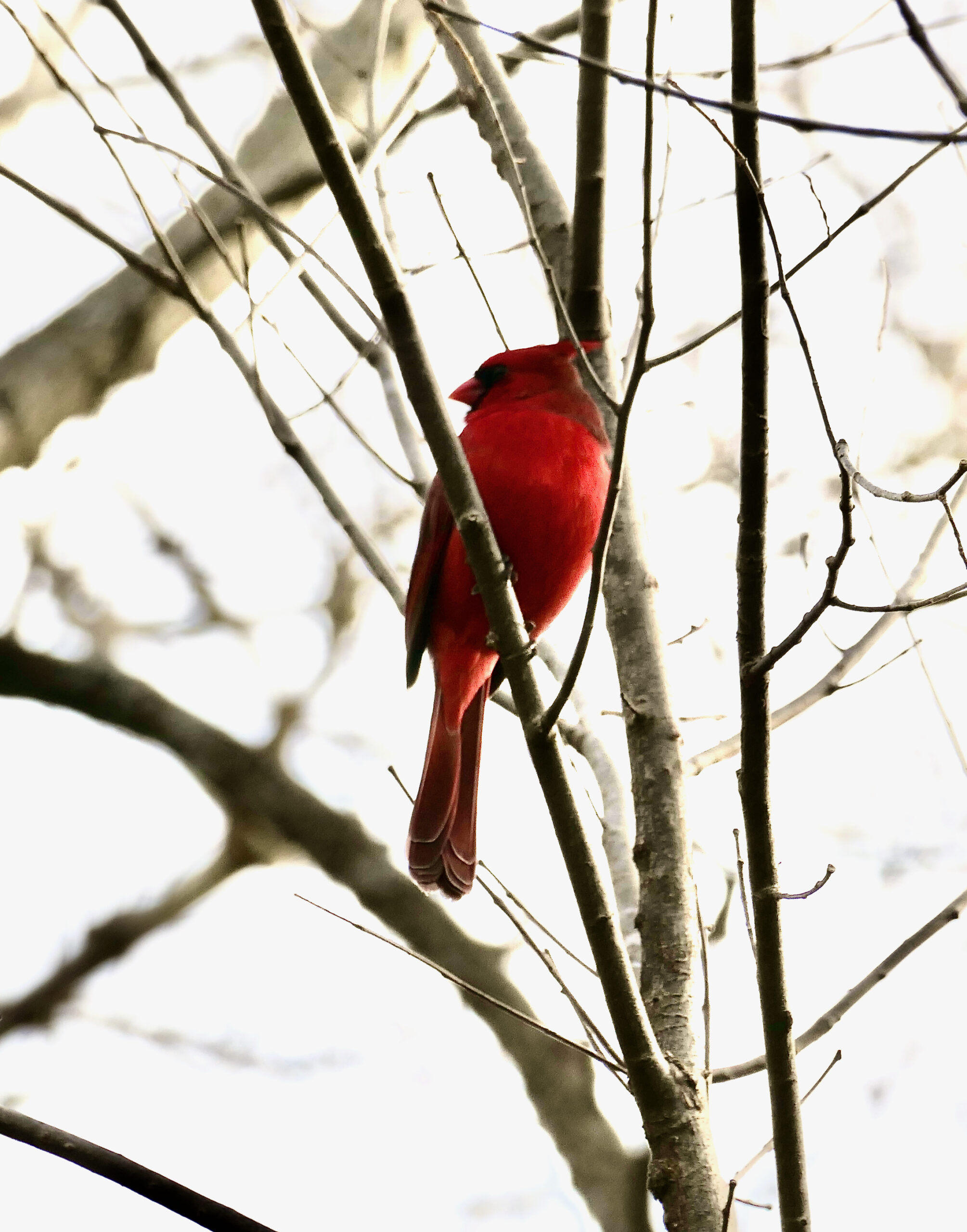
Working the woods that lined the large grassy areas, our intrepid crew saw—and heard—Northern Cardinals and Eastern Phoebes. Then, an American Kestrel flew over, not to be outdone by Red-bellied Woodpeckers, a Northern Flicker, and one of our biggest surprises, a Pileated woodpecker. Of the three woodpeckers, I discovered that the Red-bellied is definitely the most common in the Show Me State. That seemed wonderfully strange for a guy accustomed to Downy Woodpeckers holding down the top spot!
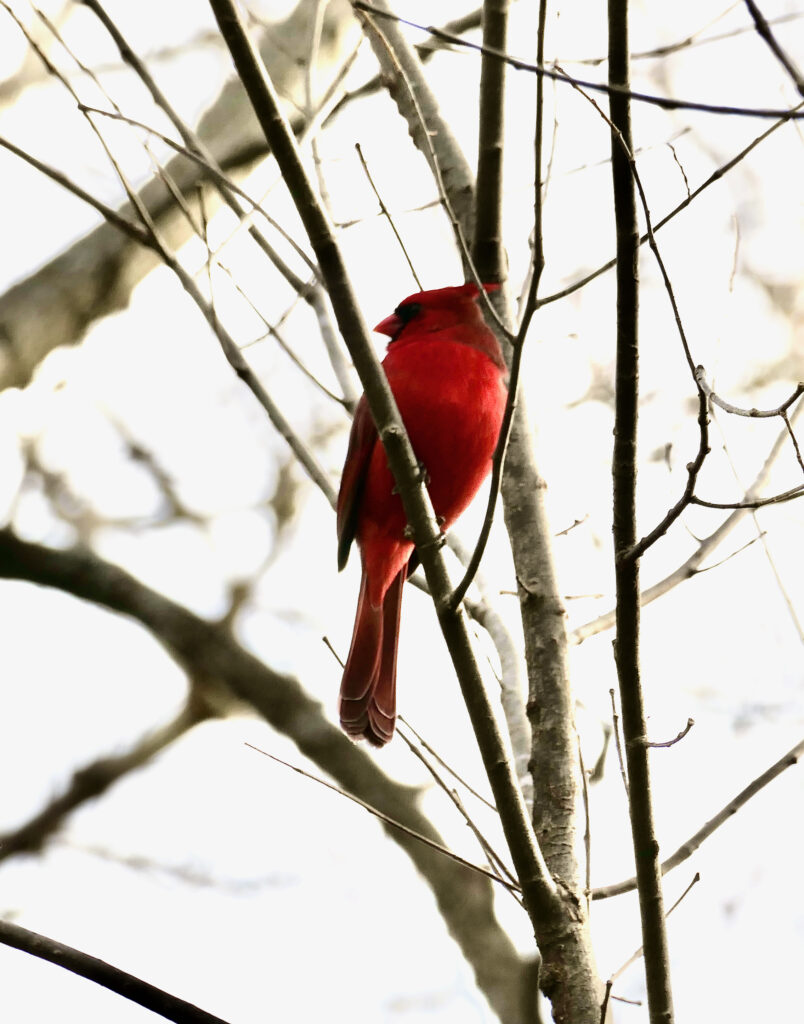
The trip to Missouri was my first opportunity to test my new Panasonic “travel camera” and as you can see from this Northern Cardinal, I didn’t really know what I was doing. Am hoping I’ll get to share better photos with you soon!
We continued our excursion, venturing into the park’s wooded trail system. This is where Braden and I had pretty much struck out before, but today our group was pleased to encounter Black-capped Chickadees, Tufted Titmice, and a surprise White-breasted Nuthatch. For the first time, I also recognized the “Fee-bee” call of an Eastern Phoebe. “Ah,” I told my companions, “that’s how they got their name.” To my satisfaction, my companions loved our outing, as did I. While we didn’t see anything rare, I don’t often get a chance to enjoy the birds of the East, so it was a special treat to get out there on this sunny, crisp morning. It was also great to have such enthusiastic company!
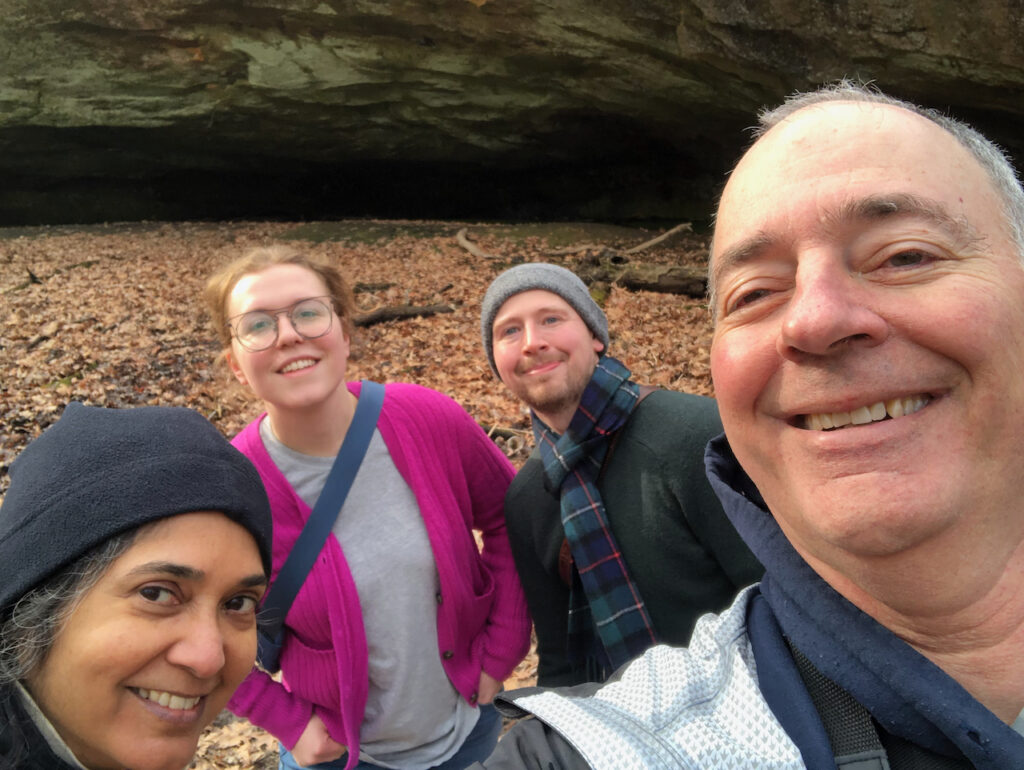
My intrepid fellow birders and I were excited to discover some of the “hollows” for which Cave Hollow Park is named (Left to right: Padma Venkatraman, Samantha Edwards, and her husband, Jason).
I was so pumped that I woke early the next morning and birded the woods right next to our hotel. I had barely set out when I saw eight or ten sparrows close by. The yellow above the eye made me at first think “Savanna Sparrows.” Then I realized with excitement that they were White-throated Sparrows—a species that wasn’t even on my radar! More surprises followed with a look at a Song Sparrow and Turkey Vulture. Then, I heard an even bigger surprise—a Carolina Wren. That afternoon, I bumped my Missouri Life List to 31 species when a Red-shouldered Hawk landed on a lamp post next to the hotel as I and my friend and fellow author, Roland Smith, returned back from work. I ended the trip more than happy with my March Missouri birding . . . but that doesn’t keep me from dreaming they’ll one day move the festival to April when the full flush of spring songbirds will be moving through!
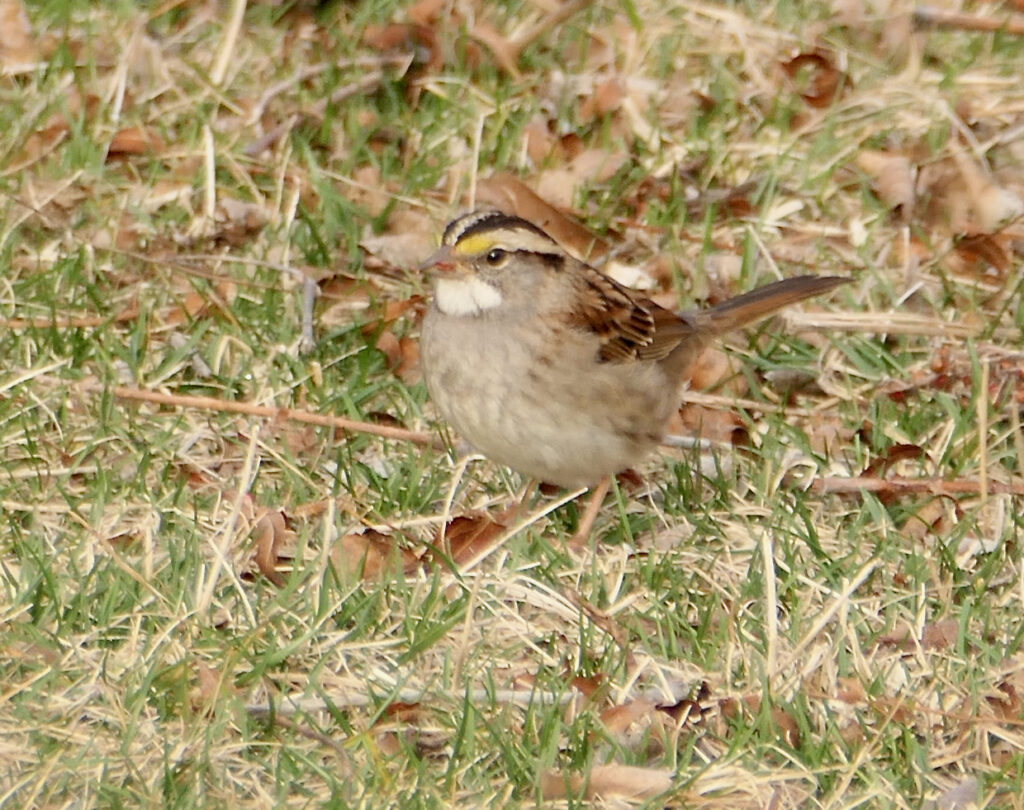
I’m not sure why, but White-throated Sparrows just make me happy. I hope you’re getting to see some wherever you are! Fun fact: President Teddy Roosevelt especially enjoyed listening to White-throated Sparrows on the grounds of the White House!
Advance Warning: You will most likely have to endure another lengthy delay before our next post as I (Sneed) is about to embark on a major trip. The good news is that I will be traveling to a country I have never been, and I can almost guarantee that your patience will be rewarded!