Please follow Braden’s and Sneed’s birding adventures by subscribing to FatherSonBirding.com using the box on the right below. As always, feel free to share this with other birders, bloggers, editors at big high-paying publishing houses—anyone you wish!
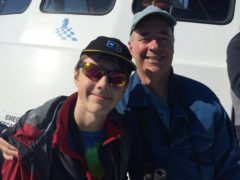
Last week, to celebrate the final days of summer, Braden and I did something we’ve always wanted to do: bird banding. This, however, wasn’t just any bird-banding session. We were lucky enough to accompany the team of biologist Debbie Leick, whom we first met during last year’s Christmas Bird Count.
When Braden and I got to hang with them, Debbie Leick and her bird banding and recording partners had a productive morning, capturing thirty birds of fourteen different species.
Debbie works for MPG Ranch, a wonderful operation that supports a host of restoration and academic science. Debbie’s project? To see if she and her crew can count migrating birds by listening to their flight calls with a large array of microphones spread throughout the Bitterroot Valley. Before she and her team can start counting birds, however, they have to be able to distinguish their calls.
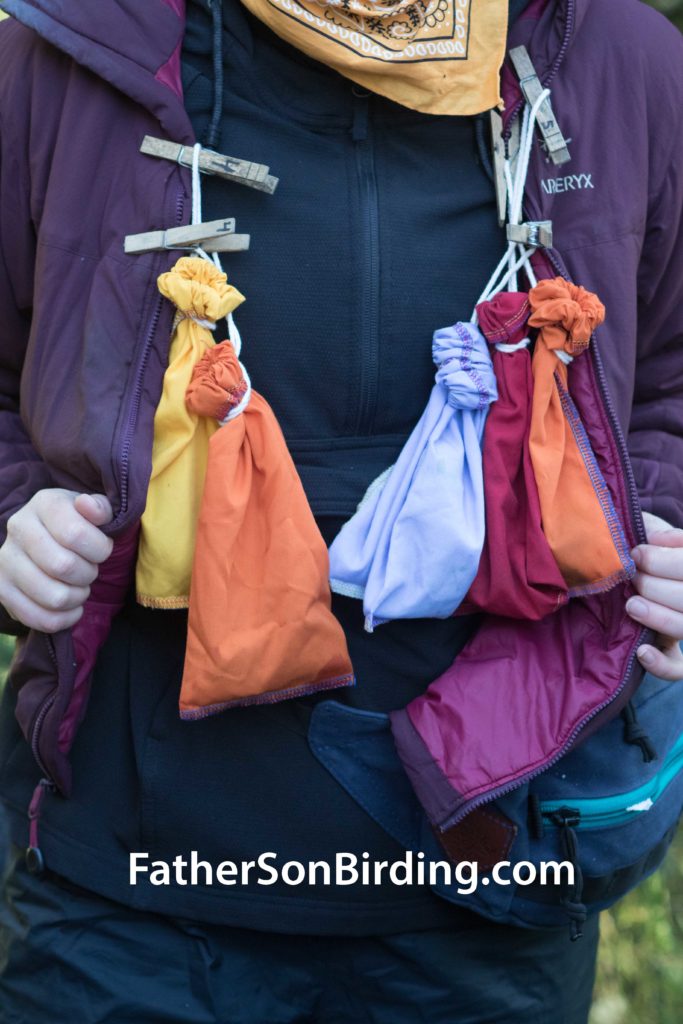
Birds in Bags! Birds extracted from mist nets are kept warm in bags while awaiting banding, measuring, and for a lucky few, recording.
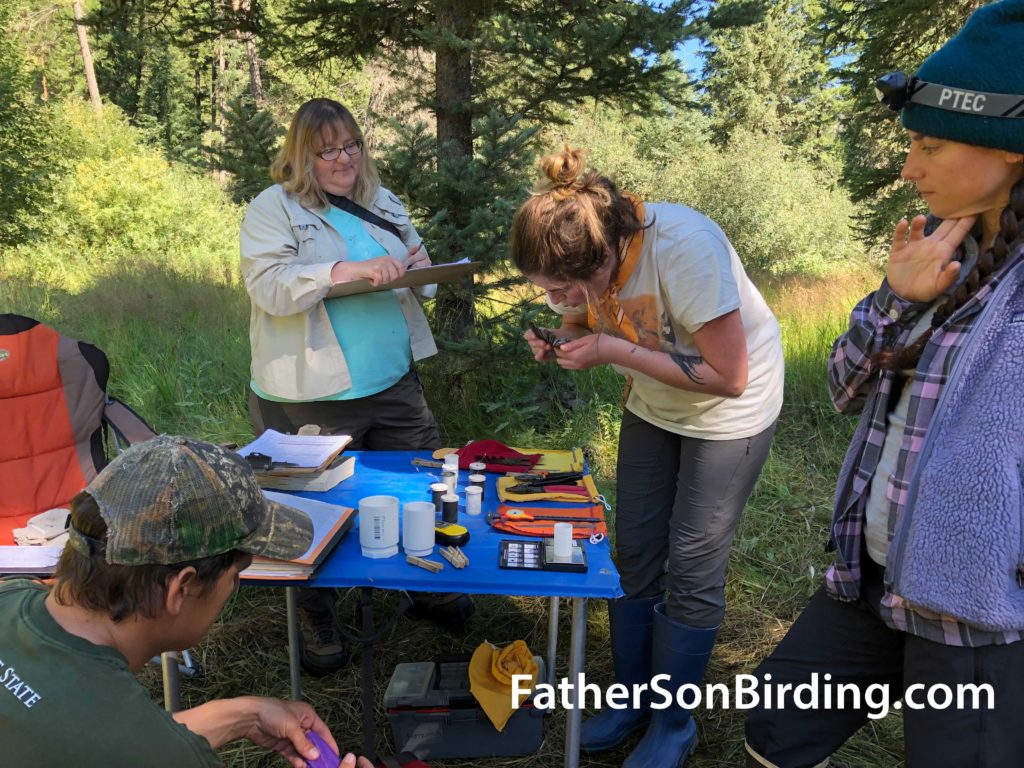
Braden, Debbie, and I joined the University of Montana Bird Ecology banding crew at a trapping station up Miller Creek. The team had set up mist nets to capture birds, and when we arrived, the action was in full swing. A Swainson’s Thrush, Yellow-rumped Warbler, MacGillivray’s Warbler, and a surprise (to us) Northern Waterthrush kicked off the bird parade. Some of these were recaptures, as evidenced by the bands around their legs. New or recaptured, each bird was carefully removed from its net, weighed and measured, and released. Some birds, however, got special treatment.
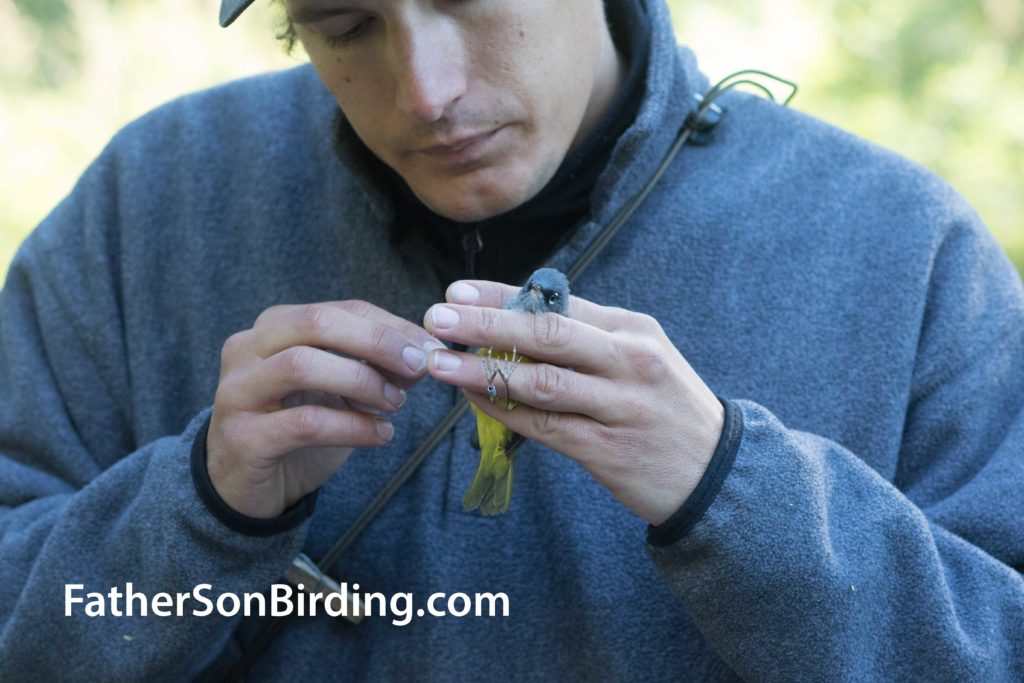
This MacGillivray’s Warbler submits to a thorough health inspection by expert warbler wrangler Sasha Robinson before being banded, measured, and released back into the wild.
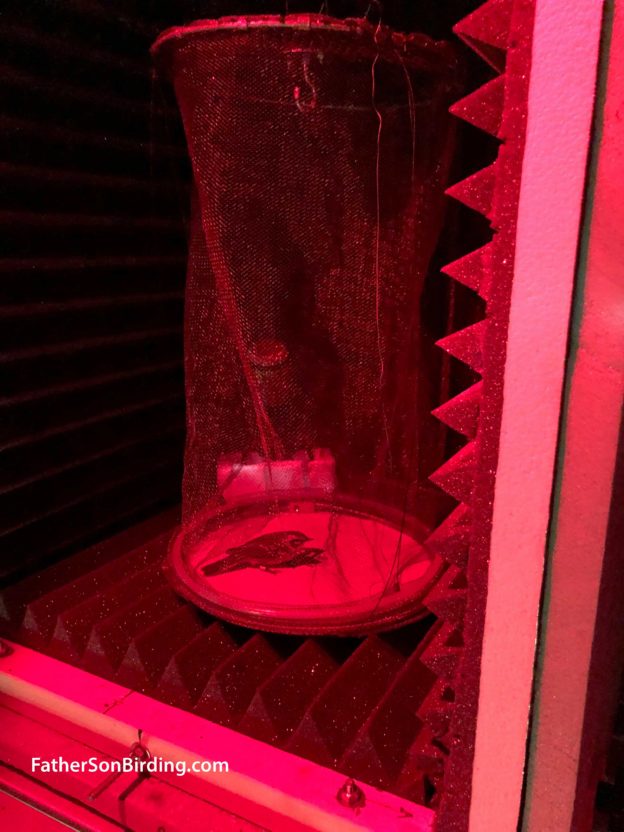
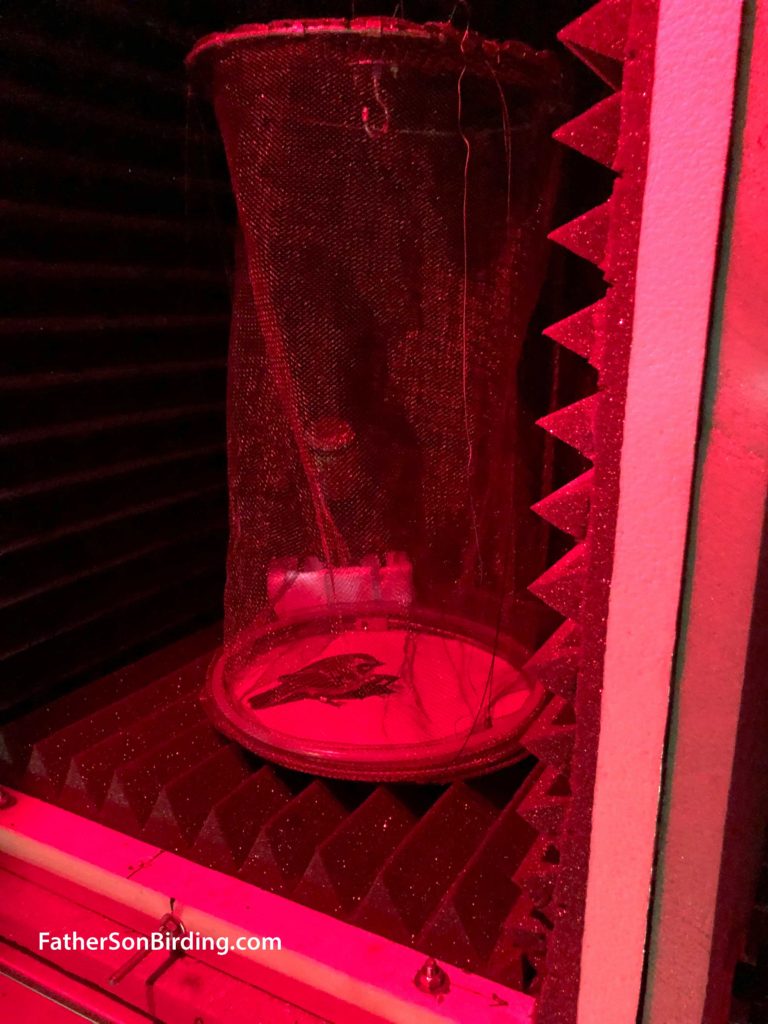
When we caught a Townsend’s Warbler, Debbie’s colleague Boo Curry (and yes, no typo there) led me and the bird to a PRS or Portable Recording Studio. The warbler was gently placed in its own soundproofed recording booth and then Boo piped in some warbler calls (a bird’s version of elevator music) to see if she could get the Townsend’s to respond.
A Townsend’s Warbler prepares to audition for Debbie’s flight call library. It passed with, ahem, flying colors.
It did! In fact, it was the team’s first successful flight
call recording of the season. Which just goes to show how painstaking field
biology can be. The work of Debbie’s team, though, has great promise to improve
not only our counting of migrating
birds, but our understanding of them. Stay tuned for more when Braden and I
follow up on their progress at a later date!
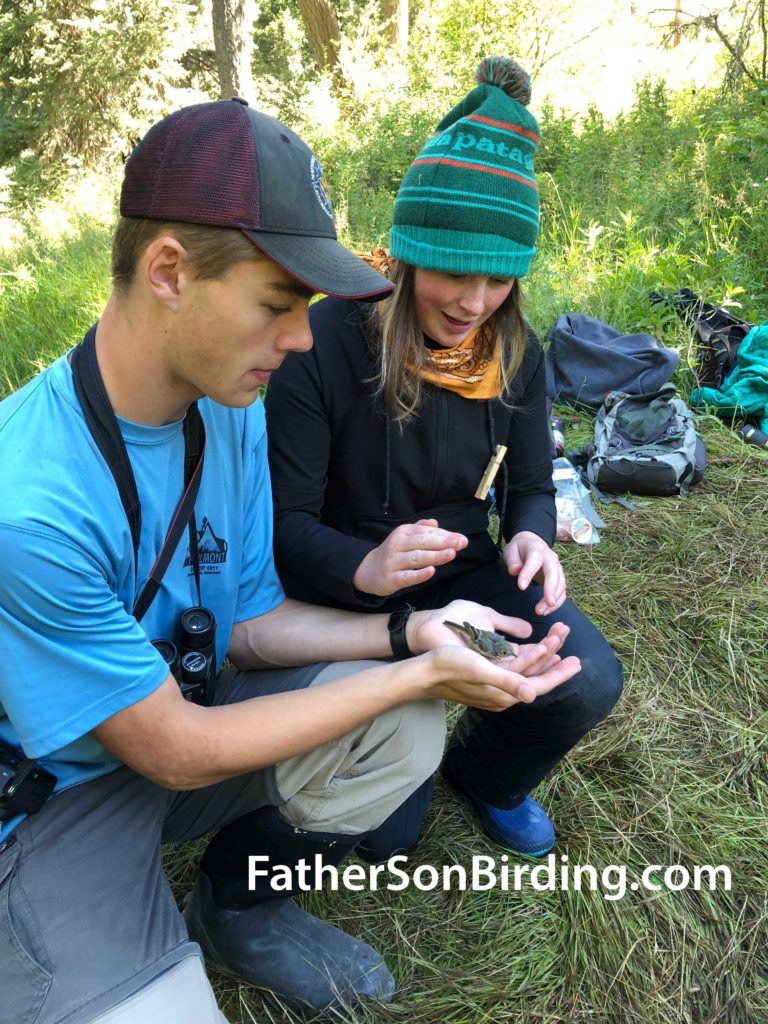
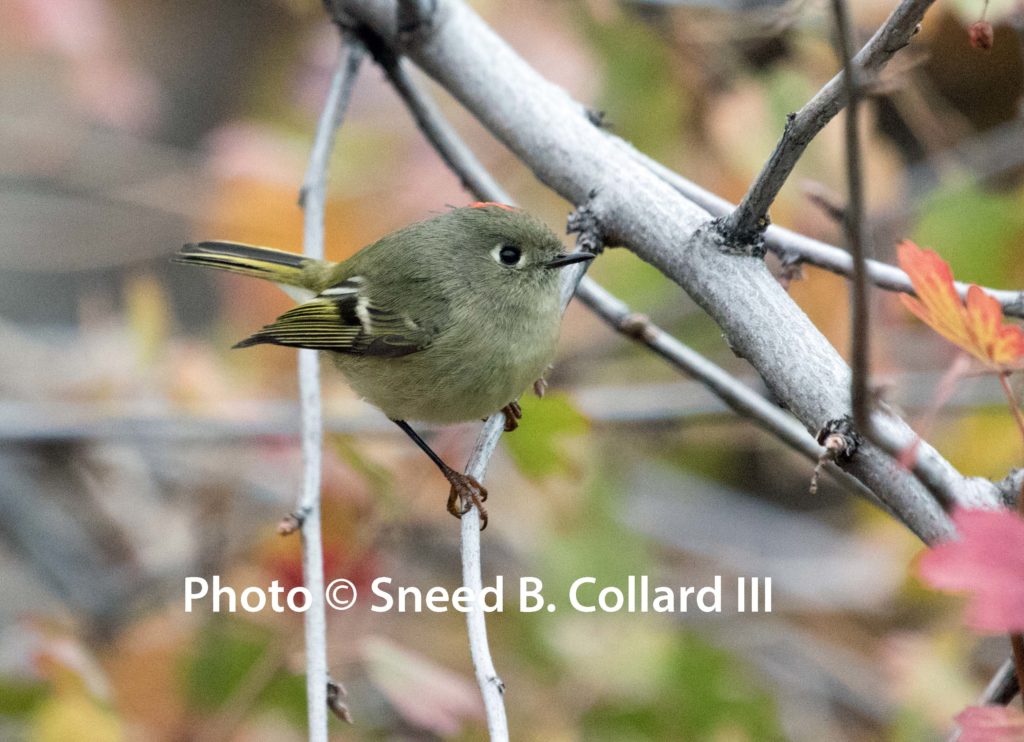
Debbie’s colleague Kaitlyn shows Braden how to release a thoroughly-processed, somewhat bedraggled Ruby-crowned Kinglet.
If you are enjoying these posts, please share them with friends, family, and other birders. Also, be sure to subscribe by filling out the form down in the right-hand column. Hoo-Hoo!
On Wednesday, July 10, both my dad and my Montana year lists stood at 203, mere inches from our previous all-time records. Two days before, we’d had an awesome all-day birding session, nabbing five year birds (Bobolink, Dusky Grouse, White-throated Swift, California Quail for my dad and Black-chinned Hummingbird for me). Now, a couple of days later, I had gone to swim practice and was surfing the recent Montana eBird reports when suddenly, I spotted something. A Virginia’s Warbler had been seen in Lewis and Clark Caverns State Park! Upon further investigation, I discovered that not one but two Black-throated Gray Warblers had been seen in the same spot. Up a nearby canyon an Indigo Bunting was hanging out! I talked to my dad, and we couldn’t take it anymore. The rarities coupled with other year bird possibilities pushed us to the brink.
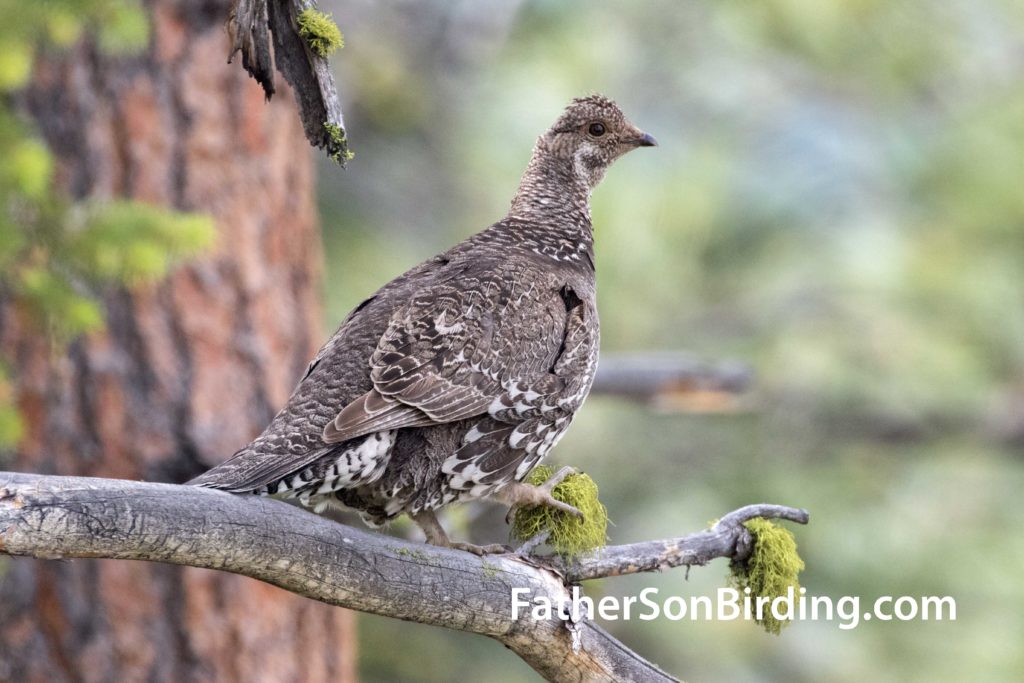
Bolstered by this Dusky Grouse and four other year birds we’d seen on Monday, July 8, we decided to make an all-out push to break our Montana Big Year records.
The next evening—Thursday—we hit the road for a Super 8 in Butte and the next morning were up at dawn, heading for the caverns. I had a pretty good idea of where the rare birds were (or so I thought), so we started off on a mildly steep trail from the campsite, encouraged by neon Bullock’s Orioles swooping around us. In our haste, however, we had forgotten our bug spray, and about two miles in, the mosquitoes attacked, forcing us back to the campsite.
Slightly disheartened, we
moved on to our next stop: Milligan Canyon Road. A male Indigo Bunting had
taken up residence here among the usual Lazuli Buntings, and we expected him to
stick out like an indigo wildebeest in a pack of green lions. As we continued
up the road, though, seeing all lions and no wildebeest, we began to grow disappointed.
At the actual entrance to the canyon, though, my dad pulled off the road and
whipped out his binos.
“I’ve got him!”
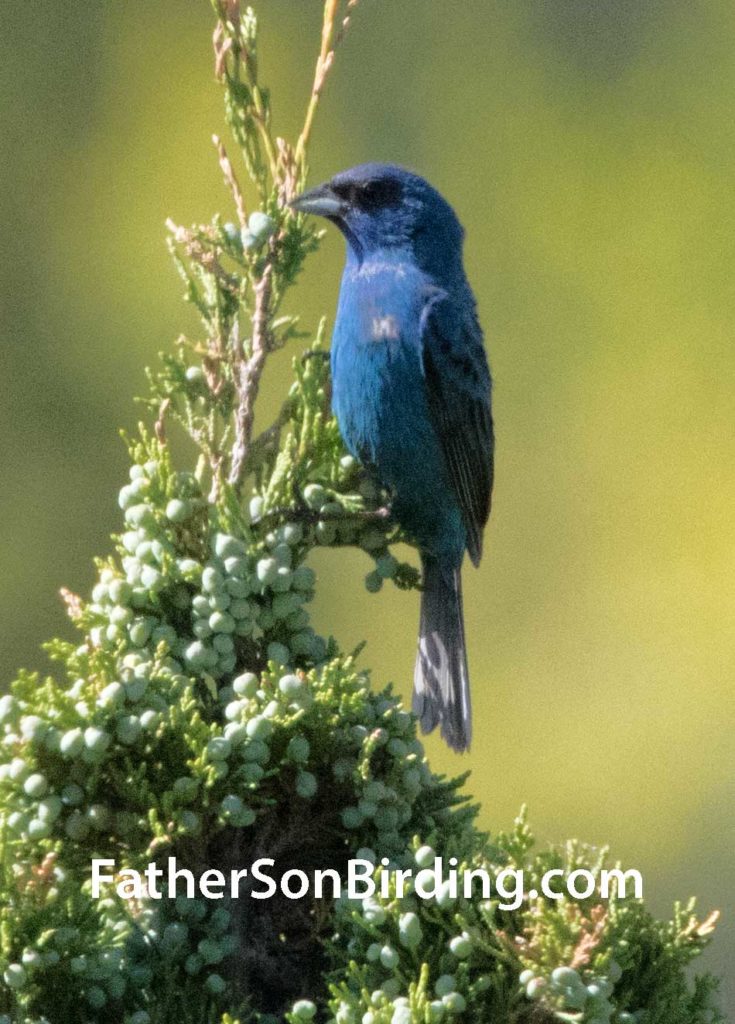
While common in the middle and eastern U.S., this Indigo Bunting was probably the rarest Montana bird we’d ever seen.
We leapt out of the mini-van
like it was about to explode and ran across the road, and sure enough, there he
was. The wildebeest was singing his tiny heart out, as if nothing was weird
about the fact that he was in Montana rather than North Carolina. My dad and I
celebrated our first successful rarity chase in Montana with a high-five.
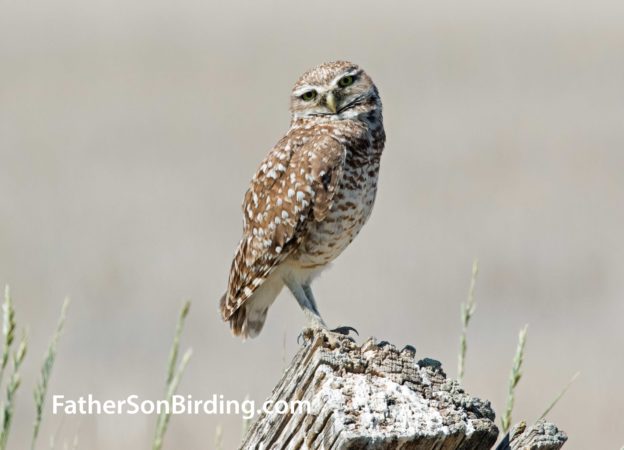
After a quick search up the canyon for Yellow-breasted Chats and Green-tailed Towhees (we found a Golden Eagle instead), we made our way towards Three Forks. We pulled onto the dusty Bench Road and spotted harriers and Swainson’s Hawks, bringing back memories of our first-ever eastern Montana trip two years before when we’d found curlews and Burrowing Owls with Nick Ramsey on this road. Soon, we saw our main quarry: a tiny owl picturesquely perched on a fence post ahead of us. We pulled up alongside it, and flushed another!
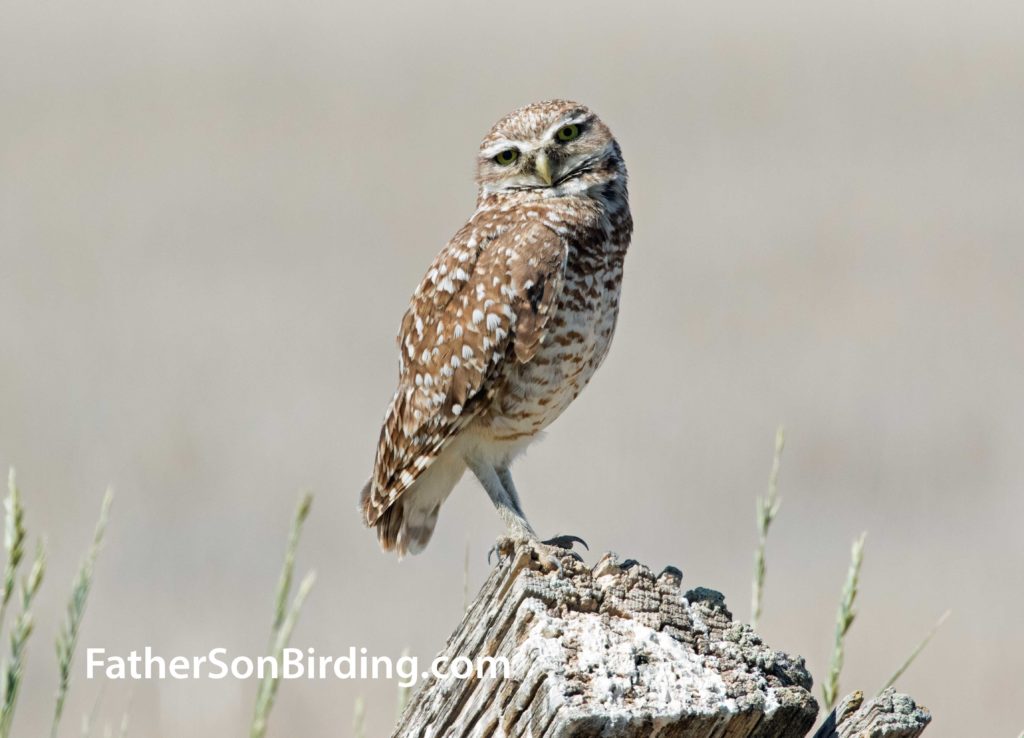
We love it when birds pose only a few feet from us. This Burrowing Owl was really trying to score a permanent modeling contract, or at least a spot on “Project Owlway.”
The owls gave us great pics, and after a half hour we turned tail and headed back to Lewis and Clark Caverns. Why? It turned out I had picked the wrong trail for the rarities! We gave it another shot, this time driving to the top of the state park. Sprawled in front of us were beautiful juniper and pine-covered hills, and we started off on another short trail after being interrogated by the park officials (“We aren’t going to sneak into the caverns, we’re looking for birds!”). A few hundred yards up the path, a new sound rattled across the landscape, different from the regular sounds of the Spotted Towhees. I peered down the slope, and saw a bird with the strangest color combination—green, gray and orange. Green-tailed Towhee! We pished it up the slope and got awesome looks. This wasn’t just a year bird; we’d never seen it before!
We tried one more trail before giving up all hope on the two warblers, then steered towards Helena. After a brief rest at yet another Super 8—this one far more depressing than the first—we visited a Helena cemetery, where my dad had gotten Pinyon Jays earlier in the year. I was skeptical, but sure enough, eight blue-and-gray corvids crossed the road in front of us, hopping onto a few tombstones and then loudly flying off. Another lifer for me!
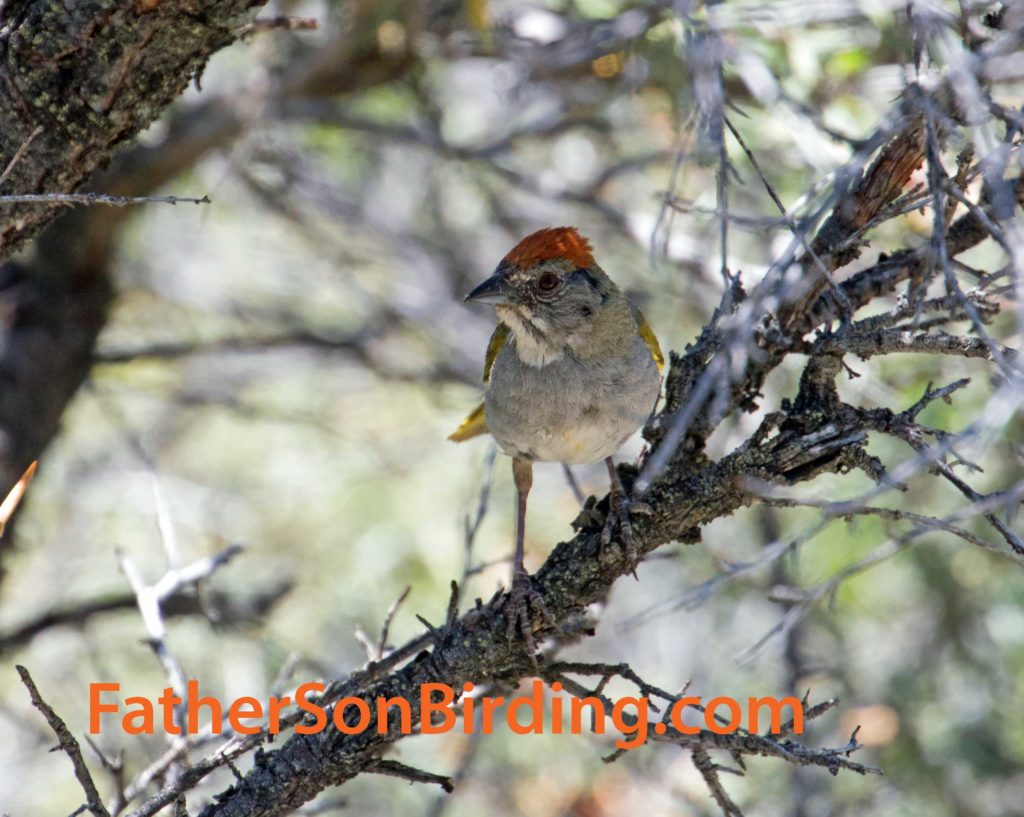
Chipping Sparrow? No! Green-tailed Towhee, a long sought-after Lifer for Team Collard!
We had dinner at MacKenzie River Pizza, then hung out there reading and watching the men’s Wimbledon semifinal since our next and final stop wouldn’t produce what we were looking for until later. Flammulated Owls, one of the most secretive in North America, had been regularly reported in a nearby location known as Grizzly Gulch (ironically, there were no grizzlies there), and we arrived at the coordinates at about 9:00 p.m. Almost immediately we heard a low, single hoot in the trees. No way! Who knew owls could be this easy? We tried to make our way towards the sound, but gave up and opted to let the owls come to us. Making our way farther down the road, we picked up winnowing snipes and Willow Flycatchers, and tried in vain to find a Common Poorwill flycatching in the road. We never did see the owl, but were fine with that! My dad had surpassed his all-time Montana record, and now we have 210 and 211 species respectively in Montana this year. Can I break my old record of 213? Stay tuned to find out!
Sparrows. A simple word that can elicit groans from the most
experienced birder. Even after six years of dedicated birding, I feel like I am
just beginning to grasp most sparrow identification, let alone sparrow behavior
and song. With Braden’s help, I can now figure out most of Western Montana’s
species, but put me in any new environment and I’m like a birding babe with a
binkie.
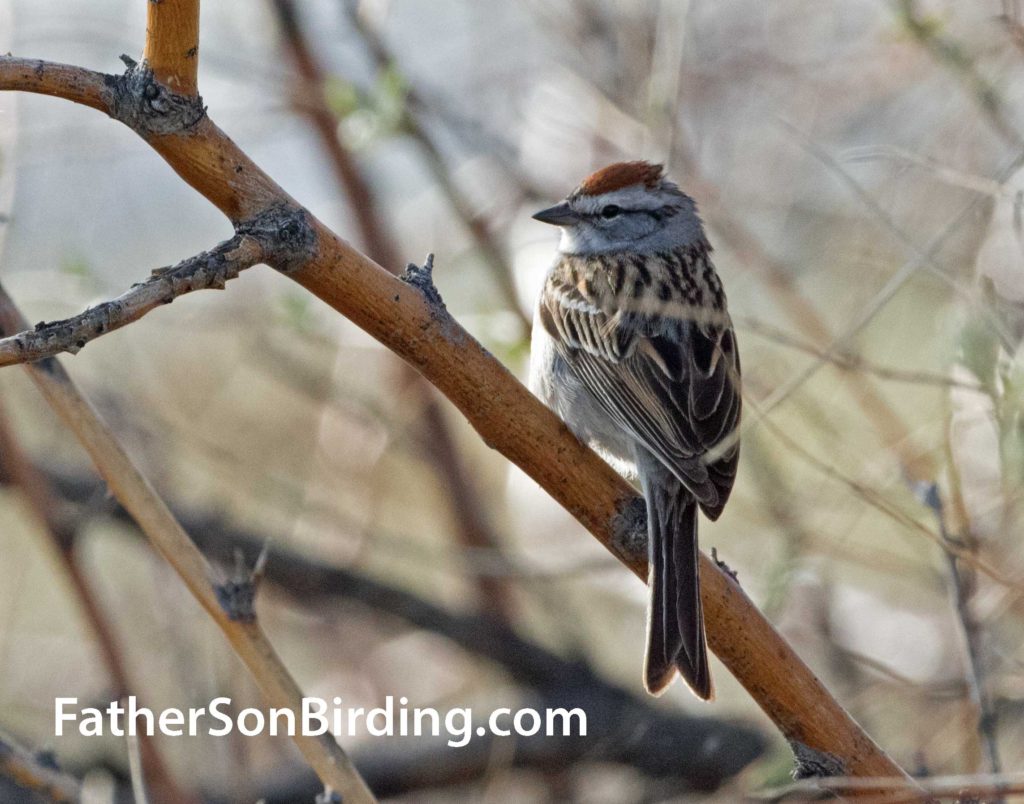
It’s always great to see Chipping Sparrows back in Montana—even if they add to the sparrow confusion this time of year!
Earlier this week, I had the pleasure of speaking at the Helena public library, followed by a lively Last Chance Audubon meeting nearby. The next morning, I decided to sneak in some birding before heading back to Missoula. I first chose a local site affectionately called the “K-mart Wetlands.” This was my first time at the ponds during spring migration, and my pulse raced as I heard the haunting call of a Sora from the cattails. That was followed by my FOY (First of Year) Common Yellowthroat and a flock of more than twenty Yellow-rumped Warblers.
I was fortunate to run into a Helena birder name Jeffrey Olsson who said, “I heard a Clay-colored Sparrow down at the end there.” Though Braden had done his best to educate me about this bird, I drew a mental blank. “What does it sound like?” I asked Jeff. He repeated a buzzy sound for me. “Great. Thanks,” I said and headed off down a fenceline in pursuit. Amazingly, I heard the distinctive call, but didn’t catch sight of the bird.
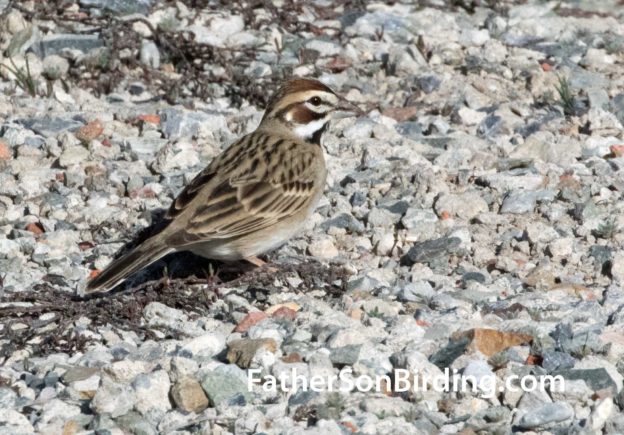
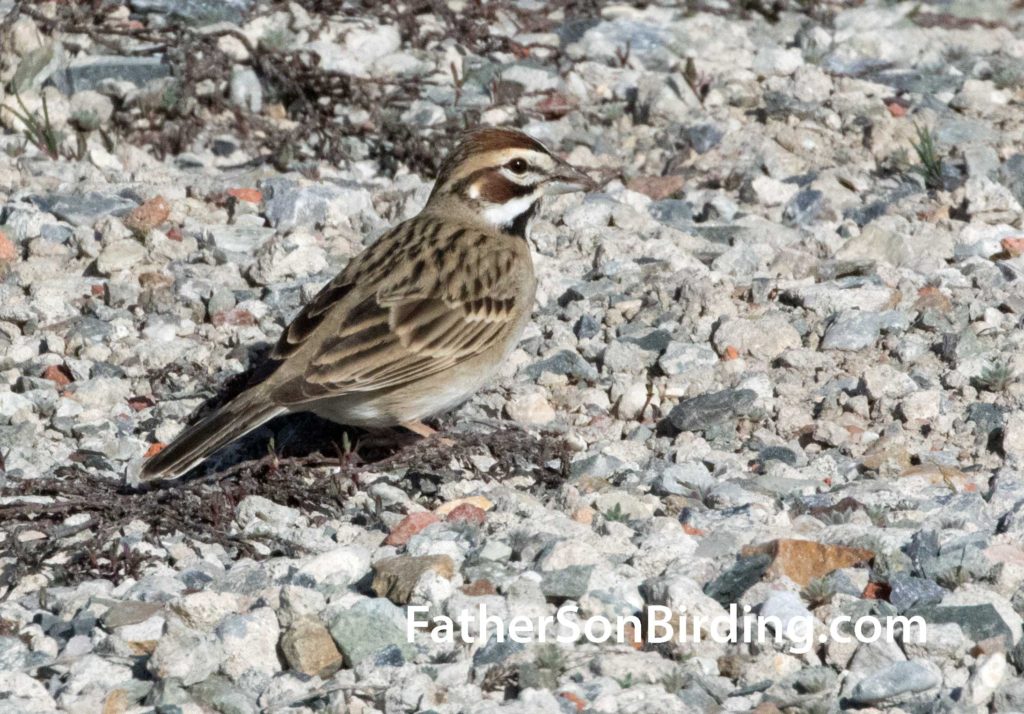
No question, Lark Sparrows are some of the most stunning sparrows of all. This was only my third sighting in Montana.
I did run into a large number of Chipping Sparrows along with a single White-crowned. After completing a loop of the end pond, I looked out into a gravel patch and spotted a lone bird foraging for seeds. “Clay-colored?” I asked myself, quickly raising my camera. It wasn’t. Instead, it was something just as exciting—a lone Lark Sparrow. After seeing one with Braden and Nick Ramsey only a couple of weeks earlier, the Lark got my pulse racing, especially after I managed some good photos. Alas, I still didn’t glimpse a Clay-colored—or so I thought.
While taking photos of the Chipping Sparrows, I noticed some
with duller brown head stripes instead of the usual bright red. I assumed these
duller sparrows were females, but they also seemed suspicious. Later, back at
home, Braden confirmed something I’d been pondering. The “female” Chipping
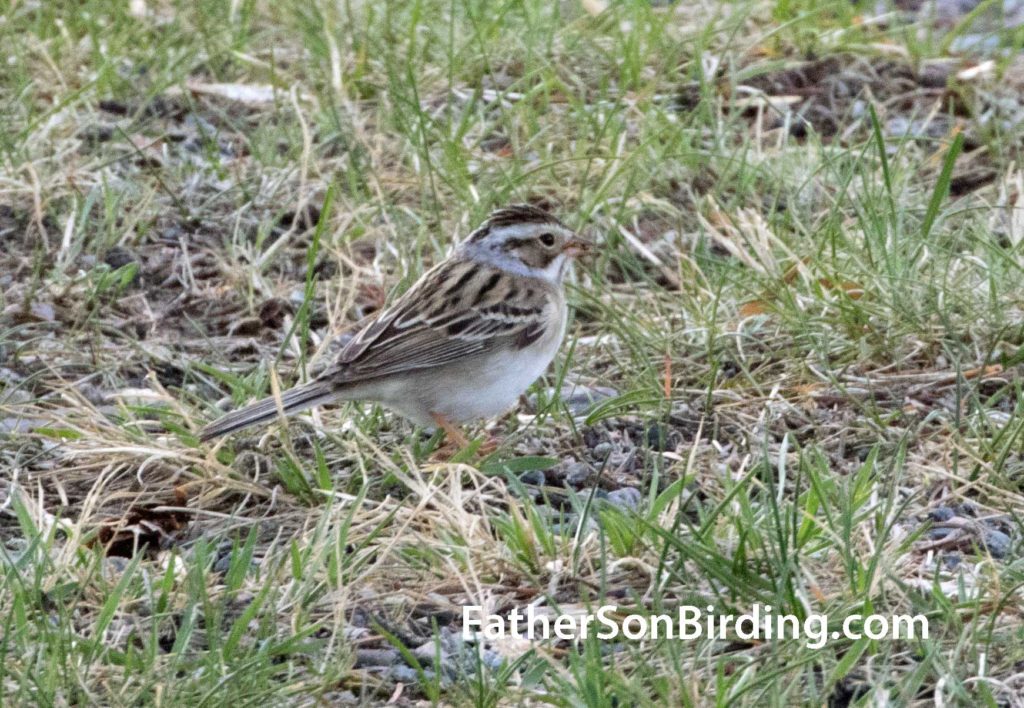
Sparrows were actually Clay-coloreds! Once again, it was the struggle over
identifications that inched my knowledge forward. While it’s a certainty I’ll
misidentify many other sparrows in the future, each time I run into these
interesting little birds, my brain connections grow. Which, of course, is what
makes birding an endless adventure.
Sparrow On!
No, not a female Chipping Sparrow after all. One of several Clay-coloreds I watched at the K-mart ponds—without realizing it!
Are you enjoying our posts? If so, we’d love it if you subscribe to FatherSonBirding by filling out the box down in the right-hand column—and urge your friends to sign up too :)!
When life hands you an opportunity—especially a birding opportunity—you’d better take it. We learned that the easy way last weekend when Phil Ramsey, dad of our birding buddy Nick, offered us a two-night stay at the Clark Fork Coalition’s amazing Dry Cottonwood Creek Ranch. Phil couldn’t join us, but on Friday Nick picked Braden and me up in his truck, and off we went.
Thanks to Montana’s abundant spring daylight, we reached Deer Lodge with plenty of time to bird and after a quick dinner at 4Bs, explored the back roads leading south from the prison. Nick’s top target for the weekend was a long-shot, Greater White-fronted Goose, while Braden especially wanted to see his first Golden Eagle of the year. Me? I had my own goal: Long-billed Curlews, a species Braden and I had seen only once before in Montana. Altogether, Braden figured that for the weekend we might pick up eight new year birds while I predicted ten.
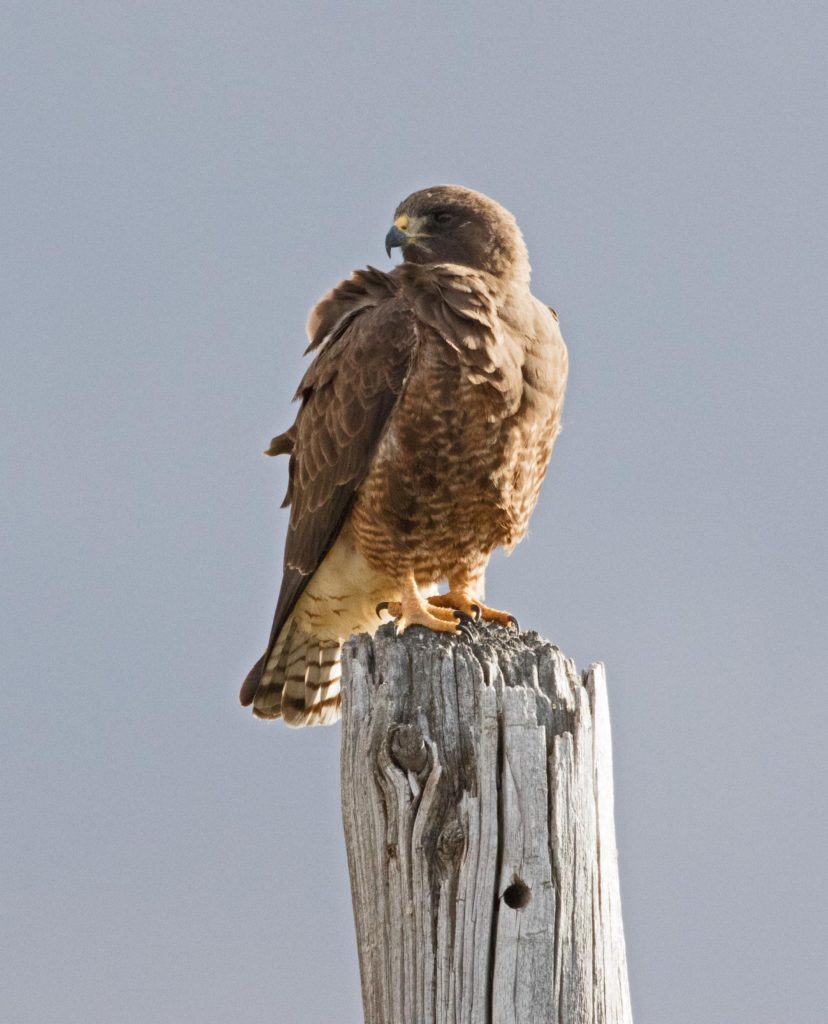
This was Braden’s and my first good look at an (intermediate morph?) Swainson’s Hawk and the bird cooperated beautifully, sitting on this post for a full five minutes.
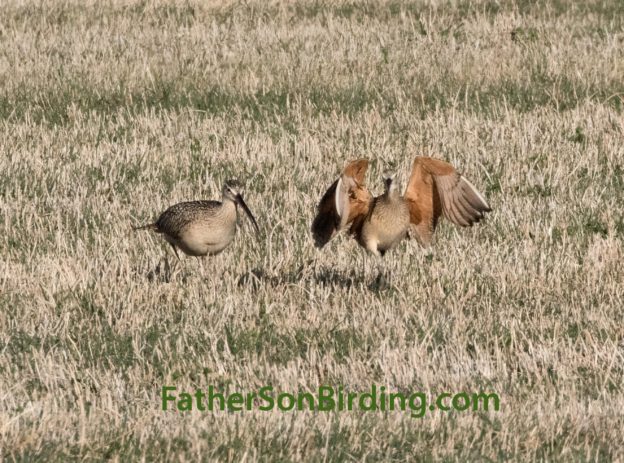
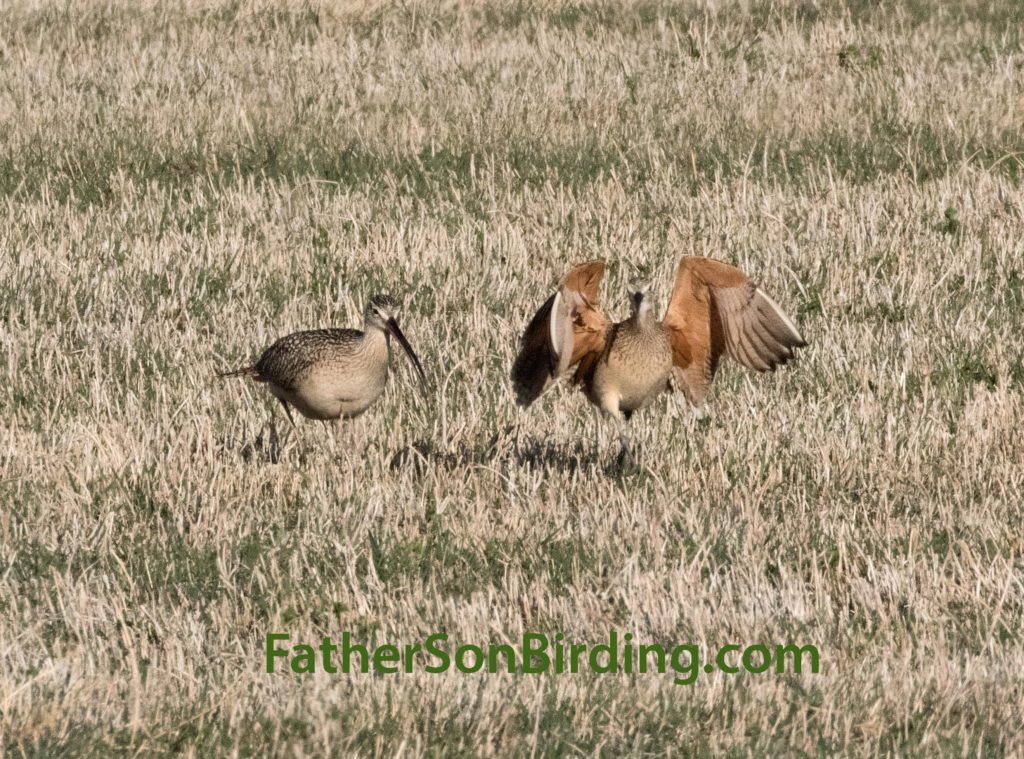
As we drove, we spotted a number of nice, albeit expected, birds: Mountain Bluebirds, American Kestrel, and a scattering of ducks. We also got to observe a beautiful Swainson’s Hawk on a telephone pole—the first real surprise of the weekend. As we turned right, down a dirt road, however, I suddenly shouted “Look out there!” Sure enough, three Long-billed Curlews hunted insects under beautiful evening light. Before the evening was out, we would tally 20 more of these graceful bizarre-looking birds, a number of them dancing out their courtship rituals.
Several pairs of curlews were feeling especially frisky but the females seemed a bit antagonized by the attention. Maybe the males should have opted for dinner and a movie?
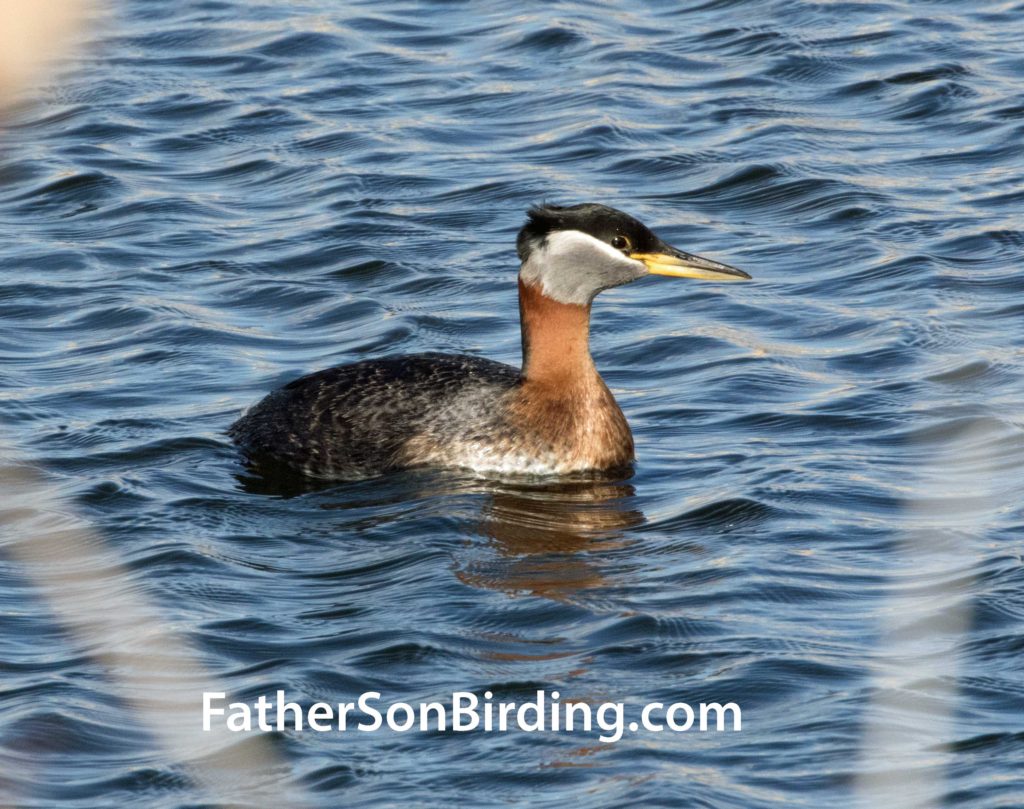
Part of the weekend package was a personalized tour of the ARCO superfund ponds with Gary Swant (see post “For Birders, Every Year is a Big Year”). Nick, Braden, and I had been lucky enough to bird with Gary the last Christmas Bird Count, but we were eager to see how spring species differed from the area’s winter visitors. As expected, waterfowl were out in full force—including Eared, Horned, Western, and Red-necked Grebes. We enjoyed Red-breasted Mergansers and Nick spotted a Sora, but the real surprise was the number of loons—eight, all told. “That’s easily the most we’ve ever seen together,” Braden exulted.
We saw at least twenty Red-necked Grebes during our day with Gary—and enjoyed every single one of them! It’s easy to see why.
Leaving the ponds, Gary took us to a place near Anaconda that we’d never birded: Dutchman’s Slough where, within minutes, Braden nabbed his top weekend target, Golden Eagle. Then we noticed three wading birds in the distance and assumed they must be more Long-billed Curlews. One of them was, but the other two were something we’d never seen: Marbled Godwits in the middle of a grassy field! After bidding a fond farewell to Gary, we rounded out the day with one more great score—Solitary Sandpiper in a large puddle on the south edge of Deer Lodge.
We were sad to be leaving the next morning, but an unseasonal snow storm urged us home. On the drive, however, we decided to stop at Rock Creek, the site of Braden’s Eagle Project (see post “Five Valleys, Many Birds”). Almost as soon as we got out of the car, we spotted three more stunning year birds: Chipping Sparrow, Hermit Thrush, and shockingly, Lark Sparrow. The latter two were most likely just migrating through and we felt lucky to nab them as they often prove difficult to find in Montana.
So how did we do for the weekend? Well, we shattered our estimates for how many new year birds we might see, adding more than twenty to each of our lists. More important, the trip drove home a lesson for every birder: during spring migration, anything can show up—and does! Well, except for the elusive Greater White-fronted Goose! Sorry, Nick.
Are you enjoying our posts? If so, we’d love it if you subscribe to FatherSonBirding by filling out the box down in the right-hand column—and urge your friends to sign up too :)!
On Saturday, April 20th, my dad and I headed out to Five Valleys Land Trust’s Rock Creek Property, our truck full of plants and shovels. I had completed my Eagle Scout Project on this property last year. For my project I had planted about 30 native plants in an enclosure, on a part of the property dominated mainly by invasive grasses and the grasshoppers that fed on them.
We brought five cottonwoods to replace dead plants and to our surprise only used three of them—the majority of our plants were healthy! We planted the other two trees inside Five Valleys’ much larger enclosure, where about thirty volunteers had gathered to weed the area around the large pond.
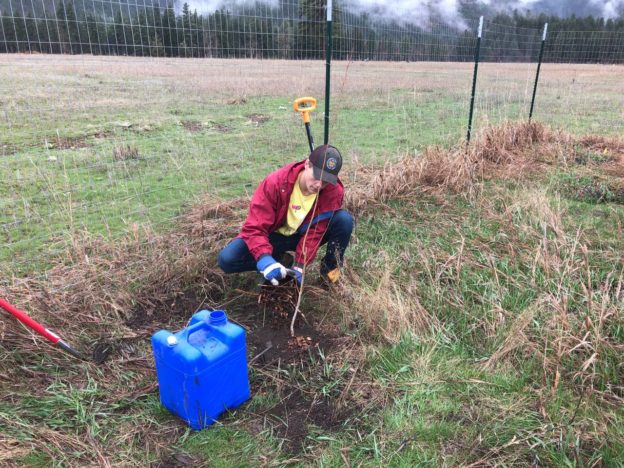
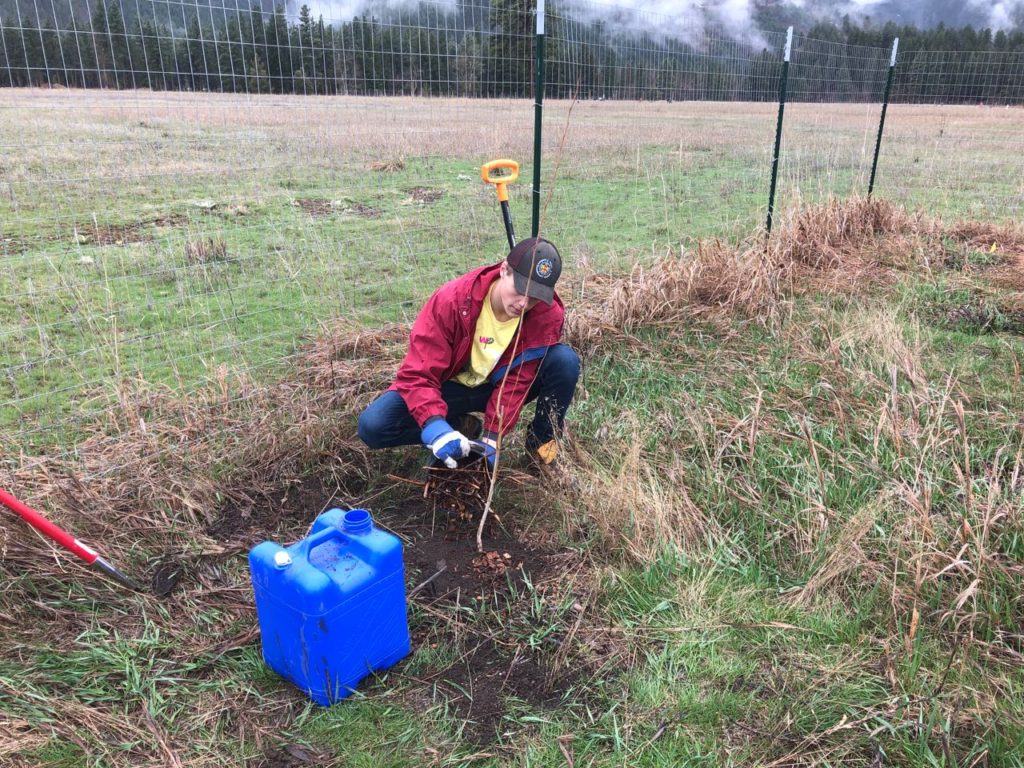
Braden planting a new cottonwood to replace the few winter mortalities in his Eagle project. The project should create awesome habitat for birds in coming years.
As we finished putting our trees in, I heard an obnoxious
call. I looked up to see an excited tuxedo-colored bird with bright pink legs—a
Black-necked Stilt! We knew it was shorebird migration season, but we hadn’t
expected to see anything, let alone a rare Western Montana migrant! On the pond
we also tallied three Ruddy Ducks, another Year Bird.
We then put down our tools and picked up our binoculars to wander the edges of the property, where all the best habitat was. At the Clark Fork River, we found a large flock of migrating swallows zipping inches above the water. The main members of the flock were Tree and Violet-Green, but we also managed to spot some rarities: a few Northern Rough-winged Swallows, one Barn and one Cliff! The day was already shaping up to be a rare one.
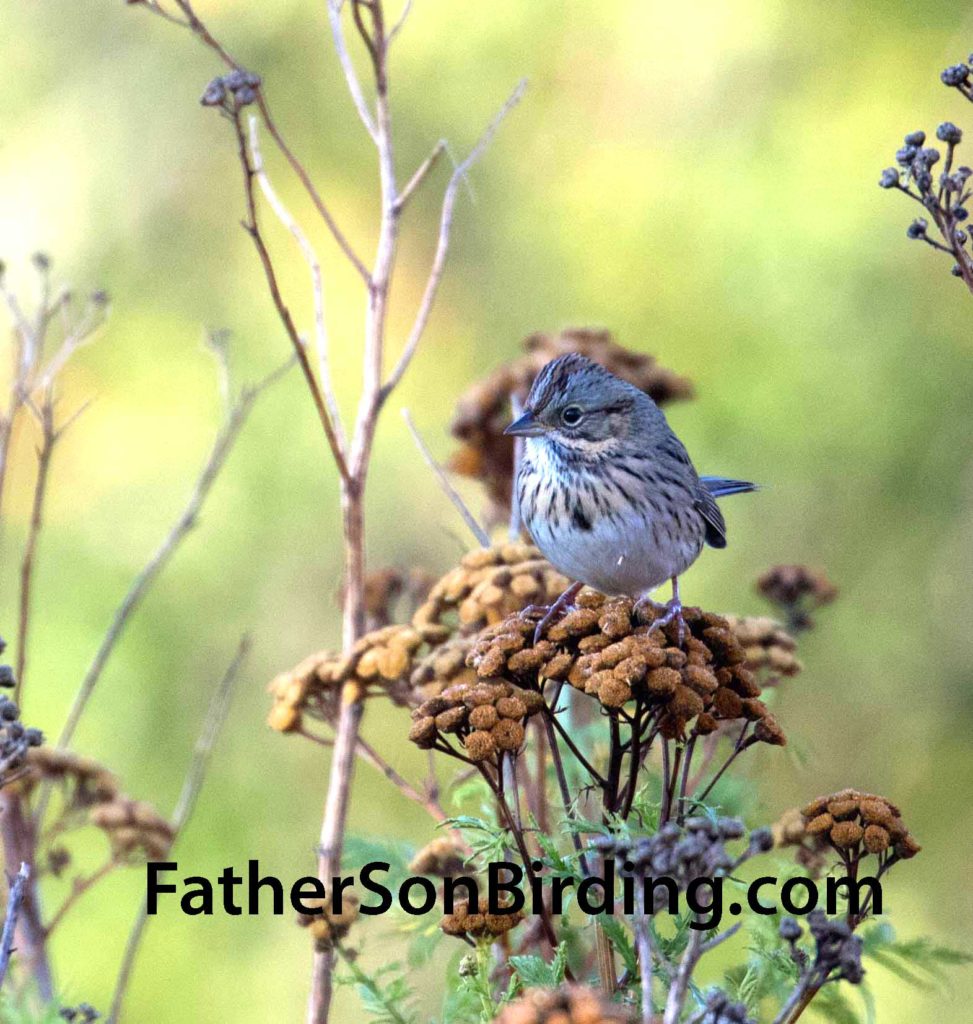
Lincoln’s Sparrows are always a surprise in Montana, and we were lucky to see a migration pair out at Rock Creek.
Next we explored the flooded riparian area in the back of
the property. We had seen a Pacific Wren and several Ruby-crowned Kinglets here
in the fall, as well as our first Yellow-rumped Warbler of 2018, so we
excitedly scanned the shrubs and trees. Sure enough, movement caught our eye.
Two Lincoln’s Sparrows foraged in the brush, another great spring pick-up! As
we reached the very edge of what Five Valleys owned, we flushed two
Green-winged Teals that had been hiding along the shore.
As we made our way back to the car, I spotted movement in a
patch of trees up ahead. Upon further investigation, we discovered a
Ruby-crowned Kinglet and a brilliant male Yellow-rumped Warbler, both firsts
for the year. They hung out in a large mixed flock that also included White-
and Red-breasted Nuthatches and Black-capped and Mountain Chickadees. But the
flock wasn’t done. Suddenly, a bright dandelion-yellow bird hopped into view.
It danced through the branches in front of us, displaying its light gray head,
white eye-ring, yellow throat and red cap. It was our best look ever at a
Nashville Warbler!
Rain prevented us from getting any good bird photos, but the birds cooperated for some great viewing!
Back at the barn, we ate with the volunteers, led by Jenny
Tollefson, who was also my Five Valleys Eagle project contact. We had put in
good work and been rewarded with epic finds. I could only imagine what the
property would become when the plants I and others had put in grew up to create
even more habitat for the birds of the area.