As you read this Sneed is eagerly preparing for the Ute Mountain Mesa Verde Birding Festival (see our recent post Birding Festivals of the West 2026) in Cortez, Colorado. Meanwhile, Braden is birding through east Texas, helping his college friend Ryan achieve his Big Year ambitions. Fittingly, today’s blog post reports on a bird frequently found in Texas—but that Braden first recently found in Southern California. With its discovery, Braden has only 14 regularly occurring species to see on his countdown of ABA Lower 48 birds (see our recent post Lower 48 Life List Countdown: Crissal Thrasher). Enjoy his report!
I haven’t exactly been on top of rare bird reports during the last few years. When I was younger, I subscribed to all the eBird alerts I could: the ABA Rare Bird Alert, the Montana Rare Bird Alert, and even the Missoula County Rare Bird Alert. I also regularly visited birding pages on Facebook, meaning that if a bird in my region showed up where it wasn’t supposed to, I knew about it pretty quickly. Recently, though, I’ve unsubscribed from many of those alerts, and don’t use Facebook as much. So I consider it lucky that I found out about the California Fulvous Whistling-Ducks by accidentally scrolling past an Instagram post.
According to eBird, the pair of whistling-ducks showed up at the 20,000-acre San Jacinto Wildlife Area in late January, 2026, about a month before I learned about them. Fulvous Whistling-Ducks have a cosmopolitan distribution, being found in both North and South America as well as Africa and the Indian subcontinent. Historically, the species never lived in the United States, but arrived in Florida, the Gulf Coast states and California from the tropics during the nineteenth century. At one point in the early 1900s, Fulvous Whistling-Ducks bred as far north as San Francisco! Following this aggressive colonization period, however, their populations fluctuated wildly, and especially declined on the West Coast. In California, they now only occasionally breed at the Salton Sea (which I did visit last fall to see a Yellow-footed Gull), with no recent breeding records on eBird. The last time the species bred at San Jacinto, according to a local birder, was pre-1950.
I’d never actually looked for Fulvous Whistling-Ducks before. The closest I’d been to the species was probably during my trip to Florida with my friend Nick Ramsey in 2022, when we passed one of the state’s most reliable spots for the species: Lake Apopka. Unfortunately, we couldn’t visit Lake Apopka due to the wildlife drive only being open on specific days of the week. I suppose my dad and I also could have seen the species on our visit to Anahuac (now Jocelyn Nugaray) National Wildlife Refuge way back in 2016, but I doubt that the species was even on my radar at the time. The bottom line is that I was shocked to see a pair show up so close to where I was currently working, in Running Springs, California—and I had no choice but to try to find them!
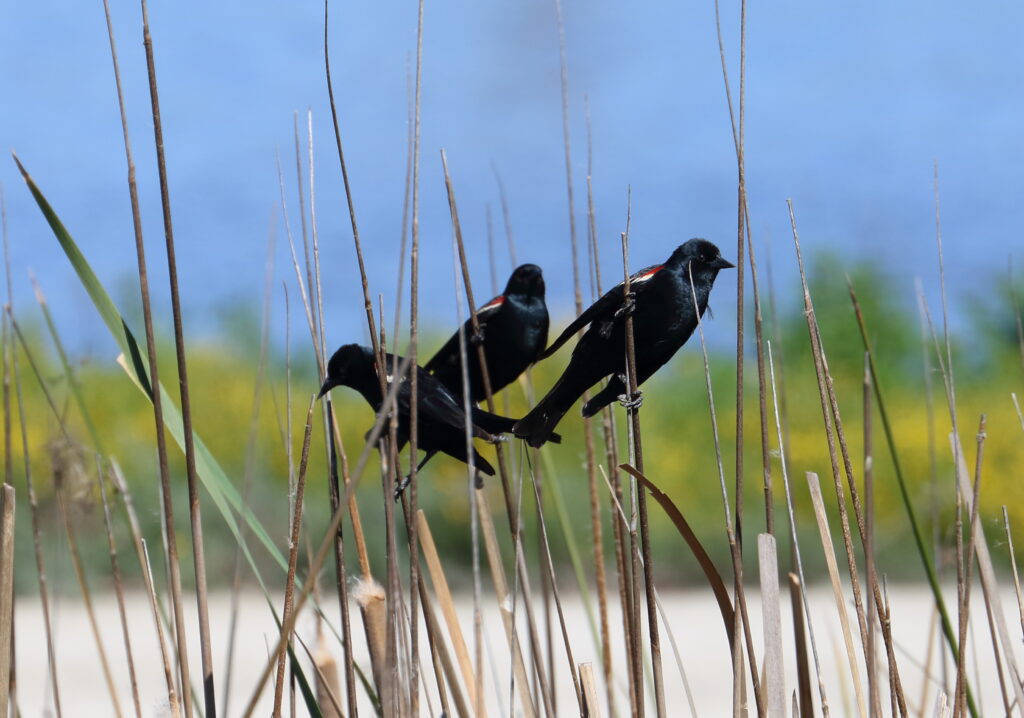
February 14th was an unusually foggy day in the San Bernardino Valley, and it seemed to only get foggier as I entered the grassy hills south of Redlands. I’d never been to this area before, and was pleasantly surprised to find dairy farms complete with muddy pastures and flocks of foraging blackbirds. As I entered the wildlife area, the fog gave way to sun and the pastures transitioned to open grasslands, some of the only ones I’d ever seen in California. A Loggerhead Shrike darted across the road in front of my car and I stopped periodically to peer at Mountain Bluebirds, Western Meadowlarks, American Pipits and a variety of sparrows perched on the fencing. The pavement turned to dirt, and I soon spotted wetlands and flooded fields on the horizon. This winter had brought heavy rains to much of southern California, and golden flowers decorated the hills.
In no time, I recognized the value of San Jacinto Wildlife Area to wintering birds. Flocks of waterfowl, especially Northern Shoveler, Ruddy Duck and Northern Pintail, as well as shorebirds and waders like Least Sandpiper and White-faced Ibis, covered the fields and ponds. A Peregrine Falcon alighted on a telephone pole, and I pulled over next to a wire absolutely covered in Tree and Barn Swallows, the first I’d seen this year. Apparently, some of the Barn Swallows that breed in Argentina and Chile spend the winter in the southern United States, and I found a few contenders for austral birds among the flock.
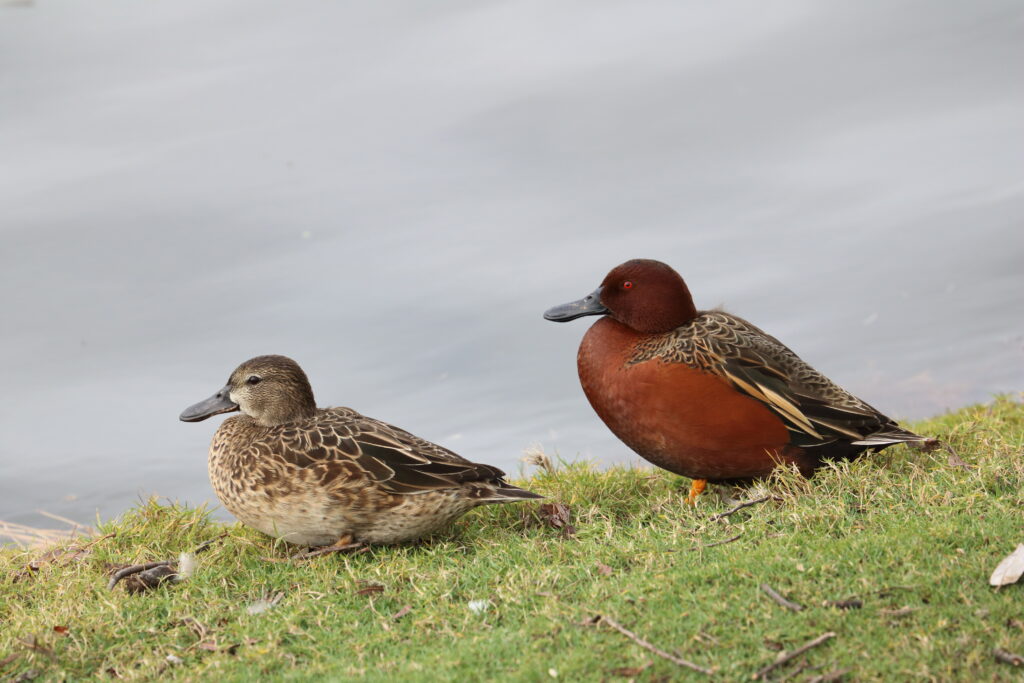
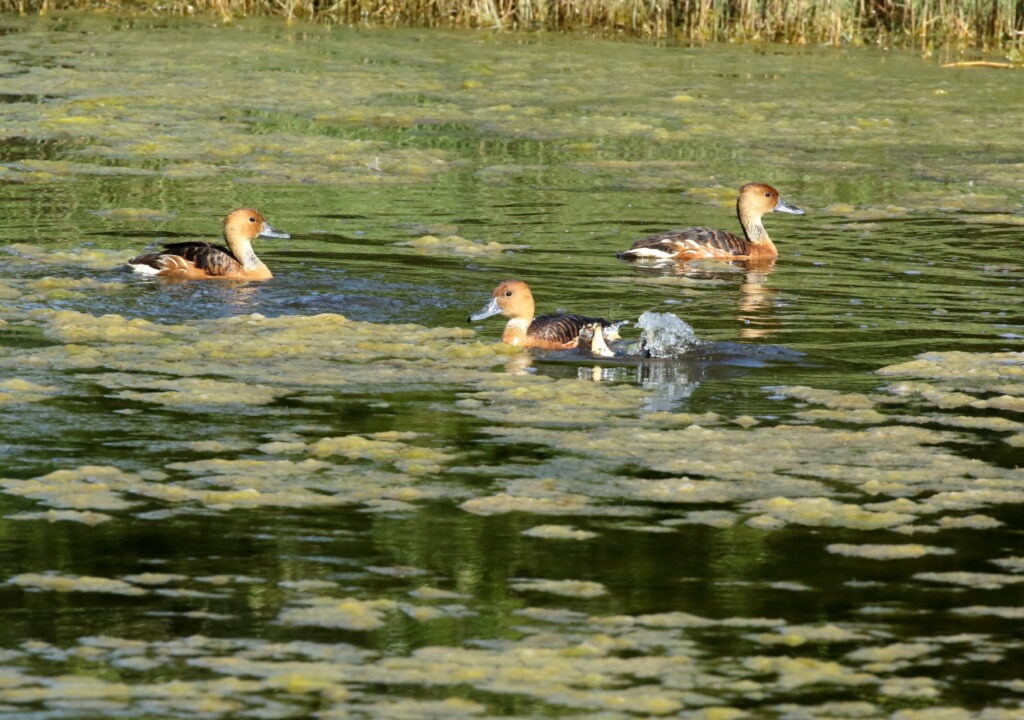
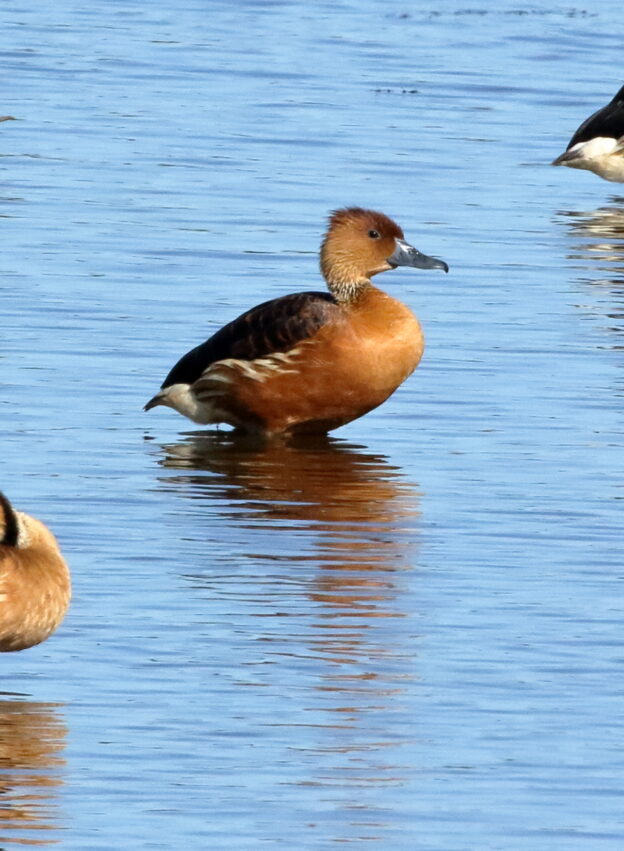
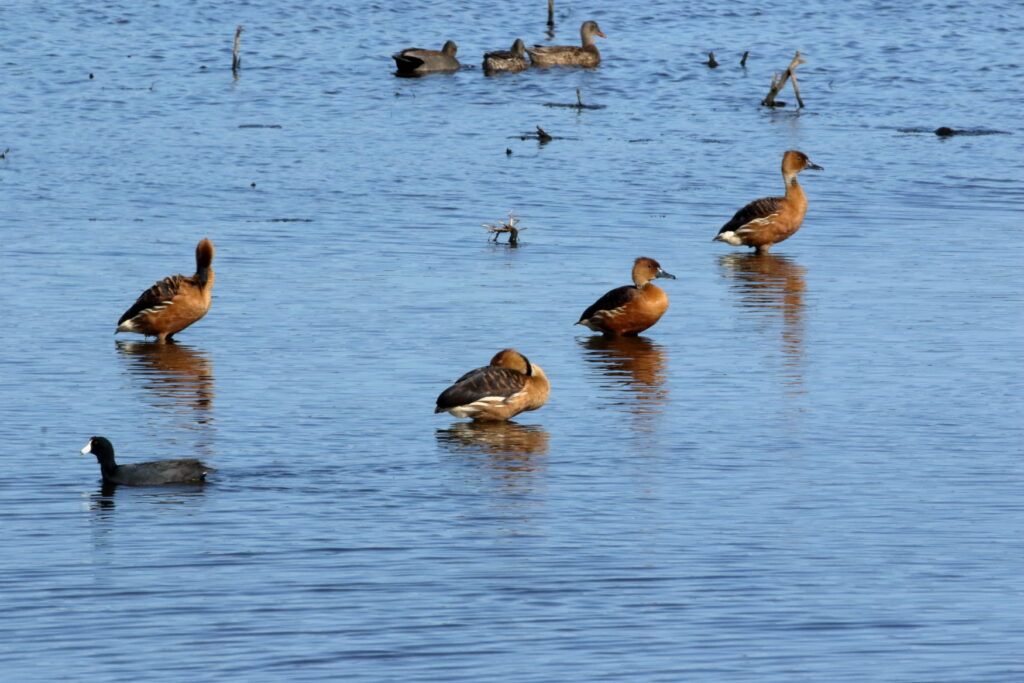
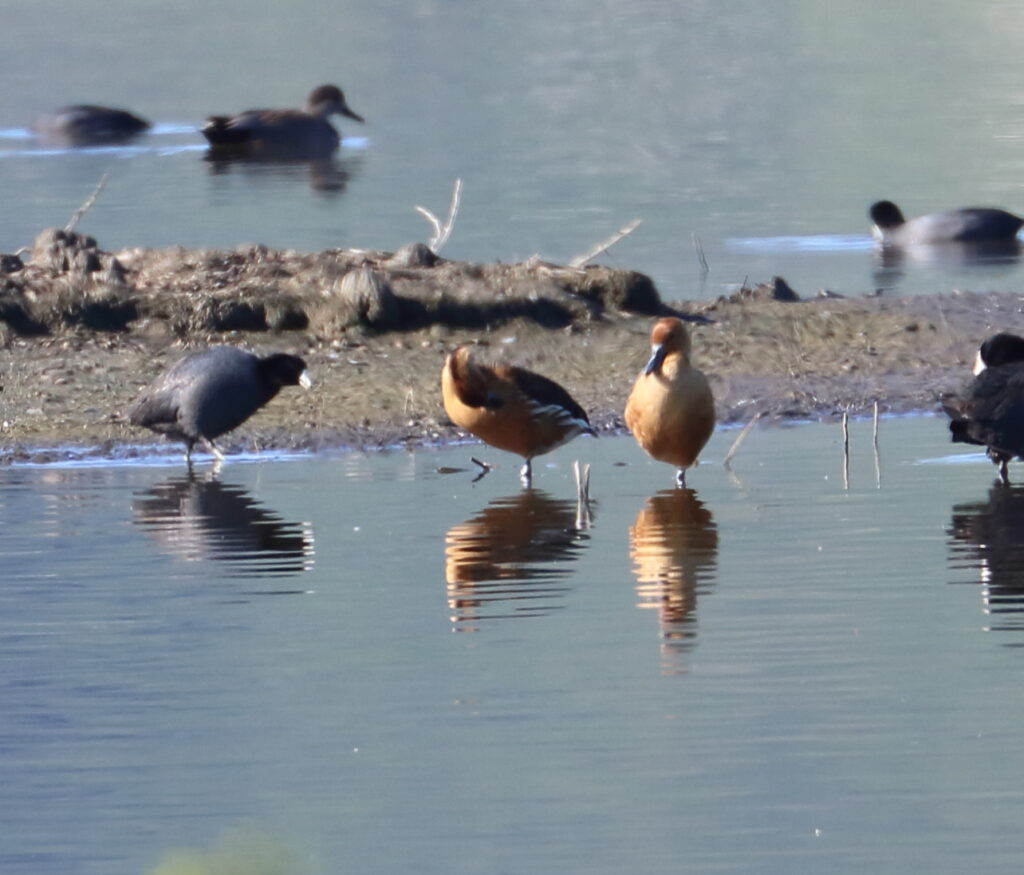
I followed coordinates to find the whistling-ducks and they proved easy to locate on a small island as soon as I pulled alongside a large pond. They’re pretty ducks, clad in earthy orange with what appear to be claw marks along their sides. They also stand taller than other ducks, as all whistling-ducks do, and nearby Gadwall, Cinnamon Teal and American Coot provided careful comparison. As I watched them preen through my scope, a pair of local birders walked up to me.
“You see these next boxes?” one of them said, “The refuge has been putting them up in the hopes that this pair will nest here this year.”
“Are whistling-ducks cavity nesters?” I asked.
The birder replied. “I believe they can do both—nest in holes and on the ground.”
While I didn’t have particularly high expectations, I do have to admit that it would be pretty cool to see the first breeding whistling-ducks at San Jacinto in the 21st century!
(Note: according to Cornell’s Birds of the World, there have been reports of cavity nesting, but the vast majority of nests are built of vegetation in “dense floating or flooded emergent (herbaceous) vegetation.” This includes weedy rice fields. Unlike most waterfowl, FUWD pairs form strong long-term bonds and males participate greatly in incubation and the rearing of young.)
Fulvous Whistling-Duck is the last regularly-occurring waterfowl species that I checked off of my Lower 48 life list, and it felt a little surreal to see them standing there on that sparkling day in southern California. The first bird on my life list is a waterfowl, the Bufflehead, and I can still remember it clearly, my dad and I standing in the frigid January cold at Lee Metcalf National Wildlife Refuge, our Sibley guide open as we tried to identify that small, black and white duck. Ducks are gateway birds, easy to see and identify, and the focal species for the protection of so many wetlands around the U.S., especially in the West. To be seeking, once more, a species from the same group of birds that welcomed me to the birding world, is something that made my trip to San Jacinto all the more special.