We are delighted this week to present only our second ever guest post, by long-time reader of FatherSonBirding, Roger Kohn. Roger and I met at UC Berkeley and roomed together for a time at Cloyne Court Co-op. Since retiring from a distinguished career with the EPA, he and his wife Claudia have settled in Bend and have pursued birding with a passion. Recently, they embarked on their first Arizona birding adventure, kicking it off with a place Braden and I have never birded, Sedona. I asked if he would give FatherSonBirding readers a taste of what it’s like to bird one of the world’s most beautiful places!
Inspired by Sneed and Braden’s adventures in southeastern Arizona last year, and eager to see more bird species and beautiful southwestern landscapes, my wife Claudia and I hopped a flight to Phoenix this past April to start a two-week birding vacation. Our plan was to focus on southeast Arizona. Before heading south, however, we visited Sedona to revel in its awe-inspiring landscapes. Although not known as a birding destination, I was confident we would see some good birds. After all, it was spring in Arizona.
Rising early on our first day, I stepped out onto our deck, which faced a large yard with bird feeders and had more green space beyond. I quickly spotted nine species, including two Lifers: an Inca Dove and a Northern Cardinal (a male, in all its bright red glory), a species I had wanted to see for a long time. Welcome to Arizona! The trip was off to a fine start.
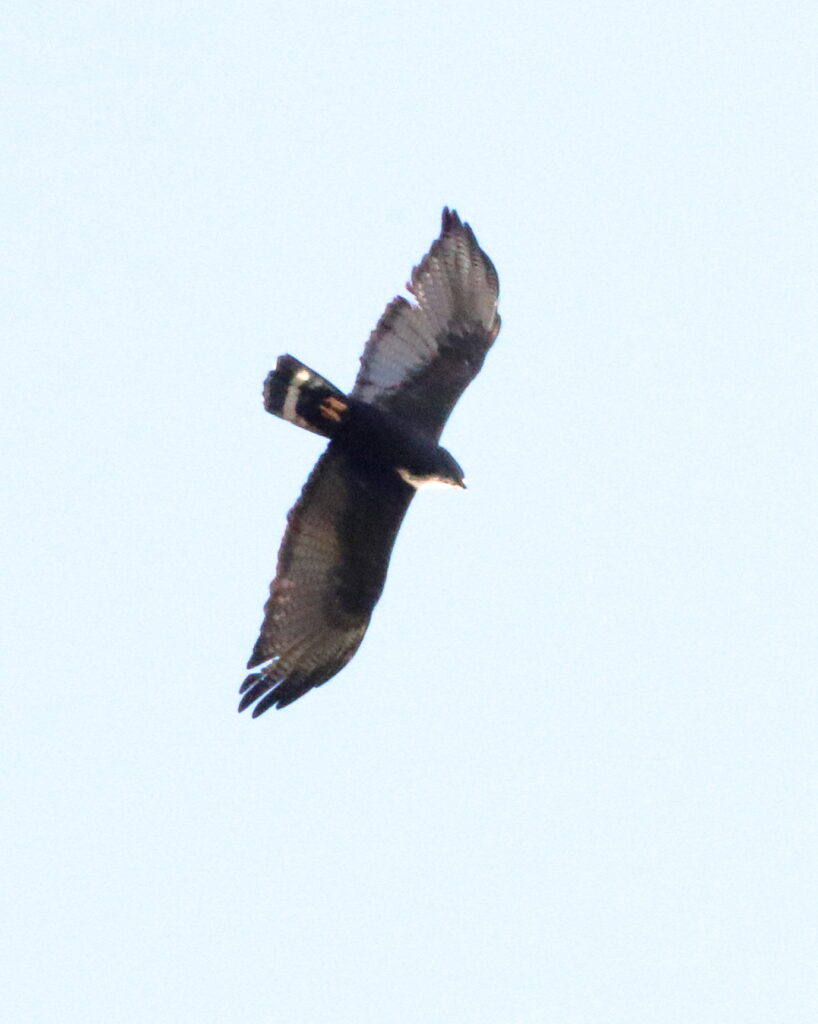
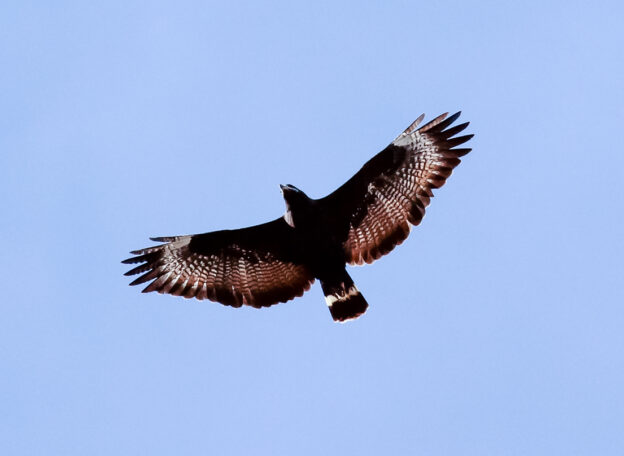
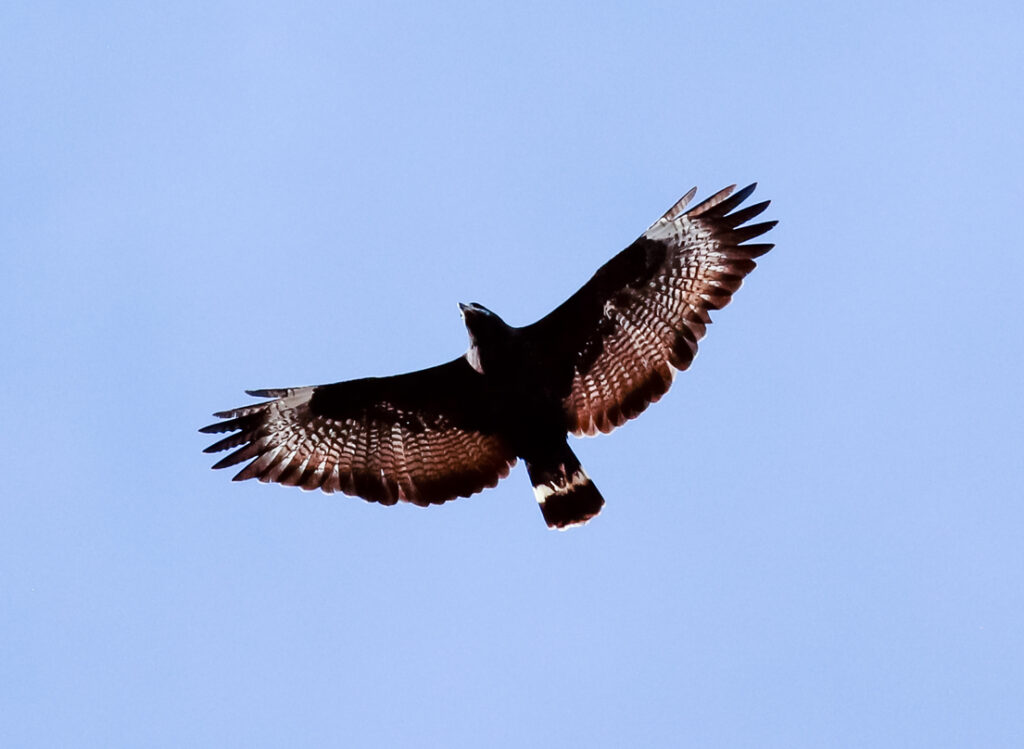
After breakfast we drove a short distance to the location we selected for Day 1 birding: Red Rock State Park, known for its stunning vistas. At the Visitor Center viewing platform, we saw a Turkey Vulture, followed by two dark raptors with white bands on their tails circling above us. “Hawks!,” I exclaimed. I wasn’t sure what species they were, but I knew it was one we hadn’t seen before. The answer came quickly from a park ranger who was standing nearby: Common Black Hawk. Lifer! And who doesn’t love raptors? What a great way to begin our park visit.
After getting looks at another Northern Cardinal, as well as Lesser Goldfinches, House Finches, Red-wing Blackbirds, and White-crowned Sparrows, we followed the Bunkhouse Trail a short distance downhill to Kingfisher Bridge, which spans Oak Creek. The creek was wide and gushed with fast-moving water. This would prove to be a surprising theme of the trip: plenty of water and lush landscapes–not what one thinks of in a state known for its desert landscapes! Tall, bare trees grew right out of the creek, giving a bizarre, otherworldly quality to this striking scene.
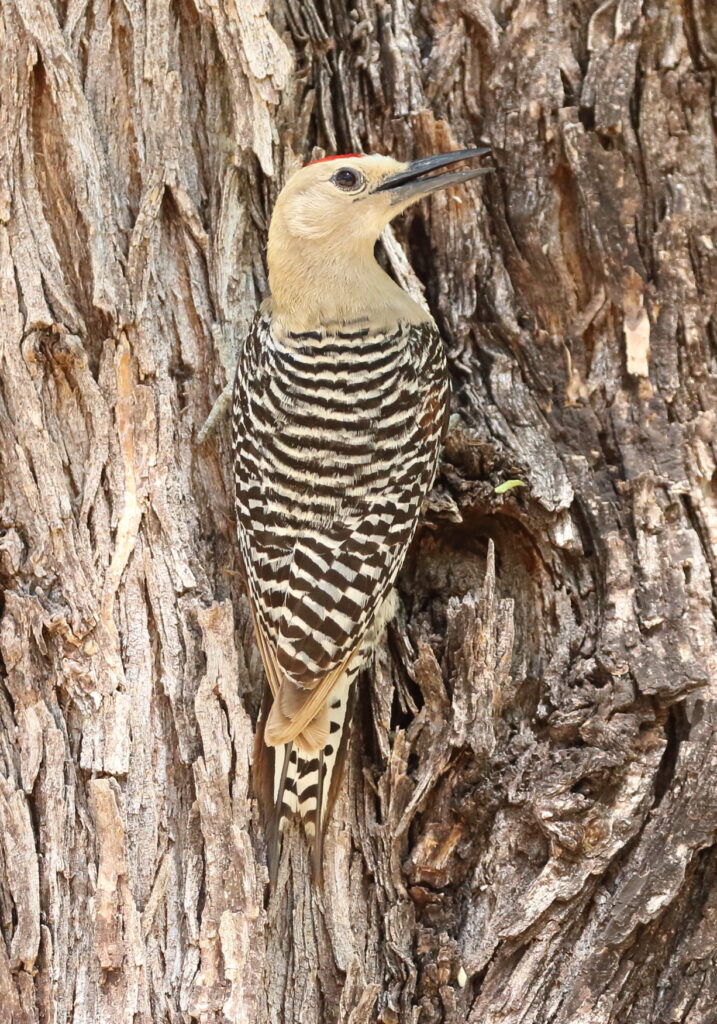
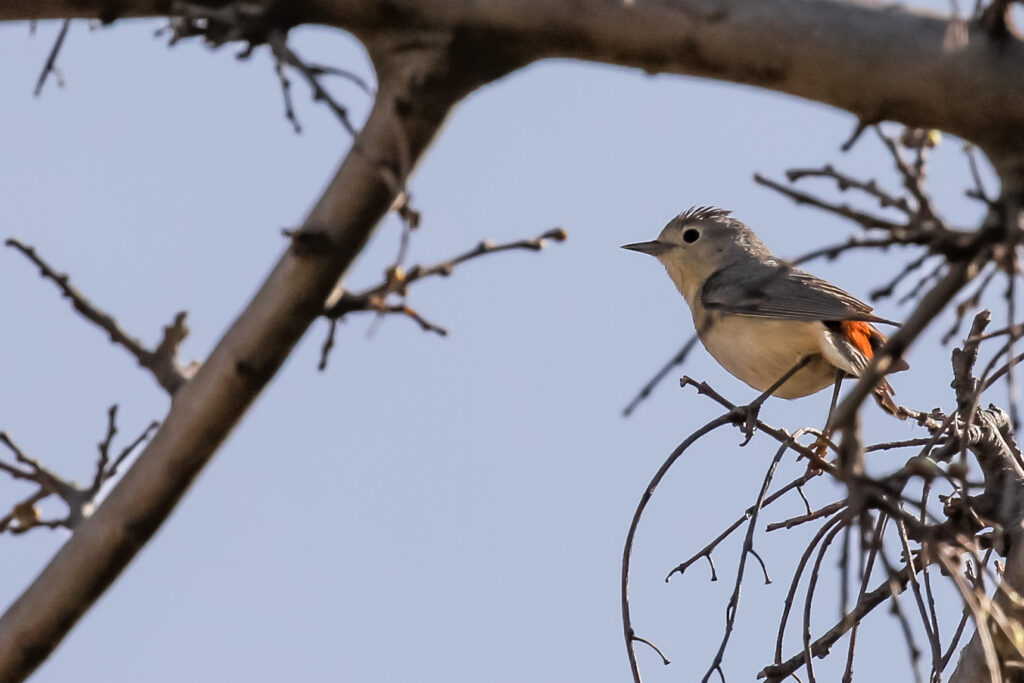
We didn’t see any kingfishers at their namesake bridge, but we did see a couple of Black Phoebes (a flycatcher species) perched on branches above the creek between breakfast-gathering forays. Crossing the bridge, we headed west on the Kisva Trail into riparian habitat next to the creek. It was very birdy here, although not always easy to see the birds. Violet-green Swallows zipped back and forth, and a couple even were cooperative enough to perch and allow me to photograph them. We could hear the harsh calls of Gila Woodpeckers reverberating all around us. The Audubon app describes their calls as “a rolling churrr.” To me, the calls had a bizarre, almost electronic, quality. We were not able to see the woodpeckers, but they are very common in Arizona and we would see them many times in a variety of different habitats on the rest of the trip. A little further on, we could see a lot of bird activity in the treetops. Benefitting from Merlin Sound ID, we knew we were looking at Lucy’s Warblers, another Lifer!
The Kisva Trail took us to the Eagle’s Nest Trail, which gradually ascends to a summit with a commanding 180-degree view of the surrounding red-rock country. The scenery in and around Sedona is absolutely jaw-dropping, with layers of colorful rock rising into towering formations that lend an epic, cinematic quality to the landscape. This is why we came to Sedona!
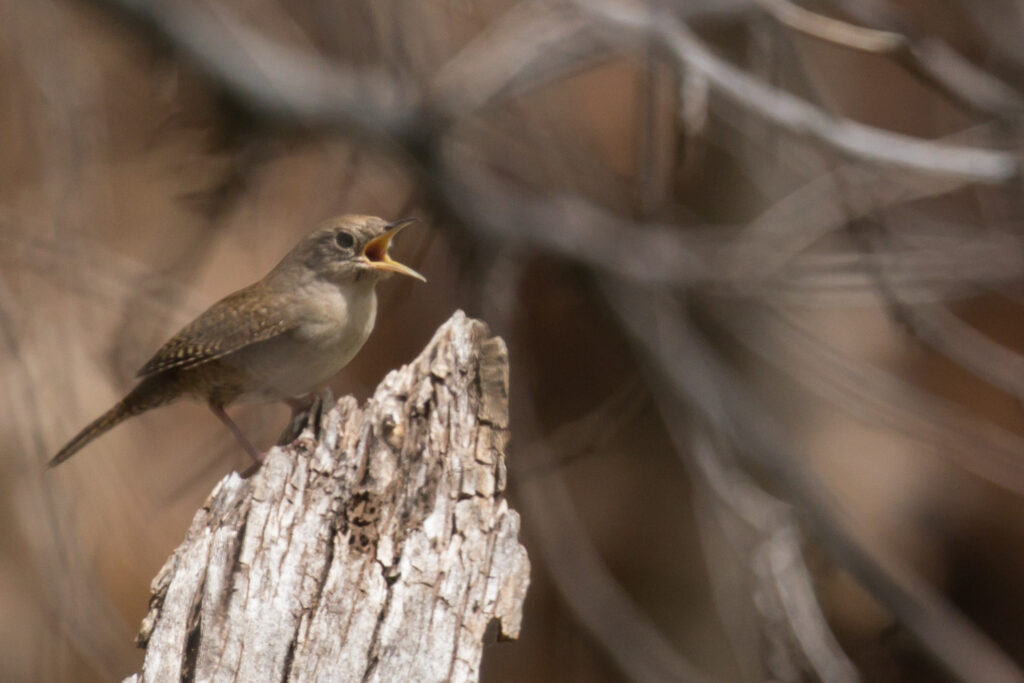
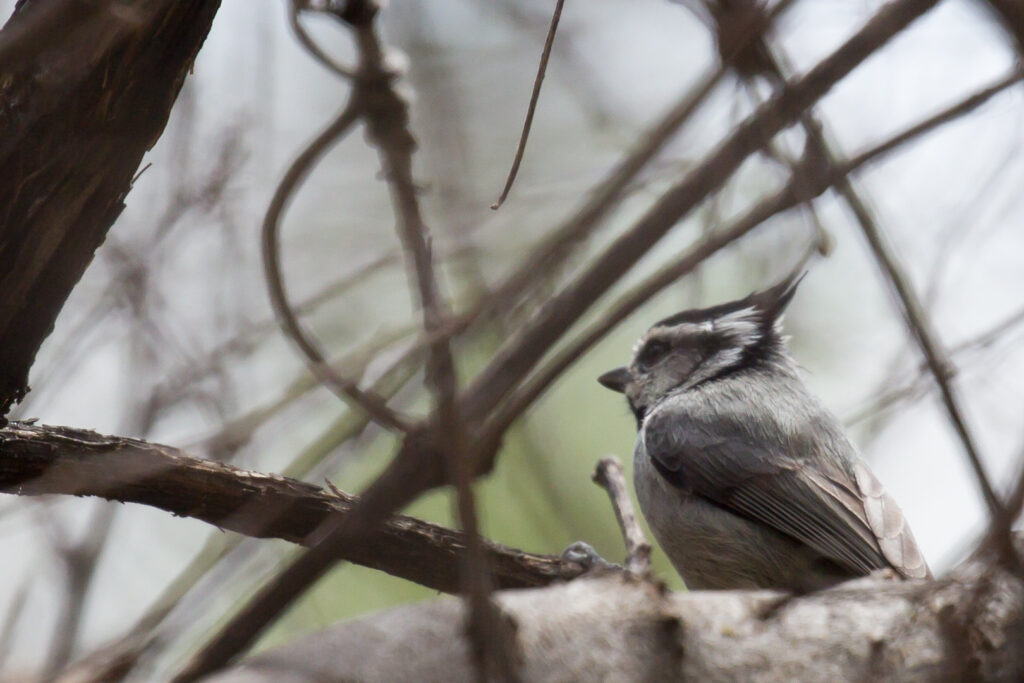
We didn’t see many birds on our way up, or as we descended on a loop trail that took us back to Oak Creek. Walking along the creek, we got good looks at a Townsend’s Solitaire and a House Wren, perched and singing a sweet and enchanting aria for all to enjoy. Later I saw a black and white bird darting back and forth among the trees. I wondered if it could be a species that I was really looking forward to seeing based on my pre-trip bird study. Could it be… yes it was… a Bridled Titmouse! Lifer! With what eBird calls a “crested head with striking black-and-white pattern unlike any other bird,” the Bridled Titmouse makes up for its lack of color with a combination of elegant form and bold contrast that give the species a big WOW factor. We loved these guys and saw them on several other occasions in the next two weeks.
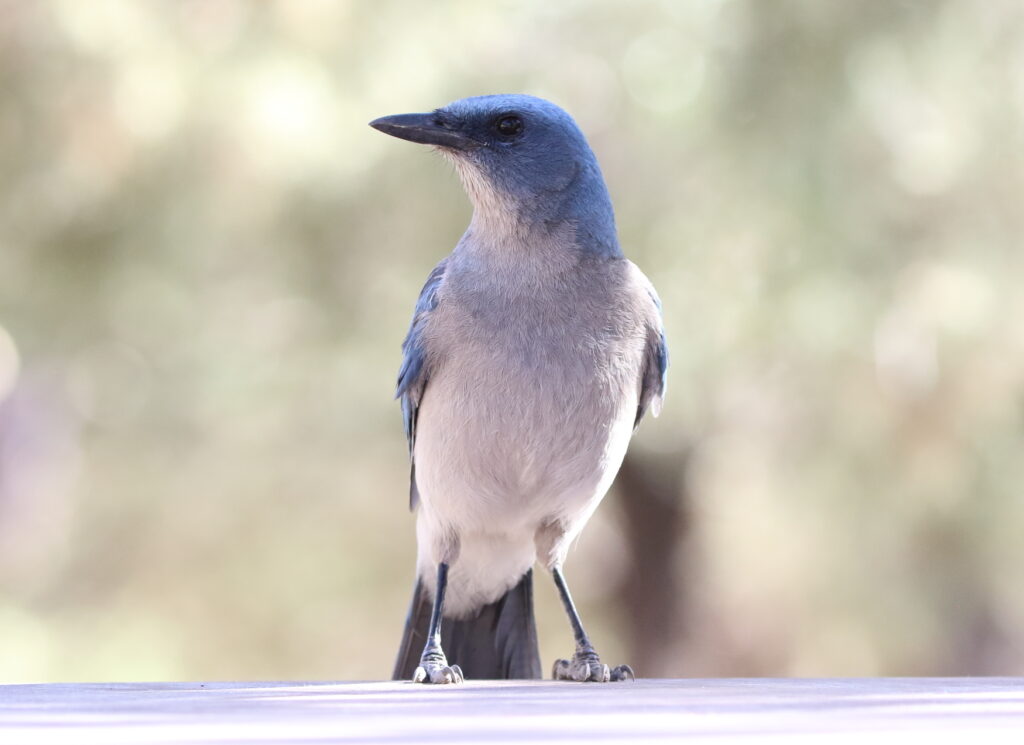
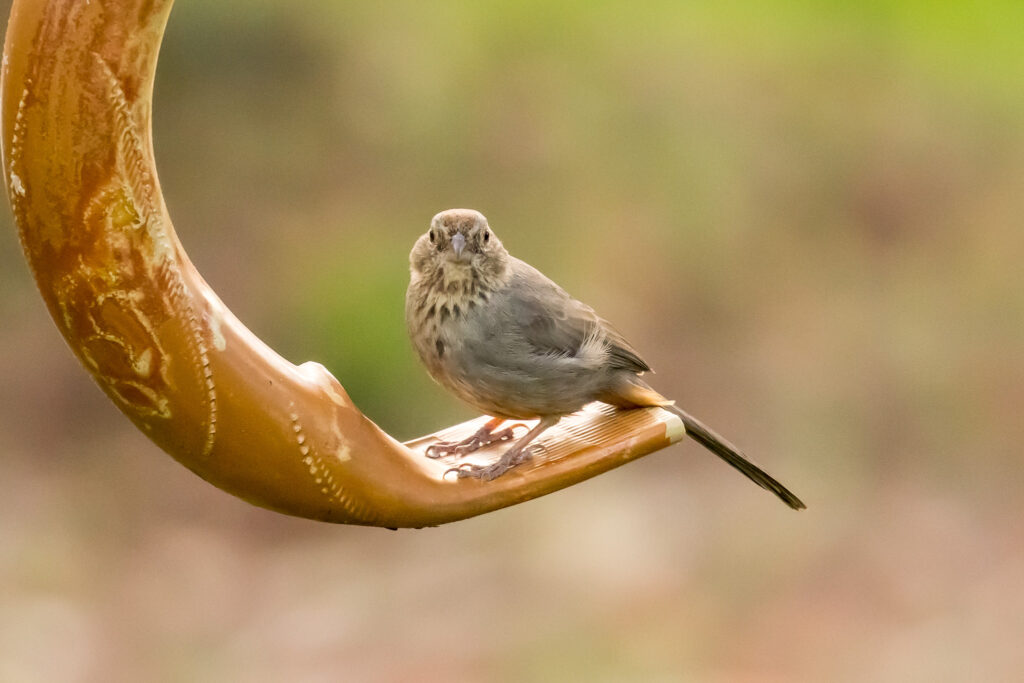
Relaxing back at our rental with a fine locally produced beverage made with barley and hops (and love), we snagged two more Lifers: Woodhouse’s Scrub-Jay and Canyon Towhee. As the sun sunk toward the horizon, we reflected on the excellent first day of our Arizona birding adventure.
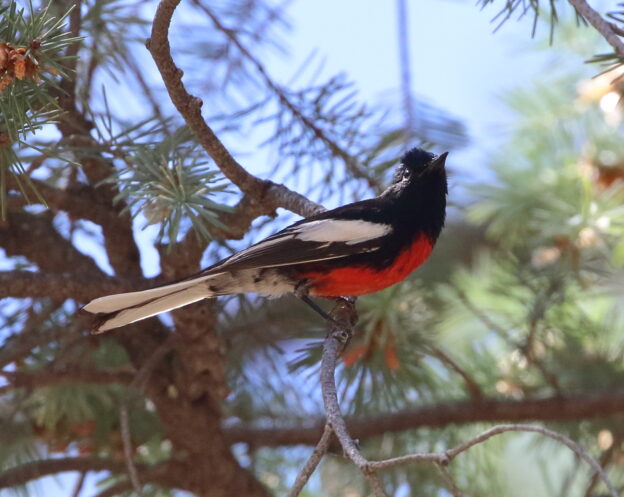
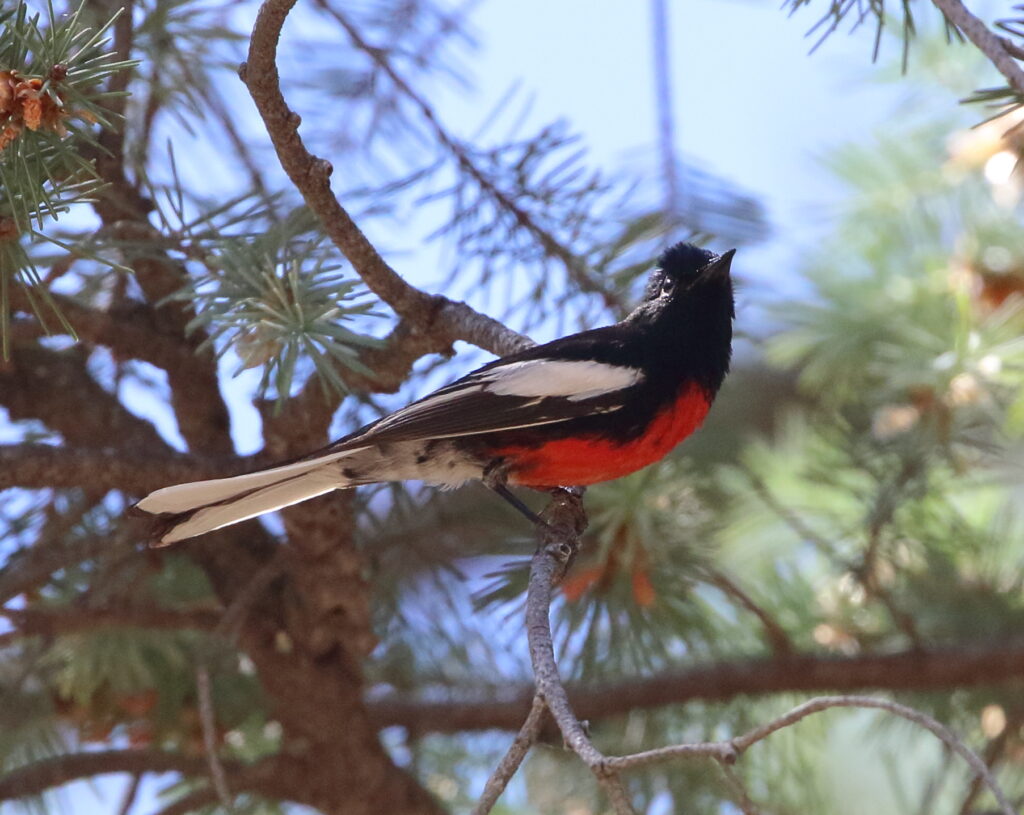
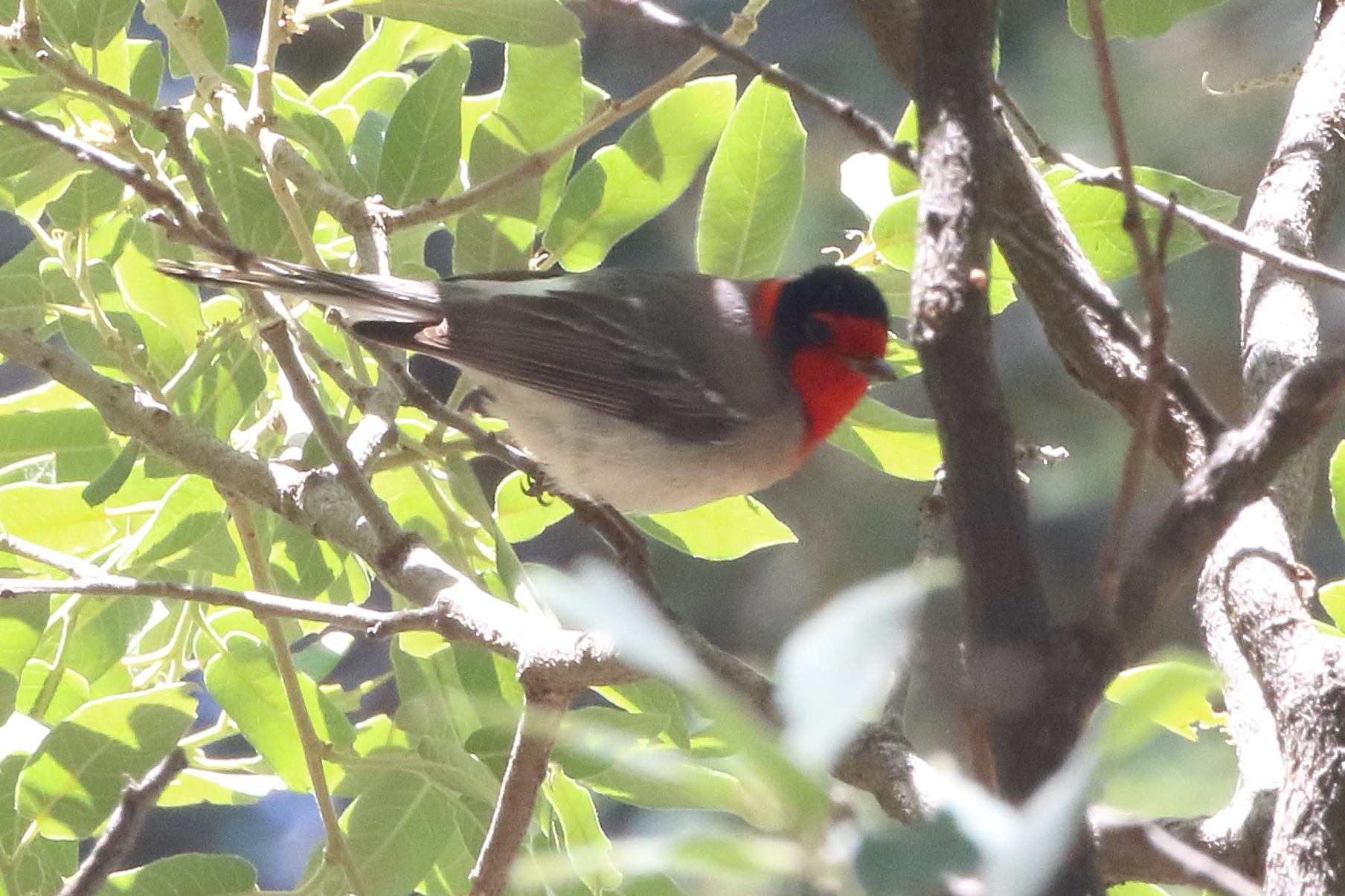
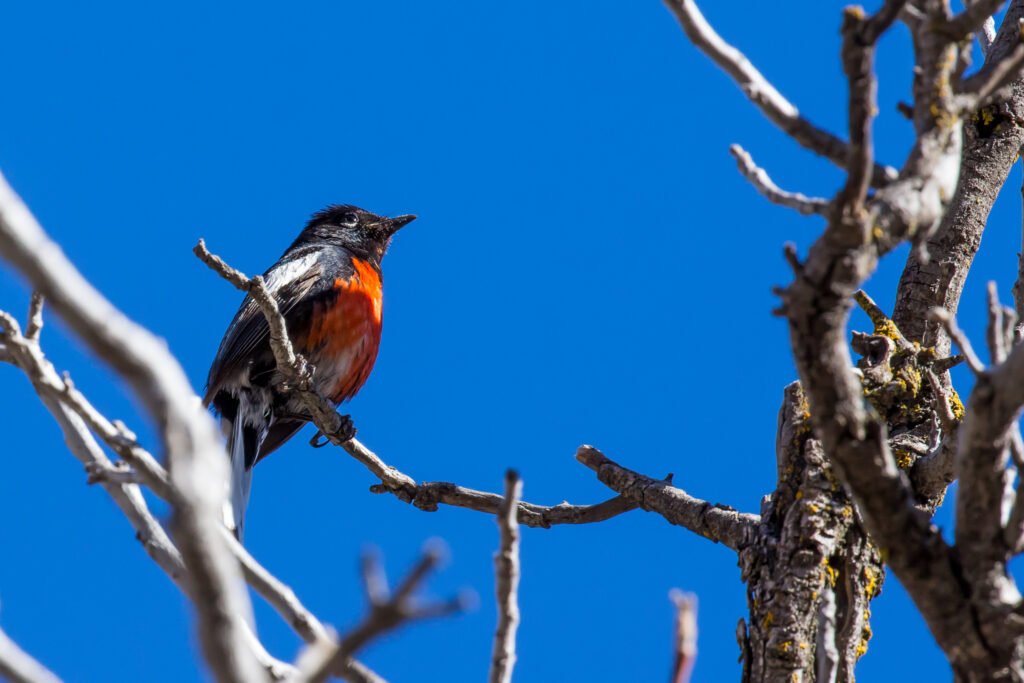
We awoke to another gorgeous early spring morning on Day 2 of the trip. Our plan was to bird the West Fork Trail, which follows Oak Creek in the Coconino National Forest. After a pretty 30-minute drive through rugged country north of Sedona, we arrived. A pair of bright blue Steller’s Jays and a group of cackling Acorn Woodpeckers greeted us in the parking lot. As we gathered our gear to get ready to walk, a few black and red birds flew over us and landed in the trees above us. This had to be something good. Focusing our binoculars in high branches where the birds landed, we were delighted to discover that they were Painted Redstarts, a Lifer for both of us! We got great looks and absolutely loved this warbler species, with its gorgeous black, red, and white plumage. Although we would get glimpses of this species again later in the trip, this was by far our best sighting.
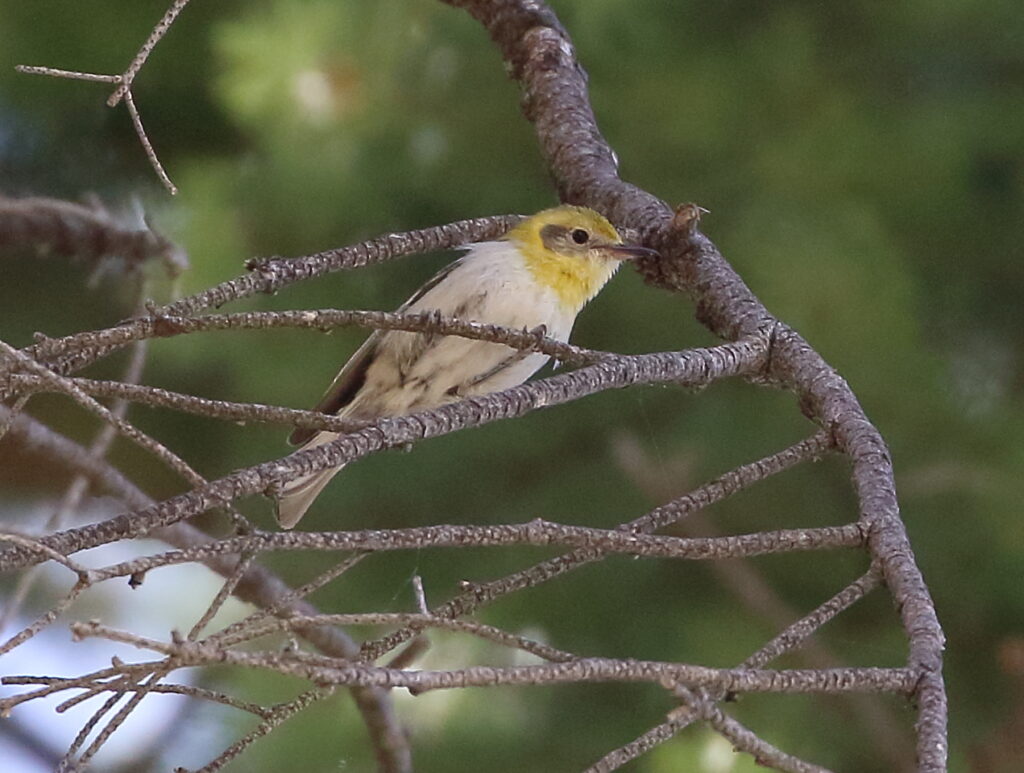
Starting our walk, we enjoyed views of three other warbler species near a footbridge that spanned the creek. Lucy’s Warblers were present, although hard to see as they flitted around in the treetops. We got good looks at Yellow-rumped Warblers, and a beautiful Yellow Warbler foraging in the trees.
Continuing, we passed the ruins of an old cabin and were delighted by the beauty of this place, with cliffs in hues of pink, white, and gray rising to dizzying heights above the canyon floor. We saw Ruby-crowned Kinglets, House Wrens, American Robins, and many Acorn Woodpeckers (which live in family groups), with their colorful and clownish face patterns. Soon we reached a waist-high creek crossing that we didn’t want to attempt, so we turned around. On the way back, we enjoyed views of a pair of Common Black Hawks harassing a Peregrine Falcon. The raptors flew gracefully and at high speeds, making sharp turns as the hawks pursued the falcon, all set against a dramatic background of colorful canyon walls.
We loved the beauty of the landscapes in Sedona and would love to return. As our two-day stay wrapped up, we had seen 38 species, including eight Lifers. Now southeast Arizona, which Tucson Audubon calls “one of the most fascinating areas for birding in the United States,” with over 400 bird species seen annually and approximately 500 recorded, beckoned. Early the next morning, we eagerly pointed our car south toward Tucson.

eBird Checklist – 12 Apr 2023 – Red Rock SP – 18 species (+1 other taxa)
eBird Checklist – 13 Apr 2023 – Oak Creek Canyon–West Fork – 12 species